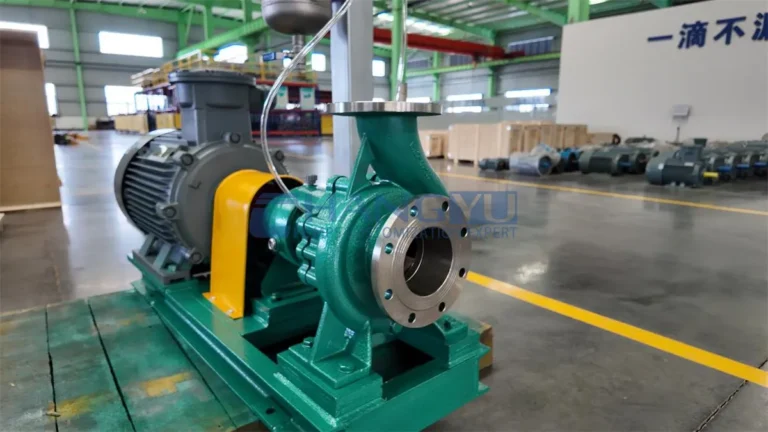
Stainless steel magnetic pump solutions are used when you need leak-free transfer of chemicals, solvents, and other risky liquids without using a mechanical seal. In simple terms, the pump uses magnets to drive the impeller, so the liquid stays sealed inside the casing. That makes it a practical choice for plants that want fewer leaks, lower maintenance, and safer daily operation.
Buyers usually ask the same questions before they place an order. Can stainless steel handle the liquid? Will the pump run hot? What happens if the suction line is long? Engineers at Changyu Pump emphasize that the right answer depends on fluid chemistry, temperature, suction conditions, and how much downtime your plant can tolerate.
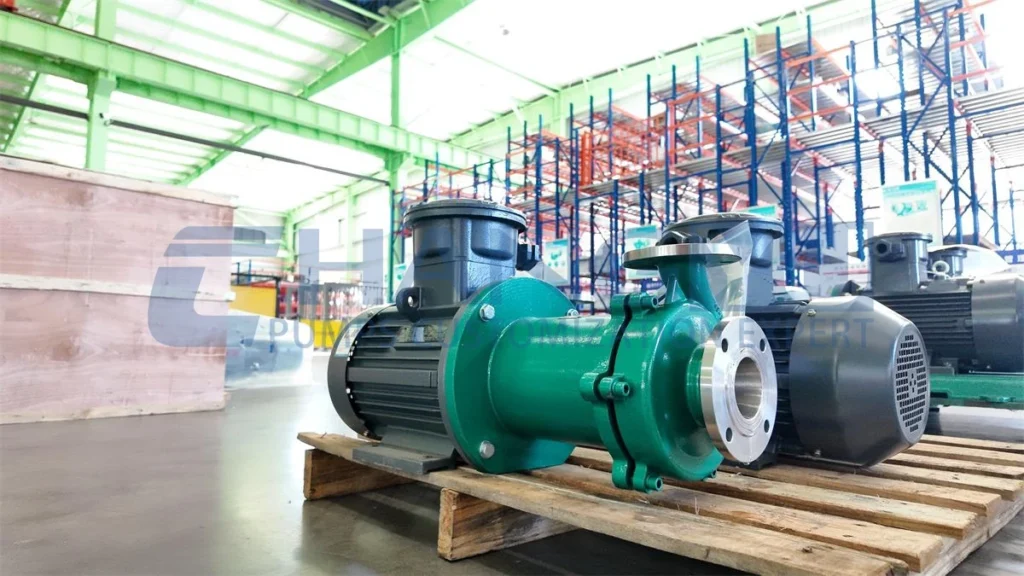
What Is a Stainless Steel Magnetic Pump?
A stainless steel magnetic drive pump is a sealless centrifugal pump. Instead of a shaft seal, it uses magnetic coupling to transfer torque from the motor to the impeller. In business terms, that means the normal leak point found in many standard pumps is removed.
This design is useful when the liquid is flammable, toxic, or expensive. If a plant loses even a small amount of solvent every day, the hidden cost adds up fast. What this means for you: a sealless design can cut cleanup work, lower spare-parts use, and reduce the risk of unplanned shutdowns.
Why Do Buyers Choose a Stainless Steel Magnetic Pump?
The main reason is absolute leak prevention. Mechanical seals are common, but they eventually wear out and leak. A chemical magnetic drive pump removes this weak point entirely. It is the top choice for clean chemical services where environmental safety and zero emissions matter much more than buying the cheapest standard pump.
The second—and often most critical—reason is extreme high-temperature resistance. While plastic-lined pumps are excellent for standard acids, the plastic can soften, warp, or melt when liquid temperatures exceed 120°C. In contrast, stainless steel easily handles boiling chemicals, hot thermal transfer oils, and high-pressure systems up to 200°C (392°F) without losing its rigid shape.
What this means for you: Your process can safely run at maximum heat without the dangerous fear of the pump casing melting or deforming under extreme thermal stress.
Finally, stainless steel (especially 304 or 316/316L) is the perfect match for aggressive solvents, alcohols, and light organics that might break down certain plastics. Engineers at Changyu Pump also point out that solid metal offers massive structural strength. It can safely support the heavy weight of large steel factory pipes, whereas a plastic pump might easily crack under the same mechanical piping load.
When Should You Use Stainless Steel Instead of Fluoroplastic?
Stainless steel is a good fit when the liquid is compatible with metal and the service temperature or pressure is higher than many plastic designs can comfortably handle. It is also a strong option when the piping load is heavy and the pump body needs better mechanical strength.
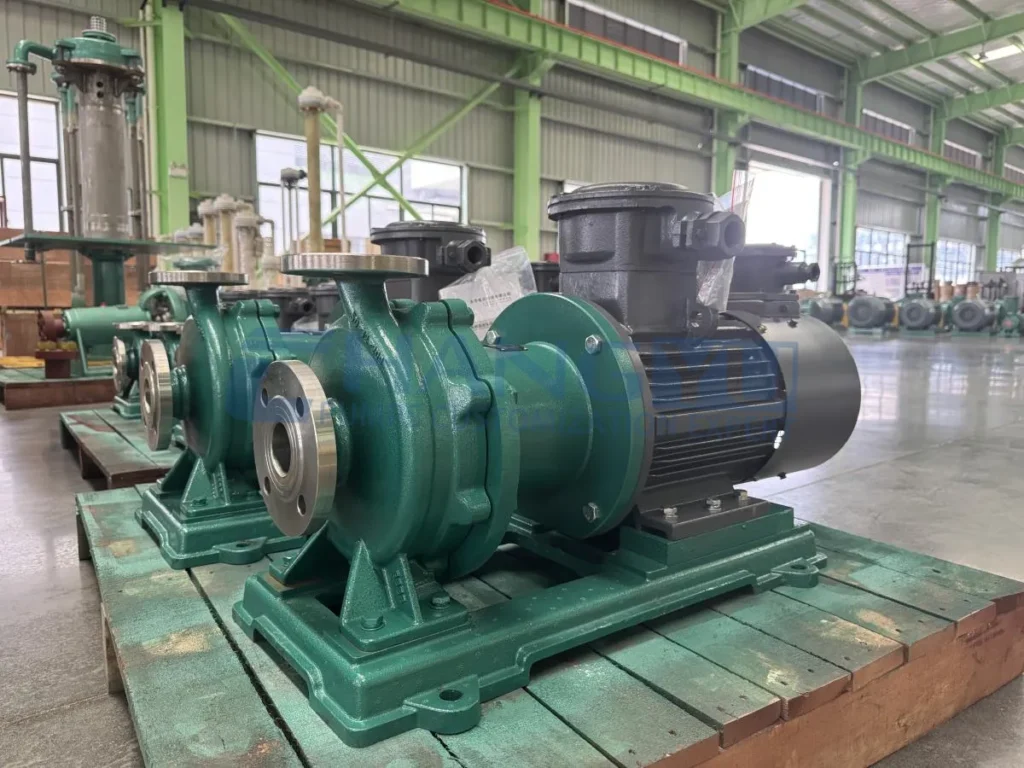
However, stainless steel is not the right answer for every acid. For some strong acids, chlorides, or highly oxidizing chemicals, a fluoroplastic-lined magnetic pump may be safer. What this means for you: choosing stainless steel without checking the fluid can create a corrosion problem, while choosing the right material from the start protects both uptime and budget.
How to Choose the Right Stainless Steel Magnetic Pump for Industry
The fastest way to make a bad pump purchase is to size it like a water pump. Industrial chemicals do not behave like water. Buyers should review at least these six points before asking for a quote.
1. Check chemical compatibility first
Do not start with flow rate. Start with the liquid itself. The first screening step is whether stainless steel can safely handle the fluid concentration and temperature.
2. Confirm temperature range
Higher temperature changes material strength, internal clearances, and bearing life. A pump that works at room temperature may fail early when the same liquid is pumped hot.
3. Review specific gravity
Specific gravity tells you how heavy the liquid is compared with water. A heavier liquid needs more motor power. If you ignore this, the motor may overload.
4. Review viscosity
If the liquid is thicker than water, friction rises and actual flow drops. This is important for resins, oils, and some mixed chemicals.
5. Review suction conditions
Low suction pressure can cause cavitation, which is bubble formation inside the pump. In simple words, the liquid starts to flash and damage internal parts. Long suction lines, hot liquids, and high flow rates all increase this risk.
6. Review dry-run risk
Magnetic pumps should not run dry for long periods. Their internal bearings depend on liquid for cooling and lubrication. If your tank can run empty, you should add dry-run protection.
Quick selection table
| Selection Item | What to Check | Why It Matters |
|---|---|---|
| Liquid type | Acid, solvent, alkali, mixed chemical | Confirms if stainless steel is suitable |
| Temperature | Normal, hot, near boiling | Affects material stability and magnet system |
| Specific gravity | Higher than water or not | Determines motor sizing |
| Suction lift | Flooded, long suction line, underground tank | Affects priming and cavitation risk |
| Solids content | Clean liquid or particles present | Magnetic pumps prefer clean liquids |
| Duty cycle | Intermittent or 24/7 | Changes bearing and motor selection |
If you need professional pump sizing for your application, this is the stage where it makes sense to contact Changyu Pump with your liquid name, concentration, temperature, flow, and head.
Which Changyu Pump Products Fit Your Needs?
Not every buyer needs the same stainless steel configuration. Based on application type, Changyu Pump can support three useful magnetic pump choices for 2026.
CYC Series Heavy-Duty Stainless Steel Magnetic Pump
This is the most direct fit for buyers searching for a stainless steel magnetic pump. It is built for demanding chemical service where stronger metal construction is preferred over plastic housings. It is a practical choice for solvent transfer, hot process liquids, and systems with heavier piping loads.
What this means for you: if your plant needs a robust all-metal pump body for stable long-term operation, the CYC series is usually the first model to review.
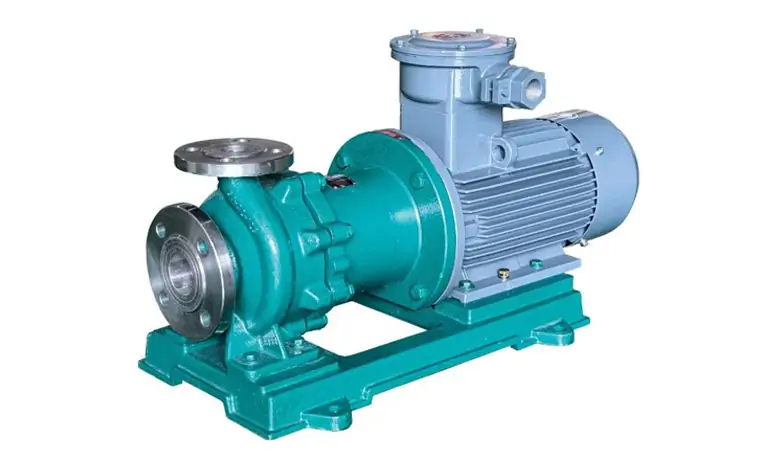
Specifications of CYC Series Heavy-Duty Stainless Steel Magnetic Pump
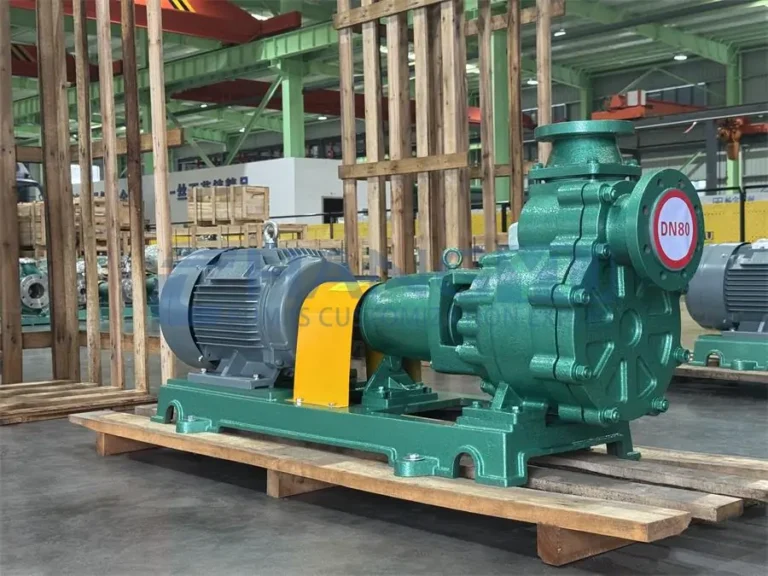
CQZ Stainless Steel Self-Priming Magnetic Drive Pump
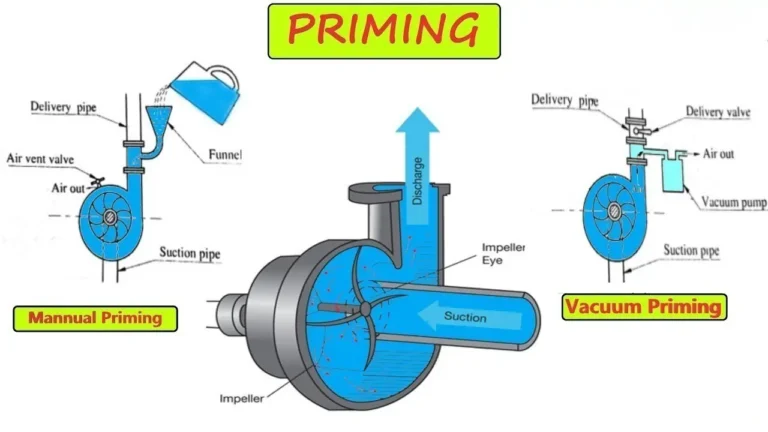
This model is designed for duty where the pump must lift liquid from below pump level. That makes it especially useful for underground tanks, tanker unloading, and pits where a standard end-suction pump would struggle to prime.
What this means for you: if your process team wants a stainless steel acid transfer chemical pump that can start more easily on suction-lift service, the CQZ can reduce manual priming work and improve operator safety.
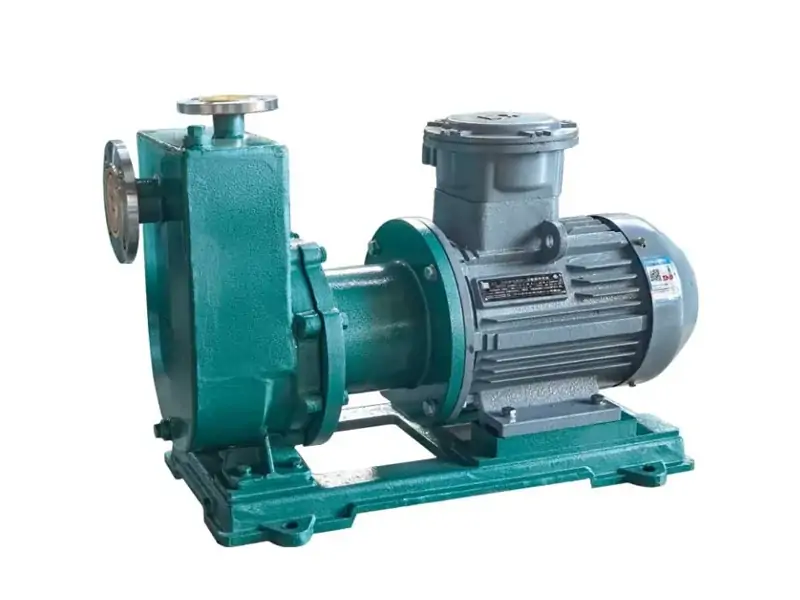
Specifications of CQZ Series Stainless Steel Self Priming Magnetic Drive Pump
| الطراز | التدفق (متر مكعب/ساعة) | الرأس (م) | الكفاءة (%) | قوة المحرك (كيلوواط) | Speed (rpm) | Inlet (mm) | Outlet (mm) |
|---|---|---|---|---|---|---|---|
| Small Flow / High Speed (2900 rpm) | |||||||
| 32-20-125 | 3.2 | 20 | 16 | 1.5 | 2900 | 32 | 20 |
| 32-20-160 | 3.2 | 32 | 15 | 2.2 | 2900 | 32 | 20 |
| 40-25-160 | 6.3 | 32 | 23 | 3.0 | 2900 | 40 | 25 |
| 50-32-200 | 12.5 | 50 | 30 | 7.5 | 2900 | 50 | 32 |
| 65-50-125 | 25 | 20 | 41 | 4.0 | 2900 | 65 | 50 |
| 65-40-250 | 25 | 80 | 24 | 30 | 2900 | 65 | 40 |
| Medium Flow / High Speed (2900 rpm) | |||||||
| 80-65-125 | 50 | 20 | 56 | 5.5 | 2900 | 80 | 65 |
| 80-50-250 | 50 | 80 | 38 | 37 | 2900 | 80 | 50 |
| 100-80-160 | 100 | 32 | 47 | 22 | 2900 | 100 | 80 |
| 100-65-250 | 100 | 80 | 51 | 55 | 2900 | 100 | 65 |
| 125-100-200 | 200 | 50 | 59 | 55 | 2900 | 125 | 100 |
| Large Flow / Low Speed (1450 rpm) | |||||||
| 150-125-250 | 200 | 20 | 51 | 22 | 1450 | 150 | 125 |
| 150-125-400 | 200 | 50 | 56 | 55 | 1450 | 150 | 125 |
| 200-150-250 | 400 | 20 | 68 | 37 | 1450 | 200 | 150 |
| 200-150-400 | 400 | 50 | 52 | 110 | 1450 | 200 | 150 |
| 250-200-400 | 600 | 50 | 47 | 185 | 1450 | 250 | 200 |
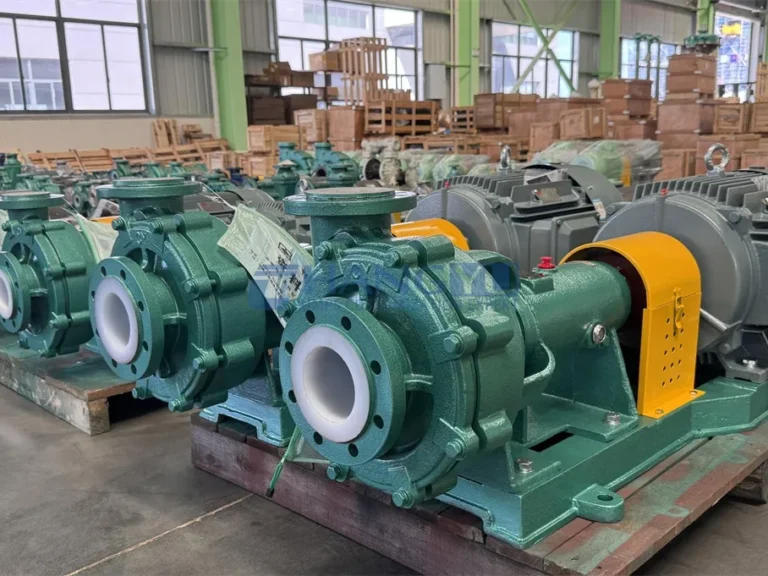
Sulfuric Acid Transfer Magnetic Pump
This model matters because it shows an important engineering truth: not every acid job should use stainless steel. For concentrated sulfuric acid and similar aggressive media, a specialized magnetic pump design may be safer than an all-metal wetted path.
What this means for you: مضخة تشانغيو does not push one material for every job. With more than 20 years of industry experience, the team focuses on matching the pump to the fluid, not forcing the fluid into the wrong pump.
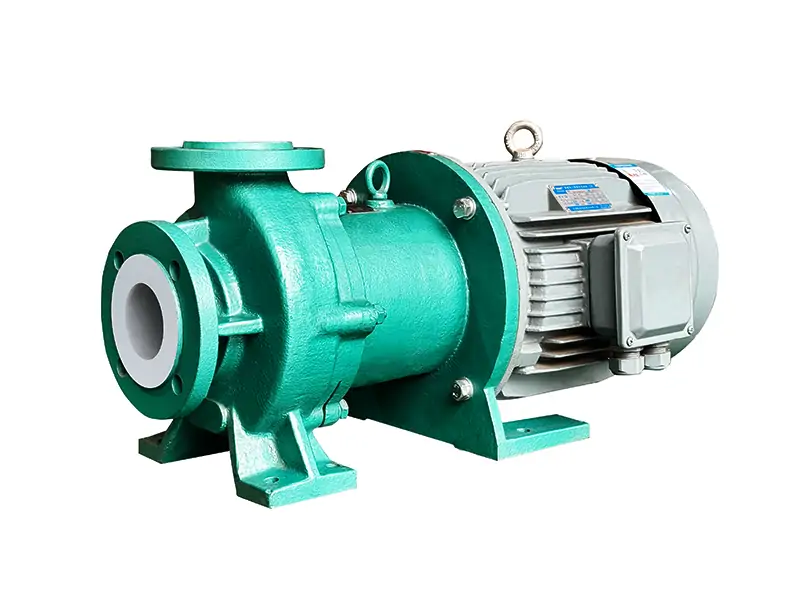
Specifications of CYQ High Temperature steel-lined F46 or PFA material Magnetic Drive Pump
Where Does a Stainless Steel Magnetic Pump Work Best?
A stainless steel design is often used in these situations:
- Solvent transfer lines.
- Tank farm loading and unloading.
- Chemical dosing systems with compatible media.
- Hot liquid circulation where metal strength matters.
- Clean liquid service with strict leak control requirements.
Engineers at مضخة تشانغيو emphasize that stainless steel is especially attractive when buyers want one pump that balances strength, cleanability, and leak prevention. It is also easier for many plants to integrate into existing stainless process lines.
What Problems Usually Cause Failure?
Most failures do not start with the magnet system. They start with application mismatch. The most common problems are wrong material choice, dry running, suction issues, solids in the liquid, and oversizing the pump.
A stainless steel acid magnetic pump can also fail early if the user ignores chloride stress risk or uses the pump on a fluid that attacks stainless steel at higher temperature. What this means for you: many pump problems can be prevented before purchase, which is much cheaper than solving them after installation.
Case Study of our Stainless Steel Magnetic Pump
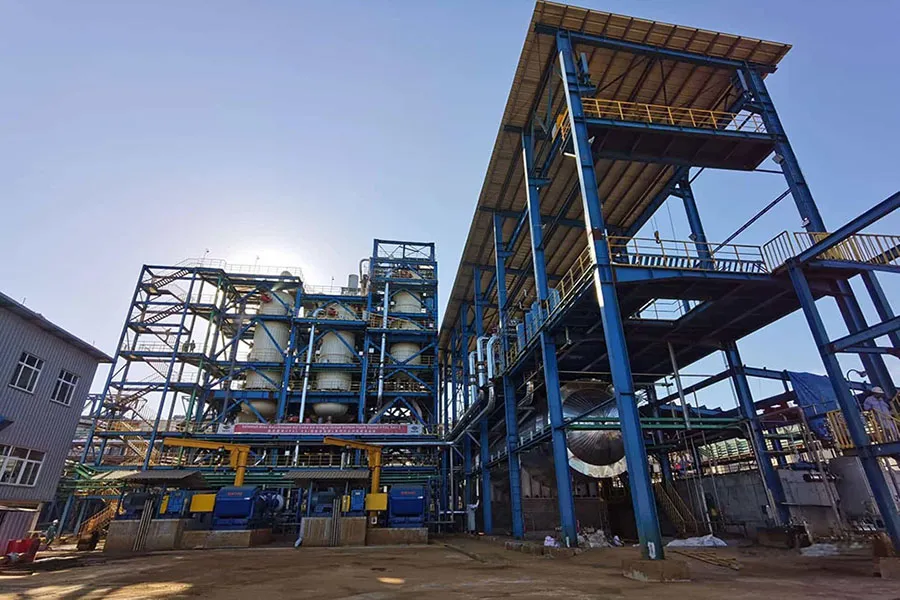
A chemical plant needed to move compatible solvent-based process liquid from an underground storage tank to a day tank above floor level. Their old pump used a mechanical seal and had to be manually primed after maintenance or line cleaning. The result was frequent startup trouble, seal leakage, and operator exposure during priming.
Engineers at Changyu Pump reviewed the suction lift, pipe route, and startup pattern. Testing showed that the long suction line and repeated air entry after shutdown were the real problems, not just the seal itself. The team replaced the old unit with the CQZ Stainless Steel Self-Priming Magnetic Drive Pump, which removed the seal leak point and handled the suction-lift duty more reliably.
After the change, the plant shortened startup time, removed manual priming from the procedure, and greatly reduced leakage risk during transfer. Compared with the previous setup, maintenance demand dropped sharply because seal replacement was no longer part of the routine schedule. What this means for you: the right pump choice does more than move liquid; it can simplify the whole operating procedure.
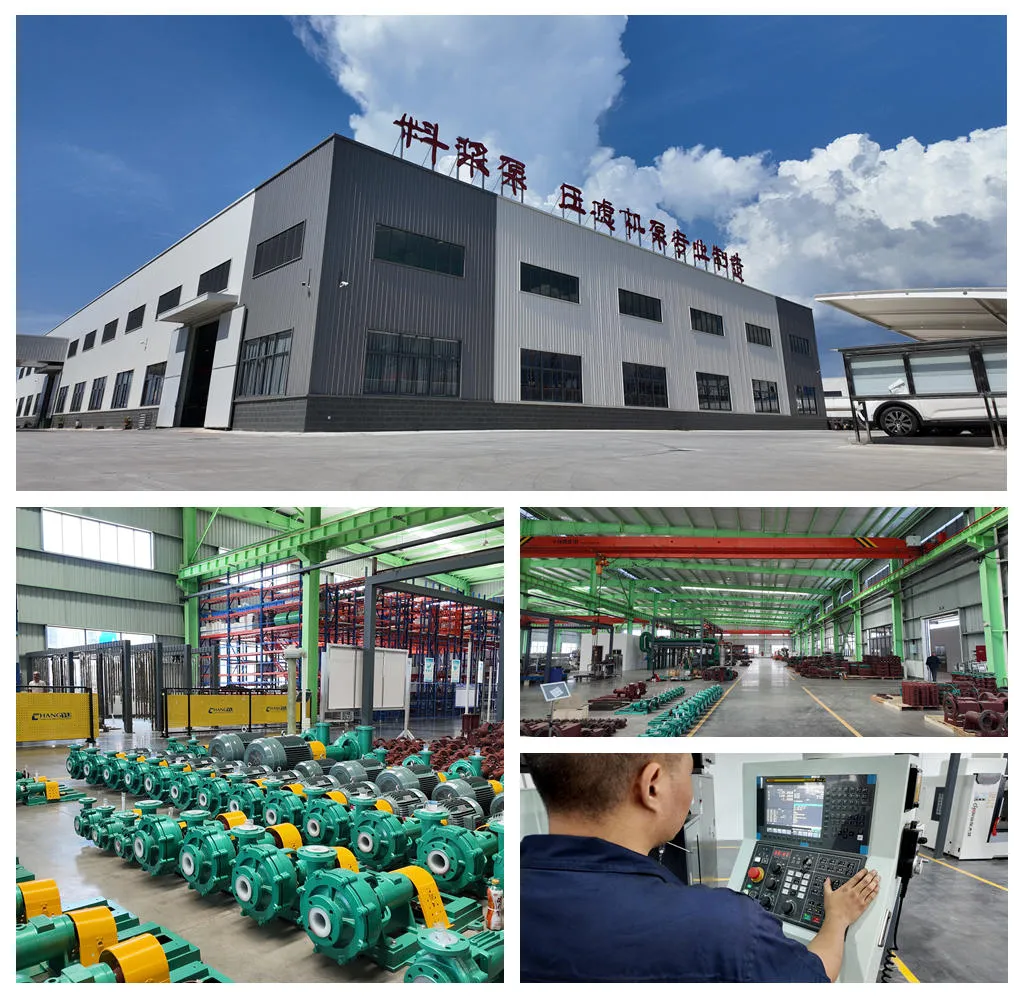
How Does Changyu Pump Control Quality?
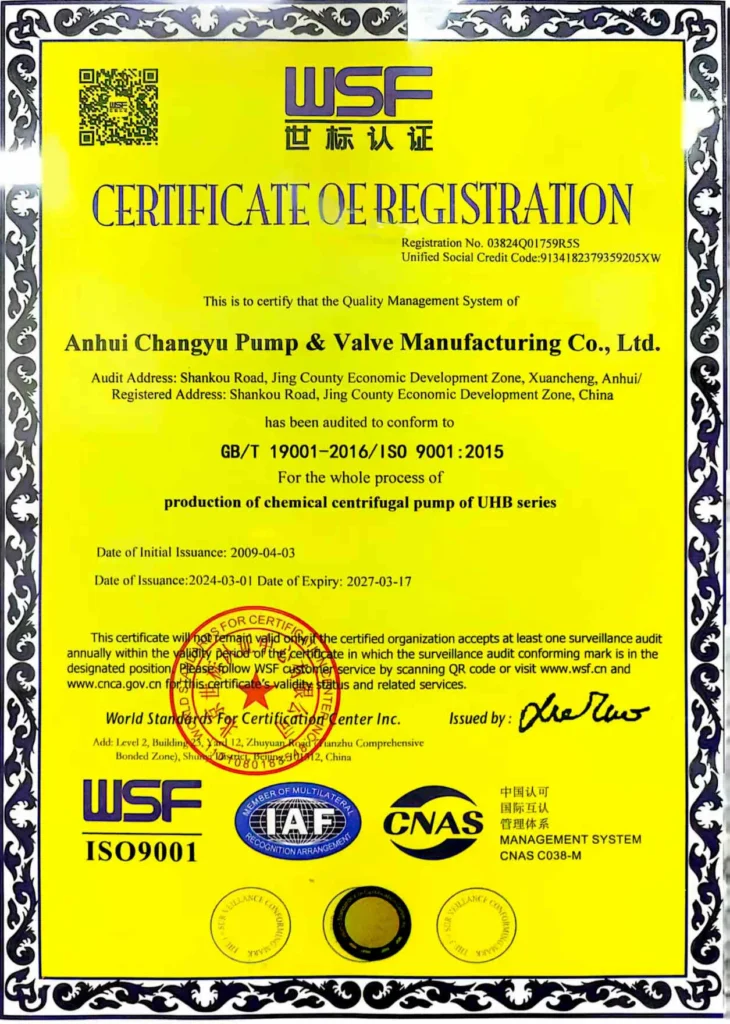
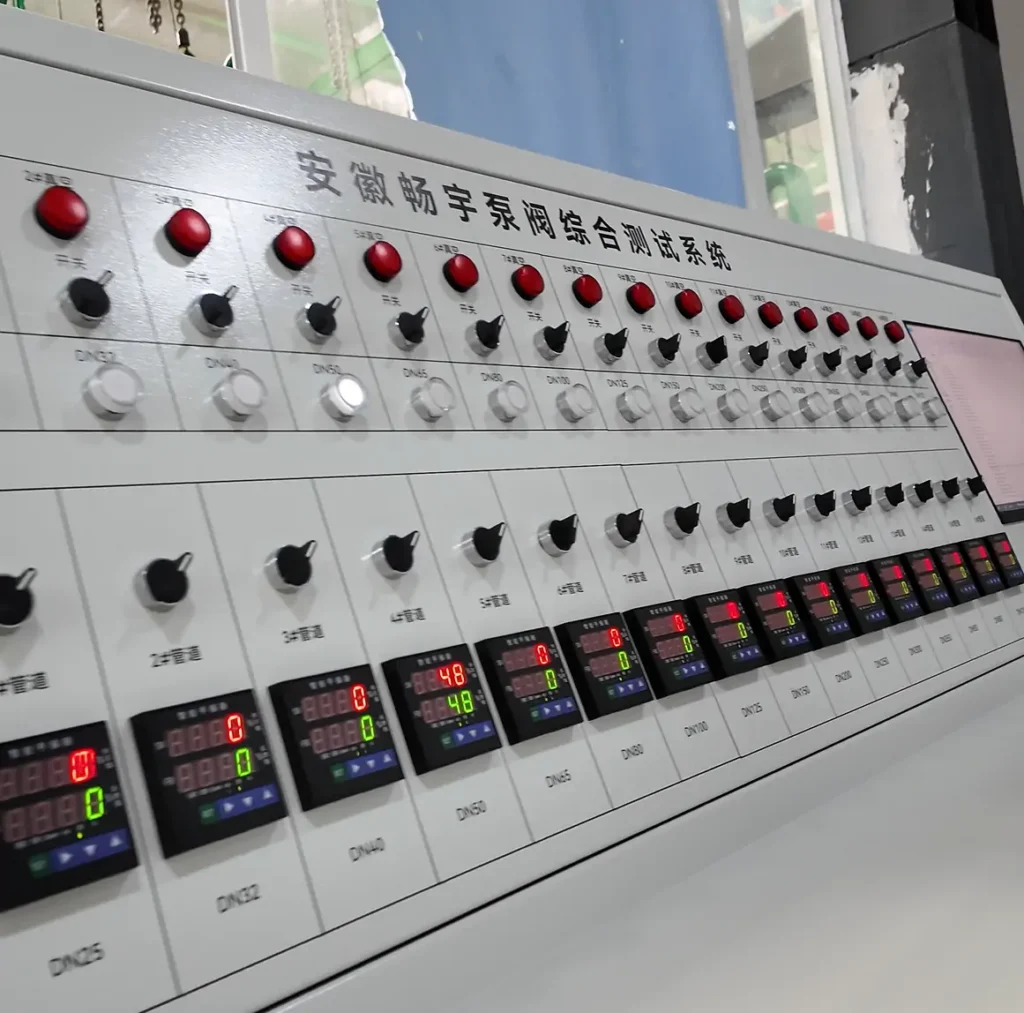
Quality control matters more in magnetic pumps because the system depends on precise fit between casing, magnets, bearings, and internal rotating parts. A small error in alignment or clearance can increase heat, noise, and wear. That is why buyers should always ask how the pump is tested before shipment.
مضخة تشانغيو has more than 20 years of industry experience in pump manufacturing and application support. The team focuses on real factory checks such as pressure testing, running tests, inspection of wetted parts, and dimensional verification before delivery. For export projects, flange standards, motor configuration, and nameplate data should also be checked carefully so the pump arrives ready to install.


Typical QC points buyers should confirm
| QC Item | Why It Matters |
|---|---|
| Pressure test | Confirms casing and sealing integrity |
| Performance test | Confirms flow, head, and power match the order |
| Material check | Helps prevent wrong metal grade or wrong wetted part |
| Rotor balance | Reduces vibration and bearing load |
| Dimensional check | Avoids piping mismatch at site |
| Final packing check | Protects the pump during export shipment |
If you need a stainless steel magnetic drive pump supplier with factory-direct support, this is where مضخة تشانغيو becomes valuable. Buyers are not only purchasing a pump body; they are also reducing commissioning risk.
8 FAQs about Stainless Steel Magnetic Drive Pump
Q1: Is a stainless steel magnetic pump better than a sealed pump for solvents?
A: In many solvent applications, yes. A magnetic pump removes the normal shaft seal leak point, which helps reduce vapor loss and maintenance work. It is usually the better option when the liquid is clean, compatible with stainless steel, and the plant values safer, cleaner operation over lowest first cost.
Q2: Can a stainless steel magnetic drive pump handle hot liquids?
A: Yes, if the pump is sized for the real temperature, liquid properties, and duty cycle. Heat affects internal clearances, bearings, and magnet performance. Buyers should always provide operating temperature, not just normal room-temperature data, before final pump selection.
Q3: When should I choose a stainless steel acid transfer chemical pump instead of a plastic-lined pump?
A: Choose stainless steel when the liquid is metal-compatible and the service benefits from higher mechanical strength, higher temperature capability, or stronger resistance to external pipe load. Choose lined pumps when the chemical attacks stainless steel, especially in more aggressive acid service.
Q4: Can a stainless steel acid magnetic pump run dry?
A: No. Like other magnetic pumps, it should not run dry for more than a very short time. The internal bearing system depends on the pumped liquid for cooling and lubrication. If dry-run risk exists, add liquid level protection or motor monitoring.
Q5: Is a chemical magnetic drive pump good for underground tank unloading?
A: It can be, but only if the design matches the suction conditions. For this duty, a self-priming model such as the CQZ is usually a better choice than a standard non-self-priming unit. The correct choice depends on suction lift, line length, and startup pattern.
Q6: How do I size motor power for a stainless steel magnetic pump?
A: Start with the duty point, then adjust for specific gravity, viscosity, and service margin. Heavy liquids need more power than water. If buyers size only from a water-based curve, the motor may overload, especially on dense chemicals or high-flow applications.
Q7: What maintenance does a stainless steel magnetic drive pump usually need?
A: Routine work is usually lower than with a sealed pump because there is no mechanical seal to replace. Maintenance still includes checking bearings, alignment, motor condition, vibration, and liquid cleanliness. Good filtration and dry-run protection usually extend service life significantly.
Q8: Can Changyu Pump supply OEM service for a stainless steel acid transfer chemical pump?
A: Yes. OEM projects usually involve motor brand selection, flange standards, voltage, nameplate details, and export packaging. Buyers should send full duty data early so Changyu Pump can review the application and provide a quote that matches the real site conditions.
Changyu Pump Engineers’ 6 Practical Buying Tips
- Do not choose stainless steel just because it sounds stronger. Always confirm chemical compatibility first.
- If your liquid comes from a pit or underground tank, review self-priming needs before choosing a standard pump.
- If the liquid may run out, add dry-run protection from day one.
- If the liquid contains particles, review whether a magnetic pump is the right design at all.
- Do not size from water data when the real liquid is heavier or thicker than water.
- Send full application data to Changyu Pump early, including liquid name, concentration, temperature, flow, head, and suction condition.
A good stainless steel magnetic pump does more than stop leaks. It must also match the real fluid, real temperature, real piping layout, and real operating routine. That is why buyers who focus only on price often spend more later on downtime, rework, and replacement.
If you need help selecting the right pump for your project, contact Changyu Pump for factory-direct advice and a quote. With more than 20 years of industry experience, the team can help you compare stainless steel, lined, self-priming, and specialty magnetic pump options before you place the order.