
Pendahuluan
Pompa kimia untuk tas jinjing mengekstrak cairan dari wadah curah menengah (IBC totes) - sebuah fungsi yang secara mekanis mudah dijelaskan tetapi melibatkan serangkaian keputusan teknik yang saling berinteraksi. Tote mungkin mengandung asam sulfat 98%, natrium hipoklorit, atau pelarut yang mudah terbakar. Pompa harus kompatibel secara kimiawi dengan cairan tertentu pada suhu operasinya, mampu melakukan pemancing otomatis dari atas bukaan jinjing, cukup portabel untuk berpindah antar wadah, dan - untuk bahan kimia berbahaya - disertifikasi untuk pengoperasian di atmosfer yang berpotensi meledak.
Keempat tuntutan ini - kompatibilitas bahan kimia, kemampuan self-priming, portabilitas, dan sertifikasi keselamatan - berinteraksi dengan cara yang menghilangkan sebagian besar pompa serba guna dari pertimbangan. Bahan pompa yang tahan terhadap asam sulfat dapat mengalami kegagalan besar dengan natrium hipoklorit. Pompa yang kompatibel dengan bahan kimia mungkin tidak memiliki daya hisap untuk menarik cairan dari bagian bawah jinjing. Pompa yang menangani bahan kimia dan hisap mungkin tidak memiliki sertifikasi ATEX atau IECEx yang diperlukan untuk klasifikasi area berbahaya instalasi.
Changyu Pump telah menghabiskan lebih dari dua dekade merekayasa peralatan penanganan cairan tahan korosi untuk aplikasi transfer dan bongkar muat bahan kimia. Panduan ini mencakup jenis pompa yang sesuai dengan transfer jinjing, data kompatibilitas material, standar keselamatan, dan kerangka kerja pemilihan terstruktur untuk para insinyur yang menentukan atau meningkatkan instalasi pompa jinjing. Hubungi kami dengan parameter bahan kimia Anda untuk mendapatkan rekomendasi spesifik.
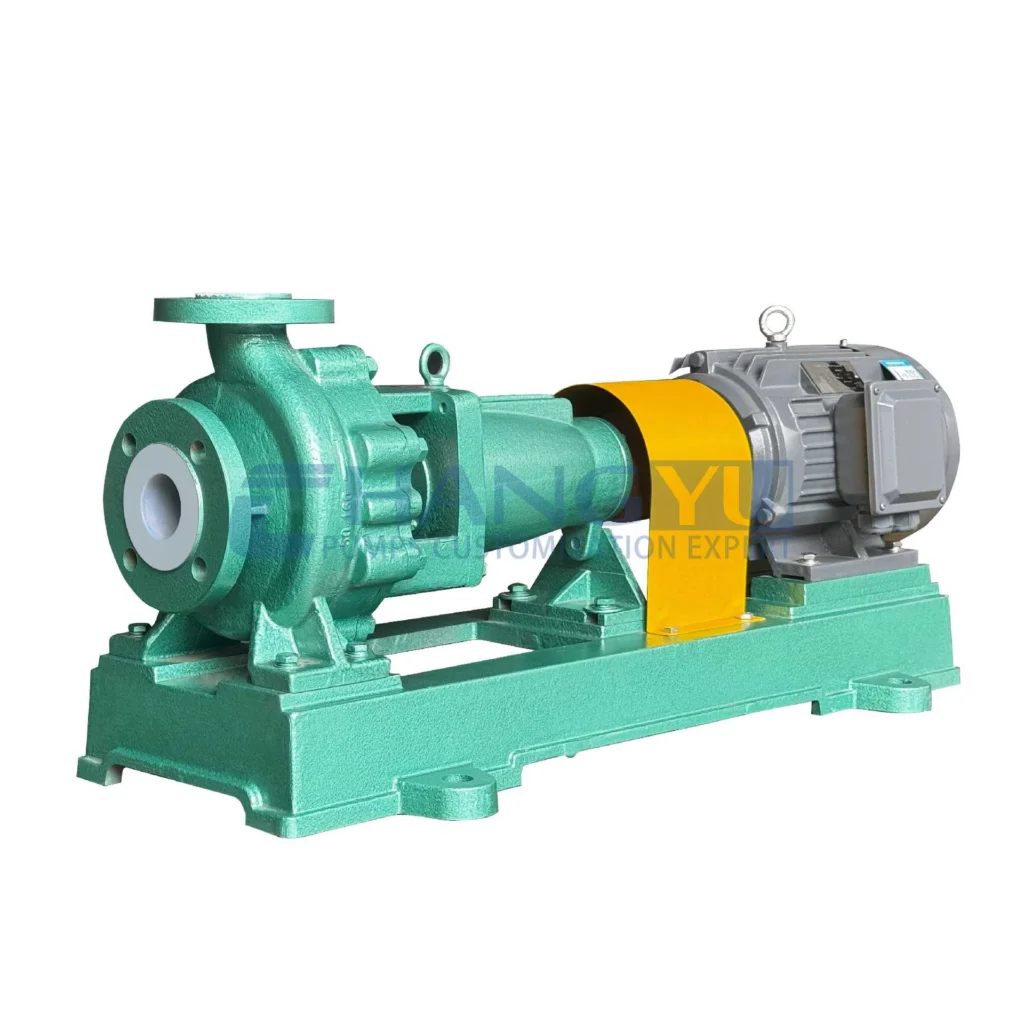
Apa yang dimaksud dengan Pompa Tote Kimia?
A pompa jinjing kimia adalah pompa portabel yang dirancang untuk mengekstrak bahan kimia korosif, beracun, atau berbahaya dari kontainer curah menengah (IBC totes) dan memindahkannya ke bejana proses yang lebih kecil, tangki harian, atau stasiun pengisian bahan bakar. Pompa dipasang melalui bukaan atas jinjing, dengan tabung hisap atau tombak yang memanjang ke bagian bawah wadah.
Perbedaan antara pompa jinjing dan pompa drum standar terutama adalah dimensi. Pompa drum dibuat untuk drum standar dengan panjang tabung sekitar 1.000 mm - konfigurasi yang tercakup dalam panduan pompa drum kimia. Pompa jinjing membutuhkan panjang tabung yang diperpanjang 1.200-1.500 mm untuk mencapai bagian bawah wadah IBC yang lebih tinggi. Di luar perbedaan panjang tabung, persyaratan teknik yang sama berlaku: pompa harus kompatibel secara kimiawi dengan fluida, dapat melakukan pemancing otomatis dari atas permukaan cairan, dan - untuk aplikasi tugas berbahaya - disertifikasi untuk klasifikasi area berbahaya instalasi.
Pompa jinjing melayani berbagai macam industri dan aplikasi:
| Industri | Bahan Kimia Khas | Kebutuhan Pompa |
|---|---|---|
| Pemrosesan kimia | Asam, basa, pelarut, zat antara | Jalur dibasahi PVDF atau PTFE; tanpa segel atau AODD |
| Pengolahan air dan air limbah | Natrium hipoklorit, natrium bisulfit, koagulan | PVC atau PVDF; toleran terhadap gas buang |
| Manufaktur farmasi | Pelarut dengan kemurnian tinggi, zat antara API | Jalur yang dibasahi PTFE atau PFA; tanpa segel |
| Pengolahan makanan dan minuman | Bahan kimia CIP, pembersih, gula cair | Desain sanitasi; Bahan yang kompatibel dengan FDA |
| Elektronik dan semikonduktor | Asam dengan kemurnian tinggi, pengupas fotoresis | PTFE atau PFA; tidak ada kontaminasi logam |
Apa Saja Jenis Pompa Utama untuk Tote?
Empat jenis pompa mencakup sebagian besar aplikasi pemindahan bahan kimia. Masing-masing memiliki kemampuan yang berbeda untuk pengangkatan hisap, kompatibilitas bahan kimia, dan jangkauan aliran.
Pompa Sentrifugal Pemancing Otomatis
Pompa sentrifugal standar tanpa tahap pemancing otomatis tidak direkomendasikan untuk transfer jinjing di mana pompa dipasang di atas permukaan cairan. Tanpa hisapan banjir, pompa sentrifugal standar tidak dapat mengevakuasi udara dari saluran hisap - impeler berputar di udara, segel mekanis menjadi terlalu panas, dan pompa gagal mengalirkan aliran.
Sentrifugal pemancing otomatis pompa jinjing dirancang untuk mengevakuasi udara dari saluran hisap, menciptakan vakum yang diperlukan untuk menarik cairan ke dalam pompa tanpa priming manual. Pompa sentrifugal self-priming berlapis fluoroplastik menggabungkan kemampuan hidraulik ini dengan ketahanan korosi lapisan FEP atau PFA. Pompa ini paling cocok untuk aplikasi yang membutuhkan laju aliran di atas 50 L/menit dan debit head sedang. Pompa ini tidak ideal untuk aplikasi pengukuran atau untuk cairan dengan viskositas di atas sekitar 200 cP, di mana efisiensinya menurun tajam.
Pompa Diafragma Ganda yang Dioperasikan dengan Udara (AODD)
AODD pompa jinjing adalah spesifikasi standar untuk transfer bahan kimia berbahaya, mudah terbakar, dan korosif dari kontainer IBC. Didukung sepenuhnya oleh udara bertekanan, mereka secara inheren tidak memiliki segel, dapat melakukan priming sendiri dari hisapan kering, dan dapat mengering tanpa kerusakan - karakteristik yang secara langsung menangani mode kegagalan utama dalam layanan transfer jinjing.
Pompa AODD menangani cairan mulai dari pelarut tipis hingga resin dengan viskositas tinggi, serta bubur sarat partikel. Untuk cairan dengan viskositas tinggi, kecepatan pompa biasanya dikurangi agar sesuai dengan karakteristik aliran fluida, dan untuk padatan abrasif, bola dan dudukan katup tahan aus ditentukan. Pelepasan dapat terhenti pada katup tertutup tanpa panas berlebih. Untuk area yang diklasifikasikan ATEX Zona 1 atau Zona 2, pompa AODD cocok jika dibuat dari bahan konduktif dan dilengkapi dengan jalur pengardean yang terverifikasi. Pompa AODD juga menyederhanakan logistik pemindahan jinjing - pompa ini hanya memerlukan sambungan udara terkompresi dan tidak memerlukan daya listrik pada pompa, sehingga praktis untuk lokasi dan fasilitas terpencil tanpa infrastruktur listrik khusus di setiap stasiun pemindahan.
Pompa Diafragma Listrik
Diafragma listrik pompa jinjing menawarkan operasi self-priming tanpa seal yang sama dengan pompa AODD, tetapi dengan mekanisme bolak-balik yang digerakkan oleh motor, bukan udara bertekanan. Pompa ini memberikan aliran yang stabil dan kontinu dengan konsumsi energi yang lebih rendah daripada alternatif pneumatik. Bahan bodi pompa terdiri dari PP, PVDF, dan baja tahan karat, yang mencakup rentang kompatibilitas bahan kimia yang luas. Pompa ini praktis untuk fasilitas tanpa infrastruktur udara terkompresi atau di mana biaya energi untuk menghasilkan udara terkompresi akan mendominasi anggaran operasi.
Pompa Peristaltik (Selang)
Peristaltik pompa jinjing secara unik cocok untuk bahan kimia yang peka terhadap geser, kemurnian tinggi, dan tidak menghasilkan gas. Satu-satunya komponen yang dibasahi adalah tabung fleksibel, yang tersedia dalam EPDM, Norprene, atau elastomer tahan bahan kimia lainnya. Pompa peristaltik pada dasarnya tidak bersegel, tidak memiliki katup, dan pemancing otomatis, dan pompa ini menangani sifat natrium hipoklorit yang sarat gas tanpa penguncian uap karena mekanisme roller memindahkan apa pun yang ada di dalam tabung - cairan, gas, atau campuran - setiap kali lewat. Mereka adalah spesifikasi yang lebih disukai untuk aplikasi pengukuran dan takaran di mana akurasi aliran dan kemurnian bahan kimia sangat penting.
Perbandingan Jenis Pompa Jinjing
| Jenis Pompa | Memulai Sendiri (Self-Priming) | Toleransi Uji Coba Kering | Rentang Aliran | Aplikasi Terbaik |
|---|---|---|---|---|
| Sentrifugal pemancing otomatis | Ya (otomatis) | Terbatas (memakai segel) | 2,5-500 m³/jam | Transfer aliran tinggi, tangki-ke-tangki |
| AODD | Ya (dari pengisapan kering) | Luar biasa | Hingga 1.041 L/menit | Berbahaya, mudah terbakar, viskositas tinggi |
| Diafragma listrik | Ya. | Sedang | Hingga 480 L/menit | Transfer berkelanjutan tanpa udara terkompresi |
| Peristaltik | Ya. | Luar biasa | 0,01-50 L / jam | Pengukuran, tanpa gas, kemurnian tinggi |
Bahan Apa yang Terbaik untuk Bahan Kimia Anda?
Pemilihan material adalah keputusan paling penting dalam menentukan pompa jinjing kimia. Bahan yang kompatibel dengan bahan kimia yang disimpan pada suhu sekitar dapat rusak jika suhu naik selama pemindahan, atau jika pompa digunakan dengan bahan kimia yang berbeda tanpa pembersihan menyeluruh.
Panduan Materi Inti
PP (Polypropylene) adalah bahan pompa yang paling ekonomis untuk transfer jinjing dan memberikan ketahanan yang baik terhadap asam sulfat encer (≤40%), asam klorida (≤37% pada suhu sekitar), natrium hidroksida (≤50%), dan banyak larutan basa pada suhu di bawah 80 ° C. Diserang oleh asam nitrat pada konsentrasi berapa pun (asam pengoksidasi kuat), asam klorida pekat di atas 37%, dan pelarut organik yang kuat, yang menyebabkan pelunakan dan kerusakan struktural.
PVDF (Polivinilidena Fluorida) memberikan ketahanan yang sangat baik terhadap asam sulfat pekat (hingga 98%), asam klorida pada semua konsentrasi, asam nitrat, dan sebagian besar pelarut organik pada suhu hingga 100°C. Kekuatan mekanisnya lebih unggul daripada PP dan PTFE, menjadikannya spesifikasi standar untuk pemindahan jinjing tugas berat di mana pompa dapat dipindahkan di antara wadah dan mengalami tekanan mekanis.
PTFE (Polytetrafluoroethylene) menawarkan ketahanan kimiawi yang hampir universal hingga sekitar 120°C dan merupakan bahan pilihan untuk campuran pelarut agresif, asam fluorida, dan aplikasi dengan kemurnian tinggi. PFA (Perfluoroalkoksi) memperluas kemampuan suhu ini hingga sekitar 160°C. Baik PTFE dan PFA bersifat inert terhadap sebagian besar bahan kimia industri yang ditemukan dalam aplikasi transfer jinjing, termasuk semua asam mineral, alkali, pelarut, dan zat pengoksidasi yang umum. Keduanya memiliki kekuatan mekanik yang lebih rendah daripada PVDF dan lebih mahal.
316 Baja Tahan Karat kompatibel dengan banyak pelarut organik dan bahan kimia ringan, tetapi memiliki batas yang terdokumentasi dengan baik dengan asam mineral. Produk ini akan rusak dengan cepat dalam asam klorida pada konsentrasi berapa pun dan dalam asam sulfat di atas konsentrasi sekitar 15%. Ini hanya boleh ditentukan ketika kompatibilitas bahan kimia diverifikasi terhadap cairan tertentu pada suhu operasinya.
Hastelloy (C-276) adalah paduan berbasis nikel premium yang memberikan ketahanan korosi yang luas pada berbagai macam bahan kimia agresif. Paduan ini berfungsi dalam aplikasi di mana terdapat suhu tinggi dan bahan kimia agresif, dengan biaya material yang lebih tinggi. Tidak kompatibel dengan lingkungan klorida pengoksidasi seperti natrium hipoklorit (pemutih).
Referensi Cepat Kompatibilitas Bahan Kimia
| Bahan kimia | PP | PVDF | PTFE / PFA | 316 SS | Hastelloy C-276 |
|---|---|---|---|---|---|
| Asam sulfat ≤40%, ≤25°C | ✅ | ✅ | ✅ | ❌ | ✅ |
| Asam sulfat 40-98% | ❌ | ✅ | ✅ | ❌ | ✅ |
| Asam klorida ≤37%, ≤25°C | ✅ | ✅ | ✅ | ❌ | ✅ |
| Asam klorida> 37% atau panas | ❌ | ✅ | ✅ | ❌ | ✅ |
| Asam nitrat (konsentrasi apa pun) | ❌ | ✅ | ✅ | ❌ | ✅ |
| Natrium hipoklorit (pemutih) ≤15% | ✅ | ✅ | ✅ | ❌ | ❌ |
| Natrium hidroksida ≤50% | ✅ | ✅ | ✅ | ✅ | ✅ |
| Aseton, MEK, toluena | ⚠️ | ✅ | ✅ | ✅ | ✅ |
Cara Menyesuaikan Pompa Anda dengan Bahan Kimia yang Mudah Terbakar atau Berbahaya
Ketika bahan kimia di dalam jinjing mudah terbakar (titik nyala di bawah 60°C), sistem penggerak pompa menjadi keputusan keselamatan utama.
Pemilihan Sumber Daya untuk Area Berbahaya
Pompa AODD adalah spesifikasi standar untuk pemindahan cairan yang mudah terbakar dari jinjing karena tidak mengandung komponen listrik pada pompa dan digerakkan sepenuhnya oleh udara bertekanan, sehingga meniadakan sumber penyalaan listrik. Pompa ini cocok untuk area berklasifikasi ATEX Zona 1 dan Zona 2 jika dibuat dari bahan konduktif dan dilengkapi dengan jalur pengardean yang terverifikasi.
Pompa yang digerakkan secara elektrik dapat ditentukan untuk area berbahaya hanya jika motor memiliki sertifikasi ATEX atau IECEx yang spesifik untuk klasifikasi zona. Motor listrik standar yang digunakan untuk memindahkan aseton, etanol, atau etil asetat dari jinjing dapat menimbulkan risiko penyalaan. Diperlukan motor listrik tahan ledakan yang bersertifikat ATEX Kategori 2G untuk Zona 1 atau Kategori 3G untuk Zona 2. Kelas T (klasifikasi suhu) motor juga harus diverifikasi terhadap suhu penyalaan otomatis pelarut - motor dengan peringkat T4 (suhu permukaan maksimum 135°C) aman untuk sebagian besar pelarut yang umum, sementara senyawa yang sangat mudah menguap seperti karbon disulfida memerlukan T6 (85°C).
Pelepasan muatan listrik statis adalah risiko penyalaan yang tidak bergantung pada jenis penggerak. Ketika memompa pelarut non-konduktif (toluena, heksana, xilena) melalui tabung pompa plastik dengan kecepatan tinggi, aliran fluida menghasilkan listrik statis yang terakumulasi pada permukaan pompa. Tanpa jalur pengardean yang tepat, muatan ini dapat keluar sebagai percikan api. Bahan pompa yang konduktif dan kabel arde yang menghubungkan pompa ke tas jinjing serta arde yang terverifikasi wajib digunakan untuk transfer pelarut yang mudah terbakar, terlepas dari apakah pompa tersebut bersertifikasi ATEX atau dioperasikan dengan udara.
Sekilas tentang Kepatuhan Global
| Wilayah | Standar | Persyaratan untuk Layanan Mudah Terbakar |
|---|---|---|
| Uni Eropa | Petunjuk ATEX 2014/34/EU | Pompa bersertifikasi Kategori 2G (Zona 1) atau Kategori 3G (Zona 2) |
| Internasional | Sistem IECEx | Setara dengan ATEX, diakui bersama |
| Cina | Seri GB 3836 | Motor tahan ledakan bersertifikasi GB untuk proyek-proyek domestik |
Cara Memilih Pompa Tote Kimia yang Tepat: Kerangka Kerja 4 Langkah
Langkah 1: Mengkarakterisasi Bahan Kimia
Dokumentasikan nama bahan kimia, konsentrasi, berat jenis, viskositas, suhu, dan kandungan padatan apa pun. Untuk aliran bahan kimia campuran, verifikasi kompatibilitas untuk setiap komponen campuran. Pompa PP yang menangani asam sulfat 30% pada suhu 25°C dapat rusak jika pompa yang sama kemudian digunakan dengan pelarut yang menyerang polipropilena.
Langkah 2: Tentukan Laju Aliran dan Total Head Dinamis
Tentukan laju aliran yang diperlukan (L/menit atau GPM) dan head dinamis total - jumlah pengangkatan statis dari dasar jinjingan, kerugian gesekan melalui selang pembuangan, dan kebutuhan tekanan di tempat tujuan.
Langkah 3: Pilih Jenis dan Bahan Pompa
Sesuaikan jenis pompa dengan kebutuhan aliran, sifat fisik bahan kimia, dan kondisi pengoperasian. Untuk sebagian besar transfer bahan kimia korosif dari jinjing, pompa AODD dalam PVDF memberikan kombinasi kompatibilitas bahan kimia, kemampuan pemancing otomatis, toleransi dry-run, dan kesesuaian area berbahaya. Untuk cairan dengan kemurnian tinggi atau peka terhadap geseran, pompa peristaltik dengan tabung PTFE berfungsi dengan baik. Untuk transfer aliran tinggi dan tidak berbahaya, pompa sentrifugal self-priming dengan lapisan PVDF atau PFA adalah pilihan yang hemat biaya.
Langkah 4: Cocokkan Sumber Daya dan Sertifikasi Keselamatan
Untuk bahan kimia yang mudah terbakar atau mudah meledak, verifikasi sistem penggerak pompa dan sertifikasi terhadap klasifikasi area berbahaya instalasi. Pompa AODD dengan bahan konduktif dan arde memberikan solusi yang tidak tergantung pada jaringan listrik. Untuk pompa yang digerakkan secara elektrik, pastikan bahwa motor memiliki sertifikasi ATEX atau IECEx yang diperlukan, termasuk kelas-T yang sesuai untuk suhu penyalaan otomatis pelarut. Untuk pasar domestik Cina, verifikasi sertifikasi GB 3836.
Tips Praktis untuk Instalasi dan Pemecahan Masalah
Kencangkan pompa ke tas jinjing. Sambungan pemasangan yang kaku mencegah pompa bergeser selama pengoperasian, yang dapat melonggarkan alat kelengkapan dan menyebabkan kebocoran. Untuk pompa diafragma AODD dan listrik, konfigurasi pemasangan di dinding atau di gerobak adalah standar.
Tutup jalur transfer. Untuk bahan kimia berbahaya atau mudah menguap, sistem transfer tertutup mencegah pelepasan uap dan paparan terhadap operator. Gunakan adaptor jinjing dengan segel kedap uap pada bukaan wadah untuk mencegah keluarnya uap dari ruang melingkar antara tabung pompa dan pengait jinjing. Hubungkan pelepasan pompa ke wadah penerima melalui selang tertutup.
Mencegah akumulasi gas. Untuk natrium hipoklorit dan bahan kimia lain yang mengeluarkan gas, pastikan kepala pompa memiliki katup ventilasi atau saluran pembuangan dialihkan dengan kenaikan terus menerus ke bejana penerima sehingga gas dapat keluar daripada terakumulasi di kepala pompa dan menyebabkan penguncian uap.
Masalah dan solusi umum:
| Masalah | Kemungkinan Penyebab | Solusi |
|---|---|---|
| Pompa gagal mencapai kondisi prima | Tabung hisap tidak terendam; kebocoran udara pada fitting | Perpanjang tabung ke bagian bawah jinjing; kencangkan semua sambungan |
| Laju aliran rendah | Viskositas lebih tinggi dari yang diharapkan; saringan tersumbat | Verifikasi viskositas; bersihkan saringan hisap |
| Keausan segel atau diafragma yang terlalu dini | Ketidakcocokan bahan kimia; abrasi padatan | Verifikasi bahan terhadap bahan kimia; pasang saringan hisap |
| Perjalanan motor atau kios | Berat jenis melebihi peringkat motor | Verifikasi ukuran motor untuk SG yang sebenarnya |
Solusi Pompa Changyu untuk Tote
Changyu Pump menawarkan empat platform pompa yang dirancang untuk transfer bahan kimia dari jinjing IBC, masing-masing disesuaikan dengan kompatibilitas bahan kimia tertentu dan persyaratan operasional.
Pompa Diafragma Ganda yang Dioperasikan dengan Udara Seri BFQ
Seri BFQ adalah pompa diafragma ganda yang dioperasikan dengan udara dengan bahan bodi yang mencakup baja tuang, besi ulet, paduan aluminium, PP, baja tahan karat, dan PVDF. Untuk transfer bahan kimia korosif dan mudah terbakar, maka Opsi bodi PVDF memberikan kompatibilitas kimia yang terverifikasi di berbagai macam asam, alkali, dan pelarut. Desain self-priming tanpa seal menangani pengangkatan hisap dari bagian atas IBC ke pompa tanpa priming manual dan mentolerir pengoperasian kering saat tote mengosong.
Spesifikasi Utama: Aliran kerja maksimum hingga 1.041 L/menit | Tekanan kerja 0,84 MPa | Daya hisap 7,6 m | Bagian padatan 9,4 mm

Pompa Drum Kimia Seri HD
Seri HD adalah pompa semi-submersible untuk transfer asam, pelarut, dan cairan korosif dari drum dan jinjing IBC. Komponen yang dibasahi tersedia dalam 304, 316L, PVDF, PP, paduan aluminium, Hastelloy, dan plastik rekayasa, dengan kontrol kecepatan variabel dari 0-12.000 r/menit. Seri HD memerlukan panjang tabung yang diperpanjang untuk aplikasi jinjing. Komponen penting - termasuk bantalan bola dalam alur, seal fluororubber VT, dan seal oli fluoropolimer TFEP - bersumber dari produsen di Swiss, Jepang, dan Taiwan.
Spesifikasi Utama: Aliran hingga 198 L/menit | Head hingga 30 m | Daya 0,12-7,5 kW | Suhu ≤110°C

Pompa Sentrifugal Pemancing Otomatis Fluoroplastik Seri FZB
Seri FZB adalah pompa sentrifugal pemancing otomatis dengan komponen aliran-aliran yang dilapisi FEP (F46) atau PFA. Diproduksi sesuai dengan standar internasional ISO menggunakan teknologi lapisan kompresi sinter yang canggih, Seri FZB dipasangkan dengan segel mekanis bellow keramik dengan kemurnian tinggi 99,9%. Desain ini mengatasi tantangan kebocoran dan keausan yang terkait dengan transfer bahan kimia korosif, memungkinkan pengoperasian yang stabil dalam jangka panjang di lingkungan asam dan basa yang keras. Untuk transfer jinjing, kemampuan self-priming menghilangkan kebutuhan untuk priming manual.
Spesifikasi Utama: Aliran 2,5-100 m³/jam; Head 15-50 m; Daya 0,75-55 kW; Suhu -20°C hingga 150°C

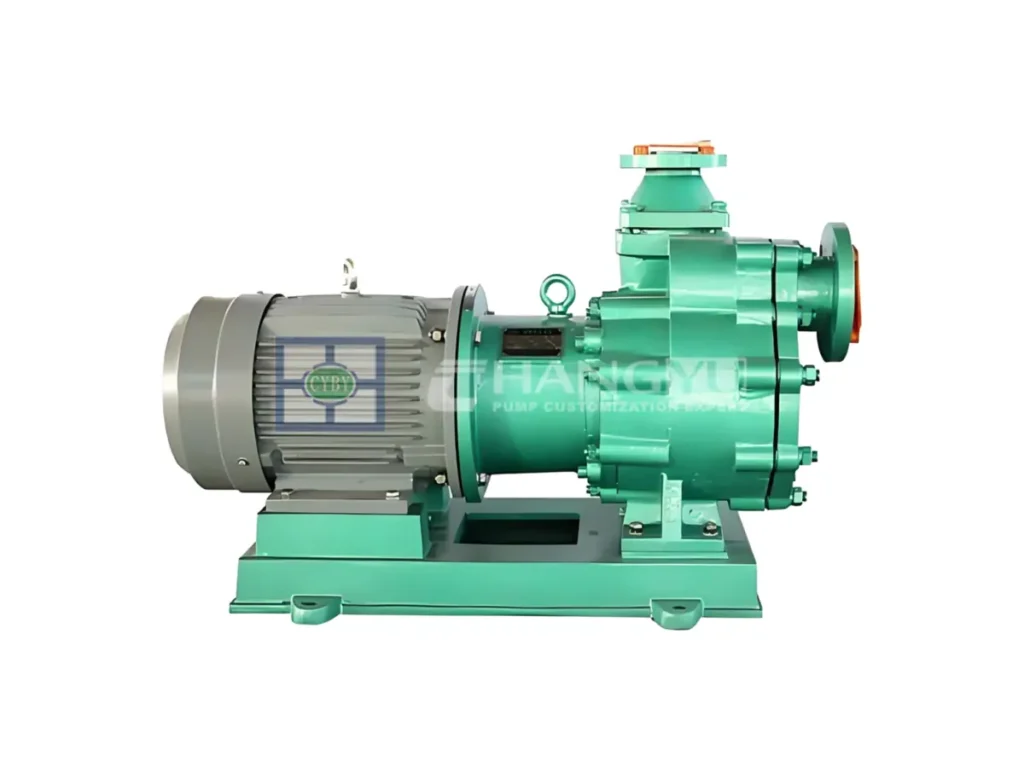
Pompa Pemancing Otomatis Magnetik Berjajar Fluorin Seri ZCQ
Seri ZCQ menggabungkan penyegelan penggerak magnetik dengan kemampuan pemancing otomatis. Casing dan impeler pompa dilapisi dengan FEP (F46) atau PFA, memberikan penahanan tanpa kebocoran dengan desain - kopling magnetik menghilangkan segel poros mekanis sepenuhnya. Desain self-priming menangani kondisi vakum sementara dan pengoperasian kering yang terputus-putus, sehingga cocok untuk bongkar muat jinjing di mana pompa harus melakukan priming sendiri terhadap pengangkatan hisap dan jinjing mengosongkan di akhir setiap siklus.
Pertimbangan operasional khusus untuk pompa penggerak magnetik dalam layanan asam kuat - hidroklorik, sulfat, dan nitrat - adalah penggetasan hidrogen pada magnet. Reaksi korosi asam menghasilkan hidrogen atom, yang dapat menembus cangkang penahanan dan diserap oleh magnet NdFeB. Hal ini menyebabkan ekspansi kisi, penggetasan, dan akhirnya pemisahan. Changyu Pump mengatasi mode kegagalan ini melalui enkapsulasi fluoroplastik densitas tinggi dari rotor magnet dan bahan cangkang penahanan yang tahan korosi, yang mengurangi laju permeasi hidrogen di bawah ambang batas di mana degradasi magnet terjadi selama masa pakai pompa. Untuk aplikasi di mana risiko ini tidak dapat diterima, rotor magnet Samarium-Cobalt (SmCo) tersedia sebagai peningkatan. Untuk bahan kimia berbahaya, beracun, atau bernilai tinggi, Seri ZCQ menyediakan penahanan tanpa kebocoran yang diperlukan untuk operasi yang aman dan sesuai.
Spesifikasi Utama: Aliran 3-250 m³/jam; Head 12,5-50 m; Daya 0,75-30 kW; Suhu -20°C hingga 150°C
Tanya Jawab tentang Pompa Kimia untuk Tote
T1: Apakah pompa jinjing bahan kimia dapat melakukan pemancing otomatis?
A: Pompa AODD, pompa peristaltik, dan pompa sentrifugal pemancing otomatis semuanya mampu melakukan pemancing otomatis dari atas bukaan jinjing. Pompa diafragma listrik juga dapat melakukan pemancing otomatis. Pompa sentrifugal standar tanpa tahap pemancing otomatis tidak direkomendasikan untuk transfer tote - pompa ini membutuhkan hisapan banjir dan akan gagal untuk melakukan pemompaan ketika dipasang di atas level cairan.
T2: Berapa ukuran pompa yang saya perlukan untuk tas jinjing IBC?
J: Pompa harus memiliki panjang tabung 1.200-1.500 mm untuk mencapai bagian bawah IBC standar. Pastikan motor atau pasokan udara memiliki ukuran yang sesuai dengan berat jenis fluida pada laju aliran desain.
T3: Pompa apa yang terbaik untuk bahan kimia korosif dari tas jinjing?
J: Untuk asam korosif (sulfat, klorida, nitrat), sebuah Pompa AODD dengan bodi PVDF atau pompa sentrifugal pemancing otomatis dengan lapisan PFA memberikan kompatibilitas bahan kimia terverifikasi dan keandalan operasional yang diperlukan. Untuk asam fluorida, tentukan komponen yang dibasahi PTFE atau PFA.
T4: Bagaimana cara mencegah kebocoran saat memompa dari tas jinjing?
J: Tentukan a pompa tanpa tutup (AODD, peristaltik, atau penggerak magnetik) untuk penahanan tanpa kebocoran berdasarkan desain. Gunakan adaptor jinjing kedap uap untuk menyegel ruang melingkar antara tabung pompa dan bukaan jinjing. Untuk pompa yang disegel secara mekanis, pastikan bahwa elastomer segel kompatibel dengan bahan kimia.
T5: Apa perbedaan antara pompa jinjing dan pompa drum?
J: Perbedaan utamanya adalah panjang tabung. Pompa drum memiliki panjang tabung sekitar 1.000 mm untuk drum standar. Pompa jinjing membutuhkan panjang tabung 1.200-1.500 mm untuk mencapai bagian bawah jinjing IBC. Pompa tote juga mungkin memerlukan laju aliran yang lebih tinggi dan motor yang lebih besar untuk mencapai waktu transfer yang dapat diterima dari volume kontainer yang lebih besar.
T6: Dapatkah saya memompa bahan kimia kental dari tas jinjing?
J: Ya. Pompa AODD menangani cairan hingga beberapa ribu centipoise dan dapat melewatkan padatan tersuspensi. Untuk cairan dengan viskositas tinggi, tentukan pompa dengan kemampuan pengangkatan hisap yang memadai dan pastikan bahwa motor atau pasokan udara memiliki ukuran yang sesuai dengan torsi atau tekanan tambahan yang dibutuhkan.
T7: Sertifikasi keselamatan apa yang diperlukan untuk pompa jinjing di area berbahaya?
J: Untuk pelarut yang mudah terbakar di area yang diklasifikasikan Zona 1 atau Zona 2 di Uni Eropa, pompa harus membawa ATEX sertifikasi (Kategori 2G atau 3G). Internasional, IECEx sertifikasi memiliki fungsi yang sama. Untuk pasar domestik Tiongkok, GB 3836 standar tahan ledakan berlaku. Bahan pompa yang konduktif dan jalur pengardean statis yang terverifikasi adalah wajib.
T8: Berapa panjang tabung pompa jinjing seharusnya?
A: 1.200-1.500 mm untuk tas jinjing IBC standar. Ukur jarak dari bukaan atas jinjing ke bagian bawah wadah dan tambahkan panjang yang cukup untuk memastikan ujung hisap tetap terendam sampai jinjing hampir kosong.
T9: Dapatkah saya membiarkan pompa jinjing berjalan tanpa pengawasan?
J: Pompa AODD dapat dibiarkan bekerja pada katup pelepasan tertutup untuk waktu yang singkat tanpa kerusakan. Pompa sentrifugal tidak boleh dijalankan dengan katup tertutup untuk waktu yang lama, karena cairan yang terperangkap akan memanas. Untuk pengoperasian tanpa pengawasan, monitor beban digital dapat secara otomatis menghentikan pompa ketika tote mengosong.
Q10: Pompa apa yang terbaik untuk sodium hipoklorit (pemutih) dari tas jinjing?
A: Pompa peristaltik secara inheren cocok untuk natrium hipoklorit karena pompa ini menangani off-gas tanpa kunci uap. Pompa AODD dengan bodi PVDF juga berfungsi dengan baik dan mentolerir sifat pemutih yang sarat gas. Untuk kedua jenis ini, tentukan elastomer EPDM atau FFKM. Hastelloy tidak kompatibel dengan natrium hipoklorit dan tidak boleh ditentukan untuk komponen yang dibasahi dalam layanan pemutih.
Rekomendasi Pemilihan Ahli dari Insinyur Pompa Changyu
- Verifikasi kompatibilitas bahan untuk bahan kimia tertentu pada suhu maksimumnya, bukan hanya pada kondisi nominalnya. Tingkat serangan bahan kimia meningkat sekitar dua kali lipat untuk setiap kenaikan suhu 10°C. Berikan perhatian khusus pada bahan kimia pengoksidasi - asam nitrat menyerang PP pada konsentrasi berapa pun, dan natrium hipoklorit menyerang sebagian besar logam, termasuk Hastelloy.
- Tentukan pompa tanpa segel untuk bahan kimia berbahaya. Pompa AODD menghilangkan segel mekanis, jalur kebocoran yang paling umum. Untuk bahan kimia beracun, mudah terbakar, atau bernilai tinggi, penahanan tanpa segel adalah spesifikasi standar. Untuk pompa penggerak magnetik dalam layanan asam, pastikan bahwa enkapsulasi magnet dan bahan cangkang penahanan dirancang untuk menahan perembesan hidrogen.
- Sesuaikan sistem penggerak dengan klasifikasi area berbahaya. Untuk area ATEX Zona 1 atau Zona 2, pompa AODD dengan bahan konduktif dan arde memberikan solusi yang tidak memerlukan sertifikasi listrik. Untuk pompa yang digerakkan secara elektrik, verifikasi sertifikasi ATEX, IECEx, atau GB 3836, termasuk kelas-T yang sesuai untuk suhu penyalaan otomatis pelarut.
- Rancang jalur transfer sebagai sistem tertutup. Pompa yang dipasang secara kaku dengan adaptor jinjing kedap uap dan selang pembuangan tertutup mencegah paparan operator, pelepasan uap, dan tumpahan selama penggantian jinjing.
Kesimpulan
A pompa jinjing kimia harus memenuhi empat tuntutan simultan: kompatibilitas material dengan fluida, kemampuan pemancing otomatis dari atas jinjing, portabilitas untuk penggunaan multi-kontainer, dan sertifikasi keselamatan untuk klasifikasi area berbahaya instalasi. Apakah aplikasi memerlukan pompa AODD, pompa peristaltik, pompa sentrifugal pemancing otomatis, atau pompa penggerak magnetik tanpa seal, metodologi pemilihannya konsisten: mengkarakterisasi bahan kimia, menentukan tugas hidraulik, memilih jenis dan bahan pompa, dan mencocokkan sumber daya dengan persyaratan keselamatan.

Kontak Changyu Pump dengan parameter kimia dan persyaratan transfer jinjing Anda. Tim teknisi kami akan memberikan rekomendasi pompa yang terperinci dan penawaran harga yang disesuaikan dengan aplikasi Anda.