
1. Pendahuluan
Pompa industri pulp dan kertas beroperasi di salah satu lingkungan yang paling menuntut dalam penanganan fluida industri. Satu pabrik terintegrasi mengandung aliran proses yang berkisar dari bubur serpihan kayu pada konsistensi 10–15% hingga lindi hitam pekat pada padatan 70–80%, dari lumpur kapur yang sangat abrasif hingga larutan pemutih klorin dioksida yang korosif, dari stok berserat yang menyumbat impeler konvensional hingga air umpan boiler bertekanan tinggi. Setiap aliran ini menuntut pompa yang dirancang tidak hanya untuk kimia fluida tetapi untuk kombinasi spesifik konsentrasi padatan, viskositas, suhu, dan potensi abrasif yang mendefinisikan tahap proses tertentu tersebut.
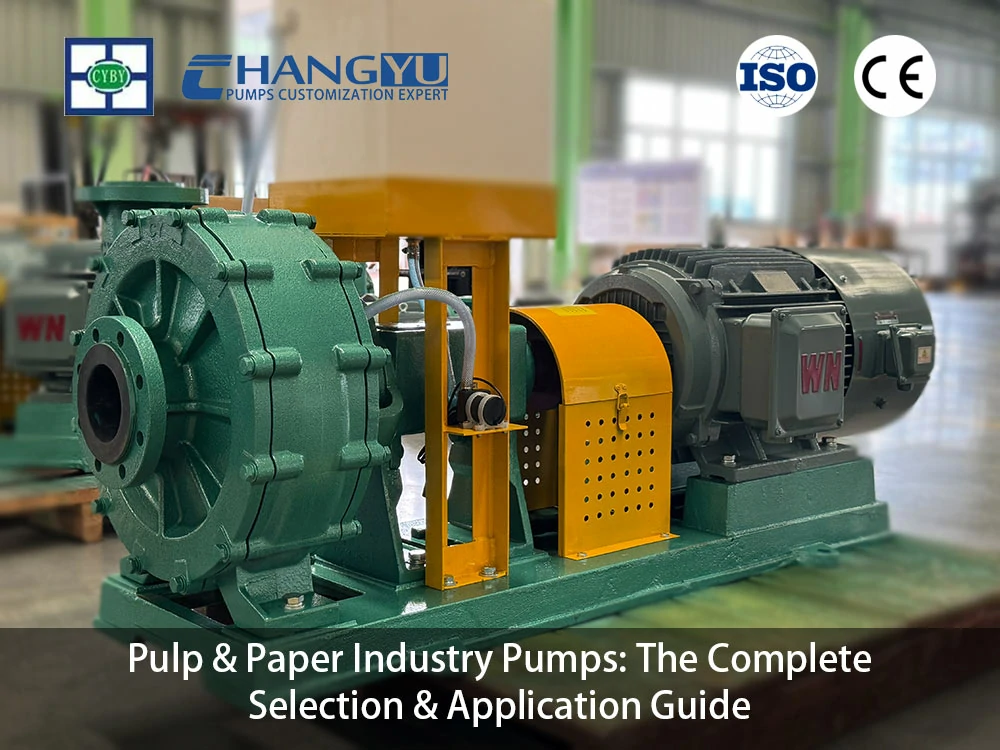
Pasar pulp dan kertas global, yang memproduksi lebih dari 400 juta metrik ton setiap tahunnya, bergantung pada pompa yang dapat mempertahankan operasi 24/7 berkelanjutan melalui kampanye produksi yang berlangsung berminggu-minggu. Satu kegagalan pompa pada tahap proses kritis—pompa transfer lindi hitam, pompa stok yang memberi makan headbox, pompa air umpan boiler—dapat menghentikan seluruh lini produksi, menghabiskan biaya ratusan ribu dolar per jam dalam output yang hilang.
Panduan ini menyediakan referensi terstruktur yang mencakup jenis pompa, material, dan kriteria pemilihan yang spesifik untuk setiap tahap proses utama dalam industri pulp dan kertas. Berdasarkan pengalaman lebih dari dua dekade dalam merekayasa pompa tahan korosi dan tahan aus untuk aplikasi industri yang menuntut, Changyu Pump menghadirkan keahlian terverifikasi di seluruh teknologi pompa sentrifugal, magnetic drive, dan tanpa segel. Hubungi kami dengan parameter proses Anda untuk rekomendasi spesifik.
Tahap Proses Utama dalam Produksi Pulp & Kertas
Memahami di mana pompa beroperasi dalam aliran proses pabrik adalah titik awal untuk pemilihan pompa. Industri pulp dan kertas secara luas terbagi menjadi tiga bagian, masing-masing dengan persyaratan pemompaan yang berbeda.
1 Bagian Pembuatan Pulp
Bagian pembuatan pulp mengubah serpihan kayu atau serat daur ulang menjadi pulp melalui proses kimia atau mekanis. Tugas pemompaan utama meliputi:
- Sirkulasi lindi masak: Bahan kimia masak alkali (kraft) atau asam (sulfit) disirkulasikan melalui digester pada suhu tinggi (150–170°C) dan tekanan. Pompa harus tahan terhadap agresivitas kimia lindi masak dan suhu tinggi.
- Pencucian stok coklat: Pulp pada konsistensi 1–2% dicuci untuk memisahkan lindi masak bekas (lindi hitam) dari serat. Pompa air cucian dan filtrat menangani bubur pulp encer dengan kandungan kimia sedang.
- Penyaringan dan pembersihan: Pompa rejects dan accepts memindahkan pulp melalui saringan tekanan dan pembersih sentrifugal, menangani stok berserat pada konsistensi 1–4% dengan partikel berukuran besar yang mengganggu.
- Pemutihan: Klorin dioksida, hidrogen peroksida, oksigen, dan soda kaustik diukur ke dalam aliran pulp. Pompa bahan kimia pemutih harus tahan terhadap oksidator kuat sambil mempertahankan kontrol aliran yang presisi.
2 Bagian Pembuatan Kertas
Bagian pembuatan kertas membentuk, menekan, mengeringkan, dan menyelesaikan lembaran kertas. Tugas pemompaan utama meliputi:
- Persiapan stok: Pulp pada konsistensi 2–6% dimurnikan, dicampur, dan diencerkan hingga konsistensi sekitar 1% untuk headbox. Pompa stok harus menangani suspensi berserat tanpa merusak serat atau menyumbat.
- Sistem aliran pendekatan: Stok encer disaring, dibersihkan, dan dikirim ke headbox pada laju aliran dan tekanan yang dikontrol secara presisi. Aliran bebas pulsasi sangat penting untuk kualitas pembentukan lembaran.
- Penanganan air putih: Air yang dikeringkan dari lembaran selama pembentukan dikumpulkan dan disirkulasikan kembali. Pompa air putih menangani volume besar air yang sarat serat dengan konsistensi rendah.
- Pelapisan dan sizing: Pati, lateks, tanah liat, dan lapisan kalsium karbonat disiapkan dan diaplikasikan ke permukaan kertas. Pompa pelapis harus menangani bubur mineral abrasif dengan kemampuan pengukuran yang presisi.
3 Bagian Pemulihan Kimia
Bagian pemulihan kimia meregenerasi bahan kimia masak dari lindi hitam bekas. Bagian ini adalah lingkungan pompa yang paling menuntut di pabrik:
- Evaporasi lindi hitam: Lindi hitam lemah (padatan 15–20%) dipekatkan menjadi lindi hitam kuat (padatan 65–80%) dalam evaporator efek ganda. Pompa harus menangani lindi dengan padatan tinggi yang semakin kental pada suhu tinggi.
- Umpan boiler pemulihan: Lindi hitam pekat disemprotkan ke dalam boiler pemulihan. Pompa umpan bertekanan tinggi menangani fluida mudah terbakar yang kental pada suhu tinggi.
- Penanganan lindi hijau: Lelehan dari boiler pemulihan dilarutkan untuk membentuk lindi hijau—larutan natrium karbonat dan natrium sulfida yang sangat alkali (pH 12–13) dan abrasif.
- Persiapan lindi putih: Lindi hijau direaksikan dengan kapur untuk menghasilkan lindi putih (natrium hidroksida dan natrium sulfida) pada pH 12–13. Pompa lumpur kapur menangani bubur kalsium karbonat abrasif pada pH tinggi.
- Tungku kapur: Lumpur kapur dihilangkan airnya dan dikalsinasi untuk meregenerasi kapur tohor. Pompa menangani bubur lumpur kapur abrasif pada suhu tinggi.
4 Proses Pembuatan Pulp Mekanis dan Serat Daur Ulang
Di luar proses pembuatan pulp kimia kraft yang dominan, dua kategori proses lainnya memberikan tuntutan pemompaan yang berbeda. Pembuatan pulp mekanis (TMP, CTMP) menghasilkan serat yang lebih panjang dan lebih abrasif serta beroperasi tanpa pemulihan kimia—pompa harus menangani stok bersuhu tinggi dengan konsistensi tinggi yang membutuhkan ketahanan aus yang lebih besar daripada aplikasi pulp kimia, biasanya menentukan pompa berlapis baja tahan karat dupleks atau UHMW-PE. Pemrosesan serat daur ulang (RCF) memperkenalkan kontaminan tambahan—plastik, perekat, tinta, dan logam—yang membutuhkan pompa dengan kemampuan lintasan padatan yang lebih lebar, impeler tersembunyi, dan material tahan aus untuk menangani beban padatan yang tidak dapat diprediksi dari bahan baku kertas daur ulang.
5 Persyaratan Pemompaan Tahap Proses Sekilas
| Bagian Proses | Tugas Pemompaan Utama | Persyaratan Pompa Kritis |
|---|---|---|
| Pembuatan Pulp | Lindi masak, pencucian stok, penyaringan, bahan kimia pemutih | Ketahanan kimia, toleransi suhu tinggi, lintasan padatan |
| Pembuatan Kertas | Persiapan stok, aliran pendekatan, air putih, pelapisan | Aliran pulsasi rendah, hidrolika ramah serat, pengukuran presisi |
| Pemulihan Kimia | Black liquor, green liquor, white liquor, lime mud | Toleransi viskositas, ketahanan abrasi, kompatibilitas pH tinggi |
Apa Saja Jenis Utama Pompa yang Digunakan di Industri Pulp & Kertas?
Enam jenis pompa melayani sebagian besar aplikasi pulp dan kertas. Masing-masing memiliki prinsip hidrolik yang berbeda, kemampuan penanganan padatan, dan tahap proses yang paling sesuai.
1 Pompa Sentrifugal
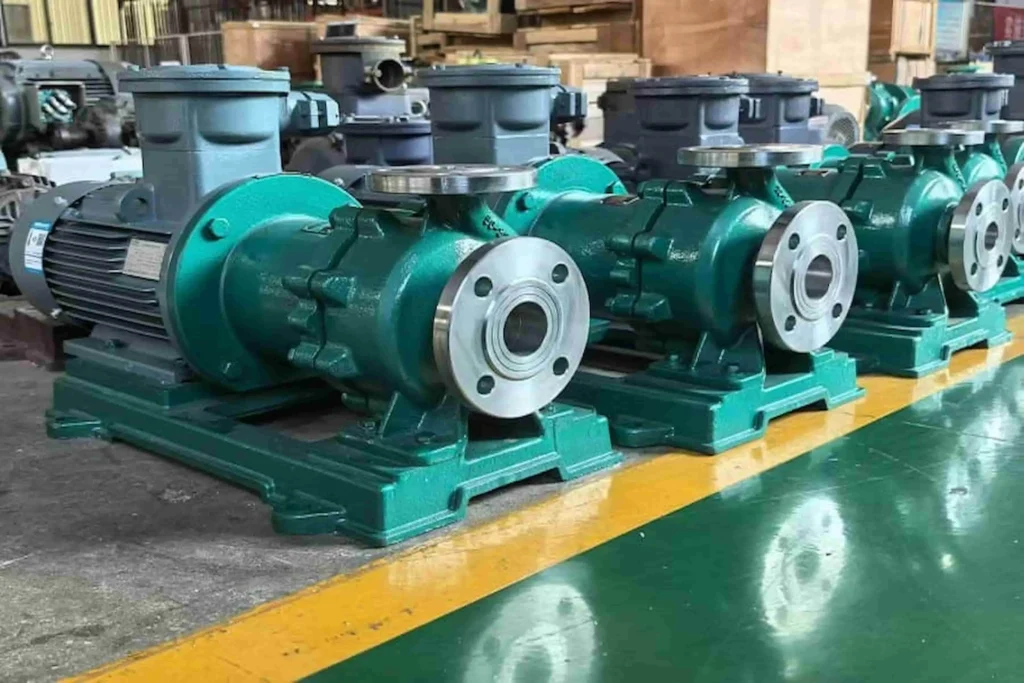
Pompa sentrifugal adalah tulang punggung pabrik pulp dan kertas. Pompa ini melayani sebagian besar aplikasi transfer stok, sirkulasi air, penanganan filtrat, dan transfer bahan kimia. Untuk pompa industri kertas layanan, desain sentrifugal tersedia dalam beberapa konfigurasi:
- Pompa sentrifugal hisap ujung menangani cairan bersih hingga sedikit terkontaminasi—white water, filtrat, stok encer, dan air pendingin.
- Pompa sentrifugal impeler semi-terbuka menangani stok dengan konsistensi rendah hingga sedang (1–6%) dan cairan yang mengandung padatan kecil.
- Pompa impeler tersembunyi (vortex) menangani stok berserat, rejek, dan cairan yang mengandung padatan besar atau bahan berserabut yang dapat menyumbat impeler standar.
Pompa sentrifugal memberikan aliran kontinu dan bebas pulsasi—persyaratan kritis untuk aplikasi umpan headbox di mana pulsasi aliran secara langsung mempengaruhi kualitas pembentukan lembaran.
2 Pompa Rongga Progresif
Pompa rongga progresif (PC) menggunakan rotor heliks yang berputar di dalam stator untuk menciptakan serangkaian rongga tertutup yang bergerak dari hisap ke buang. Mekanisme perpindahan positif ini memberikan aliran halus dan tidak berdenyut pada laju yang berbanding lurus dengan kecepatan pompa.
Dalam aplikasi pulp dan kertas, pompa PC melayani tugas konsistensi tinggi dan viskositas tinggi yang tidak dapat ditangani secara efisien oleh pompa sentrifugal: stok dengan konsistensi sedang hingga tinggi (8–15%), black liquor di atas 50% padatan, warna coating, bubur pati, dan dosis polimer. Kemampuannya untuk menangani pengisi abrasif dan cairan yang sensitif terhadap geser menjadikannya spesifikasi standar untuk aplikasi dapur coating dan size press.
3 Pompa Diafragma (AODD dan Listrik)
Pompa diafragma ganda yang dioperasikan dengan udara (AODD) bersifat self-priming, tanpa segel, dan dapat berjalan kering tanpa kerusakan—karakteristik yang melayani tugas transfer intermiten, batch kecil, dan portabel di seluruh pabrik. Pompa AODD menangani bahan kimia pemutih, flokulan, defoamer, dan bahan kimia pengolahan air limbah. Pompa diafragma listrik menawarkan operasi tanpa segel yang sama dengan konsumsi energi yang lebih rendah untuk dosis bahan kimia kontinu.
4 Pompa Roda Gigi
Pompa roda gigi memberikan aliran halus dan bebas pulsasi pada tekanan tinggi dan merupakan spesifikasi standar untuk dosis bahan kimia coating, agen sizing, dan aditif viskositas tinggi. Celah internalnya yang rapat membuatnya tidak cocok untuk cairan yang mengandung padatan abrasif, membatasi aplikasinya pada cairan bersih dan pelumas.
5 Pompa Vakum Cincin Cair
Pompa vakum cincin cair sangat penting untuk sistem dewatering vakum mesin kertas. Pompa ini menghasilkan vakum yang menarik air dari lembaran melalui kain pembentuk dan kain press, biasanya beroperasi pada tingkat vakum 30–50 kPa. Pompa ini menangani volume udara besar dengan air dan serat yang terbawa, membutuhkan bahan yang tahan terhadap white water yang sedikit asam dan mengandung serat yang digunakan sebagai cairan segel. Menjaga suhu cairan segel yang benar sangat penting—cairan segel yang terlalu hangat meningkatkan tekanan uap dan mengurangi kapasitas vakum.
6 Perbandingan Jenis Pompa Pulp & Kertas
| Jenis Pompa | Karakteristik Aliran | Toleransi Padatan | Rentang Viskositas | Aplikasi Terbaik |
|---|---|---|---|---|
| Sentrifugal | Terus menerus, bebas pulsa | Hingga konsistensi 6% (semi-terbuka) | <200 cP | Transfer stok, sirkulasi air, filtrat |
| Rongga Progresif | Halus, tidak berdenyut | Hingga konsistensi 15% | Hingga 1.000.000 cP | Stok konsistensi tinggi, black liquor, coating |
| Diafragma AODD | Berdenyut (teredam) | Hingga 40% padatan | Hingga 20.000 cP | Bahan kimia pemutih, air limbah, transfer portabel |
| Perlengkapan | Halus, tanpa denyut | Minimal (cairan bersih) | 1–1.000.000 cP | Dosis coating, agen sizing |
| Vakum Cincin Cair | Aliran gas kontinu | Menangani air dan serat yang terbawa | T/A (gas) | Dewatering vakum mesin kertas |
Bahan Apa yang Terbaik untuk Pompa Pulp & Kertas?
Pemilihan bahan untuk pompa industri pulp dan kertas harus mempertimbangkan kondisi kimia, termal, dan abrasif spesifik dari setiap aliran proses. Bahan yang berkinerja baik dalam layanan white water dapat gagal dalam hitungan minggu dalam green liquor atau larutan pemutih klorin dioksida.
1 Bahan Tahan Aus untuk Media Abrasif dan Berserat
UHMW-PE (Polietilena dengan Berat Molekul Sangat Tinggi) adalah bahan pilihan untuk layanan korosi-abrasi gabungan pada suhu sedang (hingga sekitar 90°C). Dalam kondisi uji keausan abrasif terstandarisasi, ketahanan ausnya kira-kira empat kali lipat dari PTFE dan 7–10 kali lipat dari baja karbon dan baja tahan karat. Lapisan UHMW-PE memberikan perlindungan aus dan korosi gabungan yang diperlukan untuk green liquor, white liquor, lime mud, dan stok kertas yang mengandung pengisi mineral dan kontaminan abrasif.
Besi cor putih kromium tinggi (27–35% Cr, 600+ BHN) memberikan ketahanan abrasi maksimum untuk bubur pH netral seperti stok kertas yang mengandung pengisi mineral, coating tanah liat kaolin, dan lime mud. Ini adalah bahan standar untuk impeler dan volute pompa bubur tugas berat dan digunakan dalam aplikasi pulp dan kertas di mana korosi kimia sekunder terhadap abrasi mekanis.
Karet alam lapisan memberikan ketahanan yang sangat baik terhadap partikel tajam halus di lingkungan korosif. Karet menyerap energi tumbukan partikel dan melepaskannya secara elastis, daripada menahannya melalui kekerasan. Pompa berlapis karet ditentukan untuk bubur abrasif partikel halus pada suhu sedang (di bawah sekitar 70°C).
2 Bahan Tahan Korosi untuk Pemulihan Kimia dan Pemutihan
Baja tahan karat dupleks (CD4MCu, 2205, 2507) memberikan ketahanan korosi-abrasi gabungan yang diperlukan untuk layanan black liquor, green liquor, dan white liquor. Baja tahan karat dupleks 2205 menawarkan ketahanan yang sangat baik terhadap retak korosi tegangan klorida dan korosi tegangan sulfida—mode kegagalan yang menyerang baja tahan karat austenitik standar di lingkungan pulping alkali. Super dupleks 2507 memperluas ketahanan ini ke kondisi kimia yang lebih agresif.
Baja tahan karat 316L adalah material dasar untuk air putih, filtrat, dan air proses bersih. Material ini tahan terhadap pH sedikit asam hingga netral dari aliran ini dan memberikan masa pakai yang memadai dalam operasi berkelanjutan. Material ini tidak cocok untuk layanan green liquor, white liquor, atau black liquor karena kerentanannya terhadap retak korosi tegangan kaustik pada suhu tinggi.
Lapisan fluoroplastik FEP dan PFA memberikan ketahanan kimia yang hampir universal untuk bahan kimia pemutih, asam kuat, dan alkali kuat. Pompa berlapis FEP melayani layanan klorin dioksida, hidrogen peroksida, dan soda kaustik pada suhu hingga 100°C. PFA memperluas kemampuan ini hingga 180°C untuk transfer kimia suhu tinggi.
3 Referensi Cepat Pemilihan Material untuk Pulp & Kertas
| Aliran Proses | Kisaran pH | Suhu | Tantangan Utama | Bahan yang Direkomendasikan |
|---|---|---|---|---|
| Black liquor (lemah, 15–20%) | 12–14 | 80-100°C | Korosi alkali + padatan sedang | Duplex SS 2205, 2507 |
| Black liquor (kuat, 65–80%) | 12–14 | 100-120°C | Viskositas tinggi + korosi alkali | Duplex SS 2205, 2507; pompa PC |
| Green liquor | 12–13 | 80–95°C | Alkalinitas tinggi + residu abrasif | Dilapisi UHMW-PE, duplex SS 2507 |
| White liquor | 12–13 | 80-100°C | Kaustik kuat + abrasi sedang | Dilapisi UHMW-PE, duplex SS 2205 |
| Lumpur kapur | 12–13 | 80-100°C | Abrasi parah + pH tinggi | Dilapisi UHMW-PE, besi krom tinggi |
| Klorin dioksida (ClO₂) | 2–4 | 50–70°C | Oksidator kuat + korosi asam | Dilapisi FEP/PFA, titanium |
| Hidrogen peroksida (H₂O₂) | 3–5 | 50–80°C | Pengoksidasi kuat | Dilapisi FEP/PFA, 316L SS (terverifikasi) |
| Stok kertas (1–6%) | 4–8 | 20–60°C | Lintasan serat + abrasi sedang | Duplex SS 2205, dilapisi UHMW-PE |
| Air putih / Filtrat | 4–7 | 30–50°C | Sedikit asam, mengandung serat | 316L SS, duplex SS 2205 |
| Warna pelapis | 7–9 | 20–40°C | Pengisi mineral abrasif | Dilapisi UHMW-PE, dilapisi karet |
Cara Memilih Pompa Industri Pulp & Kertas yang Tepat untuk Setiap Tahap Proses: Kerangka Kerja 5 Langkah
Langkah 1: Tentukan Sifat Fluida Proses
Dokumentasikan profil kimia dan fisik lengkap fluida: komposisi kimia, pH, suhu, konsentrasi padatan (konsistensi untuk stok pulp), ukuran dan bentuk partikel, viskositas, dan berat jenis. Untuk stok pulp, tentukan konsistensi (persentase berat serat kering oven) karena parameter tunggal ini menentukan apakah pompa sentrifugal (biasanya di bawah konsistensi 6%) atau pompa perpindahan positif (di atas konsistensi 6–8%) adalah titik awal yang tepat.
Langkah 2: Tentukan Laju Aliran, Total Head Dinamis, dan Persyaratan Proses
Hitung laju aliran yang diperlukan dan total head dinamis (TDH), dengan memperhitungkan angkat statis, kerugian gesekan melalui sistem perpipaan, dan tekanan tujuan. Untuk pompa umpan headbox, tentukan tingkat pulsasi aliran yang dapat diterima. Untuk aplikasi pelapisan dan metering, tentukan akurasi dan pengulangan yang diperlukan.
Langkah 3: Pilih Jenis Pompa Berdasarkan Karakteristik Fluida
- Stok konsistensi rendah hingga sedang (1–6%), air putih, filtrat, air proses bersih → pompa sentrifugal
- Stok konsistensi sedang hingga tinggi (6–15%), black liquor viskositas tinggi (>50% padatan), warna pelapis → pompa rongga progresif
- Bahan kimia pemutih, aditif air limbah, transfer intermiten → pompa diafragma AODD
- Metering pelapis, bahan sizing, aditif viskositas tinggi → pompa roda gigi
- Dewatering vakum mesin kertas → pompa vakum cincin cair
Langkah 4: Cocokkan Material dengan Kimia Proses
Pilih sistem material berdasarkan profil kimia dan abrasif spesifik aliran proses menggunakan referensi cepat pemilihan material di Bagian 4.3. Untuk layanan korosi-abrasi gabungan (green liquor, white liquor, lumpur kapur), lapisan UHMW-PE memberikan perlindungan terluas. Untuk oksidator kuat (ClO₂, H₂O₂), lapisan fluoroplastik FEP atau PFA diperlukan.
Langkah 5: Verifikasi Margin NPSH dan Ukuran Motor
Untuk pompa sentrifugal, pastikan NPSH yang tersedia (NPSHa) melebihi NPSH yang diperlukan pompa (NPSHr) dengan margin minimum 0,5 meter, seperti yang ditentukan dalam ISO 5199 dan standar pompa HI. Untuk pompa stok, perhitungkan efek konsistensi serat pada NPSH—konsistensi yang lebih tinggi mengurangi NPSHa. Ukur motor untuk berat jenis fluida pada laju aliran desain, dengan faktor layanan minimal 1,15 untuk aplikasi tugas berkelanjutan.
Alur keputusan pemilihan:
- Tentukan sifat fluida (konsistensi, pH, suhu, viskositas, padatan)
- Tentukan laju aliran dan total head dinamis
- Pilih jenis pompa: sentrifugal untuk konsistensi <6%; pompa PC untuk konsistensi 6–15%; diafragma untuk bahan kimia; roda gigi untuk metering; vakum untuk dewatering
- Cocokkan material dengan kimia proses spesifik menggunakan tabel referensi cepat (Bagian 4.3)
- Verifikasi margin NPSH (≥0,5 m) dan ukur motor untuk berat jenis fluida
Aplikasi Pompa Pulp & Kertas berdasarkan Tahap Proses
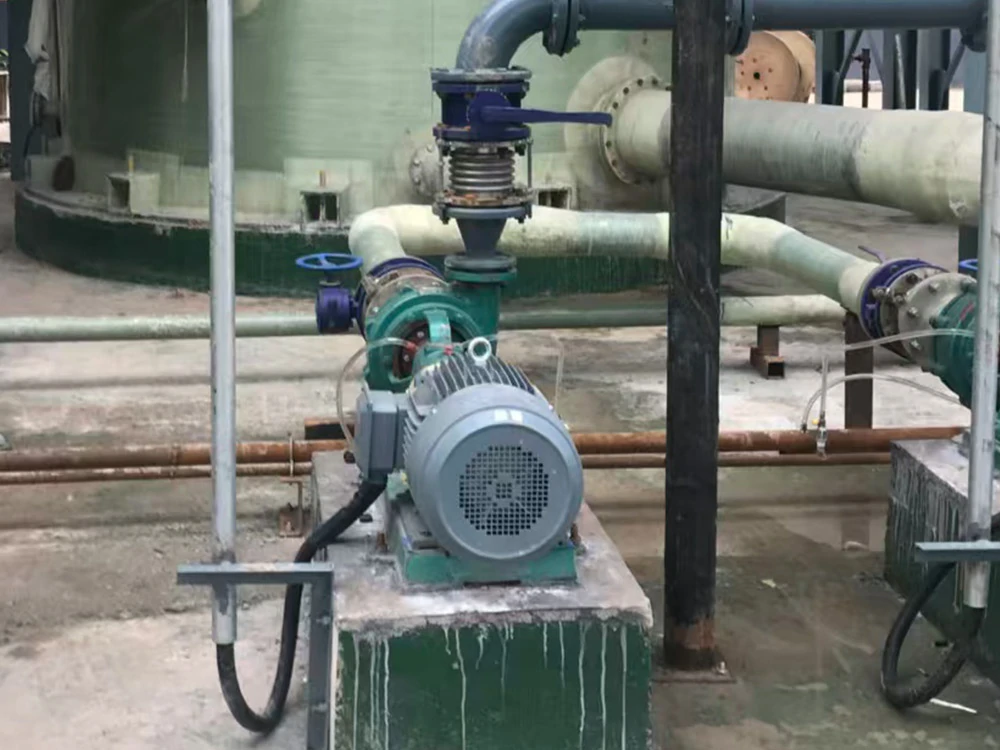
1 Aplikasi Bagian Pulping
Pompa sirkulasi liquor memasak mensirkulasikan white liquor melalui digester pada suhu hingga 170°C. Pompa ini biasanya terbuat dari baja tahan karat dupleks untuk menahan korosi alkali gabungan dan tekanan sedang. Pompa sentrifugal satu tahap dengan segel mekanis suhu tinggi adalah standar.
Pompa filtrat pencuci stok coklat menangani black liquor encer (15–20% padatan) pada suhu 70–90°C. Pompa sentrifugal baja tahan karat dupleks dengan impeler semi-terbuka melayani tugas ini, memberikan ketahanan kimia yang diperlukan untuk filtrat alkali dan kemampuan lintasan padatan untuk serat yang terbawa. Untuk pemahaman yang lebih luas tentang bagaimana pompa sentrifugal menangani fluida korosif, lihat panduan pompa sentrifugal industri.
Pompa metering bahan kimia pemutih mengirimkan volume presisi klorin dioksida, hidrogen peroksida, oksigen, dan soda kaustik ke dalam aliran pulp. Pompa penggerak magnet tanpa segel berlapis fluoroplastik (FEP atau PFA) adalah spesifikasi standar, memberikan ketahanan kimia yang diperlukan untuk oksidator kuat dengan penahanan tanpa kebocoran.
2 Aplikasi Bagian Pembuatan Kertas
Pompa persiapan stok dan aliran pendekatan mengirimkan stok yang telah disaring dan dihaluskan ke headbox pada laju aliran yang dikontrol secara presisi. Pompa sentrifugal dengan pulsasi rendah dan impeler semi-terbuka melayani stok dengan konsistensi rendah hingga sedang (1–6%), sementara pompa rongga progresif menangani konsistensi yang lebih tinggi. Stabilitas aliran sangat penting—pulsasi dalam aliran pendekatan secara langsung mempengaruhi keseragaman berat dasar lembaran. Untuk panduan pemilihan pompa sentrifugal yang terperinci, lihat panduan pompa bubur sentrifugal kami.
Pompa sirkulasi air putih menangani volume besar air dengan konsistensi rendah yang mengandung serat. Pompa sentrifugal baja tahan karat 316L adalah spesifikasi standar, memberikan ketahanan korosi yang memadai untuk air putih yang sedikit asam dan kapasitas aliran yang diperlukan untuk resirkulasi volume tinggi.
Pompa dapur pelapis menyiapkan dan mensirkulasikan formulasi pelapis yang mengandung pigmen mineral (kaolin clay, kalsium karbonat, titanium dioksida), pengikat (pati, lateks), dan aditif. Pompa rongga progresif melayani tugas ini karena pengiriman geser rendah dan bebas pulsasi menjaga struktur pelapis dan mencegah penggumpalan pigmen. Stator berlapis UHMW-PE atau karet memberikan ketahanan abrasi yang diperlukan untuk pelapis yang diisi mineral.
3 Aplikasi Bagian Pemulihan Kimia
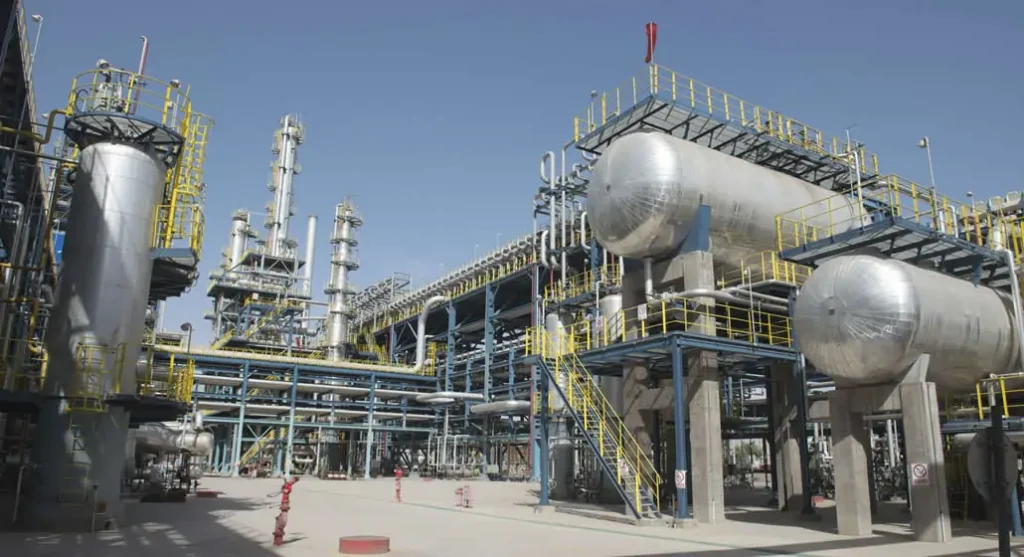
Pompa transfer lindi hitam memindahkan lindi hitam encer (padatan 15–20%) dari mesin cuci ke evaporator dan lindi hitam pekat (padatan 65–80%) dari evaporator ke boiler pemulihan. Pompa sentrifugal baja tahan karat dupleks melayani lindi hitam encer; pompa rongga progresif ditentukan untuk lindi hitam pekat karena viskositasnya yang tinggi.
Pompa lindi hijau dan lindi putih menangani aliran proses yang sangat basa (pH 12–13) dan abrasif. Pompa sentrifugal berlapis UHMW-PE adalah spesifikasi standar untuk lindi hijau yang mengandung ampas tersuspensi dan untuk lindi putih yang mengandung sisa lumpur kapur. Lapisan UHMW-PE memberikan perlindungan korosi-abrasi gabungan yang tidak dapat diberikan oleh pompa logam di lingkungan ini.
Pompa bubur lumpur kapur memindahkan bubur kalsium karbonat abrasif dari kaustisizer ke tungku kapur. Pompa sentrifugal berlapis UHMW-PE atau pompa besi kromium tinggi melayani tugas ini, dengan lapisan UHMW-PE memberikan kombinasi terbaik dari ketahanan aus dan kompatibilitas kimia pH tinggi.
Instalasi, Perawatan, dan Pemecahan Masalah untuk Pompa Industri Pulp & Kertas
1 Praktik Terbaik Instalasi
Desain perpipaan untuk pompa stok. Saluran stok harus dirancang dengan kemiringan kontinu (minimum 1:100) menuju isap pompa untuk mencegah dewatering serat dan penyumbatan. Gunakan siku radius panjang untuk meminimalkan hambatan aliran dan akumulasi serat. Untuk stok di atas konsistensi 2%, pertahankan kecepatan aliran di atas 0,6 m/s untuk mencegah pengendapan serat.
Sistem siram segel. Segel mekanis pada pompa yang menangani lindi hitam, lindi hijau, atau lindi putih harus dilengkapi dengan siram air bersih eksternal pada tekanan dan laju aliran yang benar. Infiltrasi lindi ke permukaan segel menyebabkan kristalisasi cepat dan kegagalan segel.
2 Strategi Perawatan
Perawatan prediktif untuk pompa lindi hitam. Pompa lindi hitam harus dilengkapi dengan pemantauan getaran dan sensor suhu bantalan. Getaran atau suhu yang meningkat menandakan kegagalan segel yang akan datang atau akumulasi padatan pada impeler—keduanya merupakan mode kegagalan umum dalam layanan lindi hitam.
Pemantauan keausan pompa lumpur kapur. Lacak celah impeler dan ketebalan dinding casing pada interval yang dijadwalkan (bulanan untuk aplikasi keausan tinggi). Pompa berlapis UHMW-PE memungkinkan penyesuaian celah impeler eksternal, memperpanjang interval servis dengan memulihkan celah saat impeler dan casing aus.
Kualitas air segel. Air siram segel eksternal harus bersih dan disaring. Air sadah menyebabkan pembentukan kerak pada permukaan segel; air yang mengandung klorida mempercepat retak korosi tegangan komponen segel baja tahan karat dalam layanan lindi basa.
3 Masalah Umum dan Solusi
| Masalah | Kemungkinan Penyebab | Solusi |
|---|---|---|
| Penyumbatan pompa stok | Akumulasi serat pada impeler; pengikatan udara; kecepatan tidak mencukupi | Pasang impeler reses; ventilasi casing pompa; tingkatkan kecepatan saluran |
| Kegagalan segel pompa lindi hitam | Kristalisasi lindi pada permukaan segel; siram tidak memadai | Tingkatkan tekanan siram eksternal; ganti ke segel mekanis ganda |
| Keausan cepat pompa lindi hijau | Korosi basa + abrasi ampas yang digabungkan | Tingkatkan ke pompa berlapis UHMW-PE; kurangi kecepatan pompa |
| Pulsasi pompa pelapis | Stator pompa PC aus; masuknya udara di isap | Ganti stator; periksa saluran isap dari kebocoran |
| Kehilangan kapasitas pompa vakum | Rotor atau rumah aus; suhu cairan segel terlalu tinggi | Periksa dan ganti bagian aus; tingkatkan pendinginan cairan segel |
Solusi Pompa Changyu untuk Pompa Industri Pulp & Kertas
Changyu Pump mendesain dan memproduksi rangkaian lengkap pompa industri kertas direkayasa untuk aplikasi korosif, abrasif, dan suhu tinggi yang ditemui di seluruh proses pembuatan pulp, pembuatan kertas, dan pemulihan kimia.
Pompa Tahan Korosi UHMWPE Seri UHB
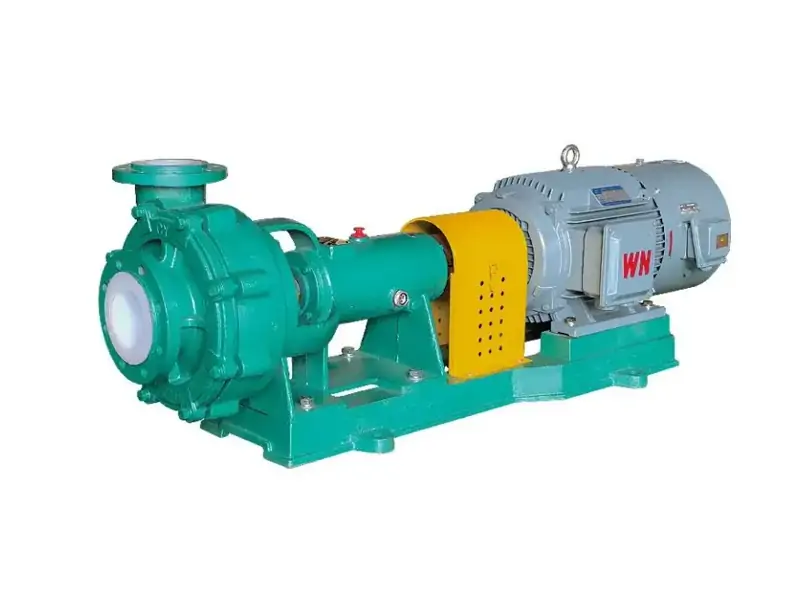
Seri UHB adalah pompa sentrifugal kantilever, satu tahap dengan lapisan baja UHMW-PE casing pada ketebalan 8–20 mm, direkayasa khusus untuk fluida yang agresif secara kimia dan abrasif-korosif. Lapisan UHMW-PE memberikan ketahanan aus 7–10 kali lipat dari baja karbon sambil memberikan kompatibilitas kimia yang luas dengan lindi basa dan bubur abrasif dari pemulihan kimia. Untuk lindi hijau yang mengandung ampas tersuspensi, lindi putih dengan sisa lumpur kapur, dan transfer bubur lumpur kapur, Seri UHB memberikan perlindungan korosi-abrasi gabungan yang tidak dapat diberikan oleh pompa logam di lingkungan pH tinggi dan keausan tinggi ini.
Spesifikasi Utama: Aliran 3-2.600 m³/jam | Head 5-100 m | Daya 0,75-300 kW | Suhu -20°C hingga 90°C
Pompa Lumpur Horisontal Tahan Korosi Seri CYB-ZKJ
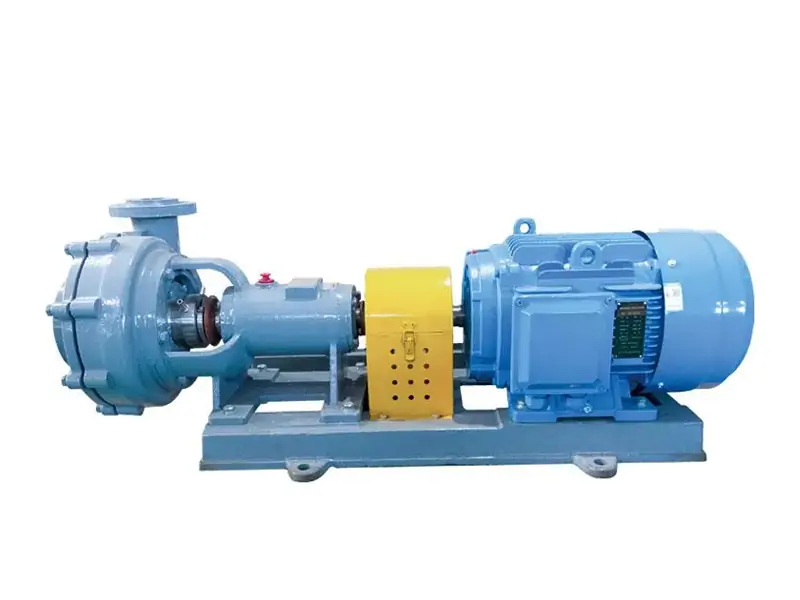
Seri CYB-ZKJ adalah pompa sentrifugal horizontal dengan komponen yang dibasahi dilapisi FEP fluoroplastik (PFA tersedia untuk layanan suhu tinggi). Ini mengangkut cairan bening asam atau basa, bubur, pulp mineral korosif, dan air limbah proses pada rentang suhu -80°C hingga 120°C. Untuk transfer bahan kimia pemutihan—klorin dioksida, hidrogen peroksida, dan soda kaustik—Seri CYB-ZKJ berlapis FEP memberikan kompatibilitas kimia yang terverifikasi. Untuk aplikasi pabrik pemutihan di mana bahan kimianya agresif tetapi beban abrasifnya sedang, pompa ini menggabungkan ketahanan kimia yang luas dengan platform pompa sentrifugal yang telah teruji di lapangan.
Spesifikasi Utama: Aliran 3-2.600 m³/jam; Head 5-100 m; Daya 0,75-300 kW; Suhu -80°C hingga 120°C
Pompa Lumpur Baja Tahan Karat Seri HB
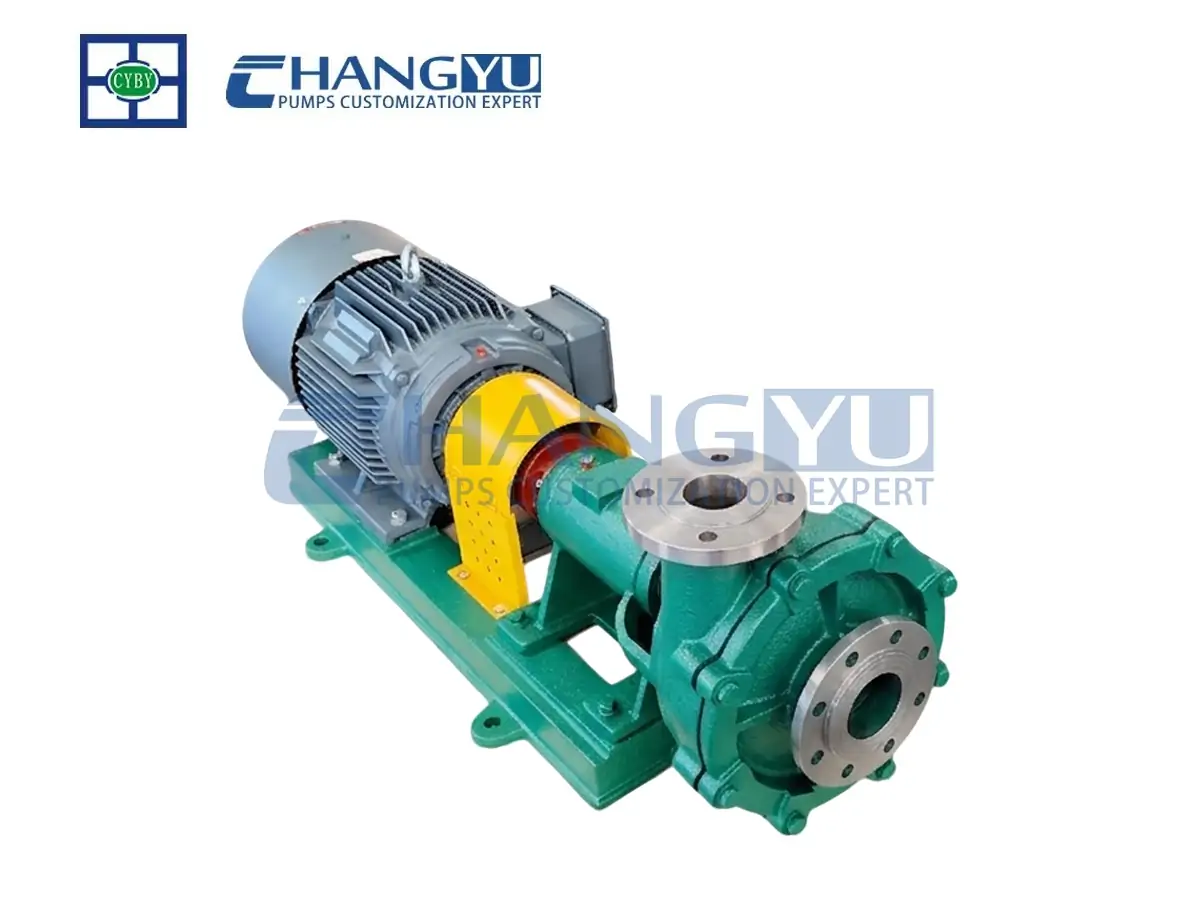
Seri HB adalah pompa sentrifugal horisontal satu tahap berefisiensi tinggi yang dirancang sesuai dengan ISO 2858 dan sesuai dengan Standar CE. Struktur basahnya yang seluruhnya terbuat dari baja tahan karat—dapat disesuaikan dalam 304, 316, 316L, 2205, dan 2507—menangani lumpur abrasif dan fluida korosif sedang. Untuk aplikasi pabrik pulp di mana fluida proses kompatibel dengan jalur basah logam—sirkulasi air putih, transfer filtrat, dan stok konsistensi rendah hingga sedang—Seri HB dalam baja tahan karat dupleks memberikan solusi yang tahan lama dan dapat diservis dengan biaya modal lebih rendah daripada pompa berlapis fluoroplastik.
Spesifikasi Utama: Aliran 10-60 m³/jam | Head 20-120 m | Daya 3-45 kW | Suhu -20°C hingga 120°C
Pompa Proses Kimia Penggerak Magnetik Seri CYQ
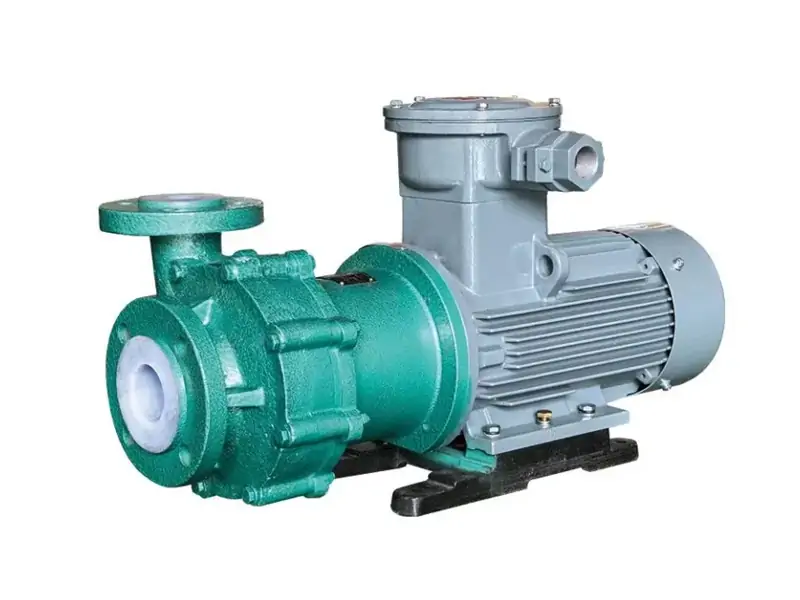
Seri CYQ adalah pompa penggerak magnetik tersegel penuh generasi ketiga dengan komponen basah yang dilapisi FEP, PFA, atau PTFE. Cangkang penahan PEEK dengan penguat serat karbon menghilangkan kerugian arus eddy sambil meningkatkan batas tekanan hingga 3,0 MPa—margin keselamatan yang signifikan untuk layanan bahan kimia beracun atau berbahaya. Untuk transfer bahan kimia pemutih di mana kebocoran segel kecil sekalipun tidak dapat diterima—klorin dioksida, hidrogen peroksida, asam kuat—Seri CYQ tanpa segel menyediakan penahanan tanpa kebocoran sesuai desain, menghilangkan jalur kebocoran dan biaya penggantian segel yang berkelanjutan dari alternatif yang disegel secara mekanis.
Spesifikasi Utama: Debit 3–800 m³/jam | Ketinggian 15–125 m | Daya 2,2–110 kW | Suhu -20°C hingga 180°C
Pompa Sentrifugal Pemancing Otomatis Fluoroplastik Seri FZB
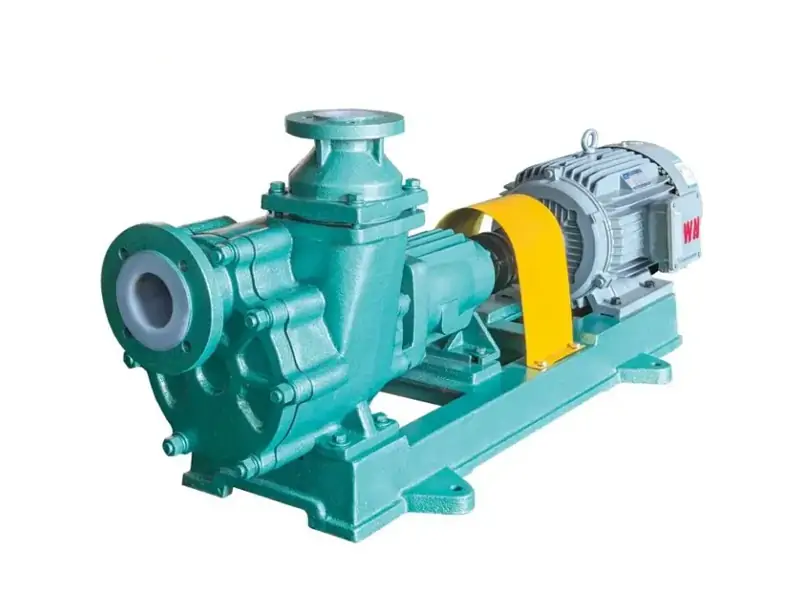
Seri FZB adalah pompa sentrifugal pemancing sendiri dengan semua komponen aliran yang dilapisi FEP (F46) atau PFA. Setelah diisi awal, pompa secara otomatis mengeluarkan udara dari saluran hisap dan mencapai ketinggian pemancing sendiri hingga 5 meter. Untuk pembongkaran bahan kimia dari tangki dan drum, drainase bak, dan transfer bahan kimia di bawah permukaan tanah di pabrik pulp dan kertas, Seri FZB menghilangkan kebutuhan akan hisap terendam sambil memberikan ketahanan korosi fluoroplastik penuh. Segel mekanis bellow eksternal dengan cincin stasioner alumina 99,9% tahan terhadap serangan kimia dari asam, alkali, dan zat pengoksidasi.
Spesifikasi Utama: Aliran 2,5-100 m³/jam; Head 15-50 m; Daya 0,75-55 kW; Suhu -20°C hingga 150°C
FAQ Tentang Pompa Industri Pulp & Kertas
T1: Jenis pompa apa yang digunakan dalam industri pulp dan kertas?
J: Industri pulp dan kertas menggunakan lima jenis pompa utama: pompa sentrifugal untuk transfer stok, sirkulasi air, dan penanganan filtrat; pompa rongga progresif untuk stok konsistensi tinggi (di atas 6–8%) dan lindi hitam viskositas tinggi; pompa diafragma untuk bahan kimia pemutih dan aditif; pompa roda gigi untuk metering pelapis; dan pompa vakum cincin cair untuk dewatering mesin kertas. Setiap jenis pompa dicocokkan dengan tahap proses tertentu berdasarkan konsistensi, viskositas, profil kimia, dan sifat abrasif fluida.
T2: Pompa apa yang terbaik untuk transfer lindi hitam?
J: Untuk lindi hitam lemah (padatan 15–20%), pompa sentrifugal baja tahan karat dupleks berfungsi dengan baik. Untuk lindi hitam kuat (padatan 65–80%), pompa rongga progresif adalah spesifikasi standar karena viskositas tinggi lindi hitam pekat melebihi kisaran operasi efisien pompa sentrifugal. Pompa sentrifugal berlapis UHMW-PE dapat melayani konsentrasi menengah pada suhu sedang.
T3: Bahan apa yang kompatibel dengan lindi hijau dan lindi putih?
J: Lindi hijau (pH 12–13) dan lindi putih (pH 12–13) sangat basa dan mengandung padatan abrasif—ampas dalam lindi hijau dan sisa lumpur kapur dalam lindi putih. Pompa berlapis UHMW-PE memberikan perlindungan korosi-abrasi gabungan yang diperlukan. Baja tahan karat dupleks 2507 berfungsi di mana jalur basah logam diperlukan secara struktural. Baja tahan karat 316L standar rentan terhadap retak korosi tegangan kaustik dan tidak direkomendasikan untuk layanan ini.
T4: Bagaimana cara memilih pompa untuk stok kertas?
J: Pemilihan pompa stok tergantung pada konsistensi. Di bawah konsistensi 6%, pompa sentrifugal dengan impeler semi-terbuka atau tersembunyi berfungsi dengan baik, memberikan aliran kontinu tanpa denyut. Di atas konsistensi 6–8%, pompa rongga progresif menjadi kandidat utama karena efisiensi pompa sentrifugal menurun saat jaringan serat terbentuk dan lumpur menunjukkan perilaku non-Newtonian. Titik transisi tergantung pada jenis serat spesifik, kehalusan, dan suhu.
T5: Pompa apa yang terbaik untuk bahan kimia pemutih?
J: Untuk klorin dioksida (ClO₂), hidrogen peroksida (H₂O₂), dan soda kaustik, pompa berlapis FEP atau PFA memberikan kompatibilitas kimia yang terverifikasi. Untuk penahanan tanpa kebocoran bahan kimia pemutih berbahaya, pompa penggerak magnetik tanpa sambungan dengan komponen basah berlapis fluoroplastik adalah spesifikasi standar. Pompa titanium melayani layanan ClO₂ di mana pompa logam diperlukan secara struktural.
T6: Bagaimana cara mencegah penyumbatan pada pompa stok?
J: Penyumbatan pompa stok dicegah melalui tiga tindakan: pilih jenis impeler yang benar (impeler tersembunyi untuk stok konsistensi tinggi atau berserat; impeler semi-terbuka untuk konsistensi rendah hingga sedang); pertahankan kecepatan aliran yang memadai di saluran hisap (di atas 0,6 m/s untuk stok di atas konsistensi 2%); dan rancang pipa hisap dengan kemiringan kontinu menuju pompa untuk mencegah dewatering dan pengendapan serat. Mengeluarkan udara dari rumah pompa sebelum start-up menghilangkan kantong udara yang berkontribusi pada akumulasi serat.
T7: Apa yang menyebabkan kegagalan segel pompa lindi hitam?
J: Penyebab paling umum adalah kristalisasi lindi pada permukaan segel. Lindi hitam mengandung padatan terlarut yang mengkristal saat terkena udara atau saat permukaan segel mendingin selama siaga. Kristal mengikis permukaan segel saat start ulang, menyebabkan kebocoran cepat. Siraman air bersih eksternal pada tekanan dan aliran yang memadai mencegah lindi memasuki ruang segel. Segel mekanis ganda dengan fluida penghalang memberikan perlindungan tambahan untuk aplikasi pompa lindi hitam kritis.
T8: Bagaimana cara mengurangi keausan pada pompa lumpur kapur?
J: Lumpur kapur adalah lumpur kalsium karbonat yang sangat abrasif pada pH tinggi. Strategi pengurangan keausan meliputi: kurangi kecepatan pompa (keausan sebanding dengan kira-kira pangkat tiga kecepatan ujung impeler); pilih pompa berlapis UHMW-PE untuk kombinasi terbaik ketahanan aus dan kompatibilitas kimia pH tinggi; sesuaikan celah impeler pada interval terjadwal untuk mempertahankan efisiensi hidrolik saat keausan terjadi; dan pasang saringan hisap untuk mencegah padatan besar memasuki pompa.
Rekomendasi Ahli tentang Pompa Industri Pulp & Kertas dari Insinyur Pompa Changyu
- Cocokkan jenis pompa dengan konsistensi stok, bukan hanya aliran dan head. Pompa sentrifugal yang menangani stok 3% secara efisien akan tersumbat atau kehilangan prime saat diminta memompa stok 8%. Di atas konsistensi 6–8%, pompa rongga progresif harus dievaluasi sebagai kandidat utama terlepas dari apakah pompa sentrifugal secara teoritis dapat memberikan laju aliran.
- Pilih material untuk kimia proses spesifik, bukan untuk label “tahan korosi” generik. Green liquor, white liquor, dan black liquor semuanya bersifat alkali, tetapi masing-masing mengandung padatan abrasif yang berbeda dan beroperasi pada suhu yang berbeda. Lapisan UHMW-PE memberikan perlindungan terluas untuk layanan korosi-abrasi gabungan dalam pemulihan kimia. Baja tahan karat dupleks digunakan di mana jalur basah logam diperlukan.
- Rancang sistem flush seal untuk fluida proses spesifik. Black liquor, green liquor, dan white liquor semuanya mengkristal pada permukaan seal saat terkena udara. Flush air bersih eksternal pada tekanan dan aliran yang memadai bukanlah opsional—itu adalah prasyarat teknik untuk operasi seal yang andal dalam layanan pemulihan kimia.
- Kurangi kecepatan pompa jika memungkinkan untuk memperpanjang masa pakai aus. Pompa lumpur kapur, pompa green liquor, dan pompa pelapis yang menangani bubur abrasif mendapat manfaat yang tidak proporsional dari pengurangan kecepatan. Mengurangi kecepatan dari 1.450 menjadi 1.200 RPM mengurangi kecepatan ujung impeler sekitar 17% tetapi dapat mengurangi tingkat keausan sebesar 30% atau lebih, secara substansial memperpanjang interval servis dalam aplikasi abrasif.
11. Kesimpulan
Pompa industri pulp dan kertas harus ditentukan untuk tahap proses spesifik yang mereka layani. Pompa yang menangani white water secara andal di bagian mesin kertas dapat gagal dalam hitungan minggu ketika ditugaskan kembali ke layanan green liquor atau black liquor tanpa modifikasi material dan seal. Setiap aliran proses—stok, liquor, bahan kimia pemutih, pelapis, vakum—memberikan kombinasi tuntutan kimia, termal, hidrolik, dan abrasif yang berbeda yang menentukan jenis pompa, sistem material, dan teknologi penyegelan yang benar.
Proses seleksi dimulai dengan karakterisasi lengkap fluida proses dan kondisi operasi, berlanjut melalui pencocokan jenis pompa berdasarkan konsistensi dan viskositas, dan diakhiri dengan pemilihan material berdasarkan profil kimia-abrasif spesifik dari aliran tersebut. Pompa yang ditentukan dengan benar untuk tahap prosesnya—mencocokkan jenis pompa, material, dan penyegelan dengan spesifik pompa industri pulp dan kertas aplikasi—akan memberikan masa pakai yang andal dan dapat diprediksi serta total biaya kepemilikan terendah selama kampanye produksi pabrik.
Pompa seri UHB, CYB-ZKJ, HB, CYQ, dan FZB dari Changyu Pump menyediakan platform pompa tahan korosi, tahan aus, dan tanpa segel untuk aplikasi penanganan fluida yang menuntut di industri pulp dan kertas. Hubungi tim teknisi kami dengan parameter proses Anda. Kami akan memberikan rekomendasi pompa dan kutipan terperinci yang disesuaikan dengan kebutuhan spesifik pabrik Anda.