
Pompe à acide formique peut avoir une incidence directe sur la sécurité de l'installation, la fréquence des opérations de maintenance et les coûts d'exploitation. Dans un service industriel réel, une pompe chimiquement compatible sur le papier peut néanmoins tomber en panne si les conditions d'aspiration sont mauvaises, si la disposition des joints est incorrecte ou si le moteur n'est pas adapté à la charge réelle du liquide.
Pour les acheteurs et les ingénieurs, cela signifie que la bonne pompe n'est pas simplement une pompe chimique standard résistante à la corrosion. Elle doit correspondre au point de fonctionnement réel, à la configuration de l'installation et au niveau de contrôle des fuites requis par le processus.
Au Pompe Changyu, Les pompes à acide formique sont souvent utilisées pour le déchargement d'acide, le transfert de réservoir à réservoir et les systèmes d'alimentation de processus. Ce guide est conçu pour vous aider à évaluer clairement les principaux points de sélection, à éviter les erreurs courantes et à choisir une solution de pompage plus fiable pour l'acide formique.
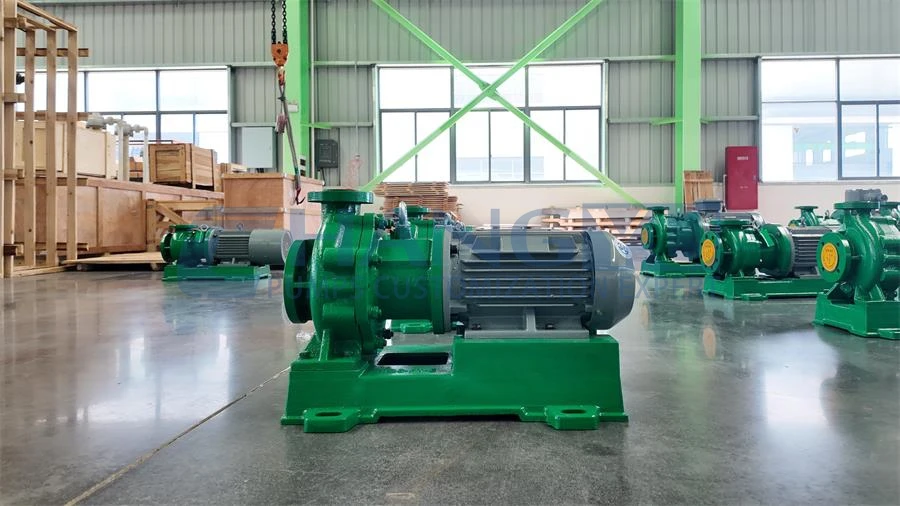
Qu'est-ce qu'une pompe à acide formique et pourquoi est-il important de bien la choisir ?
A pompe à acide formique est une pompe résistante à la corrosion utilisée pour transférer de l'acide formique en toute sécurité dans des applications telles que le transfert de stockage, le dosage, la circulation et le déchargement. L'acide formique étant un acide organique, le choix de la pompe doit être basé sur les conditions de travail réelles plutôt que sur le seul nom chimique.
Les ingénieurs de Changyu Pump estiment que l'utilisation de l'acide formique doit être évaluée comme une condition de fonctionnement complète, comprenant la concentration, la température, la densité, le débit, la hauteur de chute, la méthode d'installation et les exigences en matière d'étanchéité. En d'autres termes, l'objectif n'est pas seulement de déplacer le liquide, mais de le faire en toute sécurité, de manière fiable et avec une structure de pompe adaptée au processus.
Quels sont les facteurs à prendre en compte avant de choisir une pompe à acide formique ?
Les ingénieurs de Changyu Pump commencent généralement la sélection de la pompe à acide formique par six facteurs clés : le nom chimique, la température du liquide, la concentration ou la gravité spécifique, la hauteur de charge nominale, le débit nominal et la teneur en particules. Il s'agit des données de base nécessaires pour sélectionner un modèle adapté au service corrosif.
Outre ces six éléments, la méthode d'étanchéité et la disposition de l'installation sont également essentielles dans les projets réels. Une pompe correcte d'un point de vue hydraulique peut néanmoins s'avérer un mauvais choix si le processus nécessite une aspiration, si la tolérance aux fuites est très faible ou si la densité du liquide est supérieure à 1,2 et que la puissance du moteur n'est pas adaptée en conséquence.
1. Concentration chimique et corrosivité
Des concentrations différentes de produits acides peuvent nécessiter des matériaux différents, même si le nom chimique est le même. Lors de la sélection d'une pompe à acide formique, la concentration doit toujours être confirmée au début car elle affecte directement le comportement à la corrosion, la compatibilité des matériaux et la fiabilité à long terme de la pompe.
2. Température de fonctionnement
La température affecte à la fois le comportement à la corrosion et la stabilité des matériaux. Les ingénieurs de Changyu Pump estiment que la température doit être vérifiée en même temps que la sélection des matériaux., Les températures plus élevées peuvent également augmenter le risque de déformation et les difficultés d'étanchéité.
3. Poids spécifique et dimensionnement du moteur
Si le liquide gravité spécifique dépasse 1,2, la puissance du moteur doit être augmentée de manière appropriée pour éviter toute surcharge. Il s'agit d'un aspect souvent négligé de la sélection des pompes à acide, en particulier lorsque l'attention est portée uniquement sur la résistance à la corrosion plutôt que sur la charge hydraulique réelle du moteur.
4. Débit et hauteur de chute
Le débit et la hauteur d'élévation déterminent si la pompe sélectionnée peut effectivement atteindre le point de fonctionnement requis. Dans la pratique, le débit nominal est utilisé pour identifier le bon modèle, tandis que la hauteur manométrique nominale doit inclure les pertes de charge, les coudes et une marge de sécurité raisonnable pour assurer un fonctionnement stable.
5. Schéma d'installation
L'installation détermine si une pompe centrifuge standard est suffisante ou si une pompe auto-amorçante est nécessaire. Si la pompe doit aspirer le liquide d'un réservoir situé en dessous de l'axe de la pompe, une pompe auto-amorçante est généralement plus appropriée.
6. Méthode de scellement
Dans des conditions de fonctionnement difficiles, Changyu conseille d'utiliser des garnitures mécaniques spécialement conçues pour éviter les fuites et les éclaboussures de liquide. Lorsque le risque de fuite est particulièrement sensible, une pompe magnétique en plastique fluoré peut être un meilleur choix car elle élimine la garniture mécanique dynamique conventionnelle.
Quels sont les meilleurs matériaux de pompe pour l'acide formique ?
La sélection des matériaux est l'une des parties les plus importantes de la conception d'un produit. pompe à acide formique sélection. Dans la pratique, les utilisateurs comparent souvent pompes à revêtement en polypropylène, PVDF, PTFE, PFA, FEP, et acier inoxydable options lors du choix d'une pompe pour un service d'acide corrosif.
Pour acide formique Dans les applications d'acide formique, le choix du matériau doit toujours être basé sur les conditions de travail réelles, en particulier la concentration, la température et l'environnement chimique global. L'acide formique étant un acide organique, les solutions à revêtement en plastique fluoré constituent souvent un choix plus approprié pour obtenir une plus grande résistance à la corrosion et un fonctionnement à long terme plus fiable.
PTFE, PFA et FEP pour une large résistance à la corrosion
Le PTFE est largement utilisé dans les services chimiques corrosifs en raison de sa résistance chimique étendue dans une très large gamme de pH et de son aptitude à être utilisé dans des milieux très corrosifs. Le PFA offre une résistance à la corrosion similaire avec une meilleure résistance à la perméabilité et une meilleure performance de haute pureté, tandis que le FEP offre une forte résistance à la corrosion ainsi qu'une meilleure aptitude au traitement et un bon équilibre entre performance et coût.
PVDF pour certaines conditions de corrosion moyenne
Le PVDF offre une forte résistance mécanique et une bonne résistance à l'usure, ce qui en fait une option pratique pour de nombreuses conditions de corrosion moyenne. Cependant, l'adéquation finale dépend toujours de l'environnement chimique réel, de la concentration et de la température de fonctionnement.
Quand les pompes à revêtement en plastique fluoré sont le choix le plus sûr
Pour les acides organiques, les liquides fortement corrosifs et les tâches pour lesquelles la stabilité à long terme du matériau importe plus que le coût initial le plus bas, les pompes à revêtement en plastique fluoré offrent une plus grande marge de sécurité. C'est l'une des raisons pour lesquelles les pompes Changyu CYF, FZB, et Série ZCQ pompes sont des candidats sérieux pour les pompe à acide formique des applications.
Comparaison des matériaux pour le choix de la pompe à acide formique
Quel est le meilleur type de pompe pour le transfert d'acide formique ? Centrifuge, auto-amorçante ou à entraînement magnétique ?
Il n'y a pas de type de pompe qui convienne à tous les cas de figure. pompe à acide formique devoir. La bonne réponse dépend de la manière dont le liquide pénètre dans la pompe, de la sensibilité du processus aux fuites, de l'inondation continue de la ligne et de la nécessité pour la pompe de s'amorcer elle-même.
Une pompe centrifuge standard en plastique fluoré est généralement la meilleure solution pour un transfert stable et continu dans des conditions d'aspiration simples. Une pompe auto-amorçante est préférable lorsque le réservoir source se trouve en dessous de la pompe. Une pompe magnétique auto-amorçante est plus adaptée lorsque la hauteur d'aspiration et le risque de fuite sont prioritaires.
Les produits recommandés par Changyu Pump pour le transfert de l'acide formique sont les suivants, en fonction des différentes exigences du processus. Ces options de pompe sont conçues pour couvrir trois scénarios industriels courants : transfert continu stable, transfert auto-amorçant à partir de réservoirs ou de fûts de faible niveau, et service de liquide corrosif auto-amorçant avec un risque de fuite réduit.
Pompe à acide formique de la série FZB pour le transfert de réservoirs et de fûts à auto-amorçage
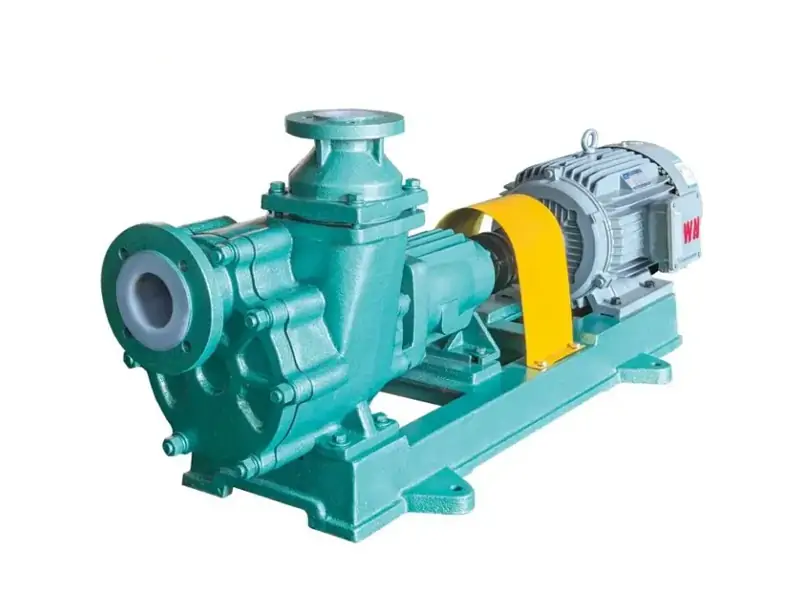
Le Pompe centrifuge auto-amorçante en plastique fluoré FZB est un outil pratique pompe à acide formique La pompe Changyu est une option intéressante lorsqu'un liquide doit être prélevé dans des réservoirs, des fûts, des fosses ou des stations de déchargement de faible hauteur. La page produit de Changyu la décrit comme une pompe centrifuge auto-amorçante en plastique fluoré, dotée d'un revêtement FEP/PFA résistant à la corrosion et d'une capacité d'auto-amorçage.
Ce modèle est particulièrement utile lorsque la configuration du procédé ne permet pas une condition d'aspiration noyée. Au lieu d'obliger l'utilisateur à revoir la conception de la tuyauterie ou à installer un équipement d'amorçage compliqué, la série FZB rend le transfert de corrosifs à amorçage automatique plus simple et plus fiable.
Pourquoi cela correspond au service de l'acide formique :
- Pièces en contact avec le fluide revêtues de plastique fluoré pour les milieux corrosifs
- Convient pour le déchargement de réservoirs et les conditions d'aspiration sous le niveau du sol
- Meilleur choix qu'une pompe centrifuge standard lorsqu'une hauteur d'aspiration est nécessaire
| Type de paramètre | Spécification / Gamme |
| Diamètre d'entrée/sortie | 25mm - 100mm |
| Débit (Q) | 2,5 ³/ h - 100 ³/ h |
| Tête (H) | 15m - 50m |
| Hauteur d'auto-amorçage | 4m - 5m (jusqu'à 7m avec clapet de pied) |
| Température de fonctionnement | De -20°C à 150°C |
| Matériaux de la doublure | Fluoroplastiques / FEP / PFA/PTFE |
| Matériau de l'enveloppe | Acier moulé / HT200 revêtu de plastique fluoré |
| Pression du système | ≤1,6 MPa |
| Contenu solide | < 5% (particules non cristallines) |
| Normes de conception | GB/T5662, ISO2858, EN733, DIN24255 |
Pompe à acide formique de la série CYF pour le transfert continu de liquides corrosifs
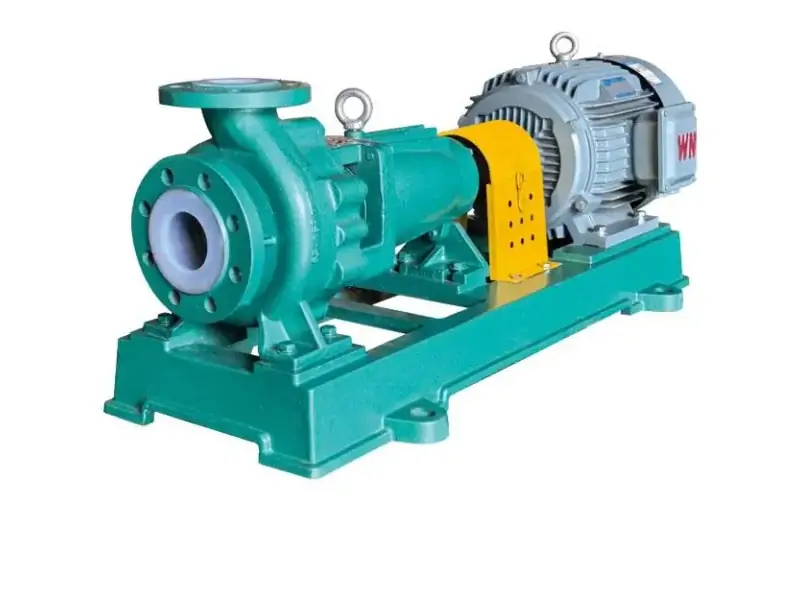
Le Pompe centrifuge en plastique fluoré de la série CYF est l'une des principales solutions de Changyu en matière de pompes centrifuges résistantes à la corrosion. Les produits et les documents de formation de Changyu montrent que la série CYF utilise des composants en contact avec le fluide revêtus de fluoroplastique et convient à la plupart des milieux acides et alcalins, bien qu'elle ne soit pas recommandée pour les conditions de haute température ou les milieux à particules dures.
Pour pompe à acide formique la série CYF convient parfaitement lorsque le procédé exige un transfert continu, un débit stable et une disposition conventionnelle des tuyauteries. C'est souvent le choix le plus simple pour les lignes de transfert de l'usine, le service d'alimentation du réacteur et la circulation générale de liquides corrosifs.
Pourquoi cela correspond au service de l'acide formique :
- Conçu pour la plupart des transferts d'acides et d'alcalis corrosifs
- Options de voies d'écoulement revêtues de FEP ou de PFA dans le système de produits Changyu
- Mieux adapté à un service continu stable que les installations spécifiques à l'auto-amorçage
Pompe à acide formique de la série ZCQ pour un service auto-amorçant avec un risque de fuite réduit
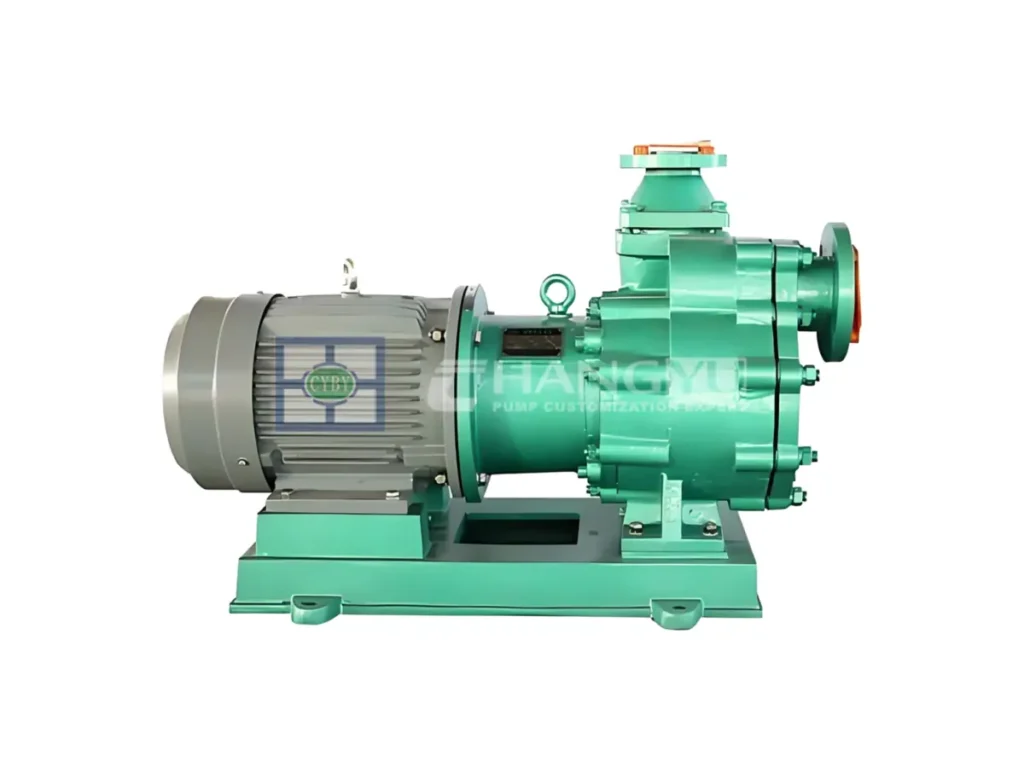
Le Pompe magnétique auto-amorçante à revêtement en fluorine de la série ZCQ combine deux avantages en une seule unité : la capacité d'auto-amorçage et l'étanchéité par entraînement magnétique. Changyu présente cette série avec un débit de 5-250 m³/h, une hauteur de chute de 10-50 m, une puissance de 2,2-30 kW et une température de fonctionnement de -20 à 100°C.
Pour les acheteurs qui choisissent un pompe à acide formique, Ce modèle est particulièrement utile lorsque la capacité d'auto-amorçage standard n'est pas suffisante et que le processus exige également un meilleur contrôle des fuites. Il convient parfaitement aux applications telles que les points de déchargement, les stations de transfert et les systèmes de fluides corrosifs où la réduction du risque de fuite du joint est importante.
Pourquoi cela correspond au service de l'acide formique :
- Combine la fonction d'auto-amorçage avec l'étanchéité par entraînement magnétique
- Plus adapté lorsque la tolérance aux fuites est plus faible
- Bon choix pour le transfert d'acides corrosifs avec une exigence de hauteur d'aspiration
Comment choisir la bonne pompe à acide formique en fonction des conditions de travail réelles ?
Choisir le bon pompe à acide formique doit commencer par les conditions de travail réelles, et pas seulement par le catalogue de produits. Dans la plupart des applications industrielles, les variables les plus importantes sont les suivantes le milieu, la concentration, la température, le débit, la hauteur de chute, et si le liquide contient des solides ou nécessite une étanchéité particulière.
Pour faciliter la sélection, le cadre suivant couvre les principaux points que les ingénieurs et les acheteurs examinent généralement avant de choisir une pompe pour l'acide formique.
Choisir la méthode d'installation
- Utilisation Série CYF lorsque la condition d'aspiration est stable et que la pompe peut fonctionner comme une pompe de transfert centrifuge standard.
- Utilisation Série FZB lorsque la pompe doit être soulevée à partir de réservoirs, de fosses ou de fûts de faible hauteur.
- Utilisation Série ZCQ lorsque vous avez besoin à la fois d'une capacité d'amorçage automatique et d'un contrôle plus strict des fuites.
Choisir en fonction des exigences d'étanchéité
- Pour le transfert de substances corrosives en général, un plastique fluoré pompe centrifuge peut suffire.
- Pour un service plus sensible aux milieux corrosifs, un entraînement magnétique est souvent plus sûre.
Choisir par température
- Vérifiez si le revêtement en plastique fluoré et le dispositif d'étanchéité choisis sont adaptés à la température de fonctionnement. Les matériaux fluoroplastiques ayant des limites de température différentes, il convient de toujours vérifier la température lors de la sélection du matériau.
Choisir en fonction de la gravité spécifique
- Si le liquide gravité spécifique est supérieur à 1,2, la puissance du moteur doit être augmentée en conséquence afin d'éviter toute surcharge et d'assurer un fonctionnement stable.
Choisir en fonction de la teneur en matières solides
- Si le fluide contient des particules dures, une pompe centrifuge ou magnétique standard en plastique fluoré peut ne pas être le meilleur choix. Dans ces conditions, la série CYF n'est généralement pas recommandée pour le traitement des particules dures, et les pompes magnétiques sont généralement mieux adaptées au nettoyage des liquides corrosifs qu'à celui des fluides contenant des impuretés solides dures.
Quelles sont les applications industrielles qui utilisent couramment une pompe à acide formique ?
A pompe à acide formique peuvent être utilisées dans une large gamme d'applications industrielles, en particulier lorsque les acides organiques nécessitent un transfert, un dosage, un déchargement ou une circulation fiables. Dans les projets réels, le choix de la pompe dépend souvent de la configuration du processus, de la méthode de transfert et du niveau requis de résistance à la corrosion et de sécurité d'étanchéité.
Les tâches industrielles courantes sont les suivantes
- Transfert d'un réservoir de stockage à un réservoir de traitement
- Déchargement de fûts et de GRV
- Alimentation du réacteur et dosage des produits chimiques
- Circulation de liquides corrosifs dans les systèmes de traitement
- Systèmes de transfert ou de collecte des déchets acides
D'un point de vue technique, la meilleure pompe à acide formique pour chaque application dépend de la disposition et du niveau de risque. Un point de déchargement d'un parc de stockage peut favoriser FZB ou ZCQ, tandis qu'une ligne de circulation de processus favorisera souvent CYF.
Quelles sont les erreurs courantes à éviter dans le choix d'une pompe à acide formique ?
De nombreux problèmes liés aux pompes ne sont pas dus à une mauvaise fabrication. Dans la pratique, ils sont plus souvent dus à des données de sélection incomplètes ou à des hypothèses trop simples au stade de la sélection.
Les erreurs les plus courantes sont les suivantes :
- Sélection par nom chimique uniquement, sans tenir compte de la concentration.
- Ignorer gravité spécifique et le sous-dimensionnement du moteur.
- Choix d'une pompe centrifuge standard pour une installation auto-amorçante.
- Se concentrer uniquement sur la résistance à la corrosion et oublier les pertes de charge, de débit et de tuyauterie.
- Utilisation d'un joint inadapté pour un service sensible aux éclaboussures ou à faible fuite.
- Ignorer la teneur en particules dans les liquides corrosifs.
FAQ sur la sélection des pompes à acide formique
Q1 : Quel est le meilleur matériau pour une pompe à acide formique ?
Le choix du meilleur matériau dépend de la concentration, de la température et des conditions du processus. Pour de nombreuses tâches liées aux acides organiques, les matériaux fluoroplastiques tels que le FEP, le PTFE et le PFA sont souvent plus appropriés car ils offrent une plus grande résistance à la corrosion.
Q2 : Une pompe en plastique fluoré peut-elle être utilisée pour le transfert d'acide formique ?
Oui. Les pompes en plastique fluoré sont largement utilisées pour les fluides corrosifs et constituent souvent un choix judicieux pour le transfert d'acide formique. La sélection finale doit toujours être basée sur la concentration, la température et l'agencement de l'installation.
Q3 : Quand dois-je utiliser une pompe à acide formique auto-amorçante ?
Utilisez une pompe auto-amorçante lorsque la source de liquide se trouve en dessous de l'axe de la pompe, comme les réservoirs, les fosses ou les fûts. Dans ces conditions, les séries FZB ou ZCQ sont généralement plus adaptées qu'une pompe centrifuge standard.
Q4 : L'entraînement magnétique est-il préférable à la garniture mécanique pour les pompes à acide formique ?
Cela dépend du risque de fuite et de la sensibilité du processus. Les pompes à entraînement magnétique sont souvent préférées lorsque le risque de fuite est important, tandis que les pompes centrifuges à étanchéité mécanique restent pratiques pour de nombreuses opérations de transfert standard.
Q5 : Pourquoi la gravité spécifique est-elle importante dans le choix d'une pompe à acide formique ?
Parce qu'une densité de liquide plus élevée augmente la charge du moteur. Si la densité du liquide est supérieure à 1,2, la puissance du moteur doit être augmentée de manière appropriée pour éviter toute surcharge.
Q6 : La série CYF peut-elle être utilisée comme pompe à acide formique ?
Oui, pour de nombreux transferts continus de produits corrosifs dans des conditions d'aspiration stables. La série CYF convient à la plupart des milieux acides et alcalins, mais elle n'est généralement pas conçue pour les hautes températures ou les particules dures.
Q7 : Quel est l'avantage de la série ZCQ pour le transfert de l'acide formique ?
La série ZCQ combine la fonction d'auto-amorçage et l'étanchéité par entraînement magnétique, ce qui en fait une bonne option lorsque la hauteur d'aspiration et la réduction du risque de fuite sont importantes.
Q8 : Quelles informations dois-je préparer avant de demander un devis pour une pompe à acide formique ?
Préparez le nom chimique, la concentration, la température, la gravité spécifique, le débit requis, la hauteur manométrique requise, la disposition de l'installation, les exigences en matière d'étanchéité et la présence ou non de particules dans le fluide. Il s'agit là des données de base nécessaires à la sélection d'une pompe professionnelle.
5 conseils pratiques de sélection de Changyu Pump Engineers
Ingénieurs à Pompe Changyu Les autorités compétentes appliquent généralement ces contrôles pratiques avant de recommander l'adoption d'une pompe à acide formique:
- Confirmez la concentration exacte et ne vous contentez pas d'indiquer “acide formique”.”
- Vérifier si la température du liquide change pendant le fonctionnement, le démarrage ou le nettoyage.
- Tenir compte des frottements de la tuyauterie, des coudes et d'une marge de sécurité lors du calcul de la hauteur de chute.
- Vérifier si l'agencement du réservoir nécessite un amorçage automatique.
- Si la SG est supérieure à 1,2, vérifier soigneusement la puissance du moteur.
- Si le contrôle des fuites est essentiel, comparez rapidement les options de garniture mécanique et d'entraînement magnétique.
- Si le milieu contient des matières solides, il ne faut pas penser qu'une pompe à acide standard est adaptée.
Choisir le bon pompe à acide formique est en fait une question d'adéquation entre la chimie, l'hydraulique et les conditions d'installation. Lorsque ces facteurs sont réunis, il en résulte une meilleure fiabilité, une maintenance réduite et une manipulation plus sûre des liquides corrosifs.
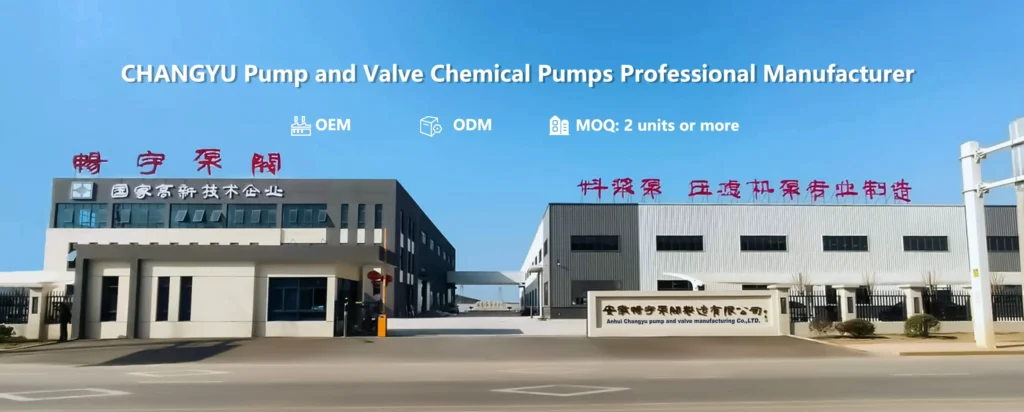
Si vous n'êtes pas sûr de savoir quel pompe à acide formique est le plus adapté à votre processus, contact Pompe Changyu pour obtenir une recommandation personnalisée. Notre équipe peut vous aider à sélectionner le bon matériau, le bon type de pompe et la bonne méthode d'étanchéité en fonction de la concentration, de la température, du débit, de la hauteur de chute et de la configuration de l'installation.