
Jawaban Singkat
A Pompa slurry TiO₂ adalah pompa tugas berat yang dirancang untuk menangani slurry korosif dan abrasif yang dihasilkan selama pembuatan titanium dioksida. Dalam proses sulfat, pompa harus tahan terhadap asam sulfat panas (hingga 110°C) yang dikombinasikan dengan partikel bijih titanium abrasif — tantangan ganda yang menghancurkan pompa baja tahan karat standar dalam hitungan minggu. Faktor pemilihan utama:
- Material harus tahan terhadap asam dan abrasi secara bersamaan: Baja tahan karat tahan terhadap asam tetapi cepat aus akibat partikel bijih. Karet tahan terhadap abrasi tetapi terdegradasi dalam asam panas. UHMWPE (polietilen dengan berat molekul sangat tinggi) adalah salah satu dari sedikit material yang unggul dalam keduanya — ia inert secara kimia terhadap asam sulfat pada konsentrasi hingga 80% dan suhu hingga 90°C, sementara ketahanan abrasinya secara signifikan melebihi baja tahan karat.
- Penanganan padatan mencegah penyumbatan: Slurry proses TiO₂ mengandung hingga 30% partikel padat berdasarkan berat — bijih titanium, silika, dan kristal titanium dioksida yang diendapkan. Impeler semi-terbuka dan saluran aliran lebar mencegah penyumbatan yang sering mengganggu pompa impeler tertutup standar.
- Pemilihan segel mencegah kebocoran asam: Slurry asam sulfat panas merupakan bahaya keselamatan dan lingkungan. Segel mekanis ganda dengan sistem fluida penghalang memberikan perlindungan kebocoran yang tidak dapat dijamin oleh segel tunggal dalam layanan agresif ini.
Produksi titanium dioksida, khususnya proses sulfat, membuat pompa mengalami salah satu kombinasi korosi dan abrasi paling agresif di industri kimia. Pompa baja tahan karat mungkin bertahan terhadap asam tetapi aus akibat partikel bijih dalam hitungan bulan. Pompa berlapis karet mungkin menangani partikel tetapi terdegradasi dalam asam sulfat panas. Inilah sebabnya pompa berlapis UHMWPE telah menjadi solusi standar di pabrik TiO₂ di seluruh dunia — ia adalah salah satu dari sedikit material yang dapat menahan serangan kimia dari asam dan keausan mekanis dari padatan.
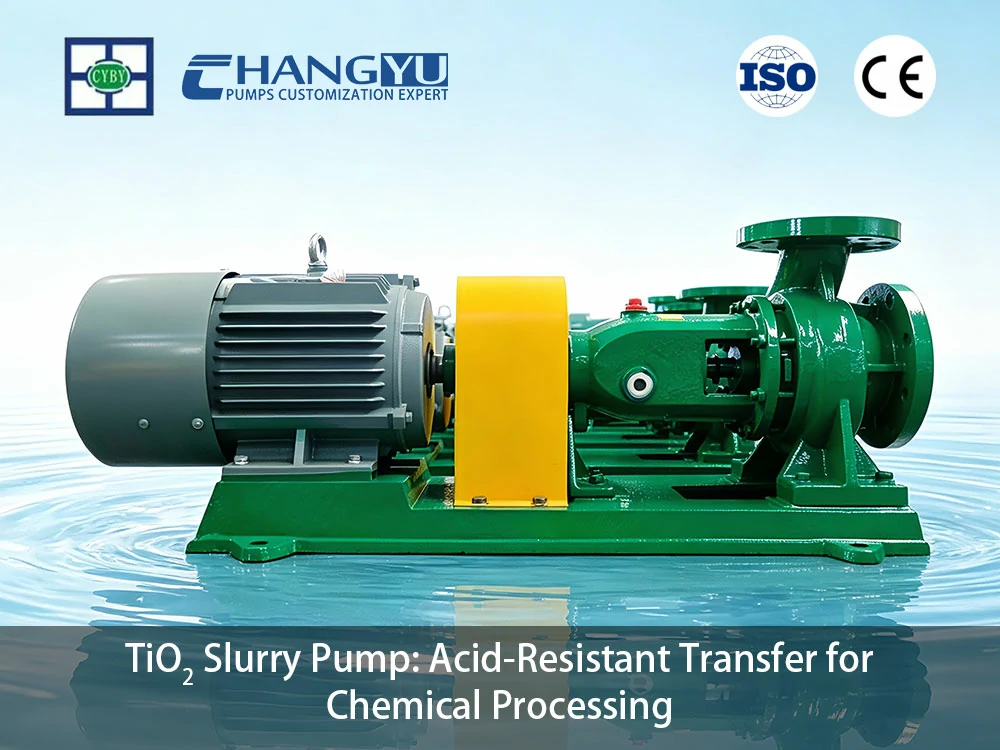
Setelah membaca panduan ini, Anda akan memahami tuntutan pompa spesifik dari setiap tahap proses TiO₂, mengapa UHMWPE mengungguli baja tahan karat dan material pelapis lainnya, cara memilih konfigurasi pompa yang tepat untuk proses spesifik Anda, dan cara mencegah kegagalan paling umum dalam pemompaan slurry TiO₂. Dengan pengalaman manufaktur pompa lebih dari 20 tahun, Changyu Pump menyajikan panduan pemilihan terfokus ini untuk aplikasi TiO₂ dan pemrosesan kimia.
Apa Itu Pompa Slurry TiO₂?
Titanium dioksida diproduksi terutama melalui proses sulfat, di mana bijih ilmenit (FeTiO₃) dicerna dalam asam sulfat pekat pada suhu tinggi. Slurry yang dihasilkan mengandung bijih yang tidak bereaksi, pengotor silika, dan titanium sulfat terlarut — semuanya tersuspensi dalam asam panas yang korosif. Campuran ini kemudian melewati serangkaian tahap perlakuan kimia, masing-masing dengan profil suhu, konsentrasi, dan kandungan padatan yang berbeda.
Pompa slurry TiO₂ harus menangani perkembangan fluida agresif ini tanpa korosi, penyumbatan, atau kebocoran. Pompa kimia standar gagal karena dirancang untuk ketahanan korosi (baja tahan karat, berlapis fluoroplastik) atau ketahanan abrasi (logam keras, karet) — jarang keduanya.
Tantangan Ganda dari Slurry TiO₂
| Tantangan | Sumber | Efek pada Pompa |
|---|---|---|
| Korosi asam | Asam sulfat (H₂SO₄) pada konsentrasi 10–80%, hingga 110°C | Menyerang lapisan pasif baja tahan karat; mendegradasi lapisan karet; mengkorosi besi cor dengan cepat |
| Keausan abrasif | Partikel bijih ilmenit, pasir silika, padatan yang tidak bereaksi hingga 30% berdasarkan berat | Mengikis sudu impeler dan dinding casing; mempercepat korosi dengan menghilangkan lapisan pelindung |
| Pengendapan padatan | Partikel bijih kepadatan tinggi mengendap saat aliran berhenti atau kecepatan turun | Menyumbat saluran impeler; memblokir saluran hisap; menyebabkan start sulit setelah periode diam |
| Siklus suhu | Suhu proses berkisar dari ambient hingga 110°C di berbagai tahap | Ekspansi termal memberi tekanan pada ikatan pelapis-ke-rumah; mempercepat keausan segel |
Mengapa UHMWPE Menjadi Material Ideal untuk Pompa Slurry TiO₂?
Polietilen dengan berat molekul sangat tinggi telah muncul sebagai material pilihan untuk konstruksi pompa slurry TiO₂ karena secara unik mengatasi tantangan gabungan asam-plus-abrasi yang mengalahkan material lain.
UHMWPE vs Material Alternatif
| Bahan | Ketahanan Asam (H₂SO₄ hingga 80%) | Ketahanan Abrasi | Batas Suhu | Biaya Relatif | Masa Pakai Layanan TiO₂ |
|---|---|---|---|---|---|
| Baja Tahan Karat 316L | Buruk — korosi cepat di atas 50°C | Buruk — lunak, cepat aus akibat partikel bijih | Tinggi | Sedang | 2–6 bulan |
| Baja Tahan Karat Dupleks | Sedang — lebih baik dari 316L, tetapi masih korosi dalam asam panas | Sedang | Tinggi | Tinggi | 6–12 bulan |
| Dilapisi Karet Alam | Buruk — terdegradasi dalam asam panas, suhu terbatas hingga 70°C | Luar biasa | 70°C | Sedang | 3–9 bulan |
| Berlapis PTFE/PFA | Sangat baik — ketahanan asam universal | Sedang — lebih lunak dari UHMWPE, partikel dapat menempel dan aus; masa pakai lebih pendek dalam slurry TiO₂ dengan padatan tinggi | 120–160°C | Tinggi | 12–24 bulan (lebih pendek di tahap padatan tinggi; lebih disukai untuk tahap suhu tinggi, padatan rendah) |
| Dilapisi UHMWPE | Sangat Baik — inert secara kimia terhadap H₂SO₄ hingga 80% | Sangat Baik — ketahanan abrasi secara signifikan melebihi baja tahan karat; dapat menangani hingga 30% padatan | 90°C | Sedang | 18–36 bulan (bervariasi menurut tahap — lebih lama di pencucian/pengendapan, lebih pendek di digesti/hidrolisis) |
| Paduan Krom Tinggi | Buruk — tidak ada ketahanan asam | Luar biasa | Tinggi | Sedang | 1–3 bulan |
Apa yang Membuat UHMWPE Berbeda
Kinerja UHMWPE dalam layanan TiO₂ berasal dari struktur molekulnya yang unik. Rantai polimer yang sangat panjang — jauh lebih panjang dari polietilen standar — menciptakan material yang secara simultan:
- Inert secara kimia: UHMWPE tahan terhadap asam sulfat, asam klorida, dan sebagian besar larutan kimia yang digunakan dalam pemrosesan TiO₂. Ia tidak korosi, berlubang, atau retak akibat tekanan di lingkungan asam.
- Sangat tahan abrasi: Ketahanan abrasi UHMWPE secara signifikan melebihi baja tahan karat. Koefisien gesekan rendah material berarti partikel meluncur di permukaan daripada menggali dan menghilangkan material.
- Tahan benturan: Tidak seperti material rapuh seperti keramik, UHMWPE menyerap benturan dari partikel besar tanpa retak atau pecah.
- Anti-lengket: Energi permukaan rendah UHMWPE mencegah partikel TiO₂ dan kerak menempel pada bagian dalam pompa — mengurangi penyumbatan dan memudahkan pembersihan.
Langkah 5: Pilih Spesifikasi Motor. Untuk tahapan proses TiO₂ yang beroperasi di bawah 90°C — yang mencakup sebagian besar proses sulfat — pompa berlapis UHMWPE memberikan kombinasi optimal antara ketahanan asam, ketahanan abrasi, dan masa pakai. Untuk tahapan yang melebihi 90°C (seperti digesti asam), pompa berlapis FEP atau PFA memberikan margin suhu yang diperlukan. Untuk tahapan terpanas dan paling agresif, strategi dua material — UHMWPE untuk tahapan bersuhu rendah dengan padatan tinggi dan FEP untuk tahapan bersuhu tinggi — mengoptimalkan masa pakai pompa dan total biaya kepemilikan.
Bagaimana Cara Memilih Pompa Slurry TiO₂ Berdasarkan Tahapan Proses?
Proses sulfat titanium dioksida mengalir melalui tahapan yang berbeda, masing-masing dengan karakteristik fluida yang berbeda. Menyesuaikan konfigurasi pompa dengan setiap tahapan adalah kunci untuk operasi yang andal dan jangka panjang.
Pemilihan Pompa Berdasarkan Tahapan Proses Sulfat TiO₂
| Tahap Proses | Karakteristik Cairan | Suhu | Konten Padatan | Konfigurasi Pompa yang Direkomendasikan |
|---|---|---|---|---|
| Digesti asam (keluaran reaktor) | Bijih ilmenit + slurry H₂SO₄ 70–80%, sangat abrasif | 90–110°C | 20–30% | Pompa berlapis FEP (Seri CYB) dengan impeler semi-terbuka; segel mekanis ganda. Pompa berlapis UHMWPE (Seri UHB) hanya dapat diterima untuk transfer intermiten atau bersuhu lebih rendah (<90°C) |
| Digesti asam (transfer slurry) | Bijih ilmenit + slurry H₂SO₄ 70–80%, abrasi sedang | 60–90°C → 60–90°C | 20–30% | Pompa berlapis UHMWPE dengan impeler semi-terbuka; segel mekanis ganda |
| Pengendapan / klarifikasi | Slurry asam encer dengan padatan halus yang mengendap, abrasi sedang | 40–60°C → 40–60°C | 5–15% | Pompa berlapis UHMWPE dengan impeler semi-terbuka; segel mekanis tunggal atau ganda |
| Pembekuan / kristalisasi | Slurry kristal FeSO₄·7H₂O dalam larutan asam sulfat | 0–15°C | Padatan kristal 10–20% | Pompa berlapis UHMWPE — UHMWPE mempertahankan kekuatan benturan pada suhu rendah; impeler semi-terbuka |
| Hidrolisis | Partikel TiO₂ yang diendapkan dalam asam encer, slurry abrasif halus | 80-100°C | 10–20% | Pompa berlapis UHMWPE (untuk ≤90°C); pompa berlapis FEP (untuk >90°C); impeler semi-terbuka |
| Pencucian / filtrasi | Slurry kue filter TiO₂, padatan sedang, asam encer | 30–60°C | 15–25% | Pompa berlapis UHMWPE dengan impeler semi-terbuka; segel mekanis tunggal |
| Perlakuan garam | Slurry TiO₂ dengan bahan kimia tambahan (K₂CO₃, H₃PO₄), abrasi sedang | 40–70°C | 10–20% | Pompa berlapis UHMWPE dengan impeler semi-terbuka; segel mekanis ganda untuk bahan kimia tambahan |
| Umpan kalsinasi | Pasta TiO₂ yang dipekatkan, padatan sangat tinggi, keasaman rendah | 20–40°C | 25–40% | Pompa berlapis UHMWPE atau pompa rongga progresif untuk padatan sangat tinggi |
Aturan Pemilihan Utama Berdasarkan Tahapan
- Digesti asam — tahapan terpanas: Suhu keluaran reaktor digesti asam berkisar antara 90–110°C. Ini melebihi batas 90°C UHMWPE. Rekomendasi utama untuk tahapan ini adalah pompa berlapis FEP (Seri CYB) yang diberi nilai hingga 120°C. Pompa UHMWPE hanya dapat dipertimbangkan untuk transfer slurry hilir di mana suhu telah turun di bawah 90°C.
- Tahapan dengan padatan tinggi (>20%): Pompa berlapis UHMWPE dengan impeler semi-terbuka menangani hingga 30% padatan. Untuk umpan kalsinasi yang melebihi 30% padatan, pompa rongga progresif memberikan penanganan yang lebih baik.
- Tahapan dengan bahan kimia tambahan: Ketika slurry mengandung kalium, fosfat, atau bahan kimia perlakuan lainnya selain asam sulfat, verifikasi bahwa semua material yang basah (termasuk elastomer segel) kompatibel dengan campuran kimia lengkap.
Langkah 5: Pilih Spesifikasi Motor. Untuk sebagian besar tahapan proses sulfat TiO₂ — pengendapan, pencucian, perlakuan garam, dan pembekuan — pompa berlapis UHMWPE memberikan solusi paling hemat biaya dan berumur panjang. Untuk keluaran reaktor digesti asam, pompa berlapis FEP adalah spesifikasi yang diperlukan karena suhu melebihi 90°C. Strategi dua material ini mengoptimalkan masa pakai pompa dan total biaya kepemilikan di seluruh pabrik.
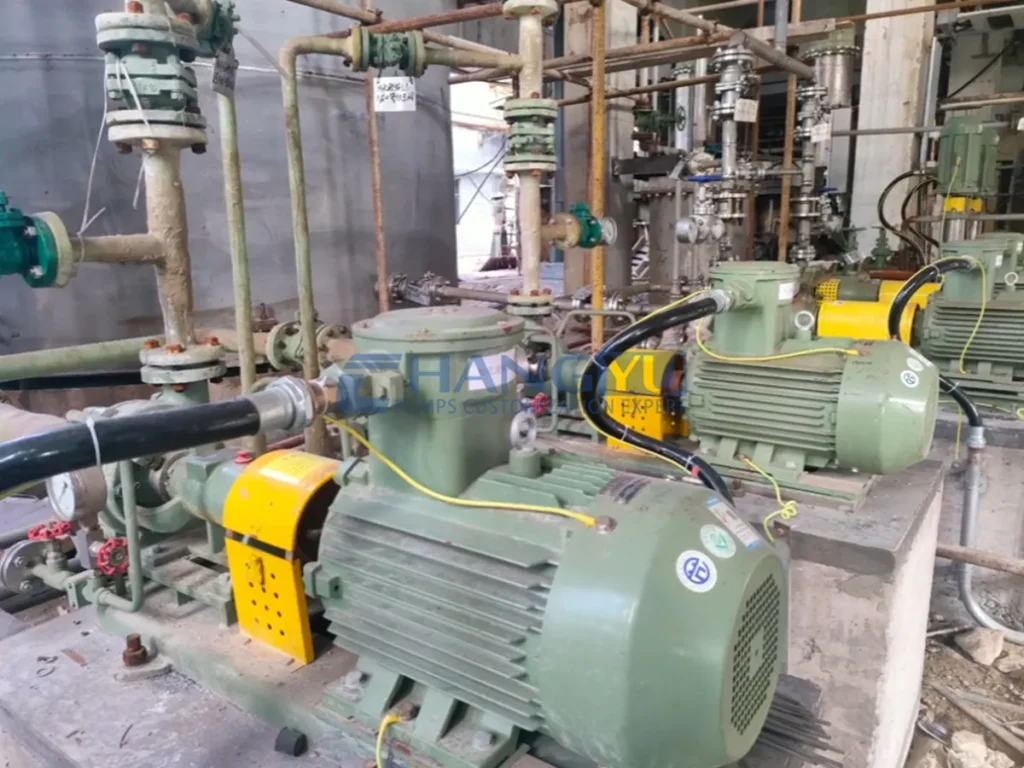
Bagaimana Cara Mencegah Penyumbatan dan Kristalisasi pada Pompa TiO₂?
Slurry TiO₂ menghadirkan dua risiko penyumbatan berbeda yang harus diatasi dalam pemilihan pompa dan desain sistem.
Pengendapan Padatan Selama Periode Diam
Partikel bijih dan kristal TiO₂ dalam slurry bersifat padat. Ketika pompa berhenti, padatan ini mengendap dengan cepat di casing, pipa hisap, dan saluran impeler. Saat dihidupkan ulang, pompa harus mengatasi lapisan padatan yang mengendap — menyebabkan start yang sulit, kelebihan beban motor, atau kerusakan impeler.
Tindakan pencegahan:
- Desain impeler semi-terbuka: Tidak seperti impeler tertutup dengan saluran internal yang sempit, impeler semi-terbuka tidak memiliki penutup depan tempat padatan dapat menumpuk. Desain sudu terbuka memungkinkan padatan yang mengendap untuk dibilas saat dihidupkan ulang.
- Sistem bilas untuk perlindungan saat diam: Untuk pompa yang dimatikan dalam waktu lama, sistem bilas eksternal menggantikan slurry dari bagian dalam pompa sebelum padatan dapat mengendap. Cairan bilas harus kompatibel secara kimia dengan fluida proses — pembilasan dengan air pada pompa asam pekat berbahaya karena reaksi eksotermik dan harus dihindari. Gunakan cairan yang kompatibel dengan proses sebagai gantinya.
- Kecepatan aliran minimum: Pertahankan kecepatan aliran setidaknya 1,5 m/s di semua pipa slurry untuk mencegah padatan mengendap selama operasi.
Pembentukan Kristal Sulfat
Pada tahapan pembekuan dan kristalisasi, besi sulfat terlarut (FeSO₄) mengkristal keluar dari larutan. Kristal ini dapat terbentuk pada permukaan pompa, permukaan segel, dan di celah kecil — menyebabkan kegagalan segel mekanis dan peningkatan keausan.
Tindakan pencegahan:
- Permukaan internal yang dipoles: Permukaan gesekan rendah alami dari UHMWPE menahan adhesi kristal. Tidak seperti permukaan logam cor yang kasar, UHMWPE tidak menyediakan tempat nukleasi untuk pertumbuhan kristal.
- Kontrol lingkungan segel: Bilas eksternal ke permukaan segel mekanis mencegah kristal terbentuk di celah segel dengan jarak bebas sempit selama periode diam.
- Manajemen suhu: Menjaga suhu casing pompa di atas titik kristalisasi mencegah pembentukan kristal selama penghentian singkat.
Susunan Segel Apa yang Terbaik untuk Pompa Slurry TiO₂?
Pemilihan segel untuk pompa slurry TiO₂ didorong oleh tiga faktor: sifat berbahaya dari asam sulfat panas, padatan abrasif dalam slurry, dan risiko kristalisasi pada permukaan segel selama periode diam.
Opsi Segel untuk Layanan TiO₂
| Jenis Segel | Terbaik untuk | Keterbatasan dalam Layanan TiO₂ |
|---|---|---|
| Segel mekanis tunggal | Tahapan tidak berbahaya, bersuhu rendah, dengan padatan rendah | Partikel abrasif menyerang permukaan segel; kebocoran asam saat kegagalan merupakan bahaya keselamatan; kristalisasi selama diam merusak permukaan |
| Segel mekanis ganda (back-to-back) | Tahapan asam berbahaya; bersuhu tinggi; dengan padatan tinggi | Biaya awal lebih tinggi; memerlukan pasokan fluida penghalang yang bersih |
| Segel mekanis ganda dengan bilas eksternal | Tahapan dengan risiko kristalisasi; tugas intermiten | Memerlukan instalasi dan pengoperasian sistem flush |
Mengapa Segel Ganda Menjadi Standar untuk Layanan TiO₂
Susunan segel mekanis ganda — dua segel dipasang saling membelakangi dengan fluida penghalang bersih yang bersirkulasi di antara keduanya pada tekanan lebih tinggi dari lumpur yang dipompa — memberikan tiga keuntungan kritis dalam aplikasi TiO₂:
- Penahanan kebocoran: Jika segel bagian dalam gagal, fluida penghalang — bukan lumpur asam — yang bocor keluar. Ini mencegah pelepasan asam berbahaya dan melindungi rumah bantalan dari korosi.
- Perlindungan permukaan segel: Fluida penghalang melumasi dan mendinginkan kedua permukaan segel, mencegah lumpur abrasif bersentuhan dengan segel bagian luar. Ini memperpanjang umur segel secara signifikan dibandingkan dengan segel tunggal yang berjalan langsung di dalam lumpur.
- Pencegahan kristalisasi: Fluida penghalang yang bersirkulasi mencegah lumpur menggenang dan mengkristal di permukaan segel selama periode idle.
Langkah 5: Pilih Spesifikasi Motor. Untuk setiap tahap proses TiO₂ yang menangani lumpur asam sulfat panas, tentukan segel mekanis ganda dengan sistem fluida penghalang air bersih atau yang kompatibel. Biaya tambahan dari segel ganda akan kembali dalam kegagalan segel pertama yang dihindari — segel tunggal yang bocor pada pompa asam adalah insiden keselamatan, bukan item perawatan.
Bagaimana Memilih Pompa Lumpur TiO₂ yang Tepat?
Pemilihan pompa lumpur TiO₂ mengikuti proses terstruktur berdasarkan tahap proses, karakteristik fluida, dan persyaratan operasi.
Langkah 1: Identifikasi Tahap Proses.
Tentukan tahap proses TiO₂ mana yang akan dilayani pompa. Gunakan matriks pemilihan per tahap di Bagian 3 untuk mengidentifikasi karakteristik fluida tipikal dan konfigurasi pompa yang direkomendasikan untuk tahap tersebut.
Langkah 2: Konfirmasi Suhu dan Kandungan Padatan.
Verifikasi suhu operasi maksimum dan konsentrasi padatan di pabrik spesifik Anda. Dua parameter ini menentukan apakah pelapis UHMWPE (≤90°C, ≤30% padatan) atau FEP (≤120°C, padatan sedang) adalah bahan pelapis yang sesuai.
Laju aliran ditentukan oleh kebutuhan proses — volume yang akan dipindahkan dibagi dengan waktu yang tersedia. Total head dinamis sama dengan angkat statis ditambah kerugian gesekan pada pipa, fitting, dan katup. Untuk fluida kental, terapkan faktor koreksi viskositas — kerugian gesekan meningkat dengan viskositas dibandingkan dengan air.
Berdasarkan konsentrasi asam, suhu, dan tingkat bahaya tahap tersebut, pilih jenis segel yang sesuai menggunakan tabel di Bagian 5. Untuk tahap asam panas, tentukan segel mekanis ganda dengan fluida penghalang.
Langkah 3: Pilih Jenis Impeler.
Hitung laju aliran yang diperlukan dan head dinamis total. Untuk layanan lumpur, terapkan faktor keamanan 10–15% pada laju aliran untuk memperhitungkan efek viskositas. Ukur saluran hisap setidaknya 1,5 kali diameter saluran masuk pompa untuk memastikan NPSH yang memadai dengan lumpur kepadatan tinggi.
Langkah 5: Rencanakan untuk Perawatan.
Atur instalasi pompa untuk akses mudah ke casing, impeler, dan segel untuk inspeksi dan penggantian rutin. Simpan satu set segel mekanis cadangan dan impeler dalam inventaris — pompa lumpur TiO₂ beroperasi di salah satu layanan paling agresif di industri kimia, dan perawatan terencana selalu lebih murah daripada waktu henti yang tidak direncanakan.
Langkah 5: Pilih Spesifikasi Motor. Untuk setiap tahap proses TiO₂ yang beroperasi di bawah 90°C dengan kandungan padatan di atas 10%, tentukan pompa berlapis UHMWPE dengan impeler semi-terbuka dan segel mekanis ganda. Konfigurasi ini terbukti memberikan masa pakai terpanjang dan total biaya kepemilikan terendah di berbagai pabrik TiO₂. Untuk pelepasan reaktor digesti asam di atas 90°C, pompa berlapis FEP adalah spesifikasi yang diperlukan.
Solusi Pompa Lumpur TiO₂ Changyu Pump
Changyu Pump memproduksi seri pompa yang dirancang khusus untuk tantangan korosi-plus-abrasi ganda dari produksi TiO₂. Dua seri melayani sebagian besar tahap proses TiO₂.
Panduan Pemilihan Pompa Lumpur TiO₂
| Tahap Proses | Suhu | Rekomendasi Utama | Alternatif |
|---|---|---|---|
| Digesti asam (pelepasan reaktor >90°C) | 90–110°C | Seri CYB (berlapis FEP) | — |
| Digesti asam (transfer lumpur ≤90°C) | 60–90°C → 60–90°C | Seri UHB (berlapis UHMWPE) | — |
| Pengendapan, pencucian, perlakuan garam | Hingga 90°C | Seri UHB (berlapis UHMWPE) | — |
| Hidrolisis | 80-100°C | Seri UHB (untuk ≤90°C); Seri CYB (>90°C) | — |
| Pembekuan / kristalisasi | 0–15°C | Seri UHB (berlapis UHMWPE) | — |
| Umpan kalsinasi (padatan sangat tinggi) | Hingga 40°C | Seri UHB (berlapis UHMWPE) | Pompa Sekrup Tipe-G (jika >30% padatan) |
Seri UHB — Pompa Lumpur Berlapis UHMWPE untuk Produksi TiO₂
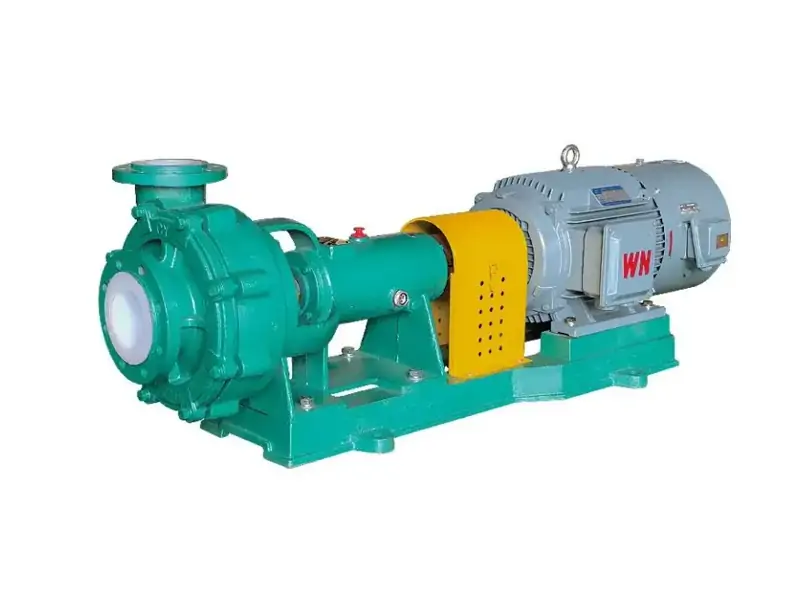
Seri UHB adalah pompa andalan untuk pemrosesan titanium dioksida. Pelapis UHMWPE yang diperkuat baja memberikan ketahanan asam dari pompa fluoroplastik yang dikombinasikan dengan ketahanan abrasi yang diperlukan untuk lumpur bijih. Impeler semi-terbuka menangani hingga 30% kandungan padatan tanpa tersumbat.
Fitur utama untuk layanan TiO₂:
- Pelapis UHMWPE inert secara kimia terhadap asam sulfat hingga konsentrasi 80% pada suhu hingga 90°C
- Ketahanan abrasi secara signifikan melebihi baja tahan karat — menangani partikel bijih yang mengikis pompa logam dalam hitungan bulan
- Impeler semi-terbuka mencegah penyumbatan dari padatan yang mengendap dan material berserat
- Tersedia dengan konfigurasi segel mekanis ganda untuk tahap asam panas
- Kecepatan operasi rendah (750–1.450 r/mnt) mengurangi laju keausan dan memperpanjang masa pakai
| Parameter | Spesifikasi |
|---|---|
| Laju aliran | 3-2.600 m³/jam |
| Kepala | 5-100 m |
| Daya motor | 0,75-300 kW |
| Kecepatan | 750-2.900 r/menit |
| Suhu | -20°C hingga 90°C |
| Bahan pelapis | UHMWPE |
Seri CYB — Pompa Berlapis FEP untuk Tahap TiO₂ Suhu Tinggi
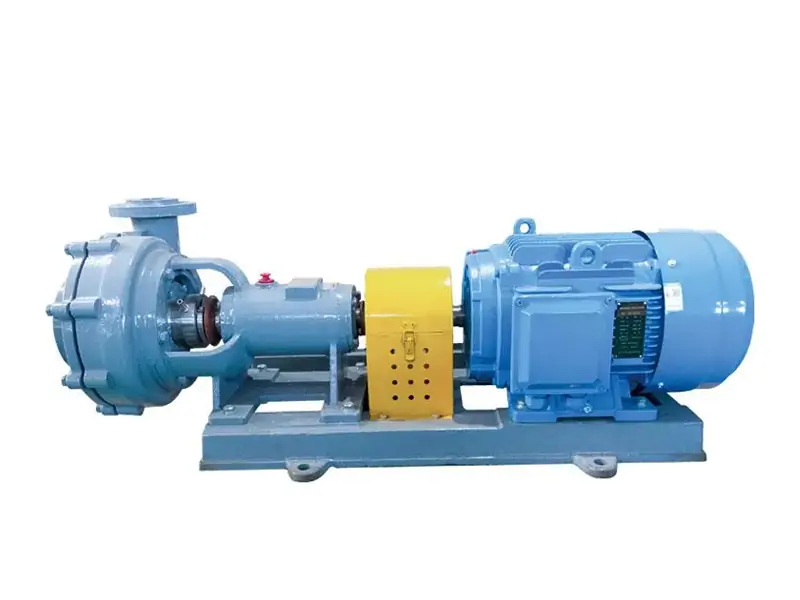
Untuk tahap proses TiO₂ yang beroperasi di atas batas 90°C dari UHMWPE — khususnya pelepasan reaktor digesti asam dan hidrolisis suhu tinggi — Seri CYB menyediakan pelapis fluoroplastik FEP yang diberi nilai hingga 120°C. FEP menawarkan ketahanan asam yang hampir universal dan permukaan anti-lengket yang menahan penumpukan kerak.
Fitur utama untuk layanan TiO₂ suhu tinggi:
- Pelapis FEP tahan terhadap asam sulfat pada semua konsentrasi hingga 120°C
- Permukaan anti-lengket mencegah kerak TiO₂ dan adhesi kristal sulfat
- Segel mekanis ganda dengan fluida penghalang untuk penahanan asam panas
- Cocok untuk digesti asam, hidrolisis suhu tinggi, dan umpan asam pekat
| Parameter | Spesifikasi |
|---|---|
| Laju aliran | 3-2.600 m³/jam |
| Kepala | 5-100 m |
| Daya motor | 0,75-300 kW |
| Kecepatan | 968-3.450 r/menit |
| Suhu | -80°C hingga 120°C |
| Bahan pelapis | FEP |
Studi Kasus Pompa Lumpur TiO₂: Mengatasi Kegagalan Kebocoran Asam di Pabrik TiO₂
Sebuah pabrik titanium dioksida di China mengoperasikan proses sulfat dengan kapasitas tahunan 50.000 ton. Tahap pengendapan — di mana lumpur ilmenit yang telah dicerna pada suhu 50–60°C dengan padatan 15–20% dijernihkan — awalnya dilengkapi dengan pompa sentrifugal baja tahan karat 316L yang dipasangi impeler tertutup dan segel mekanis tunggal.
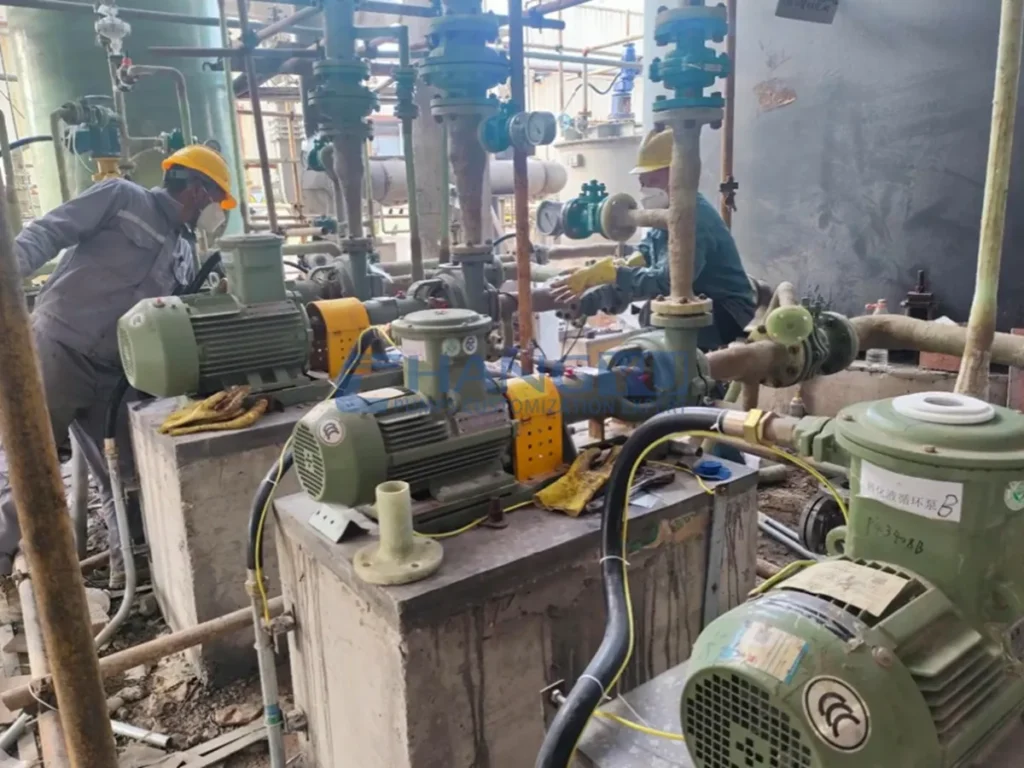
Dalam waktu tiga bulan operasi, catatan perawatan pabrik mendokumentasikan:
- Keausan casing: Dua dari empat pompa memerlukan penggantian casing lengkap karena korosi asam yang dikombinasikan dengan erosi dari partikel bijih. Baja tahan karat 316L, meskipun tahan terhadap asam sulfat pada suhu sekitar, terkorosi pada tingkat yang dipercepat pada suhu 50–60°C. Partikel bijih kemudian mengikis permukaan yang melemah, menciptakan alur dalam di dinding volute. Desain impeler tertutup menjebak padatan yang mengendap, semakin mempercepat keausan internal.
- Kegagalan sealDalam tiga bulan pengoperasian, catatan pemeliharaan pabrik mendokumentasikan:.
- Keausan casing tembus: Dua dari empat pompa memerlukan penggantian casing lengkap karena korosi asam yang dikombinasikan dengan erosi dari partikel bijih. Baja tahan karat 316L, meskipun tahan terhadap asam sulfat pada suhu sekitar, mengalami korosi pada tingkat yang dipercepat pada suhu 50–60°C. Partikel bijih kemudian mengikis permukaan yang melemah, menciptakan alur dalam di dinding volute. Desain impeller tertutup menjebak padatan yang mengendap, semakin mempercepat keausan internal.
: Segel mekanis tunggal gagal rata-rata setiap 6–8 minggu. Partikel lumpur abrasif menyerbu permukaan segel, dan kristalisasi asam selama penghentian akhir pekan mencegah permukaan segel duduk dengan benar saat start ulang pada hari Senin.
Dampak produksi.
: Setiap kegagalan pompa memerlukan waktu henti 4–6 jam untuk penggantian. Dengan dua pompa yang sering tidak berfungsi secara bersamaan, tahap pengendapan beroperasi di bawah kapasitas, menciptakan hambatan dalam jalur produksi.
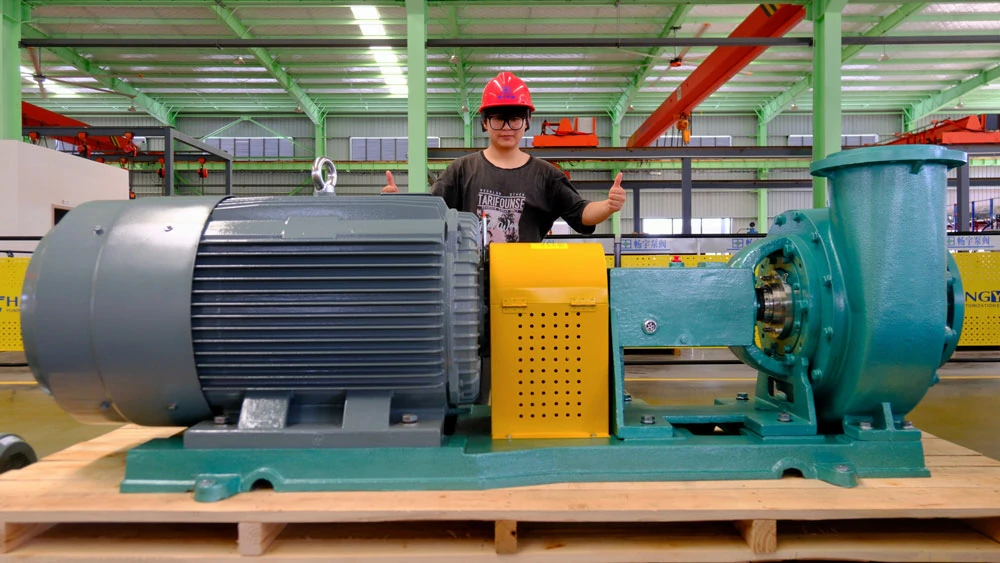
Poin pentingInsinyur Changyu Pump mengganti keempat pompa tahap pengendapan dengan pompa lumpur berlapis UHMWPE Seri UHB yang dikonfigurasi dengan impeller semi-terbuka dan segel mekanis ganda dengan siram fluida penghalang eksternal.
Lapisan UHMWPE memberikan ketahanan simultan terhadap korosi asam sulfat dan abrasi partikel bijih — dua mekanisme kegagalan yang telah menghancurkan pompa baja tahan karat. Impeller semi-terbuka menghilangkan penyumbatan yang terjadi ketika padatan yang mengendap terakumulasi di impeller tertutup sebelumnya. Segel mekanis ganda, dengan fluida penghalang air bersih, mencegah masuknya partikel abrasif dan kristalisasi asam pada permukaan segel.
Tiga tahun setelah penggantian: nol penggantian casing, masa pakai segel diperpanjang menjadi 12–18 bulan (dari 6–8 minggu), dan nol waktu henti produksi yang disebabkan oleh kegagalan pompa tahap pengendapan. Pabrik memperluas spesifikasi pompa berlapis UHMWPE ke tahap pencucian dan perlakuan garam selama siklus pemeliharaan terjadwal berikutnya.
: Baja tahan karat tidak dapat berfungsi sebagai material pompa jangka panjang dalam layanan lumpur TiO₂. Kombinasi asam sulfat panas dan partikel bijih abrasif menghancurkan baja tahan karat melalui mekanisme korosi-erosi sinergis yang dirancang khusus untuk ditahan oleh pompa berlapis UHMWPE.
FAQ tentang Pompa Lumpur TiO₂
T: Mengapa baja tahan karat gagal begitu cepat dalam layanan lumpur TiO₂?.
J: Baja tahan karat menghadapi serangan ganda: asam sulfat panas mengkorosi lapisan oksida pasif yang melindungi logam, sementara partikel bijih abrasif mengikis permukaan yang melemah. Sinergi korosi-erosi ini menghilangkan material jauh lebih cepat daripada salah satu mekanisme saja. UHMWPE tahan terhadap keduanya — ia inert secara kimia terhadap asam dan sangat tahan terhadap abrasi.
T: Dapatkah satu jenis pompa melayani semua tahap proses TiO₂?.
J: Tidak. Mayoritas tahap — pengendapan, pencucian, perlakuan garam, pembekuan, dan umpan kalsinasi — paling baik dilayani oleh pompa berlapis UHMWPE. Tahap pembuangan reaktor digesti asam, di mana suhu melebihi 90°C, memerlukan pompa berlapis FEP dengan peringkat suhu yang lebih tinggi.
T: Batas suhu apa yang berlaku untuk pompa berlapis UHMWPE?.
J: Pompa berlapis UHMWPE diberi peringkat untuk layanan berkelanjutan pada suhu hingga 90°C. Ini mencakup sebagian besar tahap proses sulfat TiO₂. Untuk tahap yang melebihi 90°C — khususnya pembuangan reaktor digesti asam — tentukan pompa berlapis FEP yang diberi peringkat hingga 120°C.
T: Bagaimana cara mencegah pompa lumpur TiO₂ saya tersumbat setelah penghentian?.
J: Tiga tindakan mencegah penyumbatan saat penghentian: tentukan impeller semi-terbuka yang tidak menjebak padatan, pasang sistem siram eksternal dengan cairan yang kompatibel untuk memindahkan lumpur sebelum padatan mengendap, dan pertahankan kecepatan aliran minimum 1,5 m/s selama pengoperasian. Jangan pernah menggunakan air untuk menyiram pompa asam pekat — reaksi eksotermik berbahaya.
T: Jenis segel apa yang direkomendasikan untuk tahap TiO₂ asam panas?.
Daftar Periksa Pencegahan untuk Insinyur Pompa Changyu
- J: Segel mekanis ganda dengan sistem fluida penghalang yang bersih. Fluida penghalang mencegah lumpur abrasif bersentuhan dengan permukaan segel dan menghentikan kristalisasi asam selama periode idle. Segel tunggal tidak direkomendasikan untuk tahap asam panas karena risiko keselamatan dan keandalan.
- T: Bagaimana perbandingan UHMWPE dan FEP untuk layanan TiO₂?.
- J: UHMWPE memberikan ketahanan abrasi yang unggul dengan biaya lebih rendah, menjadikannya pilihan pertama untuk tahap di bawah 90°C. FEP memberikan ketahanan suhu yang unggul (hingga 120°C) dan ketahanan asam universal, menjadikannya pilihan untuk tahap yang paling panas dan paling korosif. Bersama-sama, mereka mencakup seluruh proses sulfat TiO₂.
- Jangan pernah menentukan baja tahan karat untuk layanan lumpur TiO₂. Kombinasi asam panas dan partikel bijih abrasif akan menghancurkan pompa dalam hitungan bulan.
- Cocokkan material pelapis dengan suhu tahap. UHMWPE untuk ≤90°C; FEP untuk >90°C (pembuangan reaktor digesti asam).
- Tentukan impeller semi-terbuka untuk semua tahap lumpur TiO₂. Impeller tertutup menjebak padatan yang mengendap dan tersumbat saat start ulang.
- Pasang segel mekanis ganda pada semua tahap asam panas. Segel tunggal pada pompa asam adalah risiko keselamatan dan ekonomi palsu.
- Pertahankan kecepatan aliran minimum 1,5 m/s di semua pipa lumpur. Kecepatan yang lebih rendah memungkinkan partikel bijih mengendap dan memblokir saluran.
Kesimpulan
Siram pompa dengan cairan yang kompatibel (jangan pernah air untuk asam pekat) sebelum penghentian yang diperpanjang. Ini memindahkan lumpur dari casing dan ruang segel.
Simpan impeller cadangan, set segel mekanis, dan liner casing dalam inventaris. Pompa lumpur TiO₂ beroperasi di salah satu layanan paling agresif di industri kimia.

Tim teknis Changyu Pump menyediakan penilaian teknis yang disesuaikan untuk aplikasi pompa slurry TiO₂ — mencakup analisis tahap proses, pemilihan material, konfigurasi seal, dan penentuan ukuran pompa. Dua dekade pengalaman manufaktur dalam aplikasi kimia korosif dan abrasif mendasari setiap rekomendasi.