
Jawaban Singkat
A pompa umpan filter press adalah pompa khusus yang menyuntikkan slurry ke dalam filter press di bawah tekanan untuk memisahkan padatan dari cairan. Tidak seperti pompa transfer standar, pompa ini harus menangani siklus operasi dua tahap yang menuntut: fase pengisian bertekanan rendah dan aliran tinggi, diikuti oleh fase pemadatan bertekanan tinggi dan aliran rendah. Memilih pompa yang salah untuk tugas unik ini menyebabkan pembentukan kue filter yang tidak memadai, keausan berlebihan, dan kegagalan seal dini. Faktor pemilihan utama:
- Cocokkan kurva pompa dengan siklus filter press: Pompa umpan filter press harus memberikan aliran tinggi pada tekanan rendah selama pengisian rongga awal, kemudian mempertahankan aliran yang cukup saat tekanan meningkat selama pemadatan kue. Pompa sentrifugal standar dengan kurva Q-H datar atau curam mungkin mengalami penurunan aliran yang signifikan pada tekanan tinggi — pemilihan kurva pompa yang tepat sangat penting untuk memastikan aliran yang memadai sepanjang siklus filtrasi.
- Ketahanan terhadap korosi dan abrasi tidak dapat ditawar: Slurry yang diumpankan ke filter press sering kali merupakan campuran pekat dari larutan asam atau basa dan partikel padat abrasif. Pompa besi cor atau baja tahan karat standar cepat aus dalam layanan ini. Pompa berlapis UHMW-PE memberikan ketahanan ganda — kelembaman kimia terhadap filtrat korosif dan ketahanan abrasi tinggi terhadap partikel padat.
- Pemilihan seal harus memperhitungkan kondisi tekanan tinggi dan aliran rendah: Pada akhir siklus filtrasi, pompa beroperasi pada tekanan maksimum dengan aliran minimal. Permukaan seal mekanis bergantung pada fluida yang dipompa untuk pendinginan dan pelumasan. Pada aliran mendekati nol, seal standar menjadi terlalu panas dan gagal. Seal mekanis ganda dengan sistem fluida penghalang eksternal diperlukan untuk operasi yang andal.
- Integrasi penggerak kecepatan variabel mengurangi biaya energi dan meningkatkan kualitas kue: Pompa umpan yang dikendalikan VFD menurunkan kecepatan saat tekanan meningkat, mencocokkan keluaran pompa dengan kurva permintaan filter press. Ini menghilangkan pemborosan energi dari katup throttling dan memberikan pembentukan kue yang lebih halus.
Filter press hanya seefektif pompa yang memberinya makan. Pompa umpan yang terlalu kecil atau salah diterapkan menghasilkan waktu siklus yang panjang, kue filter basah, dan keausan berlebihan — masalah yang secara langsung memengaruhi hasil produksi dan biaya perawatan. Kombinasi kimia korosif, padatan abrasif, dan operasi tekanan tinggi siklik menciptakan aplikasi yang sangat menuntut yang tidak dapat dipenuhi oleh pompa proses standar.
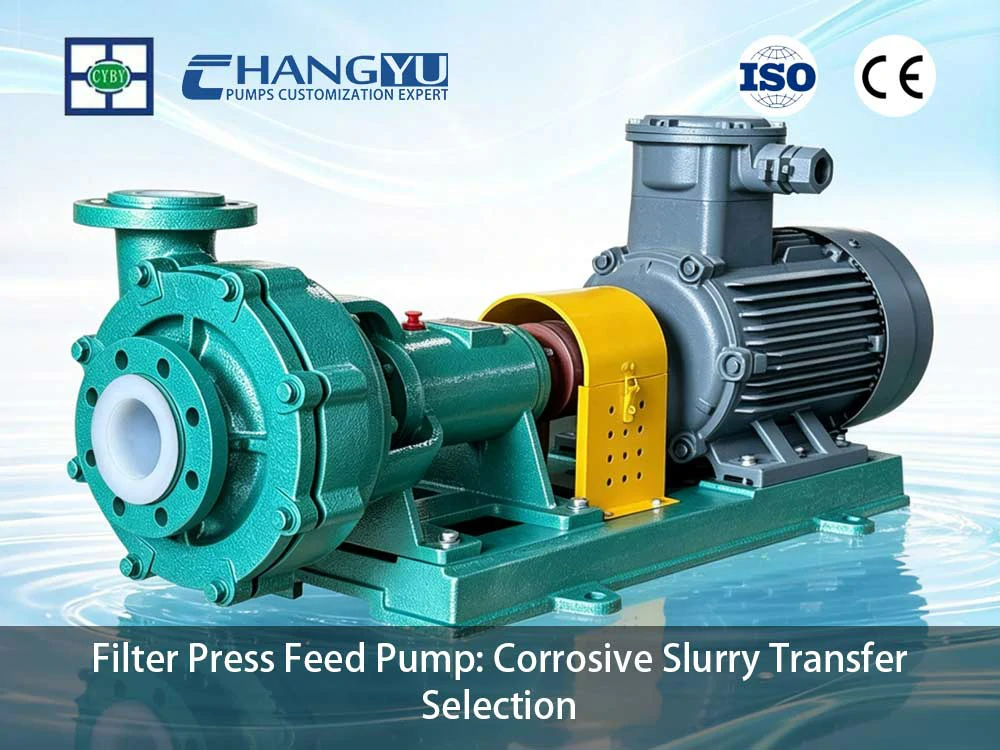
Setelah membaca panduan ini, Anda akan memahami karakteristik operasi filter press dan bagaimana hal itu mendorong pemilihan pompa, material mana yang tahan terhadap korosi dan abrasi gabungan dari slurry filter press, cara memilih dan mengukur pompa untuk proses filtrasi spesifik Anda, serta strategi penyegelan dan kontrol apa yang memastikan operasi jangka panjang yang andal. Dengan pengalaman manufaktur pompa lebih dari 20 tahun di seluruh aplikasi kimia, pertambangan, dan lingkungan, Changyu Pump menyajikan panduan pemilihan terfokus ini untuk aplikasi pompa umpan filter press.
Apa Itu Pompa Umpan Filter Press?
A filter press → filter press adalah perangkat pemisahan padat-cair yang dioperasikan secara batch. Slurry dipompa ke dalam serangkaian ruang yang dibentuk oleh pelat filter. Cairan melewati kain filter, meninggalkan kue filter padat. Pompa umpan menyediakan gaya dorong untuk seluruh proses ini.
Siklus Operasi Filter Press
Siklus filter press memiliki dua fase yang berbeda, masing-masing memberikan tuntutan berbeda pada pompa umpan:
Fase 1 — Pengisian Rongga (Tekanan Rendah, Aliran Tinggi):
Ruang kosong diisi dengan bubur. Pompa beroperasi pada tekanan pelepasan yang relatif rendah — biasanya 1–3 bar — dan harus memberikan aliran tinggi untuk mengisi press dengan cepat. Pengisian yang lambat memperpanjang waktu siklus dan mengurangi hasil produksi pabrik.
Fase 2 — Pemadatan Kue (Tekanan Tinggi, Aliran Rendah):
Setelah ruang penuh, pompa harus terus mengirimkan slurry melawan resistensi yang meningkat saat padatan menumpuk di kain filter. Tekanan naik secara progresif — biasanya 6–10 bar untuk press ruang standar dan hingga 15–20 bar untuk press tekanan tinggi atau membran — sementara aliran menurun secara signifikan saat kue memadat. Fase ini menentukan kadar air akhir kue.
Mengapa Pompa Sentrifugal Standar Kesulitan
Pompa sentrifugal standar dirancang untuk rentang operasi yang relatif sempit. Saat tekanan pelepasan meningkat, aliran menurun di sepanjang kurva karakteristik pompa. Pada tekanan tinggi yang diperlukan untuk pemadatan kue, aliran pompa standar mungkin turun mendekati nol — tidak cukup untuk menyelesaikan siklus filtrasi secara efektif. Ini menghasilkan kue filter yang tidak dipadatkan secara memadai dengan kadar air tinggi.
Selain itu, sifat siklik dari operasi filter press — peningkatan tekanan berulang dari rendah ke tinggi — mempercepat keausan pada komponen pompa. Setiap siklus membuat impeller, volute, dan seal terkena beban hidrolik yang bervariasi. Pompa yang dirancang untuk operasi kondisi tunak mungkin mengalami kegagalan terkait kelelahan di bawah kondisi siklik ini.
Apa Tantangan dalam Pengumpanan Filter Press?
Pompa umpan filter press menghadapi kombinasi kondisi operasi yang tidak dirancang untuk ditangani oleh pompa standar.
Tantangan 1: Ketidakcocokan Tekanan-Aliran
Tantangan mendasarnya adalah bahwa permintaan filter press berubah secara dramatis selama satu siklus, sementara pompa sentrifugal kecepatan tetap memberikan kurva tekanan-aliran yang tetap. Ketika kurva pompa tidak cocok dengan kurva permintaan filter press, salah satu dari dua masalah terjadi:
- Pompa terlalu kecil: Pompa tidak dapat memberikan aliran yang cukup selama fase pengisian. Press membutuhkan waktu terlalu lama untuk diisi, mengurangi hasil produksi pabrik. Selama pemadatan, pompa mungkin tidak mencapai tekanan akhir yang diperlukan, menghasilkan kue yang basah dan terbentuk dengan buruk.
- Pompa terlalu besar: Pompa memberikan aliran berlebihan selama fase pengisian, berpotensi membebani motor atau menyebabkan distribusi kue yang tidak merata di dalam ruang press.
Solusinya adalah ukuran pompa yang cermat dengan margin keamanan yang sesuai, atau — semakin sering — penggerak frekuensi variabel (VFD) kontrol yang menyesuaikan kecepatan pompa agar sesuai dengan permintaan press pada setiap tahap.
Solusinya adalah pemilihan ukuran pompa yang cermat dengan margin keamanan yang sesuai, atau — semakin sering —
penggerak frekuensi variabel (VFD).
kontrol yang menyesuaikan kecepatan pompa untuk memenuhi permintaan press pada setiap tahap.
Tantangan 2: Keausan Abrasif Tekanan Tinggi.
Selama fase pemadatan, pompa beroperasi pada tekanan tinggi dengan lumpur yang mengandung partikel padat terkonsentrasi. Aliran tekanan tinggi mempercepat keausan abrasif pada sudu impeler, permukaan volute, dan cincin aus. Material yang berkinerja memadai pada tekanan rendah dapat aus dengan cepat pada tekanan tinggi di layanan filter press.
Tantangan 3: Kimia Korosif dari Filtrat.
Fase cair dari lumpur seringkali agresif secara kimia — asam sulfat dalam produksi titanium dioksida, asam klorida dalam pengawetan logam, larutan kaustik dalam pemrosesan alumina. Pompa besi cor dan baja karbon standar terkorosi dengan cepat. Bahkan grade baja tahan karat memiliki keterbatasan kompatibilitas kimia spesifik yang harus diverifikasi terhadap kimia filtrat.
Tantangan 4: Operasi Intermiten dan Kristalisasi.
Filter press beroperasi dalam siklus batch. Di antara siklus, lumpur mungkin tetap diam di rumah pompa, mendingin dan mengental saat air menguap. Garam terlarut mengkristal pada permukaan impeler dan di ruang segel, berpotensi menyita pompa sebelum start berikutnya. Pompa dalam layanan filter press memerlukan operasi berkelanjutan selama periode produksi atau prosedur penghentian khusus untuk mencegah kerusakan akibat kristalisasi.
Tantangan 5: Keandalan Segel pada Aliran Rendah.
Di akhir fase pemadatan, pompa beroperasi pada tekanan maksimum dengan aliran minimal. Permukaan segel mekanis bergantung pada lapisan fluida tipis untuk pendinginan dan pelumasan. Pada laju aliran yang sangat rendah, lapisan ini rusak, menyebabkan permukaan segel berjalan kering, terlalu panas, dan gagal sebelum waktunya. Segel mekanis tunggal standar tidak memadai untuk kondisi ini.
| Bahan | Ketahanan Asam | Ketahanan Abrasi | Kapasitas Tekanan | Batas Suhu | Material Apa yang Terbaik untuk Pompa Umpan Filter Press Korosif? | Biaya Relatif |
|---|---|---|---|---|---|---|
| Besi Cor | Pemilihan material untuk pompa umpan filter press harus secara bersamaan mengatasi korosi kimia dari filtrat, keausan abrasif dari partikel padat, dan kondisi tekanan tinggi siklik yang mempercepat kedua mekanisme tersebut. | Perbandingan Material untuk Layanan Umpan Filter Press | Tinggi | ~150°C | Minggu hingga bulan | 1× (dasar) |
| Baja Tahan Karat 316L | Masa Pakai Layanan Khas (Lumpur Asam) | Buruk — terkorosi dalam asam | Tinggi | ~60°C dalam asam | 3–6 bulan | 2–3× |
| Buruk — matriks lunak aus dengan cepat | Sedang — lubang dalam klorida, asam sulfat | Sedang — lebih baik dari 316L | Tinggi | Buruk — lunak dibandingkan dengan partikel keras | CD4MCu (Dupleks) | 3–4× |
| Dilapisi Karet Alam | Baik — lebih baik dari 316L | ~60°C dalam asam kuat; lebih tinggi untuk netral atau alkali | 6–9 bulan | ~70°C | 6–12 bulan | 1,5–2× |
| Berlapis UHMW-PE (Seri UHB) | Baik — tahan terhadap banyak asam | Sangat baik — ketahanan abrasi tinggi | Baik — menyerap benturan partikel | 90°C | 14–18 bulan | 1,5–2× |
| Berlapis FEP (Seri CYB-ZKJ) | Universal — semua asam | Baik — lebih rendah dari UHMW-PE | Baik — menyerap benturan partikel | 120°C | Sedang — terbatas tekanan | 3–4× |
Sangat Baik — inert terhadap sebagian besar asam
Tinggi — penguatan rumah baja
- 18–24 bulan Mengapa Pompa Berlapis UHMW-PE Menjadi Standar untuk Umpan Filter Press Korosif.
- UHMW-PE (polietilen dengan berat molekul sangat tinggi) menggabungkan beberapa sifat yang membuatnya sangat cocok untuk layanan umpan filter press: Kelembaman kimia:.
- Permukaan anti-lengket: UHMW-PE tahan terhadap asam sulfat, asam klorida, asam fosfat, dan sebagian besar larutan alkali pada konsentrasi dan suhu yang khas dari proses filtrasi industri.
- Ketahanan abrasi tinggi: UHMW-PE memiliki ketahanan abrasi beberapa kali lebih tinggi dari baja tahan karat. Ia menyerap energi benturan partikel daripada terpotong atau tererosi.
Langkah 5: Pilih Spesifikasi Motor. UHMW-PE menahan adhesi kue filter. Tidak seperti permukaan logam di mana kue menumpuk dan mengurangi area aliran, UHMW-PE mempertahankan jalur aliran yang bersih melalui siklus berulang.
Efektivitas biaya:
Kombinasi rumah tekanan baja dengan lapisan UHMW-PE memberikan kemampuan tekanan pompa logam dengan ketahanan korosi dan abrasi dari polimer rekayasa — dengan biaya yang jauh lebih rendah daripada pompa logam paduan tinggi.
Langkah 1: Karakterisasi Lumpur.
Untuk aplikasi umpan filter press yang melibatkan lumpur korosif — asam, alkali, atau asin — tentukan pompa berlapis UHMW-PE sebagai pilihan utama. Ketahanan ganda terhadap serangan kimia dan abrasi partikel memberikan masa pakai layanan terpanjang per dolar investasi. Untuk aplikasi di mana filtrat mengandung pelarut organik, beroperasi di atas 90°C, atau termasuk asam fluorida, tingkatkan ke pompa berlapis FEP atau PFA.
Bagaimana Cara Memilih Pompa Umpan Filter Press yang Tepat?.
- Pemilihan pompa untuk layanan umpan filter press memerlukan pencocokan karakteristik hidrolik pompa dengan kurva permintaan press, pemilihan material untuk kimia lumpur spesifik, dan penentuan segel serta kontrol untuk operasi siklik yang andal. Tentukan kimia fase cair (pH, konsentrasi klorida, keberadaan pelarut), jenis dan distribusi ukuran partikel padat, konsentrasi padatan maksimum berdasarkan berat, suhu lumpur, dan aditif kimia atau flokulan yang digunakan dalam proses.
- Langkah 2: Hitung Amplop Operasi yang Diperlukan. Laju aliran maksimum:.
- Aliran yang diperlukan untuk mengisi press dalam waktu siklus target. Tekanan maksimum:.
Tekanan pemadatan akhir yang diperlukan untuk mencapai kelembaban kue target.
| Jenis Pompa | Siklus operasi: | Pertimbangan |
|---|---|---|
| Sentrifugal (berlapis) | Waktu pengisian, waktu pemadatan, dan frekuensi siklus per hari. | Langkah 3: Pilih Jenis Pompa dan Material. |
| Terbaik Untuk dalam Umpan Filter Press | Umpan filter press standar; laju aliran tinggi | Dilapisi UHMW-PE atau FEP; impeler semi-terbuka menangani padatan |
| Rongga Progresif | Sentrifugal dengan VFD | Filter press otomatis; optimalisasi energi |
| Kontrol kecepatan menyesuaikan keluaran pompa dengan permintaan press | Aliran rendah, tekanan tinggi; pembentukan kue yang konsisten | Aliran bebas pulsasi; kapasitas aliran lebih rendah dari sentrifugal |
- Diafragma yang Dioperasikan Udara Press kecil; padatan yang sangat bervariasi.
- Tekanan yang mengatur sendiri; kemampuan aliran dan tekanan terbatas Lumpur korosif standar:.
Langkah 4: Tentukan Pengaturan Seal.
- Pompa sentrifugal berlapis UHMW-PE (Seri UHB) — kinerja biaya optimal. Lumpur yang mengandung pelarut atau suhu tinggi:.
- Pompa berlapis FEP (Seri CYB-ZKJ) atau pompa berlapis PFA (Seri CYG). Layanan filter press standar:.
Segel mekanis ganda dengan sistem fluida penghalang eksternal. Fluida penghalang melumasi dan mendinginkan permukaan segel selama operasi aliran rendah, tekanan tinggi, mencegah pengoperasian kering yang merusak segel tunggal.
Variable frequency drive (VFD) menyesuaikan kecepatan pompa berdasarkan umpan balik tekanan discharge. Selama fase pengisian, pompa berjalan pada kecepatan penuh untuk mengisi press dengan cepat. Saat tekanan meningkat, VFD mengurangi kecepatan pompa, menyesuaikan aliran dengan permintaan yang menurun. Ini memberikan tiga manfaat: penghematan energi dibandingkan kontrol katup throttling, pembentukan cake yang lebih halus tanpa lonjakan tekanan, dan pengurangan keausan karena mengoperasikan pompa lebih dekat ke titik efisiensi terbaiknya sepanjang siklus.
Langkah 5: Pilih Spesifikasi Motor. Untuk filter press dengan waktu siklus di bawah 2 jam, pompa sentrifugal kecepatan tetap yang diukur dengan benar untuk kebutuhan tekanan dan aliran maksimum memberikan operasi yang andal dan hemat biaya. Untuk press yang lebih besar, waktu siklus yang lebih panjang, atau aplikasi di mana efisiensi energi menjadi prioritas, tentukan pompa yang dikendalikan VFD. VFD biasanya mengembalikan biaya tambahannya melalui penghematan energi dalam waktu 12–24 bulan untuk press yang beroperasi lebih dari 16 jam per hari.
Studi Kasus Pompa Umpan Filter Press: Memperpanjang Umur Pompa Filter Press dalam Produksi TiO₂
Sebuah pabrik titanium dioksida di China mengoperasikan filter press untuk memisahkan padatan titanium dioksida dari larutan asam sulfat (sekitar 20% H₂SO₄, pH < 1, pada 60°C). Slurry mengandung sekitar 25% padatan berdasarkan berat — terutama partikel TiO₂ halus dengan kekerasan Mohs 5,5–6,5.
Pompa umpan asli adalah pompa sentrifugal stainless steel 316L yang dipilih karena kompatibilitas kimianya dengan asam sulfat. Dalam waktu tiga bulan setelah commissioning, impeller menunjukkan keausan abrasif yang parah — ujung sudu telah kehilangan lebih dari 60% ketebalan aslinya. Rumah pompa mengalami kebocoran lubang jarum di volute cutwater akibat korosi asam dan erosi yang dipercepat aliran. Mechanical seal gagal setiap 4–6 minggu karena masuknya partikel selama fase pemadatan tekanan tinggi.
Analisis akar masalah oleh para insinyur Changyu Pump mengungkapkan bahwa stainless steel 316L, meskipun secara kimia dinilai untuk asam sulfat pada konsentrasi dan suhu ini, tidak memiliki ketahanan abrasi yang diperlukan untuk partikel TiO₂. Asam mengeraskan permukaan logam, dan partikel keras kemudian mengikis permukaan yang melemah dengan laju yang dipercepat. Mechanical seal tunggal gagal karena kondisi tekanan tinggi dan aliran rendah di akhir setiap siklus filter menyebabkan permukaan seal berjalan kering.
Pabrik mengganti semua pompa umpan filter press dengan pompa sentrifugal berlapis UHMW-PE Seri UHB Changyu dengan mechanical seal ganda. Lapisan UHMW-PE inert secara kimia terhadap asam sulfat dan memberikan ketahanan abrasi yang jauh lebih tinggi daripada stainless steel 316L. Mechanical seal ganda dengan sistem fluida barrier eksternal mempertahankan pelumasan permukaan seal di seluruh siklus filter, termasuk fase pemadatan aliran rendah.
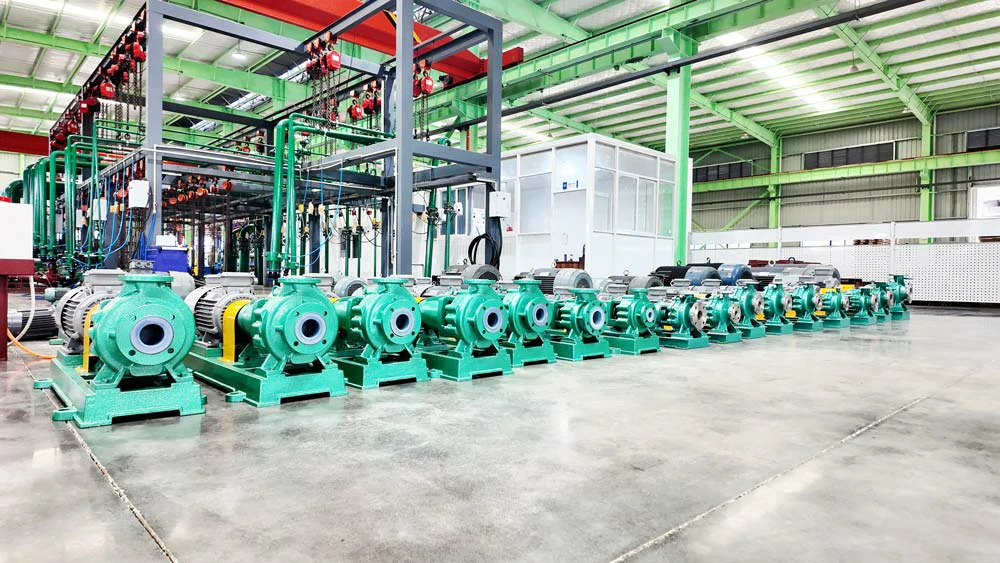
Setelah 14 bulan operasi berkelanjutan: inspeksi terjadwal pertama menunjukkan keausan liner yang seragam dan bertahap tanpa korosi atau pitting. Liner UHMW-PE diproyeksikan mencapai masa pakai 14–18 bulan. Masa pakai mechanical seal ganda melebihi 12 bulan — peningkatan 6× lipat dibandingkan seal tunggal asli. Downtime produksi untuk penggantian pompa dihilangkan sepenuhnya, menghemat perkiraan 5 hari produksi yang hilang per tahun.
Poin penting: Dalam layanan umpan filter press, material pompa harus menahan korosi kimia dan abrasi partikel secara bersamaan. Stainless steel yang dinilai untuk kimia asam masih akan gagal dengan cepat jika tidak memiliki ketahanan abrasi untuk partikel padat dalam slurry. Pompa berlapis UHMW-PE memberikan ketahanan ganda yang dituntut oleh aplikasi filter press korosif.
Solusi Pompa Umpan Filter Press Changyu Pump
Changyu Pump memproduksi seri pompa yang secara khusus sesuai untuk kondisi menuntut dari layanan umpan filter press.
Panduan Pemilihan Pompa Umpan Filter Press
| Aplikasi | Tantangan Utama | Seri yang Direkomendasikan | Fitur Utama |
|---|---|---|---|
| Slurry korosif standar (asam, alkali, air garam) | Korosi + abrasi | Seri UHB | Dilapisi UHMW-PE; impeller semi-terbuka; 30% padatan |
| Slurry bersuhu tinggi atau mengandung pelarut | Panas + serangan kimia | Seri CYB-ZKJ | Berlapis FEP; suhu hingga 120°C |
| Aplikasi ultra-korosif atau kemurnian tinggi | Asam HF, bahan kimia ekstrem | Seri CYG | Dilapisi PFA; suhu hingga 160°C; kontaminasi nol |
| Press otomatis dengan kontrol VFD | Optimasi energi + kualitas cake | Seri UHB + VFD | Kurva pompa yang cocok dengan VFD; hemat energi |
Seri UHB — Pompa Umpan Filter Press Berlapis UHMW-PE
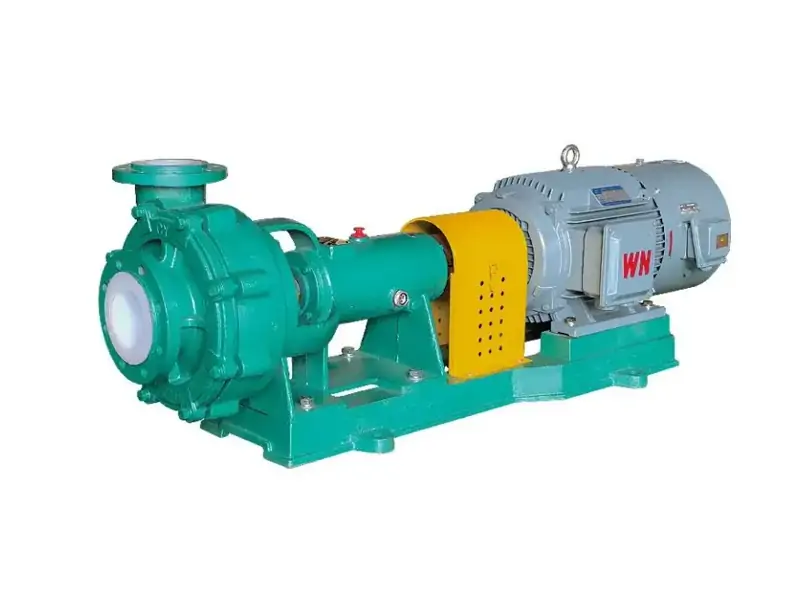
Seri pompa utama untuk aplikasi umpan filter press. Konstruksi baja berlapis UHMW-PE memberikan kelembaman kimia terhadap asam, alkali, dan larutan garam yang dikombinasikan dengan ketahanan abrasi tinggi terhadap partikel padat. Impeller semi-terbuka menangani padatan hingga 30% berdasarkan berat. Penguatan casing baja memberikan kemampuan tekanan yang diperlukan untuk siklus pemadatan filter press. Cocok untuk layanan umpan filter press standar pada suhu hingga 90°C.
| Parameter | Spesifikasi |
|---|---|
| Laju aliran | 3-2.600 m³/jam |
| Kepala | 5-100 m |
| Daya motor | 0,75-300 kW |
| Kecepatan | 750-2.900 r/menit |
| Suhu | -20°C hingga 90°C |
| Bahan pelapis | UHMW-PE |
Seri CYB-ZKJ — Pompa Umpan Filter Press
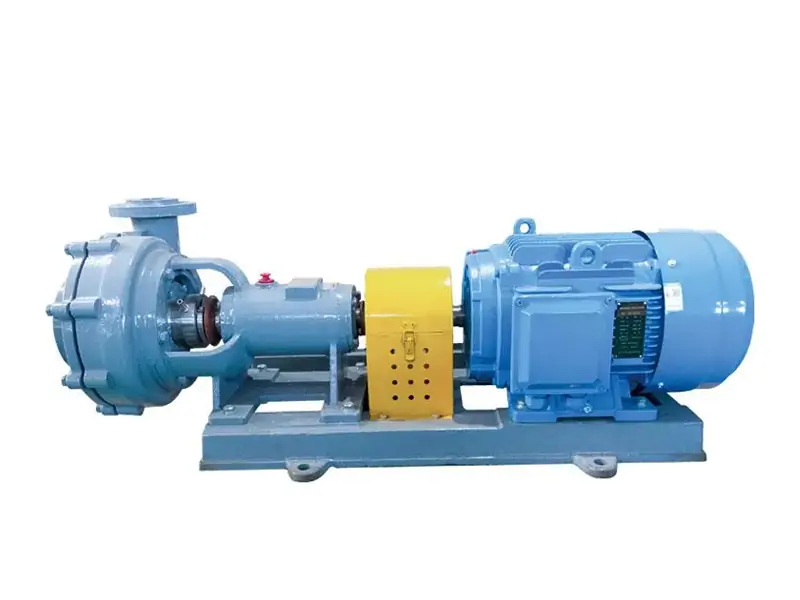
Pompa sentrifugal berlapis fluoroplastik FEP untuk aplikasi umpan filter press yang melibatkan suhu tinggi (> 90°C), pelarut organik agresif, atau filtrat campuran asam-pelarut. Lapisan FEP memberikan ketahanan asam universal dan menangani suhu hingga 120°C. Desain impeller semi-terbuka melewatkan partikel padat sambil mempertahankan isolasi kimia dari casing pompa logam.
| Parameter | Spesifikasi |
|---|---|
| Laju aliran | 3-2.600 m³/jam |
| Kepala | 5-100 m |
| Daya motor | 0,75-300 kW |
| Kecepatan | 968-3.450 r/menit |
| Suhu | -80°C hingga 120°C |
| Bahan pelapis | FEP (standar), PFA (opsi suhu tinggi) |
Seri CYG — Pompa Umpan Filter Press
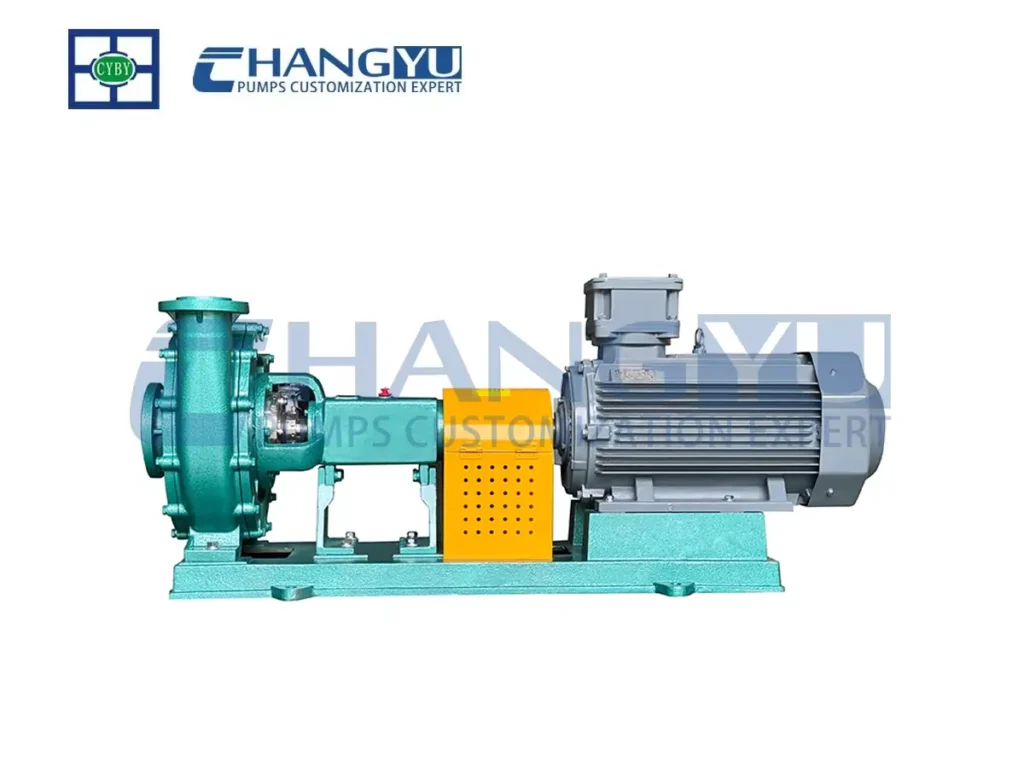
Pompa sentrifugal berlapis PFA dengan lapisan PFA cetakan setebal 8–20 mm untuk aplikasi umpan filter press yang paling menuntut — slurry asam bersuhu tinggi di atas 120°C, pemrosesan material kelas semikonduktor, dan proses yang memerlukan kontaminasi nol dari material pompa. Lapisan PFA yang disinter memberikan ketahanan kimia universal dan beroperasi pada suhu hingga 160°C.
| Parameter | Spesifikasi |
|---|---|
| Laju aliran | 3-2.600 m³/jam |
| Kepala | 5-100 m |
| Daya motor | 0,75-300 kW |
| Kecepatan | 968-3.450 r/menit |
| Suhu | -80°C hingga 160°C |
| Bahan pelapis | PFA (ketebalan 8–20 mm) |
FAQ tentang Pompa Umpan Filter Press
T: Apa jenis pompa terbaik untuk umpan filter press?
J: Pompa sentrifugal dengan lapisan UHMW-PE atau FEP adalah pilihan standar untuk sebagian besar aplikasi filter press slurry korosif. Impeller semi-terbuka menangani padatan tanpa menyumbat, dan lapisan memberikan ketahanan korosi dan abrasi. Untuk press kecil atau padatan yang sangat bervariasi, pompa diafragma yang dioperasikan dengan udara mungkin cocok.
T: Mengapa pompa umpan filter press memerlukan mechanical seal ganda?
J: Pada akhir siklus filtrasi, pompa beroperasi pada tekanan maksimum dengan aliran minimal. Mechanical seal tunggal standar mengandalkan fluida yang dipompa untuk pendinginan dan pelumasan. Pada aliran rendah, pendinginan ini hilang, dan permukaan seal menjadi terlalu panas dan rusak. Mechanical seal ganda dengan fluida barrier eksternal mempertahankan pelumasan permukaan seal sepanjang seluruh siklus.
.
T: Bagaimana cara menentukan ukuran pompa umpan filter press?
J: Tentukan ukuran pompa untuk memberikan laju aliran yang diperlukan pada tekanan sistem maksimum. Pompa harus mampu beroperasi pada titik perpotongan kurva pompa dan kurva resistansi sistem di semua titik selama siklus filtrasi. Untuk pompa kecepatan tetap, pilih pompa yang memberikan aliran memadai pada tekanan maksimum tanpa melebihi faktor servis motor.
.
T: Dapatkah saya menggunakan VFD dengan pompa umpan filter press?
J: Ya. Pompa yang dikendalikan VFD menyesuaikan kecepatan berdasarkan umpan balik tekanan, memberikan aliran tinggi selama pengisian rongga dan aliran berkurang selama pemadatan cake. Ini meningkatkan efisiensi energi, memberikan pembentukan cake yang lebih halus, dan mengurangi keausan pada komponen pompa dibandingkan dengan operasi kecepatan tetap menggunakan katup throttling.
.
T: Material apa yang terbaik untuk slurry filter press asam?
J: Pompa berlapis UHMW-PE (polietilen dengan berat molekul sangat tinggi) memberikan kombinasi terbaik antara ketahanan asam, ketahanan abrasi, dan biaya untuk sebagian besar slurry filter press asam. Untuk asam suhu tinggi atau aplikasi yang melibatkan pelarut organik atau asam fluorida, pompa berlapis FEP atau PFA direkomendasikan.
.
Daftar Periksa Pencegahan untuk Insinyur Pompa Changyu
- Jangan menentukan pompa besi cor standar atau pompa baja karbon untuk umpan filter press korosif. Asam dalam filtrat akan mengkorosi casing pompa dalam hitungan minggu.
. - Cocokkan kurva pompa dengan kurva permintaan filter press. Pompa yang terlalu besar untuk fase pengisian atau terlalu kecil untuk fase pemadatan akan menghasilkan kualitas cake yang buruk.
. - Tentukan mechanical seal ganda dengan sistem fluida barrier. Seal tunggal akan gagal selama fase pemadatan tekanan tinggi dengan aliran rendah.
. - Perhitungkan sifat siklus operasi filter press. Setiap siklus tekanan ramp mempercepat keausan — pilih material dengan ketahanan abrasi yang memadai untuk jumlah siklus per hari.
. - Pertimbangkan kontrol VFD untuk press dengan waktu siklus lebih dari 2 jam. Penghematan energi dan peningkatan kualitas cake biasanya mengembalikan investasi VFD dalam 12–24 bulan untuk press yang beroperasi lebih dari 16 jam per hari.
. - Bilas pompa dengan air bersih setelah siklus terakhir setiap shift jika pompa akan diam lebih dari 4 jam. Ini mencegah kristalisasi dan pengendapan padatan di casing pompa.
. - Simpan liner, impeller, dan mechanical seal cadangan dalam inventaris. Pompa umpan filter press beroperasi di bawah beban siklik yang mempercepat keausan komponen dibandingkan dengan pompa tugas kontinu.
.
Kesimpulan
Pompa umpan filter press beroperasi pada titik perpotongan tiga kondisi yang menuntut: kimia korosif, padatan abrasif, dan operasi tekanan tinggi siklik. Pompa proses standar gagal dalam layanan ini karena dirancang untuk kondisi tunak dengan fluida bersih — bukan untuk tantangan gabungan dari umpan filter press.
.
Pompa sentrifugal berlapis UHMW-PE telah menjadi solusi standar untuk aplikasi umpan filter press korosif karena mengatasi ketiga tantangan: kelembaman kimia terhadap filtrat, ketahanan abrasi terhadap partikel padat, dan casing baja yang memberikan kemampuan tekanan untuk pemadatan tekanan tinggi. Mechanical seal ganda dengan sistem fluida barrier memecahkan masalah kegagalan seal aliran rendah yang tidak dapat ditangani oleh seal tunggal.
.
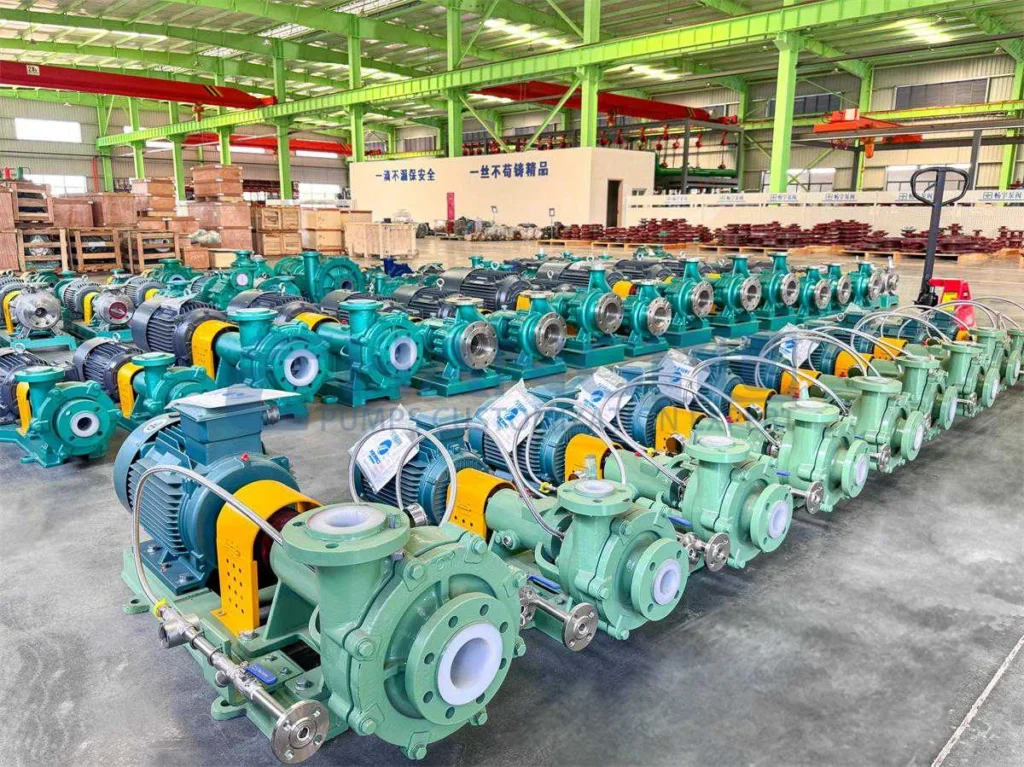
Tim teknik Changyu Pump menyediakan penilaian teknis yang disesuaikan untuk aplikasi pompa umpan filter press — mencakup karakterisasi slurry, penentuan ukuran pompa untuk press spesifik Anda, verifikasi kompatibilitas material, dan spesifikasi seal. Dua dekade pengalaman manufaktur di seluruh aplikasi kimia, metalurgi, lingkungan, dan pemrosesan mineral mendasari setiap rekomendasi.
.