
Jawaban Singkat
A pompa korosif kelas makanan mentransfer produk makanan dan aditif yang bersifat asam, basa, atau asin — dari asam sitrat dan cuka hingga air garam dan larutan pembersih CIP — tanpa mengontaminasi produk atau mengalami korosi dari dalam. Tidak seperti pompa baja tahan karat standar, yang dapat berlubang dan melarutkan logam ke dalam makanan asam, pompa korosif kelas makanan yang sejati menggabungkan bahan tidak beracun yang sesuai FDA dengan ketahanan kimia untuk menangani media agresif. Faktor seleksi utama:
- Keamanan material dan ketahanan korosi harus bekerja sama: Baja tahan karat 316L umum digunakan di pabrik makanan tetapi mengalami korosi di lingkungan hangat, asam, atau bersalinitas tinggi, melepaskan ion logam ke dalam produk. Material non-logam seperti UHMW-PE (polietilen dengan berat molekul sangat tinggi) secara inheren inert, sesuai FDA, dan kebal terhadap asam dan basa yang digunakan dalam pengolahan makanan.
- Tangani seluruh produk, bukan hanya cairannya: Banyak produk makanan berupa bubur — pasta tomat dengan biji, air garam acar dengan endapan, konsentrat saus dengan serat. Pompa yang tahan korosi juga harus tahan terhadap penyumbatan. Impeler semi-terbuka dan saluran aliran lebar menjaga padatan tetap bergerak tanpa menjebak kotoran.
- Rancang untuk siklus pembersihan, bukan hanya siklus produksi: Pabrik makanan membersihkan dengan larutan kaustik panas dan asam. Material pompa harus tahan terhadap bahan kimia CIP agresif ini pada suhu tinggi tanpa terdegradasi, membengkak, atau melarutkan zat.
Pabrik pengolahan makanan beroperasi 24 jam sehari. Ketika pompa gagal — baik karena korosi, segel macet, atau kontaminasi produk — seluruh jalur produksi berhenti. Dalam aplikasi makanan asam, pompa baja tahan karat standar bukanlah solusi jangka panjang. Pompa tersebut berfungsi untuk sementara, lalu berlubang, berkarat, dan gagal, sering kali melepaskan kontaminasi logam ke dalam produk sebelum ada yang menyadarinya.
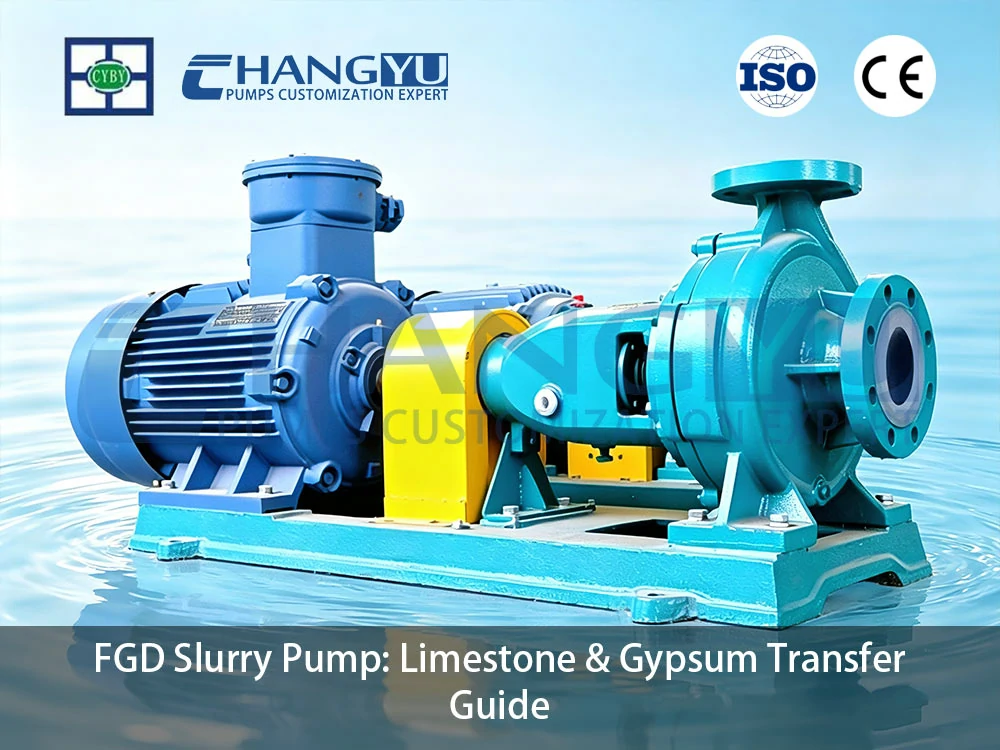
Setelah membaca panduan ini, Anda akan memahami mengapa logam kelas makanan umum gagal dalam layanan korosif, material non-logam mana yang memberikan ketahanan jangka panjang sejati, cara memilih pompa yang tidak akan tersumbat pada padatan makanan, dan cara memastikan pompa Anda bertahan dalam siklus pembersihan CIP yang agresif. Dengan pengalaman manufaktur pompa lebih dari 20 tahun, Changyu Pump mempersembahkan panduan seleksi untuk aplikasi korosif kelas makanan ini.
Apa Itu Pompa Korosif Kelas Makanan?
Pompa korosif kelas makanan adalah pompa khusus yang memenuhi persyaratan keamanan kontak makanan sekaligus memberikan ketahanan korosi yang kuat. Pompa ini dirancang untuk mentransfer cairan dan bubur yang dapat dimakan dengan sifat kimia yang agresif.
Pompa ini termasuk dalam kategori produk yang berbeda: bukan pompa baja tahan karat higienis standar untuk cairan ringan seperti susu atau bir, maupun pompa kimia industri yang terbuat dari bahan beracun yang tidak dapat lulus validasi kontak makanan.
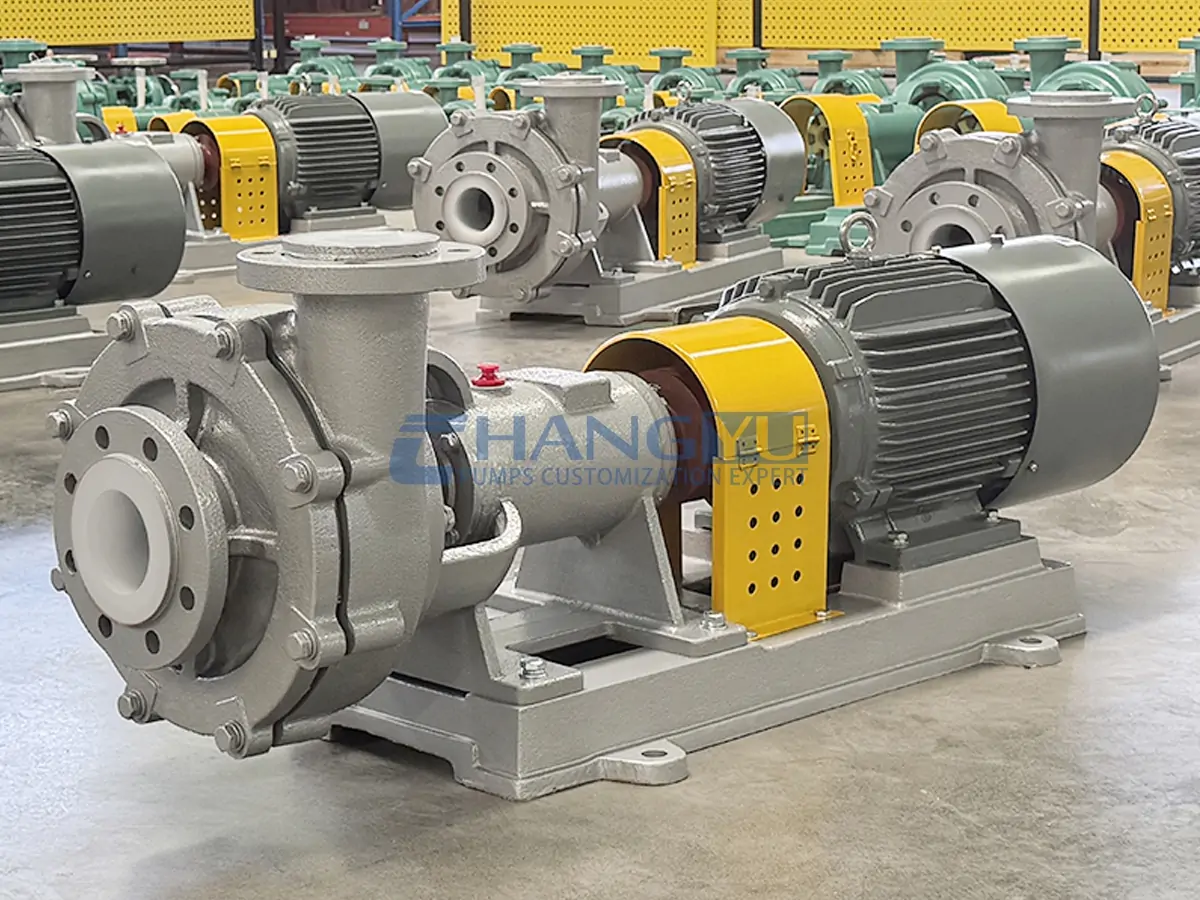
Tempat Penggunaan Pompa Korosif Kelas Makanan
Pengolahan makanan melibatkan sejumlah besar bahan kimia agresif yang mengejutkan, baik sebagai bahan maupun sebagai agen pembersih:
- Aditif makanan asam: Asam sitrat, asam fosfat (minuman cola), asam asetat (cuka), asam laktat (makanan fermentasi), dan asam malat semuanya dipompa selama dosis bahan dan pencampuran.
- Bantuan pengolahanalkali.
- : Natrium hidroksida dan kalium hidroksida digunakan untuk mengupas buah dan sayuran, menyesuaikan pH, dan dalam larutan pembersih CIP.Air garam bersalinitas tinggi.
- : Air garam acar, air garam zaitun, air garam keju, dan kecap mengandung konsentrasi klorida tinggi yang menyerang baja tahan karat.Bubur makanan korosif.
: Saus tomat, pasta kacang fermentasi, dan produk yang diasinkan menggabungkan keasaman, garam, dan padatan abrasif, menciptakan lingkungan pompa yang sangat menuntut.
Mengapa Pompa Baja Tahan Karat Standar Kesulitan.
Baja tahan karat 316L adalah material default di pabrik makanan, tetapi memiliki kerentanan spesifik dalam layanan korosif. Ion klorida dari garam dan makanan asam menyerang lapisan kromium oksida pasif yang melindungi baja. Hal ini menyebabkan korosi pitting — lubang kecil dan dalam yang menembus logam. Setelah pitting dimulai, pompa tidak hanya berkarat tetapi juga melepaskan ion besi, kromium, dan nikel ke dalam produk makanan. Korosi sering kali tidak terlihat dari luar sampai kebocoran berkembang atau uji kualitas produk mendeteksi kontaminasi logam.
Material Apa yang Kompatibel dengan Aplikasi Korosif Kelas Makanan?.
Memilih material untuk layanan korosif kelas makanan adalah tindakan penyeimbangan. Material harus tidak beracun dan disetujui untuk kontak makanan. Material harus tahan terhadap asam, basa, dan garam spesifik yang digunakan dalam proses. Material harus mentolerir suhu produk dan siklus pembersihan. Dan jika produk mengandung padatan, material harus tahan terhadap keausan abrasif.
| Bahan | Perbandingan Material Kelas Makanan | Ketahanan Asam | Keamanan Pangan | Ketahanan Abrasi | Batas Suhu |
|---|---|---|---|---|---|
| Baja Tahan Karat 316L | Ketahanan Klorida / Garam | Sesuai FDA, diterima secara luas | Sedang — rentan terhadap pitting dalam kondisi asam hangat | Buruk — risiko pitting dalam air garam dan makanan asin | Sedang — aus lebih cepat daripada UHMW-PE dalam bubur abrasif; cocok untuk cairan bersih |
| PP (Polypropylene) | > 200°C | Sesuai FDA, inert secara kimia | Luar biasa | Sedang | ~80°C |
| PVDF (Kynar) | > 200°C | Sangat Baik — tahan terhadap sebagian besar asam makanan pada konsentrasi yang digunakan dalam pengolahan makanan | Luar biasa | Bagus. | ~120°C |
| Dilapisi UHMW-PE | > 200°C | Sangat Baik — tahan terhadap asam kuat | Luar biasa | Sangat Baik — tahan terhadap asam dan basa | ~90°C |
| Dilapisi PTFE / PFA | > 200°C | Sangat Baik — masa pakai aus yang luar biasa dalam bubur abrasif | Universal | Sedang — terbaik untuk padatan halus | ~160°C (PFA) |
Universal — tahan terhadap semua bahan kimia
| Seleksi Material berdasarkan Produk Makanan | pH Khas | Produk Makanan | Suhu | Bahan yang Direkomendasikan | Alasan |
|---|---|---|---|---|---|
| Kandungan Klorida / Garam | 2–4 | Sangat tinggi | Cuka, air garam acar | lapisan UHMW-PE | Suhu sekitar–60°C |
| Kebal terhadap asam dan klorida; tahan aus | Larutan asam sitrat (50%) | Rendah | Suhu sekitar–40°C | 1–2 | Ketahanan asam yang sangat baik |
| UHMW-PE atau PVDF | Larutan asam sitrat (50%) | Rendah | Asam fosfat (sirup cola) | lapisan UHMW-PE | Suhu sekitar–30°C |
| Tahan asam; sesuai FDA | Kecap, pasta fermentasi | Sangat tinggi | 4–5 | lapisan UHMW-PE | Suhu sekitar–80°C |
| Tahan garam dan asam; menangani padatan | Kaustik panas (CIP) | Rendah | 70–85°C | 13–14 | Dilapisi UHMW-PE (di bawah 90°C) |
| Tahan alkali pada suhu CIP | 3–4 | Sedang | 60–90°C → 60–90°C | lapisan UHMW-PE | Saus tomat, saus tomat |
Langkah 5: Pilih Spesifikasi Motor. Tahan asam dan serat tomat abrasif UHMW-PE pompa berlapis memberikan kombinasi optimal antara keamanan pangan, ketahanan kimia, dan masa pakai aus. Tidak seperti baja tahan karat, UHMW-PE bersifat inert secara kimia dan kebal terhadap korosi sumbat klorida. Tidak seperti pompa plastik padat, lapisan baja memberikan kekuatan struktural yang diperlukan untuk tugas industri. Batas suhu 90°C kompatibel dengan sebagian besar proses makanan dan siklus CIP standar. Untuk aplikasi yang melebihi 90°C atau melibatkan pelarut kuat, tingkatkan ke pompa berlapis fluoroplastik FEP atau PFA.
Bagaimana Menangani Padatan dan Serat dalam Pemompaan Korosif Tingkat Pangan?
Banyak produk makanan korosif bukanlah cairan bersih. Saus tomat mengandung kulit dan biji. Air garam acar membawa endapan. Pasta kacang fermentasi kental dan berserat. Pompa yang menangani lingkungan kimia juga harus menangani padatan fisik.
Desain Impeler untuk Bubur Makanan
| Jenis Impeler | Ketahanan Terhadap Penyumbatan | Jalur Bahan Padat | Integritas Produk | Aplikasi Terbaik |
|---|---|---|---|---|
| Impeler tertutup | Buruk — serat membungkus, padatan menggumpal | Sempit — mudah tersumbat | Gaya geser sedang | Hanya cairan bersih |
| Impeler semi terbuka | Baik — saluran terbuka tahan terhadap penyumbatan | Lebar — melewati biji, kulit, serat | Geser rendah | Bubur makanan dengan padatan campuran — desain yang lebih disukai |
| Impeler vortex (tersembunyi) | Sangat baik — padatan melewati impeler | Saluran bebas terbesar | Geseran paling rendah | Produk berbongkah, buah utuh, padatan lunak besar |
Keunggulan UHMW-PE dalam Bubur Makanan
UHMW-PE tidak hanya inert secara kimia — tetapi juga merupakan salah satu polimer paling tahan aus yang tersedia. Dalam bubur makanan korosif dan abrasif, pompa berlapis UHMW-PE dapat bertahan tiga hingga lima kali lebih lama daripada pompa baja tahan karat. Dalam aplikasi seperti pengolahan tomat, di mana pulp asam terus-menerus mengikis permukaan pompa, koefisien gesekan rendah material juga mengurangi adhesi pasta makanan lengket, membuat pembersihan lebih mudah.
Langkah 5: Pilih Spesifikasi Motor. Untuk bubur makanan dengan kandungan padatan di atas 10% atau mengandung bahan berserat, tentukan impeler semi-terbuka yang dipasangkan dengan konstruksi berlapis UHMW-PE. Saluran impeler terbuka tahan terhadap penyumbatan, sementara lapisan UHMW-PE tahan terhadap cairan korosif dan padatan abrasif. Kombinasi ini memberikan total biaya kepemilikan terendah dalam aplikasi bubur makanan yang menuntut.
Bagaimana Merawat dan Membersihkan Pompa Korosif Tingkat Pangan?
Pompa makanan harus dibersihkan secara menyeluruh di antara siklus produksi untuk mencegah pertumbuhan bakteri dan kontaminasi silang. Proses pembersihan itu sendiri bersifat agresif — soda kaustik panas, asam fosfat — dan pompa harus mentolerir bahan kimia ini pada suhu tinggi.
Kompatibilitas CIP (Clean-in-Place)
Meskipun pompa berlapis UHMW-PE tidak dipoles hingga standar sanitasi Ra, pompa ini dapat dibersihkan secara efektif oleh sistem CIP eksternal jika dirancang dengan benar:
- Toleransi kimia: UHMW-PE tahan terhadap bahan kimia CIP standar — 1–2% natrium hidroksida hingga 85°C dan 0,5–1% asam fosfat hingga 60°C — tanpa terdegradasi, membengkak, atau melarutkan zat. Asam nitrat tidak direkomendasikan untuk UHMW-PE pada suhu tinggi.
- Kecepatan bilas: Sistem CIP harus mengirimkan larutan pembersih melalui pompa dengan kecepatan minimal 1,5 m/s untuk menciptakan aliran turbulen yang menggosok permukaan internal.
- Drainase lengkap: Setelah siklus CIP, pompa harus mengalir sepenuhnya. Bahan kimia pembersih yang menggenang dapat merusak segel dan elastomer seiring waktu, dan sisa cairan mengencerkan batch produksi berikutnya.
- Verifikasi bilas: Verifikasi bahwa air bilas mencapai pH netral sebelum memulai siklus produksi berikutnya. Residu kimia dari pembilasan yang tidak memadai dapat mencemari produk makanan.
Langkah 5: Pilih Spesifikasi Motor. Setelah setiap siklus CIP, verifikasi bahwa rumah pompa mengalir sepenuhnya. Permukaan anti-lengket UHMW-PE membantu drainase, tetapi pompa harus dipasang dengan kemiringan yang tepat untuk mencegah genangan cairan. Untuk produk yang meninggalkan residu berat, pertimbangkan untuk memperpanjang durasi pencucian kaustik atau meningkatkan laju aliran CIP untuk memastikan pembersihan menyeluruh.
Bagaimana Memilih Pompa Korosif Tingkat Pangan?
Pemilihan mengikuti proses terstruktur mulai dari karakterisasi produk hingga spesifikasi material dan ukuran pompa.
Langkah 1: Tentukan Produk dan Proses.
Karakterisasi produk makanan secara lengkap: keasaman (pH), kandungan garam (konsentrasi klorida), jenis dan ukuran padatan, viskositas, dan suhu. Identifikasi semua bahan kimia pembersih, konsentrasinya, dan suhu siklus CIP. Pompa harus bertahan dalam siklus pembersihan, bukan hanya siklus produksi.
Langkah 2: Pilih Material.
Langkah 2: Pilih Material Pompa.
Langkah 3: Pilih Jenis Impeler.
Menggunakan panduan kompatibilitas material di Bagian 2, pilih material pompa berdasarkan kondisi paling agresif — yang sering kali merupakan siklus CIP, bukan produk makanan. Konstruksi berlapis UHMW-PE memberikan keseimbangan optimal untuk sebagian besar aplikasi korosif tingkat pangan.
Langkah 3: Pilih Jenis Impeler.
Cocokkan impeler dengan kandungan padatan produk. Untuk cairan bersih, impeler tertutup menawarkan efisiensi tertinggi. Untuk bubur makanan dengan serat atau padatan, impeler semi-terbuka memberikan ketahanan sumbat yang diperlukan. Untuk produk berbongkah seperti buah utuh atau sayuran, impeler pusaran mungkin diperlukan.
Langkah 4: Ukur Pompa.
| Hitung laju aliran yang diperlukan dan head dinamis total. Untuk produk makanan kental, terapkan faktor koreksi viskositas. Pastikan pompa beroperasi dalam batas suhunya selama siklus produksi dan CIP. | Kisaran pH | Konten Padatan | Suhu | Bahan yang Direkomendasikan | Jenis Impeler |
|---|---|---|---|---|---|
| Matriks Pemilihan Pompa Pengolahan Makanan | Aplikasi Makanan | < 1% | Cuka, air garam acar | lapisan UHMW-PE | Ditutup |
| Cairan bersih asam (cuka, asam sitrat) | 2–5 | < 2% | Suhu sekitar–40°C | lapisan UHMW-PE | Tertutup atau semi terbuka |
| Air garam dan bumbu rendaman | 3–5 | 5–20% | 60–90°C → 60–90°C | lapisan UHMW-PE | Semi-terbuka |
| 3–7 | Saus dan pasta (saus tomat, pasta cabai) | 2–10% | Produk fermentasi (kecap asin, saus ikan) | lapisan UHMW-PE | Semi-terbuka |
| 4–6 | Suhu sekitar–50°C | < 1% | Sirkulasi bahan kimia CIP | lapisan UHMW-PE | Ditutup |
| 1–14 | Variabel | Variabel | 90–120°C | FEP / PFA berjajar | 60–85°C |
Langkah 5: Pilih Spesifikasi Motor. Proses panas (> 90°C).
Semi-terbuka atau tertutup
Seorang produsen kecap asin dan cuka di Asia menggunakan pompa sentrifugal stainless steel 316L untuk mentransfer produk jadi dari tangki pencampur ke jalur pembotolan. Produk-produk tersebut meliputi cuka beras (pH 2,8, klorida sedang dari garam fermentasi) dan kecap asin (pH 4,5, klorida > 15.000 mg/L). Suhu operasi adalah 40–60°C selama produksi, dengan siklus CIP menggunakan NaOH 2% pada suhu 80°C di antara batch.
Dalam waktu 12 bulan, casing dan impeler pompa 316L mengalami korosi pitting yang luas. Lubang-lubang tersebut pertama kali muncul di celah-celah sekitar dudukan gasket dan permukaan seal, kemudian menyebar ke sudu-sudu impeler. Korosi melepaskan ion besi, kromium, dan nikel ke dalam produk — terdeteksi selama pengujian kualitas rutin. Selain itu, seal pompa gagal kira-kira setiap 4–6 bulan, memerlukan penggantian tidak terjadwal yang menghentikan jalur pembotolan.
Analisis akar penyebab mengidentifikasi bahwa stainless steel 316L pada dasarnya tidak cocok untuk kombinasi konsentrasi klorida tinggi, pH asam, dan suhu tinggi. Lapisan oksida pasif yang biasanya melindungi stainless steel diserang oleh ion klorida, memicu pitting yang dipercepat oleh lingkungan asam.
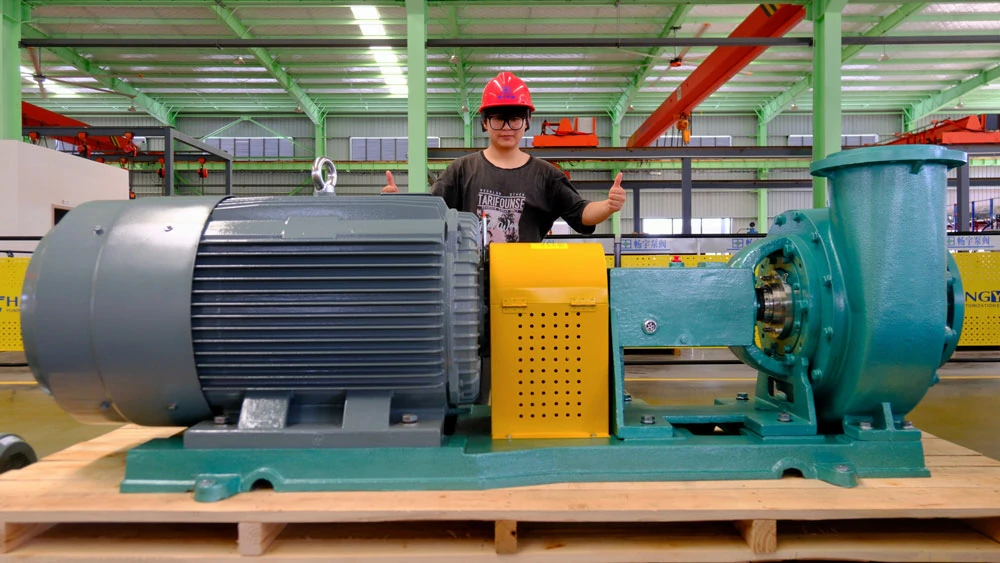
Changyu Pump mengganti pompa 316L dengan pompa berlapis UHMW-PE Seri UHB. Lapisan UHMW-PE kebal terhadap pitting klorida dan tahan terhadap rentang pH penuh dari kedua produk dan bahan kimia CIP. Konstruksi non-logam sepenuhnya menghilangkan risiko kontaminasi ion logam. Desain impeler semi-terbuka memungkinkan pompa menangani padatan sesekali — residu kedelai dan partikel rempah — tanpa tersumbat.
Tiga tahun setelah penggantian: nol korosi, nol insiden kontaminasi produk, dan umur seal diperpanjang hingga lebih dari 18 bulan. Pabrik tersebut menstandarisasi pompa berlapis UHMW-PE untuk semua lini produk asam dan garam tinggi selama peningkatan selanjutnya.
Poin penting: Stainless steel 316L tidak cocok untuk produk makanan yang menggabungkan kandungan klorida tinggi dengan pH asam pada suhu tinggi. Pompa berlapis UHMW-PE menghilangkan risiko korosi dan kontaminasi sambil memberikan ketahanan kimia yang diperlukan untuk produksi dan pembersihan CIP. Biaya awal yang lebih tinggi dari pompa berlapis dapat diperoleh kembali dalam tahun pertama melalui penghapusan insiden kualitas produk dan pengurangan waktu henti pemeliharaan.
Solusi Pompa Kelas Makanan Changyu Pump
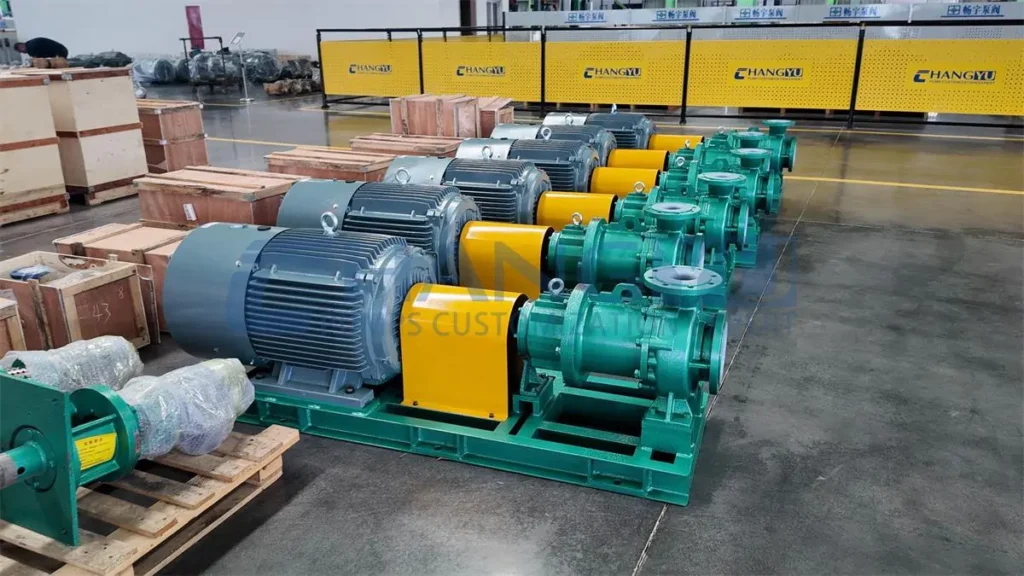
Changyu Pump memproduksi seri pompa yang dirancang khusus untuk aplikasi korosif kelas makanan, menggabungkan bahan non-toksik yang sesuai FDA dengan ketahanan kimia dan abrasi yang diperlukan oleh proses makanan yang menuntut.
Panduan Pemilihan Produk Pompa Kelas Makanan
| Aplikasi | Tantangan Utama | Seri yang Direkomendasikan | Fitur Utama |
|---|---|---|---|
| Makanan asam, air garam, saus, CIP | Korosi + abrasi sedang | Seri UHB | Berlapis UHMW-PE; sesuai FDA; menangani hingga 30% padatan |
| Makanan bersuhu tinggi atau asam kuat (> 90°C) | Korosi ekstrem + panas | Seri CYB-ZKJ | Berlapis FEP/PFA; ketahanan kimia universal; hingga 120°C |
Seri UHB — Pompa Korosif Kelas Makanan Berlapis UHMW-PE
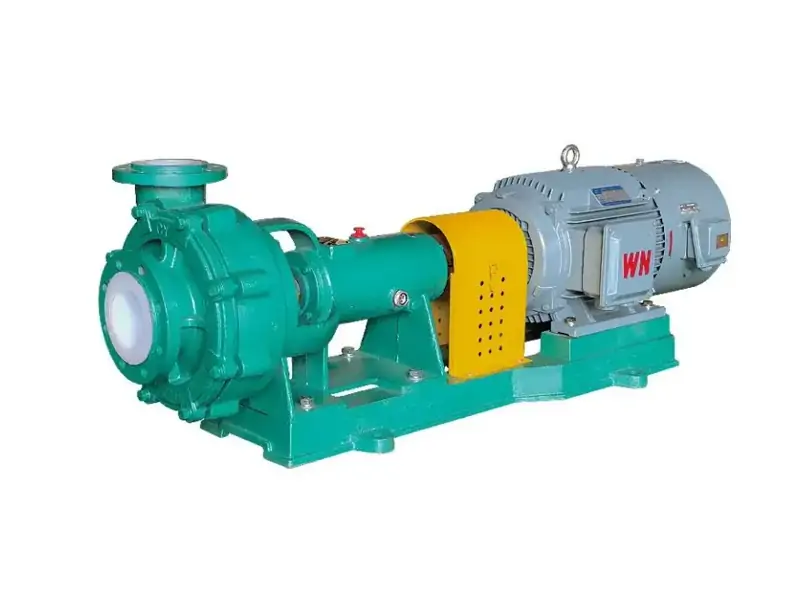
Pompa sentrifugal berlapis UHMW-PE baja yang dirancang untuk aplikasi korosif dan abrasif kelas makanan. Lapisan UHMW-PE sesuai FDA, inert secara kimia, dan memberikan ketahanan luar biasa terhadap asam makanan, alkali, air garam, dan padatan abrasif. Impeler semi-terbuka menangani bubur makanan dengan hingga 30% padatan. Banyak digunakan dalam produksi saus, transfer cuka, sirkulasi air garam, dan sistem pembersihan CIP.
| Parameter | Spesifikasi |
|---|---|
| Laju aliran | 3-2.600 m³/jam |
| Kepala | 5-100 m |
| Daya motor | 0,75-300 kW |
| Kecepatan | 750-2.900 r/menit |
| Suhu | -20°C hingga 90°C |
| Bahan pelapis | UHMW-PE |
Tanya Jawab tentang Pompa Korosif Kelas Makanan
T: Dapatkah saya menggunakan pompa stainless steel standar untuk produk makanan asam?
J: Stainless steel 316L dapat diterima untuk makanan asam ringan dan rendah garam pada suhu rendah. Ini tidak direkomendasikan untuk produk yang menggabungkan keasaman tinggi (pH < 4) dengan kandungan garam tinggi, atau untuk makanan asam hangat di atas 40°C. Pitting klorida dan kontaminasi ion logam adalah risiko utama.
T: Apakah UHMW-PE aman untuk kontak makanan?
J: Ya. UHMW-PE sesuai FDA untuk kontak makanan, inert secara kimia, dan tidak melarutkan plasticizer, stabilisator, atau ion logam ke dalam produk makanan. Ini banyak digunakan dalam peralatan pemrosesan makanan, talenan, dan komponen konveyor.
T: Suhu berapa yang dapat ditangani oleh pompa berlapis UHMW-PE?
J: Pompa berlapis UHMW-PE beroperasi secara terus menerus pada suhu hingga 90°C. Ini mencakup sebagian besar suhu pemrosesan makanan dan siklus CIP standar (biasanya 70–85°C untuk pencucian kaustik). Untuk proses yang melebihi 90°C, diperlukan pompa berlapis FEP atau PFA.
T: Bagaimana cara membersihkan pompa korosif kelas makanan di antara batch?
J: Untuk pompa yang dapat dibersihkan di tempat, hubungkan ke sistem CIP eksternal pabrik. Pastikan kecepatan pembilasan minimum 1,5 m/s melalui pompa, dan verifikasi bahwa pompa menguras sepenuhnya setelah siklus pembilasan. Untuk pompa yang tidak dapat dibersihkan dengan CIP, bongkar dan bersihkan komponen yang basah secara manual sesuai dengan jadwal sanitasi pabrik.
T: Dapatkah pompa UHMW-PE menangani produk makanan dengan padatan?
J: Ya. UHMW-PE sangat tahan abrasi dan, ketika dipasangkan dengan impeler semi-terbuka, menangani bubur makanan dengan hingga 30% padatan — termasuk kulit tomat, serat buah, partikel rempah, dan fragmen tulang.
T: Apa perbedaan antara pompa kelas makanan dan pompa sanitasi?
J: Pompa sanitasi (juga disebut pompa higienis) memiliki permukaan internal yang dipoles (Ra ≤ 0,8 μm), konstruksi bebas celah, dan bersertifikat standar 3-A atau EHEDG — diperlukan untuk aplikasi susu, bir, dan farmasi. Pompa kelas makanan memiliki bahan yang sesuai FDA yang aman untuk kontak makanan tetapi mungkin tidak memiliki permukaan yang dipoles. Ini cocok untuk aplikasi pemrosesan makanan di mana permukaan yang dipoles tidak wajib, seperti transfer bahan, dosis aditif, dan sirkulasi bahan kimia CIP.
Daftar Periksa Pencegahan untuk Insinyur Pompa Changyu
- Jangan pernah berasumsi stainless steel 316L kebal terhadap asam makanan. Ini akan mengalami pitting di lingkungan hangat, asam, dan garam tinggi, melepaskan ion logam ke dalam produk.
- Cocokkan bahan dengan kondisi paling agresif — yang sering kali merupakan siklus CIP, bukan produk makanan. Verifikasi kompatibilitas kimia pada suhu pembersihan.
- Untuk produk makanan apa pun yang mengandung garam dan asam pada suhu di atas 40°C, tentukan pompa non-logam atau berlapis. UHMW-PE adalah standar; tingkatkan ke FEP/PFA untuk suhu yang lebih tinggi.
- Verifikasi bahwa pompa benar-benar terkuras setelah CIP. Bahan kimia yang tergenang merusak segel dan mengontaminasi batch berikutnya.
- Pilih impeler semi-terbuka untuk bubur makanan yang mengandung serat, biji, atau padatan. Impeler tertutup akan tersumbat.
- Pastikan semua elastomer (gasket, O-ring) mematuhi FDA dan kompatibel dengan produk makanan serta bahan kimia CIP.
- Pertahankan kecepatan pembilasan CIP minimum 1,5 m/s melalui pompa. Kecepatan yang lebih rendah tidak menghasilkan turbulensi yang cukup untuk membersihkan permukaan internal.
- Sediakan stok segel mekanis dan gasket cadangan. Makanan asam dan asin mempercepat degradasi elastomer dibandingkan produk netral.
Kesimpulan
Pompa korosif food-grade didefinisikan oleh materialnya — bukan oleh label harganya. Baja tahan karat 316L, pilihan standar di banyak pabrik makanan, memiliki mode kegagalan yang spesifik dan dapat diprediksi di lingkungan asam, asin, dan hangat. Ketika korosi dimulai, seringkali tidak terlihat hingga kualitas produk menurun atau kebocoran menghentikan produksi.
Pompa berlapis UHMW-PE telah muncul sebagai solusi optimal untuk sebagian besar aplikasi korosif food-grade. Material ini mematuhi FDA, inert secara kimia, kebal terhadap korosi sumuran klorida, dan sangat tahan terhadap keausan abrasif. Material ini menangani produk makanan dan siklus CIP dengan keandalan yang setara. Batas suhu 90°C mencakup sebagian besar proses makanan, dan untuk suhu yang lebih tinggi, pompa berlapis FEP dan PFA memperpanjang perlindungan yang sama ke kisaran suhu tinggi.
Untuk pabrik makanan yang memproses produk asam, asin, atau abrasif, investasi pada pompa tugas korosif yang ditentukan dengan tepat akan kembali melalui risiko kontaminasi produk yang dihilangkan, pengurangan waktu henti pemeliharaan, dan masa pakai yang dapat diprediksi dan diperpanjang.
Tim teknik Changyu Pump menyediakan penilaian teknis yang disesuaikan untuk aplikasi pompa food-grade — mencakup analisis kimia makanan, verifikasi kompatibilitas material, pemilihan impeler, dan integrasi CIP. Pengalaman manufaktur selama dua dekade di sektor makanan, kimia, dan industri mendasari setiap rekomendasi.