

| Produk
Beranda >> Produk >> Pompa Semi Terendam
Kategori Produk
Minta Penawaran
Jenis-Jenis Pompa Semi-Submersible
Pompa Changyu Pompa semi-submersible tersedia dalam konfigurasi material yang berbeda untuk memenuhi persyaratan berbagai cairan industri. Jenis yang paling umum adalah pompa semi-submersible baja tahan karat dan pompa semi-submersible fluoroplastik. Memilih material yang tepat tergantung pada sifat kimia, suhu, dan tingkat korosi dari cairan yang ditangani.
| Jenis | Bahan yang dibasahi | Terbaik untuk |
|---|---|---|
| Pompa Semi-Submersible Baja Tahan Karat | SS304, SS316, SS316L | Pengolahan air, pelarut, bahan kimia ringan, cairan kelas makanan |
| Pompa Semi-Submersible Fluoroplastik | FEP, PTFE, PFA, UHMWPE | Asam kuat, alkali, bahan kimia korosif, larutan elektroplating |
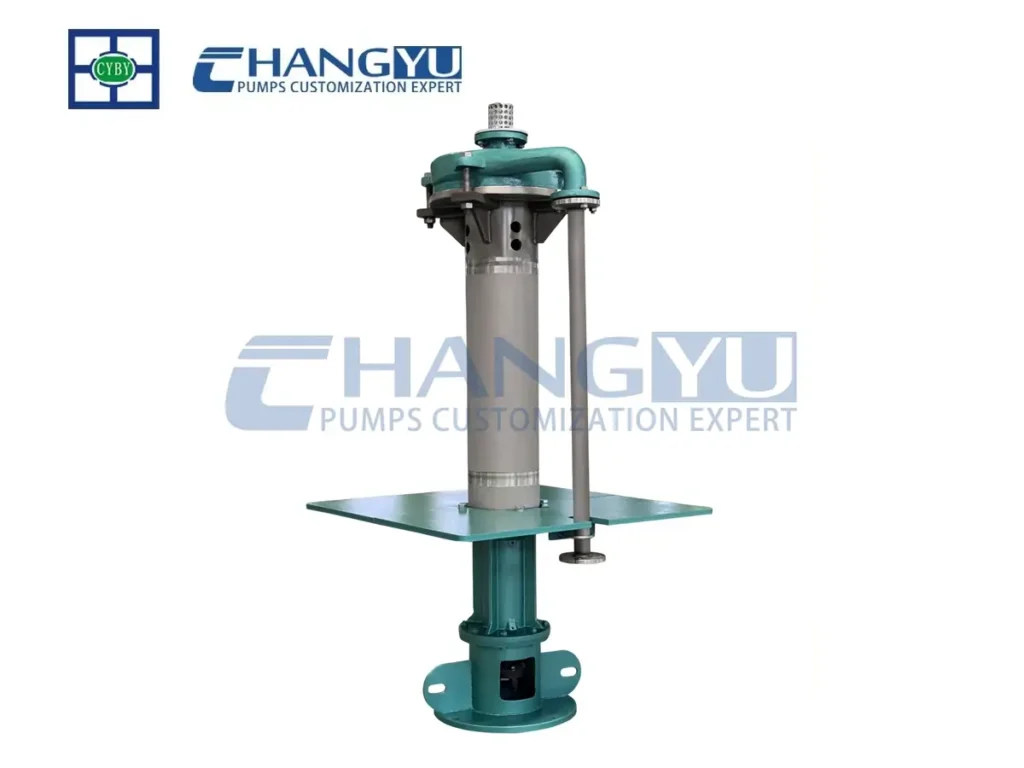
Pompa Semi-Submersible Baja Tahan Karat
Pompa semi-submersible baja tahan karat dirancang untuk memindahkan cairan bersih, pelarut, dan media korosif sedang. Dibangun dari SS304, SS316, atau SS316L baja tahan karat, ia menawarkan kekuatan mekanik yang sangat baik, ketahanan aus, dan masa pakai yang panjang. Pompa ini banyak digunakan dalam sistem pengolahan air, pabrik pengolahan makanan, manufaktur farmasi, dan aplikasi industri umum di mana ketahanan korosi diperlukan tetapi material fluoroplastik tidak diperlukan. Pompa semi-submersible baja tahan karat memberikan kinerja yang andal, perawatan yang mudah, dan operasi yang hemat biaya untuk berbagai proses pemindahan cairan.
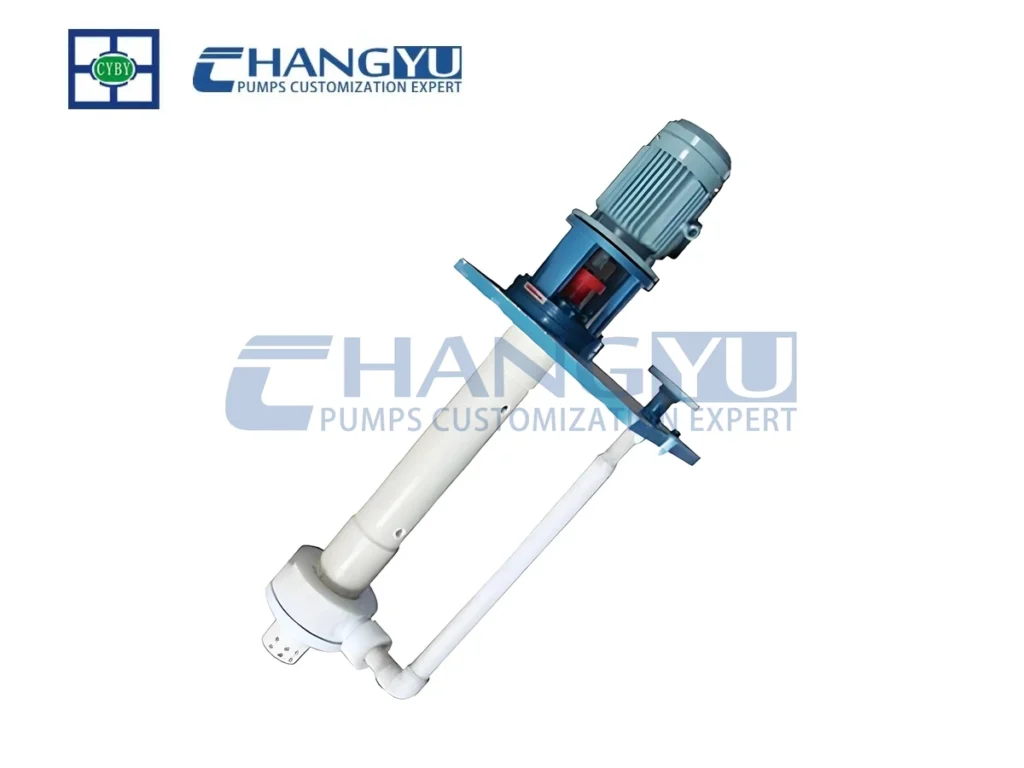
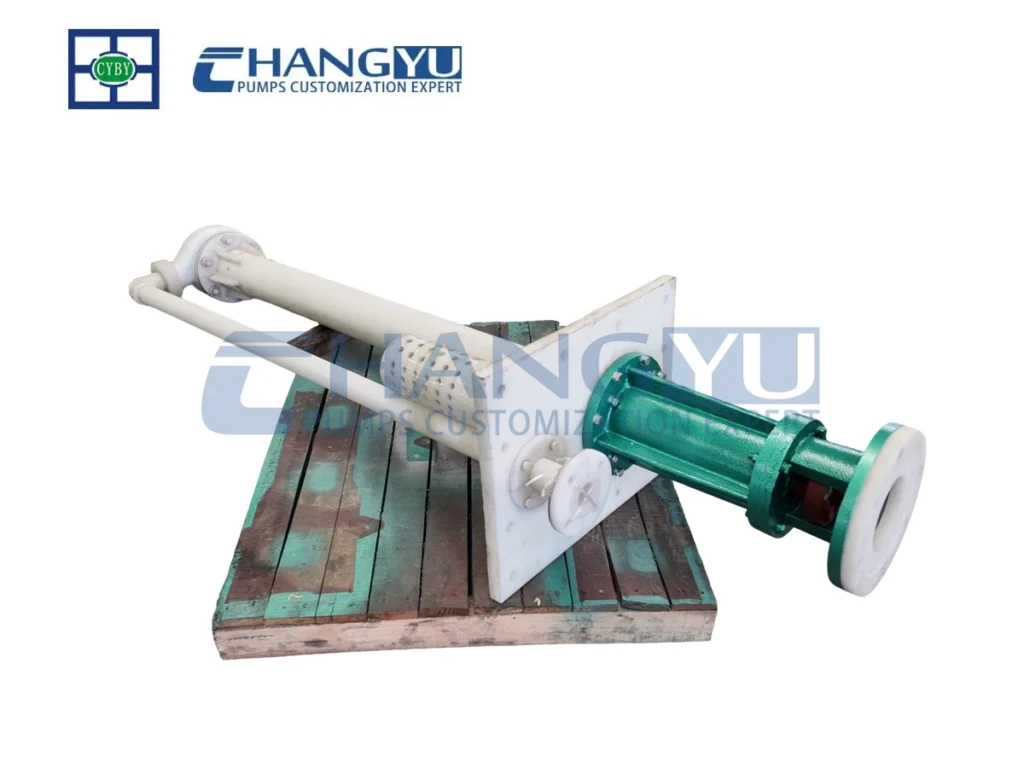
Pompa Semi-Submersible Fluoroplastik
Pompa semi-submersible fluoroplastik dirancang khusus untuk menangani cairan yang sangat korosif seperti asam klorida, asam sulfat, asam nitrat, soda kaustik, dan bahan kimia elektroplating. Komponen yang basah dilapisi atau diproduksi dengan teknologi canggih material fluoroplastik termasuk FEP, PTFE, PFA, atau UHMWPE, memberikan ketahanan kimia yang luar biasa dan masa pakai yang diperpanjang di lingkungan yang agresif. Pompa ini umum digunakan di pabrik pengolahan kimia, tangki penyimpanan asam, fasilitas pengolahan air limbah, operasi finishing logam, dan aplikasi industri menuntut lainnya di mana pompa logam konvensional mungkin gagal karena korosi.
Jenis Pompa Semi-Submersible Mana yang Harus Anda Pilih?
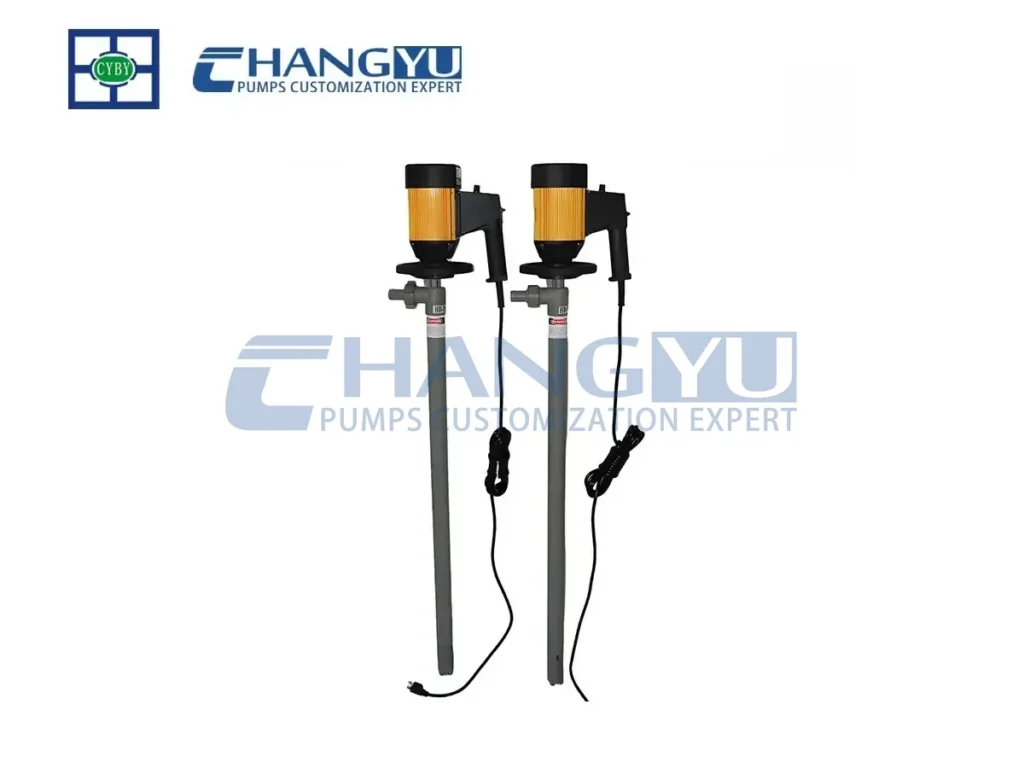
Untuk cairan industri umum, pelarut, dan aplikasi berbasis air, pompa semi-submersible baja tahan karat biasanya merupakan solusi paling ekonomis dan tahan lama. Untuk bahan kimia yang sangat korosif seperti asam, alkali, dan larutan elektroplating, pompa semi-submersible fluoroplastik menawarkan ketahanan kimia yang unggul dan masa pakai yang lebih lama. Memilih material pompa yang benar dapat secara signifikan meningkatkan keandalan, mengurangi biaya perawatan, dan memperpanjang umur peralatan.
Jika Anda tidak yakin bagaimana memilih pompa semi-submersible yang tepat, hubungi kami di Changyu Pump hari ini. Tim profesional kami siap membantu Anda memilih model yang tepat.
Email: [email protected]
TEL/WA: +86-13651913727
Apa Itu Pompa Semi-Submersible?
Pompa semi-submersible adalah jenis peralatan pemompaan khusus yang fitur desain utamanya adalah badan pompa (termasuk impeler) beroperasi terendam dalam cairan, sementara motor yang menggerakkan pompa terletak di atas permukaan air dan tidak bersentuhan dengan cairan.
Desain ini memungkinkannya untuk menangani cairan yang mengandung partikel padat atau serat, sambil menghindari tantangan penyegelan dan pembuangan panas yang mungkin dihadapi pompa submersible, serta mengatasi masalah efisiensi rendah pada hisapan jarak jauh yang umum pada pompa darat. Struktur “semi-submersible” ini memberinya keunggulan unik dibandingkan pompa submersible penuh atau pompa darat dalam aplikasi tertentu.
Fitur dan Prinsip Desain
Konfigurasi “pompa terendam, motor tidak terendam”: Ini adalah fitur paling khas dari pompa semi-submersible. Motor dipasang pada braket atau dudukan di atas permukaan air dan menggerakkan impeler di dalam rumah pompa yang terendam melalui poros panjang. Motor diisolasi dari air oleh perangkat seperti segel mekanis untuk mencegah air masuk ke motor.
Tujuan Utama: Desain ini bertujuan untuk menyeimbangkan kebutuhan aliran tinggi dengan pengendalian biaya. Pompa submersible aliran tinggi tradisional membutuhkan motor submersible besar, yang mengakibatkan biaya manufaktur dan perawatan tinggi. Sebaliknya, pompa semi-submersible menggunakan motor Changyu Pump konvensional, mengurangi biaya manufaktur dan operasional sambil memenuhi persyaratan efisiensi energi tinggi dan konsumsi energi rendah.
Metode Instalasi: Bagian atas rumah pompa biasanya memiliki flensa pemasangan, yang mengamankan unit dan mengisolasi air laut (atau badan air lainnya) dari atmosfer, memastikan operasi terendam yang stabil.
Skenario Aplikasi Pompa Semi-Submersible
Berdasarkan karakteristik struktural dan desainnya, Pompa Semi-Submersible banyak digunakan dalam sistem penanganan cairan industri dan skala besar. Keuntungan utama dan aplikasi yang sesuai dirangkum di bawah ini:
| Keuntungan | Deskripsi | Aplikasi Khas |
|---|---|---|
| Efisiensi Biaya Tinggi | Sistem ini menggunakan motor non-submersible standar, bukan motor terendam penuh, secara signifikan mengurangi biaya peralatan dan biaya perawatan jangka panjang. | Sistem drainase danau skala besar dan garis pantai lepas pantai, proyek dewatering berkapasitas tinggi |
| Perawatan yang mudah | Karena motor dipasang di atas permukaan air, inspeksi, servis, dan perbaikan dapat dilakukan tanpa mengangkat seluruh unit keluar dari cairan, membuat perawatan lebih cepat dan lebih nyaman. | Pemindahan air ballast galangan kapal, stasiun angkat limbah kota, dan fasilitas yang memerlukan perawatan sering |
| Stabilitas Operasional yang Baik | Desain struktur vertikal memberikan pusat gravitasi yang rendah, memastikan instalasi tetap yang stabil. Beberapa konfigurasi tipe apung juga dapat beradaptasi dengan perubahan ketinggian air untuk operasi berkelanjutan. | Waduk, sungai, dan lingkungan lain dengan fluktuasi ketinggian air untuk drainase dan irigasi |
| Kapasitas Aliran Tinggi | Dirancang khusus untuk pemindahan cairan volume besar, pompa ini memberikan kinerja aliran yang kuat dan stabil dalam kondisi yang menuntut. | Dewatering tambang, irigasi pertanian, dan sistem drainase banjir darurat |
Pompa Semi-Submersible vs Pompa Sentrifugal Horizontal
Dalam sistem pemompaan industri yang disediakan oleh Pompa Changyu, yang Pompa Semi-Submersible dan Pompa Sentrifugal Horisontal mewakili dua solusi rekayasa yang secara fundamental berbeda. Perbedaan mereka terutama tercermin dalam struktur, pemasangan, perawatan, dan prinsip kerja.
Perbandingan Struktur, Pemasangan & Perawatan
| Dimensi Perbandingan | Pompa Semi-Submersible (Tipe Poros Panjang Vertikal / Terendam Cairan) | Pompa Sentrifugal Horizontal (Seri Pompa Changyu) |
|---|---|---|
| Struktur Pemasangan | Pemasangan vertikal dengan motor di atas permukaan cairan dan badan pompa terendam. Daya ditransmisikan melalui poros panjang. | Pemasangan horizontal dengan motor dan pompa dipasang pada rangka dasar yang sama. |
| Kebutuhan Ruang | Jejak yang ringkas, ideal untuk pemasangan dengan ruang terbatas, tetapi membutuhkan struktur pendukung yang kuat (misalnya, platform atau kepala sumur). | Jejak yang lebih besar karena tata letak horizontal dan persyaratan pondasi. |
| Metode Penyedotan | Hisap terendam (saluran masuk terendam). Tidak perlu priming; cocok untuk sumur dalam, lubang, atau tangki bawah tanah. | Tipe hisap angkat. Memerlukan priming sebelum operasi dan dibatasi oleh ketinggian hisap karena kendala kavitasi. |
| Persyaratan Start-up | Start-up mudah, tidak perlu priming atau mengisi saluran hisap. | Memerlukan priming sebelum operasi kecuali dilengkapi dengan sistem self-priming. |
| Tingkat Kesulitan Perawatan | Lebih kompleks. Rakitan pompa harus diangkat untuk inspeksi atau perbaikan, terutama untuk komponen poros dan impeler. | Perawatan lebih mudah. Komponen berputar dapat diakses dengan membuka casing atau penutup belakang tanpa melepas pipa. |
| Fokus Perawatan Utama | Bantalan terendam dan keselarasan poros panjang harus diperiksa secara teratur untuk menghindari getaran atau kegagalan mekanis. | Segel mekanis, bantalan, dan sistem pelumasan memerlukan pemeriksaan dan penggantian secara teratur. |
Ringkasan Kinerja & Keunggulan
| Dimensi Perbandingan | Pompa Semi-Submersible | Pompa Sentrifugal Horizontal (Seri Pompa Changyu) |
|---|---|---|
| Posisi Fungsi Inti | Dirancang untuk ekstraksi cairan dalam dan kondisi kerja terendam | Dirancang untuk transfer cairan permukaan atau pipa yang stabil dan berkelanjutan |
| Jenis Instalasi | Struktur vertikal dengan badan pompa terendam dan motor di atas air | Konfigurasi dasar horizontal dengan motor dan pompa di atas fondasi yang sama |
| Persyaratan Start-up | Tidak perlu priming (sistem hisap terendam) | Memerlukan priming kecuali dilengkapi dengan sistem self-priming |
| Kebutuhan Ruang | Jejak yang ringkas, cocok untuk lokasi pemasangan yang sempit atau dalam | Membutuhkan ruang pemasangan horizontal yang lebih besar |
| Stabilitas Operasi | Stabil di lingkungan cairan dalam, tetapi sensitif terhadap keselarasan poros | Struktur yang sangat stabil dan matang dengan operasi jangka panjang yang konsisten |
| Kinerja Efisiensi | Efisiensi tinggi dalam kondisi hisap dalam, tetapi dipengaruhi oleh panjang poros | Efisiensi hidrolik tinggi dengan desain matang dan rentang efisiensi yang luas |
Pemilihan Skenario Aplikasi
| Tipe Aplikasi | Jenis Pompa yang Direkomendasikan |
|---|---|
| Sumur dalam, drainase tambang, tangki bawah tanah, lubang dalam | Pompa Semi-Submersible |
| Sistem pasokan air, boosting kota, sirkulasi industri, pengumpan boiler, sistem pemadam kebakaran | Pompa Sentrifugal Horizontal (Pompa Changyu) |
Ringkasan
The Pompa Semi-Submersible dan Pompa Sentrifugal Horizontal (Pompa Changyu) bukanlah pesaing langsung tetapi solusi yang saling melengkapi. Desain semi-submersible berfokus pada kondisi hisap yang dalam dan sulit, sementara pompa sentrifugal horizontal dioptimalkan untuk transportasi fluida permukaan yang stabil dan efisien.
Memilih pompa yang tepat terutama tergantung pada kondisi pemasangan, perbedaan level cairan, dan tata letak sistem, diikuti oleh laju aliran, head, dan karakteristik media.
Untuk perbandingan yang lebih luas tentang pompa stainless steel vertikal terendam dan horizontal, panduan tipe kami juga mencakup susunan penyegelan, desain self-priming, dan layanan slurry.
Mengapa Memilih Pompa Changyu untuk Solusi Pompa Semi-Submersible
Pompa Changyu adalah produsen pompa industri profesional dengan pengalaman lebih dari 20 tahun dalam R&D dan produksi pompa, menawarkan solusi andal untuk aplikasi penanganan fluida yang menuntut. Perusahaan ini berfokus pada pompa sentrifugal, sistem submersible, dan teknologi pompa tahan korosi, sehingga sangat cocok untuk aplikasi pompa semi-submersible di industri pertambangan, pengolahan air limbah, waduk, dan kimia.
Salah satu keunggulan utama Pompa Changyu adalah kemampuannya yang kuat dalam menangani kondisi kerja yang keras, termasuk media korosif, abrasif, dan bersuhu tinggi. Dengan manajemen mutu ISO 9001 dan sertifikasi CE, semua produk diproduksi di bawah standar internasional yang ketat untuk memastikan kinerja yang stabil dan masa pakai yang panjang.
Changyu juga menyediakan layanan kustomisasi yang fleksibel, termasuk pemilihan material, desain struktur, dan optimalisasi kinerja berdasarkan kebutuhan proyek. Ini sangat penting untuk sistem pompa semi-submersible, di mana kedalaman pemasangan dan kondisi operasi sangat bervariasi.
Selain itu, Pompa Changyu memiliki kapasitas produksi yang kuat dan pengalaman ekspor global, memastikan pengiriman cepat dan kualitas produk yang konsisten. Pompa-pompanya banyak digunakan di sistem kota, pertambangan, dan industri di seluruh dunia.
Secara keseluruhan, Pompa Changyu memberikan dukungan rekayasa yang andal, kualitas produk yang tahan lama, dan solusi yang disesuaikan, menjadikannya pilihan tepercaya untuk aplikasi pompa semi-submersible.
Email: [email protected]
TEL/WA: +86-13651913727