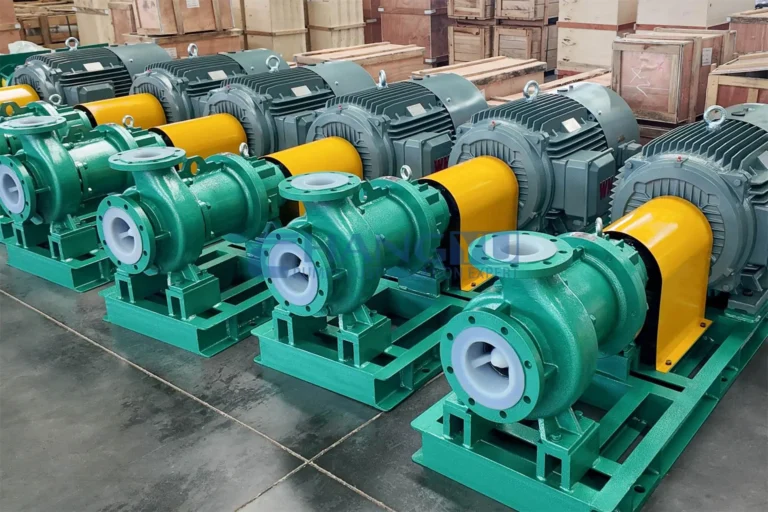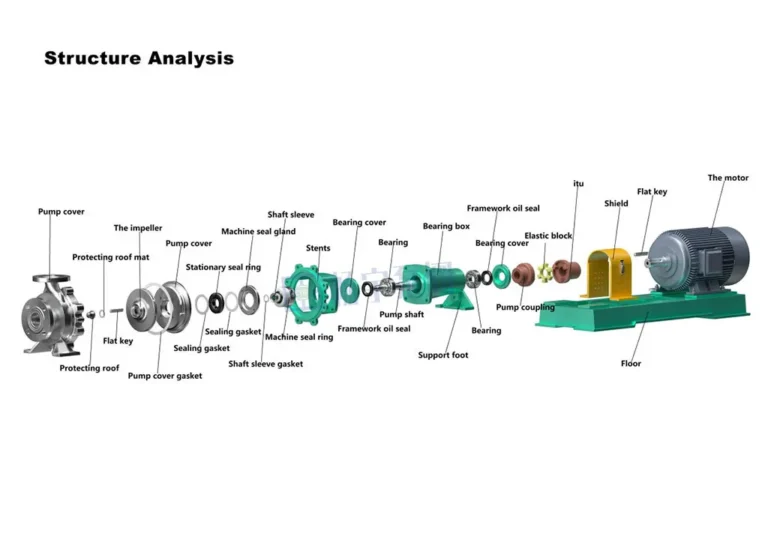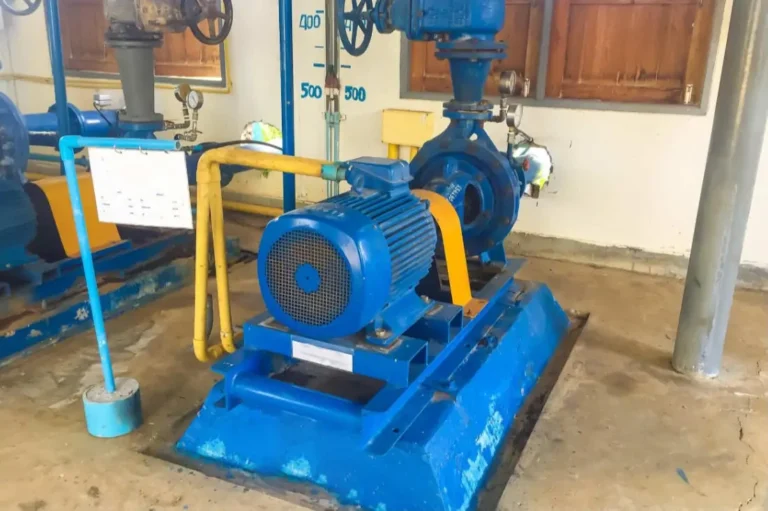
A single stage centrifugal pump is the most widely used pump type across chemical, industrial, and water treatment industries worldwide. It uses one impeller to move liquid through the casing and build pressure. This compact and simple design delivers continuous, stable flow at moderate pressure. Engineers choose it when reliability, low maintenance cost, and long service life matter most.
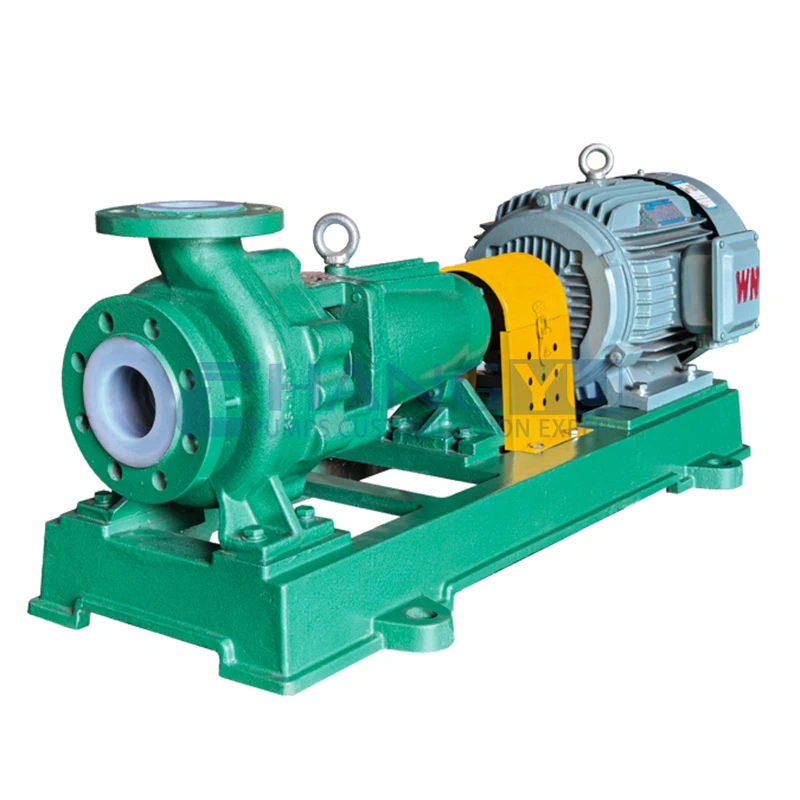
How a Single Stage Centrifugal Pump Works: Impeller Action Explained
The motor spins the impeller at high speed inside the casing. This creates centrifugal force. That force pushes liquid outward from the center of the impeller toward the casing wall. Pressure builds as the liquid reaches the discharge port. Because there is only one impeller stage, the design stays simple and compact. It is easy to disassemble, inspect, and repair without specialist tools.
Single Stage vs Multi-Stage Centrifugal Pump: Which One Do You Need?
Many buyers confuse single stage and multi-stage pump designs. Choosing the wrong type wastes money and energy.
| Feature | Single Stage | Multi-Stage |
|---|---|---|
| Number of impellers | One | Two or more |
| Maximum head | Up to 100 meters | Up to 1,000+ meters |
| Best for | Moderate pressure, high flow | High pressure, low to moderate flow |
| Maintenance complexity | Simple and fast | More complex and time-consuming |
| Purchase cost | Lower | Higher |
| Energy efficiency at moderate duty | Higher | Lower |
A single stage centrifugal pump is the right choice for most chemical transfer, circulation, and general industrial duties. A multi-stage pump is only necessary when very high pressure is required.
Common Types of Single Stage Centrifugal Pumps Used in Industry
Not all single stage centrifugal pumps look the same. Different installation requirements call for different configurations.
- End suction pump: The most common type. Fluid enters axially and exits radially. Easy to install and maintain.
- Inline pump: Suction and discharge ports are on the same axis. Saves floor space and fits directly into piping systems.
- Self-priming pump: Can remove air from the suction line without manual filling. Ideal for above-tank installations and sumps.
- Magnetic drive pump: Uses external magnets instead of a mechanical shaft seal. Provides zero leakage for toxic or high-value fluids.
- Close-coupled pump: Motor and pump share one shaft. Very compact design for tight installations.
How to Select the Right Single Stage Centrifugal Pump for Your Application
Choosing the wrong pump is expensive. One wrong specification creates repeated failures and costly downtime. Always evaluate these critical factors before purchasing.
Understanding Your Fluid Chemistry and Temperature Requirements
The liquid determines everything. Corrosive acids destroy standard metal casings within weeks. High temperatures damage mechanical seals and increase vapor pressure. You must know the exact chemical composition, pH level, concentration, and operating temperature of your fluid before selecting any pump model.
Calculating Flow Rate and Total Dynamic Head Correctly
Flow rate is how much liquid the pump must move per hour. Head measures the total pressure the pump must overcome, including pipe friction, elevation, and system resistance. Always calculate your system’s Total Dynamic Head (TDH) before selecting a model. A pump that is too large wastes energy and causes instability. A pump that is too small cannot meet your process requirements.
Why NPSH Calculation Prevents Costly Impeller Damage
Every pump requires minimum pressure at its suction inlet to operate safely. If suction pressure drops too low, the liquid boils inside the pump casing. This creates vapor bubbles that collapse violently against the impeller surface. This process is called cavitation. It erodes the impeller and destroys pump efficiency quickly. Always verify that your system’s available NPSHa exceeds the pump’s required NPSHr by at least 0.5 to 1 meter.
How to Read a Pump Performance Curve
A pump curve shows the relationship between flow rate and head. As flow increases, head decreases. The Best Efficiency Point (BEP) is the peak of the efficiency curve. Always select a pump whose BEP falls close to your actual operating point. Operating far from the BEP causes vibration, heat buildup, and premature wear. Ask your supplier for the full pump curve before making a final decision.
Choosing the Right Seal Type for Your Process
Seal type determines safety and maintenance frequency. Here is a clear guide:
| Seal Type | Best For | Key Advantage |
|---|---|---|
| Mechanical seal | Clean and mildly corrosive fluids | Cost-effective and widely available |
| Magnetic drive (sealless) | Toxic, hazardous, high-temperature fluids | Zero leakage risk |
| Lip seal | Light-duty water and non-critical fluids | Simple and inexpensive |
Selecting the Correct Material for Chemical Compatibility
| Fluid Type | Recommended Pump Material |
|---|---|
| Strong acids, oxidizing agents | Fluoroplastic (PTFE / PVDF) |
| Mild chemicals, solvents, food liquids | Stainless Steel 316L |
| High-temperature hazardous process fluids | Magnetic drive with containment shell |
| Clean water, general industrial service | Cast iron or carbon steel |
Changyu Pump’s Three Single Stage Centrifugal Pump Solutions for Chemical and Industrial Use
High Temperature Magnetic Drive Pump for Hazardous and Heat-Sensitive Fluids
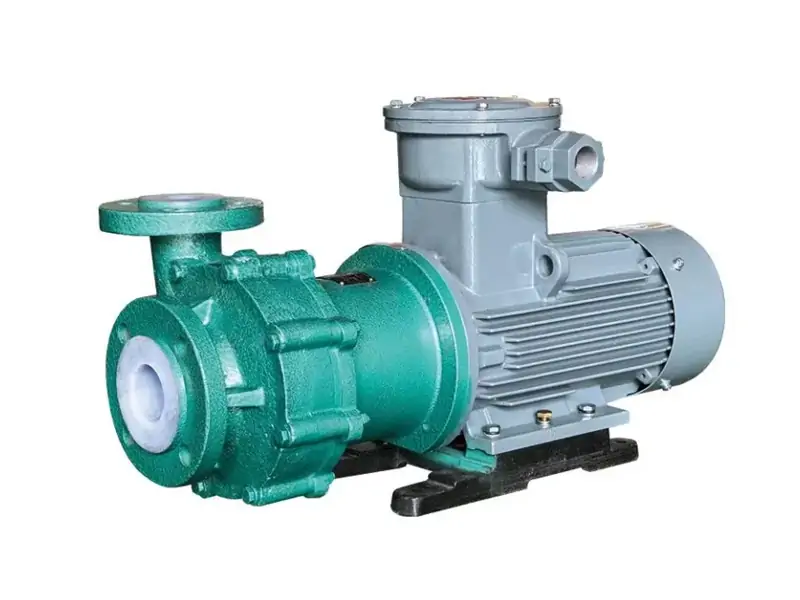
Hot liquids create extreme stress on standard mechanical seals. Thermal expansion causes leaks. Toxic vapors create serious safety and compliance risks. The مضخة الدفع المغناطيسي ذات درجة الحرارة العالية eliminates these risks completely. External magnets drive the impeller through a sealed containment shell. There is no shaft penetration through the casing wall. This means zero leakage risk even at operating temperatures up to 180°C. It is the safest choice for expensive, toxic, or thermally sensitive process fluids.
Best for: Hot thermal oils, high-temperature acids, hazardous solvents, and reactor feed applications.
Fluoroplastic Self-Priming Centrifugal Pump for Corrosive Chemical Transfer
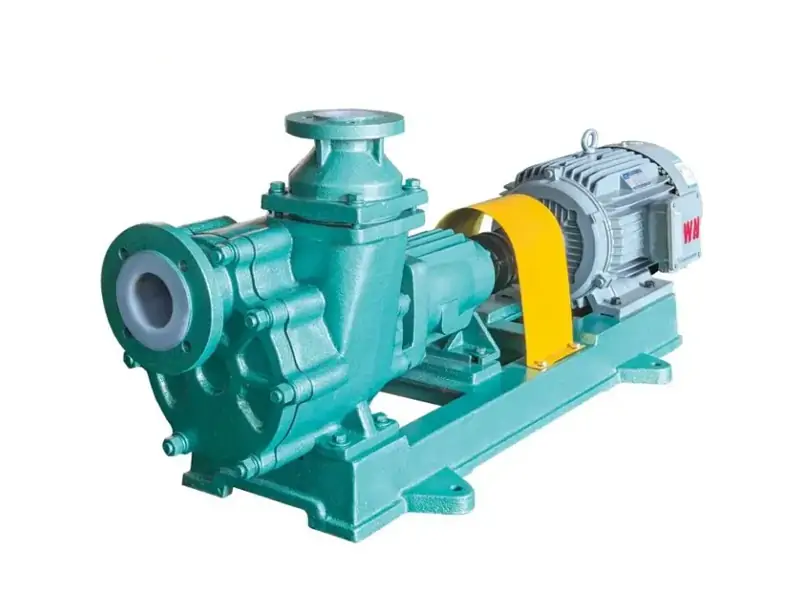
Many chemical plants cannot position the pump below the tank or sump level. Corrosive acids also destroy standard metal wetted parts within weeks. The Fluoroplastic Centrifugal Self-Priming Pump solves both problems at once. Its fluoroplastic wetted parts resist over 90% of common industrial chemicals. Its self-priming capability allows the pump to sit above the liquid source and draw fluid up automatically. No manual filling is required before startup.
Best for: Hydrochloric acid, sulfuric acid, corrosive wastewater, chemical pits, and below-grade sump transfer.
| الطراز | التدفق (متر مكعب/ساعة) | الرأس (م) | Motor Power (KW) | السرعة (ص/دقيقة) | Self-priming Height(m) | Self-priming Time (s) | الكفاءة (%) | NPSHr(m) | Inlet | Outlet |
|---|---|---|---|---|---|---|---|---|---|---|
| 25FZB-20LP | 1.5-6 | 16-19 | 2.2 | 2900 | 0.7 | 180 | 10-25 | 3 | 25 | 25 |
| 40FZB-20P | 5-12 | 17-22 | 3 | 2900 | 1 | 180 | 35-46 | 3 | 40 | 50 |
| 40FZB-30L | 5-12 | 28-32 | 4 | 2900 | 3 | 150 | 34-48 | 3.5 | 40 | 50 |
| 50FZB-20P | 8-15 | 17-22 | 3 | 2900 | 1 | 180 | 35-42 | 3 | 50 | 50 |
| 50FZB-30L | 8-15 | 28-32 | 4 | 2900 | 3 | 150 | 24-30 | 3.5 | 50 | 50 |
| 50FZB-45L | 8-15 | 43-47 | 7.5 | 2900 | 3 | 150 | 24-35 | 3.5 | 50 | 40 |
| 50FZB-70L | 8-15 | 68-72 | 15 | 2900 | 3 | 150 | 20-26 | 4 | 50 | 32 |
| 65FZB-30L | 15-35 | 27-32 | 7.5 | 2900 | 3 | 200 | 37-42 | 4 | 65 | 50 |
| 65FZB-45L | 15-35 | 38-47 | 11 | 2900 | 3 | 180 | 30-44 | 4 | 65 | 40 |
| 65FZB-70L | 15-35 | 65-72 | 22 | 2900 | 3 | 180 | 30-42 | 4 | 65 | 40 |
| 80FZB-30L | 35-60 | 28-35 | 11 | 2900 | 3.5 | 180 | 51-63 | 4.5 | 80 | 65 |
| 80FZB-45L | 35-60 | 42-47 | 15 | 2900 | 3.5 | 200 | 45-53 | 4.5 | 80 | 65 |
| 80FZB-70L | 35-60 | 65-72 | 30 | 2900 | 3.5 | 250 | 43-50 | 5 | 80 | 50 |
| 100FZB-30L | 65-110 | 28-32 | 18.5 | 2900 | 3.5 | 200 | 56-80 | 6 | 100 | 80 |
| 100FZB-45L | 65-110 | 40-46 | 30 | 2900 | 4 | 250 | 48-55 | 6 | 100 | 80 |
Stainless Steel Centrifugal Chemical Pump for Durable General Process Duties
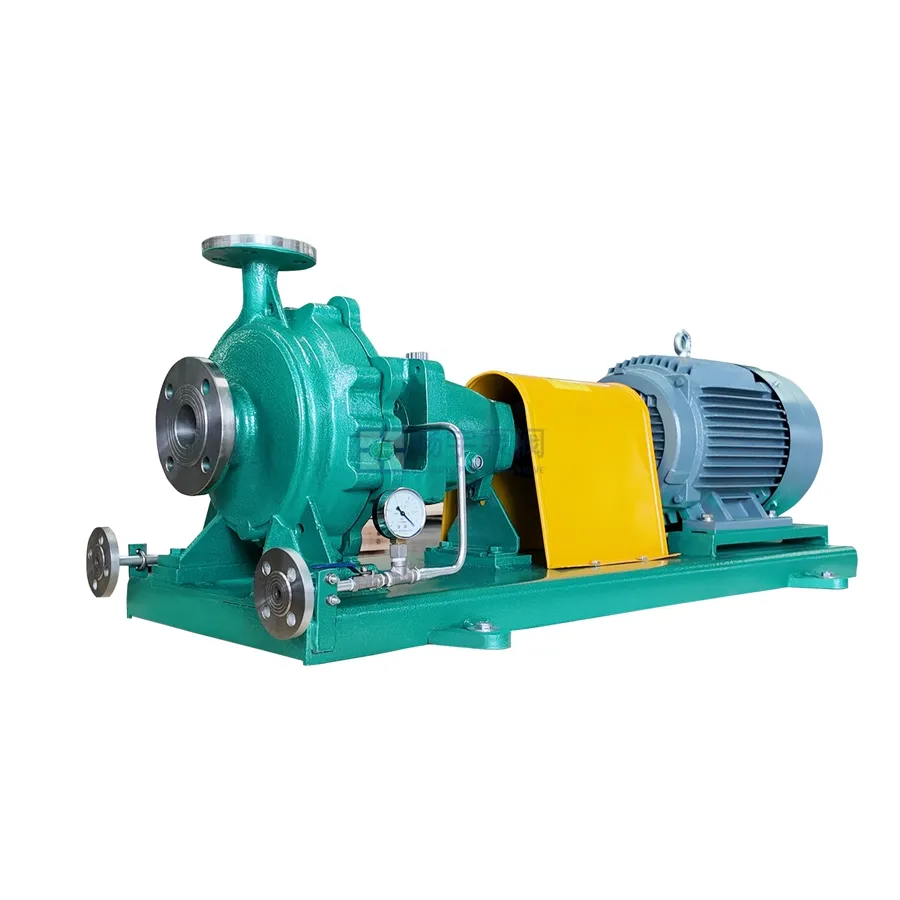
Not every chemical application requires fluoroplastic materials. Many solvents, mild acids, and process liquids need strong, durable metal construction. Plastic and lined pumps may not provide enough mechanical strength for high-flow or physically demanding duties. The Stainless Steel Centrifugal Chemical Pump handles these conditions reliably. Its 316L stainless steel construction provides excellent corrosion resistance and mechanical strength. It is also CIP and SIP cleaning compatible for food processing and pharmaceutical production lines.
Best for: Mild acids, food-grade liquids, pharmaceutical process fluids, solvents, and general chemical plant duties.
Industry Applications for Single Stage Centrifugal Pumps
Single stage centrifugal pumps serve a wide range of industries. Here are the most common applications:
- Chemical processing: Acid transfer, reagent dosing, solvent circulation, and reactor feed systems
- Wastewater treatment: Sump drainage, chemical dosing, effluent transfer, and corrosive leachate handling
- Food and beverage: Ingredient transfer, CIP cleaning systems, and sanitary liquid handling
- Pharmaceutical: Process fluid transfer, WFI circulation, and cleanroom-compatible dosing
- Power generation: Cooling water circulation, chemical injection, and condensate return
- Mining and metallurgy: Slurry transfer, acid leaching systems, and ore processing circuits
Single Stage Centrifugal Pump Maintenance Schedule and Best Practices
Regular maintenance prevents unexpected failures and extends pump service life significantly.
| Maintenance Task | Frequency |
|---|---|
| Check mechanical seal for leaks | Weekly |
| Inspect bearing temperature and noise | Weekly |
| Lubricate bearings (grease type) | Every 3 months |
| Check shaft alignment | Every 6 months |
| Inspect impeller clearance | Annually |
| Replace mechanical seal | Every 1–2 years or at first sign of leakage |
| Full pump overhaul and inspection | Every 3–5 years |
Common Single Stage Centrifugal Pump Problems and How to Fix Them
| Problem | Why It Happens | How to Fix It |
|---|---|---|
| Cavitation noise and vibration | Suction pressure too low. Vapor bubbles form and collapse inside the impeller. | Increase pipe diameter. Reduce suction lift. Verify NPSHa exceeds NPSHr. |
| Mechanical seal leakage | Dry running burned the seal faces. Shaft misalignment accelerated wear. | Always fill casing before startup. Use laser alignment tool during installation. |
| Motor overheating | Pump running against closed discharge valve. Incorrect motor rotation direction. | Open discharge valve gradually. Verify rotation direction before first start. |
| Low flow output | Air leaks in suction piping. Clogged inlet strainer blocking flow. | Pressure test all suction joints. Clean or replace strainer at each service interval. |
| Excessive power consumption | Pump operating far right of its BEP. Worn bearings increasing friction losses. | Throttle discharge valve to match pump curve. Replace bearings on schedule. |
| Short impeller life | Abrasive solids eroding the impeller. Cavitation damage on impeller surface. | Install suction strainer. Recalculate NPSH margins. Choose hardened impeller material. |
Single Stage Centrifugal Pump Installation Guidelines and Best Practices
Correct installation protects your pump investment from day one. Follow these rules every time.
- Keep the suction pipe short, straight, and free of high spots where air pockets collect
- Use a suction pipe diameter equal to or one size larger than the pump inlet flange
- Install a suction strainer to keep debris out of the impeller
- Mount the pump on a flat, grouted concrete base to minimize vibration
- Always verify shaft alignment between pump and motor before the first start using a laser tool
- Re-check alignment after the first 200 hours of operation as foundation settling can shift alignment
- Ensure the discharge line includes a check valve to prevent reverse flow on shutdown
International Standards and Certifications for Single Stage Centrifugal Pumps
Buyers in regulated industries must verify pump compliance with applicable standards. Key standards include:
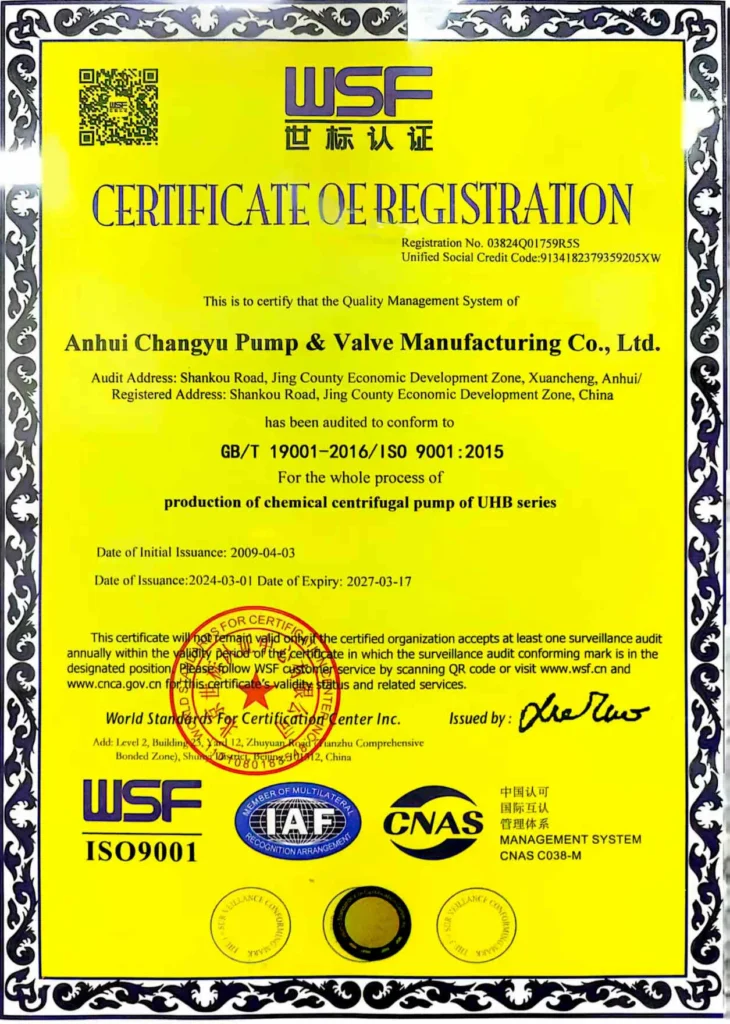
- ISO 5199 / ISO 2858: International standard for chemical process pumps covering dimensions, performance, and material requirements
- ANSI/ASME B73.1: North American standard for horizontal end suction chemical process pumps
- DIN 24255: European standard widely used for end suction centrifugal pumps
- ATEX certification: Required for pumps installed in explosive or flammable gas environments
- CE marking: Required for equipment sold into the European market
Always confirm which standards apply to your region and industry before finalizing pump specification.

Frequently Asked Questions About Single Stage Centrifugal Pumps
What is the maximum head a single stage centrifugal pump can achieve?
Most single stage designs handle up to 100 meters of head. Beyond this limit, a multi-stage pump is a better choice.
Can a single stage centrifugal pump handle solids?
Standard models handle small suspended solids. For heavy sludge or large particles, specify an open impeller design or a dedicated solids-handling pump.
What causes a centrifugal pump to lose prime?
Air leaks in the suction piping are the most common cause. A damaged seal or worn impeller clearance can also cause prime loss.
How long does a single stage centrifugal pump last?
A well-selected, correctly installed pump typically lasts 7 to 15 years with regular maintenance. Incorrect material selection or cavitation can shorten this to months.
Do single stage centrifugal pumps need priming?
Standard end suction models require manual priming. Self-priming models remove air automatically and do not require filling before startup.
Choosing the Right Single Stage Centrifugal Pump Partner for Your Plant
A single stage centrifugal pump is a long-term investment in your plant’s reliability. The right selection reduces energy costs, extends service intervals, and eliminates unplanned downtime. The wrong selection does the opposite and creates repeated problems.
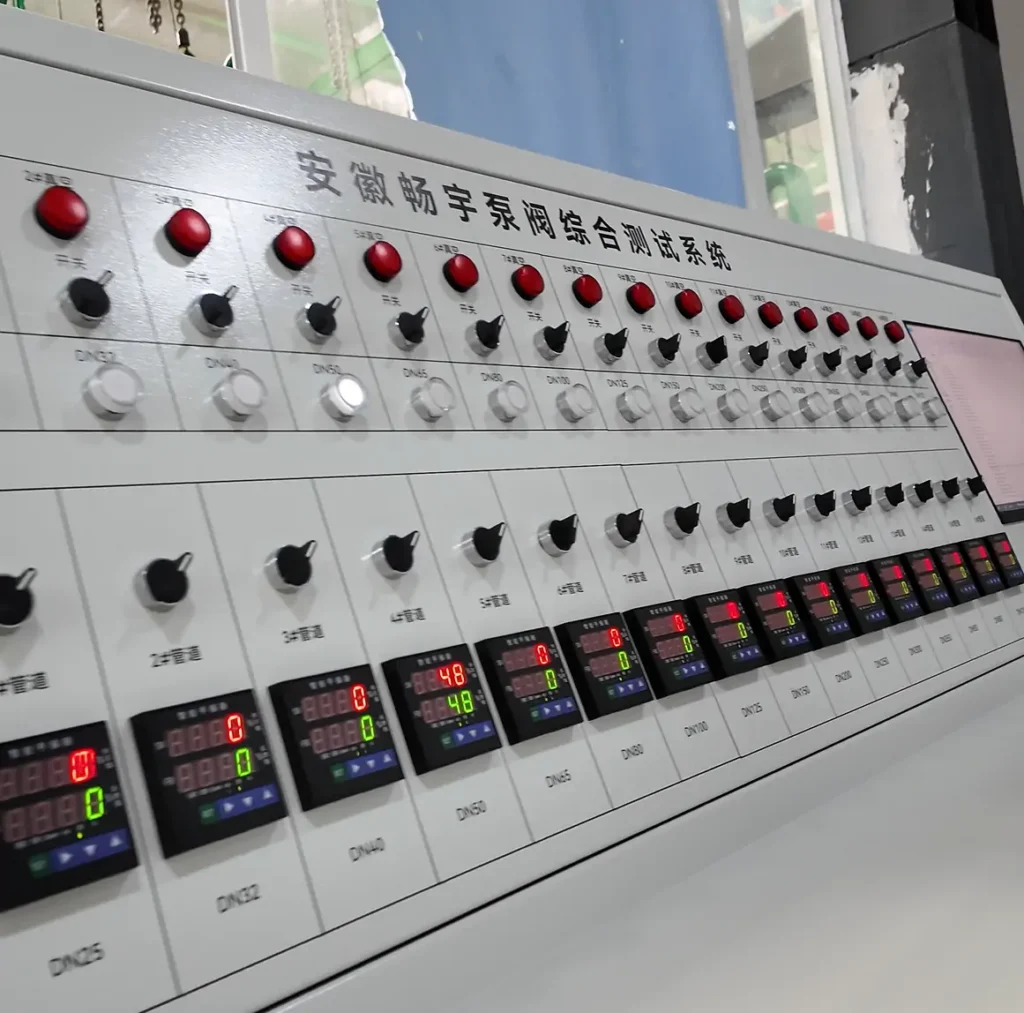
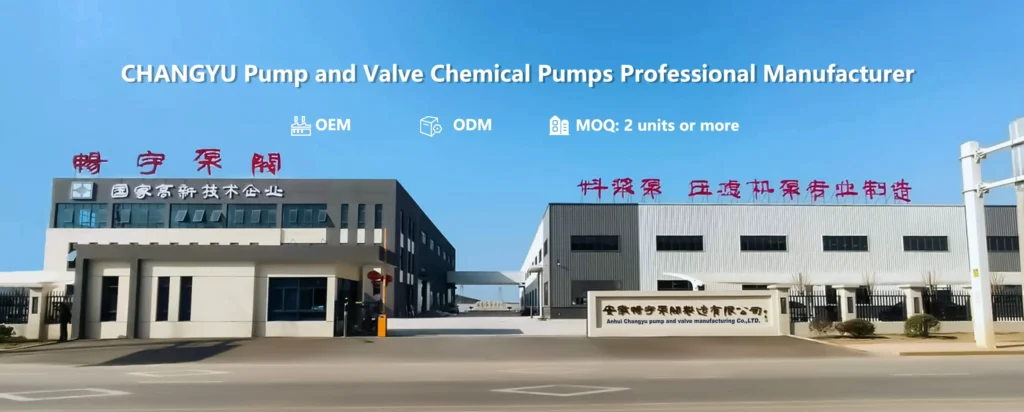
At مضخة تشانغيو, our engineering team evaluates your complete process requirements. We analyze fluid data, flow rate, TDH, NPSH conditions, operating temperature, and installation layout together. We then recommend the most suitable pump model, material specification, seal arrangement, and compliance standard for your exact application.
Share your liquid specifications, flow rate, head requirements, and suction layout with us. Our team will configure the most reliable and efficient single stage centrifugal pump solution for your plant.