
A bomba de transferencia de ácidos químicos El sistema diseñado para el ácido nítrico es un sistema industrial altamente especializado, construido para transportar de forma segura uno de los agentes oxidantes más potentes y peligrosos que se utilizan en la industria manufacturera. Dado que el ácido nítrico ataca agresivamente a los metales y plásticos comunes, las bombas industriales estándar se deterioran rápidamente, lo que puede provocar fugas tóxicas y fallas catastróficas. Ya sea que se trabaje con concentraciones diluidas para el grabado de metales o con ácido nítrico fumante para la producción de fertilizantes, es fundamental seleccionar el sistema adecuado bomba de ácido nítrico requiere una compatibilidad de materiales sin concesiones y tecnologías de sellado a prueba de fugas.

Con más de 20 años de experiencia en ingeniería de fluidos, Bomba Changyu fabrica bombas de alta resistencia, revestidas de fluoroplástico y con transmisión magnética que garantizan la máxima seguridad y eficiencia para sus líneas de procesamiento de ácido nítrico.
El reto de ingeniería: ¿Por qué es tan difícil bombear el ácido nítrico?
A diferencia del ácido clorhídrico o del ácido sulfúrico, el ácido nítrico es un agente oxidante potente. Esta propiedad química única hace que reaccione de manera diferente con los materiales de la bomba:
- Oxidación de los plásticos comunes: Los plásticos de ingeniería comunes, como el polipropileno (PP), o los cauchos estándar (Buna-N, EPDM) se oxidan rápidamente, volviéndose quebradizos, agrietándose o incluso inflamándose cuando se exponen a ácido nítrico altamente concentrado.
- Humos y toxicidad: A concentraciones superiores a 68%, se convierte en “ácido nítrico fumante”. El vapor, altamente tóxico y corrosivo, puede destruir rápidamente las carcasas externas de las bombas, los motores y la infraestructura circundante si se produce incluso una microfuga.
- Pasivación del material: Aunque los aceros inoxidables de alta calidad (como el 316L) pueden formar en ocasiones una capa de óxido pasivo en concentraciones específicas de ácido nítrico, siguen siendo vulnerables a temperaturas elevadas. Por lo tanto, fluoropolímeros (PTFE, PFA, F46) siguen siendo la opción más segura y versátil en todas las concentraciones.
Más información sobre ácido nítrico de Wikipedia: https://en.wikipedia.org/wiki/Nitric_acid
Bombas químicas para ácido nítrico recomendadas por Changyu
Para garantizar la seguridad del operador y la continuidad de la producción, las partes en contacto con el líquido de un bomba química para ácido nítrico debe ser inerte. Según nuestra amplia bomba de transferencia de productos químicos gama de productos, estas son nuestras principales recomendaciones para aplicaciones con ácido nítrico:
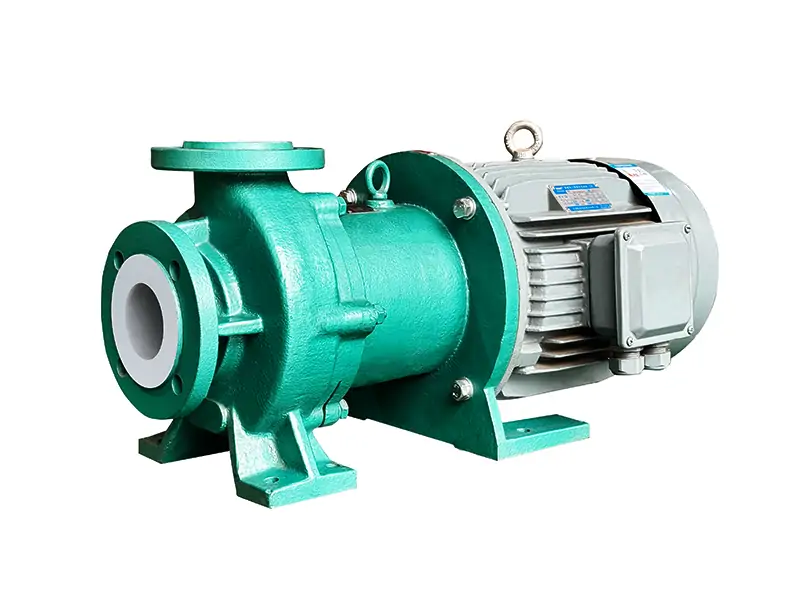
1. Bomba de accionamiento magnético de plástico fluorado de la serie CYQ (para gases y altas concentraciones)
Al bombear ácido nítrico concentrado o que desprende vapores, el requisito fundamental es que no haya fugas. El Bomba magnética serie CYQ utiliza un acoplamiento magnético sin sellos, lo que elimina por completo el sello mecánico del eje, el punto de falla más común. Revestido con fluoroplásticos de alta resistencia F46 o PFA, ofrece una inercia química absoluta y garantiza que no se escapen vapores tóxicos a la atmósfera.
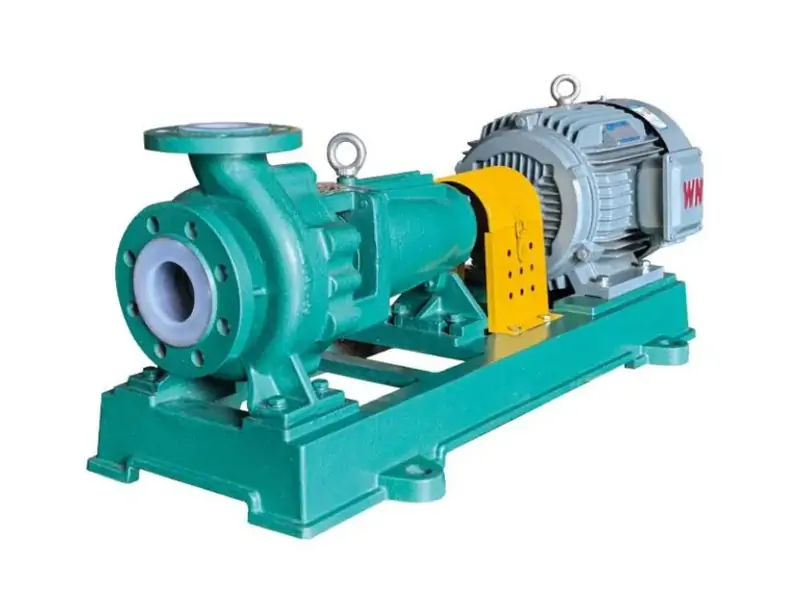
2. Bomba centrífuga química para transferencia de ácidos de la serie CYF (para transferencia a granel)
Para la transferencia de grandes volúmenes de ácido nítrico diluido o de concentración media, el Bomba centrífuga química para transferencia de ácidos serie CYF ofrece una eficiencia hidráulica excepcional. Su carcasa está fabricada con aleaciones de fluoroplástico de alto rendimiento y cuenta con un sello mecánico avanzado, diseñado específicamente (con componentes de PTFE/Viton) para resistir la oxidación, lo que lo hace ideal para circuitos de procesos industriales continuos.
3. Bomba centrífuga autoflottante de plástico fluorado (para sumideros y descarga)
Al extraer ácido nítrico de un pozo de almacenamiento subterráneo o al descargar un camión cisterna sin una línea de succión inundada, el Bomba centrífuga autocebante de plástico fluorado es la solución óptima. Genera un potente vacío de succión negativa y, al mismo tiempo, garantiza que todos los componentes internos en contacto con el líquido estén protegidos por gruesos revestimientos de PTFE/FEP, lo que evita la oxidación durante la fase de evacuación del aire.

Especificaciones
| Modelo | Caudal (m³/h) | Jefe (m) | Potencia del motor (kW) | Velocidad (rpm) | Altura de autocebado (m) | Tiempo de autocebado (s) | Eficiencia (%) | NPSHr(m) | Entrada | Tienda outlet |
|---|---|---|---|---|---|---|---|---|---|---|
| 25FZB-20LP | 1.5-6 | 16-19 | 2.2 | 2900 | 0.7 | 180 | 10-25 | 3 | 25 | 25 |
| 40FZB-20P | 5-12 | 17-22 | 3 | 2900 | 1 | 180 | 35-46 | 3 | 40 | 50 |
| 40FZB-30L | 5-12 | 28-32 | 4 | 2900 | 3 | 150 | 34-48 | 3.5 | 40 | 50 |
| 50FZB-20P | 8-15 | 17-22 | 3 | 2900 | 1 | 180 | 35-42 | 3 | 50 | 50 |
| 50FZB-30L | 8-15 | 28-32 | 4 | 2900 | 3 | 150 | 24-30 | 3.5 | 50 | 50 |
| 50FZB-45L | 8-15 | 43-47 | 7.5 | 2900 | 3 | 150 | 24-35 | 3.5 | 50 | 40 |
| 50FZB-70L | 8-15 | 68-72 | 15 | 2900 | 3 | 150 | 20-26 | 4 | 50 | 32 |
| 65FZB-30L | 15-35 | 27-32 | 7.5 | 2900 | 3 | 200 | 37-42 | 4 | 65 | 50 |
| 65FZB-45L | 15-35 | 38-47 | 11 | 2900 | 3 | 180 | 30-44 | 4 | 65 | 40 |
| 65FZB-70L | 15-35 | 65-72 | 22 | 2900 | 3 | 180 | 30-42 | 4 | 65 | 40 |
| 80FZB-30L | 35-60 | 28-35 | 11 | 2900 | 3.5 | 180 | 51-63 | 4.5 | 80 | 65 |
| 80FZB-45L | 35-60 | 42-47 | 15 | 2900 | 3.5 | 200 | 45-53 | 4.5 | 80 | 65 |
| 80FZB-70L | 35-60 | 65-72 | 30 | 2900 | 3.5 | 250 | 43-50 | 5 | 80 | 50 |
| 100FZB-30L | 65-110 | 28-32 | 18.5 | 2900 | 3.5 | 200 | 56-80 | 6 | 100 | 80 |
| 100FZB-45L | 65-110 | 40-46 | 30 | 2900 | 4 | 250 | 48-55 | 6 | 100 | 80 |
Aplicaciones de nuestra bomba de transferencia de ácido químico para ácido nítrico
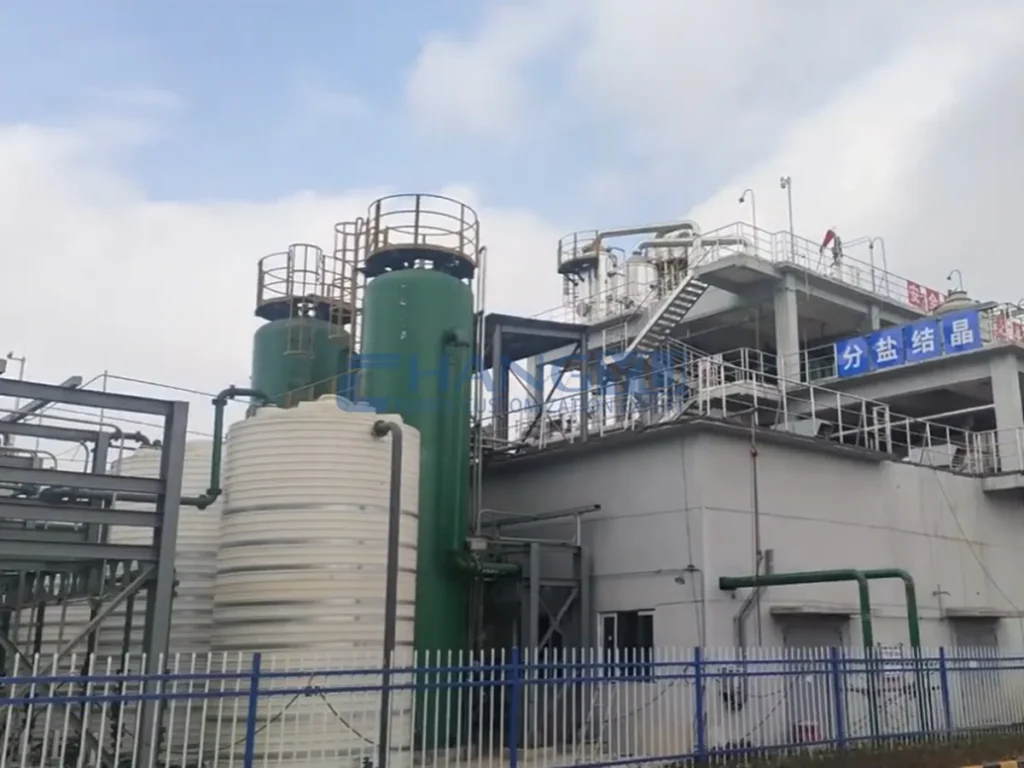
Nuestro bombas de transferencia de ácidos químicos gozan de confianza a nivel mundial en sectores muy exigentes. Así es como resuelven los retos más importantes sobre el terreno:
- Fabricación de fertilizantes: Una planta dedicada a la producción de nitrato de amonio necesitaba una bomba para transferir ácido nítrico caliente de forma continua. Las bombas con sellado mecánico fallaban cada mes debido a la oxidación de los sellos. Al cambiar a la Bomba de accionamiento magnético serie CYQ, lograron un proceso 100% sin fugas, lo que les permitió ahorrar miles de dólares en mantenimiento y eliminar los riesgos medioambientales.
- Descarga de un buque cisterna con escotilla superior: Una empresa distribuidora de productos químicos necesitaba descargar ácido nítrico concentrado de camiones cisterna. Instalaron nuestro Bomba centrífuga autocebante de plástico fluorado. La bomba evacuó el aire sin problemas y bombeó el ácido pesado de forma segura; además, el revestimiento de plástico fluorado no presentaba ningún signo de desgaste oxidativo tras dos años de uso diario.
- Grabado y pasivación de metales: Un fabricante de componentes aeroespaciales utilizaba baños de ácido nítrico diluido para la pasivación de metales. Instalaron el Bomba centrífuga serie CYF para la circulación continua del baño. El rendimiento hidráulico estable y las juntas especiales resistentes a los ácidos mantuvieron caudales precisos sin que se produjera un deterioro estructural.
Cómo elegir la bomba de ácido nítrico adecuada
Elegir una bomba inadecuada para un oxidante supone un riesgo grave para la seguridad. Siga estos pasos al especificar su equipo:
- Comprueba la concentración y la temperatura: Las concentraciones elevadas (>60%) y las altas temperaturas aumentan drásticamente las tasas de oxidación. En estos casos, es imprescindible utilizar fluoroplásticos PFA o F46 (FEP).
- Determinar la tolerancia a las fugas: Si el ácido desprende vapores o se encuentra en un área con poca ventilación, debe especificar un bomba de accionamiento magnético para eliminar las fugas de vapor.
- Especifique las juntas tóricas y las juntas: Nunca utilice caucho estándar. Asegúrese de que todas las juntas estáticas estén fabricadas en PTFE, Viton (FKM) o FFKM, materiales capaces de resistir oxidantes fuertes.
¿No estás seguro de qué configuración se adapta exactamente a tu concentración de ácido nítrico y a tu temperatura? Por favor contacto directamente al equipo de ingeniería de Changyu Pump. Proporciónenos los datos de su proceso y le ofreceremos una selección de bombas específica y de gran fiabilidad.
Preguntas frecuentes (FAQ)
P1: ¿Cuál es el material en contacto con el líquido más seguro para una bomba de ácido nítrico?
R: Porque ácido nítrico es un potente oxidante, por lo que destruirá rápidamente los plásticos comunes (como el PP o el PVC) y muchos tipos de caucho. Los materiales más seguros y duraderos para un bomba de ácido nítrico son fluoroplásticos, concretamente PTFE, PFA o F46 (FEP). Estos materiales son químicamente inertes y no se oxidan ni se degradan, lo que garantiza una larga vida útil.
P2: ¿Por qué se recomienda encarecidamente una bomba de transferencia de ácidos con accionamiento magnético para esta aplicación?
R: Vapores de ácido nítrico son extremadamente tóxicos, corrosivos y nocivos tanto para el personal como para los equipos circundantes. Un accionamiento magnético bomba de transferencia de ácidos químicos funciona sin un sello mecánico de eje, utilizando en su lugar una carcasa de contención herméticamente sellada. Esto garantiza una estanqueidad total, tanto del líquido como de sus vapores peligrosos.
P3: ¿Depende la elección de la bomba del tipo de ácido nítrico que tenga, es decir, si es diluido o fumante?
R: Sí, por supuesto. Si bien el ácido nítrico diluido (68%) es extremadamente agresivo y volátil. Para aplicaciones con ácido fumante, se recomienda utilizar un sistema sin sellos, revestido de fluoroplástico bomba química para ácido nítrico (como nuestra serie CYQ) es absolutamente imprescindible para evitar fallos catastróficos de las juntas y la fuga de vapor.
P4: ¿Puedo usar una bomba de acero inoxidable para transferir ácido nítrico?
R: Es arriesgado. Aunque ciertos aceros inoxidables de alta calidad (como el 304L o el 316L) pueden formar una capa de óxido pasivo en concentraciones específicas de ácido nítrico a temperatura ambiente, cualquier variación en la temperatura o la concentración puede romper esta capa y provocar una corrosión rápida. Un recipiente revestido de fluoroplástico bomba de transferencia de ácidos químicos es una opción más segura y confiable en todos los casos.
P5: ¿Cómo afecta la alta temperatura del fluido al rendimiento de una bomba química para ácido nítrico?
R: Las temperaturas elevadas aceleran drásticamente la velocidad de oxidación y la corrosividad del ácido nítrico. Si su proceso implica el uso de ácido nítrico caliente, los revestimientos estándar podrían ablandarse. Debe especificar un bomba química para ácido nítrico revestidos con fluoroplásticos resistentes a altas temperaturas, como el PFA, que pueden soportar con seguridad temperaturas de hasta 150 °C.
P6: ¿Qué pasa si mi bomba de ácido nítrico funciona en seco por accidente?
R: El funcionamiento en seco es muy perjudicial. Sin el líquido que actúa como lubricante y refrigerante, los cojinetes internos y los componentes de fluoroplástico del bomba de ácido nítrico sufrirá un fuerte calentamiento por fricción, se derretirá o se romperá en cuestión de minutos. Recomendamos encarecidamente instalar un sistema de protección contra el funcionamiento en seco (como un monitor de potencia) en todas las bombas químicas.
P7: ¿Qué materiales deben utilizarse para las juntas tóricas y las juntas en una bomba de transferencia de ácidos químicos que maneja HNO₃?
R: Nunca utilice cauchos estándar como el Buna-N, el neopreno o el EPDM, ya que se oxidan, se hinchan y fallan de inmediato. Un material confiable bomba de transferencia de ácidos químicos Para el ácido nítrico, se deben utilizar juntas estáticas fabricadas exclusivamente con PTFE, Viton encapsulado en PTFE o FFKM (Kalrez) a fin de garantizar una compatibilidad química absoluta.
P8: ¿Puede una bomba química para ácido nítrico extraer líquido de un pozo de almacenamiento subterráneo?
R: Sí, pero las bombas centrífugas estándar se atascarán por la entrada de aire. Las válvulas de drenaje inferior en los tanques de ácido nítrico suelen estar prohibidas por las normas de seguridad. Por lo tanto, debe utilizar una bomba autoflottante de fluoroplástico bomba química para ácido nítrico. Genera un vacío de succión para extraer de forma segura el ácido pesado de la parte superior del tanque sin necesidad de cebado manual.
Asegure su proceso químico con Changyu Pump
Manejo ácido nítrico No se trata de una aplicación de bombeo convencional, sino de un desafío de ingeniería crítico en el que el margen de error es nulo. Elegir una bomba de transferencia de ácidos químicos inadecuada puede provocar fugas devastadoras, gases tóxicos y costosas paradas operativas. Al seleccionar Bomba Changyu’avanzado fluoroplástico bombas y transmisión magnética sin fugas bombas, estás invirtiendo en seguridad absoluta y fiabilidad a largo plazo.
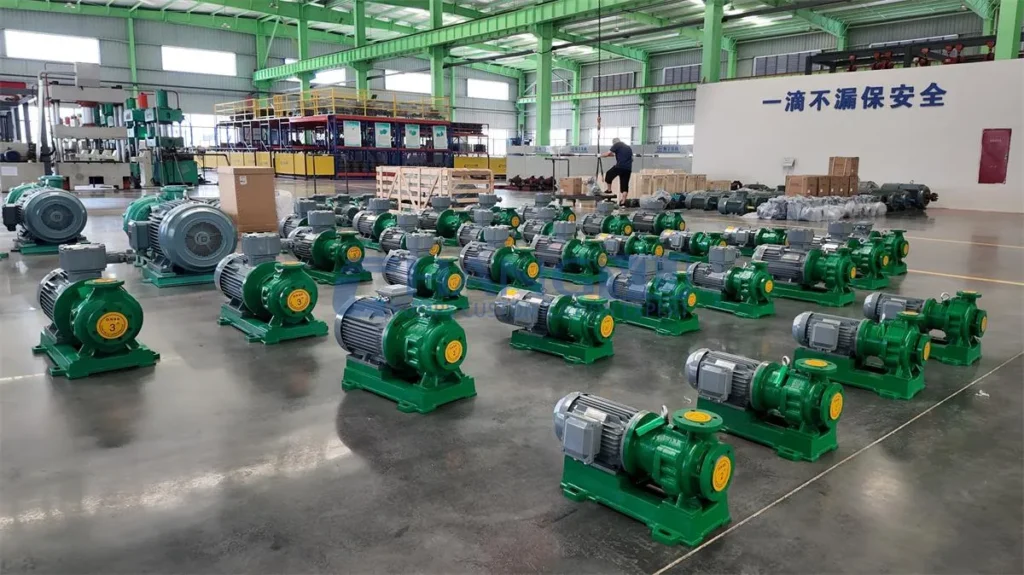
¿Está diseñando un nuevo sistema de ácido nítrico o tiene problemas con una bomba que no funciona bien? Póngase en contacto con Changyu Pump hoy mismo. Nuestros expertos en ingeniería de fluidos evaluarán las condiciones específicas de concentración, temperatura y ubicación de su planta para ofrecerle una solución a medida, altamente competitiva y directamente de fábrica.0