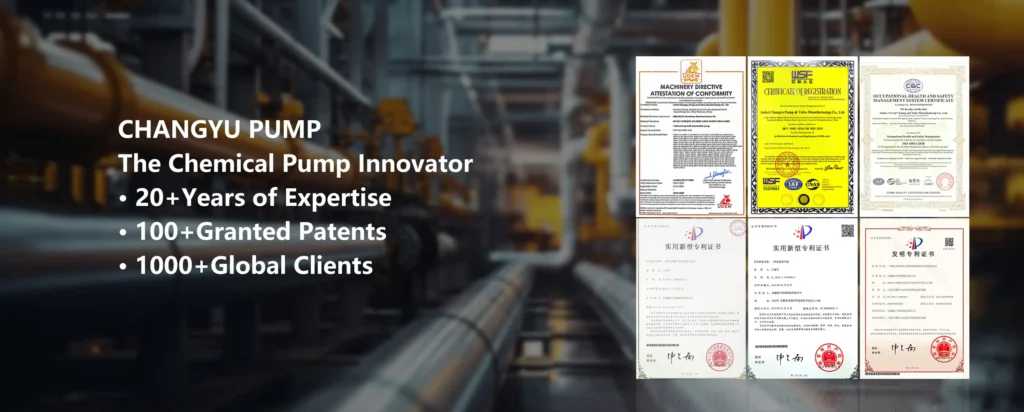
Bomba de sulfato de aluminio La selección requiere algo más que una resistencia básica a la corrosión. Sulfato de aluminio, conocido comúnmente como alumbre líquido, es uno de los productos químicos industriales más utilizados del mundo y se emplea ampliamente en el tratamiento de aguas municipales, el procesamiento de aguas residuales y la industria de la pulpa y el papel.
El alumbre líquido es muy difícil de bombear debido a su elevada acidez, a que es más denso que el agua y a su tendencia a cristalizarse. Elegir una bomba inadecuada puede provocar una corrosión rápida, la rotura de los sellos mecánicos, la sobrecarga de los motores y costosas paradas de la planta.
Para bombear alumbre líquido de forma fiable, los ingenieros de procesos deben ir más allá de la simple resistencia a los ácidos y elegir la tecnología de bombeo adecuada para las condiciones de funcionamiento reales. La mejor solución depende de si la tarea consiste en el trasvase de líquido limpio, la dosificación o la manipulación de líquido con cristales y residuos.
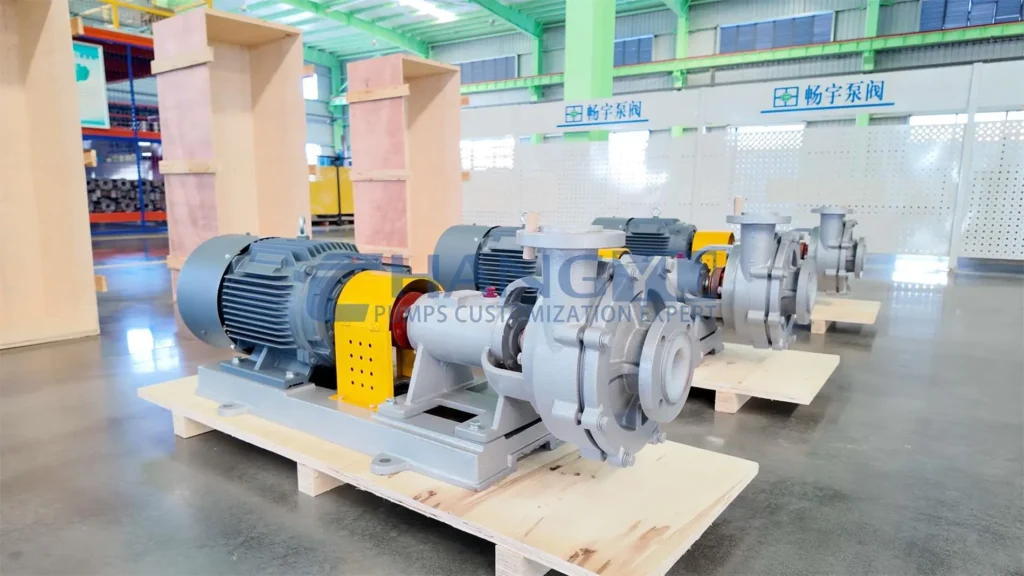
Por qué fallan las bombas de agua estándar cuando se utilizan con sulfato de aluminio
El alumbre líquido se comercializa generalmente como una solución acuosa al 48,51 %. Aunque fluye como el agua, sus propiedades químicas y físicas destruyen inmediatamente las bombas centrífugas de agua estándar.
1. Corrosión ácida grave
El alumbre líquido es muy ácido y suele tener un pH comprendido entre 2,0 y 3,5. Si se utiliza una bomba de hierro fundido, bronce o acero al carbono estándar, el sulfato ácido disolverá los componentes en contacto con el líquido en cuestión de días. Aunque el acero inoxidable 316 puede soportar el alumbre diluido a bajas temperaturas, con el tiempo suele sufrir corrosión por picaduras. Plásticos no metálicos (fluoroplásticos, PP, UHMWPE) son las únicas opciones fiables para la manipulación del alumbre a largo plazo.
2. Cristalización y deterioro del sello mecánico
Cuando el alumbre líquido se expone al aire, a la evaporación o a un descenso de la temperatura, se precipita fuera de la solución y forma cristales duros y abrasivos. En una bomba centrífuga estándar, estos cristales penetran en el espacio microscópico del sello mecánico del eje. Los cristales duros rayan las superficies del sello, lo que provoca fugas rápidas e irreparables.
3. Sobrecarga del motor debido a una alta densidad
Este es el error más común que cometen los compradores sin experiencia. El alumbre líquido es denso; su gravedad específica (SG) suele rondar 1.33 (lo que significa que es 331 TP3T más densa que el agua). Si compras una bomba con un motor dimensionado para agua (densidad 1,0), la bomba consumirá un amperaje excesivo, se sobrecalentará y hará saltar los disyuntores o quemará el motor por completo.
Criterios técnicos clave para la selección de bombas para sulfato de aluminio
Para superar estos retos, un sistema fiable bomba de alumbre líquido debe configurarse con las siguientes especificaciones técnicas:
- Materiales en contacto con el líquido: Especifique piezas en contacto con el fluido que sean totalmente no metálicas. El polipropileno (PP), el PTFE, el FEP, el PVDF y el UHMWPE ofrecen una excelente resistencia al sulfato de aluminio ácido sin riesgo de picaduras metálicas.
- Tecnología de sellado: Para evitar la cristalización, no utilice sellos mecánicos estándar. Utilice bombas de accionamiento magnético sin sellos para alumbre puro, o bombas para lodos resistentes a la abrasión si el alumbre contiene impurezas y precipitados densos.
- Dimensionamiento adecuado del motor: Informe siempre al fabricante de la bomba de que el fluido es alumbre líquido (densidad relativa 1,33), para que pueda aumentar la potencia del motor y así soportar la mayor densidad del fluido sin que se produzca una sobrecarga.
Las 3 mejores soluciones de bombas para sulfato de aluminio de Changyu Pump
En Bomba Changyu, ofrecemos soluciones especializadas para el manejo de fluidos destinadas a las industrias de tratamiento de agua y procesamiento químico. Dado que el alumbre se maneja de manera diferente según la etapa del proceso —desde la entrega a granel hasta la transferencia a tanques—, recomendamos tres tecnologías de bombeo distintas.
1. Bomba centrífuga autoflottante de plástico fluorado de la serie FZB — Para el transporte y la circulación de alúmina limpia
Para el trasvase a granel de alumbre líquido limpio desde los tanques de almacenamiento a los tanques de uso diario, el Bomba centrífuga autocebante de fluoroplástico de la serie FZB de Changyu Pump es una excelente opción. Cuenta con un revestimiento de FEP/PFA y una altura de aspiración de 5 m, lo que la hace ideal para el bombeo de líquidos corrosivos en los que tanto la autocebado como la resistencia a la corrosión son factores importantes.
Por qué destaca en el servicio de Alum:
- La comodidad del autocebado: La serie FZB puede evacuar el aire automáticamente, lo que simplifica la puesta en marcha y la hace ideal para aplicaciones de transferencia entre tanques con funcionamiento intermitente.
- Gran resistencia a la corrosión: Su revestimiento de fluoroplástico FEP/PFA ofrece una protección fiable contra la naturaleza ácida del sulfato de aluminio.
- Mejor aplicación: Sistemas de transferencia de alumbre líquido limpio, alimentación de tanques de día y circulación en los que se recomienda el uso de una bomba autocebante para líquidos corrosivos.

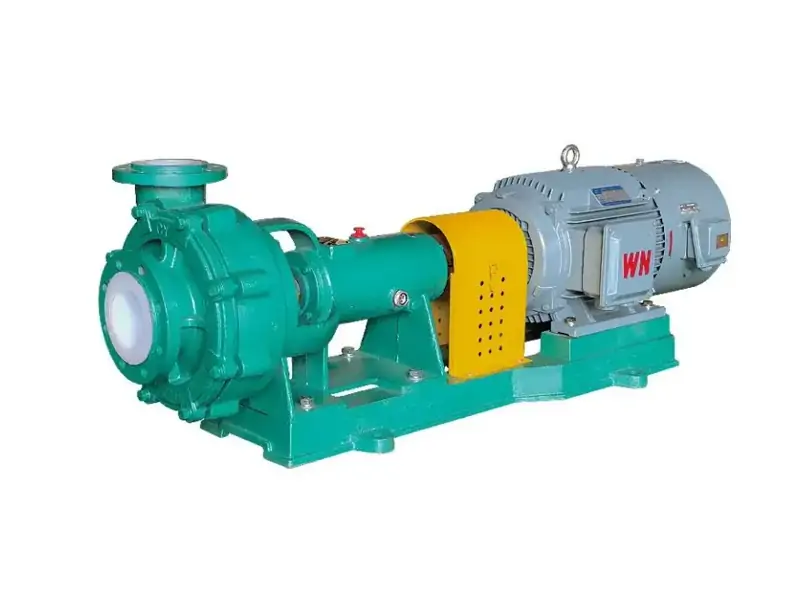
2. Bomba horizontal para lodos UHB (revestida de UHMWPE) — Para alúmina con impurezas y cristalización intensa
El sulfato de aluminio de uso comercial suele contener trazas de impurezas, sólidos no disueltos o formar sedimentos cristalinos densos en el fondo de los tanques de almacenamiento. Una bomba química estándar se atascará con esta suspensión abrasiva. La Bomba para lodos de ácido fosfórico de la serie UHB de Changyu Pump está diseñado específicamente para estas condiciones adversas.
Por qué destaca en el servicio de Alum:
- Resistencia a la abrasión y a los ácidos: Las partes en contacto con el líquido están revestidas con polietileno de peso molecular ultraalto (UHMWPE). Este material no solo resiste la acidez del alumbre, sino que ofrece una resistencia increíble al desgaste abrasivo causado por las partículas de alumbre cristalizadas.
- Diseño anti-obstrucción: Gracias a su diseño de impulsor semiabierto, la UHB permite el paso de lodos, sólidos no disueltos y precipitados cristalinos sin obstruirse ni perder rendimiento hidráulico.
- Mejor aplicación: Bombeo desde el fondo de tanques de almacenamiento de alumbre a granel, manejo de lodos de tratamiento de aguas residuales y trasvase de alumbre comercial de menor calidad que contenga partículas.
| Modelo | Rango de caudal (m³/h) | Altura de elevación (m) | Velocidad (rpm) | Rango de eficiencia (%) | Rango de potencia | Rango de diámetros del impulsor (mm) |
|---|---|---|---|---|---|---|
| 32UHB | 5 – 10 | 10 – 30 | 2900 | 17% – 28% | 1,1 kW-2 – 3 kW-2 | 100 – 165 |
| 40UHB | 10 – 15 | 10 – 30 | 2900 | 25% – 35% | 2,2 kW-2 – 4 kW-2 | 140 – 165 |
| 50UHB | 10 – 20 | 15 – 40 | 2900 | 20% – 35% | 4 kW-2 – 7,5 kW-2 | 140 – 190 |
| 65UHB | 25 – 30 | 20 – 60 | 2900 | 25% – 35% | 5,5 kW-2 – 18,5 kW-2 | 155 – 235 |
| 80UHB | 20 – 60 | 10 – 80 | 2900 | 22% – 50% | 5,5 kW-4 – 30 kW-2 | 145 – 260 |
| 100UHB | 50 – 110 | 10 – 80 | 2900 | 20% – 45% | 15 kW-2 – 55 kW-2 | 160 – 250 |
| 125UHB | 100 – 140 | 18 – 80 | 2900 | 34% – 48% | 22 kW-2 – 75 kW-2 | 180 – 268 |
| 150UHB | 150 – 280 | 20 – 50 | 1450 | 40% – 52% | 22 kW-4 – 75 kW-4 | 260 – 380 |
| 200UHB | 200 – 450 | 6 – 50 | 1450 / 980 | 25% – 58% | 22 kW-6 – 90 kW-4 | 325 – 380 |
| 250UHB | 300 – 650 | 6 – 60 | 1450 / 980 / 750 | 28% – 65% | 11 kW-8 – 160 kW-4 | 280 – 420 |
3. Bomba neumática de doble diafragma BFQ — Para la descarga y dosificación de contenedores IBC
Los distribuidores de productos químicos suelen suministrar alumbre líquido en contenedores IBC de 275 galones o en bidones de 55 galones. Los operadores necesitan una bomba portátil y autocebante para descargar de forma segura estos contenedores en el sistema de almacenamiento de la planta. La Bomba de doble diafragma accionada por aire (AODD) de la serie BFQ de Changyu Pump es la herramienta perfecta para este trabajo.
Por qué destaca en el servicio de Alum:
- Autocebado excepcional: El diseño AODD permite alcanzar una gran altura de succión, lo que facilita extraer el alumbre líquido denso de un contenedor IBC sin necesidad de cebado manual.
- Gestiona la viscosidad y los cristales: El movimiento del diafragma empuja suavemente el fluido sin depender de holguras internas ajustadas. Maneja sin problemas la mayor viscosidad del alumbre frío y deja pasar fácilmente cualquier sólido cristalizado.
- Caudal ajustable: Con solo regular la presión del aire comprimido de entrada, los operadores pueden utilizar la bomba BFQ tanto para la descarga a granel a alta velocidad como para la dosificación lenta y precisa en canales de tratamiento de agua.
- Mejor aplicación: Descarga de bidones y contenedores, transferencia de servicios públicos, limpieza de derrames y operaciones de dosificación de caudal variable.

| No. | Nombre | No. | Nombre | No. | Nombre | No. | Nombre |
|---|---|---|---|---|---|---|---|
| 01 | Anillo con sello de cabeza de cerdo | 02 | Cabeza de cerdo | 03 | Slider grande | 04 | Pequeño control deslizante |
| 05 | Manguito de la varilla de asistencia | 06 | Camisa de pistón | 07 | Varilla de asistencia | 08 | Junta tórica de la varilla de asistencia |
| 09 | Anillo en V para pistón | 10 | Pistón | 11 | Junta tórica grande para deslizador | 12 | Asiento deslizante grande |
| 13 | Bloque guía | 14 | Junta del bloque guía | 15 | Tapa superior (salida) | 16 | Válvula de bola |
| 17 | Asiento de bola | 18 | Anillo de sellado con asiento esférico | 19 | Tapa de la válvula de aire | 20 | Junta de la tapa de la válvula de aire |
| 21 | Columna | 22 | Tornillo de la placa de sujeción | 23 | Junta tórica de la placa de sujeción | 24 | Placa de sujeción exterior |
| 25 | Diafragma de teflón | 26 | Triple diafragma | 27 | Placa de sujeción interior | 28 | Placa de diafragma |
| 29 | Silenciador | 30 | Tapa inferior (entrada) | 31 | Tapa de la válvula de aire | 32 | Eje de la biela |
| 33 | Anillo en V | 34 | Casquillo de biela | 35 | Junta de la tapa de la válvula de aire |
Tabla de selección rápida para bombas de sulfato de aluminio
| Escenario de bombeo | Bomba Changyu recomendada | Ventaja técnica clave |
|---|---|---|
| Transporte a granel de alumbre líquido puro | Bomba magnética de fluoroplástico CQB-F | El diseño sin juntas evita las fugas; el plástico fluorado garantiza una resistencia total a la corrosión. |
| Bombeo de lodos de alumbre, cristales o impurezas | Bomba horizontal para lodos UHB | El revestimiento de UHMWPE resiste tanto la corrosión ácida como la abrasión cristalina severa. |
| Descarga de contenedores IBC y transferencia intermitente | Bomba de diafragma neumática BFQ | Autoambalgante, accionada por aire, maneja fácilmente la viscosidad y los sólidos sin causar daños. |
Preguntas frecuentes sobre las bombas de sulfato de aluminio
¿Cuál es el mejor material para una bomba destinada al transporte de sulfato de aluminio líquido (alumbre)?
El alumbre líquido es muy ácido (pH 2,0 – 3,5). Los materiales no metálicos son la mejor opción. Los fluoroplásticos (PTFE, FEP, PVDF), el polipropileno (PP) y el UHMWPE ofrecen una resistencia excepcional a la corrosión. El hierro fundido y el acero al carbono estándar se corroen rápidamente y deben evitarse.
¿Por qué fallan rápidamente los sellos mecánicos al bombear sulfato de aluminio?
El sulfato de aluminio tiende a precipitarse y a formar cristales abrasivos cuando se expone al aire o a cambios bruscos de temperatura. Estos cristales duros quedan atrapados entre las caras de los sellos mecánicos estándar, rayándolos y provocando fugas rápidas. El uso de una bomba de accionamiento magnético sin sellos o de una bomba para lodos diseñada para materiales abrasivos resuelve este problema.
¿Por qué el motor de mi bomba de sulfato de aluminio se desconecta constantemente o se quema?
El alumbre líquido es considerablemente más pesado que el agua, con una densidad (SG) que suele rondar el 1,33. Si se utiliza una bomba con un motor estándar dimensionado para agua (SG 1,0), el motor consumirá demasiada corriente y se sobrecargará. Es necesario especificar la densidad al realizar el pedido para que el fabricante de la bomba pueda equiparla con un motor más grande y de mayor potencia.
¿Puedo usar una bomba neumática de doble diafragma (AODD) para el alumbre?
Sí. Las bombas AODD se utilizan ampliamente para descargar alumbre líquido de contenedores IBC y bidones de 55 galones. Son autocebantes, pueden manejar la alta viscosidad del alumbre y resisten los daños causados por sólidos cristalizados. Asegúrese de que el diafragma y las partes en contacto con el líquido estén fabricados con plásticos compatibles, como PP o PTFE.
¿Es necesario utilizar una bomba con camisa de calor para el alumbre líquido?
En climas fríos, sí. El alumbre líquido estándar comienza a congelarse y cristalizarse entre los -15 °C y los -9 °C (5 °F y 15 °F), dependiendo de la concentración. Si la bomba está instalada al aire libre en un entorno donde se producen heladas, es necesario utilizar un sistema de trazado térmico o una carcasa de la bomba con camisa de calefacción para evitar que el fluido se solidifique dentro de la voluta.
¿Qué tipo de bomba es la más adecuada para la dosificación de alumbre en el tratamiento de aguas?
Para una dosificación precisa en el tratamiento de aguas, lo ideal son las bombas dosificadoras o las bombas de doble acción (AODD) conectadas a un sistema de control. Para el trasvase a granel a los tanques de dosificación diarios, una bomba centrífuga de accionamiento magnético de fluoroplástico (como la Changyu FZB) es la solución más eficiente y confiable.
Errores comunes al bombear sulfato de aluminio
- Uso de Standard Motors: Si se olvida que el alumbre líquido tiene una densidad de aproximadamente 1,33, el uso de un motor de bomba de agua estándar provocará una sobrecarga inmediata del motor y su quema.
- Por qué elegir el acero inoxidable 304: Suponiendo que el acero inoxidable básico sea “suficientemente adecuado” para el alumbre ácido, el acero inoxidable 304 se picará y fallará rápidamente. Especifique siempre materiales no metálicos (fluoroplásticos, PP, UHMWPE).
- Haciendo caso omiso de las temperaturas bajo cero: En climas fríos, el alumbre líquido se congela y cristaliza dentro de la voluta de la bomba durante el invierno. Si la instalación es al aire libre, asegúrese de que las tuberías y la carcasa de la bomba estén aisladas o provistas de un sistema de calefacción por cable.
- No realizar el lavado de los sellos mecánicos: Si debe utilizar una bomba con sello mecánico en lugar de una bomba de accionamiento magnético, el hecho de no instalar un sistema de lavado con agua limpia provocará la formación de cristales de alumbre que destruirán las caras del sello durante la parada.
Conclusión: Bombeo fiable de alumbre líquido con la bomba Changyu
El bombeo de sulfato de aluminio requiere un enfoque de ingeniería que tenga en cuenta la acidez, la densidad y la cristalización abrasiva del fluido. Ya sea que su planta de tratamiento de agua necesite la precisión sin fugas del Bomba de accionamiento magnético CQB-F, la gran resistencia a la abrasión del Bomba para lodos UHB, o la versátil capacidad de descarga del Bomba BFQ AODD, Changyu Pump ofrece soluciones de eficacia probada.
Deja de lidiar con juntas rotas, carcasas oxidadas y motores quemados. Póngase en contacto con Changyu Pump hoy con el caudal, la altura de descarga y la temperatura de funcionamiento que necesite. Nuestros expertos en ingeniería de fluidos seleccionarán la bomba de sulfato de aluminio ideal, equipada con el motor de alta resistencia adecuado, para garantizar años de funcionamiento sin necesidad de mantenimiento.