
Respuesta Rápida
Una bomba de tornillo es una bomba rotativa de desplazamiento positivo que mueve fluido atrapándolo entre las roscas de uno o más tornillos giratorios y la carcasa de la bomba, luego empujándolo axialmente hacia la descarga. Los factores clave de selección — en orden de prioridad de decisión — incluyen:
- (1) Viscosidad del fluido — el factor de selección dominante. Las bombas de tornillo mantienen una eficiencia volumétrica estable desde aproximadamente 20 cSt hasta más de 1,000,000 cSt.
- (2) Contenido de sólidos y gas — determina si la configuración correcta es de un solo tornillo o de doble tornillo.
- (3) Requisitos de caudal y presión — los tipos de un solo tornillo entregan 0–200 m³/h a alturas de descarga de 60 a 120 m, dependiendo del modelo y del número de etapas del estator.
- (4) Compatibilidad de materiales — el elastómero del estator (NBR, EPDM, FKM, PTFE) debe resistir el ataque químico y la hinchazón; verificar mediante pruebas de inmersión ASTM D471.
- (5) Costo total de propiedad — los intervalos de reemplazo del estator, el consumo de energía y el costo del tiempo de inactividad no planificado representan juntos el 85–90% del gasto de la bomba durante su vida útil.
Seleccionar una bomba de tornillo sin un marco de decisión estructurado introduce un riesgo evitable que puede representar una parte significativa de los costos de mantenimiento no planificado. Una bomba que funciona perfectamente para un fluido de alta viscosidad puede fallar en semanas con otro — simplemente porque el elastómero del estator era incompatible o el margen de NPSH fue subestimado.
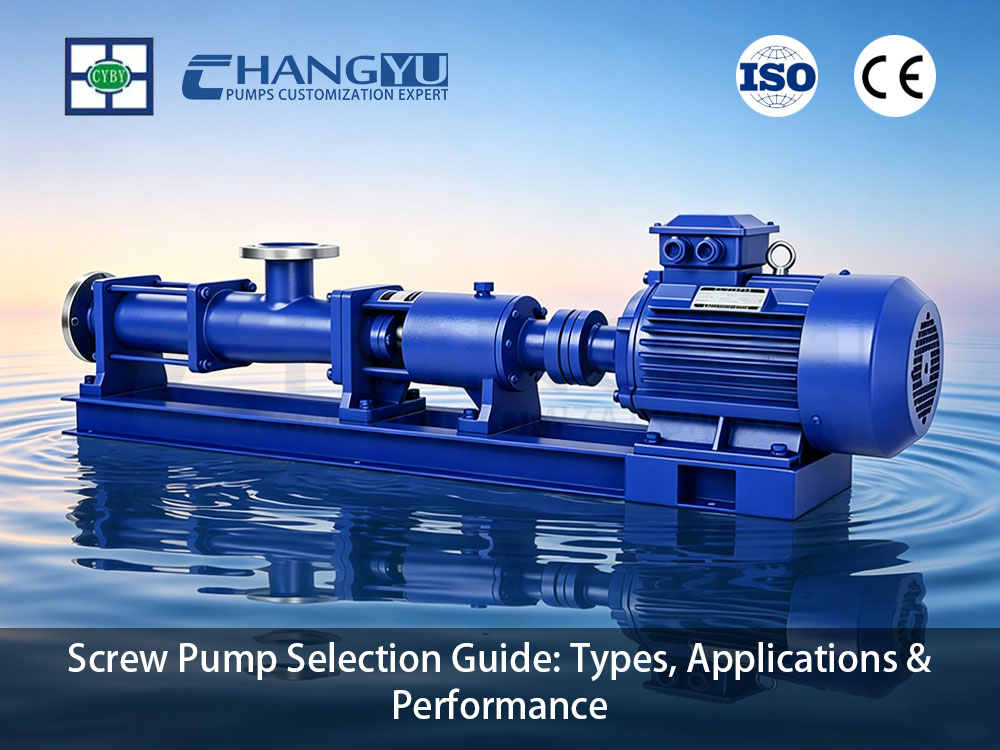
Con más de 20 años en la fabricación de bombas de desplazamiento positivo, Changyu Pump ha diagnosticado y resuelto cientos de fallas de bombas de tornillo en aplicaciones químicas, petroleras y ambientales. Esta guía le brinda el marco de selección completo — desde entender cómo funcionan las bombas de tornillo, hasta comparar tipos, hasta realizar un análisis de costo total de propiedad a 5 años. Al final, sabrá exactamente qué configuración de bomba de tornillo se ajusta a sus parámetros de proceso y cómo especificarla con confianza.
¿Qué es una Bomba de Tornillo y Cómo Funciona?
Una bomba de tornillo es una bomba rotativa bomba de desplazamiento positivo que utiliza uno o más tornillos entrelazados para mover fluido a lo largo del eje del tornillo. A diferencia de las bombas centrífugas, que dependen de la energía cinética y la velocidad, una bomba de tornillo crea una serie de cavidades selladas que progresan desde la succión hasta la descarga — lo que la hace inherentemente suave con fluidos sensibles al cizallamiento y excepcionalmente capaz con medios de alta viscosidad.
Cómo Funciona el Mecanismo de Bombeo
El principio de funcionamiento central es sencillo. A medida que el eje de transmisión gira el tornillo interno (rotor), el fluido entra en la cavidad en el extremo de succión. Las roscas del tornillo forman un sello continuo contra la carcasa o el estator, atrapando un volumen fijo de fluido en cada cavidad. Cada rotación avanza este volumen atrapado un paso de rosca hacia adelante. El resultado es un flujo suave y sin pulsaciones — crítico para aplicaciones de dosificación y procesos sensibles a las fluctuaciones de presión.
En una bomba de un solo tornillo (también llamada bomba de cavidad progresiva o monobomba), un rotor de una sola rosca con un paso grande y una altura de diente alta gira excéntricamente dentro de un estator de doble hélice. El ajuste por interferencia entre el rotor y el estator crea una serie de cámaras selladas de 180 grados que recorren la longitud de la bomba sin abrirse entre sí. Este diseño mantiene la eficiencia volumétrica incluso a presiones de descarga elevadas.
Eficiencia Volumétrica y Etapas del Estator
Una característica clave de rendimiento de las bombas de tornillo es que la eficiencia volumétrica disminuye a medida que aumenta la presión diferencial — el fluido se desliza hacia atrás a través de las líneas de sellado entre el rotor y el estator. Para compensar, las bombas de un solo tornillo se construyen con múltiples etapas de estator — típicamente de 2 a 4. Cada etapa adicional aumenta la capacidad de presión de la bomba al reducir el deslizamiento a través de las líneas de sellado. Para aplicaciones que requieren presiones de descarga superiores a 6 bar, un mínimo de 2 etapas es una práctica estándar. Por encima de 12 bar, los estatores de 4 etapas son comunes.
Al especificar una bomba, haga coincidir el número de etapas con su presión de descarga máxima esperada en lugar de su presión de operación normal — esto proporciona el margen de seguridad necesario para las perturbaciones del proceso.
Parámetros Clave de Operación
Tabla: Parámetros de Operación de la Bomba de Un Solo Tornillo
| Parámetro | Rango Típico | Notas |
|---|---|---|
| Caudal | 0–200 m³/h | Depende del diámetro del rotor y la velocidad |
| Presión de descarga | Altura de 60–120 m (dependiendo del modelo y las etapas) | Presiones más altas requieren más etapas de estator |
| Rango de viscosidad | 20–1,000,000+ cSt | Mantiene la eficiencia donde las centrífugas se estancan |
| Velocidad | 400–960 r/min | Menor velocidad = mayor vida útil del estator |
| Temperatura | De -20 °C a 150 °C | Limitado por la clasificación térmica del elastómero del estator |
| Manejo de sólidos | Hasta aprox. 6.5 mm de tamaño de partícula | Depende de la geometría de la bomba y el paso del rotor |
Dónde Encaja la Bomba de Tornillo en su Selección de Bomba
Cuando una bomba centrífuga pierde cebado o sufre caídas dramáticas de eficiencia debido a la alta viscosidad, y cuando una bomba de engranajes corre el riesgo de atascarse con partículas abrasivas, la bomba de tornillo se convierte en la elección lógica. Ella cierra la brecha entre la simplicidad centrífuga y la precisión de los diseños de desplazamiento positivo más complejos.
La familia de bombas de tornillo se divide en tres configuraciones distintas, cada una optimizada para una ventana operativa específica. Comprender estas diferencias es la base de una selección correcta — y el enfoque del siguiente capítulo.
¿Cuáles son los Principales Tipos de Bombas de Tornillo?
Las bombas de tornillo se clasifican por el número de tornillos en el conjunto del rotor. Cada configuración sirve a nichos distintos de presión, caudal y manejo de fluidos. Seleccionar el tipo incorrecto para su aplicación conduce a desgaste prematuro, consumo excesivo de energía o falla total de la bomba.
Tabla: Comparación de Tipos de Bomba de Tornillo — Simple vs. Doble vs. Triple Tornillo
| Característica | Un Solo Tornillo (Cavidad Progresiva) | Doble Tornillo | Triple Tornillo |
|---|---|---|---|
| Número de tornillos | 1 rotor + 1 estator | 2 tornillos entrelazados | 1 tornillo de transmisión + 2 tornillos locos |
| Capacidad de presión | Hasta 120 m de altura (multi-etapa) | Hasta 40 bar | Hasta 200+ bar |
| Mejor para viscosidad | Alta a ultra-alta (hasta 1M+ cSt) | Baja a media-alta (1–100,000 cSt) | Baja a media (1–5,000 cSt) |
| Manejo de sólidos | Excelente — maneja partículas y fibras | Moderada — requiere filtración | Pobre — solo fluidos lubricantes limpios |
| Sensibilidad al cizallamiento | Cizallamiento muy bajo | Cizallamiento bajo a moderado | Cizallamiento moderado |
| Aplicaciones típicas | Lodos, petróleo crudo, pastas alimenticias, lodos químicos | Transferencia de fuel oil, vaciado de tanques, fluidos multifásicos | Aceite lubricante, sistemas hidráulicos, inyección de combustible |
Bombas de Un Solo Tornillo (Cavidad Progresiva)
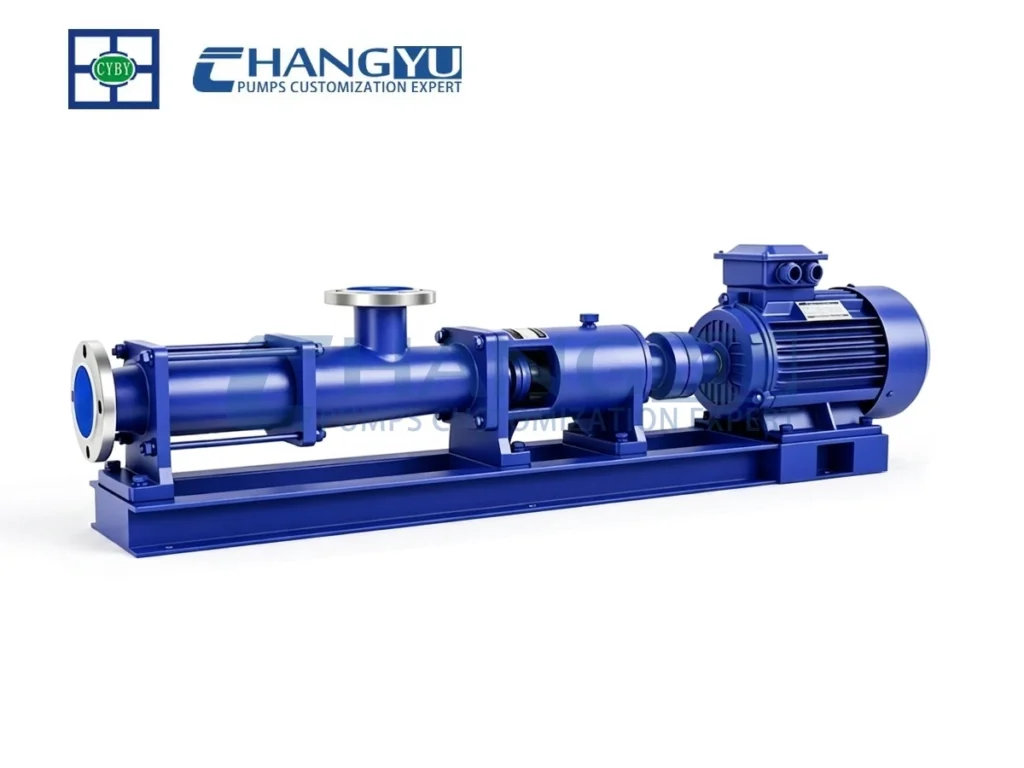
La bomba de tornillo simple es la caballo de batalla para fluidos difíciles. Su geometría excéntrica de rotor-estator maneja partículas abrasivas, gases arrastrados y sólidos fibrosos que destruirían otros tipos de bombas. Esta es la configuración ideal para lodos ambientales, transferencia de petróleo crudo con contenido de arena y productos viscosos de grado alimenticio. La desventaja es una huella más grande que las alternativas de doble o triple tornillo a caudales equivalentes.
Bombas de Doble Tornillo
Las bombas de doble tornillo utilizan dos tornillos paralelos y sin contacto, sincronizados por engranajes externos. Debido a que los tornillos no se tocan entre sí ni con la carcasa, el desgaste es mínimo incluso con fluidos no lubricantes. Este diseño maneja flujo multifásico — mezclas de líquido y gas — sin perder cebado. Es la opción preferida para operaciones de vaciado de tanques donde la bomba debe manejar una transición de líquido puro a mezclas de líquido-gas a medida que el tanque se vacía.
Bombas de Triple Tornillo
Las bombas de triple tornillo ofrecen la mayor capacidad de presión de la familia. Un tornillo motriz central engrana con dos tornillos locos, creando fuerzas hidráulicas equilibradas que eliminan las cargas radiales en los cojinetes. Esta configuración está reservada para fluidos limpios y lubricantes — típicamente en sistemas hidráulicos, servicio de fuel oil y circuitos de lubricación. La introducción de sólidos en una bomba de triple tornillo causa daños inmediatos y severos en las superficies de los tornillos mecanizados con precisión.
¿Cuándo Debería Elegir una Bomba de Tornillo Sobre Otros Tipos de Bombas?
Una bomba de tornillo no es una solución universal. Sin embargo, en ventanas operativas específicas, supera a las bombas centrífugas, de engranajes y de diafragma de manera tan decisiva que la selección se vuelve directa. La decisión depende de tres variables: la viscosidad del fluido, el contenido de sólidos y la presencia de gas.
Bomba de Tornillo vs. Bomba Centrífuga
Las bombas centrífugas pierden eficiencia rápidamente por encima de 200–300 cSt. A 1,000 cSt, muchas centrífugas no pueden mantener un flujo estable sin un calentamiento significativo y penalizaciones de potencia. Una bomba de tornillo, por el contrario, mantiene una eficiencia volumétrica casi constante en todo su rango de viscosidad.
Tabla: Bomba de Tornillo vs. Bomba Centrífuga — Comparación de Condiciones Operativas
| Condiciones de funcionamiento | Bomba centrífuga | Bomba de tornillo |
|---|---|---|
| Viscosidad del fluido < 200 cSt | Buena eficiencia | Menor eficiencia que la centrífuga |
| Viscosidad del fluido 200–1,000 cSt | La eficiencia cae 30–50% | Eficiencia estable |
| Viscosidad del fluido > 1,000 cSt | A menudo no viable | Rendimiento excelente |
| Contenido moderado de sólidos | Desgaste del impulsor, riesgo de obstrucción | Maneja sólidos y fibras |
| Multifásico (líquido + gas) | Pierde cebado | Mantiene el flujo |
| Medios sensibles al cizallamiento | Alto daño por cizallamiento | Bajo cizallamiento, integridad del producto preservada |
La conclusión práctica: si su fluido de proceso es delgado y limpio, quédese con una centrífuga. Si es espeso, contiene sólidos o gas arrastrado, la bomba de tornillo se convierte en la elección técnicamente correcta.
Bomba de Tornillo vs. Bomba de Engranajes
Las bombas de engranajes manejan bien fluidos de viscosidad media, pero son vulnerables al desgaste abrasivo y tienen una tolerancia limitada a sólidos. Los sólidos que entran en el engranaje de los dientes causan rayaduras y una rápida pérdida de eficiencia. Las bombas de tornillo, particularmente el tipo de tornillo simple, toleran partículas abrasivas sin daños catastróficos — la geometría excéntrica de rotor-estator pasa la partícula a través en lugar de molerla entre superficies metálicas engranadas.
Tabla: Bomba de Tornillo vs. Bomba de Engranajes — Comparación de Características Clave
| Característica | Bomba de engranajes | Bomba de Tornillo (Simple) |
|---|---|---|
| Rango de viscosidad | 1–100,000 cSt | 20–1,000,000+ cSt |
| Tolerancia a sólidos | Pobre — las partículas causan rayaduras en los engranajes | Excelente — las partículas pasan a través |
| Cizallamiento | De moderado a alto | Muy baja |
| Pulsación | Moderada (descarga por diente) | Muy baja (progresión continua de cavidad) |
| Perfil de mantenimiento | Reemplazo de engranajes y cojinetes | Reemplazo del estator (intervalo predecible) |
Cuándo una Bomba de Tornillo No Es la Elección Correcta
- Líquidos en punto de ebullición con NPSH inadecuado: Las bombas de tornillo requieren una altura de succión positiva. Los fluidos volátiles cerca de su presión de vapor pueden causar cavitación en la cavidad de succión.
- Caudales extremadamente altos por encima de 500 m³/h: A esta escala, las bombas centrífugas o de flujo axial suelen ofrecer mejor economía de costo de capital.
- Productos químicos que atacan todos los elastómeros de estator disponibles: Si ningún elastómero es compatible, una bomba centrífuga de accionamiento magnético sin sello o una bomba de diafragma revestida de PTFE puede ser la opción más segura.
¿Cómo Seleccionar la Bomba de Tornillo Adecuada para Su Aplicación?
Este capítulo convierte la selección de bombas de una conjetura a una decisión estructurada y secuencial. Comience con la ruta de selección rápida a continuación para reducir sus opciones, luego trabaje a través de los cinco pasos detallados que siguen.
Ruta de Selección Rápida:
- ¿Viscosidad > 1,000 cSt? → SÍ → Tornillo simple o Doble tornillo
- ¿Contiene sólidos o fibras? → SÍ → Solo tornillo simple
- ¿Contiene gas? → SÍ → Solo doble tornillo
- ¿Fluido limpio, alta presión? → SÍ → Triple tornillo
- ¿Viscosidad < 200 cSt? → SÍ → Considere centrífuga a menos que haya sólidos o gas presentes
- ¿Viscosidad 200–1,000 cSt? → Evalúe el contenido de sólidos y la disponibilidad de NPSH (vea los Pasos 3 y 5)
Paso 1: Defina Su Perfil de Viscosidad
La viscosidad es el principal impulsor de la selección de la bomba de tornillo. Mida u obtenga la viscosidad del fluido en centistokes (cSt) a la temperatura mínima de operación de la bomba — este es el momento en que la viscosidad es más alta y la bomba trabaja más.
Tabla: Rango de Viscosidad vs. Tipo de Bomba de Tornillo Recomendado
| Rango de viscosidad | Tipo de Bomba de Tornillo Recomendado | Nota de Decisión |
|---|---|---|
| 1–5,000 cSt | Doble tornillo o triple tornillo (fluidos limpios) | Si hay sólidos presentes, proceda al Paso 3 |
| 1,000–100,000 cSt | Tornillo simple o doble tornillo | Zona de superposición — el contenido de sólidos/gas determina la elección final |
| 100,000–1,000,000+ cSt | Tornillo simple (cavidad progresiva) | El doble tornillo pierde eficiencia en este rango |
Los fluidos con viscosidad superior a 100,000 cSt — petróleo crudo pesado, fundidos de polímeros, lodos deshidratados — casi siempre requieren una bomba de tornillo simple. El diseño de cavidad progresiva mantiene una alta eficiencia volumétrica donde otras bombas de desplazamiento positivo experimentan pérdidas significativas por deslizamiento.
Paso 2: Iguale el Caudal y la Presión
- Caudal: Las bombas de tornillo simple entregan 0–200 m³/h dependiendo del diámetro del rotor y la velocidad. Para caudales más altos, las configuraciones de doble tornillo escalan más económicamente.
- Presión: Las bombas de tornillo simple alcanzan 60–120 m de altura (aproximadamente 6–12 bar) dependiendo del número de etapas del estator. Para aplicaciones que requieren una presión de descarga más alta, las bombas de doble tornillo y triple tornillo se extienden hasta 40 bar y 200+ bar respectivamente.
Recomendación de margen de flujo: Para fluidos limpios y no abrasivos, un margen de flujo del 10–15% por encima de su requisito nominal compensa las variaciones de viscosidad entre lotes. Para lodos abrasivos, aumente este margen al 20–25% para compensar el desgaste progresivo del estator durante el intervalo de servicio de la bomba, lo que reduce gradualmente la eficiencia volumétrica.
Nota: Las selecciones de flujo y presión impactan directamente el tamaño de la bomba y el consumo de energía. Consulte la Sección 6 para obtener una comparación completa del TCO entre tipos de bombas y validar su selección económicamente antes de finalizar las especificaciones.
Paso 3: Evaluar Sólidos, Fibras y Contenido Multifásico
Aquí es donde muchas selecciones de bombas fallan. Los catálogos estándar de bombas asumen fluidos limpios y homogéneos, pero las corrientes de proceso del mundo real rara vez lo son.
Tabla: Característica del Fluido vs. Recomendación de Tipo de Bomba
| Característica del Fluido | Recomendación de Tipo de Bomba |
|---|---|
| Limpio, sin sólidos | Bomba de doble tornillo o triple tornillo |
| Partículas pequeñas (< 3 mm) | Bomba de un solo tornillo o doble tornillo (con filtración) |
| Partículas grandes o fibras | Solo bomba de un solo tornillo |
| Mezcla gas-líquido | Bomba de doble tornillo (diseño sin contacto) |
| Lodo abrasivo | Bomba de un solo tornillo con estator resistente a la abrasión |
Para lodos con un contenido total de sólidos superior al 30% en peso, generalmente se requiere una bomba de un solo tornillo con tolva abierta y alimentación por tornillo sinfín; las conexiones de succión bridadas estándar no pueden transportar de manera confiable material de esta consistencia hacia la cavidad de la bomba.
Paso 4: Verificar la compatibilidad de los materiales
El elastómero del estator es la decisión de material más crítica para las bombas de un solo tornillo. Un elastómero incompatible se hincha, ablanda o agrieta, y el costo de reemplazo del estator supera con creces el ahorro inicial del material.
Tabla: Guía de Compatibilidad de Elastómeros del Estator
| Material del estator | Compatible con | No compatible con | Norma clave |
|---|---|---|---|
| NBR (Nitrile) | Aceites, combustibles, fluidos a base de agua | Cetonas, ácidos fuertes, ozono | ASTM D2000 BF |
| EPDM | Agua, ácidos diluidos, glicol | Aceites minerales, fluidos hidrocarburos | ASTM D2000 CA |
| FKM (Viton) | Hidrocarburos, ácidos, aceites de alta temperatura | Cetonas, ésteres, vapor por encima de 120°C | ASTM D2000 HK |
| PTFE | Resistencia química casi universal | Metales alcalinos fundidos | ASTM D4894 |
Los ingenieros de Changyu Pump, basándose en 20 años de datos de campo, sugieren que para fluidos con concentraciones de ácido superiores al 80% a temperaturas de operación que excedan los 40°C, el FKM es la opción más segura que el EPDM para prevenir hinchazón inesperada y falla prematura del estator. Para corrientes químicas agresivas o mixtas, siempre valide la compatibilidad mediante pruebas de inmersión según ASTM D471; esta única prueba previene la causa más común de falla evitable del estator.
Paso 5: Calcular el Margen de NPSH
Las bombas de tornillo requieren una altura de succión positiva neta positiva. Para fluidos de alta viscosidad, las pérdidas por fricción en la línea de succión aumentan significativamente en el arranque en frío, a veces por un factor de 2 a 3 en comparación con el mismo fluido a temperatura de operación. Calcule el NPSH disponible a la temperatura de operación más baja esperada y aplique un margen mínimo del 30% por encima del requisito de NPSH publicado de la bomba. Esto es especialmente crítico para fluidos con presiones de vapor superiores a 0.5 bar en condiciones de operación, donde un margen insuficiente provoca daños por cavitación en la cavidad de succión.
¿Qué Normas de la Industria se Aplican a las Bombas de Tornillo?
Las normas de la industria definen requisitos de diseño, prueba y material que separan las bombas de tornillo de grado industrial de las alternativas genéricas. Al evaluar fabricantes, verifique el cumplimiento de las normas relevantes para su industria.
Tabla: Normas Clave de la Industria para Bombas de Tornillo
| Estándar | Alcance | Relevancia para la Selección de Bombas de Tornillo |
|---|---|---|
| API 676 | Bombas rotativas de desplazamiento positivo para las industrias del petróleo y gas natural | Obligatorio para petróleo y gas; cubre diseño, pruebas hidrostáticas, pruebas de rendimiento y verificación de NPSH |
| ISO 9001 | Sistemas de gestión de calidad | Certificación base para consistencia de fabricación y trazabilidad |
| ASTM D471 | Propiedad del caucho: efecto de los líquidos | Valida la compatibilidad del elastómero del estator con fluidos de proceso específicos |
| ASTM D4541 | Resistencia al desprendimiento de recubrimientos | Se aplica a carcasas de bombas recubiertas internamente para protección contra la corrosión |
| ASME B73.1 | Bombas centrífugas horizontales (referencia) | Se utiliza para compatibilidad dimensional al reacondicionar bombas de tornillo en diseños de tuberías existentes |
Para aplicaciones de petróleo, petroquímica y gas natural, el cumplimiento de API 676 es innegociable. Esta norma exige pruebas hidrostáticas a 1.5 veces la presión de diseño, pruebas de rendimiento para verificar el caudal y la altura nominal, y pruebas de NPSH, proporcionando una garantía documentada de que la bomba cumple con sus especificaciones antes de salir de la fábrica. Changyu Pump fabrica según los requisitos de API 676 para todas las bombas de tornillo destinadas al servicio de petróleo y gas.
¿Por Qué es Importante el Costo Total de Propiedad para las Bombas de Tornillo?
El precio de compra de una bomba de tornillo generalmente representa solo el 10–15% de su costo de por vida. El 85–90% restante se consume en energía, piezas de mantenimiento, mano de obra y, lo más significativo, tiempo de inactividad no planificado. Realizar un análisis de TCO antes de la adquisición evita el error común de seleccionar la oferta inicial más baja y pagar múltiplos de ese ahorro en costos operativos durante la vida útil de la bomba.
Comparación de TCO a 5 Años: Bomba de Tornillo vs. Centrífuga vs. Bomba de Engranajes
Suposiciones: Caudal de 50 m³/h, viscosidad del fluido de 500 cSt, 8,000 horas de operación por año, electricidad a $0.10/kWh. Los cálculos asumen un fluido no lubricante con abrasividad leve, típico de procesos químicos y aplicaciones de aguas residuales. Los costos de energía se calculan en base a la potencia al freno estimada en el punto de operación, considerando la reducción de eficiencia relacionada con la viscosidad de cada tipo de bomba.
Tabla: Comparación del Costo Total de Propiedad a 5 Años
| Componente de Costo | Bomba de Tornillo Simple | Bomba centrífuga | Bomba de engranajes |
|---|---|---|---|
| Compra inicial | $8,000–$15,000 | $5,000–$10,000 | $6,000–$12,000 |
| Costo anual de energía | $3,200–$4,800 | $6,500–$9,500 (reducción por viscosidad) | $3,800–$5,200 |
| Reemplazo de piezas de desgaste (5 años) | $3,000–$6,000 (1–2 cambios de estator) | N/A (desgaste del impulsor, reemplazos de sellos) | $5,000–$9,000 (2–3 reemplazos de juegos de engranajes) |
| Riesgo de tiempo de inactividad no planificado | Bajo | Moderado (cavitación, fallas de sellos) | Alto (desgaste abrasivo, agarrotamiento de engranajes) |
| TCO Estimado a 5 Años | $25,000–$42,000 | $38,000–$58,000 | $35,000–$58,000 |
Para estimar el costo de tiempo de inactividad específico de su instalación, multiplique su pérdida de producción por hora (o costo de producción de reemplazo) por el tiempo medio de reparación para cada tipo de bomba. En industrias de proceso continuo, como la fabricación química o la refinación de petróleo, una sola parada no planificada de 8 horas puede exceder el precio de compra de la bomba misma.
Para servicio de alta viscosidad, la ventaja de eficiencia energética de la bomba de tornillo por sí sola generalmente recupera la prima de precio inicial dentro de 18 a 24 meses. Después de eso, cada hora de operación es un ahorro neto en comparación con alternativas que operan fuera de su rango de viscosidad óptimo.
Un error costoso que los ingenieros de Changyu Pump observan en el campo es que los clientes seleccionan una bomba basándose únicamente en su precio de compra inicial, pasando por alto los costos de mantenimiento impulsados por reemplazos de estator o sellos. Con más de 20 años en el manejo de fluidos viscosos, aconsejamos a los clientes realizar un análisis de TCO mínimo de 3 años — en aplicaciones de alta viscosidad, la bomba de un solo tornillo se convierte consistentemente en la opción más económica después del primer año.
¿Dónde se utilizan las bombas de tornillo?
Las bombas de tornillo operan en industrias donde los fluidos difíciles son la norma, no la excepción. Su capacidad para manejar extremos de viscosidad, sólidos y flujo multifásico las hace indispensables en los siguientes sectores.
Petróleo y Gas & Petróleo
- Transferencia de petróleo crudo: Las bombas de un solo tornillo mueven crudo pesado con contenido de arena y agua sin prefiltración. Las viscosidades superan rutinariamente los 50,000 cSt a temperatura ambiente.
- Vaciado de tanques: Las bombas de doble tornillo recuperan producto del fondo de los tanques, manejando la transición de líquido a mezclas de gas-líquido a medida que los tanques se vacían — una capacidad que las bombas centrífugas no pueden igualar.
- Elevación multifásica: Las configuraciones de doble tornillo bombean fluidos de pozo no separados — petróleo, agua y gas en una sola corriente — directamente desde el cabezal del pozo hasta las instalaciones de procesamiento.
Procesamiento químico
- Transferencia de polímeros: Las bombas de tornillo manejan polímeros de alta viscosidad, resinas y adhesivos con cizallamiento mínimo, preservando la distribución del peso molecular y la calidad del producto.
- Manejo de fluidos corrosivos: Con estatores de PTFE o FKM y rotores de acero inoxidable, las bombas de un solo tornillo manejan ácidos, cáusticos y disolventes en un amplio rango de pH.
- Dosificación y medición: Las características de flujo lineal y sin pulsaciones hacen que las bombas de tornillo sean adecuadas para la inyección precisa de productos químicos sin necesidad de amortiguadores de pulsaciones.
Protección del medio ambiente
- Transferencia de lodos y lechadas: Lodo deshidratado hasta 35% de sólidos totales en peso — tenga en cuenta que la consistencia del material en este nivel de sólidos generalmente requiere una tolva abierta con alimentación asistida por tornillo sinfín.
- Dosificación de floculante: El bombeo de bajo cizallamiento preserva la integridad de la cadena del polímero, manteniendo el rendimiento de floculación.
- Lixiviado de vertedero: Maneja la composición química variable y a menudo agresiva del lixiviado sin fallos relacionados con la corrosión.
Alimentos y bebidas
- Transferencia de productos viscosos: Chocolate, jarabes, miel y masa sin degradación del producto ni alteración de la textura.
- Diseños compatibles con CIP: Bombas de tornillo sanitarias con elastómeros de grado alimenticio que cumplen con los estándares de diseño higiénico 3-A y EHEDG.
Marina
- Transferencia de fueloil: Fueloil de búnker viscoso bombeado de manera confiable a bajas temperaturas ambientales.
- Bombeo de agua de sentina: Maneja mezclas de aceite y agua con sólidos arrastrados sin obstrucciones.
¿Cómo instalar, mantener y solucionar problemas de una bomba de tornillo?
Incluso una bomba de tornillo perfectamente especificada tiene un rendimiento inferior o falla prematuramente si las prácticas de instalación y mantenimiento son incorrectas. Este capítulo destila la experiencia de campo en orientación práctica.
Lista de verificación de instalación
Tabla: Requisitos de instalación de la bomba de tornillo
| Verificación | Requisito | Consecuencia de la negligencia |
|---|---|---|
| Diámetro de la tubería de succión | Mínimo 1.5× el diámetro de entrada de la bomba | Cavitación por pérdida excesiva por fricción a alta viscosidad — típicamente suena como grava pasando a través de la bomba y pica el estator en cuestión de horas |
| Filtro de succión | Instalar para sólidos que excedan la especificación de la bomba | Abrasión del rotor y estator, fallo prematuro |
| Tramo recto de entrada | Mínimo 10 diámetros de tubería | Distribución de flujo desigual en la cavidad de succión, causando vibración y desgaste desigual del estator |
| Protección contra funcionamiento en seco | Obligatorio — se recomienda un interruptor de flujo combinado con un sensor de temperatura del estator | Daño por calor al estator en segundos — consulte la advertencia detallada a continuación |
| Alineación del acoplamiento | Alineado con láser en la instalación, verificado nuevamente a temperatura de operación | Vibración, fallo del rodamiento, desgaste desigual del estator — la desalineación es el error de instalación más común |
| Válvula de alivio de presión | Instalada entre la bomba y la primera válvula de aislamiento | Riesgo de rotura de la carcasa si la válvula de descarga se cierra inadvertidamente contra una bomba en funcionamiento |
Protección contra funcionamiento en seco — Advertencia crítica
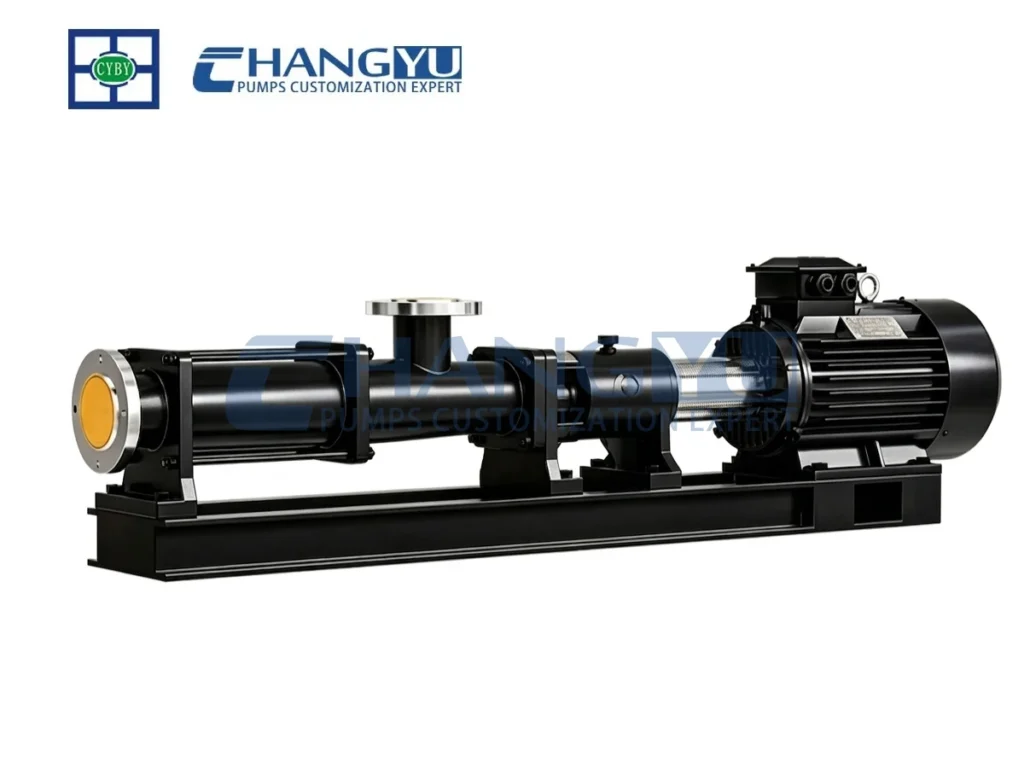
El funcionamiento en seco es la causa número uno de fallo catastrófico de la bomba de tornillo. Un solo evento de arranque en seco puede destruir un estator en menos de dos minutos.
El daño al estator comienza en segundos después de la pérdida de fluido — el ajuste de interferencia entre el rotor y el estator genera calor por fricción que el fluido bombeado normalmente elimina. El fallo irreversible del estator generalmente ocurre dentro de dos minutos, dependiendo de la velocidad de operación y el material del estator. Un interruptor de flujo proporciona protección primaria al detectar la ausencia de fluido. Un sensor de temperatura incrustado en el estator ofrece la respuesta más rápida al detectar el aumento de calor directamente en la interfaz de fricción. Para procesos críticos, combinar ambos proporciona una defensa en profundidad.
Programa de mantenimiento
Tabla: Intervalos de mantenimiento recomendados para la bomba de tornillo
| Intervalo | Acción |
|---|---|
| Semanal | Verifique si hay vibraciones, ruidos o fugas inusuales; monitoree las tendencias de presión de succión y descarga |
| Mensual | Inspeccione el elemento de acoplamiento por desgaste; verifique que el punto de ajuste de la válvula de alivio no haya variado |
| Trimestral | Evalúe el desgaste del estator mediante el caudal a velocidad y presión constantes; inspeccione la lubricación |
| Anualmente | Reemplace el sello mecánico o el empaque; realice una verificación completa de la alineación del acoplamiento |
| Basado en condición | Reemplace el estator cuando el caudal caiga 10% por debajo del valor base a la presión de descarga nominal |
Alineación del acoplamiento a temperatura de operación
Un procedimiento de campo clave de los ingenieros de servicio de Changyu Pump: siempre vuelva a verificar la alineación del acoplamiento después de que la bomba haya alcanzado su temperatura de operación estable. La expansión térmica de la carcasa de la bomba y la tubería conectada puede causar una desalineación significativa que no estaba presente durante la instalación en frío. Si se detecta desalineación a temperatura de operación, mida y registre el desplazamiento, permita que la bomba se enfríe, luego corrija la alineación en frío para compensar el crecimiento térmico medido. Vuelva a verificar a temperatura de operación después de la corrección. Este único procedimiento previene la mayoría de los fallos prematuros del estator y los rodamientos atribuibles a las prácticas de instalación.
Guía Común de Solución de Problemas
Tabla: Referencia de solución de problemas de la bomba de tornillo
| Síntoma | Causa probable | Acción Correctiva |
|---|---|---|
| Caudal reducido | Desgaste del estator, obstrucción del filtro de succión | Evalúe el estado del estator; limpie el filtro |
| Ruido o vibraciones excesivas | Cavitación, desalineación del acoplamiento, gas arrastrado | Increase NPSH margin; realign per procedure above; check fluid condition |
| Sobrecarga del motor | Fluid viscosity higher than rated at operating temperature | Verify actual viscosity; reduce pump speed to lower torque demand |
| Fuga en el sello mecánico | Worn seal faces, prior dry-running event | Reemplazar el sello; instalar protección contra funcionamiento en seco para evitar que se repita |
| Pulsating discharge flow | Damaged rotor or stator section | Inspect and replace affected components |
¿Cuáles son los productos de bomba de tornillo de Changyu Pump?
Changyu Pump manufactures the G-type single-screw pump — a rotary positive displacement pump purpose-built for high-viscosity, solids-laden, and shear-sensitive applications.
.
What differentiates the Changyu G-type series is the combination of a 400–960 r/min speed range — deliberately lower than many competitors to extend stator life — and the availability of all four major stator elastomers (NBR, EPDM, FKM, PTFE) from a single manufacturing source, eliminating multi-vendor compatibility risk. With over 20 years of manufacturing experience, the G-type series is deployed across petroleum, chemical, environmental, and food processing facilities worldwide.
.
Especificaciones de la bomba de un solo tornillo Changyu tipo G
Tabla: Especificaciones técnicas de la bomba de tornillo tipo G
| Parámetro | Especificaciones |
|---|---|
| Tipo de bomba | Un solo tornillo / cavidad progresiva |
| Rango de caudal | 0–200 m³/h |
| Gama de cabezales | 60–120 m (según el modelo y las etapas del estator) |
| Potencia del motor | 55–37 kW |
| Rango de velocidad | 400–960 r/min |
| Temperatura media | De -20 °C a 150 °C |
| Materiales de la carcasa personalizables | Hierro fundido, acero inoxidable |
| Elastómeros de estator disponibles | NBR, EPDM, FKM, PTFE |
The core design features an eccentric single-thread rotor with a large lead and high tooth height, running inside a double-helix stator. The interference fit between rotor and stator creates a continuous sealed chamber that progresses from suction to discharge, maintaining volumetric efficiency even against elevated back-pressure. The low operating speed range (400–960 r/min) directly contributes to extended stator life compared to higher-speed positive displacement alternatives — a critical advantage for abrasive or chemically aggressive service.
.
Ver especificaciones del producto de la bomba de tornillo Changyu tipo G →
Changyu Pump Case Study: Solving Real-World Screw Pump Failures
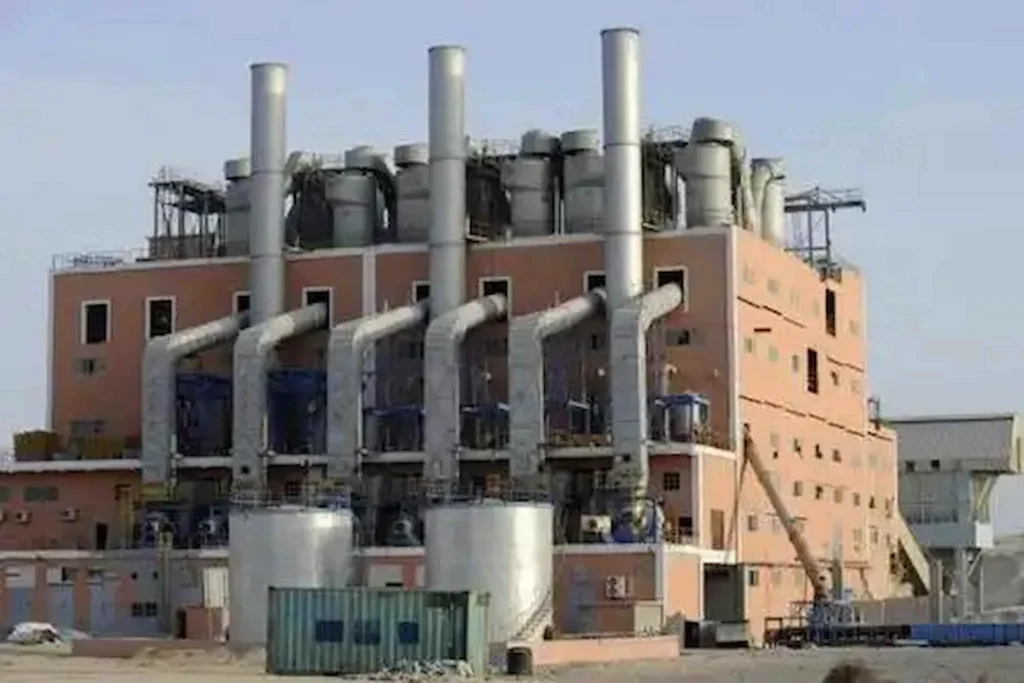
The following case documents a screw pump failure and its resolution by Changyu Pump’s engineering team. The scenario is representative of elastomer incompatibility challenges encountered in chemical processing plants — one of the most common and costliest screw pump failure modes.
.
Case: Epoxy Resin Transfer — Stator Failure After 6 Weeks
Aplicación:
A chemical plant in Southeast Asia was transferring epoxy resin (viscosity 45,000 cSt at 60°C) from a reactor to a filling station using a competitor’s single-screw pump. In ketone-containing epoxy resin service, properly specified stators typically require replacement every 12–18 months — making the 6-week failure a clear indicator of gross elastomer incompatibility rather than normal wear.
.
Parámetros de Falla Originales:
- Pump: Competitor single-screw, cast iron housing, NBR stator
- Caudal: 18 m³/h a 480 r/min
- Temperatura de operación: 55–65°C
- Failure mode: Stator swelling and chunking after 6 weeks of operation — elastomer had visibly increased in volume and developed surface cracks propagating into the stator body
- Consequence: Product contamination from stator debris, unplanned downtime totaling 18 hours per incident
Análisis de Causa Raíz por Ingenieros de Changyu Pump:
Investigation revealed that the epoxy resin formulation contained a ketone-based solvent at approximately 5% concentration. NBR (nitrile rubber) has inherently poor resistance to ketones — per ASTM D471 compatibility data, NBR can experience volume swell exceeding 50% when exposed to ketone solvents at elevated temperatures. The solvent was progressively attacking the stator, causing swelling, softening, and eventual mechanical failure. The original pump supplier had selected NBR based solely on compatibility with the base epoxy resin, overlooking the solvent component entirely.
.
Solución de Changyu Pump:
- Replaced the pump with a Changyu G-type single-screw pump featuring an
FKM (Viton) stator
— FKM exhibits volume swell below 10% in ketone-containing streams per ASTM D471 reference data - Upgraded the rotor material to
acero inoxidable 316 for additional corrosion margin against residual acids in the formulation - Installed a stator temperature sensor with an alarm set point at 70°C to provide early warning of thermal excursions
- Added a suction strainer with a differential pressure indicator to flag blockage before it affected pump inlet conditions
Resultados Posteriores a la Instalación:
- Stator service life extended from 6 weeks to over 18 months (consistent with the industry-expected interval of 12–18 months for this chemical class, and verified at the first scheduled inspection)
- Zero unplanned downtime related to pump failure in the first 12 months of continuous operation
- The plant standardized on Changyu G-type pumps for additional viscous resin transfer lines, adding two more units within the following year
Conclusión Clave de Este Caso:
Always include all solvent constituents when specifying stator elastomer compatibility. A 5% ketone content was enough to destroy an NBR stator in 6 weeks. Request ASTM D471 immersion test data for the complete chemical mixture — not just the base fluid. This single verification step eliminates the most common and costliest screw pump failure mode.
.
How to Choose a Reliable Screw Pump Manufacturer?
Selecting the right pump type and specification is half the decision. The other half is selecting a manufacturer whose quality systems, engineering support, and application experience match the demands of your process.
.
Evaluation Criteria
Table: Screw Pump Manufacturer Evaluation Checklist
| Criterio | Qué buscar | Por qué es importante |
|---|---|---|
| Experiencia en la industria | 15+ years focused on screw pump manufacturing | Deep application knowledge prevents costly specification errors |
| Cumplimiento de normas | API 676, ISO 9001, CE marking | Ensures design consistency and manufacturing quality |
| Trazabilidad de materiales | Certificados de molino completos para rotores y estatores | Verifies material grade for corrosive or high-temperature service |
| Testing protocols | Hydrostatic and performance testing on every pump | Confirms pump meets rated specifications before shipment |
| Gama de elastómeros para estatores | NBR, EPDM, FKM, PTFE todos disponibles en stock | Single-source supply for the full range of chemical compatibility needs |
| Pre-sale engineering support | Free selection assistance, failure analysis capability | Reduces project risk and commissioning delays |
| Servicio posventa | Ingenieros de servicio en campo, disponibilidad de repuestos | Minimiza el tiempo de inactividad cuando se requiere mantenimiento |
La recomendación definitiva del equipo de ingeniería de Changyu Pump: insistir en un fabricante que proporcione curvas de rendimiento documentadas para sus parámetros de fluido específicos — no solo pruebas con agua. Para aplicaciones químicas agresivas, verifique que el fabricante ofrezca al menos cuatro opciones de elastómero para el estator (NBR, EPDM, FKM, PTFE) y pueda proporcionar datos de prueba de inmersión ASTM D471 para validar la compatibilidad con su mezcla química completa, incluidos todos los solventes y constituyentes traza. Esta única disciplina de adquisición elimina la causa más común de falla prematura de la bomba de tornillo: la selección de material incompatible.
Preguntas frecuentes sobre bombas de tornillo
P: ¿Cuál es la diferencia entre una bomba de tornillo y una bomba de cavidad progresiva?
R: Una bomba de cavidad progresiva es un tipo de bomba de tornillo — específicamente, una bomba de un solo tornillo. “Bomba de tornillo” es la categoría más amplia que abarca configuraciones de un solo tornillo (cavidad progresiva), dos tornillos y tres tornillos. Los términos a menudo se usan indistintamente en la industria, pero la precisión técnica los distingue por el número de tornillos.
P: ¿Cuál es la viscosidad máxima que puede manejar una bomba de tornillo?
R: Las bombas de un solo tornillo manejan viscosidades que superan 1,000,000 cSt. Las bombas de dos tornillos típicamente operan hasta 100,000 cSt. Las bombas de tres tornillos están limitadas a aproximadamente 5,000 cSt. El límite superior práctico depende de la geometría de la bomba, el par motor disponible y el diseño de la línea de succión para garantizar un llenado adecuado.
P: ¿Puede una bomba de tornillo funcionar en seco?
R: No. El funcionamiento en seco causa daños en el estator en cuestión de segundos — el ajuste de interferencia entre el rotor y el estator genera calor por fricción sin fluido que lo elimine. La falla irreversible generalmente ocurre en dos minutos. Cada instalación de bomba de tornillo debe incluir protección contra funcionamiento en seco, como un interruptor de flujo combinado con un sensor de temperatura del estator.
P: ¿Cuánto dura un estator de bomba de tornillo?
R: La vida útil del estator varía de 6 meses a más de 3 años, dependiendo de la abrasividad del fluido, la temperatura de operación, la compatibilidad química y la velocidad de la bomba. Las bombas que operan por debajo de 400 r/min con fluidos limpios y lubricantes logran la vida útil más larga del estator. Los lodos abrasivos a temperaturas elevadas reducen la vida útil hacia el extremo inferior de este rango.
P: ¿Qué mantenimiento requiere una bomba de tornillo?
R: El mantenimiento de rutina incluye revisiones semanales de vibración, ruido y fugas; evaluación trimestral del desgaste del estator mediante el caudal a velocidad constante; inspección o reemplazo anual del sello mecánico; y reemplazo del estator según condición cuando el caudal disminuya un 10% por debajo del valor base a la presión de descarga nominal.
P: ¿Cuál es la eficiencia típica de una bomba de tornillo?
R: La eficiencia volumétrica varía del 70 al 90% dependiendo de la viscosidad del fluido, la presión diferencial y el número de etapas del estator. Los fluidos de mayor viscosidad mejoran la eficiencia volumétrica al reducir el deslizamiento a través de las líneas de sellado. La eficiencia total, incluidas las pérdidas mecánicas, generalmente varía del 50 al 75%.
Lista de verificación de prevención del ingeniero de Changyu Pump
Basado en más de 20 años de experiencia de campo en aplicaciones químicas, petroleras y ambientales, los ingenieros de Changyu Pump recomiendan la siguiente disciplina de selección y operación:
- No seleccione un elastómero para el estator basándose únicamente en el fluido base. Considere todos los constituyentes químicos: solventes, agentes de limpieza y contaminantes traza. Solicite datos de compatibilidad ASTM D471 para la mezcla química completa, no solo para el componente principal.
- Nunca opere una bomba de tornillo sin protección contra funcionamiento en seco. Un interruptor de flujo combinado con un sensor de temperatura del estator cuesta una fracción del reemplazo de un solo estator y previene la causa más común de falla catastrófica de la bomba. Instálelo y pruébelo antes de la puesta en marcha.
- No asuma que la alineación de instalación en frío es suficiente. La expansión térmica desplaza la alineación de la bomba y las tuberías. Vuelva a verificar a la temperatura de operación, mida cualquier desviación, enfríe, corrija la alineación en frío para compensar y vuelva a verificar en caliente. Documente los valores de alineación finales.
- Dimensionar la línea de succión con un mínimo de 1.5 veces el diámetro de entrada de la bomba. Las líneas de succión subdimensionadas crean una pérdida por fricción excesiva con fluidos de alta viscosidad, induciendo cavitación que erosiona el estator y reduce el caudal. En caso de duda, elija un tamaño de tubería más grande.
- Aplique un margen de NPSH mínimo del 30% para fluidos con presión de vapor superior a 0.5 bar a la temperatura de operación. Los márgenes estándar del 10 al 15% son insuficientes para fluidos volátiles o calientes donde la formación de vapor en la cavidad de succión causa pérdida inmediata de rendimiento y daños por cavitación.
- No base la selección de la bomba únicamente en el precio de compra. Realice un análisis de TCO a mínimo 3 años que incluya el consumo de energía, los reemplazos anticipados de estator y sello, y el costo estimado del tiempo de inactividad a su tasa de producción por hora. La bomba de menor precio rara vez es la menos costosa de poseer.
- Verifique que el fabricante tenga en stock los cuatro elastómeros principales para estator: NBR, EPDM, FKM, PTFE. Si un fabricante solo ofrece uno o dos tipos de elastómero, no puede respaldar diversas aplicaciones químicas. El suministro de elastómero de una sola fuente también simplifica la gestión de piezas de repuesto.
- Mantenga un estator y un sello mecánico de repuesto en el estante para bombas de proceso críticas. El costo de mantener el inventario es insignificante en comparación con la pérdida de producción por esperar un reemplazo durante una parada no planificada. Para bombas en servicio continuo, esto no es opcional, es un seguro operativo.
Conclusión
Seleccionar la bomba de tornillo adecuada es una decisión de ingeniería estructurada, no un ejercicio de catálogo. El proceso comienza con una comprensión clara del perfil de viscosidad de su fluido, su composición química y su contenido de sólidos. A partir de ahí, el tipo de bomba (de tornillo simple, doble o triple) se deduce lógicamente de las condiciones de operación. La compatibilidad de materiales —particularmente la selección del elastómero del estator verificada según ASTM D471— es el punto de falla más frecuente y exige una validación rigurosa. El análisis del costo total de propiedad demuestra consistentemente que, para servicios de alta viscosidad, la eficiencia energética y el perfil de mantenimiento predecible de la bomba de tornillo simple ofrecen el menor costo de vida útil, recuperándose la prima de precio inicial típicamente en un plazo de 18 a 24 meses solo mediante el ahorro de energía.
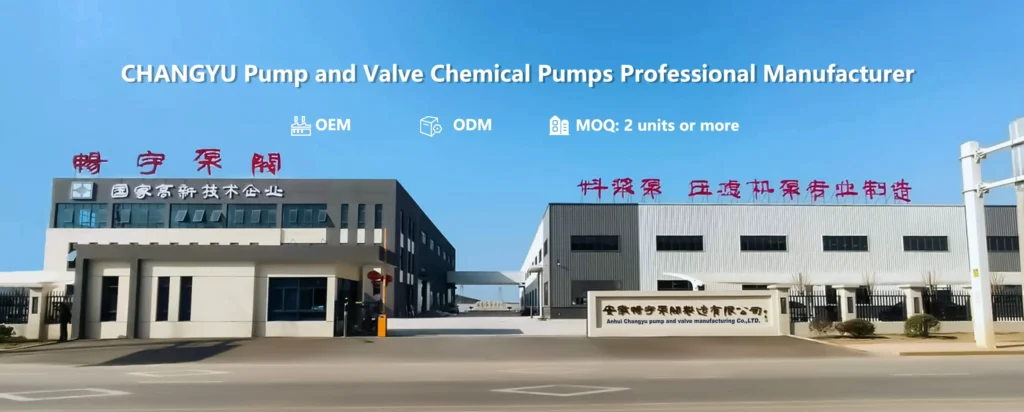
Cuando esté listo para especificar una bomba de tornillo para su proceso, el equipo de ingeniería de Changyu Pump puede proporcionar una evaluación técnica gratuita, que incluye una verificación de compatibilidad ASTM D471 para su mezcla química específica y una proyección del TCO a 5 años para sus parámetros de operación. Con más de 20 años de experiencia en fabricación, un inventario completo de elastómeros para estatores (NBR, EPDM, FKM, PTFE), fabricación conforme a API 676 y pruebas de rendimiento documentadas en cada bomba, garantizamos que su selección sea técnicamente correcta desde el primer día.
Contacte a los ingenieros de Changyu Pump para una evaluación técnica gratuita →