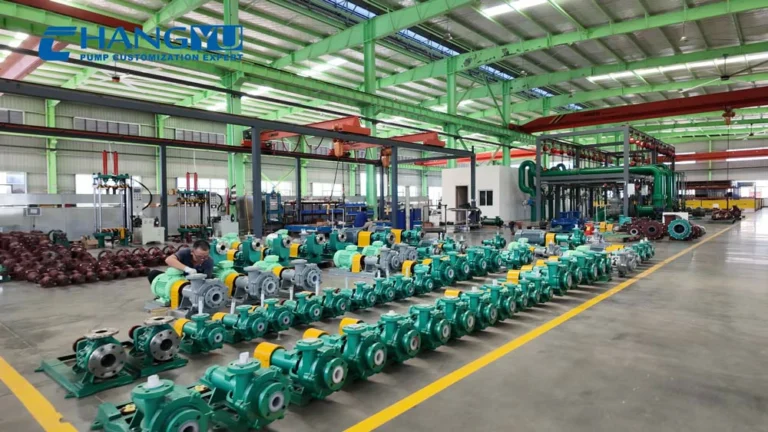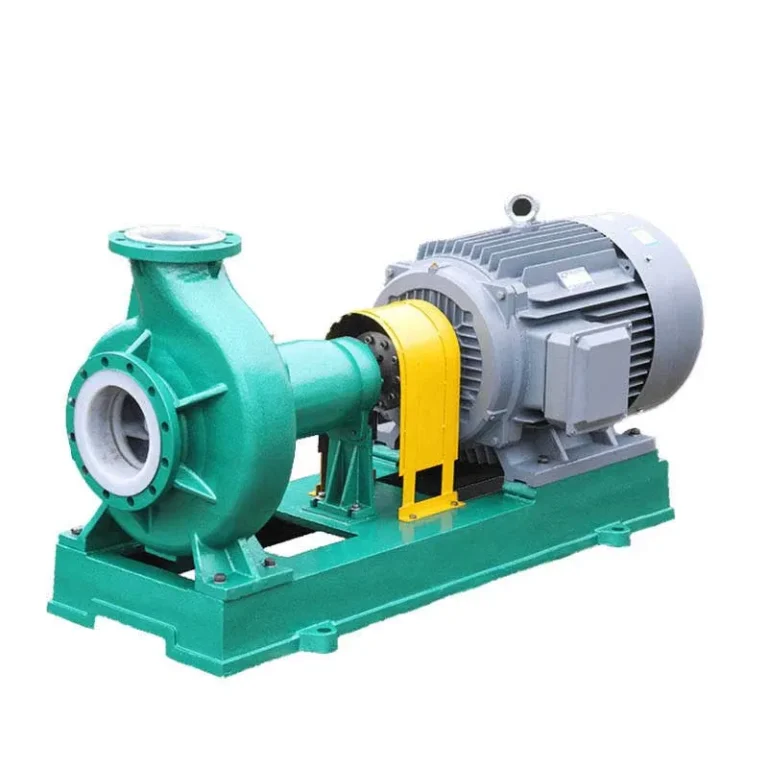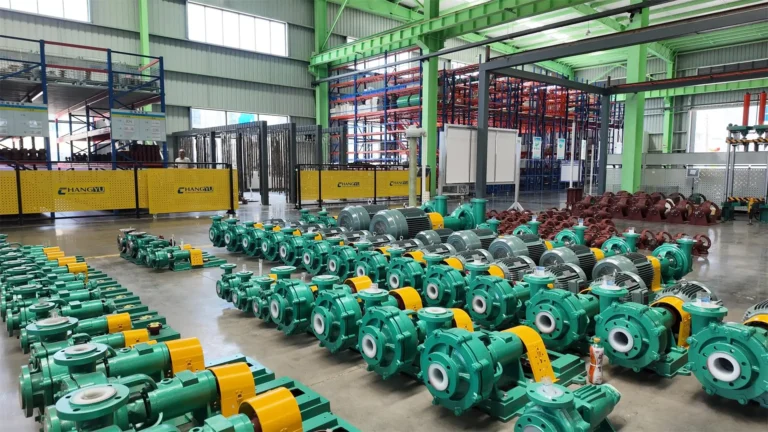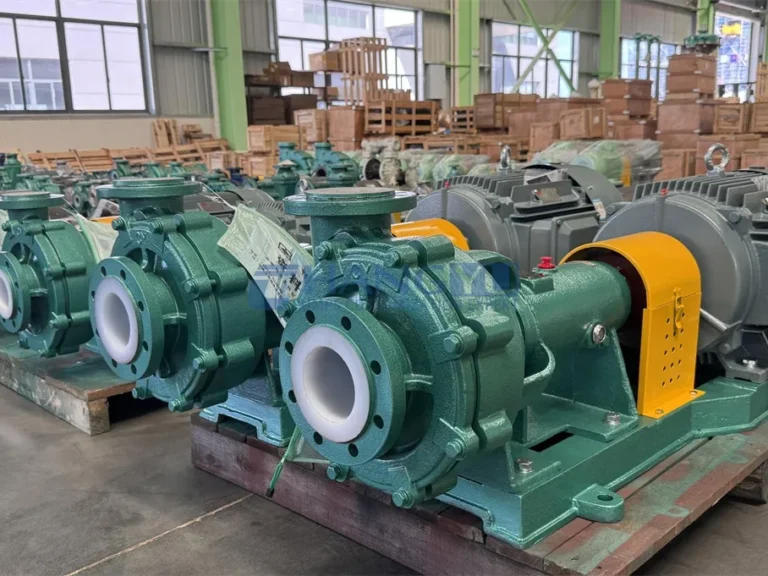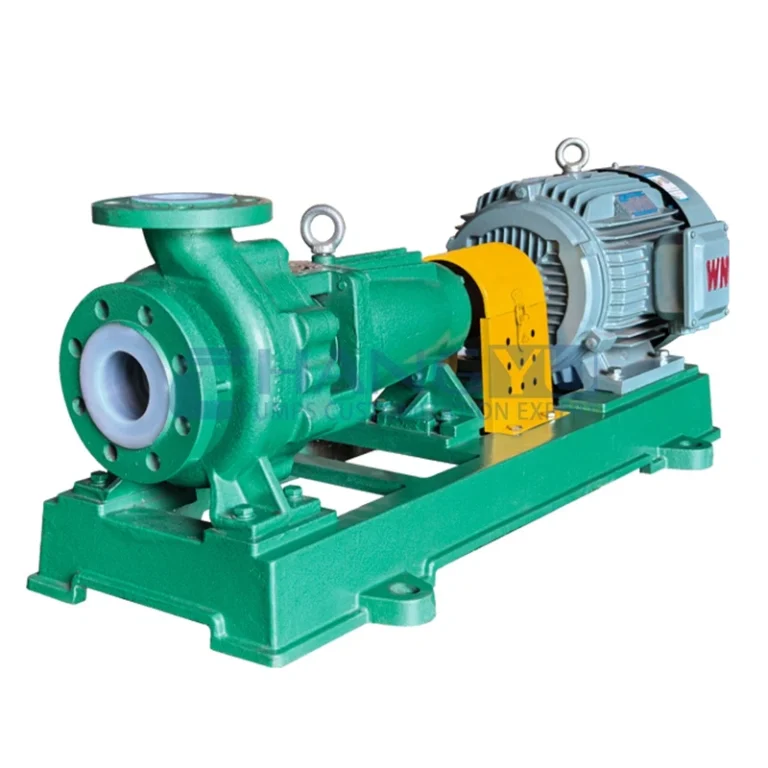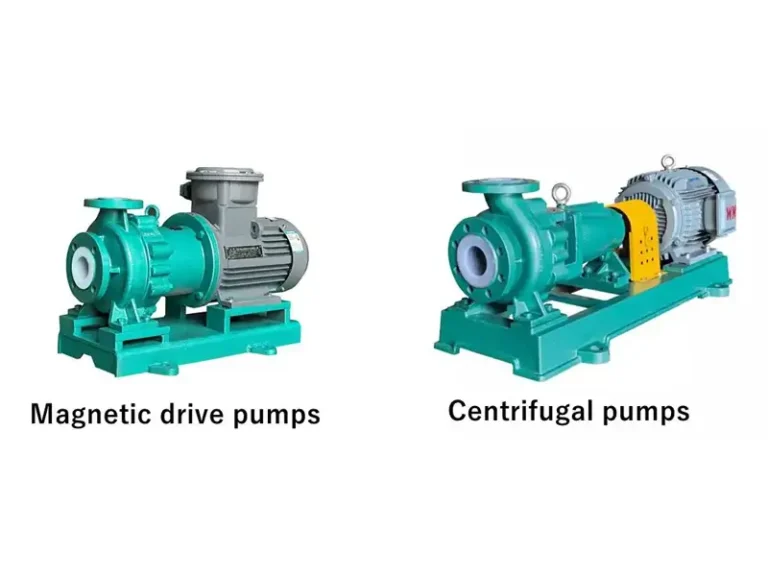
A vertical chemical pump is a highly specialized fluid handling system engineered to safely transfer corrosive liquids from deep sumps, underground tanks, and industrial containers. By designing the pump with the drive motor positioned safely above the fluid surface and the wet-end submerged directly in the liquid, this architecture completely eliminates priming issues while protecting the motor from aggressive chemical fumes. With over 20 years of manufacturing expertise, Bomba Changyu delivers robust vertical pumping solutions that optimize floor space, prevent leaks, and ensure continuous operation in the harshest industrial environments.
Why Choose a Vertical Chemical Pump Over Horizontal Designs?
In chemical processing, wastewater treatment, and surface finishing, space is often limited, and fluids are frequently collected in below-ground pits. Standard horizontal pumps struggle in these scenarios due to suction lift limitations and the risk of cavitation. At Bomba Changyu, we believe a vertical chemical pump solves these engineering challenges through several distinct advantages:
- Ultimate Motor Protection: Because the motor and electrical connections are mounted on a dry surface plate above the tank, they are isolated from highly corrosive liquid contact and vapor degradation.
- Zero Priming Required: The hydraulic wet-end (pump casing and impeller) is submerged directly at the bottom of the reservoir. The pump is naturally flooded, instantly eliminating the need for complex vacuum or self-priming systems.
- Compact Footprint: The vertical orientation requires significantly less floor space than horizontal setups, making it ideal for crowded chemical plants and confined tank tops.
3 Core Vertical Chemical Pumps by Changyu Pump
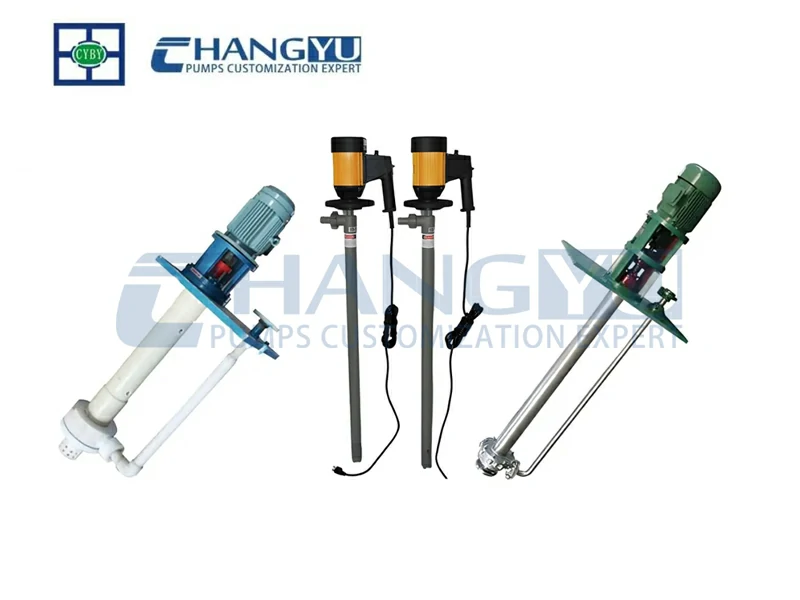
Selecting the right equipment comes down to matching the metallurgy and pump style to your specific tank depth and fluid chemistry. Changyu Pump offers a comprehensive portfolio of vertical chemical pumps (often referred to as semi-submerged pumps).
Vertical Chemical Pump Comparison Table
| Pump Series | Wetted Material | Core Engineering Advantage | Best Used For |
|---|---|---|---|
| Fluoroplastic Submersible Pump | PTFE / FEP | Extreme Chemical Inertness | Deep acid pits, strong alkalis, toxic sumps |
| Stainless Steel Vertical Submersible Pump | SS304 / SS316 | Structural Rigidity & High Temp | Solvents, hot wastewater, mildly abrasive fluids |
| HD Chemical Drum Pump | 304, 316L, PVDF, PP, Aluminum Alloy, Hastelloy, Plastic, Hastelloy | Portable & Lightweight | IBC Totes, standard 200L drums, reagent dosing |
1. Fluoroplastic Submersible Pump (For Severe Corrosives)
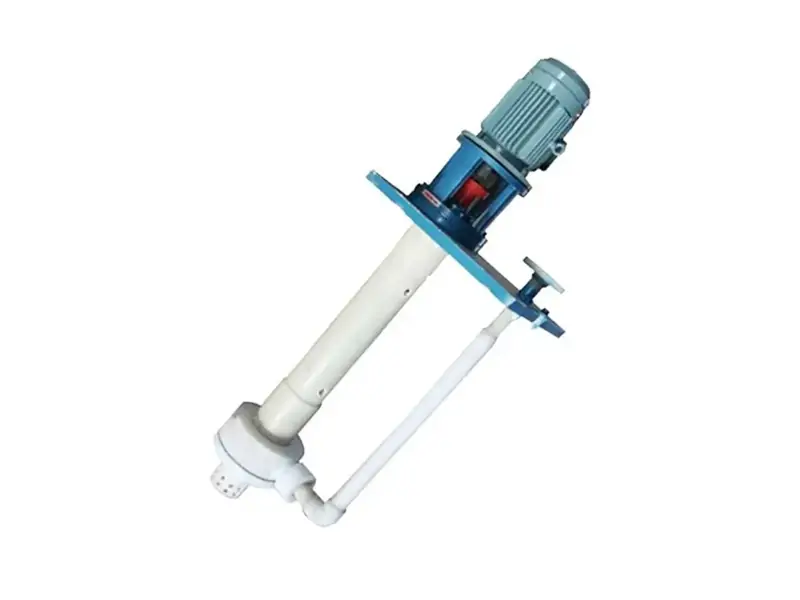
When your underground sump collects highly aggressive chemicals like concentrated sulfuric acid, hydrochloric acid, or strong alkalis, standard metals will fail rapidly. The Fluoroplastic Submersible Pump is heavily lined with premium fluoroplastics (such as PTFE or FEP). Changyu Pump engineers designed this inert lining to provide absolute resistance against chemical degradation, ensuring long-term structural integrity and zero leakage in the most hostile collection pits. The robust vertical shaft is further protected by chemical-resistant guide bearings to prevent vibration during deep-pit evacuation.
Parameters
| NO | Model | Flow (m³/h) | Head (m) | Rev (r/min) | Power | Caliber (mm) | |
| Axial power | Motor power | ||||||
| 1 | 32FYH-5-20 | 5 | 20 | 2900 | 0.8 | 2.2 | 32×25 |
| 2 | 32FYH-10-15 | 10 | 15 | 2900 | 1.17 | 2.2 | |
| 3 | 40FYH-10-20 | 10 | 20 | 2900 | 1.5 | 3 | 40×32 |
| 4 | 40FYH-15-20 | 15 | 20 | 2900 | 2.34 | 3 | |
| 5 | 50FYH-10-25 | 10 | 25 | 2900 | 3.4 | 4 | 50×40 |
| 6 | 50FYH-10-30 | 10 | 30 | 2900 | 4.1 | 5.5 | |
| 7 | 50FYH-15-30 | 15 | 30 | 2900 | 5.3 | 5.5 | |
| 8 | 50FYH-20-20 | 20 | 20 | 2900 | 4.6 | 5.5 | |
| 9 | 50FYH-20-25 | 20 | 25 | 2900 | 5.45 | 5.5 | |
| 10 | 50FYH-10-40 | 10 | 40 | 2900 | 6.1 | 7.5 | |
| 11 | 50FYH-20-30 | 20 | 30 | 2900 | 6.54 | 7.5 | |
| 12 | 65FYH-25-25 | 25 | 25 | 2900 | 5.68 | 7.5 | 65×50 |
| 13 | 65FYH-25-30 | 25 | 30 | 2900 | 6.8 | 7.5 | |
| 14 | 65FYH-30-20 | 30 | 20 | 2900 | 5.8 | 7.5 | |
| 15 | 65FYH-40-20 | 40 | 20 | 2900 | 6.82 | 7.5 | |
| 16 | 65FYH-30-25 | 30 | 25 | 2900 | 5.84 | 7.5 | 65×50 |
| 17 | 65FYH-30-30 | 30 | 30 | 2900 | 6.5 | 7.5 | |
| 18 | 65FYH-25-40 | 25 | 40 | 2900 | 7.79 | 11 | |
| 19 | 65FYH-30-40 | 30 | 40 | 2900 | 9.35 | 11 | |
| 20 | 65FYH-35-30 | 35 | 30 | 2900 | 8.2 | 11 | |
| 21 | 65FYH-30-50 | 30 | 50 | 2900 | 11.7 | 15 | |
| 22 | 80FYH-60-15 | 60 | 15 | 2900 | 6.2 | 7.5 | 80×65 |
| 23 | 80FYH-60-20 | 60 | 20 | 2900 | 9.3 | 11 | |
| 24 | 80FYH-50-25 | 50 | 25 | 2900 | 9.7 | 11 | |
| 25 | 80FYH-50-30 | 50 | 30 | 2900 | 10.6 | 11 | |
| 26 | 80FYH-40-30 | 40 | 30 | 2900 | 10.4 | 11 | |
| 27 | 80FYH-60-25 | 60 | 25 | 2900 | 11.5 | 15 | |
| 28 | 100FYH-60-30 | 60 | 30 | 2900 | 14 | 15 | 100×80 |
| 29 | 100FYH-80-15 | 80 | 15 | 2900 | 12.8 | 15 | |
| 30 | 100FYH-100-10 | 100 | 10 | 2900 | 13.6 | 18.5 | |
2. Stainless Steel Vertical Submersible Pump (For High Temp & Solvents)
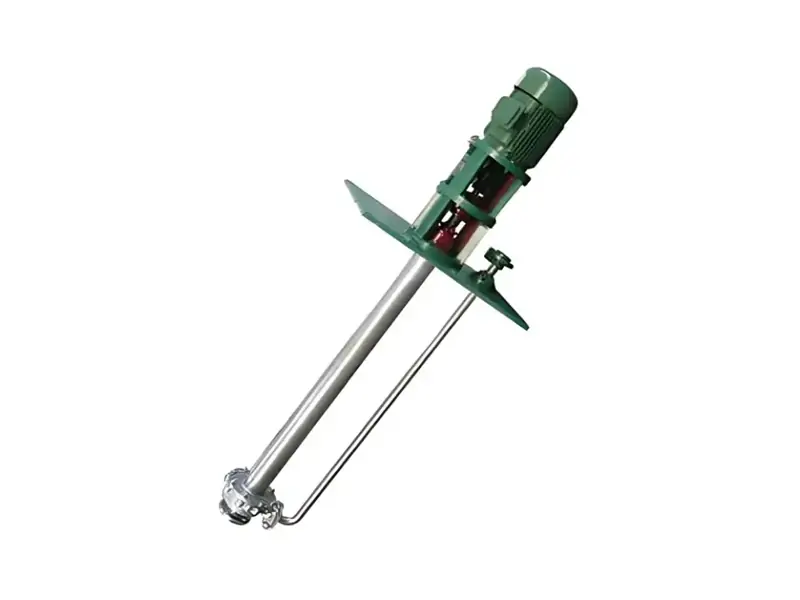
If your application involves high-temperature organic solvents, mildly abrasive industrial wastewater, or environments where structural rigidity is paramount, the Stainless Steel Vertical Submersible Pump provides exceptional mechanical strength. The premium stainless steel construction prevents oxidation and scale buildup. More importantly, its robust vertical shaft handles heavy-duty, continuous fluid transfer without mechanical fatigue, even when dealing with the thermal expansion caused by hot industrial effluents.
Parameters
| Model | Flow(m³/H) | Lift(m) | Revolutions(r/min) | Shaft power(W) | Motor power(W) |
|---|---|---|---|---|---|
| 25FY-41 | 3.6 | 41 | 2900 | 2.51 | 4 |
| 25FY-25 | 25 | 1.22 | 1.5 | ||
| 25FY-16 | 16 | 0.713 | 1.1 | ||
| 40FY-40 | 7.2 | 40 | 2.61 | 4 | |
| 40FY-16 | 25.5 | 1.43 | 3 | ||
| 40FY-25 | 15.7 | 0.616 | 1.1 | ||
| 50FY-25 | 14.4 | 25 | 1.92 | 3 | |
| 50FY-16 | 15.7 | 0.993 | 1.5 | ||
| 65FY-40 | 28.8 | 39.5 | 5.41 | 7.5 | |
| 65FY-25 | 25 | 3.27 | 5.5 | ||
| 65FY-16 | 15.7 | 1.81 | 3 | ||
| 80FY-38 | 54 | 38 | 9 | 15 | |
| 80FY-40 | 24 | 5.04 | 7.5 | ||
| 80FY-15 | 15 | 3.15 | 5.5 | ||
| 80FY-57 | 100.8 | 57 | 24.45 | 30 | |
| 100FY-37 | 36.3 | 13.73 | 18.5 | ||
| 100FY-23 | 22.5 | 8.24 | 11 | ||
| 150FY-35 | 190.8 | 34.7 | 1480 | 24 | 30 |
| 150FY-22 | 22 | 2900 | 14.7 | 22 | |
| 200FY-34 | 360 | 33.5 | 1480 | 41.1 | 55 |
| 200FY-21 | 21 | 26.4 | 37 |
3. HD Chemical Drum Pump (For Portable & Small-Batch Transfer)
Not all vertical chemical transfer requires a heavy-duty sump installation. For applications requiring highly mobile, vertical fluid extraction from standard 200L industrial barrels or IBC totes, the HD Chemical Drum Pump is the perfect solution. Operating on the same vertical principle—with the motor safely above the container—this lightweight pump allows operators to quickly and safely transfer corrosive chemicals and viscous liquids. Changyu Pump designed this unit to eliminate the severe safety risks associated with manually tipping or pouring heavy chemical drums.

Cases of Changyu Vertical Chemical Pumps
Our vertical pumping solutions have successfully resolved complex fluid transfer challenges across various industries. Here is how they perform in the field:
Case 1: Acid Sump Evacuation in a Chemical Plant
A processing facility continuously struggled with horizontal pumps losing suction when attempting to drain an underground acid collection pit. By installing a Changyu Fluoroplastic Submersible Pump, the submerged wet-end provided immediate, reliable evacuation of the highly corrosive wastewater, while the above-ground motor remained completely safe from acid fumes.
Case 2: Hot Solvent Transfer in Pharmaceutical Manufacturing
A pharmaceutical plant needed to pump high-temperature solvents from a deep reaction vessel. Standard plastic pumps deformed under the heat. The plant upgraded to the Changyu Stainless Steel Vertical Submersible Pump, leveraging its metallic rigidity to maintain shaft alignment and hydraulic efficiency under severe thermal stress.
Case 3: Reagent Dosing from IBC Totes
A water treatment facility needed to dose various chemical reagents directly from totes. Using heavy, fixed pumps was impractical. They adopted the Changyu HD Chemical Drum Pump, giving operators the mobility to safely insert the vertical tube into different containers and rapidly transfer chemicals without spills or leaks.

How to Choose the Most Suitable Vertical Chemical Pump?
To ensure safe operation and a long equipment lifecycle, you must systematically evaluate your site conditions before ordering. Follow these critical steps:
- Analyze Fluid Chemistry & Temperature: Identify your fluid’s exact composition. Use fluoroplastics for extreme acids/alkalis, stainless steel for hot solvents or wastewater, and specify compatible materials for portable drum pumps.
- Measure the Exact Immersion Depth: For sump and tank installations, the vertical column and drive shaft are custom-built. You must calculate the precise distance from the mounting plate to the bottom of the basin to ensure the impeller is positioned correctly without hitting the floor.
- Evaluate Portability Requirements: Determine if the pump will be permanently bolted to a tank flange (requiring a heavy-duty vertical submersible pump) or if it needs to be frequently moved between different barrels (requiring an HD drum pump).
Not sure which shaft length or material matches your tank parameters? Welcome to contact the Changyu Pump engineering team. Simply provide your working conditions, and we will offer targeted model selection and a tailored solution.
Installation and Maintenance Tips
- Ensure Perfect Mounting Alignment: The number one cause of vertical pump failure is a tilted mounting plate. Even a slight angle at the surface will cause severe shaft runout deep in the pit, leading to rapid bearing wear and severe vibration.
- Manage Piping Stress: Never allow the rigid discharge piping to rest its weight on the pump flange. Use independent pipe supports to prevent mechanical stress from bending the vertical column.
- Do Not Run Dry: While the motor is safe above ground, the submerged guide bearings rely on the process fluid for lubrication and cooling. Always use level switches to shut the pump off before the fluid drops below the impeller casing.
FAQs About Vertical Chemical Pumps
Q1: What is the main difference between a vertical chemical pump and a horizontal pump?
A: A vertical pump is installed upright with its hydraulic wet-end submerged directly in the fluid and the motor mounted safely above the tank. This saves floor space and inherently eliminates the need for priming or a suction pipe. A horizontal pump sits entirely outside the tank and requires a suction line to draw fluid in.
Q2: Can a vertical chemical pump handle liquids with solid particles?
A: Yes, provided it is configured correctly. For chemical slurries or wastewater containing solids, the pump must be specified with an open-impeller design and highly wear-resistant submerged bearings (such as silicon carbide) to prevent internal clogging and abrasion.
Q3: How do vertical chemical pumps prevent toxic fumes from escaping the tank?
A: High-quality vertical pumps feature a specialized vapor seal (or lip seal) located at the surface mounting plate. This critical seal prevents corrosive and toxic chemical gases from escaping the sump, protecting both the motor and the surrounding plant environment.
Q4: Can a vertical chemical pump be customized for very deep pits?
A: Absolutely. The vertical drive shaft and support column can be custom-manufactured in length to perfectly match the exact depth of your specific underground sump or reservoir, ensuring the impeller sits at the optimal fluid level.
Q5: Is the motor of a vertical chemical pump submersible?
A: No. In this semi-submerged (cantilever) design, only the pump casing, impeller, and column are submerged. The motor remains completely dry above the liquid surface, which drastically simplifies electrical maintenance and reduces equipment costs.
Q6: What is the most critical maintenance task for a vertical chemical pump?
A: The most critical task is monitoring the submerged guide bearings. Because these bearings rely on the process fluid for lubrication, you must ensure the pump never runs dry. Checking these bearings during scheduled maintenance prevents severe shaft vibration and catastrophic failure.
Q7: Can the HD Chemical Drum Pump handle viscous fluids?
A: Yes, depending on the specific motor power and internal tube design selected, the HD drum pump can effectively transfer moderately viscous fluids such as resins, heavy oils, and concentrated chemical additives without overloading.
Q8: How do I prevent vibration in my vertical pump?
A: Vibration is prevented by ensuring absolute levelness of the surface mounting plate during installation, providing independent structural support for the discharge piping, and avoiding operation outside the pump’s designed flow curve.
Secure Your Fluid Transfer with Changyu Pump
When draining deep chemical pits or extracting hazardous fluids from industrial drums, relying on the wrong equipment leads to rapid corrosion, toxic vapor exposure, and costly downtime. Vertical chemical pumps provide the ultimate space-saving, self-flooding, and corrosion-resistant solution for complex tank geometries.
Are you struggling to empty an underground acid sump, or do you need a reliable, portable pump for your IBC totes? Contact Changyu Pump today. With 20 years of dedicated manufacturing experience, our engineers will evaluate your specific depth, chemistry, and flow requirements to build the perfect vertical solution. Reach out now for a free technical consultation and a highly competitive, factory-direct quotation!