
Réponse rapide
A pompe à boues corrosives pour traitement des eaux usées déplace les boues contenant à la fois des solides abrasifs et des liquides chimiquement agressifs — effluents industriels acides, déchets de procédés alcalins ou eaux usées salines mélangées à du sable, du gravier et des débris fibreux. Les pompes standard tombent rapidement en panne dans cet environnement à double menace. Facteurs clés de sélection :
- Le choix du matériau est la première défense: La fonte standard se corrode dans les boues acides ou alcalines. L’acier inoxydable résiste à la corrosion mais s’use rapidement à cause des solides abrasifs. Les pompes revêtues d’UHMW-PE offrent l’équilibre optimal — le revêtement polymère résiste aux acides, aux alcalis et aux sels tandis que le carter en acier assure la résistance structurelle. Pour une corrosion sévère avec des solides fins, les pompes revêtues de fluoroplastique offrent une résistance chimique universelle.
- La conception de la roue détermine la résistance au colmatage: Les boues contiennent des chiffons, des fibres, des débris plastiques et des matières filandreuses. Les roues fermées piègent ces débris et se colmatent. Les roues semi-ouvertes permettent le passage des solides tout en maintenant l’efficacité. Les roues vortex offrent une résistance maximale au colmatage pour les boues les plus chargées en débris.
- La concentration en solides dicte la spécification de la pompe: Les boues fines avec moins de 5% de solides peuvent utiliser des pompes à eaux usées standard. Les boues épaissies avec plus de 15% de solides nécessitent des pompes conçues pour les boues à haute densité — avec des passages larges, des matériaux résistants à l’usure et une puissance moteur suffisante pour un écoulement visqueux.
Les stations d’épuration des eaux usées traitent un mélange de plus en plus complexe d’eaux usées domestiques et d’effluents industriels. Lorsque les installations de fabrication rejettent des déchets acides, alcalins ou salins dans le réseau de collecte, les boues résultantes ne sont pas seulement abrasives — elles sont chimiquement agressives. Une pompe à boues standard spécifiée pour les eaux usées municipales neutres peut tomber en panne en quelques mois dans cet environnement, son carter en fonte se corrodant de l’intérieur tandis que le gravier abrasif érode la roue.
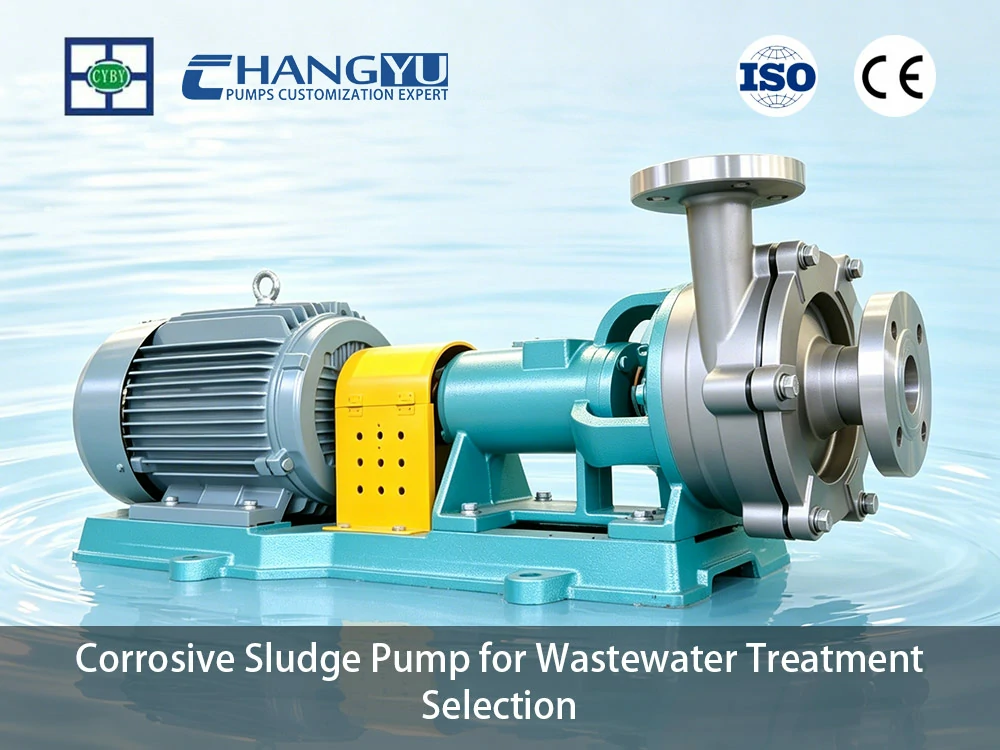
Après avoir lu ce guide, vous comprendrez les mécanismes de défaillance qui détruisent les pompes standard dans les boues corrosives, quels matériaux offrent une résistance fiable à long terme à la corrosion et à l’usure, comment sélectionner une roue qui résiste au colmatage, et comment dimensionner une pompe pour vos caractéristiques spécifiques de boues. Forte de plus de 20 ans d’expérience dans la fabrication de pompes, Changyu Pump présente ce guide de sélection pour les applications de boues corrosives.
Qu’est-ce qu’une Pompe à Boues Corrosives ?
Une pompe de transfert de boues corrosives déplace les boues de traitement des eaux usées qui contiennent à la fois des solides en suspension et des liquides chimiquement agressifs. Cela la distingue d’une pompe à eaux usées standard, conçue pour les eaux usées municipales à pH neutre, et d’une pompe chimique, qui traite les liquides corrosifs mais n’est pas conçue pour les solides abrasifs.
Origine des Boues Corrosives
Les boues corrosives sont générées tout au long du processus de traitement des eaux usées :
- Boues primaires: Solides décantés des clarificateurs primaires. Corrosives lorsque les eaux usées entrantes contiennent des effluents industriels — acides des usines de traitement des métaux, alcalins de la transformation alimentaire, salins de la fabrication chimique.
- Boues secondaires (activées): Solides biologiques du processus de boues activées. Corrosives lorsque les nutriments industriels ou les produits chimiques d’ajustement du pH modifient l’environnement biologique.
- Boues chimiques: Solides précipités des processus de traitement chimique — élimination du phosphore (chlorure ferrique, alun), précipitation des métaux lourds (chaux, sulfure) ou neutralisation. Ces boues sont intrinsèquement corrosives en raison des produits chimiques de traitement résiduels.
- Boues digérées: Biosolides digérés de manière anaérobie ou aérobie. Corrosives en raison des acides organiques, du sulfure d’hydrogène et de l’ammoniac générés pendant la digestion.
Pourquoi les Pompes à Eaux Usées Standard Tombent en Panne
Une pompe à eaux usées standard est conçue pour le gravier et les chiffons — pas pour l’acide. Lorsque des boues corrosives entrent dans une pompe en fonte, l’acide attaque la surface métallique, créant une couche rugueuse et poreuse. Le gravier abrasif racle ensuite cette surface affaiblie, accélérant la perte de matière. Le mécanisme combiné de corrosion-érosion élimine le métal beaucoup plus rapidement que l’un ou l’autre mécanisme seul. En quelques mois — parfois quelques semaines — le carter de la pompe, la roue et les plaques d’usure sont usés au-delà des limites de service.
Pourquoi les Pompes Standard Tombent-elles en Panne dans les Boues Corrosives ?
La défaillance des pompes standard dans les boues corrosives suit un schéma prévisible dicté par la synergie entre la corrosion chimique et l’usure mécanique.
La Synergie Corrosion-Érosion
| Mécanisme de Défaillance | Effet sur la Pompe Standard | Délai Typique avant Défaillance |
|---|---|---|
| Attaque acide sur la fonte | Corrosion uniforme de la surface ; perte de métal du carter et de la roue | 3–6 mois pour pH < 5 |
| Piqûres chlorées sur l’acier inoxydable | Piqûres profondes localisées dans les crevasses et les zones stagnantes | 6–12 mois pour 316L dans les boues à haute teneur en chlorures |
| Usure abrasive due au sable et au gravier | Amincissement des aubes de la roue ; érosion du bec de volute | 6–18 mois selon la teneur en gravier |
| Corrosion + érosion combinées | Surface corrodée raclée par le gravier — perte de matière 3–5× plus rapide que l’un ou l’autre seul | 2–6 mois dans des conditions sévères |
Les ingénieurs de Changyu Pump ont observé : Le schéma de défaillance le plus courant dans les stations d’épuration industrielles est la destruction rapide des pompes à boues en fonte traitant des boues primaires acides. Le carter en fonte se corrode à cause des boues à pH 4–5 tandis que le sable et le gravier érodent la surface métallique ramollie. Une pompe qui durerait 10 ans dans des boues municipales neutres tombe en panne en 3–4 mois. Pour la majorité des applications de boues corrosives, la solution n’est pas un alliage métallique plus coûteux — c’est une construction de pompe non métallique ou revêtue qui élimine complètement le mécanisme de corrosion. Pour une abrasion extrême avec des solides grossiers au-dessus de 30%, l’acier inoxydable duplex peut être envisagé.
Quels Matériaux Sont Compatibles avec les Boues Corrosives ?
Le choix du matériau pour le service des boues corrosives doit répondre à la fois à l’environnement chimique et aux solides abrasifs. Aucun matériau métallique unique n’excelle dans les deux domaines.
Comparaison des Matériaux pour Pompes à Boues
| Matériau | Résistance aux Acides (pH 2–5) | Résistance aux Alcalis (pH 10–12) | Résistance aux Chlorures | Résistance à l'abrasion | Meilleure application |
|---|---|---|---|---|---|
| Fonte | Mauvaise — se corrode rapidement | Modéré | Pauvre | Modéré | Boues municipales neutres uniquement |
| Acier inoxydable 316L | Bon | Bon | Modérée — piqûres au-dessus de 500 mg/L Cl⁻ | Mauvaise — molle, s’use rapidement | Liquides corrosifs propres et fins ; pas pour les boues abrasives |
| Acier inoxydable Duplex 2205 | Bon | Excellent — très résistant aux environnements alcalins | Bon — PREN 33–36 | Modéré | Boue corrosive avec une faible à modérée teneur en particules abrasives |
| Doublure en UHMW-PE | Excellent — inerte vis-à-vis de la plupart des acides ; déconseillé pour les acides oxydants forts (acide nitrique concentré, acide sulfurique concentré) ou les solvants organiques à températures élevées | Excellent | Excellent | Excellent — haute résistance à l'abrasion | Boue corrosive avec une teneur élevée en solides — l'équilibre optimal |
| Chemisé FEP/PFA | Universel — résiste à tous les acides | Universel | Universel | Modéré — idéal pour les solides fins | Acides forts, solvants, applications de haute pureté |
Sélection des matériaux selon le type de boue
| Type de boue | pH typique | Teneur en solides | Matériau recommandé | Raison |
|---|---|---|---|---|
| Boue primaire acide (industrielle) | 3–6 | 2–8% | Doublure en UHMW-PE | Résistance aux acides + résistance à l'abrasion |
| Boue chimique alcaline (traitement à la chaux) | 10-12 | 5–15% | Doublure en UHMW-PE | Résistance aux alcalis + gestion des solides élevés |
| Boue saline (côtière, industrielle) | 6-8 | 2–6% | Chemisé UHMW-PE ou duplex 2205 | Résistance aux chlorures + abrasion modérée |
| Boue municipale neutre | 6-8 | 2–10% | Fonte (standard) ou chemisé UHMW-PE pour une durée de vie prolongée | Matériaux standards acceptables ; chemisé pour la longévité |
| Boue corrosive chaude (> 80°C) | Variable | 2–8% | Revêtement FEP/PFA | Résistance aux hautes températures au-delà de la limite de l'UHMW-PE (90°C) |
Les ingénieurs de Changyu Pump recommandent : Pour toute boue corrosive avec un pH inférieur à 5 ou supérieur à 10 et une teneur en solides supérieure à 5%, une pompe chemisée UHMW-PE est le choix optimal. Le revêtement polymère élimine complètement le mécanisme de corrosion — les acides et les alcalis n'ont aucun effet sur UHMW-PE. La haute résistance à l'abrasion du matériau gère le sable, les particules abrasives et les solides qui usent les pompes métalliques. Pour une boue extrêmement corrosive à haute température (> 90°C) ou avec des solvants agressifs, passez à une pompe chemisée en fluoroplastique FEP ou PFA.
Comment Prévenir le Colmatage dans le Pompage de Boue ?
Le colmatage est le problème opérationnel le plus fréquent dans le pompage de boue. La combinaison de matières fibreuses, de débris plastiques et de biosolides collants crée un mélange qui peut obstruer les passages de la pompe si le mauvais type de roue est spécifié.
Comparaison de la Résistance au Colmatage par Type de Roue
| Type de roue | Résistance au colmatage | Passage des solides | Efficacité | Meilleure application |
|---|---|---|---|---|
| Roue fermée | Médiocre — les débris s'enroulent autour des aubes | Passages étroits | La plus élevée | Liquides propres uniquement — pas pour la boue |
| Roue semi-ouverte | Bonne — les débris passent à travers | Passage large ; certaines recirculations | Modérée (50–65%) | Boue corrosive avec solides mixtes — la conception préférée |
| Roue vortex (noyée) | Excellente — les solides contournent la roue | Passage libre le plus large | Inférieure (35–55%) | Eaux usées brutes, débris filandreux, solides imprévisibles |
| Roue à canal unique | Modérée — passage large unique | Bonne pour les solides définis | Bonne (55–65%) | Boue tamisée avec taille de particules connue |
L'Avantage de la Roue Semi-Ouverte
Les roues semi-ouvertes sont la norme pour le pompage de boue corrosive car elles équilibrent trois exigences concurrentes :
- Résistance au colmatage: La conception à aubes ouvertes avec un espace généreux entre la roue et la volute permet aux matières fibreuses de passer sans s'enrouler. Contrairement aux roues fermées, il n'y a pas d'espaces confinés où les débris peuvent s'accumuler.
- Tolérance à l'usure: À mesure que la roue et la volute s'usent, le jeu peut être ajusté de l'extérieur sur de nombreuses conceptions — restaurant l'efficacité sans remplacer les composants. Les roues fermées perdent rapidement en efficacité à mesure que les jeux internes s'agrandissent.
- Efficacité: Les roues semi-ouvertes offrent une efficacité plus élevée que les conceptions vortex tout en maintenant une résistance acceptable au colmatage. Pour le transfert continu de boue, les économies d'énergie par rapport à une pompe vortex peuvent être significatives sur la durée de vie de la pompe.
Les ingénieurs de Changyu Pump recommandent : Pour une boue corrosive avec une teneur en solides supérieure à 10% ou contenant des débris fibreux, spécifiez une roue semi-ouverte. La combinaison de résistance au colmatage, de tolérance à l'usure et d'efficacité offre le coût total de possession le plus bas. Les roues vortex doivent être réservées aux eaux usées brutes non tamisées ou à la boue avec de gros débris imprévisibles — la pénalité d'efficacité n'est justifiée que lorsque le risque de colmatage est la préoccupation dominante.
Comment Sélectionner une Pompe à Boue Corrosive pour le Traitement des Eaux Usées ?
La sélection d'une pompe à boue corrosive suit un processus structuré allant de la caractérisation de la boue à la spécification des matériaux et au dimensionnement de la pompe. Étape 1 : Caractériser la Boue. Mesurez le pH, la concentration en chlorures, la température, la teneur en solides et identifiez tout constituant chimique spécifique (sulfates, solvants, huiles). Déterminez la taille maximale des particules et la présence de matières fibreuses ou filandreuses. Ces informations guident la sélection des matériaux et le choix de la roue.
Étape 2 : Sélectionner les Matériaux de la Pompe.
En utilisant les conseils de compatibilité des matériaux de la Section 3, sélectionnez le matériau du corps de pompe et de la roue en fonction des caractéristiques chimiques et abrasives de la boue. Pour la majorité des applications de boue corrosive, la construction chemisée UHMW-PE offre la combinaison optimale de résistance chimique et de durée de vie à l'usure.
Étape 2 : Sélectionner les matériaux.
Étape 3 : Sélectionner le Type de Roue.
Faites correspondre la conception de la roue aux caractéristiques des solides de la boue en utilisant la comparaison de la Section 4. Pour la plupart des applications de boue corrosive avec solides mixtes, une roue semi-ouverte offre le meilleur équilibre entre résistance au colmatage et efficacité.
Étape 4 : Spécifier la Configuration du Joint.
Pour la boue corrosive, le joint mécanique doit résister à la fois à l'attaque chimique et à l'abrasion par les particules fines. Les doubles joints mécaniques avec un fluide barrière externe offrent la protection la plus fiable — le fluide barrière isole les faces du joint de la boue tout en lubrifiant et en refroidissant le joint.
Étape 5 : Dimensionner la Pompe.
Étape 5 : Dimensionner la pompe.
Calculez le débit requis et la hauteur manométrique totale. Appliquez une correction de viscosité pour la boue épaissie au-dessus de 5% de solides. Surdimensionnez la conduite d'aspiration pour la boue au-dessus de 10% de solides afin d'assurer un NPSH adéquat. Maintenez une vitesse d'écoulement minimale de 1,5 m/s dans les tuyauteries de refoulement pour éviter le dépôt de solides.
Matrice de Sélection de Pompe à Boue
| Type de boue | Teneur en solides | Gamme de pH | Matériau recommandé | Type de roue | Configuration du Joint |
|---|---|---|---|---|---|
| Boue primaire acide | 2–8% | 3–6 | Doublure en UHMW-PE | Semi-ouvert | Double garniture mécanique |
| Boue chimique alcaline | 5–15% | 10-12 | Doublure en UHMW-PE | Semi-ouvert | Double garniture mécanique |
| Boue saline industrielle | 2–6% | 6-8 | Chemisé UHMW-PE ou duplex 2205 | Semi-ouverte ou vortex | Double garniture mécanique |
| Boue neutre épaissie | 5–20% | 6-8 | Fonte ou chemisé UHMW-PE | Semi-ouvert | Double garniture mécanique |
| Boue corrosive chaude | 2–8% | Variable | Revêtement FEP/PFA | Semi-ouvert | Double joint mécanique avec élastomères haute température |
Les ingénieurs de Changyu Pump recommandent : Pour la plupart des stations de traitement des eaux usées industrielles et municipales manipulant des boues corrosives, une pompe à revêtement UHMW-PE avec une roue semi-ouverte et un double joint mécanique offre la combinaison optimale de résistance à la corrosion, de durée de vie à l'usure, de résistance au colmatage et de fiabilité. La construction revêtue élimine le mécanisme de défaillance principal — la corrosion — tandis que la roue semi-ouverte gère la teneur en solides sans colmatage.
Étude de cas d'une pompe à boues corrosives pour le traitement des eaux usées : Résolution d'une défaillance de pompe à boues corrosives
Une station de traitement des eaux usées d'un parc industriel en Chine traitait les effluents d'installations de galvanoplastie, de finition des métaux et de traitement chimique. Les boues combinées primaires et chimiques avaient un pH de 3,5 à 5,0, des niveaux de chlorure dépassant 2 000 mg/L et une teneur en solides de 8 à 12 %. Pompes d'origine : pompes centrifuges en fonte avec roues fermées.
Dans les trois mois suivant la mise en service, les corps de pompe en fonte ont montré un amincissement sévère par corrosion — l'épaisseur de paroi a été réduite de 30 à 40 % dans les zones à haute vélocité. Les roues fermées se colmataient chaque semaine avec des débris fibreux et des fragments de plastique. Chaque colmatage nécessitait 30 à 60 minutes pour être dégagé, et les pompes étaient retirées du service pour remplacement du corps après 4 à 5 mois.
Les ingénieurs de Changyu Pump ont remplacé l'installation par des pompes à revêtement UHMW-PE de la série UHB, dotées de roues semi-ouvertes et de doubles joints mécaniques. Le revêtement UHMW-PE offrait une résistance universelle aux boues acides et à haute teneur en chlorure — éliminant complètement le mécanisme de corrosion. La roue semi-ouverte permettait aux débris fibreux de passer sans colmatage. Les doubles joints mécaniques avec un fluide barrière externe isolaient les faces d'étanchéité des boues corrosives et abrasives.
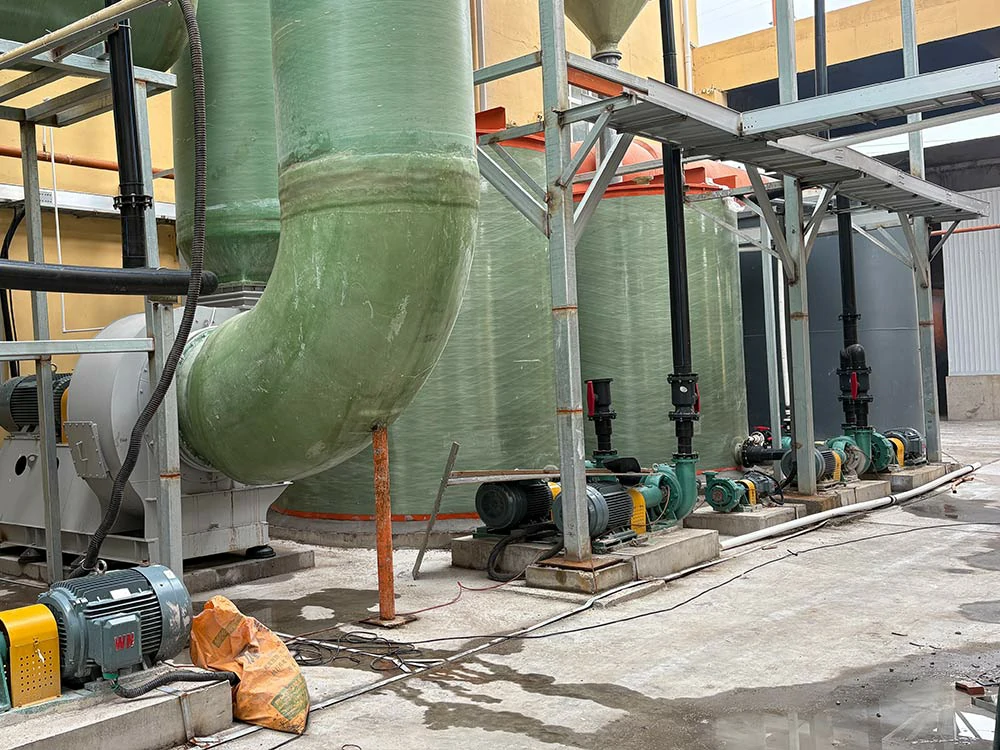
Deux ans après le remplacement : zéro corrosion du corps, zéro événement de colmatage, et les inspections programmées des joints sont passées de trimestrielles à annuelles. L'usine a remplacé les six pompes de transfert de boues par des pompes de la série UHB au cours du cycle de maintenance suivant.
Key takeaway: Pour les boues corrosives industrielles, une construction de pompe non métallique ou revêtue n'est pas une amélioration — c'est une exigence. Les pompes en fonte dans un service de boues acides échoueront de manière prévisible et rapide, quelle que soit l'épaisseur ou le revêtement. Le revêtement UHMW-PE élimine le mécanisme de corrosion tout en offrant la résistance à l'abrasion nécessaire pour les boues à haute teneur en solides.
Solutions de pompes à boues corrosives de Changyu Pump
Changyu Pump fabrique des séries de pompes spécialement conçues pour les applications de boues corrosives et abrasives.
Guide de sélection des produits de pompes à boues
| Application | Défi primaire | Série recommandée | Caractéristique principale |
|---|---|---|---|
| Boues corrosives, pH 2–12, jusqu'à 30 % de solides | Corrosion + abrasion | Série UHB | Revêtement UHMW-PE ; roue semi-ouverte ; double joint mécanique |
| Boues acides/alcalines fortes, températures jusqu'à 120°C | Corrosion extrême + solides modérés | Série CYB-ZKJ | Revêtement FEP/PFA ; résistance chimique universelle |
| Boues corrosives à haute température, jusqu'à 160°C | Haute température + corrosion | Série CYG | Revêtement PFA ; procédé de frittage moulé |
Série UHB — Pompe à boues corrosives à revêtement UHMW-PE
Pompe centrifuge à revêtement UHMW-PE en acier conçue pour les boues corrosives et abrasives. Le revêtement UHMW-PE offre une résistance universelle aux acides, aux alcalis et aux sels tout en offrant une excellente résistance à l'abrasion contre le sable, le gravier et les particules solides. La roue semi-ouverte gère jusqu'à 30 % de teneur en solides sans colmatage. Largement utilisée dans les industries du traitement des eaux usées, du traitement chimique et de la métallurgie.
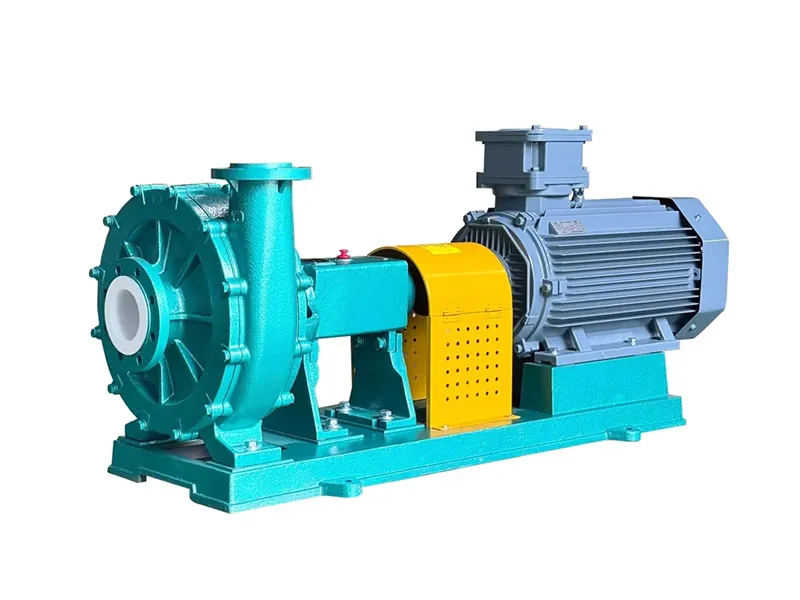
| Paramètres | Spécifications |
|---|---|
| Débit | 3-2 600 m³/h |
| Tête | 5-100 m |
| Puissance du moteur | 0,75-300 kW |
| Vitesse | 750-2 900 r/min |
| Température | De -20°C à 90°C |
| Matière de la doublure | UHMW-PE |
FAQ sur les pompes à boues corrosives
Q : Quel matériau est le meilleur pour la construction d'une pompe à boues corrosives ?
R : Pour la plupart des boues corrosives avec un pH de 2 à 12 et des solides jusqu'à 30 %, les pompes à revêtement UHMW-PE offrent l'équilibre optimal entre résistance à la corrosion et résistance à l'abrasion. Pour les produits chimiques extrêmes, les solvants forts ou les températures supérieures à 90°C, des pompes à revêtement fluoroplastique FEP ou PFA sont nécessaires.
Q : Pourquoi la fonte échoue-t-elle si rapidement dans les boues corrosives ?
R : La fonte a une résistance négligeable aux acides et une résistance limitée aux alcalis. Lorsque les boues acides entrent en contact avec la fonte, l'acide corrode la surface métallique. Les solides abrasifs dans les boues décapent ensuite la surface affaiblie, accélérant la perte de matière. Le mécanisme combiné de corrosion-érosion détruit les pompes en fonte en quelques mois.
Q : Les pompes en acier inoxydable peuvent-elles gérer les boues corrosives ?
R : L'acier inoxydable résiste à de nombreux produits chimiques mais a une mauvaise résistance à l'abrasion. Dans les boues contenant du sable et du gravier, les roues et les corps en acier inoxydable s'usent rapidement. De plus, l'acier inoxydable 316L est vulnérable à la piqûration par chlorure dans les boues salines. Le revêtement UHMW-PE offre une résistance supérieure à la fois à la corrosion et à l'abrasion.
Q : Quel type de roue empêche le colmatage dans les boues ?
R : Les roues semi-ouvertes offrent le meilleur équilibre entre résistance au colmatage et efficacité pour les boues corrosives avec des solides mixtes. Les roues vortex offrent une résistance maximale au colmatage pour les boues non tamisées avec des débris imprévisibles. Les roues fermées doivent être évitées — elles se colmatent rapidement sur les matériaux fibreux.
Q : Comment dimensionner une pompe pour des boues épaisses ?
R : Pour les boues avec plus de 5 % de solides, appliquez une correction de viscosité aux calculs de hauteur manométrique et de débit. Surdimensionnez la conduite d'aspiration d'un diamètre de tuyau pour les boues avec plus de 10 % de solides. Maintenez une vitesse d'écoulement minimale de 1,5 m/s dans la tuyauterie de refoulement pour éviter le dépôt de solides.
Q : Quel arrangement de joint est le meilleur pour les boues corrosives ?
R : Les doubles joints mécaniques avec un fluide barrière externe offrent la protection la plus fiable. Le fluide barrière isole les faces d'étanchéité des boues corrosives et abrasives tout en lubrifiant et en refroidissant le joint. Les joints mécaniques simples dans un service de boues échouent rapidement en raison de l'entrée de solides et de l'attaque chimique.
Liste de contrôle des mesures de prévention pour les ingénieurs en pompes chez Changyu
- Ne spécifiez jamais la fonte pour les boues corrosives avec un pH inférieur à 5 ou supérieur à 10. Le taux de corrosion détruira la pompe en quelques mois.
- Faites correspondre le matériau de revêtement à la composition chimique complète des boues — pas seulement au pH. Les solvants, les huiles et les produits chimiques traces affectent la compatibilité des matériaux.
- Sélectionnez des roues semi-ouvertes pour les boues avec une teneur en solides supérieure à 10 % ou des débris fibreux. Les roues fermées se colmateront.
- Vérifiez que la température ne dépasse pas la limite du matériau de revêtement — 90°C pour UHMW-PE, 120°C pour FEP, 160°C pour PFA.
- Spécifiez des garnitures mécaniques doubles pour toutes les applications de boues corrosives. Le coût supplémentaire est récupéré dès la première défaillance de garniture évitée.
- Surdimensionnez la conduite d'aspiration pour les boues contenant plus de 10 % de solides. Un NPSH insuffisant provoque une cavitation qui accélère la perte de matière.
- Maintenez une vitesse d'écoulement minimale de 1,5 m/s dans les tuyauteries de refoulement. Des vitesses plus faibles permettent aux solides de se déposer et d'obstruer éventuellement la conduite.
- Gardez en stock des composants d'usure de rechange — la roue, le revêtement de volute et la garniture mécanique. Les boues corrosives accélèrent l'usure même sur les pompes revêtues.
Conclusion
Une pompe à boues corrosives se définit par sa capacité à résister à l'attaque combinée de la corrosion chimique et de l'usure abrasive — une double menace qui détruit les pompes de relevage standard en quelques mois. La construction revêtue d'UHMW-PE s'est imposée comme la solution matérielle optimale pour la majorité des applications de boues corrosives, offrant une résistance universelle aux acides, aux alcalis et aux sels tout en fournissant la résistance à l'abrasion nécessaire pour les boues à forte teneur en solides. Les roues semi-ouvertes traitent les débris fibreux et les particules solides qui obstruent les roues fermées, tandis que les garnitures mécaniques doubles protègent le composant le plus vulnérable de la pompe contre l'environnement corrosif et abrasif des boues.
Pour les stations d'épuration traitant des effluents industriels, l'investissement dans une pompe à boues corrosives correctement spécifiée est récupéré grâce à l'élimination des temps d'arrêt, à une durée de vie prolongée et à des intervalles de maintenance prévisibles. Une pompe en fonte qui coûte moins cher à l'achat mais tombe en panne tous les quelques mois coûte bien plus cher sur sa durée de vie qu'une pompe revêtue qui fonctionne de manière fiable pendant des années.
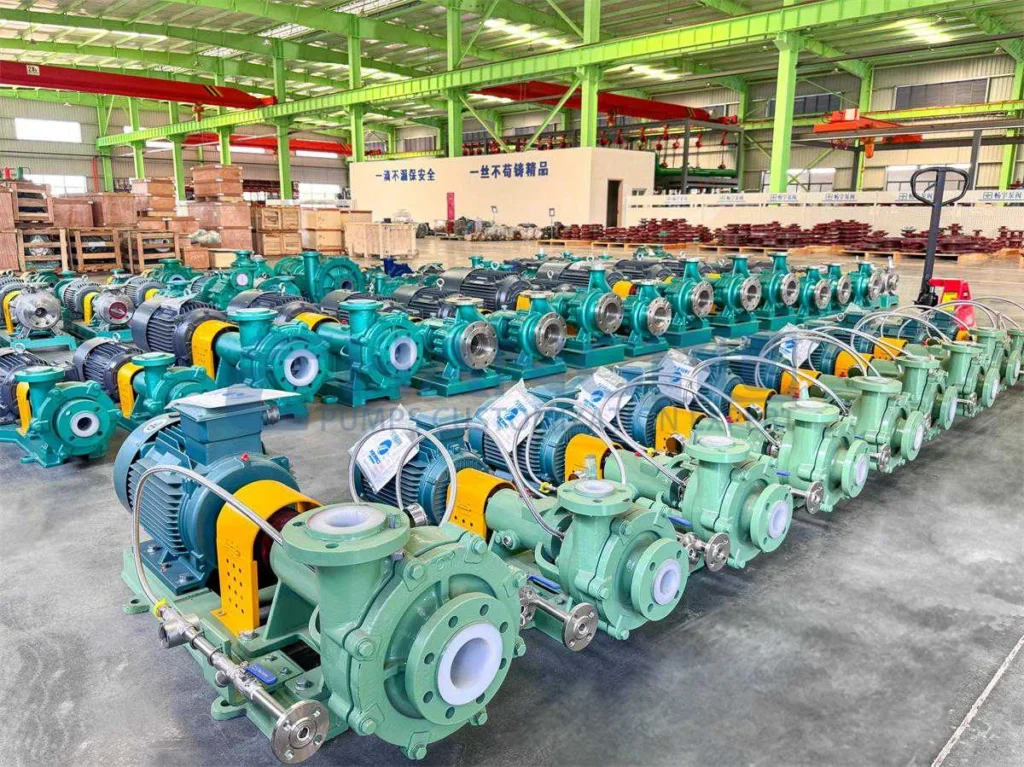
L'équipe d'ingénierie de Changyu Pump fournit des évaluations techniques sur mesure pour les applications de pompes à boues corrosives — couvrant la caractérisation des boues, la sélection des matériaux, la spécification de la roue et la configuration des garnitures. Deux décennies d'expérience de fabrication dans les secteurs du traitement des eaux usées, de la chimie et de l'industrie éclairent chaque recommandation.
Contactez Changyu Pump pour une évaluation technique gratuite →