
When a pump component fails, a photograph is often the first information available. It can show visible damage, but it is rarely enough to identify the correct replacement. Two impellers may look almost identical yet have different bores, clearances, materials, or hydraulic profiles. For stainless steel pump parts, we start with the pump model and drawing, then check the pumped liquid and the reported failure. Without that information, a more corrosion-resistant alloy may simply cost more without solving the problem.
The word “stainless” can also cause confusion. It describes the pump’s main metallic components, not every material in the assembly. Seal faces, O-rings, gaskets, and liquid-lubricated bearings may be nonmetallic because they need different properties. To identify the wetted materials, follow the liquid path and check the assembly drawing. One steel grade does not describe the whole pump.
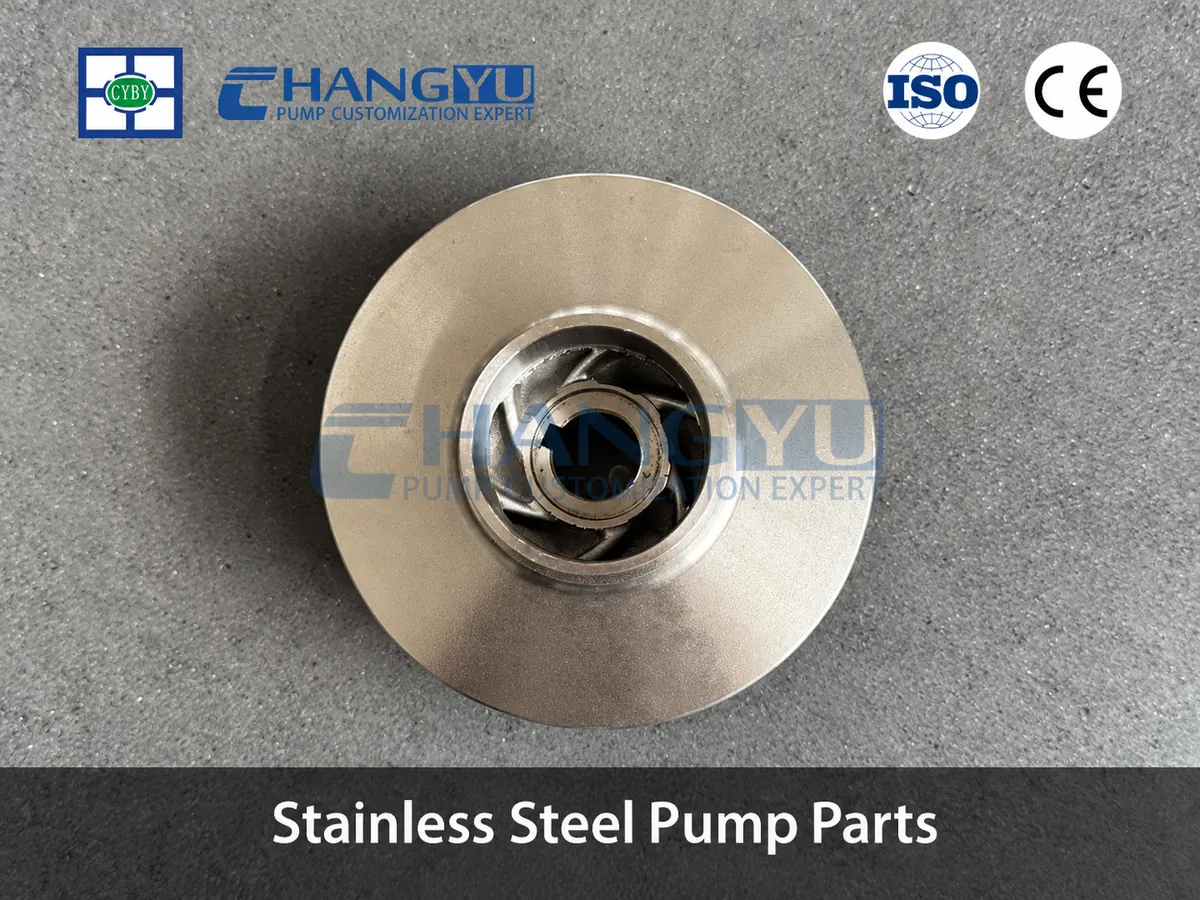
Which Stainless Steel Pump Parts Actually Touch the Liquid?
A wetted part is a component that contacts the pumped liquid during normal operation. The casing and impeller are clear examples. Shaft, sleeve, and seal exposure depends on the construction. A sleeve may protect part of the shaft, but the sleeve seals determine whether liquid can reach the surface underneath. External bearings in a horizontal pump also operate under different conditions from internal bearings lubricated by the pumped liquid in a magnetic-drive pump. Use the drawing for the specific model to confirm which surfaces are exposed.
| Composant | Typical relationship with the liquid | What belongs in the specification |
|---|---|---|
| Casing, cover and impeller | Normally wetted | Material grade, applicable standard and component geometry |
| Shaft and sleeve | Exposure varies with construction | Exposed surfaces, sleeve sealing and fitted dimensions |
| Seal faces and secondary seals | Wetted areas depend on seal arrangement | Face pair, elastomer grade and service conditions |
| Casing gaskets and O-rings | Often form part of the liquid boundary | Material, size and sealing interface |
| Magnetic pump internal bearings | Often liquid-lubricated | Bearing material, clearances and circulation requirements |
| External bearings, coupling and motor | Normally dry in a horizontal arrangement | Mechanical loads, environment and electrical details |
The table shows common arrangements, not a universal bill of materials. Normal liquid contact is different from contamination caused by a leak. A normally dry motor or coupling may be contaminated after a failure, but it is not a wetted component in normal service. In a replacement inquiry, describe both the normal exposure and any damage caused by the leak. Other components may need inspection even if only one part has visibly failed.
The Main Components of a Mechanically Sealed Pump
Casing, Cover and Impeller: Fit Is Only Part of the Job
The casing collects liquid from the impeller and directs it toward the discharge. The cover closes the assembly and may form part of the seal chamber. Both must match the pump’s internal geometry and pressure-containing design. A replacement cover may fit the bolt pattern but have the wrong seal interface, gasket seat, or internal clearance. Check the drawing revision rather than relying on external dimensions, especially when the pump has an order-specific seal arrangement.
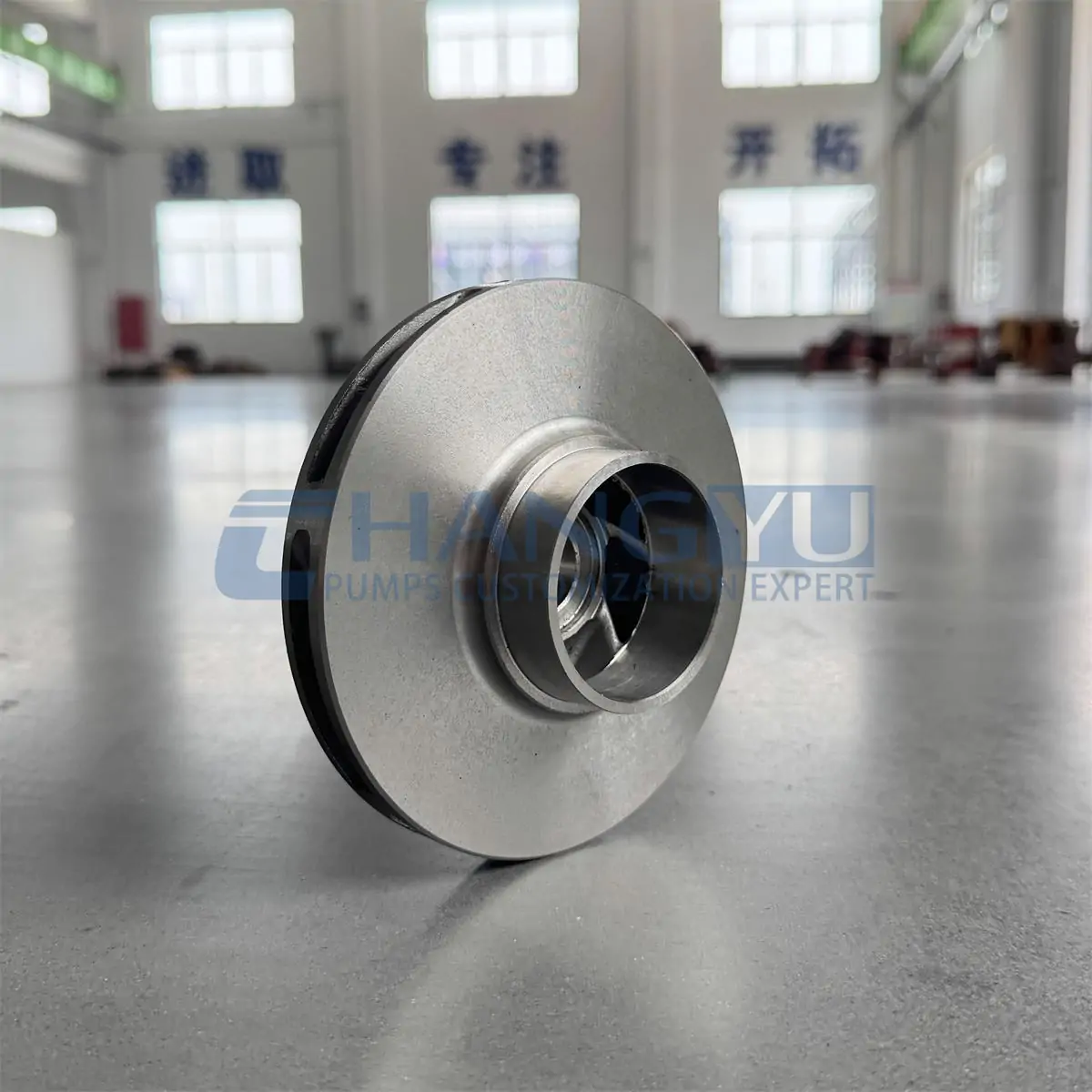
The impeller transfers energy to the liquid. Its diameter and passage geometry affect the pump curve, while the bore, fastening arrangement, axial position, and wear-ring clearances affect fit and operation. If the original impeller was trimmed for a particular duty, an untrimmed replacement of the same nominal model may not give the same hydraulic performance. First confirm whether you need an identical replacement, a material change, or a change in performance. These require different checks.
Changing from 304 to 316 may help with a specific corrosion problem if 316 is suitable for the liquid and service conditions. It will not automatically solve cavitation, incorrect clearances, or abrasion. The casing and other wetted components must also be checked for compatibility. Changyu’s material selection guide explains why the failure mechanism should be identified before changing the alloy. Impeller geometry, balance requirements, and the condition of the surrounding components still matter.
Shaft and Sleeve: Understand Which Surface Is Exposed
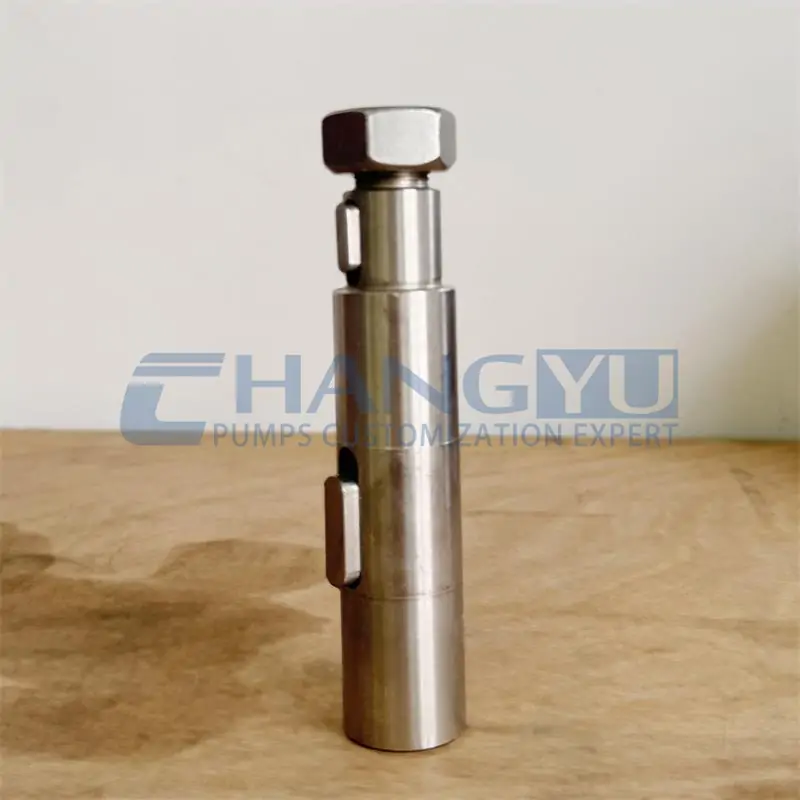
The shaft transmits torque and locates the rotating components. Strength, stiffness, fatigue resistance, and fitted dimensions all matter. A sleeve may protect part of a stainless steel pump shaft from the liquid and provide a replaceable surface at a wear or sealing location. However, a sleeve does not automatically isolate the shaft. Its sealing and assembly details determine the actual exposure. Check the sectional drawing before specifying the shaft and sleeve materials.

A replacement shaft specification needs more than “316 stainless steel.” Include the applicable material standard and drawing, along with fitted diameters, tolerances, shoulders, keyways, threads, and any specified treatment. Provide the operating duty as well. The casing alloy and the chemical name alone do not define the shaft’s mechanical requirements.
Mechanical Seal, O-Rings and Gaskets: Small Parts Can Stop the Whole Pump
A mechanical seal controls leakage where the rotating shaft passes through the stationary pressure boundary. In a liquid-lubricated seal, a thin film between the rotating and stationary faces limits friction and helps remove heat. The secondary seals, seal chamber, and support arrangement also affect operation. A seal can fail even when the metallic wetted parts show little corrosion. Loss of liquid, vibration, incompatible elastomers, crystals, and inadequate lubrication or cooling can all lead to leakage.
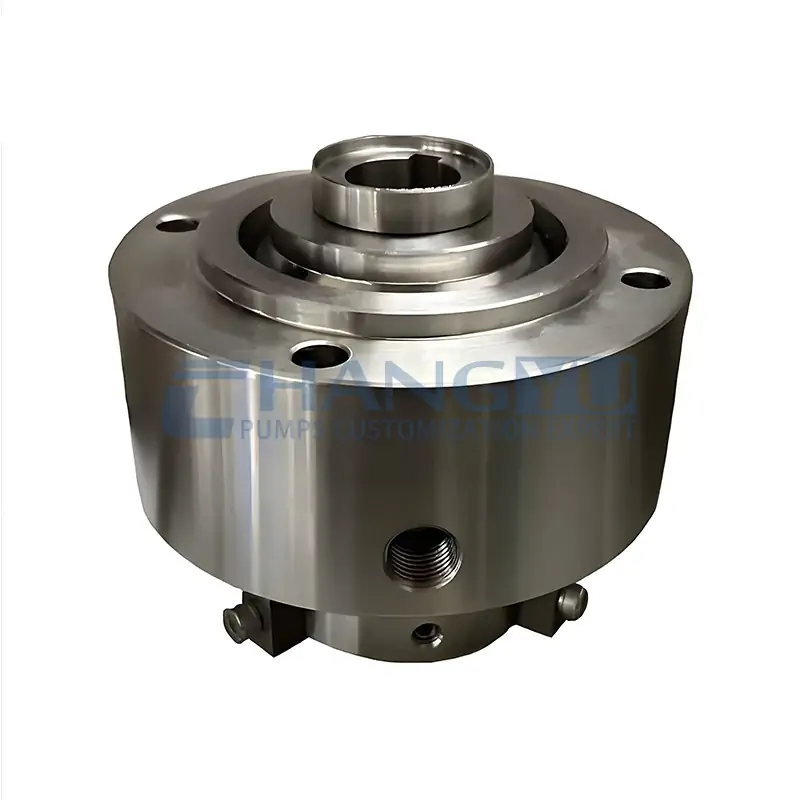
Changyu's mechanical seal video covers dry friction, vibration, inadequate cooling, and damage related to the pumped liquid. These are starting points for an investigation, not a diagnosis based on appearance alone. A blackened or scratched seal face does not tell the whole story. Before installing a new seal, identify what caused the failure and whether that condition has been corrected.
Notre pump seal plans article explains how seal support piping supplies lubrication and cooling. For example, a continuous external flush of 0.5 L/min supplies 720 liters over 24 hours. This is an illustrative calculation, not a measured project value or a recommended flush rate. If that liquid enters the process, the added volume may matter where product dilution or contamination is restricted. Seal selection therefore includes the support liquid and the site’s process limits, not just the seal face materials.
Bearings, Coupling and Motor: Check the Complete Assembly
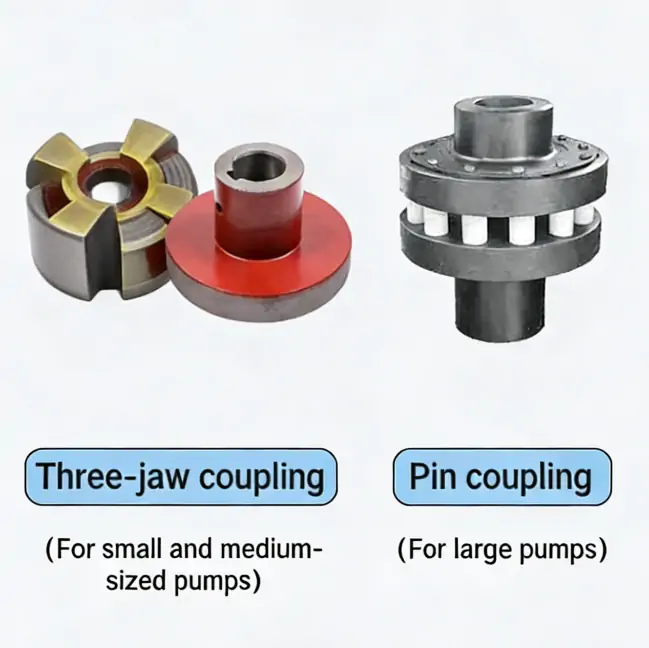
External bearings support the shaft and carry the loads specified for the assembly. In a separately coupled pump, the coupling transmits torque from the motor to the pump. Bearing fits and lubrication, together with shaft alignment, affect the impeller and seal. A flexible coupling allows only the movement or misalignment permitted by its design. It is not a substitute for correct alignment. If failures recur, inspect these normally dry components as well as the damaged wetted parts.
For a replacement motor, matching the nameplate power alone is not enough. Speed, voltage, frequency, mounting, enclosure, and any hazardous-area requirements must suit the pump and installation. Changyu’s CYA et CYH pages describe different configurations and maintenance-access features. Check the assembly actually supplied. Include that information in the parts inquiry to avoid a mechanical or electrical mismatch.
Magnetic-Drive Pumps Have a Different Component List
Magnetic Assemblies and the Containment Shell
A magnetic-drive pump transfers torque from the external magnetic assembly to the internal assembly through a stationary containment shell. This eliminates the conventional dynamic shaft seal at that boundary, but the pump still needs an intact pressure boundary. The shell and its static seals must be compatible with the liquid and rated for the operating pressure and temperature. A magnetic-drive repair therefore requires a different component list from a conventional mechanical-seal replacement.
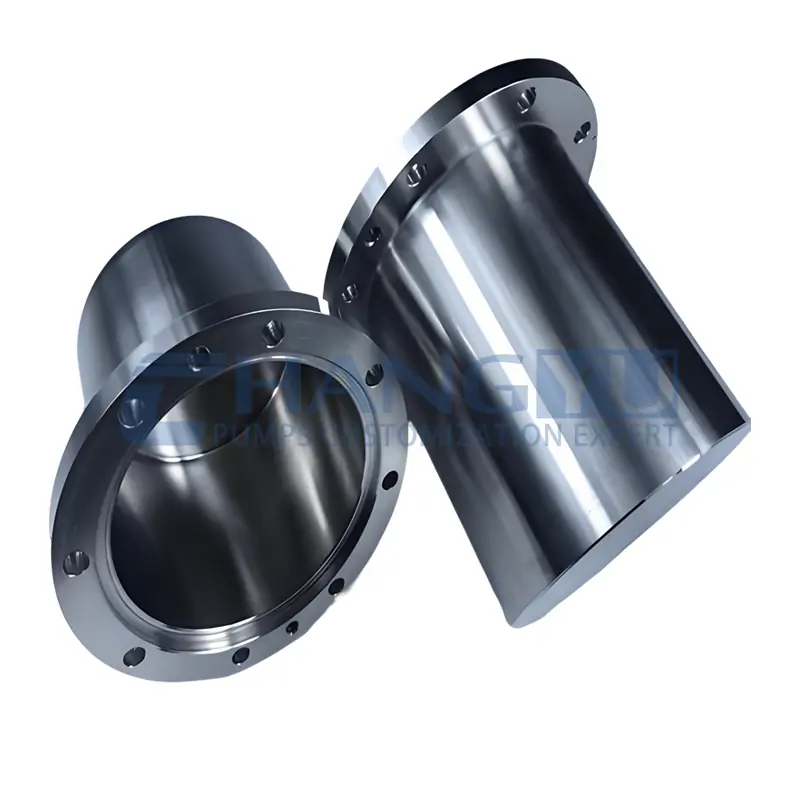
The containment shell is a pressure-containing component, not just a protective cover. Its material, wall geometry, fitted interfaces, and surrounding clearances must match the design. In an electrically conductive shell, the rotating magnetic field can cause eddy-current losses and heat generation. The cooling arrangement is therefore part of the replacement check. After overheating or rubbing, inspect the shell together with the magnetic assemblies and internal rotor. An externally similar shell with an unverified pressure rating is not a suitable substitute.
Internal Bearings and the Liquid That Lubricates Them
Many magnetic-drive pumps use the pumped liquid to lubricate internal bearings and remove heat. Particles can wear the bearings or block circulation passages. Vapor formation or loss of liquid can interrupt lubrication and cooling. Replacing a bearing will not correct a blocked passage or a recurring loss of liquid supply. For Changyu’s CQ et CYC pumps, check bearing materials, clearances, and circulation requirements against the assembly information for the selected model.
Describe the required items as magnetic-drive pump components rather than “seal-free parts.” Removing the dynamic shaft seal does not remove the need to inspect bearings, the containment shell, and the internal rotor. Nor does the magnetic-drive label define a universal cooling-flow percentage, solids limit, or dry-running allowance. Those limits depend on the specific design and duty.
Parts Considerations for FY and HB Pumps
In the FY arrangement, the hydraulic section is below the liquid surface and the motor is above it. The standard motor power range is 1.5–22 kW, with other power ratings available as custom configurations. Immersion length, shaft support, and the lubrication of any liquid-side bearings affect the assembly. Although the FY product page uses “submersible” in its title, this does not mean the motor is immersed. Use the installation and assembly drawings to identify the submerged components and their supports.
In an HB stainless steel slurry pump, the components are exposed to both the liquid and its particles. HB configurations can handle low-, medium-, and high-concentration media where the selected design suits the actual duty. Particle size, hardness, concentration, and liquid chemistry affect wear, so the series name alone cannot define a replacement interval. Check which wear components the supplied pump uses and the condition or clearance limits for replacement.
What a Project Case Can Tell You About Replacement Parts
Changyu's Indian pharmaceutical intermediate project covers ethanol, potassium tartrate crystal slurry, organic solvents, and particle-containing wastewater. The published account describes wear, blockage, and mechanical-seal problems in the original crystal-slurry equipment. It then explains the use of UHB, CQ, and HB pumps for different duties. The response was not simply to fit a tougher replacement part to every pump.
The project used UHB for crystal slurry, CQ for solvent transfer, and HB for wastewater. These are application choices for that project, not a spare-parts specification or a diagnosis for another pump. The case shows why liquid behavior and pump configuration may need attention before replacing a component. It does not establish part interchangeability or material compatibility with a different, unspecified mixture.
What to Include in a Replacement Parts Inquiry
Identify the Equipment and the Exact Part
Start with the full pump model, serial number, nameplate details, and drawing revision. Identify the part by its item number on the assembly drawing, and add photographs showing its location and damage. If the drawing is unavailable, say so rather than identifying the part by shape alone. A single pump series may include several hydraulic sizes, manufacturing versions, and order-specific materials. The series name alone does not confirm that parts are interchangeable.
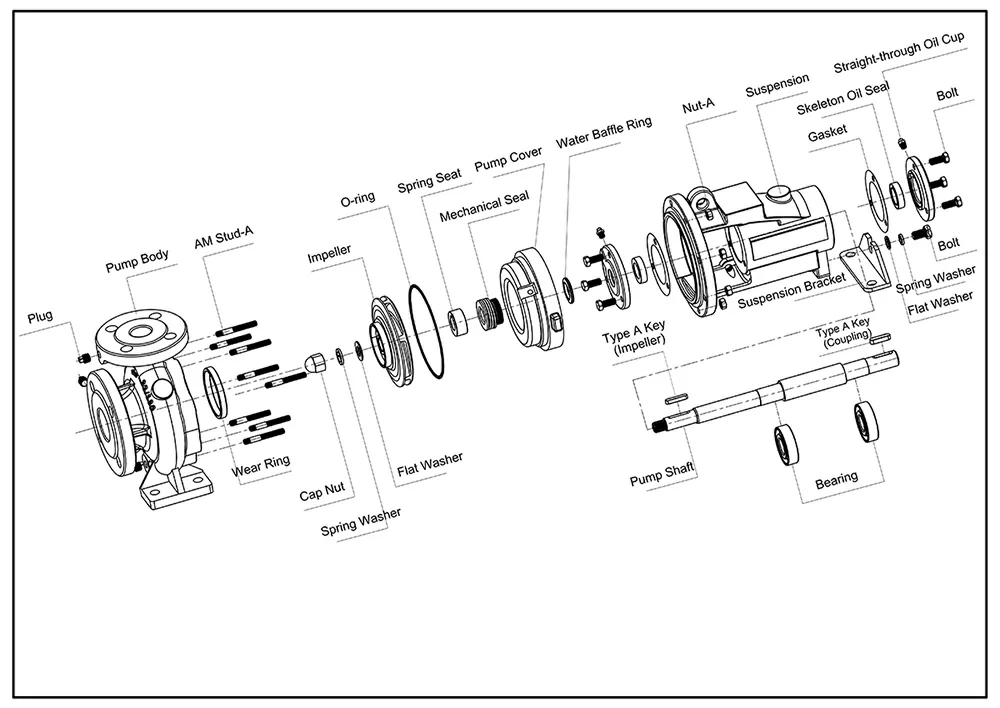
State whether you need a like-for-like replacement or a change to the original specification. If the process temperature, cleaning chemicals, or solids content has changed, the original part may no longer be suitable. Where alloy identification matters, request traceable material documentation for the component. Handheld XRF can screen alloying elements, but it cannot verify the carbon content needed to distinguish 304 from 304L or 316 from 316L. Confirm an L-grade specification through appropriate certification or a carbon-capable analysis method.
Describe the Failure and the Operating Conditions
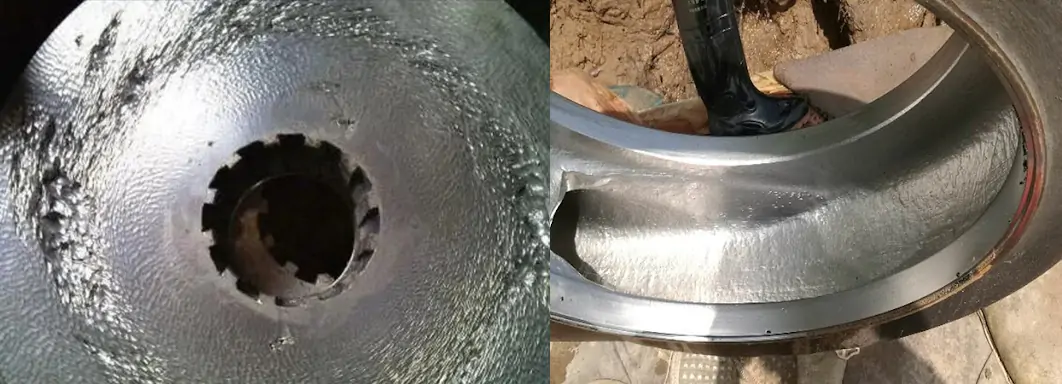
Describe when the problem appeared, whether it followed startup or a change in liquid, and which operating readings are available. Corrosion, abrasion, cavitation, loss of lubrication, and misalignment require different corrective actions, even when the same part is damaged. Equipment handling hazardous liquids must be isolated, assessed, and serviced by competent personnel under approved site procedures. This article is not a dismantling guide. The aim of the inquiry is to identify the cause, not just reorder the failed component.
Contact Changyu About Your Component Requirements
Changyu Pump manufactures and supplies industrial pumps in mechanically sealed, magnetic-drive, vertical immersed, and slurry configurations. For stainless steel pump parts, send us the pump details, part identification, and operating duty. We can then check the component specification, wetted materials, compatibility, and supply scope. Fit and availability must be confirmed for the specific equipment.
Courriel : [email protected]
TÉL/WA : +86-13651913727
FAQ: Stainless Steel Pump Parts
Pouvez-vous identifier une pièce de rechange à partir d'une simple photographie ?
Une photographie nous aide à comprendre les dommages visibles, mais elle ne peut pas établir de manière fiable les tolérances d'ajustement, la nuance d'alliage ou la révision du plan. Pour les pièces de pompe en acier inoxydable, envoyez le modèle et le numéro de série, la plaque signalétique, le plan d'assemblage et le numéro d'article du composant lorsque disponibles. Si le plan est manquant, indiquez-nous quelles dimensions et quels enregistrements vous possédez afin que nous puissions établir ce qui doit encore être vérifié.
Les pièces de pompe en acier inoxydable sont-elles interchangeables entre les marques ou les modèles ?
Ne présumez pas de l'interchangeabilité à partir de l'apparence, de la taille nominale de la pompe ou de la taille du raccordement. Les alésages, les filetages, les positions axiales, les interfaces d'étanchéité et la géométrie hydraulique peuvent différer même au sein d'une même série. Nous devons comparer les plans et spécifications pertinents avant de confirmer la compatibilité. Lorsque l'équipement d'origine n'est pas le nôtre, la portée du remplacement et les informations nécessaires à sa vérification doivent être convenues séparément.
Puis-je remplacer une roue par de l'inox 316 sans changer le reste de la pompe ?
C'est possible, mais nous devons d'abord comprendre pourquoi la roue d'origine a échoué. Le remplacement des pièces de pompe en acier inoxydable par des pièces de qualité supérieure ne peut résoudre une incompatibilité de matériau que si la nuance sélectionnée est adaptée au liquide ; cela ne corrigera pas la cavitation, les jeux inadaptés ou un point de fonctionnement inapproprié. Vérifiez le corps de pompe, les matériaux d'étanchéité, les joints et les autres surfaces mouillées ainsi que la géométrie de la roue de remplacement.
Quels documents dois-je demander pour un arbre de remplacement ?
Request the drawing revision and material specification, including the applicable standard and any required material certificate. Fitted dimensions, tolerances, shoulders, keyways, threads and treatment requirements should be explicit. For these stainless steel pump parts, a statement such as “316 shaft” is not a complete mechanical specification. An L-grade claim also needs suitable documentation or a method capable of checking carbon.
Une pompe à entraînement magnétique a-t-elle encore des composants nécessitant un entretien ?
Oui. L'enceinte d'isolation, les joints statiques, les paliers internes et l'ensemble rotor magnétique restent importants même sans joint d'arbre dynamique conventionnel. Nous évaluons les pièces de pompe en acier inoxydable pour service à entraînement magnétique ainsi que les composants non métalliques et la circulation du liquide. Après un frottement, une surchauffe ou une perte de lubrification, le remplacement de la seule pièce visiblement endommagée peut laisser la cause d'origine non résolue.
Quelles pièces de rechange dois-je garder, et à quelle fréquence dois-je les remplacer ?
We recommend agreeing a spare-parts list for the supplied model, the duty and the cost of downtime. Seal kits, bearings, wear components or a complete rotor assembly may have different priorities depending on construction and lead time. There is no universal replacement interval for stainless steel pump parts: use the manufacturer’s inspection limits, observed condition and service history rather than the alloy name alone.
Références et lectures complémentaires
The industry sources below provide technical background. Our project pages document specific applications; they do not replace the drawings, performance data and material review for your own equipment.
Hydraulic Institute – Mechanical Seals for the Pump Industry, 2nd Edition. Public guidebook overview covering components, operating requirements, failure analysis and commissioning; the full guidebook is available separately.
Hydraulic Institute Data Tool – References. Official directory of sealless-pump, condition-monitoring and installation/maintenance guidance.
British Stainless Steel Association – Selection of 316, 304 and 303 Types for Seawater Applications. Explains why alloy selection still depends on exposure, flow, temperature and crevices rather than a stainless label.
Changyu Pump – Pharmaceutical Intermediate Transfer Project in India. Our published UHB, CQ and HB application reference; not a replacement-parts drawing or interchangeability certificate.