
Pendahuluan
Pompa kimia suhu tinggi adalah masalah teknik yang ditentukan oleh ekspansi termal. Pada suhu sekitar, selubung, impeler, dan poros pompa mempertahankan dimensi dan jarak bebas desainnya. Ketika pompa yang sama ditugaskan untuk mentransfer fluida proses pada suhu 200 ° C, setiap komponen logam mengembang - selubungnya membesar, porosnya memanjang, dan jarak bebas internal yang menentukan efisiensi hidraulik dan integritas mekanis mengencang. Pompa yang dipilih tanpa memperhitungkan perubahan dimensi yang didorong secara termal ini akan tersangkut, bocor, atau gagal dalam beberapa jam setelah commissioning.
Pasar pompa industri global bernilai USD 74,21 miliar pada tahun 2025, dan dalam sektor kimia, layanan suhu tinggi mewakili salah satu kategori aplikasi yang paling menuntut. Changyu Pump telah menghabiskan lebih dari dua dekade merekayasa peralatan penanganan fluida untuk proses yang secara kimiawi agresif dan menuntut panas. Panduan ini mencakup kerangka kerja klasifikasi suhu, bahan konstruksi, teknologi penyegelan, desain sistem pendingin, dan metodologi pemilihan yang diperlukan untuk menentukan pompa yang beroperasi dengan andal pada suhu tinggi.
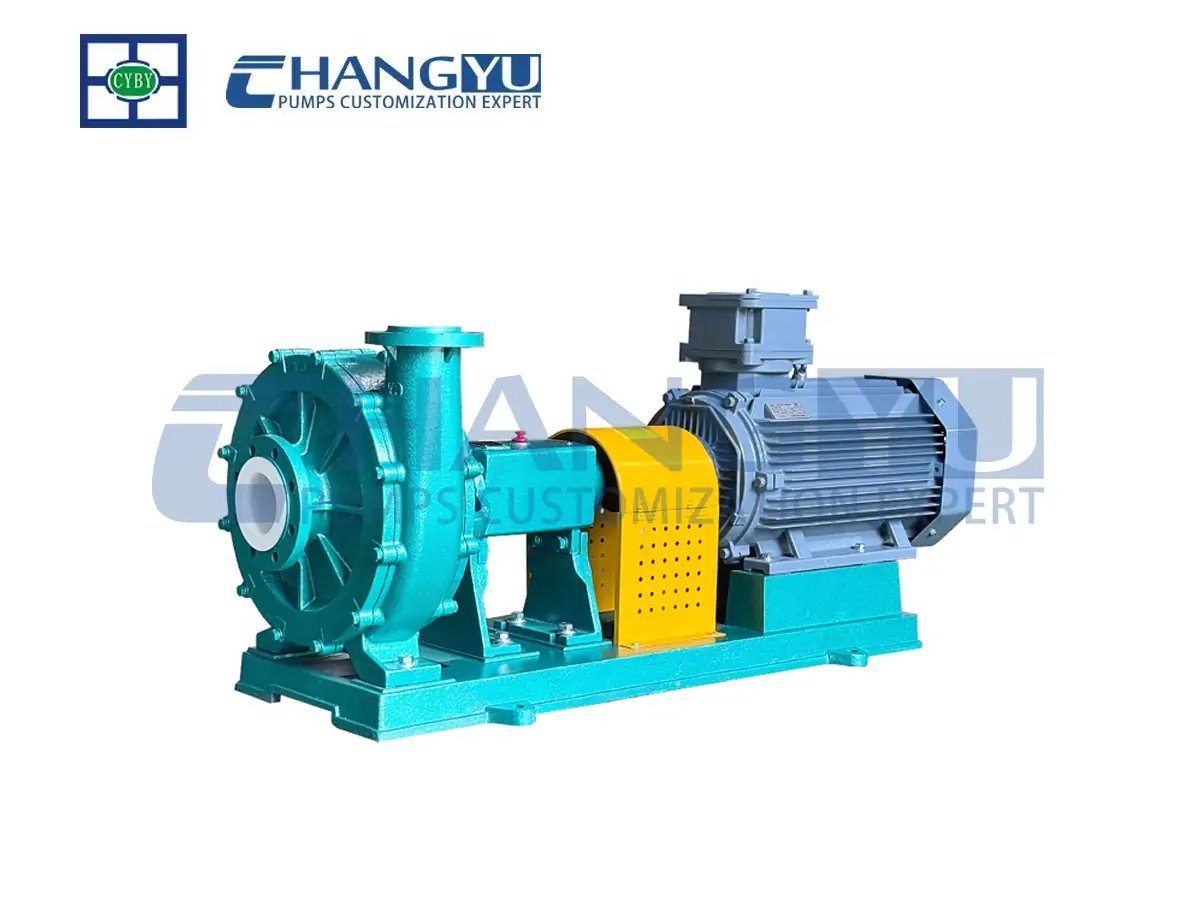
Apa yang dimaksud dengan Pompa Kimia Suhu Tinggi?
A pompa kimia suhu tinggi adalah pompa sentrifugal atau pompa perpindahan positif yang dirancang untuk menjaga stabilitas dimensi, integritas material, dan kinerja seal ketika suhu fluida yang dipompa melebihi sekitar 120 ° C. Ambang batas ini berakar pada batas cincin-O elastomer standar dan gasket, yang mulai menurun secara termal di atas suhu ini, sehingga kehilangan kemampuan penyegelan. Di atas ambang batas ini, tantangan teknik bertambah: segel elastomer standar mulai menurun, sistem pelumasan bearing memerlukan pendinginan aktif, dan ekspansi termal diferensial antara selubung pompa, poros, dan pondasi menjadi pertimbangan mekanis yang dominan.
Kerangka Kerja Klasifikasi Suhu
Klasifikasi suhu memberikan kerangka kerja untuk keputusan desain. Untuk layanan suhu tinggi, API 610 berfungsi sebagai standar yang mengatur, menetapkan persyaratan minimum untuk pompa sentrifugal yang digunakan dalam aplikasi kilang dan bahan kimia yang berat, termasuk pemasangan garis tengah, kompensasi termal, dan pendinginan ruang segel.
120°C hingga 200°C. Ini adalah rentang utama untuk transfer asam panas, sirkulasi pelarut, dan layanan jaket reaktor di pabrik kimia dan farmasi. Pada suhu ini, pompa berlapis fluoroplastik yang menggunakan PFA (perfluoroalkoksi) banyak digunakan. PFA mempertahankan kelembaman kimiawi penuh hingga sekitar 160 ° C pada komponen struktural dan hingga 180 ° C dalam aplikasi penyegelan statis di mana beban mekanis minimal. Peringkat struktural yang lebih rendah memperhitungkan efek gabungan dari suhu dan beban hidraulik. Pompa baja tahan karat dengan segel mekanis tunggal dan pelumasan bantalan standar umumnya memadai, asalkan rencana pembilasan segel mempertahankan lapisan cairan yang stabil. Casing yang dipasang di kaki dapat diterima hingga sekitar 120 ° C; pemasangan di tengah direkomendasikan di atas 120 ° C dan menjadi praktik standar di atas 150 ° C.
200°C hingga 300°C. Rentang ini mencakup cairan perpindahan panas, sirkulasi garam cair, dan pembuangan reaktor suhu tinggi. Penyegelan menjadi perhatian utama dalam bidang teknik. Di atas 200 ° C, paking penutup pompa (segel sekunder statis) harus ditingkatkan dari elastomer standar ke grafit fleksibel (Graphoil) atau Kalrez (FFKM), sedangkan segel poros dapat menghilangkan segel sekunder dinamisnya sepenuhnya melalui desain bellow logam. Pemasangan di tengah diperlukan untuk mengelola ekspansi casing. Untuk pompa logam, baja tahan karat dupleks dan paduan Hastelloy ditentukan untuk mempertahankan kekuatan pada suhu, dan rumah bantalan memerlukan pendinginan aktif untuk menjaga pelumas di bawah titik degradasi termal.
Di atas 300°C. Aplikasi di atas 300°C - ditemukan dalam penyulingan, layanan dasar petrokimia, dan proses kimia khusus tertentu - menuntut sistem manajemen termal yang terintegrasi penuh. Segel mekanis bellow logam tanpa segel sekunder dinamis menjadi spesifikasi standar, karena bahkan elastomer berkinerja tinggi pun memiliki masa pakai yang terbatas. Ruang segel membutuhkan pendinginan jaket dengan uap bertekanan sedang selama pengoperasian, dan ruang segel pompa siaga harus tetap hangat untuk mencegah cairan segel mengeras atau mencapai viskositas yang berlebihan saat penyalaan. Rumah bantalan membutuhkan pendinginan paksa; konveksi alami tidak cukup. Casing yang didukung garis tengah dengan jarak bebas berjalan internal yang ditingkatkan - biasanya ditentukan ketika suhu fluida melebihi 260 ° C - mengakomodasi besarnya pertumbuhan termal yang lebih besar dan mencegah kontak elemen berputar dengan komponen stasioner. Bahan selubung harus menyeimbangkan ketahanan korosi dengan kekuatan suhu tinggi: baja karbon rendah (koefisien ekspansi termal ≈ 10,5 × 10-⁶ / ° C, konduktivitas termal ≈ 60 W / m - K) memberikan ketahanan goncangan termal yang baik, stainless dupleks berfungsi pada suhu sedang, dan baja C6 (kromium 12%, koefisien ekspansi ≈ 11.5 × 10-⁶ / ° C, konduktivitas ≈ 24 W/m-K) ditentukan untuk kondisi yang lebih ekstrem di mana korosi dan kekuatan suhu tinggi diperlukan.
Skenario Aplikasi berdasarkan Kisaran Suhu
| Aplikasi Khas | Kisaran Suhu |
|---|---|
| Transfer asam panas, sirkulasi pelarut, jaket reaktor | 120°C-200°C |
| Cairan perpindahan panas, garam cair, pelepasan reaktor suhu tinggi | 200°C-300°C |
| Dasar kilang, minyak gas, sintesis kimia khusus | >300°C |
| Kisaran Suhu | Dukungan Casing | Jenis Segel | Segel Sekunder Statis | Diperlukan Pendinginan |
|---|---|---|---|---|
| 120°C-200°C | Kaki (dapat diterima ≤120°C) atau Garis Tengah (disarankan >120°C, standar >150°C) | Segel mekanis tunggal | FFKM, dienkapsulasi dengan FEP | Penyiraman segel (Rencana API 21/23) |
| 200°C-300°C | Garis tengah (wajib) | Segel mekanis tunggal atau ganda, atau bellow logam | Graphoil, Kalrez, atau bellow logam (segel dinamis dihilangkan) | Jaket ruang segel + pendingin rumah bantalan |
| >300°C | Garis tengah (wajib) | Bellow logam (tidak ada segel sekunder yang dinamis) | Bellow penyegelan sendiri | Pendinginan jaket penuh + pendinginan paksa rumah bantalan |
Bahan dan Segel Apa yang Terbaik untuk Pompa Kimia Suhu Tinggi?
Pemilihan Bahan
Pemilihan bahan untuk pompa kimia suhu tinggi harus memenuhi tuntutan kimia dan termal secara bersamaan. Bahan yang tahan korosi pada suhu lingkungan dapat kehilangan kekuatan mekanis, mengalami korosi yang dipercepat, atau mengalami deformasi mulur pada suhu tinggi. Sebagai panduan konservatif, laju korosi seragam dapat meningkat dengan faktor sekitar 2 untuk setiap kenaikan suhu 10°C.
PFA (perfluoroalkoksi). PFA mempertahankan ketahanan kimia yang hampir sama dengan PTFE dan dapat bertahan pada suhu terus menerus hingga 260°C. Namun, kekuatan mekanisnya menurun secara signifikan di atas suhu sekitar 160°C. Dalam aplikasi pompa struktural (berbeban stres), 160 ° C adalah batas pengenal tipikal. Dalam penyegelan statis atau komponen yang dibebani ringan, PFA dapat berfungsi hingga sekitar 180 ° C. Untuk pompa penggerak magnet dengan jalur aliran berlapis PFA, operasi kontinu pada suhu 180 ° C dapat dicapai ketika PFA bukan merupakan elemen struktural utama. Permeabilitasnya yang lebih rendah dibandingkan dengan PTFE juga mengurangi risiko korosi yang disebabkan oleh permeasi pada selubung baja. Untuk panduan yang lebih luas tentang pemilihan material di lingkungan korosif, silakan hubungi kami.
Baja tahan karat. Kisaran suhu yang dapat digunakan untuk banyak baja tahan karat sangat luas, mulai dari -196°C hingga sekitar 420°C untuk nilai austenitik tertentu. Namun, pertimbangan teknik utama bukan hanya kisaran suhu, tetapi degradasi sifat mekanik pada suhu tinggi. Baja tahan karat 316L, dengan kekuatan tahan suhu ruangan sekitar 170 MPa, menurun hingga sekitar 120 MPa pada suhu 200°C dan selanjutnya menjadi sekitar 100 MPa pada suhu 300°C. Ini berarti ketebalan dinding selubung pompa harus dirancang berdasarkan kekuatan material suhu tinggi, bukan nilai sekitar. Duplex 2205 memberikan peningkatan ketahanan terhadap lubang klorida dan berfungsi hingga sekitar 110 ° C. Untuk suhu yang lebih tinggi yang dikombinasikan dengan korosi, 2507 super duplex dan Hastelloy C-276 memperpanjang amplop operasi.
Karbon dan silikon karbida. Permukaan segel mekanis yang beroperasi dalam layanan kimia panas biasanya berupa grafit karbon yang bekerja melawan silikon karbida. Bahan-bahan ini menjaga stabilitas dimensi dan ketahanan aus pada suhu yang menurunkan komponen seal berbasis polimer.
Teknologi Penyegelan
Segel mekanis adalah komponen yang paling rentan terhadap kegagalan akibat suhu.
Segel mekanis tunggal dengan API Plan 21 (fluida proses yang diambil dari pelepasan pompa, didinginkan melalui penukar panas, dan diinjeksikan ke dalam ruang segel melalui lubang kontrol aliran) atau Plan 23 (resirkulasi produk dari ruang segel melalui pendingin melalui cincin pemompaan) adalah standar untuk kisaran 120 ° C - 200 ° C.
Segel bellow logam menghilangkan segel sekunder dinamis - cincin-O yang harus bergeser pada poros saat permukaan segel aus. Di atas 200 ° C, segel sekunder geser ini adalah titik kegagalan dalam sebagian besar desain segel konvensional. Dengan mengganti mekanisme pegas dan segel sekunder dengan bellow logam yang dilas, desain ini menghilangkan batasan suhu elastomer sepenuhnya. Untuk aplikasi di atas 300 ° C, segel bellow logam dengan segel sekunder statis (Graphoil atau Kalrez) adalah spesifikasi standar.
Pompa penggerak magnetik tanpa seal menghilangkan segel mekanis dengan mentransmisikan torsi melintasi cangkang penahanan yang tidak bergerak. Desain ini ditentukan ketika fluida proses bersuhu tinggi dan beracun, mudah terbakar, atau bernilai tinggi - kondisi di mana kebocoran segel tidak dapat diterima. Kopling magnetik harus berukuran sesuai dengan berat jenis fluida pada suhu operasi.
| Jenis Segel | Batas Suhu | Keuntungan Utama | Batasan Utama |
|---|---|---|---|
| Segel mekanis tunggal + Rencana API 21/23 | Hingga ~200°C | Sederhana, hemat biaya | Cincin-O sekunder dinamis terdegradasi di atas ~200°C |
| Segel mekanis ganda + cairan penghalang | Hingga ~250°C | Kontrol emisi | Kompleksitas yang lebih tinggi, diperlukan sistem cairan penghalang |
| Segel bellow logam | Hingga >400°C | Menghilangkan segel sekunder yang dinamis | Biaya lebih tinggi, membutuhkan pendinginan jaket di atas 300°C |
| Penggerak magnetik (tanpa segel) | Hingga 180°C (berlapis PFA) | Tidak ada kebocoran karena desain | Suhu dibatasi oleh magnet dan bahan pelapis |
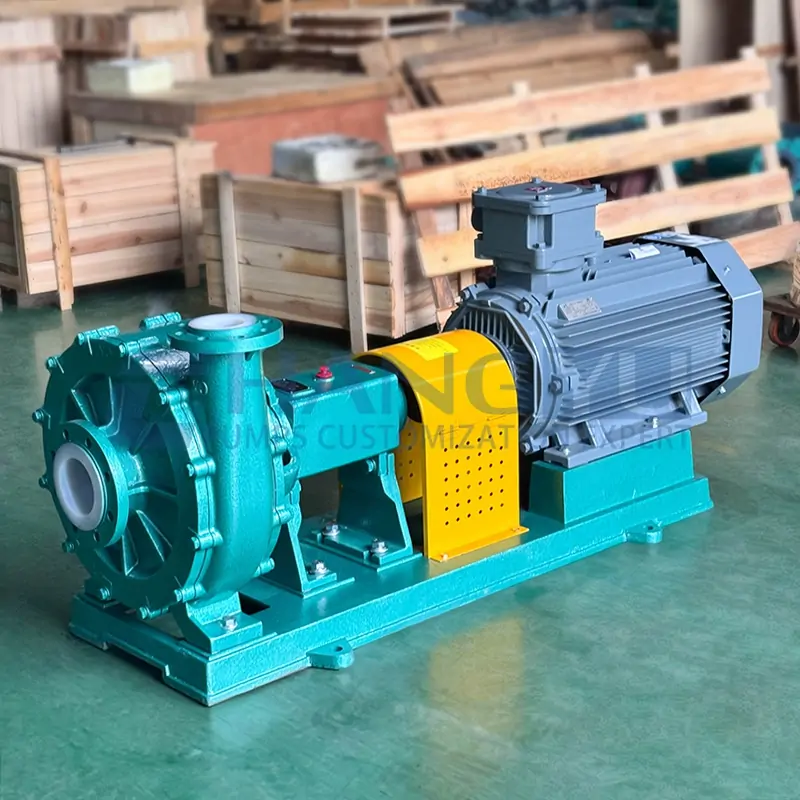
Bagaimana Anda Merancang Sistem Pendingin untuk Pompa Kimia Suhu Tinggi?
Desain sistem pendingin untuk pompa kimia suhu tinggi memiliki tiga fungsi independen: melindungi segel mekanis dari degradasi termal, menjaga pelumas bearing di bawah suhu kerusakannya, dan mencegah perpindahan panas dari casing ke rumah bearing.
Pendinginan Ruang Segel
Di bawah 200°C, rencana penyiraman seal (API Plan 21 atau 23) menyediakan pendinginan yang memadai. Antara 200 ° C dan 300 ° C, ruang segel berjaket dengan media pendingin eksternal - biasanya air atau campuran air-glikol - diperlukan. Di atas 300 ° C, uap bertekanan sedang dalam jaket ruang segel adalah solusi yang mapan: ini memberikan pendinginan yang memadai selama operasi (uap pendinginan mencegah kokas dan pemadatan cairan segel) sambil menjaga agar cairan segel pompa siaga cukup hangat untuk penyalaan (uap pembersih membersihkan kondensasi).
Pendinginan Rumah Bantalan
Pada suhu casing di atas 200 ° C, panas yang dihantarkan di sepanjang poros akan menaikkan suhu pelumas bantalan di atas batas stabilitas termal kecuali jika dikelola secara aktif. Rumah bantalan dilengkapi dengan jaket pendingin (berpendingin air) atau sirip pendingin (berpendingin udara). Di atas 300 ° C, sirkulasi air paksa melalui jaket pendingin rumah bantalan adalah standar.
Untuk pelumasan bearing pada servis suhu tinggi, sistem kabut minyak menawarkan keunggulan dibandingkan pelumasan bah konvensional: injeksi kontinu kabut oli segar yang didinginkan memberikan tekanan positif untuk menyingkirkan kontaminan, menghilangkan panas dari bearing, dan menghilangkan kebutuhan akan bah oli besar yang dapat terdegradasi secara termal dari waktu ke waktu. Teknologi ini sangat bermanfaat untuk pompa yang beroperasi di atas 200°C di mana usia oli penampung berkurang secara signifikan. Penting: kualitas air pendingin harus dikontrol untuk mencegah pengendapan kerak, yang secara signifikan mengurangi efisiensi perpindahan panas. Air sadah di atas 70 ° C dapat membentuk kerak yang mengisolasi permukaan jaket dan menyebabkan bearing terlalu panas.
Isolasi Termal Antara Casing dan Rumah Bearing
Penghalang termal - biasanya cincin lentera atau rakitan spacer dengan celah udara - dipasang di antara selubung pompa dan braket bantalan untuk mengganggu jalur panas konduktif dan memperpanjang masa pakai pelumas dan bantalan.
Bagaimana Memilih Pompa Kimia Suhu Tinggi: Kerangka Kerja 5 Langkah
Langkah 1: Mengkarakterisasi Cairan pada Suhu Pengoperasian Maksimum
Dokumentasikan komposisi kimia, konsentrasi, berat jenis, viskositas, dan tekanan uap pada suhu proses tertinggi yang diharapkan. Laju korosi biasanya meningkat seiring dengan kenaikan suhu - sebagai patokan, laju korosi yang seragam dapat berlipat ganda untuk setiap kenaikan 10°C. Bahan yang diverifikasi untuk bahan kimia pada suhu 25°C dapat rusak dengan cepat pada suhu 150°C.
Langkah 2: Tentukan Laju Aliran dan Total Head Dinamis
Hitung laju aliran dan TDH yang diperlukan. Terapkan faktor koreksi viskositas untuk cairan di atas sekitar 20 cP pada suhu pemompaan.
Langkah 3: Verifikasi Margin NPSH dan Pastikan Aliran Termal Minimum (MTF)
Yang tersedia NPSH harus dihitung dengan menggunakan tekanan uap fluida pada suhu operasi maksimum:NPSHA = (P_atm - P_vap + P_static_head - h_f) × (1/ρg).
Pada suhu tinggi, P_vap meningkat secara eksponensial: sebagai referensi, tekanan uap air sekitar 4,76 bar pada suhu 150°C dan 15,55 bar pada suhu 200°C. Hal ini dapat mengurangi NPSHA lebih dari 10 meter untuk cairan yang mirip air; untuk pelarut organik yang mudah menguap, efeknya akan semakin besar. Diperlukan margin NPSH minimum 1 meter untuk cairan seperti air (NPSHA > 1,3 × NPSHR), meningkat menjadi 2-3 meter untuk cairan yang berada dalam jarak 10°C dari titik didihnya.
Ketika suhu fluida mendekati titik jenuhnya, mempertahankan Aliran Termal Minimum (MTF) menjadi kritis. Pompa harus mengalirkan cairan yang cukup untuk membuang panas yang dihasilkan oleh resirkulasi internal. Jika aliran proses tidak dapat diandalkan melebihi MTF, perubahan desain seperti saluran tumpahan balik, katup resirkulasi otomatis, atau aliran pintas kontinu harus dimasukkan.
Langkah 4: Pilih Penyangga Casing, Bahan, dan Penyegelan Berdasarkan Klasifikasi Suhu
Sesuaikan penyangga casing (kaki atau garis tengah), bahan konstruksi, jenis segel, dan konfigurasi pendinginan dengan kisaran suhu. Untuk suhu yang melebihi 260°C, pastikan jarak bebas internal telah ditingkatkan untuk mengakomodasi pertumbuhan termal.
Langkah 5: Mengevaluasi Total Biaya Kepemilikan Selama Masa Pakai Peralatan
Harga pembelian sebuah pompa kimia suhu tinggi hanya sebagian kecil dari biaya masa pakainya. Konsumsi energi, frekuensi penggantian seal pada suhu operasi, biaya operasi sistem pendingin, dan nilai produksi waktu henti yang tidak direncanakan masing-masing berkontribusi terhadap total biaya. Pompa dengan biaya awal yang lebih tinggi tetapi umur seal yang jauh lebih lama pada suhu secara konsisten memberikan TCO yang lebih rendah.
Apa Saja Aplikasi Pompa Kimia Suhu Tinggi?
Pemrosesan kimia. Transfer asam panas (sulfat, fosfat, nitrat pada suhu 120-180°C), sirkulasi jaket reaktor, dan umpan reboiler kolom distilasi. Pompa sentrifugal berlapis PFA melayani layanan asam; pompa baja tahan karat menangani pelarut suhu tinggi dan zat antara organik.
Petrokimia dan penyulingan. Sirkulasi fluida perpindahan panas (minyak panas pada suhu 200-350 ° C), transfer dasar kilang, dan pemompaan minyak gas membutuhkan pompa yang dipasang di tengah-tengah, pompa bersegel bellow logam dengan pendinginan jaket penuh. Desain yang sesuai dengan API 610 adalah spesifikasi yang mengatur.
Manufaktur farmasi dan bahan kimia. Pembuangan reaktor suhu tinggi, pemulihan pelarut, dan proses kristalisasi memerlukan pompa yang menjaga kemurnian produk pada suhu. Pompa penggerak magnetik berlapis PFA melayani tugas-tugas ini.
Semikonduktor dan elektronik. Pengiriman bahan kimia dengan kemurnian tinggi pada suhu tinggi - seperti pengupas fotoresis yang dipanaskan dan etsa - membutuhkan pompa yang mencegah kebocoran dan kontaminasi logam. Desain penggerak magnetik berlapis PFA melayani sektor ini.
Panas matahari dan penyimpanan energi. Sirkulasi garam cair dan sistem oli termal suhu tinggi memerlukan pompa yang dirancang untuk operasi terus menerus pada suhu 250-400°C. Pemasangan di tengah-tengah, segel bellow logam, dan pendinginan jaket penuh adalah spesifikasi standar.
Bagaimana Anda Memasang Pompa Kimia Suhu Tinggi?
Kompensasi ekspansi termal. Pompa yang dipasang di tengah-tengah harus dipasang dengan jarak bebas yang cukup pada sambungan perpipaan untuk mengakomodasi pertumbuhan termal aksial. Pemipaan yang dibatasi secara kaku akan mengirimkan gaya yang berlebihan ke flensa casing dan menyebabkan ketidaksejajaran.
Persyaratan isolasi. API 610 mengharuskan casing pompa dan ruang seal ditutup dengan insulasi suhu tinggi untuk memperlambat laju pendinginan selama pematian, mencegah kontraksi termal yang tidak merata yang menyebabkan distorsi, dan melindungi personel dari bahaya luka bakar. Insulasi tidak boleh membatasi akses ke rumah bantalan atau sambungan siram seal.
Persyaratan pemanasan awal. Sebelum memulai pompa yang akan menangani fluida bersuhu tinggi, selubung pompa harus dipanaskan terlebih dahulu hingga sekitar 55°C dari suhu pengoperasian dengan kecepatan yang terkendali - biasanya 55°C per jam untuk pemanasan normal. Pemanasan darurat hingga 149 ° C per jam dapat diizinkan jika ditentukan oleh produsen dan diverifikasi terhadap ketahanan goncangan termal bahan casing. Pemanasan awal dilakukan dengan mengedarkan fluida proses panas melalui selubung pompa dengan pompa dihentikan, menggunakan jalur bypass pemanasan.
Bagaimana Anda Memelihara Pompa Kimia Suhu Tinggi?
Pemantauan kondisi. Parameter berikut harus dipantau sejak hari pertama pengoperasian: suhu rumah bearing, suhu ruang seal, dan getaran. Suhu ruang seal yang meningkat menunjukkan aliran flush yang tidak memadai, akumulasi padatan, atau timbulnya degradasi permukaan seal. Suhu rumah bearing yang meningkat menunjukkan pendinginan yang tidak memadai atau degradasi pelumas. Untuk sistem air pendingin, pantau kualitas air dan periksa jaket secara berkala untuk penumpukan kerak, yang merupakan penyebab umum yang tersembunyi dari bearing yang terlalu panas.
Sinyal peringatan. Salah satu dari yang berikut ini menuntut penyelidikan segera: peningkatan getaran yang tiba-tiba, kebocoran seal, peningkatan arus motor, atau kegagalan untuk mempertahankan tekanan pelepasan. Dalam layanan suhu tinggi, kebocoran segel kecil dapat meningkat dengan cepat karena cairan yang keluar menguap dan mengendapkan padatan pada permukaan segel, sehingga mempercepat keausan.
Pemeriksaan terjadwal. Untuk pompa yang menangani bahan kimia bersuhu tinggi, disarankan untuk melakukan pemeriksaan tiga bulanan terhadap saringan pembilas seal, saluran air pendingin, dan kondisi pelumas bearing. Setiap tahun, bongkar pompa untuk mengukur jarak bebas internal, periksa casing dari korosi atau erosi, dan ganti semua komponen elastomer terlepas dari kondisi yang terlihat - penuaan termal merusak elastomer bahkan tanpa degradasi yang terlihat.
Pompa Kimia Suhu Tinggi Manakah yang Tepat untuk Aplikasi Anda?
Changyu Pump menawarkan tiga platform pompa yang dirancang untuk layanan kimia bersuhu tinggi, masing-masing disesuaikan dengan rentang suhu dan persyaratan proses tertentu.
Pompa Kimia Sentrifugal Baja Tahan Karat Seri CYH
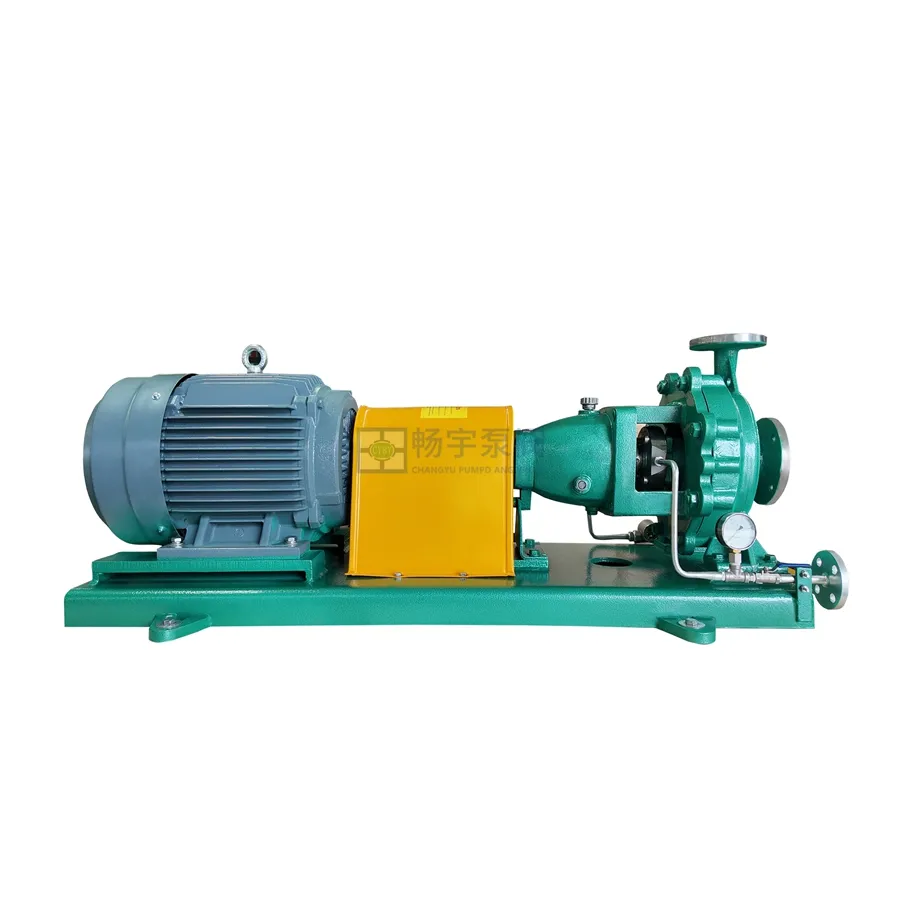
Seri CYH adalah pompa sentrifugal kantilever satu tahap dengan hisap tunggal yang dirancang dan diberi label sesuai dengan ISO 2858. Terbuat dari baja tahan karat - . Baja tahan karat 304, 316, 316L, atau dupleks - ini dinilai untuk operasi terus menerus dari -20 ° C hingga 165 ° C. Seri CYH berfungsi sebagai pengganti pompa berlapis fluoroplastik tradisional dalam aplikasi di mana jalur yang dibasahi logam kompatibel dengan fluida proses pada suhu. Tugas umum termasuk transfer pelarut panas, sirkulasi air proses suhu tinggi, dan transfer perantara kimia.
Spesifikasi Utama: Aliran 0,8-750 m³/jam | Head 3-130 m | Daya 2.2-110 kW | Kecepatan 968-3.450 rpm | Temperatur -20°C hingga 165°C
Pompa Lumpur Baja Tahan Karat Seri HB
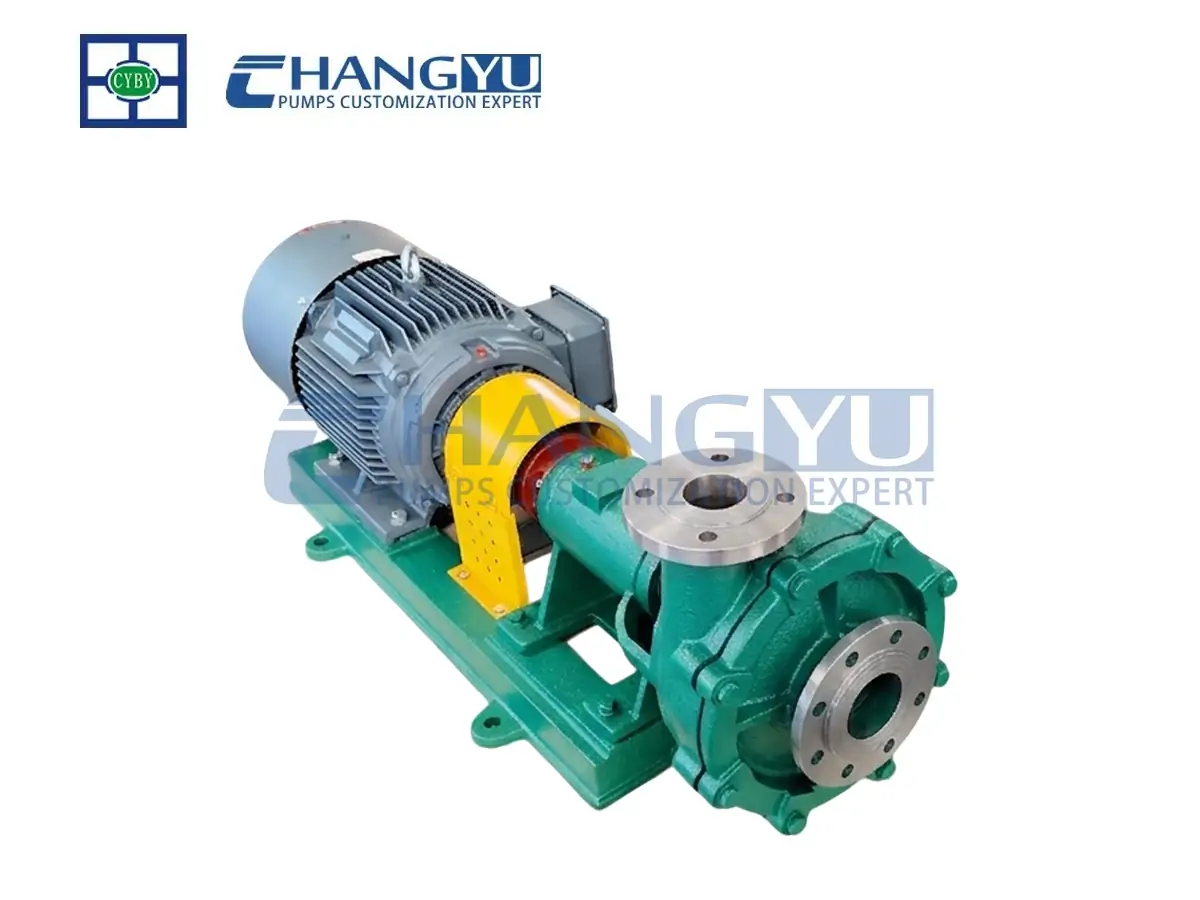
Seri HB adalah pompa sentrifugal horizontal efisiensi tinggi, satu tahap, hisap tunggal yang dirancang sesuai dengan ISO 2858 dan sesuai dengan Standar CE. Dibangun dengan struktur yang dibasahi baja tahan karat - dapat disesuaikan dalam 304, 316, 316L, 2205, dan 2507 - menangani bubur abrasif dan cairan korosif sedang pada suhu dari -20°C hingga 120°C. Dalam aplikasi kimia bersuhu tinggi, Seri HB dikhususkan untuk tugas pemindahan bubur panas yang memiliki suhu tinggi dan padatan abrasif, seperti sirkulasi bubur katalis dan aliran proses panas yang mengandung partikulat tersuspensi.
Spesifikasi Utama: Aliran 10-60 m³/jam | Head 20-120 m | Daya 3-45 kW | Kecepatan 2.900 rpm | Suhu -20°C hingga 120°C
Pompa Transfer Hidrogen Peroksida Seri CYQ
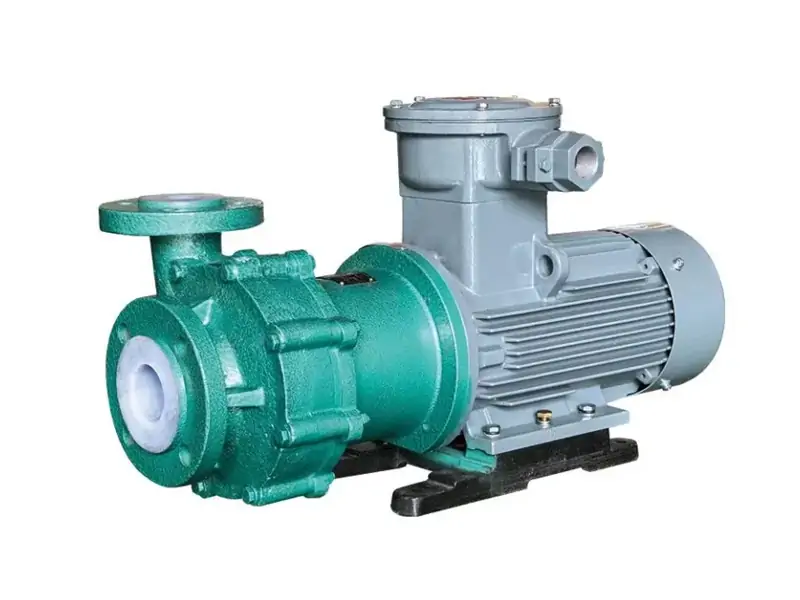
Seri CYQ adalah pompa penggerak magnetik tanpa seal dengan komponen yang dibasahi yang dilapisi FEP, PFA, atau PTFE. Torsi ditransmisikan dari motor standar melintasi selongsong penahanan stasioner, membungkus cairan proses dalam ruang yang tertutup rapat dan mencapai nol kebocoran dengan desain. Dinilai untuk operasi berkelanjutan dari -20 ° C hingga 180 ° C, Seri CYQ ditentukan untuk transfer bahan kimia suhu tinggi hidrogen peroksida, asam korosif panas, pelarut organik, dan media agresif lainnya yang memerlukan ketahanan suhu dan penahanan tanpa kebocoran.
Spesifikasi Utama: Aliran 3-800 m³/jam | Head 15-125 m | Daya 2.2-110 kW | Kecepatan 2.950 rpm | Temperatur -20°C hingga 180°C
Pertanyaan yang Sering Diajukan
T1: Pada suhu berapa pompa kimia memerlukan fitur desain khusus?
J: Desain pompa standar umumnya memadai hingga ~120°C, di atas itu, segel elastomer, pelumasan bantalan, dan ekspansi termal memerlukan perhatian teknik. Pemasangan garis tengah adalah standar di atas 150 ° C dan wajib di atas 200 ° C; jarak bebas internal harus ditingkatkan> 260 ° C.
T2: Apa bahan terbaik untuk pompa kimia suhu tinggi?
J: Pompa berlapis PFA memberikan ketahanan korosi yang hampir universal untuk asam hingga 160-180°C. Baja tahan karat menawarkan jendela operasional yang luas dari -196°C hingga ~ 420°C, dengan kekuatan tahan 316L yang menurun dari ~ 170 MPa pada suhu kamar hingga ~ 100 MPa pada suhu 300°C. Baja C6 (12% Cr) lebih disukai untuk layanan kilang panas >300°C.
T3: Bagaimana segel mekanis dilindungi dari suhu tinggi?
J: Di bawah 200 ° C, seal flush plan (API 21/23) mendinginkan seal; di atas 200 ° C, ruang seal berjaket dengan pendingin eksternal diperlukan; di atas 300 ° C, seal bellow logam dengan steam quench / purge adalah standar.
T4: Apa yang dimaksud dengan pemasangan garis tengah dan mengapa diperlukan untuk pompa suhu tinggi?
J: Pemasangan garis tengah memasang casing pada garis tengahnya sehingga ekspansi termal simetris, mempertahankan keselarasan, tidak seperti pompa yang dipasang di kaki yang mengembang secara asimetris yang menyebabkan ketidakselarasan.
T5: Pendinginan apa yang diperlukan untuk rumah bantalan?
J: Pendinginan alami sudah cukup di bawah ~200°C; jaket air aktif atau pendinginan udara diperlukan di atas 200°C; pendinginan air paksa adalah standar di atas 300°C. Pelumasan kabut oli menawarkan manfaat tambahan untuk pompa >200°C dengan mengurangi degradasi termal oli bah.
T6: Bagaimana cara mencegah kejutan termal saat menghidupkan pompa suhu tinggi?
J: Panaskan casing pada suhu ≤55°C/jam hingga mencapai ~55°C dari suhu pengoperasian dengan menggunakan jalur pintas pemanasan. Pemanasan darurat hingga 149°C/jam dapat diizinkan jika ditentukan oleh produsen dan diverifikasi dengan bahan casing.
T7: Dapatkah pompa penggerak magnetik menangani bahan kimia bersuhu tinggi?
J: Ya, pompa mag-drive berlapis PFA beroperasi hingga ~180 ° C; di atas itu, pompa mag-drive baja tahan karat dengan cangkang Hastelloy memperluas jangkauannya.
T8: Berapa kisaran suhu yang dapat ditangani oleh pompa berlapis PFA?
J: Pompa berlapis PFA diberi peringkat untuk -20 ° C hingga ~160 ° C dalam aplikasi struktural, hingga 180 ° C dalam tugas penyegelan statis, dan hingga 180 ° C dalam desain penggerak magnetik di mana PFA bukan merupakan komponen struktural utama. PFA sendiri tahan terhadap suhu terus menerus hingga 260°C.
T9: Bagaimana cara menentukan pompa untuk asam panas yang juga bersifat abrasif?
J: Untuk bubur yang panas dan abrasif, pompa berlapis baja tahan karat dupleks atau UHMW-PE adalah standar. PFA dibatasi oleh ketahanan abrasi yang moderat. Pompa lumpur baja tahan karat Seri HB menangani lumpur abrasif panas pada suhu hingga 120 ° C.
Q10: Apa yang dimaksud dengan Aliran Termal Minimum (MTF) dan mengapa ini penting?
J: MTF adalah laju aliran terendah di mana pompa dapat beroperasi tanpa suhu fluida naik secara tidak wajar karena resirkulasi internal. Ketika aliran proses tidak dapat diandalkan melebihi MTF - sangat penting untuk cairan di dekat titik didihnya - saluran tumpahan balik, katup resirkulasi otomatis, atau bypass kontinu harus dimasukkan untuk mencegah penguapan, kavitasi, dan kegagalan bencana.
Rekomendasi Pemilihan untuk Pompa Kimia Suhu Tinggi
- Klasifikasikan suhu sebelum memilih konfigurasi pompa. Persyaratan teknik berubah secara mendasar pada suhu sekitar 120°C, 200°C, dan 300°C. Pompa yang ditentukan untuk 150°C tidak akan bekerja dengan baik jika desain yang sama diterapkan pada 280°C tanpa menangani dukungan casing, jenis segel, dan konfigurasi pendinginan. API 610 menyediakan kerangka kerja desain yang mengatur untuk layanan ini.
- Sesuaikan jenis segel dan rencana penyiraman dengan klasifikasi suhu. Di atas 200 ° C, tentukan segel bellow logam yang menghilangkan segel sekunder yang dinamis. Di atas 300 ° C, pendinginan jaket ruang segel dengan uap bertekanan sedang adalah solusi yang ditetapkan.
- Tentukan pemasangan garis tengah untuk setiap pompa yang beroperasi terus menerus di atas 120°C, dan mewajibkan pemasangan di atas 200°C. Biaya tambahan dukungan garis tengah dipulihkan melalui pengurangan pergeseran penyelarasan, getaran yang lebih rendah, dan masa pakai seal dan bearing yang lebih lama.
- Rancang sistem pendingin untuk rumah bearing, bukan hanya ruang seal. Kegagalan bearing yang disebabkan oleh degradasi termal pelumas jauh melebihi biaya pengintegrasian pendinginan rumah bearing pada tahap spesifikasi. Pantau kualitas air pendingin untuk mencegah hilangnya efisiensi terkait kerak.
- Verifikasi kompatibilitas material pada suhu pengoperasian maksimum, bukan suhu proses nominal. Sebagai panduan konservatif, laju korosi yang seragam dapat berlipat ganda untuk setiap kenaikan 10°C. Konfirmasikan setiap komponen yang dibasahi - casing, impeler, selongsong poros, cincin-O, gasket, dan permukaan segel - terhadap kondisi termal dan kimiawi terburuk.
Kesimpulan
Menentukan a pompa kimia suhu tinggi berarti mencocokkan penyangga casing pompa, bahan, segel, dan konfigurasi pendinginan dengan kisaran suhu yang akan digunakan. Baik menggunakan baja tahan karat pada rentang suhu -196°C hingga 420°C yang luar biasa atau fluoropolimer untuk asam agresif pada suhu tinggi, material harus disesuaikan dengan bahan kimia dan beban termal. Pendekatan teknik dimulai dengan klasifikasi suhu tiga tingkat - 120-200 ° C, 200-300 ° C, dan di atas 300 ° C - masing-masing membawa persyaratan khusus untuk penyangga casing, bahan konstruksi, jenis segel, dan konfigurasi pendinginan.
Memilih pompa yang tepat memerlukan verifikasi sistematis terhadap kimiawi fluida pada suhu operasi maksimum, klasifikasi ke dalam tingkat suhu yang sesuai, pemilihan dukungan casing yang sesuai, bahan, dan konfigurasi seal, dan desain sistem pendingin yang memperhitungkan kualitas air dan skalabilitas jangka panjang. Hubungi Changyu Pump dengan parameter proses dan sifat fluida Anda. Tim teknisi kami akan memberikan rekomendasi dan penawaran harga pompa yang terperinci.