
Resposta rápida
Um bomba de lama ácida para hidrometalurgia é uma bomba industrial projetada para transferir soluções ácidas altamente corrosivas misturadas com partículas abrasivas de minério sólido — uma combinação de ataque químico e desgaste mecânico que destrói bombas padrão em semanas. Fatores-chave de seleção:
- O material deve resistir tanto ao ácido quanto à abrasão: Bombas padrão de aço inoxidável (316L) corroem nos ácidos quentes e concentrados usados para lixiviação de metais. Bombas de liga de alto cromo resistem à abrasão, mas se dissolvem em ácido. Bombas revestidas de borracha amolecem em temperaturas elevadas. O revestimento de UHMWPE (Polietileno de Ultra-Alto Peso Molecular) oferece uma combinação única de resistência a ácidos em toda a faixa de pH típica dos ácidos de lixiviação hidrometalúrgica e resistência à abrasão que lida com até 30% de teor de sólidos.
- Combine a bomba com o processo hidrometalúrgico específico: A lixiviação de cobre usa ácido sulfúrico em temperaturas moderadas. A lixiviação de laterita de níquel usa ácido sulfúrico em altas temperaturas e pressões. O processamento de terras raras usa ácido clorídrico ou ácidos mistos. Cada processo exige configurações específicas de material e selo.
- A concentração de sólidos determina o design do impulsor: Sólidos baixos (< 10%) permitem impulsores fechados para máxima eficiência. Sólidos médios (10–20%) exigem impulsores semiabertos. Sólidos altos (20–30%) demandam designs de vórtice ou passagem larga especial que evitam entupimentos por partículas de minério.
A hidrometalurgia dissolve metais de seus minérios usando ácido — e então pede a uma bomba que mova a lama corrosiva e abrasiva resultante. Uma bomba que resiste ao ácido, mas se desgasta com os sólidos, é tão inútil quanto uma bomba que lida com os sólidos, mas corrói com o ácido. Este duplo desafio é a razão pela qual tanto as bombas químicas padrão quanto as bombas de lama padrão falham em serviço hidrometalúrgico: nenhuma é projetada para a combinação.
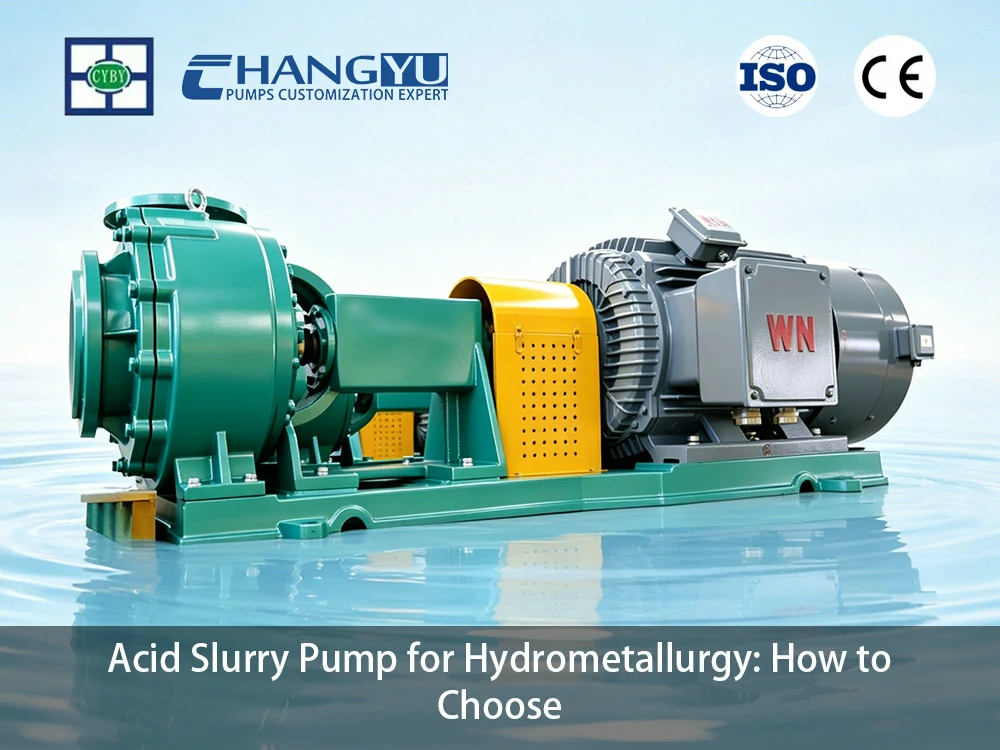
Após ler este guia, você entenderá por que a hidrometalurgia exige uma bomba especializada, quais materiais realmente funcionam em serviço de lama ácida, como combinar as especificações da bomba com processos específicos de recuperação de metais e como selecionar uma bomba que ofereça vida útil confiável em seu circuito de lixiviação.
Por Que a Hidrometalurgia Precisa de uma Bomba de Lama Ácida Especial?
Hidrometalurgia extrai metais — cobre, zinco, níquel, cobalto, ouro, urânio, terras raras — dissolvendo minério em ácido e depois recuperando o metal da solução. A bomba move essa mistura entre tanques de lixiviação, espessadores, filtros e células de eletrorrecuperação.
O Mecanismo de Destruição Dupla
Uma bomba em serviço hidrometalúrgico enfrenta dois ataques simultâneos:
Corrosão química do ácido: Os ácidos de lixiviação incluem ácido sulfúrico (cobre, zinco, níquel), ácido clorídrico (terras raras, titânio), ácido nítrico (prata, urânio) e ácidos mistos. Esses ácidos atacam os componentes metálicos da bomba — o aço inoxidável 316L, padrão para bombas químicas, corrói rapidamente em ácido quente e concentrado. Elastômeros como EPDM e borracha natural incham, amolecem e degradam.
Abrasão mecânica dos sólidos do minério: A lama ácida contém partículas de minério triturado — sílica, óxidos metálicos, sulfetos não dissolvidos — em concentrações de 5% a 30% em peso. Essas partículas desgastam as superfícies da bomba em velocidades de fluxo de 2–4 m/s, erodindo materiais que são quimicamente resistentes, mas mecanicamente macios. Revestimentos de PTFE e FEP oferecem excelente resistência a ácidos, mas se desgastam rapidamente em serviço com alto teor de sólidos.
Por Que as Bombas Padrão Falham
| Tipo de bomba | Falha Porque… | Vida Útil Típica em Lama Ácida |
|---|---|---|
| Centrífuga de Aço Inoxidável 316L | Corrosão por ácido — pites, corrosão em frestas, corrosão sob tensão por fissuração | 1–3 meses |
| Bomba de Polpa de Liga de Alto Cromo | O ácido dissolve a matriz metálica; carbonetos permanecem, mas a bomba perde integridade estrutural | 2–6 meses |
| Bomba Revestida de Borracha | Ácido ataca a borracha acima de 60°C; sólidos cortam a superfície da borracha | 1–4 meses |
| Bomba Revestida de PTFE/FEP | Excelente resistência a ácidos, mas desgaste rápido por sólidos abrasivos — o revestimento se desgasta | 2–4 meses em altos sólidos |
O material que sobrevive deve ser simultaneamente resistente a ácidos e à abrasão. O UHMWPE é um dos poucos materiais que oferece ambas as propriedades.
Quais Materiais São Melhores para Bombas de Lama Ácida?
A seleção do material é a decisão mais crítica. O material deve resistir ao ácido específico usado no processo na temperatura operacional, enquanto também suporta o desgaste abrasivo das partículas de minério arrastadas.
Comparação de Materiais para Bomba de Lama Ácida
| Material | Resistência a Ácidos | Resistência à abrasão | Limite de temperatura | Melhor aplicação |
|---|---|---|---|---|
| Aço inoxidável 316L | Ruim em ácido concentrado quente; aceitável para ácido diluído em temperatura ambiente | Moderado | ~60°C em ácido | Não recomendado para serviço primário de lama ácida |
| Liga de Alto Cromo (Cr27-Cr33) | Ruim — ácido ataca a matriz metálica | Excelente | ~90°C | Não recomendado para serviço ácido |
| Revestimento de borracha natural | Bom em ácido diluído em baixa temperatura | Bom para partículas arredondadas; ruim para minério cortante | ~70°C | Limitado — não para ácido quente |
| Revestimento de PTFE / FEP | Excelente — resistência universal a ácidos | Ruim — macio, desgasta rapidamente em altos sólidos | ~120°C (FEP) | Apenas serviço de ácido limpo; não para lamas acima de 5% de sólidos |
| Revestimento de UHMWPE | Excelente — resiste à maioria dos ácidos, álcalis e solventes | Excelente — suporta até 30% de teor de sólidos | ~90°C | Ideal — o material principal para serviço de lama ácida |
| Revestimento PFA | Excelente — resistência universal a ácidos | Moderado — melhor que PTFE, não tão bom quanto UHMWPE | ~160°C | Ácido em alta temperatura com baixo a moderado teor de sólidos |
Por Que o UHMWPE se Destaca em Serviço de Lama Ácida
UHMWPE (Polietileno de Ultra-Alto Peso Molecular) combina resistência a ácidos com resistência à abrasão através de sua estrutura molecular única. As cadeias poliméricas extremamente longas criam um material que é quimicamente inerte à maioria dos ácidos, álcalis e solventes, enquanto oferece resistência à abrasão superior ao aço. Propriedades-chave:
- Resistência química: Resiste a ácidos sulfúrico, clorídrico, nítrico, fosfórico e fluorídrico em concentrações de até 80% e temperaturas de até 90°C
- Resistência à abrasão: Supera o aço em 3–6× em testes de abrasão por deslizamento; lida com até 30% de teor de sólidos em peso
- Superfície antiaderente: Baixo coeficiente de atrito evita acúmulo de incrustações e reduz o consumo de energia
- Resistência ao impacto: Suporta impacto de partículas grandes de minério sem rachar
Máxima passagem de sólidos + peças de desgaste substituíveis Para qualquer aplicação hidrometalúrgica onde a polpa contenha mais de 10% de sólidos e opere em condições ácidas abaixo de 90°C, especifique uma bomba revestida com UHMWPE. Este material demonstrou ser exclusivamente adequado para o desafio combinado de ácido e abrasão que define o bombeamento hidrometalúrgico. Para aplicações acima de 90°C com baixo teor de sólidos, considere bombas revestidas com PFA. Para aplicações acima de 90°C com alto teor de sólidos, consulte nossa equipe de engenharia — esta é a especificação de bomba mais exigente em hidrometalurgia.
Onde as Bombas de Polpa Ácida São Usadas em Hidrometalurgia?
As bombas de polpa ácida atendem a todas as etapas do processo hidrometalúrgico, desde os tanques de lixiviação onde o minério entra em contato com o ácido até o sistema de disposição de rejeitos.
Matriz de Aplicação de Bombas Hidrometalúrgicas
| Estágio do Processo | Características do Fluido | Temperatura | Teor de sólidos | Configuração Recomendada UHB |
|---|---|---|---|---|
| Lixiviação de minério (atmosférica) | Ácido sulfúrico (pH 1–2) + minério moído | 50–90°C | 15–30% | Revestida com UHMWPE, rotor semiaberto |
| Lixiviação sob pressão (autoclave) | Ácido sulfúrico + minério em alta pressão | 90–150°C | 10–20% | Bomba revestida com PFA para temperatura; consulte a engenharia para teor de sólidos acima de 10% |
| Decantação em contracorrente (CCD) | Solução rica ácida + sólidos finos | 40–70°C | 5–15% | Revestida com UHMWPE, rotor padrão |
| Alimentação de extração por solvente | Solução de lixiviação rica (PLS) com sólidos finos | 30–50°C | < 5% | Revestida com UHMWPE ou aço inoxidável |
| Circulação de eletrólito | Ácido sulfúrico + metal dissolvido (Cu, Zn, Ni) | 30–50°C | < 1% | Aço inoxidável ou revestida com UHMWPE |
| Alimentação do filtro prensa | Polpa concentrada do espessador | 40–70°C | 20–30% | Revestida com UHMWPE, rotor semiaberto, alta pressão |
| Transferência de rejeitos | Polpa de resíduo ácido | 30–50°C | 10–25% | Revestida com UHMWPE, resistente ao desgaste |
O Circuito de Lixiviação: Onde as Bombas Enfrentam o Maior Desafio
O circuito de lixiviação é o coração da hidrometalurgia — e a aplicação de bombeamento mais exigente. O minério recém-moído encontra ácido quente e concentrado. A polpa resultante é quente, altamente corrosiva e carregada de partículas abrasivas. As bombas neste circuito operam continuamente, 24 horas por dia, e qualquer falha interrompe a produção de metal.
Lixiviação atmosférica opera a 50–90°C com ácido sulfúrico em pH 1–2. O minério é triturado em partículas finas que maximizam o contato com o ácido — e maximizam o desgaste da bomba. Bombas revestidas com UHMWPE com rotores semiabertos são o padrão para este serviço, fornecendo a resistência ao ácido e a passagem de sólidos que a lixiviação contínua exige.
Lixiviação sob pressão em autoclaves opera em temperaturas mais altas (até 150°C) e pressões. Este ambiente excede o limite de temperatura do UHMWPE. Bombas revestidas com PFA com selos mecânicos resistentes à temperatura são necessárias, com o teor de sólidos cuidadosamente gerenciado para evitar desgaste acelerado do revestimento.
Máxima passagem de sólidos + peças de desgaste substituíveis Para lixiviação atmosférica — o processo hidrometalúrgico mais comum — a bomba revestida com UHMWPE da Série UHB com rotor semiaberto e selo mecânico duplo é a configuração comprovada. Este projeto de bomba foi refinado ao longo de anos de serviço em circuitos de lixiviação de cobre, zinco, níquel e urânio.
Como Combinar Bombas de Polpa Ácida com Diferentes Processos de Metais?
Diferentes metais exigem diferentes químicas de lixiviação, e a bomba deve ser combinada com as condições específicas do processo.
Recomendações de Bombas Específicas por Metal
| Metal | Ácido de Lixiviação | Temperatura Típica | Desafio Especial | Configuração de Bomba Recomendada |
|---|---|---|---|---|
| Cobre (minérios oxidados) | H₂SO₄, pH 1–2 | 30–60°C | Alto teor de sólidos, sílica abrasiva | UHB revestida com UHMWPE, rotor semiaberto |
| Cobre (minérios sulfetados) | H₂SO₄ + bactérias, pH 1–2 | 30–45°C | Partículas finas, longo tempo de residência | UHB revestida com UHMWPE, rotor padrão |
| Zinco | H₂SO₄, pH 1–2 | 60–90°C | Alta temperatura + ácido + óxidos de ferro abrasivos | UHB revestida com UHMWPE (verificar < 90°C) |
| Níquel (laterita) | H₂SO₄, pH 1–2 | 90–150°C (autoclave) | Temperatura extrema | CYG revestida com PFA para estágios de alta temperatura |
| Níquel (sulfetado) | H₂SO₄, pH 1–2 | 60–90°C | Partículas de sulfeto abrasivas | UHB revestida com UHMWPE, rotor semiaberto. Para lixiviação atmosférica próxima a 90°C, verifique se a classificação de pressão da bomba não é excedida devido à resistência reduzida do material |
| Terras raras | HCl, H₂SO₄, ácidos mistos | 40–90°C | Múltiplos ácidos, frequentemente contém HF | UHB revestida com UHMWPE (verificar compatibilidade com HF — UHMWPE resiste a HF até 40% à temperatura ambiente, mas a resistência diminui significativamente acima de 50°C); CYB revestida com FEP para correntes contendo fluoreto em temperaturas mais altas |
| Ouro (CIL/CIP) | NaCN, pH 10–11 | 20–40°C | Alcalino em vez de ácido | UHB revestida com UHMWPE (excelente resistência a álcalis) |
| Urânio | H₂SO₄, pH 1–2 | 30–60°C | Radioativo; requisito de vazamento zero | UHB revestida com UHMWPE com selo mecânico duplo |
O Desafio das Terras Raras: Quando o UHMWPE Padrão Não é Suficiente
O processamento de terras raras frequentemente usa ácidos mistos, incluindo ácido fluorídrico (HF) e ácido clorídrico. O UHMWPE fornece boa resistência à maioria dos ácidos, mas tem compatibilidade limitada com HF concentrado em temperaturas elevadas. Para aplicações de terras raras onde o HF está presente em concentrações significativas acima de 50°C, consulte nossa equipe de engenharia — bombas revestidas com FEP da Série CYB ou bombas revestidas com PFA da Série CYG podem ser necessárias para fornecer a resistência química necessária.
Máxima passagem de sólidos + peças de desgaste substituíveis Para lixiviação atmosférica de cobre, zinco e níquel — que juntos representam a maioria do bombeamento hidrometalúrgico — a bomba revestida com UHMWPE da Série UHB é a escolha ideal. A combinação de resistência ao ácido, resistência à abrasão e custo-benefício é incomparável por qualquer outro material de bomba. Para o caso específico do processamento de terras raras com HF, verifique a compatibilidade do UHMWPE com a concentração real de ácido e temperatura antes de especificar.
Como Selecionar a Bomba de Polpa Ácida Correta?
A seleção da bomba de polpa ácida segue um processo estruturado que começa com a análise química e prossegue através da seleção de materiais, configuração da bomba e especificação do selo.
Etapa 1: Analise a Química do Ácido.
Identifique cada ácido presente — sulfúrico, clorídrico, nítrico, fosfórico, fluorídrico — juntamente com suas concentrações e a temperatura máxima de operação. Uma “lixiviação com ácido sulfúrico” também pode conter cloretos do corpo de minério ou da água de processo. Meça o pH na temperatura de operação e à temperatura ambiente — alguns ácidos se tornam mais agressivos quando frios, outros quando quentes.
Etapa 2: Analise os Sólidos.
Determine a concentração de sólidos (porcentagem em peso), distribuição do tamanho de partículas e dureza das partículas. Sílica abrasiva (Mohs 7) em minério de cobre causa muito mais desgaste do que óxidos de ferro macios em resíduos de zinco. Meça o tamanho máximo de partícula — isso determina os requisitos de passagem do impulsor e o risco de entupimento.
Passo 3: Selecione os Materiais.
- Ácido, sólidos > 10%, temperatura < 90°C → Bomba revestida com UHMWPE (Série UHB). Este é o padrão para lixiviação atmosférica.
- Ácido, sólidos > 10%, temperatura > 90°C → Consultar engenharia. Esta combinação requer PFA ou materiais especiais.
- Ácido, sólidos < 5%, qualquer temperatura dentro dos limites do revestimento → Bomba revestida com FEP ou PFA. Para transferência de ácido limpo.
Etapa 4: Selecionar Impulsor e Selo.
- Turbina semi-aberta para slurries com 10–30% de sólidos e partículas de até 25 mm. Oferece resistência a entupimentos e fácil limpeza.
- Impulsor fechado para ácido limpo ou slurries abaixo de 5% de sólidos. Oferece máxima eficiência.
- Vedante mecânico duplo com fluido de barreira para operação com vazamento zero em serviços de ácido perigosos ou regulamentados ambientalmente. Padrão para hidrometalurgia.
- Vedante mecânico simples com resfriamento para aplicações menos críticas.
Passo 5: Dimensione a Bomba.
Calcule a vazão necessária e a altura manométrica total. Para slurries ácidas acima de 15% de sólidos, aplique um fator de redução de 0,9–0,95 na eficiência da bomba. Superdimensione a linha de sucção em um diâmetro de tubo para garantir NPSH com slurry quente e de baixo pH. Dimensione o motor com um fator de serviço mínimo de 1,15 para operação contínua em circuito de lixiviação.
Soluções de Bomba para Slurry Ácido da Changyu Pump
A Changyu Pump fabrica três séries de bombas relevantes para aplicações hidrometalúrgicas, cada uma projetada para uma combinação específica de temperatura, tipo de ácido e teor de sólidos.
Guia de Seleção de Produto para Bomba Hidrometalúrgica
| Aplicação | Desafio primário | Séries recomendadas | Característica principal |
|---|---|---|---|
| Lixiviação ácida atmosférica com sólidos | Ácido + alta abrasão, < 90°C | Série UHB | Revestida com UHMWPE; resiste a ácido e 30% de sólidos |
| Ácido de alta temperatura com sólidos | Ácido + alta abrasão, > 90°C | Consultar engenharia | Revestida com PFA ou materiais especiais necessários |
| Transferência de ácido limpo com temperatura | Ácido + temperatura moderada, baixos sólidos | Série CYB (revestida com FEP) | Resistência superior a ácidos; até 120°C |
Série UHB — Bomba para Slurry Ácido Revestida com UHMWPE
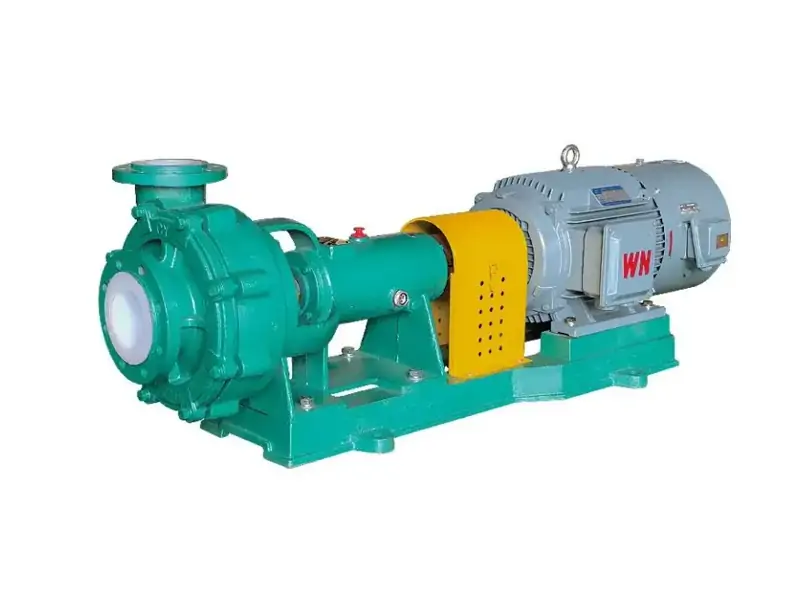
A Série UHB é uma bomba centrífuga horizontal, de estágio único e sucção simples, com carcaça de aço revestida com UHMWPE. Esta é a bomba principal para serviços de slurry ácido em hidrometalurgia. O revestimento de UHMWPE oferece resistência simultânea ao ácido corrosivo e às partículas abrasivas de minério que definem os circuitos de lixiviação. O impulsor semiaberto lida com sólidos de até 25 mm sem entupir. Disponível com selo mecânico duplo para operação com vazamento zero em serviços de ácido perigosos.
| Parâmetro | Especificação |
|---|---|
| Caudal | 3-2,600 m³/h |
| Cabeça | 5-100 m |
| Potência do motor | 0,75-300 kW |
| Velocidade | 750-2.900 r/min |
| Temperatura | -20°C a 90°C |
| Material do forro | UHMWPE |
Série CYB — Bomba Revestida com FEP para Serviços de Ácido de Alta Temperatura ou Especiais
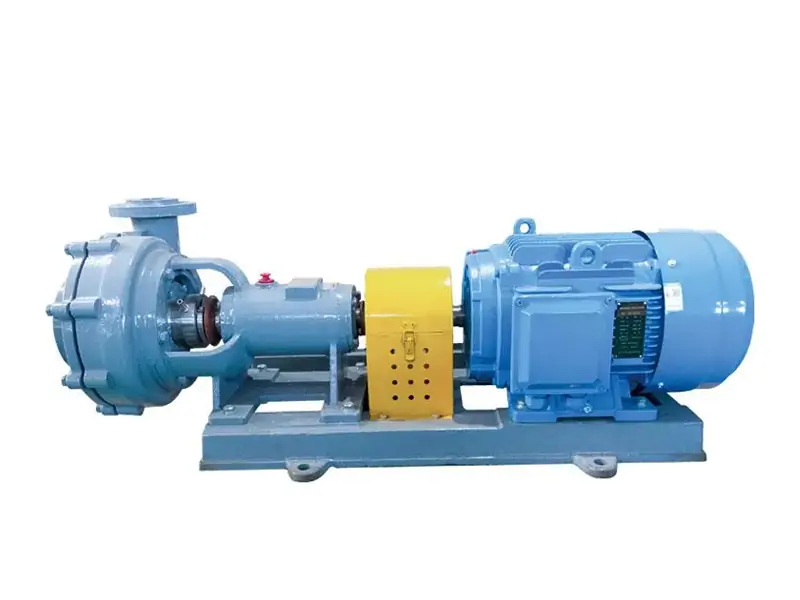
A Série CYB-ZKJ apresenta revestimento de FEP (etileno propileno fluorado) para aplicações hidrometalúrgicas onde a química do ácido excede os limites de compatibilidade do UHMWPE — como ácidos mistos contendo ácido fluorídrico, ou serviços de ácido limpo em temperaturas de até 120°C. O revestimento de FEP oferece resistência universal a ácidos. Mais adequado para aplicações com baixo a moderado teor de sólidos, pois o FEP tem menor resistência à abrasão que o UHMWPE.
| Parâmetro | Especificação |
|---|---|
| Caudal | 3-2,600 m³/h |
| Cabeça | 5-100 m |
| Potência do motor | 0,75-300 kW |
| Velocidade | 968-3.450 r/min |
| Temperatura | -80°C a 120°C |
| Material do forro | FEP |
Estudo de Caso de Bomba para Slurry Ácido em Hidrometalurgia: Resolvendo uma Falha de Bomba de Lixiviação em uma Planta de Cobre
Uma planta de hidrometalurgia de cobre na África Central usava bombas centrífugas de aço inoxidável 316L para transferir solução de lixiviação rica (PLS) das pilhas de lixiviação para o circuito de extração por solvente. A PLS continha ácido sulfúrico a pH 1,5, cobre dissolvido e 8–12% de sólidos finos de sílica do minério. A temperatura de operação era de 45–55°C. As bombas funcionavam 24 horas por dia.
Dentro de três meses após a comissionamento, todas as quatro bombas apresentaram corrosão por pites severa no impulsor e na voluta. No quarto mês, duas bombas haviam perdido mais de 30% de sua vazão de projeto devido à erosão interna. Os selos mecânicos falhavam repetidamente — partículas abrasivas de sílica incrustavam-se nas faces do selo, causando vazamentos que criavam um risco de segurança no local de trabalho devido ao spray de ácido.
A análise de causa raiz pelos engenheiros da Changyu Pump confirmou que o aço inoxidável 316L era fundamentalmente inadequado para este serviço. A combinação de ácido sulfúrico a pH 1,5 e 50°C excedia a resistência à corrosão do material. As partículas de sílica (Mohs 7) aceleravam a remoção de material através de erosão-corrosão — o ácido enfraquecia a camada de óxido passiva, e as partículas a removiam mecanicamente.
A planta substituiu todas as quatro bombas por bombas da Série UHB da Changyu, revestidas com UHMWPE, com impulsores semiabertos e selos mecânicos duplos. O revestimento de UHMWPE oferecia resistência simultânea a ácidos e abrasão. O impulsor semiaberto lidava com os sólidos de sílica sem entupir. O selo mecânico duplo eliminou o vazamento de ácido que havia criado o risco de segurança anterior.
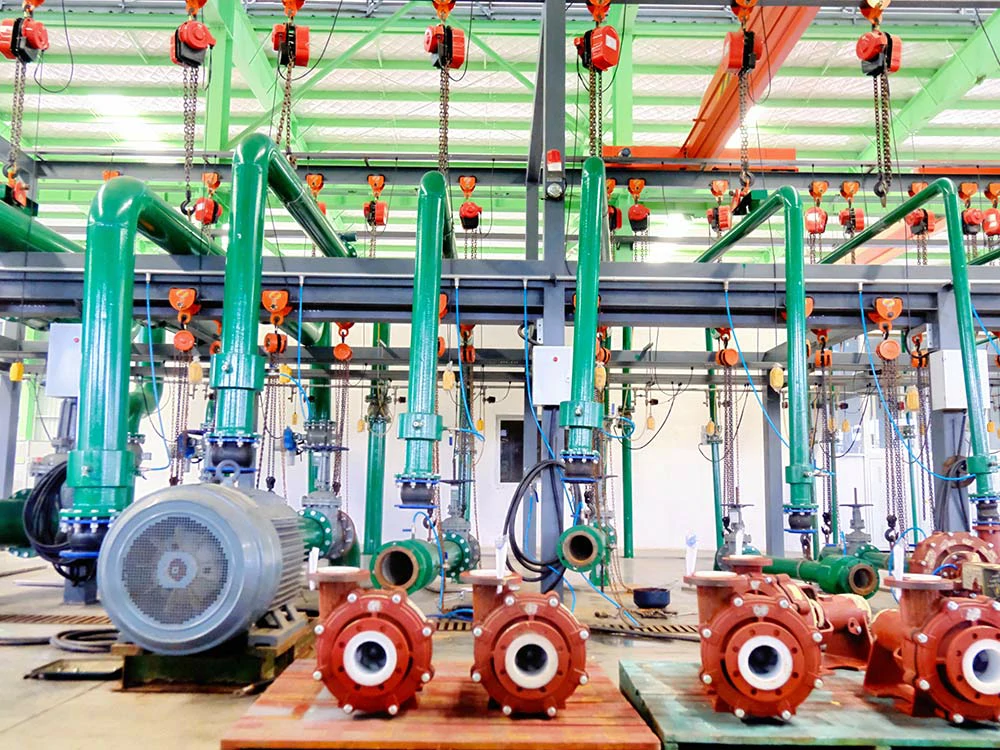
Dezoito meses após a substituição: zero falhas de bomba, zero substituições não programadas de selos e vazões mantidas dentro de 5% do projeto. A planta relatou que o custo inicial mais alto das bombas UHB foi recuperado em 7 meses através da eliminação de substituições de bombas, redução de mão de obra de manutenção e zero incidentes de segurança relacionados a ácido.
Conclusão principal: O aço inoxidável 316L — o material padrão para bombas químicas — não sobrevive ao ambiente combinado de ácido e abrasão da lixiviação hidrometalúrgica. Bombas revestidas com UHMWPE são a solução de material comprovada para este duplo desafio, oferecendo anos de serviço confiável onde o aço inoxidável falha em meses.
Perguntas Frequentes sobre Bombas para Slurry Ácido em Hidrometalurgia
P: Por que o aço inoxidável 316L falha tão rapidamente em serviços de slurry ácido?
R: O 316L depende de uma camada de óxido passiva para resistência à corrosão. O ácido sulfúrico quente ataca esta camada, e as partículas abrasivas de minério a removem mecanicamente. O mecanismo combinado de ácido e abrasão — erosão-corrosão — destrói o 316L em meses. Bombas revestidas com UHMWPE resistem a ambos os mecanismos simultaneamente.
P: Qual material é melhor para uma bomba para slurry ácido?
R: Para lixiviação atmosférica a temperaturas abaixo de 90°C e sólidos acima de 10%, o revestimento de UHMWPE (Polietileno de Ultra Alto Peso Molecular) é o material ideal. Ele resiste à maioria dos ácidos de lixiviação e suporta até 30% de teor de sólidos. Para temperaturas mais altas ou ácidos especiais (HF), consulte o fabricante.
P: Um único tipo de bomba pode atender a todas as etapas de uma planta hidrometalúrgica?
R: Não. Diferentes etapas têm requisitos distintos. Circuitos de lixiviação necessitam de bombas revestidas com UHMWPE para altos teores de sólidos. Extração por solventes e circulação de eletrólito podem usar bombas de aço inoxidável ou revestidas com FEP para soluções limpas. A alimentação de filtro-prensa requer bombas revestidas com UHMWPE de alta pressão.
P: Que tipo de selo é recomendado para bombas de polpa ácida?
R: Selos mecânicos duplos com sistema de fluido de barreira são o padrão para serviços perigosos com polpa ácida. O fluido de barreira lubrifica as faces do selo e evita o vazamento de ácido para a atmosfera. Selos mecânicos simples são adequados apenas para aplicações não perigosas e de baixa temperatura.
P: Como evitar que sólidos se depositem na bomba durante a parada?
R: Para bombas de operação intermitente, lave a bomba com água limpa ou ácido diluído após a parada para remover a polpa carregada de sólidos. Para bombas de operação contínua, mantenha uma velocidade de fluxo mínima de 2–3 m/s no corpo da bomba para evitar o acúmulo de sólidos.
P: Qual é a diferença entre bombas revestidas com UHMWPE e com borracha para polpa ácida?
R: O UHMWPE oferece melhor resistência a ácidos em uma faixa mais ampla de pH e melhor resistência à abrasão do que a borracha. Os revestimentos de borracha são limitados a aproximadamente 70°C e são atacados por ácidos oxidantes. O UHMWPE opera até 90°C e resiste a uma gama mais ampla de produtos químicos.
Lista de verificação de prevenção do engenheiro de bombas da Changyu
- Nunca especifique aço inoxidável 316L para bombas de circuitos primários de lixiviação. O ambiente combinado de ácido e abrasão o destrói em meses.
- Combine o material do revestimento tanto com o tipo de ácido quanto com a temperatura máxima. Um material que funciona a 40°C pode falhar a 80°C.
- Especifique rotores semi-abertos para polpas com mais de 10% de sólidos. Rotores fechados entopem com partículas de minério.
- Instale selos mecânicos duplos em todas as bombas de polpa ácida. Uma falha de selo simples libera ácido perigoso — o custo de um selo duplo é insignificante comparado ao custo de um derramamento de ácido.
- Mantenha uma velocidade de fluxo mínima de 2–3 m/s na tubulação de polpa. Velocidades mais baixas permitem que os sólidos se depositem e eventualmente bloqueiem a linha.
- Lave as bombas com água limpa antes de paradas prolongadas. Os sólidos deixados na bomba se depositarão e endurecerão, dificultando ou impossibilitando a reinicialização.
- Aumente a linha de sucção em um diâmetro de tubo para polpas ácidas com mais de 15% de sólidos. A maior viscosidade e densidade exigem tubulações de sucção maiores para evitar cavitação.
- Mantenha um kit de revestimento UHMWPE sobressalente e um selo mecânico em estoque. Os circuitos de lixiviação operam 24 horas por dia, 7 dias por semana — uma bomba fora de serviço interrompe a produção de metal.
Conclusão
Uma bomba de polpa ácida para hidrometalurgia é definida por sua capacidade de sobreviver ao duplo desafio da corrosão química e da abrasão mecânica. Bombas químicas padrão falham porque não conseguem lidar com os sólidos. Bombas de polpa padrão falham porque não conseguem lidar com o ácido. A bomba revestida com UHMWPE resolve ambos os problemas simultaneamente — inércia química contra os ácidos de lixiviação e resistência à abrasão contra as partículas de minério.
Para cobre, zinco, níquel, ouro, e urânio Em circuitos de lixiviação operando abaixo de 90°C, a bomba revestida com UHMWPE com rotor semi-aberto e selo mecânico duplo é a configuração comprovada e confiável. Tornou-se o padrão da indústria não através de marketing, mas por anos de superação de todos os materiais alternativos na aplicação de bomba mais exigente em hidrometalurgia.
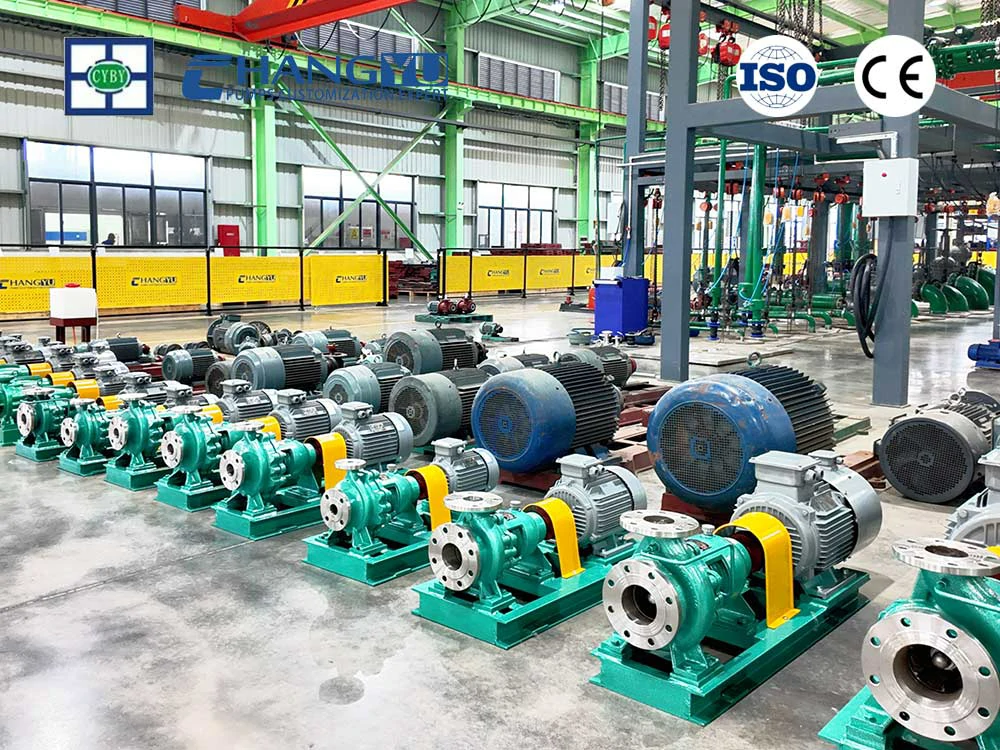
A Série UHB da Changyu Pump oferece esta tecnologia de material comprovada em um pacote completo de bomba projetado para serviço contínuo de polpa ácida. Nossa equipe de engenharia fornece avaliações técnicas abrangendo análise de química de ácidos, caracterização de sólidos, seleção de materiais e dimensionamento de bombas para sua aplicação hidrometalúrgica específica.