
Introdução
A Bomba para altas temperaturas foi concebida para fluidos de processo a altas temperaturas — meios que danificariam as bombas convencionais em poucas horas se fossem utilizados com equipamento de bombagem normal. Quando a temperatura do fluido bombeado ultrapassa os 120 °C, todos os componentes da bomba enfrentam desafios térmicos específicos que não se verificam em condições ambientais. Sujeita à expansão térmica, a carcaça da bomba incha e o eixo de transmissão alonga-se; as folgas internas, calibradas com precisão para a temperatura ambiente, encolhem à medida que os metais comuns se expandem termicamente. As vedações de elastómero que funcionam perfeitamente em água fria iniciam uma degradação térmica irreversível. Além disso, a diminuição da viscosidade do fluido e o aumento da pressão de vapor afinam a película lubrificante protetora entre as faces de contacto da vedação mecânica. Qualquer bomba selecionada sem ter em conta estas variações térmicas sofrerá o bloqueio do eixo, fugas persistentes ou avaria prematura poucas horas após a colocação em funcionamento.
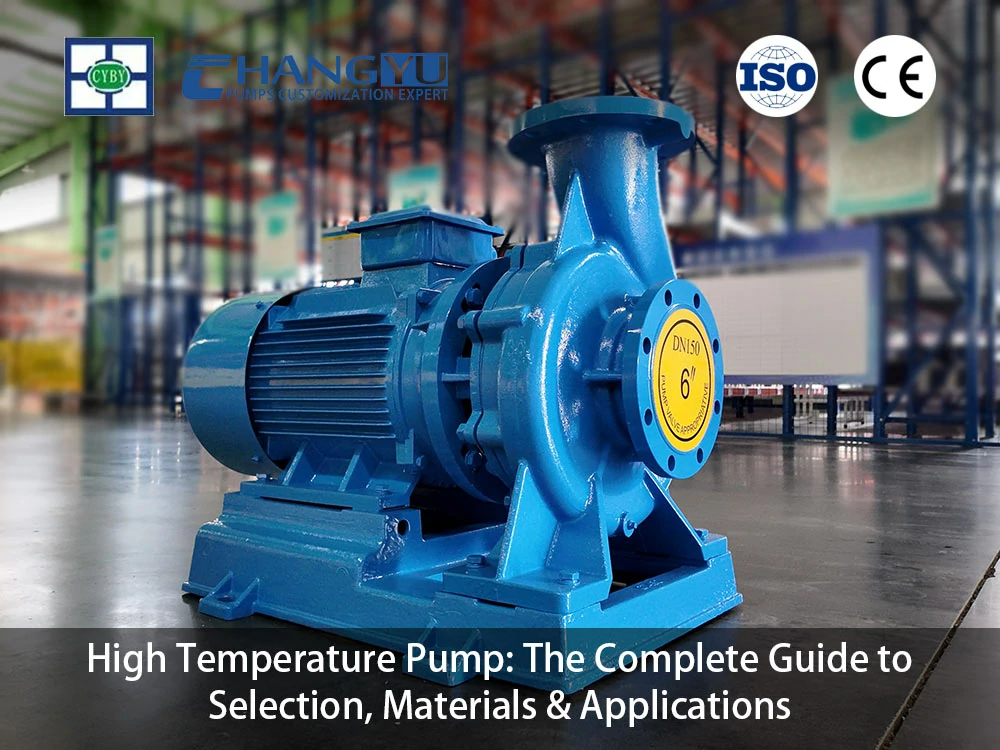
Este guia aborda os tipos de bombas, os materiais, as tecnologias de vedação e refrigeração, um quadro de seleção passo a passo e orientações específicas para aplicações destinadas a engenheiros responsáveis pela especificação de bombas para altas temperaturas em aplicações com fluidos térmicos, óleo quente e processos químicos. Com base em mais de duas décadas de experiência na conceção de bombas para ambientes térmicos e químicos exigentes, Bomba Changyu possui experiência comprovada nas tecnologias de bombas centrífugas, de acionamento magnético e revestidas com fluoroplástico. Contacte-nos indicando os parâmetros do seu fluido térmico para obter uma recomendação específica.
O que é uma bomba para altas temperaturas?
A bomba para altas temperaturas é uma bomba especificamente concebida para manter a estabilidade dimensional, a integridade do material e o desempenho da vedação quando a temperatura do fluido bombeado excede aproximadamente 120 °C. Este limiar não é arbitrário — é o ponto em que os anéis de vedação (O-rings) e as juntas elastoméricas padrão começam a perder a sua capacidade de vedação devido à degradação térmica. A norma ISO 5199 especifica os requisitos de conceção para bombas que operam a temperaturas elevadas, incluindo a seleção de materiais, o arrefecimento da câmara de vedação e as disposições relativas ao arrefecimento da caixa dos rolamentos.
Acima deste limiar, os desafios de engenharia agravam-se. A carcaça da bomba e o eixo expandem-se a ritmos diferentes, alterando as folgas internas. O lubrificante do rolamento requer arrefecimento ativo para se manter abaixo da sua temperatura de degradação. A vedação mecânica — o componente mais sensível à temperatura em qualquer bomba — deve ser protegida do calor conduzido através do eixo e do fluido de processo quente na câmara de vedação.
Classificação de temperatura e estratégia de projeto
As bombas para altas temperaturas são classificadas de acordo com a temperatura de funcionamento, sendo que cada intervalo de temperatura determina estratégias de conceção específicas:
- 120–200 °C: Esta é a gama indicada para água quente, condensado de vapor de baixa pressão e óleos térmicos a temperaturas moderadas. Os modelos de bomba padrão com montagem na linha central são adequados para temperaturas superiores a 150 °C. Vedantes mecânicos simples com arrefecimento interno (API Plano 23, recirculação do produto da câmara do vedante através de um arrefecedor e de volta) e lubrificação padrão dos rolamentos servem normalmente esta gama. As bombas revestidas a PFA proporcionam uma excelente resistência à corrosão para produtos químicos agressivos dentro desta faixa de temperatura.
- 200–300 °C: Esta gama abrange óleos de transferência de calor (normalmente até 250–300 °C), água quente a alta pressão e circulação na camisa do reator. Acima de 200 °C, a carcaça da bomba expande-se significativamente, tornando obrigatória a montagem na linha central. Todas as vedações elastoméricas devem ser substituídas por modelos com fole metálico ou materiais de fluoropolímero. A caixa de rolamentos requer arrefecimento por camisa de água para manter a temperatura do lubrificante dentro de limites seguros.
- Acima de 300 °C: Esta gama inclui a circulação de sal fundido em centrais de energia solar concentrada (normalmente entre 290 e 565 °C), resíduos de refinarias e processos químicos especializados. As bombas desta gama requerem uma gestão térmica completa: vedantes mecânicos de fole metálico com arrefecimento por camisa de vapor, carcaças suportadas na linha central com folgas internas aumentadas para acomodar o dilatação térmica, arrefecimento forçado da caixa de rolamentos e sistemas de pré-aquecimento para evitar choques térmicos durante o arranque. O API 610 A norma especifica que a montagem na linha central, os requisitos de compensação térmica e as disposições relativas ao arrefecimento da câmara de vedação são obrigatórios para o funcionamento de bombas em refinarias e instalações petroquímicas a altas temperaturas, nesta gama de temperaturas.
Características de conceção das bombas para altas temperaturas em comparação com as bombas padrão
| Caraterística | Bomba padrão | Bomba para altas temperaturas |
|---|---|---|
| Suporte da caixa | Montagem na base | Montagem na linha central (>150 °C) |
| Folgas internas | Padrão | Ampliado para acomodar a dilatação térmica (>260 °C) |
| Tipo de vedação | Vedante mecânico simples | Vedante de fole metálico ou vedante duplo com refrigeração (>200 °C) |
| Arrefecimento dos rolamentos | Convecção natural | Arrefecimento por camisa de água ou ar forçado (>200 °C) |
| É necessário pré-aquecer | Não | Sim (taxa de aquecimento ≤ 55 °C/h) |
| Material elastomérico | NBR, EPDM | FFKM, PTFE ou fole metálico (sem vedante) |
Meios típicos de alta temperatura e tipos de bombas
| Médio | Gama de temperaturas | Tipo de bomba típico |
|---|---|---|
| Água quente / condensado | 120–200 °C | Centrífuga, de sucção lateral |
| Óleo térmico | 200–350 °C | Centrífuga, montagem na linha central, vedação com fole metálico |
| Sal fundido | 290–565 °C | Refrigeração por cantiléver vertical ou horizontal, com camisa completa |
| Ácido sulfúrico quente | 120–180 °C | Accionamento centrífugo ou magnético com revestimento em PFA |
| Solventes quentes / intermediários orgânicos | 120–300 °C | Centrífuga com acionamento magnético (sem fuga) ou vedada por fole metálico |
| Resíduos de refinaria / asfalto | 300–400 °C | Vedação com fole metálico, montada na linha central, em conformidade com a norma API 610 |
Quais são os principais tipos de bombas para altas temperaturas?
Existem várias tecnologias de bombas utilizadas em aplicações a altas temperaturas. A escolha depende da temperatura de funcionamento, da agressividade química do fluido, do caudal necessário e da tolerância da instalação em relação a fugas nas vedações.
Bombas centrífugas para altas temperaturas
As bombas centrífugas são o elemento fundamental no manuseamento de fluidos a altas temperaturas. Proporcionam um caudal contínuo e sem pulsações, com os caudais elevados normalmente exigidos na circulação de óleo térmico, na alimentação de reatores e em circuitos de aquecimento de processos. Para utilização a altas temperaturas, estas bombas incorporam várias características de conceção que não se encontram nas bombas centrífugas padrão.
Bombas centrífugas Em aplicações a altas temperaturas, utilize a montagem na linha central — o corpo da bomba é suportado na linha central do eixo, em vez de na base. Isto significa que, quando o corpo da bomba se expande devido ao calor, a expansão ocorre simetricamente em torno do eixo, mantendo o alinhamento entre a bomba e o motor. As bombas com montagem em pés expandem-se assimetricamente para cima a partir da base, causando desalinhamento e vibração.
Para a circulação de óleo térmico (200–350 °C), as bombas centrífugas com vedantes mecânicos de fole metálico e arrefecimento dos rolamentos por camisa de água constituem a especificação padrão. O design com fole metálico elimina a vedação secundária dinâmica — o O-ring que deve deslizar no eixo à medida que as faces da vedação se desgastam —, que é o ponto de falha na maioria dos designs de vedação padrão a altas temperaturas.
Bombas de alta temperatura com acionamento magnético
As bombas de acionamento magnético eliminam totalmente a vedação mecânica do eixo, transmitindo o binário através de uma carcaça de contenção fixa. O impulsor e o rotor magnético interno estão totalmente encerrados dentro da carcaça selada da bomba, alcançando zero fugas por design. Para aplicações de alta temperatura, as bombas de acionamento magnético com componentes molhados revestidos a PFA são a especificação padrão para produtos químicos corrosivos a temperaturas de até aproximadamente 180 °C.
O PFA (perfluoroalcoxi) é um fluoropolímero que mantém a resistência química quase universal do PTFE, ao mesmo tempo que alarga a temperatura de serviço contínuo para aproximadamente 260 °C no que diz respeito ao próprio material. Em aplicações estruturais de bombas em que o revestimento suporta cargas mecânicas, o PFA é normalmente classificado para aproximadamente 160 °C. Para aplicações de vedação estática e invólucros de contenção de bombas de acionamento magnético, o PFA pode funcionar até aproximadamente 180 °C. Isto torna as bombas de acionamento magnético revestidas com PFA a escolha preferida para transferência de ácidos a altas temperaturas, circulação de solventes quentes e aplicações com fluidos térmicos corrosivos.
As bombas de acionamento magnético para altas temperaturas exigem uma atenção especial a dois parâmetros operacionais. Em primeiro lugar, é necessário monitorizar a temperatura da camisa de contenção. O aumento da temperatura da camisa indica funcionamento a seco, acumulação de sólidos ou perda do fluxo de refrigeração — todas condições que podem levar ao desacoplamento ou à falha da contenção antes que se verifique qualquer fuga externa. Em segundo lugar, os rolamentos internos lubrificados pelo produto estão sujeitos a desgaste acelerado se a viscosidade do fluido baixar excessivamente à temperatura de funcionamento.
Bombas de motor enlatadas
As bombas com motor integrado combinam o motor e a bomba numa única unidade hermeticamente selada. O rotor do motor funciona imerso no fluido de processo, o que lubrifica os rolamentos e arrefece o motor. O estator está isolado do fluido por uma fina caixa resistente à corrosão — normalmente Hastelloy C-276 — soldada ao invólucro do estator.
Para aplicações a altas temperaturas, as bombas com motor encapsulado oferecem uma vantagem significativa: proporcionam uma barreira de contenção dupla. O invólucro interno constitui a barreira de pressão primária, enquanto a carcaça exterior da bomba proporciona a contenção secundária. Se o invólucro falhar, a carcaça mantém a integridade da pressão. Isto torna as bombas com motor encapsulado a escolha preferida para aplicações de alta pressão do sistema e alta temperatura que envolvam fluidos de transferência de calor tóxicos ou inflamáveis. São amplamente utilizadas em serviços de refinarias e instalações petroquímicas, onde a combinação de alta temperatura e alta pressão torna a contenção redundante de uma bomba com motor encapsulado o padrão de engenharia.
Bombas de deslocamento positivo para altas temperaturas
Para aplicações de alta viscosidade, baixo caudal ou dosagem a temperaturas elevadas — polímeros fundidos, asfalto, óleo combustível pesado e adesivos de alta temperatura — as tecnologias de deslocamento positivo revelam-se eficazes onde as bombas centrífugas perdem eficiência. As bombas de engrenagens processam fluidos quentes de alta viscosidade com um controlo preciso do caudal. As bombas dosadoras de diafragma fornecem volumes precisos de aditivos de alta temperatura. As bombas de cavidade progressiva transferem pastas quentes com elevado teor de sólidos e alta viscosidade.
Comparação entre tipos de bombas para altas temperaturas
| Tipo de bomba | Limite de temperatura | Método de selagem | Risco de fuga | Melhor aplicação |
|---|---|---|---|---|
| Centrífugo (eixo central) | Até cerca de 400 °C | Vedação mecânica com fole metálico | Baixo (dependente da vedação) | Circulação de óleo térmico, serviços para refinarias |
| Acionamento magnético (revestido a PFA) | Até ~180 °C (PFA); até ~260 °C (aço inoxidável/Hastelloy) | Sem vedação (invólucro de contenção estático) | Zero na conceção | Produtos químicos corrosivos a altas temperaturas, solventes, ácidos |
| Motor enlatado | Até cerca de 450 °C | Sem vedação (hermeticamente selado) | Zero na conceção | Fluidos térmicos sob alta pressão, tóxicos ou inflamáveis |
| Engrenagem / Diafragma (PD) | Até ~300 °C (engrenagem); até ~200 °C (diafragma) | Sem vedantes (engrenagem com acionamento magnético) ou barreira de diafragma | Zero na conceção | Fluidos quentes de alta viscosidade, medição, dosagem |
Que materiais são utilizados na construção de bombas para altas temperaturas?
Seleção de materiais para um bomba para altas temperaturas deve satisfazer dois critérios independentes. O material deve ser quimicamente compatível com o fluido do processo à temperatura de funcionamento. Além disso, deve manter resistência mecânica suficiente a essa temperatura para garantir a estabilidade dimensional e a contenção da pressão. Um material que cumpra um critério mas não o outro não é aceitável.
Materiais metálicos
Os materiais do corpo da bomba e do impulsor devem manter as suas propriedades mecânicas à temperatura de funcionamento contínuo.
- Ferro dúctil e ferro fundido são materiais padrão para aplicações a temperaturas moderadas, até cerca de 350 °C. Oferecem boa resistência ao choque térmico e resistência adequada para água quente, condensado de vapor a baixa pressão e óleos térmicos a temperaturas moderadas.
- Aço ao carbono é utilizado em carcaças de bombas em aplicações de refinaria a altas temperaturas. Oferece uma resistência a altas temperaturas superior à do ferro fundido e constitui o material de referência para muitas bombas de refinaria em conformidade com a norma API 610. O aço ao carbono é adequado para funcionamento contínuo até aproximadamente 425 °C.
- Aço inoxidável 316/316L oferece uma resistência à corrosão melhorada face a produtos químicos a altas temperaturas, ácidos e água tratada. Mantém uma resistência adequada até aproximadamente 425 °C e é amplamente utilizado em bombas para processos químicos que transportam fluidos corrosivos a altas temperaturas.
- Aços inoxidáveis duplex (2205, 2507) oferecem uma resistência melhorada à corrosão por fissuração sob tensão e à corrosão por pite causada por cloretos a temperaturas elevadas. São indicados para água do mar quente, água de produção e fluxos de processo que contenham cloretos. Os aços inoxidáveis duplex estão normalmente limitados a aproximadamente 300 °C para serviço contínuo.
- Hastelloy C-276 é uma liga à base de níquel que oferece a maior resistência à corrosão metálica a temperaturas elevadas, especialmente em ácidos quentes e ambientes oxidantes. É capaz de suportar temperaturas de funcionamento contínuo até cerca de 650 °C e é recomendada para as aplicações químicas a quente mais agressivas.
- Aço C6 (cromo 12%) é recomendado para aplicações a altas temperaturas em refinarias e na indústria petroquímica, acima dos 300 °C. Proporciona a resistência a altas temperaturas necessária para o funcionamento contínuo nesta faixa de temperatura, ao mesmo tempo que oferece resistência adequada à corrosão em aplicações com hidrocarbonetos.
Materiais não metálicos (fluoropolímeros)
No caso de produtos químicos corrosivos a altas temperaturas — ácidos, álcalis, agentes oxidantes e fluxos de produtos químicos misturados —, as bombas revestidas com fluoropolímeros oferecem uma resistência química praticamente universal.
- PTFE (Politetrafluoroetileno) oferece uma excelente resistência química até aproximadamente 120 °C em aplicações estruturais de bombas. A sua baixa resistência mecânica a temperaturas elevadas limita a sua utilização em componentes de bombas para altas temperaturas.
- PFA (Perfluoroalcoxi) é o material de revestimento de fluoropolímero padrão para aplicações químicas a altas temperaturas. Nos componentes estruturais da bomba em que o revestimento suporta cargas mecânicas, o PFA é normalmente classificado para temperaturas de aproximadamente 160 °C. O próprio material PFA pode suportar temperaturas de funcionamento contínuas até aproximadamente 260 °C em aplicações estáticas, sem suporte de carga. O PFA oferece uma permeabilidade ao gás inferior à do PTFE, reduzindo o risco de corrosão da parte posterior da carcaça de aço causada pela permeação ao manusear ácidos de moléculas pequenas a temperaturas elevadas.
- UHMW-PE (polietileno de peso molecular ultra-elevado) oferece uma excelente resistência ao desgaste, aliada a uma boa compatibilidade química a temperaturas até cerca de 90 °C. É utilizado em lamas abrasivas e corrosivas a temperaturas moderadas.
Materiais de vedação elastoméricos
Os elastómeros são os componentes mais sensíveis à temperatura em qualquer bomba. A sua seleção deve ter em conta a temperatura de funcionamento contínuo, e não a temperatura nominal do processo.
- FFKM (Perfluoroelastómero) é o elastómero padrão para aplicações químicas a altas temperaturas. Oferece a mais ampla resistência química entre os elastómeros e pode suportar temperaturas de funcionamento contínuo até aproximadamente 250 °C. Os anéis O-ring e as juntas em FFKM são a especificação padrão para aplicações de transferência de ácidos, solventes e produtos químicos a altas temperaturas.
- Juntas encapsuladas em PTFE combina a inércia química do PTFE com a resistência mecânica de um núcleo de elastómero, constituindo uma alternativa económica ao FFKM sólido para aplicações de vedação estática a temperaturas até cerca de 120 °C.
Referência rápida sobre a seleção de materiais
| Material | Temperatura estrutural máxima | Melhor contra | Aplicação típica |
|---|---|---|---|
| Ferro fundido dúctil | ~350 °C | Água quente, vapor a baixa pressão | Óleo térmico de temperatura moderada, condensado |
| Aço carbono | ~425 °C | Hidrocarbonetos, óleos térmicos | Serviços de refinaria, transferência de calor |
| AÇO INOXIDÁVEL 316/316L | ~425 °C | Produtos químicos corrosivos a altas temperaturas | Processo químico, ácidos quentes |
| Aço inoxidável duplex (2205/2507) | ~300 °C | SCC por cloretos, corrosão por pite | Água do mar quente, água de produção |
| Hastelloy C-276 | ~650 °C | Ácidos quentes, agentes oxidantes | Aplicações químicas a quente mais agressivas |
| Aço C6 (12% Cr) | >300°C | Resistência a altas temperaturas + resistência à corrosão | Resíduos de refinaria, petroquímicos |
| Revestimento PFA | ~160 °C (estrutural); ~260 °C (material) | Resistência química quase universal | Ácidos quentes, solventes, misturas de produtos químicos |
| Revestimento em PTFE | ~120 °C (estrutural) | Resistência química quase universal | Ácidos e solventes de temperatura moderada |
| Revestimento UHMW-PE | ~90°C | Abrasão + corrosão combinadas | Pastas abrasivas e corrosivas a altas temperaturas |
| FFKM (Kalrez®) | ~250 °C | Resistência química de alto nível | O-rings, juntas e vedantes para altas temperaturas |
De que forma a temperatura influencia a conceção dos sistemas de vedação e refrigeração?
A vedação mecânica é o componente mais vulnerável a falhas induzidas pela temperatura em qualquer bomba de alta temperatura. À medida que a temperatura aumenta, a viscosidade do fluido diminui, a sua pressão de vapor aumenta e as vedações secundárias de elastómero que mantêm as faces de vedação em contacto começam a degradar-se. Cada um destes efeitos deve ser tido em conta na conceção da vedação e do sistema de arrefecimento.
Seleção de vedantes por intervalo de temperatura
Abaixo de 200 °C: As vedações mecânicas simples com refrigeração interna por circulação de fluido são normalmente adequadas. O Plano API 21 (fluido de processo refrigerado extraído da descarga da bomba e injetado na câmara da vedação) e o Plano API 23 (recirculação do produto da câmara da vedação através de um refrigerador e de volta à vedação) mantêm a temperatura da face da vedação dentro de limites seguros. Isto funciona para água quente, condensado de vapor a baixa pressão e óleos térmicos a temperatura moderada, nos casos em que o fluido possui lubrificação adequada.
200–300 °C: Acima dos 200 °C, as vedações secundárias elastoméricas padrão (O-rings) degradam-se. A solução é uma vedação mecânica com fole metálico, que elimina totalmente a vedação secundária dinâmica. O fole — normalmente fabricado em Hastelloy C-276 ou Inconel 625 — proporciona tanto a força da mola como a função de vedação secundária, eliminando a limitação de temperatura do elastómero. Para esta gama de temperaturas, a câmara de vedação requer arrefecimento por camisa com água ou uma mistura de água e glicol.
Acima de 300 °C: A estas temperaturas, mesmo as vedações com fole metálico requerem uma gestão térmica ativa. A câmara de vedação é revestida por vapor, sendo que o vapor a média pressão proporciona tanto arrefecimento durante o funcionamento (arrefecimento rápido) como aquecimento durante o estado de espera (purga), para evitar que o fluido de vedação solidifique. A bomba deve ser pré-aquecida até aproximadamente 55 °C abaixo da temperatura de funcionamento antes do arranque, com a taxa de aquecimento a não exceder 55 °C por hora para evitar choques térmicos. Estes requisitos de pré-aquecimento são especificados por API 610 para os procedimentos de pré-aquecimento das bombas da refinaria.
Conceção do sistema de refrigeração
O sistema de refrigeração de uma bomba para altas temperaturas desempenha três funções independentes.
Arrefecimento da câmara de vedação protege as faces da vedação mecânica contra o sobreaquecimento. Abaixo dos 200 °C, o sistema de lavagem da vedação proporciona um arrefecimento adequado. Entre os 200 °C e os 300 °C, é necessária uma câmara de vedação com camisa de arrefecimento e meio de arrefecimento externo. Acima dos 300 °C, o vapor a média pressão na camisa da câmara de vedação é a solução habitual.
Arrefecimento da caixa do rolamento impede que o lubrificante do rolamento exceda o seu limite de estabilidade térmica. A temperaturas da carcaça superiores a 200 °C, o calor conduzido ao longo do eixo, da carcaça para a caixa do rolamento, elevará a temperatura do óleo do rolamento acima da sua faixa de operação segura, a menos que seja ativamente controlado. As caixas dos rolamentos estão equipadas com camisas de arrefecimento a água ou aletas de arrefecimento a ar. Acima de 300 °C, a circulação forçada de água através da camisa de arrefecimento do alojamento do rolamento é padrão.
Isolamento térmico A isolamento térmico entre a carcaça da bomba e a caixa do rolamento é obtido através de uma barreira térmica — normalmente um anel de lanterna ou um conjunto espaçador com uma camada de ar — que interrompe a transmissão de calor por condução ao longo do eixo. Isto reduz a carga térmica sobre a caixa do rolamento e prolonga a vida útil do lubrificante e do rolamento.
Pré-aquecimento e prevenção de choques térmicos
Antes de se poder ligar uma bomba para altas temperaturas, a carcaça deve ser pré-aquecida até atingir uma temperatura que se situe a cerca de 55 °C da temperatura de funcionamento. A taxa de aquecimento não deve exceder 55 °C por hora. O aquecimento rápido faz com que a parede exterior da carcaça se expanda, enquanto a parede interior permanece fria, gerando tensões térmicas que podem rachar a carcaça — particularmente em carcaças de liga com alto teor de crómio, que apresentam menor condutividade térmica do que o aço carbono.
O pré-aquecimento é realizado através da circulação do fluido de processo quente pelo corpo da bomba, com a bomba parada, utilizando uma linha de derivação de aquecimento. O fluido de processo entra na carcaça, flui através do impulsor e da voluta e regressa ao processo. Assim que a temperatura da carcaça se estabilizar dentro do intervalo exigido, a bomba pode ser ligada e o desvio de aquecimento fechado.
Como escolher uma bomba para altas temperaturas: um guia em 5 passos
Passo 1: Definir as propriedades do fluido do processo
Documente a composição química do fluido, a concentração, a temperatura (incluindo quaisquer desvios do processo acima do ponto de regulação nominal), a densidade, a viscosidade à temperatura de funcionamento, a pressão de vapor e o teor de sólidos. As taxas de corrosão aceleram-se normalmente com o aumento da temperatura — como regra geral, as taxas de corrosão uniforme podem duplicar por cada aumento de 10 °C na temperatura. Um material que é compatível com um produto químico a 25 °C pode falhar rapidamente a 150 °C.
Passo 2: Determinar o caudal, a altura manométrica dinâmica total e o NPSHa
Calcule o caudal necessário e a altura dinâmica total (TDH), tendo em conta a elevação estática, as perdas por atrito em todo o sistema de tubagem e qualquer pressão no ponto de destino. Verifique se o NPSH disponível (NPSHa) excede o NPSH necessário da bomba (NPSHr) por uma margem mínima de 1 metro. Para fluidos a uma temperatura até 20 °C abaixo do seu ponto de ebulição, recalcule o NPSHa à temperatura máxima de funcionamento — um aumento de temperatura de 10 °C pode reduzir o NPSHa em 2–3 metros para fluidos aquosos.
Passo 3: Selecionar o tipo de bomba com base na temperatura e nas características do fluido
Com base na temperatura de funcionamento e na agressividade química do fluido, selecione o tipo de bomba adequado. Para óleos térmicos não perigosos a 200–350 °C, uma bomba centrífuga de montagem central com vedação por fole metálico é uma boa opção. Para produtos químicos corrosivos a 120–180 °C, uma bomba de acionamento magnético revestida a PFA proporciona contenção sem fugas com compatibilidade química comprovada. Para fluidos tóxicos ou inflamáveis de alta pressão e alta temperatura, uma bomba com motor encapsulado proporciona contenção redundante. Para fluidos quentes de alta viscosidade, uma bomba de deslocamento positivo é o padrão de engenharia.
Passo 4: Adequar os materiais e a vedação à classificação de temperatura
Selecione o sistema de materiais com base no perfil químico do fluido à temperatura máxima de funcionamento. Verifique todos os componentes em contacto com o fluido — carcaça, impulsor, manga do eixo, anéis O-ring, juntas e superfícies de vedação — em relação aos dados de compatibilidade à temperatura de funcionamento. Selecione a configuração de vedação e refrigeração com base na classificação de temperatura.
Passo 5: Avaliar o custo total de propriedade
O preço de aquisição de uma bomba para altas temperaturas representa apenas uma fração do seu custo ao longo da vida útil. O consumo de energia, a frequência de substituição das juntas, os custos de funcionamento do sistema de refrigeração e os custos de produção decorrentes de paragens não planeadas contribuem, todos eles, para o custo total de propriedade (TCO). Uma bomba com um custo inicial mais elevado, mas com uma vida útil das juntas substancialmente mais longa a altas temperaturas, apresenta consistentemente um TCO mais baixo do que uma bomba padrão que requer a substituição frequente das juntas.
Quais são as principais aplicações das bombas para altas temperaturas?
Processamento químico e petroquímico: Transferência de ácido a quente, circulação na camisa do reator e alimentação do reaquecedor da coluna de destilação a temperaturas entre 120 °C e 350 °C. As bombas centrífugas revestidas a PFA são utilizadas em aplicações com ácidos; as bombas centrífugas com vedação por fole metálico são utilizadas para óleos térmicos e intermediários orgânicos. Para uma compreensão mais aprofundada da seleção de materiais em aplicações químicas, consulte o nosso Guia de seleção de materiais para bombas químicas.
Petróleo e gás: Circulação de fluidos de transferência de calor, transporte de resíduos de refinaria e bombagem de petróleo bruto a temperaturas até 400 °C. As bombas montadas na linha central, com vedação por fole metálico e arrefecimento por camisa completa, constituem a especificação padrão. A norma API 610 rege a conceção das bombas para estas aplicações.
Geração de energia: Água de alimentação de caldeiras, circulação de sal fundido em centrais de energia solar concentrada (CSP) a 290–565 °C e recirculação de lamas de dessulfurização de gases de combustão. As bombas de sal fundido requerem sistemas completos de gestão térmica e apresentam, normalmente, um design vertical em balanço ou horizontal montado na linha central.
Indústria farmacêutica e de transformação alimentar: Circulação de produtos químicos, esterilização e transferência de solventes a quente em CIP (Clean-in-Place) a alta temperatura. As bombas de acionamento magnético revestidas a PFA combinam resistência química com contenção sem fugas.
Energia solar térmica: Circulação de óleo térmico e armazenamento de sal fundido em centrais de energia solar concentrada (CSP). Estas bombas funcionam continuamente a altas temperaturas e são fundamentais para a disponibilidade da central — uma avaria numa bomba de uma central CSP pode forçar a paragem da turbina, tornando a fiabilidade o critério de especificação primordial.
Como devem ser instaladas e mantidas as bombas para altas temperaturas?
Melhores práticas de instalação
A montagem na linha central é obrigatória a temperaturas superiores a 200 °C. A carcaça da bomba deve ser apoiada na linha central do eixo, de modo a que a expansão térmica seja simétrica em relação ao eixo. As bombas com pés de apoio expandem-se de forma assimétrica, causando um desalinhamento entre a bomba e o motor.
A tubagem deve permitir a expansão térmica. A tubagem de sucção e de descarga deve ser suportada de forma independente e estar equipada com juntas de dilatação ou conectores flexíveis. A tubagem rigidamente fixada transmite forças excessivas aos flanges da bomba à medida que a tubagem se expande, causando deformações na carcaça e desalinhamento.
O isolamento é necessário para a proteção do pessoal e para a estabilidade térmica. A carcaça da bomba e a câmara de vedação devem ser revestidas com isolamento resistente a altas temperaturas, a fim de proteger o pessoal contra riscos de queimaduras e de diminuir a velocidade de arrefecimento durante o desligamento, reduzindo assim a deformação térmica.
Procedimento de pré-aquecimento
- Abra a válvula de derivação do aquecimento e faça circular o fluido de processo quente através do corpo da bomba.
- Monitorize a temperatura da carcaça. A taxa de aquecimento não deve exceder 55 °C por hora.
- Quando a temperatura da carcaça estiver dentro de um intervalo de aproximadamente 55 °C em relação à temperatura de funcionamento, a bomba pode ser ligada.
- Feche a válvula de derivação do aquecimento assim que a bomba atingir um funcionamento estável.
Manutenção e monitorização da condição
- Diariamente: Monitorize a temperatura da caixa do rolamento, a temperatura da câmara de vedação e a vibração da bomba. Um aumento da temperatura da câmara de vedação indica um fluxo de lavagem insuficiente ou o início da degradação da superfície de vedação.
- Semanal: Verifique o caudal e a pressão da lavagem da vedação; verifique o estado e o nível do lubrificante dos rolamentos.
- Trimestralmente: Inspeção completa da parte molhada; medir as folgas internas; verificar o alinhamento.
- Anualmente: Desmontar completamente a bomba; substituir todos os componentes de elastómero, independentemente do seu estado aparente — o envelhecimento térmico torna os elastómeros frágeis, mesmo sem degradação visível. No caso das bombas de acionamento magnético, inspecionar a carcaça de contenção para verificar se há corrosão ou erosão.
Resolução de problemas em bombas para altas temperaturas
| Problema | Causa provável | Solução |
|---|---|---|
| Fuga de vedação | Degradação térmica das vedações secundárias; refrigeração inadequada | Substitua pela vedação com fole metálico; verifique o fluxo e a temperatura da vedação |
| Cavitação | NPSHa insuficiente à temperatura de funcionamento; aumento da pressão de vapor | Recalcular o NPSHa à temperatura máxima; reduzir a altura de sucção; diminuir a temperatura do fluido |
| Vibração excessiva | Desalinhamento devido à expansão térmica; deformação do revestimento | Verifique a montagem na linha central; verifique a flexibilidade da tubagem; realinhe |
| Sobreaquecimento da chumaceira | Condução de calor a partir da carcaça; arrefecimento inadequado dos rolamentos | Verifique o caudal da camisa de água; aumente o fluxo de água de refrigeração; verifique a barreira térmica |
| Sobreaquecimento do acoplamento magnético | Aquecimento por correntes de Foucault; acumulação de sólidos; funcionamento a seco | Monitorizar a temperatura da carcaça; limpar a carcaça de contenção; verificar a alimentação |
| Fissuras na carcaça / choque térmico | A taxa de pré-aquecimento excedeu os 55 °C/h; foi introduzido fluido frio na bomba quente | Siga rigorosamente o procedimento de pré-aquecimento; instale o desvio de aquecimento; verifique a temperatura da carcaça antes do arranque |
Soluções de bombas para altas temperaturas da Changyu Pump
A Changyu Pump oferece plataformas de bombas centrífugas e de acionamento magnético concebidas para funcionamento a altas temperaturas. Cada série foi concebida para intervalos de temperatura específicos e requisitos de compatibilidade com os fluidos.
Bomba química de alta temperatura da série CYG
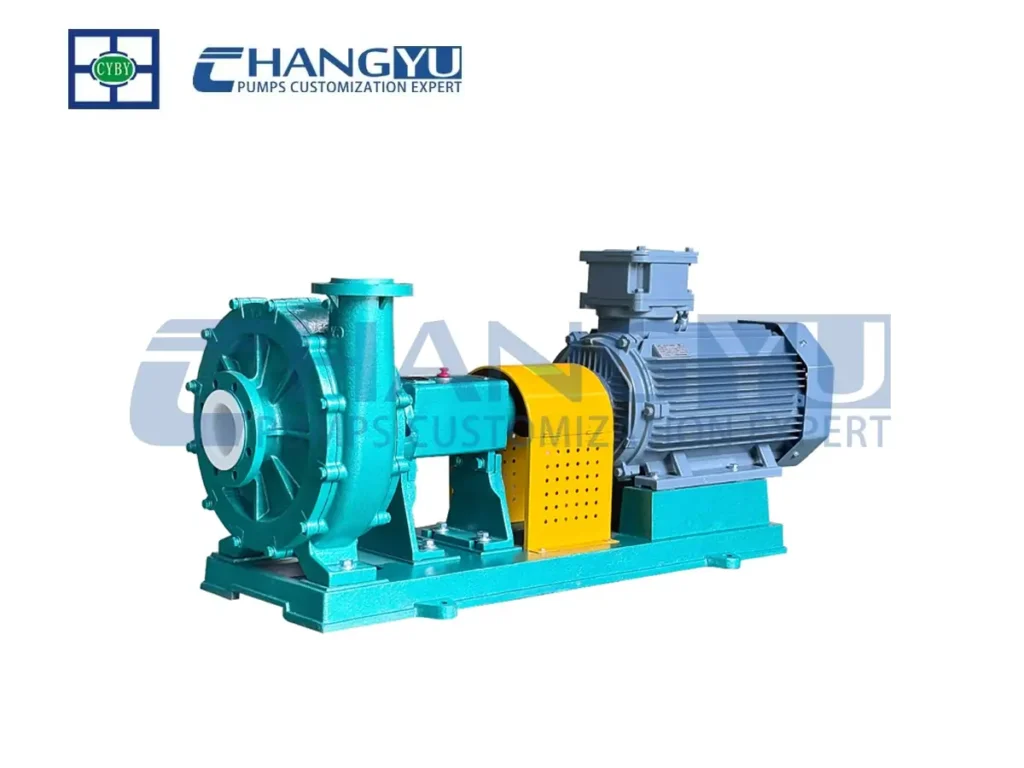
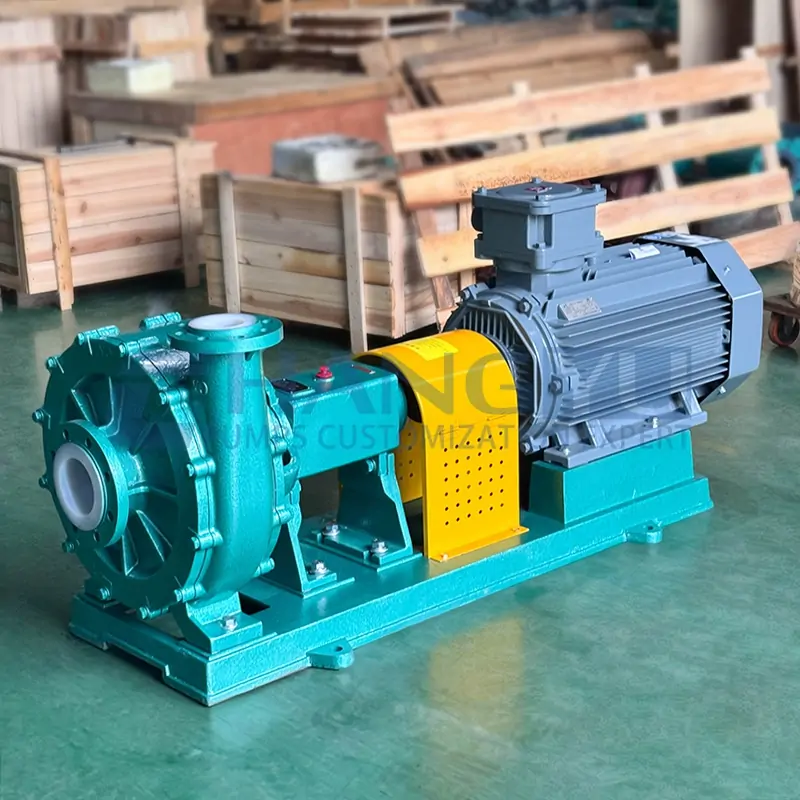
A série CYG é uma bomba química para altas temperaturas cujos componentes em contacto com o fluido são revestidos com PFA (Perfluoroalcoxi). O PFA combina a resistência química quase universal do PTFE com uma temperatura de serviço estrutural contínua de aproximadamente 160 °C — e até aproximadamente 260 °C para o próprio material em aplicações não estruturais. O revestimento de PFA é integrado ao corpo da bomba de aço por meio de um avançado processo de sinterização moldada, eliminando efetivamente o risco de fissuração do fluoroplástico sob ciclos térmicos. Um impulsor semiaberto e uma configuração de vedação mecânica de duas extremidades ou vedação dinâmica do tipo K permitem que a bomba processe lamas ácidas e alcalinas contendo partículas sólidas, líquidos residuais corrosivos e meios químicos complexos a temperaturas elevadas.
Especificações principais: Caudal 3–2 600 m³/h | Altura manométrica 5–100 m | Potência 0,75–300 kW | Temperatura -80 °C a 160 °C (estrutural); o material PFA resiste a temperaturas contínuas até ~260 °C
Bomba centrífuga de aço inoxidável para produtos químicos da série CYH
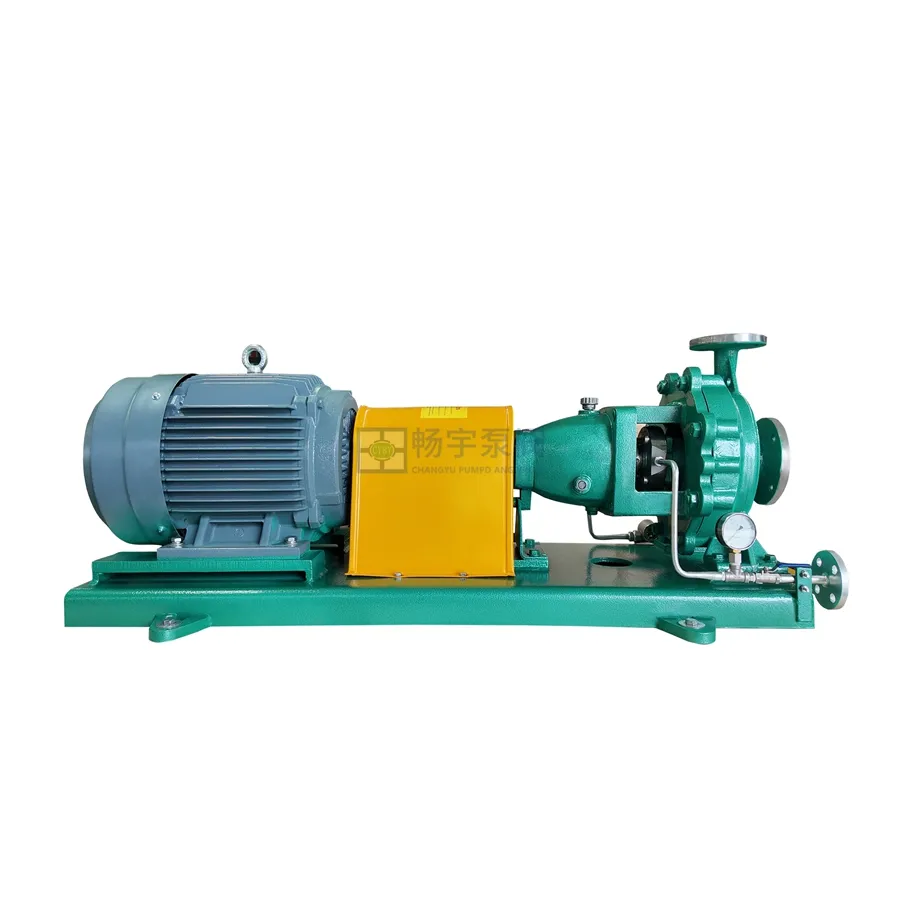
A série CYH é uma bomba centrífuga cantilever de aspiração simples, de fase única, concebida e identificada de acordo com ISO 2858-1975(E). Construído em aço inoxidável - Aço 304, 316, 316L ou duplex — está classificada para funcionamento contínuo entre -20 °C e 165 °C (até 280 °C para meios de alta temperatura). Para aplicações de alta temperatura, a Série CYH em aço inoxidável 316L ou duplex oferece a resistência à corrosão e a resistência a altas temperaturas necessárias para água quente, óleos térmicos e intermediários químicos. A sua conformidade com a norma ISO 2858 garante a intercambiabilidade dimensional e um desempenho previsível.
Especificações principais: Caudal 0,8–750 m³/h | Altura manométrica 3–130 m | Potência 2,2–110 kW | Velocidade 968–3 450 r/min | Temperatura -20 °C a 165 °C (até 280 °C)
Bomba de transferência de produtos químicos corrosivos da série CYB-ZKJ
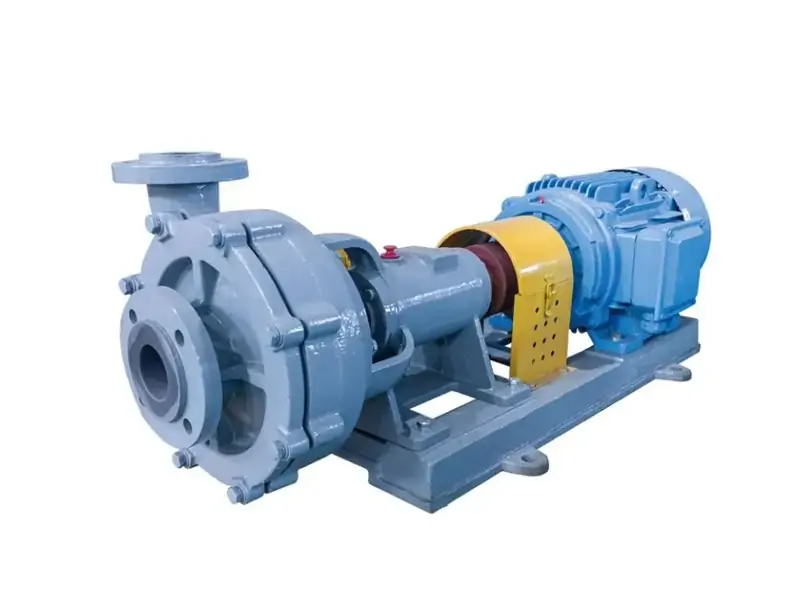
A série CYB-ZKJ é uma bomba centrífuga de alto desempenho com FEP revestimento (PFA disponível para utilização a altas temperaturas). Transporta líquidos corrosivos, lamas minerais e ácidos diluídos contendo até 20% de partículas sólidas flexíveis, num intervalo de temperaturas de -80 °C a 120 °C. Para a transferência de produtos químicos corrosivos a altas temperaturas nas indústrias de processamento químico, metalúrgica e de proteção ambiental, a Série CYB-ZKJ oferece ampla compatibilidade química dentro de uma plataforma de bombas centrífugas comprovada em campo.
Especificações principais: Caudal 3-2.600 m³/h | Altura 5-100 m | Potência 0,75-300 kW | Temperatura -80°C a 120°C | Materiais: Revestimento FEP (PFA opcional)
Perguntas frequentes sobre bombas para altas temperaturas
P1: A partir de que temperatura é que uma bomba necessita de características de conceção especiais?
R: Os modelos padrão de bombas são geralmente adequados para funcionamento contínuo até aproximadamente 120 °C, com base nos limites de estabilidade térmica dos anéis O-ring e juntas elastoméricas padrão. Acima de 120 °C, as vedações elastoméricas, a lubrificação dos rolamentos e a expansão térmica da carcaça requerem atenção por parte dos engenheiros. A montagem na linha central é a especificação padrão acima de 150 °C e é obrigatória acima de 200 °C. As folgas internas de funcionamento devem ser aumentadas quando a temperatura do fluido exceder 260 °C, para acomodar a maior magnitude do crescimento térmico.
P2: Qual é o melhor material para uma bomba de alta temperatura?
R: O “melhor” material depende da composição química específica do fluido à temperatura de funcionamento. Para serviços gerais com óleo térmico e hidrocarbonetos até aproximadamente 425 °C, o aço carbono oferece resistência mecânica e resistência à corrosão adequadas. Para produtos químicos corrosivos a altas temperaturas, o aço inoxidável 316L é adequado até aproximadamente 425 °C; o Hastelloy C-276 amplia a faixa de operação para aproximadamente 650 °C. Para ácidos fortes a 120–180 °C, as bombas revestidas a PFA oferecem uma resistência química quase universal. Para serviços em refinarias e petroquímicos acima de 300 °C, o aço C6 (cromo 12%) é especificado pela sua combinação de resistência à corrosão e resistência a altas temperaturas.
Q3: Como é que os vedantes mecânicos são protegidos das altas temperaturas?
R: Abaixo dos 200 °C, uma vedação mecânica simples com refrigeração interna por circulação de fluido (API Plano 21 ou Plano 23) é normalmente suficiente. Entre 200 °C e 300 °C, é necessária uma vedação mecânica com fole metálico e refrigeração da câmara de vedação por camisa — o fole elimina a vedação secundária dinâmica de elastómero. Acima de 300 °C, as vedações com fole metálico com refrigeração por camisa de vapor de média pressão são a especificação padrão. O vapor proporciona refrigeração de arrefecimento durante o funcionamento e mantém o fluido de vedação quente durante o estado de espera.
P4: Por que é que a montagem na linha central é necessária para bombas de alta temperatura?
R: A montagem na linha central fixa a carcaça da bomba na linha central do eixo, em vez de na sua base. Quando a carcaça se expande devido ao calor, a expansão é simétrica em relação ao eixo, mantendo o alinhamento entre a bomba e o motor. As bombas com montagem em pés expandem-se assimetricamente para cima a partir da base, causando desalinhamento e vibração. A montagem na linha central é a especificação padrão acima dos 150 °C e obrigatória acima dos 200 °C.
P5: Como se evita o choque térmico ao ligar uma bomba de alta temperatura?
R: A carcaça da bomba deve ser pré-aquecida até atingir uma temperatura aproximada de 55 °C abaixo da temperatura de funcionamento antes do arranque da bomba. A taxa de aquecimento não deve exceder 55 °C por hora, para evitar fissuras por choque térmico — um risco específico para carcaças de ligas com elevado teor de crómio, que apresentam uma condutividade térmica inferior à do aço ao carbono. Estes requisitos de pré-aquecimento são especificados pela norma API 610 para procedimentos de pré-aquecimento de bombas em refinarias. O pré-aquecimento é realizado através da circulação do fluido de processo quente pela carcaça da bomba, por meio de uma linha de derivação de aquecimento, com a bomba parada. Assim que a temperatura da carcaça se estabilizar, a bomba pode ser ligada e a derivação fechada.
P6: Uma bomba de acionamento magnético é capaz de lidar com produtos químicos a altas temperaturas?
R: Sim, dentro de limites de temperatura específicos. As bombas de acionamento magnético revestidas a PFA são normalmente concebidas para funcionamento contínuo até aproximadamente 180 °C, estando limitadas pela classificação de temperatura estrutural do revestimento de PFA e pelos materiais dos rolamentos internos. A temperatura do invólucro de contenção deve ser monitorizada durante o funcionamento, uma vez que o aquecimento por correntes de Foucault pode elevar a temperatura do invólucro acima da temperatura prevista do processo. Para temperaturas mais elevadas, as bombas de acionamento magnético em aço inoxidável ou Hastelloy com materiais adequados para os rolamentos internos ampliam a gama de funcionamento.
P7: Qual é o intervalo de temperatura de uma bomba revestida a PFA?
R: As bombas centrífugas e de acionamento magnético revestidas a PFA são normalmente concebidas para funcionamento contínuo entre aproximadamente -20 °C e 160 °C em aplicações estruturais em que o revestimento suporta carga mecânica. O próprio material PFA pode suportar temperaturas de funcionamento contínuo até aproximadamente 260 °C em aplicações estáticas, sem suporte de carga. O PFA oferece menor permeabilidade ao gás do que o PTFE, reduzindo o risco de corrosão da parte posterior da carcaça de aço causada pela permeação ao manusear ácidos de moléculas pequenas a temperaturas elevadas.
P8: O que é o fluxo térmico mínimo (MTF) e por que é importante?
R: O Fluxo Térmico Mínimo (MTF) é a vazão mais baixa à qual uma bomba centrífuga pode funcionar sem que a temperatura do fluido aumente de forma inaceitável devido à recirculação interna. Quando uma bomba funciona com uma vazão muito baixa, o impulsor agita o fluido, convertendo energia mecânica em calor. Em condições de alta temperatura, esta entrada de calor pode elevar a temperatura do fluido acima do seu ponto de ebulição à pressão de sucção da bomba, causando vaporização e cavitação. Se o caudal do processo não puder exceder de forma fiável o MTF, deve ser incorporada uma linha de retorno ou uma válvula de recirculação automática. O MTF é um parâmetro crítico para a proteção de bombas em altas temperaturas, particularmente durante a partida e a operação com baixa carga.
Recomendações de especialistas da Changyu Pump Engineers
- Determine a temperatura de funcionamento antes de selecionar qualquer configuração da bomba. Os requisitos técnicos sofrem alterações fundamentais a cerca de 120 °C, 200 °C e 300 °C. Uma bomba concebida para 150 °C não terá um desempenho aceitável se o mesmo modelo for utilizado a 280 °C sem se ter em conta o suporte do corpo da bomba, o tipo de vedação e a configuração de refrigeração.
- Verificar a compatibilidade do material à temperatura máxima de funcionamento e não à temperatura nominal do processo. As taxas de corrosão química podem duplicar por cada aumento de 10 °C na temperatura. Um material que resiste a um produto químico a 25 °C pode falhar rapidamente a 150 °C. Verifique todos os componentes em contacto com o fluido — carcaça, impulsor, manga do eixo, anéis O-ring, juntas e faces de vedação — em relação às piores condições térmicas e químicas possíveis.
- Conceber o sistema de arrefecimento para a caixa de rolamentos e não apenas para a câmara de vedação. As consequências financeiras de uma avaria num rolamento causada pela degradação térmica do lubrificante excedem em muito o custo de integrar um sistema de refrigeração da caixa do rolamento na fase de especificação.
- Pré-aqueça a bomba à temperatura especificada antes de cada arranque a frio. O choque térmico resultante da introdução de fluido quente numa carcaça fria pode provocar fissuras nas carcaças de alta liga. A taxa de aquecimento não deve exceder 55 °C por hora, e a carcaça deve estar a uma temperatura não superior a 55 °C da temperatura de funcionamento antes do arranque da bomba. Estes requisitos são especificados pela norma API 610 para o pré-aquecimento de bombas de refinaria.
- Considere o custo total de propriedade num horizonte de vários anos. Uma bomba com um custo inicial mais elevado, mas com uma vida útil das juntas substancialmente mais longa a altas temperaturas, apresenta consistentemente um custo total de propriedade (TCO) mais baixo do que uma bomba padrão que requer a substituição frequente das juntas. É importante ter em conta os custos energéticos, a frequência de substituição das juntas, a mão-de-obra de manutenção e os custos de produção decorrentes de paragens não planeadas.
Conclusão
A bomba para altas temperaturas é definido pelas condições térmicas a que deve resistir. A abordagem de engenharia para a sua especificação começa com uma classificação de temperatura em três níveis — 120–200 °C, 200–300 °C e acima de 300 °C —, cada um com requisitos específicos para o suporte da carcaça, os materiais de construção, o tipo de vedação e a configuração de arrefecimento.
As bombas centrífugas com vedantes de fole metálico são utilizadas em aplicações com óleo térmico e em refinarias a temperaturas até 400 °C. As bombas de acionamento magnético com revestimentos em PFA proporcionam contenção sem fugas para produtos químicos corrosivos a altas temperaturas, até 180 °C. As bombas com motor encapsulado proporcionam contenção redundante para fluidos tóxicos a alta pressão e alta temperatura. As bombas de deslocamento positivo lidam com fluidos quentes de alta viscosidade, onde a eficiência centrífuga diminui.
Em todos os tipos de bombas, os princípios de engenharia mantêm-se os mesmos: determinar a temperatura, selecionar os materiais tendo em conta as condições térmicas e químicas mais adversas, conceber a vedação e o sistema de arrefecimento para uma carga térmica contínua, pré-aquecer a bomba antes de cada arranque a frio e avaliar o custo total de propriedade (TCO) num horizonte de vários anos.
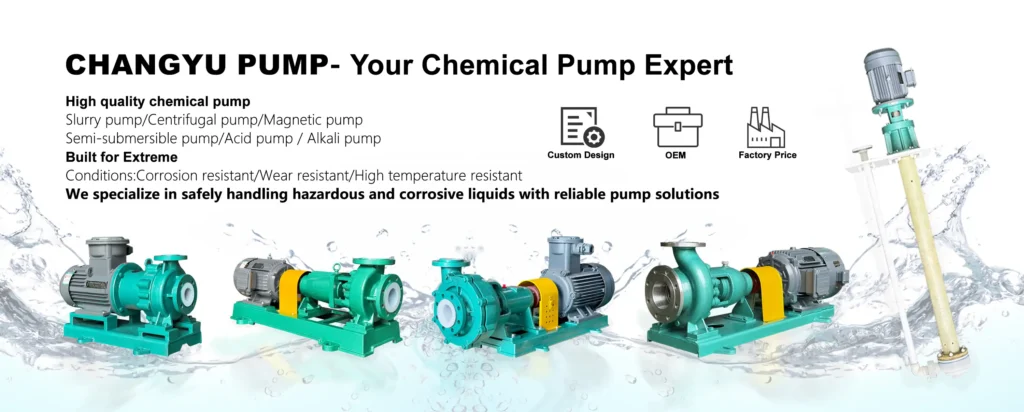
As bombas das séries CYG, CYH, CYB-ZKJ e CYL da Changyu Pump oferecem plataformas de bombas com revestimento em fluoroplástico, em aço inoxidável e com acionamento magnético para aplicações químicas a altas temperaturas, com óleo térmico e de processo. Contactar a nossa equipa de engenharia com os parâmetros do seu fluido térmico. Iremos fornecer-lhe uma recomendação detalhada sobre a bomba e um orçamento adaptado à sua aplicação de alta temperatura.