
Trả lời nhanh
Bơm nước biển là các bơm công nghiệp được thiết kế để chịu được môi trường ăn mòn tấn công thông qua các cơ chế cục bộ, thường ẩn khuất. Với nồng độ clorua 19.000–23.000 mg/L, nước biển phá vỡ lớp oxit thụ động trên thép không gỉ thông qua ăn mòn rỗ, ăn mòn khe hở và nứt do ăn mòn ứng suất — hư hỏng có thể đục thủng các bộ phận trong khi bề mặt xung quanh vẫn nguyên vẹn. Các yếu tố lựa chọn chính bao gồm:
- (1) Lựa chọn vật liệu — quyết định quan trọng nhất. Chỉ số chống ăn mòn rỗ (PREN) định lượng điều này: 316L (PREN 23–28) không đạt mức tối thiểu PREN 32–35 cần thiết cho ngâm nước biển liên tục. Duplex 2205 (PREN 33–36) cung cấp mức cơ bản; super duplex 2507 (PREN 40–44) xử lý nước biển ấm hoặc có cát; 6Mo super austenitic (PREN 43–48) và titan phục vụ các điều kiện ứ đọng hoặc nhiệt độ cao khắc nghiệt nhất.
- (2) Cấu hình bơm — bơm trục đứng dài chiếm ưu thế trong đầu vào nước biển; bơm ly tâm ngang phục vụ vận chuyển trong nhà máy; bơm chìm giải quyết các lắp đặt giếng sâu.
- (3) Chiến lược bảo vệ — bảo vệ catốt (cần thiết), các biện pháp chống bám bẩn và xả nước ngọt trong thời gian chờ cùng nhau quyết định liệu một bơm được chỉ định đúng có đạt được tuổi thọ thiết kế hay hỏng sớm.
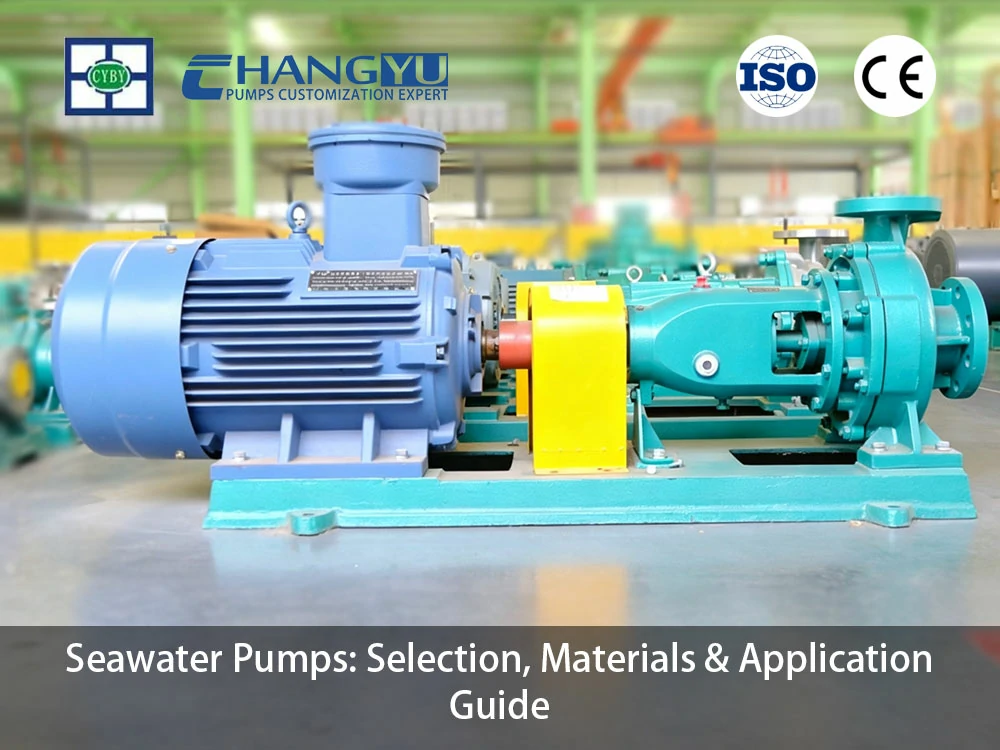
Nước biển ăn mòn khác với axit mạnh. Trong khi axit hòa tan bề mặt kim loại một cách rõ ràng, nước biển tấn công thông qua các cơ chế cục bộ thường vô hình cho đến khi một bộ phận hỏng. Các ion clorua xâm nhập lớp oxit thụ động trên thép không gỉ tại các điểm riêng lẻ, tạo ra các vết rỗ sâu trong khi vật liệu xung quanh không bị ảnh hưởng. Sự khác biệt giữa một bơm hỏng sau hai năm và một bơm hoạt động đáng tin cậy trong hai mươi năm thường chỉ là một quyết định thông số kỹ thuật: lựa chọn vật liệu.
Changyu Pump đã sản xuất bơm chống ăn mòn cho khử muối, phát điện ven biển, giàn khoan ngoài khơi và các ứng dụng hàng hải trong hơn hai thập kỷ phục vụ nước biển liên tục. Hướng dẫn này trình bày các lựa chọn vật liệu, cấu hình bơm, phương pháp bảo vệ và tiêu chuẩn quyết định liệu một bơm nước biển có mang lại hiệu suất lâu dài đáng tin cậy hay trở thành vấn đề bảo trì tái diễn.
Các Loại Bơm Nước Biển Chính Là Gì?
Cấu Hình Bơm Nước Biển: Thiết Kế Đứng, Ngang và Chìm
Bơm nước biển thuộc ba loại cấu trúc, mỗi loại phù hợp với các bố trí đầu vào và bố trí nhà máy khác nhau.
Bơm Tuabin Đứng:
Con ngựa thồ của đầu vào nước biển. Một động cơ đặt phía trên mực nước trên đầu xả dẫn động một trục kéo dài xuống các cánh bơm chìm. Độ cao này giữ các bộ phận điện tránh xa môi trường ăn mòn — một lợi thế cơ bản trong dịch vụ nước biển. Bơm đứng xử lý lưu lượng từ hàng trăm đến hơn 20.000 m³/h ở cột áp vừa phải, tự nhiên thích ứng với sự thay đổi thủy triều mà không cần hệ thống mồi, và chiếm ưu thế trong các ứng dụng nước làm mát, nước chữa cháy và cấp liệu khử muối.
Bơm Ly Tâm Ngang:
Trong khi bơm đứng xử lý đầu vào, bơm ngang quản lý các nhiệm vụ trong nhà máy. Được lắp đặt ở mặt bằng với hút ngập, chúng cung cấp khả năng tiếp cận bảo trì dễ dàng hơn so với thiết kế đứng — toàn bộ bơm có thể tiếp cận mà không cần tháo các bộ phận khỏi bể thu. Các ứng dụng phổ biến bao gồm tăng áp cấp màng RO, vòng làm mát thứ cấp và duy trì áp lực nước chữa cháy. Mọi bộ phận tiếp xúc với chất lỏng — vỏ, cánh bơm, trục, phớt cơ khí — đều yêu cầu thông số kỹ thuật vật liệu cấp nước biển.
Máy bơm chìm:
Động cơ và bơm được tích hợp thành một bộ phận chìm duy nhất. Chúng phục vụ cấp nước biển giếng sâu và lắp đặt caisson nơi chiều dài trục cần thiết cho bơm tuabin đứng trở nên không thực tế. Niêm phong động cơ kín, kết cấu chống ăn mòn và phớt cơ khí kép với phát hiện độ ẩm là các yêu cầu tiêu chuẩn.
Ứng Dụng Bơm Nước Biển: Từ Khử Muối Đến Giàn Khoan Ngoài Khơi
| Loại bơm | Cấu hình | Phạm vi lưu lượng | Dịch Vụ Điển Hình |
|---|---|---|---|
| Nâng / đầu vào nước biển | Tuabin đứng | 500–20.000+ m³/h | Nước làm mát, cấp liệu khử muối, nước chữa cháy |
| Tuần hoàn nước làm mát | Đứng hoặc ngang | 000–50.000+ m³/h | Làm mát ngưng tụ một lần |
| Cấp cao áp RO | Ngang đa tầng | 50–500 m³/h | Màng khử muối SWRO |
| Nước chữa cháy | Đứng hoặc ngang | 200–5.000 m³/h | Bảo vệ cháy giàn khoan ngoài khơi và ven biển |
| Tăng áp nước biển | Ngang | 50–2.000 m³/giờ | Vận chuyển trong nhà máy, tăng áp |
| La canh / dằn tàu | Ngang hoặc chìm | 20–500 m³/giờ | Hệ thống nước biển trên tàu |
Vật Liệu Chính Cho Bơm Nước Biển Là Gì?
Cơ chế ăn mòn nước biển khác biệt cơ bản so với ăn mòn nước ngọt. Trong nước ngọt, ăn mòn tổng thể chiếm ưu thế — kim loại hòa tan đồng đều. Trong nước biển, các ion clorua tấn công lớp oxit thụ động trên thép không gỉ tại các điểm riêng lẻ, tạo ra các vết rỗ sâu xuyên qua vật liệu trong khi bề mặt xung quanh không bị ảnh hưởng. Sự tấn công cục bộ này làm cho việc lựa chọn vật liệu quan trọng hơn nhiều so với các ứng dụng bơm công nghiệp tiêu chuẩn.
Định Lượng Khả Năng Chống Rỗ: Phương Pháp PREN
Chỉ số chống ăn mòn rỗ (PREN) dự đoán khả năng chống rỗ do clorua của thép không gỉ:
PREN = %Cr + 3.3(%Mo) + 16(%N)
Đối với các cấp duplex chứa vonfram: PREN = %Cr + 3.3(%Mo + 0.5%W) + 16(%N)
PREN 32–35 là ngưỡng tối thiểu được khuyến nghị cho ngâm nước biển liên tục. Các giá trị trên 40 được chỉ định cho nước ấm (trên 25°C), điều kiện ứ đọng hoặc môi trường clorua cao.
Ví dụ thực tế, super duplex 2507 (thành phần điển hình: 25% Cr, 4% Mo, 0.27% N) cho:
PREN = 25 + 3.3(4) + 16(0.27) = 25 + 13.2 + 4.32 = 42.52
PREN trên 40 này giải thích tại sao 2507 chịu được điều kiện nước biển ấm mà 316L (PREN thường 23–28) sẽ nhanh chóng bị rỗ.
Lựa Chọn Vật Liệu Cho Chế Tạo Bơm Nước Biển
| Chất liệu | Cấp Điển Hình | Dải PREN | Phù Hợp Cho | Điểm Cần Lưu Ý |
|---|---|---|---|---|
| Thép không gỉ 316L | UNS S31603 | 23–28 | Nước lợ; tiếp xúc gián đoạn với xả nước ngọt kỹ lưỡng | Rỗ bắt đầu trên 15–20°C trong nước biển liên tục — không được khuyến nghị |
| Căn hộ hai tầng 2205 | UNS S31803/S32205 | 33–36 | Nước biển liên tục dưới 30°C; khả năng chống nứt do ăn mòn ứng suất clorua tốt | Giới hạn nhiệt độ trên; tránh nước biển ấm tù đọng |
| Thép Super Duplex 2507 | UNS S32750 | 40–44 | Nước biển ấm; lưu lượng cao; điều kiện cát/xói mòn | Chi phí cao hơn; xác minh PREN trên chứng chỉ vật liệu |
| 6Mo Siêu Austenit | UNS N08367/N08904 | 43–48 | Nước biển ấm, tù đọng; nơi ăn mòn khe hở là mối quan tâm chính | Chi phí cao hơn; độ bền cơ học thấp hơn duplex |
| Đồng Niken-Nhôm | C95800 | Không phải thép không gỉ | Vật liệu bánh công tác và vỏ bơm truyền thống | Yêu cầu bảo vệ catốt; nguy cơ khử hợp kim |
| Titanium Cấp 2 | UNS R50400 | Miễn nhiễm với rỗ Cl | Khả năng chống chịu tối ưu; chịu được nước biển lên đến ~80°C | Chi phí cao; nguy cơ ăn mòn khe hở trên 80°C; không phù hợp với nước biển chứa florua ở bất kỳ nhiệt độ nào |
Ghép Vật liệu Bơm với Điều kiện Nước biển
| Điều kiện Nước biển | Nhiệt độ | Dòng chảy | Chất liệu | PREN Tối thiểu |
|---|---|---|---|---|
| Lạnh, sạch | < 20°C | < 2 m/s | Căn hộ hai tầng 2205 | ≥ 33 |
| Ấm, sạch, chảy | 20–35°C | > 1 m/s | Thép Super Duplex 2507 | ≥ 40 |
| Lạnh, có cát | < 20°C | > 3 m/s | Thép Super Duplex 2507 | ≥ 40 |
| Ấm, tù đọng | > 25°C | < 0,5 m/s | 6Mo hoặc Titanium | ≥ 43 |
| Khử khí (bơm ép ngoài khơi) | Biến | Biến | Super Duplex 2507 (xác minh NACE MR0175) | ≥ 40 |
Qua hai thập kỷ sản xuất bơm nước biển, chúng tôi đã thấy cùng một mô hình lặp lại: 316L được chỉ định để tiết kiệm chi phí ban đầu, rỗ ăn mòn xuất hiện trong vòng 12–18 tháng trong nước biển ấm, và chi phí sửa chữa cùng thời gian ngừng hoạt động vượt xa chênh lệch chi phí vật liệu. Cấp tối thiểu chấp nhận được cho ngâm nước biển liên tục là duplex 2205. Đối với nước trên 25°C, môi trường clorua cao, hoặc bất kỳ điều kiện nào mà bơm tiếp xúc với nước biển tù đọng trong thời gian ngừng hoạt động, super duplex 2507 hoặc 6Mo là thông số kỹ thuật phù hợp.
Thẳng đứng so với Ngang: Cấu hình Bơm Nước biển nào?
Sự lựa chọn giữa cấu hình thẳng đứng và ngang được thúc đẩy bởi cách bố trí cửa hút và triết lý bảo trì hơn là bởi hóa học nước biển.
Bơm Nước biển Thẳng đứng so với Ngang: So sánh Song song
| Yếu tố | Bơm Tuabin Thẳng đứng / Trục Dài | Bơm ly tâm ngang |
|---|---|---|
| Dấu chân | Nhỏ ở mặt bằng; động cơ nâng cao trên mặt nước | Diện tích lớn hơn; yêu cầu nhà bơm hoặc mái che |
| NPSH | Bánh công tác chìm — lợi thế NPSH vốn có; ít lo ngại về hút | Yêu cầu hút ngập hoặc tính toán NPSH cẩn thận; tổn thất đường ống hút |
| Bảo trì | Động cơ có thể tiếp cận ở mặt bằng; rút bơm từ bể thu cho công việc lớn — yêu cầu cần cẩu, ngắt kết nối đường ống | Toàn bộ bơm ở mặt bằng; thay thế bánh công tác và phớt mà không cần tháo vỏ bơm |
| Cấu trúc gioăng | Phớt trục trên mực nước — giảm nguy cơ rò rỉ; thiết kế phớt đơn giản hơn | Phớt trục tiếp xúc trực tiếp với nước biển — yêu cầu phớt cơ khí cao cấp có xả |
| Môi trường động cơ | Động cơ trên mực nước — được bảo vệ khỏi tia nước biển, tác động sóng và ngập lụt | Động cơ ở mặt bằng — yêu cầu bảo vệ thời tiết và đánh giá rủi ro ngập lụt |
| Phản ứng thủy triều | Tự điều chỉnh theo mực nước | Thiết kế hút phải bao phủ mực thủy triều thấp nhất |
| Yếu tố độ tin cậy | Đường trục dài hơn với nhiều ổ đỡ — nhiều điểm mòn hơn; căn chỉnh quan trọng | Trục ngắn hơn, ít ổ đỡ hơn — động lực học rôto đơn giản hơn; ít điểm hỏng hóc tiềm ẩn hơn |
| Chi phí tương đối | Cao hơn — trục dòng, đầu xả, xây dựng bể thu | Thấp hơn cho lắp đặt tiêu chuẩn |
| Sử dụng chính | Hút nước biển trực tiếp, nước làm mát, nâng nước chữa cháy | Chuyển trong nhà máy, tăng áp RO, tăng áp chữa cháy |
Lựa chọn Giữa Cấu hình Thẳng đứng và Ngang
Bơm thẳng đứng là tiêu chuẩn để hút nước biển trực tiếp từ biển, giếng ướt hoặc bể thu sâu — bất cứ nơi nào mực nước thay đổi hoặc lực hút nâng không thực tế. Bơm ngang phục vụ tốt nhất khi có hút ngập, tiếp cận ở mặt bằng đơn giản hóa bảo trì và bơm hoạt động trong môi trường nhà máy được kiểm soát thay vì tại cấu trúc hút.
Bơm Nước biển được Sử dụng ở đâu?
Bơm nước biển hoạt động trong các ngành công nghiệp phụ thuộc vào nước biển để làm mát, xử lý hoặc sản xuất.
Khử muối:
Nhà máy SWRO phụ thuộc vào bơm nước biển tại ba điểm quan trọng: bơm hút tuabin thẳng đứng lấy nước biển thô qua lưới chắn di động, bơm cao áp đa tầng ngang thúc đẩy tách màng ở 60–80 bar và bơm xả cô đặc trả nước muối về biển. Yêu cầu vật liệu khác nhau ở mỗi giai đoạn — bơm hút đối mặt với nước biển thô, chưa lọc với tất cả hoạt động sinh học và chất rắn lơ lửng, trong khi bơm cao áp xử lý nước biển đã được sàng lọc, lọc nhưng ở áp suất khuếch đại bất kỳ điểm yếu ăn mòn nào.
Phát điện Ven biển:
Làm mát ngưng tụ một lần di chuyển khối lượng lớn — 10.000–50.000+ m³/h mỗi tổ máy phát. Bơm tuabin thẳng đứng nâng nước biển từ kênh hút đến bình ngưng. Sự kết hợp của vận tốc cao, vận hành liên tục và hiệu ứng xói mòn của cát lơ lửng đòi hỏi vật liệu chống lại cả ăn mòn và xói mòn. Bơm chữa cháy, được yêu cầu riêng biệt bởi các quy tắc an toàn, phải khởi động đáng tin cậy theo yêu cầu sau thời gian chờ kéo dài — một điều kiện làm cho việc xả nước ngọt trong thời gian nhàn rỗi trở nên quan trọng về mặt vận hành.
Dầu khí Ngoài khơi:
Bơm nâng nước biển trên giàn khoan cung cấp cho nhiều hệ thống từ một cửa hút chung: nước làm mát, nước chữa cháy, nước bơm ép hồ chứa và nước uống khử muối. Môi trường ngoài khơi làm tăng thêm thách thức về vật liệu — hạn chế tiếp cận bảo trì, chuyển động giàn khoan, nguy cơ nhiễm hydrocarbon và yêu cầu trình độ vật liệu NORSOK M-650 bắt buộc. Một sự cố bơm nước biển trên giàn khoan không người lái có thể ngừng sản xuất trong nhiều ngày trong khi một bơm thay thế được huy động.
Hàng hải:
Bơm tàu thủy xử lý làm mát động cơ, nước dằn, chữa cháy và bơm hầm tàu. Các tổ chức phân cấp áp đặt các yêu cầu cụ thể về vật liệu, thử nghiệm và dự phòng thay đổi theo loại tàu và quốc gia treo cờ.
Nhà ga Tiếp nhận LNG:
Bơm nước biển thiết bị bay hơi dàn mở hoạt động ở 20.000+ m³/h để tái khí hóa khí tự nhiên hóa lỏng. Nhiệt độ nước biển giảm khi đi qua bộ trao đổi nhiệt thiết bị bay hơi — nước biển lạnh thoát ra khỏi bộ trao đổi mạnh hơn nước ở nhiệt độ môi trường đi vào, một chi tiết phải được thông báo trong thông số kỹ thuật vật liệu.
Làm thế nào để Bảo trì và Bảo vệ Bơm Nước biển?
Lựa chọn vật liệu cung cấp nền tảng. Các biện pháp bảo vệ quyết định liệu bơm có đạt được tuổi thọ thiết kế hay không.
Bảo vệ catốt: Anốt hy sinh và Hệ thống dòng điện cưỡng bức
Bảo vệ catốt (CP) ngăn ngừa ăn mòn bằng cách biến cấu trúc máy bơm thành catốt của một tế bào điện hóa. Hai phương pháp được sử dụng trong các ứng dụng máy bơm nước biển:
- Anốt hy sinh: Anốt kẽm hoặc nhôm gắn vào vỏ, bánh công tác và trục bị ăn mòn trước, bảo vệ các bộ phận máy bơm. Phải theo dõi mức tiêu hao anốt — một anốt đã tiêu hao hoàn toàn không còn khả năng bảo vệ.
- Bảo vệ catốt dòng điện cưỡng bức (ICCP): Một nguồn cấp điện một chiều bên ngoài cung cấp dòng điện được kiểm soát qua các anốt trơ đến cấu trúc máy bơm. ICCP phục vụ các máy bơm lớn nơi việc thay thế anốt hy sinh trở nên không thực tế.
Ngăn ngừa sinh vật biển phát triển: Lớp phủ, Khử trùng bằng clo và Xả nước ngọt
Sinh vật biển — hà, trai, tảo — xâm chiếm bề mặt bên trong máy bơm, phá vỡ dòng chảy, gây mất cân bằng bánh công tác và tạo ra các tế bào ăn mòn cục bộ bên dưới các điểm bám của sinh vật. Ba chiến lược bổ sung được áp dụng:
- Lớp phủ chống hà: Lớp phủ gốc epoxy hoặc silicone chuyên dụng trên các bộ phận bên trong máy bơm ngăn cản sự bám dính của sinh vật.
- Khử trùng bằng clo: Phun natri hypochlorite liều thấp tại cửa hút kiểm soát sự phát triển của sinh vật bám bẩn. Vật liệu tiếp xúc với nước biển đã khử trùng bằng clo phải chịu được tác động kết hợp của ăn mòn clorua và sự tấn công của chất oxy hóa.
- Xả nước ngọt: Trong thời gian chờ, xả bằng nước ngọt thay thế nước biển, tước đi môi trường sống của sinh vật và loại bỏ cặn chứa clorua. Xả trong 15–20 phút mỗi 72 giờ — cho đến khi nồng độ clorua trong nước thải giảm xuống dưới 500 mg/L, tương ứng với mức giảm 97%+ so với nồng độ clorua trong nước biển — thường làm tăng gấp đôi tuổi thọ hoạt động của máy bơm dự phòng.
What Industry Standards Apply to Seawater Pumps?
| Tiêu chuẩn | Những Gì Nó Điều Chỉnh 2. Khi Nào Cần Thiết 3. NORSOK M-650 4. Chứng nhận nhà sản xuất vật liệu 5. Bắt buộc cho ngoài khơi Na Uy; được áp dụng rộng rãi toàn cầu 6. Thiết kế bơm, vật liệu, thử nghiệm, tài liệu 7. Ứng dụng nước biển trong ngành dầu khí 8. Thông số kỹ thuật bơm ly tâm công nghiệp tổng quát 9. Dịch vụ nước biển công nghiệp tiêu chuẩn 10. NACE MR0175 / ISO 15156 11. Vật liệu trong môi trường chứa H2S 12. Nước biển có chứa H2S (nước sản xuất ngoài khơi, một số vị trí ven biển) 13. ASTM A890 14. Chất lượng đúc thép không gỉ Duplex 15. Tất cả các đúc bơm bằng thép không gỉ duplex và super duplex 16. Một nhà máy điện ven biển ở Đông Nam Á vận hành bốn bơm tuabin đứng cung cấp nước làm mát bình ngưng ở 28–32°C với cát lơ lửng vừa phải. Các bơm chạy liên tục với các lần dừng ngắn định kỳ để bảo trì, trong thời gian đó nước biển vẫn ứ đọng trong vỏ bơm. Thông số kỹ thuật ban đầu: cánh bơm và vòng mòn bằng thép không gỉ 316L, vỏ bơm bằng gang có lớp phủ epoxy. 17. Trong vòng 18 tháng, hai bơm có dấu hiệu lưu lượng giảm và rung động tăng. Tháo dỡ phát hiện ăn mòn rỗ trên bề mặt cánh bơm 316L, tập trung ở các vùng dòng chảy thấp và khe hở giữa cánh bơm và trục. Lớp phủ epoxy trên vỏ bơm bị phồng rộp và bong tróc ở các khu vực vận tốc cao, để lộ gang ra tiếp xúc trực tiếp với nước biển. 18. Cơ chế hỏng hóc là điển hình của ăn mòn rỗ 316L do clorua. Ở 28–32°C, PREN của 316L (23–28) không đủ cho nước biển — lớp oxit thụ động không thể tái tạo đủ nhanh để ngăn chặn sự khởi tạo vết rỗ, đặc biệt là trong các khe hở nơi các ion clorua tập trung. Cát lơ lửng đã đẩy nhanh quá trình bằng cách loại bỏ cơ học lớp màng thụ động đã bị suy yếu. Sự hỏng hóc của epoxy là do chuẩn bị bề mặt không đầy đủ trước khi phủ và xói mòn vận tốc cao tại lưỡi cắt của buồng xoắn ốc. 19. Giải pháp — Nâng cấp Vật liệu: 20. Cánh bơm và vòng mòn được nâng cấp lên super duplex 2507 (PREN 40–44) 21. Vỏ bơm được nâng cấp lên duplex 2205 đặc — loại bỏ hoàn toàn lớp phủ 22. Giải pháp — Biện pháp Bảo vệ: 23. Anode hy sinh kẽm được lắp đặt bên trong vỏ bơm và đầu xả | When It’s Required |
|---|---|---|
| NORSOK M-650 | Material manufacturer qualification | Mandatory for Norwegian offshore; widely adopted globally |
| Tiêu chuẩn API 610 | Pump design, materials, testing, documentation | Petroleum industry seawater applications |
| ISO 5199 | General industrial centrifugal pump specifications | Standard industrial seawater service |
| NACE MR0175 / ISO 15156 | Materials in H2S-containing environments | Sour seawater (offshore produced water, some coastal locations) |
| ASTM A890 | Duplex stainless steel casting quality | All duplex and super duplex pump castings |
Case Study of Seawater Pumps: Solving a Seawater Corrosion Failure in a Coastal Power Plant
A coastal power plant in Southeast Asia operated four vertical turbine pumps supplying condenser cooling water at 28–32°C with moderate suspended sand. The pumps ran continuously with periodic short shutdowns for maintenance, during which seawater remained stagnant in the casings. Original specification: 316L stainless steel impellers and wear rings, cast iron casings with epoxy coating.
Within 18 months, two pumps exhibited declining flow and rising vibration. Disassembly revealed pitting corrosion across the 316L impeller surfaces, concentrated in low-flow zones and the impeller-to-shaft crevice. The casing epoxy had blistered and detached in high-velocity areas, exposing cast iron to direct seawater attack.
The failure mechanism was textbook 316L chloride pitting. At 28–32°C, the PREN of 316L (23–28) is inadequate for seawater — the passive oxide layer cannot regenerate fast enough to prevent pit initiation, particularly in crevices where chloride ions concentrate. The suspended sand accelerated the process by mechanically removing the weakened passive film. The epoxy failure traced to inadequate surface preparation before coating and high-velocity erosion at the volute cutwater.
Resolution — Material Upgrades:
- Impellers and wear rings upgraded to super duplex 2507 (PREN 40–44)
- Casings upgraded to solid duplex 2205 — coating eliminated entirely
Resolution — Protection Measures:
- Zinc sacrificial anodes installed on casing interiors and discharge heads
- Standby pump freshwater flushing implemented: 20-minute flush every 72 hours
- Low-dose sodium hypochlorite injection added at the seawater intake
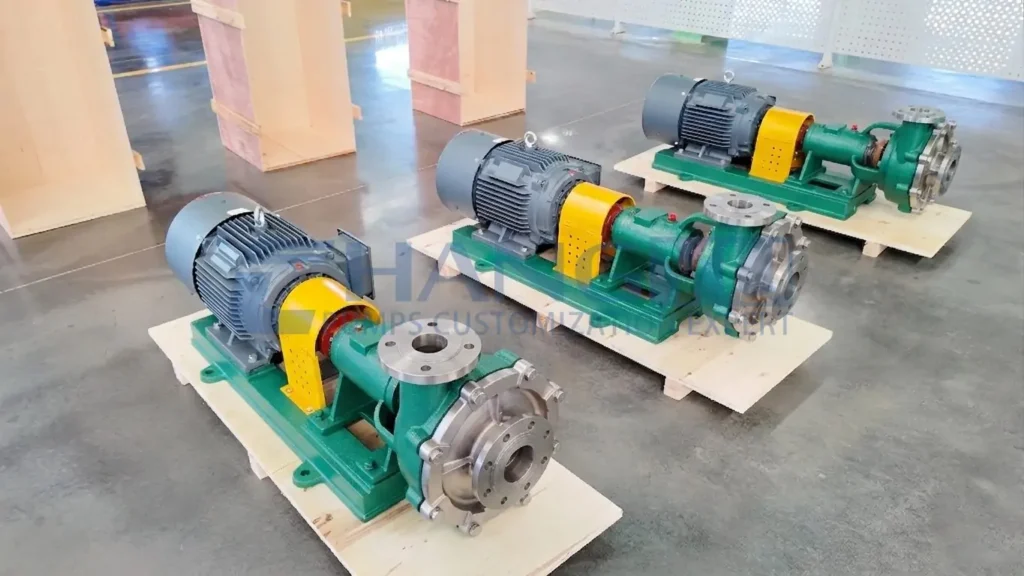
Five years of continuous operation since the upgrade: zero pitting corrosion on the super duplex impellers. Inspection intervals extended from 18 to 36 months. Standby pumps start reliably on demand — freshwater flushing eliminated the stagnant seawater corrosion that previously degraded idle equipment. The plant upgraded all remaining cooling water pumps to super duplex materials during the next scheduled overhaul cycle.
The core lesson extends beyond this single plant: 316L stainless steel cannot withstand continuous immersion in warm seawater. The chloride concentration overwhelms its passive layer at temperatures above 15–20°C. Super duplex 2507, with a PREN above 40, provides the corrosion resistance margin that makes decades-long pump service life achievable. The incremental material cost is recovered through eliminated unplanned downtime and extended maintenance intervals — typically within the first two years of operation.
Corrosion-Resistant Seawater Pump Solutions for Industrial Applications
Three pump series serve seawater applications, each addressing a different combination of corrosion severity, flow requirements, and operating temperature.
Matching Changyu Pump Series to Seawater Service Conditions
| Đơn đăng ký | Challenge | Loạt phim | Cấu hình vật liệu |
|---|---|---|---|
| Seawater intake, cooling water | Corrosion + high flow | Dòng HB | Super duplex 2507 or duplex 2205 |
| Cooling water circulation | Corrosion + continuous duty | Dòng CYB-ZKJ | FEP/PFA-lined casing + duplex impeller |
| Nước chữa cháy | Corrosion + start reliability | Dòng HB | Căn hộ hai tầng 2205 |
| Chemical dosing, chlorinated seawater | Corrosion + oxidizer attack | Dòng CYB-ZKJ | FEP/PFA-lined |
| High-temperature seawater (> 80°C) | Corrosion + heat | Dòng CYG | PFA-lined casing + super duplex or titanium impeller |
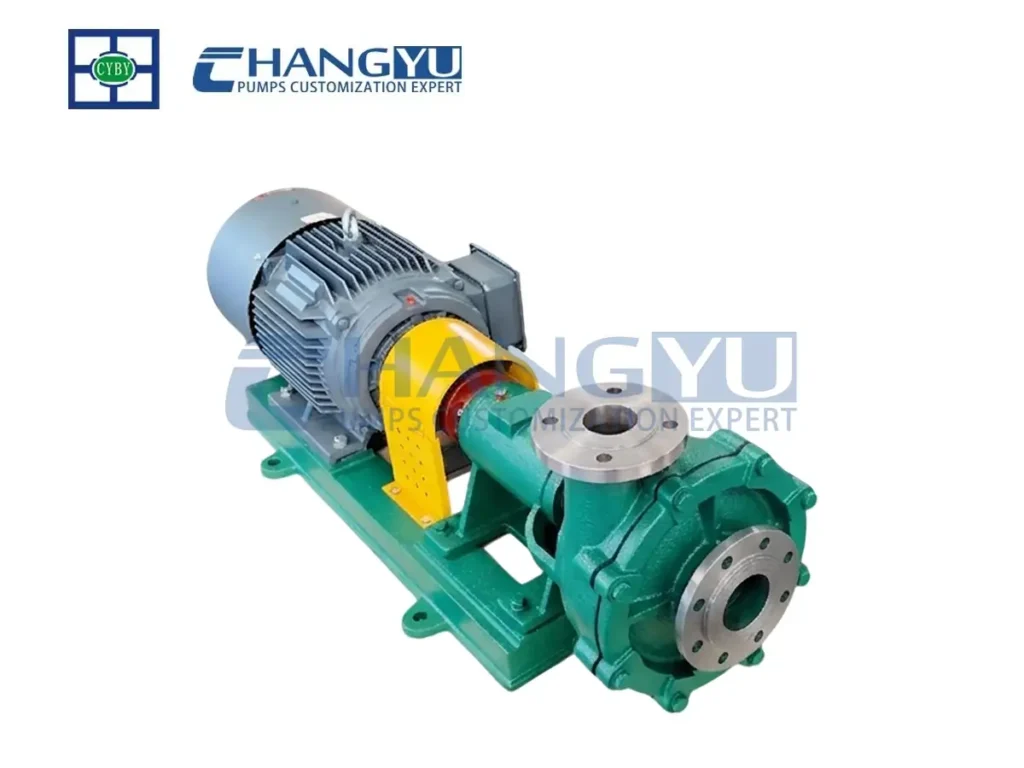
HB Series — Stainless Steel Horizontal Pump for Seawater Intake and Transfer
Horizontal centrifugal pump to ISO 2858, all stainless steel wetted construction. Configurable in 316L, duplex 2205, super duplex 2507, or 6Mo for seawater corrosion resistance across the temperature and salinity spectrum.
| Tham số | Thông số kỹ thuật |
|---|---|
| Lưu lượng | 10–60 m³/giờ |
| Trưởng phòng | 20–120 m |
| Công suất động cơ | 3–45 kW |
| Tốc độ | 2.900 vòng/phút |
| Nhiệt độ | -20°C đến 120°C |
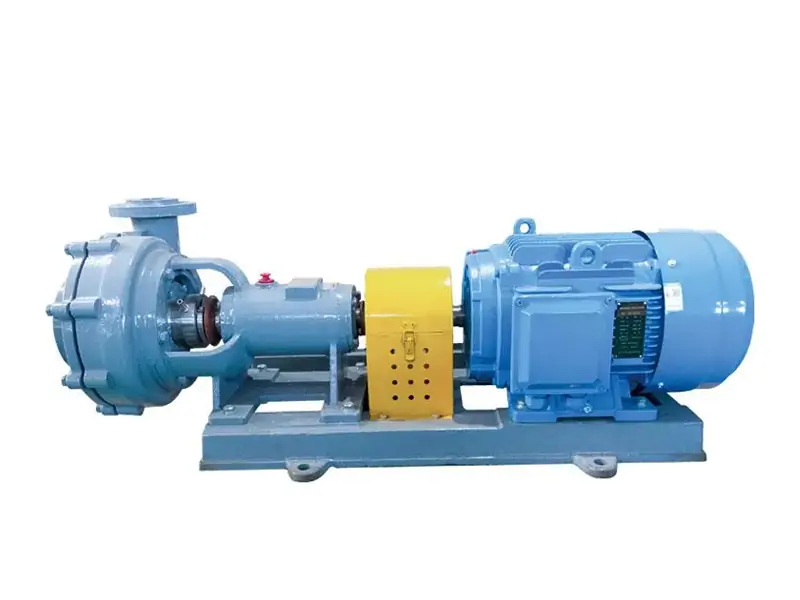
CYB-ZKJ Series — Bơm lót Fluoropolymer cho dịch vụ nước biển hóa chất và clo hóa
Bơm ly tâm lót FEP/PFA cho các ứng dụng nước biển liên quan đến định lượng hóa chất — phun hypochlorite, chất chống đóng cặn, chất keo tụ — nơi chất lỏng được bơm vừa ăn mòn vừa có tính hóa học mạnh. Lớp lót fluoropolymer cách ly hoàn toàn thân bơm khỏi chất lỏng.
| Tham số | Thông số kỹ thuật |
|---|---|
| Lưu lượng | 3–2.600 m³/giờ |
| Trưởng phòng | 5–100 m |
| Công suất động cơ | 0,75–300 kW |
| Nhiệt độ | -80°C đến 120°C |
Dòng CYG — Bơm nước biển nhiệt độ cao với lớp lót PFA đúc
Bơm lót PFA với lớp lót fluoropolymer đúc dày 8–20 mm cho nước biển nhiệt độ cao và các quy trình khử muối nhiệt. Lớp lót thiêu kết loại bỏ nguy cơ nứt liên quan đến lớp lót liên kết cơ học dưới chu kỳ nhiệt.
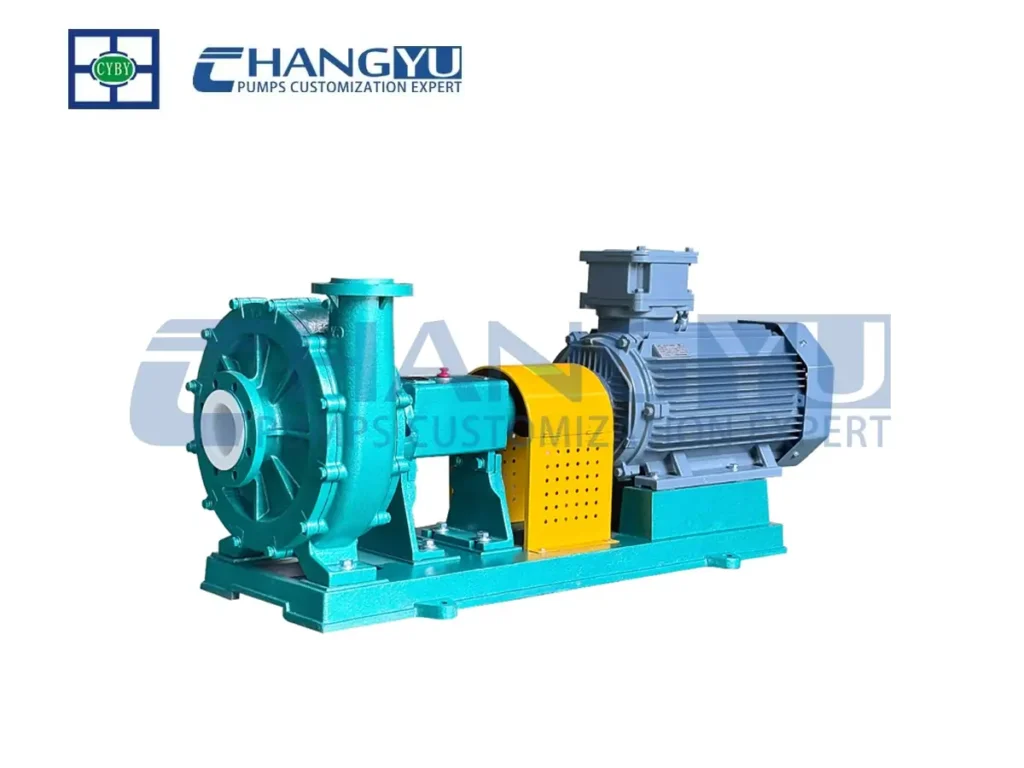
| Tham số | Thông số kỹ thuật |
|---|---|
| Lưu lượng | 3–2.600 m³/giờ |
| Trưởng phòng | 5–100 m |
| Công suất động cơ | 0,75–300 kW |
| Nhiệt độ | -80°C đến 160°C |
Câu hỏi thường gặp về Bơm nước biển
Hỏi: Tôi nên chỉ định vật liệu nào cho bánh công tác của bơm nước biển?
Đáp: Super duplex 2507 (PREN 40–44) bao phủ hầu hết các ứng dụng nước biển liên tục. 6Mo siêu austenit (PREN 43–48) xử lý các điều kiện ấm, tù đọng nơi ăn mòn khe hở là rủi ro chính. Titanium Cấp 2 phục vụ các môi trường khắc nghiệt nhất nhưng không phù hợp với nước biển chứa florua ở bất kỳ nhiệt độ nào.
Hỏi: Thép không gỉ 316L có thể hoạt động cho bơm nước biển không?
Đáp: Chỉ với những hạn chế đáng kể. PREN của nó là 23–28 không đủ trên 15–20°C khi ngâm liên tục. 316L có thể phục vụ trong tiếp xúc nước biển gián đoạn nếu bơm được xả kỹ bằng nước ngọt sau mỗi lần sử dụng, nhưng duplex 2205 là cấp độ tối thiểu được khuyến nghị cho bất kỳ bơm nước biển hoạt động liên tục nào.
Hỏi: Điều gì phân biệt 2205 và 2507 duplex không gỉ trong thực tế?
Đáp: 2205 (PREN 33–36) xử lý nước biển lạnh đến vừa phải đầy đủ dưới 30°C. 2507 (PREN 40–44) cung cấp biên độ cần thiết cho nước biển ấm, điều kiện xói mòn dòng chảy cao, nước có cát và thời gian ngừng hoạt động tù đọng. 2507 cũng cung cấp độ bền chảy cao hơn khoảng 25% — liên quan đến thiết kế bơm áp suất cao.
Hỏi: Bơm nước biển nên được bảo vệ như thế nào trong thời gian chờ?
Đáp: Xả nước ngọt mỗi 72 giờ, tiếp tục cho đến khi clorua đầu ra giảm xuống dưới 500 mg/L (giảm 97%+ so với mức nước biển). Kiểm tra cực dương hy sinh theo lịch trình đã định và thay thế trước khi chúng bị tiêu hao hoàn toàn. Đối với thời gian chờ kéo dài, đổ đầy nước ngọt có chất ức chế vào thân bơm mang lại sự bảo vệ hoàn chỉnh nhất.
Hỏi: Tiêu chuẩn nào chi phối vật liệu bơm nước biển?
Đáp: NORSOK M-650 để đánh giá vật liệu ngoài khơi. API 610 cho thiết kế và vật liệu bơm trong ngành dầu khí. ASTM A890 cho chất lượng đúc duplex và super duplex. NACE MR0175/ISO 15156 khi nước biển chứa hydro sunfua.
Hỏi: Cát lơ lửng thay đổi yêu cầu vật liệu như thế nào?
Đáp: Cát loại bỏ lớp oxit thụ động một cách cơ học, làm tăng tốc độ ăn mòn-xói mòn. Vật liệu phải cung cấp cả PREN cao để chống rỗ và độ cứng cao để chống xói mòn. Super duplex 2507, kết hợp PREN 40–44 với độ bền cơ học cao hơn duplex tiêu chuẩn hoặc cấp austenit, là thông số kỹ thuật được ưa chuộng.
Danh sách kiểm tra phòng ngừa dành cho kỹ sư bơm Changyu
- Không bao giờ chỉ định 316L cho ngâm nước biển liên tục. Duplex 2205 là mức tối thiểu. Trên 25°C nhiệt độ nước biển, cần super duplex 2507 hoặc 6Mo.
- Ghép PREN với nhiệt độ. PREN tối thiểu 40 cho nước biển trên 25°C. Xác minh PREN trên chứng chỉ vật liệu — các giá trị tính toán dựa trên thành phần danh nghĩa không thể thay thế cho các giá trị đo được trên mẻ thực tế.
- Bảo vệ catốt là bắt buộc, không phải tùy chọn. Kiểm tra cực dương hy sinh ở mỗi khoảng bảo trì. Thay thế trước khi chúng đạt mức tiêu hao 50% — một cực dương bị tiêu hao một phần cung cấp khả năng bảo vệ giảm dần.
- Xả nước ngọt cho bơm dự phòng mỗi 72 giờ. Quy trình đơn lẻ này thường làm tăng gấp đôi tuổi thọ của bơm dự phòng. Tự động hóa nó nếu có thể — xả thủ công dễ bị quên trong thời gian ngừng hoạt động kéo dài. Nhắm mục tiêu clorua đầu ra dưới 500 mg/L.
- Xác minh khả năng tương thích vật liệu với clo hóa. Titanium và super duplex chống lại nước biển đã clo hóa. 316L tiêu chuẩn và nhiều hợp kim đồng thì không — clo hóa làm tăng tốc độ ăn mòn của chúng.
- Cát trong nước biển thay đổi phương trình vật liệu. Ăn mòn-xói mòn loại bỏ màng bảo vệ nhanh hơn khả năng tái tạo của chúng. Super duplex 2507 xử lý cơ chế kết hợp này; duplex 2205 tiêu chuẩn có thể không cung cấp biên độ đầy đủ.
- Yêu cầu chứng nhận vật liệu đầy đủ cho các ứng dụng ngoài khơi. Trình độ NORSOK M-650, hồ sơ xử lý nhiệt và giá trị PREN đo được — không chỉ là chứng chỉ thành phần danh nghĩa.
- Dự trữ phụ tùng thay thế quan trọng. Các bộ phận của bơm nước biển — bánh công tác, vòng mòn, phớt cơ khí, ống bọc trục — hỏng thường xuyên hơn so với các bộ phận tương ứng trong nước ngọt. Sự sẵn sàng của hàng tồn kho biến một sự cố ngừng hoạt động tiềm ẩn thành một sự kiện bảo trì theo kế hoạch.
Kết luận
Bơm nước biển tồn tại hay thất bại dựa trên thông số kỹ thuật vật liệu của chúng. Sự lựa chọn giữa 316L, duplex 2205, super duplex 2507, 6Mo và titanium là quyết định duy nhất quyết định nhiều nhất liệu một máy bơm hoạt động đáng tin cậy trong nhiều thập kỷ hay trở thành một khoản nợ bảo trì tái diễn. Đối với ngâm nước biển liên tục, duplex 2205 là mức sàn — bất cứ thứ gì dưới nó sẽ hỏng sớm. Super duplex 2507 cung cấp sự cân bằng tối ưu về khả năng chống ăn mòn, độ bền cơ học và chi phí cho phần lớn các ứng dụng nước biển ấm.
Ngoài vật liệu, bảo vệ catốt, các biện pháp chống bám bẩn và xả nước ngọt trong thời gian chờ hoàn thiện chiến lược bảo vệ. Không có thực hành nào trong số này là tùy chọn trong dịch vụ nước biển — mỗi thực hành giải quyết một cơ chế ăn mòn riêng biệt mà vật liệu một mình không thể đánh bại.
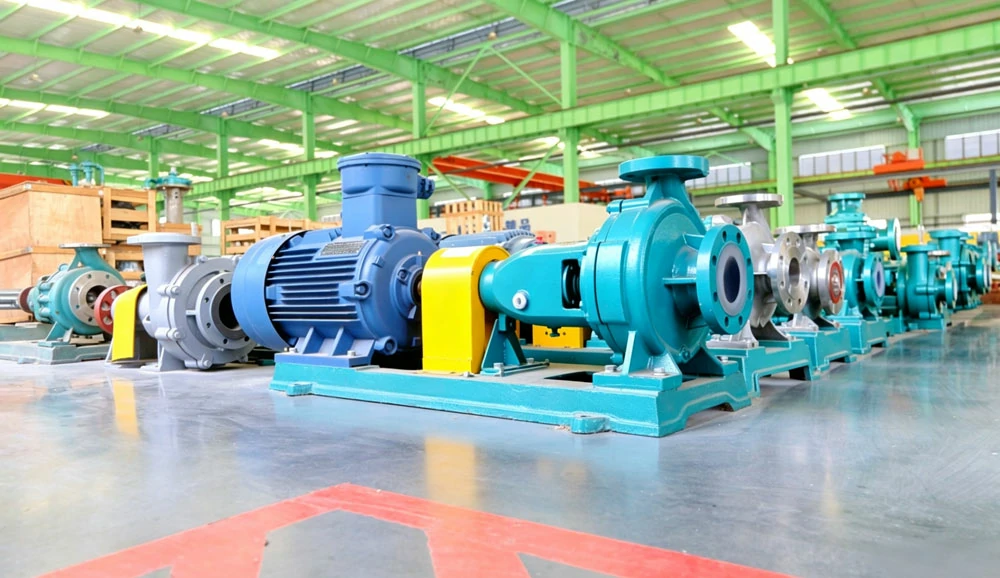
Khi bạn đã sẵn sàng chỉ định một máy bơm nước biển, đội ngũ kỹ thuật của Changyu Pump có thể cung cấp đánh giá kỹ thuật bao gồm phân tích hóa học nước biển, khuyến nghị vật liệu phù hợp với điều kiện vận hành của bạn và chiến lược bảo vệ phù hợp với hệ thống lắp đặt của bạn. Hai thập kỷ sản xuất máy bơm chống ăn mòn trong các ứng dụng khử muối, phát điện và ngoài khơi hỗ trợ mọi khuyến nghị.
Liên hệ với các kỹ sư của Changyu Pump để được đánh giá kỹ thuật miễn phí →