
Viscosity is usually the first number a customer sends us, and rarely the number that decides the pump. What decides it is how the slurry behaves at the shear rate and temperature the pump will actually see, how much has to move and how far, and what it does to the wetted parts over a year of running.
Pigment dispersions are seldom simple Newtonian liquids. They shear-thin, many carry a yield stress, and they thicken again when they sit still. Pick a pump on one lab reading and it tends to end up oversized, starved at the suction, or worn out early.

Why doesn’t one viscosity reading pick the pump?
A pump never sees one shear rate. The slurry sits nearly still in the tank, accelerates into the suction line at low shear, passes through the pump at moderate to high shear, and is forced through the discharge nozzle at the highest shear in the system. In a shear-thinning dispersion the apparent viscosity at the nozzle can be several times lower than in the tank. Size the motor on the tank value and you overpay; size the suction line on the nozzle value and the pump starves.
Duty matters as much as fluid. Tote transfer, filter-press feed, and bead-mill recirculation present the same slurry three ways: one needs self-priming, one needs steady pressure, one needs low shear so the dispersion survives.
Viscosity, density, and solids content: what is the difference?
They describe three different physical things, and each drives a separate part of the selection. Treating them as interchangeable is the most common reason a pump looks right on paper and disappoints in the plant.
| الخاصية | What it describes | Typical unit | What it changes | What it does not tell you |
| اللزوجة | Resistance to flow and shear | mPa·s (cP), Pa·s | Suction, line loss, fill rate, flow versus speed, starting torque | How heavy the slurry is |
| الكثافة | Mass per unit volume | kg/m³, specific gravity | Discharge pressure, absorbed power, settling | How thick the slurry is |
| محتوى المواد الصلبة | Fraction of particles by mass or volume | wt%, vol% | Wear rate, settling, clearance and valve sizing | Viscosity at your shear rate |
Two slurries at 60% solids can differ widely in viscosity, because particle size distribution, surface treatment, dispersant dose, pH, and dispersion quality all move the rheology. Dilute one until it matches the other’s viscosity and the densities are still far apart.
The density gap is easy to underestimate. Pigment-grade TiO₂ sits near 4 g/cm³, roughly four times water. A 50 wt% solids slurry holds 0.5 kg of solids (about 0.125 L) and 0.5 kg of water (0.5 L), so it runs about 1.6 kg per litre. That extra mass is what the motor and the pipe wall carry, and it has nothing to do with how thick the slurry feels.
Why do temperature, shear rate, and measurement method matter?
Because a figure means nothing without them. “2,000 cP” describes a fluid only if you also know the shear rate and temperature at which it was measured.
Temperature shifts apparent viscosity sharply in concentrated dispersions, and not only through the carrier liquid — dispersant performance and flocculation change too. A sample cooled to room temperature for a lab test is not the fluid that enters the pump at 60 °C.
Shear rate matters just as much. Rotational viscometers report a value at a defined speed, and in a shear-thinning material every speed gives a different answer. ASTM D2196, the standard test methods for non-Newtonian materials by rotational viscometer, is explicit: a single-speed reading gives apparent viscosity at that speed, two or more speeds characterize the material far better, and comparing increasing against decreasing speeds reveals thixotropy — which is why a reading can drift while you watch it. Note how long the sample rested, whether it was agitated, and where it was taken. A spindle reading is usable if you send the speed and temperature with it. An unqualified number is not.
How does viscosity affect suction, line losses, and delivered flow?
All three, and suction usually bites first. A pump can only move what reaches its inlet.
Suction: Friction in the suction line consumes the pressure available to push liquid into the pump. In laminar flow, pressure drop rises in direct proportion to viscosity, so doubling viscosity roughly doubles the loss at the same flow. Many concentrated TiO₂ slurries run well inside the laminar range at normal pipe velocities, which is why suction problems appear on thick product and vanish on thin. A centrifugal pump also needs more net positive suction head as viscosity climbs, while available NPSH stays fixed.
Positive displacement pumps generate lift by displacing volume, but the chamber still has to fill. Run a progressive cavity or hose pump too fast on thick slurry and the cavity never fills: flow drops, the pump runs rough, and the stator or hose overheats. Flooded suction, a short and generously sized suction line, and lower running speed solve more of these cases than a bigger pump.

Line losses: In fully developed laminar flow the Hagen–Poiseuille relationship applies: pressure drop rises with viscosity and flow and falls with the fourth power of pipe diameter. Doubling the line size cuts friction by roughly sixteen times, which is why pipe sizing often beats extra pump head. Velocity still has to stay high enough to keep solids suspended, though, and those two requirements pull against each other on settling slurries.
Delivered flow: A progressive cavity or hose pump moves a nearly fixed volume per revolution, so flow tracks speed — and higher viscosity helps, because it reduces slip past the rotor or through the hose. The limit is inlet fill, not displacement. A diaphragm pump is different: each stroke is only as fast as the chamber fills, so water performance is not slurry performance. A centrifugal pump loses head, flow, and efficiency as viscosity rises, and its published water curve overstates all three.
One moment deserves separate attention: the restart. The hardest duty of the week is often not steady operation but the Monday morning start, when solids have settled and the line holds something far thicker than anything in the tank.
Why do particles and material compatibility matter as much as viscosity?
Because two slurries with identical rheology can destroy different pumps at very different rates.
Pigment-grade titanium dioxide is milled to a primary particle size of a few hundred nanometres, but what reaches your pump is agglomerates, filter cake, and whatever dispersion left behind. Lumps that survive dispersion plug valve seats, bridge in hoppers, and stall diaphragm pumps. Mean particle size is useful; top size and grit matter more.
Hardness drives wear. Rutile sits around 6 to 6.5 on the Mohs scale and anatase around 5.5 to 6, both harder than the elastomers and polymers usually specified for seals, stators, and liners. Wear rises steeply with velocity, which is why low-speed positive displacement designs often outlast high-speed centrifugal ones on the same abrasive duty.
Chemistry decides the rest. pH, chloride, sulfate residues, dispersants, biocides, and cleaning chemicals all act on wetted parts. Chloride is one of the first questions we ask, because it can rule out common stainless grades entirely. Temperature sets the ceiling for every elastomer and for UHMWPE, which has a lower continuous service temperature than a metal wet end. A stator that is chemically correct but running too hot fails just as surely as the wrong compound.
Which pump type fits which duty?
No viscosity threshold separates these four. The right question is which combination of suction, pressure, solids, chemistry, and maintenance access your duty presents.
| نوع المضخة | Fits when | Watch for | Main wear parts |
| Progressive cavity screw pump | Steady, low-pulsation flow at higher viscosity; flow proportional to speed; some solids tolerance | Suction fill, stator compound versus chemistry and temperature, dry running, abrasion at high speed | Stator, rotor, seals, drive joints |
| Hose (peristaltic) pump | Abrasive or corrosive slurry; fluid touches only the hose; self-priming with good lift | Hose material and pressure rating, hose life versus speed and solids, pulsation | Hose, rollers or shoes, lubricant, seals |
| مضخة غشائية مزدوجة تعمل بالهواء | Intermittent transfer, container unloading, flow trimmed by air, tolerates solids, can run dry | Suction lift on viscous product, air volume and quality, diaphragm and valve material, pulsation | Diaphragms, check valves and seats, air valve |
| مضخة الملاط بالطرد المركزي | Lower viscosity, higher flow, moderate head, chemistry suited to the wet-end material | Viscosity derating of the curve, NPSH margin, abrasion at the impeller tip, polymer temperature limit | Impeller, casing liner, shaft seal, bearings |
What should you send us before asking for a recommendation?
The more of this you can supply, the less guessing sits between your process and our proposal.
- Composition: TiO₂ grade and crystal form, surface treatment, carrier liquid, additives
- Solids: weight percent and volume percent, plus slurry density or specific gravity
- Viscosity: value, shear rate, temperature, instrument, and sampling point
- Rheology: whether it shear-thins, has a yield point, or gels on standing
- Particles: mean size, top size, and any grit, agglomerates, or oversize material
- Chemistry: pH, chloride content, temperature range, cleaning or CIP chemicals
- Duty: flow, discharge head, suction condition, continuous or batch, hours per day
- Site: ambient conditions, hazardous area classification, availability of plant air
البريد الإلكتروني: [email protected]
الهاتف/واتساب: +86-13651913727
Pumps we build for TiO₂ slurry duties
Our range covers four approaches to the same problem. Which one we quote depends on the answers above, not on a preference for one technology.
Progressive Cavity Screw Pump
إن progressive cavity screw pump suits higher-viscosity duties where the process wants steady, nearly pulsation-free flow rather than the surge of a reciprocating design. Flow follows speed closely, which makes it easy to match a filter feed or a dosing requirement, and the gentle action is easier on a dispersion than a high-speed impeller. We confirm two things before quoting: the stator compound against your chemistry and temperature, and the rotor and other wetted parts against the abrasive load. A stator is a wear item on any abrasive duty, and it should be planned for rather than discovered.
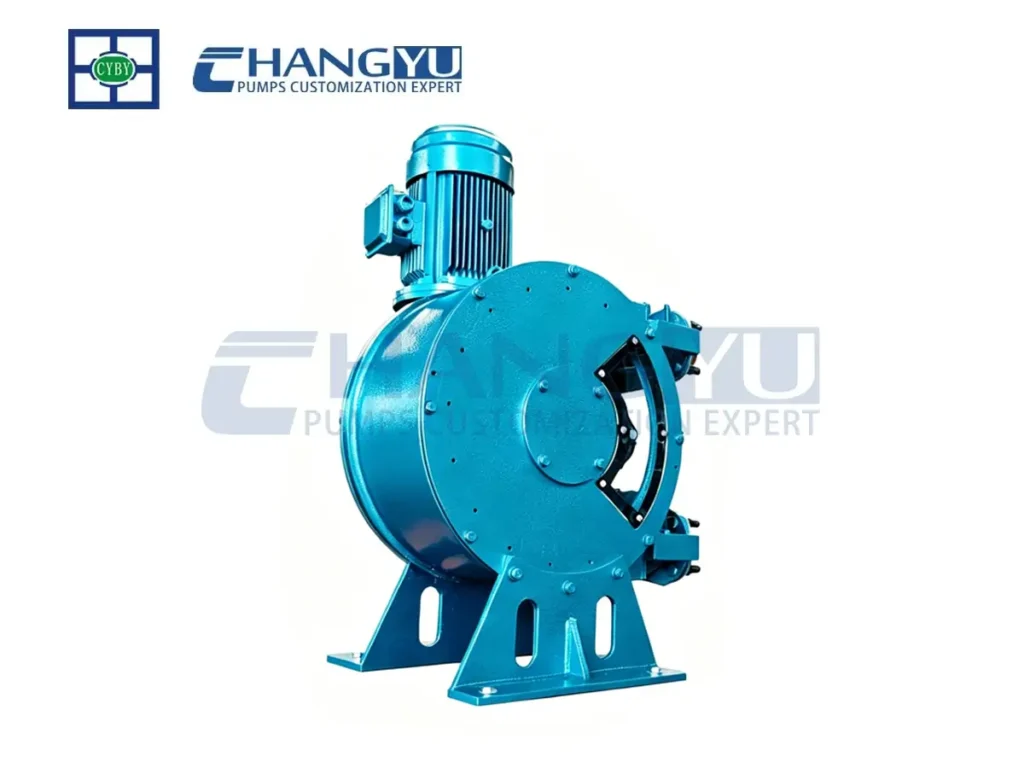
مضخة الخرطوم الصناعية من سلسلة ZJP-Z
إن ZJP-Z Series industrial hose pump is worth a close look when the slurry is viscous, abrasive, or chemically aggressive, because the fluid contacts only the inside of the hose. That isolation is the main advantage: no rotor, valve, or seal sees the product. It also self-primes and handles a suction lift that would starve other designs. The trade-offs are real — hose material and its chemical and temperature limits, the pressure rating of the size you need, and the fact that the hose is a consumable whose life depends on speed, solids, and running hours. Plan maintenance access accordingly, since hose changes are routine, not exceptional.
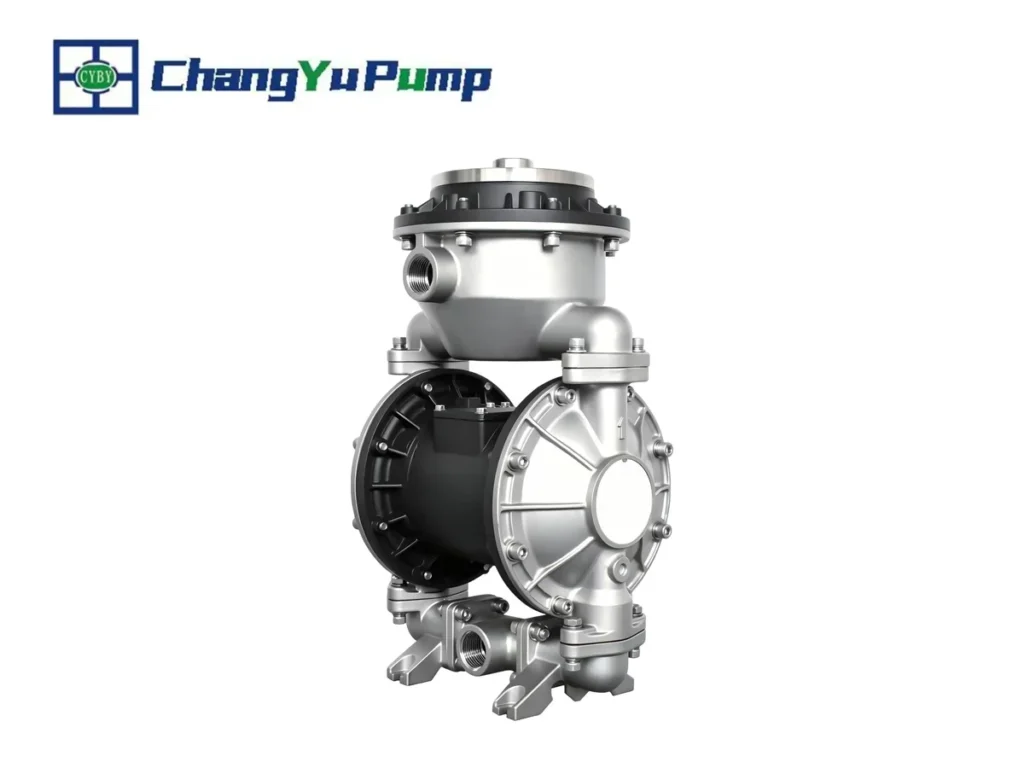
مضخة غشائية مزدوجة تعمل بالهواء من سلسلة BFQ
إن BFQ Series air operated double diaphragm pump handles a share of viscous slurry work well, particularly intermittent transfer, container unloading, and duties where the line may run dry or flow has to be trimmed from the air regulator. It is not automatically the answer for a thick pigment slurry. Suction condition has to be assessed honestly, because a pump that lifts well on water may not prime on product; air volume and quality have to be sized for the duty, not just the pressure; and diaphragm and valve materials have to match the chemistry and the solids. Pulsation and valve seating are the other two items we review.
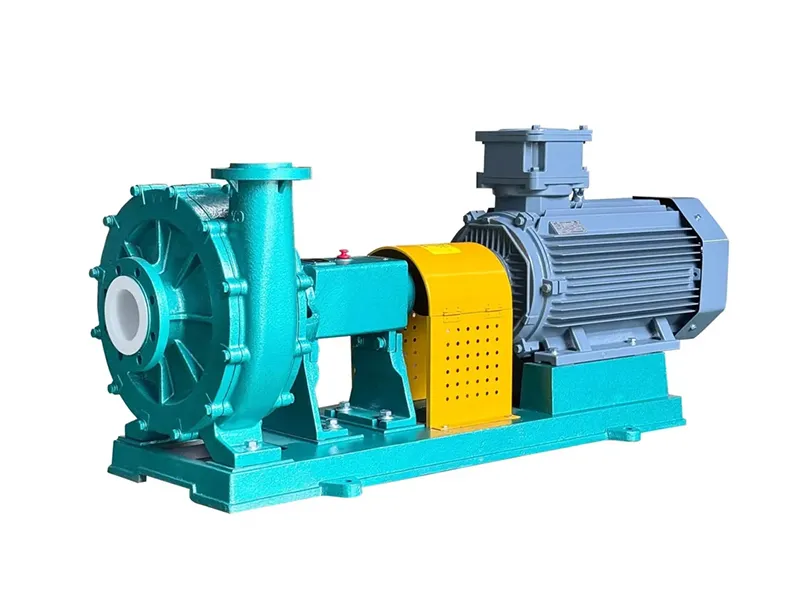
مضخة UHB سلسلة UHMWPE UHMWPE المقاومة للتآكل
إن مضخة UHB المقاومة للتآكل من UHMWPE is a centrifugal option, and it earns its place where viscosity is low enough that the pump does not lose meaningful head, solids loading is moderate, and the chemistry calls for a polymer wet end. UHMWPE gives good resistance to abrasion and to many aggressive media. It is not a high-viscosity pump: as viscosity rises, head and flow fall away from the water curve and NPSH requirement climbs, so selection has to rest on corrected data and on the material’s temperature limit rather than a headline flow rate.
حول شركة Changyu Pump
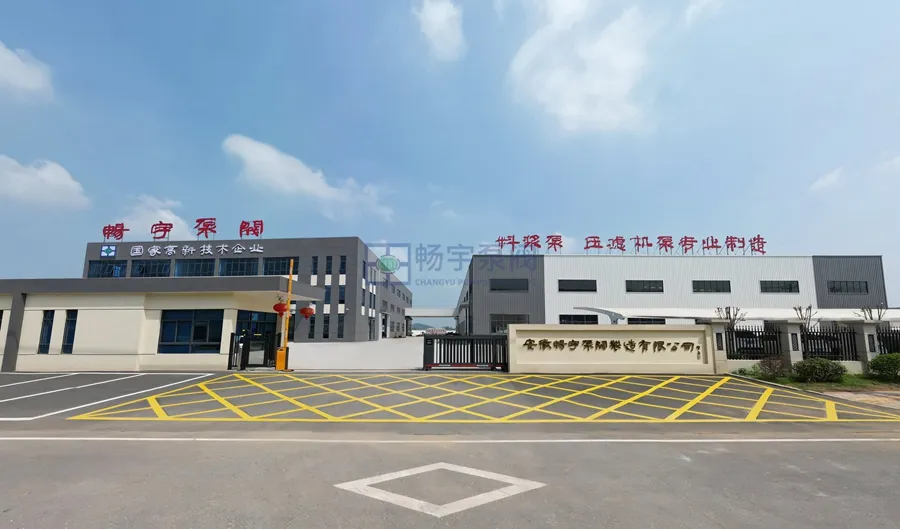
Changyu Pump manufactures industrial pumps for chemical and process duty, including progressive cavity, hose, air-operated diaphragm, and corrosion-resistant centrifugal designs. Because we build all four, we can compare them against a duty instead of steering every inquiry toward one technology. Our engineers start with the fluid — composition, solids, rheology at operating temperature, particle size, chemistry, and the suction arrangement — and propose a pump model, wetted materials, and seal arrangement matched to the process, then stay available for commissioning questions and spare parts. More about the company is on our about page.




الأسئلة الشائعة
Q: Can I select a pump from one viscosity reading?
A: Not reliably. Use it as a starting point, but send the shear rate and temperature it was measured at, and describe how the slurry behaves when it sits. Two slurries reading 3,000 cP at one speed can behave very differently at pump speed.
Q: Is a centrifugal pump ever right for titanium dioxide slurry?
A: Yes, when viscosity is low enough that head and flow hold up, solids are moderate, and the wet-end material suits the chemistry. It becomes the wrong choice as the slurry thickens, because head and flow fall, NPSH requirement rises, and impeller-tip velocity accelerates abrasion.
Q: What is the maximum viscosity a diaphragm pump can handle?
A: There is no universal figure. Chamber size, valve design, air volume, suction layout, and speed all move the limit, and so does the slurry’s behaviour at low shear. It has to be assessed against your duty.
Q: Progressive cavity or hose pump for TiO₂ slurry?
A: Progressive cavity gives steadier flow and finer speed control and tolerates moderate solids. Hose pumps isolate the fluid from every wetted component, which suits aggressive or highly abrasive product, but the hose is a consumable and pressure ratings are lower. Duty cycle, discharge pressure, and maintenance access usually settle it.
Q: How should I measure the viscosity of TiO₂ slurry?
A: With a rotational viscometer, at the temperature the slurry will be pumped at, at more than one speed, on a sample that reflects what the pump will see. Record the shear rate, instrument, sampling point, and how long the sample stood.
Q: Why is my pump delivering less flow than expected?
A: Common causes are a starved suction line, running a positive displacement pump faster than the inlet can fill, using an uncorrected centrifugal curve, undersized air supply on a diaphragm pump, and worn stators, hoses, or valves.
Q: Will TiO₂ slurry wear out my pump?
A: It can. Rutile and anatase are both harder than the elastomers and polymers normally used in seals and stators, and wear rate depends on velocity, solids concentration, particle size, and material choice. Budget for wear parts rather than assuming a pump will last indefinitely.
Talk to our engineers about your slurry
If you are specifying a high-viscosity TiO₂ slurry pump, a short data package beats a long description. Send the composition and crystal form, the actual operating temperature, the viscosity with its measurement conditions, solids by weight and volume, particle size and top size, required flow and discharge head, and the suction arrangement at the inlet. Photographs of the tank outlet and suction piping help more than most people expect.
With that in hand we can say which of the four designs fits, what the wetted parts should be made from, and what to plan for in wear parts.
البريد الإلكتروني: [email protected]
الهاتف/واتساب: +86-13651913727