
Introducción: Por qué es importante la elección de una bomba de sumidero industrial de alta resistencia
Bombas de sumidero industriales de alta resistencia son equipos especializados, no productos básicos estándar. En los sumideros industriales que contienen sólidos abrasivos, productos químicos corrosivos o fluidos a alta temperatura, una bomba estándar suele fallar en cuestión de semanas. Elegir la Bomba de sumidero industrial de alta resistencia —con materiales y características de diseño adaptados a las condiciones de funcionamiento— es esencial para garantizar años de servicio confiable y costos de mantenimiento predecibles.
Los ingenieros de Bomba Changyu Llevamos más de 20 años diseñando e instalando estas bombas en instalaciones de minería, procesamiento químico, generación de energía y fabricación de acero. Esta guía plasma esa experiencia en un marco práctico que abarca los tipos de bombas, los materiales, los métodos de selección, el mantenimiento y los datos de rendimiento en condiciones reales.
1. ¿Qué son las bombas de sumidero industriales de alta resistencia?
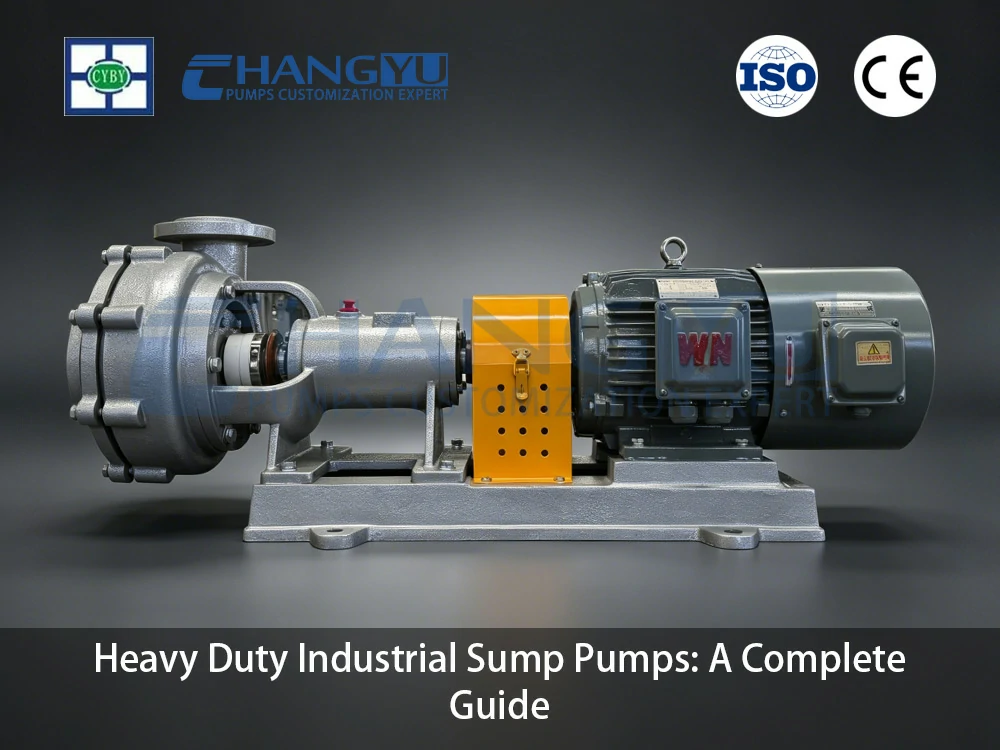
A Bomba de sumidero industrial de alta resistencia Es una bomba robusta diseñada específicamente para soportar las exigentes condiciones que se dan en el fondo de sumideros, fosas y cuencas de recolección industriales. Su función fundamental es universal: extraer el líquido antes de que inunde las instalaciones o interrumpa el proceso. Lo que hace que una bomba de sumidero sea verdaderamente “de alta resistencia” es su capacidad para realizar esta tarea de manera confiable cuando ese líquido no es simplemente agua, sino una mezcla hostil de sólidos abrasivos, productos químicos corrosivos, materiales fibrosos o fluidos hirvientes que destruirían una bomba estándar en cuestión de días.
En la práctica, la configuración más utilizada para estas aplicaciones exigentes es la Bomba de sumidero en voladizo vertical, y se ha convertido en el estándar del sector por una buena razón. En un diseño en voladizo, el motor de accionamiento y todos los cojinetes del eje están montados sobre una placa base situada por encima de la tapa del sumidero. Un eje largo se extiende hacia abajo hasta un único impulsor sumergido en el fluido. Esto significa que hay sin cojinetes sumergidos, sin sellos sumergidos y sin componentes por debajo del nivel del líquido que requieran lubricación o sustitución periódicas. Este único principio de diseño elimina los dos tipos de fallas más comunes en las bombas de sumidero convencionales: la contaminación de los cojinetes por la entrada de sólidos y la falla de las juntas debido al desgaste abrasivo o al ataque químico.
| Característica | Bomba de sumidero industrial de alta resistencia | Bomba de sumidero estándar |
|---|---|---|
| Ubicación del cojinete | Placa de montaje superior (en voladizo) | Total o parcialmente sumergido |
| Manipulación de sólidos | Hasta un 40% en peso, partículas grandes | Contenido en sólidos limitado |
| Funcionamiento continuo | Diseñado para funcionar las 24 horas del día, los 7 días de la semana | Funcionamiento típicamente intermitente |
| Materiales de desgaste | Hierro con alto contenido de cromo, acero inoxidable dúplex, revestido de fluoroplástico | Hierro fundido, acero inoxidable básico |
| Resistencia a la corrosión | Diseñado para cada aplicación | Mínimo o nulo |
| Capacidad de funcionamiento en seco | Los diseños en voladizo lo admiten | No recomendado |
Lo que esto significa para usted: Si su sumidero contiene algo más que agua limpia —partículas abrasivas, productos químicos corrosivos, fluidos a alta temperatura o sólidos fibrosos—, una bomba de sumidero estándar se convierte en un problema de mantenimiento constante. Una bomba de sumidero debidamente especificada Bomba de sumidero industrial de alta resistencia Gracias a su diseño en voladizo, convierte esos problemas de mantenimiento en un costo operativo predecible y manejable, lo que suele reducir los costos anuales de mantenimiento en un 50 % o más en comparación con las alternativas convencionales.
2. ¿Por qué confiar en esta guía?
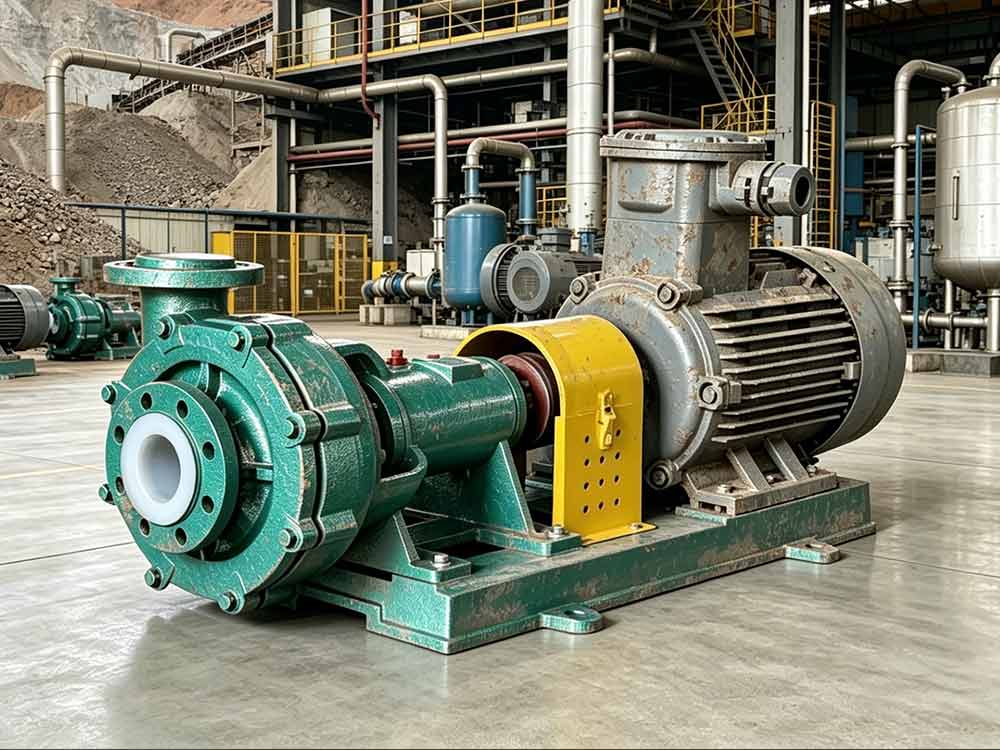
Las recomendaciones de esta guía se basan en más de 20 años de experiencia práctica en ingeniería en el diseño, la fabricación y la implementación sobre el terreno bombas de sumidero industriales de alta resistencia en los sectores de la minería, el procesamiento químico, la producción de acero, la generación de energía y la ingeniería ambiental. Los ingenieros de Changyu Pump han sido testigos de toda la gama de modos de falla de las bombas de sumidero: la erosión del impulsor causada por sólidos angulosos, la perforación de la carcasa debida a la combinación de corrosión y abrasión, la falla del eje por fatiga y la falla crónica de los cojinetes en unidades convencionales mal diseñadas. Cada modo de falla representa un costo real de tiempo de inactividad para los operadores, y cada uno de ellos ha servido de base directa para las mejoras de diseño incorporadas en nuestra actual Bomba de sumidero industrial de alta resistencia líneas de productos.
3. ¿Cómo funcionan las bombas de sumidero industriales de alta resistencia?
A Bomba de sumidero industrial de alta resistencia funciona según el principio de fuerza centrífuga — Un impulsor giratorio montado en la parte inferior de un eje vertical convierte la energía mecánica del motor de accionamiento en energía cinética dentro del fluido. A medida que el impulsor gira, aspira el líquido del sumidero a través de la entrada de succión situada en la parte inferior y lo acelera radialmente hacia afuera. La suspensión se desacelera en el cuerpo de la bomba, convirtiendo la velocidad en presión, lo que empuja el fluido hacia arriba a través de la columna de descarga hasta la boquilla de descarga.
Lo que esto significa para usted: El diseño en voladizo elimina los cojinetes y sellos sumergidos, los dos puntos de falla más comunes y costosos en las bombas de sumidero convencionales. Dado que todos los cojinetes se encuentran por encima de la placa de montaje, en posiciones limpias y accesibles, es posible realizar la lubricación y la inspección de rutina sin necesidad de retirar la bomba del sumidero. Cuando la bomba debe manejar medios abrasivos o corrosivos, esta característica de diseño por sí sola puede reducir los costos de mantenimiento anual en un 50 % o más en comparación con una bomba sumergible que requiere ser retirada por completo incluso para un servicio básico. La orientación vertical también significa que la bomba ocupa un espacio mínimo en el suelo en la abertura del sumidero, al tiempo que se extiende tan profundamente como sea necesario dentro del pozo o la cuenca.
4. ¿Cuáles son los principales tipos de bombas de sumidero de alta resistencia?
Aunque el diseño en voladizo vertical es el más común en la categoría de bombas de sumidero para uso intensivo, existen varias configuraciones que se adaptan a distintos entornos de instalación y perfiles de trabajo.
4.1 Bombas de sumidero de voladizo vertical para uso intensivo
El voladizo vertical Bomba de sumidero industrial de alta resistencia es el estándar de la industria para aplicaciones en sumideros con fluidos abrasivos y corrosivos. El motor y los cojinetes están montados sobre una placa base situada por encima de la tapa del sumidero, con un eje en voladizo que se extiende hacia abajo hasta el impulsor sumergido en el fluido. Al no haber cojinetes ni sellos por debajo del nivel del líquido, este diseño tolera el funcionamiento en seco intermitente, soporta altas concentraciones de sólidos y permite una rápida inspección del impulsor con solo levantar la bomba del sumidero. Las bombas en voladizo son la opción preferida para sumideros de molinos, recolección de agua de lavado de pisos, drenaje de fosas químicas y cualquier aplicación en la que la confiabilidad en condiciones abrasivas sea primordial.
4.2 Bombas sumergibles para sumideros de alta resistencia
Sumergible Bomba de sumidero industrial de alta resistencia Estas unidades integran el motor y la bomba en un solo conjunto sellado que funciona totalmente sumergido. Los modelos modernos incorporan agitadores o mezcladores mecánicos para mantener en suspensión los sólidos sedimentados, lo que permite una succión fluida en sumideros profundos con gran cantidad de sedimentos. Manejan concentraciones de sólidos de hasta 701 TP3T en peso y están disponibles con motores de más de 1000 HP, lo que las convierte en la solución ideal para sumideros profundos y confinados donde un eje en voladizo alcanzaría longitudes poco prácticas. Sin embargo, para retirar una bomba sumergible para su mantenimiento es necesario levantar toda la unidad, y se debe mantener la integridad del sello para proteger el motor de la entrada de líquido.
4.3 Bombas de sumidero con revestimiento no metálico para aplicaciones corrosivas
En el caso de sumideros que contengan ácidos fuertes, productos químicos oxidantes o corrientes corrosivas mixtas, bombas de sumidero industriales de alta resistencia con componentes en contacto con el fluido revestidos de fluoroplástico (FEP, PTFE, UHMW-PE) ofrecen una resistencia química prácticamente universal. La carcasa de acero proporciona resistencia estructural, mientras que el revestimiento de 8–20 mm aísla todo el metal del medio corrosivo. Estas bombas hacen frente al doble desafío de la corrosión y la abrasión moderada que destruye tanto a las bombas de metal como a las de plástico estándar en cuestión de semanas. Son la especificación estándar para sumideros de plantas químicas, fosas de líneas de decapado y recolección de ácido fosfórico.
4.4 Tabla comparativa de tipos
| Factor de selección | Voladizo vertical | Sumergible de alta resistencia | Con revestimiento no metálico |
|---|---|---|---|
| Ubicación del cojinete | Por encima de la placa del sumidero | Integrado en una unidad sellada | Por encima de la placa del sumidero |
| Capacidad para sumideros profundos | Hasta 6 m (estándar) | Profundidad ilimitada | Hasta 4 m (estándar) |
| Acceso de mantenimiento | Desmontaje rápido; cojinetes accesibles | Requiere una recuperación completa | Extracción rápida |
| Tolerancia de funcionamiento en seco | Excelente | Requiere inmersión para su refrigeración | Bien |
| Resistencia a la corrosión | Diseñado para cada material | Depende de la integridad de la junta del motor | Excelente (casi universal) |
| Mejor aplicación | Abrasivo, funcionamiento continuo | Pozos muy profundos y estrechos | Ácidos fuertes, mezclas de productos químicos |
5. ¿Cuáles son los mejores materiales para las bombas de sumidero industriales de alta resistencia?
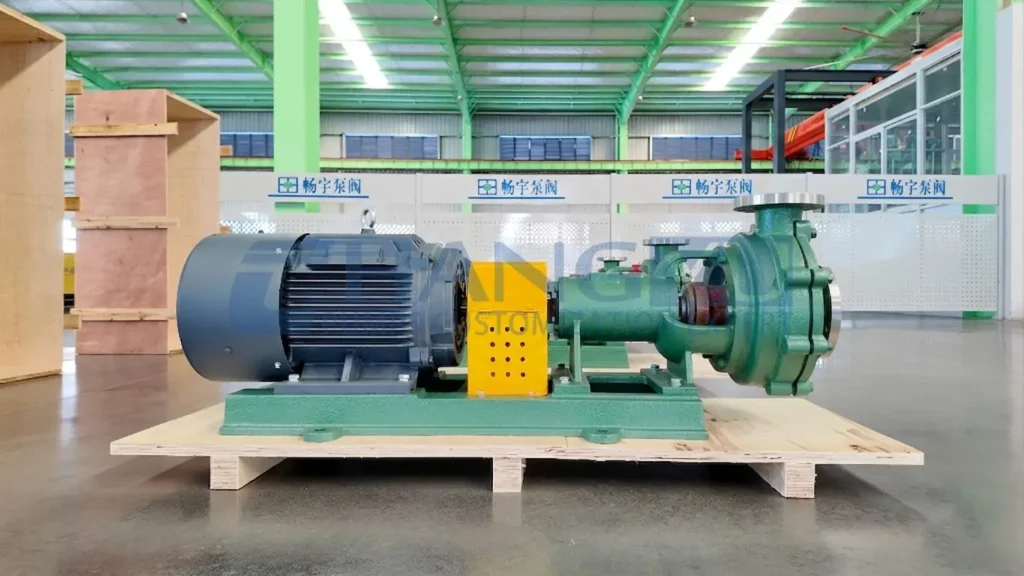
La elección del material determina si un Bomba de sumidero industrial de alta resistencia o bien ofrece años de servicio confiable, o bien falla a los pocos meses. El impulsor, la carcasa, las placas de desgaste, el eje y los componentes de descarga se ven sometidos a un ataque continuo por parte del medio del sumidero.
5.1 Hierro blanco con alto contenido de cromo — Para sumideros abrasivos de pH neutro
El hierro blanco con alto contenido en cromo (25-30% Cr) alcanza una dureza Brinell superior a 600 BHN. Es el material estándar para sumideros que contienen partículas gruesas, angulosas y abrasivas a pH neutro, algo habitual en aplicaciones mineras, de arena y grava, y en sumideros de molinos. Por debajo de un pH de 4, la corrosión acelera la pérdida de material; por encima de los 110 °C, la dureza comienza a disminuir.
5.2 Revestimientos de elastómero — Para partículas finas y redondeadas
Los revestimientos de caucho natural y poliuretano absorben la energía del impacto de las partículas, lo que reduce el desgaste por erosión causado por partículas finas y redondeadas en los sumideros de relaves o en la recogida de lodos de caliza. Temperatura limitada a 70 °C y es incompatible con disolventes fuertes o productos químicos oxidantes.
5.3 Acero inoxidable dúplex: para la resistencia combinada a la corrosión y la abrasión
Aceros inoxidables dúplex como el CD4MCu y el 2205, que combinan resistencia a la corrosión por picaduras (pH 2-12) con una dureza razonable (280-350 BHN). Los ingenieros de Changyu Pump recomiendan el acero inoxidable dúplex para los sumideros en los que el medio es a la vez ácido y abrasivo, como los sumideros de desulfuración de gases de combustión (FGD), la recogida de lixiviados hidrometalúrgicos y los pozos de descalcificación de las acerías.
5.4 Revestimientos de plástico fluorado — Para sumideros con productos químicos agresivos
Para sumideros que contengan ácidos fuertes, corrientes químicas mixtas o agentes oxidantes que transporten sólidos abrasivos, PTFE, FEP, y UHMW-PE Los revestimientos con un espesor de entre 8 y 20 mm ofrecen una resistencia química prácticamente universal. La tecnología de revestimiento de Changyu Pump, probada en la práctica, crea una barrera química completa al tiempo que absorbe el impacto de las partículas. Se trata de la opción definitiva en cuanto a materiales para los sumideros de plantas químicas que manejan ácido clorhídrico, ácido sulfúrico, ácido fosfórico o corrientes de disolventes mixtos.
5.5 Tabla de selección de materiales
| Material | Dureza | Resistencia a la abrasión | Resistencia a la corrosión | Temperatura máxima | Mejor aplicación |
|---|---|---|---|---|---|
| Hierro con alto contenido en cromo (Cr25-30%) | Más de 600 BHN | Excelente | Bajo (<pH 4) | 110 °C | Depósitos para productos abrasivos de pH neutro |
| Revestimiento de caucho natural | Elastómero | Bien | Moderado | 70 °C | Residuos de partículas finas |
| Revestimiento de poliuretano | Elastómero | Muy bien | Moderado | 70 °C | Partículas finas y afiladas |
| Dúplex de acero inoxidable (2205/CD4MCu) | 280-350 BHN | Moderado | Bueno (pH 2-12) | 110 °C | Corrosión y abrasión combinadas |
| Fluoroplástico (PTFE/FEP/UHMW-PE) | Forro | Moderado | Excelente | 90-120 °C | Ácidos fuertes, sumideros químicos |
6. Cómo elegir la bomba de sumidero de alta resistencia adecuada: una guía en 5 pasos
Un enfoque de selección sistemático distingue entre un Bomba de sumidero industrial de alta resistencia que funciona de manera confiable durante años frente a uno que se convierte en una carga de mantenimiento constante.
Paso 1: Caracterizar el medio del sumidero
Antes de seleccionar cualquier bomba, se deben cuantificar seis propiedades: concentración de sólidos, distribución del tamaño de las partículas, densidad, pH y composición química, temperatura y viscosidad. Si el medio es ácido o contiene sustancias químicas oxidantes, una bomba para lodos resistente a la corrosión La construcción es fundamental: las bombas metálicas estándar se averiarán rápidamente.
Paso 2: Definir los requisitos del sistema
Determine el caudal necesario para mantener una renovación adecuada del sumidero, calcule la altura dinámica total —incluida la elevación estática desde el fondo del sumidero hasta el punto de descarga y las pérdidas por fricción en la tubería de descarga— y defina el rango de control de nivel deseado para el sumidero.
Paso 3: Evaluar los requisitos para la manipulación de sólidos
En el caso de los sumideros en los que se acumulan sólidos sedimentados, la bomba debe mantener una velocidad adecuada para mantener las partículas en suspensión. Esto está directamente relacionado con fluido no newtoniano comportamiento. Seleccione un diseño de impulsor —semiabierto para sólidos de gran tamaño, empotrado para materiales fibrosos, cerrado para una mayor eficiencia con partículas pequeñas— que se adapte al perfil de los sólidos.
Paso 4: Elegir el tipo de bomba y los materiales
Según los datos de los pasos 1 a 3, seleccione:
- Tipo de bomba: voladizo vertical para mayor fiabilidad y facilidad de mantenimiento; sumergible para sumideros muy profundos o de espacio reducido; con revestimiento no metálico para entornos químicos agresivos
- Esquema de materiales: hierro con alto contenido de cromo, revestido de elastómero, acero inoxidable dúplex o revestido de fluoroplástico, según el perfil combinado de corrosión y abrasión
- Longitud del eje: suficiente para llegar por debajo del nivel mínimo del sumidero, manteniendo al mismo tiempo un apoyo adecuado de los cojinetes
Paso 5: Evaluar el costo total de propiedad a lo largo de 5 años
Una decisión de compra basada únicamente en el precio inicial es un falso ahorro. Hay que tener en cuenta el consumo de energía (que suele representar entre el 60 % y el 70 % del costo total a lo largo de la vida útil), la frecuencia de sustitución de las piezas de desgaste, la mano de obra de mantenimiento por cada desmontaje y el costo del tiempo de inactividad de la producción por cada fallo. A Bomba de sumidero industrial de alta resistencia Aunque tiene un precio inicial más elevado, su vida útil es el triple, lo que se traduce en un costo total de propiedad (TCO) sistemáticamente más bajo que el de una bomba económica que requiere revisiones trimestrales.
7. ¿Para qué se utilizan las bombas de sumidero de alta resistencia?
Minería y procesamiento de minerales Los sumideros recogen los residuos de la planta de molienda, el agua de lavado de pisos y el drenaje de los residuos. Estos sumideros contienen sólidos gruesos y altamente abrasivos en concentraciones variables. Las bombas en voladizo con componentes en contacto con el líquido fabricados en hierro con alto contenido de cromo son el estándar de la industria, ya que ofrecen un funcionamiento confiable las 24 horas del día, los 7 días de la semana, con intervalos de mantenimiento predecibles.
Producción de productos químicos y fertilizantes Los sumideros recogen derrames de sustancias ácidas o cáusticas, agua de lavado y condensados de proceso. El doble desafío que plantean la corrosión y la abrasión exige el uso de bombas revestidas de fluoroplástico o de acero inoxidable dúplex. En el caso de los sumideros para ácido fosfórico, ácido sulfúrico y mezclas de ácidos, las bombas en voladizo revestidas de PE-UHMW han demostrado tener una vida útil entre tres y cinco veces mayor que las alternativas de aleación.
Generación de energía las plantas utilizan desulfuración de gases de combustión Depósitos de FGD para la recogida de lodos de caliza, lodos de yeso y aguas residuales procedentes de los sistemas de depuración de SO₂. Este medio ligeramente ácido (pH 4-6) y altamente abrasivo requiere bombas revestidas de caucho o de acero inoxidable dúplex con impulsores de alto contenido en cromo.
Producción de acero Los sumideros recogen el agua cargada de escoria procedente de las operaciones de colada continua, laminación en caliente y desescoriado. Las altas temperaturas (hasta 90 °C), combinadas con la abrasiva escoria de laminación, exigen el uso de bombas de acero inoxidable dúplex o con alto contenido de cromo. Los diseños en voladizo soportan la temperatura y eliminan las fallas en los cojinetes sumergidos, comunes en las bombas sumergibles.
Tratamiento de aguas residuales Los sumideros procesan lodos primarios, sedimentos de las cámaras de arena y lodos digeridos, materiales que ponen a prueba la fiabilidad de las bombas debido a su funcionamiento continuo, la carga variable de sólidos y la presencia de materiales fibrosos que obstruyen los impulsores estándar. Los diseños de impulsores semiabiertos o empotrados evitan las obstrucciones al tiempo que mantienen la capacidad de caudal.
8. ¿Cómo se realiza el mantenimiento de una bomba de sumidero de alta resistencia?
El mantenimiento preventivo estructurado es el factor más determinante a la hora de prolongar Bomba de sumidero industrial de alta resistencia vida útil. Los datos del sector demuestran que un programa de mantenimiento formal prolonga el tiempo medio entre fallos entre un 200 % y un 400 % en comparación con los enfoques reactivos, basados en el funcionamiento hasta que se produce una avería.
| Intervalo | Tarea |
|---|---|
| Diario | Controle la corriente del motor, compruebe si hay vibraciones o ruidos inusuales y verifique que el control del nivel del sumidero sea adecuado |
| Semanal | Comprueba la temperatura de los cojinetes y el estado del lubricante; comprueba la presión de descarga |
| Mensual | Mida la holgura del impulsor, revise las placas de desgaste para detectar ranuras o desgaste, compruebe la excentricidad del eje |
| Trimestral | Inspección completa del circuito húmedo, cambio de la lubricación de los cojinetes y verificación del estado de las juntas |
| Anualmente | Desmontaje completo de la bomba, medición de todos los componentes sujetos a desgaste y sustitución de los que sea necesario |
Ajuste crítico: holgura del impulsor. A medida que el impulsor y las placas de desgaste sufren erosión, aumenta la holgura de funcionamiento, lo que provoca una recirculación interna que reduce el caudal y la eficiencia. Ajuste la carcasa del cojinete para restablecer la holgura de diseño cada vez que el caudal caiga 5-10% por debajo del valor de referencia a una velocidad constante del motor.
Signos comunes de fallas y medidas a tomar:
| Señal de fallo | Causa probable | Medida recomendada |
|---|---|---|
| Disminución del caudal a velocidad constante | Erosión del impulsor o de la placa de desgaste | Ajuste la holgura; sustitúyalo si la holgura se ha agotado |
| Aumento repentino de las vibraciones | Obstrucción parcial del impulsor o acumulación de sólidos | Bomba de elevación; inspeccionar y limpiar el impulsor |
| Aumento de la corriente del motor | Desgaste interno o deterioro de los cojinetes | Comprueba las holguras y el estado de los cojinetes |
| Fuga visible en la línea de descarga | Tubo de columna o junta de descarga desgastados | Revisar la columna; sustituir las juntas o los tramos |
| Fallo del eje | Longitud de voladizo excesiva o fatiga | Compruebe la velocidad de funcionamiento; compruebe si hay acumulación de residuos sólidos |
9. Soluciones de bombas de sumidero de alta resistencia de Changyu Pump
Changyu Pump ofrece tres modelos distintos Bomba de sumidero industrial de alta resistencia serie, cada una diseñada para perfiles de cárter específicos.
9.1 Bomba industrial para lodos de la serie UHB

La serie UHB presenta un diseño en voladizo de una sola etapa con un impulsor semiabierto y un sello mecánico de cartucho. Revestida con UHMW-PE con un grosor de 8 a 20 mm, este Bomba de sumidero industrial de alta resistencia Está diseñada específicamente para ácido fosfórico, ácido sulfúrico, ácido nítrico, ácido clorhídrico y diversas concentraciones de álcalis. La tecnología de revestimiento de malla tipo «caparazón de tortuga» ofrece una resistencia superior a la deformación térmica y un mejor rendimiento contra la delaminación en comparación con las bombas revestidas convencionales, lo cual es fundamental en los sumideros de plantas químicas, donde un fallo del revestimiento dejaría la carcasa de acero expuesta al ataque corrosivo.
Especificaciones principales:
- Caudal: 3–2 600 m³/h
- Título: 5–100 m
- Potencia del motor: 0,75–300 kW
- Velocidad: 750–2 900 rpm
- Temperatura: De -20 °C a 90 °C
Lo que esto significa para usted: La serie UHB ofrece la resistencia química de los revestimientos de fluoroplástico combinada con la simplicidad mecánica de un diseño en voladizo: sin cojinetes sumergidos, sin sellos sumergidos y con un mantenimiento mínimo.
9.2 Bomba semisumergible de fluoroplástico de la serie FYH
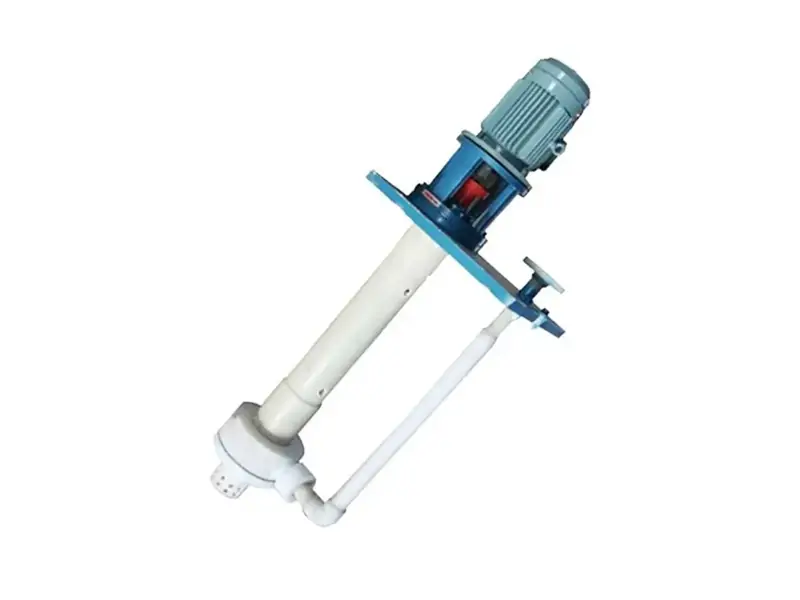
La serie FYH es una bomba centrífuga vertical de eje largo diseñada específicamente para tanques químicos, recipientes de almacenamiento y sumideros en los que sea necesario transferir de manera confiable ácidos agresivos, álcalis, solventes orgánicos o agentes oxidantes fuertes. La bomba utiliza un diseño semisumergible — el impulsor y la carcasa están sumergidos en el fluido, mientras que el motor y los cojinetes permanecen por encima de la placa de montaje, protegidos de los vapores químicos. Los componentes en contacto con el fluido están fabricados con materiales fluoroplásticos (FEP o UHMW-PE, (personalizable), lo que ofrece una amplia resistencia química y elimina la corrosión del metal que acorta la vida útil de las bombas convencionales en estos entornos.
Especificaciones principales:
- Caudal: 5–400 m³/h
- Título: 5–50 m
- Potencia del motor: 0,75–90 kW
- Velocidad: 968–3 450 r/min
- Temperatura: De -20 °C a 90 °C
- Materiales del revestimiento: UHMW-PE, FEP
Lo que esto significa para usted: Las bombas de sumidero metálicas tradicionales que manejan ácidos fuertes o solventes sufren fallas recurrentes en las juntas y corrosión en la carcasa. La serie FYH sustituye las piezas metálicas en contacto con el líquido por una construcción de fluoroplástico, un material inmune a la mayoría de los ataques químicos. En combinación con la configuración vertical semisumergible, que mantiene el motor por encima del líquido, esta bomba reduce considerablemente tanto las fallas relacionadas con los productos químicos como las intervenciones de mantenimiento en aplicaciones de transferencia y almacenamiento de productos químicos.
9.3 Bomba sumergible vertical de acero inoxidable serie FY
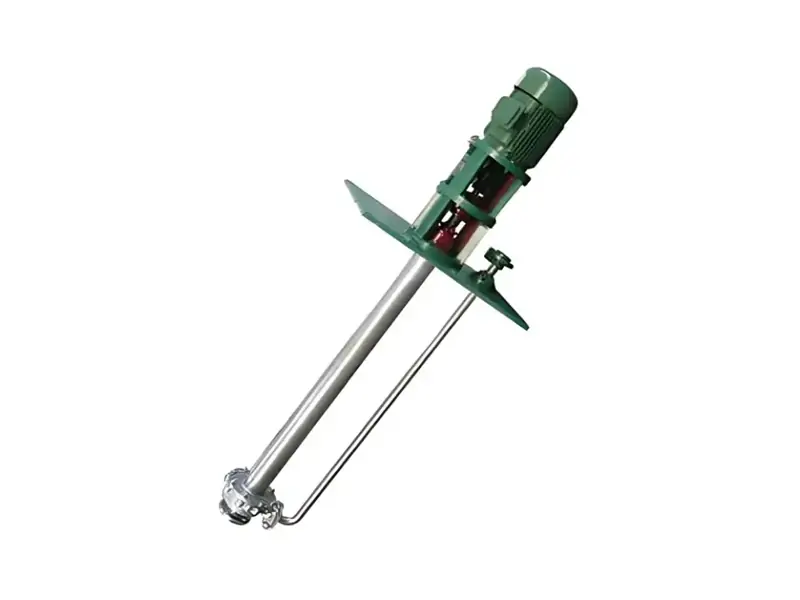
La serie FY es una bomba centrífuga sumergible vertical fabricada con componentes en contacto con el fluido de acero inoxidable, diseñada para medios corrosivos que contienen partículas sólidas de pequeño tamaño y abrasivos. Diseñada para su instalación directa en tanques de almacenamiento o sumideros —sin necesidad de espacio adicional en el piso—, esta bomba ofrece un funcionamiento energéticamente eficiente y sin fugas, así como una vida útil prolongada en aplicaciones químicas, farmacéuticas e industriales. La selección de materiales abarca 304, 316, 316L, 2205, 2507, 904L y CD4MCu, lo que permite adaptar con precisión la resistencia a la corrosión al entorno químico específico.
Especificaciones principales:
- Caudal: 3,6–360 m³/h
- Título: 16–40 m
- Potencia del motor: 1,5–22 kW
- Velocidad: 2 900 rpm
- Temperatura: De 0 a 105 °C
- Materiales: Acero inoxidable (304, 316, 316L), acero inoxidable dúplex (2205, 2507), 904L, CD4MCu
Lo que esto significa para usted: La serie FY combina la facilidad de instalación de una bomba sumergible vertical con la versatilidad de los materiales de acero inoxidable y aleaciones dúplex. Para sumideros químicos en los que el medio es corrosivo pero no se requiere un revestimiento de fluoroplástico —o en los que se prefiere la instalación sobre la parte superior del tanque sin placa de base—, esta bomba ofrece una solución económica y que ahorra espacio, con un rendimiento fiable a largo plazo.
10. ¿Cómo garantiza Changyu Pump una larga vida útil de sus bombas?
Cada Bomba de sumidero industrial de alta resistencia Los productos de Changyu Pump se someten a un riguroso programa de control de calidad de varias etapas, diseñado para prevenir defectos antes de que lleguen al mercado.
- Verificación de materiales: El análisis espectral confirma la composición química de todas las materias primas que recibimos: aleaciones con alto contenido de cromo, resinas fluoroplásticas (FEP, PFA), compuestos de UHMW-PE y grados de acero inoxidable (304, 316L, 2205, 2507). Cada lote de material cuenta con documentación completa de trazabilidad.
- Inspección durante el proceso: Las dimensiones del impulsor, las tolerancias de la carcasa, la rectitud del eje y el espesor del revestimiento se miden en cada etapa de la producción. Las pruebas ultrasónicas verifican que el revestimiento de las bombas recubiertas de fluoroplástico sea uniforme; un solo hueco más pequeño que una uña puede convertirse en un punto crítico de falla bajo el ataque químico.
- Pruebas de rendimiento hidráulico: Cada bomba montada se somete a una prueba completa de rendimiento hidráulico en múltiples puntos de funcionamiento. Se registran el caudal, la altura de elevación, el consumo de energía y la eficiencia, y se comparan con las curvas publicadas.
- Auditoría del montaje final: Antes del embalaje se comprueban el par de apriete de los tornillos, la integridad de las juntas, la excentricidad del eje, la precarga de los rodamientos y la libre rotación.
Lo que esto significa para usted: Cuando tu Bomba de sumidero industrial de alta resistencia Cuando el equipo llega a las instalaciones con toda la documentación de calidad, puedes ponerlo en marcha con confianza, lo que reduce los retrasos en la puesta en marcha, las reclamaciones de garantía y el riesgo operativo asociado al uso de equipos no verificados.
11. Estudio de caso sobre bombas de sumidero industriales de alta resistencia: solución a una avería en una bomba de sumidero en una planta química
Reto del cliente: Una planta química del sudeste asiático sufría fallos recurrentes en las bombas metálicas del sumidero que gestionaban las aguas residuales ácidas de su sumidero de recogida. El sumidero recibía una mezcla de ácido clorhídrico diluido (pH 1-2) y partículas abrasivas finas procedentes de las operaciones de lavado. Las bombas de acero inoxidable existentes requerían un reemplazo completo cada 6 meses debido a la corrosión severa de la carcasa y a fallas en los sellos, lo que le costaba a la planta más de 38 000 dólares al año por bomba en piezas, mano de obra y pérdida de producción.
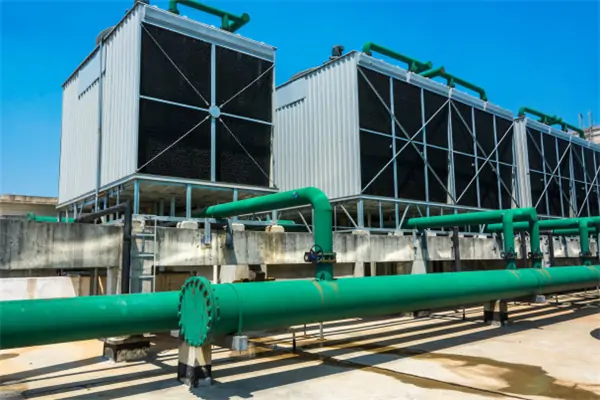
Análisis de ingeniería: Los ingenieros de Changyu Pump identificaron la causa principal: la carcasa de acero inoxidable estaba siendo atacada por el ácido, mientras que las partículas abrasivas aceleraban el desgaste de las superficies ya debilitadas. Se evaluaron dos opciones: pasar a una aleación de acero inoxidable dúplex de mayor calidad (lo que ralentizaría la corrosión, pero no la detendría) o cambiar a un diseño semisumergible con revestimiento de plástico fluorado que eliminaba por completo el contacto entre el metal y el ácido. Se optó por la opción de fluoroplástico.
Solución implementada: El Bomba semisumergible de fluoroplástico de la serie FYH con revestimiento de FEP se instaló directamente en el sumidero. Su diseño vertical situaba el motor y los cojinetes por encima de la placa de montaje, lejos del líquido corrosivo y los vapores. Por debajo del nivel del líquido, todos los componentes en contacto con el líquido eran de fluoroplástico, por lo que el ácido no tenía ningún metal que pudiera corroer. El impulsor semiabierto gestionaba las partículas abrasivas finas sin obstruirse.
Resultados cuantificados (evaluación a los 18 meses):
- Vida útil de la bomba se amplió de 6 meses a más de 18 meses (sigue en servicio): una mejora del 300%+
- El costo anual de mantenimiento se ha reducido en aproximadamente un 601 %
- Cero fallos relacionados con la corrosión — La estructura de plástico fluorado eliminó por completo el mecanismo de falla anterior
- La vida útil del sello se ha prolongado considerablemente gracias a la eliminación del contacto de los fluidos corrosivos con los componentes metálicos de sellado
Desde entonces, la planta ha incorporado tres bombas más de la serie FYH en otros sumideros repartidos por toda la instalación.
12. ¿Preguntas frecuentes sobre las bombas de sumidero de alta resistencia?
P1: ¿Qué es una bomba de sumidero industrial de alta resistencia?
R: A Bomba de sumidero industrial de alta resistencia es una bomba robusta diseñada para manejar fluidos abrasivos, corrosivos o a altas temperaturas en sumideros y fosas industriales. La configuración más común es el diseño vertical en voladizo, en el que todos los cojinetes se encuentran por encima de la placa del sumidero y solo el impulsor queda sumergido.
P2: ¿En qué se diferencia una bomba de sumidero en voladizo de una bomba de sumidero sumergible?
R: Un voladizo Bomba de sumidero industrial de alta resistencia coloca el motor y los cojinetes por encima de la placa del sumidero, de modo que solo el eje y el impulsor quedan sumergidos. En una bomba sumergible, el motor se integra en una unidad sellada sumergida. Los diseños en voladizo facilitan el acceso para el mantenimiento y toleran el funcionamiento en seco.
P3: ¿De qué materiales están hechas las bombas de sumidero de alta resistencia?
R: Los materiales abarcan desde hierro blanco con alto contenido en cromo (más de 600 BHN) para sumideros abrasivos de pH neutro, acero inoxidable dúplex para la corrosión y la abrasión combinadas, a revestimientos de plástico fluorado (PTFE, FEP, UHMW-PE) para sumideros con productos químicos agresivos que contengan ácidos fuertes.
P4: ¿Puede funcionar en seco una bomba de sumidero de alta resistencia?
R: Sí. En voladizo bombas de sumidero industriales de alta resistencia soportan el funcionamiento en seco de forma intermitente, ya que todos los cojinetes se encuentran por encima de la placa del sumidero y permanecen lubricados independientemente del nivel del sumidero. Las bombas sumergibles requieren estar sumergidas para la refrigeración del motor.
P5: ¿Para qué se utilizan las bombas de sumidero de alta resistencia?
R: Se utilizan en minería (derrames de la planta de procesamiento, depósitos de relaves), plantas químicas (lavado con ácidos, recogida de derrames corrosivos), generación de energía (sumideros FGD), producción de acero (picaduras de cascarilla de laminación), y tratamiento de aguas residuales (sumideros de lodos y arena).
P6: ¿Cómo elijo la bomba de sumidero del tamaño adecuado?
R: Caracterizar seis propiedades del medio del sumidero (concentración de sólidos, tamaño de partícula, densidad, pH, temperatura y viscosidad), calcular la altura dinámica total y el caudal requerido, determinar el comportamiento de sedimentación de los sólidos y seleccionar el tipo de bomba y los materiales adecuados para estos parámetros.
P7: ¿Qué provoca que una bomba de sumidero de alta resistencia falle prematuramente?
R: Las fallas prematuras suelen deberse a una incompatibilidad del material con el entorno químico, a una velocidad excesiva del eje que acelera el desgaste, a la acumulación de sólidos que provoca desequilibrio, o a un control inadecuado del nivel del cárter que permite la entrada de aire.
P8: ¿Con qué frecuencia se debe realizar el mantenimiento de una bomba de sumidero de alta resistencia?
R: Monitoreo diario de la corriente del motor y las vibraciones, comprobaciones mensuales del espacio libre del impulsor, inspección trimestral de la parte húmeda y desmontaje completo anual. Los cojinetes deben lubricarse cada 2.000-3.000 horas de funcionamiento.
13. Las 5 recomendaciones clave de Changyu Pump para la selección
Con más de 20 años de experiencia en el sector Bomba de sumidero industrial de alta resistencia Para las instalaciones, los ingenieros de Changyu Pump recomiendan los siguientes criterios de decisión:
- Se recomienda optar por un diseño en voladizo para los sumideros expuestos a sustancias abrasivas o corrosivas. Al eliminar los cojinetes y sellos sumergidos, se eliminan los dos tipos de fallas más costosas y perjudiciales en el funcionamiento de las bombas de sumidero. El costo inicial ligeramente superior se recupera —a menudo en el primer año— gracias a la reducción de la mano de obra de mantenimiento y a la eliminación de los costos de reemplazo de sellos.
- Evalúa el costo total de propiedad a lo largo de 5 años, no solo el precio de compra. Una bomba de sumidero económica que requiera reparaciones trimestrales y provoque desbordamientos periódicos del sumidero costará entre tres y cinco veces más en un periodo de cinco años que una bomba correctamente especificada Bomba de sumidero industrial de alta resistencia por el doble del precio inicial, pero con el triple de vida útil.
- Especifique el grosor del revestimiento, no solo el material del mismo. En el caso de las bombas revestidas de fluoroplástico, el espesor del revestimiento (entre 8 y 20 mm) determina la resistencia de la barrera química frente al impacto de partículas. Los revestimientos o recubrimientos delgados se desgastan rápidamente; por lo tanto, se debe especificar un espesor que se adapte a la carga de sólidos prevista.
- Mantenga en stock las piezas de desgaste críticas desde el primer día. Los impulsores y las placas de desgaste son componentes de desgaste. Tener repuestos a la mano elimina el tiempo de inactividad que transcurre entre la detección de la falla y la entrega de las piezas.
- Considera la elección de la junta como una cuestión de seguridad. En el caso de los sumideros que contienen sustancias químicas peligrosas, tóxicas o de gran valor, los sellos mecánicos con controles ambientales adecuados —o diseños sin sellos, cuando sea posible— no son opciones costosas. Constituyen la especificación mínima necesaria para garantizar un funcionamiento seguro, conforme a la normativa y respetuoso con el medio ambiente.
Conclusión
A Bomba de sumidero industrial de alta resistencia es un activo fundamental cuya elección influye directamente en los costos operativos, el tiempo de actividad de la producción, el cumplimiento de las normas medioambientales y la seguridad del personal. La combinación sistemática del tipo de bomba, la selección de materiales, la longitud del eje y las prácticas de mantenimiento con las propiedades específicas del medio del sumidero determina si la bomba se convierte en un elemento clave y confiable o en un problema recurrente.
Póngase en contacto con Changyu Envíenos hoy mismo los parámetros de su sumidero. Nuestro equipo de ingeniería analizará su aplicación y le proporcionará una recomendación detallada sobre la bomba más adecuada, así como un presupuesto adaptado a sus condiciones operativas específicas.