
Respuesta Rápida
Bombas de tornillo industriales son rotativas bombas de desplazamiento positivo que utilizan uno o más tornillos entrelazados para mover el fluido a lo largo del eje del tornillo. Como tipo central de bomba de desplazamiento positivo industrial, sobresalen en aplicaciones de servicio pesado que involucran fluidos de alta viscosidad, mezclas multifásicas y condiciones operativas exigentes. Los factores clave de selección incluyen:
- (1) Configuración del tornillo — las bombas de un solo tornillo (cavidad progresiva) manejan fluidos viscosos con sólidos por encima de 50 cSt; las bombas de doble tornillo gestionan flujo multifásico y altas fracciones de gas; las bombas de triple tornillo ofrecen rendimiento de alta presión con fluidos limpios y lubricantes.
- (2) Características del fluido — la viscosidad, el contenido de gas, la presencia de sólidos y la agresividad química determinan directamente el tipo de bomba óptimo y los materiales de construcción.
- (3) Parámetros operativos — la presión de descarga, el caudal y la temperatura definen el tamaño de la bomba, el número de etapas del tornillo y los requisitos de sellado.
- (4) Velocidad de operación y vida útil de desgaste — las velocidades de operación más bajas (400–600 r/min) extienden significativamente la vida del estator y los componentes, lo que convierte la selección de velocidad en una decisión de especificación crítica que impacta directamente los costos de mantenimiento a largo plazo.
Los procesos industriales manejan rutinariamente fluidos que desafían los diseños de bombas convencionales — petróleo crudo con arena arrastrada, fundidos de polímero que superan los 100,000 cSt, lodos químicos con partículas abrasivas y mezclas multifásicas de líquido y gas. La mala aplicación de bombas en estos servicios es un factor principal que contribuye al tiempo de inactividad no planificado y al aumento de los costos de mantenimiento en todas las industrias de proceso. Una bomba centrífuga que lucha contra la alta viscosidad o una bomba de engranajes que falla con sólidos abrasivos genera no solo gastos de reparación, sino pérdidas de producción medidas en horas de producción interrumpida.
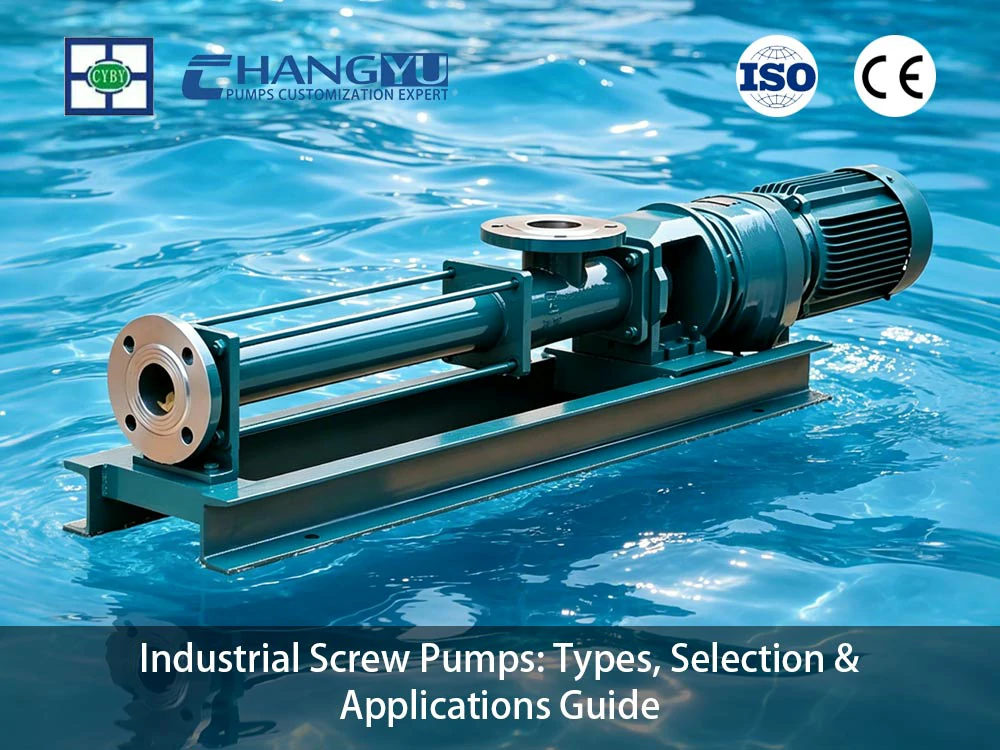
Con más de 20 años en la fabricación de bombas de tornillo industriales, Changyu Pump ha diseñado y suministrado soluciones de bombeo confiables para aplicaciones en petróleo, química, marina y generación de energía en todo el mundo. Esta guía proporciona el marco de selección estructurado — desde comprender los tipos de bombas de tornillo y sus envolventes de rendimiento, hasta evaluar los requisitos específicos de la aplicación, hasta igualar la configuración correcta a sus condiciones de proceso industrial específicas.
¿Cuáles son los Principales Tipos de Bombas de Tornillo Industriales?
Las bombas de tornillo industriales se dividen en tres configuraciones distintas, cada una optimizada para una ventana operativa específica.
Bombas de un Solo Tornillo (Cavidad Progresiva):
Un rotor metálico de una sola rosca gira excéntricamente dentro de un estator elastomérico de doble hélice, creando una serie de cavidades selladas que progresan desde la succión hasta la descarga. Este diseño maneja viscosidades ultra altas que superan 1,000,000 cSt y tolera sólidos abrasivos y materiales fibrosos. El estator elastomérico es un componente de desgaste consumible — el reemplazo predecible del estator es mantenimiento planificado, no un defecto de diseño. Las aplicaciones industriales incluyen transferencia de petróleo crudo con contenido de arena, manejo de polímeros y resinas, y transporte de lodos deshidratados.
Para una inmersión más profunda en la selección de bombas de un solo tornillo, la compatibilidad del elastómero del estator y la planificación del mantenimiento, consulte nuestra guía dedicada Guía de selección de Bombas de Cavidad Progresiva.
Bombas de Doble Tornillo:
Dos tornillos paralelos sin contacto, sincronizados por engranajes externos, giran dentro de una carcasa de ajuste preciso. La ausencia de contacto metal con metal permite el manejo de fluidos no lubricantes y mezclas gas-líquido sin daños. Este diseño proporciona una alta capacidad de presión (hasta 40+ bar) y tolera hasta 100% de burbujas de gas transitorias — lo que lo convierte en la opción preferida para el despojamiento de tanques, la impulsión multifásica en cabezales de pozo y la transferencia de fuel oil donde el arrastre de gas es inevitable.
Bombas de Triple Tornillo:
Un tornillo impulsor central engrana con dos tornillos locos, creando fuerzas hidráulicas equilibradas con cargas mínimas en los cojinetes. Esta configuración alcanza las presiones más altas (200+ bar) dentro de la familia de bombas de tornillo, pero requiere fluidos limpios y lubricantes. Las aplicaciones industriales se concentran en sistemas de aceite de lubricación, unidades de potencia hidráulica y servicio de inyección de combustible.
Tabla: Comparación de Tipos de Bombas de Tornillo Industriales
| Característica | Un Solo Tornillo | Doble Tornillo | Triple Tornillo |
|---|---|---|---|
| Capacidad de presión | 6–12 bar | Hasta 40+ bar | Hasta 200+ bar |
| Rango de viscosidad | 50–1,000,000+ cSt | 1–100,000 cSt | 1–5,000 cSt |
| Manejo de sólidos | Excelente | Pobre — requiere filtración | Ninguno — solo fluidos limpios |
| Manejo de gas | Moderado (~20%) | Excelente (100% de burbujas) | Pobre |
| Servicio industrial típico | Petróleo crudo, polímeros, lodos | Despojamiento de tanques, transferencia multifásica | Aceite lubricante, hidráulica, inyección de combustible |
¿Cuándo se Prefieren las Bombas de Tornillo sobre las Bombas Centrífugas para Aplicaciones Industriales?
En comparación con las bombas centrífugas, las bombas de tornillo ofrecen ventajas técnicas distintas en las condiciones exigentes que caracterizan los procesos industriales. Sin embargo, la elección depende de la aplicación — las bombas centrífugas siguen siendo el estándar económico para fluidos finos y limpios a altos caudales.
Tolerancia a la viscosidad: La eficiencia de la bomba centrífuga colapsa por encima de 200–300 cSt. Las bombas de tornillo mantienen una eficiencia volumétrica estable desde fluidos finos hasta medios que superan 1,000,000 cSt. Para procesos industriales que involucran crudo pesado, fundidos de polímero o asfalto, esto no es una preferencia — es un requisito.
Estabilidad del flujo: Las bombas de tornillo proporcionan un flujo casi sin pulsaciones y prácticamente constante independientemente de las variaciones de presión de descarga. Esta salida predecible las hace adecuadas para dosificación, medición y procesos sensibles a las fluctuaciones de flujo — una capacidad que las bombas centrífugas no pueden igualar.
Capacidad multifásica: Las bombas de doble tornillo manejan mezclas gas-líquido sin perder cebado. En el despojamiento industrial de tanques o la impulsión en cabezales de pozo, donde la bomba debe pasar de líquido a gas a medida que los recipientes se vacían, esta capacidad es esencial.
Sensibilidad al cizallamiento: La progresión continua de la cavidad en las bombas de un solo tornillo somete a los fluidos a un cizallamiento muy bajo, preservando la estructura molecular de polímeros, emulsiones y productos alimenticios. Los impulsores centrífugos, que operan a altas velocidades de rotación, pueden degradar irreversiblemente los materiales sensibles al cizallamiento.
¿Dónde se Utilizan las Bombas de Tornillo Industriales?
Las bombas de tornillo industriales operan en sectores donde los fluidos de proceso presentan desafíos extremos.
- Petróleo y gas: Transferencia de petróleo crudo, elevación de pozos multifásicos, suministro de fuel oil y manejo de agua producida.
- Sector químico y petroquímico: Transferencia de polímeros de alta viscosidad, manejo de resinas, bombeo de asfalto y betún, y dosificación de productos químicos corrosivos.
- Marina: Transferencia de combustible de búnker, bombeo de petróleo de carga, circulación de aceite lubricante y manejo de agua de sentina.
- Generación de energía: Suministro de fuel oil a calderas y turbinas de gas, tratamiento de aguas residuales y dosificación de productos químicos para agua de refrigeración.
¿Cómo seleccionar la bomba de tornillo industrial adecuada?
La selección sigue una lógica secuencial desde la caracterización del fluido hasta la configuración de la bomba.
Paso 1: Definir el fluido. Mida la viscosidad a la temperatura mínima de bombeo, cuantifique el contenido de sólidos y el tamaño de partícula, determine la fracción de gas y evalúe la composición química y el pH.
Paso 2: Emparejar la configuración del tornillo. Utilice la matriz de decisión:
- ¿Contiene sólidos o fibras? → Bomba de un solo tornillo. El estator de elastómero pasa las partículas sin daño.
- ¿Contiene gas significativo (> 20%)? → Bomba de dos tornillos. Los tornillos sin contacto manejan bolsas de gas sin perder cebado ni sobrecalentarse.
- ¿Fluido limpio y lubricante a alta presión? → Bomba de tres tornillos. Mayor capacidad de presión y huella compacta.
- ¿Viscosidad ultra alta (> 100,000 cSt)? → Bomba de un solo tornillo. Mantiene la eficiencia volumétrica donde otros tipos la pierden.
Los ingenieros de Changyu Pump enfatizan: la presencia de sólidos es una restricción estricta para las bombas de dos y tres tornillos. Especificar cualquiera de ellas para servicio abrasivo resultará en un desgaste rápido del tornillo y los cojinetes, independientemente de qué tan bien se alineen otros parámetros. Para una comparación detallada entre configuraciones de uno y dos tornillos en dimensiones de gas, sólidos y presión, consulte nuestra Guía de bomba de dos tornillos vs bomba de un solo tornillo.
Paso 3: Especificar materiales y sellos. Seleccione el elastómero del estator (NBR, EPDM, FKM, PTFE) según la compatibilidad química de acuerdo con ASTM D471. Especifique el sellado del eje: sello mecánico con lavado para servicio de alta presión, expulsor con empaquetadura de prensaestopas para aplicaciones remotas o con sólidos.
Paso 4: Verificar la ventana operativa. Confirme el margen de NPSH, la clasificación de temperatura y la capacidad de presión frente a los extremos del proceso. Aplique un margen de NPSH mínimo del 30% para fluidos con presión de vapor superior a 0.5 bar.
Los ingenieros de Changyu Pump recomiendan: al evaluar bombas de dos tornillos para servicio industrial, verifique que los engranajes de sincronización estén aislados del fluido bombeado en una caja de engranajes separada lubricada con aceite. Esta característica de diseño por sí sola puede extender la vida útil del engranaje de 3 a 5 veces en aplicaciones con fluidos no lubricantes, una consideración importante para los costos totales del ciclo de vida.
¿Qué normas industriales rigen las bombas de tornillo industriales?
Las normas industriales garantizan la calidad de diseño, prueba y material requerida para el servicio industrial continuo. La API 676, Sección 8.3, por ejemplo, exige pruebas hidrostáticas a 1.5 veces la presión de diseño para bombas en servicio de petróleo, un requisito que valida directamente la integridad de la contención de presión antes del envío.
| Estándar | Alcance |
|---|---|
| API 676 | Bombas rotativas de desplazamiento positivo para las industrias del petróleo y gas natural: obligatorio para aplicaciones de petróleo y gas; incluye requisitos de prueba hidrostática y de rendimiento |
| ANSI/HI 3.1-3.5 | Normas para bombas rotativas: guía completa para la selección, prueba y aplicación de bombas de cavidad progresiva y de tornillo |
| ISO 2858 | Bombas centrífugas de succión final: proporciona intercambiabilidad dimensional para diseños e instalaciones de bombas |
| ASTM D471 | Prueba de compatibilidad de elastómeros: valida la selección del material del estator para servicio químico; la prueba de inmersión a la temperatura máxima de operación es el método de verificación de compatibilidad definitivo |
¿Cuáles son los productos de bombas de tornillo industriales de Changyu Pump?
Si bien el estudio de caso anterior ilustra una aplicación de bomba de dos tornillos para servicio con alto contenido de gas, la línea de productos industriales principales de Changyu Pump se centra en la bomba de un solo tornillo tipo G, la configuración más versátil para la gama más amplia de desafíos de manejo de fluidos industriales que implican alta viscosidad, contenido de sólidos y sensibilidad al corte. Para aplicaciones que requieren configuraciones de dos o tres tornillos, comuníquese con nuestro equipo de ingeniería para una evaluación de solución personalizada.
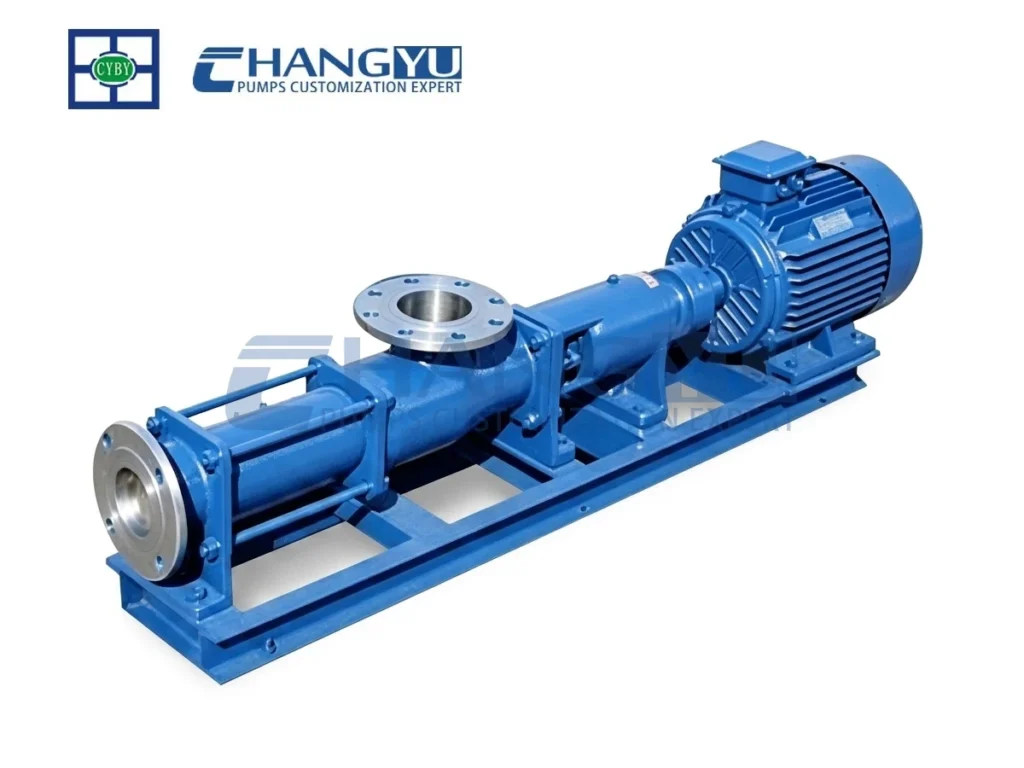
Bomba de tornillo industrial tipo G de Changyu Pump
La bomba de tornillo tipo G transporta el medio a través de la interacción de un tornillo excéntrico (rotor) y un manguito (estator). Su estructura central consiste en un tornillo interno con un paso grande y una altura de diente alta, y un estator externo con una superficie de doble hélice que se acopla con las ranuras helicoidales del rotor. Durante la operación, el rotor y el estator mantienen un contacto de sellado continuo, formando una serie de cámaras selladas que progresan desde la succión hasta la descarga.
Este diseño es particularmente adecuado para manejar fluidos de alta viscosidad que contienen partículas o fibras, lo que lo convierte en una opción ideal para aplicaciones industriales donde los fluidos de proceso presentan tanto alta viscosidad como contenido de sólidos.
Tabla: Especificaciones de la bomba de un solo tornillo tipo G de Changyu
| Parámetro | Especificaciones |
|---|---|
| Tipo de bomba | Un solo tornillo / cavidad progresiva |
| Rango de caudal | 0–200 m³/h |
| Gama de cabezales | 60–120 m |
| Potencia del motor | 55–37 kW |
| Rango de velocidad | 400–960 r/min |
| Temperatura media | De -20 °C a 150 °C |
| Materiales personalizables | Hierro fundido, acero inoxidable |
Ver especificaciones del producto de la bomba de tornillo Changyu tipo G →
Estudio de caso de bombas de tornillo industriales: resolución de un desajuste de tipo en una planta química
Aplicación:
Una planta química estaba transfiriendo una lechada de catalizador que contenía aproximadamente un 10–15% de partículas sólidas finas (a base de sílice, tamaño de partícula 50–200 μm) suspendidas en un líquido de hidrocarburo a 80°C. La especificación original de la bomba requería una bomba de dos tornillos basada en el requisito de presión de descarga de 8 bar.
Problema: Los tornillos y la carcasa de la bomba de dos tornillos comenzaron a mostrar rayones profundos y desgaste abrasivo después de aproximadamente 8 a 12 semanas de operación. El caudal disminuyó progresivamente a medida que los espacios internos aumentaron más allá de las tolerancias de diseño. La bomba requería una revisión completa cada 3 a 4 meses, con cada reconstrucción costando $15,000–$20,000 en piezas y mano de obra, además de 24 a 36 horas de tiempo de inactividad no planificado.
Causa raíz: El diseño sin contacto de la bomba de doble tornillo se basa en espacios precisos entre los tornillos y la carcasa, típicamente de 50 a 200 μm. Las partículas de catalizador tenían un tamaño que podía entrar y desgastar estos espacios, actuando como un compuesto abrasivo. La selección original de la bomba había priorizado el requisito de presión, pasando por alto el contenido de sólidos como una restricción estricta para el funcionamiento de la bomba de doble tornillo.
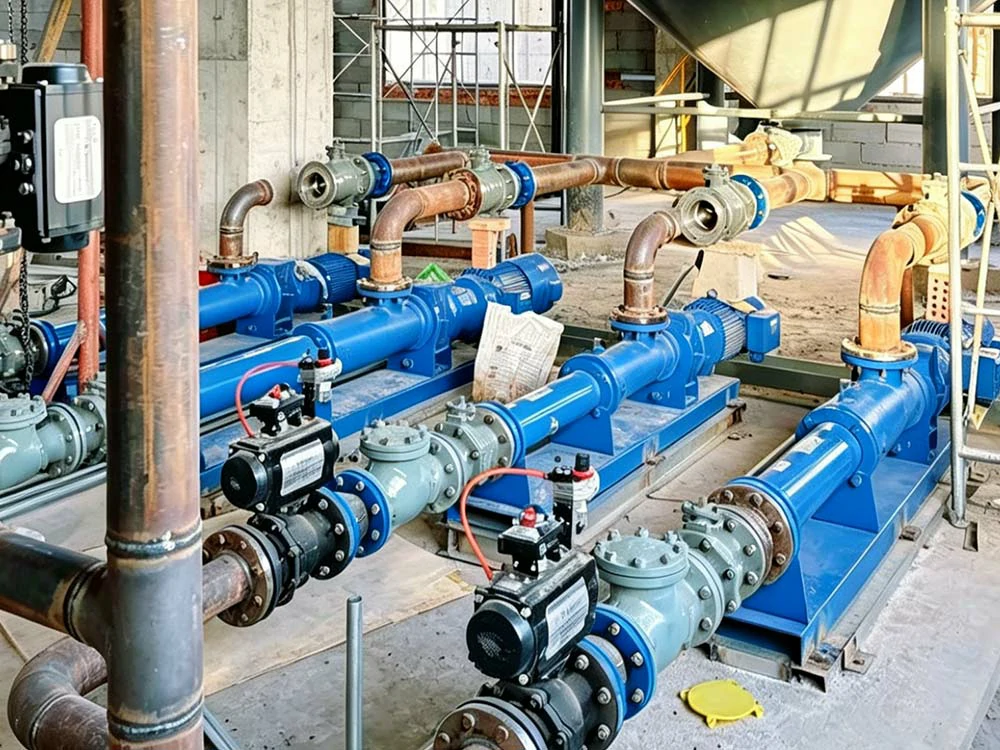
Solución de Changyu Pump:
Se reemplazó la bomba de doble tornillo por una bomba de un solo tornillo (cavidad progresiva) Changyu tipo G. El diseño de rotor-estator excéntrico permite que los sólidos pasen a través de la bomba sin dañar las superficies de precisión. El estator de NBR, seleccionado por su compatibilidad con hidrocarburos a 80 °C, proporcionó la resiliencia elastomérica necesaria para manejar las partículas abrasivas. La velocidad del rotor se fijó en 480 r/min, deliberadamente baja para prolongar la vida útil del estator en servicio abrasivo.
Resultados: La vida útil del estator alcanzó más de 14 meses, una mejora de 4 a 5 veces en comparación con el intervalo de reconstrucción de la bomba de doble tornillo. Se eliminó el tiempo de inactividad no planificado. La planta convirtió dos servicios adicionales de transferencia de lodo de catalizador de bombas de doble tornillo a bombas de un solo tornillo durante el año siguiente.
Conclusión principal: El contenido de sólidos es una restricción estricta para la selección de bombas de doble tornillo, independientemente de qué tan bien se alineen los parámetros de presión y flujo. Cuando hay partículas abrasivas presentes, el estator elastomérico de la bomba de un solo tornillo proporciona la tolerancia necesaria para el servicio con sólidos. Una bomba de doble tornillo especificada sin tener en cuenta los sólidos experimentará un desgaste rápido y predecible de sus espacios de precisión.
Preguntas frecuentes sobre bombas de tornillo industriales
P: ¿Cuáles son los principales tipos de bombas de tornillo industriales?
R: Bombas de un solo tornillo (cavidad progresiva) para fluidos viscosos con sólidos; bombas de doble tornillo para flujo multifásico y altas fracciones de gas; bombas de triple tornillo para fluidos limpios y lubricantes a altas presiones.
P: ¿Cuándo debo elegir una bomba de tornillo en lugar de una bomba centrífuga?
R: Elija una bomba de tornillo cuando la viscosidad del fluido supere los 200–300 cSt, cuando haya sólidos o gas arrastrado presente, cuando los fluidos sensibles al cizallamiento requieran un manejo suave, o cuando se requiera un flujo preciso y casi sin pulsaciones.
P: ¿Pueden las bombas de tornillo industriales manejar sólidos?
R: Las bombas de un solo tornillo manejan eficazmente sólidos, fibras y partículas abrasivas. Las bombas de doble tornillo y triple tornillo requieren fluidos limpios: los sólidos dañan los espacios de precisión y causan un desgaste rápido.
P: ¿Cuánto duran las bombas de tornillo industriales?
R: Con una especificación correcta y un mantenimiento adecuado, las bombas de tornillo industriales funcionan de manera confiable durante 15 a 20 años o más. Los componentes de desgaste (estatores, sellos, cojinetes) se reemplazan en intervalos predecibles.
P: ¿Qué normas se aplican a las bombas de tornillo industriales?
R: API 676 rige las bombas de tornillo en servicio de petróleo. ANSI/HI 3.1-3.5 proporciona una guía completa de selección y pruebas. ISO 9001 garantiza la calidad de fabricación. ASTM D471 valida la compatibilidad del elastómero.
Lista de verificación de prevención del ingeniero de Changyu Pump
- Haga coincidir la configuración del tornillo con las características del fluido, no con el precio de compra. Sólidos → un solo tornillo. Gas → doble tornillo. Lubricante limpio a alta presión → triple tornillo.
- Verifique el contenido de gas en las condiciones de entrada de la bomba, no en el recipiente de origen. El gas se expande a medida que la presión disminuye en la línea de succión. Una fracción de gas del 5 % en el tanque puede convertirse en un 25 % en la bomba.
- Instale protección contra funcionamiento en seco en cada bomba de un solo tornillo. El daño al estator comienza segundos después de la pérdida de fluido. Un interruptor de flujo combinado con un sensor de temperatura es obligatorio.
- Especifique los materiales para la mezcla química completa, no solo el fluido principal. Los solventes o agentes de limpieza traza pueden destruir un elastómero de estator que de otro modo sería compatible. Valide mediante pruebas de inmersión ASTM D471 a la temperatura máxima de operación.
- Al evaluar bombas de doble tornillo, verifique el aislamiento del engranaje de sincronización del fluido bombeado. Las cajas de engranajes externas lubricadas con aceite extienden la vida útil del engranaje de 3 a 5 veces en aplicaciones no lubricantes.
- Solicite curvas de rendimiento corregidas para la viscosidad específica de su fluido. Los datos de pruebas con agua son engañosos para fluidos industriales viscosos.
Conclusión
Las bombas de tornillo industriales son activos de ingeniería de precisión diseñados para servicio continuo en las condiciones de proceso más exigentes. La especificación correcta requiere un enfoque sistemático: caracterizar el fluido, hacer coincidir la configuración del tornillo con el desafío dominante (viscosidad, sólidos, gas o presión), seleccionar materiales para la compatibilidad química y validar según los estándares de la industria. La elección entre configuraciones de uno, dos y tres tornillos no es una cuestión de preferencia, sino una cuestión de características del fluido. Cuando se especifica correctamente, una bomba de tornillo industrial ofrece décadas de servicio confiable con intervalos de mantenimiento predecibles y costos de ciclo de vida manejables.
Cuando esté listo para especificar una bomba de tornillo industrial para su proceso, el equipo de ingeniería de Changyu Pump puede proporcionar una evaluación técnica gratuita, que incluye análisis de características del fluido, recomendación del tipo de bomba y orientación específica de la aplicación para sus parámetros operativos. Con más de 20 años de experiencia en fabricación, fabricación conforme a API 676 y rendimiento documentado en aplicaciones de petróleo, química e industriales, garantizamos que su selección de bomba sea técnicamente correcta desde el primer día.
Contacte a los ingenieros de Changyu Pump para una evaluación técnica gratuita →