
Respuesta Rápida
A bomba de diafragma es un tipo de bomba de desplazamiento positivo que utiliza una membrana flexible (diafragma) que se mueve hacia adelante y hacia atrás dentro de una cámara de bombeo para transferir fluidos. A diferencia de las bombas centrífugas que dependen de la velocidad rotacional, las bombas de diafragma atrapan un volumen fijo de fluido y lo empujan a través del puerto de descarga en cada carrera. Las características clave incluyen:
- Capacidad de autocebado — las bombas de diafragma pueden elevar fluido desde debajo de la entrada de la bomba sin cebado manual, lo que las hace ideales para aplicaciones de vaciado de sumideros y transferencia de tanques.
- Tolerancia al funcionamiento en seco — el diafragma flexible se comprime contra una cámara vacía sin daños, a diferencia de las bombas centrífugas que dependen del fluido bombeado para enfriamiento y lubricación.
- Paso de sólidos grandes — ciertos diseños de bombas de diafragma pasan sólidos de hasta varios centímetros de diámetro, manejando lodos que obstruirían los impulsores centrífugos estándar.
- Diseño sin sello — el diafragma aísla el fluido bombeado del mecanismo de accionamiento, eliminando los sellos de eje dinámicos que tienen fugas en servicio abrasivo o corrosivo.
Los procesos industriales frecuentemente encuentran fluidos que desafían los diseños de bombas convencionales: ácidos corrosivos, lodos abrasivos, pastas de alta viscosidad y lodos que contienen sólidos grandes. Una bomba centrífuga puede obstruirse con material fibroso, una bomba de engranajes puede atascarse con partículas abrasivas y una bomba química estándar puede tener fugas de fluidos peligrosos a través de sellos mecánicos desgastados. La bomba de diafragma aborda estos desafíos a través de un mecanismo de bombeo fundamentalmente diferente, uno que separa el fluido de los componentes de accionamiento y acomoda sólidos que deshabilitarían otros tipos de bombas.
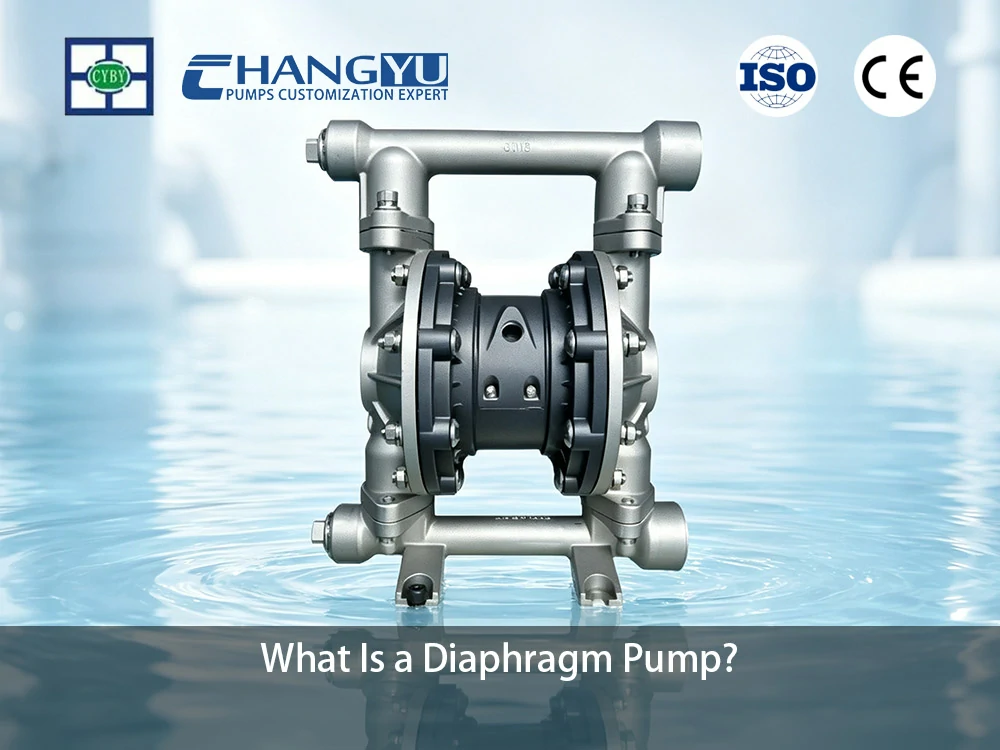
Changyu Pump ha especificado y suministrado bombas de desplazamiento positivo para aplicaciones químicas, mineras e industriales durante más de dos décadas. Esta guía explica cómo funcionan las bombas de diafragma, los materiales y diseños disponibles, y cómo determinar si una bomba de diafragma es la elección correcta para su aplicación.
¿Qué es una bomba de diafragma?
Una bomba de diafragma pertenece a la familia de bombas de desplazamiento positivo — en lugar de impartir velocidad al fluido como lo hace una bomba centrífuga, atrapa un volumen fijo de fluido y lo fuerza a través de la descarga. La acción de bombeo proviene de un diafragma flexible, típicamente hecho de caucho, termoplástico o PTFE, que se mueve hacia adelante y hacia atrás dentro de una cámara sellada.
En la carrera de succión, el diafragma se aleja de la pared de la cámara, creando un vacío que atrae el fluido más allá de la válvula de retención de entrada hacia la cámara. En la carrera de descarga, el diafragma empuja hacia adelante, presurizando el fluido y forzándolo más allá de la válvula de retención de salida hacia el puerto de descarga. Dos válvulas de retención unidireccionales — una en la entrada, una en la salida — aseguran que el fluido se mueva en una sola dirección.
Este diseño produce tres características definitorias que distinguen las bombas de diafragma de otros tipos de bombas:
- Aislamiento completo del fluido: El diafragma forma un sello estático entre el fluido bombeado y el mecanismo de accionamiento de la bomba. No hay un eje giratorio que penetre en la carcasa de la bomba, ni un sello mecánico dinámico que se desgaste o tenga fugas. Para fluidos peligrosos, corrosivos o estériles, esta es una ventaja de seguridad fundamental.
- Autocebado y funcionamiento en seco: Debido a que la bomba de diafragma atrapa y desplaza un volumen fijo con cada carrera, puede evacuar el aire de la línea de succión y extraer fluido desde debajo de la entrada de la bomba. También puede operar contra una descarga cerrada durante períodos prolongados sin daños — la bomba simplemente se detiene cuando la presión de descarga iguala la presión del aire de suministro.
- Capacidad de manejo de sólidos: Sin espacios reducidos, sin impulsor giratorio y sin engranajes de acoplamiento, una bomba de diafragma puede pasar sólidos que obstruirían o dañarían otros tipos de bombas. La única limitación es el tamaño de las válvulas de retención y los pasajes internos.
Las bombas de diafragma están disponibles en dos configuraciones de accionamiento principales: doble diafragma accionado por aire (AODD), donde el aire comprimido impulsa el diafragma hacia adelante y hacia atrás, y doble diafragma accionado eléctricamente (EODD), donde un motor eléctrico y un mecanismo de manivela proporcionan el movimiento alternativo. Las diferencias entre estos dos tipos se discuten en la Sección 3.
¿Cómo funciona una bomba de diafragma?
El ciclo de operación de una bomba de diafragma se puede entender examinando sus componentes principales: el diafragma, las válvulas de retención y — para bombas AODD — el sistema de válvula de aire.
El conjunto del diafragma
En una bomba de doble diafragma, dos diafragmas están conectados por un eje común. Cuando el aire comprimido (o un accionamiento eléctrico) empuja un diafragma hacia afuera en su carrera de descarga, el eje conectado tira del diafragma opuesto hacia adentro en su carrera de succión. Esta acción alterna produce un flujo continuo, aunque pulsante.
El material del diafragma es la decisión de especificación más crítica para cualquier aplicación de bomba de diafragma. El diafragma debe ser lo suficientemente flexible para ciclar millones de veces sin falla por fatiga, químicamente resistente al fluido bombeado y mecánicamente duradero para soportar cualquier sólido presente en la corriente. Los materiales comunes y sus aplicaciones se cubren en la Sección 4.
El sistema de válvulas de retención
Dos pares de válvulas de retención — un par de entrada y un par de salida — controlan la dirección del fluido a través de la bomba. En la carrera de succión, las válvulas de entrada se abren a medida que el vacío de la cámara atrae el fluido; las válvulas de salida permanecen asentadas contra la contrapresión. En la carrera de descarga, las válvulas de entrada se cierran a medida que la presión de la cámara aumenta, y las válvulas de salida se abren para permitir que el fluido salga.
El diseño de la válvula de retención afecta directamente la capacidad de manejo de sólidos y el rendimiento de elevación de succión de la bomba. Las válvulas de bola proporcionan un sellado confiable y son la configuración estándar. Las válvulas cónicas manejan materiales viscosos y fibrosos mejor que las válvulas de bola. Las válvulas de aleta pasan los sólidos más grandes pero proporcionan un sellado menos positivo. El tipo correcto de válvula de retención depende de las características específicas del fluido — un tema cubierto en la Sección 4.
El sistema de válvula de aire (bombas AODD)
En una bomba de doble diafragma accionada por aire, una válvula de control direccional válvula de control direccional — comúnmente llamada válvula de aire o válvula de lanzadera — dirige alternativamente aire comprimido a la parte posterior de cada diafragma. La válvula de aire es el componente más sensible al mantenimiento en una bomba AODD. El aire comprimido contaminado o húmedo causa adherencia de la válvula y un funcionamiento errático de la bomba. Las bombas AODD de alta calidad utilizan válvulas de aire pilotadas en lugar de válvulas de carrete simples — el diseño pilotado reduce la adherencia en condiciones de aire contaminado y extiende la vida útil de la válvula.
La fiabilidad de la válvula de aire determina directamente la fiabilidad general de la bomba. Una bomba de diafragma que se detiene a medio ciclo — una queja común en campo — rara vez sufre una falla del diafragma. La válvula de aire se ha atascado debido a aire comprimido sucio o húmedo. Este es el primer componente a inspeccionar cuando una bomba AODD funciona mal.
¿Cuáles son los principales tipos de bombas de diafragma?
Las bombas de diafragma se clasifican ampliamente por su mecanismo de accionamiento. La elección entre accionamiento neumático y eléctrico afecta el costo operativo, la capacidad de control y los requisitos de instalación.
Bombas neumáticas de doble diafragma (AODD)
Las bombas AODD utilizan aire comprimido como fuente de energía. Una válvula de distribución de aire presuriza alternativamente la parte posterior de cada diafragma, creando la acción de bombeo reciprocante. Las bombas AODD son inherentemente más seguras para ubicaciones peligrosas — al no tener componentes eléctricos, eliminan la necesidad de carcasas de motor a prueba de explosiones. Para aplicaciones que requieren certificación formal para áreas peligrosas, verifique el cumplimiento de ATEX o equivalente para el modelo de bomba específico y la clasificación del área. Las bombas AODD también son autorregulables: la bomba se detiene cuando la presión de descarga iguala la presión del aire de suministro, proporcionando protección integrada contra sobrepresión sin válvulas de alivio ni interruptores de presión.

El costo operativo principal de las bombas AODD es el aire comprimido. Generar aire comprimido consume mucha energía — típicamente de tres a cinco veces más caro por unidad de potencia hidráulica entregada que el accionamiento eléctrico directo. Para aplicaciones de servicio continuo, esta diferencia en el costo energético puede dominar la economía del ciclo de vida. Las bombas AODD son más rentables en aplicaciones de servicio intermitente, en ubicaciones peligrosas donde los motores eléctricos requerirían costosas carcasas a prueba de explosiones, o donde la infraestructura de aire comprimido existente de la planta hace que el costo marginal de operación sea bajo.
Bombas de Diafragma Doble Operadas Eléctricamente (EODD)
Las bombas EODD utilizan un motor eléctrico y un mecanismo de accionamiento mecánico — típicamente una manivela y biela o una leva excéntrica — para reciprocitar los diafragmas. El accionamiento eléctrico proporciona varias ventajas sobre el aire comprimido: mayor eficiencia energética, caudal constante independiente de las fluctuaciones de presión de aire y control preciso del caudal mediante variadores de frecuencia. Las bombas EODD no requieren un suministro de aire comprimido, lo que las hace adecuadas para instalaciones remotas donde el aire comprimido no está disponible.
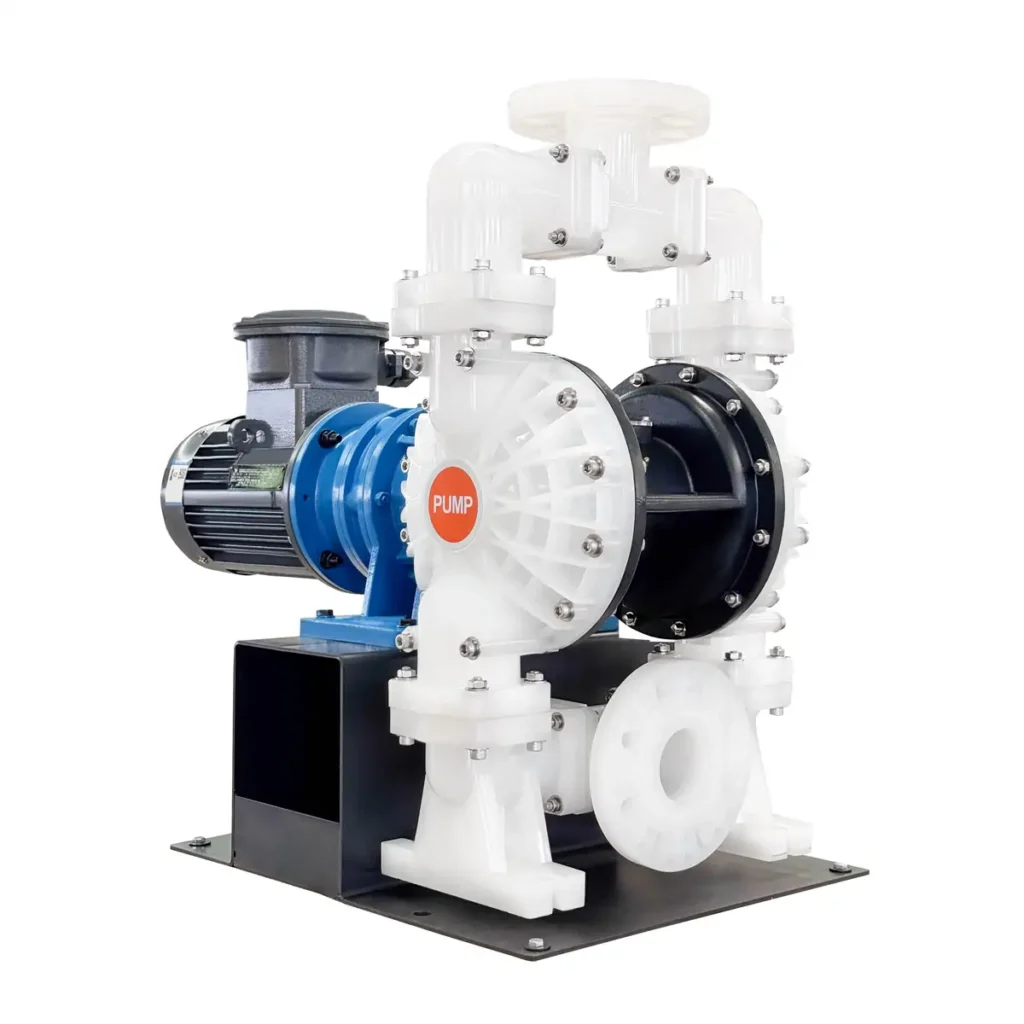
La contrapartida es la complejidad mecánica. El mecanismo de manivela y los cojinetes del motor requieren lubricación y mantenimiento periódico que el diseño AODD más simple evita. Las bombas EODD no son inherentemente a prueba de explosiones y requieren carcasas de motor apropiadas para servicio en áreas peligrosas.
Comparación AODD vs EODD
| Factor | Bomba AODD | Bomba EODD |
|---|---|---|
| Potencia de accionamiento | Aire comprimido | Motor eléctrico |
| Costo energético (relativo) | Mayor — el aire comprimido consume mucha energía para producirse | Menor — el accionamiento eléctrico directo es más eficiente |
| Control de caudal | Ajustar la presión de aire o estrangular la descarga | Ajustar la velocidad del motor mediante VFD |
| A prueba de explosiones | Inherentemente más seguro — sin componentes eléctricos; verifique la certificación ATEX para requisitos específicos | Requiere carcasa de motor a prueba de explosiones |
| Autocebante | Excelente — hasta 6–8 m de altura de succión en seco | Buena — hasta 4–5 m de altura de succión en seco |
| Funcionamiento en seco | Sí — sin daños por funcionamiento en seco | Sí — sin daños por funcionamiento en seco |
| Ideal para | Servicio intermitente, áreas peligrosas, aire de planta existente | Servicio continuo, control preciso del caudal, ubicaciones remotas sin aire comprimido |
Ingenieros de Changyu Pump señalan: Las bombas AODD son la opción preferida en instalaciones con infraestructura de aire comprimido establecida — plantas químicas, instalaciones de tratamiento de aguas residuales y operaciones mineras. La simplicidad del accionamiento neumático, combinada con el riesgo eléctrico reducido y el control de presión autorregulable, supera el mayor costo energético para la mayoría de las aplicaciones de servicio intermitente. Las bombas EODD se especifican cuando la aplicación exige un control de caudal preciso y ajustable durante períodos de operación prolongados, o cuando el aire comprimido no está disponible en el sitio de instalación.
¿Qué materiales son mejores para los componentes húmedos de la bomba de diafragma?
El diafragma es la especificación de material más crítica en cualquier bomba de diafragma. Debe flexionarse millones de veces sin falla por fatiga mientras resiste el ataque químico del fluido bombeado. Las válvulas de retención — bolas, asientos y juntas tóricas — deben proporcionar simultáneamente un sellado confiable y resistir el mismo entorno químico y abrasivo.
Selección del material del diafragma
| Material | Ideal para | Límite de temperatura | Limitaciones |
|---|---|---|---|
| PTFE (Teflón) | Ácidos fuertes, solventes, productos químicos de alta temperatura | 100°C | Más rígido que los elastómeros — requiere velocidades de ciclo más bajas; susceptible a cortes y perforaciones por partículas afiladas en lodos abrasivos |
| Santopreno (TPE) | Lodos abrasivos, relaves mineros, barbotinas cerámicas | 100 °C (verifique el grado específico para la aplicación; las propiedades mecánicas se degradan a temperaturas elevadas) | No para ácidos fuertes, solventes o aceites |
| Viton / FKM | Aceites de alta temperatura, combustibles, hidrocarburos aromáticos | 150 °C | No para cetonas, ésteres o álcalis fuertes |
| EPDM | Fluidos a base de agua, ácidos diluidos, aplicaciones de grado alimenticio | 80 °C | No para aceites minerales o fluidos hidrocarburos |
| NBR (Nitrile) | Aceites, combustibles, fluidos hidráulicos | 80 °C | No para ácidos oxidantes fuertes o cetonas |
Tipos de válvulas de retención y aplicaciones
El diseño de la válvula de retención determina la capacidad de la bomba para manejar sólidos, fluidos viscosos y material fibroso. Cuatro configuraciones sirven para diferentes ventanas de aplicación:
- Válvulas de bola: La configuración estándar. Una bola se asienta contra una junta tórica o un asiento mecanizado. Las válvulas de bola proporcionan el sellado más positivo y se utilizan para fluidos limpios a moderadamente contaminados. El material de la bola — PTFE, Santopreno, acero inoxidable o cerámica — se selecciona por su compatibilidad química con el fluido bombeado.
- Válvulas cónicas: Un elemento cónico se asienta en un asiento cónico correspondiente. El paso de flujo más grande en comparación con una válvula de bola del mismo tamaño maneja fluidos viscosos y materiales fibrosos de manera más efectiva. Las válvulas cónicas se especifican para lodos, pulpas y soluciones poliméricas que harían que las válvulas de bola se peguen.
- Válvulas de aleta: Una aleta flexible se articula en un borde y se abre completamente durante la carrera de descarga. Las válvulas de aleta proporcionan el paso de sólidos más grande, típicamente de 2 a 5 cm dependiendo del tamaño de la bomba, y se utilizan para pulpas mineras, aplicaciones de desagüe y fluidos que contienen desechos grandes. La desventaja es un sellado menos positivo a bajas presiones diferenciales en comparación con las válvulas de bola o cónicas.
- Válvulas de placa plana: Se utilizan en diseños de bombas de diafragma de alta presión, particularmente bombas de diafragma de pistón para alimentación de filtros prensa y bombeo de pulpas a larga distancia. La placa plana proporciona una superficie de sellado rígida capaz de soportar presiones que superan los 100 bar.
Los ingenieros de Changyu Pump recomiendan: Para pulpas abrasivas que contienen arena, granalla o partículas cerámicas, comunes en minería, producción cerámica y tratamiento de aguas residuales, especifique diafragmas de Santoprene con válvulas de retención cónicas o de aleta. La resiliencia del Santoprene absorbe la energía de impacto de las partículas sin el desgaste por corte que daña los materiales más duros y menos flexibles. Los diafragmas de PTFE, aunque son químicamente inertes, son susceptibles al corte y la perforación por partículas afiladas en servicio abrasivo, lo que provoca fugas prematuras. Un elastomérico Se requiere un diafragma para aplicaciones abrasivas. Un diafragma de PTFE instalado en un servicio de pulpa abrasiva es susceptible al corte y la perforación por partículas afiladas, lo que provoca fugas prematuras.
¿Cuándo Debe Elegir una Bomba de Diafragma Sobre Otras Bombas?
Las bombas de diafragma compiten con varios otros tipos de bombas de desplazamiento positivo, más comúnmente con bombas peristálticas (de manguera) y bombas de cavidad progresiva. Cada tipo de bomba opera en una ventana operativa distinta, y la decisión de selección depende de las características específicas del fluido y los requisitos operativos.
Bomba de Diafragma vs Bomba Peristáltica vs Bomba de Cavidad Progresiva
| Factor | Bomba de Diafragma (AODD) | Bomba Peristáltica (de Manguera) | Bomba de Cavidad Progresiva |
|---|---|---|---|
| Paso de sólidos | Excelente: hasta varios centímetros con válvulas de aleta | Moderada: limitada por el diámetro interno de la manguera | Moderada: limitada por el tamaño de la cavidad del estator |
| Tolerancia al funcionamiento en seco | Excelente: sin daños | Excelente: sin daños | Ninguna: el estator se destruye en minutos |
| Autocebante | Excelente: hasta 6–8 m de elevación en seco | Excelente: hasta 8–9 m de elevación en seco | Buena: hasta 4–5 m |
| Pulsación de flujo | Alta: requiere amortiguador para flujo suave | Baja: desplazamiento continuo | Muy baja: progresión continua de cavidad |
| Cizallamiento | De bajo a moderado | Muy baja | Muy baja |
| Riesgo de fuga en el sello | Ninguno: diseño sin sello | Bajo: riesgo de rotura de manguera; sin sello de eje dinámico | Moderado: requiere sello mecánico |
| Perfil de mantenimiento | Reemplazo de diafragma y válvula de retención | Reemplazo de manguera: simple, rápido | Reemplazo del estator: complejidad moderada |
| Ideal para | Servicio intermitente, sólidos grandes, fluidos peligrosos | Dosificación precisa, fluidos sensibles al cizallamiento, servicio continuo | Transferencia de lodos y pulpas de alta presión y servicio continuo |
Cuándo una Bomba de Diafragma es la Elección Preferida
Una bomba de diafragma es la especificación adecuada cuando una o más de las siguientes condiciones definen la aplicación:
- Sólidos grandes o desechos en la corriente de fluido — las bombas de diafragma con válvula de aleta pasan sólidos de hasta varios centímetros, una capacidad que ni las bombas peristálticas ni las de cavidad progresiva pueden igualar.
- Fluidos peligrosos o corrosivos donde cualquier fuga es inaceptable — el diseño de diafragma sin sello, particularmente con componentes húmedos de PTFE, proporciona el nivel más alto de contención para productos químicos agresivos.
- Aplicaciones de servicio intermitente — las bombas AODD toleran arranques y paradas frecuentes sin daños y pueden permanecer presurizadas entre ciclos sin sobrecalentarse.
- Sin energía eléctrica disponible en la ubicación de la bomba — las bombas AODD funcionan completamente con aire comprimido, lo que permite la instalación en sumideros remotos y ubicaciones peligrosas sin infraestructura eléctrica.
Cuándo una Bomba de Diafragma Puede No Ser la Mejor Opción
- Aplicaciones de servicio continuo y alto caudal — el costo energético del aire comprimido para bombas AODD se vuelve prohibitivo para sistemas grandes que operan continuamente. Las bombas de cavidad progresiva o centrífugas suelen ofrecer costos de ciclo de vida más bajos en este escenario.
- Dosificación de precisión que requiere un flujo constante y no pulsante — las bombas peristálticas y las bombas de cavidad progresiva proporcionan un flujo más suave con menos pulsación. Si bien los amortiguadores de pulsación reducen la pulsación del flujo AODD, añaden costo y complejidad.
- Presiones de descarga muy altas (> 15–20 bar) — las bombas AODD estándar están limitadas por la presión de aire comprimido disponible. Los diseños de bombas de diafragma de alta presión (diafragma de pistón o diafragma hidráulico) están disponibles, pero representan una categoría de bomba diferente.
Para una guía de selección detallada que cubre tipos de bombas para alimentación de filtros prensa y desagüe de alta presión, consulte nuestra guía sobre Selección de Bombas para Desagüe de Pulpas.
¿Cuáles Son las Aplicaciones Típicas de las Bombas de Diafragma?
Las bombas de diafragma sirven en aplicaciones donde otros tipos de bombas fallan, típicamente debido al contenido de sólidos, la agresividad química o la necesidad de operación sin fugas. La versatilidad del diseño de diafragma permite que un solo tipo de bomba abarque industrias desde el procesamiento químico hasta la minería y la producción de alimentos.
- Procesamiento químico: Transferencia de ácidos, álcalis, solventes y corrientes de desechos corrosivos. Los diafragmas de PTFE y los cuerpos de bomba resistentes a la corrosión (polipropileno, PVDF o acero inoxidable) proporcionan compatibilidad química en todo el espectro de pH.
- Minería y procesamiento de minerales: Desagüe de sumideros, transferencia de subflujo de espesadores y alimentación de filtros prensa. Los diafragmas de Santoprene con válvulas de aleta o cónicas manejan pulpas abrasivas que contienen arena, partículas minerales y relaves.
- Tratamiento de aguas residuales: Dosificación de polímeros, transferencia de lechada de cal y manejo de lodos. Las bombas de diafragma toleran el material fibroso, la granalla y el contenido variable de sólidos característicos de las aguas residuales municipales e industriales.
- Transferencia de barbotina y esmalte cerámico: Las bombas de diafragma operadas por aire manejan pulpas cerámicas abrasivas sin la contaminación metálica que decolora los esmaltes. La acción de bombeo suave preserva la estructura de las barbotinas de arcilla sensibles al cizallamiento.
- Alimentación y bebidas: Los diseños de bombas de diafragma sanitarias cumplen con los estándares 3-A y EHEDG para la transferencia de productos viscosos — chocolate, jarabes, masa y pulpas de fruta — sin degradación del producto.
Para obtener orientación sobre la selección de bombas para lodos cerámicos abrasivos, consulte nuestra guía dedicada en Bomba de Lechada de Barbotina Cerámica: Transferencia de Esmalte Abrasivo y Caolín.
¿Cómo solucionar problemas comunes en bombas de diafragma?
Las bombas de diafragma son mecánicamente más simples que la mayoría de otros tipos de bombas, pero no son inmunes a fallos. La experiencia de campo muestra que la mayoría de los problemas de las bombas AODD se remontan a tres causas raíz: aire comprimido contaminado o húmedo, materiales de diafragma o sellos químicamente incompatibles, y acumulación de sólidos en las válvulas de retención.
Guía común de solución de problemas para bombas de diafragma
| Síntoma | Causa probable | Acción Correctiva |
|---|---|---|
| La bomba se detiene a medio ciclo | Válvula de aire atascada debido a aire comprimido húmedo o contaminado | Limpie o reemplace la válvula de aire; instale un secador de aire o separador de humedad aguas arriba |
| Caudal reducido | Válvulas de retención desgastadas que no sellan correctamente; acumulación de sólidos en los asientos de las válvulas | Inspeccione y reemplace bolas, asientos o juntas tóricas de retención; limpie los residuos de los asientos de las válvulas |
| Flujo errático o pulsante (más allá de la pulsación normal) | Suministro de aire desigual; línea de succión parcialmente obstruida | Verifique la presión y el caudal de aire; inspeccione y limpie el colador de succión |
| Rotura del diafragma | Incompatibilidad química; fatiga por velocidad de ciclo excesiva; sólidos que cortan el diafragma | Verifique la compatibilidad del material con el fluido bombeado; reduzca la velocidad del ciclo; seleccione un material de diafragma más resistente a la abrasión |
| Congelación del escape de aire | Enfriamiento por expansión del aire comprimido en entornos húmedos | Instale un secador de aire; use aire comprimido calentado en entornos fríos |
| Ruido o vibraciones excesivas | Sujetadores flojos; cavitación por NPSH insuficiente; golpe de ariete en la línea de descarga | Apriete todos los sujetadores; aumente el diámetro de la línea de succión; instale un amortiguador de pulsaciones |
Ingenieros de Changyu Pump señalan: La válvula de aire es el corazón de una bomba AODD y la fuente más común de quejas operativas. Una bomba de diafragma que se detiene intermitentemente o funciona de manera errática casi nunca sufre una falla del diafragma: la válvula de aire se ha atascado debido a la humedad, suciedad o aceite en el suministro de aire comprimido. Instalar un filtro y lubricador de aire en el punto de uso (unidad FRL) en cada bomba resuelve la mayoría de los problemas de confiabilidad de las AODD. Para instalaciones al aire libre o entornos húmedos, un secador de aire aguas arriba de la bomba evita la condensación que causa congelamiento y atasco de la válvula.
Estudio de caso de bomba de diafragma: Resolviendo una crisis de obstrucción en la transferencia de ácido residual químico
Una planta de procesamiento químico en el sudeste asiático estaba utilizando bombas centrífugas con sellos mecánicos para transferir ácido residual que contenía sólidos precipitados y material orgánico no reaccionado. El ácido residual — una mezcla de ácido sulfúrico y clorhídrico con pH 1–2 — contenía sólidos cristalinos que se depositaban en la carcasa de la bomba y residuos orgánicos fibrosos que se enrollaban alrededor del impulsor.
Las bombas centrífugas requerían reemplazo del sello mecánico cada 3–4 meses debido al ataque ácido en las caras del sello y las juntas tóricas. Los impulsores se obstruían con material fibroso aproximadamente cada dos semanas, requiriendo desmontaje de la bomba y limpieza manual. Cada evento de mantenimiento no planificado causaba 4–6 horas de tiempo de inactividad de producción mientras se aislaba el tanque de retención de ácido residual y se reparaba la bomba.
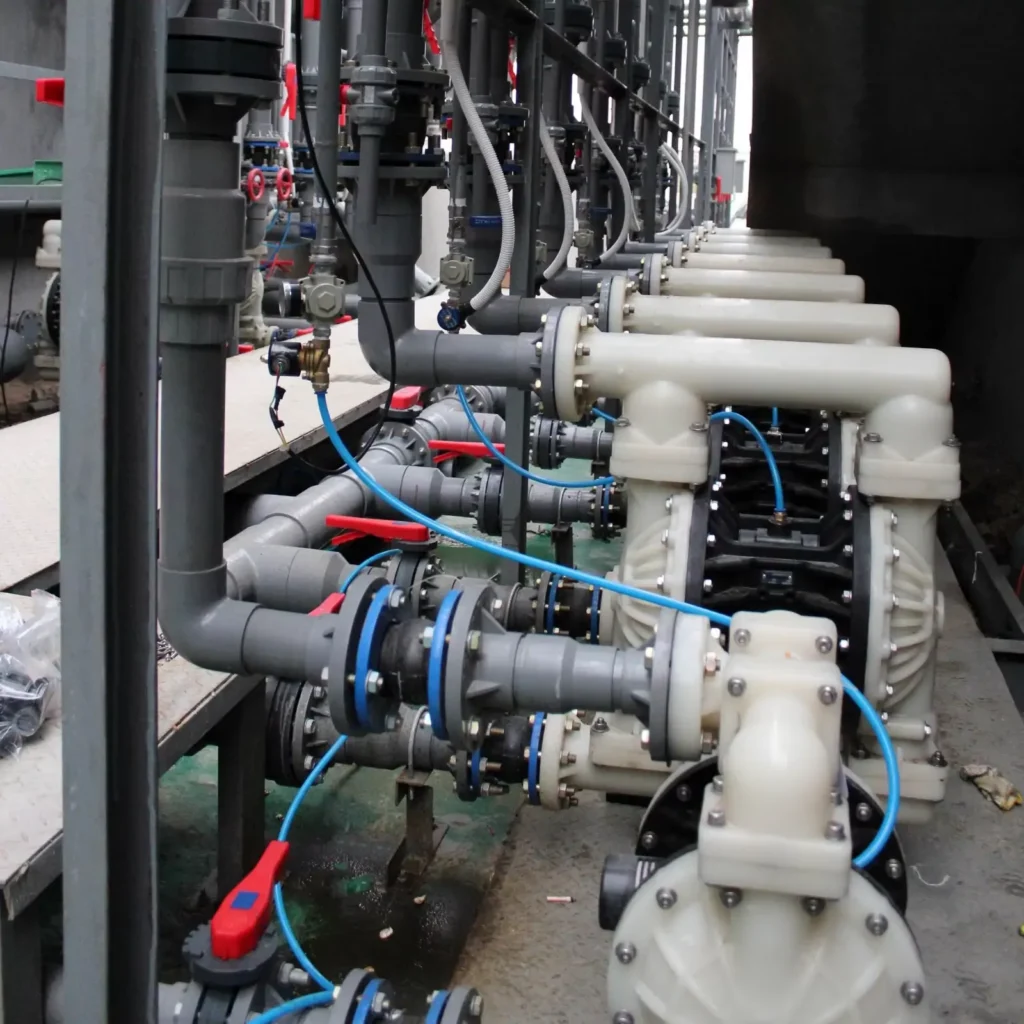
Changyu Pump reemplazó las bombas centrífugas con bombas de diafragma AODD equipadas con diafragmas de PTFE y válvulas de retención cónicas. El diseño de diafragma eliminó el sello mecánico — el punto de falla más frecuente en la instalación original. Las válvulas de retención cónicas permitieron el paso de los residuos orgánicos fibrosos que anteriormente obstruían los impulsores centrífugos. Los componentes húmedos de PTFE proporcionaron compatibilidad química total con la corriente de ácido mixto.
Durante tres años de operación después de la conversión: sin tiempo de inactividad no planificado de la bomba. El reemplazo del diafragma se realizó como mantenimiento preventivo programado a intervalos de 18 meses. La planta convirtió cuatro posiciones adicionales de transferencia de ácido residual de bombas centrífugas a bombas de diafragma en los dos años siguientes.
Conclusión clave: Para fluidos corrosivos que contienen sólidos o material fibroso, el diseño sin sello de la bomba de diafragma y su capacidad de manejo de sólidos eliminan los dos modos de falla más comunes de las bombas centrífugas en este servicio — fuga del sello mecánico y obstrucción del impulsor. La bomba de diafragma no es una alternativa a una bomba centrífuga en esta aplicación; es el tipo de bomba apropiado.
Preguntas frecuentes sobre bombas de diafragma
P: ¿Para qué se utiliza una bomba de diafragma?
R: Las bombas de diafragma transfieren productos químicos corrosivos, lodos abrasivos, fluidos de alta viscosidad y líquidos que contienen sólidos grandes o material fibroso. Las aplicaciones comunes incluyen transferencia de productos químicos, desagüe de minas, alimentación de filtros prensa, transferencia de lodos cerámicos y tratamiento de aguas residuales. El diseño sin sello las hace adecuadas para fluidos peligrosos donde cualquier fuga es inaceptable.
P: ¿Puede una bomba de diafragma funcionar en seco?
R: Sí. A diferencia de las bombas centrífugas que dependen del fluido bombeado para enfriamiento y lubricación, las bombas de diafragma pueden funcionar en seco indefinidamente sin daños. El diafragma flexible simplemente se comprime contra una cámara vacía. Esto las hace ideales para vaciado de sumideros, extracción de tanques y aplicaciones donde el suministro de fluido es intermitente.
P: ¿Cuál es la diferencia entre las bombas de diafragma AODD y EODD?
R: Las bombas AODD utilizan aire comprimido como fuente de energía y son inherentemente más seguras para ubicaciones peligrosas, eliminando la necesidad de carcasas de motor a prueba de explosiones. Las bombas EODD utilizan un motor eléctrico y son más eficientes energéticamente para aplicaciones de servicio continuo. Las bombas AODD se prefieren para servicio intermitente y ubicaciones peligrosas; las bombas EODD se prefieren para servicio continuo y control de flujo preciso.
P: ¿Qué material de diafragma debo elegir para productos químicos corrosivos?
R: Los diafragmas de PTFE (Teflón) proporcionan la máxima resistencia química para ácidos fuertes, solventes y productos químicos agresivos. Para lodos abrasivos, Santoprene ofrece mejor resistencia al desgaste pero compatibilidad química limitada. Siempre verifique la compatibilidad del material del diafragma con el producto químico específico a la temperatura de operación.
P: ¿Por qué mi bomba AODD se detiene constantemente?
R: La causa más común es una válvula de aire que se atasca debido a aire comprimido húmedo, sucio o aceitoso. Instale un filtro de aire y lubricador de punto de uso (unidad FRL) en cada bomba. Si la bomba opera en un ambiente húmedo, un secador de aire evita la condensación que causa el congelamiento y atasco de la válvula.
P: ¿Puede una bomba de diafragma manejar sólidos?
R: Sí — esta es una de las principales ventajas de las bombas de diafragma. Los diseños de válvula de aleta pasan sólidos de hasta varios centímetros de diámetro. Los diseños de válvula de bola y cónica manejan sólidos más pequeños. La ausencia de espacios reducidos e impulsores giratorios significa que los sólidos pasan a través de la bomba sin causar daños mecánicos.
Lista de verificación de prevención del ingeniero de Changyu Pump
- Haga coincidir el material del diafragma tanto con el entorno químico como con el contenido abrasivo del fluido. PTFE para productos químicos limpios y corrosivos. Santoprene para lodos abrasivos. Un diafragma químicamente compatible que falla por abrasión es tan inútil como uno que falla por ataque químico.
- Seleccione el tipo de válvula de retención según el contenido de sólidos y la viscosidad del fluido bombeado. Válvulas de bola para fluidos limpios y servicio estándar. Válvulas cónicas para materiales viscosos o fibrosos. Válvulas de aleta para sólidos grandes y fluidos con desechos.
- Instale un filtro de aire y lubricador de punto de uso (unidad FRL) en cada bomba AODD. El aire comprimido contaminado es la causa más común de mal funcionamiento de las bombas AODD. Una unidad FRL no es opcional — es esencial para un funcionamiento confiable.
- Use un secador de aire para instalaciones exteriores o ambientes húmedos. La condensación en las líneas de aire comprimido causa congelamiento y atasco de la válvula de aire. Esto es particularmente común en ubicaciones tropicales y costeras.
- No especifique una bomba de diafragma para aplicaciones de servicio continuo y alto caudal donde el aire comprimido sea la fuente de energía. El costo energético del aire comprimido hace que las bombas AODD no sean económicas para sistemas grandes de operación continua. Evalúe alternativas de bombas EODD o de cavidad progresiva.
- Para fluidos peligrosos o corrosivos donde cualquier fuga sea inaceptable, especifique diafragmas de PTFE y verifique la compatibilidad química de todos los componentes mojados — cuerpo de la bomba, bolas de retención, asientos y juntas tóricas.
- Mantenga diafragmas de repuesto y kits de válvulas de retención en inventario. Los diafragmas son un componente de desgaste consumible. El reemplazo planificado evita tiempos de inactividad no planificados.
- Verifique que el diámetro de la línea de succión cumpla con la especificación mínima del fabricante de la bomba. Las líneas de succión de tamaño insuficiente causan cavitación, reducción del caudal y desgaste acelerado del diafragma debido a la vibración resultante.
Conclusión
Una bomba de diafragma es una bomba de desplazamiento positivo definida por su diseño sin sello, capacidad de manejo de sólidos y tolerancia para funcionamiento en seco y cebado automático. El diafragma flexible aísla el fluido bombeado del mecanismo de accionamiento — eliminando el sello de eje dinámico que es el punto de falla más común en bombas centrífugas y otras bombas rotativas. Las bombas de doble diafragma operadas por aire (AODD) dominan aplicaciones de servicio intermitente, ubicaciones peligrosas y manejo de sólidos donde hay aire comprimido disponible. Las bombas de doble diafragma operadas eléctricamente (EODD) sirven para aplicaciones de servicio continuo y control de flujo de precisión. La selección de materiales — diafragma, tipo de válvula de retención y cuerpo de la bomba — debe tener en cuenta tanto la agresividad química como el contenido abrasivo del fluido bombeado. Cuando se especifica correctamente, una bomba de diafragma proporciona un servicio confiable y sin fugas en aplicaciones donde otros tipos de bombas fallan.
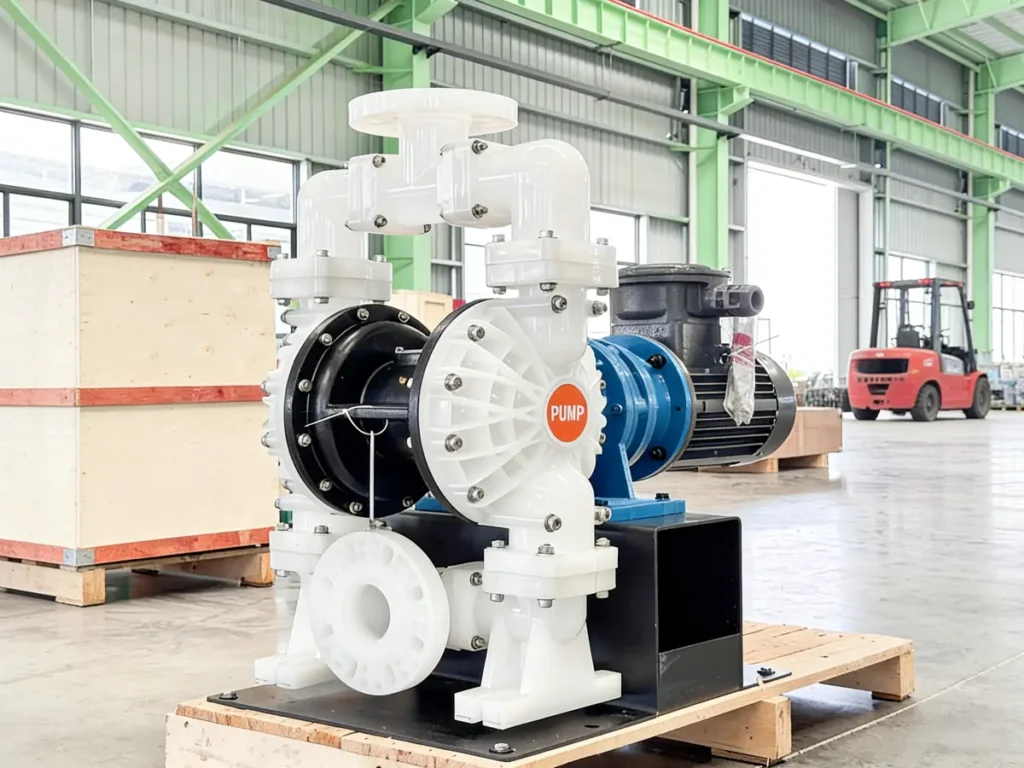
El equipo de ingeniería de Changyu Pump proporciona recomendaciones de bombas específicas para la aplicación, respaldadas por más de 20 años de experiencia en procesamiento químico, minería y manejo de fluidos industriales.
Contacte a Changyu Pump para una evaluación técnica gratuita →