
Respuesta Rápida
A heavy duty sewage pump is an industrial-grade pump built to handle wastewater with large solids, fibrous materials, abrasive particles and corrosive substances under continuous operation. Four core selection factors:
- Impeller design: Vortex impellers for maximum clog resistance; single/dual-channel for balanced efficiency and solids passage; cutter impellers for high-fiber industrial wastewater.
- Material selection: Cast iron for neutral municipal sewage; 316 stainless steel for moderate corrosion; duplex stainless steel or lined construction for severe corrosion plus abrasion.
- Solids capacity: Flow passages must match the maximum expected solid size, typically 50–100 mm for municipal sewage and up to 150 mm for industrial wastewater.
- Motor rating: Continuous-duty motors with minimum Class F insulation, 1.15 service factor and thermal overload protection are required for 24/7 operation.
Wastewater pumping combines multiple challenges: clogging from solids and fibers, accelerated wear from grit, and material degradation from corrosive chemistry. A standard sewage pump may fail within months in heavy duty conditions — not due to defects, but because it was underspecified for the application.
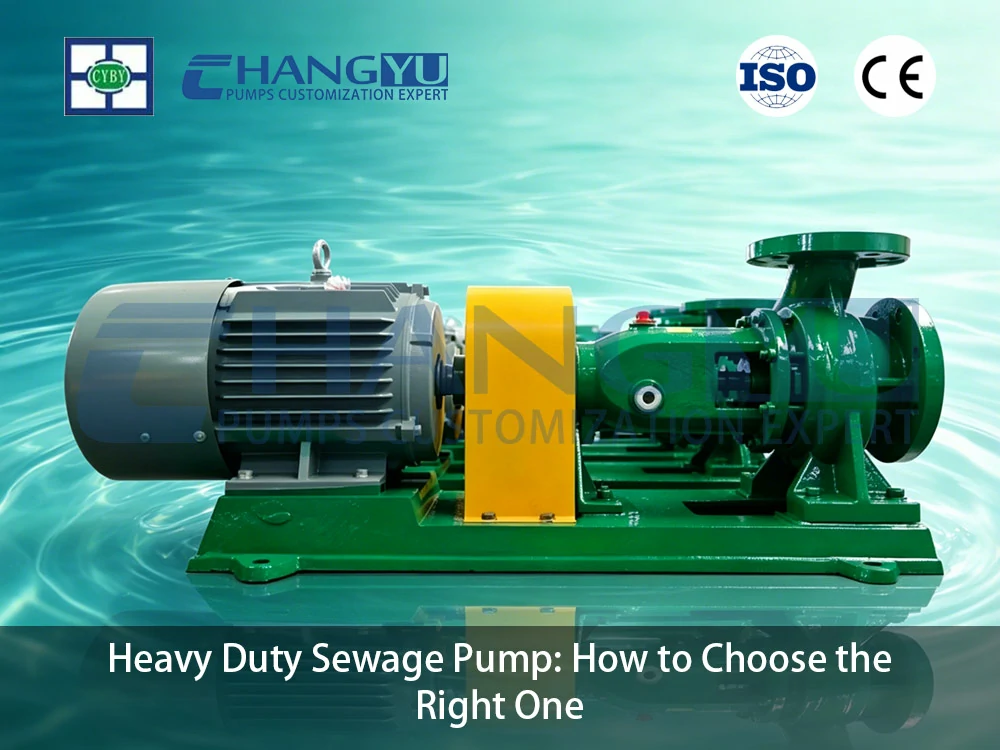
With over 20 years of experience in wastewater, chemical and abrasive slurry pumping, Changyu Pump presents this structured selection guide, covering impeller design, material specification, installation and maintenance.
What Defines a Heavy Duty Sewage Pump?
A sewage pump transfers wastewater with suspended solids from collection points to treatment facilities. A heavy duty model distinguishes itself by heavier construction and a wider operating envelope.
Heavy Duty Sewage Pump vs Standard Sewage Pump: Key Differences
The table below summarizes how heavy duty construction differs from standard designs across critical components.
| Característica | Standard Sewage Pump | Bomba de Aguas Residuales de Servicio Pesado |
|---|---|---|
| Carcasa | Standard wall thickness, limited wear allowance | Reinforced thick-section casing with extra corrosion allowance |
| Impeller passage | 50–65 mm solid passage | 75–150+ mm solid passage; vortex, channel or cutter designs |
| Rodamientos | Standard-duty, rated for intermittent operation | Oversized, heavy-duty bearings rated for continuous 24/7 operation |
| Motor insulation | Class B or F | Minimum Class F; Class H for wastewater above 60°C |
| Service factor | 0–1.1 | Minimum 1.15 for continuous duty |
| Disposición del sello | Sello mecánico simple | Double mechanical seals or seal-plus-expeller combination; oil chamber monitoring |
| Cable entry (submersible) | Standard gland | Double-sealed with epoxy potting against moisture ingress |
| Typical use | Residential sump, light commercial | Municipal lift stations, industrial wastewater, construction dewatering |
When to Specify a Heavy Duty Sewage Pump
Heavy duty specification becomes necessary when operating conditions exceed the design limits of standard pumps. The following conditions typically demand an upgrade:
- Continuous 24/7 operation
: Standard bearings cannot sustain long running hours in pump stations without accelerated wear.
. - Unpredictable solid content
: Raw municipal sewage often contains rags, plastics and wet wipes that clog standard impellers.
. - Abrasive grit
: Coastal or industrial wastewater carries sand, metal fines and mineral grit that erode wetted parts.
. - Corrosive chemistry
: Industrial effluent from food processing, chemical plants or tanneries contains acids, alkalis or salts that attack cast iron.
.
Why Impeller Design Matters for Sewage Pump Reliability
Impulsor design is the single most critical factor for reliable sewage pumping. Each design represents a trade-off between solids passage, hydraulic efficiency and fiber resistance.
.
Four Common Sewage Pump Impeller Types
Each impeller type addresses a different balance of clog resistance, efficiency, and solids handling capability.
.
Vortex (Recessed) Impeller:
El impulsor está empotrado en la pared posterior de la voluta, creando un vórtice que arrastra fluido y sólidos a través de la bomba. Solo una fracción del fluido contacta directamente con el impulsor. Ofrece el paso libre más grande y resiste la acumulación de material fibroso de manera más efectiva que cualquier otro diseño, aunque concentraciones extremas de fibras pueden causar una acumulación gradual en las superficies de la voluta. La eficiencia es menor (35–55%) en comparación con los diseños de un solo canal (55–65%) y de doble canal (60–70%). Esta penalización en eficiencia es el intercambio por la máxima resistencia a obstrucciones. Es la opción predeterminada para aguas residuales crudas donde la fiabilidad supera al costo energético.
Impulsor de un solo canal:
Un solo paso ancho va desde el ojo del impulsor hasta la descarga, evitando las restricciones de los diseños de múltiples álabes. Ofrece una mayor eficiencia (55–65%) que los tipos de vórtice, manteniendo un buen manejo de sólidos. Adecuado para aguas residuales cribadas y aguas residuales industriales ligeras donde hay material fibroso ocasional pero no dominante.
Impulsor de doble canal:
Dos pasos simétricos equilibran las fuerzas hidráulicas, reduciendo la vibración y la carga en los cojinetes en comparación con los diseños de un solo canal. Iguala la capacidad de sólidos del canal único y alcanza una eficiencia del 60–70%. Ideal para estaciones municipales de alto flujo que priorizan tanto la fiabilidad como la eficiencia energética.
Impulsor cortador/triturador:
Un cortador rotatorio integrado tritura los sólidos antes de que entren en el paso de flujo. Esencial para aguas residuales industriales con trapos, desechos textiles o alto contenido de fibras. Requiere reemplazo periódico de las cuchillas y no se recomienda para lodos abrasivos, ya que la arena acelera el desgaste del cortador.
Matriz de selección de impulsores para bombas de aguas residuales
Nivel de fibra
Impulsor recomendado
Aguas residuales municipales crudas
Mixto, impredecible
Alto (trapos, toallitas)
Máxima resistencia a obstrucciones
Aguas residuales municipales cribadas
Moderado, <75 mm
Un solo/ doble canal
Mayor eficiencia con riesgo reducido de obstrucción
Sólidos orgánicos altos
Cortador o vórtice
Cortador para fibras; vórtice para sólidos mixtos
Variable, a menudo abrasivo.
Single-Channel Impeller:
A single wide passage runs from the impeller eye to the discharge, avoiding the constrictions of multi-vane designs. It delivers higher efficiency (55–65%) than vortex types while retaining good solids handling. Suitable for screened sewage and light industrial wastewater where occasional fibrous material is present but not dominant.
Dual-Channel Impeller:
Two symmetrical passages balance hydraulic forces, reducing vibration and bearing load compared to single-channel designs. It matches single-channel solids capacity and reaches 60–70% efficiency. Ideal for high-flow municipal stations prioritizing both reliability and energy efficiency.
Cutter / Grinder Impeller:
An integrated rotating cutter shreds solids before they enter the flow passage. Essential for industrial wastewater with rags, textile waste or high fiber content. Requires periodic blade replacement and is not recommended for abrasive slurry — grit accelerates cutter wear.
Sewage Pump Impeller Selection Matrix
| Solicitud | Contenido en sólidos | Fiber Level | Recommended Impeller | Justificación |
|---|---|---|---|---|
| Raw municipal sewage | Mixed, unpredictable | High (rags, wipes) | Vórtice | Maximum clog resistance |
| Screened municipal sewage | Moderate, <75 mm | Bajo | Single/dual-channel | Higher efficiency with reduced clog risk |
| Aguas residuales de la industria alimentaria | High organic solids | De moderado a alto | Cutter or vortex | Cutter for fibers; vortex for mixed solids |
| Aguas residuales de origen químico | Variable, often abrasive | Bajo | Monocanal + material resistente al desgaste | Prioridad de resistencia a la abrasión |
| Deshidratación de construcción | Alto contenido de partículas, sólidos variables | Bajo | Vórtice + placas de desgaste | Paso máximo de sólidos + piezas de desgaste reemplazables |
| Transferencia de lodos | Alta concentración | Bajo | Single/dual-channel | Alta eficiencia para fluidos viscosos |
Los ingenieros de Changyu Pump recomiendan: Para aguas residuales municipales sin tratar, los impulsores de vórtice ofrecen consistentemente el menor costo total de propiedad.
.
What Materials Are Best for Heavy Duty Sewage Pumps?
La penalización energética se ve ampliamente superada por la eliminación de llamadas de servicio por obstrucciones.
.
Los impulsores de un solo canal solo deben especificarse cuando las aguas residuales han sido cribadas o se sabe que el contenido de fibra es bajo.
| Material | Ideal para | Limitaciones |
|---|---|---|
| Hierro Fundido | Instalar una bomba de un solo canal en aguas residuales sin cribar es la causa más común de fallas por obstrucción prevenibles observadas en estaciones de bombeo municipales. | El material óptimo depende de los efectos combinados de la corrosión química y la abrasión por sólidos en las aguas residuales. |
| Acero inoxidable 304 | Seleccionar el material incorrecto puede reducir la vida útil de la bomba a meses, independientemente de qué tan bien se especifiquen otros parámetros. | Comparación de Opciones de Material para Bombas de Aguas Residuales |
| Acero inoxidable 316 | Aguas residuales municipales neutras (pH 6–8) | Corroe por debajo de pH 5; resistencia a la abrasión limitada |
| Aguas residuales ligeramente ácidas/alcalinas, efluentes alimentarios | Riesgo de picaduras por encima de 500 mg/L de cloruro | Aguas residuales industriales con cloruro/ácido moderado |
| Costo más alto; no apto para aguas residuales mezcladas con agua de mar | Acero Inoxidable Dúplex 2205 | Aguas residuales costeras con intrusión de agua de mar |
| Revestido de UHMW-PE | Costo de material más alto | Aleación de Alto Cromo (Cr27–Cr33) |
Aguas residuales altamente abrasivas con arena/gravilla
| Menor resistencia a la corrosión que los grados de acero inoxidable | Rango de pH | Abrasión | Ácidos fuertes, álcalis y aguas residuales químicas | Material recomendado |
|---|---|---|---|---|
| Límite de temperatura ≤90°C; requiere refuerzo de acero para aplicaciones de alta presión | 6–8 | Guía de Correspondencia de Materiales para Aplicaciones de Bombas de Aguas Residuales | Tipo de Agua Residual | Nivel de Cloruro |
| Procesamiento de alimentos | 4–9 | Bajo | Municipal estándar | Bajo-moderado |
| <200 mg/L | Hierro fundido | Variable | Variable | <500 mg/L |
| Acero inoxidable 304 / 316 | 6–8 | Moderado | Industrial química | Dúplex 2205 |
| 2–10 | 6–8 | Alto | Tipo de Agua Residual | Revestido de UHMW-PE o acero inoxidable 316 |
| Municipal costera | 500–5,000 mg/L | Moderado | Aguas residuales con alta carga de gravilla | Aleación de alto cromo + placas de desgaste |
Los ingenieros de Changyu Pump han observado: Aguas residuales mezcladas con agua de mar
.
Where Are Heavy Duty Sewage Pumps Used?
7–8
.
- 10,000–20,000 mg/L
Súper dúplex 2507
. - Aguas residuales industrialesLa falla relacionada con el material más común en el campo es la corrosión del hierro fundido estándar en aguas residuales industriales inesperadamente ácidas.
. - Cuando hay descarga industrial presente, incluso de forma intermitente, actualizar las piezas húmedas a acero inoxidable 316 (o 304 para condiciones ácidas sin cloruro) generalmente extiende la vida útil de la bomba por un factor de dos a tres.
Una medición de pH tomada durante una sola visita al sitio puede no capturar descargas ácidas intermitentes; cuando existen conexiones industriales aguas arriba, especificar componentes húmedos de acero inoxidable desde el principio evita costosas fallas por corrosión.
. - Las bombas de aguas residuales de servicio pesado se utilizan en aplicaciones donde la falla de la bomba conlleva consecuencias graves: descarga ambiental, parada de producción o riesgo para la salud pública.
Cada aplicación impone demandas distintas a la bomba.
.
How to Select the Right Heavy Duty Sewage Pump
Aguas residuales municipales
.
: Estaciones de elevación y cabeceras de plantas de tratamiento que manejan aguas residuales sin tratar con caudal y sólidos variables.
.
Los impulsores de vórtice dominan este segmento al reducir las llamadas de emergencia, el mayor costo operativo en el bombeo de aguas residuales municipales.
.
: Procesamiento de alimentos (sólidos orgánicos/grasas altos), plantas químicas (corrientes corrosivas) y fábricas textiles (pelusa fibrosa) cada una requiere configuraciones de impulsor, material y sello adaptadas.
.
Construcción y desagüe de túneles
.
: Sitios de excavación con arena, gravilla y lodo de perforación.
.
Se prioriza la construcción robusta y la resistencia al desgaste sobre la eficiencia.
.
Aguas pluviales y control de inundaciones
.
: Operación intermitente con largos períodos de inactividad.
Los desafíos clave son la corrosión durante el almacenamiento y la ingestión de desechos durante eventos de inundación.
La selección de bombas de aguas residuales sigue un proceso estructurado que comienza con la caracterización de las aguas residuales y continúa con el dimensionamiento hidráulico, la especificación mecánica y la planificación de la instalación.
.
Paso 1: Caracterizar las aguas residuales.
.
Definir el tamaño máximo de sólido, tipo de sólido (orgánico/fibroso/abrasivo/mezclado), contenido de fibra, pH, concentración de cloruro, temperatura y ciclo de trabajo (continuo/intermitente).
.
Los ingenieros de Changyu Pump recomiendan: Paso 2: Calcular caudal y altura.
.
How to Maintain a Heavy Duty Sewage Pump
El caudal está determinado por el volumen de entrada y la frecuencia de ciclo deseada.
.
La altura dinámica total incluye la elevación estática, la pérdida por fricción en la tubería y la altura de velocidad.
| Intervalo | Acción | Propósito |
|---|---|---|
| Mensual | Para aguas residuales sin tratar, aplique un factor de seguridad de 1.2–1.5 a la pérdida por fricción para tener en cuenta la acumulación de biopelícula en la tubería que reduce el diámetro efectivo con el tiempo. | Paso 3: Seleccionar el tipo de impulsor. |
| Trimestral | Emparejar el diseño del impulsor con las características de las aguas residuales según la matriz de la Sección 2. | Para sólidos impredecibles o alto contenido de trapos, elija impulsores de vórtice a pesar de la menor eficiencia. |
| Anualmente | Paso 4: Especificar materiales y sellos. | Seleccionar materiales húmedos basados en propiedades químicas y abrasivas (Sección 3). |
| Basado en condición | Para servicio continuo, especifique sellos mecánicos dobles con una cámara de aceite entre ellos; el aceite proporciona lubricación y puede monitorearse para detectar entrada de agua, proporcionando una advertencia temprana de falla del sello inferior. | Paso 5: Verificar las especificaciones del motor. |
Prácticas antiobstrucción para bombas de aguas residuales
La obstrucción es la causa más frecuente de las llamadas de servicio de bombas de aguas residuales. Varias prácticas operativas reducen la frecuencia de obstrucciones:
- Operación alterna de la bomba: La rotación semanal en estaciones de dos bombas distribuye el desgaste y evita la consolidación de sólidos en bombas inactivas.
- Secuencia de arranque con inversión breve: Una breve rotación inversa antes del arranque elimina los sólidos sedimentados del impulsor.
- Lavado periódico de alta velocidad: La operación de corta duración a máxima velocidad elimina los residuos acumulados de la voluta y la tubería de descarga.
- Limpieza regular del sumidero: Retire la arena y los residuos acumulados para evitar sobrecargar la capacidad de sólidos de la bomba.
Soluciones de bomba de aguas residuales de servicio pesado de Changyu Pump
Changyu Pump ofrece tres series de bombas industriales adecuadas para aplicaciones de aguas residuales de servicio pesado, cada una optimizada para requisitos específicos de corrosión, abrasión e hidráulicos. Todas las series a continuación son bombas centrífugas horizontales de instalación en seco, diseñadas para instalación en sala de bombas o en superficie.
Guía de selección de productos de bomba de aguas residuales de servicio pesado
| Solicitud | Desafío | Series recomendadas | Característica clave |
|---|---|---|---|
| Elevación de aguas residuales de alta altura municipal/industrial | Alta altura + sólidos abrasivos | Serie PGY | Hasta 101.6 m de altura; piezas en contacto con el fluido de aleación de alto cromo o acero inoxidable dúplex |
| Aguas residuales químicas corrosivas | Corrosión por ácidos/álcalis fuertes | Serie UHB | Construcción revestida de UHMW-PE para una amplia resistencia química |
| Abrasión moderada + corrosión | Aguas residuales arenosas y ligeramente corrosivas | Serie HB | Piezas en contacto con el fluido de acero inoxidable; múltiples grados de aleación |
| Transferencia de aguas residuales de gran caudal | Lechada corrosiva de alto volumen | Serie UHB | Caudal de hasta 2,600 m³/h; impulsor semiabierto |
Bomba de lechada química horizontal serie UHB para aguas residuales corrosivas
Bomba centrífuga de UHMW-PE revestida de acero diseñada para lechadas corrosivas con partículas finas. El impulsor semiabierto ofrece una alta capacidad de caudal, con opciones de sello mecánico o dinámico. Ideal para efluentes industriales ácidos/alcalinos y aguas residuales químicas.
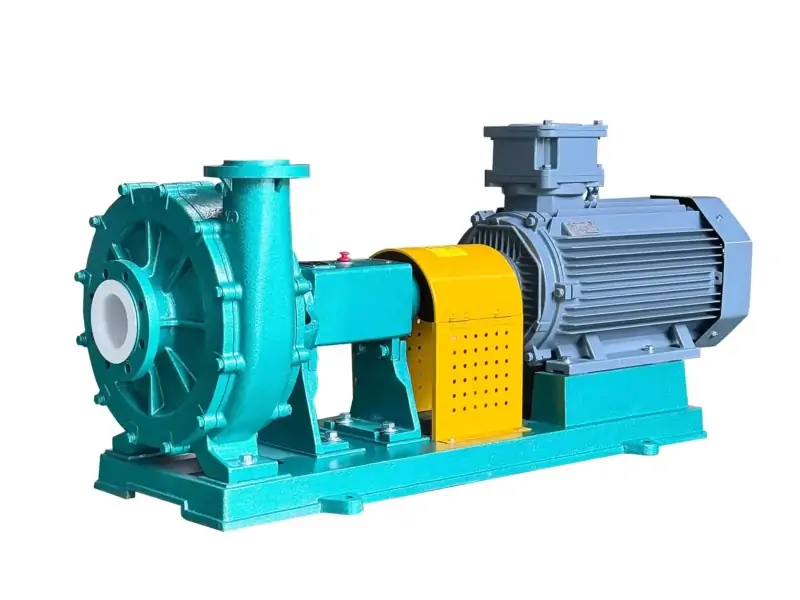
| Parámetro | Especificaciones |
|---|---|
| Caudal | 3–2 600 m³/h |
| Cabeza | 5–100 m |
| Potencia del motor | 0,75–300 kW |
| Velocidad | 750–2 900 rpm |
| Temperatura | De -20 °C a 90 °C |
| Material del forro | UHMW-PE |
Bomba de aguas residuales de acero inoxidable serie HB para servicio abrasivo
Bomba centrífuga horizontal conforme a ISO 2858 con construcción de piezas en contacto con el fluido totalmente de acero inoxidable. Maneja lechada abrasiva y fluidos moderadamente corrosivos, adecuada para aguas residuales con arena, arena gruesa o contaminantes industriales. Disponible en grados 304, 316L, 2205 y 2507. La construcción de acero inoxidable permite temperaturas de operación más altas que las alternativas revestidas de polímero.
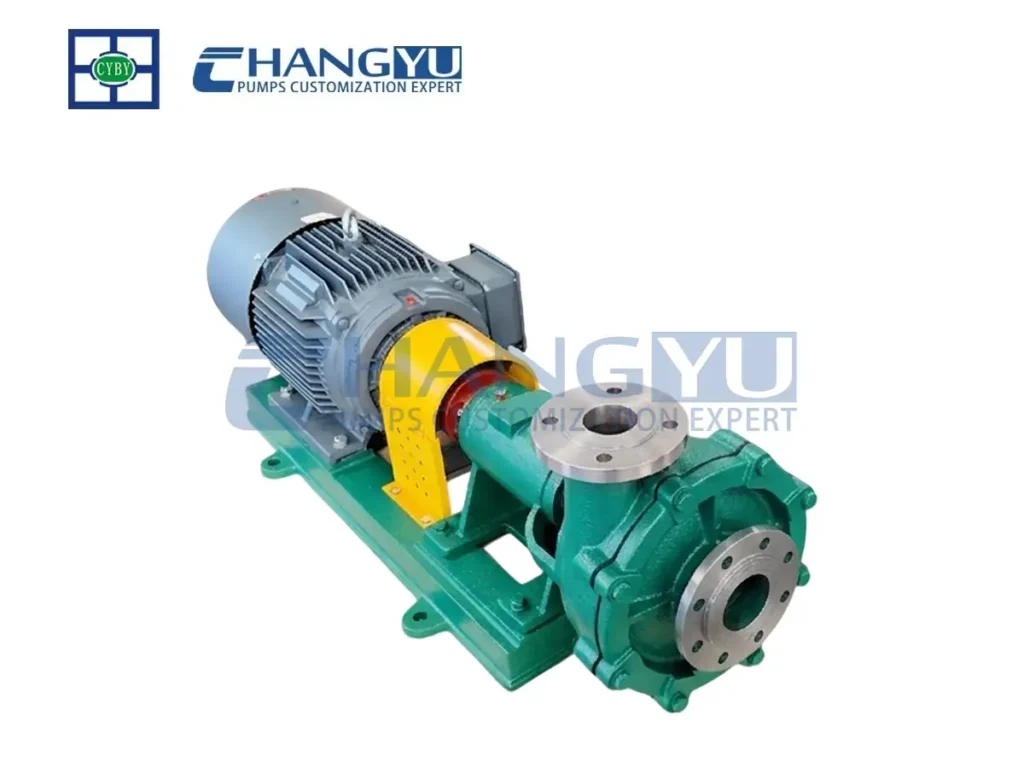
| Parámetro | Especificaciones |
|---|---|
| Caudal | 10–60 m³/h |
| Cabeza | 20–120 m |
| Potencia del motor | 3–45 kW |
| Velocidad | 2 900 rpm |
| Temperatura | De -20 °C a 120 °C |
| Materiales | 304 / 316L / 2205 / 2507 |
Bomba de aguas residuales de alta altura de servicio pesado serie PGY
Diseñada para condiciones de alta altura y desgaste severo. El diseño de doble carcasa permite reemplazar las piezas en contacto con el fluido sin desmontar la tubería, y los cojinetes lubricados con aceite garantizan una fiabilidad continua a largo plazo. Disponible en aleaciones de alto cromo y acero inoxidable dúplex.
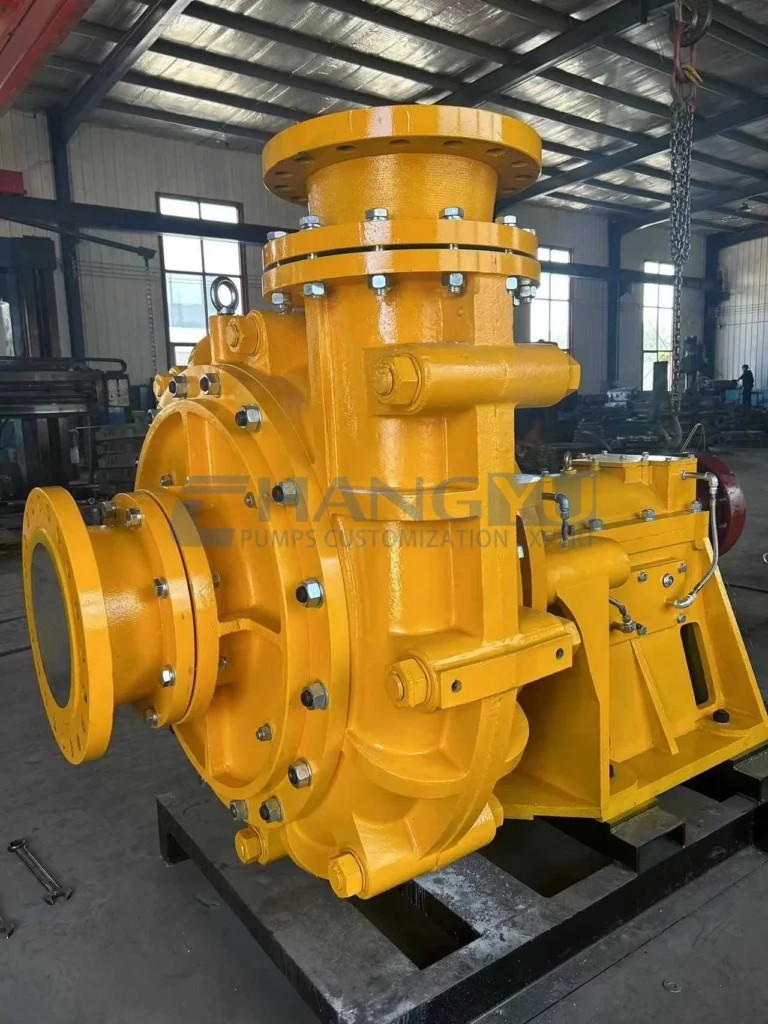
| Parámetro | Especificaciones |
|---|---|
| Caudal | 117–976 m³/h |
| Cabeza | 1–101.6 m |
| Potencia del motor | 22–560 kW |
| Velocidad | 730 / 980 / 1,480 r/min |
| Materiales | BTMCr27 / BTMCr28 / BTMCr33 / acero inoxidable dúplex |
Caso práctico de bomba de aguas residuales de servicio pesado: Solución de obstrucción en estación de aguas residuales municipal
Una estación de elevación municipal en el sudeste asiático operaba tres bombas sumergibles de impulsor de canal único para aguas residuales combinadas sin tratar (200 m³/h a 18 m de altura por bomba). En seis meses, la estación experimentó 2–3 llamadas de emergencia al mes debido a obstrucciones por fibras (toallitas húmedas, trapos), que culminaron en un desbordamiento de aguas residuales y una violación regulatoria.
La inspección confirmó dos causas raíz: los impulsores de canal único no eran adecuados para aguas residuales sin tratar sin cribar, con fibras acumulándose en el borde de ataque del álabe; los impulsores de hierro fundido mostraban corrosión por picaduras temprana debido a descargas industriales ácidas intermitentes (pH tan bajo como 5.5).
La estación se reacondicionó con una configuración de instalación en seco, reemplazando las bombas sumergibles con bombas horizontales de la serie PGY de Changyu con impulsores de vórtice y piezas en contacto con el fluido de acero inoxidable dúplex 2205. El diseño de vórtice rebajado eliminó las superficies de los álabes para la acumulación de fibras, mientras que el acero inoxidable 2205 manejó condiciones de pH variables.
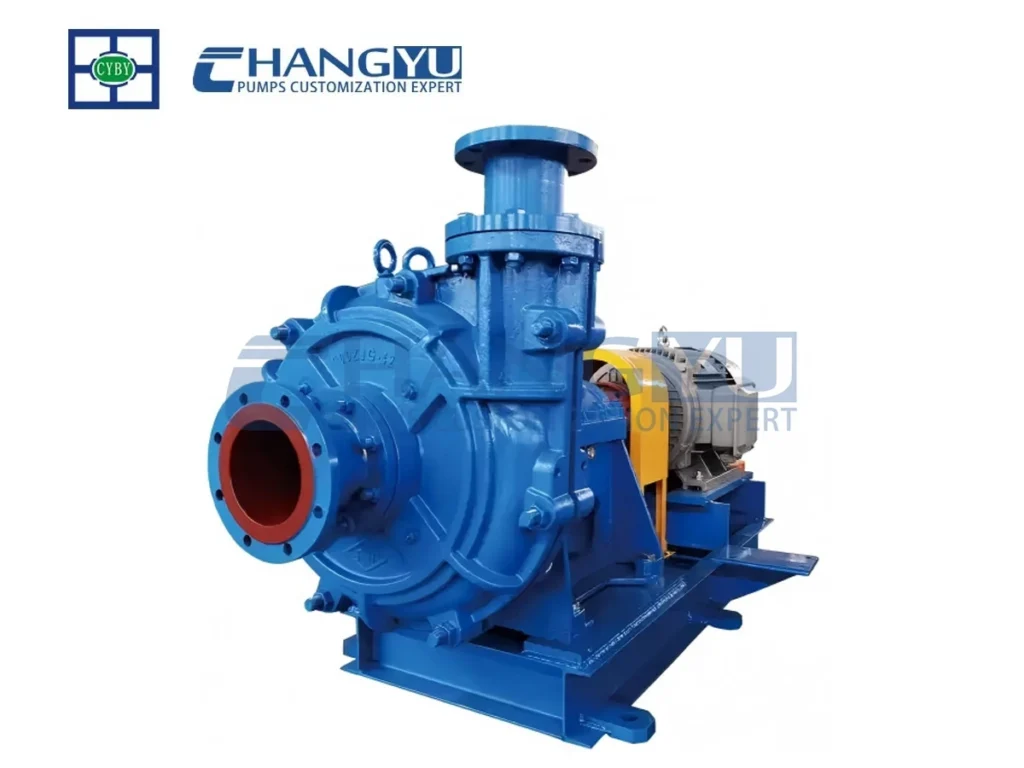
Durante 24 meses de operación: cero llamadas de emergencia relacionadas con obstrucciones. El mantenimiento se redujo de intervenciones de emergencia frecuentes a una inspección planificada trimestral. Se logró el cumplimiento normativo total sin más incidentes de desbordamiento. El costo de la actualización se recuperó en 14 meses mediante la eliminación de mantenimiento y multas.
Conclusión clave: La selección del impulsor debe coincidir con las aguas residuales reales en la entrada de la bomba, no con la condición de diseño teórica. Para aguas residuales sin tratar sin cribar, los diseños de vórtice ofrecen una fiabilidad operativa inigualable.
Preguntas frecuentes sobre bombas de aguas residuales de servicio pesado
P: ¿Cuál es la diferencia entre bombas de aguas residuales estándar y de servicio pesado?
R: Las bombas de servicio pesado tienen carcasas más gruesas, cojinetes sobredimensionados, pasajes de sólidos más grandes y factores de servicio del motor más altos (mínimo 1.15). Están construidas para operación continua y condiciones adversas que causan fallas prematuras en bombas estándar.
P: ¿Qué impulsor es mejor para aguas residuales sin tratar?
R: Los impulsores de vórtice ofrecen la mayor resistencia a la obstrucción para aguas residuales sin tratar con contenido fibroso. Los impulsores de canal simple/doble tienen mayor eficiencia, pero solo son adecuados para aguas residuales cribadas con bajo contenido de fibra.
P: ¿Pueden las bombas de aguas residuales manejar arena abrasiva?
R: Sí, con la selección de material adecuada. Las aleaciones de alto cromo o los aceros inoxidables dúplex resisten la abrasión de la arena y la arena gruesa. El hierro fundido estándar se desgasta rápidamente. Las placas de desgaste reemplazables extienden la vida útil de la carcasa.
P: ¿Con qué frecuencia se deben revisar las bombas de aguas residuales de servicio pesado?
R: Verificaciones mensuales de corriente/vibración, pruebas trimestrales de aceite de sello y aislamiento, e inspección completa anual. El servicio abrasivo puede requerir un reemplazo más frecuente de piezas de desgaste.
P: ¿Qué materiales funcionan para aguas residuales industriales ácidas?
R: El acero inoxidable 316 maneja acidez moderada (pH 2–10). Las bombas revestidas de UHMW-PE ofrecen una resistencia superior a ácidos y álcalis fuertes a temperaturas de hasta 90°C. Siempre considere tanto el pH como los sólidos abrasivos.
P: ¿Cómo prevenir la obstrucción de la bomba de aguas residuales?
R: Use impulsores de vórtice para aguas residuales sin cribar, instale rejillas de barrera aguas arriba, programe secuencias de arranque con inversión breve y alterne la operación de la bomba para evitar la consolidación de sólidos en bombas inactivas.
Lista de verificación de prevención del ingeniero de Changyu Pump
- Haga coincidir el tipo de impulsor con las condiciones reales de las aguas residuales de entrada, no con las especificaciones de diseño. Las aguas residuales sin tratar sin cribar requieren impulsores de vórtice.
- Verifique que el factor de servicio del motor coincida con el ciclo de trabajo. La operación continua requiere un factor de servicio mínimo de 1.15.
- Especifique los materiales para la química completa del agua residual, no solo el pH. El cloruro, los abrasivos y la temperatura afectan las tasas de degradación.
- Instale detección de humedad en las cámaras de sellos. La advertencia temprana de fugas previene costosas fallas en los rodamientos.
- Programe la lógica de control antiobstrucción: arranque con inversión de marcha, reinicio retardado después de paradas y alternancia de bombas.
- Dimensione la tubería de descarga para una velocidad mínima de autolimpieza (0.7–1.0 m/s para aguas residuales crudas) para evitar la sedimentación de sólidos.
- Almacene sellos e impulsores de repuesto para estaciones críticas. Los plazos de entrega largos de las piezas pueden extender el tiempo de inactividad innecesariamente.
- Realice pruebas de carga después de la instalación. El rendimiento en agua limpia no garantiza una operación sin obstrucciones en aguas residuales.
Conclusión
Una bomba de aguas residuales de servicio pesado se define por su ingeniería: impulsores adaptados al contenido real de sólidos y fibras, materiales adaptados a la corrosión y abrasión, y componentes mecánicos clasificados para el ciclo de trabajo. Para aguas residuales crudas sin cribar donde el mantenimiento no planificado domina los costos operativos, los impulsores de vórtice siguen siendo la opción más confiable a pesar de la menor eficiencia hidráulica. Para aguas residuales industriales con química y sólidos definidos, los impulsores de canal o cortadores combinados con construcción de acero inoxidable o revestida ofrecen rendimiento y valor óptimos.
El equipo de ingeniería de Changyu Pump proporciona evaluaciones técnicas personalizadas para aplicaciones de aguas residuales, respaldado por 20 años de experiencia en fabricación en los sectores municipal e industrial.
Contacte a Changyu Pump para una evaluación técnica gratuita →