
Respuesta Rápida
A industria del acero bomba de decapado es una bomba resistente a la corrosión diseñada para manejar las soluciones ácidas agresivas y las aguas residuales abrasivas generadas en las líneas de decapado de acero. Estas bombas enfrentan una doble amenaza: el ácido clorhídrico o sulfúrico a temperaturas elevadas corroe rápidamente los materiales de bomba estándar, mientras que el agua de enjuague transporta partículas abrasivas de óxido de hierro que erosionan los componentes internos de la bomba. Factores clave de selección:
- El material determina la supervivencia: El ácido clorhídrico y el ácido sulfúrico atacan las bombas metálicas en cuestión de semanas. Las bombas revestidas de fluoroplástico (FEP, PFA) ofrecen una resistencia casi universal a los ácidos de decapado en todas las concentraciones y temperaturas. Para el agua de enjuague abrasiva y las aguas residuales que contienen partículas de óxido de hierro, las bombas revestidas de UHMW-PE ofrecen una resistencia superior combinada a la corrosión y al desgaste.
- Adapte la bomba a la etapa del proceso: La circulación de ácido en los tanques de decapado exige la máxima resistencia a la corrosión. La transferencia de agua de enjuague requiere resistencia al desgaste por partículas de óxido. El tratamiento de aguas residuales maneja una mezcla corrosiva con sólidos que desafía tanto a las bombas metálicas como a las de plástico estándar.
- La selección del sello evita fugas peligrosas: La fuga de ácido de decapado es un peligro para la seguridad y el medio ambiente. Las bombas de accionamiento magnético sin sello eliminan por completo las rutas de fuga del sello mecánico. Para bombas con sello mecánico, los sellos dobles con sistemas de fluido de barrera proporcionan una defensa en profundidad contra la liberación de ácido.
- La protección contra la niebla ácida es importante: El aire sobre los tanques de decapado contiene vapor de ácido que corroe los componentes externos de la bomba: carcasas de motor, soportes de cojinetes, sujetadores. Las bombas especificadas para servicio de decapado deben proteger tanto sus partes internas mojadas como sus superficies externas.
En una línea de decapado de acero, una falla de la bomba no solo detiene la producción, sino que corre el riesgo de liberar ácido clorhídrico en el lugar de trabajo. Una bomba estándar de acero inoxidable instalada en servicio de ácido de decapado puede corroerse a través de su carcasa en tres meses, mientras que una bomba revestida de fluoroplástico correctamente especificada en el mismo servicio opera de manera confiable durante años.
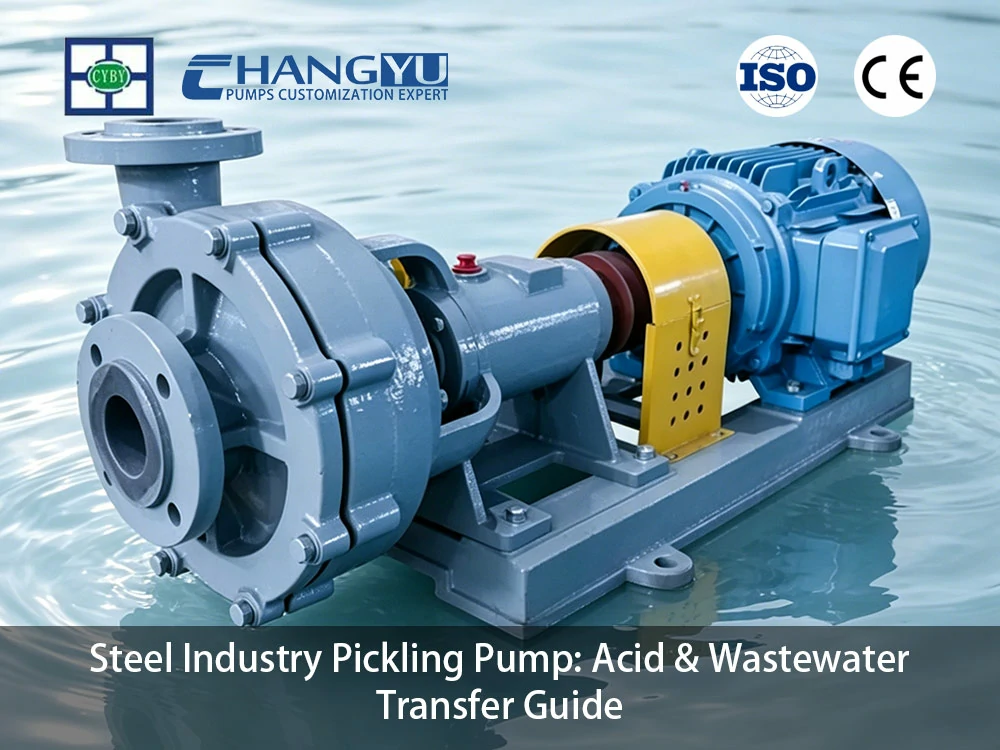
Después de leer esta guía, comprenderá los desafíos específicos de los fluidos en las líneas de decapado de acero, qué materiales de bomba resisten los ácidos de decapado en varias concentraciones y temperaturas, cómo seleccionar la bomba adecuada para cada etapa del proceso de decapado y qué características de seguridad protegen al personal y al equipo de la exposición al ácido. Con más de 20 años de experiencia en fabricación de bombas, Changyu Pump presenta esta guía de selección estructurada para aplicaciones de bombas de decapado en la industria del acero.
¿Cuáles son los desafíos clave de los fluidos en las líneas de decapado de acero?
El decapado de acero elimina la cascarilla de óxido de hierro de la superficie del acero al pasar la tira de acero a través de baños ácidos. El proceso genera múltiples corrientes de fluido, cada una presentando desafíos distintos para la bomba.
Los tres fluidos de la línea de decapado
Ácido de decapado: Ácido clorhídrico (HCl) al 15–20% de concentración cuando está fresco, disminuyendo al 5–10% a medida que el ácido se consume durante el decapado, o ácido sulfúrico (H₂SO₄) al 15–25% de concentración, se calienta a 60–90°C para acelerar la eliminación de la cascarilla. Este ácido caliente y concentrado es el fluido más agresivo en la línea de decapado. Los metales estándar — hierro fundido, acero al carbono y la mayoría de los grados de acero inoxidable — se corroen rápidamente. Incluso los metales de alta aleación como Hastelloy representan un costo de material significativo. El ácido circula continuamente a través de los tanques de decapado, requiriendo bombas que ofrezcan una operación confiable y sin fugas en servicio continuo.
Agua de enjuague: Después del decapado, la tira de acero pasa a través de tanques de enjuague de múltiples etapas. El agua de enjuague transporta partículas de óxido de hierro (Fe₂O₃, Fe₃O₄) eliminadas durante el decapado, junto con ácido residual. Esto crea una lechada ácida y abrasiva. Las partículas de óxido de hierro son duras (Mohs 5–6) y angulares, causando desgaste erosivo en los impulsores y las carcasas de la bomba. La acidez (pH 2–4) ataca los materiales de bomba metálicos estándar.
Aguas residuales de decapado: El agua de enjuague y el ácido de decapado gastado se combinan en el sistema de tratamiento de aguas residuales. Esta corriente mixta contiene cloruros metálicos disueltos (FeCl₂, FeCl₃), ácido clorhídrico residual y sólidos de óxido de hierro en suspensión. Es tanto corrosiva como abrasiva, una combinación que pocos materiales de bomba manejan de manera efectiva.
Dónde se ubican las bombas de la línea de decapado
| Etapa de decapado | Fluido | Temperatura | Desafío principal | Requisitos de la bomba |
|---|---|---|---|---|
| Circulación de ácido | HCl 15–20% o H₂SO₄ 15–25% | 60–90°C | Corrosión extrema | Máxima resistencia química |
| Transferencia/dosificación de ácido | Ácido concentrado (tal como se entrega) | Ambiente–40°C | Corrosión + seguridad contra fugas | Diseño sin sello o con sello doble |
| Recirculación de agua de enjuague | Agua ácida + partículas de óxido de hierro | 40–60°C | Abrasión + corrosión | Revestimiento resistente al desgaste |
| Trasvase de aguas residuales | Ácido mixto + cloruros metálicos + sólidos | 20–40 °C | Corrosión y abrasión combinadas | Material de doble resistencia |
¿Cómo seleccionar materiales para bombas de decapado en la industria del acero?
La selección del material es la decisión más crítica para la vida útil de la bomba de decapado. El material debe resistir el ácido específico a su concentración y temperatura de operación, y — para servicio de agua de enjuague y aguas residuales — también debe soportar el desgaste abrasivo de las partículas de óxido de hierro.
Comparación de materiales para bombas de decapado
| Material | Resistencia a HCl | Resistencia a H₂SO₄ | Resistencia a la abrasión | Límite de temperatura | Vida útil típica en decapado |
|---|---|---|---|---|---|
| Acero inoxidable 316L | Pobre — corrosión por picaduras y general rápida | Pobre — se corroe por encima de 10% de concentración | Moderado | 60°C (limitado por corrosión) | Semanas a meses |
| Hierro fundido de alto silicio | Buena — resistente a HCl en todas las concentraciones | Excelente — resistente a H₂SO₄ | Buena — resiste el desgaste por corte de partículas, pero extremadamente frágil; vulnerable a fracturas por impacto y choque térmico | 100°C | 2–5 años |
| Hastelloy C-276 | Excelente — resistencia universal a ácidos | Excelente — resistencia universal a ácidos | Moderada — más blando que el hierro de alto silicio; se desgasta en fluidos que contienen sólidos | 150°C+ | 5–10+ años |
| PP (polipropileno) | Buena — resistente a HCl a temperaturas inferiores a 60°C; verificar ablandamiento a temperaturas elevadas | Buena — verificar límites de concentración y temperatura | Moderado | 80 °C | 1–3 años |
| PVDF (Kynar) | Excelente — hasta 120°C | Excelente — hasta 120°C | Bien | 120 °C | 3–6 años |
| Revestido de FEP | Excelente — resistencia universal a ácidos | Excelente — resistencia universal a ácidos | Moderado | 120 °C | 5–10+ años |
| Revestido de PFA | Excelente — resistencia universal a ácidos | Excelente — resistencia universal a ácidos | Moderado | 160°C | 8–15+ años |
| Revestido de UHMW-PE | Excelente — hasta 80°C en servicio continuo de ácido | Excelente — hasta 90°C | Excelente — superior a todos los anteriores | 80°C en ácido; 90°C en pH neutro | 3–8 años en servicio abrasivo |
Selección de material por etapa de decapado
Para ácido clorhídrico concentrado (15–20%, 60–90°C): El ácido clorhídrico es uno de los productos químicos más agresivos para los metales. Ataca la capa de óxido pasivo del acero inoxidable y provoca picaduras, corrosión por grietas y corrosión bajo tensión. La fundición de alto silicio ofrece una resistencia aceptable a un costo moderado, pero su fragilidad la hace vulnerable al choque térmico y al impacto mecánico. Las bombas revestidas de fluoroplástico FEP o PFA proporcionan una resistencia universal al HCl en todas las concentraciones y temperaturas de hasta 120 °C (FEP) o 160 °C (PFA), con una tenacidad mecánica significativamente mejor que la del hierro de alto silicio.
Para ácido sulfúrico (15–25%, 60–90 °C): El ácido sulfúrico es menos agresivo que el HCl en concentraciones equivalentes, pero aún ataca al acero inoxidable estándar. Tanto la fundición de alto silicio como las bombas revestidas de fluoroplástico funcionan bien. La elección entre ellos depende de la presencia de partículas abrasivas: los revestimientos de fluoroplástico ofrecen una mejor resistencia al desgaste que la fundición de alto silicio en fluidos que contienen sólidos en suspensión.
Para agua de enjuague y aguas residuales (ácidas + partículas de óxido de hierro): La combinación de acidez y sólidos abrasivos crea un desafío de material único. La fundición de alto silicio y el Hastelloy resisten el ácido, pero se desgastan por las partículas. El FEP y el PFA resisten el ácido, pero proporcionan solo una resistencia moderada a la abrasión. Las bombas revestidas de UHMW-PE ofrecen la solución óptima: una excelente resistencia al ácido de hasta 80 °C en servicio continuo de ácido, combinada con una resistencia a la abrasión superior a todos los demás materiales no metálicos. El revestimiento de UHMW-PE absorbe la energía del impacto de las partículas mediante deformación elástica en lugar de ser cortado.
Los ingenieros de Changyu Pump recomiendan: Para la circulación y transferencia de ácido puro, donde la resistencia a la corrosión es la única preocupación, las bombas revestidas de fluoroplástico FEP o PFA proporcionan la vida útil más larga con una excelente resistencia química. Para la circulación de ácido por encima de 80 °C, se requieren bombas revestidas de FEP o PFA; el UHMW-PE está limitado a 80 °C en servicio continuo de ácido. Para agua de enjuague y aguas residuales, donde están presentes tanto la corrosión como la abrasión, las bombas revestidas de UHMW-PE ofrecen la mejor protección combinada dentro de sus límites de temperatura. La fundición de alto silicio es una alternativa metálica de menor costo para servicio con ácido, pero su fragilidad y falta de resistencia al desgaste en fluidos que contienen sólidos deben tenerse en cuenta en la planificación del mantenimiento.
¿Cómo seleccionar la bomba adecuada para cada etapa de la línea de decapado?
Cada etapa en el proceso de decapado exige una bomba adaptada a sus características específicas de fluido, temperatura de operación y requisitos de seguridad.
Matriz de selección de bombas para la línea de decapado
| Etapa de decapado | Fluido | Temperatura | Desafío principal | Bomba recomendada | Material |
|---|---|---|---|---|---|
| Circulación de ácido | HCl 15–20% o H₂SO₄ 15–25% | 60–90°C | Corrosión extrema | Bomba centrífuga o de accionamiento magnético revestida de fluoroplástico | Revestida de FEP o PFA |
| Transferencia/dosificación de ácido | Ácido concentrado | Ambiente–40°C | Corrosión + seguridad contra fugas | Accionamiento magnético sin sellos | Revestida de FEP o PFA |
| Enjuague previo al decapado | Agua ácida + partículas ligeras de incrustación | 40–60°C | Corrosión + abrasión ligera | Bomba centrífuga con revestimiento resistente al desgaste | Revestido de UHMW-PE |
| Enjuague posterior al decapado | Agua ácida + partículas de óxido de hierro | 40–60°C | Abrasión + corrosión | Bomba centrífuga con revestimiento resistente al desgaste | Revestido de UHMW-PE |
| Recolección de aguas residuales | Ácido mixto + cloruros metálicos + sólidos | 20–40 °C | Corrosión y abrasión combinadas | Bomba centrífuga con revestimiento de doble resistencia | Revestido de UHMW-PE |
| Depurador de niebla ácida | Solución de ácido débil + partículas | 20–40 °C | Corrosión + sólidos | Bomba centrífuga con revestimiento resistente a la corrosión | Revestida de FEP o UHMW-PE |
Selección de bombas para decapado en cinco pasos
Paso 1: Identificar el tipo de ácido, la concentración y la temperatura. Esta única determinación impulsa todas las decisiones de material posteriores. El HCl al 15% y 80 °C es mucho más agresivo que el H₂SO₄ a la misma concentración y temperatura.
Paso 2: Determinar si hay sólidos abrasivos presentes. El ácido puro y el agua de enjuague tienen requisitos de material fundamentalmente diferentes. Si el fluido contiene partículas de óxido de hierro o residuos de incrustación, seleccione bombas revestidas de UHMW-PE por su resistencia combinada a la corrosión y al desgaste.
Paso 3: Seleccionar el material. Para servicio con ácido puro, las bombas revestidas de fluoroplástico FEP o PFA proporcionan la máxima vida útil. Para fluidos que contienen sólidos, las bombas revestidas de UHMW-PE ofrecen la mejor protección combinada dentro de sus límites de temperatura.
Paso 4: Elegir la disposición del sello. Para la transferencia de ácido concentrado, las bombas de accionamiento magnético sin sello eliminan el sello mecánico sello mecánico — la ruta de fuga principal. Para la circulación de ácido con sellos mecánicos, especifique sellos dobles con un sistema de fluido de barrera externo. Nunca use sellos mecánicos simples en servicio con ácido clorhídrico sin un sistema de lavado confiable: una sola falla del sello libera ácido directamente a la atmósfera sin contención secundaria.
Paso 5: Proteger las superficies externas. Todos los componentes metálicos externos de la bomba (carcasa del motor, soportes de rodamientos, sujetadores, placa base) deben protegerse de la niebla ácida presente en los entornos de decapado. Especifique componentes externos recubiertos de epoxi o de acero inoxidable, y asegúrese de que todos los sujetadores sean de acero inoxidable.
¿Cómo proteger las bombas de decapado de la industria del acero de la niebla ácida y las fugas?
Las líneas de decapado presentan un peligro que la mayoría de las aplicaciones de bombas químicas no tienen: el aire mismo es corrosivo. La niebla ácida que se eleva desde los tanques de decapado se condensa en las superficies externas de la bomba, atacando las carcasas del motor, los soportes de rodamientos, los sujetadores e incluso las conexiones eléctricas.
Protección contra la niebla ácida para componentes externos de la bomba
Superficies externas recubiertas: Todos los componentes externos de fundición de hierro y acero al carbono deben protegerse con recubrimientos de epoxi o poliuretano resistentes a productos químicos. Los sistemas de pintura industrial estándar son inadecuados para la atmósfera ácida sobre los tanques de decapado. Especifique recubrimientos clasificados para exposición continua a vapores ácidos.
Herrajes externos de acero inoxidable: Todos los sujetadores, placas de identificación y componentes externos pequeños deben ser de acero inoxidable. Los sujetadores estándar de zinc o con óxido negro se corroerán en semanas en un entorno de línea de decapado, lo que dificultará el mantenimiento futuro cuando los pernos no se puedan retirar.
Protección del motor: Las carcasas de motor estándar de fundición de hierro se corroen en la niebla ácida. Especifique motores con carcasas recubiertas de epoxi, herrajes de acero inoxidable y cajas de conexiones selladas. Para exposición severa, considere motores TEFC (totalmente cerrados con ventilación externa) con recubrimiento externo adicional.
Selección del sello para la prevención de fugas
Bombas de accionamiento magnético sin sello: For the highest-risk applications — concentrated acid transfer, acid dosing, and any service where a leak would create an immediate safety hazard — sealless magnetic drive pumps eliminate the mechanical seal entirely. A static containment shell isolates the pumped fluid from the atmosphere. There is no dynamic seal to wear, leak, or require maintenance. The incremental cost of a magnetic drive pump is recovered within the first avoided acid leak.
Double mechanical seals: For applications where magnetic drive is not practical — typically high-flow, high-temperature acid circulation — double mechanical seals with a pressurized barrier fluid system provide defense-in-depth. The barrier fluid pressure is maintained above the pump seal chamber pressure, ensuring that any leakage across the inboard seal faces is barrier fluid into the pump — not acid to atmosphere. Barrier fluid level and pressure must be monitored continuously.
Single mechanical seals with external flush: For less critical applications — rinse water, wastewater — a single mechanical seal with an external clean water flush may be adequate. The flush water prevents abrasive particles from entering the seal faces and dilutes any acid that penetrates the seal.
Los ingenieros de Changyu Pump recomiendan: For concentrated hydrochloric acid transfer, specify a sealless magnetic drive pump with FEP or PFA lining. The elimination of the mechanical seal removes the most common acid leak path. The higher initial cost is insignificant compared to the safety, environmental, and equipment damage costs of a single acid leak incident.
How to Maintain Steel Industry Pickling Pumps Safely?
Pickling pump maintenance involves two equally important considerations: keeping the pump operational and keeping maintenance personnel safe.
Safe Maintenance Procedures
Lock-out and drain before any maintenance: Before opening any pickling pump, verify that the pump is electrically isolated, the suction and discharge valves are closed, and the pump casing has been drained and flushed. Never assume a pump is safe to open based on visual inspection alone — residual acid may remain in the casing, seal chamber, or piping dead legs.
Personal protective equipment (PPE): Maintenance personnel working on pickling pumps must wear acid-resistant gloves, face shields, and chemical-resistant aprons. An emergency eyewash station and safety shower must be located within 10 seconds’ walking distance of any pickling pump location, as required by ANSI Z358.1.
Post-maintenance pressure test: After reassembly, pressure-test the pump with clean water before returning it to acid service. This verifies gasket integrity and seal function without the risk of an acid leak during commissioning.
Preventive Maintenance Schedule
| Intervalo | Acción | Propósito |
|---|---|---|
| Semanal | Visual inspection for external corrosion, acid staining, or seal leakage | Detección temprana de problemas en desarrollo |
| Mensual | Check seal flush system operation; verify barrier fluid level and pressure (double seal pumps) | Prevents seal failure from inadequate flush or barrier fluid loss |
| Trimestral | Measure pump flow and head at constant speed; compare to baseline | Detects internal wear or lining damage |
| Anualmente | Full pump inspection; internal lining inspection; replace wear components as indicated | Scheduled maintenance prevents unplanned downtime |
| Basado en condición | Replace mechanical seal at first sign of leakage; replace lining if inspection reveals damage | Addresses issues before they become safety incidents |
Emergency Response
Every pickling pump installation must have a written emergency response procedure that addresses acid spills, pump seal failures, and personnel acid exposure. Operators must be trained on this procedure before working with pickling pumps. The procedure must include:
- Immediate pump shutdown procedure
- Acid spill containment and neutralization
- First aid for acid exposure (15-minute water flush minimum)
- Emergency contact numbers
- Spill reporting requirements
Case Study of Steel Industry Pickling Pump: Solving a Hydrochloric Acid Pump Failure
A steel pickling line in China operated four high-silicon cast iron pumps to circulate 15% hydrochloric acid at 80°C through the pickling tanks. The pumps ran continuously, 24 hours per day, with brief shutdowns for coil changeover every 8 hours.
2. The high-silicon iron pump casings experienced a corrosion rate of approximately 1–1.5 mm/year in 15% HCl at 80°C, requiring replacement approximately every 18–24 months when the wall thickness reached minimum allowable. However, the mechanical seals — standard single cartridge seals with no external flush — failed every 3–4 months. Each seal failure released a small quantity of HCl vapor into the pump house, requiring area evacuation and emergency maintenance. The seal failures were caused by a combination of acid attack on the seal faces and thermal cycling during the frequent start-stop cycles.
3. Changyu Pump engineers replaced two of the four pumps with CYB-ZKJ Series FEP fluoroplastic-lined centrifugal pumps with double mechanical seals and an external barrier fluid system. The FEP lining provided universal resistance to hydrochloric acid at 80°C. The double seal arrangement with pressurized barrier fluid eliminated the single-seal failure mode — any leakage across the inboard seal faces was barrier fluid into the pump, not acid to atmosphere.
4. Three years after the replacement: the FEP-lined pumps had not required a single casing replacement or seal change. The high-silicon iron pumps on the same line had each required two casing replacements and eight seal changes during the same period. The plant replaced all remaining high-silicon iron pumps with CYB-ZKJ Series FEP-lined pumps during the next scheduled shutdown.
The high-silicon iron pump casings experienced a corrosion rate of approximately 1–1.5 mm/year in 15% HCl at 80°C, requiring replacement approximately every 18–24 months when the wall thickness reached minimum allowable. However, the mechanical seals — standard single cartridge seals with no external flush — failed every 3–4 months. Each seal failure released a small quantity of HCl vapor into the pump house, requiring area evacuation and emergency maintenance. The seal failures were caused by a combination of acid attack on the seal faces and thermal cycling during the frequent start-stop cycles.
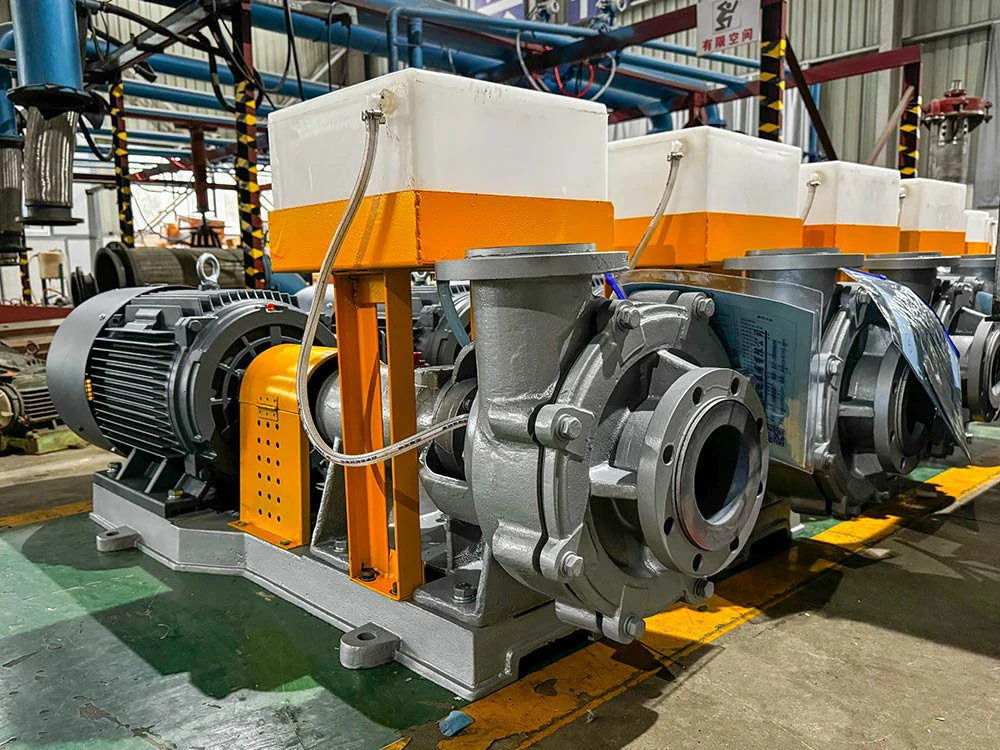
Changyu Pump engineers replaced two of the four pumps with CYB-ZKJ Series FEP fluoroplastic-lined centrifugal pumps with double mechanical seals and an external barrier fluid system. The FEP lining provided universal resistance to hydrochloric acid at 80°C. The double seal arrangement with pressurized barrier fluid eliminated the single-seal failure mode — any leakage across the inboard seal faces was barrier fluid into the pump, not acid to atmosphere.
Three years after the replacement: the FEP-lined pumps had not required a single casing replacement or seal change. The high-silicon iron pumps on the same line had each required two casing replacements and eight seal changes during the same period. The plant replaced all remaining high-silicon iron pumps with CYB-ZKJ Series FEP-lined pumps during the next scheduled shutdown.
Conclusión clave: En servicio con ácido clorhídrico, la elección del material entre hierro de alto silicio y revestimiento de fluoroplástico FEP determina tanto la vida útil como la seguridad. Las bombas revestidas con FEP eliminan la corrosión progresiva que limita la vida de las bombas metálicas, mientras que los sellos mecánicos dobles con fluido de barrera proporcionan la protección contra fugas que los sellos simples no pueden garantizar. El mayor costo inicial se recupera mediante la eliminación de cambios de sello de emergencia y la prevención de incidentes de liberación de ácido.
Soluciones de Bombas para Decapado en la Industria del Acero de Changyu Pump
Changyu Pump fabrica dos series de bombas adecuadas para aplicaciones de decapado de acero, cada una diseñada para una combinación específica de requisitos de resistencia a la corrosión, resistencia al desgaste y seguridad.
Guía de Selección de Productos de Bombas para Decapado en la Industria del Acero
| Aplicación de Decapado | Desafío principal | Series recomendadas | Característica clave |
|---|---|---|---|
| Circulación de ácido (HCl, H₂SO₄) | Corrosión extrema a alta temperatura | Serie CYB-ZKJ | Revestimiento de FEP/PFA; resistencia a ácidos casi universal |
| Transferencia/dosificación de ácido | Corrosión + seguridad contra fugas | Serie CYB-ZKJ (opción de accionamiento magnético) | Diseño sin sello; fuga cero |
| Recirculación de agua de enjuague | Abrasión + corrosión ácida | Serie UHB | Revestimiento de UHMW-PE; resistencia superior al desgaste |
| Trasvase de aguas residuales | Corrosión y abrasión combinadas | Serie UHB | Revestimiento de UHMW-PE; resistencia dual |
Serie CYB-ZKJ — Bomba revestida de fluoroplástico para servicio con ácido de decapado
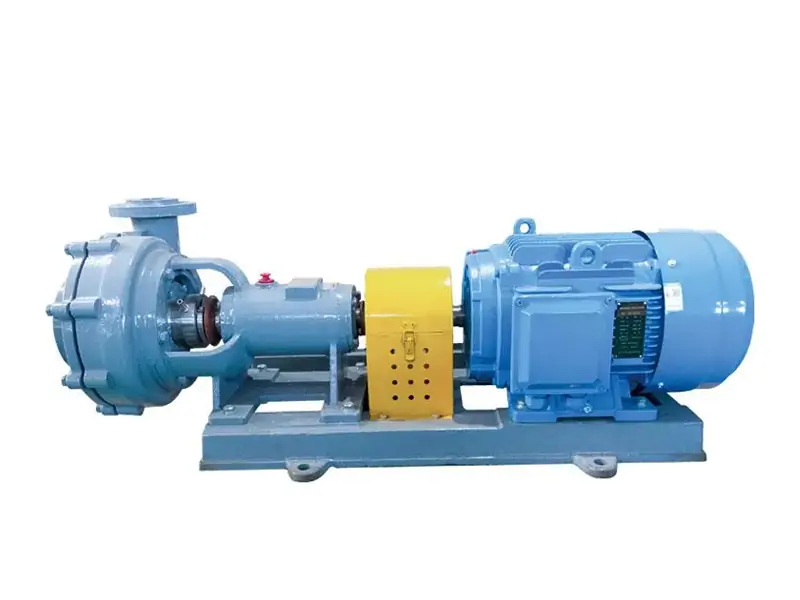
Bomba centrífuga revestida de fluoroplástico FEP o PFA para servicio con ácido clorhídrico, ácido sulfúrico y ácidos mixtos en líneas de decapado de acero. El revestimiento de fluoroplástico aísla completamente el ácido bombeado de la carcasa metálica de la bomba, proporcionando una resistencia química casi universal independientemente del tipo de ácido, concentración o temperatura. Disponible con sellos mecánicos dobles y sistemas de fluido de barrera externos para una protección mejorada contra fugas. Adecuada para circulación de ácido, transferencia de ácido y dosificación de ácido a temperaturas de -80°C a 120°C (FEP) o 160°C (PFA).
| Parámetro | Especificaciones |
|---|---|
| Caudal | 3–2 600 m³/h |
| Cabeza | 5–100 m |
| Potencia del motor | 0,75–300 kW |
| Velocidad | 968–3 450 r/min |
| Temperatura | -80°C a 120°C (FEP), hasta 160°C (PFA) |
| Materiales de revestimiento | FEP (estándar), PFA (opción de alta temperatura) |
Serie UHB — Bomba de lodos revestida de UHMW-PE para agua de enjuague y aguas residuales de decapado
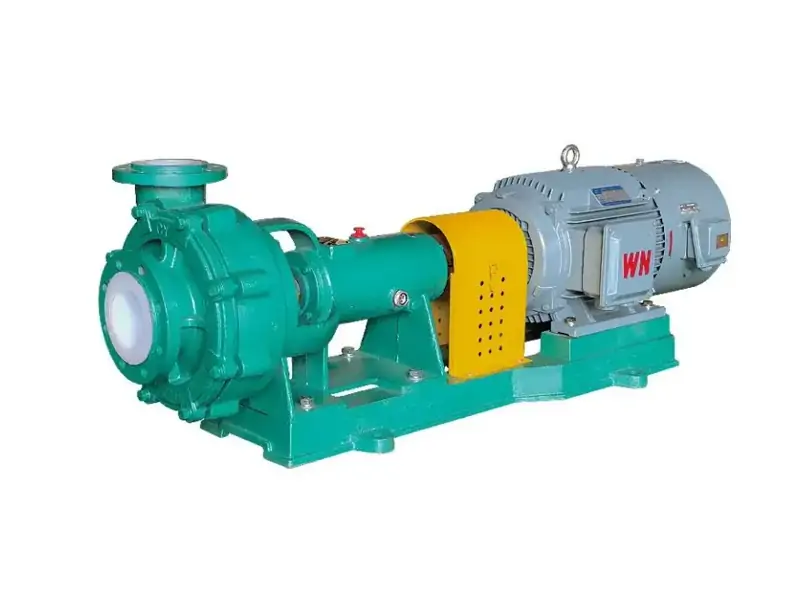
Bomba centrífuga de UHMW-PE revestida de acero diseñada para fluidos ácidos y abrasivos. El revestimiento de UHMW-PE proporciona resistencia combinada a la corrosión del agua de enjuague ácida y una resistencia superior a la abrasión contra partículas de óxido de hierro. El impulsor semiabierto maneja sólidos sin obstrucciones. Ampliamente utilizada en líneas de decapado de acero para recirculación de agua de enjuague, transferencia de aguas residuales y circulación de depuradores de niebla ácida.
| Parámetro | Especificaciones |
|---|---|
| Caudal | 3–2 600 m³/h |
| Cabeza | 5–100 m |
| Potencia del motor | 0,75–300 kW |
| Velocidad | 750–2 900 rpm |
| Temperatura | De -20 °C a 90 °C |
| Material del forro | UHMW-PE |
| Solids capacity | Hasta un 30% en peso |
Preguntas Frecuentes sobre Bombas para Decapado en la Industria del Acero
P: ¿Cuál es el mejor material de bomba para ácido clorhídrico en el decapado de acero?
R: Las bombas revestidas de fluoroplástico FEP o PFA proporcionan una resistencia casi universal al ácido clorhídrico en todas las concentraciones y temperaturas encontradas en las líneas de decapado. El hierro fundido de alto silicio es una alternativa metálica de menor costo pero tiene una vida útil limitada y es frágil. Las bombas revestidas con FEP superan a las bombas de hierro de alto silicio por un factor de dos a tres con mejores características de seguridad.
P: ¿Puedo usar una bomba de acero inoxidable para ácido de decapado?
R: No. Los grados estándar de acero inoxidable, incluidos 304 y 316L, se corroen rápidamente en ácido clorhídrico. Incluso las aleaciones de alto rendimiento como Hastelloy C-276, aunque técnicamente resistentes, son extremadamente costosas. Las bombas revestidas de fluoroplástico o de hierro de alto silicio son los materiales estándar para el servicio con ácido de decapado.
P: ¿Cómo evito las fugas de ácido de las bombas de decapado?
R: Para las aplicaciones de mayor riesgo, especifique bombas de accionamiento magnético sin sello: eliminan el sello mecánico, que es la ruta principal de fuga de ácido. Para bombas con sello mecánico, especifique sellos mecánicos dobles con un sistema de fluido de barrera presurizado. Nunca use sellos mecánicos simples en servicio con ácido clorhídrico sin un sistema de lavado confiable.
P: ¿Qué bomba maneja el agua de enjuague con partículas de óxido de hierro?
R: Las bombas revestidas de UHMW-PE proporcionan la mejor resistencia combinada a la corrosión ácida y al desgaste abrasivo de las partículas de óxido de hierro. El revestimiento de UHMW-PE absorbe la energía del impacto de las partículas en lugar de ser cortado, y el material es químicamente inerte al agua de enjuague ácida.
P: ¿Cómo protejo las superficies externas de la bomba de la niebla ácida?
R: Especifique superficies externas recubiertas con epoxi en todos los componentes de la bomba. Use sujetadores y herrajes de acero inoxidable en todo el equipo. Para motores, especifique carcasas TEFC con recubrimiento epoxi y cajas de conductos selladas. La pintura industrial estándar y los sujetadores galvanizados fallarán rápidamente en entornos de líneas de decapado.
P: ¿Qué procedimientos de seguridad se requieren para el mantenimiento de bombas de decapado?
R: Bloquee y drene la bomba antes de abrirla. Enjuague completamente con agua limpia. Use guantes resistentes a ácidos, protector facial y delantal resistente a productos químicos. Asegúrese de que haya una estación de lavado de ojos y una ducha de seguridad a menos de 10 segundos de distancia caminando, según ANSI Z358.1. Realice una prueba de presión con agua antes de devolverla al servicio con ácido.
Lista de verificación de prevención del ingeniero de Changyu Pump
- Nunca especifique acero inoxidable (304, 316L) para servicio con ácido clorhídrico. El material fallará rápidamente, creando un peligro de seguridad.
- Especifique bombas revestidas de fluoroplástico FEP o PFA para circulación de ácido concentrado. La prima de material sobre el hierro de alto silicio se recupera mediante una vida útil extendida y la eliminación del mantenimiento de emergencia.
- Use bombas de accionamiento magnético sin sello para transferencia de ácido concentrado. Eliminar el sello mecánico elimina la ruta principal de fuga de ácido.
- Especifique bombas revestidas de UHMW-PE para agua de enjuague y aguas residuales. La resistencia combinada a la corrosión y al desgaste evita fallas prematuras por partículas de óxido de hierro.
- Proteja todas las superficies externas de la bomba de la niebla ácida. Los recubrimientos epoxi y los herrajes de acero inoxidable son obligatorios, no opcionales.
- Instale sellos mecánicos dobles con fluido de barrera presurizado para bombas de ácido con sello mecánico. Los sellos simples no son adecuados para servicio con HCl: una falla del sello simple libera ácido directamente a la atmósfera.
- Capacite a todo el personal de mantenimiento en procedimientos de seguridad con ácidos antes de que trabajen en bombas de decapado. Verifique que las estaciones de lavado de ojos y duchas de emergencia sean funcionales.
- Mantenga sellos de repuesto, juntas y un conjunto completo de extremo húmedo en inventario para bombas de decapado críticas. Los plazos de entrega de piezas de repuesto no deben dictar los programas de producción.
Conclusión
Una bomba de decapado para la industria del acero opera en la intersección de la corrosión química extrema y — en servicios de agua de enjuague y aguas residuales — el desgaste abrasivo. El material que sirve para un fluido de decapado puede fallar rápidamente en otro. El ácido clorhídrico ataca los metales; las partículas de óxido de hierro erosionan los plásticos estándar. La selección correcta de materiales — revestimientos de fluoroplástico FEP o PFA para ácido concentrado, revestimientos de UHMW-PE para agua de enjuague y aguas residuales abrasivas — determina si una bomba sobrevive durante años o falla en cuestión de meses.
Más allá de los materiales, la especificación de la bomba de decapado debe tener en cuenta los peligros únicos del entorno de decapado. La niebla ácida ataca las superficies externas. Las fallas de los sellos mecánicos liberan productos químicos peligrosos. Los procedimientos de mantenimiento deben proteger al personal con tanto rigor como protegen al equipo. Una bomba de decapado correctamente especificada — con los materiales, sellos y protección externa adecuados — opera de manera confiable y segura en un entorno que destruye las bombas industriales estándar.
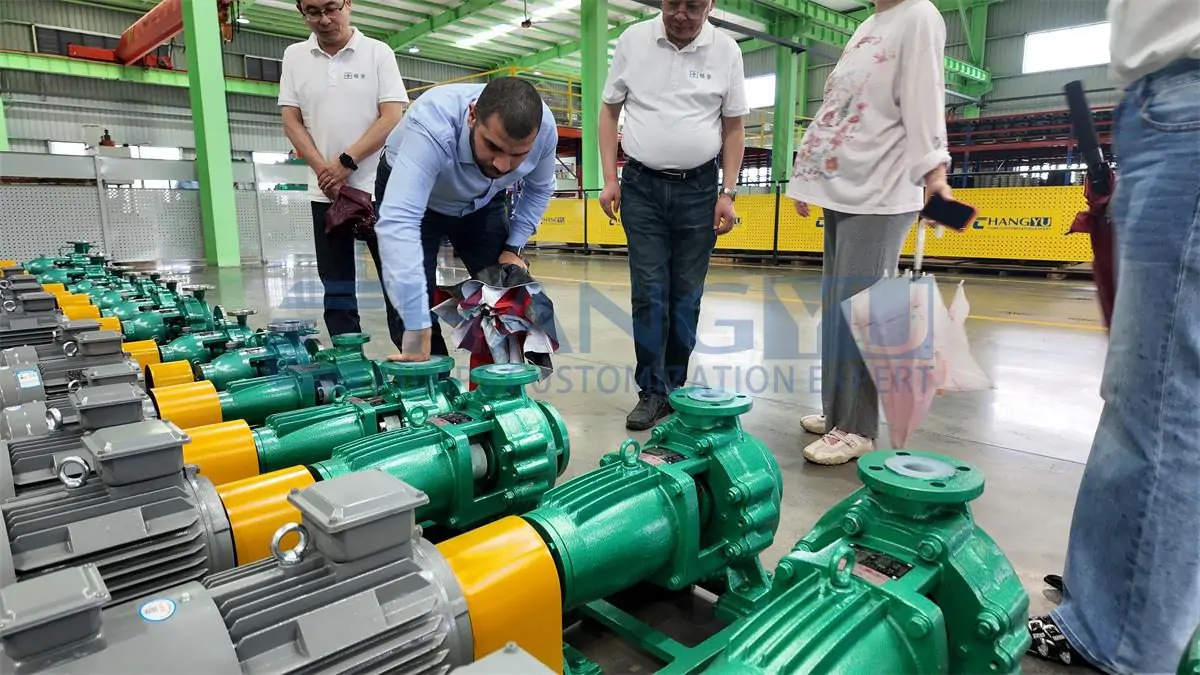
El equipo de ingeniería de Changyu Pump proporciona evaluaciones técnicas personalizadas para aplicaciones de bomba de decapado para la industria del acero — que abarcan caracterización de ácidos, selección de materiales, especificación de sellos y recomendaciones de seguridad. Dos décadas de experiencia en fabricación en los sectores químico e industrial respaldan cada recomendación.
Contacte a Changyu Pump para una evaluación técnica gratuita →