
Introduction
Pompe à boues résistante à la corrosion se situe à l'intersection de la chimie et de l'ingénierie mécanique. La pompe doit survivre à l'attaque simultanée de deux mécanismes fondamentalement différents : la corrosion chimique, qui affaiblit la matrice métallique aux limites des grains, et l'abrasion mécanique, qui décape le matériau à la surface. Ces deux mécanismes ne fonctionnent pas indépendamment l'un de l'autre : la corrosion élimine les films d'oxyde protecteurs et expose le métal frais à l'usure par abrasion, tandis que l'abrasion élimine les produits de corrosion qui, autrement, ralentiraient l'attaque chimique. Il en résulte un taux de perte de matériau synergique qui peut dépasser de loin ce que la corrosion ou l'abrasion produiraient seules.
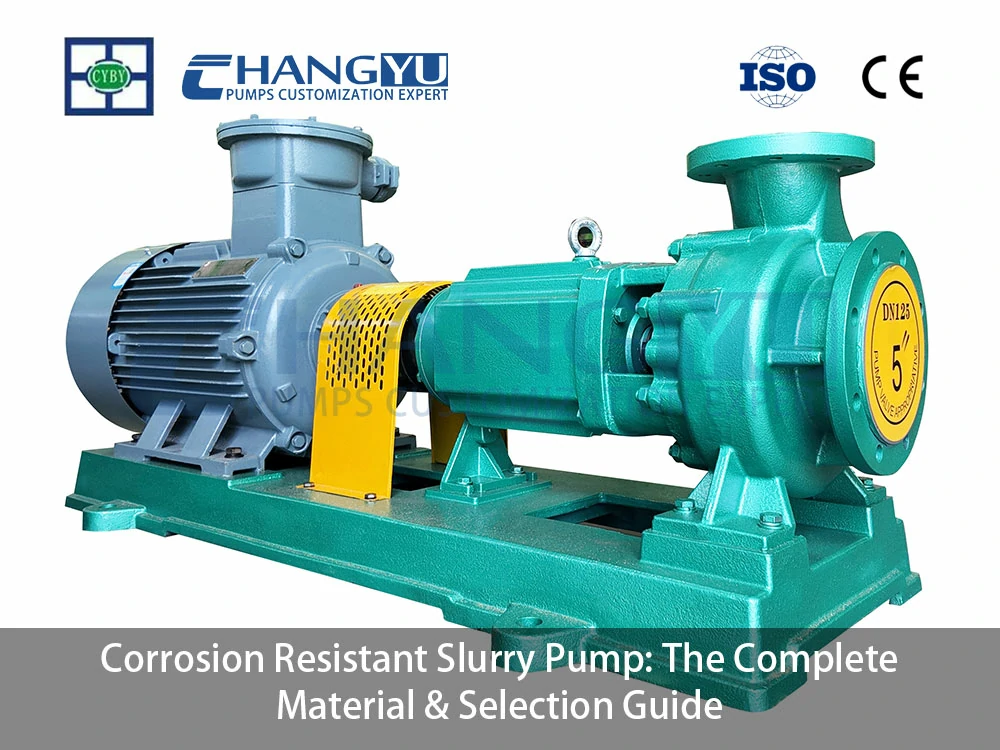
Cette synergie est bien documentée. La recherche a établi que l'abrasion et la corrosion coïncident souvent et entraînent une usure accélérée, les deux mécanismes usant les pièces, modifiant leurs dimensions et leur géométrie d'origine, ce qui entraîne une dégradation des performances. Plus précisément, la corrosion élimine les films protecteurs de surface et expose le matériau frais à l'abrasion. L'abrasion élimine alors les produits de corrosion et empêche la passivation. Une pompe qui dure cinq ans dans une boue minière à pH neutre peut tomber en panne en quelques mois lorsque le même minerai est en suspension dans une eau de traitement acide.
Ce guide constitue une référence structurée couvrant la sélection des matériaux pour les services corrosifs-abrasifs, les types de pompes adaptés aux tâches combinées de corrosion et d'abrasion, un cadre de sélection étape par étape, les industries d'application clés et une étude de cas quantitative. S'appuyant sur plus de deux décennies d'expérience en ingénierie, Changyu Pump apporte une expertise approfondie dans la spécification de solutions de pompage pour les applications de boues chimiquement les plus agressives au monde.
Qu'est-ce qu'une pompe à boues résistante à la corrosion ?
Définition de base
A pompe à boues résistante à la corrosion est une pompe centrifuge ou volumétrique à usage intensif spécialement conçue pour transporter des mélanges liquide-solide dont la phase liquide est chimiquement agressive - typiquement avec un pH inférieur à 4 ou supérieur à 10 - et la phase solide est abrasive. Contrairement à une pompe à boues standard, qui privilégie la résistance à l'usure en supposant un fluide porteur chimiquement inoffensif, une pompe à boues résistante à la corrosion doit satisfaire simultanément à deux exigences de conception : ses matériaux en contact avec le liquide doivent résister à l'attaque chimique de la solution porteuse, et ces mêmes matériaux doivent résister à l'érosion mécanique des solides en suspension.
La difficulté technique réside dans le fait que ces deux exigences sont souvent contradictoires. Comme le souligne l'Hydraulic Institute, les boues peuvent être érosives, corrosives ou érosives/corrosives. Le choix des matériaux dépend des propriétés du mélange à pomper et de la conception de la pompe. Les matériaux qui excellent dans un mécanisme sont souvent peu performants dans l'autre. Cette tension est le problème central qui distingue une pompe à boues résistante à la corrosion de toutes les autres catégories de pompes.
Principales caractéristiques de la conception
| Fonctionnalité | Pompe à boues standard | Pompe à boues résistante à la corrosion |
|---|---|---|
| Stratégie relative au matériau mouillé | Dureté maximale pour la résistance à l'abrasion | Équilibre entre la résistance à la corrosion et la résistance à l'abrasion ; la sélection de la paire de matériaux est spécifique à l'application. |
| Construction de l'enveloppe | Métal dur (fer à haute teneur en chrome) ou revêtu de caoutchouc | Revêtement en fluoroplastique (UHMW-PE, FEP, PFA), en acier inoxydable duplex ou en élastomère de spécialité |
| Sélection des joints | Expeller, presse-étoupe ou garniture mécanique | Double garniture mécanique avec fluide de barrage, ou conception sans garniture (entraînement magnétique, diaphragme) |
| Plage de fonctionnement du pH | Typiquement pH 5-9 (neutre à légèrement acide/alcalin) | pH 0-14 (gamme complète), en fonction du système de matériaux sélectionné |
La synergie corrosion-abrasion
Le mode de défaillance déterminant dans les services de boues corrosives est la synergie entre les attaques chimiques et mécaniques. Le mécanisme fonctionne en trois étapes :
- Étape 1 - La corrosion affaiblit la surface : Le fluide porteur acide attaque les zones appauvries en chrome aux joints de grains, ce qui affaiblit la matrice métallique à la surface.
- Étape 2 - L'abrasion élimine la couche affaiblie : Les particules abrasives frappent et décapent le matériau affaibli par la corrosion à une vitesse bien supérieure à celle qui se produirait sur une surface saine.
- Étape 3 - La surface fraîche est exposée et attaquée à nouveau : Le métal fraîchement exposé, désormais dépourvu de tout film d'oxyde protecteur, se corrode plus rapidement que la surface d'origine, et le cycle se répète.
Ce cycle explique le changement progressif du taux d'usure que les opérateurs observent lorsque la chimie du processus change. Une pompe qui fonctionne pendant des années avec une boue particulière peut tomber en panne en l'espace de quelques mois, voire de quelques semaines, si le pH du fluide porteur change d'un seul point. Les pompes à boues standard n'offrent aucune défense contre cette attaque combinée car leurs systèmes de matériaux n'ont jamais été conçus pour y faire face.
Matrice de sélection des matériaux pour les pompes à boues résistantes à la corrosion
Choix des matériaux pour un pompe à boues résistante à la corrosion est la décision technique la plus importante dans le processus de spécification. La question n'est pas simplement de savoir quel matériau est le plus dur ou le plus résistant à la corrosion, mais quel système de matériaux répond le mieux à la combinaison spécifique d'agressivité chimique et d'abrasion des particules dans l'application visée.
Matériaux métalliques
Fer blanc à haute teneur en chrome (27-35% Cr, 600+ BHN) est le matériau standard pour les boues abrasives à pH neutre. Sa dureté exceptionnelle lui confère une résistance maximale aux solides grossiers et anguleux. Cependant, il se corrode rapidement en dessous d'un pH de 4, où l'attaque acide sur les joints de grains dépourvus de chrome accélère la perte de matériau. À un pH de 2 à 3, le fer à haute teneur en chrome peut voir sa durée de vie diminuer d'un facteur de 5 à 10 par rapport à un service à pH neutre.
A49 (fonte blanche inoxydable duplex) représente une catégorie de matériaux spécifiquement développée pour les applications corrosives et abrasives. Ce matériau possède non seulement la résistance à l'usure des alliages à haute teneur en chrome, mais aussi une excellente résistance à la corrosion et une forte résistance aux acides, capable de supporter des solutions d'acide sulfurique d'un pH de 4, des solutions d'hydroxyde de sodium d'un pH de 13, et la corrosion due aux ions chlorure à certaines concentrations.
CD4MCu Acier inoxydable duplex (280-350 BHN) est spécialement conçu pour les environnements combinés de corrosion et d'abrasion. Les recherches sur le CD4MCu pour les roues de pompes à boues dans les processus d'hydrométallurgie du zinc ont démontré que les aciers inoxydables duplex ainsi que l'acier inoxydable 17-4 PH peuvent être utilisés comme matériaux candidats pour les roues dans le processus d'hydrométallurgie du zinc en raison de leur excellente résistance à la corrosion et à l'usure. Le CD4MCu peut être durci par vieillissement pour augmenter son indice de dureté Brinell, et il s'est avéré particulièrement efficace dans les environnements d'acide sulfurique et d'acide phosphorique. Langley Alloys note que la teneur en cuivre du CD4MCu augmente considérablement la résistance aux acides sulfurique, nitrique et phosphorique, ce qui en fait le choix par défaut pour les articles utilisés dans la production d'engrais.
Aciers inoxydables super duplex (2507, 2605N) étendent la résistance à la corrosion du CD4MCu à des conditions plus agressives. La pompe SDSS de Goodwin, par exemple, fonctionne dans des boues d'une densité allant jusqu'à 2,8 kg/L (65% en poids), à des pH de 0 à 14 et à des températures allant jusqu'à 90°C.
Matériaux élastomères
Caoutchouc naturel offrent une résistance exceptionnelle aux particules fines et tranchantes dans les environnements corrosifs. Le caoutchouc absorbe l'énergie de l'impact des particules et la libère de manière élastique, plutôt que d'y résister par sa dureté. Pour la désulfuration des gaz de combustion, les revêtements en caoutchouc naturel résistent à la corrosion des boues acides de calcaire/gypse, évitant ainsi les risques de corrosion qui peuvent affecter les pompes à revêtement métallique, en particulier lorsque des boues à faible pH sont laissées à l'intérieur des pompes lorsqu'elles ne fonctionnent pas. Il convient de noter que le caoutchouc naturel n'est pas compatible avec les acides oxydants puissants tels que l'acide nitrique et l'acide sulfurique concentré, car ces produits chimiques dégradent rapidement la structure du caoutchouc.
Hypalon (SY31) et caoutchouc butyle (SY45) offrent une très grande résistance à la corrosion à des températures élevées. Selon les bases de données industrielles sur la résistance chimique, l'Hypalon convient au pompage d'acides et d'alcalis forts à des températures supérieures à 100°C, tandis que le caoutchouc butyle est idéal pour le transport de boues acides contenant de fines particules solides à des températures comprises entre 60°C et 120°C.
Caoutchouc EPDM est utilisé pour les acides forts et les alcalis dans la gamme de pH 0-3 ou 12-14, où sa résistance chimique supérieure compense sa résistance modérée à l'abrasion. Cependant, ses performances dépendent fortement de la concentration et de la température, et la compatibilité doit être vérifiée pour chaque flux de traitement spécifique.
Revêtements en fluoroplastique
UHMW-PE (Polyéthylène de très haut poids moléculaire) est l'un des matériaux les plus efficaces pour un service combiné de corrosion et d'abrasion à des températures modérées. Il s'agit d'une nouvelle génération de plastiques techniques résistants à la corrosion et à l'usure pour les pompes, qui se caractérise par une excellente résistance à l'usure, aux chocs (en particulier aux chocs à basse température), au fluage (résistance à la fissuration sous contrainte dans l'environnement), et une très bonne résistance à la corrosion. Dans des conditions normalisées d'essais d'usure abrasive, la résistance à l'usure de l'UHMW-PE est environ quatre fois supérieure à celle du PTFE et 7 à 10 fois supérieure à celle de l'acier au carbone et de l'acier inoxydable. Les résultats réels sur le terrain peuvent varier en fonction de la vitesse de fonctionnement, de la charge de solides, des caractéristiques des particules et des pratiques d'entretien.
En termes de résistance à la corrosion, l'UHMW-PE peut résister à divers acides, alcalis, sels et solvants organiques dans certaines plages de température et de concentration. À 20°C et 90°C, après immersion dans 80 types de solvants organiques pendant 30 jours, son aspect et ses propriétés physiques restent essentiellement inchangés. Le matériau est généralement utilisé comme revêtement de 8 à 20 mm d'épaisseur à l'intérieur d'une enveloppe en acier, combinant la barrière chimique du polymère avec la résistance structurelle de l'enveloppe métallique.
Il convient de noter une limitation physique importante des revêtements en plastique fluoré : ce sont des matériaux semi-perméables. En cas d'exposition prolongée à des fluides très perméables tels que l'HF ou des oxydants puissants à des températures élevées, des traces de produits chimiques peuvent lentement migrer à travers le revêtement jusqu'à l'interface du corps métallique, où elles peuvent provoquer une corrosion de la face arrière. Changyu Pump répond à ce risque par des spécifications de revêtement plus épaisses (8-20 mm), des processus de moulage de résine optimisés qui produisent une matrice plus dense et moins perméable, et des tests périodiques d'intégrité par ultrasons pour les applications critiques. Pour une discussion plus approfondie sur la sélection des matériaux pour les applications chimiques, consultez notre guide des matériaux pour les pompes destinées aux procédés chimiques.
FEP (éthylène-propylène fluoré) possède une excellente stabilité chimique et peut résister à des milieux fortement corrosifs tels que l'acide sulfurique, l'acide chlorhydrique, l'acide nitrique et l'acide fluorhydrique. Le FEP est généralement classé pour un service continu à environ 100°C dans les composants structurels des pompes, et jusqu'à environ 120°C dans les applications de revêtement où la charge mécanique est minimale, offrant une large résistance chimique pour les applications générales de boues corrosives.
PFA (Perfluoroalkoxy) peut supporter des températures de fonctionnement continues allant jusqu'à environ 260°C, bien que sa résistance mécanique diminue de manière significative au-delà d'environ 150°C. Le PFA offre une perméabilité aux gaz inférieure à celle du PTFE et constitue le matériau de revêtement préféré pour les applications de boues corrosives à haute température qui requièrent à la fois une résistance chimique et une stabilité thermique.
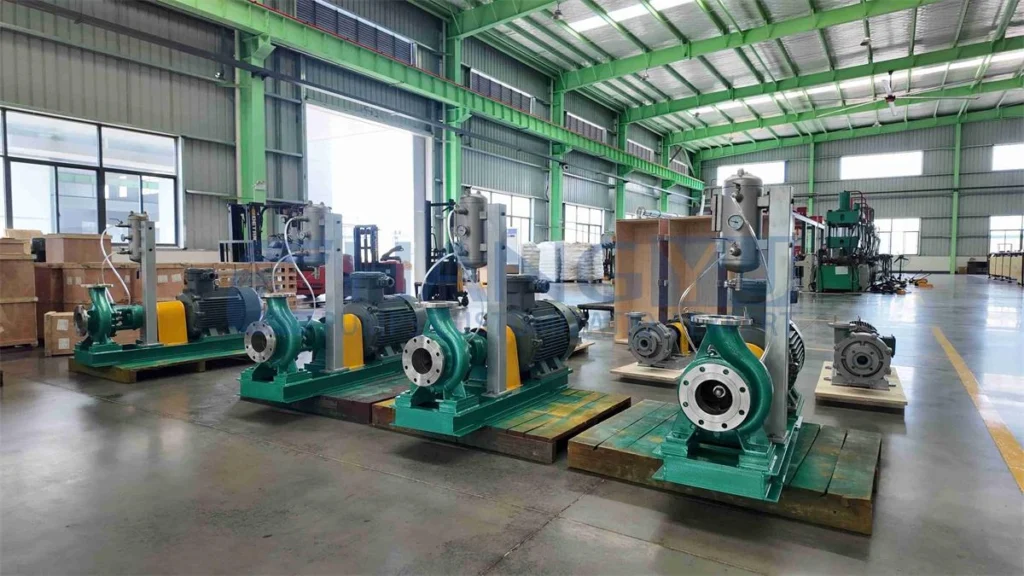
Arbre de décision pour la sélection des matériaux
Pour déterminer le système de matériaux approprié pour un pompe à boues résistante à la corrosion les ingénieurs doivent suivre cette logique séquentielle :
- Caractériser la chimie du fluide porteur. Le pH est-il inférieur à 4 ? Si ce n'est pas le cas, et que la boue est à pH neutre avec des solides grossiers → le fer blanc à haute teneur en chrome est le choix standard. Si oui, passez à l'étape suivante.
- Déterminer le type d'acide et sa concentration. L'acide est-il chlorhydrique, sulfurique, nitrique, phosphorique ou mixte ? Chaque type d'acide impose un chemin de compatibilité des matériaux différent - voir la matrice de sélection des acides et des matériaux à la section 5, étape 3.
- Évaluer la température. La température de fonctionnement est-elle inférieure à 90°C ? Si oui → Le revêtement UHMW-PE est le meilleur choix pour la plupart des boues acides avec des solides modérés. La température est-elle comprise entre 90°C et 120°C ? → FEP ou acier inoxydable duplex. La température est-elle supérieure à 120°C ? → revêtement en PFA ou acier inoxydable super duplex.
- Évaluer les caractéristiques des solides. Les solides sont-ils grossiers et anguleux ? → privilégier l'acier inoxydable duplex pour sa dureté et sa résistance à la corrosion. Les solides sont-ils fins et tranchants ? → les revêtements en élastomère ou en plastique fluoré peuvent offrir une durée de vie suffisante et une meilleure résistance à la corrosion.
- Vérifier l'ensemble du système de matériaux. Confirmer que non seulement l'enveloppe et la roue, mais aussi les joints, les joints toriques et les joints d'étanchéité sont compatibles avec le produit chimique spécifique à la température de fonctionnement maximale.
Sélection des matériaux Référence rapide
| Matériau | Dureté | Gamme de pH | Temp. max. | Meilleur contre | Application typique | Principales limites |
|---|---|---|---|---|---|---|
| Fer à haute teneur en chrome (27-35% Cr) | 600+ BHN | pH 5-14 | ~110°C | Solides grossiers et anguleux | Exploitation minière neutre-pH, transport de minerais | Ne convient pas aux services acides (pH < 4) |
| A49 Fer blanc duplex | 450-550 BHN | pH 2-14 | ~110°C | Corrosion + abrasion grossière | Drainage minier acide, boues chimiques | Dureté modérée par rapport au fer à haute teneur en chrome |
| CD4MCu / Super Duplex | 280-350 BHN | pH 0-14 | ~110°C | Corrosion-abrasion combinée | Acide phosphorique, FGD, engrais | Dureté limitée pour une abrasion extrême |
| Caoutchouc naturel | N/A (élastomère) | pH 2-12 | ~70°C | Particules fines et pointues ; impact | FGD calcaire/gypse, résidus de flottation | Pas pour les acides oxydants, les solvants ou >70°C |
| Hypalon / caoutchouc butyle | N/A (élastomère) | pH 0-14 | 100-120°C | Acides forts + particules fines | Boues acides chaudes, traitement chimique | Résistance modérée à l'abrasion |
| Revêtement UHMW-PE (8-20 mm) | N/A (Polymère) | Large (acide, alcali, sel) | ~90°C | Abrasion modérée + forte corrosion | Acide phosphorique, TiO₂, boues chimiques mixtes | Température limitée à ~90°C |
| Doublure FEP | N/A (Fluoropolymère) | Quasi universelle | ~120°C | Forte corrosion + abrasion modérée | Acides mixtes, boues corrosives générales | Résistance modérée à l'abrasion ; perméabilité potentielle à haute température |
| Revêtement en PFA | N/A (Fluoropolymère) | Quasi universelle | ~260°C (mécanique ~150°C) | Forte corrosion à température élevée | Boues chimiques à haute température | Résistance modérée à l'abrasion ; perméabilité potentielle à haute température |
| Céramique (Alumine/SiC) | 1200+ (Vickers) | Large (sauf HF) | ~150°C (étanchéité limitée) | Abrasion propre et fine | Recyclage FGD, boues chimiques, kaolin | Ne convient pas pour les charges d'impact ou le service HF |
Types de pompes à boues résistantes à la corrosion
Pompes à boues centrifuges horizontales résistantes à la corrosion
Les pompes centrifuges horizontales dominent le service des boues corrosives pour la même raison qu'elles dominent le traitement des boues industrielles en général : elles offrent des débits élevés, un débit continu (sans pulsation) et un coût d'investissement par unité de débit inférieur à celui des pompes volumétriques. Pour les applications corrosives, ces pompes sont construites avec des boîtiers revêtus de plastique fluoré (UHMW-PE, FEP ou PFA), des composants en contact avec le fluide en acier inoxydable duplex ou des boîtiers entièrement en plastique (PP, PVDF).
Les pompes centrifuges à revêtement fluoroplastique associent l'inertie chimique du matériau de revêtement à la résistance structurelle d'un corps en acier. L'épaisseur du revêtement - généralement de 8 à 20 mm pour l'UHMW-PE - constitue à la fois une barrière contre la corrosion et une mesure d'absorption des chocs. L'enveloppe en acier supporte les charges de pression et les contraintes de la tuyauterie que le revêtement en polymère seul ne pourrait pas supporter. Ces pompes ont des débits d'environ 3 à 2 600 m³/h avec des hauteurs de refoulement allant jusqu'à 100 m, ce qui permet de répondre à la majorité des applications de transfert de boues corrosives en vrac dans le traitement chimique, la production d'engrais et les industries métallurgiques.
Les pompes centrifuges en acier inoxydable duplex comblent le vide entre le fer à haute teneur en chrome (excellente résistance à l'usure, faible résistance à la corrosion) et les revêtements en plastique fluoré (excellente résistance à la corrosion, capacité d'usure modérée). Les modèles CD4MCu et super duplex offrent les performances combinées de corrosion et d'abrasion nécessaires pour le drainage minier acide, le raffinat d'extraction par solvant et les boues de désulfuration des gaz de combustion, où le pH est modérément bas mais où l'abrasion reste importante.
Pompes à boues verticales résistantes à la corrosion
Les pompes à boues verticales en porte-à-faux placent le moteur et les paliers au-dessus du bassin ou de la cuve, avec un long arbre s'étendant vers le bas jusqu'à une roue immergée. Cette conception élimine les roulements et les joints immergés, ce qui la rend intrinsèquement adaptée aux bassins corrosifs où les fuites de joints constitueraient à la fois une charge de maintenance et un risque pour la sécurité. Pour les environnements corrosifs, l'extrémité en contact avec le fluide est construite en acier inoxydable duplex, en composants revêtus de plastique fluoré ou en matériaux entièrement plastiques, en fonction de la chimie spécifique.
Dans des applications telles que les puisards d'usines chimiques, les fosses de décapage et le drainage de réservoirs de stockage d'acide, les pompes verticales en porte-à-faux assurent un fonctionnement fiable, nécessitant peu d'entretien, en éliminant entièrement de l'environnement corrosif les composants les plus vulnérables, à savoir l'étanchéité et les roulements immergés.
Pompes volumétriques pour boues corrosives
Lorsque les boues corrosives présentent également une viscosité élevée, une forte concentration de solides ou une sensibilité au cisaillement, les pompes volumétriques offrent des avantages par rapport aux pompes centrifuges. Pompes à membrane constituent une barrière étanche entre le fluide de traitement et le mécanisme d'entraînement, sans garniture mécanique susceptible de céder sous l'effet d'une attaque corrosive. Les matériaux de leur corps peuvent être spécifiés en PP, PVDF ou acier inoxydable avec des revêtements en plastique fluoré. Pompes péristaltiques (à tuyau) confinent la boue corrosive entièrement dans un tube remplaçable en élastomère ou en fluoropolymère, éliminant à la fois les joints et les composants métalliques en contact avec le liquide. Ils sont donc particulièrement adaptés aux applications de dosage impliquant des produits chimiques agressifs.
Comparaison des types de pompes
| Type de pompe | Stratégie de lutte contre la corrosion | Plage de débit | Tolérance des solides | Meilleure application |
|---|---|---|---|---|
| Centrifugeuse à revêtement en plastique fluoré | Le revêtement isole le métal des attaques chimiques | 3-2 600 m³/h | Jusqu'à 40% en poids | Transfert de boues corrosives en vrac |
| Centrifugeuse en acier inoxydable duplex | Alliage résistant à la corrosion + dureté à l'usure | 10-2 600 m³/h | Jusqu'à 40% en poids | Drainage minier acide, FGD, acide phosphorique |
| Porte-à-faux vertical | Pas de joints ou de roulements immergés | 5-400 m³/h | Jusqu'à 40% en poids | Drainage corrosif des puisards et des fosses |
| Diaphragme / Péristaltique | Conception sans joint ; corps/tube résistant aux produits chimiques | Jusqu'à 1 041 L/min | Jusqu'à 70% en poids | Dosage de produits corrosifs, à haute viscosité, chargés de solides |
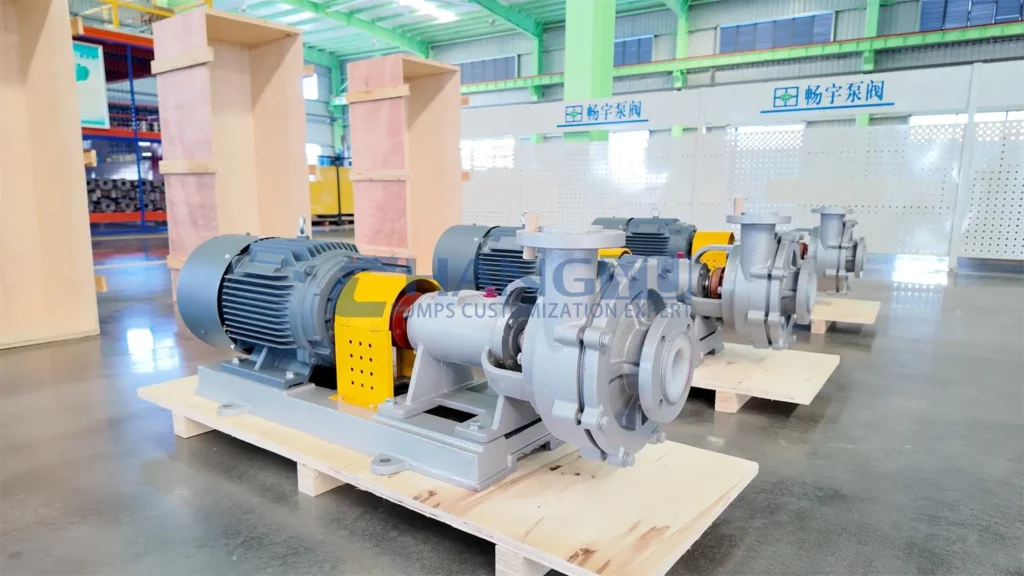
Comment choisir la bonne pompe à boues résistante à la corrosion : Un cadre en 5 étapes
Étape 1 : Caractériser l'environnement chimique
Documenter le profil chimique complet de la suspension : type d'acide, concentration, pH, température (y compris toute variation du processus) et présence d'agents oxydants ou de solvants. L'identité chimique - et non une étiquette générique “acide” - détermine la fenêtre de compatibilité des matériaux. L'acide sulfurique attaque les métaux par un mécanisme dépendant de la concentration ; l'acide chlorhydrique attaque par piqûre induite par le chlorure ; l'acide nitrique est un oxydant puissant qui dégrade de nombreux polymères.
Étape 2 : Quantifier la charge en solides
Mesurez la concentration de solides (pourcentage en poids), la distribution de la taille des particules, la forme des particules (angulaires ou arrondies) et la dureté des particules. Les solides grossiers et anguleux génèrent une usure par impact ; les particules fines et pointues produisent une abrasion par glissement. La combinaison des caractéristiques des solides et de l'environnement chimique détermine le mécanisme d'usure qui dominera.
Étape 3 : Déterminer le mécanisme d'usure dominant pour votre pompe à boue
Sur la base des étapes 1 et 2, classez la demande dans l'une des trois catégories suivantes :
- Abrasion dominante, corrosion secondaire: Boues à pH neutre ou légèrement acides/alcalines avec des solides grossiers et anguleux. Le fer à haute teneur en chrome offre les meilleures conditions économiques.
- Corrosion dominante, abrasion secondaire: Boues fortement acides ou alcalines avec des solides fins et peu abrasifs. Les revêtements fluoroplastiques (UHMW-PE, FEP, PFA) ou les élastomères spéciaux (Hypalon, EPDM) fournissent la barrière chimique requise.
- Corrosion-abrasion combinée: Boues acides ou alcalines avec une charge de solides modérée à élevée. Les pompes en acier inoxydable duplex (CD4MCu, super duplex) ou à revêtement fluoroplastique avec UHMW-PE offrent la double protection requise.
Pour vous aider dans la sélection préliminaire des matériaux pour votre pompe à boues résistante à la corrosion, Le tableau simplifié ci-dessous est organisé par type d'acide, concentration et plage de température :
| Type d'acide | Concentration | Température | Matériau recommandé |
|---|---|---|---|
| Acide sulfurique | ≤40% | ≤25°C | PP, PVDF, caoutchouc naturel |
| Acide sulfurique | 40-80% | ≤50°C | PVDF, UHMW-PE |
| Acide sulfurique | 80-98% | ≤80°C | UHMW-PE, CD4MCu |
| Acide chlorhydrique | ≤37% | ≤25°C | PP, PVDF, UHMW-PE |
| Acide chlorhydrique | >37% ou chaud | >25°C | PVDF, FEP, PFA |
| Acide nitrique | ≤50% | ≤50°C | PVDF, CD4MCu |
| Acide nitrique | >50% ou chaud | >50°C | FEP, PFA |
| Acide phosphorique | ≤85% | ≤80°C | UHMW-PE, CD4MCu, 316L (pur uniquement) |
| Acide phosphorique (procédé humide) | Contient des solides F- + | ≤80°C | UHMW-PE |
| Acides mixtes / Boues chimiques | Variable | Variable | FEP, PFA |
Étape 4 : Correspondance entre le système de matériaux → le type de pompe → la configuration des joints d'étanchéité
Sélectionnez le système de matériaux en fonction du mécanisme d'usure dominant et des données de compatibilité avec les acides spécifiques figurant dans la matrice ci-dessus. Sélectionnez ensuite le type de pompe (centrifuge, verticale en porte-à-faux ou volumétrique) en fonction des exigences de débit, de la concentration de solides et des contraintes d'installation. Enfin, sélectionnez la configuration de la garniture : garniture mécanique double avec fluide de barrage pour les fluides dangereux, garniture d'expulsion pour les services à haute teneur en solides, ou conception sans garniture (entraînement magnétique ou diaphragme) pour un confinement sans fuite.
Étape 5 : Évaluer le coût total de possession de votre pompe à boues
Il faut tenir compte du coût d'investissement, de la consommation d'énergie (souvent 60-70% du coût de la durée de vie), de la fréquence de remplacement des pièces d'usure, de la main d'œuvre pour la maintenance et du coût des arrêts non planifiés. Une pompe à revêtement en plastique fluoré, dont le prix initial est plus élevé mais dont la durée de vie est nettement plus longue en milieu corrosif, offre systématiquement un coût total de possession inférieur à celui d'une pompe en métal remplacée à plusieurs reprises. Pour une comparaison précise, il convient de procéder à une évaluation sur un horizon de trois à cinq ans.
Principaux secteurs d'application
- Production d'engrais phosphatés: Les boues d'acide phosphorique contenant des cristaux de gypse à un pH de 1 à 2 et à des températures allant jusqu'à 90°C nécessitent des pompes à revêtement en plastique fluoré (UHMW-PE) pour résister à l'attaque combinée de l'acide et de l'abrasion des cristaux.
- Désulfuration des gaz de combustion (DGC): Les boues de calcaire et de gypse à un pH de 4 à 6 sont très abrasives. Les pompes à revêtement en caoutchouc naturel sont la spécification standard, car les revêtements en caoutchouc naturel sont résistants à la corrosion contre les boues acides de calcaire/gypse.
- Hydrométallurgie et drainage minier acide: Les solutions de lixiviation acides (pH 1-4) contenant des résidus de minerai nécessitent un acier inoxydable duplex (CD4MCu, super duplex) pour une résistance combinée à la corrosion et à l'abrasion. Des recherches ont confirmé l'adéquation des aciers inoxydables duplex pour les roues de pompes à boues de l'hydrométallurgie du zinc.
- Production de dioxyde de titane: Les boues TiO₂ à base d'acide sulfurique à pH 1-2 avec des particules cristallines dures créent des conditions extrêmes de corrosion et d'abrasion combinées. Les pompes à revêtement UHMW-PE ont démontré une durée de vie exceptionnelle dans cette application.
- Traitement chimique: Les flux d'acides mixtes, les boues chimiques corrosives et les mélanges de solvants agressifs nécessitent des pompes à revêtement fluoroplastique FEP ou PFA pour une résistance chimique quasi-universelle.
- Traitement des eaux usées et de l'environnement: Les boues corrosives, les flux de déchets acides et les applications de dosage de produits chimiques exigent des matériaux résistants à la corrosion adaptés à la chimie spécifique des déchets.
Solutions de pompes Changyu pour les applications de boues résistantes à la corrosion
Le portefeuille de produits de Changyu Pump comprend trois séries de pompes conçues pour les boues corrosives et abrasives. Chaque série utilise des stratégies de matériaux distinctes adaptées aux exigences spécifiques de l'application.
Série UHB Pompe à boues résistante à la corrosion en UHMWPE
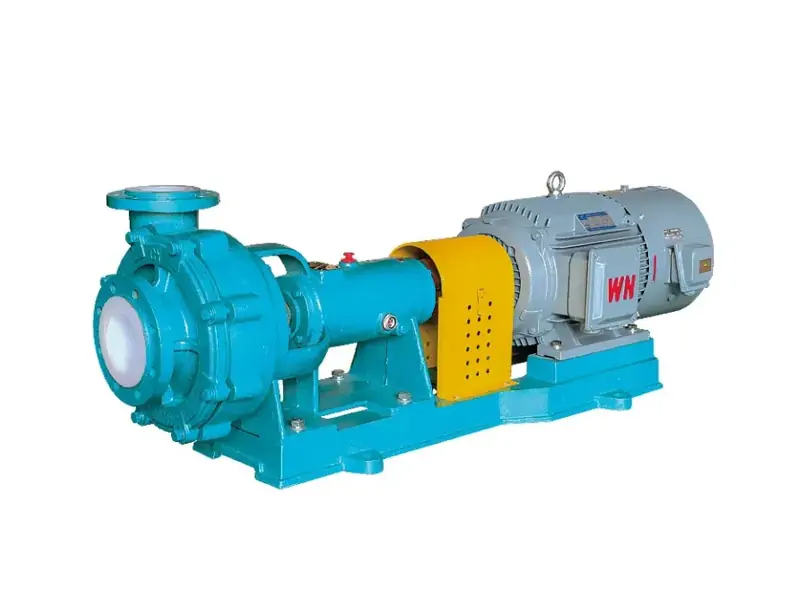
La série UHB est une pompe centrifuge mono-étagée en porte-à-faux, dotée d'une chemise en acier. UHMW-PE (8-20 mm d'épaisseur), spécialement conçu pour les boues corrosives contenant des particules fines. Le revêtement en UHMW-PE constitue une double défense : il absorbe l'énergie de l'impact des particules tout en isolant le corps en acier des attaques corrosives - une combinaison de matériaux que ni une pompe en métal pur ni une pompe en plastique pur ne peuvent offrir à elles seules. La roue semi-ouverte assure un débit sans obstruction et la pompe est disponible avec des garnitures mécaniques ou dynamiques. Cela signifie que vous pouvez spécifier une seule plate-forme de pompe pour de multiples tâches de boues corrosives sans les problèmes de compatibilité des matériaux qui accompagnent les pompes en métal.
Principales spécifications : Débit 3-2,600 m³/h | Hauteur de chute 5-100 m | Puissance 0.75-300 kW | Température -20°C à 90°C
Pompe à boues en acier inoxydable de la série HB
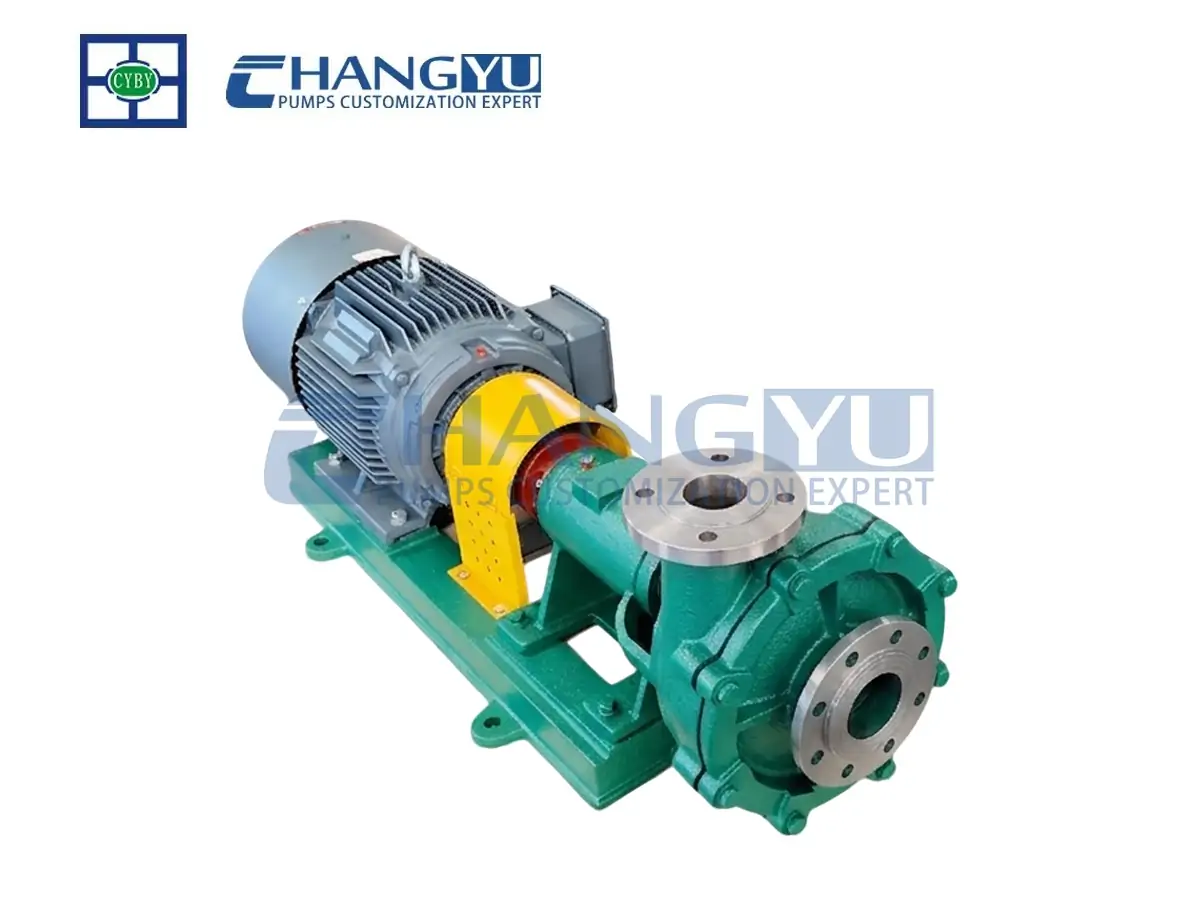
La série HB est une pompe centrifuge horizontale mono-étagée à haut rendement, conçue conformément aux normes de l'Union européenne. ISO 2858 et conforme à la Normes CE. Sa structure en acier inoxydable, personnalisable en 304, 316, 316L, 2205 et 2507, permet de traiter les boues abrasives et les fluides moyennement corrosifs. Les options en acier inoxydable duplex et super duplex (2205, 2507) constituent un pont entre l'acier inoxydable standard et la protection complète par fluoroplastique, ce qui fait de la série HB un choix rentable pour les boues abrasives légèrement acides. Pour les applications où la corrosion est modérée mais où l'abrasion reste importante, la série HB en acier inoxydable duplex offre une solution durable et utilisable à un coût d'investissement inférieur à celui d'une pompe à revêtement en plastique fluoré.
Principales spécifications : Débit 10-60 m³/h | Hauteur de chute 20-120 m | Puissance 3-45 kW | Température -20°C à 120°C
Pompe de transfert de produits chimiques corrosifs de la série CYB-ZKJ
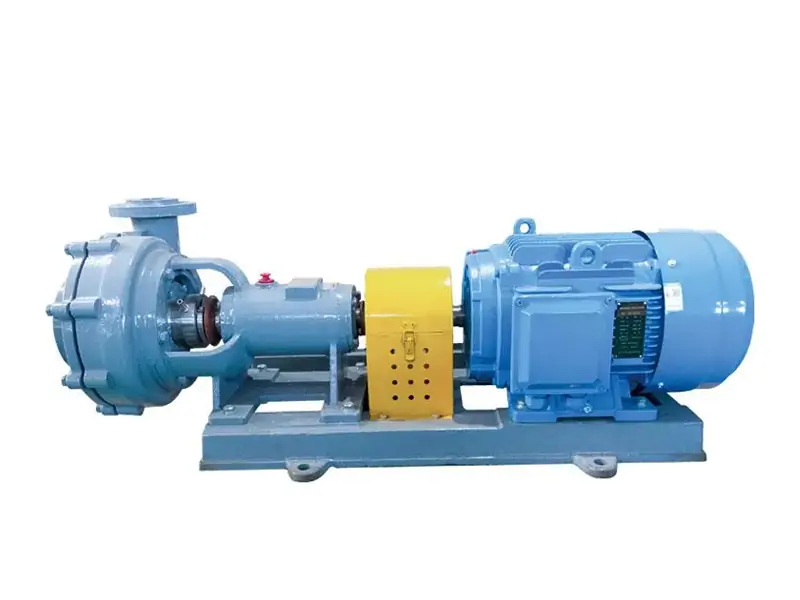
La série CYB-ZKJ est une pompe centrifuge à haut rendement avec FEP (PFA disponible pour le service à haute température). Il transporte des liquides corrosifs, des boues minérales et des acides dilués contenant jusqu'à 20% de particules solides flexibles. Les composants en contact avec le fluide, revêtus de plastique fluoré, offrent une large résistance chimique pour des applications dans les secteurs de la chimie, de la métallurgie et de la protection de l'environnement. Pour les usines qui traitent plusieurs flux corrosifs avec une chimie variable, la série CYB-ZKJ fournit une plate-forme de pompe unique qui peut servir plusieurs sites de traitement sans les problèmes de compatibilité des matériaux des pompes en alliage.
Principales spécifications : Débit 3-2,600 m³/h | Hauteur de chute 5-100 m | Puissance 0.75-300 kW | Température -80°C à 120°C
Contrôle de la qualité : comment Changyu Pump assure la fiabilité de la résistance à la corrosion et à l'abrasion


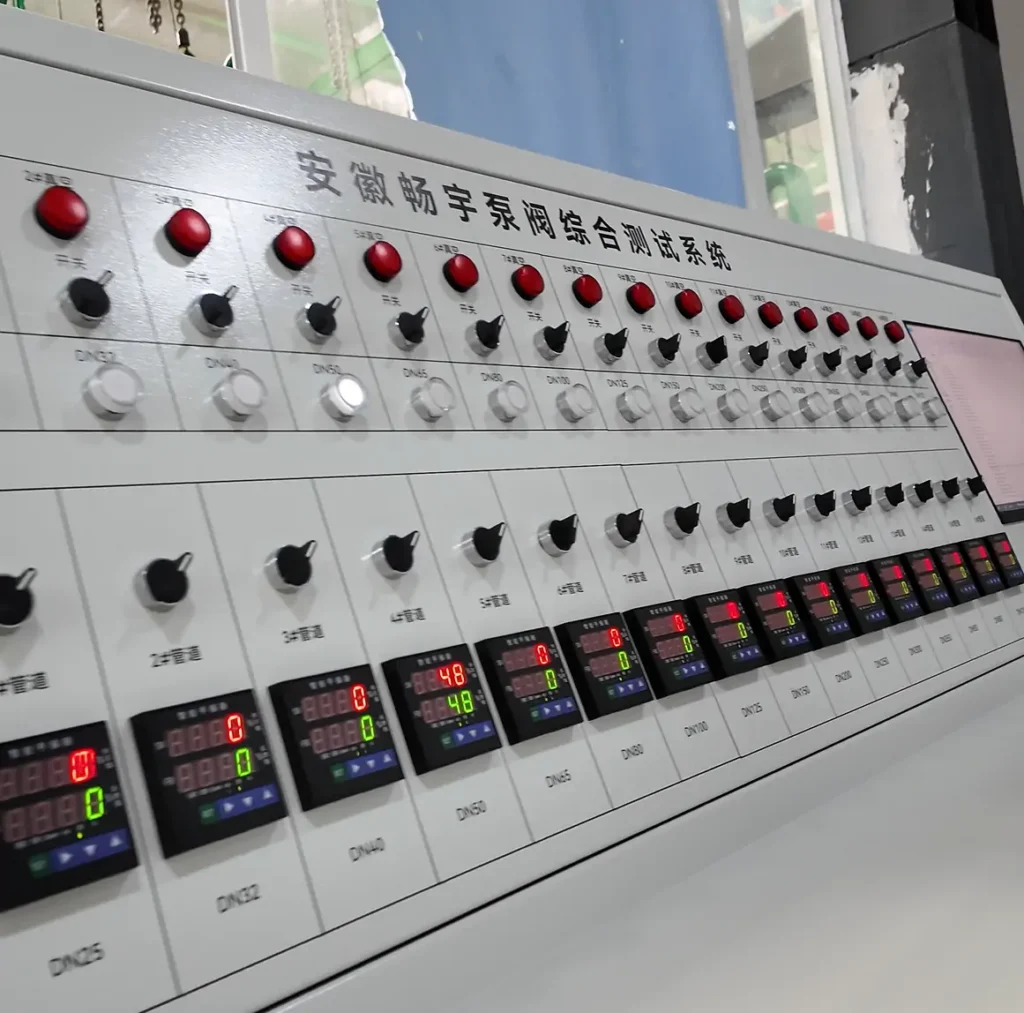
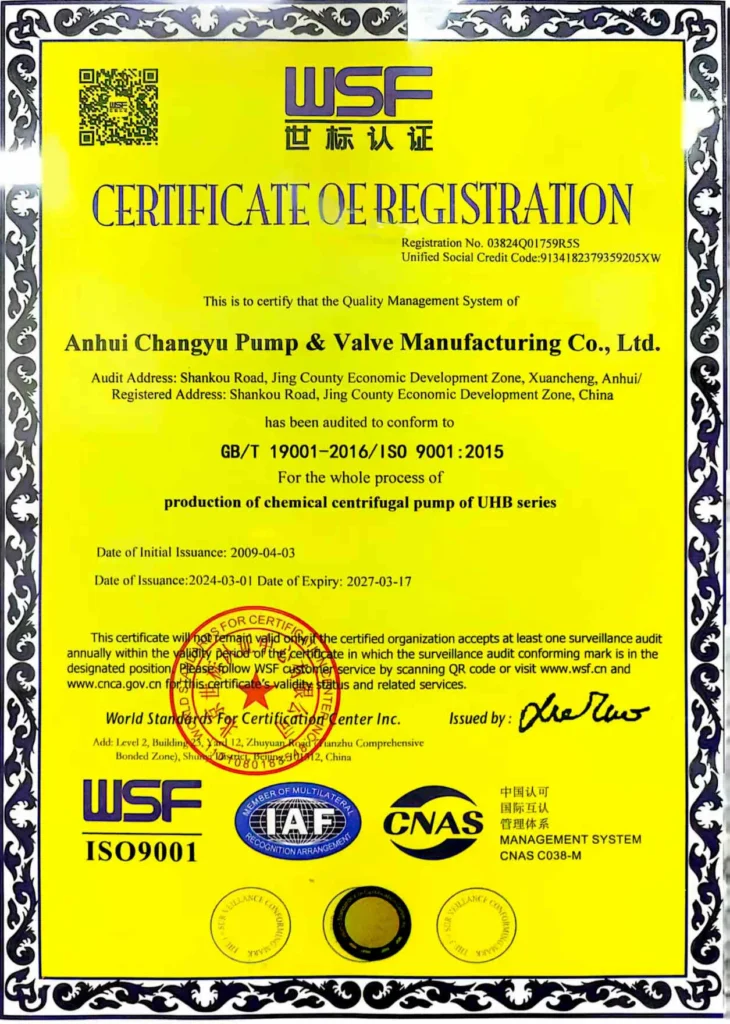
Tous les pompe à boues résistante à la corrosion de Changyu Pump fait l'objet d'un programme d'assurance qualité structuré conçu pour prévenir les défauts avant que la pompe n'arrive sur le terrain. Dans les services de boues corrosives, où un simple vide dans un revêtement en plastique fluoré peut devenir un point de départ de défaillance sous l'effet combiné d'une attaque chimique et mécanique, le contrôle de la qualité est un facteur de différenciation des performances.
Vérification des matériaux : Toutes les matières premières entrantes - composés PE-HMW, résines fluoroplastiques (FEP, PFA) et qualités d'acier inoxydable (304, 316L, 2205, 2507) - font l'objet d'une analyse spectrale afin de vérifier la composition chimique par rapport aux spécifications. Chaque lot de matériaux fait l'objet d'une certification documentée avant d'être mis en production.
Inspection en cours de fabrication : Les dimensions de la roue, les tolérances du corps, l'épaisseur du revêtement et l'intégrité de l'adhérence, la rectitude de l'arbre et la qualité de l'équilibre dynamique sont mesurées à chaque étape critique de la production. Pour les pompes à revêtement en plastique fluoré, des essais aux ultrasons confirment l'uniformité de la couverture du revêtement.
Essais de performance hydraulique : Chaque pompe assemblée est testée sur plusieurs points de fonctionnement. Le débit, la hauteur de chute, la consommation d'énergie et l'efficacité sont mesurés et vérifiés par rapport aux courbes de performance publiées.
Audit de l'assemblée finale : Le couple de serrage des boulons, l'intégrité des joints, la précharge des roulements et la rotation libre sont confirmés avant l'emballage.
Étude de cas d'une pompe à boues résistante à la corrosion : Prolongation de la durée de vie dans une application de boue d'acide phosphorique
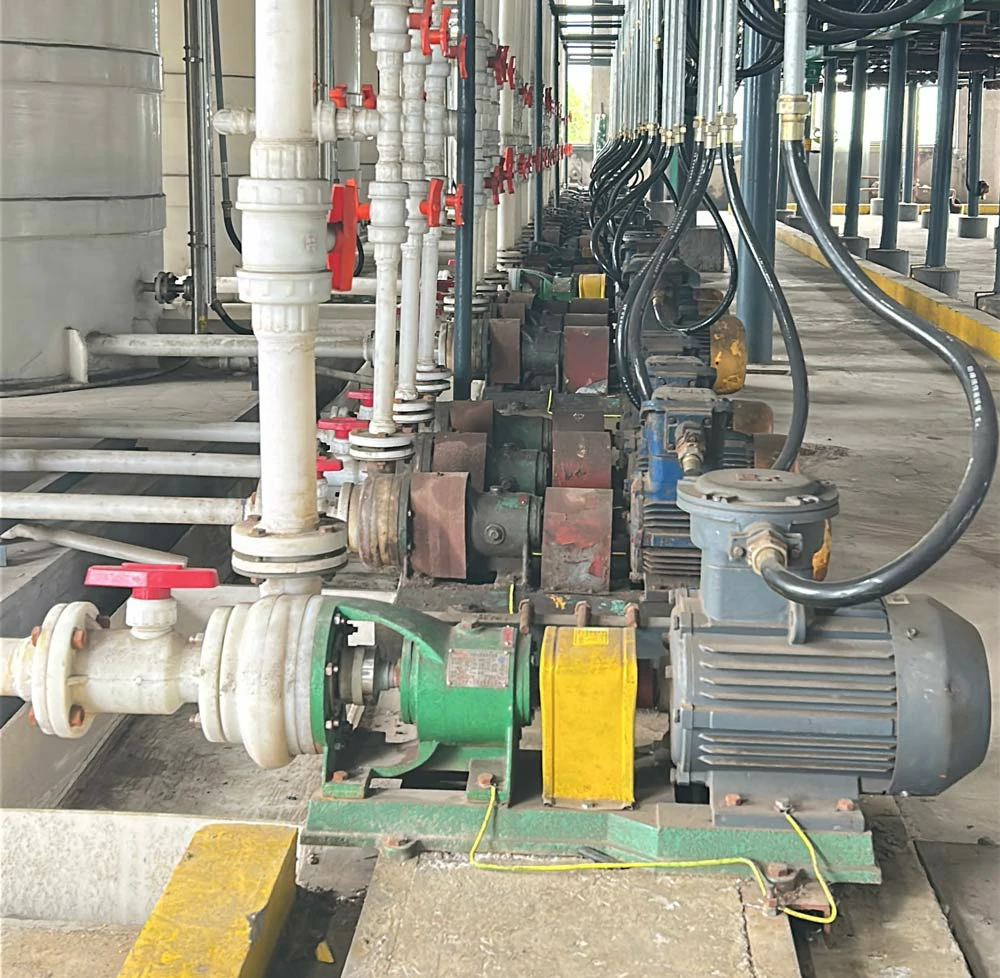
Le défi du client : Un fabricant d'engrais phosphatés connaissait des défaillances chroniques des extrémités humides des pompes à boues en fer à haute teneur en chrome qui transportaient des boues d'acide phosphorique (pH 1-2, 35-45% de solides de gypse, 70-80°C). Le mécanisme combiné de corrosion et d'abrasion détruisait les roues au bout de 4 à 5 mois et les corps au bout de 12 mois. Les coûts annuels de maintenance par pompe dépassaient 55 000 USD et des arrêts imprévus se produisaient tous les trimestres.
Analyse d'ingénierie : Le double mécanisme de défaillance a été identifié : la corrosion par les acides sulfurique et phosphorique a attaqué les limites des grains du fer à haute teneur en chrome, affaiblissant la matrice métallique. Les cristaux de gypse ont ensuite érodé mécaniquement cette surface pré-affaiblie, produisant des taux de perte de matériau bien supérieurs à ce que la corrosion ou l'abrasion produiraient indépendamment. Comme l'a souligné une analyse de défaillances similaires, les pièces exposées à des liquides corrosifs et à des solides abrasifs peuvent subir des taux extrêmes de perte de matière.
Solution déployée : Changyu Pump a remplacé les pompes en fer à haute teneur en chrome par des pompes en fer à haute teneur en chrome. Série UHB Pompes à revêtement UHMW-PE. La solution s'est attaquée au double mécanisme de défaillance par le biais de trois changements coordonnés :
- Élimination du chemin de corrosion : Le revêtement en UHMW-PE a empêché tout contact de l'acide avec le corps de la pompe, éliminant ainsi la composante corrosion de l'équation d'usure.
- Absorbe l'impact des particules : Le revêtement UHMW-PE de 8 à 20 mm a absorbé l'énergie d'impact du cristal de gypse, réduisant ainsi le taux d'érosion mécanique sur les surfaces mouillées.
- Élimination de la consommation d'eau de scellement : Une garniture mécanique à cartouche a remplacé le joint de presse-étoupe, supprimant le besoin en eau de la garniture et éliminant la dilution du flux de processus.
Résultats quantifiés (évaluation à 24 mois) :
- L'intervalle de remplacement de la roue est passé de De 4-5 mois à plus de 18 mois-a 300%+ amélioration
- Réduction du coût annuel de maintenance par pompe de environ 58%
- Réduction des temps d'arrêt non planifiés liés à des défaillances de pompes de plus de 70%
- La consommation d'eau de la garniture est éliminée grâce à la conception de la garniture mécanique à cartouche.
FAQ sur les pompes à boues résistantes à la corrosion
Q1 : Quelle est la différence entre une pompe à boues standard et une pompe à boues résistante à la corrosion ?
R : Une pompe à boues standard donne la priorité à la résistance à l'usure grâce à des matériaux de haute dureté (fer à haute teneur en chrome, 600+ BHN) et est conçue pour des fluides porteurs chimiquement inoffensifs (pH neutre). A pompe à boues résistante à la corrosion utilise des matériaux - revêtements en plastique fluoré, acier inoxydable duplex ou élastomères spéciaux - qui résistent aux attaques chimiques des solutions porteuses acides ou alcalines tout en conservant une résistance à l'usure suffisante pour la charge de solides abrasifs. La stratégie des matériaux passe de la maximisation de la dureté à l'équilibre entre la résistance à la corrosion et la résistance à l'abrasion.
Q2 : Quel est le meilleur matériau pour pomper des boues acides contenant des solides abrasifs ?
R : La réponse dépend de l'acide spécifique, de sa concentration, de la température et des caractéristiques des solides. Pour les boues d'acide sulfurique jusqu'à une concentration de 80% avec du gypse ou d'autres solides cristallins, Pompes à revêtement UHMW-PE offrent le meilleur équilibre entre la résistance à la corrosion et l'absorption des chocs à des températures allant jusqu'à 90°C. Pour des températures plus élevées ou des mélanges d'acides plus agressifs, Pompes à revêtement PFA permettent d'atteindre une température d'environ 260°C, bien que la résistance mécanique diminue au-delà d'environ 150°C.
Q3 : Quand dois-je choisir l'acier inoxydable duplex plutôt qu'une pompe à revêtement en plastique fluoré ?
R : L'acier inoxydable duplex (CD4MCu, 2205, 2507) est le meilleur choix lorsque la boue est légèrement à modérément acide (pH 2-6), que l'abrasion est importante et que la température de fonctionnement dépasse les limites des revêtements en plastique fluoré (environ 90°C pour l'UHMW-PE, 120°C pour le FEP). L'acier inoxydable duplex offre une résistance combinée à la corrosion et à l'abrasion que le fer à haute teneur en chrome ne peut offrir en service acide, tout en offrant un plafond de température plus élevé que les alternatives à revêtement polymère.
Q4 : Les pompes à revêtement en caoutchouc peuvent-elles traiter des boues corrosives ?
R : Oui. Caoutchouc naturel sont à l'épreuve de la corrosion contre les boues acides de calcaire/gypse, ce qui en fait la spécification standard pour le service FGD. Pour les acides plus forts, Hypalon et caoutchouc butyle offrent une résistance au pH 0-14 à des températures allant jusqu'à 120°C, selon les bases de données de résistance chimique de l'industrie. Toutefois, les revêtements en caoutchouc sont limités en température (généralement 70°C pour le caoutchouc naturel) et sont incompatibles avec les acides oxydants forts tels que l'acide nitrique et avec les fluides porteurs à base d'hydrocarbures.
Q5 : Pourquoi la corrosion accélère-t-elle si fortement l'usure des pompes à boues ?
R : Le mécanisme est synergique dans une pompe à boues résistante à la corrosion l'application. La corrosion enlève les films protecteurs de surface et expose le matériau frais à l'abrasion. L'abrasion élimine ensuite les produits de corrosion et empêche la passivation. Ce cycle se répète continuellement, et le taux de perte de matériau combiné peut dépasser de loin la somme de ce que la corrosion et l'abrasion produiraient indépendamment l'une de l'autre. À un pH inférieur à 4, cette synergie peut réduire la durée de vie d'une pompe en fonte à haute teneur en chrome d'un facteur de 5 à 10× par rapport à un service à pH neutre.
Q6 : Quelle est la plage de pH d'utilisation des pompes à boues revêtues de polyéthylène à ultra-haute densité (UHMW-PE) ?
R : Les pompes revêtues de polyéthylène à ultra-haute densité (UHMW-PE) fonctionnent efficacement sur une large plage de pH, supportant des concentrations d'acide sulfurique allant jusqu'à 80 % en volume, d'acide nitrique jusqu'à 50 % en volume et d'acide chlorhydrique à toutes les concentrations. La limite de température du matériau est d'environ 90 °C en service continu. Cette combinaison d'une large compatibilité chimique et d'une résistance à des températures modérées fait du PE-UHMW le matériau de revêtement fluoroplastique le plus polyvalent pour les applications impliquant des boues corrosives.
Q7 : En quoi une pompe à boue à porte-à-faux vertical améliore-t-elle la fiabilité dans les applications de puisards corrosifs ?
A : Portée en porte-à-faux verticale pompe à boues résistante à la corrosion Ces conceptions éliminent les roulements et les joints immergés, les deux composants les plus exposés à la corrosion dans les pompes de puisard classiques. En plaçant tous les roulements au-dessus de la plaque de puisard et en utilisant un long arbre en porte-à-faux, cette conception supprime totalement le besoin de joints au point de contact avec le fluide. Cela s'avère particulièrement avantageux dans les puisards d'usines chimiques, les fosses de lignes de décapage et les applications de drainage de stockage d'acide.
Q8 : Comment dois-je évaluer le coût total de possession d'une pompe à boue résistante à la corrosion ?
R : Calculez le coût total de possession (TCO) sur une période de trois à cinq ans, en tenant compte des éléments suivants : coût d'investissement initial, consommation d'énergie (représentant généralement 60 à 70 % du coût sur la durée de vie), fréquence et coût de remplacement des pièces d'usure, main-d'œuvre de maintenance et coût de production lié aux temps d'arrêt imprévus. Une pompe en acier inoxydable duplex ou revêtue de plastique fluoré, dont le prix initial est plus élevé mais qui offre une durée de vie nettement plus longue en milieu corrosif, présente généralement un coût total de possession inférieur de 40 à 60 % à celui d'une pompe en fonte au chrome à haut teneur en chrome qui doit être remplacée à plusieurs reprises.
Recommandations d'experts de Changyu Pump Engineers
- Choisissez le matériau en fonction de l'acide spécifique et de sa concentration, et non en vous basant sur une simple mention générique “ résistant aux acides ”. L'acide chlorhydrique attaque les métaux par piqûres de chlorure ; l'acide nitrique attaque le polypropylène par oxydation ; la corrosivité de l'acide sulfurique dépend de sa concentration. La compatibilité du matériau avec le produit chimique en question doit être vérifiée à la concentration d'utilisation et à la température maximale.
- Choisissez des matériaux adaptés au mécanisme combiné de corrosion-abrasion, et non à l'un ou l'autre de ces mécanismes pris isolément. Lorsque le pH est inférieur à 4, l'usure accélérée par la corrosion peut être de 2 à 10 fois supérieure à l'usure par simple abrasion. La fonte à haute teneur en chrome, qui offre une excellente résistance à l'usure en milieu neutre, peut se détériorer en quelques semaines dans un environnement acide.
- Utilisez des revêtements en plastique fluoré pour les acides forts contenant une quantité modérée de matières solides. Le polyéthylène à ultra-haute densité (UHMW-PE) d'une épaisseur comprise entre 8 et 20 mm offre le meilleur compromis entre résistance à la corrosion, absorption des chocs et coût pour la plupart des applications impliquant des boues corrosives à des températures inférieures à 90 °C. Pour des températures plus élevées, le PFA étend cette capacité jusqu'à environ 260 °C, bien que les applications structurelles soient généralement limitées à environ 150 °C.
- Envisagez l'acier inoxydable duplex en cas de corrosion modérée associée à une forte abrasion. Les aciers CD4MCu et les aciers inoxydables super duplex offrent une dureté que les revêtements en fluoroplastique ne peuvent égaler, tout en présentant une résistance à la corrosion nettement supérieure à celle des aciers à haute teneur en chrome.
- Évaluez le coût total de possession sur plusieurs années, et pas seulement le prix d'achat. Une pompe dont le coût d'achat est plus élevé mais qui dure trois à cinq fois plus longtemps dans des environnements corrosifs permet généralement de réduire le coût total de possession. Il faut tenir compte des coûts liés à l'énergie, aux pièces d'usure, à la main-d'œuvre de maintenance et aux temps d'arrêt.
Conclusion
A pompe à boues résistante à la corrosion Elle ne se définit pas par un seul matériau ou une seule caractéristique de conception, mais par l'adaptation systématique de son système de matériaux aux exigences chimiques et mécaniques combinées de l'application. Le choix des matériaux constitue le point de départ à partir duquel le type de pompe, la configuration des joints et les paramètres de fonctionnement sont tous déterminés.
Les pompes revêtues de fluoroplastique (UHMW-PE, FEP, PFA) offrent la plus grande compatibilité chimique pour les acides forts et les fluides chimiques agressifs à des températures modérées. Les pompes en acier inoxydable duplex (CD4MCu, super duplex) répondent aux besoins des applications exigeant à la fois une résistance à la corrosion et une grande dureté à l'usure. Les pompes revêtues de caoutchouc (caoutchouc naturel, Hypalon, caoutchouc butyle) sont destinées aux applications à grande échelle de désulfuration des gaz de combustion (FGD) et au transfert de boues corrosives à particules fines.
Quelles que soient les applications, les principes restent les mêmes : caractériser l'environnement chimique de manière exhaustive ; quantifier la charge en solides ; déterminer le mécanisme d'usure dominant ; adapter le choix des matériaux, le type de pompe et la configuration des joints à ces conditions ; et évaluer le coût total de possession sur un horizon pluriannuel.
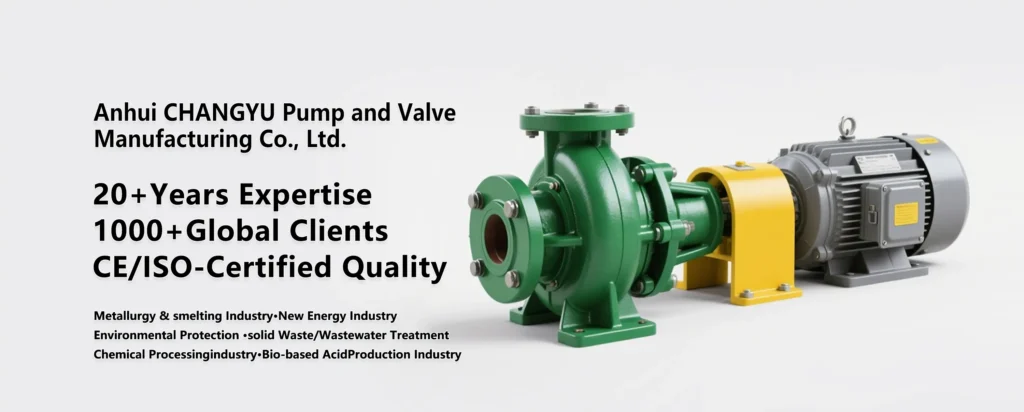
Contacter Changyu Pump en fonction des caractéristiques de votre boue et des exigences de votre processus. Notre équipe d'ingénieurs vous fournira une recommandation détaillée concernant la pompe ainsi qu'un devis sur mesure, adaptés à votre application avec des boues corrosives.