
Réponse rapide
A pompe de brassage de bière déplace les liquides tout au long du processus de brassage — du transfert de la maîche épaisse et chargée de grains à la circulation du moût chaud, au dosage de la levure et au nettoyage de l'équipement entre les lots. Aucune pompe unique ne sert efficacement chaque étape. Facteurs clés de sélection :
- Associer la pompe à l'étape: Le transfert de la maîche nécessite une pompe qui résiste au colmatage et protège l'intégrité des grains. Le transfert du moût chaud nécessite une pompe conçue pour les hautes températures. Le nettoyage CIP exige une pompe qui résiste aux produits chimiques agressifs et se vide complètement.
- La conception sanitaire est non négociable: Toute surface qui entre en contact avec le moût ou la bière doit être en acier inoxydable de qualité alimentaire avec des surfaces polies. Une construction sans interstice et des élastomères conformes à la FDA empêchent la contamination bactérienne.
- Le cisaillement est important pour la qualité du produit: Les pompes centrifuges à grande vitesse peuvent déchiqueter les enveloppes de grains dans la cuve de maîche, libérant des tanins amers. Les pompes à cavité progressive ou à membrane à faible cisaillement préservent la saveur de la bière.
- L'échelle détermine l'automatisation: Une nano-brasserie peut fonctionner avec une seule pompe flexible. Une brasserie régionale produisant des milliers de barils a besoin de pompes dédiées par étape avec un contrôle automatisé.
Le brassage de la bière se déroule en étapes distinctes : le maîchage, le filtrage, l'ébullition, la fermentation et l'emballage. Chaque étape traite un fluide différent — de la maîche épaisse et grumeleuse à la bière cristalline — à une température différente et avec des exigences d'hygiène différentes. Attendre d'une seule pompe qu'elle fonctionne à toutes les étapes entraîne un colmatage, des saveurs indésirables ou des échecs de nettoyage.
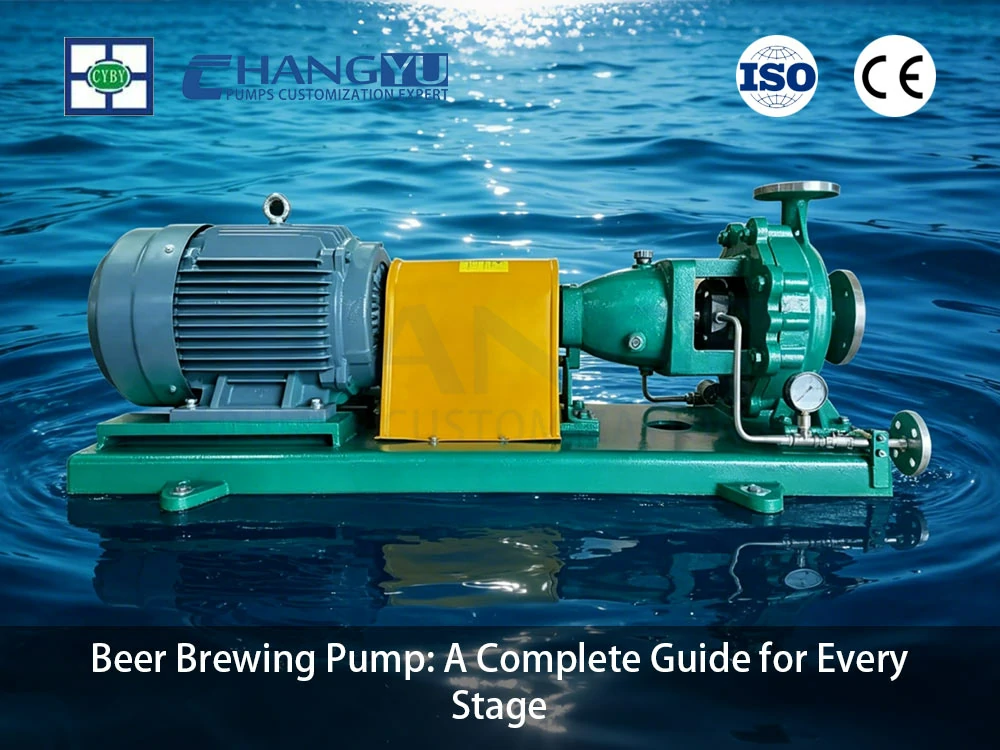
Après avoir lu ce guide, vous comprendrez quel type de pompe sert chaque étape du brassage, quelles normes sanitaires s'appliquent à l'équipement de brasserie, comment sélectionner des pompes adaptées à votre échelle de production et à quoi ressemble le coût total de possession selon les types de pompes. Forte de plus de 20 ans d'expérience dans la fabrication de pompes, Changyu Pump présente ce guide complet pour la sélection de pompes de brassage de bière.
Qu'est-ce qu'une pompe de brassage de bière ?
Le brassage de la bière est un processus en plusieurs étapes qui transforme le grain malté, le houblon, l'eau et la levure en bière. Une pompe de brassage de bière déplace le liquide et la bouillie entre ces étapes — de la cuve de maîche à la cuve de filtrage, en passant par l'échangeur de chaleur, dans le fermenteur, et enfin vers le réservoir de bière claire ou la ligne d'emballage.
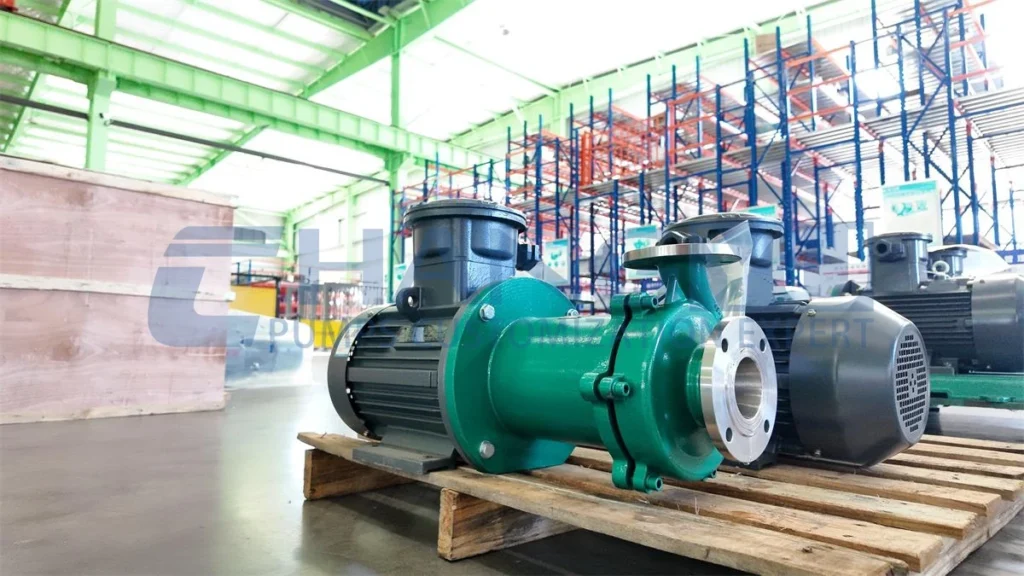
Le rôle de la pompe de brassage à travers les étapes
| Étape de brassage | Fluide pompé | Température | Exigence clé de la pompe |
|---|---|---|---|
| Transfert de maîche | Maîche de grains entiers (15–30% de solides) | 65–78°C | Résistance au colmatage, faible cisaillement |
| Transfert de moût | Moût sucré clarifié | 65–78°C | Sanitaire, faible cisaillement |
| Ébullition du moût | Moût bouillant | 98–100°C | Tolérance aux hautes températures |
| Tourbillon / échange de chaleur | Moût chaud avec lies | 80–98°C | Gestion des solides (débris de houblon, lies protéiques) |
| Fermentation / manipulation de la levure | Bouillie de levure, bière verte | 10–25°C | Manipulation douce, sanitaire |
| Nettoyage CIP | Lessive caustique, acide, désinfectant | Ambiante–85°C | Résistance chimique, auto-vidange |
Une pompe de brassage se distingue d'une pompe industrielle standard car toute surface mouillée doit répondre aux normes de qualité alimentaire et résister aux produits chimiques de nettoyage agressifs utilisés entre les lots.
Comment associer les pompes de brassage de bière à chaque étape du brassage ?
Chaque étape du brassage présente une combinaison unique de caractéristiques de fluide, de température et d'exigences d'hygiène. La pompe qui gère efficacement la maîche épaisse ne servira pas de pompe de retour CIP, et vice versa.
Matrice de sélection de pompe par étape de brassage
| Étape de brassage | Caractéristiques du fluide | Type de pompe recommandé | Raison principale |
|---|---|---|---|
| Transfert de maîche | Bouillie épaisse, 15–30% de solides de grains, enveloppes fibreuses | Cavité progressive (vis) ou à membrane électrique | Sans colmatage, faible cisaillement — protège l'intégrité des grains |
| Recirculation du moût (vorlauf) | Moût fin avec particules de grains fines | Cavité progressive ou centrifuge à un seul canal | Débit doux et sans pulsation pour un moût clair |
| Transfert du moût vers la chaudière | Moût chaud propre | Centrifugeuse en acier inoxydable | Débit élevé, conception sanitaire, résistant à la température |
| Transfert chaudière / tourbillon | Moût chaud avec débris de houblon et lies protéiques | Centrifuge en acier inoxydable avec roue ouverte | Gère les solides mous à haute température |
| Refroidissement du moût (échangeur de chaleur) | Moût chaud après ébullition | Centrifuge en acier inoxydable avec VFD pour un contrôle précis du débit | Débit constant pour un contrôle précis de la température |
| Ensemencement / récolte de la levure | Bouillie de levure, 5–15% de solides | À membrane électrique ou à cavité progressive | Manipulation douce des cellules de levure vivantes ; cavité progressive préférée pour une distribution uniforme de la levure, membrane pour un dosage intermittent plus petit |
| Transfert / filtration de la bière | Bière verte ou claire | Centrifugeuse en acier inoxydable | Sanitaire, faible cisaillement, surfaces polies |
| Alimentation et retour CIP | Lessive caustique (NaOH), acide, désinfectant | Centrifuge en acier inoxydable ou pompe à bouillie | Matériaux résistants aux produits chimiques, débit élevé pour un nettoyage efficace |
Pourquoi les pompes à cavité progressive excellent dans la salle de brassage
Les pompes à cavité progressive (PC) sont devenues la norme pour le transfert de maîche et la recirculation du moût dans les brasseries artisanales et régionales car elles répondent de manière unique aux trois défis du pompage impliquant des grains :
- Résistance au colmatage: La conception à cavité scellée continue transporte les solides sans points de constriction où les enveloppes de grains peuvent s'accumuler.
- Faible cisaillement: Fonctionnant à 200–400 tr/min — un ordre de grandeur plus lent qu'une pompe centrifuge à 2 900 tr/min — minimise les dommages mécaniques aux enveloppes de grains et empêche l'extraction des tanins.
- Débit sans pulsation: Contrairement aux pompes à membrane, les pompes PC fournissent un débit lisse et continu qui favorise un filtrage constant et une production de moût clair.
Les ingénieurs de Changyu Pump recommandent : Pour toute brasserie produisant des maîches de grains entiers, consacrez une pompe à cavité progressive au transfert de maîche et à la recirculation du moût. Pour le moût propre, la bière et le service CIP, les pompes centrifuges en acier inoxydable offrent la combinaison la plus rentable de débit, d'efficacité et de nettoyabilité. Pour le service de retour CIP où le fluide pompé peut contenir des débris, spécifiez une pompe centrifuge à vortex ou à roue ouverte pour éviter le colmatage.
Quelles sont les exigences de conception hygiénique pour les pompes de brassage ?
La technologie de nettoyage en place permet aux brasseries de nettoyer les pompes sans démontage. Une pompe qui n'est pas conçue pour le CIP abritera des bactéries dans les interstices, les raccords filetés et les zones stagnantes — contaminant chaque lot suivant.
Normes sanitaires pour l'équipement de brasserie
| Standard | Champ d'application | Exigences clés de la pompe |
|---|---|---|
| FDA 21 CFR | Matériaux en contact avec les aliments | Tous les composants mouillés doivent être conformes à la FDA ; les élastomères doivent être de qualité alimentaire |
| Normes sanitaires 3-A | Conception d'équipement hygiénique | Construction sans interstice ; surfaces polies à Ra ≤ 0,8 μm ; auto-vidangeable |
| EHEDG | Conception hygiénique européenne | Nettoyabilité validée ; conception stérile pour les applications critiques |
Caractéristiques de conception de pompe compatible CIP
Une pompe de brassage compatible CIP doit répondre à ces critères de conception :
- Auto-vidangeable: Le corps de pompe doit se vider complètement à l'arrêt. Aucune accumulation de liquide signifie aucune croissance bactérienne entre les lots.
- Surfaces polies: Les surfaces internes en contact avec le produit polies à Ra ≤ 0,8 μm résistent à l'adhésion bactérienne. L'électropolissage améliore encore cette propriété.
- Construction sans interstice: Les raccords sanitaires à collier remplacent les raccords filetés. Les sièges de joint internes et les faces d'étanchéité doivent être affleurants et sans espaces.
- Compatibilité chimique: Tous les matériaux en contact avec le produit doivent résister à la soude caustique chaude (1–2% NaOH à 70–85°C), aux solutions d'acide phosphorique ou nitrique, et aux désinfectants tels que l'acide peracétique.
- Certification des matériaux: Une documentation complète de traçabilité pour tous les matériaux en contact avec le produit est requise pour les audits de sécurité alimentaire.
Matériaux recommandés pour la construction de pompes de brassage
| Composant | Matériau recommandé | Raison |
|---|---|---|
| Corps de pompe, roue | Acier inoxydable 316L, poli | Résistance à la corrosion des acides du moût et des produits chimiques CIP |
| Élastomères (joints, joints toriques) | EPDM ou PTFE vulcanisé au peroxyde | Conforme FDA ; résiste à l'eau chaude et aux produits chimiques |
| Faces de garniture mécanique | Carbure de silicium contre carbure de silicium pour une durée de vie prolongée en service caustique chaud ; carbure de silicium contre carbone pour les applications de moût propre | Résistant à l'usure ; compatible avec les températures CIP |
| Stator (pompe à cavité progressive) | EPDM de qualité alimentaire | Doux pour le grain ; compatible CIP |
| Membrane (pompe à membrane) | PTFE | Résistance chimique universelle ; CIP à haute température |
Les ingénieurs de Changyu Pump recommandent : Pour toute pompe de brassage, demandez un certificat d'état de surface et une documentation de conformité des matériaux FDA au fabricant. Une pompe qui ne peut pas fournir ces documents n'est pas adaptée aux applications de brassage de qualité alimentaire, quelle que soit sa performance hydraulique.
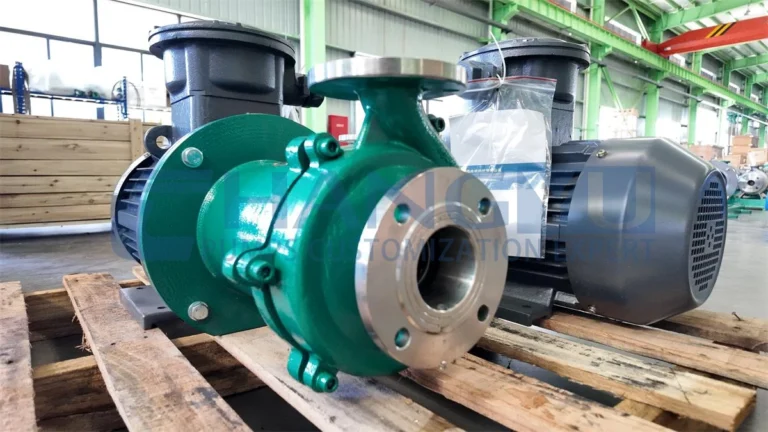
Comment choisir des pompes de brassage pour différentes tailles de brasserie ?
L'échelle de la brasserie détermine la stratégie de sélection de la pompe. Une nano-brasserie produisant deux barils par lot a des besoins fondamentalement différents d'une brasserie régionale produisant cent barils par lot.
Guide de sélection de pompe par échelle de brasserie
| Type de brasserie | Taille de lot | Nombre typique de pompes | Configuration de pompe recommandée |
|---|---|---|---|
| Nano-brasserie | 1–5 BBL | 1–2 pompes | Une pompe à cavité progressive ou à membrane flexible pour la maische et le moût ; nettoyage manuel |
| Micro-brasserie | 5–15 BBL | 2–4 pompes | Pompe à maische dédiée (PC) + pompe à moût (centrifuge) + pompe CIP (centrifuge) |
| Brasserie artisanale | 15–30 BBL | 4–6 pompes | Pompes dédiées par étape : maische, moût, CIP, dosage de levure |
| Brasserie régionale | 30–100+ BBL | 6–10+ pompes | Plusieurs pompes dédiées par étape avec commande VFD ; CIP automatisé |
| Industrielle à grande échelle | > 100 BBL | 10+ pompes avec redondance | Commande de pompe entièrement automatisée ; pompes de secours pour les étapes critiques |
Remarque : Le nombre de pompes exclut les unités de secours. Les étapes critiques telles que le transfert de maische et l'alimentation CIP peuvent nécessiter des pompes de secours pour la fiabilité de la production.
Pourquoi l'échelle change la donne
Une nano-brasserie peut fonctionner avec une seule pompe car les volumes de lot sont suffisamment petits pour que la pompe puisse être nettoyée manuellement entre les utilisations, et le coût d'une pompe dédiée par étape est difficile à justifier. Une brasserie régionale nécessite des pompes dédiées car les volumes de production exigent un fonctionnement continu, un nettoyage automatisé et la fiabilité qui découle de pompes optimisées pour leur tâche spécifique.
La transition des pompes polyvalentes flexibles aux pompes dédiées par étape se produit généralement à l'échelle de 10 à 15 BBL, où le volume de production justifie l'investissement en capital dans des pompes supplémentaires et où les économies de main-d'œuvre du nettoyage automatisé deviennent significatives.
Quel est le coût total de possession des pompes de brassage ?
Le prix d'achat d'une pompe de brassage représente une fraction de son coût de durée de vie. Coût total de possession capture la consommation d'énergie, les pièces de rechange, la main-d'œuvre de maintenance et les temps d'arrêt de production — le véritable coût de possession de la pompe.
Comparaison du TCO sur 5 ans : Centrifuge vs Cavité progressive vs Membrane
Hypothèses : Brasserie artisanale produisant des lots de 15 BBL, 250 jours de brassage par an. Pompe de transfert de maische fonctionnant 2 heures par jour de brassage à 15 m de hauteur.
| Élément de coût | Centrifuge en acier inoxydable | Cavité progressive (vis) | Diaphragme électrique |
|---|---|---|---|
| Coût initial de la pompe | $2 000–$5 000 | $4 000–$10 000 | $3 000–$7 000 |
| Coût énergétique annuel | $300–$600 | $200–$400 (vitesse de fonctionnement inférieure) | $400–$800 (mécanisme d'entraînement alternatif moins efficace qu'un entraînement centrifuge direct) |
| Remplacement du stator / de la membrane / du joint | Joint mécanique tous les 2–3 ans ($200–$500) | Stator tous les 2–4 ans ($500–$1 500) | Membrane tous les 1–2 ans ($300–$800) |
| Risque d'arrêt imprévu | Élevé (en cas de mauvaise application pour le transfert avec grains) ; Faible pour le moût propre et le service CIP | Faible | Faible |
| Coût total de possession estimé sur 5 ans | $4 000–$10 000 | $5 500–$15 000 | $5 500–$14 000 |
Remarque : Les estimations du TCO excluent les pertes de production dues aux temps d'arrêt imprévus. Un colmatage de pompe centrifuge lors du transfert de maische peut retarder un jour de brassage de 1 à 2 heures, coûtant $500–$2 000 en main-d'œuvre et frais généraux par incident. Lorsque les coûts d'arrêt sont inclus, les pompes à cavité progressive et à membrane offrent généralement un TCO réel inférieur pour le transfert avec grains.
L'aperçu du TCO
Pour le moût propre, la bière et le service CIP — où le colmatage n'est pas un risque — les pompes centrifuges offrent le TCO le plus bas en raison de leur coût initial inférieur et de leur efficacité compétitive. Pour le transfert de maische — où des solides de grain sont présents — les pompes à cavité progressive offrent un TCO inférieur malgré un coût initial plus élevé car le temps d'arrêt éliminé par le colmatage compense la prime d'achat, généralement au cours de la première année de fonctionnement.
Solutions de pompes de brassage de bière Changyu Pump
Changyu Pump fabrique quatre séries de pompes adaptées aux applications de brassage de bière, du transfert de maische avec grains à la bière propre et au service CIP.
Guide de sélection des produits de pompe de brassage
| Étape de brassage | Exigence principale | Série recommandée | Caractéristique principale |
|---|---|---|---|
| Transfert de maische, recirculation de moût | Faible cisaillement, résistance au colmatage | Pompe à vis de type G | Cavité progressive ; sans pulsation ; stator EPDM de qualité alimentaire |
| Transfert de moût chaud, alimentation CIP | Haute température, sanitaire | Pompe centrifuge série CYH | ISO 2858 ; 316L poli ; jusqu'à 165°C |
| CIP à haut débit, circulation de moût | Volume élevé, résistant à la corrosion | Série HB Pompe à lisier | Tout acier inoxydable ; ISO 2858 ; compatible CIP |
| Dosage de levure, dosage chimique | Précis, faible débit, fonctionnement à sec sûr | Série BFD Pompe à membrane | Auto-amorçante ; dosage précis ; sans joint mécanique |
Pompe à vis unique de type G — Transfert de moût et de grains
Pompe à cavité progressive pour le transfert de moût à grains entiers et la recirculation du moût. Faible vitesse de fonctionnement (200–400 tr/min) préserve l'intégrité de la balle de grain. Stator en EPDM de qualité alimentaire compatible avec le nettoyage CIP. Fournit un débit sans pulsation pour un filtrage constant.
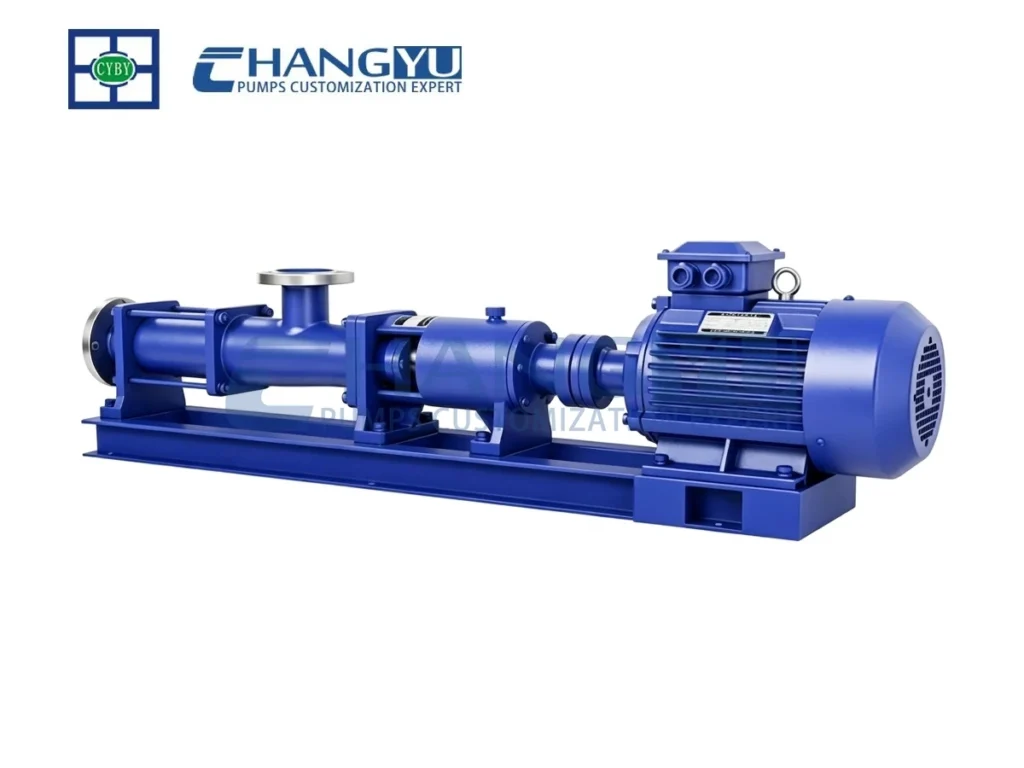
| Paramètres | Spécifications |
|---|---|
| Débit | 0 à 200 m³/h |
| Tête | 60–120 m |
| Puissance du moteur | 0,55–37 kW |
| Vitesse | 400–960 tr/min (200–400 tr/min recommandé pour le moût) |
| Température | De -20°C à 150°C |
| Matériaux | Fonte, acier inoxydable ; stator en EPDM de qualité alimentaire |
Série CYH Pompe centrifuge en acier inoxydable — Service moût chaud et CIP
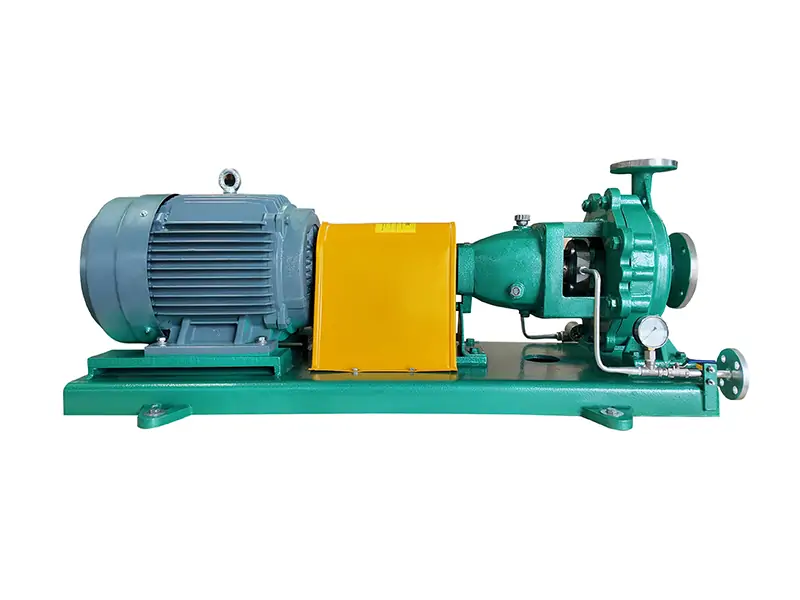
Pompe centrifuge monocorps selon ISO 2858 avec composants mouillés en acier inoxydable 316L poli. Gère le moût chaud à des températures allant jusqu'à 165°C. Convient pour le transfert de chaudière, l'alimentation de l'échangeur de chaleur et la circulation de solution de nettoyage CIP. Élastomères de qualité alimentaire et conception sans interstice répondant aux normes sanitaires 3-A.
| Paramètres | Spécifications |
|---|---|
| Débit | 0,8–750 m³/h |
| Tête | 3–130 m |
| Puissance du moteur | 2,2–110 kW |
| Vitesse | 968-3 450 r/min |
| Température | -20°C à 165°C |
| Matériaux | 304, 316L, acier duplex |
Série HB Pompe à lisier en acier inoxydable — Circulation CIP à grand volume

Pompe centrifuge horizontale selon ISO 2858 avec construction tout acier inoxydable mouillé. Fournit les débits élevés nécessaires pour un nettoyage CIP efficace. Disponible en nuances 304, 316L, 2205 et 2507 pour compatibilité avec les solutions de nettoyage caustiques et acides. Surfaces internes polies soutenant un fonctionnement hygiénique.
| Paramètres | Spécifications |
|---|---|
| Débit | 10-60 m³/h |
| Tête | 20-120 m |
| Puissance du moteur | 3-45 kW |
| Vitesse | 2 900 r/min |
| Température | De -20°C à 120°C |
| Matériaux | 304, 316L, 2205, 2507 |
Série BFD Pompe à membrane électrique — Manutention de levure et dosage chimique
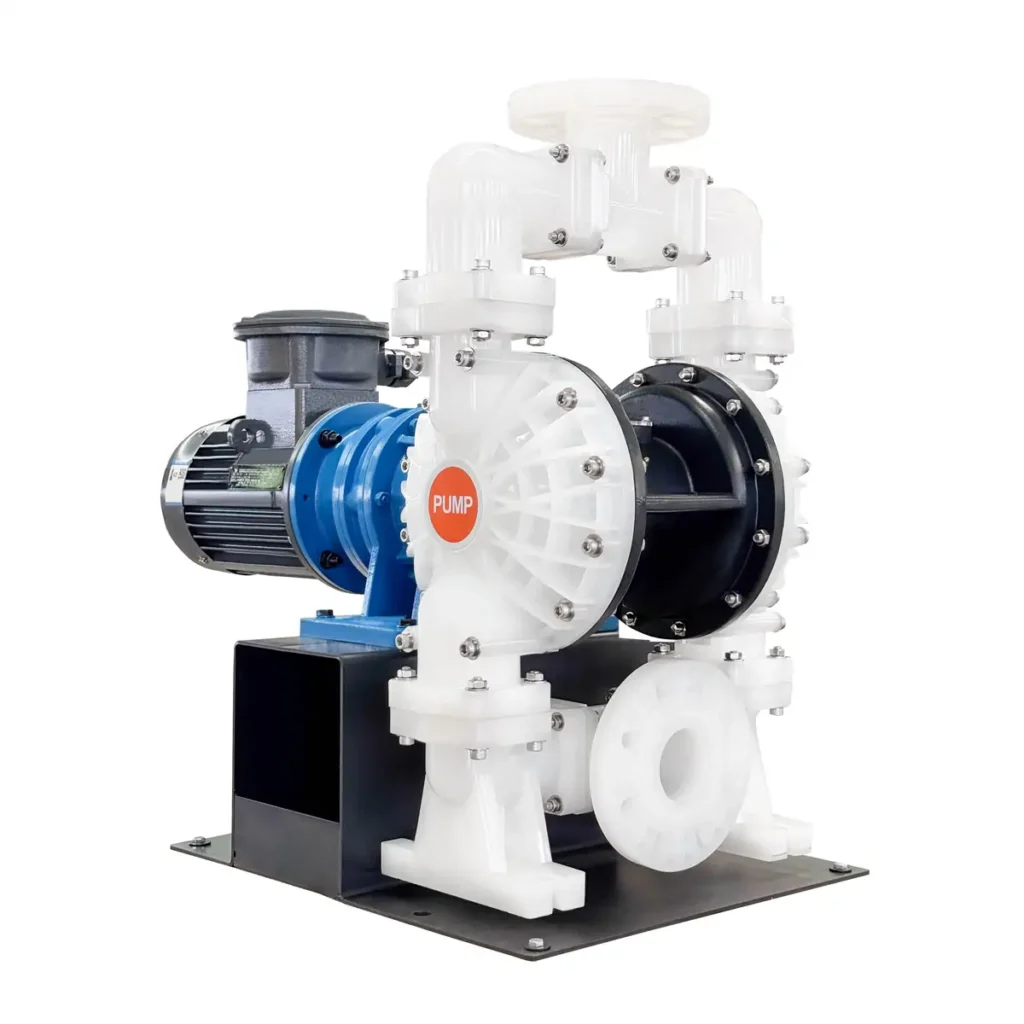
Pompe à membrane actionnée électriquement pour des applications précises à faible débit. Auto-amorçante et sûre en fonctionnement à sec — idéale pour l'ensemencement et la récolte de levure où la pompe peut fonctionner brièvement sans liquide. Fournit un dosage précis et reproductible pour les produits chimiques de nettoyage et les désinfectants. Disponible en PP, acier inoxydable et PVDF pour une compatibilité chimique CIP complète.
| Paramètres | Spécifications |
|---|---|
| Débit | Jusqu'à 480 L/min |
| Tête | Jusqu'à 84 m |
| Puissance du moteur | 0,75–45 kW |
| Vitesse | 968-3 450 r/min |
| Température | De -20°C à 120°C |
| Matériaux | Acier moulé, fonte ductile, alliage d'aluminium, PP, acier inoxydable, PVDF |
Étude de cas : Sélection de pompe pour processus de brasserie complet
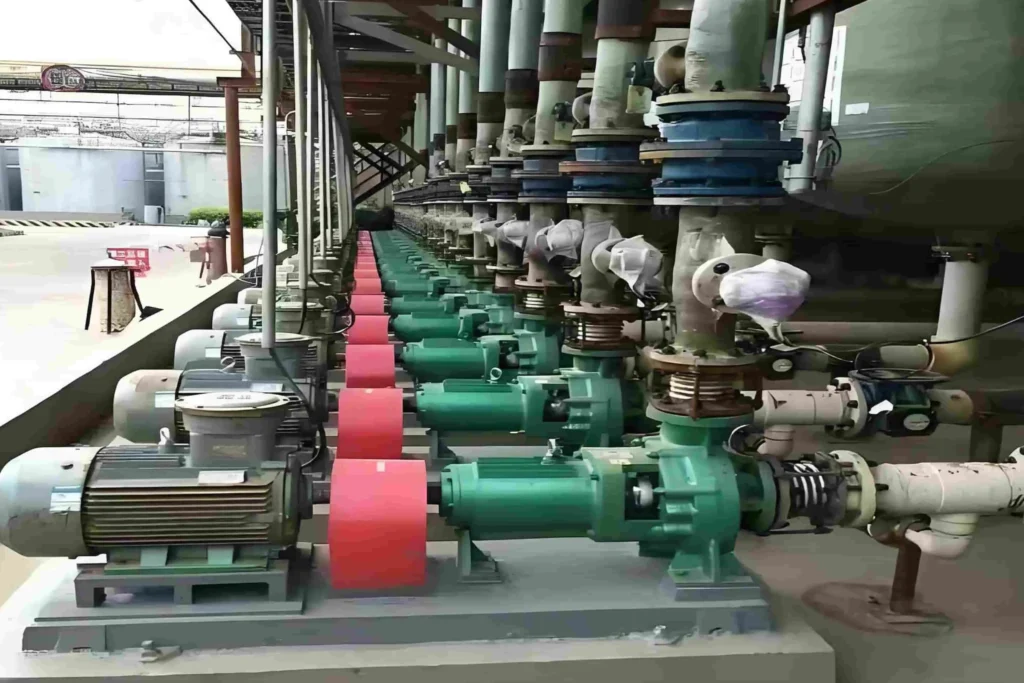
Une brasserie artisanale aux États-Unis produisant 20 BBL par lot s'est agrandie à partir d'un système pilote de 7 BBL. La brasserie d'origine utilisait une seule pompe flexible pour tous les transferts, déplacée manuellement entre les postes. L'expansion nécessitait des pompes dédiées pour chaque étape afin d'augmenter le débit et de répondre à la demande de production.
Les ingénieurs de Changyu Pump ont travaillé avec la brasserie pour spécifier la configuration de pompe suivante :
- Transfert de moût et recirculation du moût: Pompe à cavité progressive de type G fonctionnant à 300 tr/min. A éliminé les problèmes de colmatage rencontrés avec la pompe centrifuge précédente sur le transfert impliquant des grains. Le fonctionnement à faible cisaillement a amélioré la clarté du moût et réduit les saveurs astringentes indésirables dans la bière finie.
- Transfert de moût chaud (chaudière à fermenteur): Pompe centrifuge en acier inoxydable série CYH avec construction en 316L poli. Gère le moût à 98°C après ébullition et tolère les cycles de température du nettoyage CIP entre les lots.
- Alimentation CIP: Pompe à lisier en acier inoxydable série HB fournissant un débit élevé sous pression aux boules de pulvérisation CIP dans la cuve de brassage, la chaudière et le fermenteur. La construction tout acier inoxydable résiste aux cycles de nettoyage alternés caustiques et acides sans dégradation.
- Ensemencement de levure et dosage chimique: Pompe à membrane électrique série BFD pour un dosage précis de la suspension de levure dans le fermenteur et un dosage précis des produits chimiques de nettoyage dans le système CIP.
Six mois après la mise en service, la brasserie a signalé : zéro retard de brassage dû au colmatage de la pompe, une réduction de 30% de l'utilisation de produits chimiques CIP grâce à un dosage précis, et une amélioration de la clarté de la bière et de la constance de la saveur attribuée à la manipulation douce du moût par la pompe à cavité progressive.
Key takeaway: Associer la bonne pompe à chaque étape du brassage — plutôt que d'utiliser une seule pompe pour tout — élimine les compromis qui causent le colmatage, les saveurs indésirables et les inefficacités de nettoyage.
FAQ sur les pompes de brassage de bière
Q : Ai-je besoin de différentes pompes pour différentes étapes de brassage ?
R : Oui. Le transfert de moût nécessite une pompe résistante au colmatage et à faible cisaillement. Le moût chaud nécessite une pompe centrifuge à haute température. Le nettoyage CIP exige une pompe résistante aux produits chimiques avec un débit élevé. Utiliser une seule pompe pour toutes les étapes compromet les performances, la qualité du produit et la nettoyabilité.
Q : Quel type de pompe est le meilleur pour le transfert de moût ?
R : Une pompe à cavité progressive (à vis unique) est la norme de l'industrie pour le transfert de moût à grains entiers. Elle offre un fonctionnement sans colmatage, un très faible cisaillement qui protège l'intégrité des grains, et un débit sans pulsation pour une production de moût clair.
Q : Quels matériaux sont sûrs pour les pompes de brassage de bière ?
R : Acier inoxydable 316L avec surfaces polies (Ra ≤ 0,8 μm) pour tous les composants en contact avec le produit. Les élastomères doivent être en EPDM durci au peroxyde ou en PTFE, conformes à la FDA. Évitez le cuivre, le laiton, le bronze et la fonte — ceux-ci se corrodent et contaminent la bière.
Q : Puis-je nettoyer mes pompes de brassage par CIP ?
R : Oui, si les pompes sont compatibles CIP. Elles doivent être auto-vidangeables, sans interstice et construites en matériaux qui résistent aux solutions caustiques et acides chaudes. Vérifiez la compatibilité CIP auprès du fabricant de la pompe avant l'achat.
Q : Combien de pompes une brasserie artisanale a-t-elle besoin ?
R : Une brasserie artisanale typique de 15–30 BBL utilise 4 à 6 pompes dédiées : transfert de moût, transfert de moût chaud, alimentation CIP, dosage de levure, et souvent des pompes supplémentaires pour la filtration et l'emballage. Les petites brasseries peuvent fonctionner avec moins de pompes en partageant l'équipement entre les étapes.
Q : Comment éviter le colmatage de la pompe pendant le transfert de moût ?
R : Utilisez une pompe à cavité progressive ou à membrane conçue pour la manipulation de solides. Évitez les pompes centrifuges à roue fermée sur le moût à grains entiers. Si vous utilisez une pompe centrifuge, spécifiez une roue vortex qui permet aux solides de passer sans entrer en contact avec les aubes de la roue.
Liste de contrôle des mesures de prévention pour les ingénieurs en pompes chez Changyu
- N'utilisez jamais une pompe centrifuge à roue fermée pour le transfert de moût à grains entiers. Les passages étroits de la roue se boucheront en quelques secondes.
- Dédiez les pompes à leur fonction. Une pompe qui alterne entre le service moût et CIP ne peut pas être efficacement désinfectée entre les utilisations sans une procédure de nettoyage validée.
- Specify 316L stainless steel with polished surfaces for all product-contact components. Surface roughness must meet Ra ≤ 0.8 μm.
. - Verify FDA compliance documentation for every elastomer in the pump. A single non-compliant gasket can contaminate an entire batch.
. - Design all pump installations to be self-draining. Pooled liquid after CIP is a guaranteed contamination source.
. - Operate progressive cavity pumps at 200–400 rpm for mash service. Higher speeds increase shear and reduce stator life.
. - Install VFDs (variable frequency drives) on mash and wort pumps. Flow control without throttling valves improves process control and reduces energy consumption.
. - Keep spare mechanical seals, stators, and gaskets in inventory. Brewing pump components experience accelerated wear from the combined effects of abrasive grain, hot temperatures, and aggressive CIP chemicals.
.
Conclusion
A beer brewing pump is not a single pump type — it is a family of pumps, each matched to the specific demands of its brewing stage. The thick, grain-laden mash requires a progressive cavity pump that resists clogging and protects beer flavor. The hot, clean wort after the kettle needs a stainless steel centrifugal pump that handles high temperatures and cleans thoroughly between batches. CIP cleaning demands a pump that withstands aggressive chemicals and delivers the flow rates that effective cleaning requires.
.
For craft breweries where beer quality defines the brand, the right pump at each stage directly contributes to better flavor, higher clarity, more efficient cleaning, and fewer brew-day interruptions. A pump that is mismatched to its stage — typically a centrifugal pump trying to handle whole-grain mash — is the root cause of the most common brewing pump failures.
.
Changyu Pump’s engineering team provides tailored technical assessments for brewery pump applications — covering process analysis, pump selection by brewing stage, material compatibility, and CIP integration. Two decades of manufacturing experience across food, beverage, and industrial sectors inform every recommendation.
.
Contactez Changyu Pump pour une évaluation technique gratuite →