
Réponse rapide
A pompe à entraînement magnétique élimine la garniture mécanique dynamique — la voie de fuite la plus courante dans les pompes centrifuges — en utilisant un accouplement magnétique pour transmettre le couple à travers une chambre de confinement statique. Facteurs de sélection quantifiés clés :
- Matériau de la chambre de confinement et pertes par courants de Foucault: Les chambres de confinement métalliques (Hastelloy, titane) génèrent des courants de Foucault qui consomment 3–10 % de la puissance du moteur sous forme de chaleur. Les chambres non métalliques (PFA/PTFE) éliminent entièrement cette perte mais ont des pressions nominales inférieures. Les chambres revêtues de PFA/PTFE offrent une résistance à la corrosion efficace pour les produits chimiques agressifs.
- Protection des roulements contre la marche à sec: Les roulements des pompes à entraînement magnétique sont lubrifiés par le fluide pompé. La marche à sec détruit très rapidement les roulements. La surveillance de la puissance détecte la marche à sec en détectant une chute rapide de l'intensité du courant moteur — bien plus rapide que les capteurs de température, qui nécessitent plus de temps pour réagir, moment auquel les dommages aux roulements peuvent déjà être survenus.
- Limites de température des aimants: Les aimants en néodyme (NdFeB) commencent à perdre leur force magnétique au-dessus de 150 °C et peuvent subir une démagnétisation irréversible à des températures élevées. Pour les applications au-dessus de 150 °C, des aimants en samarium-cobalt (SmCo) sont spécifiés — ils maintiennent leur stabilité au-dessus de 300 °C.
- Valeur à long terme par rapport aux alternatives: Les pompes à entraînement magnétique éliminent le coût du remplacement des garnitures mécaniques, des systèmes de rinçage des garnitures et des temps d'arrêt liés aux fuites. Par rapport aux pompes à double garniture mécanique, le coût initial plus élevé est récupéré grâce à l'élimination de l'entretien des garnitures et à l'absence totale de fuites de procédé sur la durée de vie de la pompe.
Une garniture mécanique est le composant le plus vulnérable d'une pompe centrifuge conventionnelle. Elle fuit — progressivement au début à mesure que les faces de la garniture s'usent, puis rapidement si la garniture tombe en panne. Pour l'eau ou les fluides non dangereux, une petite fuite est un problème de maintenance. Pour les produits chimiques toxiques, les solvants inflammables ou les produits pharmaceutiques de haute pureté, une fuite de garniture est un incident de sécurité, une violation environnementale ou un lot de produit détruit. La pompe à entraînement magnétique répond à cette vulnérabilité à sa source — en éliminant entièrement la garniture d'arbre dynamique.
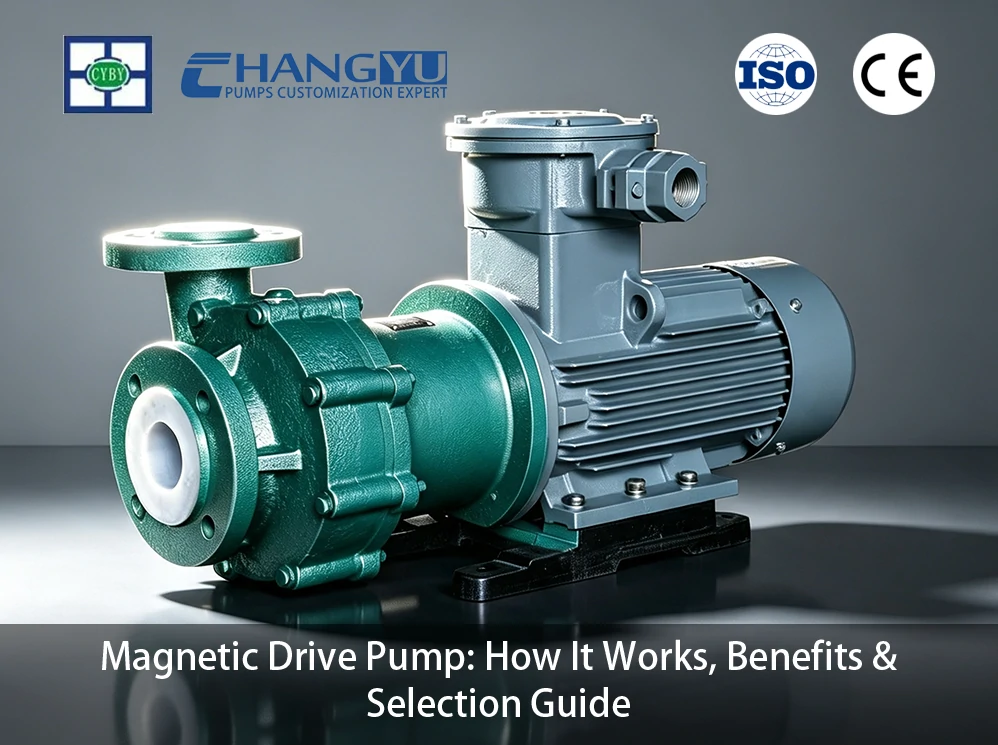
Changyu Pump fabrique des pompes à entraînement magnétique avec revêtements en fluoropolymère pour les applications chimiques corrosives depuis plus de deux décennies. Ce guide couvre comment les pompes à entraînement magnétique atteignent une fuite nulle, les matériaux qui déterminent la durée de vie de la chambre de confinement et des roulements, comment elles se comparent aux alternatives à moteur à rotor noyé et à double garniture, et les risques opérationnels qui doivent être gérés pour un service fiable.
Comment fonctionne une pompe à entraînement magnétique ?
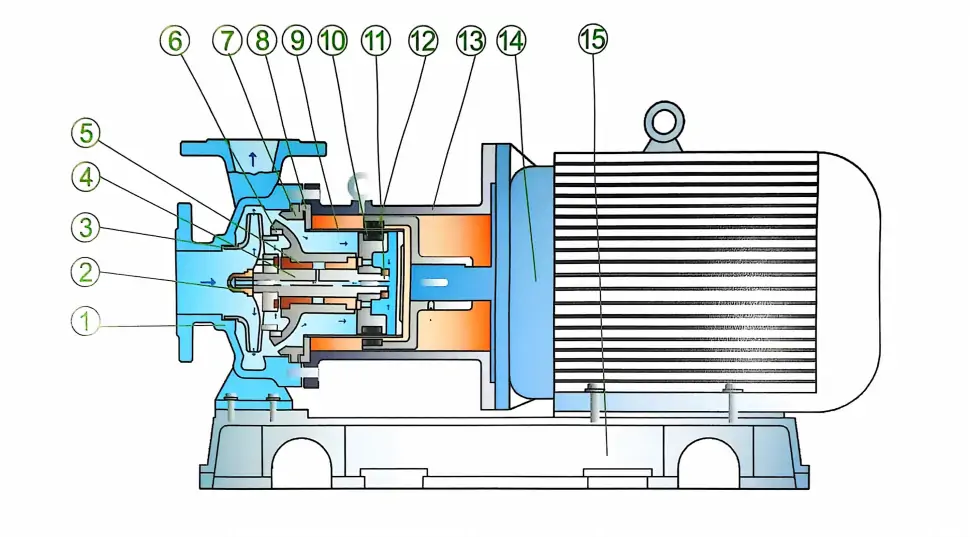
A pompe à entraînement magnétique transmet le couple du moteur à la roue sans qu'aucun arbre physique ne traverse le corps de pompe. Deux ensembles d'aimants — un à l'extérieur du fluide, un à l'intérieur — sont couplés magnétiquement à travers une barrière statique appelée chambre de confinement.
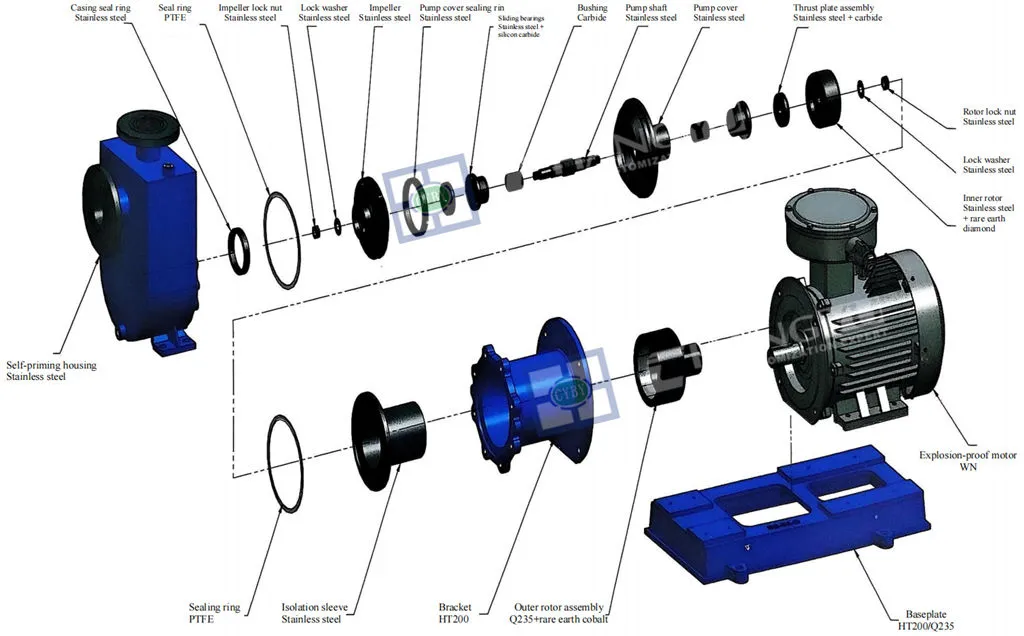
Les trois composants principaux
Ensemble d'aimants extérieurs (aimant d'entraînement) : Monté sur l'arbre moteur, à l'extérieur du corps de pompe. Lorsque le moteur tourne, les aimants extérieurs créent un champ magnétique rotatif.
Chambre de confinement (chambre d'isolation) : Une barrière statique non magnétique qui sépare les aimants extérieurs du fluide de procédé. C'est le composant qui assure le confinement à fuite nulle. La chambre doit être non magnétique (pour permettre au champ magnétique de la traverser) et chimiquement résistante au fluide pompé. L'acier revêtu de PFA/PTFE ou le Hastelloy C-276 massif sont les matériaux de chambre les plus courants.
Ensemble d'aimants intérieurs (aimant entraîné) : Monté sur l'arbre de pompe à l'intérieur de la chambre de confinement, immergé dans le fluide de procédé. Le champ magnétique rotatif des aimants extérieurs entraîne les aimants intérieurs, qui font tourner la roue. L'ensemble d'aimants intérieurs et la roue sont supportés par des roulements lubrifiés par le produit — généralement en carbure de silicium, PTFE/carbone ou céramique.
Our pump parts guide compares these stainless steel magnetic-drive pump components with the casing, impeller, shaft and seals used in other stainless steel centrifugal pump designs.
Comment la fuite nulle est obtenue
Dans une pompe conventionnelle, l'arbre doit traverser le corps de pompe pour relier la roue au moteur. Cette pénétration nécessite une garniture mécanique — deux faces usinées avec précision pressées l'une contre l'autre — qui fuit inévitablement avec le temps à mesure que les faces s'usent. Dans une pompe à entraînement magnétique, il n'y a pas de pénétration d'arbre. La chambre de confinement forme une barrière continue et statique entre le fluide et l'atmosphère. Les seules garnitures dans une pompe à entraînement magnétique sont des joints toriques ou des joints statiques sur la chambre de confinement — qui sont bien plus fiables que les garnitures dynamiques soumises à la rotation et aux vibrations de l'arbre.
En résumé : le moteur fait tourner les aimants extérieurs ; le champ magnétique traverse la chambre de confinement statique ; les aimants intérieurs font tourner la roue. Pas de garniture d'arbre, pas de voie de fuite.
Quels sont les principaux avantages des pompes à entraînement magnétique ?
Les pompes à entraînement magnétique offrent des avantages distincts par rapport aux pompes à garniture mécanique, en particulier dans les applications où les fuites ont des conséquences en matière de sécurité, d'environnement ou de qualité du produit.
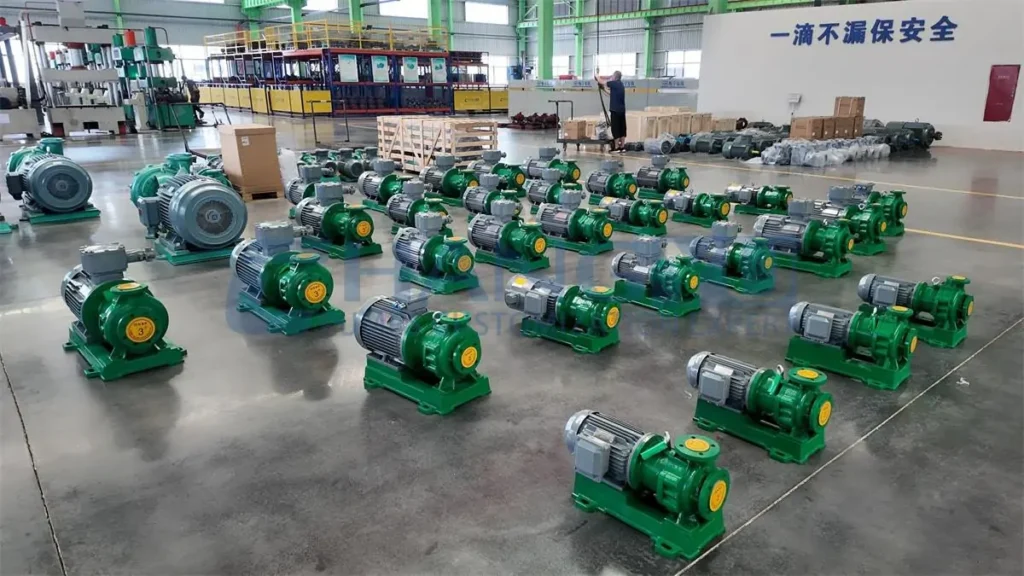
Fuite de procédé nulle : La chambre de confinement fournit une barrière statique. Il n'y a pas de garniture dynamique qui puisse s'user, fuir ou tomber en panne. Cela fait des pompes à entraînement magnétique un choix solide pour les produits chimiques dangereux (acides, caustiques, solvants), les fluides toxiques, les liquides inflammables et les produits de haute pureté où toute contamination est inacceptable.
Élimination de l'entretien des garnitures : Les garnitures mécaniques nécessitent un remplacement périodique — généralement tous les 12 à 24 mois en service propre, et plus fréquemment dans les applications corrosives ou cristallisantes. Chaque remplacement de garniture implique le démontage de la pompe, des temps d'arrêt de production et le coût de la garniture elle-même. Les pompes à entraînement magnétique éliminent entièrement cette catégorie de maintenance.
Aucun système de rinçage de garniture : Les garnitures mécaniques dans les applications exigeantes nécessitent des systèmes de rinçage externes (API Plan 32) avec de l'eau propre ou un fluide compatible. Ces systèmes consomment de l'eau, nécessitent une filtration et une régulation de pression, et peuvent geler dans les climats froids. Les pompes à entraînement magnétique n'ont pas besoin d'eau de rinçage — les roulements lubrifiés par le produit sont refroidis par un petit flux de circulation interne provenant du refoulement de la pompe.
Fiabilité à long terme : Avec une sélection appropriée des matériaux et une discipline opérationnelle, les pompes à entraînement magnétique fonctionnent pendant des années sans maintenance au-delà de l'inspection des paliers. La chambre de confinement statique et les joints toriques ne présentent aucun mécanisme d'usure inhérent — contrairement aux faces de garniture mécanique qui s'usent progressivement à chaque rotation.
Note sur l'efficacité : Les pompes à entraînement magnétique avec chambres de confinement métalliques perdent 3 à 10 % de la puissance du moteur en raison du chauffage par courants de Foucault dans la chambre. Les chambres non métalliques (revêtues de PFA/PTFE) éliminent entièrement cette perte mais présentent des pressions nominales inférieures — généralement limitées à 1,6 MPa pour les chambres revêtues de PFA selon la conception. Pour les applications à haute pression au-delà de cette limite, une chambre de confinement métallique est requise malgré la pénalité d'efficacité.
Quels Matériaux Sont les Meilleurs pour les Pompes à Entraînement Magnétique ?
La sélection des matériaux pour une pompe à entraînement magnétique implique trois décisions indépendantes : le matériau de la chambre de confinement, le matériau des paliers et le matériau des aimants. Chaque décision est régie par la chimie du fluide de procédé, la température et la présence éventuelle de solides abrasifs.
Matériaux de la Chambre de Confinement
La chambre de confinement doit être amagnétique (pour transmettre le champ magnétique), chimiquement résistante au fluide de procédé et mécaniquement assez résistante pour supporter la pression de refoulement de la pompe.
Tableau : Sélection du Matériau de la Chambre de Confinement
| Matériau de la Chambre | Meilleur pour | Limite de Pression | Perte par courants de Foucault | Durée de Vie Typique | Limites |
|---|---|---|---|---|---|
| Acier Revêtu de PFA/PTFE | Acides forts, alcalis, solvants ; résistance chimique la plus large | ~1,6 MPa | Aucune (non métallique) | 5-10+ ans | Limite de pression inférieure ; non adapté aux fluides abrasifs |
| Hastelloy C-276 | Acides forts, milieux oxydants, haute température | Jusqu'à 4,0+ MPa | 5–10% | 5-10+ ans | Coût plus élevé ; chauffage par courants de Foucault |
| Titane (Grade 2) | Milieux contenant des chlorures, eau de mer | Jusqu'à 3,0+ MPa | 3–7 % | 5-10+ ans | Non adapté aux fluides contenant des fluorures |
| Acier inoxydable 316L | Non corrosif, haute pression | Jusqu'à 4,0+ MPa | 5–10% | 3–5 ans | Mauvaise résistance à la corrosion pour les acides/chlorures |
Les ingénieurs de Changyu Pump recommandent : Pour la majorité des applications chimiques impliquant des acides, des alcalis et des solvants, les chambres de confinement revêtues de PFA/PTFE offrent un équilibre efficace entre résistance chimique, perte par courants de Foucault nulle et longue durée de vie. Réservez les chambres métalliques (Hastelloy C-276) aux applications où la pression dépasse la valeur nominale du revêtement PFA, ou lorsque la température du fluide dépasse 120 °C.
Matériaux des Paliers
Les paliers des pompes à entraînement magnétique sont lubrifiés par le fluide pompé. Cela signifie que le matériau des paliers doit être chimiquement compatible avec le fluide de procédé tout en offrant une résistance à l'usure adéquate.
Tableau : Sélection du Matériau des Paliers
| Matériau du Palier | Meilleur pour | Durée de Vie Typique | Limites |
|---|---|---|---|
| Carbure de silicium (SiC) | Fluides propres, large compatibilité chimique | 3–5 ans | Fragile — se fracture sous impact ; non adapté aux fluides contenant des solides |
| PTFE / Fibre de Carbone | Produits chimiques corrosifs, résistance à l'usure modérée | 2–4 ans | Capacité de charge inférieure au SiC ; non adapté aux fluides abrasifs |
| Céramique (Al2O3) | Haute température, fluides abrasifs | 2–4 ans | Fragile ; sensible aux chocs thermiques |
Matériaux des Aimants
Le matériau des aimants détermine la température de fonctionnement maximale de la pompe. Une sélection incorrecte du grade peut entraîner une perte de capacité de couple et une réduction du débit.
Tableau : Sélection du Matériau des Aimants
| Matériau de l'Aimant | Température de Fonctionnement Maximale | Force Magnétique | Meilleur pour |
|---|---|---|---|
| Néodyme (NdFeB) | 150 °C (déclin de la force à partir de cette température) ; grades supérieurs disponibles pour températures élevées | La plus élevée | Applications chimiques standard en dessous de 150 °C |
| Samarium-Cobalt (SmCo) | Stable à 300 °C+ | Modérée (60–70 % du NdFeB) | Applications à haute température au-dessus de 150 °C |
Santoprene
Aqueux, produits chimiques doux
| Application | Caractéristiques du fluide | Matériau de la Chambre | Matériau du Palier | Matériau de l'Aimant |
|---|---|---|---|---|
| Tableau : Correspondance des matériaux par application | pH < 2, sans solides | Revêtu de PFA/PTFE | SiC ou PTFE/Carbone | NdFeB (< 150 °C) |
| Transfert d'alcali fort (NaOH, KOH) | Solvants organiques | Revêtu de PFA/PTFE | SiC | NdFeB (< 150 °C) |
| Produits chimiques à haute température (> 150 °C) | Corrosif, température élevée | Hastelloy C-276 | Céramique (Al2O3) | SmCo |
| Pharmaceutique haute pureté | Acier moulé avec revêtement | Revêtu de PFA/PTFE | SiC | NdFeB |
Pompe à Entraînement Magnétique vs Moteur à Rotor Noyé vs Double Garniture : Laquelle Choisir ?
Trois technologies de pompes répondent au problème des fuites de fluide de procédé : les pompes à entraînement magnétique, les pompes à moteur à rotor noyé et les pompes à double garniture mécanique. Chacune offre un équilibre différent entre protection contre les fuites, coût et complexité opérationnelle.
Comparaison par Facteurs de Sélection Clés
Tableau : Pompe à Entraînement Magnétique vs Pompe à Moteur à Rotor Noyé vs Pompe à Double Garniture
| Facteur de sélection | Pompe à entraînement magnétique | Pompe à moteur à rotor noyé | Pompe à Double Garniture Mécanique |
|---|---|---|---|
| Risque de fuite en fonctionnement normal | Quasi nul — chambre de confinement statique | Quasi nul — hermétiquement scellé | Faible — le fluide barrière empêche les fuites de procédé |
| Intégrité du confinement en cas de défaillance du système de support | Maintenue — aucun système de support requis | Maintenue — aucun système de support requis | Perdue — si la pression du fluide barrière chute, le fluide de procédé fuit à travers la garniture interne |
| 500–1 500 € par tuyau | Plus élevée — couplage magnétique de précision | La plus élevée — moteur/pompe intégré | Plus faible — pompe standard avec garniture améliorée |
| : Les pompes AODD fonctionnent à l'air comprimé, qui est couramment disponible dans les usines chimiques, les raffineries et les installations de fabrication. | Chambre métallique : 90–97 % ; chambre PFA : 100 % par rapport à l'entraînement direct | Plus faible — les enroulements du moteur ajoutent des pertes électriques | Plus élevée — connexion directe moteur-arbre |
| Intervalle de maintenance | 3–5 ans (paliers) | 3–5 ans (paliers) | 1–2 ans (remplacement de la garniture) |
| Tolérance aux solides | Aucune — les solides détruisent les paliers | Aucune — les solides détruisent les paliers | Limitée — dépend de l'efficacité du rinçage de la garniture |
| Débit maximal | Jusqu'à 800 m³/h (limite de couple du couplage magnétique) | Jusqu'à 1 000+ m³/h | Aucune limitation magnétique — jusqu'à des milliers de m³/h |
| Limite de température | Chambre PFA : 120 °C ; Hastelloy : 300 °C+ | Limite d'isolation des enroulements du moteur (~180 °C) | Limite de l'élastomère de la garniture (~120–180 °C selon le matériau du joint torique) |
| Système de rinçage de garniture requis | Non | Non | Oui — API Plan 32 ou Plan 53C |
: Une pompe à vide connectée à l'aspiration de la pompe élimine l'air entraîné avant qu'il n'entre dans la roue. Cela peut réduire la teneur en air de 20–30% à moins de 5%, restaurant la capacité de la pompe à générer de la hauteur manométrique. Les pompes à entraînement magnétique sont un choix solide pour de nombreuses applications chimiques où une fuite nulle est requise. Les pompes à moteur à rotor noyé offrent une alternative lorsque les débits dépassent les limites de couple du couplage magnétique. Les pompes à double garniture mécanique avec Plan 53C sont le choix rentable pour les pompes plus grandes où les coûts de l'entraînement magnétique deviennent prohibitifs, mais elles nécessitent une maintenance disciplinée du système de fluide barrière — une seule perte de pression barrière entraîne une fuite de procédé.
Quels Sont les Principaux Risques et Limitations des Pompes à Entraînement Magnétique ?
Les pompes à entraînement magnétique sont fiables lorsqu'elles sont correctement spécifiées et exploitées, mais elles présentent des vulnérabilités que les pompes à garniture mécanique ne partagent pas. Comprendre ces risques est essentiel pour un fonctionnement fiable.
Marche à Sec : La Cause de Défaillance la Plus Courante
Les paliers des pompes à entraînement magnétique sont lubrifiés et refroidis par le fluide pompé. Si la pompe fonctionne à sec — même brièvement — les paliers perdent leur lubrification, surchauffent et se grippent. Contrairement à une garniture mécanique, qui peut survivre à une marche à sec momentanée, les paliers de l'entraînement magnétique sont détruits très rapidement.
La surveillance de la puissance offre la protection la plus rapide — elle détecte la chute rapide du courant moteur qui se produit lorsque la pompe perd son amorçage, et peut arrêter la pompe assez rapidement pour éviter tout dommage aux paliers. Les capteurs de température dans le carter de palier réagissent plus lentement, moment auquel les dommages aux paliers peuvent déjà s'être produits.
Mesures de protection :
- Installez un moniteur de puissance ou un débitmètre sur chaque pompe à entraînement magnétique — ce n'est pas optionnel
- Pour les applications à service intermittent, vérifiez que la pompe est amorcée avant chaque démarrage
- Ne jamais étrangler la vanne d'aspiration — cela prive la pompe de fluide et simule un fonctionnement à sec
Solides et abrasifs : dommages aux paliers
Les paliers des pompes à entraînement magnétique ont des jeux fins et ne sont pas conçus pour des fluides contenant des particules solides. Même les particules fines (inférieures à 100 μm) peuvent agir comme un composé abrasif entre le palier et l'arbre, accélérant l'usure. Des particules plus grosses peuvent provoquer un grippage immédiat du palier.
Mesures de protection :
- Installez un panier d'aspiration avec une maille adaptée au jeu du palier (généralement 100–300 μm)
- Inspectez et nettoyez les paniers chaque semaine
- Pour les fluides contenant intrinsèquement des solides, une pompe à entraînement magnétique n'est pas le type de pompe approprié — envisagez une pompe centrifuge revêtue avec double garniture mécanique et rinçage API Plan 32
Cavitation : défaillance de la lubrification des paliers
Cavitation — la formation et l'effondrement de bulles de vapeur dans la pompe — n'endommage pas seulement la roue mais interrompt également le film de fluide qui lubrifie les paliers. Lorsque des bulles de vapeur remplacent le liquide dans le jeu du palier, un fonctionnement à sec momentané se produit, provoquant des dommages cumulatifs aux paliers.
Mesures de protection :
- Vérifiez que la NPSHa dépasse la NPSHr avec une marge de sécurité suffisante — généralement au moins 1 mètre ou un rapport de 1,3, selon la valeur la plus élevée
- Évitez de faire fonctionner la pompe à des débits nettement supérieurs ou inférieurs à sa plage de conception
Échauffement par courants de Foucault et limites de température des aimants
Les cloisons d'isolement métalliques génèrent des courants de Foucault lorsque le champ magnétique rotatif les traverse. Cela convertit 3–10% de la puissance du moteur en chaleur dans la cloison, élevant la température du fluide pompé et des aimants. Pour les applications à haute température, cet échauffement supplémentaire peut pousser les aimants en néodyme au-delà de leur limite de température.
- Aimants en néodyme (NdFeB) : la force magnétique commence à décliner au-dessus de 150°C. Une démagnétisation irréversible peut se produire à des températures élevées selon le grade spécifique.
- Aimants en samarium-cobalt (SmCo) : maintiennent des propriétés magnétiques stables au-dessus de 300°C, ce qui en fait le choix requis pour les applications à haute température.
Mesures de protection :
- Pour des températures de fluide supérieures à 120°C, spécifiez des aimants en samarium-cobalt
- Pour les cloisons d'isolement métalliques en service à haute température, vérifiez que la température combinée du fluide plus l'échauffement par courants de Foucault ne dépasse pas la température nominale de l'aimant
- Les cloisons non métalliques (revêtement PFA/PTFE) ne génèrent aucune chaleur par courants de Foucault — c'est un avantage significatif dans les applications à haute température dans leurs limites de pression
Étude de cas de pompe à entraînement magnétique : résolution d'une crise de fuite dans une usine chimique
Une usine chimique en Asie du Sud-Est exploitait trois pompes centrifuges avec double garniture mécanique API Plan 53C transférant un flux de solvants mélangés (toluène, acétone et composés chlorés à l'état de traces) de la décharge du réacteur vers un réservoir d'alimentation de distillation. Le système Plan 53C utilisait un réservoir de fluide barrière pressurisé pour empêcher le fluide de procédé d'atteindre les faces de garniture.
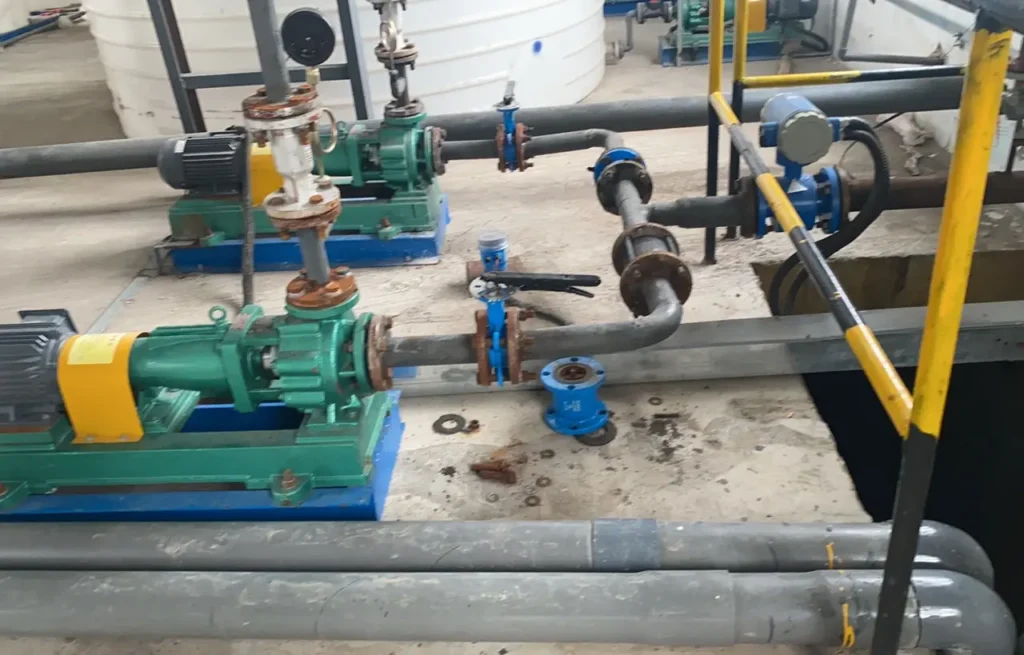
Le système de fluide barrière nécessitait des contrôles de pression hebdomadaires et un remplissage mensuel. Lors d'un arrêt d'usine, un réservoir de fluide barrière a perdu de la pression en raison d'un manomètre défaillant et d'une fuite lente non détectée dans la tuyauterie du fluide barrière. La garniture extérieure a cédé en quelques heures après la perte de pression, libérant des vapeurs de solvant dans le local des pompes. L'incident a déclenché un arrêt de sécurité, l'évacuation de la zone et une notification réglementaire. Le coût total de l'incident — y compris la perte de production, le nettoyage et la conformité réglementaire — a dépassé $120 000.
L'analyse des causes profondes a identifié que la sécurité du système à double garniture dépendait d'un système de support (fluide barrière) qui pouvait défaillir sans détection immédiate. L'usine a reconnu que le fluide de procédé — un mélange de solvants dangereux — nécessitait une technologie de pompe offrant une protection contre les fuites inhérente sans dépendre de systèmes de support externes.
L'usine a remplacé les trois pompes par des pompes à entraînement magnétique Changyu CYQ Series avec cloisons d'isolement revêtues PFA et paliers en carbure de silicium. La conception à entraînement magnétique a éliminé entièrement les garnitures mécaniques et le système de fluide barrière. La protection contre les fuites était assurée par la cloison d'isolement statique en PFA — un composant sans mécanisme d'usure et sans exigence de support externe.
Sur trois ans de fonctionnement : zéro fuite de procédé, zéro incident de sécurité et zéro notification réglementaire. L'inspection des paliers au terme des trois ans a montré une usure normale dans les limites acceptables. Le coût de remplacement des pompes a été récupéré en 18 mois grâce à l'élimination de la maintenance des garnitures, l'élimination des coûts du système de fluide barrière et l'évitement des temps d'arrêt.
Key takeaway: Les doubles garnitures mécaniques avec API Plan 53C offrent une protection efficace contre les fuites — mais leur sécurité dépend d'un système de fluide barrière qui peut défaillir. Pour les fluides dangereux où toute fuite entraîne des conséquences graves, les pompes à entraînement magnétique offrent une protection contre les fuites inhérente qui ne dépend pas de systèmes de support externes. La cloison d'isolement statique n'a aucun mécanisme d'usure et aucun mode de défaillance entraînant une perte soudaine de confinement.
Solutions de pompes à entraînement magnétique Changyu Pump
Changyu Pump propose trois séries de pompes à entraînement magnétique pour les applications chimiques corrosives, dangereuses et de haute pureté. Chaque série répond à des combinaisons spécifiques de compatibilité chimique, de température de fonctionnement et d'exigences d'application.
Guide de sélection des produits de pompes à entraînement magnétique
Tableau : Guide de sélection des produits de pompes à entraînement magnétique
| Application | Défi Clé | Série recommandée | Caractéristique principale |
|---|---|---|---|
| Acides forts, alcalis, solvants | Corrosion + zéro fuite | Série CYQ | Cloison d'isolement revêtue FEP/PFA/PTFE ; paliers en SiC |
| Produits chimiques à haute température (> 150°C) | Chaleur + corrosion | CYQ Series (aimants SmCo) | Aimants en samarium-cobalt ; cloison en Hastelloy C-276 |
| Exigences d'auto-amorçage | Hauteur d'aspiration + zéro fuite | Série CQZ | Entraînement magnétique + fonction d'auto-amorçage ; construction en acier inoxydable |
| Pétrochimie, conformité API 685 | Service intensif + zéro fuite | Série CYC | Conception API 685 ; construction en acier inoxydable ou en titane |
| Pharmaceutique haute pureté | Acier moulé avec revêtement | Série CYQ | Revêtement PFA ; aucune contamination métallique |
Série CYQ — Pompe chimique à entraînement magnétique
La pompe chimique à entraînement magnétique CYQ est conçue pour le transfert sans fuite de produits chimiques hautement corrosifs, inflammables, toxiques et à haute température. Dotée d'un revêtement fluoroplastique FEP/PFA/PTFE à paroi épaisse, d'un couplage magnétique à terres rares et d'une structure entièrement étanche, elle élimine les fuites au niveau de la garniture mécanique tout en maintenant un fonctionnement stable dans des conditions de traitement chimique sévères.
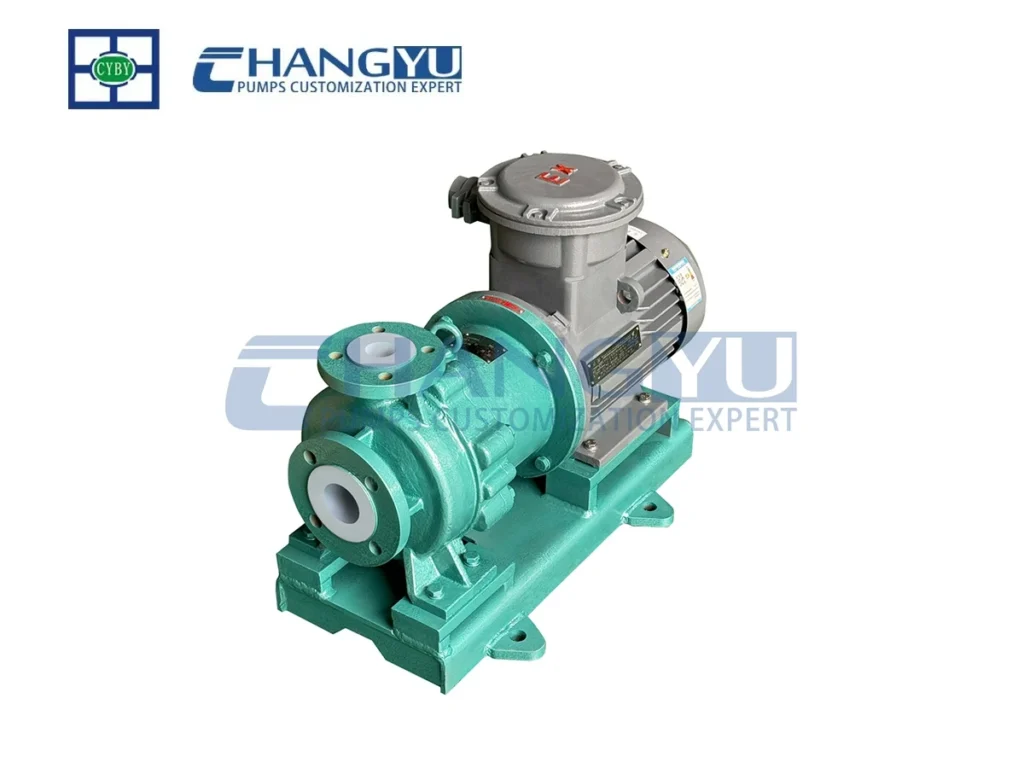
| Paramètres | Spécifications |
|---|---|
| Débit | 3-800 m³/h |
| Tête | 15–125 m |
| Puissance du moteur | 2,2–110 kW |
| Vitesse | 2 950 tr/min |
| Température | De -20°C à 180°C |
| Matériaux de revêtement | FEP / PFA / PTFE |
Voir la pompe à entraînement magnétique CYQ →
Série CQZ — Pompe à entraînement magnétique auto-amorçante en acier inoxydable
La pompe auto-amorçante en acier inoxydable CQZ combine la technologie d'entraînement magnétique avec une fonction d'auto-amorçage. Elle remplace la garniture dynamique traditionnelle par une garniture statique, garantissant un circuit d'écoulement de pompe entièrement étanche et éliminant tout risque de fuite du fluide. La capacité d'auto-amorçage la rend adaptée aux applications où la pompe est montée au-dessus de la source de fluide ou lorsque les conditions d'aspiration sont variables.
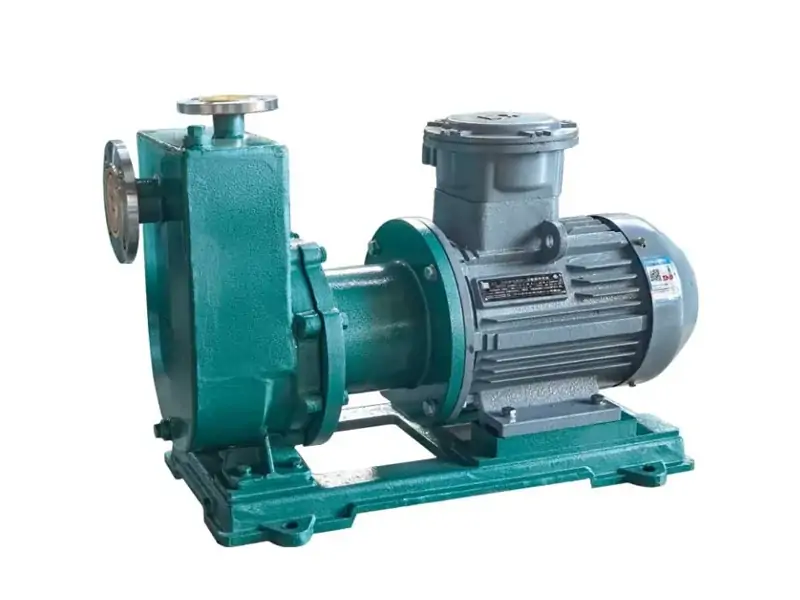
Largement utilisée pour le transport de fluides corrosifs dans les industries chimique, pharmaceutique, de galvanoplastie et de protection de l'environnement. Elle est particulièrement adaptée à la manipulation de liquides inflammables, explosifs, toxiques ou de grande valeur. Remarque : Les configurations à haute température au-dessus de 150 °C utilisent des aimants samarium-cobalt (SmCo). Consultez Changyu Pump pour la sélection des aimants en fonction de la température.
| Paramètres | Spécifications |
|---|---|
| Débit | 3-800 m³/h |
| Tête | 12,5–130 m |
| Puissance du moteur | 1,5–160 kW |
| Vitesse | 968-3 450 r/min |
| Température | -120°C à 320°C |
| Matériaux personnalisables | 304, 304L, 316L, 2205/904L, TA2, HC276 |
Série CYC — Pompe magnétique en acier inoxydable pour service intensif
La pompe magnétique en acier inoxydable pour service intensif de la série CYC est un dispositif de transfert entièrement étanche, sans fuite et résistant à la corrosion, qui utilise le principe du couplage par aimants permanents pour une transmission de puissance sans contact. Conçue conformément à la norme API 685, elle remplace les garnitures mécaniques dynamiques par des garnitures statiques, éliminant ainsi les problèmes de fuite inhérents aux pompes traditionnelles.

Convient aux fluides dangereux et de précision dans les industries pétrochimique, biomédicale, des nouvelles énergies et de la chimie des pesticides. La conception conforme à la norme API 685 en fait un choix idéal pour les applications pétrolières et chimiques nécessitant une vérification documentée des performances et une traçabilité des matériaux. Remarque : La plage de température reflète la configuration standard. Pour des exigences de température plus élevées, consultez Changyu Pump pour des options de matériaux personnalisées.
| Paramètres | Spécifications |
|---|---|
| Débit | 3,6–100 m³/h |
| Tête | 20–80 m |
| Puissance du moteur | 1,1–55 kW |
| Vitesse | 968-3 450 r/min |
| Température | -20°C à 100°C |
| Matériaux personnalisables | Acier inoxydable (304, 316, 316L), Titane |
FAQ sur les pompes à entraînement magnétique
Q : Comment une pompe à entraînement magnétique atteint-elle zéro fuite ?
R : Le moteur entraîne les aimants externes, dont le champ magnétique traverse une chambre de confinement statique pour faire tourner les aimants internes reliés à la roue. Comme aucun arbre rotatif ne traverse le corps de pompe, il n'y a pas de garniture dynamique à user ou à fuir. Les seules garnitures sont des joints toriques statiques sur la chambre de confinement.
Q : Quelle est la différence entre une pompe à entraînement magnétique et une pompe à moteur immergé ?
R : Les deux sont des conceptions sans garniture. Une pompe à entraînement magnétique utilise un moteur externe avec couplage magnétique à travers une chambre de confinement. Une pompe à moteur immergé intègre le rotor et le stator du moteur dans le corps de pompe. Les pompes à moteur immergé peuvent gérer des débits plus élevés mais ont généralement un rendement moteur inférieur. Les pompes à entraînement magnétique sont plus simples à entretenir — le moteur est externe et peut être remplacé indépendamment.
Q : Une pompe à entraînement magnétique peut-elle fonctionner à sec ?
R : Un fonctionnement à sec détruira très rapidement les roulements, car ils dépendent du fluide pompé pour la lubrification et le refroidissement. La surveillance de la puissance offre la protection la plus rapide — elle détecte la baisse de l'intensité du courant moteur et peut arrêter la pompe rapidement. Les capteurs de température réagissent plus lentement et peuvent ne pas prévenir les dommages. L'installation d'un moniteur de puissance ou d'un interrupteur de débit est essentielle.
Q : Quels matériaux sont utilisés pour les chambres de confinement des pompes à entraînement magnétique ?
R : L'acier revêtu de PFA/PTFE offre la meilleure résistance chimique avec zéro perte par courants de Foucault, adapté à la plupart des produits chimiques corrosifs jusqu'à 1,6 MPa. Le Hastelloy C-276 est spécifié pour les applications à haute pression ou haute température au-delà de la limite du PFA, mais génère un échauffement par courants de Foucault de 5 à 10 %. Le titane convient aux fluides contenant des chlorures lorsque le Hastelloy ne convient pas.
Q : Quelle est la durée de vie des roulements des pompes à entraînement magnétique ?
R : Les roulements en carbure de silicium durent généralement 3 à 5 ans dans des fluides propres et compatibles. Les roulements en PTFE/carbone durent 2 à 4 ans. La cause la plus courante de défaillance prématurée des roulements est le fonctionnement à sec — même un seul démarrage à sec peut détruire les roulements. La surveillance de la puissance et des procédures d'amorçage appropriées sont essentielles.
Q : Quelles limites de température s'appliquent aux aimants des pompes à entraînement magnétique ?
R : Les aimants en néodyme (NdFeB) commencent à perdre de leur force au-dessus de 150 °C et peuvent subir une démagnétisation irréversible à des températures élevées selon le grade spécifique. Pour les applications au-dessus de 150 °C, des aimants samarium-cobalt (SmCo) sont spécifiés — ils restent stables au-dessus de 300 °C.
Liste de contrôle des mesures de prévention pour les ingénieurs en pompes chez Changyu
- Installez une surveillance de puissance ou un interrupteur de débit sur chaque pompe à entraînement magnétique. Le fonctionnement à sec détruit rapidement les roulements. La surveillance de puissance détecte rapidement la baisse de l'intensité du courant moteur ; les capteurs de température réagissent plus lentement et peuvent ne pas prévenir les dommages.
- Pour les fluides contenant des particules solides, une pompe à entraînement magnétique n'est pas le type de pompe approprié. Les solides détruisent les roulements lubrifiés par le fluide. Utilisez une pompe centrifuge revêtue avec double garniture mécanique et rinçage API Plan 32 comme alternative.
- Vérifiez que la NPSHa dépasse la NPSHr avec une marge de sécurité suffisante — généralement au moins 1 mètre ou un rapport de 1,3, selon la valeur la plus élevée. La cavitation interrompt le film de fluide qui lubrifie les roulements, provoquant des dommages cumulatifs.
- Pour des températures de fluide supérieures à 120 °C, vérifiez que la température combinée (fluide + échauffement par courants de Foucault pour les chambres métalliques) ne dépasse pas la valeur nominale de l'aimant. Spécifiez des aimants samarium-cobalt au-dessus de 150 °C.
- Pour une combinaison efficace de résistance chimique et de rendement, spécifiez des chambres de confinement revêtues de PFA/PTFE avec des roulements en carbure de silicium. Cette combinaison gère une large gamme de fluides corrosifs avec zéro perte par courants de Foucault.
- Installez un panier de succion et inspectez-le chaque semaine. Un panier obstrué prive la pompe de fluide et provoque un fonctionnement à sec — les mêmes dommages qu’un fonctionnement de la pompe sans liquide.
- Pour les pompes à double garniture mécanique utilisées comme alternative dans les applications contenant des solides, vérifiez la pression du fluide barrière chaque semaine. Une perte de pression barrière signifie que la garniture interne fuit et que la pompe doit être retirée pour remplacement de la garniture.
- Maintenez des jeux de roulements de rechange et des joints toriques de cuve de confinement en stock pour les pompes à entraînement magnétique critiques. Le remplacement des roulements est une maintenance planifiée — laisser les roulements fonctionner jusqu’à la défaillance provoque des dommages secondaires à l’arbre et à la cuve de confinement.
Conclusion
Une pompe à entraînement magnétique est une pompe spécifiquement conçue pour les applications où les fuites sont inacceptables — produits chimiques dangereux, fluides toxiques, solvants inflammables et produits de haute pureté. Trois facteurs déterminent la fiabilité de la pompe : le matériau de la cuve de confinement sélectionné en fonction de la composition chimique et de la température du fluide, la protection des roulements contre le fonctionnement à sec et les solides, et le matériau magnétique adapté à la température de fonctionnement.
Les cuves de confinement revêtues de PFA/PTFE avec roulements en carbure de silicium offrent une combinaison efficace de résistance chimique, de pertes par courants de Foucault nulles et de longue durée de vie des roulements pour la majorité des applications chimiques corrosives. La surveillance de la puissance — et non la détection de température — offre la protection la plus rapide contre le fonctionnement à sec, la cause la plus courante de défaillance des pompes à entraînement magnétique. Pour les fluides contenant des solides, les pompes à entraînement magnétique ne sont pas le type de pompe approprié ; les pompes centrifuges revêtues à double garniture mécanique offrent une résistance à la corrosion équivalente avec une tolérance aux solides que les roulements à entraînement magnétique ne peuvent pas fournir.
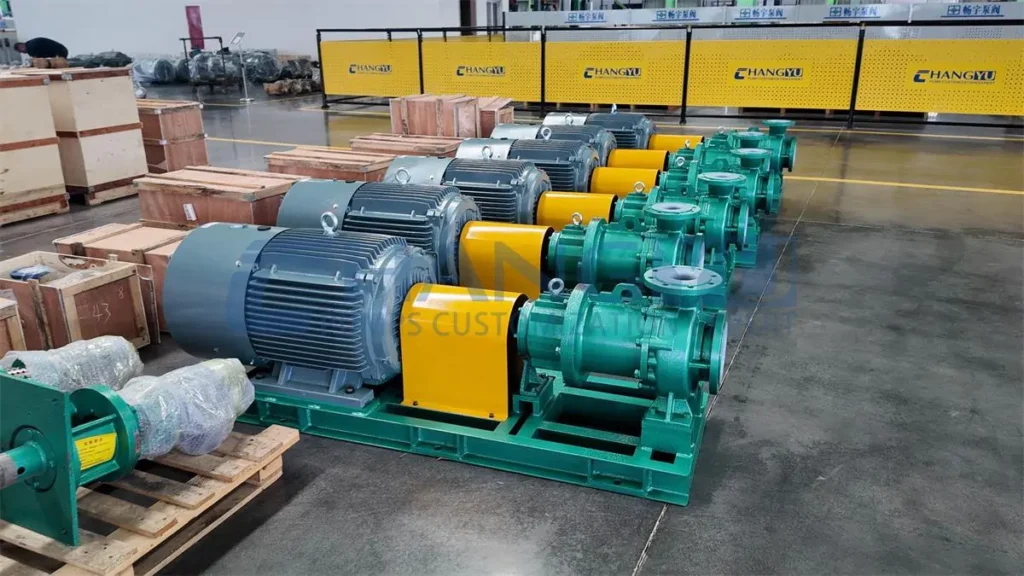
Lorsque vous êtes prêt à spécifier une pompe à entraînement magnétique pour votre application, l’équipe d’ingénierie de Changyu Pump peut fournir une évaluation technique couvrant la caractérisation du fluide, la recommandation de matériaux et la sélection de la cuve de confinement adaptée à vos conditions de procédé spécifiques. Deux décennies de fabrication de pompes à entraînement magnétique dans les applications de traitement chimique, pharmaceutiques et de fluides dangereux éclairent chaque recommandation.
Contactez Changyu Pump pour une évaluation technique gratuite →