
Pendahuluan
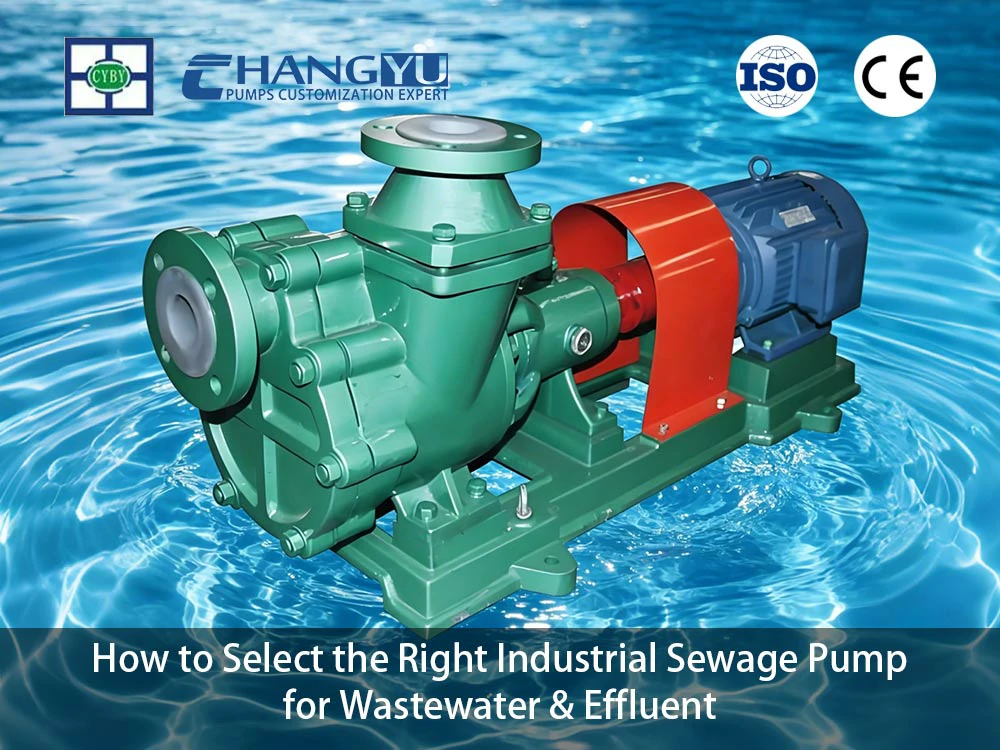
Pompa limbah industri Pemilihan pompa didasarkan pada satu persyaratan utama: pompa harus mampu mengalirkan cairan yang mengandung partikel padat, serat panjang, dan seringkali zat-zat yang bersifat korosif—tanpa tersumbat dan tanpa bocor. Pompa limbah adalah pompa sentrifugal yang dirancang khusus untuk mengangkut cairan yang mengandung partikel padat atau serat panjang. Pompa ini umumnya tersedia dalam konfigurasi horizontal atau submersible dan menawarkan kinerja anti-penyumbatan yang sangat baik. Impeler dan jalur aliran pompa air konvensional tidak dioptimalkan untuk menangani padatan. Ketika pompa standar digunakan untuk mengangkut limbah, saluran masuk pompa sering tersumbat, dan serat panjang serta kotoran dalam limbah juga sering menyumbat impeler. Pompa limbah industri mengatasi hal ini melalui saluran aliran yang diperbesar, geometri impeler khusus, dan bahan tahan aus yang tidak dimiliki oleh pompa sentrifugal standar.
Persyaratan ini menjelaskan mengapa pemilihan pompa limbah industri secara mendasar berbeda dengan pemilihan pompa air bersih. Sistem perumahan membutuhkan unit yang ringkas dan senyap; aplikasi perkotaan mengutamakan aliran tinggi dan ketahanan terhadap penyumbatan; sedangkan pengaturan industri sering kali melibatkan cairan korosif atau abrasif. Pompa yang menangani air limbah perkotaan yang telah disaring dapat rusak dalam hitungan minggu jika dialihkan untuk menangani limbah industri yang tidak disaring yang mengandung pasir abrasif, air proses asam, atau limbah berserat yang lengket.
Panduan ini menyediakan referensi terstruktur yang mencakup jenis-jenis impeler pompa limbah industri, teknologi anti-penyumbatan, bahan dan segel, konfigurasi pemasangan, kerangka kerja pemilihan enam langkah, protokol pemeliharaan, serta studi kasus kuantitatif. Dengan pengalaman lebih dari dua dekade dalam rekayasa pompa, Changyu Pump memiliki keahlian mendalam dalam menentukan solusi pompa yang tahan korosi dan aus untuk aplikasi air limbah yang menuntut.
1. Apa Itu Pompa Limbah Industri?
1.1 Definisi Inti
Sebuah pompa limbah industri adalah pompa sentrifugal yang dirancang khusus untuk memindahkan air limbah mentah atau yang telah diolah sebagian, limbah proses, dan lumpur di fasilitas industri. Berbeda dengan pompa air sentrifugal standar—yang menggunakan impeler tertutup dengan saluran sempit yang dioptimalkan untuk efisiensi air bersih—pompa limbah industri menggunakan saluran aliran yang lebih lebar dan geometri impeler khusus agar dapat mengalirkan partikel padat tanpa tersumbat. Para insinyur mengoptimalkan impeler dan jalur aliran pompa limbah dengan meningkatkan diameter impeler dan memperlebar saluran aliran, sehingga menghasilkan kemampuan anti-mampet yang sangat baik.
Untuk memenuhi kebutuhan pengangkutan bahan abrasif dalam jangka panjang, para insinyur biasanya menggunakan bahan paduan yang sangat tahan aus untuk memproduksi pompa limbah, sehingga memaksimalkan masa pakai pompa limbah tersebut. Motor tugas berat biasanya digunakan untuk mencegah penyumbatan saat mengangkut limbah cair yang kental dan mengandung partikel padat. Segel yang tahan lama, tahan aus, dan tahan korosi mencegah kegagalan segel serta kebocoran cairan akibat kontak jangka panjang dengan cairan.
1.2 Perbedaan Desain Pompa Limbah Industri dengan Pompa Sentrifugal Standar
| Fitur | Pompa Sentrifugal Standar | Pompa Limbah Industri |
|---|---|---|
| Jenis Impeler | Impeler tertutup dengan saluran sempit (efisiensi tinggi) | Vortex, saluran tunggal, saluran ganda, semi-terbuka, penggiling, atau pemotong (jalur bahan padat) |
| Lebar Bagian Aliran | Sempit; dioptimalkan untuk efisiensi penggunaan air bersih | Diperbesar; disesuaikan dengan diameter partikel padat maksimum yang diperkirakan |
| Penanganan Padatan | Minimal (hanya cairan bening) | Benda padat berbentuk bulat berdiameter 65–80 mm untuk desain vortex; hingga 100 mm untuk impeler saluran besar |
| Konstruksi Casing | Volute standar untuk efisiensi | Volute dengan celah cutwater yang diperluas; terbuat dari paduan tahan aus atau baja tahan karat |
| Sistem Segel | Segel mekanis tunggal; bahan elastomer standar | Segel mekanis ganda dengan ruang oli; permukaan dari karbida silikon; elastomer tahan bahan kimia; sistem deteksi kelembapan pada ruang oli untuk pemantauan segel secara dini |
| Perlindungan Terhadap Abrasi | Minimal | Cincin aus yang dapat diganti, bibir volute yang dikeraskan, pelat aus pengorbanan |
1.3 Jenis-Jenis Limbah Cair Industri yang Umum dan Tantangan dalam Pemompaan
| Industri | Karakteristik Limbah Cair yang Umum | Tantangan Utama dalam Pemompaan | Bahan yang Direkomendasikan |
|---|---|---|---|
| Elektroplating & finishing logam | Asam (pH 1–5), mengandung ion logam berat | Korosi kimia; kontaminasi ion logam | PP, PVDF, dilapisi fluoroplastik |
| Pemrosesan kimia | pH bervariasi (0–14), pelarut organik, campuran asam | Ketahanan terhadap bahan kimia spektrum luas | Dilapisi PTFE/PFA atau UHMW-PE |
| Pengawetan baja | HCl atau H₂SO₄ panas (hingga 90°C) yang mengandung endapan oksida besi | Korosi suhu tinggi dan abrasi partikel secara bersamaan | Baja tahan karat CD4MCu tipe duplex atau UHMW-PE |
| Pewarnaan tekstil | Alkalin (pH 9–12), warna pekat, serat berbulu | Penyumbatan serat; serangan bahan kimia alkali | Besi cor atau baja tahan karat dengan impeler vortex |
| Makanan & minuman | Zat padat organik, lemak, minyak, pH yang bervariasi | Penanganan lemak dan partikel padat; korosi akibat bahan kimia pembersih | Baja tahan karat 316L |
| Pertambangan & pengolahan mineral | Air tailing bersifat asam atau basa, tingkat abrasi tinggi | Gabungan antara abrasi parah dan korosi sedang | Sentrifugal berlapis UHMW-PE |
2. Bagaimana Jenis Impeler Mempengaruhi Kinerja Pompa Limbah?
Jenis impeler menentukan apakah pompa limbah beroperasi secara terus-menerus atau memerlukan pembersihan sumbatan secara berkala. Setiap desain mewakili kompromi teknis yang berbeda antara ketahanan terhadap penyumbatan, efisiensi hidraulik, dan kemampuan menangani partikel padat. Jenis impeler (vortex, saluran, semi-terbuka, grinder) menentukan kemampuan pompa dalam menangani partikel padat.
2.1 Impeler Vortex
Impeler vortex ditempatkan di luar jalur aliran utama, sehingga menciptakan pusaran air yang menarik cairan dan partikel padat tersuspensi melalui pompa, sementara hanya sebagian kecil partikel padat yang bersentuhan dengan impeler. Impeler vortex menghasilkan pusaran (efek pusaran air) yang memungkinkan lumpur, bahan berserat panjang, dan limbah padat melewati pompa tanpa bersentuhan dengan impeler.
Keunggulan utamanya adalah ketahanan tersumbat yang maksimal—impeler vortex mampu melewatkan partikel padat yang ukurannya jauh lebih besar daripada yang dapat ditangani oleh impeler saluran dengan ukuran yang setara. Komprominya terletak pada efisiensi hidraulik, yang umumnya berkisar antara 40–55% dibandingkan dengan 60–75% untuk impeler saluran yang sebanding. Dalam aplikasi limbah industri, penurunan efisiensi ini dapat diterima karena biaya yang timbul akibat satu kejadian penyumbatan—panggilan operator, pengambilan pompa, pembersihan manual—jauh melebihi biaya energi tambahan yang ditimbulkan oleh impeler yang kurang efisien.
2.2 Impeler Saluran Tunggal
Impeler saluran tunggal memiliki satu saluran aliran besar yang membentang dari pusat impeler hingga ke tepi luar. Desain saluran tunggal ini menyediakan saluran bebas yang luas, sehingga mengurangi risiko penyumbatan sekaligus mempertahankan efisiensi hidraulik yang lebih tinggi dibandingkan dengan alternatif tipe vortex (60–75%).
2.3 Impeler Dua Saluran
Impeler dua saluran menawarkan keseimbangan antara efisiensi (65–781 TP3T) dan kemampuan melewatkan partikel padat, namun desain dua saluran tertutup sangat rentan tersumbat oleh bahan berserat yang melilit bilah impeler. Oleh karena itu, impeler dua saluran sebaiknya digunakan untuk aplikasi air limbah yang telah diolah dan air limbah yang telah disaring, di mana kandungan padatan dapat diprediksi dan bahan berserat telah dihilangkan.
2.4 Pompa Penggiling dan Pemotong
Pompa grinder dilengkapi dengan mekanisme pemotong di depan impeler yang menghancurkan bahan padat menjadi bubur halus sebelum cairan masuk ke dalam pompa. Pompa ini dilengkapi dengan mekanisme pemotong untuk menghancurkan bahan padat dan sangat cocok untuk sistem saluran pembuangan bertekanan di mana penyumbatan menjadi masalah. Pompa pemotong menggunakan cincin pemotong tetap yang digunakan oleh bilah impeler untuk memotong bahan padat yang masuk. Kedua jenis pompa ini sepenuhnya menghilangkan batasan ukuran saluran, tetapi mengonsumsi energi tambahan dan memerlukan penggantian permukaan pemotong secara berkala.
2.5 Impeler Semi-Terbuka
Impeler semi-terbuka memiliki penutup depan yang dilepas, sehingga bilah-bilahnya terlihat di satu sisi. Desain ini lebih tahan terhadap penyumbatan dibandingkan impeler tertutup karena tidak ada saluran tertutup yang memungkinkan partikel padat terjebak di antara penutup. Desain impeler semi-terbuka dengan bilah melengkung ke belakang memberikan keseimbangan antara kemampuan aliran partikel padat dan efisiensi untuk air limbah industri yang mengandung campuran partikel padat.
2.6 Perbandingan Jenis Impeler
| Jenis Impeler | Jalur Bahan Padat | Ketahanan Terhadap Penyumbatan | Efisiensi | Aplikasi Terbaik |
|---|---|---|---|---|
| Vortex | Berbentuk bulat dengan diameter hingga 80 mm | Luar biasa | 40–55% | Limbah cair mentah yang belum disaring, lumpur, dan limbah berserat |
| Satu Saluran | Hingga 100 mm (S-tube®) | Bagus. | 60–75% | Air limbah yang telah disaring, lumpur primer |
| Dua Saluran | Sampai dengan diameter saluran impeler | Sedang (serat padat dapat menyumbat) | 65–78% | Air limbah yang telah diolah, air limbah yang telah disaring |
| Penggiling/Pemotong | Padatan yang telah dihancurkan—tanpa batasan ukuran partikel | Sangat baik (bahan padat telah dihancurkan) | Lebih rendah (peningkatan konsumsi daya) | Sistem saluran pembuangan bertekanan, pipa pengalir berdiameter kecil |
| Semi-Terbuka | Partikel halus hingga sedang | Sedang | 55–70% | Limbah cair industri, cairan yang mengandung partikel padat |
3. Bahan dan segel apa yang paling cocok untuk limbah industri?
3.1 Bahan Casing dan Impeler
Pemilihan bahan untuk pompa limbah industri harus mampu menahan abrasi akibat partikel kasar, korosi akibat air limbah dengan tingkat pH yang bervariasi, serta tekanan mekanis akibat benturan partikel padat.
Besi cor merupakan bahan dasar untuk aplikasi sistem pembuangan limbah perkotaan standar, yang menawarkan ketahanan aus yang baik dengan biaya yang terjangkau. Besi tuang ulet memiliki ketahanan benturan yang lebih baik dan direkomendasikan untuk casing pompa berukuran besar. Untuk air limbah yang bersifat korosif atau agresif, diperlukan bahan dengan kualitas yang lebih tinggi.
Baja tahan karat 316L memiliki ketahanan yang baik terhadap limbah cair yang sedikit asam atau basa, namun memiliki keterbatasan yang telah tercatat saat berhadapan dengan aliran air yang kaya klorida.
Baja tahan karat CD4MCu tipe duplex dirancang khusus untuk penggunaan dalam kondisi korosi dan abrasi sekaligus.
UHMW-PE (Polietilena dengan Berat Molekul Sangat Tinggi) Pompa berlapis menyediakan penghalang kimia yang memisahkan casing pompa dari media korosif sekaligus menyerap energi benturan partikel. Dalam kondisi uji keausan abrasif yang terstandarisasi, ketahanan aus UHMW-PE sekitar 7–10 kali lipat dibandingkan baja karbon dan baja tahan karat. Untuk tugas-tugas korosi-abrasi gabungan yang paling berat—limbah industri asam dengan partikel padat abrasif—pompa berlapis UHMW-PE memberikan perlindungan gabungan terbaik.
3.2 Sistem Segel Mekanis
Segel mekanis merupakan komponen yang paling rentan pada pompa limbah. Untuk aplikasi limbah industri, segel mekanis ganda dengan ruang penghalang berisi oli merupakan spesifikasi standar. Sistem segel ganda, yang sering kali dilengkapi dengan ruang oli di antaranya, menambah redundansi dan melindungi dari lonjakan tekanan atau pergerakan poros yang tak terduga. Dua set permukaan segel karbida silikon bergesekan dengan dudukan karbida silikon, dengan ruang oli yang menyediakan pelumasan, pendinginan, dan deteksi dini degradasi segel melalui analisis oli.
3.3 Pemilihan Bahan Segel dan Elastomer
| Jenis Elastomer | Terbaik untuk | Kisaran pH | Suhu Maks | Aplikasi Khas |
|---|---|---|---|---|
| EPDM | Limbah cair alkali, limbah domestik | pH 5-14 | ~120°C | Sistem pembuangan limbah perkotaan standar, cincin-O, segel statis |
| Viton (FKM) | Air limbah asam, pelarut | pH 2–10 | ~150°C | Limbah cair industri yang mengandung bahan kimia |
| FFKM (Kalrez) | Ketahanan kimia yang tinggi | pH 0-14 | ~200°C | Limbah industri yang berbahaya, campuran limbah kimia |
| Nitril (NBR) | Air limbah yang mengandung minyak | pH 3–10 | ~100°C | Stasiun pompa yang terkontaminasi bahan bakar minyak |
3.4 Panduan Singkat Pemilihan Bahan
| Bahan | Terbaik untuk | Kisaran pH | Suhu Maks | Aplikasi Khas |
|---|---|---|---|---|
| Besi Cor | Sistem pembuangan limbah perkotaan | pH 5–10 | ~120°C | Limbah cair mentah standar, air limbah yang telah disaring |
| 316L SS | Air limbah yang sedikit korosif | pH 3–10 | ~120°C | Limbah industri, air limbah pabrik kimia |
| CD4MCu Duplex Baja Tahan Karat | Gabungan korosi-abrasi | pH 2-12 | ~110°C | Limbah cair yang mengandung pasir, air limbah FGD |
| Dilapisi UHMW-PE | Korosi parah disertai abrasi | Luas (asam, alkali, garam) | ~90°C | Limbah cair industri yang bersifat asam dan mengandung partikel padat yang abrasif |
4. Konfigurasi Instalasi Mana yang Tepat untuk Aplikasi Anda?
4.1 Pompa Limbah Tipe Celup
Pompa limbah sentrifugal submersible beroperasi sepenuhnya terendam dalam air limbah yang terkumpul, dengan motor dan pompa terintegrasi menjadi satu unit tertutup. Digunakan di lingkungan perumahan, perkotaan, dan industri, pompa submersible menawarkan solusi yang serbaguna dan hemat biaya. Desainnya memungkinkan pompa ini terendam sepenuhnya dalam cairan, sehingga mengurangi kebisingan, menyederhanakan pemasangan, dan menghilangkan kebutuhan akan pengisian awal eksternal. Pemasangan tidak memerlukan lubang kering atau pelat dasar—pompa cukup diturunkan ke dalam sumur basah menggunakan rel pemandu.
4.2 Pompa Limbah Horizontal Tipe Dry-Pit
Pompa limbah sentrifugal horizontal tipe dry-pit dipasang di ruang kering yang berdekatan dengan sumur basah. Konfigurasi ini memungkinkan akses penuh ke pompa untuk keperluan pemeliharaan tanpa perlu mengangkat unit dari posisi terendam. Pompa tipe dry-pit umumnya memiliki efisiensi yang lebih tinggi dibandingkan dengan pompa submersible, dan motornya beroperasi di lingkungan yang bersih dan kering.
4.3 Pompa Limbah yang Dapat Mengisi Sendiri
Pompa sentrifugal limbah yang dapat mengisi sendiri mampu mengeluarkan udara dari saluran hisap dan menghisap cairan ke atas tanpa perlu pengisian manual. Pompa ini dipasang di atas permukaan cairan—biasanya sejajar dengan permukaan tanah—dengan saluran hisap yang menjulur ke dalam sumur basah atau bak penampung.
4.4 Pompa Limbah Cantilever Vertikal
Pada pompa cantilever vertikal, motor dan bantalan ditempatkan di atas penutup bak penampung, dengan poros panjang yang menjulur ke bawah hingga mencapai impeler yang terendam. Tidak ada bantalan atau segel yang beroperasi di bawah permukaan cairan, sehingga desain ini cocok untuk bak penampung yang dalam serta air limbah yang bersifat korosif atau bersuhu tinggi.
4.5 Panduan Pemilihan Konfigurasi Instalasi
| Konfigurasi | Akses untuk Pemeliharaan | Kebutuhan Ruang | Aplikasi Terbaik |
|---|---|---|---|
| Dapat direndam | Perlu dilakukan pengambilan pompa | Minimal (tanpa pit kering) | Sumur basah, stasiun pompa, bak penampung dalam |
| Horizontal Tanpa Pelumas | Akses penuh di ruang kering | Membutuhkan lubang kering yang berdekatan | Stasiun permanen, aplikasi yang beroperasi secara terus-menerus |
| Memulai Sendiri (Self-Priming) | Akses penuh sesuai tingkat kelas | Luas lahan di atas permukaan tanah | Stasiun pompa, sistem pompa bypass, aplikasi portabel |
| Kantilever Vertikal | Dapat diakses dengan kendaraan di atas bak penampung | Luas lantai minimal | Bak penampung dalam, air limbah korosif/bersuhu tinggi |
5. Cara Memilih Pompa Limbah Industri yang Tepat: Panduan 6 Langkah
Proses seleksi yang terstruktur memastikan kesesuaian antara kinerja pompa dan kebutuhan di lapangan.
Langkah 1: Menganalisis Air Limbah
Catat profil fisik dan kimia secara lengkap: jenis padatan (organik, berserat, pasir kasar), ukuran partikel padatan maksimum, pH, suhu, kandungan pasir/pasir kasar, serta adanya bahan kimia industri. Apakah ini air limbah domestik, air limbah industri, air limpasan hujan, atau limbah industri? Kandungan padatan, komposisi kimia, dan suhu akan memengaruhi pilihan bahan dan desain Anda. Profil padatan menentukan jenis impeler; profil kimia menentukan jendela kompatibilitas bahan.
Poin-poin data utama: Jenis padatan, ukuran partikel maksimum, pH, suhu, kandungan pasir.
Langkah 2: Tentukan Titik Beban
Hitung laju aliran yang diperlukan dan ketinggian dinamis total, dengan memperhitungkan ketinggian statis dari bak penampung atau sumur basah, kerugian gesekan pada pipa pembuangan, serta persyaratan tekanan di titik tujuan. Tentukan titik operasi sistem Anda (laju aliran dan tekanan). Gunakan perhitungan hidraulik atau berkonsultasilah dengan insinyur untuk mendapatkan perkiraan yang akurat.
Poin-poin data utama: Debit (GPM atau m³/jam), TDH, ketinggian statis, kerugian gesekan.
Langkah 3: Sesuaikan Jenis Impeler dengan Profil Partikel Padat
Untuk limbah mentah yang belum disaring dan mengandung bahan berserat serta bertekstur benang → impeler vortex. Untuk air limbah yang telah disaring atau lumpur primer → impeler saluran tunggal. Untuk sistem saluran pembuangan bertekanan dengan pipa pengangkut berdiameter kecil → pompa grinder. Untuk air limbah industri campuran → impeler semi-terbuka. Pilihan impeler menentukan keandalan pompa dalam jangka panjang.
Logika keputusan: Bahan padat berserat → vortex; air limbah yang telah disaring → saluran tunggal; saluran pembuangan bertekanan → penggiling; media campuran → semi-terbuka.
Langkah 4: Pilih Bahan dan Konfigurasi Segel
Sesuaikan bahan casing dan impeler dengan komposisi kimia air limbah pada suhu operasi maksimumnya. Untuk air limbah perkotaan pada umumnya, besi cor sudah memadai. Untuk air limbah industri yang bersifat korosif atau abrasif, gunakan komponen dari baja tahan karat duplex CD4MCu atau yang dilapisi UHMW-PE. Pilih segel mekanis ganda dengan permukaan silikon karbida untuk semua aplikasi air limbah industri yang beroperasi secara terus-menerus.
Logika keputusan: pH 5–10, kandungan pasir rendah → besi cor; pH 2–12, mengandung banyak pasir → baja tahan karat duplex CD4MCu; pH 0–14, partikel padat abrasif → dilapisi UHMW-PE.
Langkah 5: Pilih Konfigurasi Instalasi
Sesuaikan jenis pemasangan dengan kondisi lokasi. Apakah pemasangan dilakukan di sumur basah yang sempit? Apakah Anda berurusan dengan lingkungan yang korosif, zona yang berisiko ledakan, atau suhu ekstrem? Pompa submersible tidak memerlukan lubang kering; pompa self-priming memungkinkan akses dari permukaan tanah; sedangkan pompa cantilever vertikal menghilangkan kebutuhan akan bantalan yang terendam.
Logika keputusan: Sumur basah tertutup → pompa submersible; memerlukan akses dari atas tanah → pompa self-priming; sumur penampung dalam yang korosif → pompa vertikal cantilever; stasiun permanen → pompa horizontal dry-pit.
Langkah 6: Mengevaluasi Total Biaya Kepemilikan
Jangan hanya mempertimbangkan harga pembelian. Perhatikan juga interval perawatan, kemudahan akses ke segel, ketersediaan suku cadang, dan waktu rata-rata antara kegagalan (MTBF). Pompa impeler vortex dengan efisiensi lebih rendah namun bebas dari penyumbatan akan secara konsisten menghasilkan biaya kepemilikan total (TCO) yang lebih rendah dibandingkan pompa ber efisiensi tinggi yang memerlukan tindakan pembersihan penyumbatan secara berkala.
Faktor-faktor utama: Energi (biaya sepanjang masa pakai sebesar 60–701 TP3T), suku cadang yang cepat aus, biaya tenaga kerja pemeliharaan, biaya waktu henti.
6. Pemeliharaan, Pemecahan Masalah, dan Pengelolaan Biaya Sepanjang Siklus Hidup
6.1 Jenis-jenis Kerusakan Umum
Mode kegagalan yang paling sering terjadi pada pompa limbah industri adalah: penyumbatan impeler akibat partikel padat berserat atau puing-puing berukuran besar; kebocoran segel akibat masuknya partikel kasar di antara permukaan segel; kegagalan bantalan akibat kontaminasi air yang disebabkan oleh kerusakan segel; kerusakan akibat kavitasi akibat margin NPSH yang tidak memadai; serta getaran berlebihan akibat impeler yang tidak seimbang akibat keausan yang tidak merata atau penumpukan partikel padat.
6.2 Jadwal Pemeliharaan Preventif
| Interval | Tugas |
|---|---|
| Setiap hari | Pantau arus motor dan tekanan keluaran; periksa apakah ada getaran atau suara yang tidak biasa |
| Mingguan | Periksa kondisi oli segel (periksa adanya kontaminasi air—oli yang berwarna susu menandakan kebocoran pada segel bagian dalam); periksa suhu bantalan |
| Bulanan | Ukur jarak antara impeler dan casing; periksa cincin aus apakah terdapat lekukan atau penipisan; periksa kondisi O-ring dan gasket |
| Triwulanan | Pemeriksaan menyeluruh pada bagian basah; mengganti pelumas bantalan; memeriksa keutuhan segel melalui uji tekanan |
| Setiap tahun | Pembongkaran pompa secara menyeluruh; mengukur dan mengganti semua komponen yang aus (impeler, cincin aus, segel, bantalan); memeriksa keutuhan casing dan poros |
6.3 Panduan Singkat Pemecahan Masalah
| Gejala | Kemungkinan Penyebab | Tindakan yang Disarankan |
|---|---|---|
| Pompa sering tersumbat | Jenis impeler tidak sesuai dengan profil partikel padat | Ganti dengan impeler vortex; pastikan diameter saluran bebas lebih besar dari ukuran partikel padat terbesar |
| Penurunan aliran secara bertahap | Keausan impeler atau peningkatan celah internal | Sesuaikan celah impeler; ganti cincin pelindung jika celahnya melebihi batas yang ditetapkan pabrikan |
| Kebocoran segel | Masuknya pasir di antara permukaan segel; elastomer yang rusak | Periksa permukaan segel apakah terdapat goresan; periksa ruang oli apakah terdapat kontaminasi; ganti segel |
| Getaran yang berlebihan | Impeler tidak seimbang; kavitasi; kerusakan bantalan | Bersihkan impeler; periksa margin NPSH; periksa bantalan untuk memastikan tidak ada lubang korosi atau pengelupasan |
| Pemutusan arus akibat kelebihan beban motor | Sumbatan partikel padat; peningkatan viskositas; macetnya bantalan | Bersihkan impeler; pastikan viskositas aliran keluar sesuai dengan spesifikasi pompa; periksa bantalan |
6.4 Evaluasi Biaya Siklus Hidup
Evaluasi biaya siklus hidup untuk pompa limbah industri harus memperhitungkan biaya modal, konsumsi energi (biasanya 60–70% dari total biaya sepanjang masa pakai), frekuensi penggantian suku cadang yang aus, biaya tenaga kerja pemeliharaan, serta biaya produksi akibat waktu henti tak terduga yang disebabkan oleh penyumbatan atau kegagalan. Motor berdaya tinggi dan kompatibilitas dengan VFD dapat mengurangi biaya operasional jangka panjang. Pompa dengan harga awal yang lebih tinggi namun masa pakai yang jauh lebih lama dalam kondisi kimia limbah tertentu secara rutin menghasilkan TCO yang lebih rendah dibandingkan alternatif berbiaya rendah yang memerlukan perbaikan berkali-kali.
7. Solusi Pompa Limbah Industri Changyu Pump
Seri pompa Changyu berikut ini dirancang untuk mengatasi tantangan utama dalam pemompaan air limbah yang telah dibahas di atas—masing-masing disesuaikan dengan karakteristik air limbah dan persyaratan operasional tertentu.
Pompa Sentrifugal Berlapis UHMW-PE Seri UHB

Seri UHB adalah pompa sentrifugal tipe cantilever, satu tahap, dan satu hisap yang dilapisi baja UHMW-PE selubung. Konstruksi “plastik berlapis baja” yang canggih ini memanfaatkan ketahanan aus yang luar biasa dari UHMW-PE—sekitar 7–10 kali lipat dibandingkan baja karbon dan baja tahan karat dalam kondisi uji keausan abrasif standar—dikombinasikan dengan kompatibilitas kimia yang luas di seluruh rentang pH pada suhu hingga 90°C. Untuk aplikasi air limbah industri di mana aliran keluarnya mengandung bahan kimia agresif dan partikel padat abrasif—seperti air limbah tailing tambang, air limbah asam fosfat, dan aliran keluar pabrik kimia—lapisan UHMW-PE memberikan perlindungan gabungan terhadap korosi dan keausan yang tidak dapat diberikan oleh pompa logam murni maupun pompa plastik murni secara terpisah.
Spesifikasi Utama: Aliran 3-2.600 m³/jam | Head 5-100 m | Daya 0,75-300 kW | Suhu -20°C hingga 90°C
Pompa Sentrifugal Berlapis Fluor dengan Sistem Pengisian Otomatis Seri FZB
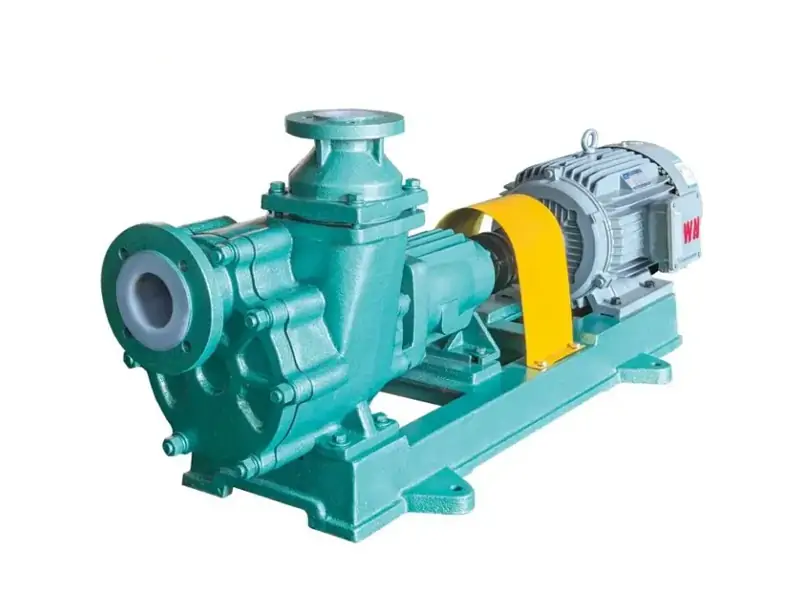
Seri FZB adalah pompa sentrifugal pemancing otomatis dengan komponen aliran-aliran yang dilapisi FEP (F46) atau PFA. Pompa ini dirancang untuk pemindahan cairan korosif di mana kondisi hisap sulit atau tingkat cairan berada di bawah saluran masuk pompa. Setelah diisi awalnya, pompa dapat secara otomatis mengeluarkan udara dari saluran hisap dan mempertahankan operasi berkelanjutan dalam kondisi kimia yang berat. Untuk aplikasi limbah industri di mana pompa harus mengangkat air limbah korosif atau yang bersifat agresif secara kimia dari sumur atau lubang di bawah permukaan tanah, Seri FZB menawarkan keunggulan gabungan dari sistem hidraulik self-priming, ketahanan korosi bahan fluoroplastik, dan akses perawatan di atas permukaan tanah.
Spesifikasi Utama: Aliran 2,5-100 m³/jam; Head 15-50 m; Daya 0,75-55 kW; Suhu -20°C hingga 150°C
Pompa Tanpa Segel dengan Penggerak Magnetik Seri CYQ
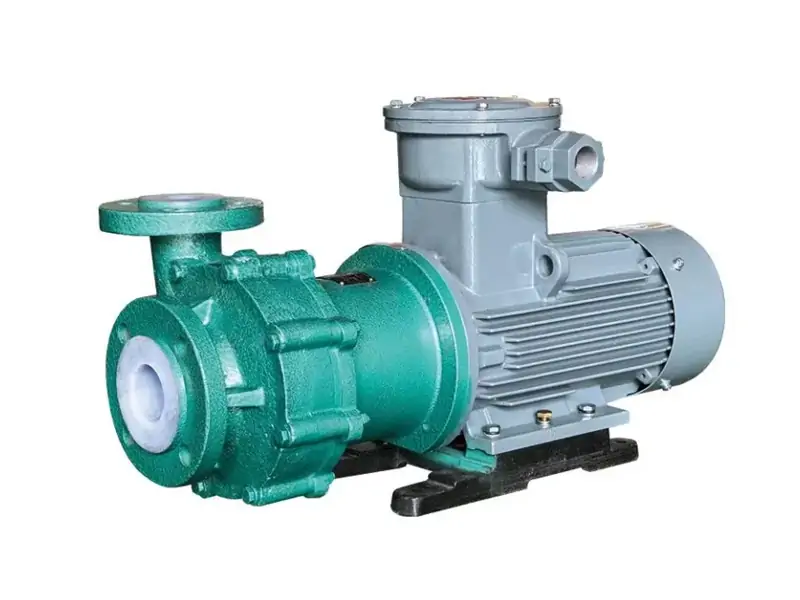
Seri CYQ adalah pompa penggerak magnetik tanpa seal dengan komponen yang dibasahi yang dilapisi FEP, PFA, atau PTFE. Torsi ditransmisikan dari motor standar melalui selongsong isolasi yang tidak bergerak via rotor magnet permanen, sehingga cairan proses terkurung dalam ruang yang sepenuhnya tertutup dan mencapai nol kebocoran secara desain. Untuk aplikasi limbah industri yang mengandung bahan kimia beracun, mudah terbakar, atau bernilai tinggi—di mana kebocoran segel mekanis sekecil apa pun tidak dapat ditoleransi—desain penggerak magnetik menghilangkan segel mekanis dan jalur kebocorannya sepenuhnya, sehingga menyediakan penahanan tanpa kebocoran yang diperlukan untuk operasi yang aman dan sesuai standar.
Spesifikasi Utama: Debit 3–800 m³/jam | Ketinggian 15–125 m | Daya 2,2–110 kW | Kecepatan 2.950 putaran per menit | Suhu -20°C hingga 180°C
Pompa Kimia Sentrifugal Baja Tahan Karat Seri CYH
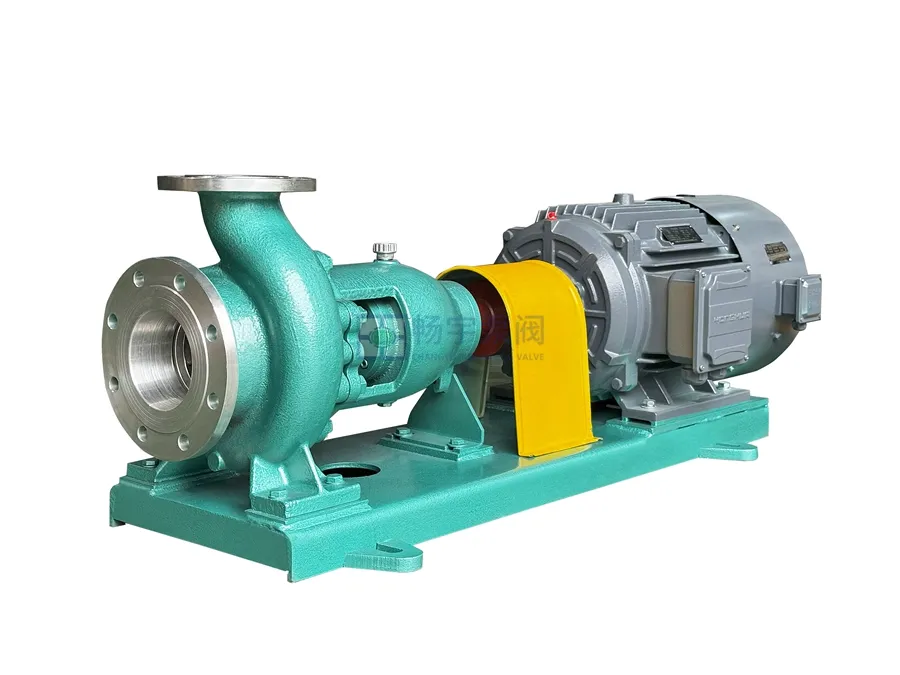
Seri CYH adalah pompa sentrifugal kantilever satu tahap dengan hisap tunggal yang dirancang dan diberi label sesuai dengan ISO 2858-1975 (E). Terbuat dari baja tahan karat—Baja tahan karat 304, 316, 316L, atau dupleks—produk ini merupakan pengganti yang ideal untuk pompa berlapis fluorin tahan korosi konvensional. Untuk aplikasi air limbah industri di mana komposisi kimianya cukup korosif dan jalur yang bersentuhan dengan cairan yang terbuat dari logam kompatibel dengan aliran proses, Seri CYH menawarkan solusi yang tahan lama dan sesuai standar.
Spesifikasi Utama: Debit 0,8–750 m³/jam | Ketinggian 3–130 m | Daya 2,2–110 kW | Suhu -20°C hingga 165°C
Panduan Singkat Pemilihan Pompa Limbah Industri
| Seri Pompa | Jenis | Aplikasi Terbaik | Bahan-bahan Utama |
|---|---|---|---|
| UHB | Sentrifugal berlapis UHMW-PE | Limbah cair industri yang mengandung campuran korosi dan abrasi serta partikel padat halus | UHMW-PE |
| FZB | Pompa sentrifugal berlapis fluorin dengan sistem pengisian otomatis | Air limbah korosif di bawah permukaan tanah; diperlukan tekanan hisap | FEP (F46), PFA |
| CYQ | Penggerak magnetik tanpa segel | Limbah cair kimia yang beracun, mudah terbakar, dan bernilai tinggi | FEP, PFA, PTFE |
| CYH | Sentrifugal baja tahan karat | Limbah cair industri dengan tingkat korosi sedang | 304, 316, 316L, Duplex |
8. Studi Kasus: Mengatasi Masalah Penyumbatan di Instalasi Pengolahan Air Limbah Industri
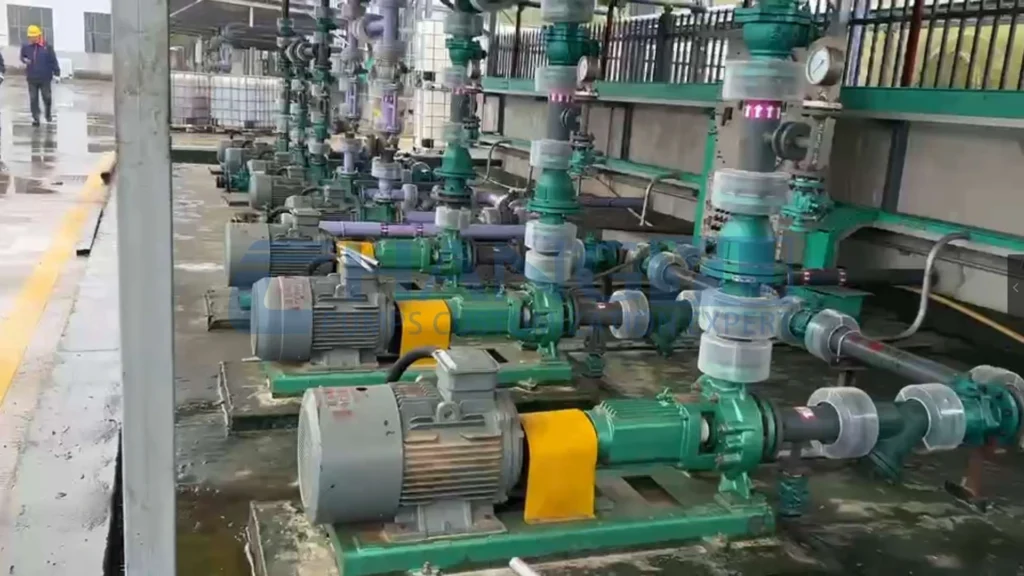
Tantangan Pelanggan: Sebuah pabrik pengolahan kimia di Asia Tenggara mengalami penyumbatan kronis pada pompa sentrifugal standar yang digunakan untuk menangani limbah industri. Aliran air limbah tersebut mengandung campuran air proses asam (pH 3–5), padatan berserat dari media filter, dan partikel katalis abrasif. Pompa-pompa tersebut dilengkapi dengan impeler dua saluran tertutup, yang berulang kali tersumbat oleh bahan berserat. Pompa-pompa tersebut tersumbat tiga hingga empat kali per bulan, sehingga memerlukan intervensi operator setiap kali. Setelah 14 bulan beroperasi, keausan impeler akibat serangan kimia-mekanis gabungan telah mengurangi efisiensi pompa sekitar 35%, dan segel mekanis telah gagal tiga kali akibat serangan asam pada elastomer segel.
Analisis Teknik: Para insinyur Changyu Pump menganalisis data operasional serta profil kimia dan fisik lengkap dari air limbah tersebut. Penyebab utama penyumbatan adalah impeler dua saluran tertutup, yang rentan terhadap padatan berserat yang melilit bilah-bilahnya. Cairan pembawa yang bersifat asam (pH 3–5) juga merusak casing besi cor dan elastomer segel EPDM standar, sehingga mempercepat kerusakan material melalui mekanisme korosi-abrasi gabungan.
Solusi Diterapkan: Changyu Pump mengganti pompa yang ada dengan Pompa sentrifugal berjajar UHB Series UHMW-PE dengan perubahan desain sebagai berikut:
- Selubung berlapis UHMW-PE: Menghilangkan kontak asam dengan casing pompa sepenuhnya, sehingga menghilangkan faktor korosi dari persamaan keausan sekaligus menyerap energi benturan partikel dari partikel padat katalis yang abrasif.
- Impeler vortex dengan lebar saluran bebas 65 mm: Impeler yang ditempatkan di bagian dalam memungkinkan partikel padat berserat melewati pompa tanpa bersentuhan langsung dengan impeler, sehingga menghilangkan penyumbatan yang selama ini menjadi masalah pada desain saluran tertutup.
- Segel mekanis ganda dari karbida silikon dengan bahan elastomer FFKM: Cincin O FFKM (Kalrez) telah terbukti kompatibel secara kimiawi dengan cairan pembawa bersifat asam pada suhu operasi, dan ruang penghalang berisi oli memberikan cadangan untuk mengantisipasi kegagalan segel serta dilengkapi dengan kemampuan deteksi kelembapan dini.
Hasil Terukur (evaluasi 18 bulan):
| Metrik | Sebelum Pembaruan | Setelah Pembaruan | Peningkatan |
|---|---|---|---|
| Jumlah kejadian penyumbatan per bulan | 3–4 | < 0,2 (satu kali setiap 5–6 bulan) | ~94% pengurangan |
| Umur pakai impeler | 14 bulan | > 30 bulan (masih beroperasi) | Perpanjangan 2×+ |
| Jumlah kegagalan segel per tahun | 2.6 | Nol | Pengurangan 100% |
| Biaya pemeliharaan tahunan | 15.600 dolar AS | 5.200 dolar AS | ~67% pengurangan |
| Ketersediaan stasiun | 91% | > 99% | lebih dari 8 poin persentase |
9. Pertanyaan yang Sering Diajukan Mengenai Pompa Limbah Industri
Pertanyaan 1: Apa perbedaan antara pompa sentrifugal standar dan pompa limbah industri?
A: Pompa sentrifugal standar menggunakan impeler tertutup dengan saluran sempit yang dioptimalkan untuk efisiensi pada air bersih. Pompa limbah industri menggunakan impeler vortex, saluran tunggal, atau semi-terbuka dengan saluran aliran yang diperbesar dan bahan tahan aus untuk mengalirkan air limbah yang mengandung padatan tanpa tersumbat. Impeler dan jalur aliran pompa air konvensional tidak dioptimalkan untuk penanganan padatan; serat panjang dan puing-puing sering menyumbat impeler standar.
Pertanyaan 2: Jenis impeler mana yang paling cocok untuk limbah mentah yang tidak disaring?
A: Impeler vortex menawarkan ketahanan tersumbat terbaik untuk limbah mentah yang tidak disaring. Impeler ini ditempatkan di luar jalur aliran utama, sehingga menciptakan pusaran air yang memungkinkan partikel padat melewatinya tanpa bersentuhan langsung dengan impeler. Impeler vortex dapat melewatkan partikel padat berbentuk bulat hingga 80 mm dan merupakan spesifikasi standar untuk limbah mentah, lumpur dengan partikel padat berserat, serta air limbah industri dengan kandungan partikel padat yang tidak dapat diprediksi.
Pertanyaan 3: Bahan apa saja yang tahan terhadap korosi dan abrasi dalam limbah industri?
A: Baja tahan karat duplex CD4MCu menawarkan ketahanan gabungan terhadap korosi dan abrasi untuk air limbah yang mengandung partikel kasar dan bersifat sedikit asam pada suhu hingga 110°C. Pompa berlapis UHMW-PE memberikan perlindungan gabungan terbaik untuk air limbah yang sangat asam atau basa yang mengandung partikel padat abrasif pada suhu hingga 90°C. Ketahanan aus UHMW-PE sekitar 7–10 kali lipat dibandingkan baja karbon dan baja tahan karat.
Pertanyaan 4: Apa perbedaan antara pompa grinder dan pompa cutter?
A: Pompa grinder menggunakan cakram pemotong dan cincin penggiling untuk menghancurkan partikel padat menjadi bubur halus sebelum cairan masuk ke impeler. Pompa ini sangat cocok untuk sistem saluran pembuangan bertekanan. Pompa cutter menggunakan cincin pemotong tetap, di mana bilah impeler memotong partikel padat yang masuk. Keduanya mencegah penyumbatan, namun memerlukan penggantian berkala pada permukaan pemotongnya.
Pertanyaan 5: Kapan sebaiknya saya memilih pompa submersible daripada pompa self-priming?
A: Pilihlah pompa submersible untuk sumur basah yang dalam dan sempit, di mana pompa harus beroperasi dalam keadaan sepenuhnya terendam dan tidak tersedia ruang untuk sumur kering. Pilih pompa self-priming jika diperlukan akses pemeliharaan dari atas permukaan tanah, jika ketinggian hisap masih dalam batas kemampuan pompa (biasanya hingga 25 kaki), atau jika pompa harus portabel untuk aplikasi bypass.
Pertanyaan 6: Konfigurasi segel apa yang direkomendasikan untuk limbah industri?
A: Segel mekanis ganda dengan ruang penghalang berisi oli dan permukaan dari karbida silikon merupakan spesifikasi standar untuk aplikasi limbah industri yang beroperasi secara terus-menerus. Ruang oli berfungsi untuk pelumasan, pendinginan, serta deteksi dini kerusakan segel. Untuk limbah cair yang bersifat korosif secara kimiawi, disarankan untuk menggunakan cincin O (O-ring) berbahan FFKM (Kalrez).
Pertanyaan 7: Seberapa sering pompa limbah industri harus diservis?
A: Setiap hari: pantau arus motor dan tekanan keluaran. Setiap minggu: periksa kondisi oli segel dan suhu bantalan. Setiap bulan: ukur celah impeler dan periksa cincin aus. Setiap tiga bulan: pemeriksaan menyeluruh pada bagian basah. Setiap tahun: pembongkaran total, penggantian komponen yang aus, dan penggantian pelumas bantalan.
Pertanyaan 8: Apa yang menyebabkan segel pompa limbah rusak dan bagaimana cara mencegahnya?
A: Mekanisme kegagalan utama adalah masuknya partikel kasar di antara permukaan segel dan serangan kimia terhadap bahan elastomer segel. Segel mekanis ganda dengan ruang penghalang berisi oli memberikan redundansi—jika segel luar gagal, segel dalam tetap menjaga isolasi, dan kontaminasi oli memberikan peringatan dini. Pemilihan bahan elastomer yang sesuai (EPDM, Viton, FFKM) dengan komposisi kimia limbah cair tertentu mencegah degradasi kimia.
10. Rekomendasi Pemilihan dari Para Ahli Insinyur Pompa Changyu
- Sesuaikan jenis impeler dengan profil partikel padat, bukan dengan kurva efisiensi. Impeler vortex dengan efisiensi hidraulik yang lebih rendah namun dapat beroperasi tanpa tersumbat akan menghasilkan total biaya kepemilikan yang lebih rendah dibandingkan impeler tertutup berdaya tinggi yang tersumbat setiap minggu. Biaya yang timbul akibat satu kali kejadian penyumbatan—panggilan operator, pengambilan pompa, dan pembersihan manual—jauh melebihi kenaikan biaya energi.
- Pilih bahan yang sesuai untuk lingkungan yang terpapar korosi dan abrasi secara bersamaan. Apabila nilai pH di bawah 4 atau di atas 10, besi cor standar akan mengalami korosi pada batas butir, dan laju kehilangan material akibat kombinasi faktor tersebut dapat melebihi laju keausan akibat abrasi murni hingga 2–5 kali lipat. Pompa yang dilapisi UHMW-PE atau yang terbuat dari baja tahan karat duplex CD4MCu memberikan perlindungan terpadu yang diperlukan.
- Gunakan segel mekanis ganda yang dilengkapi ruang oli untuk aplikasi dengan pengoperasian terus-menerus. Kerusakan pada satu segel pada pompa limbah industri dapat menyebabkan kebocoran ke lingkungan serta risiko kontaminasi bantalan. Segel ganda dengan permukaan silikon karbida dan elastomer FFKM yang disesuaikan dengan komposisi kimia air limbah memberikan redundansi dan ketahanan kimia yang diperlukan.
- Pilihlah konfigurasi pemasangan berdasarkan akses untuk pemeliharaan, bukan hanya karena keterbatasan ruang. Pompa self-priming yang dapat diakses dari permukaan akan diservis lebih sering dan lebih teliti dibandingkan pompa submersible yang harus diangkat menggunakan derek dari sumur basah yang dalam.
- Pertimbangkan total biaya kepemilikan selama periode 3–5 tahun, bukan hanya harga belinya saja. Pertimbangkan biaya energi (60–701 TP3T dari total biaya sepanjang masa pakai), suku cadang yang rentan aus, biaya tenaga kerja pemeliharaan, serta biaya produksi akibat waktu henti yang disebabkan oleh penyumbatan. Pompa dengan harga awal yang lebih tinggi namun masa pakai yang jauh lebih lama dalam kondisi kimia limbah cair tertentu biasanya menghasilkan TCO yang lebih rendah.
11. Kesimpulan
Sebuah pompa limbah industri ditentukan oleh desain impelernya dan pemilihan bahannya—dua faktor yang menentukan apakah pompa dapat beroperasi secara terus-menerus atau memerlukan tindakan pembersihan sumbatan yang sering dan mahal. Impeler vortex memberikan aliran partikel padat maksimal dan ketahanan terhadap penyumbatan untuk limbah mentah yang tidak disaring. Impeler saluran tunggal menawarkan keseimbangan terbaik antara efisiensi dan aliran partikel padat untuk air limbah yang telah disaring. Pompa grinder dan cutter menghilangkan penyumbatan pada aplikasi saluran pembuangan bertekanan.
Pemilihan bahan melengkapi spesifikasi. Besi cor digunakan untuk sistem pembuangan limbah perkotaan umum. Bahan stainless steel duplex CD4MCu menawarkan ketahanan gabungan terhadap korosi dan abrasi untuk limbah industri. Pompa berlapis UHMW-PE memberikan perlindungan terbaik terhadap limbah kimia yang agresif yang mengandung partikel padat abrasif. Segel mekanis ganda dengan permukaan karbida silikon dan ruang penghalang berisi oli merupakan standar untuk operasi terus-menerus.
Studi kasus kuantitatif ini menunjukkan apa yang diamati para insinyur dalam praktiknya: pompa yang tersumbat tiga hingga empat kali sebulan menimbulkan biaya kepemilikan total yang jauh lebih tinggi dibandingkan pompa anti-sumbat yang dirancang dengan baik. Impeler vortex dengan lapisan UHMW-PE mengurangi kejadian tersumbat sekitar 94%, memperpanjang masa pakai impeler lebih dari dua kali lipat, dan mengurangi biaya pemeliharaan tahunan sekitar 67%.
Hubungi Changyu Pump sesuai dengan parameter air limbah dan persyaratan proses Anda. Tim teknik kami akan memberikan rekomendasi pompa yang terperinci serta penawaran harga yang disesuaikan dengan kebutuhan aplikasi pompa limbah industri Anda.