
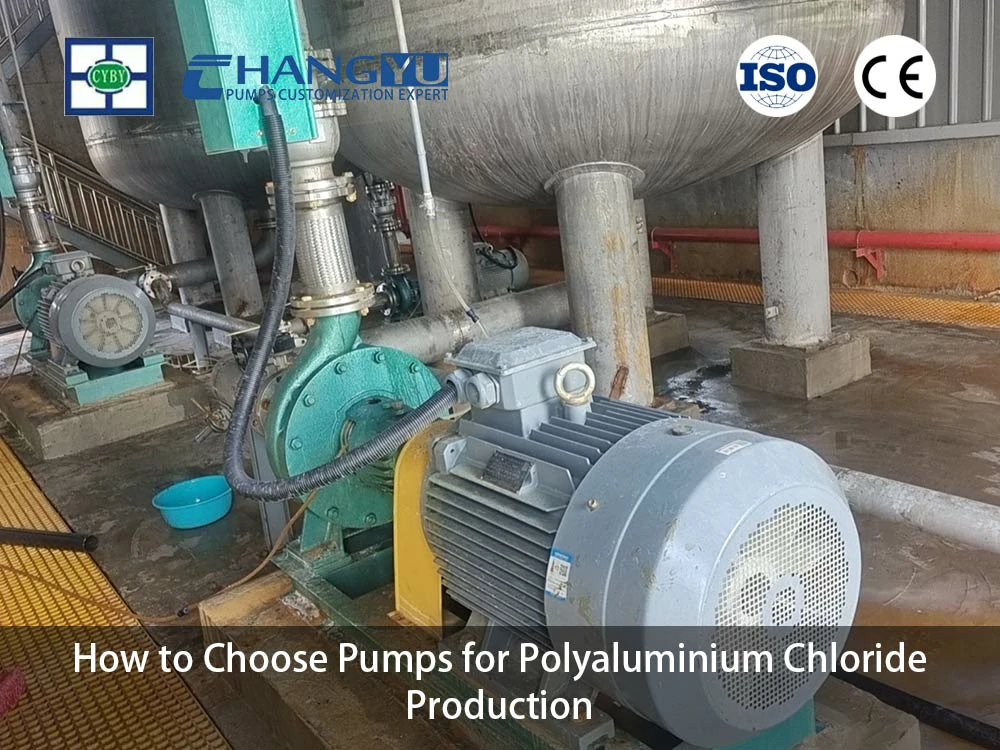
Pompa produksi Polyaluminium Chloride harus dipilih berdasarkan tahapan proses, bukan dengan pendekatan satu-ukuran-untuk-semua. Solusi optimal untuk lini produksi Polyaluminium Chloride adalah kombinasi tiga pompa: pompa vertikal submerged untuk slurry bauksit, pompa sentrifugal CYF (paduan fluoroplastik F46) untuk sirkulasi cairan reaksi HCl, dan pompa sentrifugal CYF yang dioptimalkan untuk transfer Polyaluminium Chloride jadi.
Poin-poin utama:
- Siklus penggantian diperpanjang dari 20 hari menjadi 24 bulan — peningkatan sekitar 36x dibandingkan pendekatan satu-pompa sebelumnya
- Waktu operasional produksi melebihi 98% — turun dari 8 kegagalan bulanan menjadi kurang dari 0,5
- Kemurnian Polyaluminium Chloride meningkat dari 92% menjadi 96% — dicapai dengan mengurangi kontaminasi partikel aus mekanis dan entrainment gelembung udara
- Manfaat ekonomi langsung melebihi ¥450.000/bulan — termasuk pengurangan biaya suku cadang (turun sekitar 80%), perawatan tenaga kerja (turun sekitar 70%), dan penghematan energi sebesar ¥15.000/bulan
Hasil ini berasal dari solusi pemompaan proses penuh yang diselesaikan untuk produsen Polyaluminium Chloride di Shandong, Tiongkok. Berikut adalah rincian lengkap logika pemilihan, desain solusi, dan hasil terukur untuk referensi produsen serupa.
Tiga Proses, Tiga Kondisi Media, Satu Solusi Terintegrasi
Produksi Polyaluminium Chloride (juga dikenal sebagai Poly Aluminum Chloride, umumnya disingkat PAC) melibatkan tiga tahap pemompaan yang berbeda — transfer slurry bauksit, sirkulasi cairan reaksi asam klorida, dan pengiriman Polyaluminium Chloride jadi. Setiap tahap menghadirkan tantangan yang berbeda: padatan abrasif, korosi asam suhu tinggi, dan penanganan cairan kental dengan persyaratan kemurnian yang ketat.
Tahap 1: Transfer Slurry Bauksit
Karakteristik Sedang
| Parameter | Nilai |
|---|---|
| Konsentrasi | Sekitar 35% |
| Jenis partikel | Partikel keras dengan pengotor asam |
| Persyaratan utama | Beradaptasi dengan konsentrasi slurry dan ritme transfer |
| Tantangan utama | Keausan impeller, kebocoran casing |
Masalah inti: Partikel keras dalam slurry bauksit menyebabkan abrasi terus-menerus pada impeller dan casing pompa pada kecepatan aliran tinggi. Pompa standar mengalami keausan impeller yang cepat dan kebocoran casing yang sering, menyebabkan siklus penggantian yang pendek.
Tahap 2: Sirkulasi Cairan Reaksi Asam Klorida
Karakteristik Sedang
| Parameter | Nilai |
|---|---|
| Suhu | 80–90°C (suhu tinggi) |
| Sedang | Cairan reaksi asam klorida, lingkungan ion klorida tinggi |
| Tantangan utama | Korosi kuat, kegagalan seal, risiko kebocoran media |
Masalah inti: Pada suhu tinggi, ion klorida (Cl⁻) menyerang material logam secara agresif. Seal pompa standar gagal dengan cepat dalam kondisi ini, menyebabkan kebocoran media — tidak hanya kehilangan material tetapi juga bahaya keselamatan dan risiko kepatuhan lingkungan.
Tahap 3: Transfer Polyaluminium Chloride Jadi
Karakteristik Sedang
| Parameter | Nilai |
|---|---|
| Kondisi media | Cairan kental |
| Persyaratan khusus | Harus menghindari entrainment gelembung udara selama transfer |
| Masalah pompa sebelumnya | Efisiensi rendah, kegagalan sering, kerugian bulanan melebihi ¥100.000 |
Masalah inti: Polyaluminium Chloride jadi sangat kental. Pompa sentrifugal standar beroperasi pada efisiensi rendah dan cenderung memasukkan gelembung udara selama transfer, mempengaruhi keseragaman dan kualitas produk. Kerusakan yang sering menyebabkan gangguan lini produksi dan kerugian ekonomi langsung.
Solusi: Kombinasi Pompa Vertikal Submerged + Pompa Sentrifugal CYF
Solusi pemompaan gabungan dirancang untuk proyek ini, mencocokkan masing-masing dari tiga tahap dengan jenis pompa yang dipilih secara spesifik.
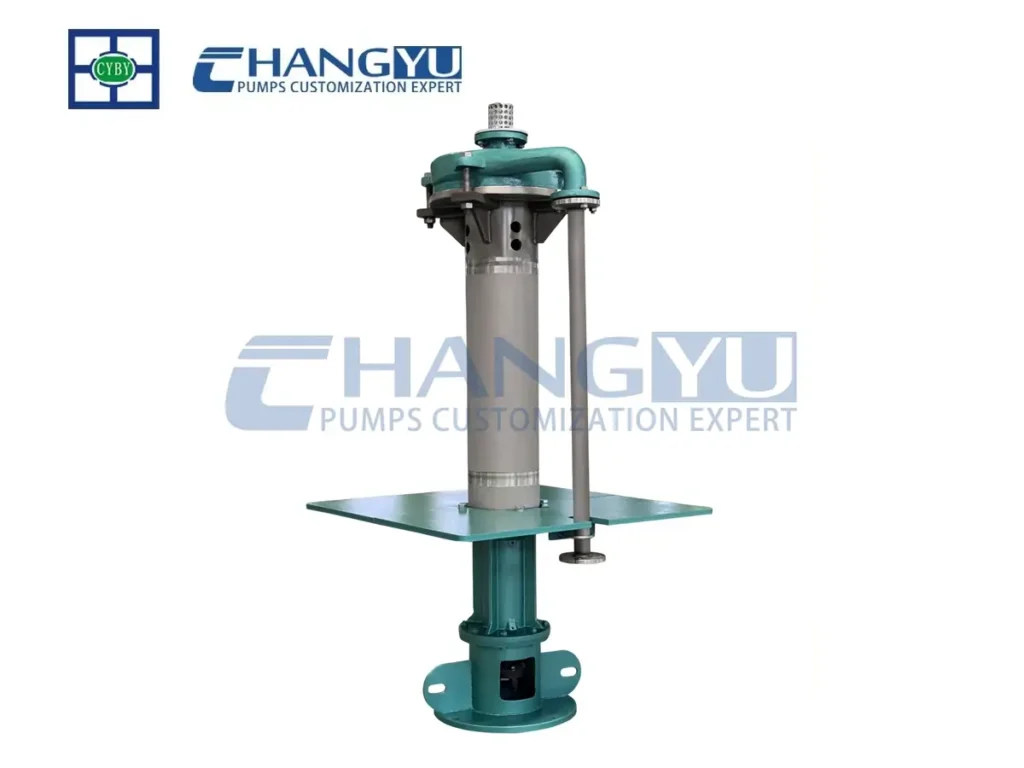
Solusi 1: Transfer Slurry Bauksit — Pompa Vertikal Submerged
| Konfigurasi | Deskripsi |
|---|---|
| Jenis pompa | Pompa vertikal submerged |
| Material bagian basah | Paduan tahan aus dan korosi |
| Kedalaman immersi | 1,2m |
| Penggerak | Motor Variable Frequency Drive (VFD) |
| Keunggulan desain | Beradaptasi terhadap fluktuasi konsentrasi slurry, menyesuaikan laju transfer sesuai kebutuhan |
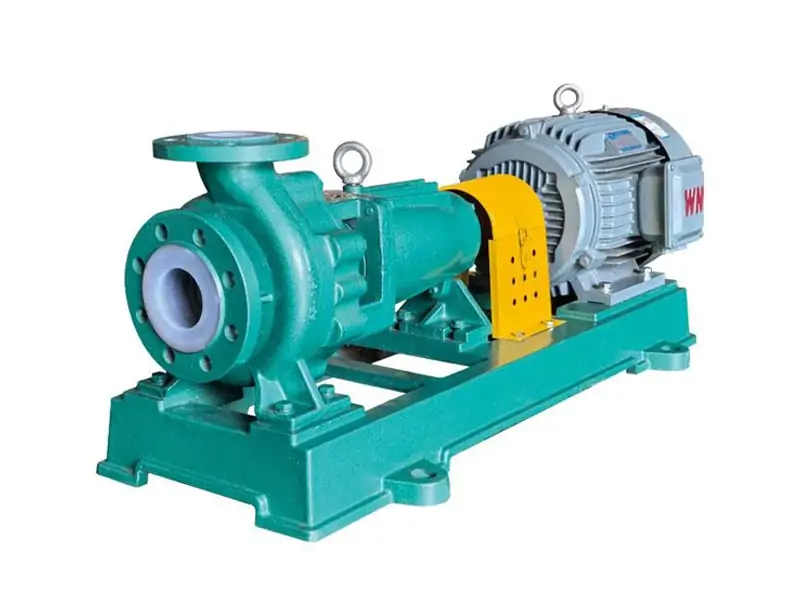
Solusi 2: Sirkulasi Cairan Reaksi HCl — Pompa Sentrifugal CYF (Paduan Fluoroplastik F46)
| Konfigurasi | Deskripsi |
|---|---|
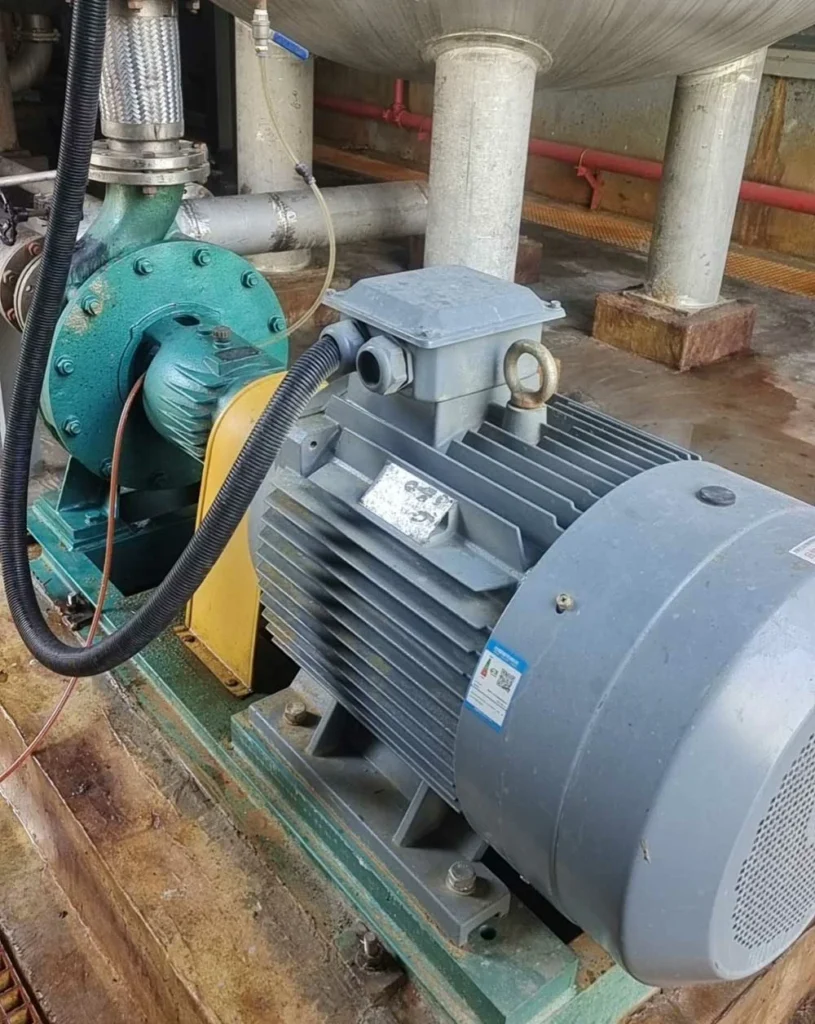
| Jenis pompa | Pompa sentrifugal CYF (khusus) |
| Material bagian basah | Paduan fluoroplastik (F46) |
| Ketahanan suhu | Tahan korosi asam klorida 90°C |
| Struktur | Satu tahap, satu hisapan, horizontal |
| Sistem seal | Mechanical seal bellow dengan permukaan seal Silikon Karbida (SiC) |
| Masa pakai seal | 3 kali masa pakai pompa tradisional |
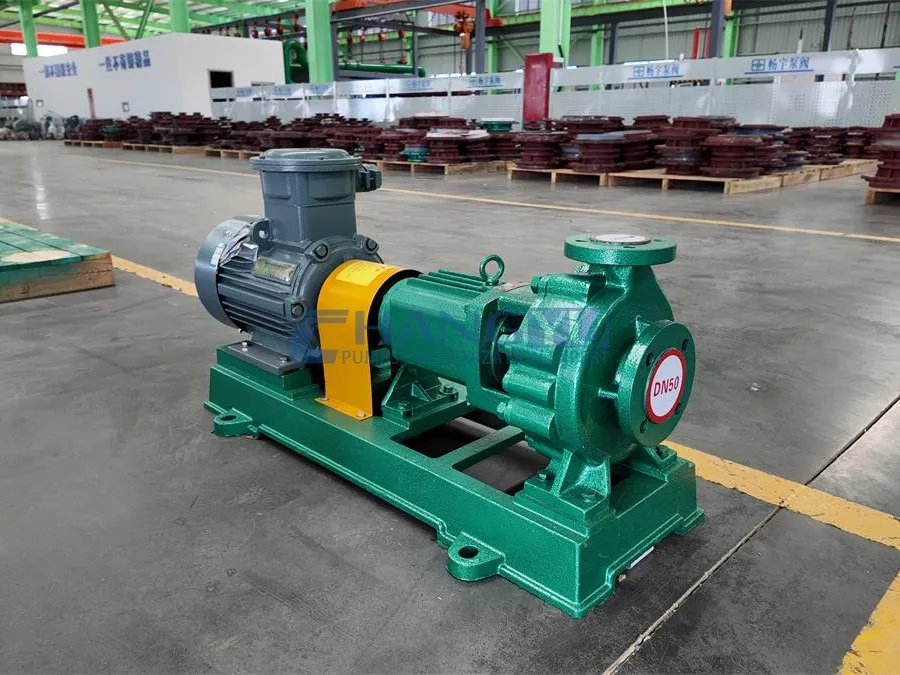
Solusi 3: Transfer Polialuminium Klorida Jadi — Pompa Sentrifugal CYF yang Dioptimalkan
| Konfigurasi | Deskripsi |
|---|---|
| Jenis pompa | Pompa sentrifugal CYF yang dioptimalkan |
| Desain impeler | Lebar outlet ditingkatkan sebesar 15% |
| Ukuran inlet/outlet | DN125 (diameter besar) |
| Motor | Motor hemat energi efisiensi tinggi |
| Konsumsi energi | Berkurang sebesar 12% |
| Kebisingan operasi | < 75 dB |
Ringkasan Spesifikasi Teknis
| Parameter | Pompa Vertikal Submerged | CYF Sentrifugal (HCl) | CYF Sentrifugal (PAC) |
|---|---|---|---|
| Sedang | Slurry bauksit (konsentrasi 35%) | Cairan reaksi HCl | Polialuminium Klorida Jadi (kental) |
| Suhu pengoperasian | Suhu sekitar (slurry) | 80–90°C | Suhu sekitar |
| Material bagian basah | Paduan tahan korosi/abrasi | Paduan fluoroplastik (F46) | Paduan fluoroplastik (F46) |
| Jenis segel | Segel mekanis | Mechanical seal bellow + Silikon Karbida | Segel mekanis |
| Penggerak | Penggerak Frekuensi Variabel | Kecepatan tetap | Motor efisiensi tinggi |
| Desain khusus | Kedalaman perendaman 1,2m | Tahan HCl suhu tinggi | Outlet impeller lebih lebar 15%, DN125 |
Hasil
Sebelum vs. Sesudah
| Metrik | Sebelum (Pompa Asli) | Sesudah (Kombinasi Submersible Vertikal + CYF) |
|---|---|---|
| Siklus penggantian suku cadang | 20 hari | 24 bulan (peningkatan sekitar 36x) |
| Insiden kegagalan bulanan | 8 kali | < 0,5 kali |
| Waktu aktif lini produksi | — | > 98% |
| Kemurnian Polyaluminium Chloride | 92% | 96% (100% tingkat kelulusan batch) |
| Output harian per lini | 80 ton | 95 ton (+450 ton/bulan) |
Catatan peningkatan kemurnian: Peningkatan pompa mengurangi kontaminasi partikel aus mekanis dan meminimalkan masuknya gelembung udara selama transfer, keduanya berkontribusi pada peningkatan konsistensi produk dan kemurnian Polyaluminium Chloride akhir.
Dampak Ekonomi
| Item | Penghematan / Peningkatan Pendapatan |
|---|---|
| Biaya pengadaan suku cadang | Berkurang sekitar 80% |
| Biaya perawatan tenaga kerja | Berkurang sekitar 70% |
| Penghematan listrik bulanan | ¥15.000 (optimasi energi) |
| Manfaat ekonomi langsung | > ¥450.000/bulan (termasuk peningkatan kapasitas) |
Sumber: Laporan penerimaan bersama oleh Departemen Teknis dan Produksi pabrikan.
Mengapa Memilih Kombinasi Pompa Celup Vertikal + CYF?
| Faktor | Tipe Pompa Tunggal | Kombinasi Pompa Celup Vertikal + CYF |
|---|---|---|
| Kesesuaian proses | Satu pompa untuk semua, kompromi tidak dapat dihindari | Setiap tahap mendapatkan tipe pompa yang dipilih secara spesifik |
| Biaya perawatan | Penggantian frekuensi tinggi | Siklus penggantian sekitar 36x lebih lama |
| Efisiensi produksi | Sering rusak, gangguan jalur produksi | Waktu operasional > 98% |
| Kualitas produk | Gelembung/kotoran memengaruhi konsistensi | Kemurnian Polyaluminium Chloride dari 92% menjadi 96% |
| Total Biaya Kepemilikan (TCO) | Lebih tinggi | Jauh lebih rendah |
PERTANYAAN YANG SERING DIAJUKAN
Q1: Jenis pompa apa yang terbaik untuk slurry bauksit konsentrasi tinggi?
A: Pompa celup vertikal adalah pilihan yang kuat untuk aplikasi ini. Desain perendamannya memungkinkan pompa beroperasi langsung di dalam media, sementara motor Variable Frequency Drive (VFD) menyesuaikan laju transfer secara real-time berdasarkan fluktuasi konsentrasi slurry, membantu mencegah penyumbatan dan kelebihan beban.
Q2: Apakah material F46 cocok untuk asam klorida 90°C pada pompa kimia?
A: Ya. F46 (kopolimer perfluoroetilena-propilena) menawarkan stabilitas kimia yang kuat di lingkungan asam kuat bersuhu tinggi. Material ini dipilih secara khusus untuk aplikasi sirkulasi cairan reaksi HCl 80–90°C ini, dan data operasional lapangan mengonfirmasi keandalannya.
Q3: Mengapa transfer Polyaluminium Chloride memerlukan outlet impeler yang lebih lebar dan port berdiameter besar?
A: Polyaluminium Chloride jadi memiliki viskositas tinggi. Diameter impeler dan pipa standar menciptakan resistensi aliran yang lebih tinggi dan efisiensi yang lebih rendah. Outlet impeler 15% lebih lebar yang dikombinasikan dengan port DN125 mengurangi resistensi aliran dan meminimalkan risiko pembentukan gelembung udara — keduanya membantu menjaga kualitas produk.
Q4: Dapatkah solusi ini langsung diterapkan di pabrik saya?
A: Setiap jalur produksi Polyaluminium Chloride memiliki parameter proses, komposisi media, dan kondisi lokasi yang berbeda, sehingga penyesuaian biasanya diperlukan. Namun, logika pemilihan — mencocokkan tipe pompa dengan kondisi proses spesifik, dan memprioritaskan pemilihan material berdasarkan karakteristik media — berlaku untuk semua skenario serupa.
Ringkasan
Studi kasus ini menunjukkan prinsip kunci: pemompaan produksi Polyaluminium Chloride bukan tentang menemukan satu pompa yang dapat melakukan semuanya — melainkan tentang mencocokkan tiga proses, tiga tipe pompa, dan satu solusi terintegrasi.
Jika Anda menghadapi tantangan pemompaan di jalur produksi Polyaluminium Chloride Anda, kami dengan senang hati akan merancang solusi yang disesuaikan berdasarkan kondisi spesifik Anda.
Kontak Tim Teknik Pompa Changyu: