
Las bombas para la producción de policloruro de aluminio deben seleccionarse según la etapa del proceso, no con un enfoque único para todos. La solución óptima para una línea de producción de policloruro de aluminio es una combinación de tres bombas: una bomba vertical sumergida para lodo de bauxita, una bomba centrífuga CYF (aleación de fluoroplástico F46) para la circulación del líquido de reacción con HCl, y una bomba centrífuga CYF optimizada para la transferencia del policloruro de aluminio terminado.
Conclusiones clave:
- Ciclo de reemplazo extendido de 20 días a 24 meses — una mejora de aproximadamente 36 veces en comparación con el enfoque anterior de una sola bomba
- Disponibilidad de producción superior al 98% — reducción de 8 fallas mensuales a menos de 0.5
- Pureza del policloruro de aluminio aumentada del 92% al 96% — logrado mediante la reducción de la contaminación por partículas de desgaste mecánico y la incorporación de burbujas de aire
- Beneficio económico directo superior a ¥450,000/mes — incluyendo reducción de costos de repuestos (aproximadamente 80% menos), mantenimiento de mano de obra (aproximadamente 70% menos) y ahorro de energía de ¥15,000/mes
Estos resultados provienen de una solución de bombeo de proceso completo implementada para un fabricante de policloruro de aluminio en Shandong, China. A continuación se presenta un desglose detallado de la lógica de selección, el diseño de la solución y los resultados medibles como referencia para fabricantes similares.
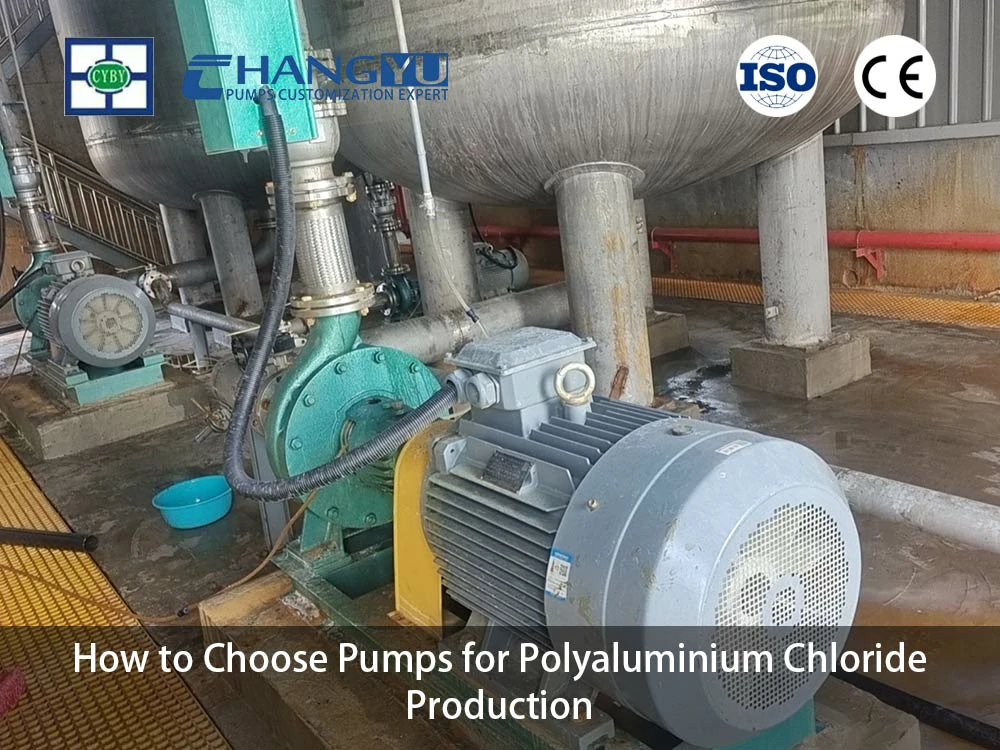
Tres procesos, tres condiciones de medio, una solución integrada
La producción de policloruro de aluminio (también conocido como policloruro de aluminio, comúnmente abreviado como PAC) involucra tres etapas distintas de bombeo: transferencia de lodo de bauxita, circulación del líquido de reacción con ácido clorhídrico y entrega del policloruro de aluminio terminado. Cada etapa presenta diferentes desafíos: sólidos abrasivos, corrosión ácida a alta temperatura y manejo de líquidos viscosos con estrictos requisitos de pureza.
Etapa 1: Transferencia de lodo de bauxita
Características del medio
| Parámetro | Valor |
|---|---|
| Concentración | Aprox. 35% |
| Tipo de partícula | Partículas duras con impurezas ácidas |
| Requisito clave | Adaptarse a la concentración del lodo y al ritmo de transferencia |
| Desafío principal | Desgaste del impulsor, fugas en la carcasa |
El problema central: Las partículas duras en el lodo de bauxita causan abrasión continua en los impulsores y las carcasas de las bombas a altas velocidades de flujo. Las bombas estándar experimentan desgaste rápido del impulsor y fugas frecuentes en la carcasa, lo que genera ciclos de reemplazo cortos.
Etapa 2: Circulación del líquido de reacción con ácido clorhídrico
Características del medio
| Parámetro | Valor |
|---|---|
| Temperatura | 80–90°C (alta temperatura) |
| Medio | Líquido de reacción con ácido clorhídrico, ambiente con alta concentración de iones cloruro |
| Desafío principal | Corrosión fuerte, falla del sello, riesgo de fuga del medio |
El problema central: A alta temperatura, los iones cloruro (Cl⁻) atacan agresivamente los materiales metálicos. Los sellos de las bombas estándar fallan rápidamente en estas condiciones, lo que provoca fugas del medio — no solo pérdida de material, sino también riesgos de seguridad y problemas de cumplimiento ambiental.
Etapa 3: Transferencia del policloruro de aluminio terminado
Características del medio
| Parámetro | Valor |
|---|---|
| Estado del medio | Líquido viscoso |
| Requisito especial | Debe evitarse la incorporación de burbujas de aire durante la transferencia |
| Problemas anteriores de la bomba | Baja eficiencia, fallas frecuentes, pérdidas mensuales superiores a ¥100,000 |
El problema central: El policloruro de aluminio terminado es altamente viscoso. Las bombas centrífugas estándar operan con baja eficiencia y tienden a introducir burbujas de aire durante la transferencia, lo que afecta la uniformidad y calidad del producto. Las averías frecuentes causan interrupciones en la línea de producción y pérdidas económicas directas.
Solución: combinación de bomba vertical sumergida + bomba centrífuga CYF
Se diseñó una solución de bombeo combinada para este proyecto, asignando a cada una de las tres etapas un tipo de bomba específicamente seleccionado.
Solución 1: Transferencia de lodo de bauxita — Bomba vertical sumergida
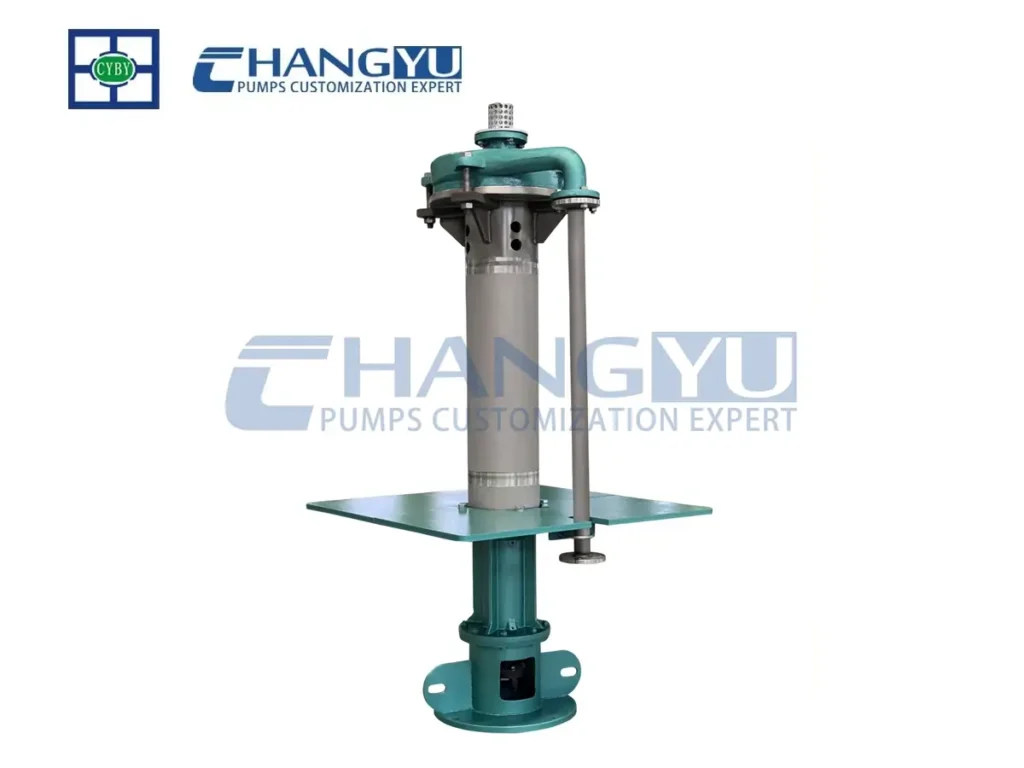
| Configuración | Descripción |
|---|---|
| Tipo de bomba | Bomba vertical sumergida |
| Material de las partes húmedas | Aleación resistente al desgaste y la corrosión |
| Profundidad de inmersión | 2 m |
| Accionamiento | Motor con variador de frecuencia (VFD) |
| Ventaja de diseño | Se adapta a las fluctuaciones de concentración de pulpa, ajusta la tasa de transferencia según demanda |
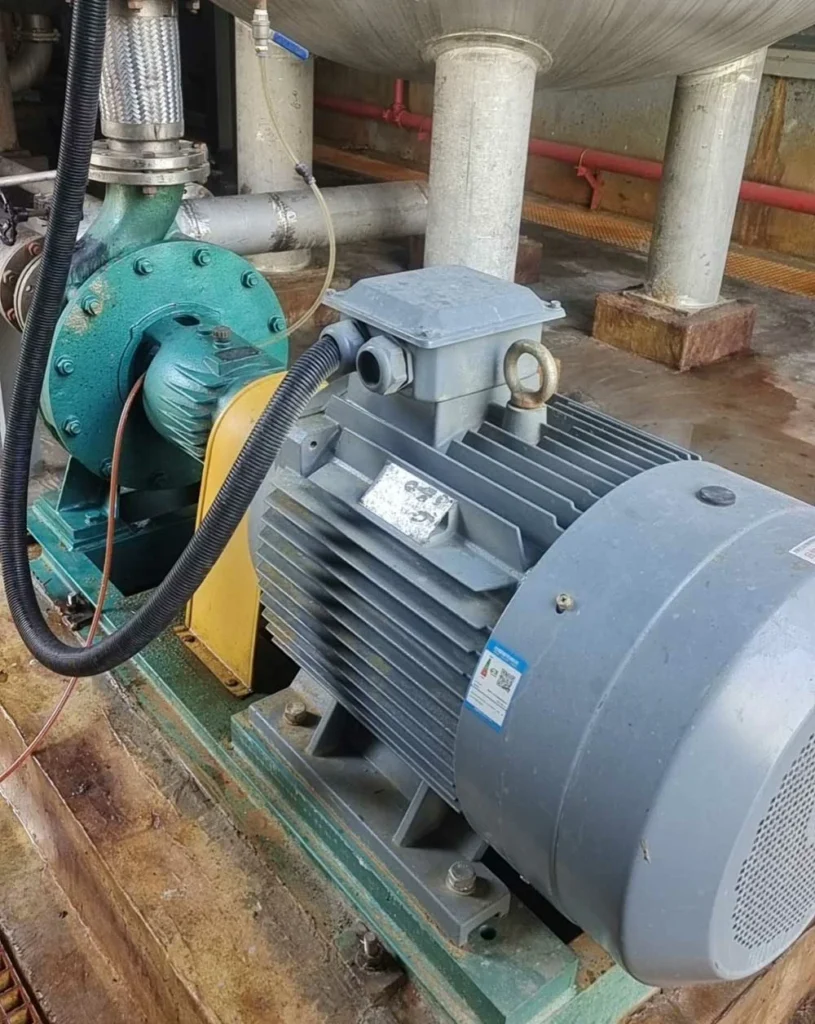
Solución 2: Circulación de líquido de reacción HCl — Bomba centrífuga CYF (Aleación de fluoroplástico F46)
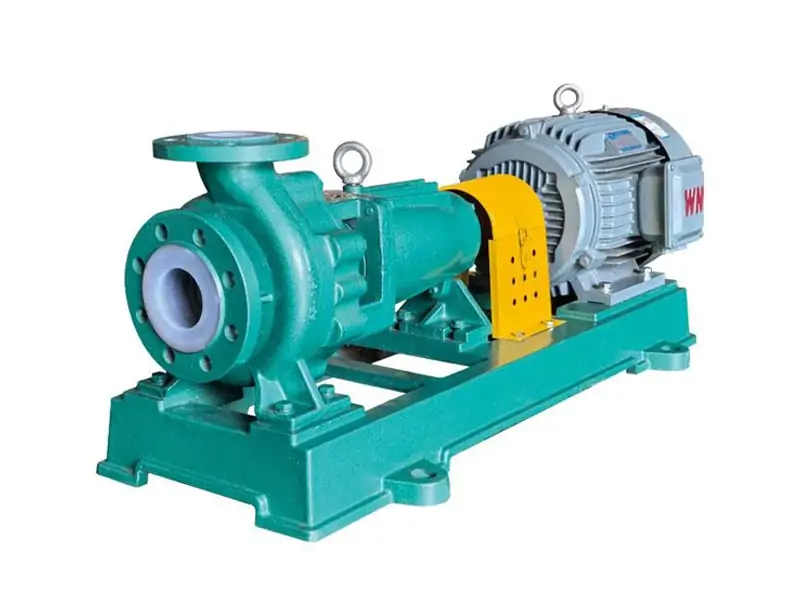
| Configuración | Descripción |
|---|---|
| Tipo de bomba | Bomba centrífuga CYF (especializada) |
| Material de las partes húmedas | Aleación de fluoroplástico (F46) |
| Resistencia a la temperatura | Soporta corrosión por ácido clorhídrico a 90°C |
| Estructura | Horizontal, de una sola etapa y una sola succión |
| Sistema de sellado | Sello mecánico de fuelle con caras de sellado de carburo de silicio (SiC) |
| Vida útil del sello | 3 veces la vida útil de bombas tradicionales |
Solución 3: Transferencia de policloruro de aluminio terminado — Bomba centrífuga CYF optimizada
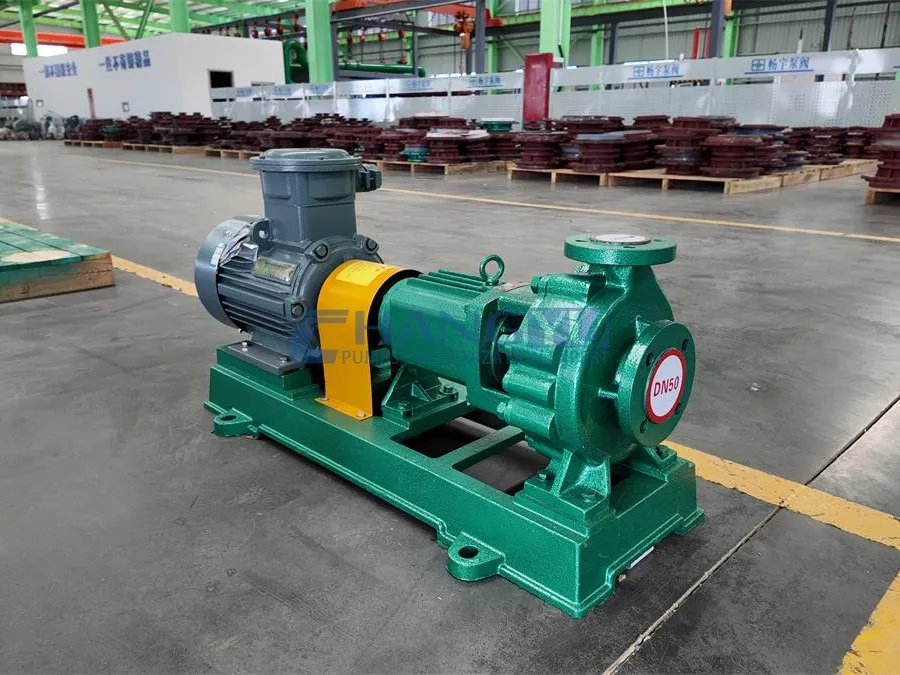
| Configuración | Descripción |
|---|---|
| Tipo de bomba | Bomba centrífuga CYF optimizada |
| Impeller design | Ancho de salida aumentado en 15% |
| Tamaño de entrada/salida | DN125 (diámetro grande) |
| Motor | Motor de alta eficiencia y ahorro energético |
| Consumo de energía | Reducido en 12% |
| Ruido de operación | < 75 dB |
Resumen de especificaciones técnicas
| Parámetro | Bomba vertical sumergida | CYF centrífuga (HCl) | CYF centrífuga (PAC) |
|---|---|---|---|
| Medio | Pulpa de bauxita (35% conc.) | Líquido de reacción HCl | Policloruro de aluminio terminado (viscoso) |
| Temperatura de funcionamiento | Ambiente (pulpa) | 80–90°C | Ambiente |
| Material de las partes húmedas | Aleación resistente a corrosión/abrasión | Aleación de fluoroplástico (F46) | Aleación de fluoroplástico (F46) |
| Tipo de sello | Sello mecánico | Sello mecánico de fuelle + carburo de silicio | Sello mecánico |
| Accionamiento | Variador de frecuencia | Velocidad fija | Motor de alta eficiencia |
| Diseño especial | Profundidad de inmersión de 1.2 m | Resistencia a HCl a alta temperatura | Salida de impulsor 15% más ancha, DN125 |
Resultados
Antes vs. Después
| Sistema métrico | Antes (bombas originales) | Después (combinación vertical sumergida + CYF) |
|---|---|---|
| Ciclo de reemplazo de repuestos | 20 días | 24 meses (aproximadamente 36 veces de mejora) |
| Incidentes de falla mensuales | 8 veces | < 0.5 veces |
| Tiempo de actividad de la línea de producción | — | > 98% |
| Pureza del Policloruro de Aluminio | 92% | 96% (100% de tasa de aprobación por lote) |
| Producción diaria por línea | 80 toneladas | 95 toneladas (+450 toneladas/mes) |
Nota sobre la mejora de pureza: La actualización de la bomba redujo la contaminación por partículas de desgaste mecánico y minimizó la entrada de burbujas de aire durante la transferencia, ambos factores contribuyeron a mejorar la consistencia del producto y la pureza del Policloruro de Aluminio final.
Impacto Económico
| Artículo | Ahorros / Incremento de Ingresos |
|---|---|
| Costo de adquisición de repuestos | Reducido en aproximadamente un 80% |
| Costo de mantenimiento de mano de obra | Reducido en aproximadamente un 70% |
| Ahorro mensual de electricidad | ¥15,000 (optimización energética) |
| Beneficio económico directo | > ¥450,000/mes (incluyendo aumento de capacidad) |
Fuente: Informe de aceptación conjunta de los Departamentos Técnico y de Producción del fabricante.
¿Por qué elegir la combinación de Bomba Vertical Sumergida + CYF?
| Factor | Tipo de Bomba Única | Combinación de Bomba Vertical Sumergida + CYF |
|---|---|---|
| Adecuación al proceso | Una bomba para todo, compromisos inevitables | Cada etapa recibe un tipo de bomba específicamente seleccionado |
| Costo de mantenimiento | Reemplazos de alta frecuencia | Ciclo de reemplazo aproximadamente 36 veces más largo |
| Eficiencia de producción | Averías frecuentes, interrupciones en la línea | Tiempo operativo > 98% |
| Calidad del producto | Burbujas/impurezas afectan la consistencia | Pureza del Policloruro de Aluminio del 92% al 96% |
| Costo Total de Propiedad (TCO) | Más alto | Significativamente menor |
Preguntas frecuentes
P1: ¿Qué tipo de bomba es mejor para lodo de bauxita de alta concentración?
R: Una bomba vertical sumergida es una opción sólida para esta aplicación. Su diseño de inmersión permite que la bomba opere directamente en el medio, mientras que un motor con Variador de Frecuencia (VFD) ajusta la tasa de transferencia en tiempo real según las fluctuaciones de concentración del lodo, ayudando a prevenir obstrucciones y sobrecargas.
P2: ¿Es adecuado el material F46 para ácido clorhídrico a 90°C en bombas químicas?
R: Sí. El F46 (copolímero de perfluoroetileno-propileno) ofrece una fuerte estabilidad química en ambientes de ácido fuerte y alta temperatura. Fue específicamente seleccionado para esta aplicación de circulación de líquido de reacción de HCl a 80–90°C, y los datos operativos de campo confirman su fiabilidad.
P3: ¿Por qué la transferencia de Policloruro de Aluminio requiere una salida de impulsor más ancha y puertos de gran diámetro?
R: El Policloruro de Aluminio terminado es altamente viscoso. Los diámetros estándar de impulsor y tubería crean mayor resistencia al flujo y menor eficiencia. Una salida de impulsor un 15% más ancha combinada con puertos DN125 reduce la resistencia al flujo y minimiza el riesgo de formación de burbujas de aire, ambos factores ayudan a mantener la calidad del producto.
P4: ¿Puede esta solución aplicarse directamente a mi planta?
R: Cada línea de producción de Policloruro de Aluminio tiene diferentes parámetros de proceso, composiciones de medio y condiciones de sitio, por lo que generalmente se requiere personalización. Sin embargo, la lógica de selección — igualar los tipos de bomba a condiciones de proceso específicas y priorizar la selección de materiales según las características del medio — se aplica a todos los escenarios similares.
Resumen
Este caso demuestra un principio clave: el bombeo en la producción de Policloruro de Aluminio no se trata de encontrar una bomba que haga todo — se trata de igualar tres procesos, tres tipos de bomba y una solución integrada.
Si enfrenta desafíos de bombeo en su línea de producción de Policloruro de Aluminio, estaremos encantados de diseñar una solución a medida basada en sus condiciones específicas.
Contacto Equipo de Ingeniería de Bombas Changyu: