
Introdução
Bomba de lama para semicondutores a seleção é impulsionada por uma única preocupação primordial: proteger o rendimento do wafer. Em uma instalação de fabricação de 300 mm, defeitos de lama induzidos pela bomba podem tornar múltiplos dies não funcionais em um único wafer—resultando em perdas de receita medidas em dezenas de milhares de dólares por wafer afetado.
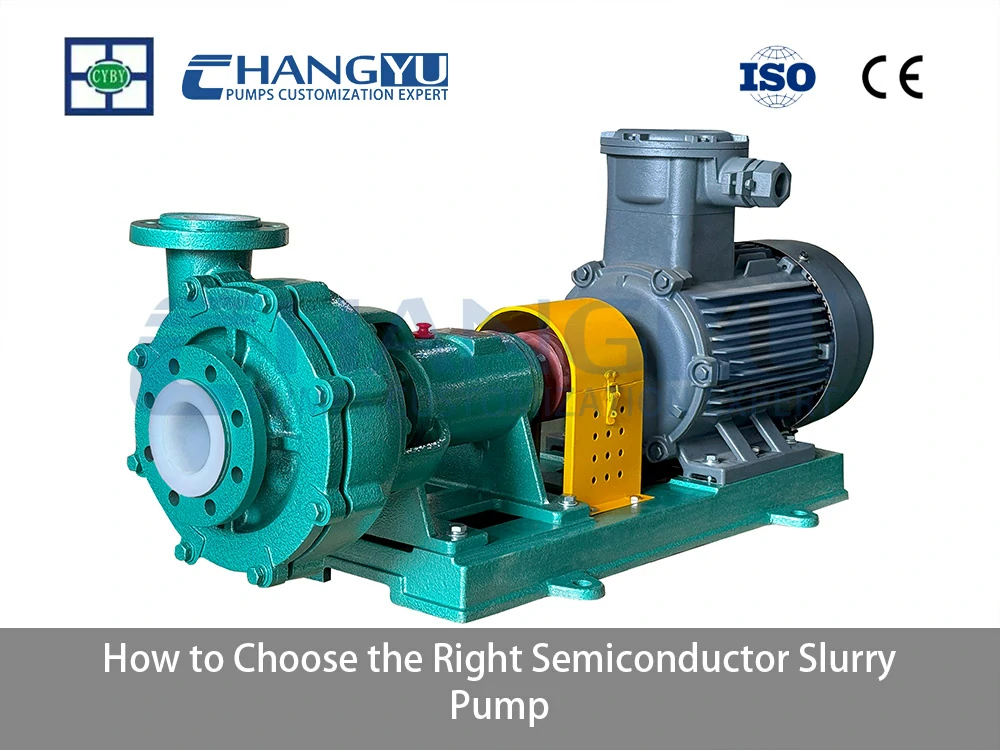
Este risco se origina na física das lamas CMP. Estas são suspensões coloidais de partículas abrasivas em nanoescala—tipicamente sílica, alumina ou céria de 20–200 nm—estabilizadas por repulsão eletrostática em soluções quimicamente agressivas. Embora partículas individuais deste tamanho sejam muito pequenas para causar danos ao wafer, a tensão de cisalhamento gerada pela bomba pode superar as barreiras repulsivas entre elas, forçando as partículas a se aglomerarem em clusters maiores que 0,5 μm. São esses aglomerados—não as partículas originais da lama—que produzem microarranhões nas superfícies polidas do wafer e aumentam a densidade de defeitos. Pesquisas publicadas comparando configurações de bombas de fole, diafragma e levitação magnética confirmaram esta cadeia causal: maior cisalhamento produz mais partículas grandes, e mais partículas grandes produzem mais defeitos no wafer.
A seleção da bomba neste contexto, portanto, não é primariamente sobre vazão ou pressão de cabeça. A verdadeira métrica de desempenho é preservação da saúde da lama: a capacidade da bomba de mover a lama sem alterar sua distribuição de tamanho de partículas. Este guia fornece uma estrutura organizada para fazer essa seleção, abrangendo comparação de tecnologia de bombas, compatibilidade de materiais e considerações completas de projeto do sistema. A Changyu Pump traz mais de duas décadas de experiência em engenharia de bombas no manuseio de fluidos resistentes à corrosão e ao desgaste para o bomba de polpa em indústria de semicondutores setor.
Por Que a Seleção da Bomba é Crítica para a Integridade da Lama CMP
A Química Colonial em Jogo
As lamas CMP são sistemas inerentemente metaestáveis. Sua estabilidade depende de um equilíbrio de forças em nanoescala:
- A repulsão eletrostática entre partículas as mantém separadas e suspensas.
- O Força de van der Waals—sempre atrativa—constantemente puxa as partículas umas em direção às outras.
- Quando a tensão de cisalhamento aplicada externamente excede a barreira eletrostática, as partículas são empurradas para perto o suficiente para que as forças atrativas dominem, e elas se unem irreversivelmente.
A consequência prática é que o cisalhamento gerado pela bomba aumenta diretamente o número de partículas superdimensionadas em circulação.
Como as Bombas de Lama para Semicondutores São Avaliadas
Como a função principal da bomba é preservar a qualidade da lama, as métricas usadas para avaliá-la diferem fundamentalmente daquelas usadas para bombas de lama industriais:
| Métrica | O Que Mede | Porque é que é importante |
|---|---|---|
| Contagens de Partículas Grandes (LPC) | Número de partículas >0,5 μm após circulação | Sinaliza diretamente aglomeração induzida pela bomba |
| Densidade de Defeitos no Wafer | Microarranhões e cavidades por unidade de área | Determina o rendimento de dies por wafer |
| Vida Útil do Filtro | Tempo entre substituições de filtro | Reflete a carga de aglomerados que a bomba está gerando |
Uma bomba de lama industrial é projetada para sobreviver à abrasão. Uma bomba de polpa para semicondutores é projetada para evitar que ela ocorra em primeiro lugar.
Por Que as Bombas de Lama Industriais Convencionais Exigem Avaliação Cuidadosa
Padrão bombas centrífugas construídas para transferência de lama em mineração ou química geram tensões de cisalhamento na ponta do impulsor ordens de magnitude acima do que as partículas de lama CMP podem tolerar. Bombas de deslocamento positivo tradicionais—projetos de diafragma e fole—produzem fluxo pulsátil com picos de pressão que danificam similarmente as suspensões de partículas.
No entanto, através de otimização de projeto dedicada—como suspensão por mancal magnético e geometria de rotor de folga larga—bombas centrífugas podem alcançar cisalhamento suficientemente baixo para o manuseio de lama CMP. A distinção está no projeto específico e seu perfil de cisalhamento medido, não na categoria da bomba em si. Para uma compreensão mais ampla dos fundamentos de bombas centrífugas, veja nosso guia sobre Compreender as peças e o funcionamento da bomba centrífuga.
Principais Tecnologias de Bombas de Lama CMP para Fabricação de Semicondutores
Quatro tecnologias de bombas são comumente encontradas no manuseio de lama CMP. Cada uma tem um perfil de cisalhamento distinto, princípio de operação e aplicação mais adequada dentro do sistema de entrega de lama.
Bombas Centrífugas com Levitação Magnética (MagLev)
As bombas MagLev adotam uma abordagem fundamentalmente diferente para o projeto de bombas centrífugas. Em vez de suportar o impulsor em mancais mecânicos e vedar o eixo com um selo dinâmico, uma bomba MagLev suspende todo o rotor do impulsor em um campo magnético controlado. O rotor gira sem contato físico com qualquer superfície estacionária—sem mancais para desgastar, sem selo para vazar, sem superfícies de atrito para gerar detritos particulados.
Para o manuseio de lama CMP, duas consequências decorrem diretamente deste projeto:
- Sem contato significa sem geração de partículas. A bomba não libera material de mancal ou detritos de selo no fluxo de lama, eliminando uma fonte de contaminação que bombas com selo mecânico não podem evitar.
- A geometria de rotor de folga larga produz cisalhamento substancialmente menor. Sem a necessidade de folgas apertadas de funcionamento ao redor de um selo mecânico, o impulsor pode ser projetado com folgas internas maiores que submetem a lama a uma aceleração muito mais suave do que uma bomba centrífuga convencional.
A evidência quantitativa apoia essas vantagens de projeto. Em experimentos comparativos, uma bomba centrífuga maglev aumentou as Contagens de Partículas Grandes em apenas um quinto a um terço do aumento produzido por bombas de fole ao longo de múltiplas trocas de lama. Wafers polidos com lamas circuladas por maglev mostraram aumentos substancialmente menores na rugosidade superficial e densidade de defeitos em comparação com aqueles polidos com lamas circuladas por bombas de deslocamento positivo convencionais.
Melhor aplicação: Recirculação de lama a granel em fabs de semicondutores avançados—o padrão estabelecido onde a prevenção de aglomeração de partículas é um requisito de processo inegociável.
Limitações: Custo de capital mais alto do que alternativas com selo mecânico. Otimizado para lamas limpas e homogêneas; não adequado para misturas contendo partículas grandes ou abrasivas.
Bombas Peristálticas (Mangueira/Tubo)
Bombas peristálticas operam comprimindo um tubo flexível com roletes rotativos. Isso cria uma série de câmaras seladas que se movem da sucção à descarga, com o fluido entrando em contato apenas com o interior do tubo — sem selos, sem válvulas, sem componentes rotativos no caminho do fluxo.
Três características tornam as bombas peristálticas adequadas para tarefas específicas de CMP:
- Entrega de baixo cisalhamento. O mecanismo de compressão suave submete as partículas da pasta a estresse mecânico mínimo, preservando a distribuição do tamanho das partículas.
- Caminho de fluxo reto e sem obstruções. Não há zonas mortas, fendas ou pontos de estagnação onde a pasta possa acumular, aglomerar ou endurecer — um problema comum em bombas com geometrias internas complexas.
- Alta precisão de medição. A vazão pode ser controlada dentro de ±0,5% do ponto de ajuste, atendendo à precisão necessária para dispensar a pasta na almofada de polimento durante o processamento de wafers.
A vida útil do tubo da bomba peristáltica é inversamente proporcional à velocidade de operação e à pressão de descarga. Para uma determinada necessidade de vazão, selecionar um tubo de diâmetro maior operado em velocidade menor pode estender substancialmente os intervalos de substituição do tubo. A tubulação de silicone curada com platina é compatível com a maioria das químicas aquosas de CMP; para formulações de pasta contendo solventes, a tubulação de fluoropolímero evita o inchaço que pode fazer com que os tubos de silicone percam estabilidade dimensional e precisão de medição.
Melhor aplicação: Dispensa de pasta no ponto de uso (POU) — a bomba que entrega um volume medido com precisão de pasta ao wafer no momento do polimento.
Limitações: O fluxo pulsátil é menos adequado para longos loops de distribuição. O desgaste do tubo devido à operação contínua requer substituição periódica, que deve ser considerada no custo total de propriedade.
Bombas de Fole e Diafragma
Bombas de fole e bombas de diafragma operadas a ar (AODD) usam uma membrana flexível ou fole recíproco para deslocar fluido. Sua construção sem selo elimina o selo mecânico do eixo, e elas têm sido usadas historicamente em aplicações de pasta de CMP.
No entanto, a ação recíproca que define essas bombas também cria sua principal limitação para pastas sensíveis ao cisalhamento. Cada curso gera uma pulsação de pressão que submete as partículas a estresse mecânico cíclico. Estudos publicados comparando bombas de fole, diafragma e MagLev mostraram aglomeração de partículas mensuravelmente maior nos projetos de deslocamento positivo. As bombas AODD adicionam o requisito adicional de um suprimento de ar comprimido, aumentando tanto o custo de infraestrutura quanto o consumo de energia.
Melhor aplicação: Entrega de precursores químicos e manuseio de fluxos de resíduos, onde as consequências da aglomeração de partículas são menos severas e o design sem selo oferece vantagens compensatórias.
Comparação de Tecnologia
| Tipo de bomba | Estresse de Cisalhamento | Crescimento de Partículas | Tipo de fluxo | Melhor aplicação |
|---|---|---|---|---|
| MagLev Centrífuga | Muito Baixo | Mínimo | Contínuo sem pulsação | Recirculação em massa, loops de distribuição |
| Peristáltico | Baixa | Mínimo | Pulsátil (±0,5%) | Dispensa POU, medição de precisão |
| Fole / Diafragma | Moderado | Aumento mensurável | Pulsátil | Entrega química, fluxos de resíduos |
Materiais Compatíveis com Serviço de Pasta de Semicondutores
Os materiais que entram em contato com a pasta de CMP devem simultaneamente resistir ao ataque químico da solução transportadora — que pode conter KOH, NH₄OH, H₂O₂ ou outros oxidantes agressivos — e suportar abrasão mecânica de partículas abrasivas suspensas. A contaminação por íons metálicos é uma preocupação distinta e crítica: quaisquer íons metálicos lixiviados para a pasta a partir de componentes da bomba podem se difundir no wafer durante o polimento, alterando suas propriedades elétricas e degradando o desempenho do dispositivo.
Opções de Material para Componentes Molhados
UHMW-PE (polietileno de peso molecular ultra-elevado) oferece o melhor equilíbrio de resistência ao desgaste e compatibilidade química para serviço de pasta abrasiva. Sob testes padronizados de desgaste abrasivo, sua perda de volume é substancialmente menor do que a do aço inoxidável, aço carbono e a maioria dos plásticos de engenharia. Suporta uma ampla gama de ácidos, álcalis e sais em temperaturas de até aproximadamente 90°C, e retém suas propriedades em temperaturas tão baixas quanto –196°C. Para aplicações de bomba de pasta onde partículas abrasivas são o principal desafio e a temperatura do processo permanece moderada, componentes molhados revestidos com UHMW-PE fornecem uma solução de material comprovada.
PTFE (Politetrafluoretileno) e PFA (Perfluoroalcoxi) estão entre os materiais de bomba mais quimicamente inertes disponíveis. Ambos são compatíveis com toda a gama de químicas de pasta de CMP, incluindo oxidantes agressivos. O PFA estende a capacidade de temperatura para aproximadamente 180°C em aplicações estruturais e oferece menor permeabilidade a gases do que o PTFE. Uma limitação física deve ser observada: os fluoropolímeros não são totalmente impermeáveis. Sob exposição prolongada a meios altamente permeantes, como HF ou oxidantes fortes em temperaturas elevadas, produtos químicos traço podem migrar lentamente através do revestimento para a interface do invólucro metálico, onde podem causar corrosão no lado traseiro. Para essas condições de serviço, o PFA é preferido em relação ao PTFE, a espessura do revestimento deve ser especificada de acordo, e testes periódicos de integridade ultrassônica são recomendados.
Referência rápida sobre compatibilidade de materiais
| Material | Resistência química | Resistência à abrasão | Temperatura máxima | Adequação para Semicondutores | Por que Não (Se Evitado) |
|---|---|---|---|---|---|
| UHMW-PE | Amplo (ácidos, álcalis, sais) | Excelente | ~90°C | ✅ Preferido para pasta abrasiva | — |
| PTFE | Quase universal | Moderado | ~120°C | ✅ Padrão para alta pureza | — |
| PFA | Quase universal | Moderado | ~180°C | ✅ Pasta em temperatura elevada | — |
| AÇO INOXIDÁVEL 316L | Limitado (evitar ácidos) | Moderado | ~120°C | ❌ Evitar | Contaminação por íons metálicos degrada as propriedades elétricas do wafer |
| Aço carbono | Nenhum | Bom | ~200°C | ❌ Evitar | Nenhuma resistência à corrosão útil em químicas de CMP |
Como Projetar um Sistema Completo de Entrega de Pasta de CMP
Selecionar a bomba certa é necessário, mas não suficiente. Um sistema de entrega de pasta de CMP deve ser projetado como um todo integrado, com a bomba operando em conjunto com tubulação, filtração e disposições de desgaseificação configuradas adequadamente. As diretrizes a seguir abordam os fatores em nível de sistema que determinam se a bomba — por mais bem selecionada que seja — entregará saúde aceitável da pasta na produção.
Arquitetura do Loop de Recirculação de Pasta
O loop de distribuição de pasta conecta o tanque diário, bomba, tubulação de alimentação, pontos de uso e tubulação de retorno em um circuito contínuo. Requisitos chave de projeto:
- Circulação contínua em velocidade controlada. A velocidade do fluxo do loop deve exceder a velocidade de sedimentação das maiores partículas na slurry para manter uma suspensão uniforme. Velocidade muito baixa permite a sedimentação de partículas; velocidade muito alta aumenta a exposição cumulativa ao cisalhamento. Uma faixa alvo de 0,6–2,0 m/s nos cabeçotes principais de distribuição é típica, mas o valor específico deve ser calculado para cada formulação de slurry.
- Linhas de alimentação com comprimento mínimo e número mínimo de cotovelos. Cada curva, válvula e conexão na linha de alimentação introduz cisalhamento adicional. Use cotovelos de raio longo em preferência a conexões de raio curto, e posicione válvulas de isolamento estrategicamente para minimizar o acúmulo de cisalhamento enquanto mantém a capacidade de manutenção.
- Linhas de retorno com inclinação contínua para baixo. A tubulação de retorno deve ser inclinada consistentemente em direção ao tanque diário com um gradiente mínimo de 1:100 para evitar estagnação da slurry e sedimentação de partículas durante períodos de baixo fluxo ou inatividade.
Eliminação de Pontos Mortos e Prevenção de Estagnação
Pontos mortos—seções de tubulação onde a slurry pode permanecer estática enquanto o loop principal continua a circular—são locais primários para aglomeração de slurry, sedimentação de partículas e crescimento bacteriano. Práticas de projeto para eliminá-los:
- Instale conexões de ponto de uso (POU) diretamente no loop principal, com comprimento zero ou mínimo de ramificação até o ponto de dispensação.
- Configure válvulas de isolamento de modo que nenhuma seção do loop possa ser isolada sem fluxo contínuo através ou passando por ela.
- Para pontos de uso (POU) que são usados intermitentemente, instale linhas de sangria que retornem um pequeno fluxo contínuo ao loop principal, mantendo a slurry em movimento através da ramificação.
Integração de Filtração
Filtros a jusante da bomba capturam partículas aglomeradas antes que elas atinjam o wafer. A seleção e o posicionamento do filtro influenciam o projeto do sistema:
- Filtros de ponto de uso em cada ponto de uso (POU) interceptam partículas geradas em qualquer lugar a montante, fornecendo uma barreira final antes que a slurry entre em contato com o wafer.
- Filtros de loop em massa protegem todo o sistema de distribuição, mas introduzem queda de pressão adicional. O projeto do alojamento do filtro deve evitar a criação de zonas mortas dentro do próprio filtro.
- A vida útil do filtro serve como um diagnóstico: uma bomba que gera menos aglomerados prolonga os intervalos de substituição do filtro, reduzindo tanto o custo de consumíveis quanto o tempo de inatividade não programado da ferramenta.
Desgaseificação e Controle de Temperatura
Slurries de CMP—particularmente aquelas contendo peróxido de hidrogênio—podem gerar bolhas de gás através da decomposição química. O acúmulo de gás no cabeçote da bomba ou na tubulação cria bloqueio de vapor, instabilidade de fluxo e cisalhamento localizado. As soluções em nível de sistema incluem:
- Válvulas de ventilação automáticas em pontos altos do loop de distribuição.
- Câmaras de desgaseificação instaladas na linha de retorno do tanque diário.
- Controle de temperatura do tanque diário para manter a slurry dentro de sua faixa operacional especificada, minimizando tanto a decomposição quanto a variação de viscosidade.
Como Selecionar uma Bomba de Slurry para Semicondutores: Um Guia de 4 Etapas
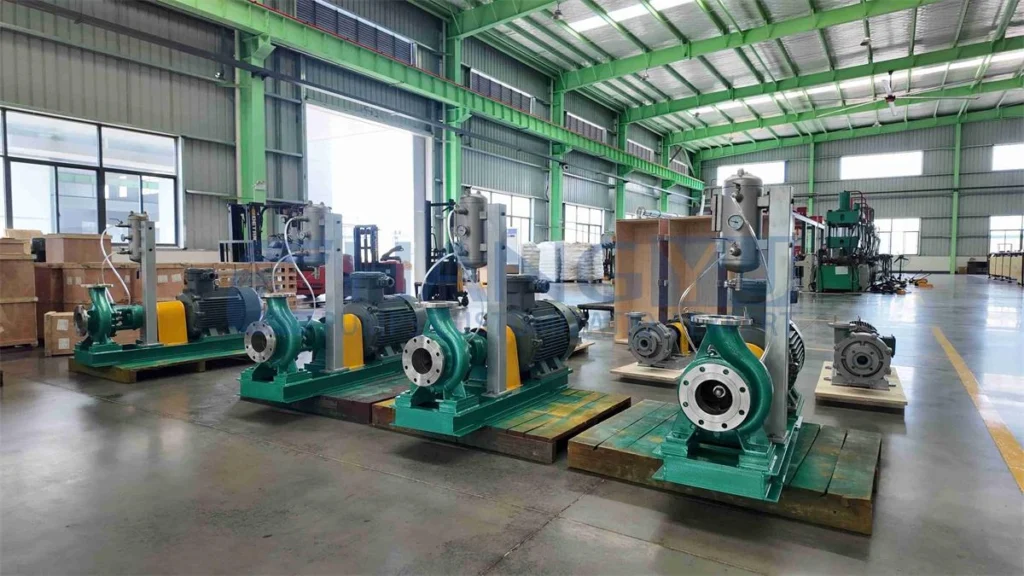
Este guia traduz a discussão técnica acima em um processo de seleção sequencial e acionável.
Etapa 1: Caracterize Sua Slurry
Documente o seguinte antes de avaliar qualquer modelo de bomba:
- Composição química: solução carreadora, pH, tipo e concentração de oxidante
- Tipo de partícula abrasiva: sílica, alumina ou céria
- Distribuição do tamanho de partícula e carga de sólidos (porcentagem em peso)
- Temperatura operacional, incluindo quaisquer excursões de processo
Esta informação define a janela de compatibilidade de material para todos os componentes da bomba em contato com o fluido e estabelece as características básicas da slurry contra as quais o desempenho da bomba será medido.
Etapa 2: Defina Seus Requisitos de Processo
Identifique onde a bomba operará no sistema de entrega de slurry. A recirculação em massa e a dispensação no ponto de uso são funções fundamentalmente diferentes:
| Posição | O que a Bomba Deve Fazer | Característica Crítica |
|---|---|---|
| Loop de Recirculação em Massa | Circular a slurry continuamente através da tubulação de distribuição para manter a suspensão e uniformidade ao longo de múltiplas renovações | Cisalhamento mínimo para evitar aglomeração de partículas |
| Dispensação no Ponto de Uso (POU) | Entregar slurry medida com precisão no bloco de polimento durante o processamento do wafer | Precisão de fluxo de ±1%, resposta rápida ao ponto de ajuste |
Documente a vazão necessária, pressão de descarga, número de pontos de uso (POU) atendidos e quaisquer requisitos de redundância.
Etapa 3: Combine a Tecnologia da Bomba com Sua Aplicação
| Aplicação | Tecnologia Recomendada | Tipo de fluxo | O que Verificar |
|---|---|---|---|
| Recirculação de slurry em massa | Centrífuga MagLev ou centrífuga de baixo cisalhamento | Contínuo, sem pulsação | Folgas internas e geometria do impulsor projetadas para operação de baixo cisalhamento |
| Dispensação de slurry no POU | Peristáltica com tubulação de grau semicondutor | Pulsátil (±0,5%) | Resposta de fluxo linear; material do tubo compatível com a química da slurry |
Etapa 4: Verifique a Compatibilidade de Materiais e o Desempenho de Controle de Partículas
- Confirme que cada componente em contato com o fluido é compatível com a slurry em sua temperatura operacional máxima.
- Priorize Revestimentos UHMW-PE para serviço de slurry abrasiva; PTFE ou PFA para aplicações de alta pureza ou temperatura elevada.
- Valide que o desempenho demonstrado de Contagem de Partículas Grandes (LPC) da bomba atende aos requisitos de densidade de defeitos da fábrica.
- Conduza testes de validação sob condições reais ou simuladas de slurry antes de se comprometer com a implantação em produção.
Soluções de Bombas Changyu para Manuseio de Slurry de Semicondutores
A Changyu Pump oferece três séries de bombas projetadas para serviço combinado de corrosão-abrasão, cada uma configurável para funções específicas de manuseio de slurry de semicondutores.
Bomba de polpa química horizontal da série UHB
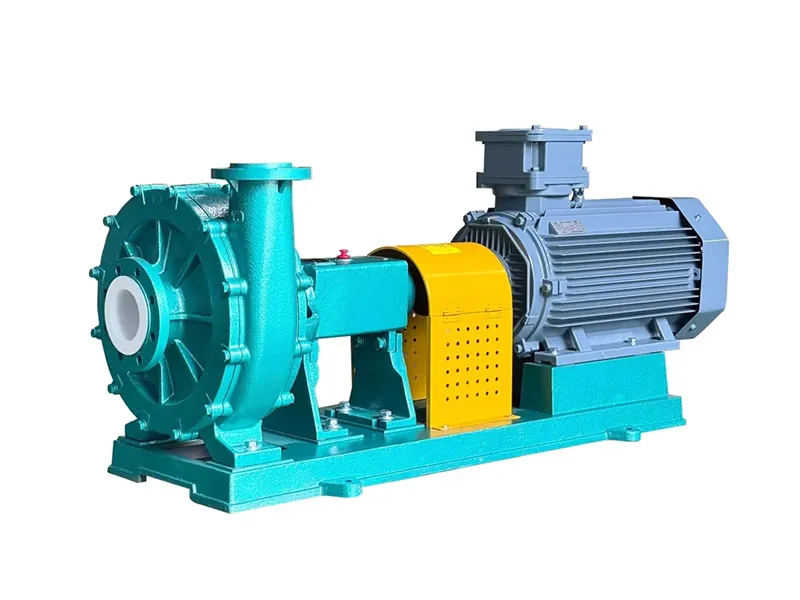
A Série UHB é uma bomba centrífuga horizontal de estágio único construída especificamente para slurries corrosivas contendo partículas finas. Sua característica definidora é um invólucro de aço revestido internamente com UHMW-PE—um material que fornece resistência química verificada a uma ampla gama de químicas de slurry de CMP, enquanto oferece resistência ao desgaste que supera a maioria dos plásticos de engenharia e metais sob condições padronizadas de desgaste abrasivo.
O design do impulsor semiaberto permite que fluidos carregados de sólidos passem pela bomba sem entupir, e a bomba está disponível com configurações de selo mecânico ou dinâmico. Para serviços de recirculação e transferência em loop de lama CMP semicondutora em temperaturas de até 90°C, o lado úmido em UHMW-PE fornece uma solução de material comprovada que atende tanto às demandas químicas quanto mecânicas do serviço de lama.
| Caudal | Cabeça | Potência | Temperatura |
|---|---|---|---|
| 3-2,600 m³/h | 5-100 m | 0,75-300 kW | -20°C a 90°C |
Bomba de polpa de aço inoxidável da série HB
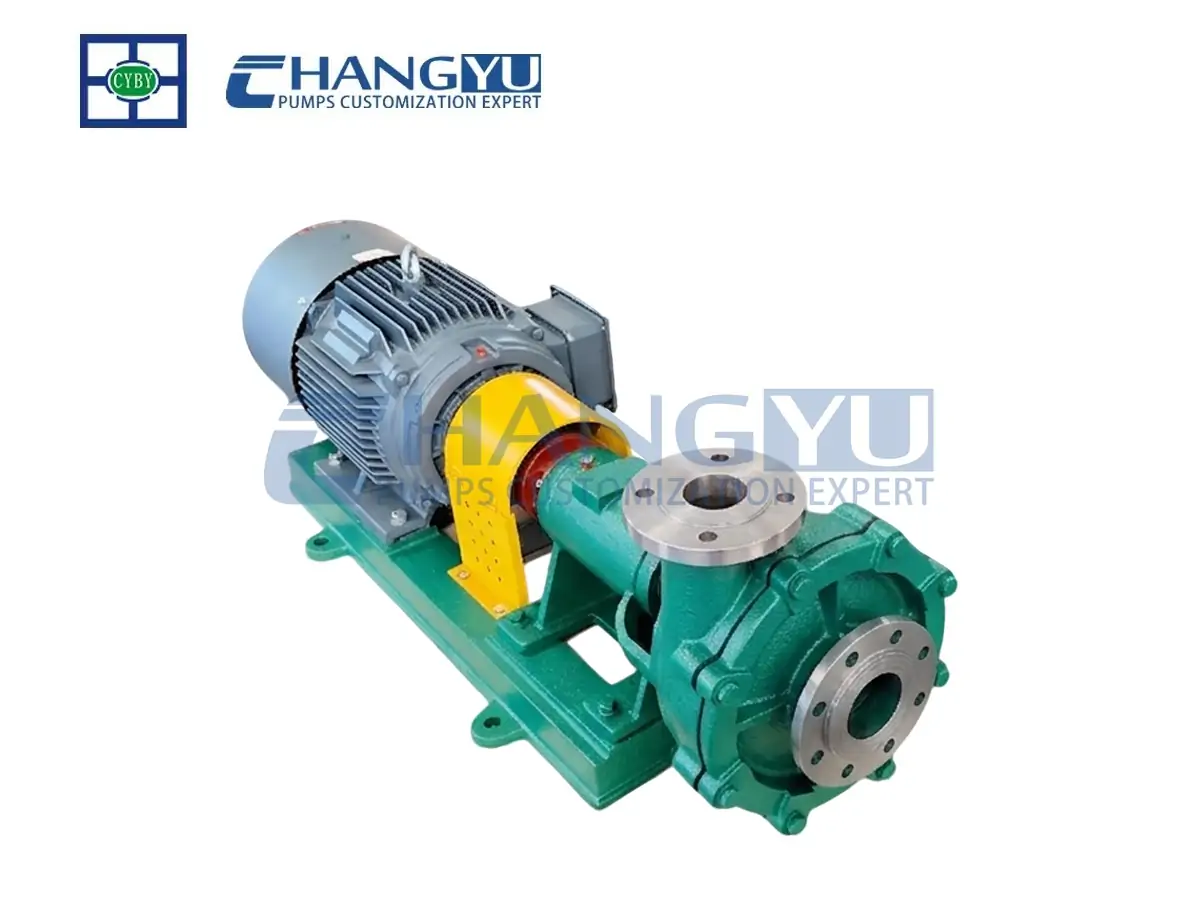
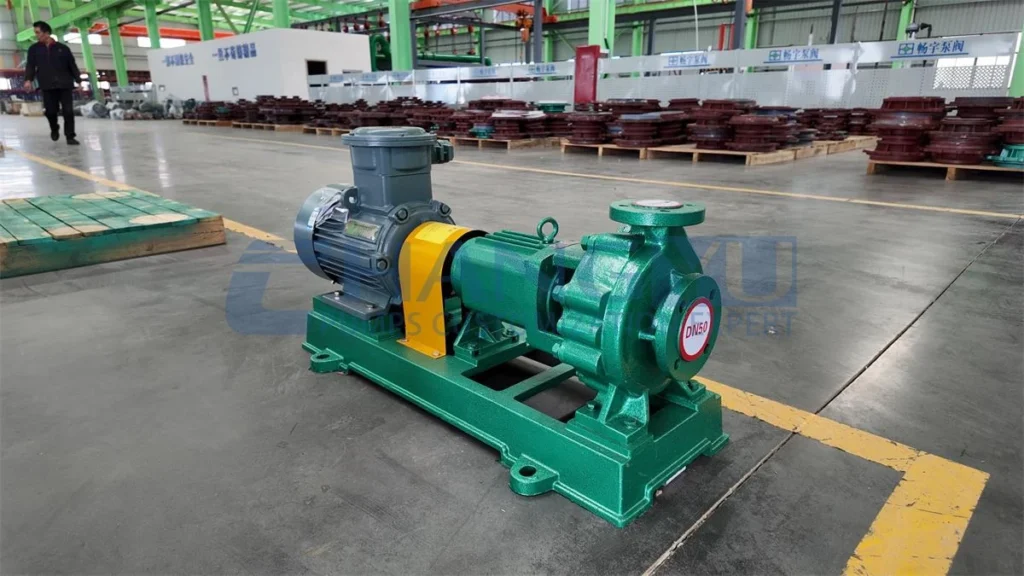
A série HB é uma bomba centrífuga horizontal de estágio único de alta eficiência, concebida de acordo com ISO 2858 e em conformidade com Normas CE. Sua estrutura molhada totalmente em aço inoxidável—disponível em 304, 316, 316L, 2205 e 2507—é projetada para lama abrasiva e fluidos moderadamente corrosivos onde um caminho molhado metálico é compatível com o fluxo do processo.
Em instalações de fabricação de semicondutores, a Série HB serve em funções de suporte: circulação de água de resfriamento de processo, transferência de água DI e coleta de fluxo de resíduos químicos—aplicações onde o fluido não requer a inércia química extrema de um design revestido com fluoropolímero e onde a contaminação por íons metálicos não é uma preocupação do processo.
| Caudal | Cabeça | Potência | Temperatura |
|---|---|---|---|
| 10-60 m³/h | 20-120 m | 3-45 kW | -20°C a 120°C |
Bomba de transferência de produtos químicos corrosivos da série CYB-ZKJ
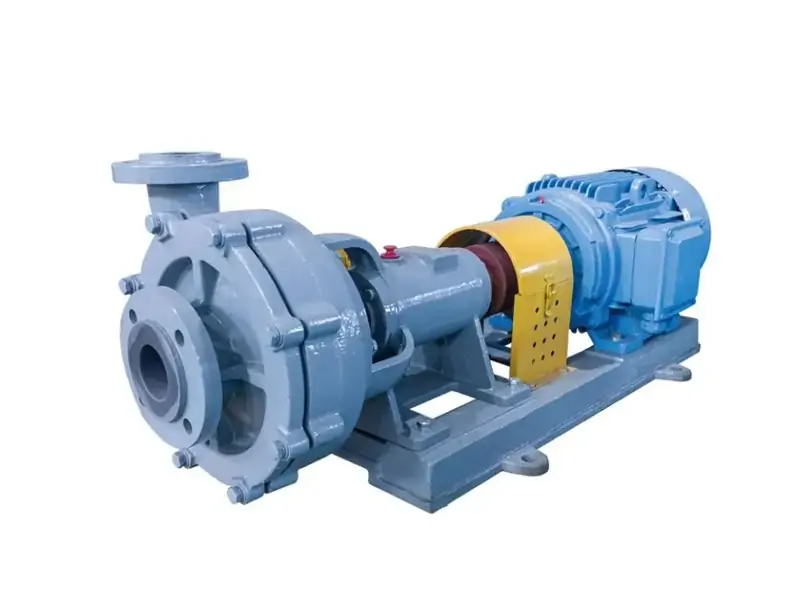
A Série CYB-ZKJ é uma bomba centrífuga de alto desempenho projetada para transferência de meios corrosivos em uma ampla gama de concentrações e temperaturas. O corpo da bomba e todos os componentes de fluxo são protegidos por um FEP revestimento fluoroplástico, que isola o fluido do processo da estrutura metálica da bomba. Para serviços de temperatura mais alta, PFA o revestimento estende a capacidade de temperatura enquanto mantém a inércia química total.
A bomba lida com líquidos corrosivos, lamas minerais e ácidos diluídos contendo até 20% de partículas sólidas flexíveis. Em aplicações de sala limpa de semicondutores—como entrega de produtos químicos pós-CMP ou transferência de ácido residual—onde a química é agressiva, mas a carga abrasiva é moderada, a Série CYB-ZKJ combina ampla compatibilidade química com a confiabilidade comprovada de uma plataforma de bomba centrífuga.
| Caudal | Cabeça | Potência | Temperatura |
|---|---|---|---|
| 3-2,600 m³/h | 5-100 m | 0,75-300 kW | -80°C a 120°C |
Perguntas frequentes
Q1: O que acontece se eu usar uma bomba de lama centrífuga padrão para CMP?
R: Bombas centrífugas padrão geram altas tensões de cisalhamento na ponta do impulsor que superam a repulsão eletrostática que estabiliza as nanopartículas da lama. Isso força as partículas a formarem aglomerados que excedem 0,5 μm—aglomerados que causam microarranhões em wafers polidos, aumentando a densidade de defeitos e reduzindo o rendimento. As partículas originais de lama de 20–200 nm são pequenas demais para causar danos por si só; são os aglomerados induzidos pela bomba que criam defeitos no wafer.
Q2: Como uma bomba maglev evita a aglomeração de partículas na lama?
R: Uma bomba centrífuga magneticamente levitada suspende seu rotor impulsor inteiramente em um campo magnético, eliminando rolamentos mecânicos e selos de eixo dinâmicos. Em experimentos comparativos, uma bomba centrífuga maglev aumentou as Contagens de Partículas Grandes em apenas um quinto a um terço do aumento produzido por bombas de fole ao longo de múltiplas renovações de lama.
Q3: Uma bomba peristáltica é adequada para recirculação de lama CMP em massa?
R: Bombas peristálticas se destacam na dosagem de lama no ponto de uso, onde suas características de baixo cisalhamento, caminho de fluxo reto e precisão de medição de ±0,5% são perfeitamente adequadas à aplicação. Para recirculação em massa em longos loops de distribuição, o fluxo pulsátil que produzem pode ser indesejável, e o desgaste contínuo do tubo aumenta a frequência de manutenção em comparação com designs centrífugos.
Q4: Uma bomba de acionamento magnético pode ser usada para lama CMP?
R: Bombas de acionamento magnético requerem avaliação cuidadosa para serviço de lama. As nanopartículas abrasivas em lamas CMP podem entrar nos rolamentos internos e nos circuitos de recirculação de resfriamento, acelerando o desgaste dos rolamentos. O acúmulo de partículas na superfície interna do invólucro de contenção pode causar aquecimento por correntes parasitas e potencial desacoplamento. Para circulação de lama, bombas com planos de lavagem externos ou designs especificamente projetados para serviço com sólidos são geralmente preferidas.
Q5: Quais materiais são compatíveis com lama CMP?
R: UHMW-PE, PTFE e PFA são os principais materiais compatíveis com as químicas de lama CMP. O UHMW-PE oferece o melhor equilíbrio entre resistência ao desgaste e compatibilidade química para lama abrasiva em temperaturas moderadas (até ~90°C). PTFE e PFA fornecem inércia química quase universal para aplicações de alta pureza e temperatura elevada. Metais, incluindo aços inoxidáveis, devem ser evitados para componentes molhados devido ao risco de contaminação por íons metálicos.
Q6: Como avalio se uma bomba está preservando a saúde da lama?
R: Estabeleça uma medição de linha de base da Contagem de Partículas Grandes (LPC >0,5 μm) antes do início da circulação da bomba. Após cada renovação completa da lama, meça novamente o LPC. Uma bomba que preserva a saúde da lama mostrará aumento mínimo de LPC ao longo de múltiplas renovações. Complemente isso com medições periódicas de densidade de defeitos em wafers de teste polidos com lama circulada.
Q7: Como as linhas de retorno e fornecimento de lama CMP devem ser configuradas?
R: As linhas de retorno devem ser inclinadas continuamente para baixo em direção ao tanque diário com um gradiente mínimo de 1:100. As linhas de fornecimento devem usar o comprimento mínimo prático e o número mínimo de cotovelos e válvulas. A velocidade do fluxo do loop deve exceder a velocidade de sedimentação das maiores partículas (alvo típico: 0,6–2,0 m/s). Pernas mortas e zonas estagnadas devem ser eliminadas—são locais primários para aglomeração de lama.
Q8: Quais tendências de mercado estão moldando a seleção de bombas de lama semicondutora?
R: O mercado global de bombas para equipamentos semicondutores é impulsionado principalmente por fabricantes-chave, incluindo Trebor International, White Knight (Graco), Saint-Gobain e Levitronix. A tecnologia de bomba centrífuga maglev continua a ganhar participação de adoção em instalações de fabricação avançadas, impulsionada pelos requisitos de controle de partículas mais rigorosos de nós de processo sub-10nm. O segmento de equipamentos de fornecimento de lama CMP cresce em proporção ao número crescente de etapas de CMP por wafer em dispositivos avançados de lógica e memória.
Recomendações de especialistas da Changyu Pump Engineers
- Priorize a minimização do cisalhamento sobre o preço de compra. Em semicondutores CMP, uma bomba que gera aglomeração de partículas custa muito mais em perda de matriz do que qualquer economia de capital. Dados experimentais comparativos confirmam que a tecnologia de baixo cisalhamento oferece consistentemente um custo total de propriedade menor quando o rendimento do wafer é considerado no cálculo.
- Combine a tecnologia da bomba com a posição do sistema. Os loops de recirculação em massa exigem fluxo contínuo, sem pulsos e de baixo cisalhamento — o domínio das bombas centrífugas maglev ou otimizadas de baixo cisalhamento. A dispensação no ponto de uso requer medição precisa e repetível — o domínio das bombas peristálticas.
- Selecione materiais molhados para ataque químico-mecânico combinado. O UHMW-PE fornece o equilíbrio ideal de resistência ao desgaste químico para lamas abrasivas em temperaturas moderadas. O PTFE e o PFA fornecem a maior inércia química para aplicações de alta pureza e alta temperatura. Reserve materiais metálicos apenas para funções de suporte não críticas.
- Valide o desempenho sob condições reais de lama. Testes de fluxo de água não podem prever como uma bomba interagirá com uma lama coloidal sensível ao cisalhamento. O teste LPC em múltiplas rotações, combinado com a verificação da densidade de defeitos do wafer, é o único método confiável para qualificar uma bomba para serviço de CMP de produção.
- Projete o sistema completo, não apenas a bomba. O layout da tubulação, a seleção do filtro, o projeto do tanque de espera, as provisões de desgaseificação e a eliminação de pernas mortas influenciam a saúde da lama. Uma bomba que tem bom desempenho isoladamente pode produzir resultados inaceitáveis se o sistema ao redor introduzir cisalhamento secundário ou zonas de estagnação.
Conclusão
Selecionar o caminho certo bomba de lama na indústria de semicondutores requer uma mudança na perspectiva de engenharia: o trabalho principal da bomba é proteger a lama, não o contrário. O sucesso é medido pelas Contagens de Partículas Grandes e pela densidade de defeitos do wafer, não apenas pela vida útil do desgaste da bomba ou pela eficiência hidráulica.
O mercado global de bombas para equipamentos semicondutores continua a ser moldado pelos requisitos de controle de partículas cada vez mais rigorosos dos nós de processo avançados. Bombas centrífugas Maglev e bombas peristálticas representam os dois pilares tecnológicos em torno dos quais os sistemas modernos de entrega de lama CMP são construídos — o primeiro para recirculação em massa, o último para dispensação no ponto de uso. Ambos são especificados por sua capacidade demonstrada de preservar a distribuição do tamanho das partículas da lama durante operação prolongada.
As séries UHB (revestida com UHMW-PE), HB (aço inoxidável) e CYB-ZKJ (revestida com FEP/PFA) da Changyu Pump fornecem plataformas de bombas resistentes à corrosão e ao desgaste para manuseio de lama de semicondutores e aplicações de transferência química. Contactar a nossa equipa de engenharia com seus parâmetros de lama e requisitos de processo. Forneceremos uma recomendação detalhada de bomba e cotação adaptada às suas necessidades de fabricação.