
Resposta rápida
Seleção de materiais para bombas de polpa em polpas abrasivas de diamante requer ir além das ligas convencionais de alto cromo e revestimentos de borracha para materiais avançados capazes de suportar o desgaste extremo de corte gerado pela substância natural mais dura da Terra. Os principais fatores de seleção — em ordem de prioridade de engenharia — incluem:
- (1) Dominância da dureza da partícula — partículas de diamante com Mohs 10 criam um ambiente de desgaste onde os materiais convencionais de bomba (liga de alto cromo a 600–700 HB) são fundamentalmente superados, exigindo materiais com dureza superior a HV 1200.
- (2) Equilíbrio entre desgaste de corte e desgaste por impacto — partículas de diamante clivam com bordas afiadas como navalhas que cortam elastômeros e metais mais macios; a seleção do material deve priorizar a dureza enquanto mantém tenacidade à fratura suficiente para suportar impactos ocasionais de partículas grandes.
- (3) Carboneto de tungstênio como o material ideal — combinando dureza HV 1200–1800 com tenacidade à fratura de 10–15 MPa√m, o carboneto de tungstênio oferece o equilíbrio ideal de resistência ao corte e tolerância ao impacto para a maioria dos circuitos de polpa de diamante.
- (4) Materiais cerâmicos para circuitos de partículas finas — carboneto de silício (SiC) e cerâmicas de alumina fornecem dureza extrema (HV 2000+) para rejeitos finos de diamante, mas sua baixa tenacidade à fratura (3–5 MPa√m) cria risco de fratura frágil com partículas que excedem 1–2 mm.
- (5) Validação do custo total de propriedade — enquanto os revestimentos de carboneto de tungstênio têm um prêmio de 3–5× sobre as ligas de alto cromo, a extensão de 6–8× na vida útil em polpas de diamante proporciona uma redução de TCO de 70–85% em 5 anos quando os custos de paradas não planejadas são incluídos.
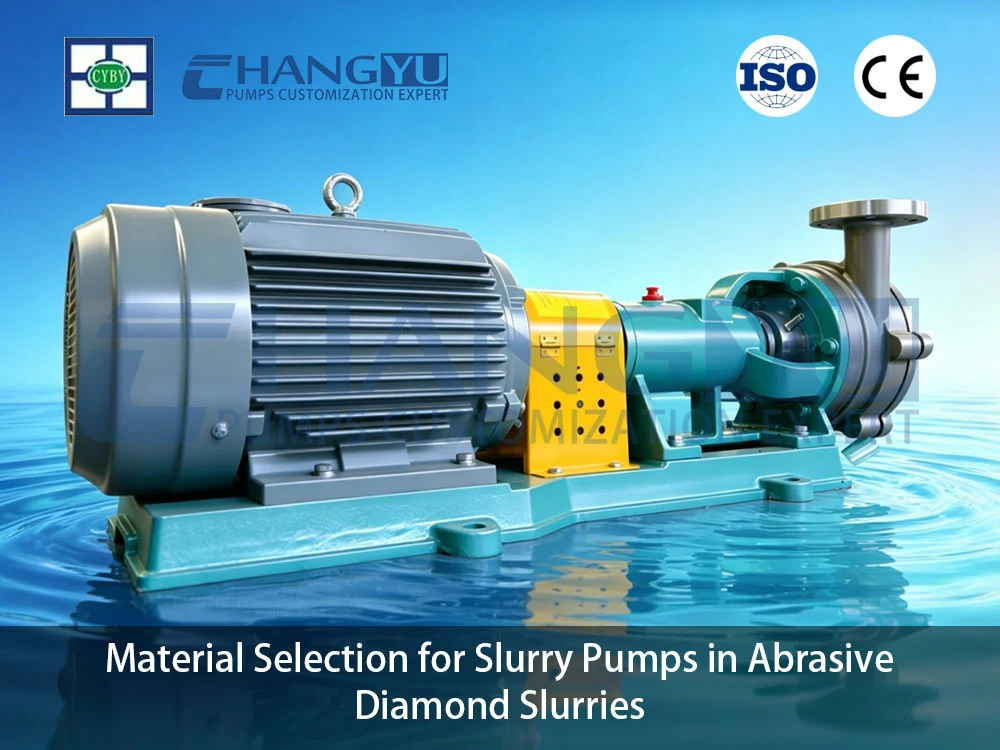
Com mais de 20 anos em fabricação de bombas e engenharia de materiais para as aplicações de mineração mais abrasivas, a Changyu Pump especificou e forneceu soluções de desgaste para circuitos de processamento de diamante, cromita e outros minerais ultraduros. Este guia fornece a estrutura completa de seleção de materiais para serviço de polpa de diamante — desde entender por que as partículas de diamante destroem os materiais convencionais de bomba, até avaliar materiais avançados, incluindo carboneto de tungstênio e compósitos cerâmicos, até realizar uma análise quantificada de custo total de propriedade que justifica o investimento em materiais de desgaste premium.
O Que Torna as Polpas de Diamante Tão Destrutivas para os Materiais da Bomba?
As polpas de diamante representam uma categoria única de desgaste abrasivo que não pode ser abordada pela lógica de seleção de materiais aplicada a polpas de mineração convencionais. Entender por que exige examinar a mecânica fundamental da interação partícula-superfície em uma bomba.
O Diferencial de Dureza: Por Que os Materiais Convencionais Falham
O poder abrasivo de uma partícula de polpa é determinado principalmente pela razão de dureza entre a partícula e a superfície do material da bomba. Quando a dureza da partícula excede a dureza da superfície por uma margem significativa, cada impacto de partícula remove material do componente da bomba — este é o mecanismo de desgaste dominante em todas as bombas de polpa.
Materiais convencionais de bomba de polpa e seus níveis de dureza:
- Borracha natural: < 50 HB — depende da resiliência, não da dureza
- Poliuretano: 60–90 HB — dureza limitada, resiliência moderada
- Ferro branco de alto cromo (CrMo): 600–700 HB — o padrão da indústria de mineração para abrasão “severa”
- Aços martensíticos: 500–600 HB — usados em algumas aplicações de descarga de moinho
Diamante e seus minerais companheiros comuns no minério diamantífero:
- Diamante: Mohs 10, aproximadamente 8.000–10.000 HV (Vickers) — o material natural mais duro conhecido
- Granada (almandina-piropo): Mohs 7–7,5, aproximadamente 750–950 HV — comum na rocha hospedeira kimberlito
- Olivina: Mohs 6,5–7, aproximadamente 600–800 HV — outro mineral comum do kimberlito
- Quartzo (para comparação): Mohs 7, aproximadamente 800–1.000 HV — o componente abrasivo na maioria das polpas convencionais de rocha dura
A percepção crítica: mesmo o material de bomba convencional mais duro (CrMo de alto cromo a 600–700 HB) é mais macio que os minerais companheiros granada e olivina no minério de diamante — e é dramaticamente mais macio que o próprio diamante. A razão de dureza entre partículas de diamante e uma superfície de bomba de alto cromo excede 10:1. Em termos tribológicos, isso é classificado como “desgaste abrasivo extremo” — um regime onde a partícula remove material da superfície a cada contato, e a única propriedade do material que reduz a taxa de desgaste é a dureza da superfície da bomba em relação à partícula.
Mecanismos Duplos de Desgaste em Polpas de Diamante
As polpas de diamante submetem os componentes da parte úmida da bomba a dois mecanismos de desgaste simultâneos, cada um exigindo diferentes propriedades do material para resistir:
Desgaste de corte (impacto de partícula em baixo ângulo):
- Partículas de diamante afiadas e angulares deslizam pela superfície da bomba em um ângulo raso
- A borda da partícula corta um sulco microscópico no material — semelhante a uma ferramenta de máquina cortando metal
- Mecanismo de resistência: Alta dureza — uma superfície mais dura que a partícula não pode ser cortada
- Partículas de diamante, com suas bordas de clivagem afiadas como navalhas, são excepcionalmente eficazes em cortar até mesmo os metais convencionais mais duros
Desgaste por impacto de alta tensão (impacto de partícula em alto ângulo):
- Partículas maiores atingem a superfície da bomba em um ângulo íngreme, criando contato localizado de alta tensão
- O impacto pode fraturar materiais frágeis ou deformar plasticamente materiais mais macios
- Mecanismo de resistência: Alta tenacidade à fratura — um material que pode absorver energia de impacto sem rachar
- Em circuitos de diamante, o oversize acidental do circuito de britagem pode incluir partículas de até 25–50 mm
O desafio fundamental de seleção de materiais para bombas de polpa de diamante é que Borracha Natural. Os materiais mais duros (cerâmicas) são os mais frágeis. Os materiais mais tenazes (elastômeros, metais dúcteis) são os mais macios. Encontrar o equilíbrio ideal entre esses dois requisitos concorrentes é o problema central abordado nas Seções 4 e 5.
Onde as Bombas de Polpa São Usadas na Seleção de Materiais para Mineração de Diamante?
As bombas de polpa operam em vários circuitos críticos dentro de uma planta de processamento de diamante. Cada circuito apresenta uma combinação diferente de tamanho de partícula, concentração de sólidos e intensidade de desgaste — e pode exigir diferentes soluções de material.
Principais Circuitos de Bomba de Polpa na Mineração de Diamante
Processamento de Kimberlito / Transporte Primário de Polpa:
- Características do fluido: Polpa de minério de kimberlito recém-triturado — alta densidade (1,5–1,8 SG), partículas grossas (até 25–50 mm da britagem primária), contendo diamante, granada, olivina e outros minerais duros
- Requisitos da bomba: Resistência extrema à abrasão; tolerância para sobretamanho de descarte do circuito de britagem; alta altura manométrica para alimentação de ciclone ou DMS
- Prioridade na seleção de material: Dureza máxima com tenacidade ao impacto adequada — revestimentos de carboneto de tungstênio ou compósito cerâmico
Alimentação de Separação por Meio Denso (DMS):
- Características do fluido: Polpa de kimberlito peneirada misturada com meio denso de ferrossilício — densidade moderada (1,3–1,6 SG), partículas mais finas (tipicamente < 12 mm após peneiramento), contendo partículas afiadas de diamante e granada
- Requisitos da bomba: Fluxo estável e consistente para eficiência de separação; resistência à abrasão combinada do minério e do meio de ferrossilício
- Prioridade na seleção de material: Metal duro ou carboneto de tungstênio — o meio de ferrossilício adiciona um componente abrasivo extra
Transporte de Rejeitos de Diamante:
- Características do fluido: Polpa residual após a recuperação de diamante — densidade variável, contendo todos os minerais acompanhantes duros (granada, olivina, cromita), mas com os diamantes removidos. Embora os diamantes tenham desaparecido, os minerais restantes ainda registram Mohs 6,5–7,5
- Requisitos da bomba: Operação contínua sustentada; vida útil previsível para manutenção programada; frequentemente transporte de longa distância exigindo capacidade de alta pressão
- Prioridade na seleção de material: Carboneto de tungstênio para zonas de alto desgaste; compósitos cerâmicos para rejeitos finos
Circuito de Concentrado / Recuperação Final:
- Características do fluido: Polpa de concentrado de baixo volume e alto valor contendo os diamantes extraídos — baixa concentração de sólidos, mas a presença de diamantes liberados cria desgaste de corte extremo em qualquer superfície da bomba que eles toquem
- Requisitos da bomba: Máxima resistência ao desgaste para evitar perda de ouro (diamante); ação de bombeamento suave para evitar danos ao diamante; frequentemente taxas de fluxo mais baixas
- Prioridade na seleção de material: Carboneto de tungstênio ou cerâmica — a aplicação de maior valor, justificando o maior custo de material
Para um guia abrangente sobre seleção de bombas de polpa em todos os circuitos de mineração, consulte nosso Guia de Bombas de Polpa na Mineração.
Quais São os Mecanismos de Desgaste que Afetam a Seleção de Material em Polpa de Diamante?
Uma compreensão detalhada dos mecanismos de desgaste que atuam em bombas de polpa de diamante é a base para a seleção correta de material. A contribuição relativa de cada mecanismo varia dependendo do circuito específico e das condições operacionais.
Os Quatro Mecanismos de Desgaste
Desgaste por Corte (Desgaste Abrasivo):
- Mecanismo: Partículas de diamante afiadas e angulares deslizam pela superfície da bomba em um ângulo raso (tipicamente 15–45°). A borda da partícula atua como uma ferramenta de microcorte, removendo um cavaco de material da superfície.
- Dominante em: Língua da voluta, bordas de ataque das pás do rotor, bocal de garganta — áreas de fluxo direcional de alta velocidade
- Propriedade do material necessária: Alta dureza — uma superfície significativamente mais dura que a partícula é necessária para resistir ao corte. Quando a partícula é diamante (HV 8000–10000), nenhum material de engenharia prático atinge essa dureza, mas materiais com dureza acima de HV 1200 mostram taxas de desgaste de corte drasticamente reduzidas.
Desgaste por Erosão (Impacto de Partículas em Baixo Ângulo):
- Mecanismo: Partículas finas arrastadas na corrente de polpa de alta velocidade impactam a superfície da bomba em ângulos rasos, erodindo gradualmente o material através de uma combinação de corte e fadiga
- Dominante em: Coberturas do rotor, paredes da voluta — áreas de fluxo turbulento de alta velocidade
- Propriedade do material necessária: Alta dureza combinada com alguma ductilidade — materiais puramente frágeis podem sofrer micro-lascamento sob impactos repetidos de partículas
Desgaste por Impacto (Impacto de Partículas em Alto Ângulo):
- Mecanismo: Partículas grandes atingem a superfície da bomba em um ângulo íngreme (60–90°), criando um contato de alta tensão que pode deformar plasticamente materiais dúcteis ou fraturar materiais frágeis
- Dominante em: Olho do rotor, língua da voluta — áreas onde a direção do fluxo muda abruptamente
- Propriedade do material necessária: Elevado tenacidade à fratura — o material deve absorver energia de impacto sem rachar. Esta é a fraqueza dos materiais cerâmicos.
Sinergia Corrosão-Erosão:
- Mecanismo: O ambiente químico da polpa (pH, íons dissolvidos do corpo de minério) ataca a superfície do material da bomba, formando uma camada de corrosão que é então removida por partículas abrasivas — expondo material fresco a mais corrosão
- Dominante em: Circuitos com água de processo ácida, água salina (comum em minas de diamante africanas) ou aditivos químicos
- Propriedade do material necessária: Resistência à corrosão além da resistência ao desgaste — carboneto de tungstênio com um ligante resistente à corrosão (Ni-Cr em vez de cobalto) para condições ácidas
Contribuição Relativa em Polpas de Diamante
Engenheiros da Changyu Pump, com base em 20 anos de análise de desgaste em circuitos de processamento de diamante e outros minerais ultraduros, observaram que o desgaste por corte normalmente representa 60–70% da perda total de material do lado úmido em bombas de polpa de diamante. Isso é significativamente maior do que na mineração convencional de rocha dura (onde o desgaste por corte normalmente representa 30–50%), porque as partículas de diamante mantêm suas arestas de corte afiadas durante toda a sua permanência na bomba — elas não se arredondam ou fraturam como partículas abrasivas mais macias. O desgaste por impacto representa 20–25% da perda de material, impulsionado por partículas grandes ocasionais do circuito de britagem. O desgaste por erosão e a sinergia corrosão-erosão representam os 10–15% restantes.
A implicação prática para a seleção de material: em serviço de polpa de diamante, a dureza é o requisito de propriedade de material dominante. A tenacidade à fratura não pode ser ignorada — materiais frágeis falharão devido ao impacto — mas o principal critério de seleção deve ser dureza suficiente para resistir ao corte por partículas de diamante. Isso leva diretamente aos materiais avançados discutidos na Seção 5.
Como os Materiais Tradicionais se Comportam na Seleção de Material para Polpa de Diamante?
Antes de examinar soluções avançadas de material, é essencial entender por que os materiais convencionais de bombas de polpa — que têm desempenho adequado em polpas de minério de ferro, cobre e ouro — falham rapidamente em serviço de diamante. A avaliação a seguir é baseada em dados de desempenho de campo de operações de mineração de diamante.
Ferro Branco com Alto Cromo (CrMo): O Padrão da Indústria — Inadequado para Diamante
A liga CrMo com alto cromo (tipicamente 26–28% Cr, 600–700 HB) é o material padrão do lado úmido para a maioria das bombas de polpa de mineração de rocha dura. Ela fornece vida útil aceitável (12–24 meses) em minério de ferro, minério de cobre e outras polpas abrasivas onde a dureza do minério varia de Mohs 3–6.
Em polpas de diamante, o desempenho colapsa:
- Relação de dureza: Diamante (HV 8000+) vs CrMo (HV 600–700) = aproximadamente 12:1 a favor da partícula
- Dureza: Partículas de diamante cortam a matriz CrMo e os carbonetos de cromo duros com igual facilidade — os carbonetos não fornecem barreira eficaz ao corte de diamante
- Vida útil típica em rejeitos de diamante: 2–4 meses antes de ser necessária a substituição do extremo úmido
- Modo de falha: Desgaste uniforme por corte nas superfícies do rotor e da voluta; sem falha catastrófica, mas remoção de material rápida e previsível
Borracha Natural: Cortada, Não Desgastada
Os revestimentos de borracha natural dependem da resiliência — a capacidade de deformar elasticamente sob impacto de partículas e depois se recuperar, absorvendo a energia do impacto sem perda de material. Esse mecanismo funciona bem com partículas arredondadas e mais macias (carvão, fosfato, areia fina).
Em slurries de diamante, a borracha falha por um motivo fundamentalmente diferente:
- Mecanismo de corte: As partículas de diamante clivam com bordas afiadas como navalhas. Em vez de ricochetear na superfície da borracha, essas bordas cortam a borracha no contato — semelhante a uma faca cortando um elastômero
- Nenhum mecanismo de recuperação: Uma vez que a superfície da borracha é cortada, o corte se propaga com impactos subsequentes de partículas, levando a lascamento e perda rápida de material
- Vida útil típica em rejeitos de diamante: Semanas, não meses. A borracha é geralmente inadequada para qualquer serviço com slurry de diamante.
Poliuretano: Melhora Marginal, Mesma Limitação Fundamental
O poliuretano oferece maior resistência ao corte do que a borracha natural devido à sua maior dureza (60–90 HB vs < 50 HB). No entanto, as partículas de diamante ainda cortam as superfícies de poliuretano, embora a uma taxa ligeiramente mais lenta. O poliuretano pode ser considerado para rejeitos finos de diamante (partículas < 100 μm) onde o desgaste por corte é menos severo, mas não é uma solução para circuitos primários de slurry de diamante.
60–90 HB
Tabela: Desempenho de Materiais Tradicionais em Slurries de Diamante
| Material | Combina alguma resiliência com resistência ao corte melhorada | Mecanismo de Desgaste em Slurry de Diamante | Vida Típica do Extremo Úmido | Avaliação |
|---|---|---|---|---|
| CrMo com alto teor de cromo | Limitado por temperatura; sensível à hidrólise em água quente acima de 50°C; ainda é cortado por partículas angulares e afiadas | Desgaste por corte — partículas de diamante usinam a superfície | 2–4 meses | Não recomendado — vida útil abaixo do limite econômico |
| Borracha natural | Dureza Típica | Corte — bordas afiadas cortam o elastômero | Semanas | Não recomendado — desgaste por corte domina |
| Poliuretano | Vida útil típica: | Corte — mais lento que a borracha, mas ainda corta | 1–3 meses | Não recomendado — apenas para partículas muito finas |
| Aço martensítico | 500–600 HB | Desgaste por corte — semelhante ao CrMo, mas mais rápido | 1–2 meses | Não recomendado — dureza menor que o CrMo |
A conclusão clara a partir de dados de campo em múltiplas operações de mineração de diamante: materiais convencionais para bombas de slurry não podem fornecer vida útil economicamente viável em circuitos de slurry de diamante. Materiais avançados com dureza significativamente maior são necessários.
Como os Materiais Avançados se Comportam para Bombas de Slurry em Slurries de Diamante?
Quando os materiais convencionais falham, a seleção de materiais deve avançar para o próximo nível: carboneto de tungstênio, cerâmicas de carbeto de silício, cerâmicas de alumina e sistemas de revestimento composto. Cada um oferece um equilíbrio diferente de dureza, tenacidade, custo e adequação à aplicação.
150°C+
Antes de examinar materiais individuais, é essencial entender a relação inversa entre dureza e tenacidade à fratura que governa todos os materiais de engenharia:
- Resiliência — absorve impacto Cerâmicas (SiC, Al2O3) — extremamente duras, mas frágeis; não toleram impacto
- 6–18 Carboneto de tungstênio (WC) — o equilíbrio ideal para a maioria das aplicações de slurry de diamante
- 0,8–1,2× Metais e elastômeros — resistentes, mas incapazes de resistir ao corte por diamante
A tarefa de seleção de materiais para bombas de slurry de diamante é encontrar a maior dureza que ainda forneça tenacidade à fratura adequada para as condições específicas do circuito — particularmente o tamanho máximo de partícula que pode impactar as superfícies da bomba.
60–90 HB
Misto — resiliência + resistência ao corte
- Fino, arredondado a sub-angular Partículas de carboneto de tungstênio (WC) em uma matriz de ligante de cobalto ou níquel (tipicamente 6–12% de ligante em peso)
- Dureza: Dureza HV 1200–1800 (dependendo do teor de ligante e tamanho de grão) — aproximadamente 2–3× mais duro que o CrMo de alto cromo
- Tenacidade à fratura: 1,0–1,5×
- Resistência ao desgaste em slurry de diamante: Os grãos de carboneto de tungstênio (HV 2000+) fornecem resistência ao corte contra partículas de diamante. Embora o diamante ainda cause desgaste gradual, a taxa de desgaste é 5–8× menor que o CrMo de alto cromo. O ligante de cobalto/níquel se desgasta preferencialmente, expondo gradualmente novos grãos de carboneto — esse mecanismo de autoafiação mantém resistência ao desgaste consistente ao longo da vida do componente.
- Vida útil típica em rejeitos de diamante: 14–18 meses com revestimentos de voluta e rotor de carboneto de tungstênio — uma melhoria de 6–8× em relação ao CrMo de alto cromo
- 3–6 meses em circuitos altamente abrasivos (minério de ferro, minério de cobre com quartzo); 12–18 meses em circuitos de abrasão moderada Quando os materiais convencionais atingem seu limite econômico — quando o custo de substituições frequentes de partes úmidas e o tempo de inatividade associado excede o prêmio por materiais avançados — a seleção de material avança para o próximo nível. Carboneto de tungstênio, cerâmica de carbeto de silício, cerâmica de alumina e sistemas de revestimento composto oferecem cada um um equilíbrio diferente de dureza, tenacidade, custo e adequação à aplicação.
- Limitações: Oxida no ar acima de 500–600°C; não adequado para aplicações de slurry em alta temperatura que excedam 400°C sem atmosfera protetora ou revestimento
- Melhor para: Circuitos primários de slurry de diamante, descarga de moinho, alimentação de DMS, rejeitos — qualquer aplicação de slurry de diamante com partículas de até 10–15 mm
dureza e tenacidade à fratura são inversamente correlacionadas na maioria dos materiais de engenharia
- Fino, arredondado a sub-angular Carbeto de silício sinterizado, frequentemente com uma pequena quantidade de auxiliar de sinterização
- Dureza: Os materiais mais duros são os mais frágeis. Os materiais mais tenazes são os mais macios.
- Tenacidade à fratura: Alta dureza = Baixa tenacidade:
- Resistência ao desgaste em slurry de diamante: Resistência excepcional ao corte devido à dureza extrema. Partículas de diamante causam desgaste muito lento e uniforme. No entanto, o impacto de partículas que excedem 1–2 mm pode causar fratura frágil — as trincas se propagam rapidamente através da cerâmica, levando à falha súbita do componente.
- Vida útil típica em rejeitos de diamante: 18–24 meses em circuitos consistentemente de partículas finas com peneiramento a montante eficaz; o risco de fratura frágil devido a partículas ocasionais de tamanho excessivo pode reduzir a vida útil real para 14–18 meses em circuitos com controle variável de tamanho de partícula
- 3–6 meses em circuitos altamente abrasivos (minério de ferro, minério de cobre com quartzo); 12–18 meses em circuitos de abrasão moderada 5–8× o custo de componentes equivalentes de CrMo de alto cromo
- Melhor para: Rejeitos finos de diamante, circuitos de concentrado com partículas pequenas, aplicações onde o risco de impacto é mínimo
Cerâmica de Alumina (Al2O3):
- Fino, arredondado a sub-angular Óxido de alumínio sinterizado, tipicamente 92–99% de pureza
- Dureza: HV 1500–2000
- Tenacidade à fratura: KIC 3–4 MPa√m — semelhante ao SiC, frágil
- Resistência ao desgaste em slurry de diamante: Boa resistência ao corte, mas geralmente inferior ao SiC para slurry de diamante devido à menor dureza. A alumina é mais comumente usada em aplicações abrasivas menos extremas.
- 3–6 meses em circuitos altamente abrasivos (minério de ferro, minério de cobre com quartzo); 12–18 meses em circuitos de abrasão moderada 2–4× o custo de componentes equivalentes de CrMo de alto cromo
- Melhor para: Alternativa econômica ao SiC em rejeitos finos de diamante com baixo risco de impacto
Revestimentos Compostos de Cerâmica-Borracha:
- Fino, arredondado a sub-angular Ladrilhos cerâmicos (tipicamente alumina ou SiC) unidos a uma camada de suporte de borracha. A cerâmica fornece a superfície de desgaste; a borracha absorve a energia do impacto e fornece um suporte flexível que reduz a fratura da cerâmica.
- Dureza: Superfície cerâmica com dureza HV 1500–2800 (a mesma da cerâmica usada)
- Tenacidade à fratura: Melhorada em relação à cerâmica sólida — o suporte de borracha absorve a energia do impacto e impede a propagação de trincas entre os ladrilhos
- Resistência ao desgaste em slurry de diamante: Combina a resistência ao corte da cerâmica com tolerância ao impacto melhorada. Ladrilhos cerâmicos individuais ainda podem fraturar sob impacto extremo, mas o dano é localizado em vez de catastrófico.
- 3–6 meses em circuitos altamente abrasivos (minério de ferro, minério de cobre com quartzo); 12–18 meses em circuitos de abrasão moderada 4–6× o custo de componentes equivalentes de CrMo de alto cromo
- Melhor para: Circuitos com partículas finas misturadas e material estranho grande ocasional; aplicações onde existe risco de impacto, mas a máxima resistência ao desgaste é necessária
Resumo de Desempenho de Materiais Avançados
Tabela: Desempenho de Materiais Avançados em Slurries de Diamante
| Material | Dureza (HV) | Tenacidade à Fratura (KIC, MPa√m) | Limitações: | Melhor Faixa de Tamanho de Partícula | Vida Útil Típica em Rejeitos de Diamante |
|---|---|---|---|---|---|
| CrMo de alto cromo (base) | 600–700 | 25-35 | 1× | Qualquer (mas desgasta rapidamente) | 2–4 meses |
| Carboneto de tungstênio (WC) | 1200–1800 | 10-15 | 3–5× | Até 10–15 mm | 14–18 meses |
| Carboneto de silício (SiC) | 2200–2800 | 3–5 | 5–8× | < 1–2 mm (risco de impacto acima) | 18–24 meses (partículas finas); 14–18 meses (tamanho variável) |
| Alumina (Al2O3) | 1500–2000 | 3–4 | 2–4× | < 1–2 mm | 16–20 meses (partículas finas) |
| Composto cerâmica-borracha | 1500–2800 | Melhorado em relação à cerâmica sólida | 4–6× | Finas misturadas + grandes ocasionais | 18–22 meses |
*Nota: Em carboneto de tungstênio (WC-Co), dureza e tenacidade são inversamente correlacionadas. Menor teor de cobalto (6%) resulta em maior dureza (HV 1600–1800) com menor tenacidade (KIC 10–12 MPa√m). Maior teor de cobalto (10–12%) resulta em tenacidade melhorada (KIC 13–15 MPa√m) com dureza reduzida (HV 1200–1400). A seleção deve priorizar dureza para circuitos de partículas finas e tenacidade para circuitos com risco de impacto de partículas maiores.*
O Ponto Ideal de Seleção de Materiais para Slurries de Diamante
Engenheiros da Changyu Pump, com base em dados de desempenho de desgaste de operações de mineração de diamante na África e no Canadá, recomendam carboneto de tungstênio (WC) como o material ideal para a maioria das aplicações de bombas de slurry de diamante. A combinação de dureza HV 1200–1800 e tenacidade à fratura de 10–15 MPa√m fornece o melhor equilíbrio de resistência ao desgaste por corte e tolerância a impactos em toda a gama de tamanhos de partículas encontradas em circuitos típicos de processamento de diamante — desde rejeitos finos até slurry primária de kimberlito com material estranho grande.
Diretrizes principais de seleção:
- Slurry primária de diamante (descarga do moinho, alimentação do DMS, rejeitos grossos) → Revestimentos de voluta e rotor em carboneto de tungstênio (WC). O risco de impacto de partículas grandes ocasionais torna a cerâmica sólida muito vulnerável à fratura frágil.
- Rejeitos finos de diamante (< 1 mm, risco de impacto mínimo, peneiramento eficaz em vigor) → Revestimentos cerâmicos de carboneto de silício (SiC) para máxima vida útil ao desgaste. A ausência de partículas grandes elimina a preocupação com fratura frágil.
- Circuitos mistos com partículas finas e risco de material estranho → Revestimentos compostos de cerâmica-borracha. O suporte de borracha mitiga o dano por impacto às placas cerâmicas.
- Slurries de diamante corrosivas (água de processo ácida, água salina) → Carboneto de tungstênio com ligante de níquel (WC-Ni) em vez de ligante de cobalto (WC-Co). O níquel fornece resistência superior à corrosão em ambientes ácidos e salinos.
- Operações com restrições orçamentárias e rejeitos finos → Cerâmica de alumina como alternativa econômica ao SiC, com vida útil ao desgaste ligeiramente reduzida, mas ainda aceitável.
Para orientação sobre seleção de materiais elastoméricos para aplicações abrasivas menos extremas, consulte nosso Guia de seleção de bombas de cavidade progressiva.
Qual é o Impacto do TCO da Seleção de Materiais para Bombas de Slurry de Diamante?
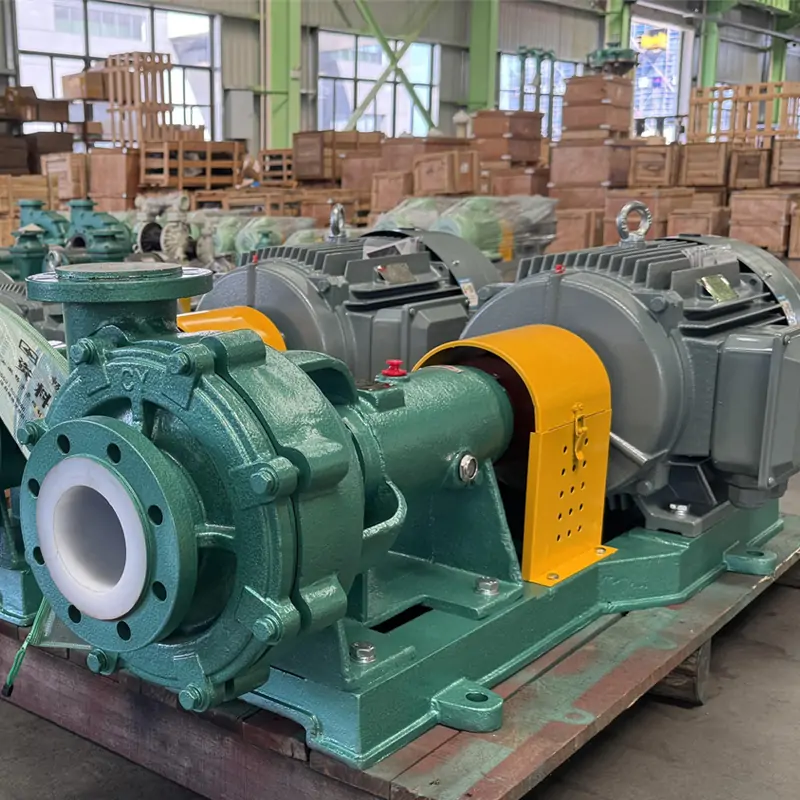
Os custos extremos de materiais associados a componentes de carboneto de tungstênio e cerâmica — tipicamente 3–8× o custo do CrMo de alto cromo — podem causar choque de etiqueta de preço para equipes de compras acostumadas com preços convencionais de bombas de mineração. No entanto, uma análise de custo total de propriedade revela que materiais premium oferecem custos de ciclo de vida drasticamente menores em serviço de slurry de diamante.
Comparação de TCO de 5 Anos: Três Estratégias de Material
Pressupostos: Slurry de rejeitos de diamante, 150 m³/h a 30 m de altura manométrica, 7.000 horas operacionais por ano, custo de parada não planejada estimado em $80.000 por evento (com base no valor de produção da mina de diamante). A linha de base de alto cromo representa a abordagem convencional; carboneto de tungstênio e cerâmica SiC representam estratégias de materiais premium.
Tabela: Custo Total de Propriedade em 5 Anos — Comparação de Seleção de Materiais para Rejeitos de Diamante
| Componente de custo | CrMo de Alto Cromo (Base) | Revestimentos de Carboneto de Tungstênio (WC) | Cerâmica de Carboneto de Silício (SiC) |
|---|---|---|---|
| Custo inicial da parte úmida (rotor + revestimentos) | $8.000–$12.000 | $28.000–$45.000 | $40.000–$65.000 |
| Frequência de substituição da parte úmida (rejeitos de diamante) | A cada 2,5–3 meses (4–5× por ano) | A cada 16 meses (0,75× por ano) | A cada 22 meses (0,55× por ano) |
| Substituições do conjunto úmido (5 anos) | 20–25 substituições | 3–4 substituições | 2–3 substituições |
| Custo total de peças do conjunto úmido (5 anos) | $160.000–$300.000 | $84.000–$180.000 | $80.000–$195.000 |
| Eventos de parada não planejada (5 anos) | 15–20 eventos | 1–2 eventos | 0–1 eventos (risco de fratura frágil) |
| Custo estimado de parada (5 anos) | $1.200.000–$1.600.000 | $80.000–$160.000 | $0–$80.000 |
| Custo total de propriedade estimado para 5 anos | $1.368.000–$1.912.000 | $192.000–$385.000 | $120.000–$340.000 |
| TCO vs Base de Alto Cromo | Linha de base | Redução de 73–86% | Redução de 75–91% |
*Nota: As estimativas de custo de parada pressupõem 36 horas por evento de substituição não planejada da parte úmida a um valor de produção de mina de diamante de aproximadamente $80.000 por evento. Os custos reais de parada variam significativamente dependendo da vazão da mina, do teor de diamante e dos preços de mercado do diamante. A conclusão fundamental do TCO — de que materiais premium proporcionam reduções de custo de ciclo de vida de ordem de grandeza — é robusta em uma ampla gama de suposições de custo de parada.*
A Percepção do TCO
A principal percepção desta análise: em serviço de slurry de diamante, o custo do material da bomba é quase irrelevante comparado ao custo da parada causada pela falha do material. Uma parte úmida de CrMo de alto cromo que custa $10.000, mas falha a cada 2,5–3 meses, gera $80.000+ em custo de parada por falha. Uma parte úmida de carboneto de tungstênio que custa $35.000, mas dura 16 meses, elimina $300.000+ em custos de parada no mesmo período. O prêmio de custo do material é recuperado dentro do primeiro evento de parada não planejada evitado.
Esta lógica econômica — de que materiais de desgaste premium não são um custo, mas um investimento com um retorno definido e rápido — deve orientar todas as decisões de seleção de materiais para bombas de slurry de diamante. A única questão é qual material premium melhor se adequa às condições específicas do circuito: carboneto de tungstênio para circuitos com risco de impacto, ou cerâmica para circuitos de partículas finas onde a máxima vida útil ao desgaste é a prioridade.
Estudo de Caso da Changyu Pump: Resolvendo uma Falha Crítica de Desgaste em uma Bomba de Rejeitos de Diamante
O caso a seguir documenta uma falha de desgaste em bomba de slurry e sua resolução pela equipe de engenharia de materiais da Changyu Pump. O cenário ilustra as consequências de aplicar a lógica convencional de seleção de materiais ao serviço de slurry de diamante — e os benefícios quantificados da atualização para materiais de desgaste avançados.
Caso: Mina de Diamante em Botsuana — Falha da Parte Úmida da Bomba de Rejeitos a Cada 9 Semanas
Aplicação: Uma mina de diamante em Botsuana estava transportando rejeitos de kimberlito (SG 1,5, 30% de sólidos em peso) do fluxo de rejeitos do DMS para a instalação de armazenamento de rejeitos. A lama de rejeitos continha granada (Mohs 7–7,5), olivina (Mohs 6,5–7) e partículas residuais de diamante — todas com morfologia angular e de bordas afiadas provenientes do processo de britagem e moagem. O tamanho das partículas variava de finos (< 100 μm) a aproximadamente 6 mm.
Parâmetros originais da falha:
- Bomba: Bomba de lama industrial de concorrente, componentes de desgaste em CrMo alto cromo (26% Cr, 650 HB)
- Vazão: 150 m³/h a 30 m de altura manométrica
- Horas de operação: 7.000 horas por ano (serviço contínuo, 24/7)
- Modo de falha: Desgaste por corte uniforme nas pás do rotor e no revestimento da voluta. Os componentes de desgaste atingiram a espessura mínima permitida após aproximadamente 1.500 horas de operação (aproximadamente 9 semanas)
- Consequência: Quatro a cinco substituições não planejadas de componentes de desgaste por ano. Cada substituição exigia 36 horas de parada — 24 horas para purgar e isolar a linha de rejeitos, 12 horas para desmontagem da bomba, substituição de componentes e remontagem. Perdas de produção estimadas em US$ 75.000–US$ 100.000 por evento com base no valor do minério processado adiado. Custo anual de parada excedeu US$ 400.000.
Análise das causas fundamentais pelos engenheiros da Changyu Pump:
A liga de CrMo alto cromo especificada pelo fornecedor original da bomba era o material padrão para “serviço abrasivo severo” em mineração convencional de rocha dura. No entanto, testes de dureza do material e análise da superfície de desgaste conduzidos pela Changyu Pump revelaram que os minerais acompanhantes de granada e olivina nos rejeitos de diamante — ambos mais duros que a liga de CrMo (HV 750–950 e HV 600–800 vs HV 650) — estavam cortando tanto a matriz martensítica quanto as fases de carboneto de cromo da liga com igual eficácia. O material estava sendo removido por microcorte a cada contato de partícula — não havia fase resistente ao desgaste na liga que pudesse resistir a partículas dessa dureza. A lógica de seleção de material que funcionava para minério de ferro (baseado em quartzo, Mohs 7, dureza similar ao CrMo) havia sido aplicada incorretamente a uma lama onde as partículas abrasivas eram significativamente mais duras que o material da bomba.
Solução de bombagem Changyu:
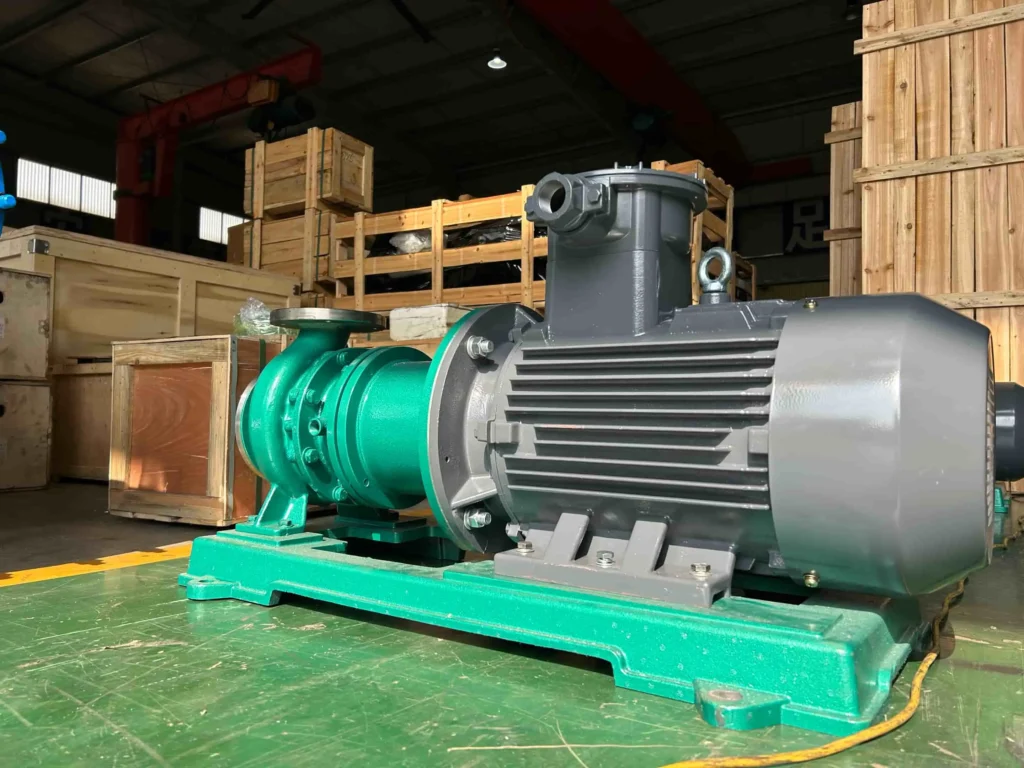
- Substituiu o desgaste de CrMo alto cromo pelo projetado pela Changyu carboneto de tungstênio (WC-Co, 10% ligante de cobalto) carboneto de tungstênio (WC-Co, 8% ligante de cobalto)
- Dureza do carboneto de tungstênio: HV 1400–1600 — aproximadamente 2,5× mais duro que a liga de CrMo substituída
- Os grãos de WC (HV 2000+) forneceram resistência ao corte contra as partículas de granada e olivina; o ligante de cobalto a 10% forneceu tenacidade suficiente para absorver impactos ocasionais de partículas maiores de até 6 mm
- Rotor: Design fechado com faceamento de carboneto de tungstênio nas pás e nos discos
- Revestimento da voluta: Ladrilhos segmentados de carboneto de tungstênio ligados a um suporte de ferro dúctil para facilidade de substituição
- Selo do eixo: Expelidor + empanque de gaxeta — mesma configuração, sem modificação necessária
Resultados após a instalação:
- Primeira inspeção do desgaste após 5.000 horas de operação (aproximadamente 8 meses) mostrou desgaste uniforme e gradual, sem corte ou sulcamento
- Intervalo de substituição do desgaste estendido de 1.500 horas para mais de 11.000 horas (aproximadamente 16 meses) — uma melhoria de 7,3× na vida útil
- Substituição do desgaste reduzida de 4–5 eventos por ano para menos de 1 evento por ano
- Custo de parada não planejada reduzido de mais de US$ 400.000 por ano para aproximadamente US$ 80.000 por ano (uma substituição planejada alinhada com a manutenção programada)
- O prêmio de custo do desgaste em carboneto de tungstênio (US$ 35.000 vs US$ 10.000 para CrMo) foi recuperado em 3,5 meses de operação através de um único evento de parada evitado
- A mina padronizou componentes de desgaste em carboneto de tungstênio da Changyu para todas as bombas de rejeitos, convertendo quatro posições adicionais de bombas no ano seguinte
Conclusão principal deste caso:
Em serviço de lama de diamante, a liga convencional de CrMo alto cromo — mesmo quando especificada corretamente para “serviço abrasivo severo” pelos padrões convencionais de mineração — é fundamentalmente superada pela dureza das partículas na lama. A única estratégia de material eficaz é selecionar um material de bomba com dureza superior à dos minerais acompanhantes no minério diamantífero. O carboneto de tungstênio, a HV 1400–1600, fornece essa dureza enquanto retém tenacidade suficiente para operação confiável. O prêmio de custo do material não é um custo — é um investimento com um período de retorno medido em meses, não em anos.
Quais São as Soluções da Changyu Pump para Lamas Abrasivas de Diamante?
A Changyu Pump fabrica séries de bombas que podem ser configuradas com materiais de desgaste avançados para serviço de lama de diamante. Cada série aborda uma combinação específica de severidade de abrasão, potencial de corrosão e temperatura de operação.
Guia de Seleção de Produto para Aplicações de Lama de Diamante
Tabela: Changyu Pump Lama de Diamante — Correspondência de Aplicação
| Circuito de Mineração de Diamante | Desafio Principal de Desgaste | Série de bombas Changyu recomendada | Configuração de Material Recomendada |
|---|---|---|---|
| Lama primária de kimberlito, descarga do moinho | Desgaste por corte extremo + impacto de partículas grandes | Série HB com desgaste em carboneto de tungstênio | Revestimentos de voluta e rotor em carboneto de tungstênio |
| Alimentação do DMS, alimentação do ciclone | Desgaste por corte severo + meio de ferrossilício | Série HB com desgaste em carboneto de tungstênio | Revestimentos de voluta e rotor em carboneto de tungstênio |
| Rejeitos finos de diamante (< 1 mm) | Desgaste por corte extremo, impacto mínimo | Série HB com revestimentos cerâmicos | Revestimentos de voluta em cerâmica SiC ou Al2O3 |
| Lama corrosiva de lixiviação de diamante | Desgaste por corte + corrosão ácida | Série CYB-ZKJ | Revestido em FEP/PFA com rotor em carboneto de tungstênio |
| Lama de diamante de alta temperatura | Desgaste por corte + alta temperatura | Série CYG | Revestido em PFA com rotor em carboneto de tungstênio ou cerâmica |
Série HB — Bomba para lamas abrasivas
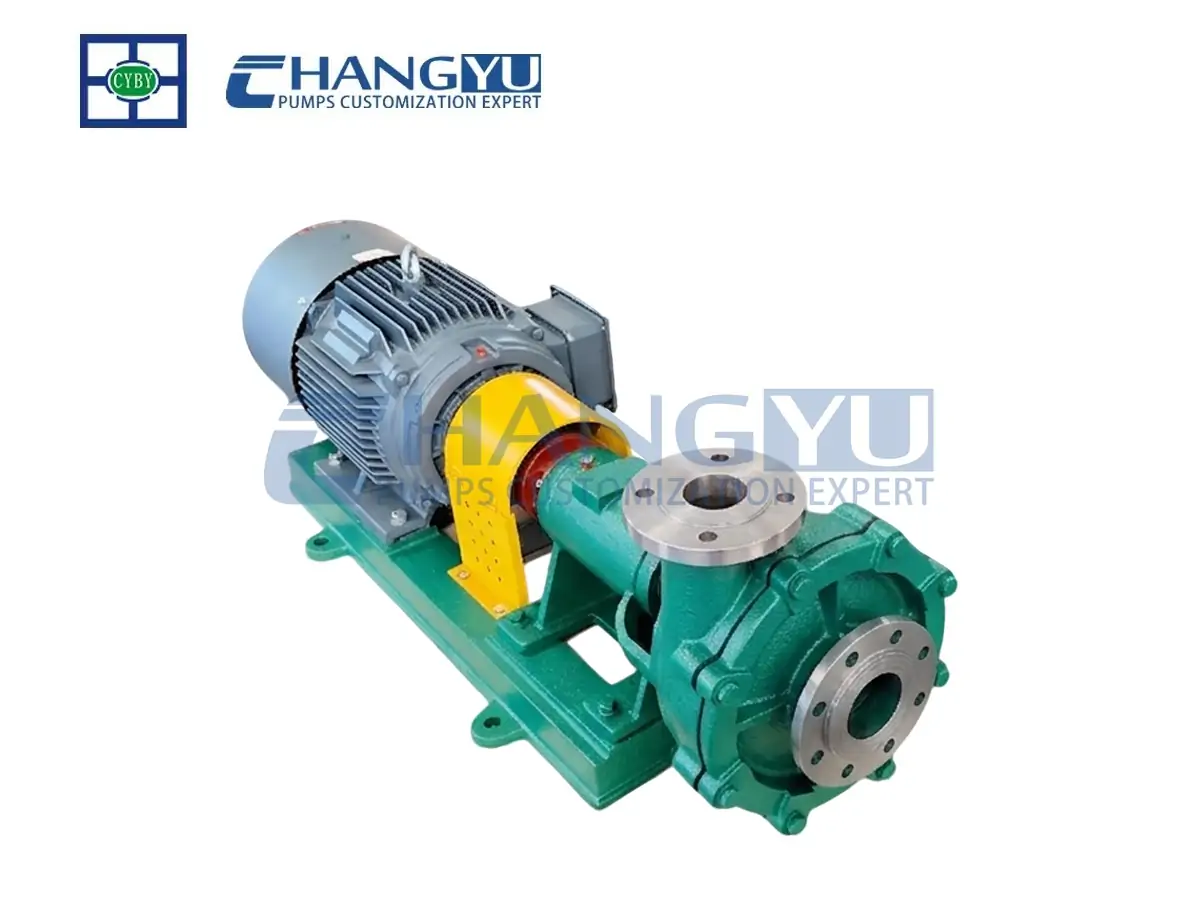
A Série HB é uma bomba centrífuga horizontal de alto rendimento, de um estágio e simples sucção, projetada de acordo com a ISO 2858 e em conformidade com as normas CE. Construída com uma estrutura molhada totalmente em aço inoxidável, a Série HB pode ser configurada com componentes de desgaste em carboneto de tungstênio ou cerâmica para serviço abrasivo extremo, incluindo lamas de diamante.
Em aplicações de mineração de diamante, a Série HB com revestimentos de voluta e rotor em carboneto de tungstênio fornece o equilíbrio ideal de resistência ao desgaste por corte e tolerância a impactos para lama primária de kimberlito, alimentação do DMS e circuitos de rejeitos.
Tabela: Especificações técnicas da série HB
| Parâmetro | Especificação |
|---|---|
| Tipo de bomba | Bomba centrífuga horizontal para lamas em aço inoxidável |
| Gama de caudais | 10-60 m³/h |
| Gama de cabeças | 20-120 m |
| Potência do motor | 3-45 kW |
| Velocidade | 2.900 r/min |
| Temperatura média | -20°C a 120°C |
| Materiais personalizáveis | Aço inoxidável 304, 316, 316L, 2205, 2507; opções de wet-end de carboneto de tungstênio e cerâmica disponíveis |
Ver as especificações da bomba para lamas abrasivas da série HB →
Série CYB-ZKJ — Bomba para transferência de produtos químicos corrosivos
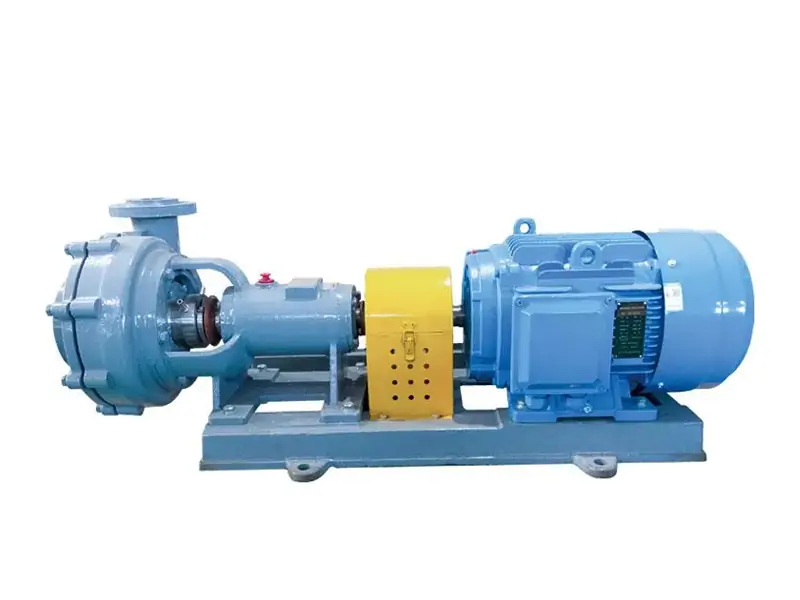
A série CYB-ZKJ oferece resistência química para circuitos de mineração de diamantes onde a polpa não é apenas abrasiva, mas também quimicamente agressiva — como soluções de lixiviação ácida ou água de processo salina. A bomba apresenta material de revestimento FEP (etileno propileno fluorado), proporcionando resistência química em uma ampla faixa de pH dentro de uma temperatura de -80°C a 120°C.
Na mineração de diamantes, a série CYB-ZKJ lida com polpas corrosivas de lixiviação de diamantes, fluxos de tratamento químico e água de processo contendo sais dissolvidos ou ácidos. O revestimento FEP/PFA protege o corpo da bomba contra corrosão, enquanto o impulsor pode ser especificado em carboneto de tungstênio para resistência combinada à corrosão e ao desgaste.
Tabela: Especificações técnicas da série CYB-ZKJ
| Parâmetro | Especificação |
|---|---|
| Tipo de bomba | Bomba centrífuga de transferência de produtos químicos com revestimento em FEP/PFA |
| Gama de caudais | 3-2,600 m³/h |
| Gama de cabeças | 5-100 m |
| Potência do motor | 0,75-300 kW |
| Gama de velocidades | 968-3.450 r/min |
| Temperatura média | -80°C a 120°C |
| Materiais personalizáveis | FEP (padrão), PFA (opção para altas temperaturas) |
Ver as especificações da bomba de transferência de produtos químicos corrosivos da série CYB-ZKJ →
Série CYG — Bomba química para altas temperaturas
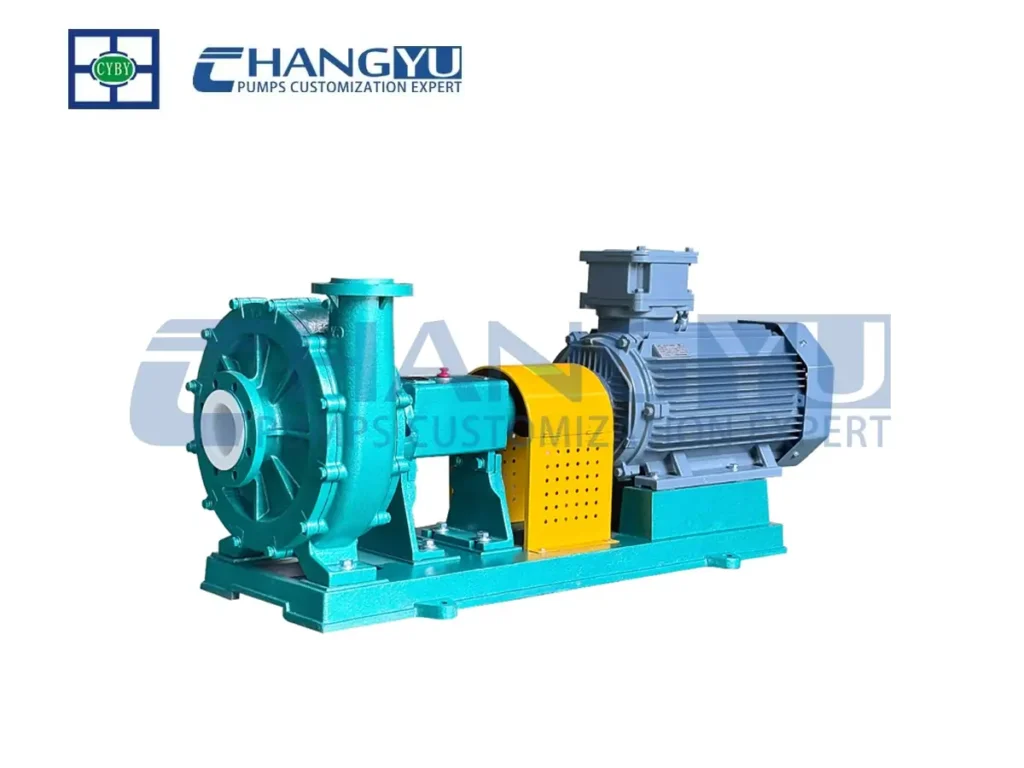
A série CYG é projetada para condições operacionais extremas que combinam altas temperaturas, substâncias corrosivas e sólidos abrasivos — condições que podem ocorrer no processamento de diamantes quando o tratamento químico ou processos térmicos estão envolvidos. Em seu núcleo, possui um revestimento PFA de 8–20 mm de espessura, integrado ao corpo de aço através de um processo avançado de sinterização moldada, eliminando o risco de rachaduras do fluoroplástico sob ciclagem térmica.
Tabela: Especificações técnicas da série CYG
| Parâmetro | Especificação |
|---|---|
| Tipo de bomba | Bomba química para altas temperaturas com revestimento em PFA |
| Gama de caudais | 3-2,600 m³/h |
| Gama de cabeças | 5-100 m |
| Potência do motor | 0,75-300 kW |
| Gama de velocidades | 968-3.450 r/min |
| Temperatura média | -80°C a 160°C |
| Materiais personalizáveis | Revestimento em PFA (8–20 mm de espessura) |
Ver as especificações da bomba química para altas temperaturas da série CYG →
Como Selecionar o Material Certo para Sua Aplicação de Bomba de Polpa de Diamante?
A seleção de material para bombas de polpa de diamante é uma decisão de engenharia sistemática que segue uma sequência lógica, desde a caracterização das partículas até a avaliação do material e validação econômica.
Árvore de decisão de seleção de materiais
Etapa 1: Caracterize as partículas.
- Meça a dureza das partículas abrasivas na polpa (escala Mohs ou dureza Vickers)
- Determinar a forma da partícula (angular, de bordas afiadas vs arredondada)
- Estabeleça o tamanho máximo da partícula — isso determina o risco de fratura por impacto para materiais cerâmicos
Etapa 2: Avalie o ambiente químico.
- Medir o pH e a temperatura da polpa
- Identificar espécies corrosivas (cloretos, sulfatos, ácidos)
- Se existirem condições corrosivas, especifique materiais de ligante resistentes à corrosão (WC-Ni em vez de WC-Co) ou considere opções de bombas revestidas (FEP/PFA)
Etapa 3: Selecione a categoria do material.
- Diamante ou minerais acompanhantes > Mohs 7, tamanho máximo da partícula > 2 mm → Carboneto de tungstênio (WC) — fornece a dureza para resistir ao corte e a tenacidade para sobreviver ao impacto
- Diamante ou minerais acompanhantes > Mohs 7, tamanho máximo da partícula < 1–2 mm → Cerâmica de carboneto de silício (SiC) — vida útil máxima de desgaste onde o risco de impacto é mínimo
- Tamanhos de partículas mistos com risco de material estranho → Revestimentos compostos de cerâmica-borracha — combina resistência ao desgaste com proteção contra impacto
- Ambiente corrosivo + partículas abrasivas → Bomba revestida (FEP/PFA) com impulsor de carboneto de tungstênio — separa a proteção contra corrosão (revestimento) da proteção contra desgaste (impulsor)
Etapa 4: Valide com análise de TCO.
- Calcule o TCO de 5 anos incluindo peças de reposição da parte molhada, mão de obra e custo de parada não planejada no valor de produção da mina
- Compare o TCO do material premium com a linha de base de CrMo de alto cromo
- Em serviço de polpa de diamante, materiais premium praticamente sempre entregam ROI positivo dentro de 12 meses
A recomendação definitiva da equipe de engenharia da Changyu Pump: para serviço de polpa de diamante, inicie o processo de seleção de material com carboneto de tungstênio como material padrão e só se desvie desta escolha por razões específicas e documentadas. O carboneto de tungstênio fornece a combinação ideal de dureza e tenacidade na mais ampla gama de aplicações de polpa de diamante. Materiais cerâmicos oferecem vida útil de desgaste incrementalmente melhor em circuitos de partículas finas, mas introduzem risco de fratura frágil que deve ser cuidadosamente avaliado. CrMo de alto cromo e elastômeros não devem ser considerados para qualquer aplicação de polpa de diamante onde seja necessária uma vida útil superior a 6 meses.
Perguntas Frequentes sobre Seleção de Material para Bombas de Polpa em Polpas de Diamante
P: Por que a liga de alto cromo falha tão rapidamente em polpas de diamante?
R: A liga CrMo de alto cromo (600–700 HB) é significativamente mais macia que o diamante (HV 8000+) e mais macia que minerais acompanhantes como granada (HV 750–950). As partículas de diamante cortam tanto a matriz metálica quanto os carbonetos de cromo com igual eficácia. A relação de dureza de 10:1 ou maior significa que a partícula remove material a cada contato — não há fase resistente ao desgaste que possa resistir ao corte.
P: Qual é o melhor material para impulsores de bomba de polpa de diamante?
R: Carboneto de tungstênio (WC) com ligante de cobalto ou níquel de 6–10% é o material ideal para a maioria dos impulsores de polpa de diamante. Menor teor de cobalto (6%) fornece maior dureza para circuitos de partículas finas; maior teor de cobalto (10–12%) fornece tenacidade melhorada para circuitos com risco de impacto. Para circuitos de partículas finas com impacto mínimo, a cerâmica de carboneto de silício oferece vida útil ainda maior.
P: Materiais cerâmicos podem ser usados em bombas de polpa de diamante?
R: Sim — cerâmicas de carboneto de silício (SiC) e alumina (Al2O3) fornecem vida útil de desgaste excepcional em circuitos finos de rejeitos de diamante onde o tamanho máximo da partícula está confiavelmente abaixo de 1–2 mm e a peneiração upstream eficaz está em vigor. No entanto, as cerâmicas são frágeis (KIC 3–5 MPa√m) e podem fraturar catastroficamente se impactadas por partículas maiores. Revestimentos compostos de cerâmica-borracha mitigam esse risco fornecendo um suporte flexível.
P: Quanto mais caros são os componentes de bomba de carboneto de tungstênio?
R: Componentes de parte molhada de carboneto de tungstênio normalmente custam 3–5× os componentes equivalentes de CrMo de alto cromo. No entanto, a extensão de 6–8× na vida útil combinada com a eliminação de múltiplos eventos de parada não planejada por ano resulta em uma redução de TCO de 5 anos de 70–85% em serviço de polpa de diamante.
P: Qual é o período de retorno típico para a atualização para carboneto de tungstênio?
R: Em serviço de polpa de diamante, o período de retorno para a atualização de CrMo de alto cromo para componentes de parte molhada de carboneto de tungstênio é tipicamente de 3–6 meses — muitas vezes recuperado em um único evento de parada não planejada evitado. O fator econômico dominante não é o custo do material, mas o custo de parada de produção eliminado pela vida útil estendida.
P: A Changyu Pump fornece opções de bomba de carboneto de tungstênio ou cerâmica?
R: Sim. A Série HB da Changyu Pump pode ser configurada com componentes de via úmida em carboneto de tungstênio ou cerâmica para aplicações de lama diamantífera. As Séries CYB-ZKJ e CYG oferecem opções revestidas em FEP/PFA com rotores de carboneto de tungstênio para circuitos diamantíferos corrosivos ou de alta temperatura. Entre em contato com nossa equipe de engenharia para uma recomendação de material com base nas características específicas do seu minério.
Lista de verificação de prevenção do engenheiro de bombas da Changyu
Com base em mais de 20 anos de experiência em engenharia de materiais em aplicações de mineração ultra-abrasivas, os engenheiros da Changyu Pump recomendam a seguinte disciplina de seleção para bombas de lama diamantífera:
- Não especifique CrMo de alto cromo para nenhum circuito de lama diamantífera. O diferencial de dureza entre as partículas de diamante/granada e a liga CrMo garante desgaste por corte rápido e vida útil antieconômica. Este material não é adequado para serviço diamantífero.
- Não especifique revestimentos elastoméricos (borracha, poliuretano) para lamas diamantíferas. As partículas de diamante clivam com arestas afiadas como navalhas que cortam os elastômeros ao contato. A resiliência do elastômero — o mecanismo de resistência ao desgaste para partículas mais macias e arredondadas — não funciona contra partículas duras de arestas afiadas.
- Inicie a seleção de material com carboneto de tungstênio como material padrão. O carboneto de tungstênio oferece o equilíbrio ideal de resistência ao desgaste por corte e tolerância ao impacto para a mais ampla gama de circuitos de lama diamantífera. Desvie-se apenas por razões específicas e documentadas.
- Avalie o tamanho máximo da partícula antes de especificar materiais cerâmicos. A cerâmica de carboneto de silício e alumina oferece excelente vida útil ao desgaste, mas corre o risco de fratura frágil devido ao impacto de partículas. Especifique materiais cerâmicos apenas quando o tamanho máximo de partícula estiver confiavelmente abaixo de 1–2 mm e houver peneiramento eficaz em vigor.
- Considere materiais de ligante resistentes à corrosão para lamas diamantíferas ácidas ou salinas. Especifique carboneto de tungstênio com ligante de níquel (WC-Ni) em vez de ligante de cobalto (WC-Co) para ambientes corrosivos. Para condições severamente corrosivas, considere opções de bombas revestidas com rotores de carboneto de tungstênio.
- Realize uma análise de TCO de 5 anos antes de tomar decisões sobre custos de material. O prêmio de custo do material para carboneto de tungstênio ou cerâmica é recuperado em meses através de tempo de inatividade evitado. Não rejeite materiais premium com base no custo inicial sem avaliar a economia do ciclo de vida.
- Solicite referências de vida útil ao desgaste de minas de diamante em operação com características de minério semelhantes. Os dados de desgaste laboratorial de um fabricante não substituem o desempenho de campo documentado em serviço de lama diamantífera. Insista em referências específicas do local.
- Mantenha um conjunto completo sobressalente de via úmida em carboneto de tungstênio ou cerâmica em estoque. O prazo de entrega mais longo para componentes de material premium torna o planejamento de estoque essencial. Um conjunto de via úmida sobressalente garante que as substituições planejadas possam ser executadas sem atraso.
Conclusão
A seleção de material para bombas de lama em lamas diamantíferas abrasivas não é uma extensão da seleção de material convencional para bombas de mineração — é um problema de engenharia fundamentalmente diferente. A dureza extrema das partículas de diamante (Mohs 10, HV 8000+) e seus minerais acompanhantes (granada em Mohs 7–7,5, olivina em Mohs 6,5–7) cria um ambiente de desgaste onde os materiais convencionais de bombas — liga CrMo de alto cromo, borracha natural e poliuretano — são superados e falham em semanas a meses. A única estratégia de material eficaz é selecionar materiais de via úmida da bomba com dureza superior à dos minerais acompanhantes no minério diamantífero, mantendo tenacidade à fratura suficiente para sobreviver ao impacto ocasional de partículas grandes.
O carboneto de tungstênio (WC) emergiu como o material ideal para a maioria das aplicações de bombas de lama diamantífera, combinando dureza HV 1200–1800 com tenacidade à fratura KIC 10–15 MPa√m. Em serviço de rejeitos diamantíferos, os componentes de via úmida em carboneto de tungstênio proporcionam 6–8× a vida útil do CrMo de alto cromo, com um prêmio de custo de material recuperado em 3–6 meses através de tempo de inatividade não planejado eliminado. Para circuitos diamantíferos de partículas finas com peneiramento upstream eficaz e risco mínimo de impacto, a cerâmica de carboneto de silício e alumina oferece vida útil ao desgaste incrementalmente maior, desde que o risco de fratura frágil seja cuidadosamente avaliado.
Quando você estiver pronto para especificar materiais de desgaste para sua aplicação de lama diamantífera, a equipe de engenharia da Changyu Pump pode fornecer uma avaliação técnica gratuita — incluindo análise de caracterização de partículas, recomendação de material e uma projeção de TCO de 5 anos comparando opções de material para as condições específicas do seu circuito. Com mais de 20 anos de experiência em engenharia de materiais, capacidade de configuração de via úmida em carboneto de tungstênio e cerâmica, e desempenho documentado em aplicações de mineração diamantífera e ultra-abrasivas, garantimos que sua seleção de material seja tecnicamente correta e economicamente justificada.