
Resposta rápida
Um bomba de mangueira industrial é uma bomba de deslocamento positivo que move fluidos comprimindo uma mangueira de borracha reforçada com roletes rotativos, criando vácuo na entrada e empurrando o fluido em direção à descarga. Diferentemente de outros tipos de bombas, o fluido entra em contato apenas com a parede da mangueira — eliminando a necessidade de selos mecânicos, gaxetas ou válvulas. Os principais fatores de seleção incluem:
- Compatibilidade do material da mangueira: EPDM para ácidos e álcalis fortes; NBR para óleos e solventes; NR/FDA para aplicações de grau alimentício; Hypalon para produtos químicos oxidantes.
- Frequência de compressão e vida útil da mangueira: A velocidade da bomba afeta diretamente a longevidade da mangueira — velocidades mais baixas prolongam a vida útil da mangueira em detrimento da vazão.
- Limites operacionais: A pressão máxima de descarga normalmente varia de 0,6 a 2,4 MPa; as vazões máximas atingem aproximadamente 50 m³/h para modelos industriais.
- Comparação de TCO: Investimento inicial menor do que bombas de cavidade progressiva para aplicações corrosivas ou abrasivas, com intervalos previsíveis de substituição da mangueira.
Processos industriais frequentemente lidam com fluidos que atacam os componentes da bomba tão agressivamente quanto atacam o próprio equipamento do processo — ácidos fortes, soluções cáusticas, lamas abrasivas e emulsões sensíveis ao cisalhamento. Uma bomba com selos mecânicos ou gaxetas nesses serviços torna-se um passivo de manutenção, com falhas de selo causando paradas não planejadas e vazamentos de fluido criando riscos de segurança.
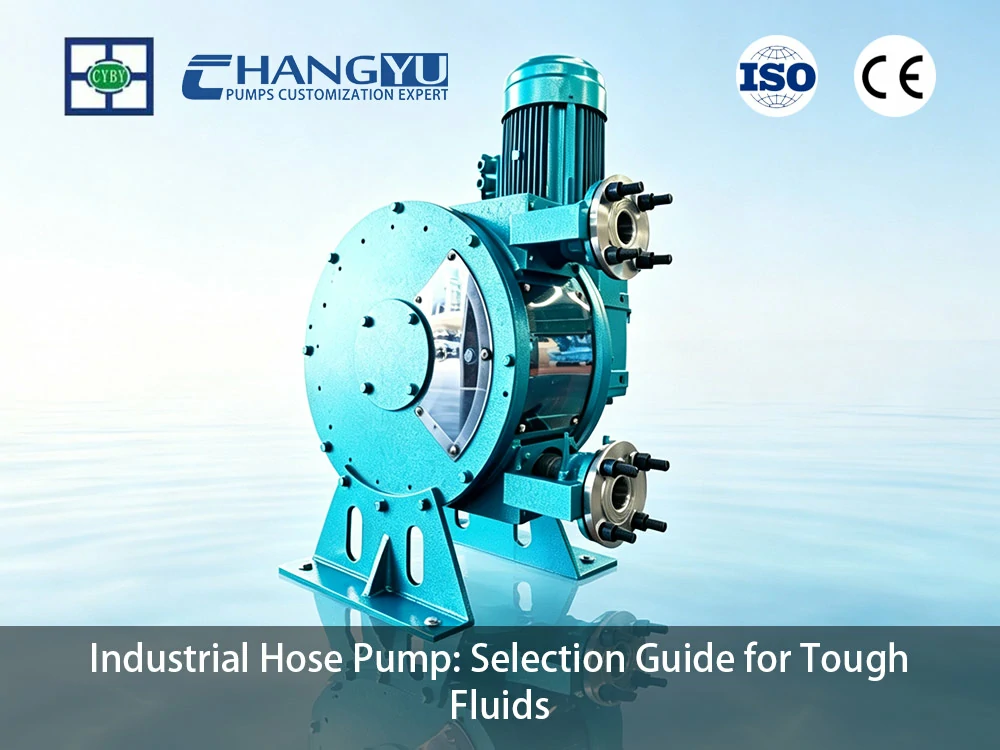
A Changyu Pump fabrica bombas de deslocamento positivo para aplicações químicas, de mineração e industriais há mais de duas décadas. Este guia fornece a estrutura para seleção de bombas de mangueira industriais — desde a especificação do material da mangueira e otimização da frequência de compressão até a análise do custo total de propriedade.
O Que É uma Bomba de Mangueira Industrial e Como Ela Funciona?
Uma bomba de mangueira industrial é uma bomba de deslocamento positivo rotativa que opera no princípio peristáltico Um conjunto rotativo de roletes ou sapatas comprime uma mangueira de elastômero reforçada contra um alojamento curvo, criando um ponto de vedação móvel que puxa o fluido no lado de sucção e o empurra para fora no lado de descarga.
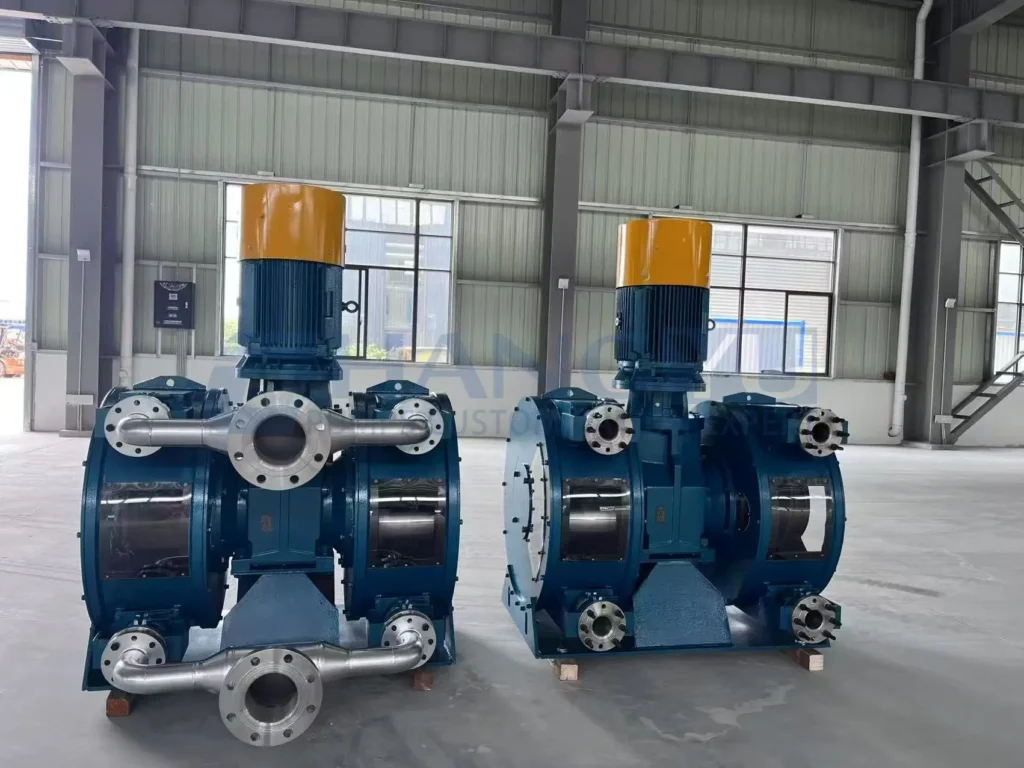
Princípio de funcionamento
À medida que o rotor gira, cada rolete comprime a mangueira até ficar plana no ponto de contato, criando uma vedação temporária. Atrás do rolete, a mangueira recupera sua forma original, gerando vácuo que puxa mais fluido para dentro da bomba. À frente do rolete, o fluido preso na mangueira é empurrado para frente. Este ciclo contínuo de compressão-recuperação produz um fluxo de deslocamento positivo pulsante sem qualquer contato entre o fluido bombeado e os componentes mecânicos da bomba.
Bombas de Mangueira de Grau Industrial vs Grau Sanitário
| Caraterística | Bomba de Mangueira Industrial | Bomba de Mangueira Sanitária |
|---|---|---|
| Reforço da mangueira | Múltiplas camadas têxteis e de arame de aço para capacidade de alta pressão | Camada de reforço única; otimizada para limpeza frequente |
| Material da carcaça | Ferro fundido ou ferro dúctil com revestimento resistente à corrosão | Aço inoxidável (304 ou 316L) |
| Materiais da mangueira | NR, EPDM, NBR, Hypalon — priorizados por resistência química | NR/FDA, EPDM/FDA — priorizados por capacidade de limpeza |
| Indústrias típicas | Processamento químico, mineração, tratamento de águas residuais, construção civil | Alimentícia, bebidas, farmacêutica, biotecnologia |
| Método de limpeza | Substituição manual da mangueira; lavagem química | Compatível com CIP (limpeza no local); troca rápida da mangueira |
Quais São as Principais Vantagens das Bombas de Mangueira Industriais?
As bombas de mangueira industriais oferecem vantagens técnicas distintas em aplicações onde o fluido bombeado ataca componentes convencionais da bomba. Essas vantagens decorrem de um único recurso de design: o fluido entra em contato apenas com a parede da mangueira.
Design Sem Selo: A Vantagem Central das Bombas de Mangueira Industriais
A própria mangueira funciona tanto como câmara de bombeamento quanto como o único componente molhado. Nenhum selo mecânico, gaxeta ou válvula entra em contato com o fluido bombeado. Este único recurso elimina o ponto de falha mais comum em bombas industriais — o selo do eixo. Em serviço corrosivo ou abrasivo, a substituição do selo pode representar 30–50% dos custos totais de manutenção da bomba ao longo do ciclo de vida do equipamento.
Benefícios adicionais do design sem selo incluem:
- Self-priming capability
: A recuperação da mangueira cria sucção de até 8–9 metros, eliminando a necessidade de válvulas de pé ou sistemas de escorva. - Tolerância de funcionamento em seco: Diferentemente das bombas de cavidade progressiva, que destroem seu estator em minutos de perda de fluido, uma bomba de mangueira pode operar a seco por períodos prolongados — horas, não minutos — sem danos imediatos. O lubrificante da mangueira fornece resfriamento durante a operação a seco.
- Fluxo reversível: Mudar a direção de rotação inverte a direção do fluxo — útil para limpeza de linhas, mistura em tanques e operações de retrolavagem.
- Baixo cisalhamento: A ação de compressão impõe cisalhamento mínimo ao fluido bombeado, preservando a estrutura de polímeros, emulsões e culturas biológicas.
Manuseio de Fluidos Abrasivos, Corrosivos e de Alta Viscosidade
| Característica do Fluido | Desafio para Bombas Convencionais | Resposta da Bomba de Mangueira |
|---|---|---|
| Alta viscosidade (>100.000 cSt) | Bombas centrífugas perdem eficiência; bombas de engrenagens exigem folgas grandes | Sucção autoescorvante puxa fluidos viscosos diretamente; sem perda de eficiência |
| Alto teor de sólidos (>60%) | Sólidos abrasivos danificam selos, entopem válvulas e erodem impulsores | Sólidos passam pela mangueira sem contato com componentes mecânicos |
| Ácidos/álcalis fortes (pH 0–14) | Corrói o corpo da bomba, selos e materiais do impulsor | Fluido entra em contato apenas com a mangueira — selecione o material da mangueira para compatibilidade química |
| Fluidos sensíveis ao cisalhamento | Impulsores e geometrias de parafuso degradam a estrutura do produto | Compressão de baixo cisalhamento preserva a integridade molecular |
| Fluidos cristalizantes | Formação de sólidos danifica selos e componentes de tolerância estreita | Flexão da mangueira quebra o acúmulo de cristais; sem peças de tolerância estreita para danificar |
Matriz de Comparação de Tipos de Bombas Industriais
| Caraterística | Bomba de Mangueira | Bomba de Cavidade Progressiva | Bomba de diafragma | Bomba Centrífuga (com selo mecânico) |
|---|---|---|---|---|
| Design sem selo | ✅ Sim | ❌ Requer selo do eixo | ✅ Sim (sem selo de eixo rotativo) | ❌ Requer selo do eixo |
| Capacidade de operação a seco | ✅ Prolongada (horas) | ❌ Não — falha do estator | ⚠️ Limitada | ❌ Não — dano ao selo |
| Manuseio de sólidos | ✅ Até 60%+ | ✅ Até 60%+ | ⚠️ Válvulas de retenção entopem | ❌ Limitada |
| Capacidade de viscosidade | ✅ >100.000 cSt | ✅ >1.000.000 cSt | ⚠️ Até 20.000 cSt | ❌ <300 cSt |
| Pressão máxima | ⚠️ 0,6–2,4 MPa | ✅ Até 12+ bar | ✅ Até 10+ bar | ✅ Até 100+ bar (projetos multiestágio atingem 300+ bar) |
| Nível de cisalhamento | Muito baixo | Muito baixo | Moderado a elevado | Elevado |
| Intervalo de manutenção | Substituição da mangueira (previsível) | Substituição do estator (previsível) | Substituição do diafragma e da válvula | Substituição do selo, rolamento e impulsor |
Máxima passagem de sólidos + peças de desgaste substituíveis Para aplicações que combinam duas ou mais características desafiadoras do fluido — como sólidos abrasivos com química corrosiva, ou alta viscosidade com sensibilidade ao cisalhamento — o design sem selo da bomba de mangueira oferece uma vantagem de confiabilidade que alternativas com selo mecânico não conseguem igualar nessas condições específicas.
Onde as Bombas de Mangueira Industriais São Usadas?
As bombas de mangueira industriais atendem aplicações onde o fluido bombeado ataca os componentes da bomba de forma tão agressiva quanto os equipamentos de processo. Seu design sem selo e opções de compatibilidade química as tornam indispensáveis em múltiplas indústrias.
Aplicações de Bombas de Mangueira Industriais nas Indústrias Química e de Mineração
- Processamento químico: Transferência de ácido sulfúrico concentrado (93–98%), hidróxido de sódio (50%), cloreto férrico e lamas à base de solventes. A bomba de mangueira elimina as falhas de corrosão do selo que afetam bombas com selo mecânico nesses serviços. Mangueiras de Hypalon ou EPDM oferecem ampla resistência química para todo o espectro de pH.
- Exploração mineira e processamento de minerais: Dosagem de solução de cianeto em circuitos de lixiviação de ouro, transferência de lamas abrasivas de rejeitos e dosagem de reagentes de flotação. A mangueira lida com sólidos abrasivos sem o desgaste do impulsor que as bombas centrífugas sofrem.
- Tratamento da água e das águas residuais: Dosagem de lama de cal, hipoclorito de sódio, coagulante de cloreto férrico e lama de carvão ativado. A capacidade de autoescorvamento elimina a necessidade de sucção afogada em tanques de dosagem química.
- Produção de alimentos e farmacêutica: Transferência de concentrados de frutas, culturas de iogurte, lamas de levedura e meios de fermentação. Mangueiras NR/FDA ou EPDM/FDA atendem aos requisitos de contato com alimentos, enquanto o bombeamento de baixo cisalhamento preserva a integridade do produto.
- Construção e cerâmica: Bombeamento de barbotina cerâmica, lama de bentonita, gesso e calda de cimento. A mangueira NR resistente à abrasão lida com lamas de alto teor de sólidos que destruiriam outros tipos de bomba em semanas.
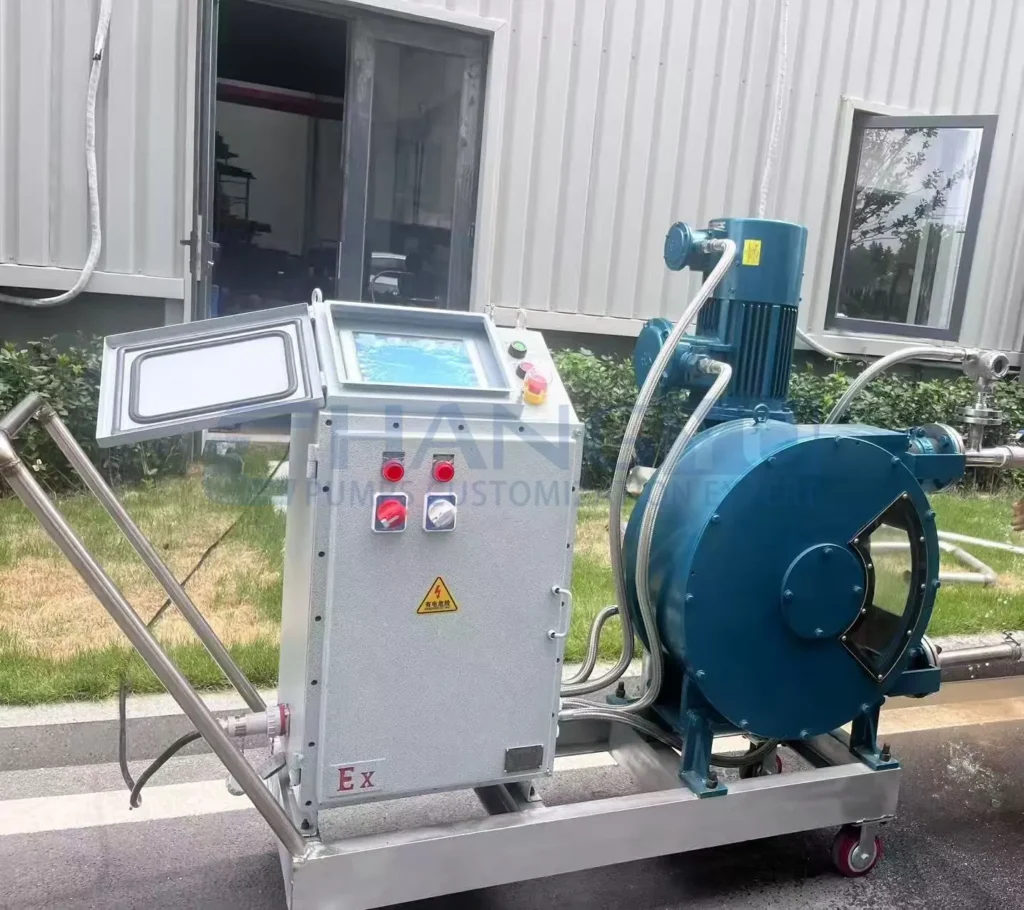
Como Escolher o Material de Mangueira Correto para Bombas de Mangueira Industriais?
A seleção do material da mangueira é o fator mais importante que determina a confiabilidade e o custo operacional de uma bomba de mangueira industrial. A mangueira é o único componente molhado, e sua compatibilidade com o fluido bombeado — validada por meio de ASTM D471 testes de imersão — rege tanto a vida útil quanto a frequência de manutenção.
Opções de Material de Mangueira para Bombas de Mangueira Industriais
| Material da Mangueira | Melhor para | Não Compatível Com | Temperatura máxima | Limitações: |
|---|---|---|---|---|
| Borracha Natural (NR) | Lamas abrasivas, cimento, barbotina cerâmica, lama de cal, ácidos diluídos (pH 4–9) | Óleos, solventes, ácidos oxidantes fortes, ozônio | 70°C | Base (1×) |
| EPDM | Ácidos fortes, álcalis, produtos químicos oxidantes, hipoclorito | Óleos minerais, solventes de hidrocarbonetos, cetonas | 90°C | 1,2–1,5× |
| NBR (Nitrila) | Óleos, combustíveis, graxas, fluidos à base de petróleo, algumas cetonas | Ácidos oxidantes fortes, ozônio | 90°C | 1,1–1,3× |
| NR/FDA (NR Branca) | Produtos alimentícios, bebidas, meios farmacêuticos | Óleos, solventes, ácidos fortes | 70°C | 1,5–2,0× |
| Hypalon (CSM) | Ácido sulfúrico concentrado, ácido nítrico, hidróxido de sódio, produtos químicos oxidantes | Hidrocarbonetos aromáticos, cetonas | 100°C | 1,5–2,0× |
Matriz de Seleção de Material para Fluidos Industriais Comuns
| Tipo de fluido | Exemplos | Material de Mangueira Recomendado | Vida Útil Esperada da Mangueira (a 40 r/min) |
|---|---|---|---|
| Ácidos minerais fortes | Ácido sulfúrico (93–98%), ácido clorídrico (32%) | EPDM ou Hypalon | 12–24 meses |
| Álcalis fortes | Hidróxido de sódio (50%), hidróxido de potássio | EPDM | 18–24 meses |
| Produtos químicos oxidantes | Hipoclorito de sódio, peróxido de hidrogênio | EPDM ou Hypalon | 12–18 meses |
| Solventes orgânicos | Acetona, MEK, tolueno, xileno | NBR (verificar compatibilidade conforme ASTM D471) | 6–12 meses |
| Produtos petrolíferos | Petróleo bruto, diesel, óleo lubrificante | NBR | 18–24 meses |
| Lamas abrasivas | Lama de cal, calda de cimento, barbotina cerâmica | NR | 12–18 meses |
| Produtos alimentícios | Concentrado de frutas, iogurte, mel | NR/FDA ou EPDM/FDA | 12–24 meses |
Nota: As faixas de vida útil da mangueira são baseadas em dados típicos de campo de instalações industriais operando a 40 r/min. A vida útil real varia com a química do fluido, temperatura, pressão de descarga e velocidade da bomba.
Como a Frequência de Compressão Afeta a Vida Útil da Mangueira
A vida útil da mangueira é inversamente proporcional à velocidade da bomba. Cada rotação da bomba comprime a mangueira uma vez por rolete — uma bomba com dois roletes comprime cada seção da mangueira duas vezes por revolução. A 40 r/min, a mangueira sofre aproximadamente 57.600 ciclos de compressão por dia. A 60 r/min, isso aumenta para 86.400 ciclos por dia — um aumento de 50% na carga de fadiga.
Dados de campo em instalações industriais mostram que reduzir a velocidade da bomba de 60 r/min para 30 r/min pode estender a vida útil da mangueira em 60–100%, dependendo das características do fluido. Ao dimensionar uma bomba de mangueira industrial, selecionar um modelo maior operando em velocidade mais baixa geralmente oferece um custo total de propriedade menor do que um modelo menor na velocidade máxima — a economia no custo de substituição da mangueira supera o custo inicial mais alto da bomba.
Máxima passagem de sólidos + peças de desgaste substituíveis Para fluidos abrasivos ou quimicamente agressivos, opere a bomba a 50% ou menos de sua velocidade nominal máxima. A vida útil prolongada da mangueira reduz tanto o custo das mangueiras de reposição quanto o tempo de inatividade da produção associado às trocas de mangueira. Para fluidos limpos e não agressivos, velocidades mais altas são aceitáveis e permitem o uso de um modelo de bomba menor e mais econômico.
Quando Você Deve Escolher uma Bomba de Mangueira em Vez de uma Bomba de Cavidade Progressiva?
Bombas de mangueira e bombas de cavidade progressiva atendem faixas de aplicação sobrepostas, mas diferem fundamentalmente em seus perfis de manutenção e tolerância para condições operacionais específicas. A escolha entre elas depende de qual limitação da bomba a aplicação pode tolerar melhor.
Bomba de Mangueira vs Bomba de Cavidade Progressiva: Uma Comparação Quantitativa
| Fator de seleção | Bomba de Mangueira | Bomba de Cavidade Progressiva | Vencedor |
|---|---|---|---|
| Fluidos corrosivos com abrasivos | Sem selo — o fluido entra em contato apenas com a mangueira | O elastômero do estator deve resistir tanto à corrosão quanto à abrasão | Bomba de mangueira |
| Pressão máxima de descarga | 0,6–2,4 MPa | 6–12 bar (até 120 bar com multiestágio) | Bomba de cavidade progressiva |
| Vazão máxima | ~50 m³/h | ~200 m³/h | Bomba de cavidade progressiva |
| Tolerância de funcionamento em seco | Estendida (horas) | Nenhum — estator destruído em minutos | Bomba de mangueira |
| Sensibilidade ao cisalhamento | Cisalhamento muito baixo | Cisalhamento muito baixo | Igual |
| Manuseio de sólidos | Até 60%+ | Até 60%+ | Igual |
| Complexidade da manutenção | Substituição da mangueira — sem necessidade de alinhamento de precisão | Substituição do estator — alinhamento do rotor crítico | Bomba de mangueira |
| Nível de pulsação | Moderado (pulsações peristálticas) | Muito baixa (progressão contínua da cavidade) | Bomba de cavidade progressiva |
| Custo inicial de compra | Inferior | Mais alto | Bomba de mangueira |
| Custo de substituição de peças de desgaste | $500–$1.500 por mangueira | $1.500–$3.000 por estator | Bomba de mangueira |
Quando uma Bomba de Mangueira NÃO é a Escolha Certa?
- Aplicações de alta pressão de descarga: Se a pressão de descarga necessária exceder 2,4 MPa, uma bomba de cavidade progressiva com estator multiestágio ou uma bomba de diafragma de pistão é necessária.
- Processos sensíveis a pulsação: A ação peristáltica gera pulsos de fluxo que podem ser inaceitáveis para dosagem de precisão sem amortecedores de pulsação. As bombas de cavidade progressiva fornecem fluxo quase livre de pulsos.
- Vazões acima de 50 m³/h: As bombas de mangueira industriais são tipicamente limitadas a aproximadamente 50 m³/h. Para vazões mais altas, bombas de cavidade progressiva ou centrífugas oferecem soluções mais econômicas.
- Fluidos de alta temperatura acima de 100°C: Os materiais da mangueira têm limites de temperatura mais baixos do que os componentes metálicos da bomba. Para fluidos quentes, uma bomba de cavidade progressiva em aço inoxidável ou uma bomba centrífuga de alta temperatura pode ser necessária.
Máxima passagem de sólidos + peças de desgaste substituíveis Quando uma aplicação combina química corrosiva com sólidos abrasivos — como ácido concentrado com partículas de catalisador, ou solução cáustica com sólidos cristalinos — o design sem selo da bomba de mangueira fornece a solução mais confiável. A ausência de selos mecânicos elimina o modo de falha dominante nesses serviços agressivos. Para aplicações que priorizam pressão ou vazão em vez de compatibilidade química, as bombas de cavidade progressiva continuam sendo a opção mais capaz.
Estudo de Caso de Bomba de Mangueira Industrial: Planta Química Resolve Falha Frequente do Estator ao Trocar para uma Bomba de Mangueira
Uma planta química no Sudeste Asiático estava transferindo uma mistura de resina epóxi contendo aproximadamente 5% de solvente cetona (MEK) usando uma bomba de cavidade progressiva com estator NBR. Temperatura de operação: 55–65°C. Vazão: 18 m³/h a 6 bar de pressão de descarga.
O estator NBR falhava a cada 6 semanas — o solvente cetona causava inchaço progressivo, amolecimento e degradação mecânica do elastômero nitrílico. Cada falha do estator custava US$ 1.500 em peças, além de 12–16 horas de parada não planejada para substituição e limpeza da linha. Em 12 meses, a planta experimentou 8 falhas de estator, totalizando US$ 12.000 em peças e aproximadamente 120 horas de produção perdida.
A análise de causa raiz confirmou que a concentração do solvente cetona, embora apenas 5% em volume, era suficiente para inchar o NBR em mais de 50% de acordo com os dados de referência da ASTM D471. O material do estator FKM foi avaliado, mas ofereceu melhoria limitada para a mistura química completa.
A bomba de cavidade progressiva foi substituída por uma bomba de mangueira industrial Changyu equipada com uma mangueira NBR. Embora o NBR também experimente alguma interação com o solvente, o design da bomba de mangueira muda fundamentalmente a equação de falha: a mangueira é um componente não preciso e substituível em campo que custa US$ 800 e leva aproximadamente 2 horas para ser substituída, em comparação com o estator de precisão da bomba de cavidade progressiva (US$ 1.500, 12–16 horas de parada incluindo alinhamento do rotor). O design sem selo eliminou o selo do eixo — um ponto de falha secundário na instalação original.
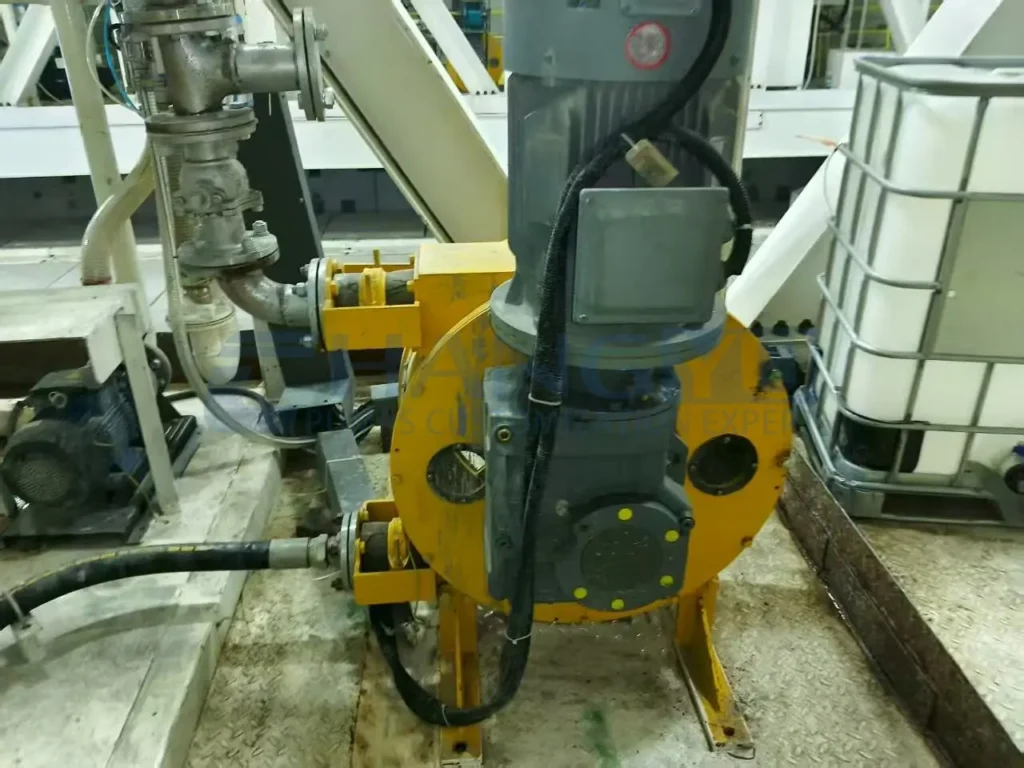
Ao longo de 24 meses de operação: a mangueira NBR foi substituída a cada 8–10 meses como manutenção planejada (custo de peças de US$ 800, 2–4 horas de parada programada por evento). Zero parada não planejada relacionada à bomba. O custo anual de manutenção foi reduzido de US$ 12.000+ (substituições reativas de estator) para aproximadamente US$ 1.000/ano (custo amortizado da mangueira). O preço de compra da bomba de mangueira foi recuperado nos primeiros 8 meses de operação através da eliminação de manutenção de emergência e perdas de produção evitadas.
Conclusão principal: Quando o fluido bombeado contém mesmo baixas concentrações de produtos químicos incompatíveis com elastômeros, o único componente molhado da bomba de mangueira — a mangueira — fornece um perfil de manutenção mais simples e previsível do que o conjunto combinado de estator e selo da bomba de cavidade progressiva. Mesmo quando a vida útil da mangueira é encurtada por ataque químico, o menor custo de substituição e o procedimento de troca mais rápido geram economias operacionais significativas em comparação com a substituição do estator de precisão. O teste de compatibilidade do material da mangueira de acordo com a ASTM D471 deve ser realizado para a mistura completa do fluido, não apenas para o componente primário.
Soluções de Bomba de Mangueira Industrial Changyu Pump
A Changyu Pump fabrica bombas de mangueira industriais projetadas para as condições exigentes de processamento químico, mineração, tratamento de água e aplicações industriais de manuseio de fluidos. A bomba apresenta um invólucro de ferro fundido para serviço pesado com revestimento resistente à corrosão e opera no princípio peristáltico — roletes rotativos comprimem uma mangueira de elastômero reforçada, criando sucção na entrada e deslocamento positivo na descarga.
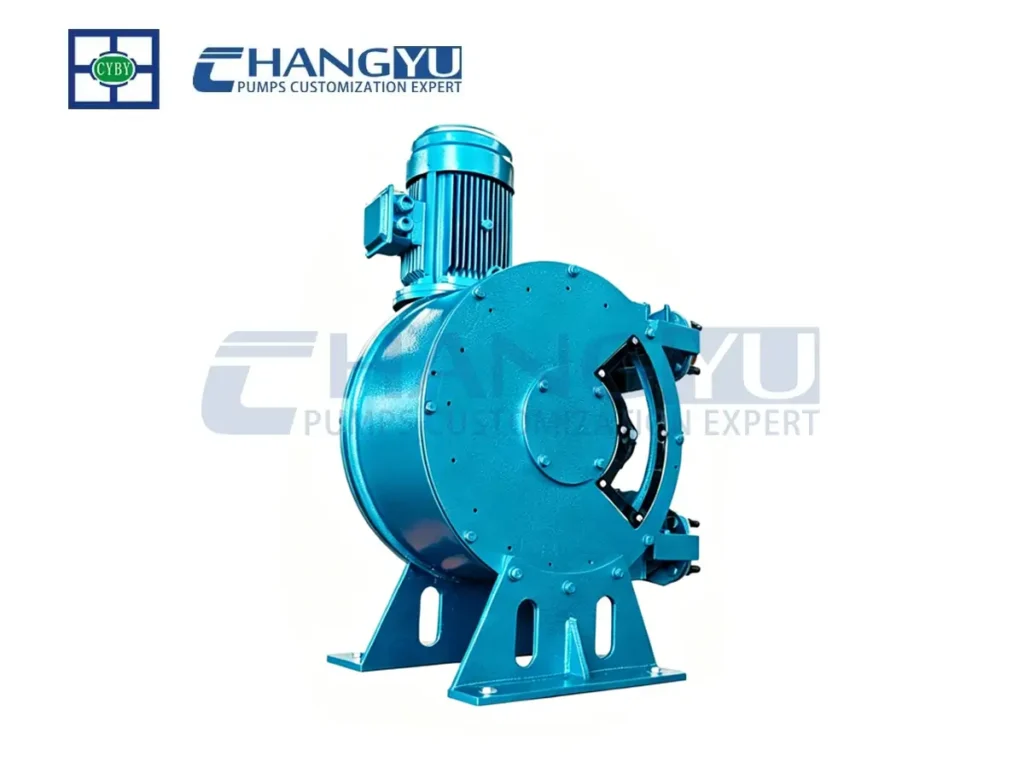
Especificações da Bomba de Mangueira Industrial Changyu
| Parâmetro | Especificação |
|---|---|
| Tipo de bomba | Bomba peristáltica rotativa de mangueira |
| Gama de caudais | 0,06–50 m³/h |
| Pressão máxima de descarga | 0–1,6 MPa |
| Materiais da mangueira | R/CSM/EPDM/NBR/F-NR/F-NBR |
| Faixa de temperatura média | -20°C a 100°C (dependendo do material da mangueira) |
Ver especificações da Bomba de Mangueira Industrial Changyu →
Perguntas Frequentes sobre Bombas de Mangueira Industriais
P: Qual é a diferença entre uma bomba de mangueira e uma bomba peristáltica?
R: Uma bomba de mangueira é um tipo de bomba peristáltica que usa mangueira industrial reforçada como elemento de bombeamento. O termo “bomba peristáltica” refere-se mais comumente a bombas de tubulação de laboratório ou médicas. As bombas de mangueira industriais lidam com pressões mais altas (até 2,4 MPa), vazões maiores e fluidos agressivos que exigem construção de mangueira reforçada.
P: Quanto tempo dura uma mangueira de bomba de mangueira industrial?
R: A vida útil da mangueira varia de 6 a 24 meses, dependendo da química do fluido, velocidade de operação, pressão de descarga e seleção do material da mangueira. Mangueiras EPDM que manuseiam fluidos limpos e não agressivos em baixas velocidades podem exceder 24 meses. Mangueiras NR em serviço de lama abrasiva em altas velocidades podem exigir substituição dentro de 6 meses.
P: Qual é a pressão máxima que uma bomba de mangueira industrial pode produzir?
R: As bombas de mangueira industriais normalmente fornecem pressões de descarga de 0,6 a 2,4 MPa, dependendo do reforço da mangueira e do tamanho da bomba. Para aplicações que exigem pressões mais altas, bombas de cavidade progressiva ou bombas de diafragma de pistão são alternativas mais adequadas.
P: Uma bomba de mangueira industrial pode funcionar a seco?
R: Sim. Ao contrário das bombas de cavidade progressiva, que destroem seu estator em minutos de perda de fluido, uma bomba de mangueira pode operar a seco por períodos prolongados (horas, não minutos). A mangueira é comprimida contra o invólucro da bomba independentemente de o fluido estar presente, e o lubrificante fornece resfriamento durante a operação a seco.
Q: Como a bomba de mangueira se compara a uma bomba de cavidade progressiva para lamas abrasivas?
A: Ambas lidam bem com lamas abrasivas. A bomba de mangueira elimina falhas no selo do eixo — o custo de manutenção dominante em bombas com selo mecânico que lidam com fluidos abrasivos. A bomba de cavidade progressiva oferece maior capacidade de pressão e vazão. Para lamas abrasivas em pressões moderadas, o design sem selo da bomba de mangueira proporciona custos de manutenção mais baixos.
Q: Qual material de mangueira é melhor para transferência de ácido?
A: EPDM é recomendado para a maioria dos ácidos minerais (sulfúrico, clorídrico, fosfórico) e álcalis. Hypalon oferece resistência superior a ácidos oxidantes concentrados (nítrico, crômico). NBR não é adequado para ácidos fortes. Sempre verifique a compatibilidade química conforme testes de imersão ASTM D471 para a concentração específica do ácido e temperatura de operação.
Lista de verificação de prevenção do engenheiro de bombas da Changyu
- Verifique a compatibilidade do material da mangueira com a mistura completa do fluido — não apenas com o componente principal. Solventes residuais, agentes de limpeza ou aditivos de processo podem destruir um material de mangueira de outra forma compatível. Solicite dados de teste de imersão ASTM D471 para a composição completa do fluido.
- Opere na velocidade prática mais baixa para fluidos abrasivos ou corrosivos. Reduzir a velocidade da bomba de 60 r/min para 30 r/min pode prolongar a vida útil da mangueira em 60–100%. Selecione um modelo de bomba maior operando em velocidade mais baixa, em vez de um modelo menor na velocidade máxima.
- Inspecione o reservatório de lubrificação da mangueira mensalmente. O lubrificante reduz o atrito entre a parte externa da mangueira e os rolos de compressão. A contaminação ou depleção do lubrificante acelera o desgaste da mangueira.
- Substitua a mangueira em um intervalo programado — não quando ela falhar. Uma mangueira que rompe durante a operação pode liberar fluido de processo no alojamento da bomba e no sistema de lubrificação, aumentando a complexidade do reparo e o tempo de inatividade.
- Não especifique uma bomba de mangueira para aplicações que exijam pressões de descarga acima de 2,4 MPa. A construção da mangueira reforçada tem uma capacidade de pressão finita. Exceder esse limite arrisca o rompimento da mangueira.
- Instale amortecedores de pulsação para aplicações de medição ou dosagem. A ação peristáltica gera pulsos de fluxo. Para processos que exigem fluxo estável e sem pulsos, é necessário amortecimento externo.
- Mantenha uma mangueira sobressalente em estoque para bombas de processo críticas. A substituição da mangueira é simples e pode ser concluída em 1–2 horas. A prontidão do estoque transforma um evento de manutenção programada de um potencial atraso na produção em uma breve intervenção agendada.
- Verifique a compatibilidade da conexão do flange durante a seleção da bomba. Bombas de mangueira industriais usam conexões flangeadas. Confirme se o tamanho e a classificação do flange da bomba correspondem à especificação da tubulação existente para evitar modificações em campo durante a instalação.
Conclusão
Bombas de mangueira industriais oferecem uma vantagem distinta para aplicações onde o fluido bombeado ataca os componentes da bomba tão agressivamente quanto os equipamentos de processo: o fluido entra em contato apenas com a parede da mangueira. Este design sem selo elimina os selos mecânicos — o ponto de falha mais comum em bombas industriais em serviço corrosivo e abrasivo — e os substitui por um único componente de desgaste previsível que pode ser substituído em horas sem alinhamento de precisão ou ferramentas especializadas.
A chave para a especificação bem-sucedida de uma bomba de mangueira é combinar o material da mangueira com a química completa do fluido, operar a bomba na velocidade prática mais baixa para a vazão necessária e substituir a mangueira em intervalos programados antes que ocorra o rompimento. Quando esses princípios são seguidos, a bomba de mangueira oferece o menor custo total de propriedade entre as opções de bombas de deslocamento positivo para fluidos industriais quimicamente agressivos, abrasivos ou com alto teor de sólidos em pressões e vazões moderadas.
A equipe de engenharia da Changyu Pump fornece avaliações técnicas personalizadas para aplicações de bombas de mangueira industriais, apoiada por 20 anos de experiência em fabricação de bombas nos setores químico, de mineração e industrial.