
1. Introdução
Bomba de circulação de ácido A seleção é um problema de engenharia definido por uma palavra: contínuo. Ao contrário de uma bomba de transferência de ácido que move o fluido do ponto A para o ponto B e depois pára, uma bomba de circulação funciona em circuito fechado, recirculando o mesmo meio corrosivo durante horas, dias ou meses sem interrupção. Esta única diferença operacional - serviço contínuo, 24 horas por dia, 7 dias por semana - altera fundamentalmente os critérios de seleção para o sistema de vedação da bomba, a disposição dos rolamentos e as disposições de arrefecimento.
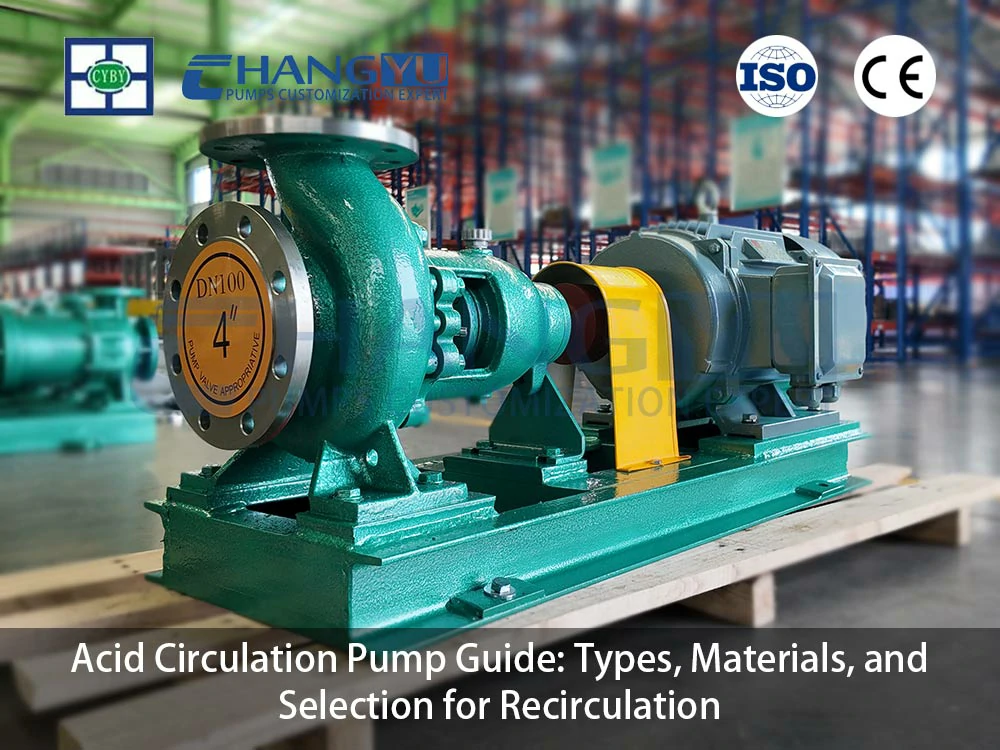
No serviço de transferência, um vedante mecânico com uma ligeira fuga no arranque pode estabilizar o seu funcionamento à medida que a bomba atinge o equilíbrio térmico. No serviço de circulação, a bomba nunca tem essa hipótese. O calor acumula-se continuamente na câmara do vedante. O ácido bombeado, já corrosivo, torna-se mais agressivo com o aumento da temperatura. A pressão do vapor aumenta, reduzindo a altura líquida de sucção positiva disponível (NPSHa) e aumentando o risco de cavitação. As faces do selo que sobrevivem a um ciclo de transferência de duas horas podem falhar catastroficamente após 72 horas de circulação contínua.
Estes são os desafios que distinguem uma bomba de circulação de uma bomba de transferência. Este guia abrange os tipos de bomba adaptados à recirculação contínua de ácido, a compatibilidade de materiais para exposição química sustentada, estratégias de vedação para serviço 24 horas por dia, 7 dias por semana e uma estrutura de seleção estruturada - fornecendo a referência de engenharia necessária para especificar uma bomba de circulação que funcione de forma fiável sob cargas térmicas e químicas contínuas. Com base em mais de duas décadas de experiência na engenharia de bombas resistentes à corrosão para aplicações químicas exigentes, a Changyu Pump traz uma profunda experiência para o serviço de circulação de ácidos nas indústrias de galvanoplastia, fabrico de semicondutores, processamento químico e acabamento de metais. Contacte-nos com os parâmetros do seu circuito de circulação para obter uma recomendação específica.
2. O que é uma bomba de circulação de ácido?
Um bomba de circulação de ácido é uma bomba especificamente configurada para funcionamento contínuo num sistema de circuito fechado onde o mesmo fluido corrosivo é recirculado repetidamente. A bomba não se limita a mover o fluido de um local para outro; mantém o fluxo contínuo, a pressão e, frequentemente, a uniformidade da temperatura ao longo de um circuito de processo que pode incluir recipientes de reação, permutadores de calor, sistemas de filtragem e tanques de processo.
2.1 Como é que uma bomba de circulação de ácido difere de uma bomba de transferência de ácido
Uma bomba de circulação (também designada por bomba de recirculação ou de circuito) mantém um fluido em movimento num sistema fechado, funcionando predominantemente com base no princípio centrífugo: um impulsor coloca o fluido em movimento radial, gerando caudal e altura manométrica. Uma bomba de transferência, pelo contrário, move o fluido de um local para outro numa base intermitente - descarregar um camião-cisterna, encher um reator, esvaziar um tambor - e depois pára.
A consequência desta distinção em termos de engenharia é que as bombas de circulação têm de enfrentar três desafios que as bombas de transferência não enfrentam no mesmo grau:
- Carga térmica sustentada sobre o selo. Em operação contínua, a câmara do selo mecânico acumula calor que se dissiparia entre os ciclos em serviço de transferência. Sem um arrefecimento adequado, as temperaturas das faces do vedante aumentam, a película de fluido entre as faces desestabiliza-se e segue-se uma falha prematura do vedante.
- Desgaste acumulado devido à exposição constante. Enquanto os componentes molhados de uma bomba de transferência são expostos ao fluido corrosivo apenas durante os ciclos activos de bombagem, os componentes de uma bomba de circulação estão continuamente imersos. As taxas de corrosão que são controláveis em serviço intermitente podem tornar-se inaceitáveis sob exposição contínua.
- Baixa pulsação, requisitos de fluxo estáveis. Os circuitos de circulação - especialmente os que alimentam bicos de pulverização, permutadores de calor ou membranas de filtração - requerem um fluxo constante e sem impulsos. As pulsações de pressão dos mecanismos de deslocamento positivo podem perturbar a uniformidade do processo e danificar o equipamento a jusante.
2.2 Configuração típica do circuito de circulação de ácido
Uma ansa de circulação ácida representativa é constituída por:
- Um tanque ou poço de processo que contém a solução ácida
- A bomba de circulação, que pode ser montada verticalmente no interior do reservatório (conceção vertical em consola) ou horizontalmente no exterior do reservatório (com aspiração inundada ou auto-ferrante)
- Uma linha de descarga que encaminha o ácido através de equipamento de processo - permutadores de calor, unidades de filtração, pulverizadores ou vasos de reação
- Uma linha de retorno que leva o ácido de volta ao tanque, completando o circuito
O ponto de partida para a seleção do tipo de bomba é compreender onde se situa a bomba neste circuito e se tem de levantar fluido de tanques abaixo do nível do solo ou funcionar com sucção inundada.
3. Tipos de bombas de circulação de ácido e sua adequação para recirculação
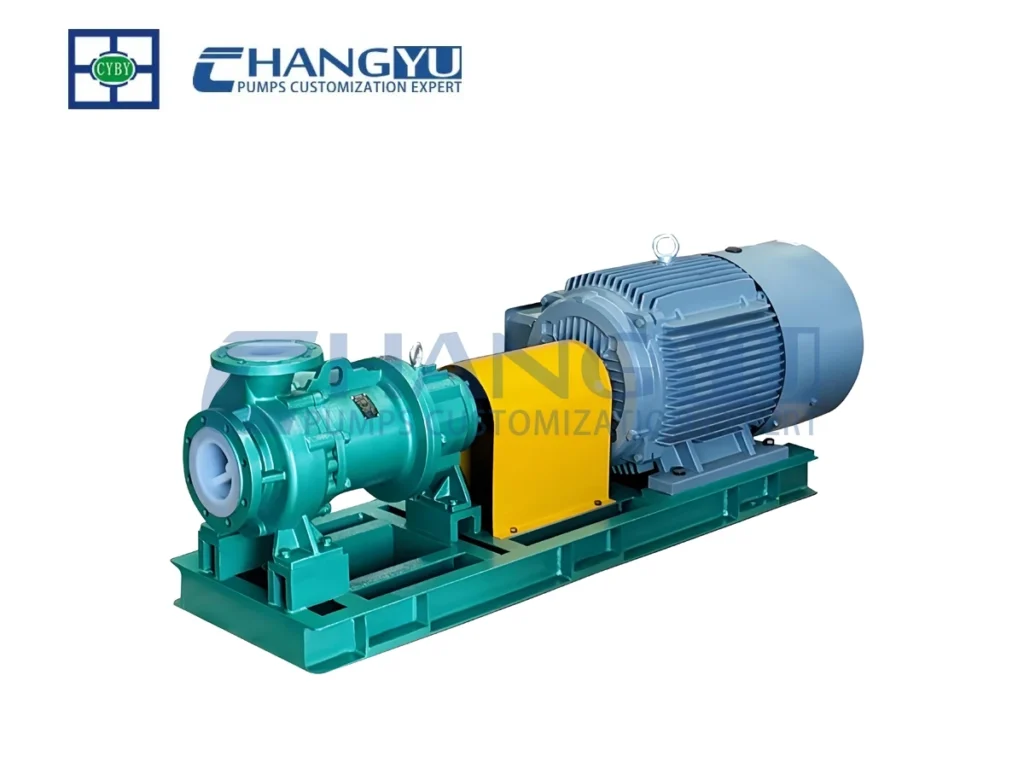
Cinco tipos de bombas servem a maioria das aplicações de circulação de ácido. Cada uma tem uma configuração de instalação distinta, estratégia de vedação e adequação para serviço contínuo.
3.1 Bombas de circulação vertical cantilever
As bombas verticais em consola são especificamente concebidas para serem instaladas diretamente no interior de tanques de processo ou poços, com o motor e os rolamentos montados numa placa de base acima da tampa do tanque e um veio longo que se estende para baixo até um impulsor submerso. Esta configuração coloca todos os rolamentos e vedantes acima do nível do líquido, completamente isolados do ácido corrosivo.
Para a circulação de ácidos, este design oferece três vantagens críticas. Primeiro, sem rolamentos ou vedações submersos, a bomba tolera a exposição química contínua do serviço de circulação sem os pontos de falha mais comuns dos projetos horizontais. Em segundo lugar, a orientação vertical elimina a necessidade de tubagem de sucção e escorva - o impulsor já está submerso no fluido do processo. Em terceiro lugar, muitos projectos de cantilever verticais podem tolerar o funcionamento intermitente a seco se o nível do tanque baixar, uma salvaguarda prática em ambientes de produção.
As bombas verticais cantilever em materiais resistentes à corrosão (FRPP, PVDF, revestidas a fluoroplástico) são a especificação mais importante para a circulação de galvanoplastia, recirculação de soluções de gravação de PCB e circulação de depósitos de processos químicos, onde a sua combinação de simplicidade, fiabilidade e resistência à corrosão é difícil de igualar.
3.2 Bombas de circulação com acionamento magnético
As bombas de acionamento magnético eliminam totalmente a vedação mecânica do veio, transmitindo o binário do motor para o impulsor através de um invólucro de contenção estacionário utilizando um acoplamento magnético. O impulsor, o eixo e o rotor magnético interno estão totalmente fechados dentro da carcaça selada da bomba - nenhum eixo rotativo penetra no limite de pressão. Esta conceção sem vedação atinge uma fuga zero por conceção, tornando-a a especificação padrão para a circulação de ácidos tóxicos, inflamáveis, de elevada pureza ou de elevado valor, em que mesmo uma pequena fuga de vedação é inaceitável.
Especificamente para o serviço de circulação, as bombas de acionamento magnético oferecem uma vantagem convincente sobre as bombas com vedação mecânica: elas eliminam a vedação como um caminho de vazamento e um item de manutenção. Em circulação contínua, um vedante mecânico requer monitorização contínua, fornecimento de água de lavagem e substituição periódica - um fardo que as bombas de acionamento magnético eliminam totalmente.
No entanto, as bombas de acionamento magnético requerem fluidos limpos. Os rolamentos internos lubrificados pelo produto e as passagens de circulação de refrigeração podem ser danificados por sólidos abrasivos ou solutos cristalizados que se acumulam durante a circulação contínua. Para fluxos ácidos que contenham partículas finas de catalisador ou sais de cristalização, as bombas mecanicamente seladas com planos de descarga apropriados ou bombas eléctricas de diafragma podem ser escolhas mais práticas. Além disso, na circulação contínua de ácido a alta temperatura, o aquecimento por correntes de Foucault dentro do acoplamento magnético pode aumentar a temperatura do invólucro de contenção para além da temperatura esperada do processo, exigindo monitorização e, em alguns casos, arrefecimento externo da área do íman.
Para aplicações pesadas em instalações petroquímicas e químicas, as bombas de acionamento magnético concebidas de acordo com API 685 fornecem a norma que rege as bombas centrífugas sem vedação em serviços perigosos, abrangendo requisitos mínimos de conceção, ensaio, dinâmica e materiais.
3.3 Bombas de circulação centrífuga com revestimento de fluoroplástico
As bombas centrífugas com revestimento de fluoroplástico são o cavalo de batalha da indústria para circulação de ácido de alto fluxo. Combinam a inércia química dos revestimentos PTFE, PFA ou FEP com a resistência estrutural de uma caixa de aço, permitindo caudais de aproximadamente 1 a 2.600 m³/h com alturas de descarga até 130 m.
Para o serviço de circulação, as bombas com revestimento fluoroplástico oferecem duas vantagens práticas. Em primeiro lugar, o revestimento isola totalmente os componentes metálicos estruturais da bomba do ácido corrosivo, proporcionando uma resistência química quase universal para ácidos fortes e fluxos químicos mistos. Em segundo lugar, as bombas centrífugas fornecem o caudal contínuo e sem impulsos que os circuitos de circulação exigem - ao contrário dos modelos de deslocamento positivo que geram pulsações de pressão.
Estas bombas foram concebidas para funcionamento contínuo numa vasta gama de aplicações de processo, incluindo transferência de ácido, circulação e alimentação de reactores. Um sistema especial de circulação interna garante que os anéis de vedação mecânica permaneçam dentro da zona líquida e sejam continuamente lavados e arrefecidos pelo meio bombeado, mantendo um funcionamento estável do vedante durante longos períodos de circulação.
Quando se especifica uma bomba centrífuga revestida a fluoroplástico para serviço de circulação, o vedante mecânico e o plano de descarga devem ser adaptados à química e temperatura do ácido. Para ácidos quentes ou ácidos com pouca lubrificação, podem ser necessários selos mecânicos duplos com fluido de barreira (API Plano 53) ou uma câmara de selo encamisada com arrefecimento externo para manter a fiabilidade do selo em funcionamento contínuo.
3.4 Bombas de circulação auto-ferrantes
As bombas centrífugas auto-ferrantes são concebidas para evacuar o ar da linha de sucção, criando o vácuo necessário para aspirar o fluido para a bomba sem escorva manual. No serviço de circulação de ácido, os modelos auto-ferrantes servem um nicho específico: instalações onde a bomba tem de ser montada acima do tanque de ácido e não pode depender da sucção inundada alimentada por gravidade.
A capacidade de auto-ferragem é particularmente valiosa em circuitos de circulação onde a bomba pode perder a escorva durante as mudanças de tanque, ciclos de limpeza ou interrupções do processo. Uma bomba centrífuga normal exigiria uma nova escorva manual após cada evento; uma bomba auto-ferrante reinicia automaticamente.
Para o serviço ácido, as bombas auto-ferrantes são normalmente construídas com revestimentos de fluoroplástico (FEP ou PFA) para combinar a resistência à corrosão com a conceção hidráulica auto-ferrante. O vedante mecânico de fole externo, que pode ser especificado em configurações quimicamente resistentes, proporciona a fiabilidade de vedação necessária para a circulação contínua de ácido.
3.5 Bombas de circulação eléctricas de membrana
Para circuitos de circulação de ácidos em que o ácido contém partículas abrasivas, sólidos cristalizados ou viscosidade elevada - condições em que as bombas centrífugas e de acionamento magnético sofrem um desgaste acelerado - as bombas eléctricas de membrana oferecem uma alternativa sem vedação e com escorvamento automático. O diafragma isola o fluido do processo do mecanismo de acionamento, eliminando o vedante mecânico e o seu caminho de fuga associado.
As bombas de diafragma eléctricas proporcionam um fluxo estável e contínuo sem a infraestrutura de ar comprimido exigida pelos modelos pneumáticos (AODD). A sua capacidade de lidar com ácidos carregados de sólidos e de funcionar a seco sem danos torna-as uma escolha prática para circuitos de circulação que envolvam a recuperação de ácidos residuais, processos ácidos baseados em lamas e circulação intermitente com paragens e arranques frequentes.
3.6 Comparação do tipo de bomba para circulação de ácido
| Tipo de bomba | Instalação | Método de selagem | Vazamento zero | Tolerância de funcionamento a seco | Melhor aplicação de circulação |
|---|---|---|---|---|---|
| Cantilever vertical | Interior do depósito (montado no topo) | Sem vedantes submersos | Não (vedação acima do líquido) | Bom (intermitente) | Tanques de galvanoplastia, circulação de poços |
| Acionamento magnético | Externo (horizontal) | Sem vedação (concha estática) | Sim (por projeto) | Fraco (os rolamentos necessitam de líquido) | Circulação de ácidos tóxicos, de alta pureza e perigosos |
| Centrífuga com revestimento de fluoroplástico | Externo (horizontal) | Vedação mecânica | Não (dependente do selo) | Pobres | Circulação de ácido a granel de elevado caudal |
| Centrífuga autoescorvante | Externo (acima do tanque) | Vedação mecânica | Não (dependente do selo) | Limitada | Circulação acima do tanque com paragens frequentes |
| Diafragma elétrico | Externo (acima do tanque) | Sem vedação (diafragma) | Sim (por projeto) | Excelente | Circulação de ácidos carregados de sólidos, cristalizados ou de alta viscosidade |

4. Como escolher materiais e vedantes para a circulação contínua de ácido
Seleção de materiais para um bomba de circulação de ácido deve ter em conta o efeito cumulativo da exposição química contínua. Um material que não apresenta degradação visível após uma hora de contacto intermitente pode perder a integridade mecânica após semanas de imersão ininterrupta no mesmo ácido a uma temperatura elevada.
4.1 Compatibilidade do material para ácidos comuns
PP (Polipropileno) oferece uma resistência económica ao ácido sulfúrico diluído (≤40%), ao ácido clorídrico (≤37% à temperatura ambiente) e ao hidróxido de sódio (≤50%) a temperaturas inferiores a 80°C. É o material padrão para a galvanoplastia de circuitos de circulação em que a química do ácido é moderada e o custo é uma consideração primordial. O PP não é compatível com ácido nítrico (um oxidante forte) ou com ácido clorídrico concentrado acima de 37%.
PVDF (fluoreto de polivinilideno) oferece uma excelente resistência ao ácido sulfúrico concentrado (até 98%), ao ácido clorídrico em todas as concentrações, ao ácido nítrico e à maioria dos solventes orgânicos a temperaturas até 100°C. Para ácidos de alta concentração e circulação a temperaturas elevadas, o PVDF oferece uma compatibilidade comprovada. A sua maior resistência mecânica em comparação com o PP também o torna adequado para bombas de circulação que sofrem ciclos térmicos e variações de pressão.
PTFE (Politetrafluoroetileno) oferece uma resistência química quase universal até aproximadamente 120°C. PFA (Perfluoroalcoxi) estende esta capacidade até aproximadamente 160°C para componentes estruturais da bomba, embora o próprio material PFA possa suportar temperaturas de funcionamento contínuo até aproximadamente 210°C em aplicações estáticas em que a carga mecânica é mínima. Ambos são inertes a praticamente todos os produtos químicos industriais encontrados no serviço de circulação de ácidos. Para fluxos de ácidos mistos em que a química exacta pode variar - comum no processamento químico e no fabrico de produtos farmacêuticos - as bombas revestidas a PTFE e PFA oferecem a maior margem de segurança do material.
Para a maioria dos ácidos, o PVDF é o material preferido para a construção de bombas de circulação devido à sua combinação de resistência química e resistência mecânica. Os materiais devem ser selecionados com base no ácido específico, na sua concentração e na temperatura de funcionamento.
Aço inoxidável 316L tem limites bem documentados com ácidos minerais - falha rapidamente em ácido clorídrico a qualquer concentração e em ácido sulfúrico acima de aproximadamente 15% - e não é recomendado para o serviço de circulação de ácidos sem uma verificação completa da compatibilidade. UHMW-PE fornecem uma proteção combinada contra o desgaste e a corrosão para circuitos de circulação em que o ácido contém partículas abrasivas, a temperaturas até cerca de 90°C. Em condições normalizadas de teste de desgaste abrasivo, a resistência ao desgaste do UHMW-PE é aproximadamente quatro vezes superior à do PA66 e do PTFE, e 7-10 vezes superior à do aço carbono e do aço inoxidável.
4.2 Referência rápida sobre compatibilidade de materiais
| Ácido | Concentração/Temperatura | PP | PVDF | PTFE/PFA | AÇO INOXIDÁVEL 316L |
|---|---|---|---|---|---|
| Ácido sulfúrico | ≤40%, ≤25°C | ✅ | ✅ | ✅ | ❌ |
| Ácido sulfúrico | 40-98% | ❌ | ✅ | ✅ | ❌ |
| Ácido clorídrico | ≤37%, ≤25°C | ✅ | ✅ | ✅ | ❌ |
| Ácido clorídrico | >37% ou quente | ❌ | ✅ | ✅ | ❌ |
| Ácido nítrico | Qualquer concentração | ❌ | ✅ | ✅ | ⚠️ |
| Ácido fosfórico | ≤85%, ≤80°C | ✅ | ✅ | ✅ | ⚠️ |
| Hidróxido de sódio | ≤50% | ✅ | ✅ | ✅ | ✅ |
| Peróxido de hidrogénio (H₂O₂) | Qualquer concentração | ❌ | ✅ | ✅ | ❌ |
Nota: No caso do ácido clorídrico a temperaturas elevadas (>80°C), os revestimentos de PTFE e PFA podem sofrer permeação de vapor de HCl através do revestimento para a interface do invólucro metálico, causando potencialmente corrosão na parte traseira. Para estas condições, recomenda-se a utilização de revestimentos de PFA com uma espessura mínima de 8-12 mm e a realização periódica de testes de integridade ultra-sónicos do revestimento como parte do programa de manutenção da bomba.
4.3 Seleção da vedação para serviço de circulação contínua
O vedante mecânico é o componente mais vulnerável à degradação em serviço contínuo numa bomba de circulação de ácido. São normalmente utilizadas três estratégias de vedação:
Vedante mecânico simples com refrigeração por circulação interna. Neste projeto, uma passagem de circulação interna dirige uma parte do ácido bombeado através da câmara de vedação, arrefecendo as faces da vedação e transportando o calor. Esta abordagem funciona para circulação a temperaturas moderadas (abaixo de aproximadamente 80°C) com ácidos não cristalizantes. Um sistema especial de circulação interna assegura que os anéis de vedação estão sempre dentro da zona líquida e são continuamente lavados com o meio que está a ser bombeado, o que proporciona um arrefecimento e limpeza suficientes das faces de vedação.
Empanque mecânico duplo com fluido de barreira (API Plano 53). Um fluido de barreira pressurizado circula entre dois selos mecânicos, mantendo as faces do selo frias e isoladas do ácido do processo. Qualquer vazamento através do selo interno é fluido de barreira para o processo, não ácido para a atmosfera. A pressão do fluido de barreira deve ser mantida acima da pressão do fluido do processo nas faces do selo para garantir a direção da fuga para o interior. Esta configuração é obrigatória para a circulação de ácido quente (acima de 80°C), serviço de ácido perigoso ou quando o ácido tem uma lubrificação fraca.
Acionamento magnético (sem vedação). Elimina totalmente o vedante mecânico. O binário é transmitido através de um invólucro de contenção estacionário e o ácido do processo é totalmente fechado. Esta configuração é utilizada quando o ácido é tóxico, inflamável, de valor extremamente elevado, ou quando a eliminação da manutenção do vedante é uma prioridade. A desvantagem é que as bombas de acionamento magnético requerem fluidos limpos para proteger os rolamentos internos.
4.4 Proteção contra funcionamento a seco
No serviço de circulação, a bomba pode funcionar a seco se o nível do tanque de processo cair abaixo da entrada de sucção - durante trocas de tanque, operações de limpeza ou perturbações no processo. Os projetos de cantilever vertical toleram o funcionamento a seco intermitente porque todos os rolamentos estão acima do nível do líquido. As bombas auto-ferrantes com desenhos especializados da cavidade da bomba também podem suportar condições temporárias de vácuo e evitar a secagem. Para bombas horizontais com vedação mecânica, a proteção contra funcionamento a seco - como um sensor de nível do tanque interligado com o motor da bomba - é uma salvaguarda recomendada.
5. Como selecionar a bomba de circulação de ácido correta: Uma estrutura em 5 etapas
Etapa 1: Caracterizar a química do ácido e os parâmetros do circuito de circulação
Documente o tipo de ácido, a concentração, a temperatura (incluindo quaisquer excursões do processo e a temperatura de circulação em estado estacionário), a gravidade específica, a viscosidade e a presença de quaisquer sólidos, solutos cristalizados ou evolução de gás. Para circuitos de circulação, documente também o volume total do sistema, o caudal de circulação necessário (em rotações por hora) e a altura manométrica estática que a bomba tem de ultrapassar.
Passo 2: Definir o caudal necessário e a altura manométrica dinâmica total
Calcule o caudal de circulação necessário e a altura manométrica dinâmica total (TDH), tendo em conta as perdas por fricção em todo o circuito de circulação - tubagem, permutadores de calor, filtros, bicos de pulverização e linhas de retorno. Para a circulação em circuito fechado, a componente da altura manométrica estática é tipicamente pequena (a bomba eleva o fluido para o ponto mais alto do circuito e a linha de retorno proporciona um efeito de sifão), mas as perdas por fricção através do equipamento do circuito podem ser significativas. Para sistemas de circulação, os caudais são frequentemente especificados em termos de rotações do tanque por hora, sendo típicas 2-10 rotações por hora, dependendo dos requisitos do processo.
Passo 3: Selecionar o tipo de bomba com base nos requisitos de instalação e de funcionamento
| Condição de funcionamento | Tipo de bomba recomendado |
|---|---|
| Bomba instalada diretamente no tanque de processo; química ácida moderada | Consola vertical |
| Ácido tóxico, inflamável ou de elevado valor; é necessária uma fuga zero | Acionamento magnético |
| Circulação de ácido a granel de elevado caudal; manutenção aceitável do vedante mecânico | Centrífuga com revestimento em fluoroplástico |
| Bomba montada acima do tanque; não pode depender de sucção inundada | Centrífuga autoaspirante |
| Circulação de ácidos carregados de sólidos, cristalizados ou de alta viscosidade | Diafragma elétrico |
Passo 4: Adaptar os materiais e a vedação às condições de funcionamento contínuo
Selecionar o sistema de materiais com base nos dados de compatibilidade específicos do ácido. Para circulação contínua a temperaturas elevadas, selecione materiais com compatibilidade documentada a longo prazo à temperatura de circulação em estado estacionário - não apenas à temperatura nominal do processo. Para bombas com vedação mecânica, verifique se o plano de limpeza da vedação é adequado para a carga térmica contínua.
Passo 5: Verificar a margem NPSH e o dimensionamento do motor
Para bombas centrífugas, certifique-se de que o NPSH disponível (NPSHa) excede o NPSH exigido pela bomba (NPSHR) em uma margem mínima de 1 metro. Para ácidos em temperaturas elevadas, calcule o NPSHa usando a pressão de vapor na temperatura máxima de circulação - um aumento de temperatura de 10°C pode reduzir o NPSHa em 2-3 metros para fluidos aquosos. Verifique se o motor está dimensionado para a gravidade específica do ácido no caudal de projeto. Para circulação contínua, especifique um motor com um fator de serviço de pelo menos 1,15 para acomodar o envelhecimento térmico dos enrolamentos do motor durante horas de funcionamento prolongadas.
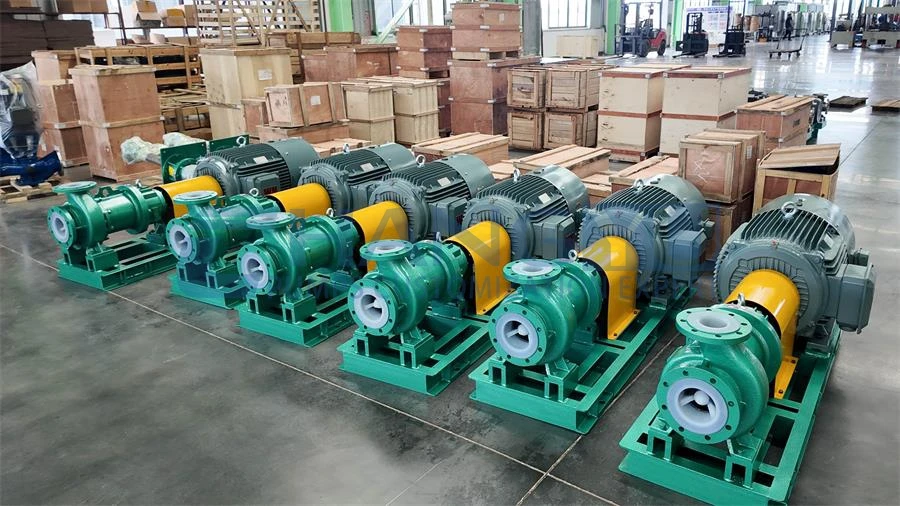
6. Aplicações da bomba de circulação de ácido nas principais indústrias
Eletrodeposição e acabamento de metais: Circulação contínua de soluções de galvanização à base de ácido (ácido sulfúrico, ácido clorídrico, ácido crómico) através de tanques de tratamento e sistemas de filtração. A bomba deve manter um fluxo estável e resistir à química ácida específica do banho de galvanização. As bombas de circulação para galvanoplastia garantem uma composição e temperatura uniformes do banho.
Fabrico de semicondutores e eletrónica: Recirculação de soluções de gravação, decapantes fotorresistentes e ácidos de limpeza através de equipamento de processamento com temperatura controlada. Os requisitos de elevada pureza exigem componentes húmidos revestidos a PTFE ou PFA com risco zero de contaminação metálica. As bombas de acionamento magnético são amplamente utilizadas para estas aplicações porque a sua conceção sem vedação evita fugas e a produção de partículas.
Processamento químico: Circulação de ácido a granel através de reactores, permutadores de calor e sistemas de destilação. As bombas centrífugas com revestimento de fluoroplástico cumprem esta função, com caudais de aproximadamente 10 a 2.600 m³/h, dependendo da escala do processo.
Decapagem de aço: Circulação contínua de ácido clorídrico ou sulfúrico aquecido através de banhos de decapagem. A bomba deve suportar temperaturas elevadas e resistir ao ácido específico na sua concentração de funcionamento. As bombas cantilever verticais são normalmente especificadas para estas aplicações devido à sua tolerância ao ambiente químico agressivo e à sua manutenção simplificada.
Tratamento de água e de águas residuais: Circulação de soluções ácidas para ajuste do pH, dosagem de produtos químicos e recirculação do purificador. As bombas mais pequenas com aspiração automática ou acionamento magnético são utilizadas para aplicações de dosagem.
Fabrico de produtos farmacêuticos: Circulação de soluções de limpeza à base de ácido através de sistemas de reactores de aço inoxidável (CIP). As bombas de acionamento magnético com revestimento PFA combinam a resistência química necessária para produtos químicos de limpeza agressivos com a contenção de fuga zero essencial para ambientes de produção farmacêutica.
7. Conselhos práticos para a instalação e funcionamento
Conceber a tubagem para expansão térmica. Os circuitos de circulação que funcionam a temperaturas elevadas têm de acomodar a expansão da tubagem. Utilize juntas de dilatação ou ligações flexíveis nas flanges de sucção e descarga da bomba para evitar que as tensões da tubagem sejam transmitidas à caixa da bomba.
Instalar um filtro de sucção. Um filtro na sucção da bomba protege a bomba de detritos que podem danificar o impulsor ou obstruir a passagem de descarga do vedante. Para bombas de acionamento magnético, um filtro de sucção é particularmente importante, uma vez que os sólidos podem acumular-se no rolamento interno e nas passagens de arrefecimento.
Monitorizar a temperatura da câmara de selagem. Em serviço de circulação contínua, um aumento da temperatura da câmara de vedação indica um fluxo de descarga inadequado, acumulação de sólidos nas faces da vedação ou o início da degradação da face da vedação. A tendência da temperatura da câmara de vedação fornece um aviso prévio de falha iminente da vedação.
Fornecer proteção contra o funcionamento em seco. Para bombas horizontais com vedação mecânica instaladas fora do tanque de processo, um sensor de nível baixo no tanque interligado com o motor da bomba impede que a bomba funcione a seco se o nível do tanque baixar.
Lavar a bomba após a paragem. Se o circuito de circulação estiver inativo durante mais de 24 horas, lave a bomba com água ou com uma solução de limpeza compatível, para evitar a cristalização de resíduos de ácido nas faces dos vedantes, no impulsor e nas superfícies da caixa.
8. Soluções de bombas Changyu para circulação de ácido
A Changyu Pump oferece quatro plataformas de bombas concebidas para serviços de circulação de ácidos nas indústrias de galvanoplastia, processamento químico, fabrico de semicondutores e acabamento de metais.
Bomba centrífuga de fluoroplástico da série CYF
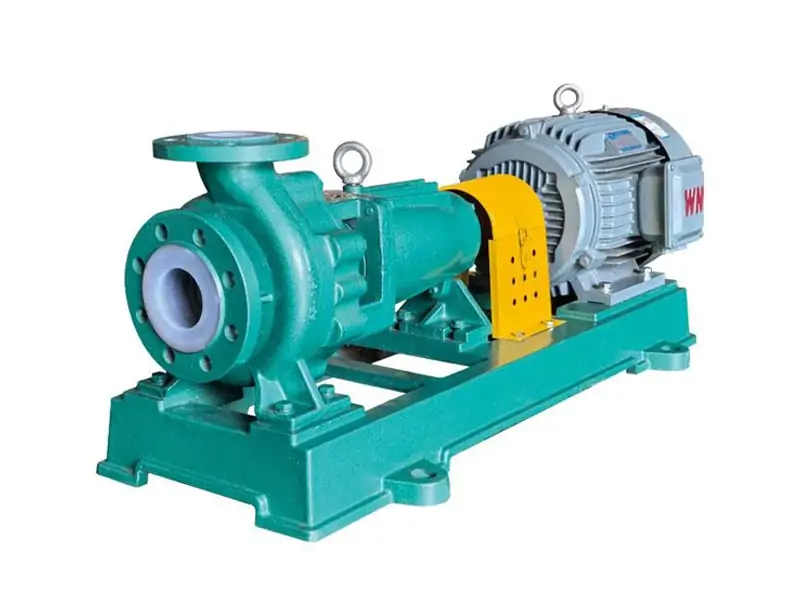
A série CYF é uma bomba centrífuga de aspiração simples de fase única, concebida de acordo com as normas internacionais, utilizando tecnologia avançada de bombas não metálicas. O corpo e os componentes de passagem do caudal são revestidos com FEP, PFA ou PTFE fluoroplástico, proporcionando compatibilidade química verificada para ácido sulfúrico, ácido clorídrico, ácido nítrico, ácido fluorídrico, álcalis fortes, agentes oxidantes e águas residuais corrosivas numa gama de temperaturas de -20°C a 180°C. Para serviço de circulação, a Série CYF fornece o caudal contínuo e sem impulsos exigido pelos sistemas de processo em circuito fechado. Um sistema especial de circulação interna assegura que os anéis de vedação mecânicos são continuamente lavados e arrefecidos pelo meio bombeado, mantendo um funcionamento estável do vedante durante longos períodos de circulação. Isto significa que pode especificar uma única bomba para a circulação de ácido de elevado caudal e para tarefas intermitentes de transferência de ácido sem alterar a arquitetura da bomba.
Especificações principais: Caudal 1,6-2.600 m³/h | Altura 5-130 m | Potência 1,5-110 kW | Velocidade 1.450-2.900 r/min | Temperatura -20°C a 180°C | Materiais: FEP, PFA, PTFE
Bomba de polpa de aço inoxidável da série HB
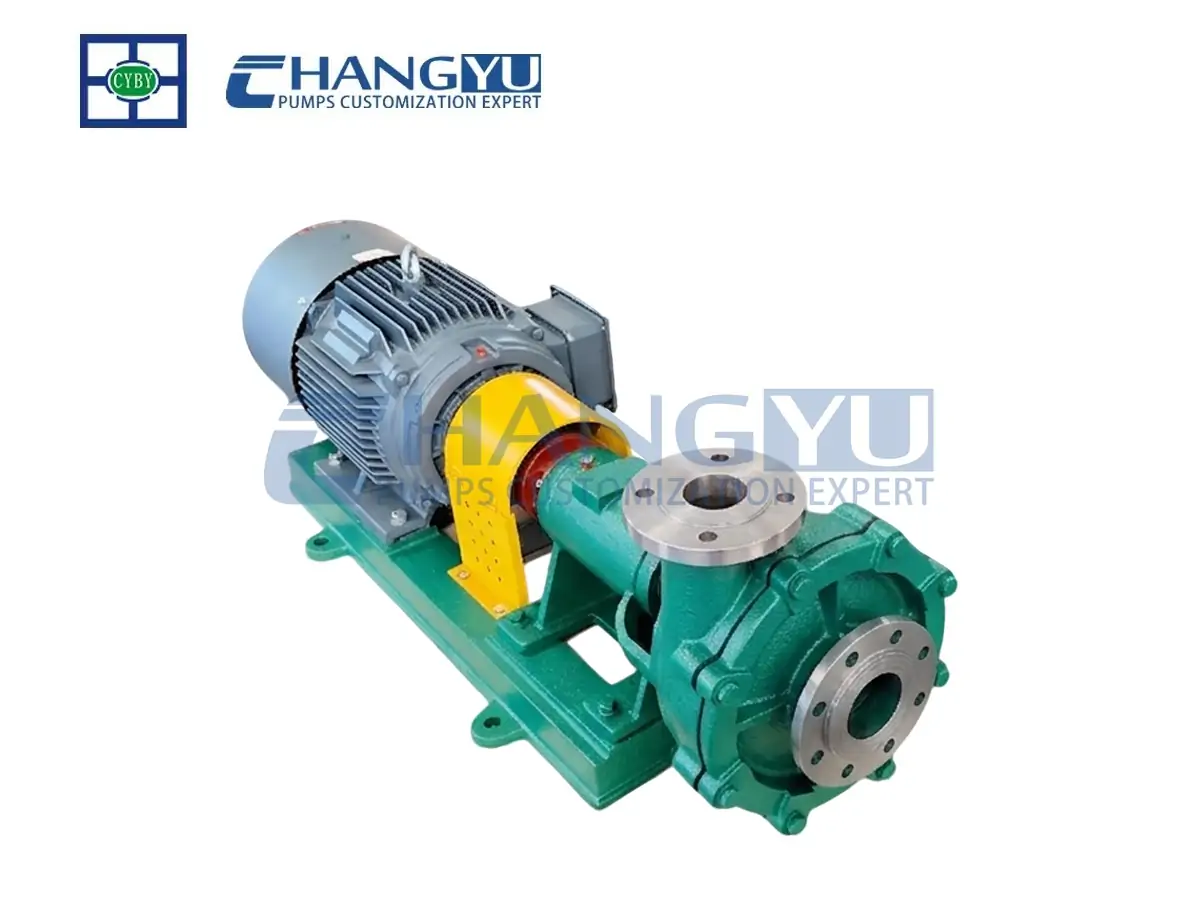
A série HB é uma bomba centrífuga horizontal de aspiração simples, de fase única, de elevada eficiência, concebida de acordo com ISO 2858 e em conformidade com Normas CE. Construído com uma estrutura húmida totalmente em aço inoxidável - personalizável em 304, 316, 316L, 2205 e 2507-Ela lida com lama abrasiva e fluidos de corrosão média em ambientes industriais exigentes. Para aplicações de circulação de ácido, a Série HB em aço inoxidável duplex (2205, 2507) serve quando a química do ácido é compatível com um caminho molhado metálico e o circuito de circulação requer a durabilidade mecânica de uma bomba de metal. Isso faz da série HB uma opção durável e de fácil manutenção para aplicações como a circulação de água de processo em plantas ácidas e recirculação de lama levemente ácida, onde uma bomba revestida de fluoroplástico pode ser desnecessária, mas o aço inoxidável padrão não proporcionaria uma vida útil adequada.
Especificações principais: Caudal 10-60 m³/h | Altura 20-120 m | Potência 3-45 kW | Velocidade 2.900 r/min | Temperatura -20°C a 120°C | Materiais: 304, 316, 316L, 2205, 2507
Bomba centrífuga autoescorvante com revestimento de flúor da série FZB

A série FZB é uma bomba centrífuga auto-ferrante com componentes de fluxo revestidos em FEP (F46) ou PFA. Uma vez inicialmente cheia, a bomba evacua automaticamente o ar da linha de sucção e mantém o funcionamento contínuo sem sistemas de escorva externos. Para aplicações de circulação de ácidos em que a bomba é montada acima do tanque, a capacidade de escorvamento automático elimina a necessidade de sucção inundada e fornece reinícios confiáveis após interrupções do processo - uma vantagem prática em ambientes de produção em que os tanques são trocados ou limpos periodicamente. O selo mecânico de fole externo resiste a ataques químicos, e a bomba lida com ácidos, álcalis e solventes a temperaturas de -20°C a 150°C.
Especificações principais: Caudal 2,5-100 m³/h | Altura 15-50 m | Potência 0,75-55 kW | Velocidade 968-3.450 r/min | Temperatura -20°C a 150°C | Materiais: FEP (F46), PFA
Bomba semi-submersível de fluoroplástico da série FYH
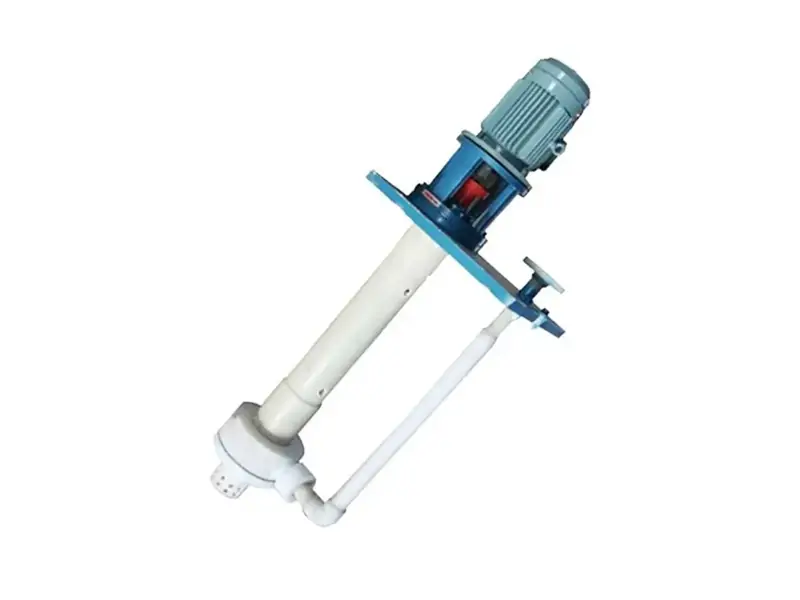
A série FYH é uma bomba semi-submersível vertical concebida para instalação no fundo de tanques de armazenamento de produtos químicos, poços de processo e recipientes de circulação de ácidos. O design vertical coloca o motor acima da tampa do tanque, eliminando totalmente os rolamentos e vedações submersos. Os componentes húmidos são construídos a partir de FEP ou UHMW-PE, A bomba é resistente a ácidos fortes, álcalis fortes, solventes orgânicos e agentes oxidantes fortes. A bomba funciona de forma estável sob flutuações de temperatura de -20°C a 90°C. Para circuitos de circulação em que a bomba tem de ser instalada diretamente no tanque - comum em operações de galvanoplastia, processamento químico e lavagem com ácido - a Série FYH combina a simplicidade da instalação vertical com uma proteção total contra a corrosão em fluoroplástico, reduzindo a complexidade da instalação e os requisitos de manutenção a longo prazo em comparação com as configurações de bombas montadas externamente.
Especificações principais: Caudal 5-400 m³/h | Altura 5-50 m | Potência 0,75-90 kW | Velocidade 968-3.450 r/min | Temperatura -20°C a 90°C | Materiais: FEP, UHMW-PE
9. Perguntas frequentes sobre bombas de circulação de ácido
Q1: Qual é a diferença entre uma bomba de circulação de ácido e uma bomba de transferência de ácido?
R: Um bomba de circulação de ácido funciona continuamente num circuito fechado, recirculando o mesmo fluido corrosivo durante longos períodos. Uma bomba de transferência move o fluido de um local para outro numa base intermitente. As bombas de circulação têm de lidar com a carga térmica sustentada no vedante, a corrosão acumulada devido à exposição contínua e a necessidade de um caudal sem impulsos - desafios que as bombas de transferência enfrentam em muito menor grau. Como referido pela Pumpworks, uma bomba de circulação ajuda a recircular o mesmo líquido para manter um caudal, pressão e temperatura consistentes, enquanto uma bomba de transferência é utilizada para mover líquidos de um local para outro.
Q2: Que tipo de bomba é melhor para a circulação contínua de ácido?
R: Para ácidos tóxicos, inflamáveis ou de elevado valor, um bomba de acionamento magnético proporciona uma contenção sem fugas e elimina a manutenção dos vedantes. Para galvanoplastia e circulação de poços, um bomba vertical cantilever oferece uma instalação simples e tolerância de funcionamento em seco. Para a circulação de ácido a granel de elevado caudal, um bomba centrífuga com revestimento fluoroplástico com um plano de descarga de vedante adequado proporciona um serviço contínuo e económico. Para instalações acima do tanque, um bomba centrífuga auto-ferrante com revestimento fluoroplástico elimina a necessidade de aspiração por inundação. Para fluxos de ácido com sólidos ou cristalização, um bomba eléctrica de diafragma proporciona a tolerância a sólidos que outros tipos de bombas não conseguem igualar.
Q3: Uma bomba de acionamento magnético pode ser utilizada para a circulação de ácidos?
R: Sim. As bombas de acionamento magnético são adequadas para a circulação de ácidos porque eliminam o vedante mecânico - o componente mais vulnerável à degradação em funcionamento contínuo. O design sem vedação proporciona uma contenção de vazamento zero e elimina a manutenção contínua da vedação. No entanto, as bombas de acionamento magnético requerem fluidos limpos, uma vez que os sólidos podem danificar os rolamentos internos lubrificados com produtos e acumular-se nas passagens de arrefecimento. Na circulação contínua de ácido a alta temperatura, o aquecimento por correntes de Foucault dentro do acoplamento magnético pode elevar a temperatura do invólucro de contenção acima da temperatura esperada do processo, exigindo a monitorização da temperatura no invólucro de contenção.
Q4: Que materiais são compatíveis com a circulação contínua de ácido?
R: Para ácidos minerais comuns em serviço de circulação, PVDF oferece uma excelente resistência ao ácido sulfúrico (até 98%), ao ácido clorídrico em todas as concentrações e ao ácido nítrico, a temperaturas até 100°C. PP é económico para ácidos diluídos a temperaturas moderadas (≤40% sulfúrico, ≤37% clorídrico, ≤25°C). PTFE e PFA fornecem uma resistência química quase universal a aproximadamente 120°C e 160°C em componentes estruturais, respetivamente, embora o próprio material PFA possa suportar até aproximadamente 210°C em aplicações estáticas. Os materiais devem ser selecionados com base no ácido específico, na sua concentração e na temperatura de funcionamento.
Q5: Como é que protejo o vedante mecânico em circulação contínua de ácido?
R: Para circulação a temperaturas moderadas, um único vedante mecânico com refrigeração por circulação interna - em que o meio bombeado lava e arrefece continuamente as faces do vedante - pode ser suficiente. Para temperaturas mais altas ou ácidos perigosos, um empanque mecânico duplo com fluido de barreira (API Plano 53) proporciona arrefecimento e contenção adicionais. Para requisitos de fuga zero, um bomba de acionamento magnético (sem vedação) elimina totalmente o selo.
Q6: Posso instalar uma bomba de circulação de ácido por cima do depósito?
R: Sim, duas configurações permitem a instalação acima do tanque. A bomba centrífuga auto-ferrante com revestimento fluoroplástico pode evacuar o ar da linha de sucção e retirar o ácido do tanque sem escorva manual. Uma bomba centrífuga padrão só pode ser instalada acima do tanque se tiver uma sucção inundada - o que significa que o nível de líquido no tanque está acima da entrada de sucção da bomba - ou se for instalada uma válvula de pé para manter a escorva entre os ciclos.
Q7: O que é que faz com que as bombas de circulação de ácido falhem prematuramente?
R: As causas mais comuns são: arrefecimento inadequado do vedante em funcionamento contínuo, levando à degradação térmica das faces do vedante; seleção do material com base em dados de exposição intermitente em vez de dados de imersão contínua; cavitação devido a NPSHa insuficiente a temperaturas de circulação elevadas; e funcionamento a seco quando o nível do tanque de processo desce abaixo da entrada de sucção sem o fecho automático da bomba.
Q8: Como dimensionar uma bomba de circulação de ácido?
R: Calcule o caudal de circulação necessário em termos de rotações do tanque por hora (normalmente 2-10 rotações por hora, dependendo do processo). Determine a altura manométrica dinâmica total, tendo em conta as perdas por fricção em todos os componentes do circuito - tubagem, permutadores de calor, filtros e bicos de pulverização. Verificar o NPSHa à temperatura máxima de circulação. Dimensione o motor para a gravidade específica do ácido no caudal de projeto, com um fator de serviço de pelo menos 1,15 para serviço contínuo.
10. Recomendações de especialistas da Changyu Pump Engineers
- Selecione o tipo de bomba com base nos requisitos de instalação e contenção, e não apenas no caudal e na altura manométrica. As bombas cantilever verticais simplificam a circulação montada em tanques. As bombas de acionamento magnético proporcionam uma contenção sem fugas para ácidos perigosos. As bombas centrífugas com revestimento de fluoroplástico permitem uma circulação económica de elevado caudal. As bombas auto-aspirantes permitem a instalação acima do tanque. As bombas eléctricas de diafragma lidam com fluxos de ácidos carregados de sólidos ou em cristalização. Combine primeiro o tipo de bomba com os requisitos de instalação e segurança.
- Verificar a compatibilidade do material à temperatura de circulação em estado estacionário e não à temperatura nominal do processo. Em circulação contínua, a temperatura do ácido sobe frequentemente acima do ponto de regulação nominal devido ao consumo de energia da bomba e ao calor do processo. Um material que é compatível a 25°C pode falhar a 65°C. Confirmar a compatibilidade à temperatura máxima de circulação prevista.
- Conceber o arrefecimento dos vedantes para um funcionamento contínuo. Em serviço de circulação, o vedante não obtém os períodos de arrefecimento que a transferência intermitente proporciona. Especifique um plano de descarga do vedante (arrefecimento por circulação interna para temperaturas moderadas, vedante duplo com fluido de barreira para temperaturas elevadas ou ácidos perigosos) que possa suportar a carga térmica contínua.
- Proteger a bomba contra o funcionamento a seco. Instale um sensor de nível do tanque interligado com o motor da bomba para bombas com vedação mecânica. Para projectos de cantilever vertical e auto-ferrantes, verifique a tolerância de funcionamento em seco da bomba sob as condições específicas de química ácida e temperatura do circuito de circulação.
11. Conclusão
Um bomba de circulação de ácido é definida pelo ciclo de funcionamento que tem de manter. Ao contrário das bombas de transferência, que movem o ácido de forma intermitente, as bombas de circulação funcionam continuamente em circuitos fechados, recirculando meios corrosivos durante longos períodos sob cargas térmicas e químicas sustentadas. Este perfil operacional exige tipos de bombas, materiais e estratégias de vedação especificamente adaptados ao funcionamento contínuo.
As bombas cantilever verticais simplificam a circulação montada em tanques sem vedações submersas. As bombas de acionamento magnético proporcionam uma contenção sem fugas para ácidos perigosos e de elevada pureza. As bombas centrífugas revestidas a fluoroplástico permitem a circulação a granel de elevado caudal com um débito sem impulsos. As bombas centrífugas autoaspirantes permitem a instalação acima do tanque com capacidade de reaspiração automática. As bombas eléctricas de diafragma lidam com fluxos de ácidos carregados de sólidos e de cristalização que desafiam outros tipos de bombas.
Em todos os tipos, os princípios permanecem consistentes: selecionar materiais para o ácido específico à temperatura máxima de circulação, conceber o arrefecimento do vedante para uma carga de calor contínua, proteger a bomba do funcionamento a seco e dimensionar o motor para um funcionamento contínuo com um fator de serviço adequado.
Contactar a Changyu Pump com os parâmetros do seu circuito de circulação e a química do ácido. A nossa equipa de engenharia fornecerá uma recomendação detalhada da bomba e um orçamento adaptado à sua aplicação de circulação de ácido.