
1. Introdução
Bombas centrífugas para águas residuais As bombas centrífugas ocupam uma categoria de engenharia distinta definida por um requisito: a bomba deve passar sólidos sem entupir. As bombas centrífugas padrão movimentam eficientemente líquidos limpos, mas quando confrontadas com a realidade não peneirada e carregada de sólidos das águas residuais municipais - contendo materiais fibrosos, detritos plásticos, areia e sólidos orgânicos - o impulsor de uma bomba padrão torna-se um ponto de recolha de tudo o que deveria passar por ele. A Grundfos afirma claramente o princípio: as bombas centrífugas proporcionam um fluxo de líquido estável e suave e são adequadas para o manuseamento de líquidos limpos; as bombas que têm de manusear líquidos impuros têm de ser equipadas com impulsores especialmente construídos para evitar que os objectos fiquem presos no interior da bomba.
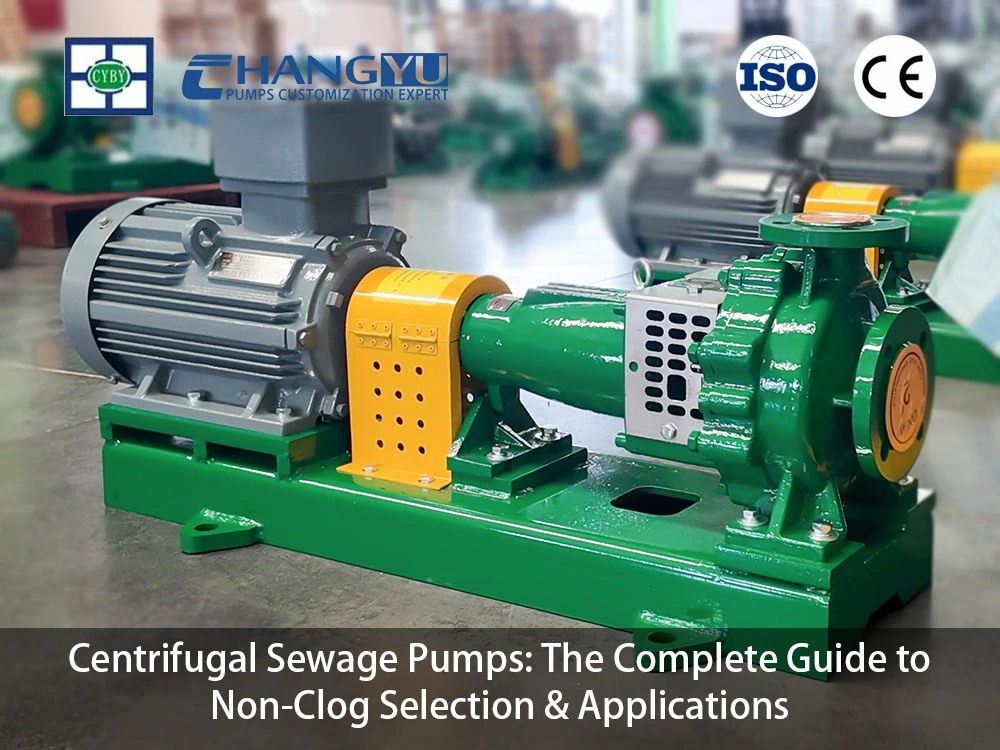
Esta restrição de conceção - o impulsor tem de passar os sólidos sem ficar bloqueado - determina todas as decisões de engenharia subsequentes numa bomba centrífuga para águas residuais. A geometria do impulsor determina a capacidade de manuseamento de sólidos da bomba. O desenho da caixa, a configuração do vedante e a seleção do material estão todos subordinados a este requisito. As bombas padrão têm normalmente impulsores e volutas convencionais não optimizados para o manuseamento de sólidos e, quando confrontados com grãos abrasivos e materiais fibrosos, os seus componentes desgastam-se rapidamente e os seus vedantes mecânicos falham prematuramente.
A Changyu Pump passou mais de duas décadas a desenvolver equipamento de bombagem resistente ao desgaste e à corrosão para aplicações exigentes de manuseamento de fluidos. Este guia fornece uma referência estruturada que abrange tipos de impulsores de bombas centrífugas para águas residuais, tecnologias anti-entupimento, materiais e vedantes, configurações de instalação, um quadro de seleção passo a passo e um estudo de caso quantitativo.
2. O que é uma bomba centrífuga para águas residuais?
2.1 Definição do núcleo
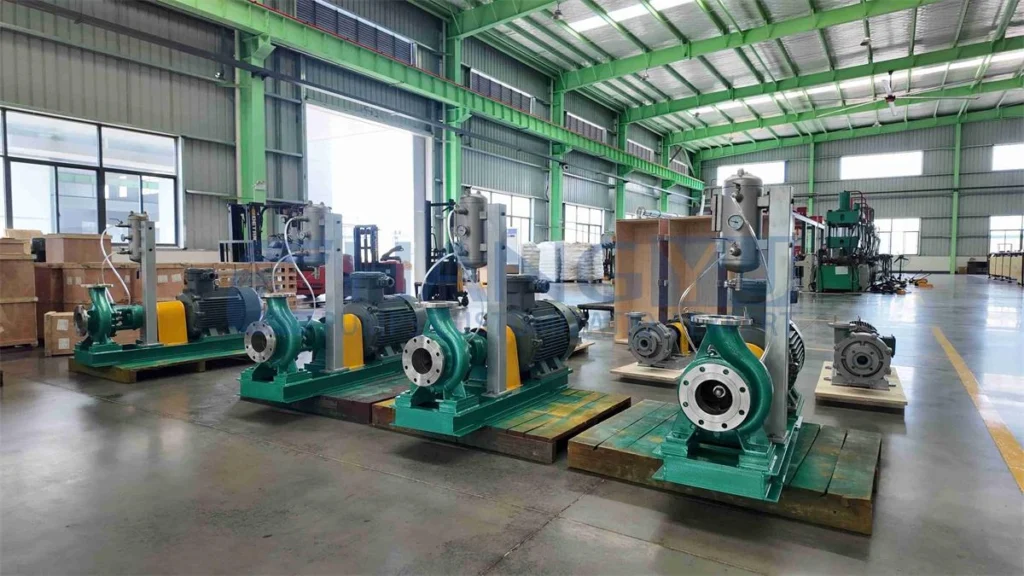
A bomba centrífuga para águas residuais é uma bomba rotodinâmica especificamente concebida para transferir águas residuais brutas ou parcialmente tratadas que contenham sólidos em suspensão, materiais fibrosos e matéria orgânica. Ao contrário de uma bomba centrífuga padrão construída para água limpa ou fluidos de processo finos, o impulsor e a voluta de uma bomba centrífuga para águas residuais são concebidos com passagens de fluxo alargadas e geometrias de palhetas especializadas para permitir que os sólidos passem através da bomba sem se alojarem na entrada do impulsor ou entre o impulsor e a parede da caixa. O termo “bomba sem entupimento” é utilizado para identificar estas bombas, que são concebidas para reduzir a possibilidade de entupimento e para lidar eficazmente com grandes sólidos em suspensão. Para uma compreensão mais alargada do funcionamento das bombas centrífugas, consulte resumo da bomba centrífuga.
A distinção de engenharia entre uma bomba centrífuga para águas residuais e uma bomba centrífuga normal para água reside em três elementos de conceção. Primeiro, a conceção do impulsor: as bombas normais utilizam impulsores fechados com passagens estreitas optimizadas para eficiência hidráulica; as bombas para águas residuais utilizam impulsores de vórtice, de canal único, de dois canais ou semi-abertos com folgas internas substancialmente maiores. Em segundo lugar, os materiais de construção: as bombas para águas residuais têm de resistir à abrasão provocada por grãos e areia, à corrosão provocada por águas residuais com pH variável e ao desgaste mecânico provocado por sólidos fibrosos. Em terceiro lugar, o sistema de vedação tem de impedir a entrada de águas residuais no conjunto de rolamentos, tolerando simultaneamente os contaminantes sólidos que os vedantes mecânicos normais não conseguem suportar.
2.2 Como a conceção da bomba de esgoto difere das bombas centrífugas normais
| Caraterística | Bomba centrífuga padrão | Bomba centrífuga para águas residuais |
|---|---|---|
| Tipo de impulsor | Turbina fechada com passagens estreitas (elevada eficiência) | Vortex, um canal, dois canais ou semi-aberto (passagem de sólidos) |
| Fluxo Largura da passagem | Estreito; optimizado para eficiência de água limpa | Aumentado; dimensionado para o diâmetro máximo esperado de partículas sólidas |
| Manuseamento de sólidos | Mínimo (apenas líquidos limpos) | Sólidos esféricos de 65-80 mm para modelos de vórtice; até 100 mm para impulsores de canal grande |
| Conceção do invólucro | Voluta standard para maior eficiência | Voluta com folga alargada para a água de corte e portas de inspeção |
| Sistema de vedação | Vedante mecânico simples; elastómeros standard | Vedante mecânico duplo com câmara de óleo; faces em carboneto de silício |
| Proteção contra o desgaste | Mínimo | Anéis de desgaste substituíveis, lábios da voluta endurecidos, placas de desgaste de sacrifício |
2.3 A bomba centrífuga de esgoto no processo de tratamento de águas residuais
Numa estação de tratamento de águas residuais municipal típica, as bombas centrífugas para águas residuais desempenham várias funções ao longo da cadeia de tratamento. Na estação de tratamento, elevam o afluente bruto dos esgotos de recolha para a estação de tratamento. No tratamento primário, transferem as lamas sedimentadas para os digestores e a escória para a eliminação. No tratamento secundário, procedem ao retorno das lamas activadas (RAS) e das lamas activadas residuais (WAS). Em toda a estação, tratam a drenagem de poços de drenagem e poços húmidos, assegurando o fluxo contínuo do processo.
3. Tipos de Impulsores de Bombas Centrífugas para Esgoto e Tecnologia Non-Clog
O tipo de impulsor determina a forma como a bomba lida com os sólidos - se os faz passar, se os afasta ou se reduz o seu tamanho antes de entrarem na bomba. Cada projeto representa um compromisso de engenharia diferente entre a resistência ao entupimento, a eficiência hidráulica e a capacidade de manuseamento de sólidos. Os impulsores Vortex demonstraram ter a menor suscetibilidade ao entupimento entre os modelos de bombas centrífugas para águas residuais carregadas de sólidos.
3.1 Impulsores de vórtice
Os impulsores Vortex são recuados para fora do percurso principal do fluxo, criando um remoinho que atrai o fluido e os sólidos em suspensão através da bomba, enquanto apenas uma parte dos sólidos entra em contacto com o impulsor. O impulsor é colocado de volta na caixa e o vórtice rotativo passa os sólidos através da voluta sem contacto direto com o impulsor. Uma bomba de vórtice é uma bomba com um impulsor rebaixado que é especialmente adequada para bombear líquidos com um elevado teor de sólidos, tornando-a uma excelente escolha para esgotos brutos, lamas e águas residuais industriais.
A principal vantagem de um impulsor de vórtice é a sua capacidade de manuseamento de sólidos. Os impulsores de vórtice podem passar sólidos esféricos até 80 mm de diâmetro - substancialmente maiores do que os impulsores de canal de tamanho equivalente podem acomodar. A contrapartida é a eficiência hidráulica, que é tipicamente de 40-55%, contra 60-75% de um impulsor de canal comparável. Em aplicações de esgotos, esta penalização da eficiência é aceite porque o custo de um único evento de entupimento - chamada do operador, recuperação da bomba, desobstrução manual - excede largamente o custo incremental de energia do impulsor menos eficiente.
Os recentes avanços na conceção de impulsores de vórtice aumentaram o limite da eficiência. O impulsor Delta da Cornell Pump atinge eficiências até 65%, mantendo a vantagem de manuseamento de sólidos de um design de impulsor rebaixado, demonstrando que a penalização tradicional da eficiência dos impulsores vortex pode ser substancialmente reduzida através da otimização hidráulica moderna. Os engenheiros da Changyu Pump documentaram, em instalações municipais de estações elevatórias, que os impulsores vortex eliminam o entupimento de sólidos fibrosos que os impulsores de canal fechado de tamanho equivalente não conseguem tratar, reduzindo as chamadas de manutenção não planeadas em mais de 80%.
As bombas Vortex com impulsores rebaixados são amplamente utilizadas para bombear águas residuais brutas não peneiradas, lamas de clarificadores primários e águas residuais industriais com sólidos fibrosos ou fibrosos. São particularmente adequadas para aplicações em que o teor de sólidos é variável e imprevisível - exatamente as condições encontradas nos sistemas municipais de recolha de águas residuais.
3.2 Impulsores de um canal e de dois canais
Os impulsores de canal proporcionam uma maior eficiência hidráulica do que os modelos de vórtice, permitindo ainda a passagem de sólidos através das passagens do impulsor. Um impulsor de canal único tem uma passagem de fluxo desde o olho do impulsor até à periferia; um impulsor de dois canais tem duas. A secção transversal da passagem de fluxo é concebida para acomodar o tamanho máximo esperado de partículas sólidas sem obstrução.
Os impulsores de palheta simples apresentam uma grande passagem livre que reduz o risco de entupimento, o que os torna um projeto chave para bombas de águas residuais sem entupimento. São adequados para aplicações em que os sólidos são razoavelmente consistentes em termos de tamanho - como águas residuais selecionadas ou lamas - e em que o ganho de eficiência em relação a um impulsor de vórtice justifica o risco adicional de entupimento. Os impulsores de dois canais oferecem um equilíbrio entre eficiência e passagem de sólidos, mas os impulsores fechados de 2 canais são altamente susceptíveis de entupimento por materiais fibrosos que envolvem as palhetas do impulsor.
3.3 Bombas trituradoras e cortadoras
As bombas trituradoras e de corte abordam o problema dos sólidos de forma diferente das bombas de vórtice e de canal: em vez de passarem os sólidos através da bomba, reduzem o tamanho dos sólidos antes de o fluido entrar no impulsor. Embora ambos os tipos efectuem a redução de tamanho, diferem no mecanismo e na aplicação.
Bombas trituradoras utilizam um disco de corte e um anel de trituração para macerar os sólidos numa pasta fina. As bombas trituradoras podem ser configuradas como modelos centrífugos ou de deslocamento positivo. As bombas trituradoras centrífugas incorporam um mecanismo de trituração antes de um impulsor centrífugo convencional. As bombas trituradoras de deslocamento positivo são normalmente utilizadas em sistemas de esgotos pressurizados e podem ser montadas à superfície, eliminando a necessidade de entrada no poço.
Bombas de corte empregam um anel de corte estacionário contra o qual as palhetas do impulsor cortam os sólidos que entram. São tipicamente modelos centrífugos e são especificados para aplicações de esgotos brutos em que os materiais fibrosos têm de ser cortados, mas não necessariamente triturados numa pasta fina. A desvantagem de ambos os modelos de triturador e cortador é uma menor eficiência hidráulica e maiores requisitos de manutenção: as superfícies de corte requerem uma substituição periódica.
3.4 Impulsores semi-abertos e abertos
Os impulsores semi-abertos têm uma cobertura frontal removida, expondo as palhetas de um lado. Os impulsores abertos têm ambas as coberturas removidas. Estes modelos são menos susceptíveis de entupimento do que os impulsores fechados porque não existe uma passagem confinada para os sólidos ficarem presos entre as blindagens. Os impulsores semi-abertos são a escolha ideal para bombear líquidos com sólidos, lamas ou outros meios mistos. Proporcionam um equilíbrio entre a capacidade de passagem de sólidos, eficiência moderada e a capacidade de passar sólidos maiores do que os impulsores fechados de tamanho equivalente.
3.5 Comparação do tipo de impulsor
| Tipo de impulsor | Passagem de sólidos | Resistência ao entupimento | Eficiência | Melhor aplicação |
|---|---|---|---|---|
| Vórtice | Até 80 mm esférico | Excelente | 40-55% (até 65% com design Delta) | Esgotos brutos não tratados, lamas, resíduos fibrosos |
| Canal único | Até ao diâmetro de passagem do impulsor (65-100 mm) | Bom | 60-75% | Águas residuais crivadas, lamas primárias |
| Dois canais | Até ao diâmetro de passagem do impulsor | Moderado (os sólidos fibrosos podem entupir) | 65-78% | Efluentes tratados, águas residuais depuradas |
| Semi-aberto | Sólidos finos a médios; meios mistos | Moderado | 55-70% | Águas residuais industriais, fluidos carregados de areia |
| Moedor | Sólidos macerados - sem limite de passagem | Excelente (sólidos destruídos) | Inferior (maior consumo de energia) | Sistemas de esgotos pressurizados, condutas de força de pequeno diâmetro |
| Cortador | Cortar sólidos - sem limite de passagem | Excelente (corte de sólidos fibrosos) | Inferior (maior consumo de energia) | Esgoto bruto com materiais fibrosos |
4. Materiais, vedantes e proteção contra o desgaste para o serviço de esgotos
4.1 Materiais da caixa e do impulsor
A seleção do material para uma bomba centrífuga de águas residuais tem de lidar com a abrasão simultânea da areia, a corrosão das águas residuais de pH variável e a tensão mecânica do impacto dos sólidos. O ferro fundido é o material de base para aplicações normais de esgotos municipais, oferecendo uma boa resistência ao desgaste a um custo moderado. O ferro dúctil oferece uma melhor resistência ao impacto em relação ao ferro fundido cinzento e é especificado para carcaças de bombas maiores.
Para águas residuais corrosivas ou agressivas, são necessários materiais de qualidade superior. O aço inoxidável 316L oferece boa resistência a efluentes levemente ácidos ou alcalinos, mas tem limites documentados com fluxos ricos em cloretos. Os aços inoxidáveis duplex, como o CD4MCu (280-350 BHN), são especificamente concebidos para um serviço combinado de corrosão-abrasão e são amplamente utilizados em aplicações de águas residuais onde estão presentes tanto o ataque químico como a abrasão de sólidos. O CD4MCu é normalmente usado para bombas em estações de tratamento de águas residuais, tornando-as altamente resistentes à corrosão e ao desgaste da água de esgoto.
Para aplicações de granalha pesada, são especificados impulsores de ferro branco com elevado teor de crómio (600+ BHN) devido à sua excecional resistência à abrasão. Para as mais severas tarefas combinadas de corrosão-abrasão - águas residuais industriais ácidas com sólidos abrasivos - as bombas revestidas a UHMW-PE proporcionam uma barreira química que isola o corpo da bomba do meio agressivo, absorvendo simultaneamente a energia de impacto das partículas. Sob condições padronizadas de teste de desgaste abrasivo, a resistência ao desgaste do UHMW-PE é aproximadamente 7 a 10 vezes maior que a do aço carbono e do aço inoxidável. Os resultados reais no terreno podem variar consoante a velocidade de funcionamento, a carga de sólidos, as caraterísticas das partículas e as práticas de manutenção.
4.2 Sistemas de vedação mecânica
O vedante mecânico é o componente mais vulnerável numa bomba de esgotos porque tem de manter uma barreira estanque ao fluido entre o meio bombeado e o conjunto de rolamentos, resistindo simultaneamente à abrasão dos sólidos em suspensão. Para o serviço de esgotos, os selos mecânicos duplos com uma câmara de barreira cheia de óleo são a especificação padrão. Dois conjuntos de faces de vedação de carboneto de silício correm contra assentos de carboneto de silício, com a câmara de óleo a fornecer lubrificação e arrefecimento. Se o vedante exterior falhar, o vedante interior mantém a contenção. Se o vedante interior tiver uma fuga, o esgoto entra na câmara de óleo e pode ser detectado através da análise do óleo - uma prática de monitorização padrão em bombas trituradoras submersíveis.
Os vedantes da bomba de esgotos incorporam faces de carboneto de tungsténio vs. carboneto de silício para máxima resistência ao desgaste, modelos com mola que mantêm o contacto da face apesar do movimento axial do eixo e botas de elastómero que protegem o mecanismo da mola de sólidos fibrosos.
4.3 Seleção do material do vedante e do elastómero
| Tipo de elastómero | Melhor para | Gama de pH | Temperatura máxima | Aplicação típica |
|---|---|---|---|---|
| EPDM | Águas residuais alcalinas, esgotos gerais | pH 5-14 | ~120°C | Esgotos municipais normais, O-rings, vedantes estáticos |
| Viton (FKM) | Águas residuais ácidas, solventes | pH 2-10 | ~150°C | Águas residuais industriais com teor químico |
| FFKM (Kalrez) | Máxima resistência química | pH 0-14 | ~200°C | Efluentes industriais agressivos, resíduos químicos mistos |
| Nitrilo (NBR) | Águas residuais contendo hidrocarbonetos | pH 3-10 | ~100°C | Estações de bombagem com contaminação por petróleo |
4.4 Sistemas de proteção contra o desgaste
As bombas centrífugas para águas residuais incorporam várias caraterísticas de proteção contra o desgaste que prolongam a vida útil e simplificam a manutenção. Anéis de desgaste substituíveis no impulsor e na carcaça permitem a restauração da folga sem a substituição dos componentes principais. Um lábio da voluta - o ponto onde a água de corte direciona o fluxo para a descarga - é uma zona de elevado desgaste protegida com inserções endurecidas. As ligações de lavagem na câmara de vedação permitem a injeção de água limpa para evitar a acumulação de sólidos à volta das faces de vedação. As palhetas traseiras no impulsor reduzem o diferencial de pressão que conduz os sólidos para a área do vedante.
4.5 Referência rápida sobre a seleção de materiais
| Material | Melhor para | Gama de pH | Temperatura máxima | Aplicação típica |
|---|---|---|---|---|
| Ferro fundido | Esgotos municipais gerais | pH 5-10 | ~120°C | Esgoto bruto padrão, efluente depurado |
| Ferro fundido dúctil | Invólucros resistentes a impactos | pH 5-10 | ~120°C | Grandes carcaças de bombas, estações de alta pressão |
| AÇO INOXIDÁVEL 316L | Águas residuais ligeiramente corrosivas | pH 3-10 | ~120°C | Efluentes industriais, águas residuais de fábricas de produtos químicos |
| CD4MCu Duplex SS | Combinação de corrosão-abrasão | pH 2-12 | ~110°C | Esgotos carregados de partículas, águas residuais de FGD |
| Ferro com alto teor de cromo | Abrasão severa por grãos | pH 5-14 | ~110°C | Impulsores para águas residuais brutas de grão elevado |
| Forro em UHMW-PE | Combinação de corrosão severa + abrasão | Ampla (ácido, alcalino, sal) | ~90°C | Águas residuais industriais ácidas com sólidos abrasivos |
5. Configurações de instalação para bombas centrífugas para águas residuais
5.1 Bombas submersíveis para águas residuais
As bombas centrífugas submersíveis para águas residuais funcionam totalmente submersas nas águas residuais recolhidas, com o motor e a bomba integrados numa única unidade selada. São a especificação padrão para poços húmidos, estações elevatórias e qualquer instalação em que a bomba tenha de funcionar abaixo do nível do líquido. A instalação não requer poço seco, placa de base ou tubagem de sucção - a bomba é simplesmente baixada para o poço húmido sobre calhas de guia, com uma ligação de descarga que engata automaticamente quando a bomba atinge o fundo.
5.2 Bombas de esgoto horizontais de fossa seca
As bombas de esgoto centrífugas horizontais de poço seco são instaladas numa câmara seca adjacente ao poço húmido, com a linha de sucção a passar através da parede divisória. Esta configuração permite o acesso total à bomba para manutenção, sem necessidade de retirar a unidade de uma posição submersa. As bombas de poço seco oferecem normalmente uma maior eficiência do que as alternativas submersíveis, e o motor funciona num ambiente limpo e seco.
5.3 Bombas auto-ferrantes para águas residuais
As bombas centrífugas autoferrantes para águas residuais podem evacuar o ar da linha de sucção e puxar o fluido para cima sem escorva manual. São instaladas acima do nível do líquido - normalmente ao nível do solo - com uma linha de sucção que se estende até ao poço húmido ou fossa. Esta configuração elimina a necessidade de uma bomba submersível e permite o acesso total à bomba e ao motor para manutenção. As bombas de esgoto auto-ferrantes são padrão para estações elevatórias e aplicações de bombeamento de bypass portáteis onde o acesso acima do solo é necessário.
5.4 Bombas verticais cantilever para águas residuais
As bombas verticais em cantilever colocam o motor e os rolamentos acima da tampa do poço, com um longo eixo que se estende para baixo até um impulsor submerso. Nenhum rolamento ou vedante funciona abaixo do nível do líquido, o que torna esta conceção adequada para poços profundos e águas residuais corrosivas ou de alta temperatura, onde os vedantes submersos falhariam rapidamente.
5.5 Guia de seleção da configuração da instalação
| Configuração | Acesso para manutenção | Necessidade de espaço | Melhor aplicação |
|---|---|---|---|
| Submersível | Requer a recuperação da bomba | Mínimo (sem fossa seca) | Poços húmidos, estações elevatórias, poços profundos |
| Fossa seca Horizontal | Acesso total na câmara seca | Necessita de um poço seco adjacente | Estações permanentes, aplicações de serviço contínuo |
| Auto-limpeza | Acesso total ao nível de ensino | Pegada acima do solo | Estações elevatórias, bombagem de derivação, aplicações portáteis |
| Cantilever vertical | Motor acessível por cima do cárter | Espaço mínimo no chão | Sumidouros profundos, águas residuais corrosivas/altas temperaturas |
6. Como selecionar uma bomba centrífuga para esgotos: Uma estrutura de 5 passos sem complicações
Passo 1: Caracterizar as águas residuais
Documentar o perfil físico e químico completo: tipo de sólidos (orgânicos, fibrosos, granalha), tamanho máximo das partículas sólidas, pH, temperatura, teor de areia/granalha e a presença de quaisquer produtos químicos industriais. O perfil de sólidos determina o tipo de impulsor; o perfil químico determina a janela de compatibilidade de materiais.
Passo 2: Definir o ponto de funcionamento
Calcule o caudal necessário e a altura manométrica dinâmica total, tendo em conta a elevação estática do poço ou poço húmido, as perdas por fricção através da tubagem de descarga e qualquer requisito de pressão no destino. Para aplicações de esgotos brutos, ter em conta as perdas de fricção adicionais geradas pelo caudal carregado de sólidos.
Passo 3: Fazer corresponder o tipo de impulsor ao perfil de sólidos
Para águas residuais brutas não depuradas com materiais fibrosos e fibrosos → impulsor de vórtice. Para águas residuais ou lamas crivadas → impulsor de canal único. Para sistemas de esgotos sob pressão com condutas de força de pequeno diâmetro → bomba trituradora. Para águas residuais brutas com materiais fibrosos → bomba de corte. Para águas residuais industriais mistas → impulsor semi-aberto. A escolha do impulsor determina a fiabilidade da bomba a longo prazo.
Passo 4: Selecionar os materiais e a configuração do selo
Faça corresponder os materiais da caixa e do impulsor à química das águas residuais à sua temperatura máxima de funcionamento. Para águas residuais municipais gerais, é suficiente ferro fundido ou ferro dúctil. Para águas residuais corrosivas ou abrasivas, especifique componentes com revestimento em aço inoxidável duplex CD4MCu, ferro com elevado teor de crómio ou UHMW-PE. Selecione vedantes mecânicos duplos com faces de carboneto de silício para todas as aplicações de esgotos de serviço contínuo.
Passo 5: Avaliar o custo total de propriedade
Fator de custo de capital, consumo de energia, frequência de substituição de peças de desgaste, mão de obra de manutenção e o custo do tempo de inatividade não planeado causado pelo entupimento. Uma bomba com impulsor de vórtice com menor eficiência, mas com zero eventos de entupimento, proporcionará rotineiramente um TCO mais baixo do que uma bomba de alta eficiência que requer intervenções frequentes de desentupimento.
7. Principais cenários de aplicação
Estações de recolha e elevação de águas residuais municipais lidam com águas residuais brutas, não peneiradas, que contêm sólidos de grandes dimensões, materiais fibrosos e grãos. As bombas submersíveis ou auto-ferrantes com impulsor de vórtice são a especificação padrão, fornecendo a capacidade de passagem de sólidos e a resistência a obstruções necessárias para um funcionamento sem supervisão.
Estações de tratamento de águas residuais industriais efluentes de processos contendo produtos químicos, partículas abrasivas e pH variável. As bombas com revestimento em aço inoxidável duplex CD4MCu ou UHMW-PE oferecem a resistência combinada à corrosão e à abrasão necessária. Os impulsores semi-abertos lidam com o conteúdo de sólidos mistos típico dos fluxos de resíduos industriais.
Transferência de lamas na fábrica movimenta as lamas primárias, as lamas activadas de retorno (RAS) e as lamas activadas residuais (WAS) entre as fases de tratamento. Os impulsores de canal único proporcionam a eficiência e a capacidade de manuseamento de sólidos necessárias para a recirculação contínua das lamas.
Águas pluviais e transbordamento combinado de esgotos As aplicações de tempestade exigem uma elevada capacidade de caudal com a capacidade de passar grandes sólidos e detritos. As bombas de impulsor vortex com grande passagem livre lidam com o conteúdo imprevisível de sólidos dos caudais pluviais.
Desvio de emergência e desidratação requerem bombas portáteis, auto-ferrantes, que possam ser rapidamente acionadas. As bombas centrífugas auto-ferrantes com impulsores de vórtice ou semi-abertos fornecem a elevação de sucção e a capacidade de manuseamento de sólidos para operações de desvio temporárias.
8. Manutenção e resolução de problemas de bombas centrífugas para águas residuais
8.1 Modos de falha comuns
Os modos de avaria mais frequentes no serviço de bombas centrífugas para águas residuais são: entupimento do impulsor devido a sólidos fibrosos ou detritos de grandes dimensões; fugas no vedante devido à entrada de areia entre as faces do vedante; avaria nos rolamentos devido à contaminação da água causada pela degradação do vedante; danos por cavitação devido a uma margem NPSH insuficiente; e vibração excessiva devido ao desequilíbrio do impulsor devido a desgaste irregular ou acumulação de sólidos.
8.2 Programa de manutenção preventiva
| Intervalo | Tarefa |
|---|---|
| Diário | Monitorizar a corrente do motor e a pressão de descarga; verificar se existem vibrações ou ruídos invulgares |
| Semanal | Verificar o estado do óleo do vedante (procurar contaminação por água - o óleo leitoso indica uma fuga do vedante interior); verificar a temperatura da chumaceira |
| Mensal | Medir a folga entre o impulsor e a carcaça; inspecionar os anéis de desgaste quanto a ranhuras ou afinamento; verificar o estado dos anéis em O e das juntas |
| Trimestral | Inspeção completa da extremidade húmida; substituir o lubrificante da chumaceira; verificar a integridade do vedante através de testes de pressão |
| Anualmente | Desmontagem completa da bomba; medição e substituição de todos os componentes de desgaste (impulsor, anéis de desgaste, vedantes, rolamentos); verificação da integridade da caixa e do veio |
8.3 Referência rápida para a resolução de problemas
| Sintoma | Causa provável | Ação recomendada |
|---|---|---|
| A bomba entope-se repetidamente | Tipo de impulsor não adaptado ao perfil dos sólidos | Atualização para impulsor vortex; verificar se o diâmetro da passagem livre excede o maior tamanho de partícula sólida |
| Diminuição gradual do caudal | Desgaste do impulsor ou aumento das folgas internas | Ajustar a folga do impulsor; substituir os anéis de desgaste se a folga exceder o limite do fabricante |
| Fuga de vedação | Entrada de grão entre as faces do vedante; elastómero degradado | Inspecionar as faces dos vedantes quanto a riscos; verificar a câmara de óleo quanto a contaminação; substituir os vedantes |
| Vibração excessiva | Impulsor desequilibrado; cavitação; deterioração dos rolamentos | Limpar o impulsor; verificar a margem NPSH; inspecionar as chumaceiras quanto a corrosão ou fragmentação |
| Disparo de sobrecarga do motor | Encravamento de sólidos; aumento da viscosidade; gripagem da chumaceira | Limpar o impulsor; verificar se a viscosidade do efluente está dentro da classificação da bomba; inspecionar os rolamentos |
8.4 Avaliação do custo do ciclo de vida
Uma avaliação do custo do ciclo de vida de uma bomba centrífuga para águas residuais deve ter em conta o custo de capital, o consumo de energia (normalmente 60-70% do custo de vida útil), a frequência de substituição das peças de desgaste, a mão de obra de manutenção e o custo de produção do tempo de inatividade não planeado causado por entupimento ou avaria. Uma bomba com um preço inicial mais elevado, mas com uma vida útil substancialmente mais longa na química específica das águas residuais, proporciona habitualmente um TCO mais baixo do que uma alternativa económica que requer reconstruções frequentes.
9. Soluções de bombas centrífugas para esgoto da Changyu Pump
As seguintes séries de bombas Changyu abordam os principais desafios de bombeamento de águas residuais discutidos acima - cada uma delas corresponde a caraterísticas específicas de efluentes e requisitos operacionais.
Bomba centrífuga com revestimento UHMW-PE da série UHB
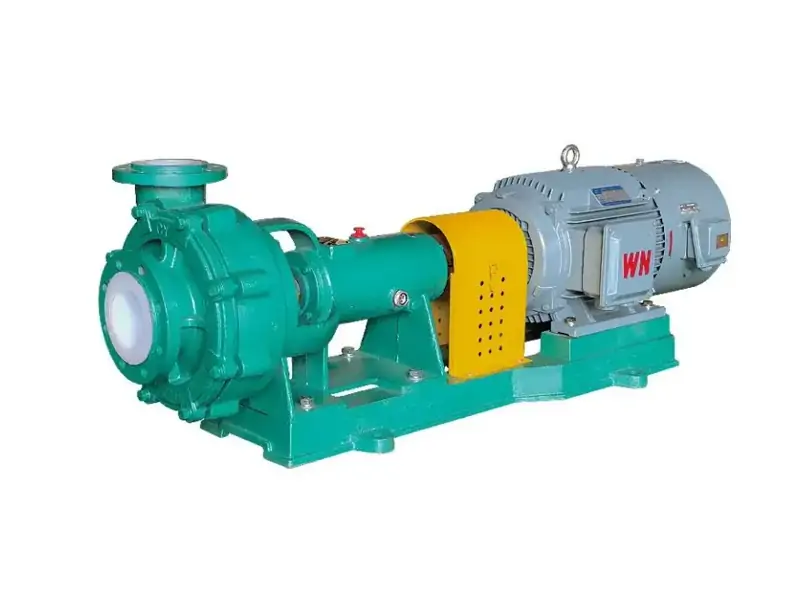
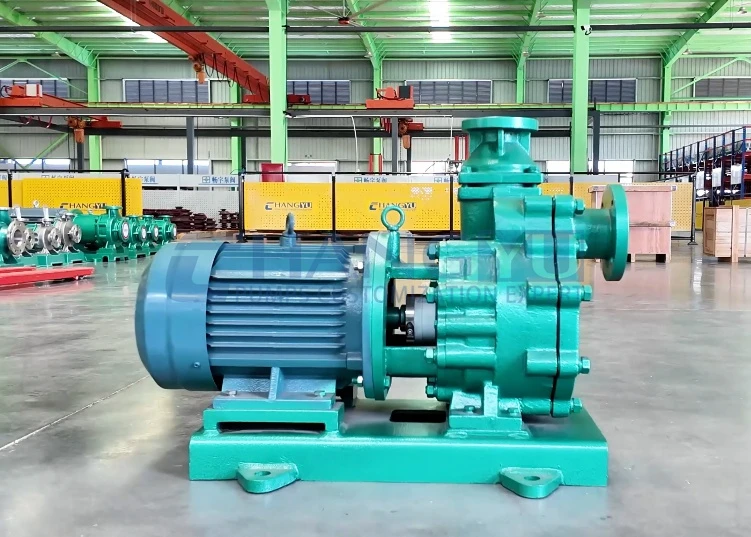
A série UHB é uma bomba centrífuga horizontal de fase única com um revestimento de aço UHMW-PE especificamente concebido para lamas corrosivas e abrasivas. Para aplicações de águas residuais industriais em que o efluente contém produtos químicos agressivos e sólidos abrasivos - como água de rejeitos de mineração, águas residuais de ácido fosfórico e efluentes de fábricas de produtos químicos - o revestimento UHMW-PE oferece uma proteção combinada contra a corrosão e o desgaste que nem uma bomba de metal puro nem uma bomba de plástico puro podem oferecer sozinhas.
Especificações principais: Caudal 3-2,600 m³/h | Altura 5-100 m | Potência 0.75-300 kW | Temperatura -20°C a 90°C
Bomba centrífuga de aço inoxidável da série HB
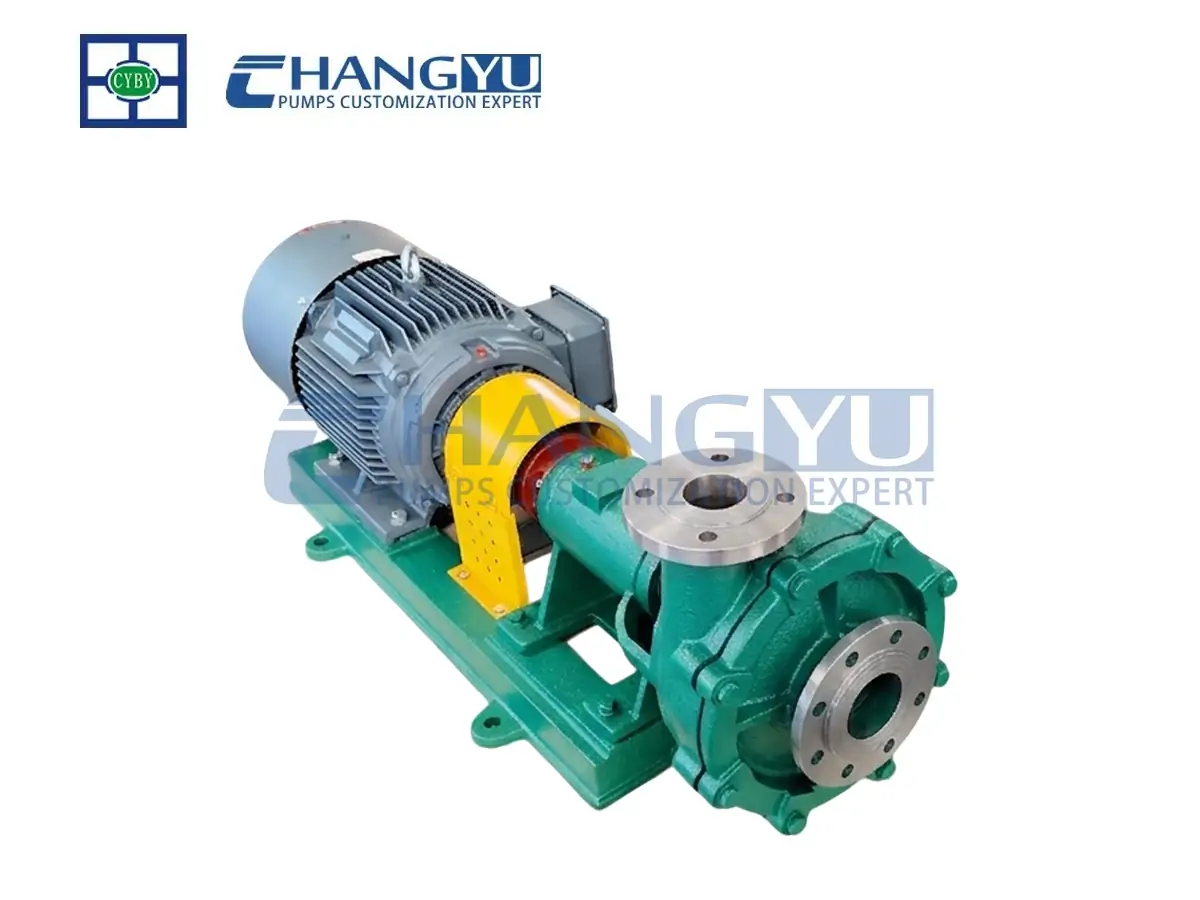
A série HB é uma bomba centrífuga horizontal de estágio único de alta eficiência, concebida de acordo com ISO 2858 e em conformidade com Normas CE. A sua estrutura húmida totalmente em aço inoxidável - personalizável em 304, 316, 316L, 2205 e 2507 - lida com lamas abrasivas e fluidos de corrosão média. Para aplicações de águas residuais municipais e industriais em que a química é ligeiramente corrosiva e o principal desafio é a abrasão de grãos, a série HB fornece uma solução durável e de fácil manutenção.
Especificações principais: Caudal 10-60 m³/h | Altura 20-120 m | Potência 3-45 kW | Temperatura -20°C a 120°C
Bomba centrífuga com revestimento de fluoroplástico da série IHF

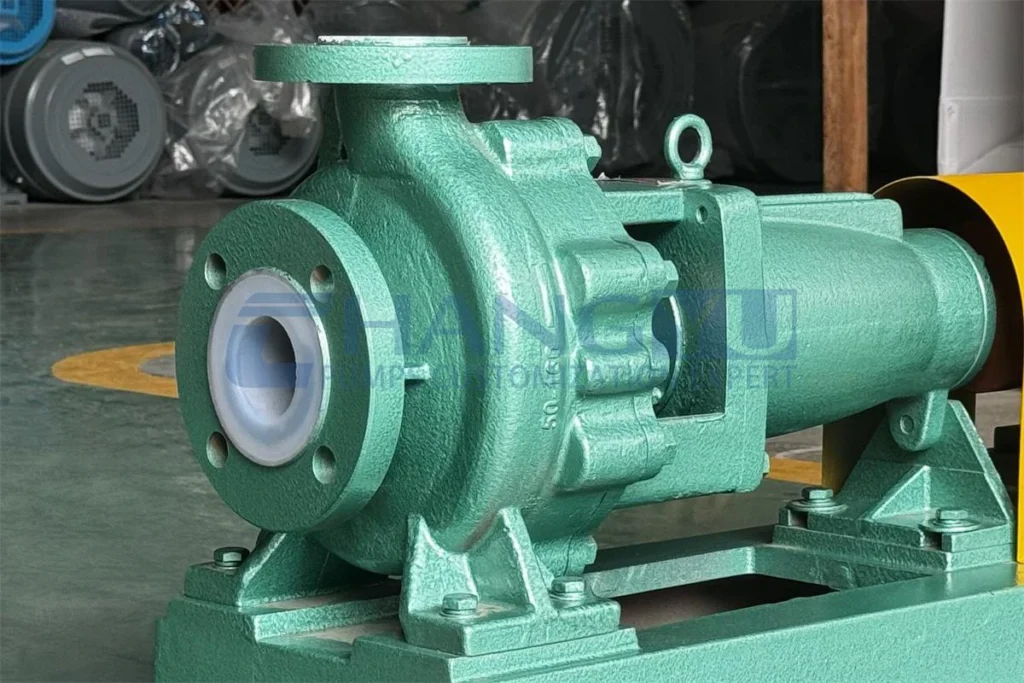
A série IHF é uma bomba centrífuga com o corpo e os componentes de fluxo revestidos em FEP, PFA ou PTFE. O revestimento fluoroplástico isola o invólucro metálico do efluente corrosivo, proporcionando uma resistência química quase universal a ácidos fortes, álcalis fortes, agentes oxidantes fortes e solventes orgânicos. Para águas residuais industriais com composição química agressiva, a série IHF oferece a mais ampla compatibilidade química.
Especificações principais: Caudal 1,6-2.600 m³/h | Altura 5-130 m | Potência 1,5-110 kW | Temperatura -20°C a 180°C
Bomba de diafragma eléctrica da série BFD
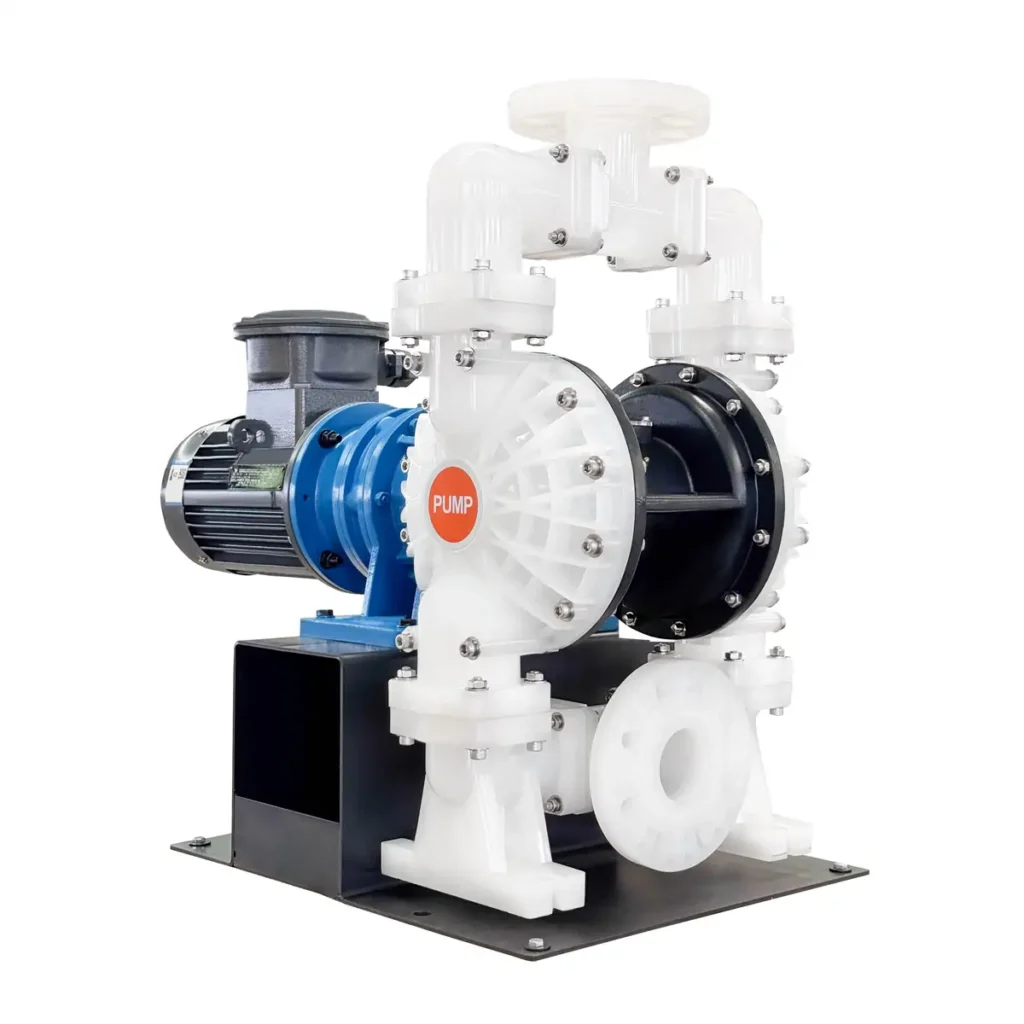
A Série BFD é uma bomba de diafragma eléctrica acionada por motor que proporciona um fluxo estável e contínuo para lamas de elevada viscosidade e águas residuais com elevado teor de sólidos. A membrana forma uma barreira sem vedação entre o fluido do processo e o mecanismo de acionamento, tornando-a adequada para a transferência de lamas, alimentação de desidratação e aplicações intermitentes com elevado teor de sólidos.
Especificações principais: Caudal até 480 L/min | Altura até 84 m | Potência 0,75-45 kW | Temperatura -20°C a 120°C
Bomba de diafragma duplo operada a ar da série BFQ

A Série BFQ é uma bomba pneumática de duplo diafragma para transferência de esgotos perigosos, inflamáveis ou de serviço intermitente. Alimentada inteiramente por ar comprimido, é inerentemente sem vedação, com escorvamento automático e pode funcionar a seco sem sofrer danos - caraterísticas adequadas para derivação de emergência, desaguamento e aplicações portáteis.
Especificações principais: Caudal máximo de trabalho até 1.041 L/min | Pressão de trabalho 0,84 MPa | Altura de aspiração 7,6 m | Tamanho máximo das partículas sólidas 9,4 mm
Seleção de Bombas Centrífugas para Esgotos Referência Rápida
| Série de bombas | Tipo | Melhor aplicação | Materiais-chave |
|---|---|---|---|
| UHB | Centrífuga com revestimento em UHMW-PE | Águas residuais industriais corrosivas-abrasivas | UHMW-PE |
| HB | Centrífuga de aço inoxidável | Esgotos municipais/industriais, carregados de areia | 304, 316L, 2205, 2507 |
| IHF | Centrífuga com revestimento em fluoroplástico | Águas residuais de produtos químicos ácidos/alcalinos fortes | FEP, PFA, PTFE |
| BFD | Diafragma elétrico | Lamas com elevado teor de sólidos, resíduos de elevada viscosidade | Aço fundido, SS, PP, PVDF |
| BFQ | Diafragma duplo acionado por ar | Perigoso, inflamável, serviço intermitente | Aço fundido, SS, PP, PVDF |
10. Estudo de caso de bombas centrífugas para águas residuais: Atualização de uma Estação Elevatória de Esgotos Municipal com Tecnologia Centrífuga Não-Clindada
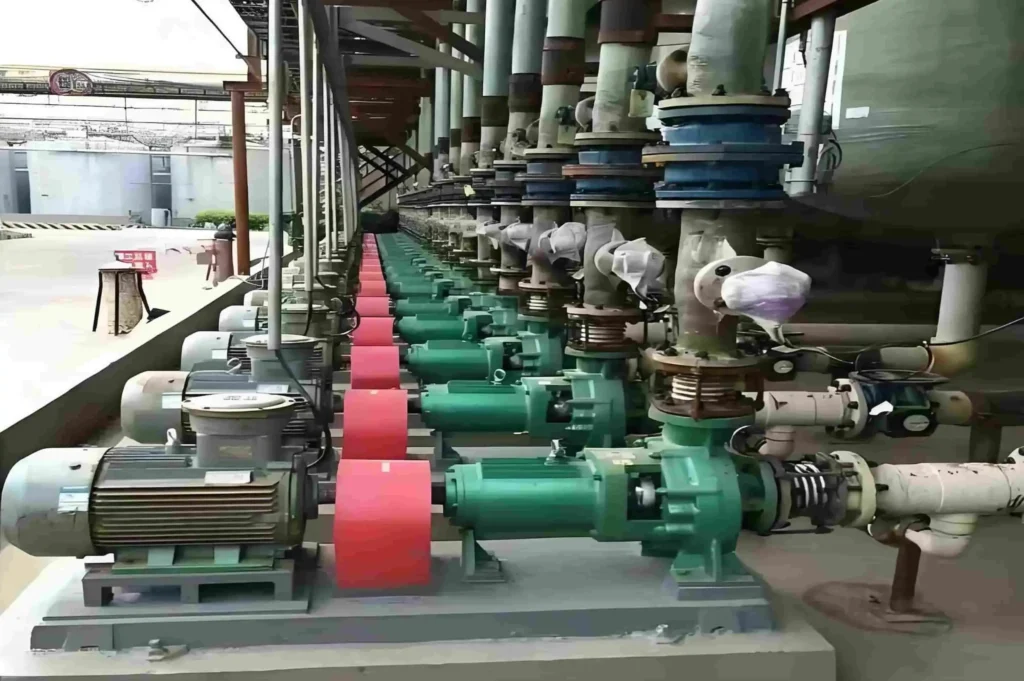
Desafio do cliente: Uma estação elevatória de esgotos municipal no sudeste asiático estava a sofrer de entupimento crónico das suas bombas centrífugas normais. As bombas estavam equipadas com impulsores fechados de dois canais, que foram selecionados pela sua elevada eficiência hidráulica. No entanto, o esgoto bruto que chegava à estação continha materiais fibrosos, detritos de plástico e sólidos semelhantes a trapos que se alojavam repetidamente entre as palhetas do impulsor. As bombas entupiam duas a três vezes por mês, exigindo a chamada do operador, a retirada da bomba do poço húmido e a limpeza manual do impulsor. Após 18 meses de funcionamento, o desgaste do impulsor devido à abrasão da areia reduziu a eficiência da bomba em cerca de 30% e os vedantes mecânicos falharam duas vezes devido à entrada de sólidos.
Análise de engenharia: Os engenheiros da Changyu Pump avaliaram os dados operacionais da estação e o perfil de sólidos do esgoto que chegava. A causa principal do entupimento foi o impulsor fechado de dois canais, que é suscetível a sólidos fibrosos que se enrolam à volta das palhetas. O impulsor também não foi concebido para a carga de grão presente nas águas residuais recolhidas e a configuração de um único vedante mecânico não proporcionava qualquer redundância contra a entrada de sólidos.
Solução implementada: A Changyu Pump substituiu as bombas existentes por bombas centrífugas com impulsor de vórtice com as seguintes alterações de design:
- Turbina de vórtice com passagem livre de 65 mm: O impulsor rebaixado permitiu que os sólidos passassem através da bomba sem contacto direto com o impulsor, eliminando o entupimento de sólidos fibrosos que tinha afetado a conceção de canal fechado.
- Vedante mecânico duplo em carboneto de silício com câmara de óleo: Um arranjo de vedação de dupla pressão com câmara de barreira cheia de óleo proporcionou redundância e protegeu as faces de vedação da areia.
- Anéis de desgaste em ferro com elevado teor de crómio: Os anéis de desgaste substituíveis no impulsor e na caixa permitiram a restauração da folga sem a substituição dos componentes principais, resolvendo o problema da abrasão do grão.
- Caixa em aço inoxidável: A construção em aço inoxidável 316L proporcionou resistência à corrosão para as condições de esgoto de pH variável.
Resultados quantificados (avaliação de 18 meses):
| Métrica | Antes da atualização | Após a atualização | Melhoria |
|---|---|---|---|
| Eventos de tamancos por mês | 2-3 | < 0,25 (um por trimestre) | Redução de ~85% |
| Vida útil do impulsor | 18 meses | > 36 meses (ainda em serviço) | Extensão 2×+ |
| Falhas de vedação por ano | 1.3 | Zero | Redução 100% |
| Custo anual de manutenção | USD 12.000 | 5.400 USD | Redução de ~55% |
| Disponibilidade da estação | 92% | > 99% | Mais de 7 pontos percentuais |
11. Perguntas frequentes sobre bombas centrífugas para águas residuais
Q1: Qual é a diferença entre uma bomba centrífuga para águas residuais e uma bomba centrífuga normal para água?
R: Uma bomba centrífuga para águas residuais é concebida com passagens de fluxo alargadas, geometrias de impulsor especializadas (vórtice, canal único ou semi-aberto) e materiais resistentes ao desgaste para passar águas residuais carregadas de sólidos sem entupimento. As bombas de água centrífugas normais utilizam impulsores fechados com passagens estreitas optimizadas para a eficiência da água limpa e entopem rapidamente quando expostas a materiais fibrosos ou sólidos de grandes dimensões.
Q2: Que tipo de impulsor é melhor para esgotos brutos não tratados?
R: Os impulsores Vortex proporcionam a melhor resistência ao entupimento para esgotos brutos não filtrados. O impulsor é rebaixado para fora do percurso principal do fluxo, criando um remoinho que passa os sólidos sem contacto direto com o impulsor. Os impulsores Vortex podem passar sólidos esféricos até 80 mm de diâmetro e são a especificação padrão para a recolha de águas residuais municipais e estações elevatórias.
Q3: Qual é a capacidade de tratamento de sólidos de uma bomba centrífuga para águas residuais?
R: A capacidade de tratamento de sólidos depende do tipo de impulsor. Os impulsores Vortex passam normalmente sólidos esféricos de 65-80 mm. Os impulsores de canal único passam sólidos até ao diâmetro de passagem do impulsor, normalmente 65-100 mm. As bombas trituradoras maceram os sólidos antes de entrarem na bomba, eliminando totalmente a limitação do tamanho da passagem.
Q4: Como posso evitar o entupimento da minha bomba de esgotos?
R: Faça corresponder o tipo de impulsor aos sólidos presentes nas águas residuais. Para materiais fibrosos, os impulsores vortex oferecem a máxima resistência ao entupimento. Para águas residuais carregadas de areia, especifique materiais resistentes ao desgaste e impulsores semi-abertos. Para sistemas de esgotos sob pressão com condutas de força de pequeno diâmetro, as bombas trituradoras eliminam o entupimento reduzindo o tamanho dos sólidos antes de entrarem na bomba.
Q5: Que materiais são melhores para uma bomba centrífuga de esgoto?
R: O ferro fundido é o material de base para as águas residuais municipais gerais. O aço inoxidável duplex CD4MCu oferece uma resistência combinada à corrosão e à abrasão para águas residuais industriais. Os impulsores de ferro com elevado teor de crómio são especificados para aplicações com grão pesado. As bombas com revestimento em UHMW-PE oferecem a melhor proteção combinada contra a corrosão e a abrasão para efluentes industriais agressivos.
Q6: Qual é a diferença entre uma bomba submersível e uma bomba autoaspirante para águas residuais?
R: As bombas submersíveis funcionam totalmente submersas no poço húmido e necessitam de ser retiradas para manutenção. As bombas auto-ferrantes são instaladas acima do nível do líquido, podem evacuar o ar da linha de sucção e fornecem acesso total para manutenção sem entrar no poço húmido. As bombas auto-ferrantes são padrão para estações elevatórias e aplicações de bypass.
Q7: Com que frequência deve ser efectuada a manutenção de uma bomba centrífuga para águas residuais?
R: Diariamente: monitorizar a corrente do motor e a pressão de descarga. Semanalmente: verificar o estado do óleo de vedação e a temperatura da chumaceira. Mensalmente: medir a folga do impulsor e inspecionar os anéis de desgaste. Trimestralmente: inspeção completa da parte húmida. Anualmente: desmontagem completa, substituição dos componentes de desgaste e renovação da lubrificação das chumaceiras.
Q8: Quais são as causas da falha dos vedantes das bombas de esgoto?
R: O principal mecanismo de falha é a entrada de sólidos entre as faces do vedante. As partículas e os materiais fibrosos ficam presos na película de fluido e riscam as faces do vedante de carboneto de silício. Os vedantes mecânicos duplos com uma câmara de barreira cheia de óleo proporcionam redundância: se o vedante exterior falhar, o vedante interior mantém a contenção e a contaminação por óleo fornece um aviso prévio da degradação do vedante.
12. Conclusão
A bomba centrífuga para águas residuais é definida pela conceção do seu impulsor. O impulsor determina se a bomba funciona continuamente ou se necessita de intervenções de desobstrução frequentes - uma distinção que afecta diretamente a disponibilidade da estação, o custo de manutenção e a carga de trabalho do operador. Os impulsores Vortex proporcionam a máxima passagem de sólidos e resistência ao entupimento para águas residuais brutas não filtradas. Os impulsores de canal oferecem uma maior eficiência para águas residuais e lamas filtradas. As bombas trituradoras e cortadoras eliminam o entupimento em aplicações de esgoto sob pressão.
A seleção do material, a configuração do vedante e a proteção contra o desgaste completam a especificação. O ferro fundido e o aço inoxidável duplex CD4MCu servem a maioria das aplicações municipais. As bombas com revestimento em UHMW-PE oferecem a resistência combinada à corrosão e à abrasão necessária para águas residuais industriais agressivas. Os vedantes mecânicos duplos com faces de carboneto de silício e câmaras de barreira cheias de óleo são a norma para o serviço contínuo de esgotos.
O estudo de caso quantitativo demonstra o que os engenheiros observam na prática: uma bomba que entope duas a três vezes por mês custa muito mais em termos de propriedade total do que uma bomba bem especificada que não entope com uma eficiência hidráulica inferior. A capacidade do impulsor vortex de passar sólidos sem a intervenção do operador reduziu os eventos de entupimento em aproximadamente 85%, aumentou a vida útil do impulsor e reduziu o custo de manutenção anual em aproximadamente 55%.
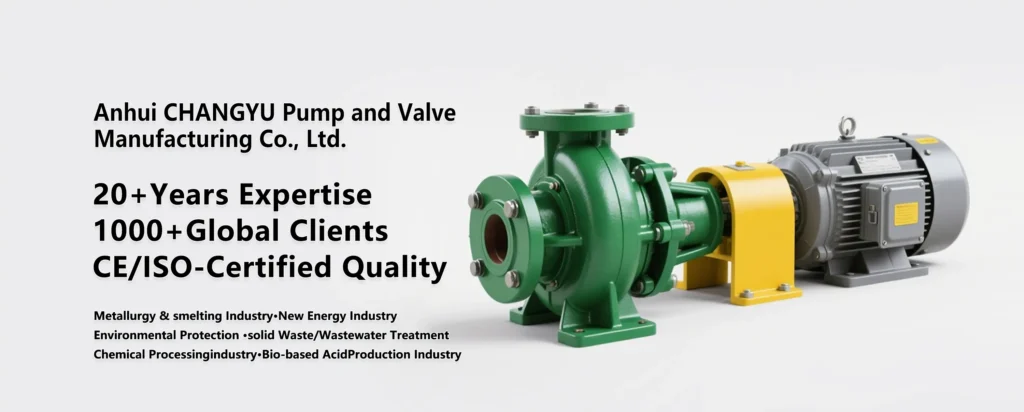
Contactar a Changyu Pump com os seus parâmetros de águas residuais e requisitos de processo. A nossa equipa de engenharia fornecerá uma recomendação detalhada da bomba e um orçamento adaptado à sua aplicação de bomba centrífuga para águas residuais.