
Resposta rápida
A bomba de água sanitária líquida é uma bomba de transferência química ou dosagem projetada para manusear hipoclorito de sódio (NaOCl) — um líquido fortemente oxidante e corrosivo que se decompõe ao longo do tempo, liberando gás oxigênio. Bombas padrão falham rapidamente neste serviço devido ao ataque de materiais e acúmulo de gás. Quatro fatores principais de seleção:
- Compatibilidade dos materiais: Os componentes molhados devem resistir ao hipoclorito de sódio na concentração operacional (tipicamente 5–15%) e temperatura. PVDF oferece o equilíbrio ideal de resistência química, resistência mecânica e custo para a maioria das aplicações de água sanitária. PTFE/PFA fornece máxima inércia para serviço de alta temperatura ou alta pureza. Metais, incluindo aço inoxidável, não são recomendados.
- Gerenciamento de gás: O hipoclorito de sódio se decompõe naturalmente, liberando bolhas de oxigênio que se acumulam no corpo da bomba — particularmente em configurações horizontais — reduzindo progressivamente o volume líquido efetivo e causando bloqueio de vapor. Sem ventilação adequada ou projeto de bomba autoventilante, o bloqueio de gás interromperá o fluxo e danificará componentes internos.
- Tecnologia de vedação: Selos mecânicos duplos com fluido de barreira fornecem vedação confiável para bombas centrífugas de água sanitária. Bombas de acionamento magnético eliminam completamente os selos dinâmicos para operação com vazamento zero, mas exigem atenção cuidadosa ao acúmulo de gás nos rolamentos.
- Precisão de dosagem: Para aplicações de dosagem de desinfecção, bombas dosadoras de diafragma ou bombas peristálticas fornecem a precisão de fluxo necessária para conformidade regulatória, enquanto bombas centrífugas atendem a tarefas de transferência a granel.
Hipoclorito de sódio é o desinfetante de trabalho da indústria de água e águas residuais. É também um dos produtos químicos mais enganosamente desafiadores de bombear. Ao contrário de ácidos fortes que atacam visivelmente os materiais, a água sanitária corrói através da oxidação — fragilizando plásticos, corroendo metais e degradando elastômeros ao longo do tempo. Simultaneamente, sua decomposição natural libera gás oxigênio que se acumula nos corpos das bombas, levando ao bloqueio de vapor e perda de escorva. Uma bomba especificada sem considerar tanto o ataque químico quanto a evolução de gás pode falhar dentro de semanas após a comissionamento — não por qualquer defeito de fabricação, mas por uma incompatibilidade fundamental entre o projeto da bomba e o comportamento químico do fluido.
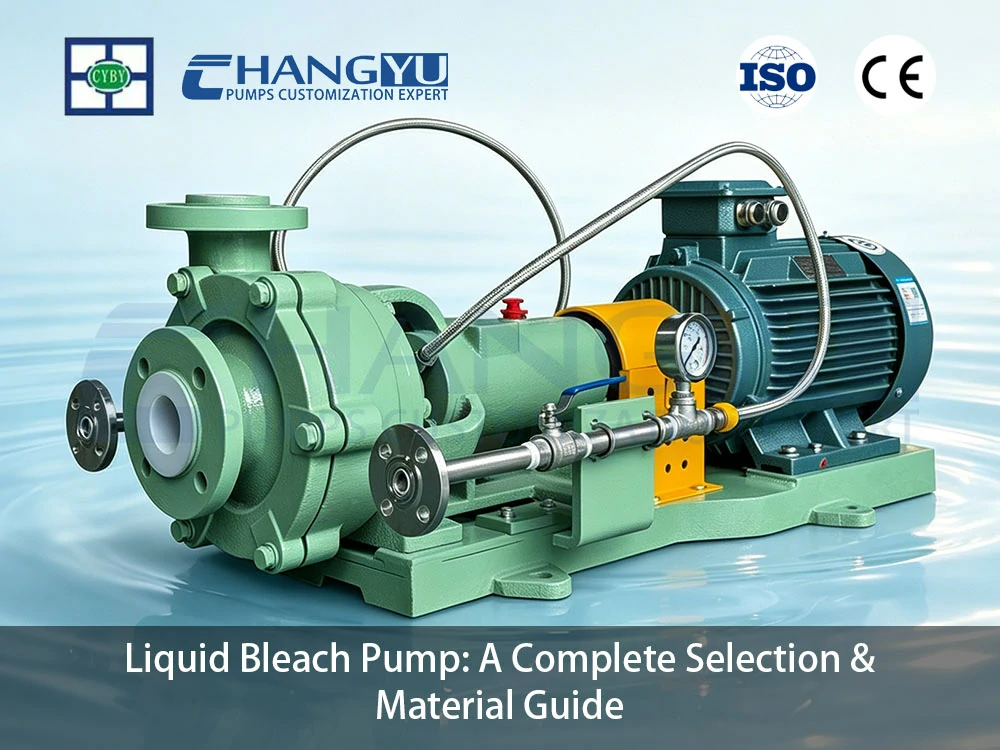
A Changyu Pump fabrica bombas resistentes à corrosão para processamento químico, tratamento de água e transferência de fluidos perigosos há mais de duas décadas. Este guia fornece a estrutura organizada para a seleção de bombas de água sanitária líquida — desde compatibilidade de materiais e gerenciamento de gás até tecnologia de vedação e precisão de dosagem.
O Que É uma Bomba de Água Sanitária Líquida e Por Que Precisa de Projeto Especial?
Uma bomba de água sanitária líquida deve enfrentar desafios que bombas convencionais de água ou produtos químicos não enfrentam. Compreender o comportamento químico do fluido é a base para a especificação correta da bomba.
Soluções de hipoclorito de sódio — comumente vendidas como água sanitária industrial a 10–15% de concentração ou água sanitária doméstica a 5–6% — apresentam três desafios simultâneos ao equipamento de bombeamento:
- Ação oxidante forte: O NaOCl oxida agressivamente a maioria dos metais e muitos plásticos. Isso não é simples corrosão — é uma reação química que fragiliza polímeros, corrói aço inoxidável e degrada elastômeros.
- Evolução de gás: O NaOCl se decompõe naturalmente ao longo do tempo, acelerado por calor, luz e contaminação por íons metálicos. A reação de decomposição libera gás oxigênio. Mesmo em um sistema selado, bolhas de gás se formam no corpo da bomba, potencialmente causando bloqueio de vapor, cavitação ou condições de funcionamento a seco.
- Tendência à cristalização: À medida que a água sanitária evapora ou esfria, o hipoclorito de sódio pode formar cristais de sal nas faces dos selos mecânicos, acelerando o desgaste do selo e causando vazamento.
Bombas centrífugas padrão com corpos de ferro fundido, impulsores de bronze ou selos mecânicos padrão são fundamentalmente incompatíveis com esta combinação de agressão química e perturbação física. Uma bomba de água sanitária projetada especificamente deve integrar materiais compatíveis, capacidade de manuseio de gás e vedação robusta — três requisitos discutidos nos capítulos seguintes.
Quais Materiais São Compatíveis com Água Sanitária Líquida?
A seleção de material é a decisão de especificação mais crítica para uma bomba de água sanitária líquida. A ação oxidante do hipoclorito de sódio limita as opções viáveis a uma faixa estreita de materiais não metálicos e algumas ligas especiais. Selecionar o material errado pode levar à falha do corpo da bomba em meses.
Como o Hipoclorito de Sódio Ataca os Materiais da Bomba
O íon hipoclorito (OCl⁻) é um poderoso agente oxidante. Quando entra em contato com um material da bomba, pode:
- Extrair elétrons de metais, convertendo-os em íons metálicos solúveis (corrosão por pites e corrosão geral)
- Atacar a estrutura molecular de polímeros, causando cisão de cadeia, perda de resistência mecânica e eventual fragilização
- Degradar selos e juntas elastoméricas através de ataque oxidativo
A taxa de ataque aumenta com a concentração, temperatura e a presença de contaminantes de íons metálicos (particularmente cobre, níquel e ferro) que catalisam a decomposição.
Guia de Compatibilidade de Materiais para Bomba de Água Sanitária Líquida
| Material | Compatibilidade com NaOCl (5–15%) | Limite de temperatura | Recomendação |
|---|---|---|---|
| PVC | Bom em temperatura ambiente; fragiliza acima de 30°C | Máximo de 30°C | Não recomendado para aplicações críticas ou de serviço contínuo — margem de segurança de temperatura marginal |
| CPVC | Bom; melhor resistência à temperatura que PVC | 60°C (limitado pela compatibilidade química com NaOCl, não pelo limite físico do material) | Adequado para aplicações de dosagem de baixa concentração e baixa temperatura |
| PVDF | Excelente resistência química e resistência mecânica; resiste à fragilização | 90°C | Melhor escolha geral para a maioria das aplicações de água sanitária — equilíbrio ideal de desempenho e custo |
| PTFE / PFA | Virtualmente inerte a todas as concentrações e temperaturas | 120°C–180°C (dependendo do grau) | O material definitivo para serviço de água sanitária de alta temperatura, alta pureza ou alta concentração |
| UHMW-PE | Excelente resistência; boa resistência à abrasão para água sanitária de grau industrial com particulados | 90°C | Alternativa forte ao PVDF, particularmente quando algum teor de sólidos está presente |
| Aço inoxidável 316 | Não recomendado — corrosão por pites dentro de semanas a meses | N/A | Não use — o aço inoxidável é incompatível com o hipoclorito de sódio |
| Hastelloy C-276 | Boa resistência em baixas temperaturas (< 30°C) e concentrações (< 10%) | 30°C | Aceitável, mas não recomendado — PVDF ou PTFE oferece resistência igual ou superior a um custo menor |
| Titânio | Não recomendado — o alvejante ataca a camada de óxido do titânio | N/A | Não use — o hipoclorito de sódio é um dos poucos produtos químicos que corroem agressivamente o titânio |
Matriz de Seleção de Materiais para Bombas de Alvejante
| Aplicação | Concentração | Temperatura | Material recomendado |
|---|---|---|---|
| Dosagem padrão para tratamento de água | 5–10% | Ambiente (< 25°C) | PVDF ou UHMW-PE |
| Transferência de alvejante industrial | 10–15% | Ambiente a quente (< 40°C) | PVDF ou PTFE/PFA |
| Alvejante em alta temperatura (> 40°C) | Qualquer | 40–80°C | Revestido com PTFE/PFA |
| Alvejante de alta pureza (semicondutores, farmacêutico) | Qualquer | Qualquer | PTFE/PFA — inércia máxima |
| Alvejante com partículas (grau industrial) | 10–15% | Ambiente a quente | UHMW-PE — resistência à abrasão |
| Instalação externa (exposição UV) | Qualquer | Ambiente | PVDF — resiste melhor à degradação UV do que outros polímeros |
Engenheiros da Changyu Pump observaram em centenas de instalações de bombas de alvejante: o PVDF oferece consistentemente o equilíbrio ideal entre resistência química, durabilidade mecânica e custo-benefício para a maioria das aplicações de hipoclorito de sódio. O prêmio de custo do material sobre PVC ou CPVC é recuperado muitas vezes ao longo da vida útil estendida e pela eliminação do risco de falha prematura. PVC e CPVC são quimicamente compatíveis em temperatura ambiente, mas têm margens de segurança estreitas. Eles não são recomendados para aplicações de serviço contínuo ou de alta concentração de alvejante onde a falha da bomba acarreta consequências operacionais ou de segurança. Para aplicações de alta temperatura, alta concentração ou críticas para a segurança, o revestimento com PTFE/PFA é a escolha definitiva.
Como Gerenciar a Evolução de Gás em Bombas de Alvejante Líquido
O hipoclorito de sódio se decompõe naturalmente, liberando gás oxigênio. Essa decomposição acelera com calor, exposição à luz e contaminação por íons metálicos. Em um corpo de bomba, esse gás cria problemas operacionais que podem ser tão prejudiciais quanto a corrosão química.
Por que a Evolução de Gás Interrompe a Operação da Bomba
O oxigênio liberado pela decomposição do NaOCl não se dissolve prontamente no líquido. Em vez disso, forma bolhas que:
- Acumulam-se no ponto mais alto do corpo da bomba — particularmente em configurações de bombas horizontais — reduzindo progressivamente o volume líquido efetivo e, em última análise, causando bloqueio de vapor
- Interrompem o fluxo de líquido para o impulsor, causando perda parcial ou total da escorva
- Criam condições semelhantes à cavitação à medida que as bolhas colapsam em zonas de alta pressão, danificando as superfícies do impulsor
- Fazem com que bombas de acionamento magnético funcionem a seco nos rolamentos, levando a falhas rápidas por falta de lubrificação e resfriamento
Três Estratégias para Gerenciamento de Gás em Bombas de Alvejante
Projeto de Bomba com Autoventilação:
A abordagem mais confiável é selecionar uma configuração de bomba que permita naturalmente a saída do gás. Bombas centrífugas verticais, onde a sucção fica na parte inferior e o gás pode subir livremente até o topo do corpo, são inerentemente autoventilantes. Bombas horizontais com impulsor aberto ou semiaberto também permitem mais passagem de gás do que projetos de impulsor fechado.
Válvulas de Ventilação Automáticas:
Instalar uma válvula de liberação de ar automática no ponto mais alto do corpo da bomba ou da tubulação de descarga permite que o gás acumulado seja ventilado automaticamente. A válvula abre quando o gás está presente e fecha quando o líquido atinge o mecanismo da válvula. Isso é particularmente importante para instalações de bombas horizontais onde o gás fica retido no topo da voluta.
Projeto de Tubulação para Gerenciamento de Gás:
A tubulação de sucção deve inclinar-se para cima em direção à bomba para permitir que o gás migre para o corpo da bomba, onde pode ser ventilado. Quaisquer pontos altos na linha de sucção que retenham gás antes que ele atinja a bomba causarão bloqueio de vapor, independentemente da capacidade de manuseio de gás da própria bomba.
Máxima passagem de sólidos + peças de desgaste substituíveis Para aplicações de transferência de alvejante em serviço contínuo, bombas centrífugas verticais ou bombas horizontais com válvulas de ventilação automáticas fornecem o gerenciamento de gás mais confiável. Para aplicações de dosagem intermitente, onde a bomba liga e desliga com frequência, o acúmulo de gás entre os ciclos é uma preocupação significativa — bombas dosadoras de diafragma ou bombas peristálticas, que operam com princípios de deslocamento positivo e são menos afetadas pelo gás, geralmente oferecem um serviço mais confiável do que bombas centrífugas nesses cenários.
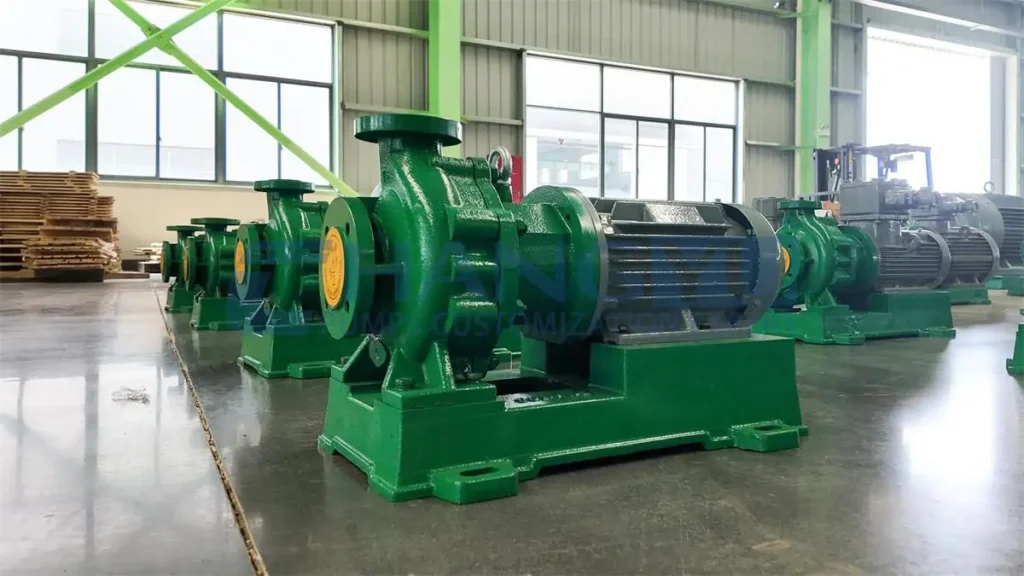
Como Alcançar Precisão na Dosagem e Medição de Alvejante Líquido
Para desinfecção de água e efluentes, a precisão da dosagem de alvejante impacta diretamente tanto a conformidade com a saúde pública quanto o custo químico. Os requisitos regulatórios para níveis residuais de desinfecção exigem controle de fluxo preciso e repetível que bombas centrífugas projetadas para transferência a granel não podem fornecer.
Tecnologias de Bombas Dosadoras para Alvejante
Bombas Dosadoras de Diafragma:
Um diafragma alternativo acionado por um motor de velocidade variável ou mecanismo solenoide fornece um volume preciso e ajustável de alvejante a cada curso. A vazão é controlada ajustando o comprimento do curso, a frequência do curso ou ambos. As bombas de diafragma fornecem alta precisão (±1% do ponto de ajuste), altas taxas de redução (tipicamente 10:1) e a capacidade de injetar contra altas pressões de descarga. O diafragma isola o fluido bombeado do mecanismo de acionamento, eliminando o risco de vazamento no selo. Os componentes molhados — cabeçote da bomba, diafragma, válvulas de retenção — devem ser especificados em PVDF ou PTFE com elastômeros de PTFE/EPDM para serviço com alvejante.
Bombas Peristálticas (de Mangueira):
Um rolo giratório comprime um tubo flexível, empurrando um volume preciso de alvejante para frente a cada rotação. O único componente molhado é o próprio tubo — normalmente Norprene, Tygon ou outro elastômero compatível com alvejante. Bombas peristálticas lidam bem com a liberação de gás (as bolhas de gás passam pelo tubo sem causar bloqueio de vapor), embora frações excessivas de gás possam reduzir ligeiramente a precisão do fluxo. Elas fornecem bombeamento suave e de baixo cisalhamento que não acelera a decomposição do alvejante. A precisão do fluxo é tipicamente de ±2–3%, com taxas de redução de até 20:1.
Amortecedores de Pulsação para Sistemas de Dosagem:
Bombas de diafragma alternativas produzem um fluxo pulsante que pode causar picos de pressão, vibração na tubulação e medição de fluxo imprecisa a jusante. Um amortecedor de pulsação — essencialmente uma câmara pressurizada com um diafragma flexível — absorve os picos de pressão e suaviza o fluxo para uma entrega quase contínua. Para sistemas de dosagem de alvejante com medidores de vazão, a instalação de um amortecedor de pulsação entre a descarga da bomba e o medidor é essencial para uma medição precisa.
Guia de Seleção de Bombas Dosadoras
| Aplicação | Gama de caudal | Precisão Necessária | Tipo de bomba recomendado |
|---|---|---|---|
| Cloração de água potável | 1–50 L/h | Alta (±1%) | Bomba dosadora de diafragma |
| Desinfecção de águas residuais | 50–500 L/h | Moderada (±3%) | Bomba dosadora de diafragma ou peristáltica |
| Transferência de alvejante a granel (enchimento de tanque diário) | > 500 L/h | Baixa (±10%) | Bomba centrífuga com medidor de vazão |
| Estação de dosagem remota (sem energia) | 1–20 L/h | Moderado | Bomba peristáltica alimentada por bateria |
Como Selecionar a Tecnologia de Vedação Correta para Bombas de Alvejante
O selo da bomba é o ponto de falha mais comum em serviço com alvejante. O hipoclorito de sódio ataca quimicamente os materiais do selo, cristaliza nas faces do selo e — quando o gás se acumula — pode fazer com que o selo funcione a seco. Selecionar a tecnologia de vedação apropriada é tão crítico quanto a seleção do material.
Desafios de Vedação Específicos para Alvejante
- Cristalização nas faces do selo: À medida que o alvejante evapora na interface do selo, a concentração de NaOCl aumenta até que cristais de sal precipitem. Esses cristais abrasam as faces do selo, acelerando o desgaste e causando vazamento.
- Degradação do elastômero: Materiais de anel de vedação padrão (Buna-N, EPDM) degradam-se rapidamente em alvejante. Apenas vedações encapsuladas em PTFE ou perfluoroelastômero (FFKM) fornecem resistência química adequada.
- Funcionamento a seco induzido por gás: O gás acumulado no corpo da bomba pode privar momentaneamente o selo mecânico de lubrificação, causando superaquecimento e falha catastrófica em segundos.
Comparação de Tecnologias de Vedação para Bombas de Alvejante
| Tecnologia de vedação | Risco de fuga | Intervalo de Manutenção | Custo | Melhor para |
|---|---|---|---|---|
| Vedante mecânico simples | Moderada — vazamento do selo é o modo de falha primário | 6–12 meses | $ | Instalações com orçamento limitado e serviço de alvejante não crítico |
| Selo mecânico duplo com fluido de barreira | Baixa — o fluido de barreira fornece resfriamento e lubrificação, previne cristalização | 12–24 meses | $$$ | Instalações de bombas centrífugas de serviço contínuo |
| Bomba de acionamento magnético | Quase zero — sem selo dinâmico; invólucro de contenção estático isola o fluido da atmosfera | 12–36 meses para rolamentos (altamente dependente da eficácia do gerenciamento de gás e da limpeza do fluido) | $$$$ | Instalações perigosas ou críticas para a segurança onde qualquer vazamento é inaceitável |
| Bomba de motor encapsulado | Quase zero — hermeticamente selada | 12–36 meses | $$$$ | Aplicações de alta pressão onde os limites de torque do acoplamento magnético seriam excedidos |
Máxima passagem de sólidos + peças de desgaste substituíveis Para a maioria das aplicações de transferência de alvejante, uma bomba centrífuga com selos mecânicos duplos e um fluido de barreira compatível fornece serviço confiável e econômico. O fluido de barreira previne a cristalização no selo externo e fornece resfriamento para ambas as faces do selo. Para instalações críticas para a segurança — particularmente aquelas em edifícios ocupados, perto de equipamentos sensíveis ou que manipulam alvejante de alta concentração — as bombas de acionamento magnético fornecem um nível adicional de proteção. A ausência de um selo de eixo dinâmico elimina o caminho de vazamento mais comum. No entanto, as bombas de acionamento magnético exigem atenção cuidadosa ao gerenciamento de gás; os rolamentos da bomba são lubrificados pelo fluido bombeado, e o gás acumulado pode causar falha do rolamento em minutos. Instale válvulas de ventilação automáticas e monitore a condição dos rolamentos em todas as bombas de alvejante de acionamento magnético.
Como Manter uma Bomba de Alvejante Líquido para Vida Útil Estendida
Práticas de manutenção sistemáticas podem estender significativamente a vida útil das bombas de alvejante. As falhas evitáveis mais comuns — danos ao selo por cristalização, degradação do material por alvejante estagnado e danos ao rolamento relacionados a gás — são todas abordáveis através de disciplina operacional.
Manutenção Programada para Bombas de Alvejante
| Intervalo | Ação | Finalidade |
|---|---|---|
| Semanal | Verifique se há vazamentos visíveis, ruídos incomuns ou vibração | Detecção precoce de problemas no selo ou rolamento |
| Mensal | Inspecione o sistema de lavagem do selo; verifique o nível e a condição do fluido de barreira | Previne cristalização e superaquecimento do selo |
| Trimestral | Inspecione componentes elastoméricos (anéis de vedação, juntas) quanto a sinais de inchaço ou rachaduras | Previne falha súbita do elastômero e vazamento |
| Anualmente | Substitua o selo mecânico; inspecione o impulsor e o corpo quanto a degradação do material | A substituição planejada evita tempo de inatividade não planejado |
| Baseado em condição | Substitua os selos ao primeiro sinal de vazamento; substitua os rolamentos quando a vibração aumentar | Aborda problemas no estágio mais precoce detectável |
Melhores Práticas de Manutenção de Bombas de Alvejante
- Lave após a parada: Quando uma bomba de alvejante ficar inativa por mais de 24 horas, lave o corpo da bomba e a tubulação com água limpa. O alvejante estagnado acelera a degradação do material e promove a formação de cristais de sal nas faces do selo.
- Drene para parada prolongada: Para paradas com duração superior a uma semana, drene completamente a bomba e a tubulação de alvejante. O alvejante estagnado em um sistema fechado continua a gerar gás oxigênio, o que pode pressurizar o corpo da bomba e criar uma condição perigosa na reinicialização.
- Inspecione os sistemas de ventilação: As válvulas de liberação de ar automáticas devem ser testadas mensalmente para verificar se abrem e fecham corretamente. Uma válvula de ventilação travada na posição fechada causará acúmulo de gás e bloqueio de vapor.
- Monitore elastômeros em contato com o fluido: Todos os componentes elastoméricos em serviço com alvejante — anéis de vedação, juntas, diafragmas — têm uma vida útil finita. A inspeção visual quanto a inchaço, rachaduras ou descoloração fornece aviso prévio de falha iminente. A substituição proativa em um cronograma baseado no tempo é mais econômica do que a substituição reativa após a falha.
Estudo de Caso de Bomba de Alvejante Líquido: Resolvendo uma Crise de Vazamento de Alvejante
Uma estação de tratamento de água no Sudeste Asiático usava bombas centrífugas de PVC para transferir solução de hipoclorito de sódio a 12%. As bombas funcionavam intermitentemente, aproximadamente 4–6 horas diárias a 25–30°C.
Em oito meses, o hipoclorito de sódio começou a vazar de fissuras capilares nos flanges do corpo da bomba. O PVC havia se tornado quebradiço. Além disso, os selos mecânicos simples em todas as bombas falharam dentro de 4–6 meses devido à cristalização do alvejante durante períodos de inatividade e inchaço do anel de vedação.
A análise de causa raiz confirmou que, embora o PVC seja classificado para hipoclorito de sódio à temperatura ambiente, a combinação da concentração de 12%, exposição estagnada durante períodos de inatividade e o calor gerado pela operação da bomba levaram o material além do seu limite seguro de serviço.
A planta substituiu todas as bombas pelas séries CYB-ZKJ da Changyu com revestimento de fluoroplástico FEP, apresentando selos mecânicos duplos com anéis de vedação encapsulados em PTFE. O revestimento de FEP isola o alvejante do invólucro metálico, proporcionando resistência universal independentemente da concentração ou temperatura.
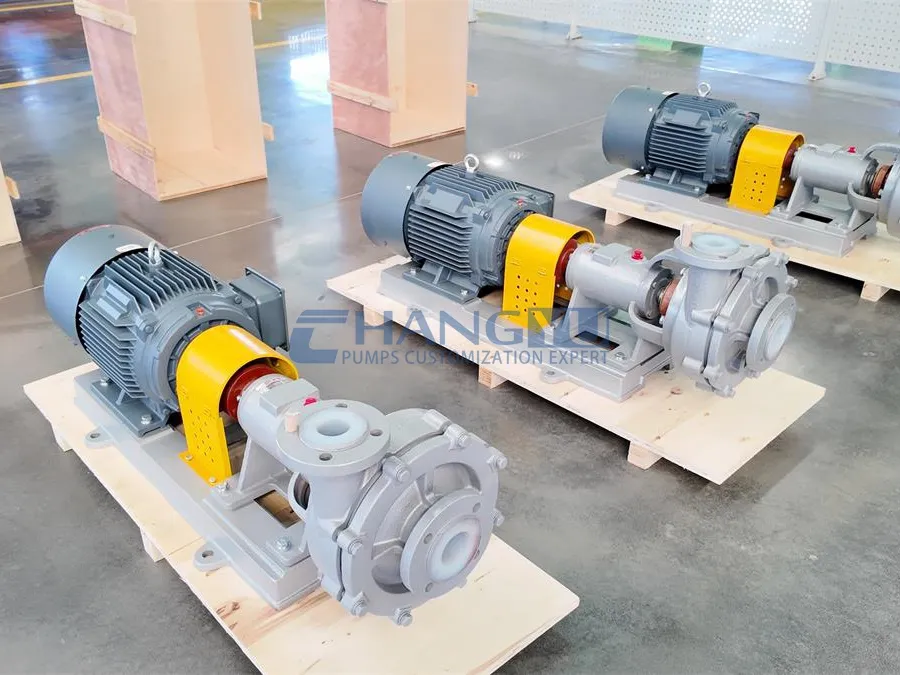
Ao longo de cinco anos de operação: zero vazamentos no invólucro, zero substituições não programadas de selos e zero tempo de inatividade das bombas de transferência de alvejante. O custo da atualização da bomba foi recuperado em 18 meses através da eliminação de reparos e custos de limpeza de derramamentos químicos.
Conclusão principal: O PVC não deve ser utilizado para serviço de hipoclorito de sódio a longo prazo. Sua margem de segurança de temperatura estreita o torna vulnerável à degradação devido a pequenas variações no processo. As bombas com revestimento de fluoroplástico FEP fornecem a resistência química robusta necessária para o manuseio confiável de alvejante.
Soluções de Bomba de Alvejante Líquido da Changyu Pump
A Changyu Pump oferece várias séries de bombas adequadas para serviço com alvejante, desde transferência a granel até dosagem de precisão. Cada série aborda combinações específicas de vazão, altura manométrica e requisitos de segurança.
Série CYQ — Bomba de Acionamento Magnético para Transferência de Alvejante com Zero Vazamento
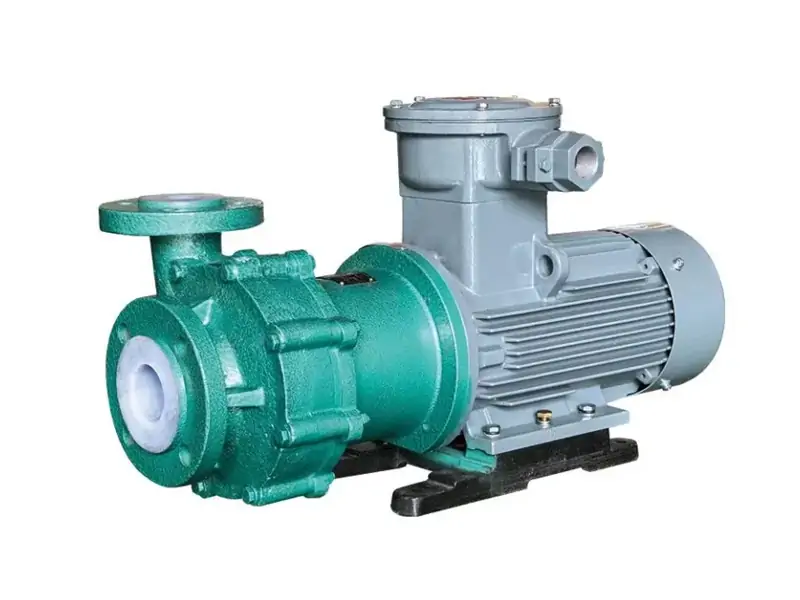
A bomba química de acionamento magnético CYQ é projetada para transferência sem vazamentos de produtos químicos altamente corrosivos e perigosos. Apresentando revestimento de fluoroplástico FEP/PFA/PTFE de parede espessa, acoplamento magnético de terras raras e estrutura totalmente selada, elimina completamente o vazamento do selo do eixo. A bomba é ideal para aplicações com alvejante onde qualquer vazamento representa um risco de segurança ou ambiental.
Nota crítica de aplicação: Todas as bombas de acionamento magnético requerem fornecimento contínuo de líquido para lubrificar e resfriar os rolamentos internos. Para serviço com alvejante, instale uma válvula de purga de ar automática para ventilar o gás oxigênio que, de outra forma, poderia causar funcionamento a seco dos rolamentos. Consulte a Seção 3 para recomendações de gerenciamento de gás.
| Parâmetro | Especificação |
|---|---|
| Caudal | 3-800 m³/h |
| Cabeça | 15–125 m |
| Potência do motor | 2,2–110 kW |
| Velocidade | 950 r/min |
| Temperatura | -20°C a 180°C |
| Materiais de revestimento | FEP / PFA / PTFE |
Ver Bomba de Acionamento Magnético CYQ →
Série CYB-ZKJ — Bomba Centrífuga Revestida de Fluoropolímero para Transferência de Alvejante
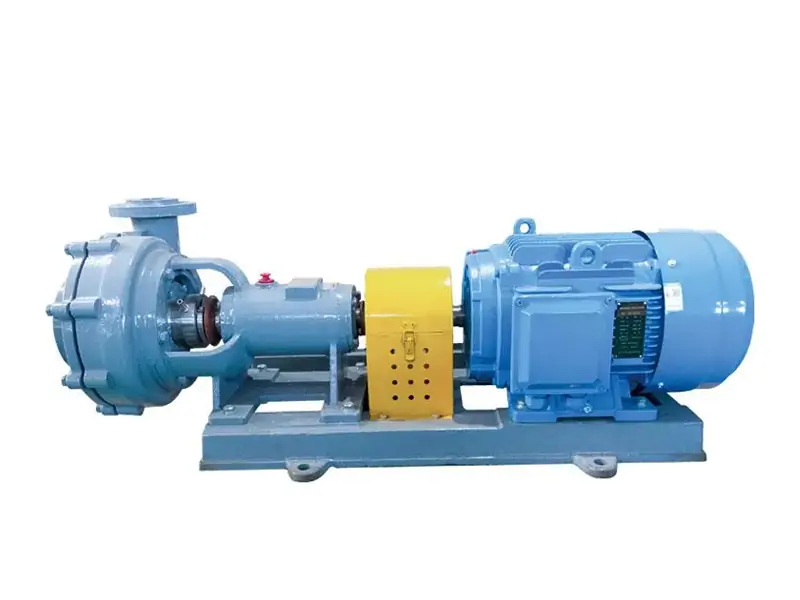
Bomba centrífuga revestida de FEP/PFA projetada para transferência de produtos químicos corrosivos. Selo mecânico duplo com fluido de barreira fornece vedação confiável e econômica para aplicações contínuas de alvejante. O revestimento de fluoropolímero isola completamente o invólucro da bomba do fluido bombeado, proporcionando resistência química equivalente à construção de fluoropolímero sólido a um custo menor.
| Parâmetro | Especificação |
|---|---|
| Caudal | 3-2,600 m³/h |
| Cabeça | 5-100 m |
| Potência do motor | 0,75-300 kW |
| Temperatura | -80°C a 120°C |
| Materiais de revestimento | FEP (padrão), PFA (opção para altas temperaturas) |
Série UHB — Bomba Revestida de UHMW-PE para Alvejante de Grau Industrial
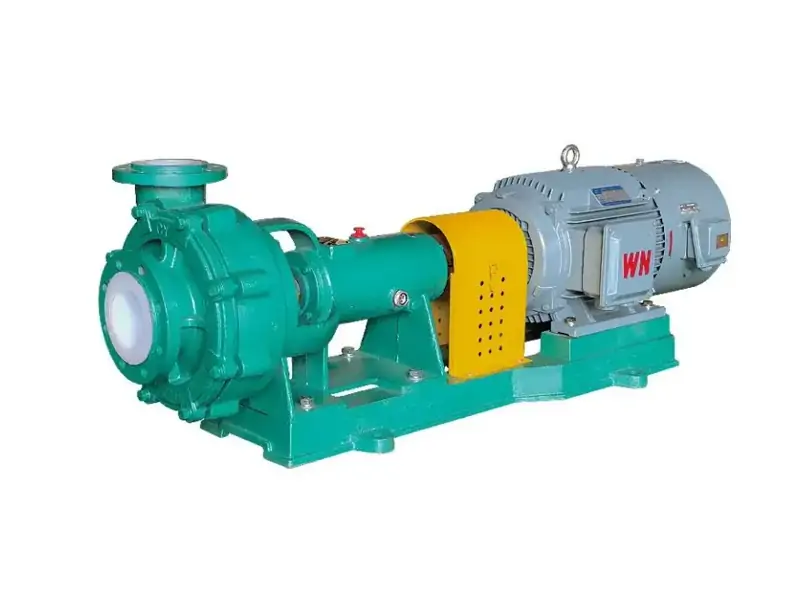
Bomba centrífuga de UHMW-PE revestida em aço para alvejante contendo partículas ou impurezas. O UHMW-PE fornece excelente resistência à corrosão ao hipoclorito de sódio combinada com resistência superior à abrasão em comparação com revestimentos de fluoropolímero. Ideal para transferência de alvejante de grau industrial onde a pureza não é crítica, mas a longevidade da bomba em serviço abrasivo é necessária.
| Parâmetro | Especificação |
|---|---|
| Caudal | 3-2,600 m³/h |
| Cabeça | 5-100 m |
| Potência do motor | 0,75-300 kW |
| Velocidade | 750-2.900 r/min |
| Temperatura | -20°C a 90°C |
| Material do forro | UHMW-PE |
Perguntas Frequentes sobre Bombas de Alvejante Líquido
P: Qual é o melhor material para uma bomba de alvejante líquido?
R: O PVDF fornece o equilíbrio ideal de resistência química, resistência mecânica e custo para a maioria das aplicações de hipoclorito de sódio até 90°C. Para alvejante de alta temperatura ou alta pureza, o revestimento de PTFE/PFA oferece máxima inércia. PVC e metais, incluindo aço inoxidável, não são recomendados para aplicações de serviço contínuo.
P: Por que minha bomba de alvejante continua perdendo escorva?
R: O hipoclorito de sódio se decompõe naturalmente, liberando gás oxigênio que se acumula no invólucro da bomba — particularmente em configurações horizontais — e causa bloqueio de vapor. Instale uma válvula de purga de ar automática no ponto alto do invólucro da bomba, use uma configuração de bomba vertical ou selecione um projeto de impulsor aberto que permita a passagem de gás.
P: Posso usar uma bomba de aço inoxidável para hipoclorito de sódio?
R: Não. O aço inoxidável 316 sofre corrosão por pites rápida em hipoclorito de sódio. Não especifique nenhum grau de aço inoxidável para componentes em contato com alvejante. Use apenas materiais não metálicos compatíveis — PVDF, PTFE, UHMW-PE — ou, com cautela, Hastelloy C-276 em baixas temperaturas.
P: Uma bomba de acionamento magnético é melhor do que uma bomba com selo mecânico para alvejante?
R: As bombas de acionamento magnético eliminam o selo dinâmico do eixo — o caminho de vazamento mais comum — proporcionando vazamento quase zero. Elas são preferidas para instalações críticas de segurança. No entanto, requerem atenção cuidadosa ao gerenciamento de gás; o gás oxigênio acumulado pode causar funcionamento a seco dos rolamentos e falha rápida em minutos.
P: Como evito a cristalização do alvejante no selo da minha bomba?
R: Lave a bomba com água limpa antes de paradas prolongadas. Use selos mecânicos duplos com um fluido de barreira compatível que impeça o alvejante de atingir a face do selo externo. Especifique anéis de vedação encapsulados em PTFE ou FFKM que resistam ao ataque oxidativo que causa inchaço e vazamento em elastômeros padrão.
P: Que tipo de bomba é melhor para dosagem de alvejante?
R: Bombas dosadoras de diafragma com cabeçotes em contato com o fluido de PVDF ou PTFE fornecem a precisão de ±1% necessária para desinfecção de água potável e efluentes. Bombas peristálticas oferecem uma alternativa para aplicações de menor precisão, com a vantagem de que bolhas de gás passam sem afetar o fluxo, embora frações excessivas de gás possam reduzir ligeiramente a precisão.
Lista de verificação de prevenção do engenheiro de bombas da Changyu
- Não especifique PVC para qualquer bomba de alvejante que opere acima de 25°C ou manuseie concentrações acima de 10%. A margem de segurança de temperatura é inadequada para confiabilidade a longo prazo em aplicações de serviço contínuo.
- Nunca use aço inoxidável, titânio ou elastômeros padrão (Buna-N, EPDM) em serviço de contato com alvejante. Esses materiais são incompatíveis com hipoclorito de sódio e falharão rapidamente.
- Instale válvulas de purga de ar automáticas em todas as bombas centrífugas horizontais de alvejante. O acúmulo de gás oxigênio causará bloqueio de vapor sem ventilação confiável, particularmente em configurações horizontais.
- Enxágue as bombas de alvejante com água limpa antes de qualquer parada que exceda 24 horas. O alvejante estagnado acelera a degradação do material e a cristalização dos selos.
- Especifique juntas tóricas e gaxetas encapsuladas em PTFE ou FFKM para todas as aplicações de vedação de bombas de alvejante. Elastômeros padrão degradam rapidamente em hipoclorito de sódio.
- Para bombas de acionamento magnético em serviço com alvejante, instale monitoramento de condição dos mancais e válvulas de ventilação automáticas. A operação a seco induzida por gás pode destruir os mancais de acionamento magnético em minutos.
- Para aplicações de dosagem, instale um amortecedor de pulsação a jusante das bombas dosadoras de diafragma para suavizar o fluxo e proteger medidores de vazão e tubulações a jusante.
- Mantenha selos mecânicos, juntas tóricas e gaxetas sobressalentes em estoque para bombas de alvejante críticas. O ataque oxidativo do alvejante aos elastômeros torna a substituição de componentes de vedação mais frequente do que em outros serviços químicos.
Conclusão
Uma bomba de alvejante líquido é uma bomba química especificada para a finalidade — não uma bomba de água padrão adaptada para serviço químico. Três fatores determinam a confiabilidade e a vida útil da bomba: compatibilidade do material com a química oxidante do hipoclorito de sódio, gerenciamento de gás para evitar bloqueio por vapor devido à evolução de oxigênio e tecnologia de vedação que resiste à cristalização e à degradação do elastômero. O PVDF emergiu como o material molhado ideal para a maioria das aplicações de alvejante, fornecendo resistência química que o PVC não consegue igualar a um custo abaixo do PTFE/PFA. Para instalações críticas de segurança, as bombas de acionamento magnético eliminam o selo de eixo dinâmico — o caminho de vazamento mais comum — enquanto exigem gerenciamento disciplinado de gás para proteger os mancais internos.

Quando você estiver pronto para especificar uma bomba de alvejante para sua aplicação, a equipe de engenharia da Changyu Pump pode fornecer uma avaliação técnica cobrindo seleção de material, gerenciamento de gás e tecnologia de vedação adequada às suas condições operacionais. Duas décadas de fabricação de bombas resistentes à corrosão em processamento químico, tratamento de água e aplicações de transferência de fluidos perigosos embasam cada recomendação.