
Resposta rápida
A bomba de água salgada move líquidos contendo sais dissolvidos — desde salmouras de cloreto de sódio e cloreto de cálcio até água do mar, água de processo industrial e efluentes salinos. Ao contrário de uma bomba de água padrão, uma bomba de água salgada deve resistir aos efeitos combinados de corrosão por cloretos, cristalização de sal e — em muitas aplicações industriais — temperaturas elevadas e aditivos químicos agressivos. Fatores-chave de seleção:
- Combine materiais ao seu sal específico: Sais de cloreto (NaCl, CaCl₂, KCl) causam corrosão por pites e frestas em aço inoxidável. Sais de sulfato e carbonato causam incrustação e corrosão sob depósito. Sais oxidantes como hipoclorito de sódio atacam elastômeros e aço inoxidável padrão. Cada tipo de sal exige uma estratégia de material específica.
- Evite a cristalização antes que ela comece: Soluções de alta salinidade cristalizam quando as temperaturas caem ou quando a água evapora de partes internas estagnadas da bomba. Cristais de sal bloqueiam impulsores, travam selos mecânicos e emperram válvulas de retenção. A prevenção da cristalização — por aquecimento, lavagem ou proteção do selo — é um requisito de projeto obrigatório para bombas de água salgada de serviço intermitente e fortemente recomendado para qualquer bomba operando perto do ponto de saturação do sal.
- Temperatura e pH alteram a equação do material: Um material que resiste a salmoura neutra a 20°C pode corroer rapidamente na mesma salmoura a 80°C ou quando a solução se torna ácida. A seleção do material deve considerar todo o envelope operacional, não apenas as condições normais.
Mover água salgada é fundamentalmente diferente de mover água doce. Uma bomba que dura 15 anos em serviço de água doce pode falhar em 6 meses em salmoura concentrada — não porque a bomba foi mal fabricada, mas porque os materiais, selos e medidas de proteção foram especificados para água, não para sal.
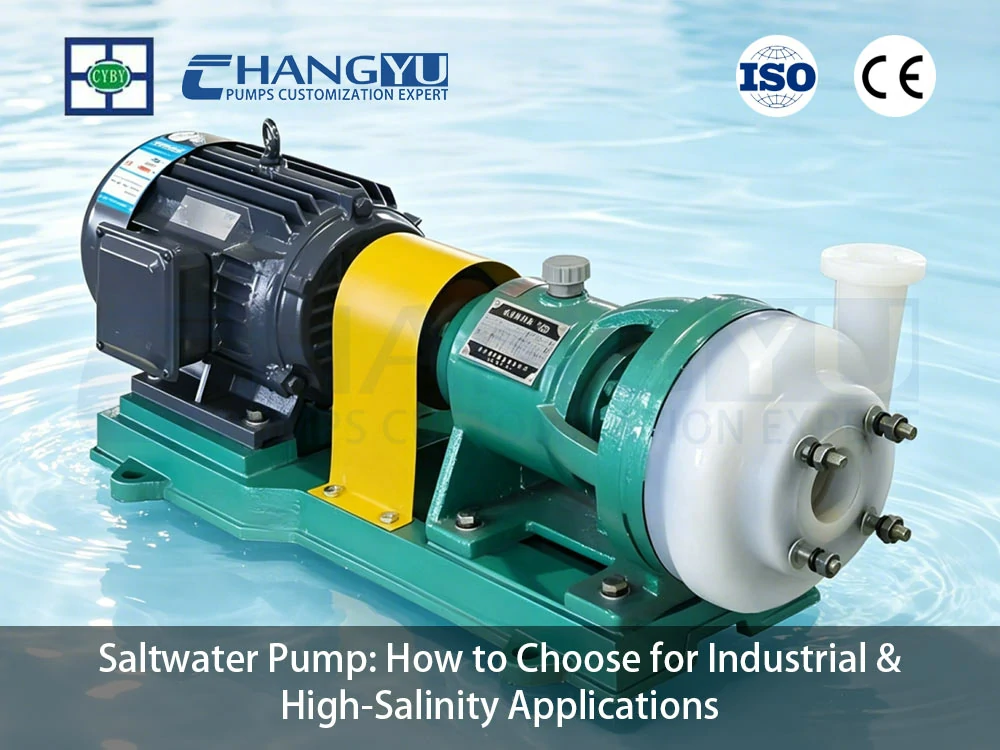
Após ler este guia, você entenderá os diferentes tipos de água salgada industrial e seus desafios específicos de corrosão, quais materiais de bomba resistem a quais sais, como evitar que a cristalização do sal danifique sua bomba, quais requisitos especiais se aplicam a soluções salinas de alta temperatura e agressivas, e como selecionar e dimensionar uma bomba de água salgada para sua aplicação específica. Com mais de 20 anos de experiência em fabricação de bombas, a Changyu Pump apresenta este guia de seleção estruturado para aplicações industriais e de água salgada de alta salinidade.
O Que É uma Bomba de Água Salgada?
Uma bomba projetada para manusear água contendo sais dissolvidos. Em contextos industriais, “água salgada” abrange uma ampla gama de fluidos muito além da água do mar natural.
Água Salgada vs Água do Mar: Entendendo a Diferença
A água do mar natural tem uma composição relativamente consistente — predominantemente cloreto de sódio a aproximadamente 3,5% de concentração, com um nível de íon cloreto de 19.000–23.000 mg/L. A água salgada industrial varia enormemente. Uma salmoura de cloreto de cálcio em uma planta química pode ser cinco vezes mais concentrada que a água do mar. Uma solução de hipoclorito de sódio em uma estação de tratamento de água adiciona oxidação poderosa à equação de corrosão. Uma salmoura quente de lítio em uma operação de mineração combina alta temperatura com uma mistura agressiva de cloretos, sulfatos e carbonatos.
| Parâmetro | Água do Mar Natural | Água Salgada Industrial (Faixa) |
|---|---|---|
| Salinidade | ~3,5% (35.000 mg/L) | 0,5% a saturada (> 26% NaCl) |
| Nível de cloreto | 000–23.000 mg/L | 500 a > 200.000 mg/L |
| Temperatura | 5–40°C típica | -10°C a > 150°C |
| pH | 7,5–8,5 | 2–12 (ácido a altamente alcalino) |
| Constituintes adicionais | Oxigênio dissolvido, organismos marinhos | Produtos químicos de processo, solventes, sólidos |
Por Que as Bombas de Água Salgada Falham
As falhas de bombas de água salgada raramente são repentinas. Elas seguem um padrão previsível: íons cloreto penetram na camada de óxido passiva do aço inoxidável, iniciando corrosão por pites em frestas e zonas estagnadas. À medida que a concentração de sal aumenta, a taxa de corrosão também aumenta. Quando as temperaturas sobem, a corrosão acelera ainda mais. Quando o fluxo para e a bomba esfria, os sais dissolvidos cristalizam — bloqueando passagens e travando peças móveis. Bombas industriais padrão não projetadas para essa combinação de desafios falham progressiva e previsivelmente.
Onde São Usadas as Bombas de Água Salgada?
Bombas de água salgada industrial atendem a diversas aplicações, cada uma com química de fluido e condições operacionais distintas.
Matriz de Aplicação de Água Salgada Industrial
| Aplicação | Sais Típicos Presentes | Concentração | Temperatura | Desafio Crítico |
|---|---|---|---|---|
| Extração de lítio de salmoura de lago salgado | NaCl, KCl, MgCl₂, LiCl, sulfatos, carbonatos | Alta a saturada | Ambiente a 60°C | Corrosão por múltiplos sais; incrustação; cristalização |
| Extração de salmoura subterrânea | NaCl, CaCl₂, MgCl₂, metais traço | Alta a saturada | 20–80°C | Alto risco de SCC por cloreto; abrasão por areia |
| Descarte de salmoura de dessalinização | NaCl (concentrado) | 5–7% | 20–40°C | Alto cloreto; corrosão acelerada por fluxo |
| Salmoura de processo químico | NaCl, CaCl₂, NaClO, sais mistos | Variável | 20–150°C | Corrosão acelerada por temperatura; ataque químico |
| Circulação de piscina | NaCl (baixo), NaClO (cloro) | 0,3–0,5% (piscinas de cloração por água salgada) | 20–35°C | Ataque oxidante de cloro; corrosão galvânica |
| Aquicultura / maricultura | NaCl (equivalente à água do mar) | 1,5–3,5% | 5–30°C | Incrustação biológica; imersão constante |
| Salmoura de grau alimentício (cura, conserva) | NaCl, nitritos, açúcar | 5–25% | 0–10°C | Materiais sanitários; cristalização em baixa temperatura |
| Regeneração de amaciador de água | NaCl, CaCl₂ | 5–26% | 20–40°C | Serviço intermitente; cristalização durante inatividade |
| Salmoura ácida de mineração | Cloretos mistos, H₂SO₄ | Variável | 20–80°C | Ataque combinado ácido-cloreto; abrasão |
Cada aplicação impõe uma combinação específica de química do sal, temperatura e ciclo de serviço. Uma bomba corretamente especificada para serviço de piscina não sobreviverá em uma salmoura de extração de lítio — os requisitos de material e medidas de proteção são fundamentalmente diferentes.
Quais Materiais São Compatíveis com Bombas de Água Salgada?
A seleção de materiais para serviço de água salgada é mais complexa do que para água do mar porque a química do sal varia entre aplicações. Um material que resiste a salmoura de cloreto de sódio pode ser atacado por cloreto de cálcio ou hipoclorito de sódio.
Matriz de Compatibilidade de Materiais para Água Salgada
| Material | NaCl (Neutro) | CaCl₂ (Alto Cloreto) | NaClO (Oxidante) | Sulfatos / Carbonatos | Limite de temperatura |
|---|---|---|---|---|---|
| Aço inoxidável 316L | Aceitável até ~500 mg/L Cl⁻; risco de pite aumenta com a concentração | Alto risco de SCC — não recomendado acima da temperatura ambiente | Não recomendado — pite e corrosão por frestas | Aceitável | ~60°C para imersão contínua em sal |
| Duplex 2205 | Bom — PREN 33–36 | Aceitável até ~60°C; resistente a SCC | Não recomendado — PREN insuficiente para cloretos oxidantes | Bom | ~80°C |
| Super Duplex 2507 | Excelente — PREN 40–44 | Bom até ~90°C | Limitado — prefira titânio para NaClO contínuo | Excelente | ~120°C |
| Titânio Grau 2 | Excelente | Excelente — imune a SCC | Excelente — preferido para NaClO; corrosão geral acelerada acima de 80°C em NaClO concentrado | Excelente | ~80°C |
| PP (Polipropileno) | Excelente — quimicamente inerte | Excelente | Bom — verifique resistência à degradação oxidativa para exposição prolongada a NaClO; PVDF preferido para serviço contínuo | Excelente | ~80°C |
| PVDF (Kynar) | Excelente | Excelente | Excelente | Excelente | ~120°C |
| Revestido com PTFE / PFA | Resistência química universal | Resistência universal | Resistência universal | Resistência universal | ~160°C (PFA) |
| Forro em UHMW-PE | Excelente — resistente à abrasão | Excelente | Bom — verifique a temperatura | Excelente | ~90°C |
Regras-chave de Seleção de Materiais
Sais de cloreto de sódio (NaCl): O pite por cloreto é o risco principal. Para concentrações abaixo da água do mar, o 316L com passivação adequada pode atender. Para salmouras concentradas, o duplex 2205 é o mínimo; o super duplex 2507 oferece margem para variações de temperatura e concentração.
Sais de cloreto de cálcio (CaCl₂): O CaCl₂ é significativamente mais agressivo que o NaCl em níveis equivalentes de cloreto. Aumenta o risco de fissuração por corrosão sob tensão (SCC) em aço inoxidável. O super duplex 2507 ou titânio é preferido para serviço com CaCl₂ concentrado. O 316L padrão não deve ser usado para salmouras de CaCl₂ acima da temperatura ambiente.
Soluções de hipoclorito de sódio (NaClO): O NaClO combina corrosão por cloreto com oxidação potente. Os graus padrão de aço inoxidável — incluindo 316L e duplex — são inadequados. Titânio e bombas revestidas com fluoroplástico (PTFE, PFA, PVDF) são os materiais recomendados. Os elastômeros devem ser EPDM curado com peróxido ou PTFE — compostos de borracha padrão degradam rapidamente em ambientes oxidantes.
Sais de sulfato e carbonato: Esses sais formam incrustações duras e aderentes nas superfícies da bomba. A incrustação cria células de corrosão sob depósito e pode acumular-se para bloquear as passagens do rotor. Materiais que resistem à incrustação — aço inoxidável polido, revestimentos de fluoroplástico — e bombas que podem ser desincrustadas mecânica ou quimicamente são preferidos.
Máxima passagem de sólidos + peças de desgaste substituíveis Para qualquer aplicação de água salgada, identifique os sais específicos presentes, suas concentrações e a temperatura máxima de operação antes de selecionar os materiais da bomba. Um material compatível com o sal principal pode falhar devido a um contaminante traço. Para salmouras de cloreto de cálcio acima da temperatura ambiente, especifique super duplex 2507 (até ~80°C) ou titânio (para temperaturas mais altas ou CaCl₂ ácido) como mínimo. Para hipoclorito de sódio ou salmouras oxidantes, especifique exclusivamente construção em titânio ou revestida com fluoroplástico.
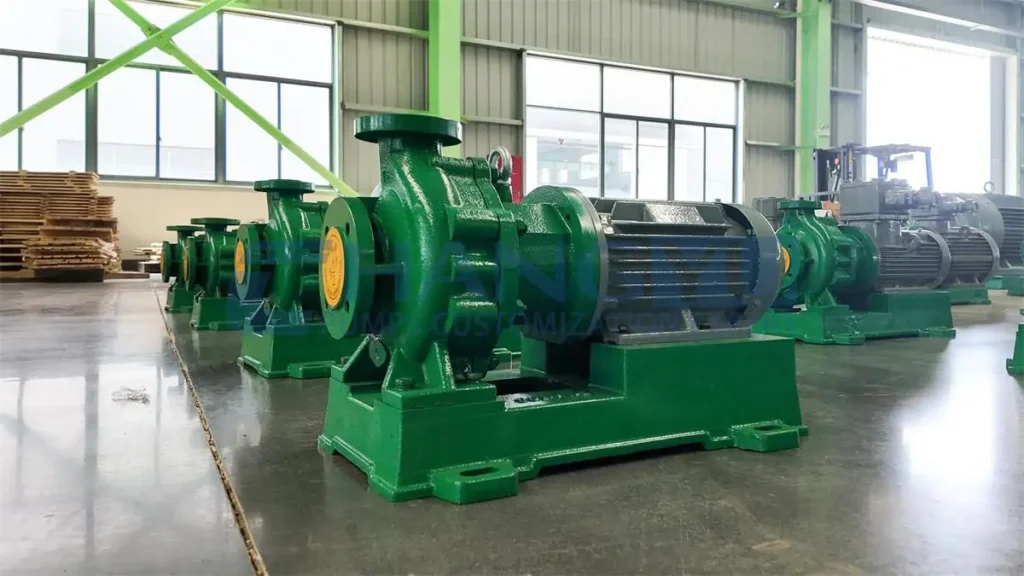
Como Prevenir a Cristalização em Bombas de Água Salgada?
A cristalização é uma das principais causas de falha em bombas de água salgada em aplicações de serviço intermitente. Quando uma bomba para, a solução salina retida no corpo esfria e evapora. À medida que a água sai da solução, os sais dissolvidos precipitam — primeiro como uma película fina nas superfícies internas, depois como cristais sólidos que crescem a cada ciclo de parada.
Como os Cristais de Sal Danificam as Bombas
Os cristais de sal formam-se preferencialmente em zonas onde o líquido fica retido: faces de selos mecânicos, caixas de empanque, sedes de válvulas de retenção e pontos baixos na voluta da bomba. Uma vez formados, os cristais atuam como uma pasta abrasiva quando a bomba reinicia, acelerando o desgaste em selos e rolamentos. Cristais alojados nas faces dos selos mecânicos impedem o fechamento adequado do selo, causando vazamento. Cristais nas sedes das válvulas de retenção impedem a vedação da válvula, causando refluxo e perda de escorva.
Medidas de Prevenção da Cristalização
Sistemas de lavagem automática: Para bombas de água salgada de serviço intermitente, um sistema automático de injeção de água doce ou líquido de lavagem compatível desloca a solução salina da bomba após cada parada. O ciclo de lavagem é ativado na parada da bomba e funciona por uma duração predefinida — tipicamente 30–60 segundos — até que o interior da bomba esteja livre de salmoura concentrada. Esta é a medida mais eficaz para prevenir danos por cristalização.
Aquecimento e isolamento da bomba: Manter a temperatura do corpo da bomba acima do ponto de saturação do sal impede a formação de cristais durante períodos curtos de inatividade. Jaquetas de aquecimento elétrico ou traçado de vapor, combinados com isolamento térmico, mantêm a bomba aquecida entre os ciclos. Isso é essencial para instalações externas em climas frios, onde as temperaturas ambientes podem cair abaixo do ponto de cristalização.
Controle ambiental do selo mecânico: A câmara do selo é a zona mais vulnerável à cristalização, pois retém um pequeno volume de líquido em contato próximo com faces quentes do selo. Uma lavagem externa ou um sistema de suporte do selo que circule um fluido de barreira compatível através da câmara do selo impede que o sal se concentre nas faces do selo.
Seleção de materiais para resistência a cristais: Superfícies polidas e antiaderentes resistem à adesão de cristais. Os internos da bomba em aço inoxidável revestido com fluoroplástico (PTFE, PFA) ou eletropolido são menos propensos ao acúmulo de cristais do que superfícies fundidas rugosas. Onde a incrustação é inevitável — como em salmouras de sulfato e carbonato — especifique bombas que possam ser limpas mecânica ou quimicamente sem desmontagem.
Máxima passagem de sólidos + peças de desgaste substituíveis Para qualquer bomba de água salgada que opere intermitentemente — incluindo bombas de reserva, equipamentos sazonais e bombas de processo em batelada — instale um sistema automático de lavagem com água doce. O custo do sistema de lavagem é tipicamente recuperado na primeira chamada de serviço relacionada à cristalização evitada. Para bombas de operação contínua, especifique um sistema de controle ambiental do selo e corpo de bomba aquecido se a temperatura do processo estiver dentro de 15°C do ponto de saturação do sal.
Quais São os Requisitos Especiais para Água Salgada Agressiva?
A água salgada industrial pode ser muito mais agressiva do que a água do mar natural. Temperatura elevada, pH ácido e produtos químicos oxidantes aceleram a corrosão de maneiras que os materiais padrão de bombas de água salgada não suportam.
Água Salgada de Alta Temperatura (> 80°C)
A temperatura acelera todos os mecanismos de corrosão. A corrosão por pites de cloreto, que leva anos para se desenvolver a 20°C, pode perfurar um invólucro de bomba em meses a 100°C. A camada de óxido passivo no aço inoxidável torna-se menos estável em temperaturas elevadas, e os íons de cloreto penetram de forma mais agressiva.
Para serviço de água salgada em alta temperatura, os graus de material devem ser atualizados de padrão para premium. O 316L é inadequado em qualquer nível de cloreto acima de 80°C. O Duplex 2205 é limitado a aproximadamente 80°C em concentrações moderadas de cloreto. O Super Duplex 2507 fornece serviço confiável até 120°C em ambientes com alto teor de cloreto. Para as aplicações de sal em alta temperatura mais exigentes — como evaporadores e cristalizadores de produção de sal — titânio e bombas revestidas com PFA/PTFE são os materiais padrão.
Água Salgada Ácida (pH < 4)
Muitas salmouras industriais são ácidas. Operações de mineração geram soluções de lixiviação com ácido sulfúrico contendo sais metálicos dissolvidos. Plantas químicas lidam com salmouras ácidas de cloreto de cálcio e cloreto de amônio. A combinação de baixo pH e alto teor de cloreto é particularmente agressiva porque o ácido ataca a camada de óxido passivo no aço inoxidável enquanto o cloreto penetra na superfície metálica exposta.
Para água salgada ácida abaixo de pH 4, os graus padrão de aço inoxidável — incluindo duplex — estão em risco. O Super Duplex 2507 oferece resistência melhorada, mas não é imune. Para serviço confiável de longo prazo em ambientes de cloreto ácido, considere:
- Titânio Grau 2 ou Grau 7: Excelente resistência a cloretos ácidos em temperaturas de até 60°C para ambientes fortemente ácidos (pH < 2); até 80°C para acidez leve a moderada
- Bombas revestidas com PFA/PTFE: Resistência química universal independentemente do pH; limite de temperatura de 160°C para PFA
- Ligas de alto teor de níquel (Hastelloy C-276): Especificadas para as aplicações mais agressivas de cloreto ácido
Água Salgada Oxidante (NaClO, Salmouras Cloradas)
O hipoclorito de sódio (NaClO) e a água clorada combinam corrosão por cloreto com oxidação poderosa. O ambiente oxidante ataca a camada passiva do aço inoxidável enquanto o cloreto penetra no substrato — um efeito sinérgico muito mais prejudicial do que qualquer um dos mecanismos isoladamente.
Para serviço com NaClO e salmoura clorada, as opções de material se reduzem significativamente:
- Titânio Grau 2: O material preferido para serviço contínuo de NaClO em concentrações de até 15% e temperaturas de até 80°C. A camada de óxido do titânio é imune ao ataque de cloro.
- PVDF (Kynar): Excelente resistência a NaClO e água clorada em temperaturas de até 120°C. Usado para invólucros de bombas e impulsores.
- Revestido com PTFE / PFA: Resistência universal a produtos químicos oxidantes. A superfície antiaderente evita o acúmulo de sal.
Os graus padrão de aço inoxidável — 304, 316L, duplex — não são recomendados para serviço contínuo de NaClO. A combinação de oxidação por cloro e corrosão por pites de cloreto causará falha rápida.
Máxima passagem de sólidos + peças de desgaste substituíveis Para aplicações de água salgada oxidante, especifique componentes molhados de titânio ou construção de bomba revestida com fluoroplástico. O prêmio de custo do material é recuperado através de vida útil estendida e eliminação da corrosão por pites. Bombas padrão de aço inoxidável em serviço de NaClO podem falhar em meses — uma falsa economia que custa muito mais em tempo de inatividade e substituição do que a atualização inicial do material.
Como Selecionar a Bomba de Água Salgada Correta?
A seleção da bomba de água salgada segue um processo estruturado que começa com a análise da química do sal e prossegue através da seleção de materiais, proteção contra cristalização e dimensionamento da bomba.
Etapa 1: Analise a Química do Sal.
Identifique cada espécie de sal presente na solução, não apenas o componente principal. Uma “salmoura de cloreto de sódio” também pode conter cloreto de cálcio, sulfato ou hipoclorito de aditivos de processo ou tratamento a montante. Meça o pH na temperatura de operação. Determine as temperaturas máxima e mínima que a bomba experimentará — inclusive durante a parada.
Etapa 2: Selecione os Materiais.
Usando a matriz de compatibilidade de materiais na Seção 3, selecione materiais para o invólucro da bomba, impulsor e elastômeros que resistam a cada espécie de sal presente. Considere os efeitos combinados de temperatura, pH e potencial oxidante. Em caso de dúvida, atualize para o próximo grau de material superior — o custo incremental é trivial comparado ao custo de uma falha por corrosão.
Etapa 3: Selecione o Tipo de Bomba.
| Tipo de bomba | Melhor para | Limitações |
|---|---|---|
| Centrífuga (aço inoxidável) | Transferência de água salgada de alto fluxo; pH neutro, salinidade moderada | Não para salmouras oxidantes ou de alta temperatura sem atualização de material |
| Acionamento magnético | Salmoura perigosa ou valiosa com vazamento zero; elimina o selo mecânico | Não para fluidos com sólidos ou alta viscosidade |
| Centrífuga (revestida com fluoroplástico) | Produtos químicos agressivos; salmouras oxidantes; aplicações de alta pureza | Não para alto fluxo com sólidos (pode desgastar o revestimento) |
| Cavidade progressiva | Salmoura de alta viscosidade; fluidos com sólidos; aplicações de dosagem | Custo mais alto; a substituição do estator é manutenção programada |
Etapa 4: Especifique a Proteção contra Cristalização.
Determine o ciclo de trabalho da bomba. Para bombas de serviço intermitente, especifique um sistema automático de lavagem com água doce, válvulas de retenção aquecidas e um sistema de controle ambiental do selo. Para bombas de operação contínua, especifique um sistema de lavagem do selo. Para instalações externas, adicione aquecimento e isolamento do invólucro da bomba.
Passo 5: Dimensione a Bomba.
Calcule a vazão necessária e a altura manométrica total. Aplique uma correção de viscosidade para salmouras de alta concentração. Para soluções de sal próximas ao seu ponto de saturação, superdimensione a linha de sucção em um diâmetro de tubo e mantenha uma velocidade de fluxo mínima de 1,5–2,0 m/s para evitar a deposição de sal na tubulação.
Soluções de Bomba de Água Salgada da Changyu Pump
A Changyu Pump fabrica quatro séries de bombas adequadas para aplicações industriais de água salgada, cada uma projetada para uma combinação específica de resistência à corrosão, capacidade de temperatura e características do fluido.
Guia de Seleção de Produto para Bomba de Água Salgada
| Aplicação | Desafio primário | Séries recomendadas | Característica principal |
|---|---|---|---|
| Produtos químicos agressivos, salmouras oxidantes | Ataque químico + corrosão por cloreto | Série CYB-ZKJ | Revestido com FEP/PFA; resistência química universal |
| Salmoura industrial de salinidade moderada | Corrosão por cloreto em temperatura moderada | Série CYH | 316L polido ou duplex; ISO 2858 |
| Salmoura perigosa ou de alta pureza | Requisito de vazamento zero | Série CQZ | Acionamento magnético sem vedação; autoescorvante |
| Lama abrasiva de salmoura com sólidos | Corrosão + desgaste por partículas | Série UHB | Revestido em UHMW-PE; resistente à abrasão |
Série CYB-ZKJ — Bomba revestida em fluoroplástico para água salgada agressiva
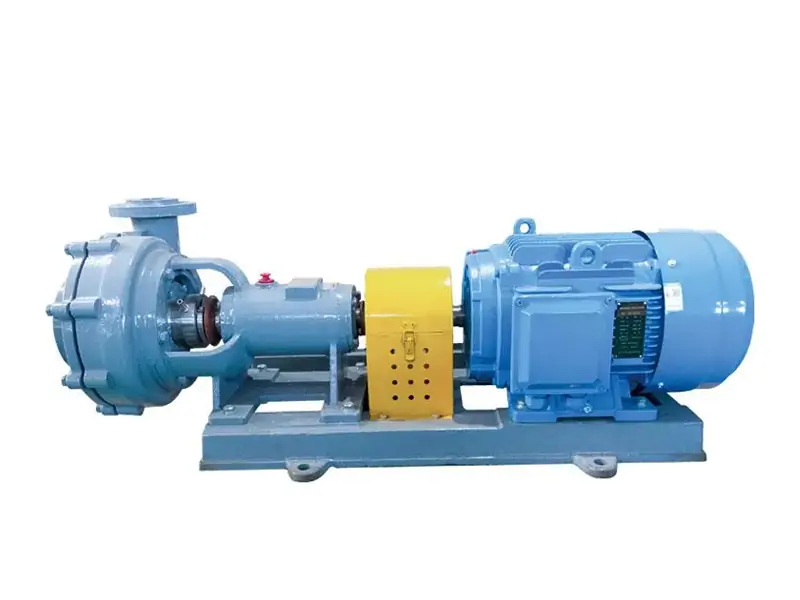
Bomba centrífuga revestida em FEP ou PFA para as aplicações mais agressivas de água salgada — salmouras oxidantes, soluções ácidas de cloreto, soluções salinas de alta temperatura. O revestimento fluoroplástico isola completamente o fluido bombeado da carcaça metálica da bomba, proporcionando resistência química universal, independentemente do tipo de sal, pH ou temperatura. Adequada para hipoclorito de sódio, cloreto de cálcio e salmouras de sais mistos em temperaturas de -80°C a 120°C.
| Parâmetro | Especificação |
|---|---|
| Caudal | 3-2,600 m³/h |
| Cabeça | 5-100 m |
| Potência do motor | 0,75-300 kW |
| Velocidade | 968-3.450 r/min |
| Temperatura | -80°C a 120°C |
| Materiais de revestimento | FEP (padrão), PFA (opção para altas temperaturas) |
Série CYH — Bomba centrífuga de aço inoxidável para salmoura industrial
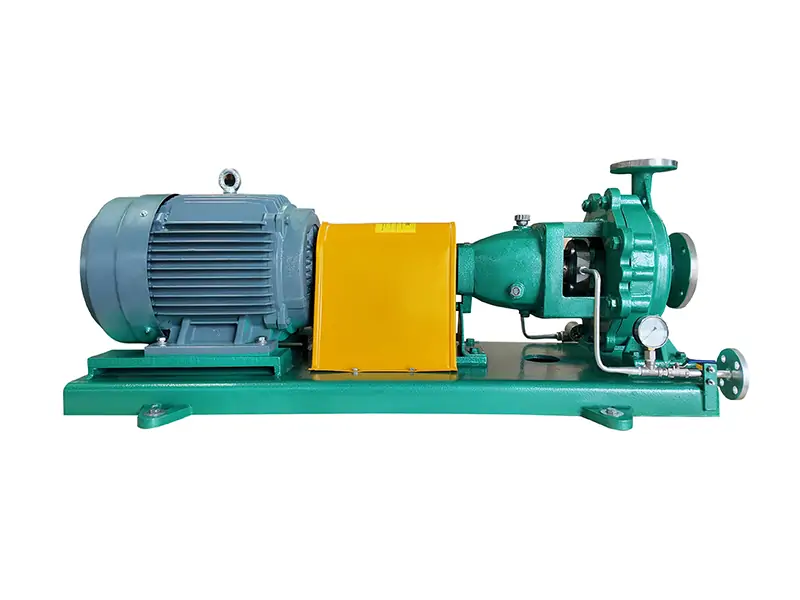
Bomba centrífuga de estágio único conforme ISO 2858 com componentes molhados em aço inoxidável polido. Adequada para salmouras industriais de salinidade moderada, transferência de água salgada e aplicações de tratamento de água. Disponível em graus de aço inoxidável 304, 316L e duplex para atender aos requisitos de química do sal e temperatura. Superfícies internas polidas resistem à incrustação e facilitam a limpeza.
| Parâmetro | Especificação |
|---|---|
| Caudal | 0,8–750 m³/h |
| Cabeça | 3–130 m |
| Potência do motor | 2,2–110 kW |
| Velocidade | 968-3.450 r/min |
| Temperatura | -20°C a 165°C |
| Materiais | 304, 316L, duplex steel |
Série CQZ — Bomba autoescorvante de acionamento magnético para salmoura perigosa
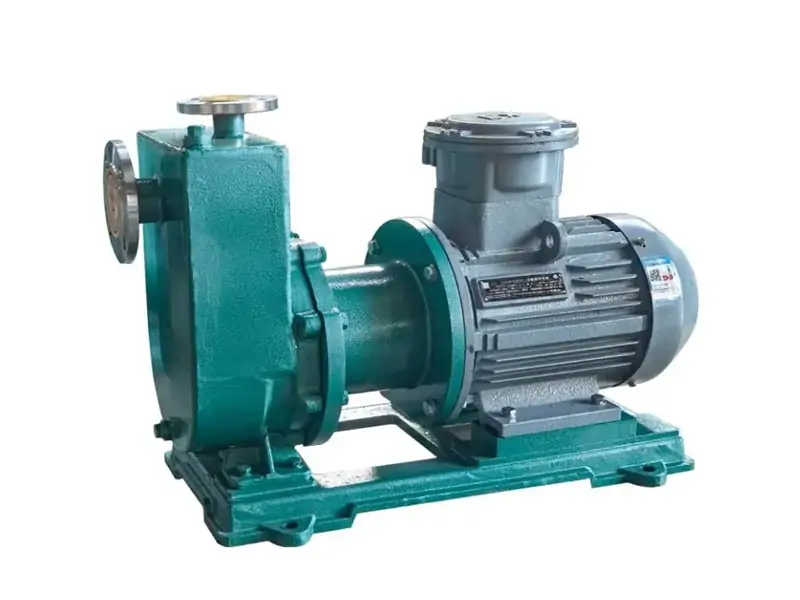
Bomba de acionamento magnético sem vedação que combina operação com vazamento zero e capacidade autoescorvante. O design de vedação estática elimina o selo mecânico — o principal caminho de vazamento em bombas convencionais. Adequada para soluções salinas perigosas, tóxicas ou de alta pureza onde o vazamento é inaceitável. O design autoescorvante elimina a necessidade de válvulas de pé. Disponível em 304, 316L, 2205/904L e titânio para total compatibilidade com água salgada.
| Parâmetro | Especificação |
|---|---|
| Caudal | 3-800 m³/h |
| Cabeça | 12,5–130 m |
| Potência do motor | 1,5–160 kW |
| Velocidade | 968-3.450 r/min |
| Temperatura | -120°C a 320°C |
| Materiais | 304, 304L, 316L, 2205/904L, TA2, HC276 |
Série UHB — Bomba de lama revestida em UHMW-PE para salmoura abrasiva
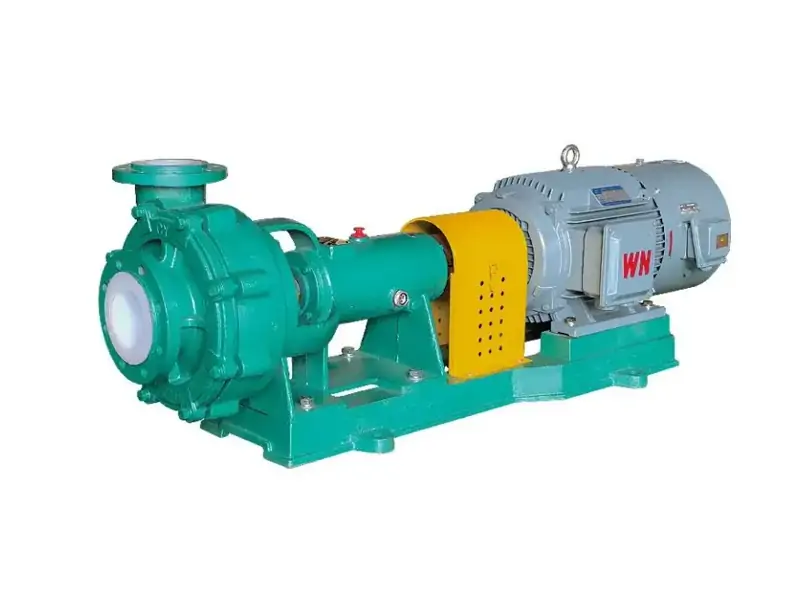
Bomba centrífuga revestida em UHMW-PE para lamas de água salgada contendo areia, cristais de sal ou outros sólidos abrasivos. O revestimento em UHMW-PE fornece resistência química a salmouras de cloreto e resistência à abrasão contra partículas sólidas. O impulsor semiaberto lida com sólidos sem entupir. Amplamente utilizada em mineração, química e processamento mineral para lamas de salmoura corrosivas e abrasivas.
| Parâmetro | Especificação |
|---|---|
| Caudal | 3-2,600 m³/h |
| Cabeça | 5-100 m |
| Potência do motor | 0,75-300 kW |
| Velocidade | 750-2.900 r/min |
| Temperatura | -20°C a 90°C |
| Material do forro | UHMW-PE |
Estudo de caso de bomba de água salgada: Resolvendo uma falha de cristalização em bomba de salmoura de NaCl
Uma planta química na Alemanha operava uma bomba de transferência de salmoura concentrada de cloreto de sódio que movia solução de NaCl quase saturada (aproximadamente 26% de concentração a 40°C) de um tanque de armazenamento para um cristalizador de evaporação. A bomba operava em modo intermitente — aproximadamente 4 horas por dia, cinco dias por semana — e ficava ociosa durante a noite e nos fins de semana. Bomba original: bomba centrífuga de aço inoxidável 316L com selo mecânico padrão.
Dentro de três meses após a comissionamento, a bomba começou a apresentar dificuldade de partida nas segundas-feiras de manhã. O impulsor estava difícil de girar manualmente, e o selo mecânico vazava na partida até a bomba aquecer. A inspeção revelou que a salmoura de NaCl retida na carcaça da bomba e na câmara do selo estava esfriando durante o fim de semana. À medida que a temperatura caía da temperatura do processo de 40°C para a ambiente (aproximadamente 15°C no inverno), cristais de NaCl precipitavam da solução quase saturada. Os cristais se acumulavam no impulsor, na câmara do selo e nas faces do selo mecânico — travando o rotor e impedindo que as faces do selo se assentassem corretamente.
Engenheiros da Changyu Pump identificaram duas causas raiz: o selo mecânico padrão estava retendo salmoura em uma zona estagnada onde a cristalização era inevitável, e a bomba não tinha sistema de lavagem ou aquecimento para evitar a formação de cristais durante os períodos de inatividade.
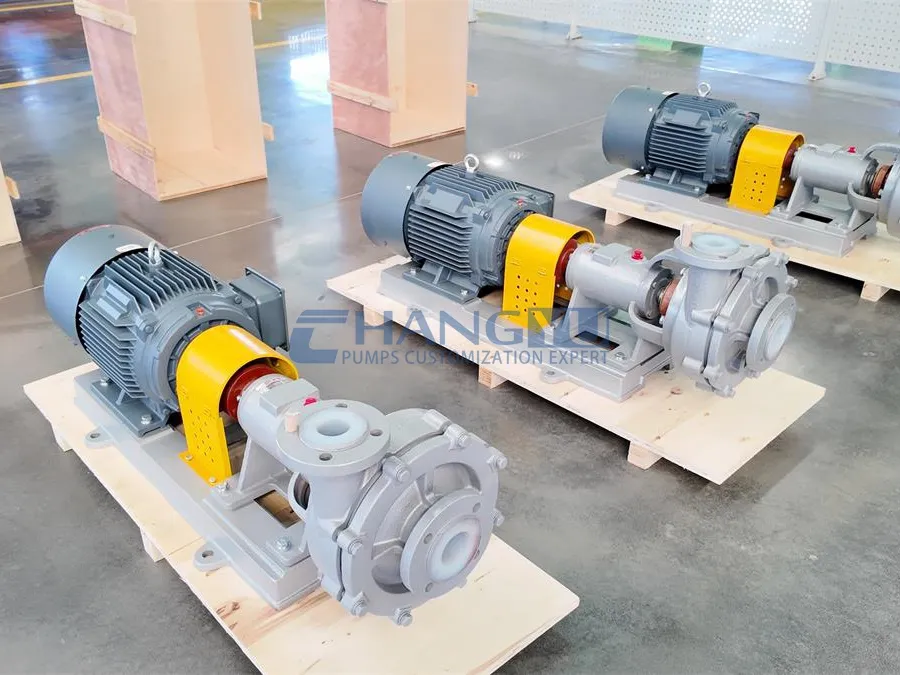
A bomba foi substituída por uma bomba revestida em fluoroplástico da série CYB-ZKJ com um sistema automático de lavagem com água doce que ativava na parada da bomba. O sistema de lavagem injetava água doce na carcaça da bomba e na câmara do selo por 45 segundos após cada desligamento, deslocando a salmoura de NaCl antes que ela pudesse esfriar e cristalizar. O revestimento em PFA fornecia resistência à corrosão à salmoura de NaCl em todas as temperaturas operacionais.
Doze meses após a substituição: zero partidas difíceis, zero falhas de selo e zero tempo de inatividade relacionado à cristalização. A planta estendeu a especificação do sistema de lavagem automática para todas as bombas de salmoura operadas em modo intermitente durante o próximo ciclo de manutenção.
Conclusão principal: A cristalização durante períodos de inatividade é a principal causa de falha de bombas de água salgada em aplicações intermitentes e de serviço descontínuo. Um sistema de lavagem automática que desloca a salmoura antes que ela esfrie não é um acessório opcional — é engenharia necessária para operação confiável.
Perguntas frequentes sobre bombas de água salgada
P: Qual é a diferença entre uma bomba de água do mar e uma bomba de água salgada?
R: Bombas de água do mar lidam com água do mar natural a ~3,5% de NaCl. Bombas de água salgada lidam com uma gama mais ampla de soluções salinas — CaCl₂, NaClO, salmouras mistas — em concentrações de <1% até a saturação. Bombas de água salgada industriais exigem seleção de material compatível com a química específica do sal.
P: Qual material é melhor para uma bomba de água salgada?
R: Para salmouras neutras de NaCl, o duplex 2205 é o mínimo; super duplex 2507 para salmouras concentradas ou mornas. Para salmouras de CaCl₂, super duplex 2507 (até ~80°C) ou titânio (para temperaturas mais altas ou CaCl₂ ácido). Para NaClO ou salmouras oxidantes, bombas de titânio ou revestidas em fluoroplástico.
P: Posso usar uma bomba padrão de aço inoxidável para água salgada?
R: O 316L é adequado para água salgada de baixa salinidade, baixa temperatura e pH neutro. Não é recomendado para salmouras concentradas, água salgada morna ou soluções contendo cloreto de cálcio ou agentes oxidantes.
P: Como evito que o sal cristalize na minha bomba?
R: Para bombas de serviço intermitente, instale um sistema automático de lavagem com água doce que desloque a salmoura após cada desligamento. Para bombas de serviço contínuo, especifique um sistema de lavagem do selo e carcaça da bomba aquecida.
P: Qual é a melhor bomba para transferência de hipoclorito de sódio (NaClO)?
R: Bombas de titânio ou revestidas em fluoroplástico (PTFE, PFA, PVDF). O aço inoxidável padrão — incluindo 316L e duplex — não é adequado para serviço contínuo com NaClO.
P: Como dimensiono uma bomba de água salgada?
R: Dimensione com base na vazão necessária e na altura manométrica total. Aplique correção de viscosidade para salmouras de alta concentração. Aumente o diâmetro da linha de sucção em um passo para salmouras próximas ao ponto de saturação. Mantenha uma velocidade mínima de fluxo de 1,5–2,0 m/s.
Lista de verificação de prevenção do engenheiro de bombas da Changyu
- Identifique cada espécie de sal na solução — não apenas o componente principal. Um traço de cloreto de cálcio ou hipoclorito altera completamente os requisitos de material.
- Combine os materiais com o sal mais agressivo presente, na temperatura máxima de operação. Um material que lida com NaCl a 20°C pode falhar na mesma solução a 80°C.
- Nunca especifique 316L para salmouras de cloreto de cálcio acima da temperatura ambiente. O risco de corrosão sob tensão por cloreto é muito alto.
- Instale sistemas automáticos de lavagem com água doce em todas as bombas de água salgada de serviço intermitente. A cristalização durante períodos de inatividade é a causa mais comum de falha em bombas de água salgada.
- Para salmouras oxidantes (NaClO, água clorada), especifique bombas revestidas de titânio ou fluoroplástico exclusivamente. O aço inoxidável padrão falhará rapidamente.
- Mantenha uma velocidade mínima de fluxo de 1,5–2,0 m/s em tubulações de água salgada. Velocidades mais baixas permitem que cristais de sal e incrustações se depositem nas paredes dos tubos e nos componentes internos da bomba.
- Especifique superfícies internas polidas ou revestidas de fluoroplástico para bombas que lidam com sais incrustantes (sulfatos, carbonatos). Superfícies rugosas aceleram a adesão de incrustações e a corrosão sob depósito.
- Mantenha selos mecânicos, juntas e impulsores sobressalentes em estoque. Os componentes de bombas de água salgada desgastam-se mais rápido que os de bombas de água doce — especialmente em serviço intermitente, onde a cristalização é um risco.
Conclusão
Uma bomba de água salgada é definida pelos sais que manuseia. A estratégia de material que serve para salmoura de cloreto de sódio é inadequada para cloreto de cálcio. A bomba que move de forma confiável salmoura fria e neutra falhará em salmoura quente e ácida. A bomba que funciona continuamente sem problemas pode travar em horas após a parada se a proteção contra cristalização não for projetada.
A seleção de material é a base: 316L para salmouras neutras de baixa salinidade e baixa temperatura; duplex 2205 e super duplex 2507 para cloretos concentrados; titânio e revestimentos fluoroplásticos para aplicações oxidantes e de alta temperatura. A proteção contra cristalização é o requisito operacional que determina a confiabilidade a longo prazo — e para bombas de serviço intermitente, um sistema de lavagem automático não é opcional.
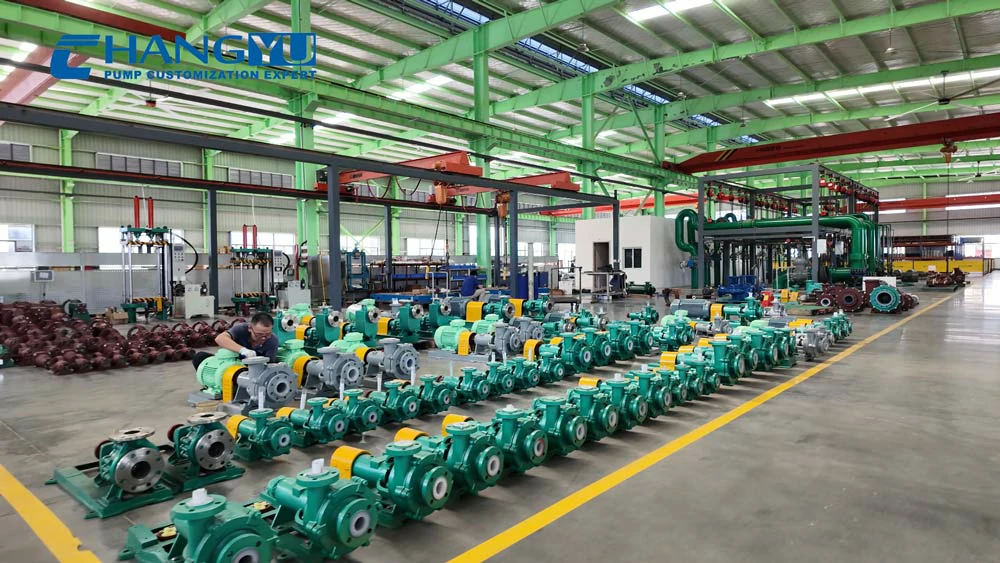
A equipe de engenharia da Changyu Pump fornece avaliações técnicas personalizadas para aplicações de bombas de água salgada — abrangendo análise de química de sal, verificação de compatibilidade de materiais, projeto de proteção contra cristalização e seleção de bombas adequadas às suas condições operacionais. Duas décadas de experiência em fabricação nos setores químico, de mineração, tratamento de água e industrial embasam cada recomendação.