
Start by checking the chemical concentration, temperature and compatibility of every wetted part when selecting a pump for clear acid or alkali. For slurry, also check particle size, fibre content, settling behaviour, abrasive wear and the size of the impeller passages. Size chemical pumps for textile wet processing to deliver the required flow and head across the operating conditions the mill actually sees.
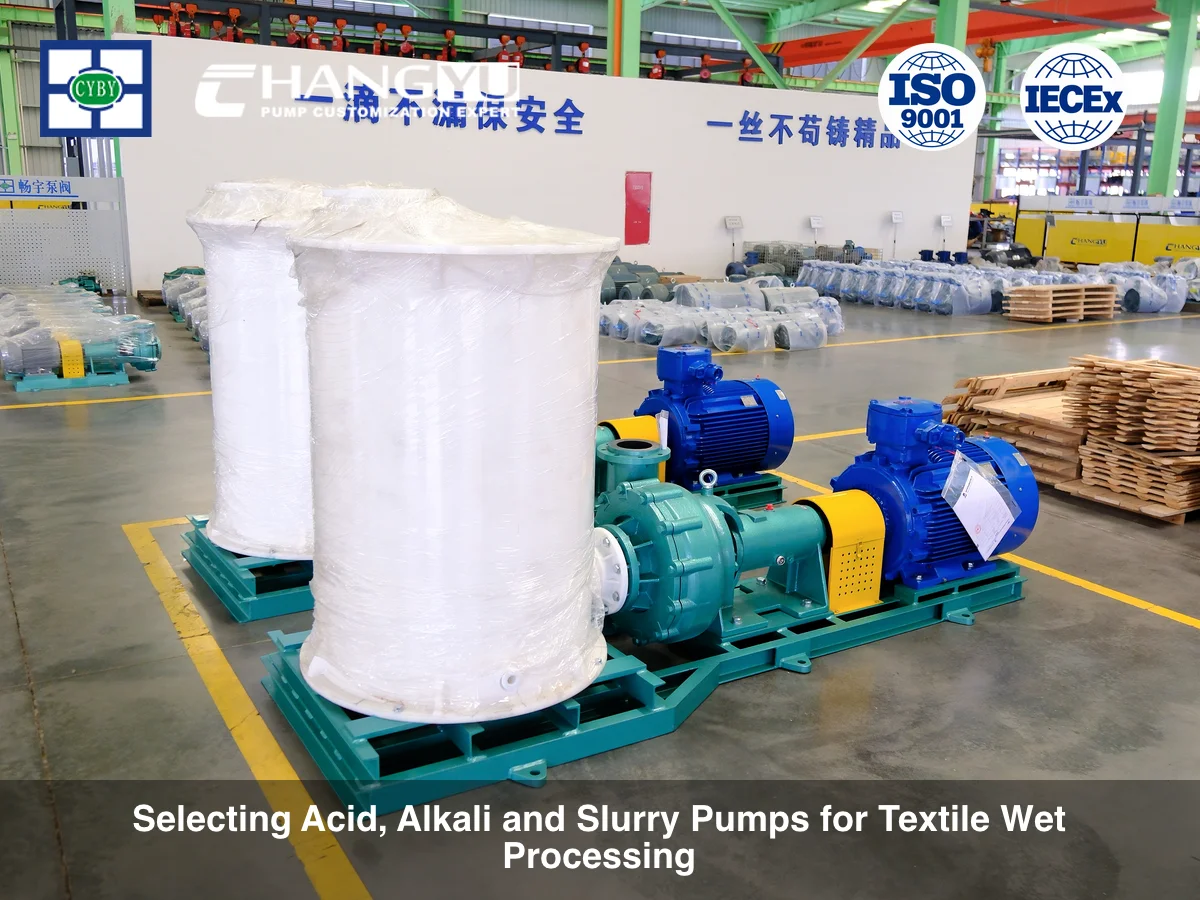
Three Pump Duties in Textile Wet Processing
Alkali transfer in fabric preparation. A corrosion-resistant centrifugal pump is a candidate for moving clear sodium hydroxide solution from storage to a preparation tank for scouring or for an alkaline desizing process. Specify the caustic concentration and temperature in the transfer line, including the hottest expected batch. Where a line also carries spent liquor, check for fabric lint and suspended matter before treating it as clear-liquid service.
Acid and alkali transfer for pH adjustment. Acid and alkali transfer pumps can replenish day tanks supplying the wastewater neutralisation system. Size a bulk transfer pump for the volume moved and the refill time. Use a dedicated metering pump when reagent must be injected at a controlled rate. Size it for minimum and maximum dose rates and injection backpressure. Review the pH control loop with the mixing arrangement and the expected variation in wastewater chemistry.
Wastewater sludge and corrosive slurry. For textile wastewater sludge transfer from a clarifier or thickener, select for the properties of both the carrier liquid and the solids. Fine precipitates can abrade impellers and seals, and lint can collect in passages even when individual particles are small. Sample the slurry under typical and high-solids conditions, including after a shutdown if settled material can enter the suction line at restart.
For wider process context, see Textile Value Chain’s assessment of water, chemical and energy use in textile wet processing.
Wetted Materials for Clear Acid and Alkali Transfer
Verify the wetted materials part by part for the liquid as pumped. Compare the casing or lining, impeller, exposed shaft sleeve, seal faces, elastomers and gaskets against the chemical identity, concentration range and maximum service temperature. Include any flush or cleaning liquids that contact those parts. A lining may tolerate a given chemical while an elastomer in the same pump swells or degrades. For a line fed from concentrated storage, base the materials check on the reagent in that line. The pH in the neutralisation tank says little about the exposure upstream of the injection point. Ask the supplier to confirm the proposed materials in writing for each stated condition.
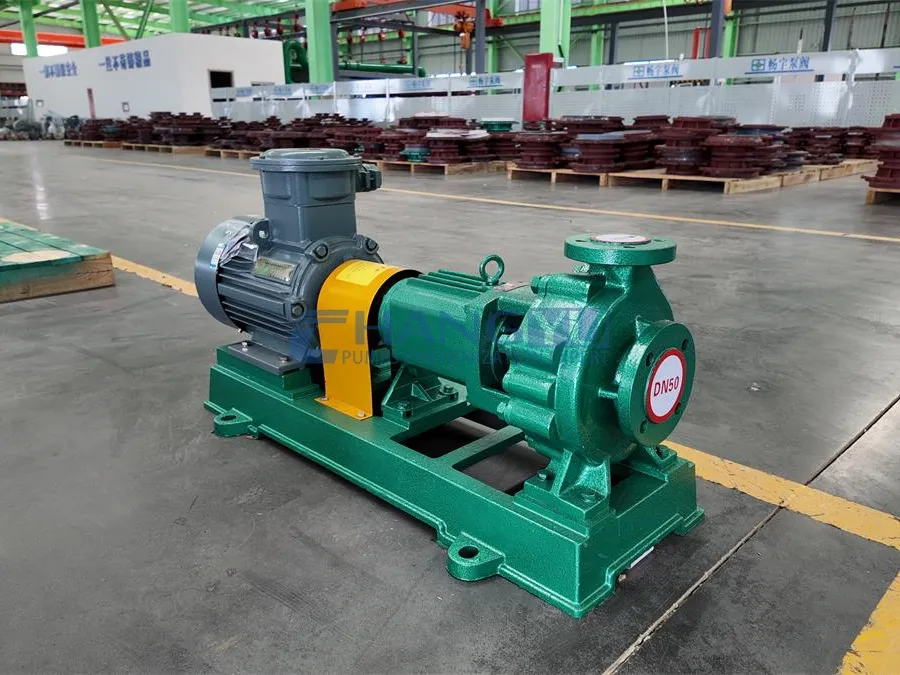
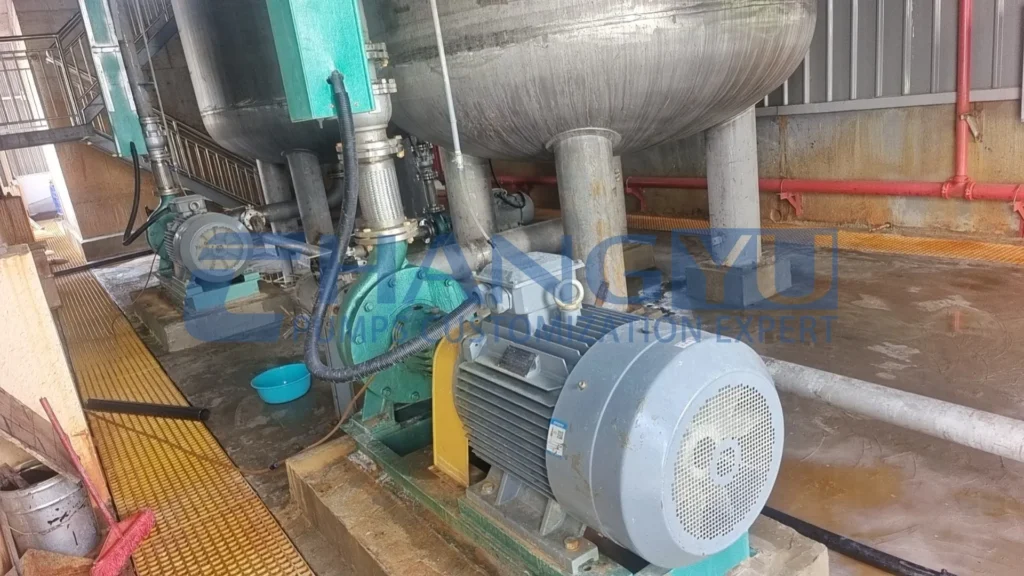
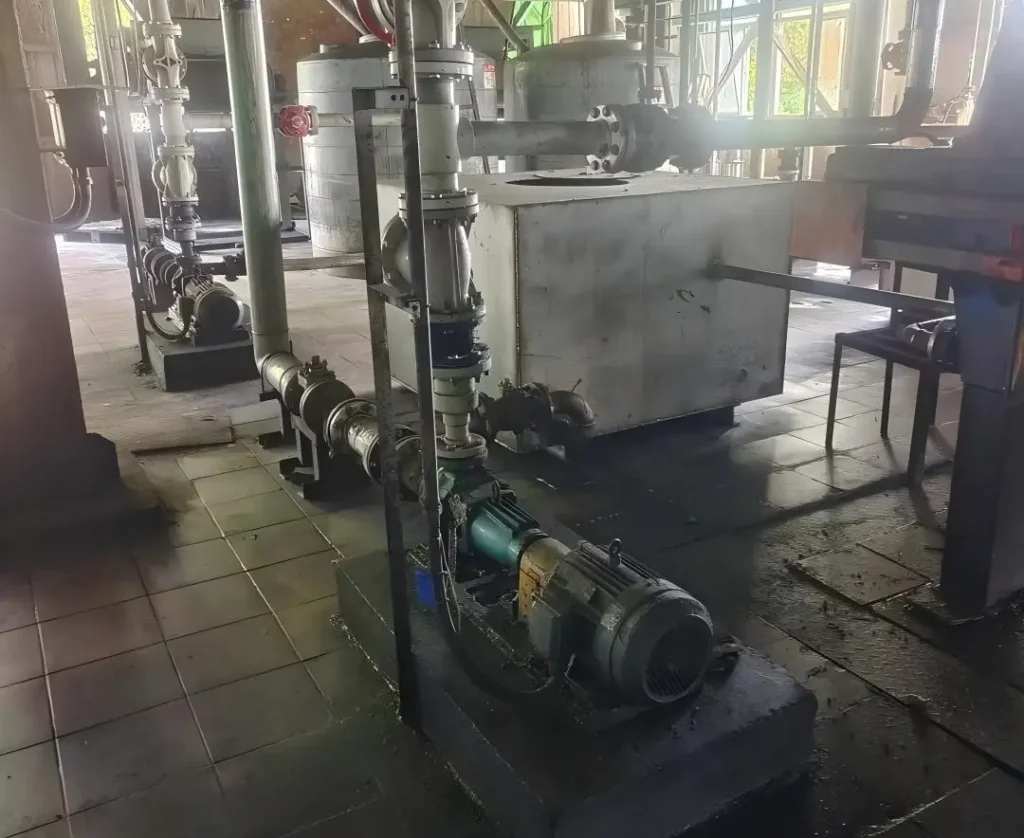
For clean, corrosive tank-to-tank service, compare chemical resistant pumps at the required duty points. The Changyu CYF fluoroplastic chemical centrifugal pump is one candidate for clear acid or alkali transfer. Changyu lists a metal casing with FEP, PFA or PTFE lining options and an external bellows mechanical seal. Confirm the lining grade, impeller construction, seal faces and gasket materials for the actual concentration, temperature, pressure and operating duty before ordering.
Flow and Head for Chemical Transfer Pumps
Set the design flow from the batch volume and allowable transfer time, or from process demand for continuous service. Calculate total dynamic head at that flow from the elevation difference between source and destination, friction losses in the suction and discharge piping, and any pressure difference between the two endpoints. Include losses through fittings, valves and strainers where installed. Use the actual liquid density when converting a pressure difference to metres of head.
Check the pump curve against the system at low and high tank levels and at the expected extremes of downstream pressure. At the lowest relevant suction level and highest liquid temperature, verify that available net positive suction head provides adequate margin over the pump requirement at the corresponding flow. Ask the supplier to mark the expected operating points and confirm motor sizing for the actual fluid density and viscosity. A transfer line between open tanks may deliver its highest flow when the source tank is full and the receiving tank is nearly empty. As the receiving tank fills and the source level drops, the increasing static head can reduce flow. Check the transfer time over the batch and confirm that both ends of the operating range fall within the supplier’s recommended limits.
Impeller Passages and Wear in Corrosive Slurry Service
Select chemical slurry pumps using solids concentration, particle size distribution, maximum particle size, abrasiveness and fibre length. State whether solids content is measured by mass or volume. For settling slurry, check that the line velocity keeps solids moving over the required flow range without causing excessive wear. Discuss drain and flush provisions if the line will sit idle between batches. If the sludge thickens significantly as solids loading rises, give the supplier viscosity data at relevant concentrations or a representative sample. Ask what adjustments to head and absorbed power are needed when applying a published water curve to that slurry.
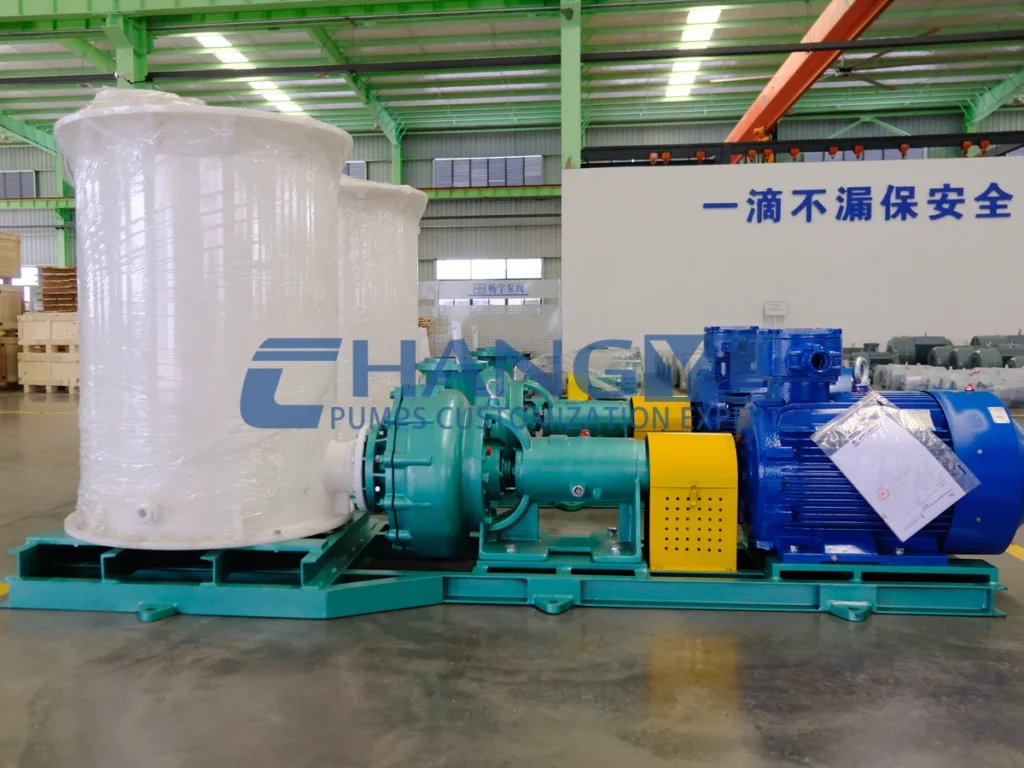
The Changyu UHB horizontal máy bơm bùn hóa chất is a candidate for corrosive liquids carrying fine particles. Its steel casing is lined with ultra-high molecular weight polyethylene (UHMWPE) to provide a wetted surface that resists compatible chemicals and abrasive wear. The semi-open impeller has no front shroud, giving fine particles a less restricted passage through the pump. Confirm the lining and seal compatibility, minimum passage and permissible particle size for the quoted model. Give the supplier the expected fibre length and loading so it can assess the risk of fibres wrapping around the impeller or collecting at the inlet.
For filter press feed, check the full cycle before selecting a pump. Flow is typically higher during initial filling, then falls as the filter cake builds and required pressure rises. Compare the press manufacturer’s flow and pressure requirements through the cycle with the proposed pump curve and control method. Confirm that the pump can handle late-cycle low flow and that the maximum expected feed pressure stays within the ratings of the press and piping.
What to Include in a Pump Request for Quotation
- Liquid and duty: Chemical names, concentration and temperature ranges, density, viscosity, and whether the pump will transfer, meter or feed a filter press.
- Hydraulics and installation: Minimum, normal and maximum flow, tank levels and pressures, piping sizes and fittings, downstream pressure range and operating schedule.
- Solids and supplier response: Solids loading and its measurement basis, particle size and abrasiveness, fibre length and settling behaviour. Request a marked pump curve, a wetted-parts list, and seal and maintenance requirements.
Frequently Asked Pump Procurement Questions
Q: Can we buy one pump model for both clear acid and caustic transfer?
A: Yes, the same model can be specified for separate acid and caustic duties if its quoted wetted materials and hydraulic performance suit each service. Confirm both duties individually and specify dedicated pumps and lines where residues could react or contaminate the process.
Q: Can a centrifugal transfer pump dose acid into an automatic pH control system?
A: Use a dedicated metering pump for controlled injection. Specify the required dosing range, accuracy and discharge backpressure, and confirm that the pump can receive the intended control signal. A centrifugal transfer pump can replenish the day tank upstream of the dosing system.
Q: Can a semi-open slurry pump handle wastewater sludge containing textile fibres?
A: It can be considered if the supplier confirms suitability for the actual sludge. Supply representative solids and fibre data and ask the supplier to review the proposed passages and impeller geometry. Where long fibres or clumps are present, ask whether upstream screening or a different hydraulic design is needed.
Về Changyu Pump
Changyu Pump manufactures acid and alkali transfer pumps, corrosion-resistant chemical pumps and chemical slurry pumps for industrial fluid handling.
Công ty TNHH Sản xuất Bơm và Van Anhui Changyu.
Jingxian Development Zone, Xuancheng, Anhui, China
Email: [email protected]
TEL/WA: +86-13651913727