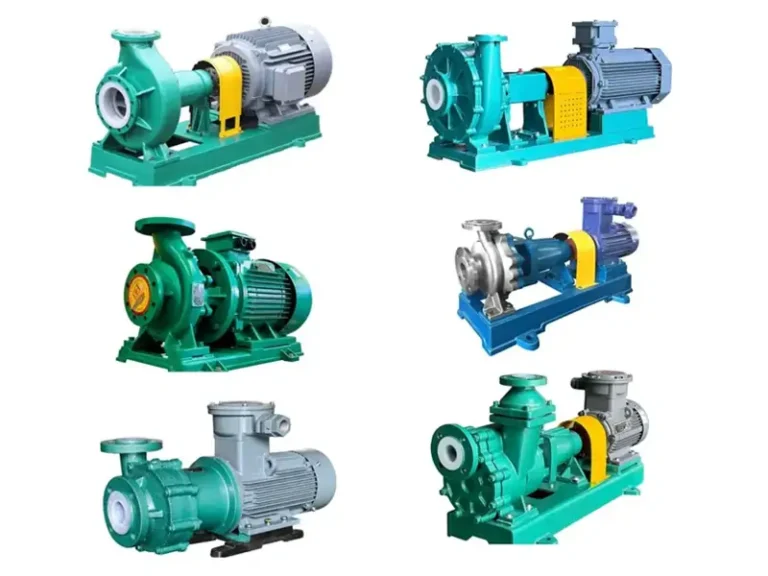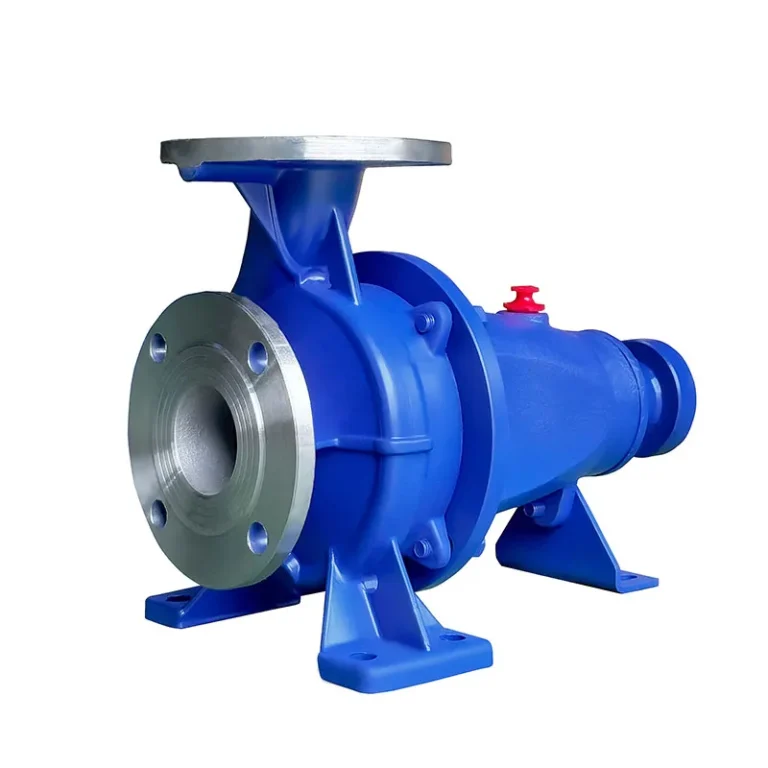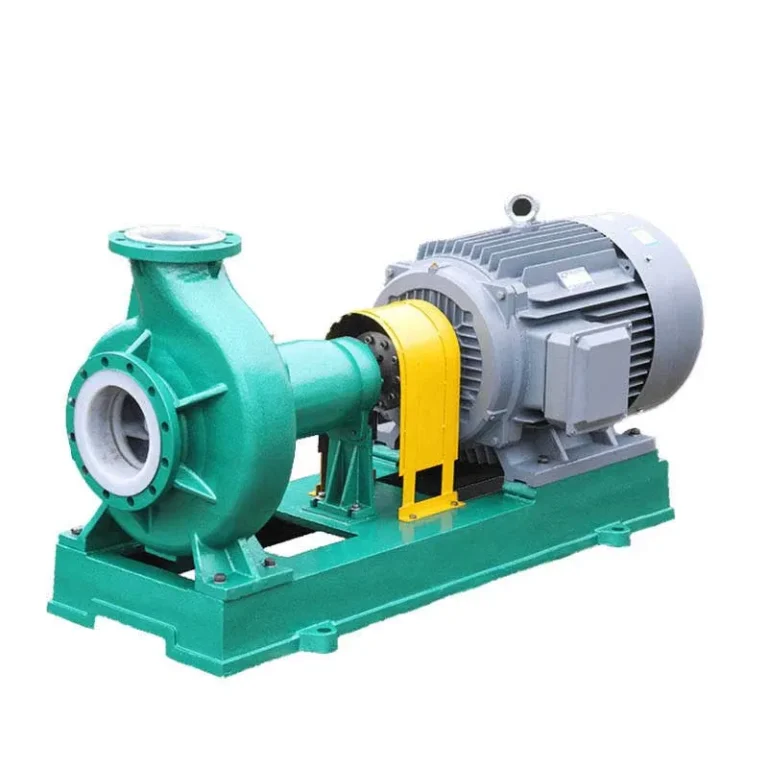
A hydrochloric acid transfer pump is a purpose-built chemical pump designed to safely handle HCl’s highly corrosive, fuming, and volatile characteristics in industrial processes. Because hydrochloric acid rapidly attacks common metals and even some plastics, using a standard water or utility pump will quickly lead to failure, leakage, and serious safety risks. Changyu Pump focuses on non-metallic and fluoroplastic-lined pump solutions that specifically target hydrochloric acid transfer in pickling lines, acid storage, exhaust treatment, and wastewater systems.
What Makes Hydrochloric Acid So Difficult to Pump?
Hydrochloric acid (HCl) is widely used in metal pickling, pH regulation, chemical synthesis, and industrial cleaning, but its corrosiveness and fuming nature make fluid handling challenging. At typical industrial concentrations (10–37%), HCl aggressively attacks carbon steel and many stainless steels, especially in the presence of oxygen or elevated temperatures. In addition, hydrogen chloride fumes can corrode pump exteriors, piping, and surrounding structures, which means both wetted and non‑wetted parts must be carefully considered in pump design.
Recommended Materials for Hydrochloric Acid Transfer Pumps
Industry data and compatibility charts consistently show that non-metallic and fluoropolymer materials are the most reliable for HCl service.
- PTFE / PFA / F46 (fluoropolymers): Excellent resistance across all HCl concentrations and temperatures within typical industrial ranges, making them ideal as linings, impellers, and sealing elements.
- PVDF / PP engineering plastics: Suitable for low to medium concentrations and moderate temperature HCl, with good mechanical strength and cost-performance balance.
- Metals: Standard stainless steels (304/316) are generally not recommended for strong HCl; higher alloys are rarely economical and are usually reserved for very specific cases.
Changyu Pump’s hydrochloric acid transfer pumps adopt plastic alloy or fluoroplastic-lined structures to ensure that all wetted components maintain long-term stability when exposed to HCl.
Flagship Hydrochloric Acid Transfer Pumps from Changyu Pump
1. CYF Hydrochloric Acid Centrifugal Transfer Pump
The CYF Hydrochloric Acid Centrifugal Transfer Pump is a single-stage horizontal chemical pump specifically optimized for hydrochloric acid transfer duty. It uses a reinforced plastic alloy casing with corrosion-resistant internal flow passages to resist continuous HCl attack. This model is well-suited for:
- Hydrochloric acid storage tank transfer
- Pickling bath circulation
- Acid dosing and neutralization systems
The CYF design focuses on stable hydraulic performance and long service life, even under frequent start-stop conditions typical in batching and dosing processes.
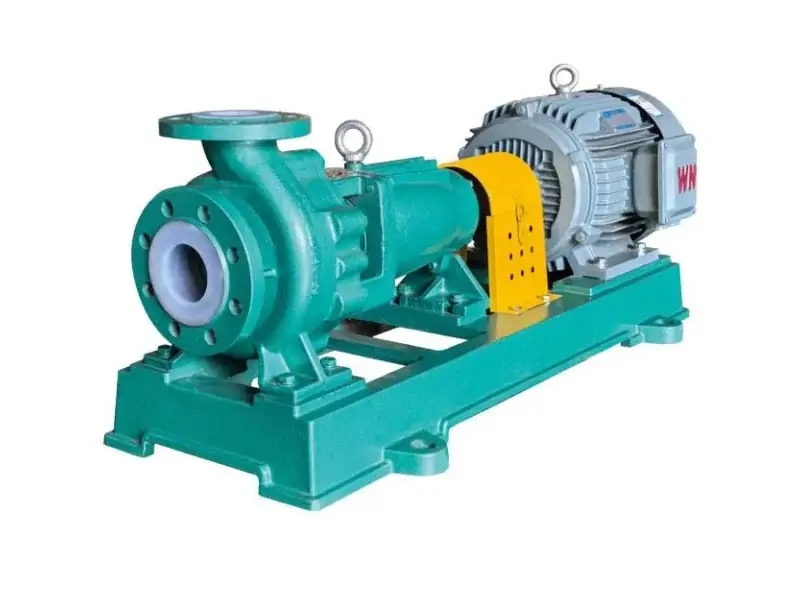
2. CYF Series Acid Transfer Chemical Centrifugal Pump
For processes that deal with mixed acids or general corrosive media including hydrochloric acid, the Bơm ly tâm hóa chất chuyển axit series CYF provides a versatile platform. This series uses chemically resistant plastics and mechanical seals tailored for acid duty, offering:
- Wide chemical compatibility (HCl plus other inorganic acids)
- Horizontal centrifugal layout for process lines and storage transfer
- Good efficiency for continuous industrial operation
It is a practical choice when HCl is one of several corrosive fluids in the same plant.
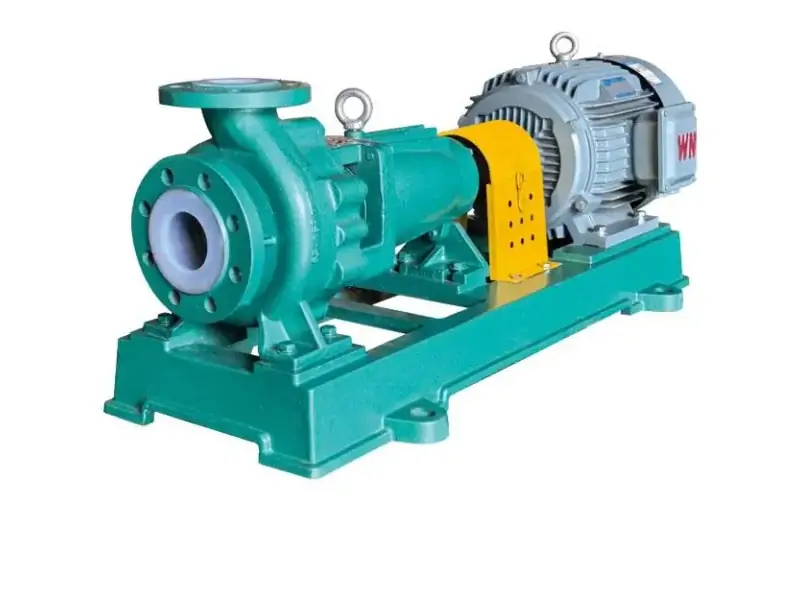
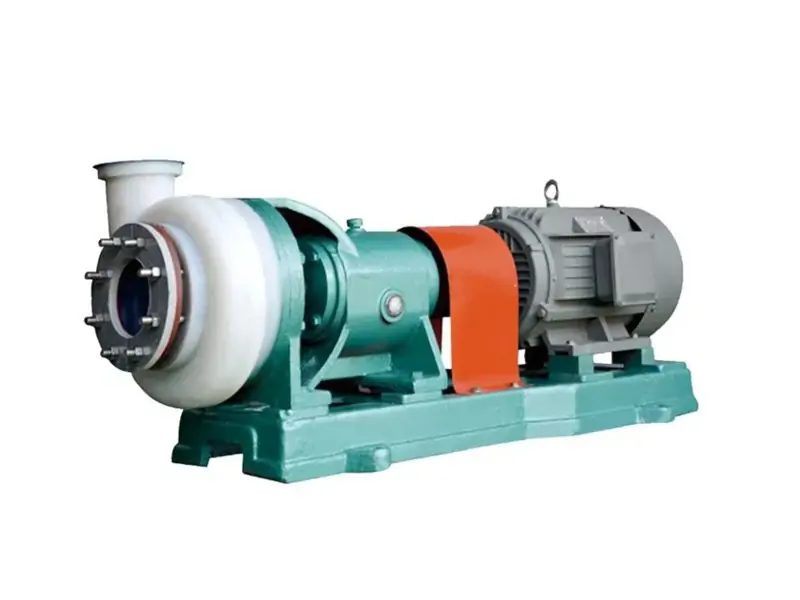
3. Horizontal Fluorine-Lined Industrial Hydrochloric Acid Pump
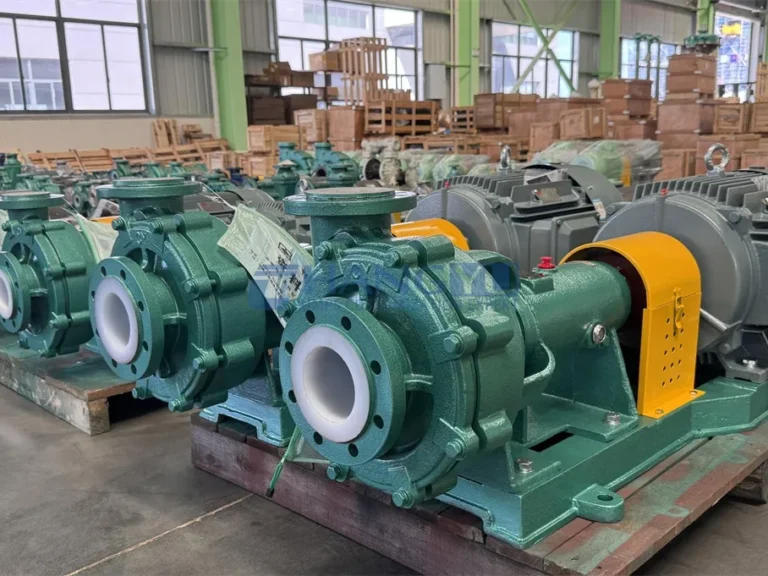
When hydrochloric acid concentration and temperature are both demanding, a fluorine-lined construction becomes the safest option. The Horizontal Fluorine-Lined Industrial Hydrochloric Acid Pump (CYF series structure) uses a steel casing fully lined with fluoroplastics, combining mechanical strength with full chemical inertness. This configuration is ideal for:
- High-concentration HCl transfer from storage tanks
- Harsh exhaust washing systems with high chloride load
- Long-pipe transfer where corrosion allowance must be minimal
4. CQZ Stainless Steel Self-Priming Magnetic Drive Pump (for HCl-containing Solvents)
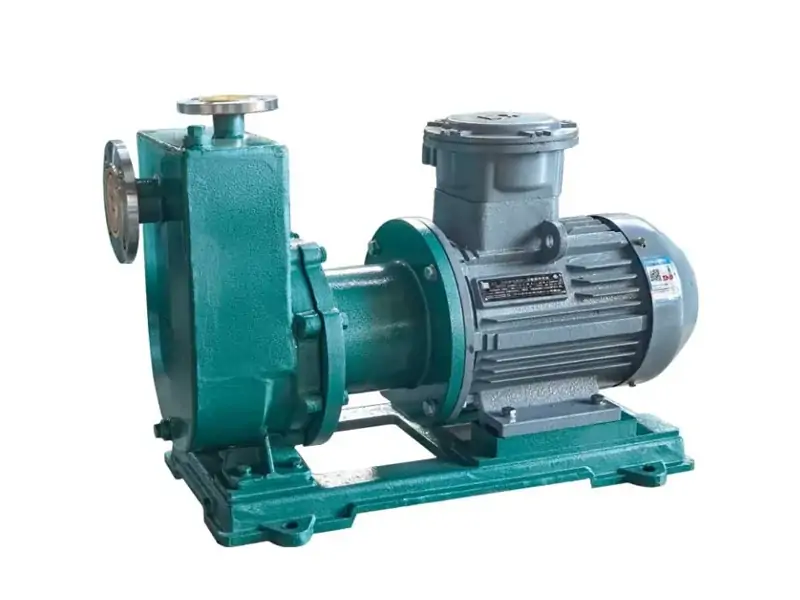
In some processes, hydrochloric acid is present within a solvent blend or low-concentration cleaning mixture. For those duties where self-priming and zero leakage are core requirements, the CQZ Stainless Steel Self-Priming Magnetic Drive Pump can be configured for compatible HCl-containing fluids. With a sealless magnetic drive, it is particularly suitable for:
- Top-suction unloading from intermediate containers
- Solvent–HCl blend transfer where spilling must be avoided
- Applications where traditional mechanical seals fail prematurely
Before using this model with HCl, material compatibility should be verified according to actual concentration and temperature.
5. Fluoroplastic Centrifugal Self-Priming Pump for HCl Pits
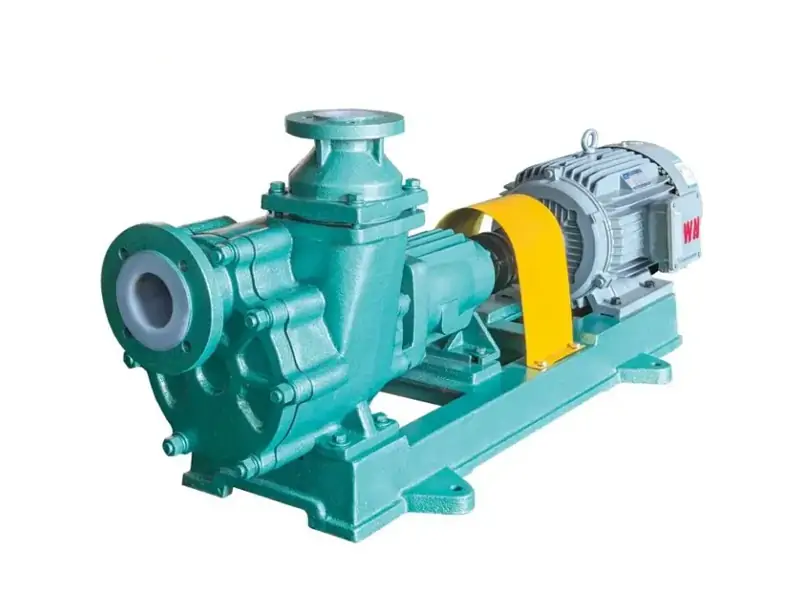
For low-level hydrochloric acid sumps or underground collection pits, the Fluoroplastic Centrifugal Self-Priming Pump provides negative suction capability combined with fluoroplastic wetted parts. This design is suitable for:
- HCl-containing wastewater pits
- Spill collection and emergency transfer
- Situations where pumps cannot be installed below the liquid level
By using heavy-duty PTFE/FEP linings, the pump ensures both corrosion resistance and stable self-priming performance.
6. CYG-ZKN High Temperature Chemical Mortar Pump (for HCl with Solids and Heat)
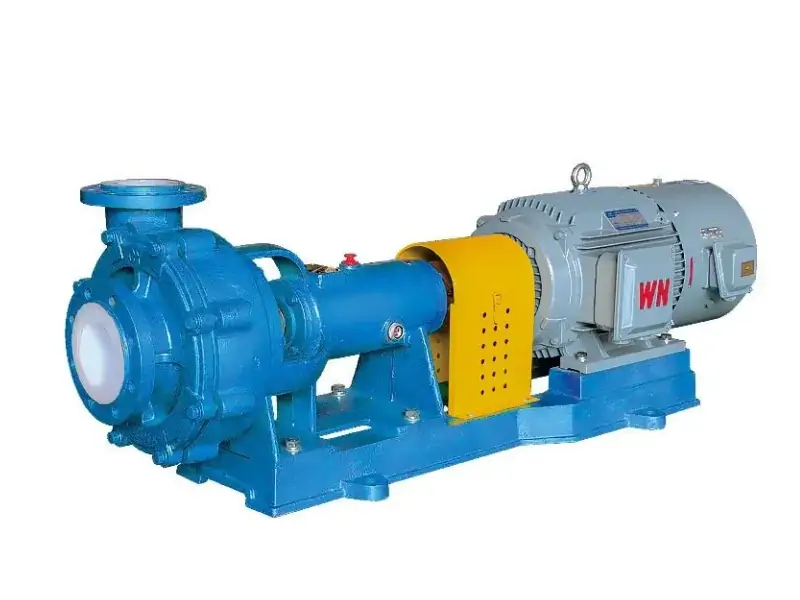
When hydrochloric acid is combined with suspended solids and elevated temperatures—such as in etching or mineral leaching slurries—a standard clean-fluid HCl pump is not sufficient. The Bơm vữa hóa học chịu nhiệt cao CYG-ZKN features a steel body with PFA lining and a structure designed for slurry handling and high temperatures. It can be applied where:
- HCl is used in hot slurry systems
- Abrasion and corrosion occur simultaneously
- High reliability is required in reactor or filter press circuits
Case Studies of Our Hydrochloric Acid Transfer Pumps
In harsh industrial environments involving hydrochloric acid, theoretical specifications must translate into reliable, long-term performance. Whether handling pickling solutions, managing fumes, or driving complex multi-pump transfer systems, the right engineering choice directly impacts safety and uptime. Below are four typical field applications showcasing Changyu Pump’s solutions:
Case 1: Pickling Line Circulation in a Metal Finishing Plant
A metal finishing facility required continuous circulation of 18–20% HCl for steel pickling. Traditional metal pumps suffered from severe corrosion and frequent seal leakage. By upgrading to the CYF Hydrochloric Acid Centrifugal Transfer Pump, the plant achieved stable flow and significantly extended the lifespan of wetted components, reducing unplanned shutdowns.
Case 2: Hydrochloric Acid Storage Tank Transfer in a Fine Chemical Facility
A fine chemicals manufacturer needed to pump HCl from a bulk storage tank to several remote dosing points. The pipeline was long, and the area had strict emissions regulations. Using a horizontal fluorine-lined industrial hydrochloric acid pump with proper ventilation allowed them to establish a highly safe, corrosion-proof transfer system, successfully mitigating the external damage caused by HCl fumes.
Case 3: HCl Wastewater Pit Lift in a Surface Treatment Workshop
In a surface treatment workshop, acidic rinse water continuously drained into a low-level collection pit. To safely elevate this HCl-laden wastewater up to the neutralization tank, the client installed a fluoroplastic centrifugal self-priming pump. Its negative suction lift capability and fluoroplastic wetted parts ensured reliable, long-term operation despite fluctuating liquid levels.
Case 4: Multi-Pump Parallel HCl System in a Chlor-Alkali Plant
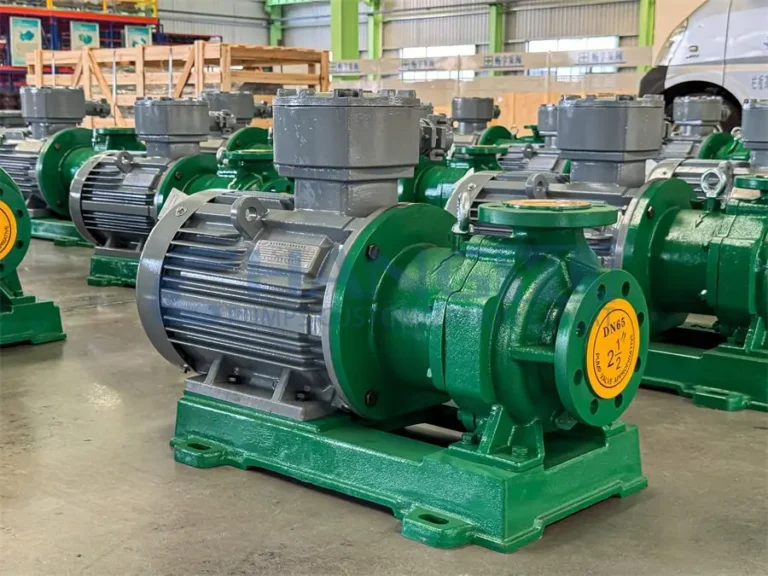
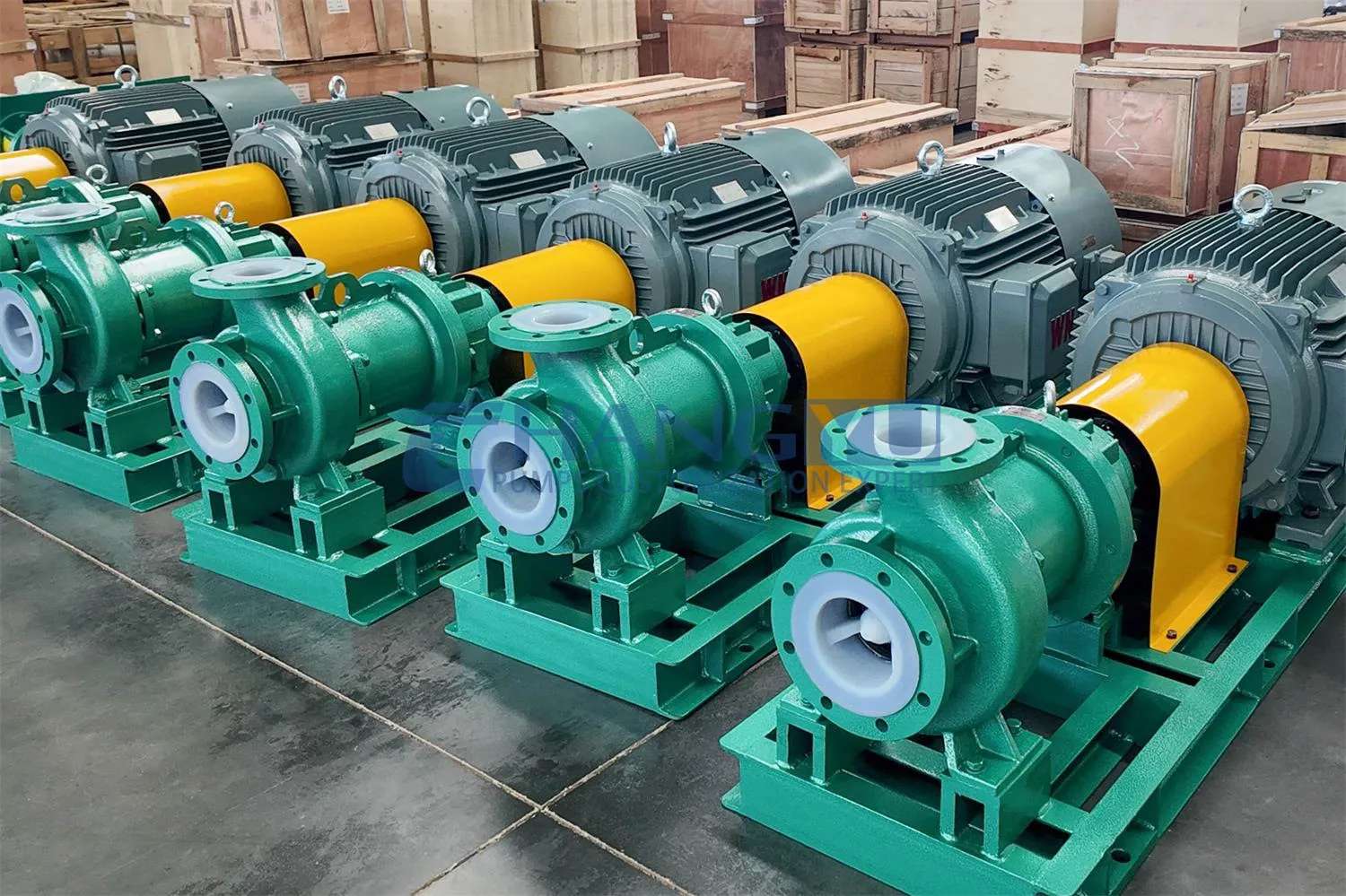
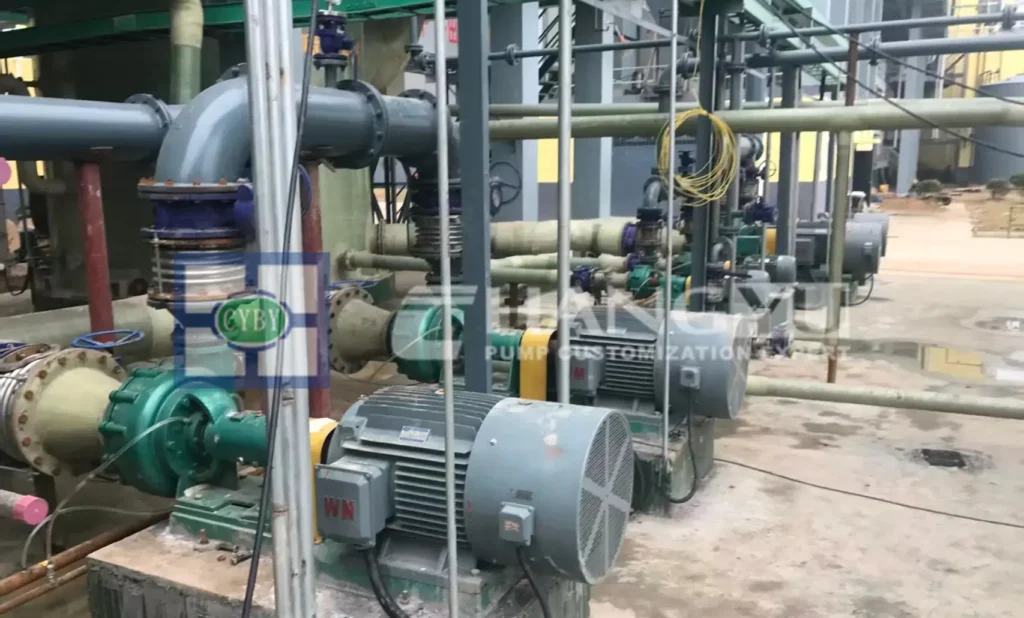
A chlor-alkali plant needed a robust, continuous HCl transfer system to feed multiple downstream process units from a central storage area. The layout demanded several pumps operating in parallel, handling long pipe runs and multiple elbows. The facility selected a bank of horizontal fluoroplastic-lined hydrochloric acid transfer pumps (as shown above). Driven by high-efficiency motors and integrated into a fully supported pipe network, this multi-pump configuration provides exceptional corrosion resistance and operational stability, while its standardized layout simplifies ongoing maintenance.
Proper material selection and configuration are vital for safe chemical transfer. For professional assistance with your specific flow, head, and process requirements, please contact our engineering team directly.
How to Select the Right Hydrochloric Acid Transfer Pump
Competitor guides emphasize generic factors like “flow, head, and material,” but engineering practice requires a more precise checklist tailored to HCl. Before ordering, clarify:
- HCl concentration and temperature: For low concentration and ambient temperature, engineering plastics may suffice; for higher concentration or higher temperature, fluoroplastics (PTFE/PFA/F46) are strongly recommended.
- Flow rate and total dynamic head: Define required flow (m³/h) and calculate total head including static lift plus pipeline friction losses.
- Presence of solids: If scale, rust, or process solids are present, consider a slurry-capable model like CYG‑ZKN rather than a clean‑liquid pump.
- Leakage tolerance and safety level: For toxic fuming HCl and strict environmental requirements, prioritize magnetic drive or fully fluorine-lined structures.
If you are not sure which configuration matches your actual working conditions, welcome to contact the Changyu Pump engineering team. Provide your acid concentration, temperature, flow, and installation details, and we will offer a targeted model selection and customized solution.
Installation and Maintenance Tips for HCl Pumps
Proper installation is critical to maximizing hydrochloric acid pump life and avoiding unexpected failures.
- Avoid metal contamination: Ensure that any metallic piping or fittings in contact with HCl are made from compatible alloys or lined; otherwise, corrosion products can contaminate the system and damage the pump.
- Control suction conditions: Keep suction piping short and straight, with flooded suction whenever possible, to avoid cavitation and vapor formation in hot HCl services.
- Inspect for external corrosion: HCl fumes can attack exposed metallic components, so regular inspection and protective coatings around the pump area are important.
- Monitor seals or containment cans: For mechanically sealed pumps, regularly check for leakage or crystal buildup around the seal area. For magnetic drive designs, monitor temperature and noise to detect early bearing or lining issues.
FAQs About Hydrochloric Acid Transfer Pumps
Q1: Why can’t I use a standard stainless steel pump for hydrochloric acid?
A: Many stainless steels suffer rapid pitting and crevice corrosion in HCl, especially at higher concentrations or temperatures, leading to short service life and sudden leakage.
Q2: What is the best lining material for hydrochloric acid transfer pumps?
A: Fluoropolymers like PTFE, PFA, and F46 provide the broadest resistance across HCl concentration and temperature ranges, which is why they are widely recommended for critical HCl service.
Q3: Do I always need a magnetic drive pump for hydrochloric acid?
A: Not always, but for fuming, toxic, or high-concentration HCl where any leakage is unacceptable, a magnetic drive or fully contained design is strongly preferred.
Q4: Can hydrochloric acid pumps handle solids or sludge?
A: Standard HCl transfer pumps are designed for clean liquids. If solids are present, select a slurry-capable, lined mortar pump with wear-resistant design such as CYG‑ZKN.
Q5: How often should I check an HCl transfer pump?
A: Daily visual checks plus scheduled inspections of seals/linings every 3–6 months are typical; high-temperature or high-concentration systems may require more frequent monitoring.
Why Choose Changyu for Hydrochloric Acid Transfer Pumps?
Hydrochloric acid is unforgiving: incorrect material selection or poor design can quickly lead to leakage, corrosion, and unplanned downtime. Changyu Pump offers a complete portfolio of hydrochloric acid transfer pumps—from specialized CYF HCl centrifugal pumps and fluorine-lined horizontal units to self-priming and high-temperature slurry designs—covering the full range of HCl concentrations, temperatures, and process setups.
If you are planning a new hydrochloric acid system or upgrading an existing line, contact Changyu Pump today. Our engineering team will analyze your process data in detail and recommend the safest, most economical hydrochloric acid transfer pump configuration for your plant.