
في ChangYu Pump، عندما يسألنا العملاء عن الحد الأقصى للزوجة لمضخة الطرد المركزي، فإننا نحتاج إلى أكثر من مجرد رقم عند درجة حرارة الغرفة. نحتاج إلى لزوجة السائل وكثافته عند درجة حرارة الضخ الفعلية، إلى جانب سلوكه عند بدء التشغيل البارد وظروف الشفط. هذه التفاصيل تحدد ما إذا كانت مضخة الطرد المركزي المعدنية الحالية قادرة على الاستمرار في أداء المهمة—أو ما إذا كان نوع مضخة آخر يستحق نظرة فاحصة.
لا يوجد حد أقصى عالمي للزوجة لمضخات الطرد المركزي. تحت حوالي 100 cP، قد تظل مضخة الطرد المركزي مرشحًا معقولاً. عند حوالي 100–300 cP، نقارن الأداء المصحح مع بدائل الإزاحة الموجبة. فوق هذا النطاق، تصبح المقارنة ذات أهمية متزايدة. هذه نطاقات فرز، وليست تصنيفات مُصنّع أو حدود معهد الهيدروليك. نتخذ القرار النهائي بناءً على الأداء المصحح، وتحميل المحرك، وظروف المدخل.
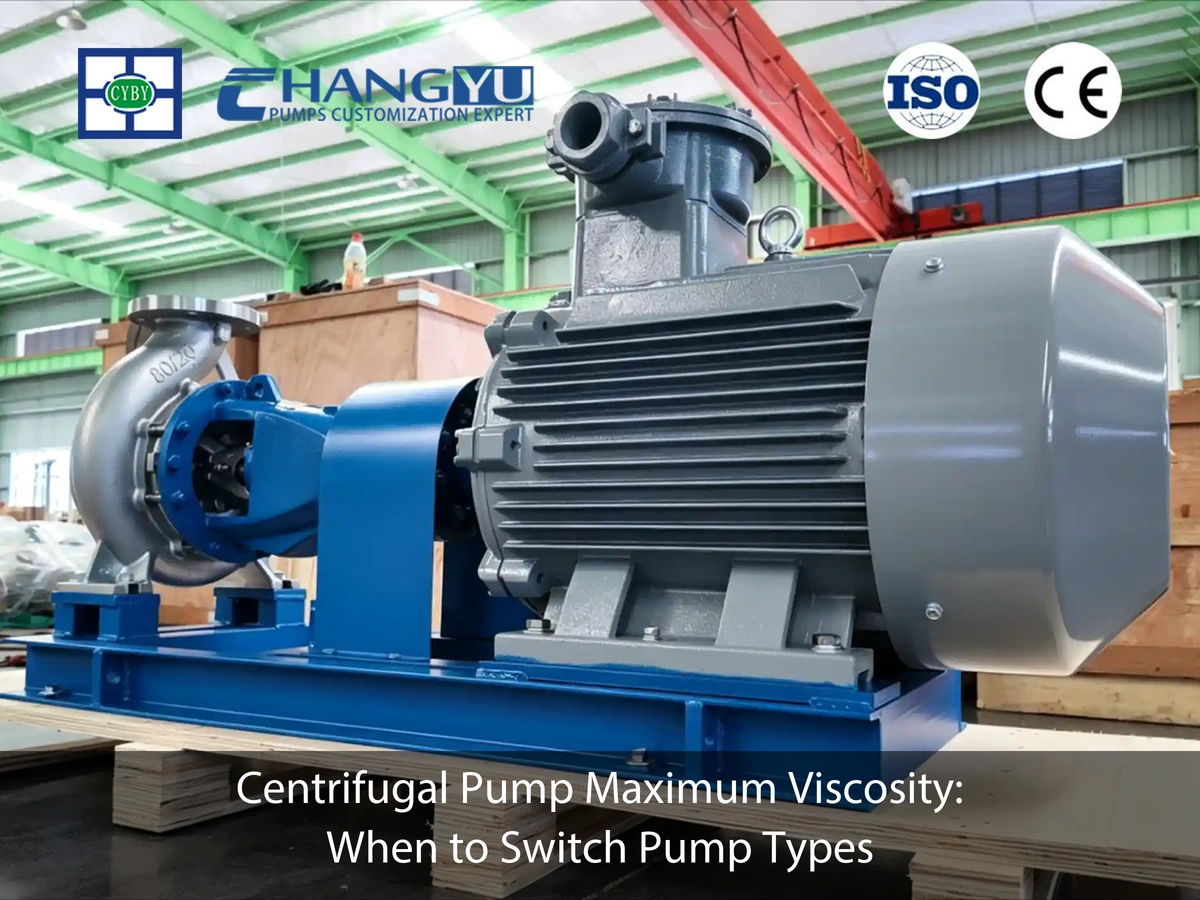
الحد الأقصى للزوجة لمضخة الطرد المركزي: استخدم هذه النطاقات للفرز
نستخدم هذه النطاقات لإدراج الخيارات في القائمة المختصرة قبل التحقق من المهمة الفعلية.
| اللزوجة الديناميكية عند درجة حرارة الضخ | اتجاه الاختيار الأولي | ما يجب التحقق منه |
|---|---|---|
| أقل من حوالي 100 cP | إبقاء مضخة الطرد المركزي في القائمة المختصرة | التصحيح حيث ينطبق، والمهمة المطلوبة، وسعة المحرك، وهامش الشفط |
| حوالي 100–300 cP | مقارنة خيارات الطرد المركزي والإزاحة الموجبة | الكفاءة المصححة، وتكلفة التشغيل، وبدء التشغيل البارد، وفقدان المدخل |
| فوق حوالي 300 cP | إعطاء مضخات الإزاحة الموجبة اعتبارًا جديًا | ما إذا كان خيار الطرد المركزي لا يزال مجديًا تقنيًا واقتصاديًا |
| أي لزوجة مع تكوّن الهلام أو إجهاد الخضوع أو غاز كبير | تقييم سلوك المائع بشكل منفصل | الريولوجيا، وملء المدخل، والتحضير، ومدى ملاءمة تصميم المضخة المحدد |
حجم المضخة والمهمة مهمان. قد تصبح مضخة صغيرة توفر تدفقًا منخفضًا مقابل ارتفاع عالٍ غير جذابة sooner من مضخة أكبر تخدم مهمة عالية التدفق. لا يمكن حسم أي من الحالتين بالجدول وحده.
يعالج البناء من الفولاذ المقاوم للصدأ التوافق الكيميائي، لكنه لا يزيل خسائر اللزوجة. المادة المناسبة للغلاف لا تضمن أداءً هيدروليكيًا مناسبًا.
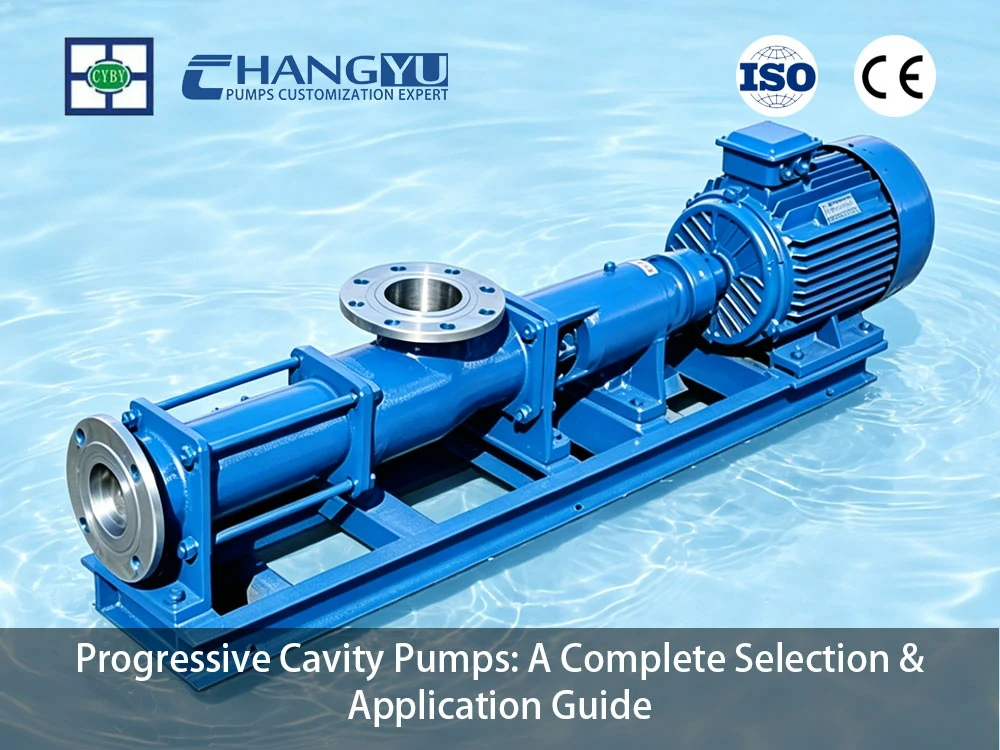
للحصول على خلفية عن أحد البدائل، راجع مضخات التجويف التقدمي: دليل شامل للاختيار والتطبيق.
لماذا يمكن أن يعطيك منحنى الماء إجابة خاطئة
A منحنى الأداء المنشور لمضخة الطرد المركزي عادةً ما يعتمد على اختبار الماء. مع سائل أكثر لزوجة، يزداد الاحتكاك الداخلي واحتكاك قرص المروحة. قد ينخفض التدفق والارتفاع والكفاءة، بينما قد ترتفع القدرة اللازمة لتوصيل مهمة محددة. يشرح معهد الهيدروليك هذه التأثيرات في كيف تؤثر اللزوجة على الضخ.
هناك تغيير ثانٍ: شبكة الأنابيب. تؤدي اللزوجة الأكبر إلى زيادة خسائر الاحتكاك عند تدفق معين، لذا يحتاج منحنى النظام أيضًا إلى إعادة الحساب. تصحيح منحنى المضخة فقط قد يترك نقطة التشغيل المتوقعة خاطئة. يجب أن يمثل كلا المنحنيين نفس السائل ودرجة الحرارة قبل استخدام تقاطعهما للتنبؤ بالتدفق.
لذلك نحتاج إلى تحديد:
- التدفق والارتفاع والكفاءة المصححة للسائل الفعلي.
- مقاومة النظام عند التدفق ودرجة الحرارة المطلوبين.
- حيث يتقاطع منحنى المضخة المصحح مع منحنى النظام ذلك.
- ما إذا كانت سعة المحرك وهامش المدخل ومنطقة التشغيل لا تزال مقبولة.
عند تقييم هذا النوع من الخدمة، نستخدم الأداء المصحح ضمن نطاق الطريقة. يوفر ANSI/HI 9.6.7 طريقة للمضخات الدورانية الديناميكية المعمول بها التي تتعامل مع السوائل النيوتونية. يتطلب بيانات أداء الماء ذات الصلة وخصائص السائل؛ التدفق والارتفاع المستهدفان وحدهما غير كافيين. راجع وصف معهد الهيدروليك لـ ANSI/HI 9.6.7.
لا نطبق نسبة فقدان ثابتة أو نفترض أن التيار يرتفع دائمًا. تعتمد النتيجة على الكثافة والكفاءة والمهمة الموصلة فعليًا.
كيف يجب تسجيل الحد الأقصى للزوجة لمضخة الطرد المركزي؟
سجّل الحد الأقصى للزوجة لمضخة الطرد المركزي كتقييم خاص بالمهمة، مع قيم منفصلة لخصائص السائل للتشغيل العادي وأبرد إعادة تشغيل محتملة. أدرج درجة الحرارة والوحدات والكثافة وطريقة الاختبار بجانب كل قراءة حتى يتمكن المورد من استخدام نفس الأساس.
لمراجعة الحد الأقصى للزوجة لمضخة الطرد المركزي، حدد ما إذا كانت كل قيمة مقاسة أو مقدّرة أو مأخوذة من مورد السوائل. إذا تغير السائل بعد التخزين، اطلب بيانات لتلك الحالة أيضًا؛ قد لا تمثل عينة طازجة خزانًا ظل واقفًا طوال الليل.
المدخلات الثلاثة التي تحدد ما إذا كنا نحتفظ بالمضخة
اللزوجة عند درجة حرارة التشغيل—وعند بدء التشغيل
بالنسبة لمعظم السوائل، تقلل التدفئة من اللزوجة. قد يكون السائل الذي ينتقل بسهولة بعد التسخين صعب الحركة بعد إيقاف التشغيل طوال الليل.
نطلب درجة الحرارة العادية، والحد الأدنى لدرجة حرارة بدء التشغيل، وقيم اللزوجة المقابلة. رقم واحد مُعلَّم بـ “اللزوجة: 80” يتركنا بدون الوحدات أو درجة الحرارة أو ظروف القياس اللازمة لاستخدامه.
لهذا الحساب، ميّز بين الوحدتين الشائعتين:
- cP: اللزوجة الديناميكية؛ 1 cP يساوي 1 mPa·s.
- cSt: اللزوجة الحركية؛ 1 cSt يساوي 1 mm²/s.
التحويل هو cSt = cP ÷ الكثافة بوحدة g/cm³، باستخدام الكثافة عند نفس درجة الحرارة. على سبيل المثال، 120 cP عند كثافة 1.20 g/cm³ يقابل 100 cSt.
بالنسبة لسائل غير نيوتوني، نحتاج أيضًا إلى طريقة الاختبار ومعدل القص. قد يجعل الترقق بالقص والتثخن بالقص والثيكسوتروبيا وإجهاد الخضوع قيمة لزوجة واحدة مضللة. لا ينبغي تطبيق تصحيح نيوتوني عادي دون التحقق من ملاءمته.
الكثافة عند نفس درجة الحرارة
تؤثر الكثافة على الضغط وقدرة العمود. عند نفس الارتفاع، ينتج سائل أكثر كثافة فرق ضغط أكبر. عند نفس التدفق والارتفاع والكفاءة، يتطلب أيضًا قدرة عمود أكبر.
خذ مثالاً حسابيًا: 20 m³/h عند ارتفاع 30 m، بكثافة 1,200 kg/m³. عند كفاءة مضخة مفترضة 65%، تكون قدرة العمود حوالي 3.0 kW. عند 35%، تكون حوالي 5.6 kW لنفس المهمة الموصلة.
These are assumed efficiencies for illustration, not measured pump results. They show why we check corrected efficiency, the full operating range and starting requirements before choosing the motor.
3. Startup and suction conditions
We also check what happens before steady operation begins. Can the liquid reach the inlet? Is the casing primed? Has material settled or hardened? Is the suction line heated as well as the tank?
For viscous service, we would check:
- Minimum tank level and pressure above the liquid.
- Suction-pipe internal diameter, length, elevation and fittings.
- Strainers, valves and their condition.
- Vapor pressure at the pumping temperature.
- Shutdown duration, heating arrangements and restart procedure.
High suction losses can reduce available net positive suction head, or NPSHA. Compare this with the pump’s applicable suction requirement and the required margin. Heating can improve flowability but also increase vapor pressure, so both effects matter.
Changing pump type does not repair an undersized suction line. Positive displacement pumps also need adequate inlet supply. If available suction pressure is insufficient, they can experience cavitation too.
What Evidence Supports a Centrifugal Pump Maximum Viscosity Decision?
A centrifugal pump maximum viscosity decision should show the corrected pump curve, the recalculated system curve and their operating-point intersection. Ask for the predicted flow, head, efficiency and absorbed power at the actual temperature, together with the method and its applicability to your liquid.
When comparing centrifugal pump maximum viscosity with alternative pump capabilities, use the same flow, pressure, operating hours and inlet conditions. The best pump for high viscosity fluids is the option that meets those requirements across the relevant temperatures, rather than the option with the largest catalogue viscosity figure.
When We Would Keep a Metal Centrifugal Pump
We keep a centrifugal pump in consideration when:
- The liquid is Newtonian, or its behavior can be assessed reliably.
- Corrected performance meets the required flow and head.
- Efficiency is acceptable for the expected operating hours.
- The motor covers the operating range and starting requirements.
- Inlet supply and NPSH margin are adequate.
- Solids, gas, corrosion and seal compatibility are within the selected configuration’s capabilities.
Impeller geometry, clearances and speed may improve a configuration, but we verify the resulting performance. Reducing speed also reduces available head; an open or semi-open impeller is not an automatic solution for thick liquids.
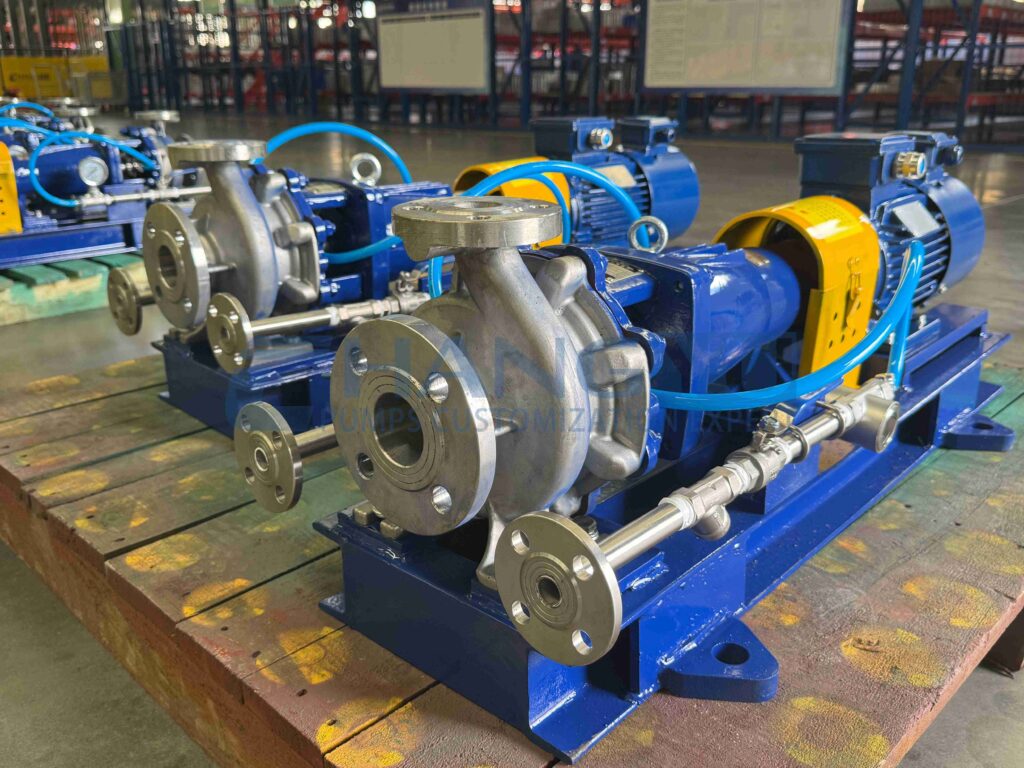
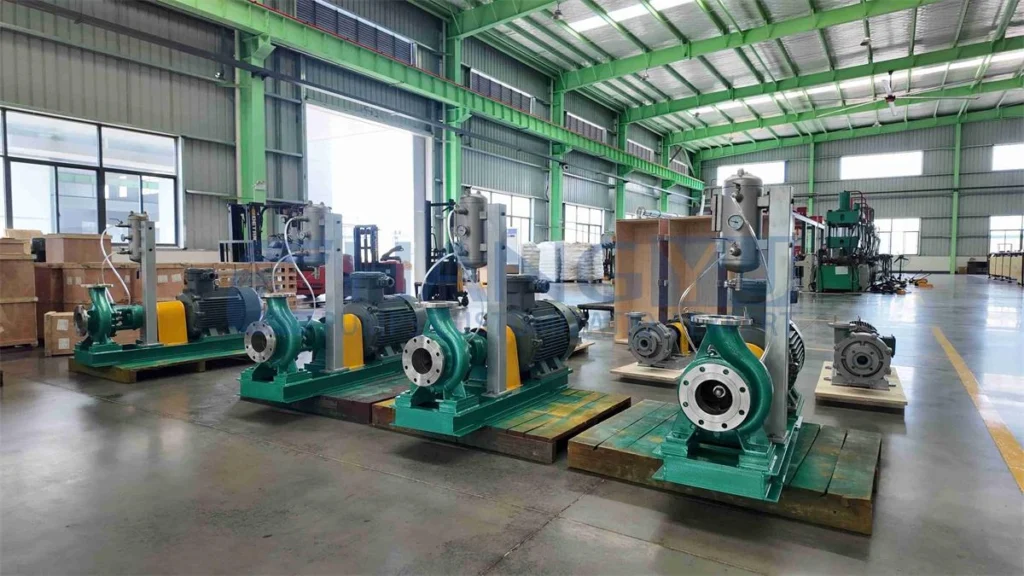
For compatible chemical liquids that pass these checks, we can review the CYH Series stainless steel chemical centrifugal pump, including its material and seal configuration for the actual service.
When We Would Compare Positive Displacement Pumps
We compare other pump types when corrected flow is inadequate, efficiency makes continuous operation expensive, or startup and inlet filling remain unreliable.
High differential pressure at low flow, metering requirements, or pronounced non-Newtonian behavior can also justify comparing pump technologies. Gas content and volatility need separate assessment; neither automatically makes every positive displacement pump suitable.
The best pump for high viscosity fluids depends on more than thickness:
| نوع المضخة | Where we would consider it | Selection details that matter |
|---|---|---|
| Metal centrifugal pump (CYH Series) | Continuous transfer with acceptable corrected performance | Efficiency, operating region, suction margin and chemical compatibility |
| Progressive cavity pump (G Series) | Viscous liquids, some solids-bearing fluids and controlled low-shear transfer | Stator compatibility, particle size, speed, inlet filling and dry-run protection |
| Gear pump | Clean, often lubricating viscous liquids requiring steady transfer | Abrasiveness, clearances, temperature, speed and differential pressure |
| Air-operated double-diaphragm pump (BFQ Series) | Intermittent transfer, some solids-bearing chemicals and duties needing priming capability | Viscosity derating, suction lift, air supply, pulsation and diaphragm compatibility |
| Metering diaphragm pump | Controlled chemical dosing within the model’s viscosity capability | Dosing accuracy, check-valve filling, inlet conditions and discharge pressure |
We distinguish transfer diaphragm pumps from metering diaphragm pumps: using a diaphragm does not by itself ensure dosing accuracy.
We also check installation requirements. For motor-driven rotary positive displacement pumps, provide suitable overpressure protection against a blocked discharge.
Before recommending a model, we check inlet conditions and viscosity derating. Our comparison covers purchase price, energy, maintenance, heating and reliability.
How Do We Choose the Best Pump for High Viscosity Fluids?
Ask the supplier to explain the basis of the centrifugal pump maximum viscosity assessment for the proposed model, speed and impeller diameter. The quotation should identify the liquid-property assumptions, motor requirements, allowable operating region, suction requirements and any heating needed before starting.
Treat centrifugal pump maximum viscosity as one part of the complete configuration review. For a chemical duty that retains a mechanically sealed centrifugal pump, also review pump seal plans for stainless steel chemical pumps; acceptable hydraulic performance does not by itself establish suitable seal support.
Submit These Details for a Pump Configuration Review
For a configuration review, send us the following information. Mark unknown values and label any estimates.
| Information | What to provide |
|---|---|
| Liquid | Name, composition, concentration and available safety data sheet |
| درجة الحرارة | Minimum, normal and maximum pumping temperature; cold-start temperature |
| اللزوجة | Values at relevant temperatures, units and measurement method; shear rate where applicable |
| الكثافة | Density or specific gravity, with its reference temperature |
| Required duty | Minimum, normal and maximum flow; total dynamic head or differential pressure |
| Suction conditions | Tank pressure, minimum level, elevations, pipe internal diameter, length, fittings and strainers |
| Startup | Shutdown duration, heating, priming, backpressure and any gel formation or settling |
| Solids and gas | Concentration, particle size, abrasiveness, entrained gas and vapor-pressure data if available |
| Existing equipment | Model, speed, impeller diameter, motor rating, seal arrangement and performance curve |
| Operating evidence | Measured temperature, flow, suction/discharge pressure, current, vibration and fault timing |
Readings from both startup and stable running are particularly useful. State whether flow improves after warming, whether trouble begins as the tank empties, and whether a strainer pressure drop has changed.
A low-flow complaint with high current requires a different investigation from low flow with low current. Neither proves viscosity is the only cause; speed, rotation, blockage, wear and instrumentation may also need checking.
البريد الإلكتروني: [email protected]
الهاتف/واتساب: +86-13651913727
الأسئلة الشائعة
What is the centrifugal pump maximum viscosity?
There is no single value that applies to all centrifugal pumps. The approximate 100 cP and 100–300 cP bands above help screen options. A specific pump’s suitability depends on corrected performance, fluid behavior, inlet conditions and operating cost. A correction method’s calculation range is not a recommended operating limit.
Is 300 cP too thick for a centrifugal pump?
Not automatically. At 300 cP, we would compare corrected centrifugal performance with suitable positive displacement alternatives. Density, temperature, pump size and required duty matter. We cannot decide from cP alone.
What is the best pump for high viscosity fluids?
Progressive cavity pumps are worth considering for viscous or some solids-bearing liquids; gear pumps suit many clean viscous services. Diaphragm options can suit chemical transfer or dosing, depending on design. We choose the option that meets the complete duty, including startup and inlet supply.
Can a larger motor solve the problem?
A larger motor may address a verified power shortage. It does not restore head or flow lost through viscosity, improve inlet supply, or make an unsuitable hydraulic configuration efficient. We would check the cause before changing the motor.
Can we use room-temperature viscosity for a heated process?
Use viscosity at the actual pumping temperature for the running-duty assessment, and at the starting temperature for restart checks. Without both, we may overlook the hardest part of the cycle.
Send Us Your Duty Before Choosing the Next Pump
If you are checking whether an existing metal pump can handle your viscous liquid, send us the liquid details, temperature-dependent viscosity and density, flow/head requirement, suction layout, startup procedure and current model. Attach the performance curve and operating readings you have.
We can review whether the duty supports a CYH configuration within our نطاق مضخات الفولاذ المقاوم للصدأ or whether a positive displacement option should be considered. The aim is a pump that meets the process requirement, starts reliably and makes sense to operate.
البريد الإلكتروني: [email protected]
الهاتف/واتساب: +86-13651913727
For a centrifugal pump maximum viscosity review, send the running and startup liquid properties with the required duty and suction layout. We can then compare corrected centrifugal performance with suitable alternatives and discuss the best pump for high viscosity fluids for those specific conditions.
References and Technical Sources
We prepared this guide using the Hydraulic Institute references below and our product information. The viscosity bands are screening guidance, not limits specified by ANSI/HI 9.6.7. The power example uses assumed efficiencies; final selection requires a duty-specific review.
- Hydraulic Institute — ANSI/HI 9.6.7: Rotodynamic Pumps Guideline for Effects of Liquid Viscosity on Performance. Official scope and overview of performance correction for applicable radial-flow pumps handling Newtonian liquids.
- Peter Gaydon, Hydraulic Institute — How Viscosity Affects Pumping (December 7, 2022). Explains viscosity effects on centrifugal and positive displacement performance, starting torque and inlet requirements.
- ChangYu Pump product information: CYH chemical centrifugal pumps, G Series progressive cavity pumps و BFQ air-operated double-diaphragm pumps. Product construction and configuration options.