
Start with the liquid chemistry, the form of any solids, and the failure most likely to interrupt service. This chemical pump selection guide uses four lines at one hypothetical chemical plant. A compatible, low-solids process liquid points to a chemical process pump, debris in a sump points to a wastewater pump, a clean cooling loop points to a water pump, and a corrosive slurry with abrasive particles points to a chemical slurry pump. Use the dominant risk to narrow the field, then check the other risks, the required head, and the installation before comparing specific series.
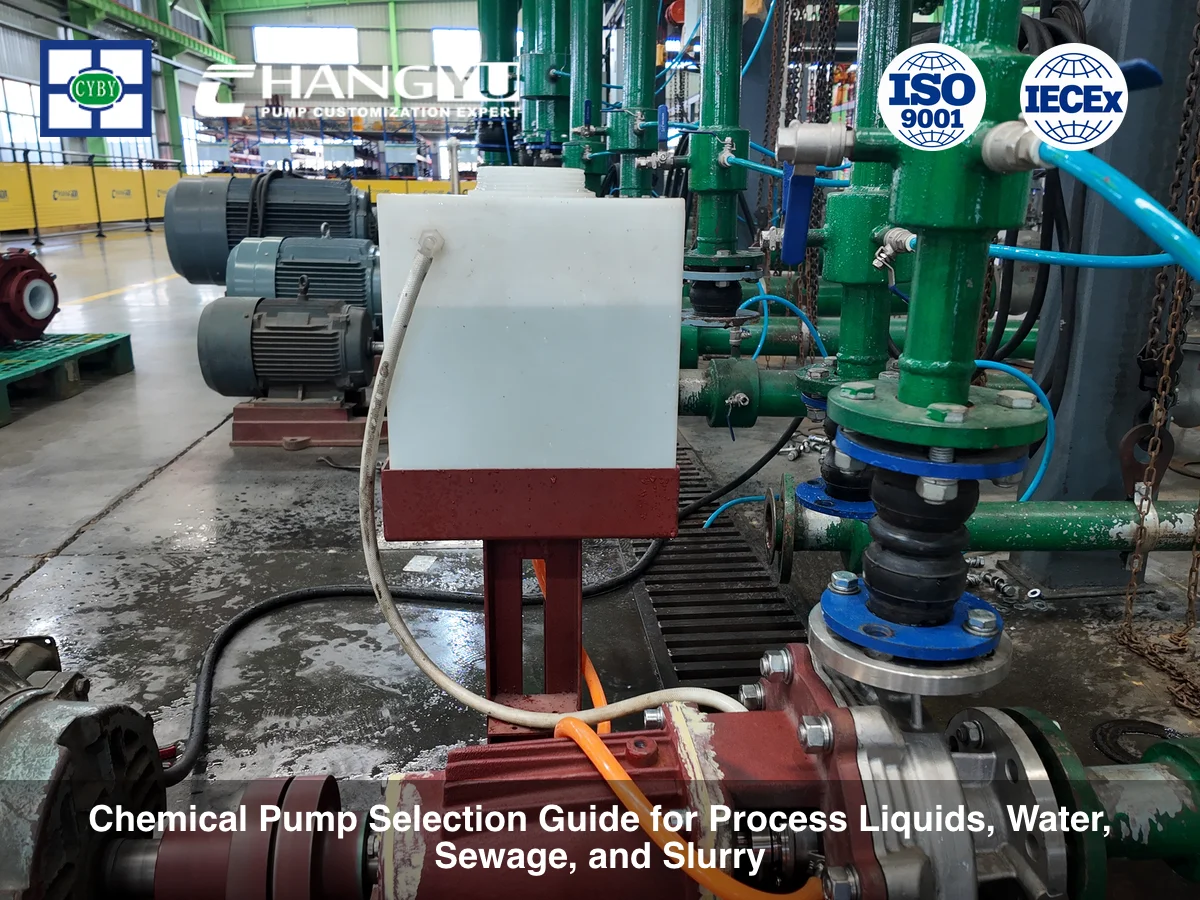
What Are the Four Main Pump Duties in a Chemical Plant?
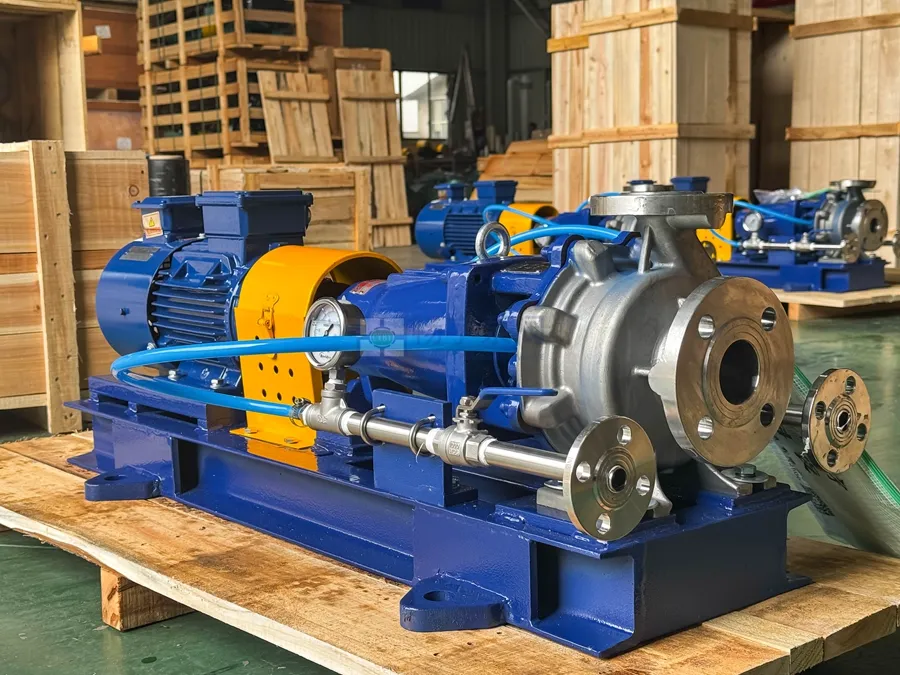
- Process liquid transfer. The plant moves a low-solids liquid from a day tank to a process vessel. A chemical process pump is a candidate when its wetted parts and seals are compatible with the liquid at the actual concentration, temperature, and pressure. Check the flow range and what leakage, if any, the process can tolerate.
- Wastewater sump drainage. The plant collects washdown water carrying grit, debris, and occasional fibers. An industrial wastewater pump needs passages sized for the expected solids and a hydraulic design suited to the risk of clogging or fiber wrapping. Check liquid levels, discharge routing, and whether the wastewater chemistry limits the choice of materials.
- Clean-water circulation. An industrial water pump circulates clean water through the plant’s heat exchangers. Start with required flow, total head, efficiency, and piping layout. Verify water quality and temperature, since treatment chemicals or changes in water chemistry can affect material compatibility. The same duty group covers clean utility-water transfer and boosting.
- Chemical slurry transfer. The plant sends a corrosive suspension with hard, abrasive fines from a process vessel to a downstream separation stage. Chemical slurry pump selection must account for both corrosion and wear. Particle size, shape, hardness, solids loading, density, viscosity, and settling all affect the choice of wetted parts, hydraulics, and seal arrangement.
These four groups describe the work the pumps do. All four can include centrifugal pumps, and some services warrant a positive-displacement design. A few suspended particles call for a solids-passage check. A steady load of hard particles calls for a wear review even when the particles are small enough to pass freely. A corrosive sump with abrasive fines can put both wastewater and slurry pumps on the shortlist.



How to Use This Chemical Pump Selection Guide
If you’re deciding how to select a chemical pump for transfer service, build a duty sheet for each line. Flag any requirement for precise metering so the plant can review dosing accuracy and controls separately.
- Characterize the liquid and rank the failure risks. Record the chemical composition, concentration range, operating temperatures, impurities, and any cleaning liquids. Use the safety data sheet (SDS) to help identify constituents and add pH as supporting information. Record density and viscosity at operating temperature, typical and maximum particle size, particle shape and hardness, any fibers, and the tendency to settle. State whether solids content is measured by weight or volume. For each line, consider corrosion, wear, blockage, settling, cavitation, and the consequences of a leak.
- Establish the operating range. Give minimum, normal, and maximum flow with the corresponding total dynamic head. Include elevation or liquid-level differences, losses through piping, fittings, and valves, and any pressure difference between source and destination. For a centrifugal pump, the pump and system curves intersect at the operating point. Check the range against the allowable operating region and review efficiency relative to the best efficiency point (BEP), shaft power, and driver load. Under the least favorable suction conditions, verify that available net positive suction head (NPSHA) exceeds the pump’s required NPSH (NPSHR) by the margin appropriate to the application. Confirm any viscosity or slurry corrections and check the resulting motor load. For positive-displacement pumps, use the pump’s performance data at the required flow and discharge pressure. Confirm lubrication needs, dry-running limits, and overpressure protection for the selected design. See Hydraulic Institute Pump Curves for the performance curves and our centrifugal pump curve guide for how to plot the system curve against the pump curve.
- Assess installation and maintenance access. Compare a flooded suction arrangement, a ground-level self-priming unit, and a vertical immersed design. For a self-priming centrifugal pump, check initial fill requirements, suction pipe airtightness, allowable suction lift at the lowest liquid level, and model-specific dry-running limits. For an immersed design, provide pit depth, minimum and maximum levels, and clearance to withdraw the pump. List long fibers or bulky debris for the sump. For the slurry line, describe what settles during stops, how the line will restart, and what flushing is available. For clean water with a higher head requirement at the specified flow, compare a multistage pump.
- Confirm materials, sealing, and project requirements. Review all pump wetted parts, including the casing, impeller, shaft sleeve, liner, seal faces, gaskets, and elastomers. Check compatibility with the actual mixture, concentration, temperature, impurities, and mechanical loading. Pay particular attention to solvents, chloride-bearing media, acids, and alkalis. Specify the allowable leakage and confirm whether seal flush or barrier fluid can enter the process. Include site electrical and hazardous-area requirements, service access, and spare parts needs. Hazardous duties require the project’s engineering and safety review.
Use the comparison below to turn the duty sheets into a shortlist. In this chemical pump selection guide, the starting application indicates which series to ask about, and the last column tells you what to verify before specifying a model.
Which Changyu Pump Series Should You Compare?
| الخدمة | سلسلة Changyu | Best starting application | ما يجب التحقق منه |
|---|---|---|---|
| Process liquid transfer | CYH Stainless Steel Centrifugal Chemical Pump | Continuous transfer of compatible, low-solids liquids. Wetted material options include 304, 316, and 316L stainless steel. | Compatibility of each wetted part and seal at the actual concentration, temperature, impurities, and load. |
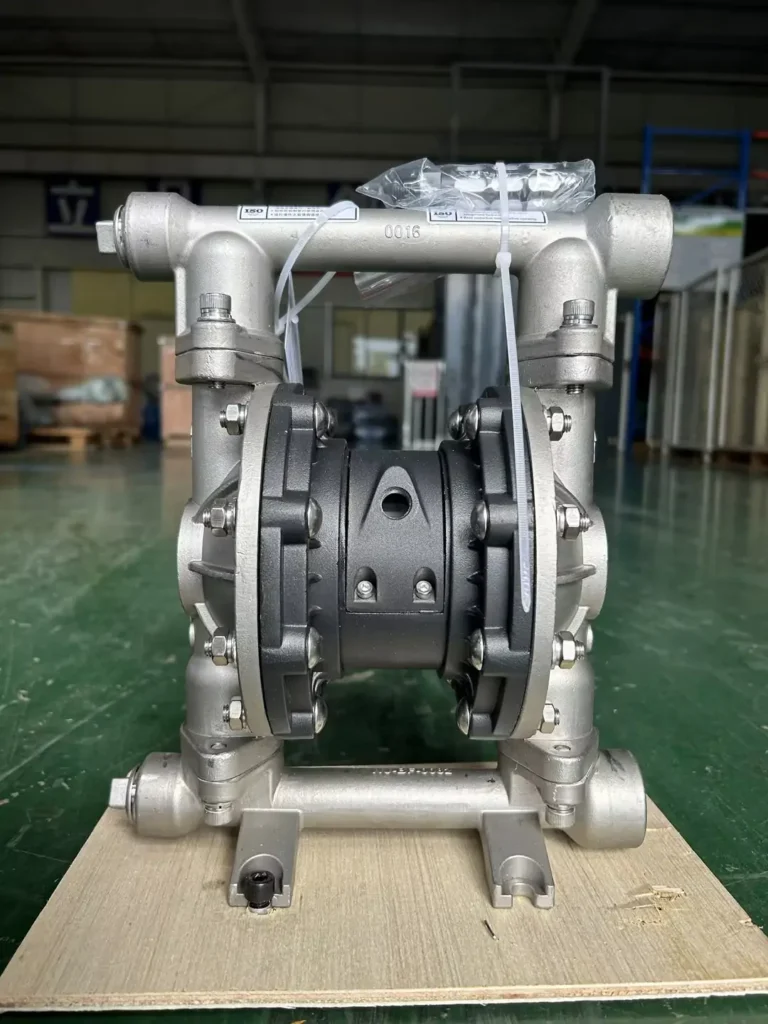
| Batch chemical transfer | مضخة الحجاب الحاجز المزدوج المشغلة بالهواء BFQ | Intermittent transfer where compressed air is available. | Wetted materials, diaphragm, air supply, flow at discharge pressure, and acceptable pulsation. |
| Ground-level sump pumping | CYE Self-Priming Transfer Pump CYT Self-Priming Sewage Pump | Transfer pump for a source below the pump with sand or suspended particles. Sewage pump for compatible wastewater with low corrosivity. | Confirm initial priming, suction lift, solids passage, fiber handling, and wear for each candidate. |
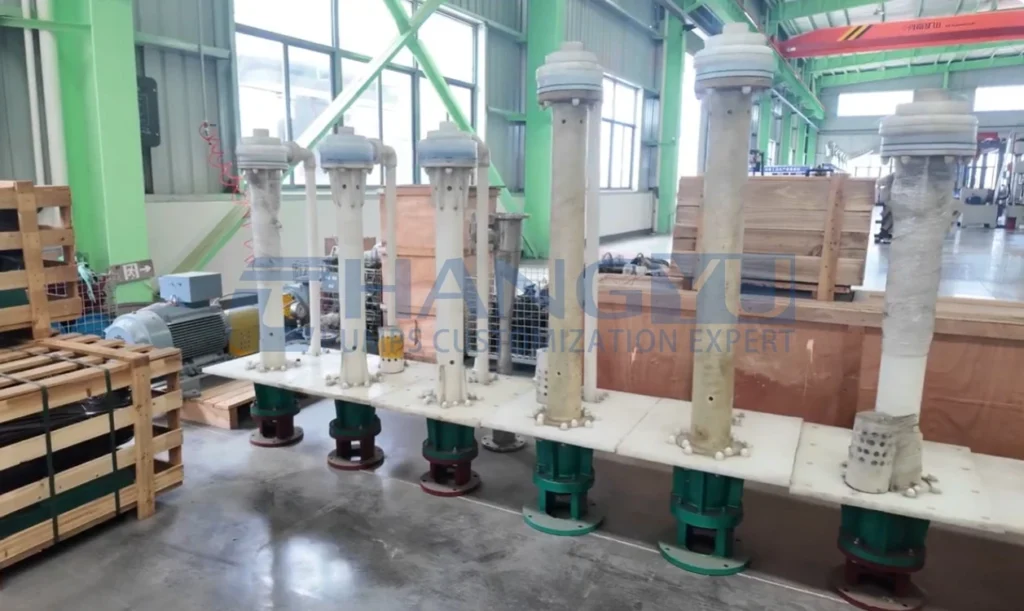
| Corrosive sump liquid | FY Vertical Immersed Pump | Tank or pit duty with the pumping section immersed and the motor above the liquid. Consider for compatible corrosive wastewater with modest amounts of fine solids. | Immersion depth, minimum liquid level, fit, wetted materials, and maximum solids size and loading. |
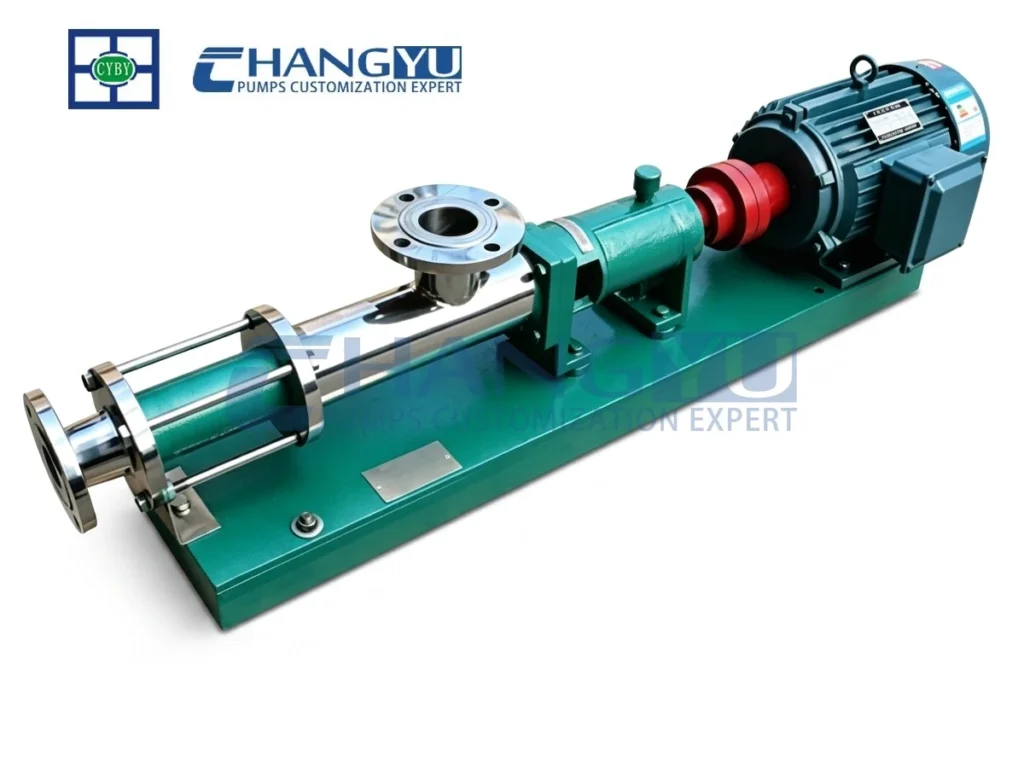
| Viscous sludge transfer | G-Type Progressive Cavity Screw Pump | Viscous or thickened sludge that warrants comparing positive-displacement delivery. | Rotor, stator and elastomer compatibility, particle wear, suction and discharge pressures, and dry-run and overpressure protection. |
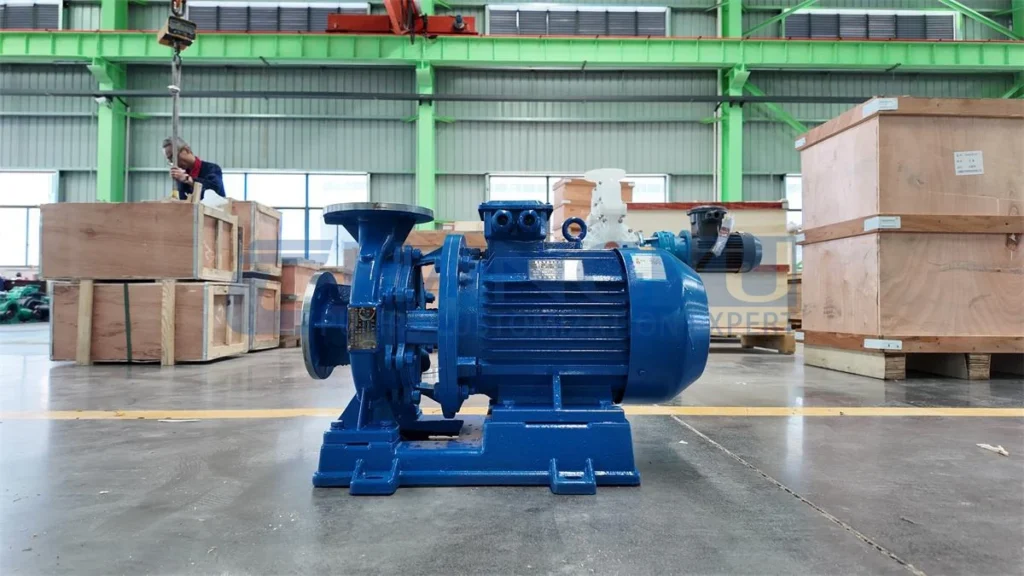
| Clean-water circulation | مضخة مياه الطرد المركزي الأفقية CYW | Horizontal single-stage pump for clean cooling water, HVAC circulation, and general clean-water transfer. | Water quality, temperature, operating point, materials, and service clearance. |
| Compact clean-water loop | CYL Vertical Inline Centrifugal Pump | Clean-water circulation where floor space is limited and the piping suits a vertical inline layout. | Nozzle positions, system pressure, service clearance, and clean-water configuration. |
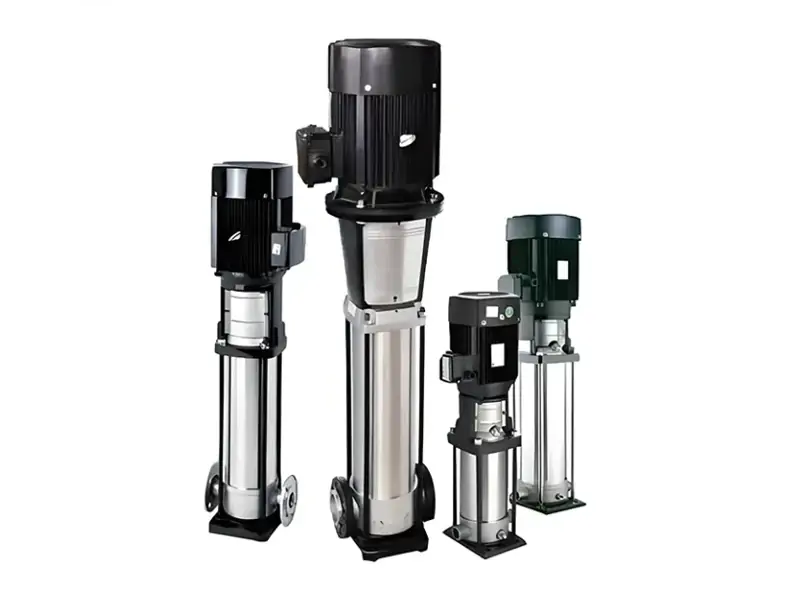
| Clean-water boosting | مضخة طرد مركزي عمودية متعددة المراحل CDL | Clean-water supply or boosting that requires higher head at the target flow. | Flow, head, system pressure rating, and minimum stable flow. |
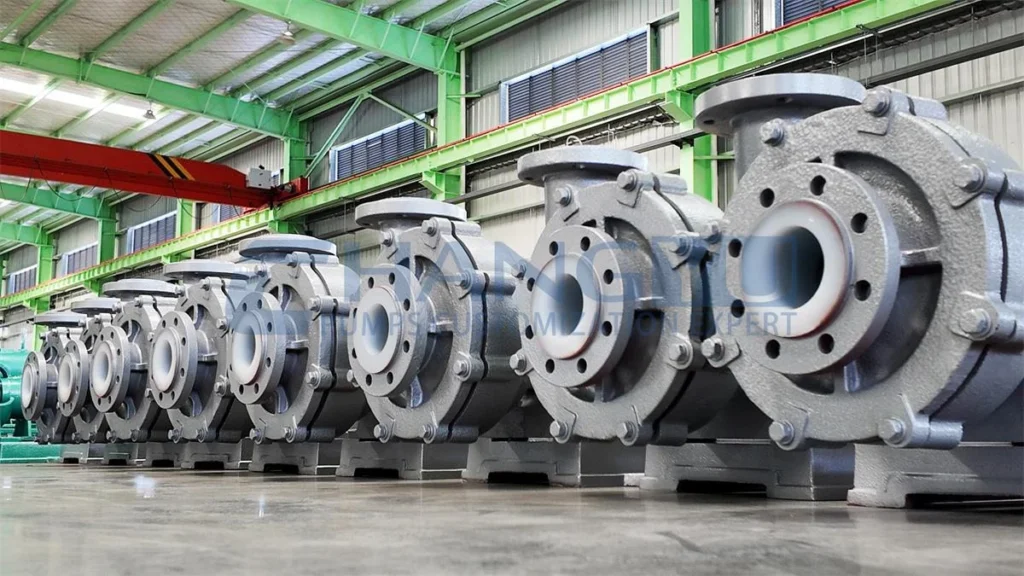
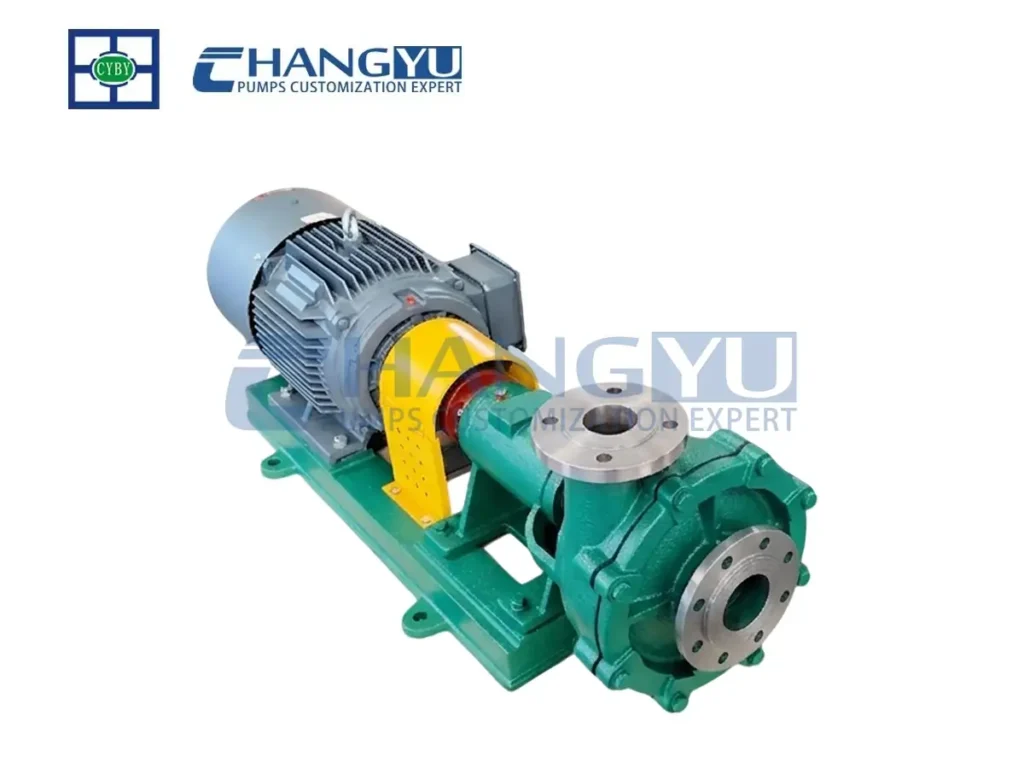
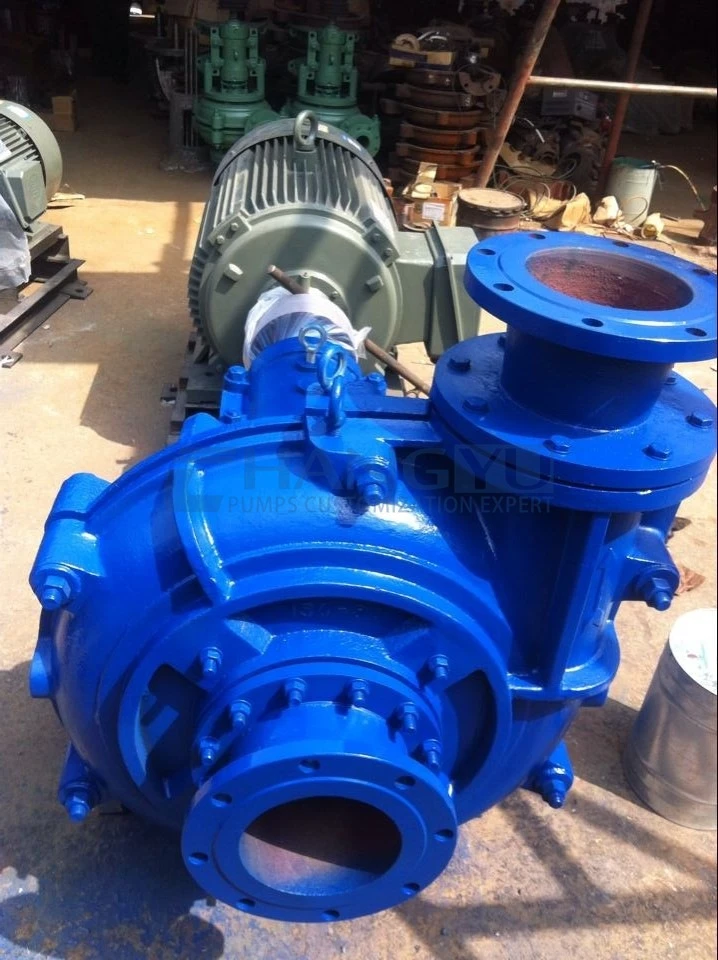
| Corrosive slurry with fine solids | UHB Horizontal Chemical Slurry Pump | Ultra-high-molecular-weight polyethylene (UHMW-PE) lined configuration for compatible corrosive slurry with abrasive fines. | Liner and seal compatibility at the actual composition, concentration, temperature, solids load, and flush conditions. |
| Abrasive slurry suited to stainless steel | مضخة الملاط الكاشطة المصنوعة من الفولاذ المقاوم للصدأ HB | Abrasive slurry compatible with the available stainless steel wetted parts. | Grade for each wetted part based on chemistry, temperature, solids, and expected wear. |
| Heavy-duty, high-head slurry | PGY Heavy-Duty High-Head Horizontal Slurry Pump | Higher-head or heavy-wear service where double-casing construction and high-chrome or other material options warrant review. | Alloy compatibility with the actual chemistry and clear-water curve corrections for the slurry. |
At the plant’s sump, a surface-mounted pump offers access from floor level if suction lift and priming are feasible. An immersed pump places the hydraulic section in the pit and needs enough submergence and room for removal. On the cooling loop, start with a single-stage circulation pump and compare multistage options if a clean-water booster must deliver more head at the design flow. On the slurry line, screen the UHMW-PE liner against the actual chemistry and temperature, and compare stainless steel or high-chrome options where their specific grades suit the wear and corrosion duty. Verify corrosion compatibility for each alloy regardless of its hardness.
Chemical Pump Selection Guide for Mixed Wastewater Streams
Suppose the plant’s sump starts receiving a second drain. If it brings rag fragments or stringy fibers, start with wastewater solids handling and verify passage size, fiber-wrapping risk, and cleanout access. If it brings a steady load of hard fines in a corrosive liquid, also screen chemical slurry pumps for wear, material compatibility, and the head needed to move the mixture. If both loads arrive together, verify that the candidate can pass the debris and withstand the combined wear and chemical exposure. In either case, actual sump levels and maintenance access determine which installation can be used.
حول شركة Changyu Pump
Changyu Pump is a chemical pump manufacturer based in Anhui, China. Anhui Changyu Pump and Valve Manufacturing Co., Ltd. was founded in 2006. Our engineers review applications for process liquids, industrial wastewater, clean-water supply and drainage, and slurry transfer. A duty sheet lets us compare candidate series against the operating range and identify what still needs confirmation, from a casing or elastomer grade to a seal arrangement or a piping connection.
For the proposed configuration, we can review materials, seals, connection details, and the scope of factory testing with your project team. We also provide installation guidance, spare parts, and after-sales technical support. Learn more about Changyu Pump or review our pump services and technical support.

الأسئلة المتداولة
Q: What is a chemical pump, and how is it different from a water pump?
A: A chemical pump is specified for the chemistry of the liquid and the required leak control. Its wetted parts and seals must suit the actual mixture, concentration, temperature, and pressure. A standard industrial water pump is intended for clean water or similar liquids within the materials, solids, and operating limits of the selected configuration.
Q: Can a standard water pump handle chemical wastewater?
A: It can be a candidate if the wastewater is close to clean water and the pump’s materials, solids capacity, and operating limits suit the actual stream. Corrosive constituents, long fibers, or abrasive particles call for another screening pass based on chemical compatibility, clogging, or wear.
Q: What is the difference between a sewage pump and a chemical slurry pump?
A: A sewage pump is selected to pass expected solids and debris while limiting clogging or fiber wrapping. A chemical slurry pump is selected to handle particle wear and chemical exposure together. A sump carrying corrosive liquid and abrasive solids can justify comparing both designs.
Q: Should I use a self-priming pump or a vertical immersed pump for a wastewater sump?
A: Compare self-priming when floor-level access is valuable and the suction lift, piping, and priming conditions are feasible. Compare a vertical immersed pump when the pumping section can sit in the liquid at the minimum operating level. Check pit depth, the full liquid-level range, and clearance to remove the pump.
Q: Is 316L stainless steel suitable for all chemical liquids?
A: 316L stainless steel has service-specific compatibility limits. Check concentration, temperature, chlorides, other impurities, and exposure during cleaning. Confirm the seal faces, gaskets, elastomers, and other wetted materials individually, even when the casing and impeller are both 316L.
Q: What matters most when selecting a pump for corrosive, abrasive slurry?
A: Verify chemical compatibility and wear resistance together. Give the solids concentration and its basis, the particle size range and hardness, slurry density and viscosity, and the tendency to settle. Check the corrected curve and driver load for the actual slurry and confirm the seal and flushing arrangement.
Q: How do I know when a multistage water pump makes sense?
A: Compare a multistage pump when suitable single-stage candidates cannot provide the required head at the target flow within their operating range. Verify the multistage pump’s operating range, minimum stable flow, and the pressure ratings of the pump and connected system.
Q: What information should I send to a chemical pump manufacturer for a quote?
A: Send a duty sheet with liquid composition, concentration, temperature, viscosity, and solids details, plus minimum, normal, and maximum flow. Include the head at each condition or provide elevations, liquid levels, vessel pressures, and piping details. Add the installation layout, running schedule, sealing and leakage requirements, and site electrical or hazardous-area requirements.
Send Us Your Pump Duty
Use this chemical pump selection guide to shortlist by liquid and dominant failure risk, then let our engineers check the operating points, wetted parts, sealing, and installation for the proposed configuration. Send us a duty sheet that includes normal and extreme conditions where known, liquid composition and concentration, temperature, flow, head or piping and liquid levels, solids, viscosity, the running schedule, and site electrical requirements. Include an SDS, project specification, existing pump nameplate, or piping layout if available.
البريد الإلكتروني: [email protected]
الهاتف/واتساب: +86-13651913727