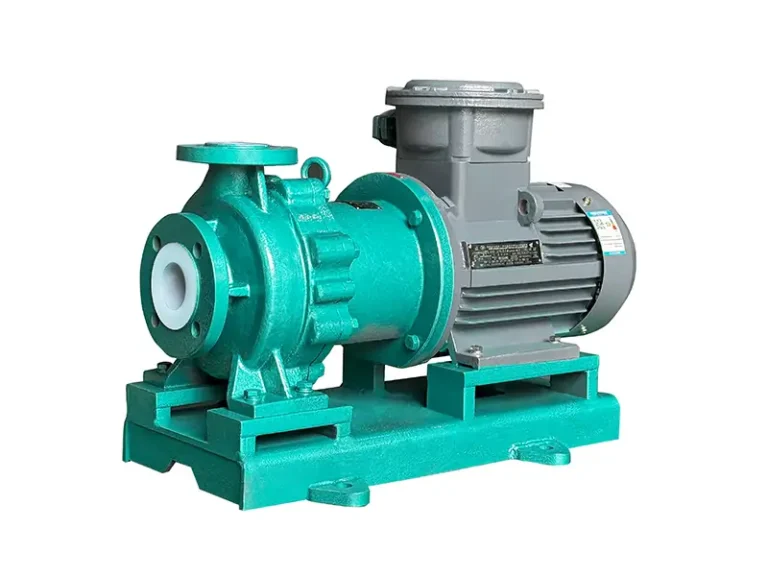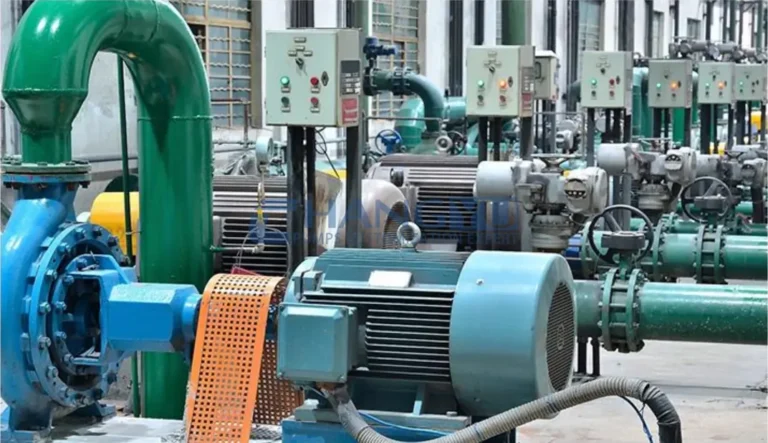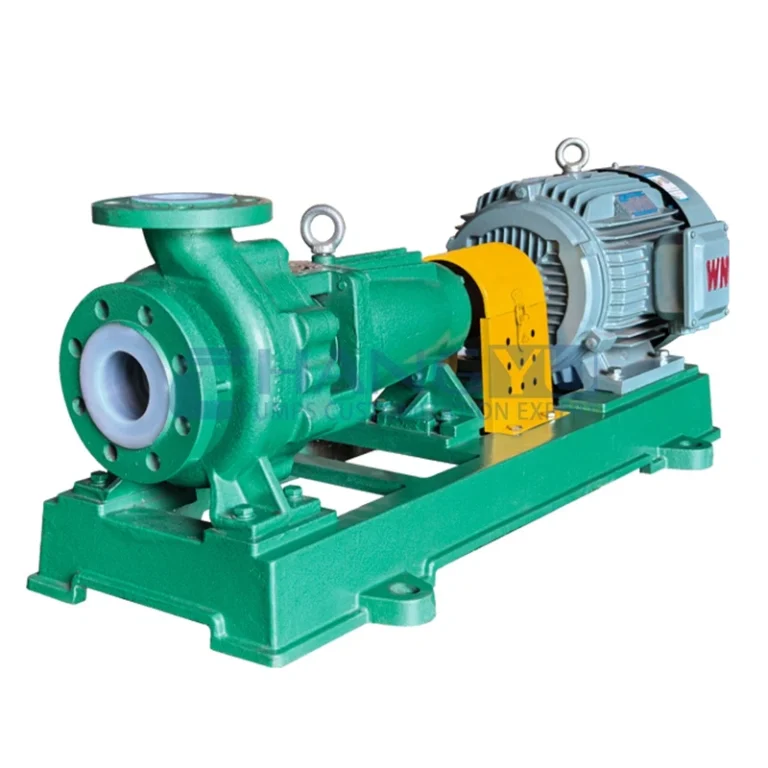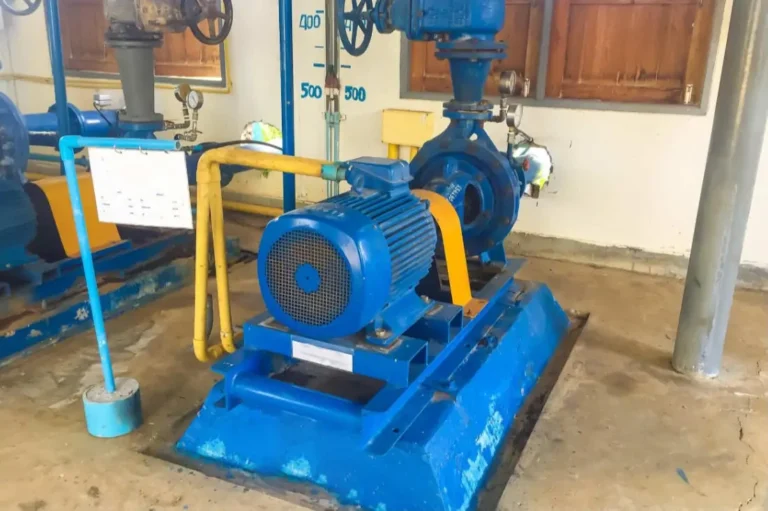
A centrifugal slurry pump is a heavy-duty pump designed to move liquids that contain suspended solid particles.
It uses a rotating impeller to transfer kinetic energy to the slurry and move the mixture through the pump casing and piping system. Compared with a standard centrifugal pump, it is built for higher wear, higher solids content, and more demanding operating conditions.
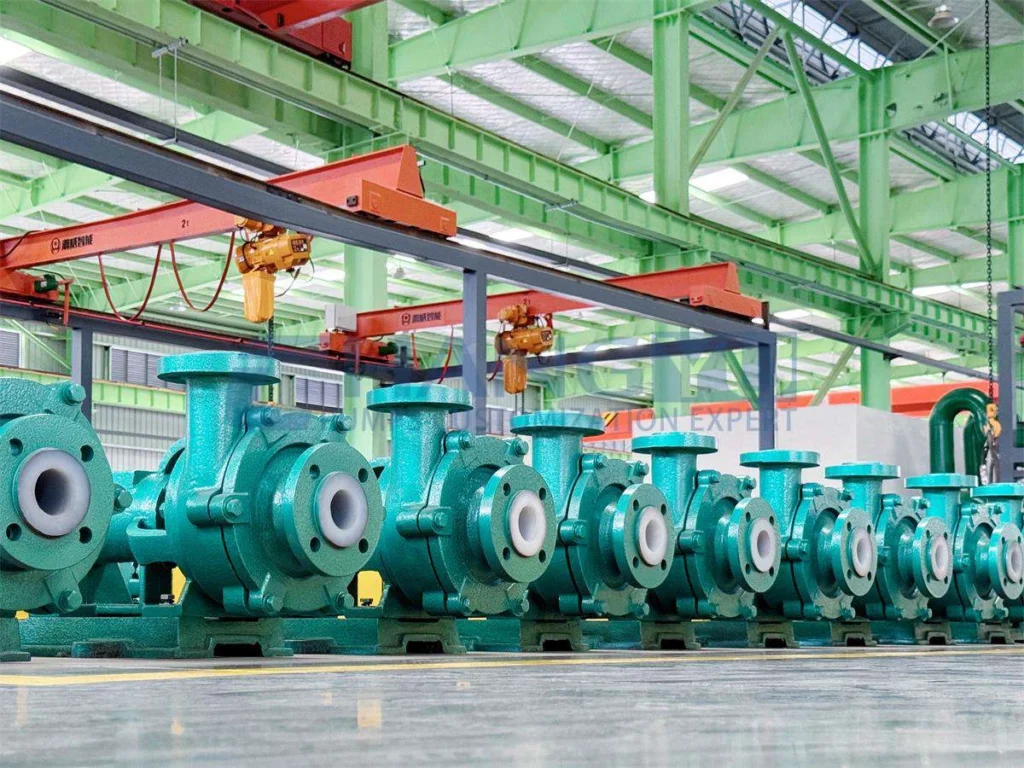
In industrial use, a slurry pump is the broader category for pumps that handle solids-laden media, while a centrifugal slurry pump is the centrifugal design within that category.
This design is widely used because it suits moderate head, higher flow duties and can be adapted for abrasive slurry, corrosive slurry, and mixed chemical-slurry service.
What Is a Centrifugal Slurry Pump?
A centrifugal slurry pump is a centrifugal pump specifically engineered for slurry rather than clean water.
A slurry contains liquid plus suspended solids, and those solids may be coarse, fine, abrasive, corrosive, or high-density depending on the process.
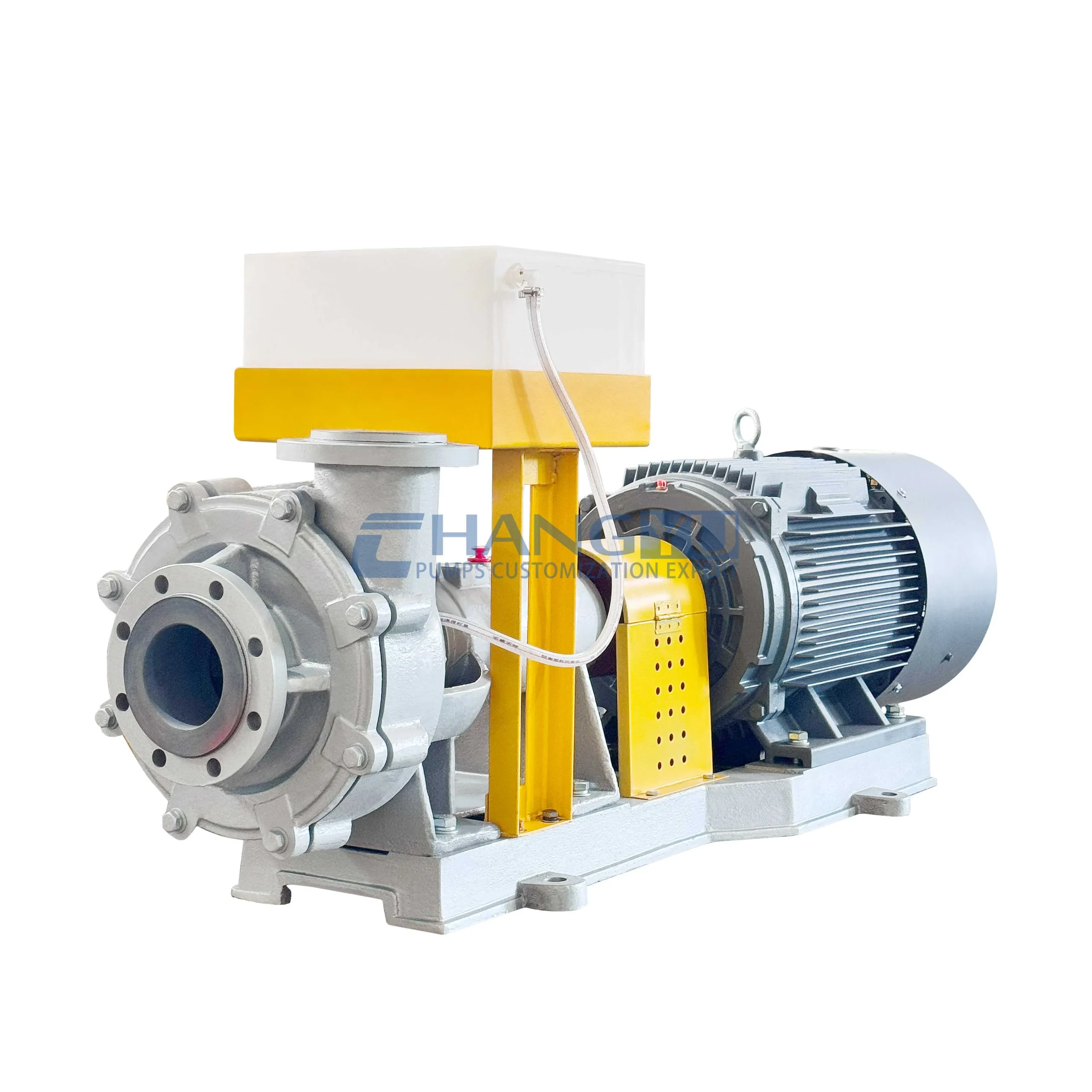
That difference changes the whole pump design. Slurry pumps are commonly built with stronger shafts, larger passages, heavier casings, and more durable wear components than standard liquid pumps.
The purpose is not only to move the slurry, but also to control wear, reduce blockage risk, and maintain stable long-term operation.
How Does a Centrifugal Slurry Pump Work?
The motor rotates the impeller, and the impeller generates centrifugal force that accelerates the slurry from the suction side to the discharge side.
This hydraulic principle is similar to a clean-water centrifugal pump, but slurry service creates much higher wear on internal parts.
Solid particles strike and slide across the impeller, liner, casing, and seal area during operation. Because of that, slurry pumps usually use wider flow passages, thicker wear surfaces, and more rugged wet-end parts than ordinary pumps.
In real applications, pump life depends not only on flow and head, but also on how well the design manages particle impact, abrasion, and slurry density.
Key Features of a Centrifugal Slurry Pump
A good centrifugal slurry pump combines hydraulic performance with wear control.
High-duty slurry pumps usually emphasize stronger construction, replaceable wear parts, and seal systems matched to abrasive service.
Key features often include:
- Heavy-duty construction for abrasive slurry duty.
- Larger solids passages for improved handling of particle-laden media.
- Replaceable wear parts such as impellers, liners, and throatbushes.
- Wear-resistant materials selected for the actual slurry conditions.
- Different seal options based on pressure, solids, and leakage requirements.
For buyers, this means slurry pump performance cannot be judged by flow and head alone.
Wear life, maintenance frequency, and seal reliability are equally important in actual plant operation.
Common Applications of Centrifugal Slurry Pumps
Centrifugal slurry pumps are widely used in mining, mineral processing, tailings handling, sand transfer, coal washing, ash transport, sludge movement, and industrial wastewater service.
They are selected when solids cause excessive wear, clogging, or instability in standard pumps.
They are also used in chemical processes where the medium is not only abrasive but also chemically aggressive.
In these services, users often need a pump that combines solids handling with corrosion resistance.
Typical applications include:
- Mining and mineral slurry transfer.
- Sand, ash, tailings, and sludge transport.
- Filter press feed and thickener underflow duty.
- Corrosive slurry transfer in chemical plants and wastewater systems.
Materials, Wear Parts and Seal Options
Material choice is one of the most important selection factors in slurry service.
Wear behavior depends on particle size, particle shape, slurry temperature, pH, chemical composition, and pump speed.
Common wear materials include hard metal, high-chrome alloys, rubber, elastomers, and other specialized wear-resistant materials.
Hard metal is often preferred for coarse, sharp, and highly abrasive solids, while elastomer-based systems may be better for finer solids or selected corrosive duties.
Wear Parts
The parts that usually wear fastest are the impeller, liner, throatbush, casing surfaces, and some seal-related components.
These areas see the highest particle impact and sliding abrasion.
Seal Options
Common seal options for centrifugal slurry pumps include packing seals, expeller seals, and mechanical seals.
Packing seals are widely used and often require seal water support.
Expeller seals reduce slurry entry near the seal area by creating a pressure-reducing effect.
Mechanical seals are used when leakage control is more important, but they must be matched carefully to solids, pressure, and flush conditions.
Material Direction by Slurry Condition
| Slurry Condition | Recommended Direction |
|---|---|
| Coarse, sharp, highly abrasive slurry | Hard metal or high-chrome wear parts. |
| Fine solids with some corrosive character | Elastomer or corrosion-resistant combinations. |
| Chemical slurry with corrosion risk | Corrosion-resistant or chemical-duty slurry pump construction. |
| High-temperature chemical slurry | Special high-temperature chemical-duty materials and lining systems. |
How to Choose the Right Centrifugal Slurry Pump
The right centrifugal slurry pump should be selected from real process conditions, not from water-duty assumptions.
Selection should begin with the slurry itself.
1. Check slurry characteristics
Start with particle size, particle shape, solids concentration, slurry density, slurry temperature, pH, and chemical composition.
These variables influence pump type, power demand, wear rate, material choice, and seal strategy.
2. Confirm flow rate and head
The pump must meet the real system duty point.
Sizing should include static head, friction losses, and actual slurry properties rather than clean-water values alone.
3. Select the right material system
If the slurry is mainly abrasive, hard metal may be the stronger choice.
If the slurry is chemically aggressive, corrosion-resistant construction may be more suitable.
If the slurry is both abrasive and corrosive, material selection becomes one of the most critical project decisions.
4. Match the seal to the duty
Seal choice should reflect solids size, pressure, leakage expectations, and whether seal water or flush support is available.
Packing, expeller, and mechanical seals all have advantages, but none is correct for every slurry service.
5. Review wear life and maintenance access
Slurry duty always causes wear.
A practical pump is one that is not only durable, but also easy to inspect, maintain, and rebuild.
Replaceable wear parts and better maintenance access reduce long-term downtime and ownership cost.
Centrifugal Slurry Pump Selection Quick Reference
Simple Selection Checklist
- Define whether the medium is abrasive slurry, corrosive slurry, or both.
- Confirm particle size and solids concentration.
- Check flow, head, and slurry density.
- Select wear-resistant materials for the actual duty.
- Compare seal options based on pressure, solids, and leakage control needs.
- Review special conditions such as high temperature and chemical attack.
Recommended Changyu Pump Products
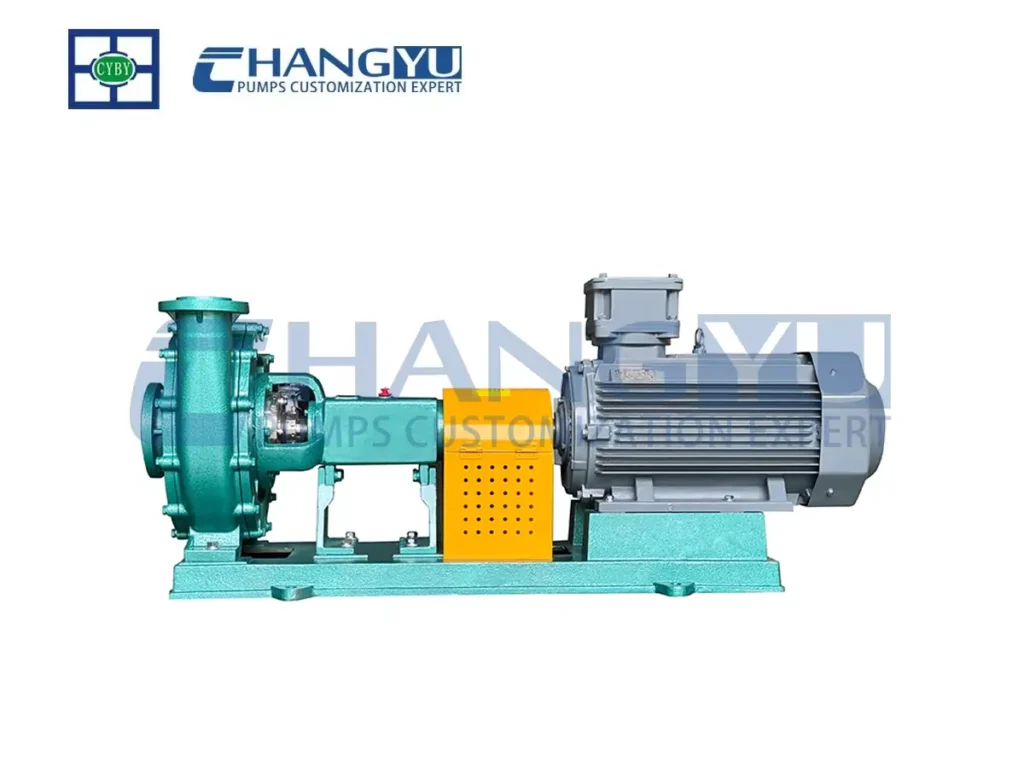
Corrosion Resistant Horizontal Slurry Pump
This product is a suitable direction for corrosive slurry service where buyers need both slurry handling and chemical resistance. It is a good fit for applications where standard metal slurry pumps may wear and corrode too quickly.
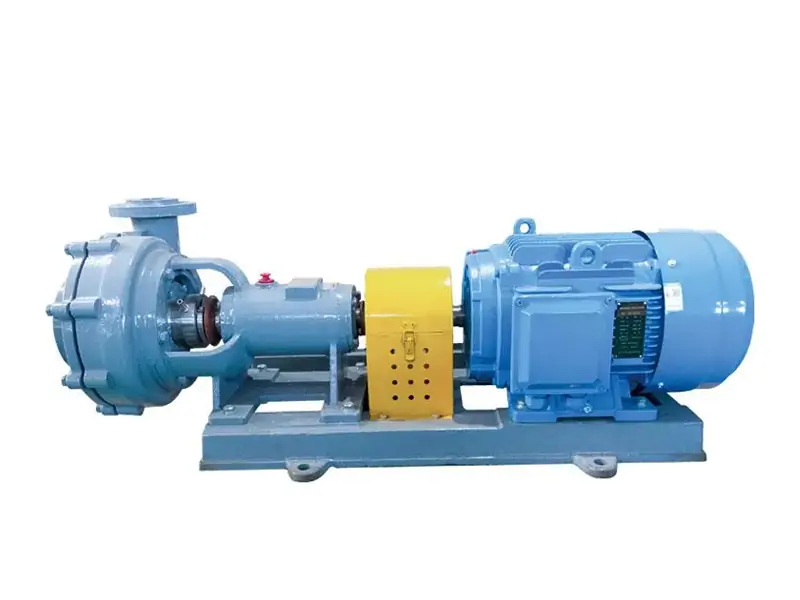
Chemical Horizontal Slurry Pump
Changyu’s UHB Chemical Slurry Pump is described as a corrosion- and wear-resistant pump for chemical slurry service.
It is a practical choice for buyers looking for a horizontal slurry pump for acidic, alkaline, or chemically aggressive media.
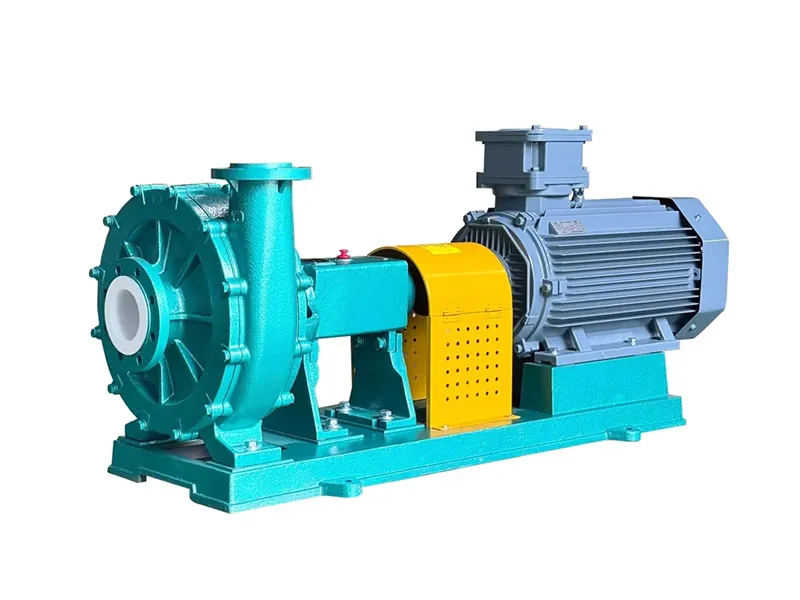
High Temperature Chemical Pump for Sale
This product is best positioned for special operating conditions rather than as the main slurry pump option.
Changyu’s CYG Series High Temperature Chemical Pump is described as a PFA-lined pump for acids from -20°C to 180°C and slurries with solids up to 40%, which makes it relevant for high-temperature chemical slurry service.
Typical Case of Centrifugal Slurry Pump: How a Changyu Pump Slurry Solution Improved Process Reliability
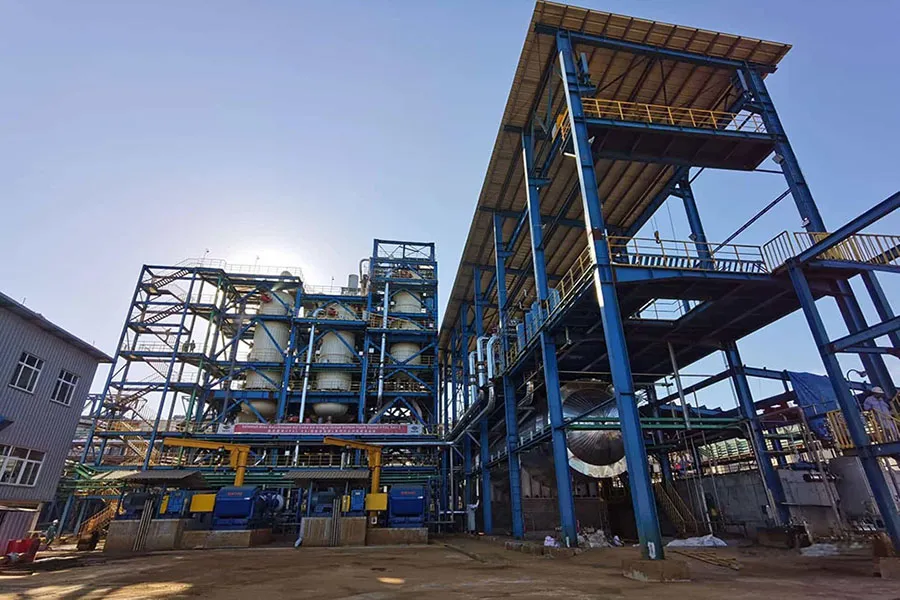
One customer in the chemical industry needed to transfer a corrosive slurry containing fine solid particles between process tanks. Their previous pump was not designed for true slurry duty. The wet-end parts wore quickly, the seal area became unstable, and maintenance interruptions happened too often. This reduced operating reliability and increased maintenance cost.
After reviewing the slurry characteristics, solids concentration, chemical conditions, and installation layout, the customer switched to a Changyu Pump slurry-duty solution that offered stronger corrosion resistance and better wear performance. The new pump was better matched to the actual media conditions, not just the required flow and head. After the change, the system ran more smoothly, wear-part life improved, and unplanned shutdowns were reduced. This is exactly why proper slurry pump selection must consider particle conditions, material system, and seal arrangement together.
Common Problems and Maintenance Tips
Slurry pumping reduces component life much faster than clean-liquid service.
That is why maintenance planning should be part of the initial selection, not an afterthought.
Common problems include:
- Rapid impeller and liner wear from abrasive particles.
- Seal failure caused by wrong seal choice or poor flush control.
- Flow reduction caused by worn hydraulic parts or operation far from the intended duty point.
- Higher power draw when slurry density or solids content is underestimated.
Useful maintenance practices include:
- Inspect wear parts regularly.
- Monitor bearings, lubrication, and operating condition.
- Inspect seal water piping and flush systems where used.
- Keep the pump close to its intended operating range.
- Flush the pump after operation if residual slurry may settle or harden internally.
Choosing the Right Centrifugal Slurry Pump for Long-Term Reliability
A centrifugal slurry pump is not just a standard centrifugal pump used in tougher service. It is a specialized pump designed to handle solids, control wear, and maintain stable performance in abrasive or corrosive slurry duty.
The right pump selection depends on slurry characteristics, wear-resistant materials, seal options, operating conditions, and maintenance requirements working together.
If you are selecting a centrifugal slurry pump for chemical slurry, corrosive slurry, or other demanding solids-handling applications, Changyu Pump can help.

Share your slurry data, solids concentration, temperature, flow rate, head, and installation layout with our team, and we will recommend the most suitable pump solution for your process. Contact us now.
Frequently Asked Questions About Centrifugal Slurry Pumps
Q1: What is a centrifugal slurry pump?
A: A centrifugal slurry pump is a heavy-duty centrifugal pump designed to move liquids that contain suspended solids. It is built with stronger hydraulic parts, larger passages, and wear-resistant components to handle abrasive or corrosive slurry more reliably than a standard pump.
Q2: What is the difference between a slurry pump and a centrifugal slurry pump?
A: A slurry pump is the broader category for pumps that handle solids-laden media. A centrifugal slurry pump is the centrifugal design within that category and is widely used for high-flow, moderate-head slurry service.
Q3: Can a centrifugal slurry pump handle corrosive slurry?
A: Yes, but it must use materials suited to both abrasion and chemical attack. Chemical-duty and corrosion-resistant slurry pump designs are used when the media contains aggressive chemicals as well as solids.
Q4: What materials are best for abrasive slurry service?
A: Hard metal and high-chrome wear parts are commonly chosen for coarse and sharp solids because they offer strong wear resistance. Elastomers may work better in finer or partly corrosive slurries depending on the duty.
Q5: What seal options are used in slurry pumps?
A: Common seal options include packing seals, expeller seals, and mechanical seals. The best choice depends on solids size, system pressure, leakage requirements, and whether seal water or flush support is available.
Q6: Why is solids concentration important in slurry pump selection?
A: Solids concentration affects slurry density, wear rate, power demand, and material choice. It is one of the most important variables in sizing and selecting a centrifugal slurry pump correctly.
Q7: How do I choose the right centrifugal slurry pump?
A: Start with particle size, solids concentration, density, temperature, pH, and chemical composition. Then confirm flow, head, material system, seal arrangement, and maintenance requirements for the actual operating duty.
Q8: How can I extend the life of a centrifugal slurry pump?
A: Run the pump near its intended operating range, inspect wear parts regularly, maintain lubrication and seal support systems, and flush the pump when slurry may settle inside. These steps help reduce wear and prevent unexpected failures.