
Le choix de la pompe adaptée au recyclage des batteries repose sur trois principes : connaître votre fluide, séparer les fluides sales des fluides propres, et adapter le matériau à l'application. Les installations de recyclage des batteries au plomb-acide traitent un mélange de fluides agressifs — acide sulfurique usé, liquide de circulation acide, électrolyte de batterie, et boue acide contenant de la boue de plomb et des particules en suspension. Ces fluides attaquent les pompes à la fois chimiquement et mécaniquement. Pompe Changyu se spécialise dans les solutions de pompes résistantes à la corrosion et à l'abrasion et propose des gammes de produits ciblées qui répondent à chaque défi de pompage distinct.
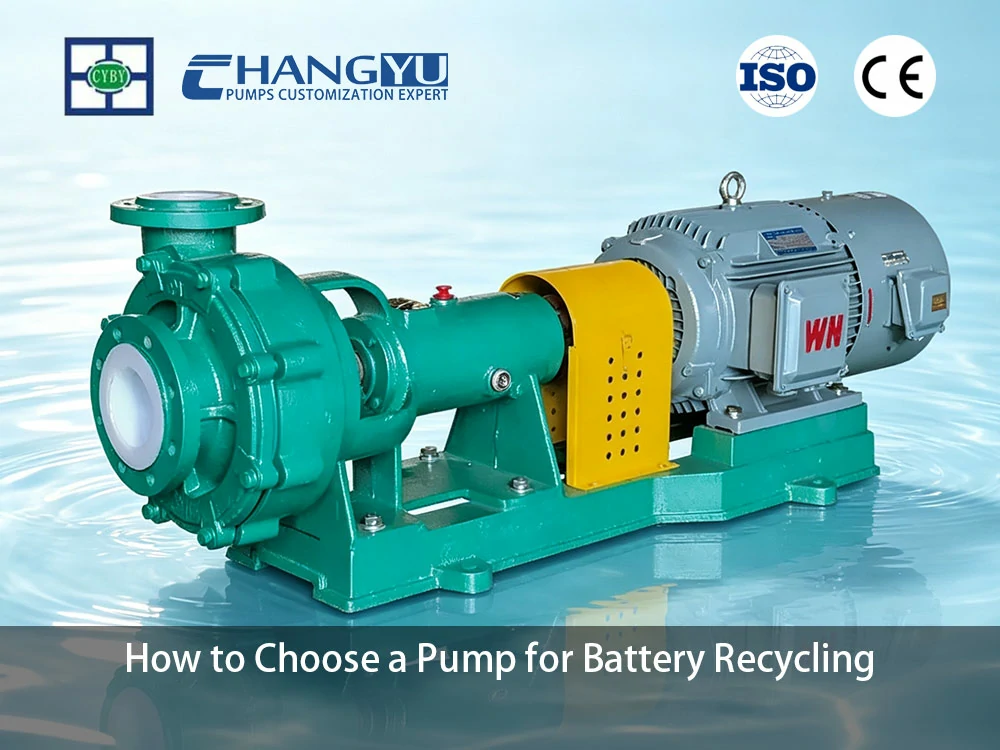
Connaissez votre fluide : que pompez-vous ?
Le matériau de la pompe est le facteur le plus important — et tout commence par la compréhension de la composition du fluide. Le recyclage des batteries implique quatre types de fluides distincts, chacun imposant des exigences différentes sur les matériaux de la pompe :
- Acide sulfurique usé — fortement corrosif, relativement propre → défi principal : corrosion
- Liquide de circulation acide — corrosif, peut contenir des traces de solides → défi : corrosion + abrasion légère
- Boue acide avec boue de plomb — à la fois corrosif et hautement abrasif → défi : abrasion + corrosion → abrasion + corrosion
- Électrolyte de batterie — hautement acide, propre → défi : corrosion
À retenir : Avant de sélectionner une pompe, analysez chaque flux de fluide dans votre usine — teneur en solides, taille des particules, concentration en acide et température. Une pompe qui fonctionne pour l'acide propre échouera en quelques semaines lors du traitement de la boue contenant de la boue de plomb.
Le double défi : corrosion et abrasion
Les deux plus grandes menaces pour la longévité des pompes dans le recyclage des batteries sont la corrosion et l'abrasion, agissant souvent simultanément.
- Corrosion attaque les surfaces métalliques au contact de l'acide sulfurique et de l'électrolyte, provoquant piqûres, amincissement et éventuellement défaillance structurelle
- Abrasion de la boue de plomb et des particules en suspension érode les roues, les corps de pompe et les joints — même dans les matériaux résistants à la corrosion
- Les pompes chimiques standard conçues pour les liquides propres échouent rapidement sous cette double attaque
- Le résultat est des réparations fréquentes, des arrêts non planifiés et des coûts de maintenance croissants
À retenir : La solution ne consiste pas à trouver une pompe unique qui fait tout de manière adéquate — il s'agit d'adapter chaque type de fluide à une pompe conçue spécifiquement pour ses exigences.
La stratégie à deux pompes : pourquoi elle fonctionne
Une approche efficace sépare la boue sale de l'acide propre et adapte chacune à une pompe conçue pour ses exigences spécifiques.
- Boue acide avec boue de plomb et solides → nécessite une pompe qui privilégie la résistance à l'abrasion tout en maintenant la résistance à la corrosion
- Flux d'acide plus propres (acide sulfurique usé, acide de circulation, électrolyte) → nécessite une pompe optimisée pour la résistance à la corrosion avec la capacité de gérer des traces de solides
- L'utilisation de deux pompes spécialisées prolonge considérablement la durée de vie des équipements et réduit les coûts de maintenance globaux par rapport à une pompe polyvalente unique
1 Pour la boue acide → Pompe à boue résistante à l'usure UHB-ZK
Pour la boue acide contenant des particules solides, une pompe avec des composants d'écoulement en polyéthylène à ultra-haut poids moléculaire (UHMW-PE) et PTFE offre les performances les plus fiables. La UHB-ZK de Changyu Pump pompe à boue résistante à l'usure et à la corrosion est construite avec exactement ces matériaux.
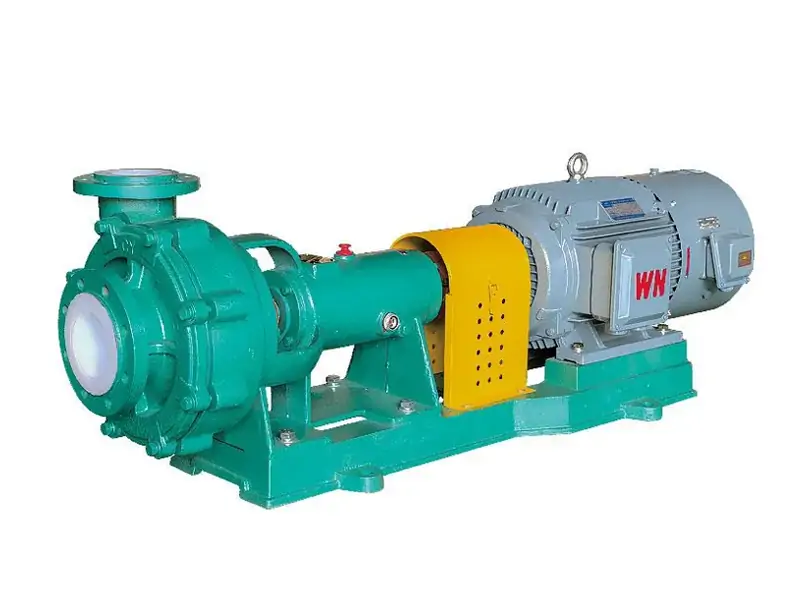
Caractéristiques principales :
- Matériau : Composants d'écoulement UHMW-PE + PTFE — résistance exceptionnelle à l'abrasion contre les solides en suspension, forte résistance chimique contre les acides
- Conception du joint : Structure de joint étanche pour la circulation continue d'acide et la production de plomb
- Paramètres typiques :
| Plage de débit : | 3m³/h~2600m³/h |
|---|---|
| Gamme de têtes : | 5m~100m |
| Puissance du moteur : | 0,75kw~300kw |
| Vitesse : | 750~2900 r/min |
| Gamme de température moyenne : | -20℃~90℃ |
| Matériaux personnalisables : | UHMW-PE / PTFE → PE-UHMW / PTFE |
À retenir : Cette combinaison de matériau et de conception permet à la UHB-ZK de gérer des conditions qui détruiraient rapidement les pompes métalliques standard.
2 Pour acide propre → Pompe centrifuge à revêtement fluoroplastique CYF
Pour les flux d'acide propre, une pompe avec revêtement fluoroplastique offre la solution la plus fiable à long terme. La pompe CYF de Changyu Pump à revêtement centrifuge présente un revêtement F46 haute performance à l'intérieur du corps de pompe.
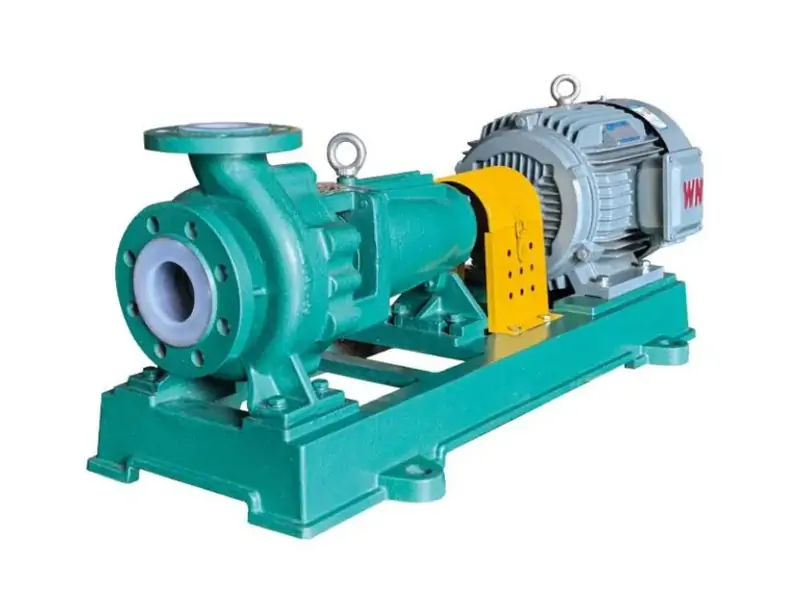
Caractéristiques principales :
| Plage de débit : | 1,6 m³/h-2600 m³/h |
|---|---|
| Gamme de têtes : | 5 m-130 m |
| Puissance du moteur : | 1,5 kw-110 kw |
| Vitesse : | 1450-2900 r/min |
| Gamme de température moyenne : | -20°C~180°C |
| Matériaux personnalisables : | Acier revêtu de FEP, PFA ou PTEF |
À retenir : Le matériau de revêtement prévient efficacement la corrosion, prolonge la durée de vie utile et réduit la fréquence des interventions de maintenance.
Tableau de décision : Associez votre fluide à la bonne pompe
| Votre fluide | Pompe recommandée | Matériau clé | Pourquoi cela fonctionne |
|---|---|---|---|
| Boue acide avec boue de plomb et solides | Changyu UHB-ZK pompe à boues | UHMW-PE / PTFE → PE-UHMW / PTFE | Résistance à l'abrasion + résistance à la corrosion |
| Acide sulfurique usé, acide de circulation, électrolyte | Changyu CYF pompe centrifuge à revêtement | Revêtement fluoroplastique F46 | Résistance à la corrosion + tolérance aux traces de solides |
| Service mixte (boue et acide propre) | Combinaison UHB-ZK + CYF Les deux matériaux | Couvre toute la gamme sans compromis | Cas réels : Ce qu'un système de pompage correctement adapté apporte |
Des pompes correctement sélectionnées apportent des améliorations mesurables tant en stabilité opérationnelle qu'en réduction des coûts.
Dans une application réelle d'usine de recyclage de batteries, la mise à niveau de pompes chimiques polyvalentes vers une combinaison ciblée UHB-ZK + CYF a produit des résultats clairs :. Transfert d'acide stable
- ✅ sans arrêts imprévus Usure des composants considérablement réduite
- ✅ confirmée par inspection visuelle Cycles de maintenance prolongés
- ✅ — moins d'interventions, moins de temps d'arrêt Coûts de maintenance globaux réduits
- ✅ — la consommation de pièces de rechange a diminué Arrêts non planifiés éliminés
- ✅ — la continuité de production s'est améliorée Ces résultats sont atteignables lorsque la sélection des pompes repose sur une compréhension approfondie du fluide, et non sur des hypothèses génériques.
À retenir : FAQ.
Une seule pompe peut-elle gérer à la fois la boue acide et l'acide propre dans une usine de recyclage de batteries ?
Utiliser une seule pompe pour les deux est possible mais pas optimal. La boue nécessite une résistance à l'abrasion (UHMW-PE), tandis que l'acide propre nécessite une résistance à la corrosion (revêtement fluoroplastique). Une pompe unique compromet l'un ou les deux aspects. La
- combinaison UHB-ZK + CYF de Changyu Pump couvre les deux applications sans compromis. Quel est le meilleur matériau pour pomper de la boue acide contenant de la boue de plomb ?.
L'UHMW-PE combiné au PTFE offre le meilleur équilibre entre résistance à l'abrasion et résistance chimique. C'est le matériau utilisé dans la
- pompe à boue. La UHB-ZK de Changyu Pump Qu'est-ce qui provoque la défaillance des joints de pompe dans les usines de recyclage de batteries ?.
La combinaison de la corrosion par l'acide sulfurique et des particules abrasives de la boue de plomb attaque les faces de joint et les élastomères. La sélection de pompes offrant une résistance à l'abrasion en plus de la résistance à la corrosion répond directement à ce mode de défaillance.
- Comment décider entre une pompe à boue et une pompe centrifuge à revêtement ?.
Le facteur déterminant est la
- teneur en solides . Si le fluide contient des particules en suspension telles que la boue de plomb, choisissez une pompe à boue comme la UHB-ZK. Si le fluide est un acide relativement propre, une pompe centrifuge à revêtement comme la CYF est suffisante et plus rentable.. Obtenez la bonne pompe pour votre usine de recyclage de batteries.
Obtenez la bonne pompe pour votre usine de recyclage de batteries
Vous n'êtes pas sûr de la configuration de pompe qui convient à votre application spécifique de recyclage de batteries ? Contact Pompe Changyu pour discuter de vos conditions de fluide, de vos exigences de débit et de vos objectifs opérationnels.
Comment nous pouvons vous aider :
- Analyser vos flux de fluides — teneur en solides, concentration d'acide, température, débit
- Recommander la combinaison de pompes optimale — UHB-ZK, CYF, ou un système complet
- Fournir un support technique pour l'intégration dans votre installation existante
Contacter Changyu Pump pour une consultation adaptée aux conditions de votre usine.