
1. Introduction
Pompes pour acides industriels ne sont pas des pompes chimiques génériques avec une étiquette de résistance à la corrosion. Chaque acide attaque les matériaux selon un mécanisme fondamentalement différent : l'acide chlorhydrique dissout les métaux par piqûration induite par les chlorures, la corrosivité de l'acide sulfurique varie considérablement avec la concentration, l'acide nitrique est un oxydant puissant qui dégrade de nombreux polymères, et l'acide fluorhydrique pénètre les revêtements en fluoropolymère pour attaquer le substrat métallique sous-jacent. Un matériau de pompe qui résiste à un acide à une température donnée peut subir une défaillance catastrophique lorsqu'il est exposé à un autre acide—ou même au même acide à une concentration ou température plus élevée.
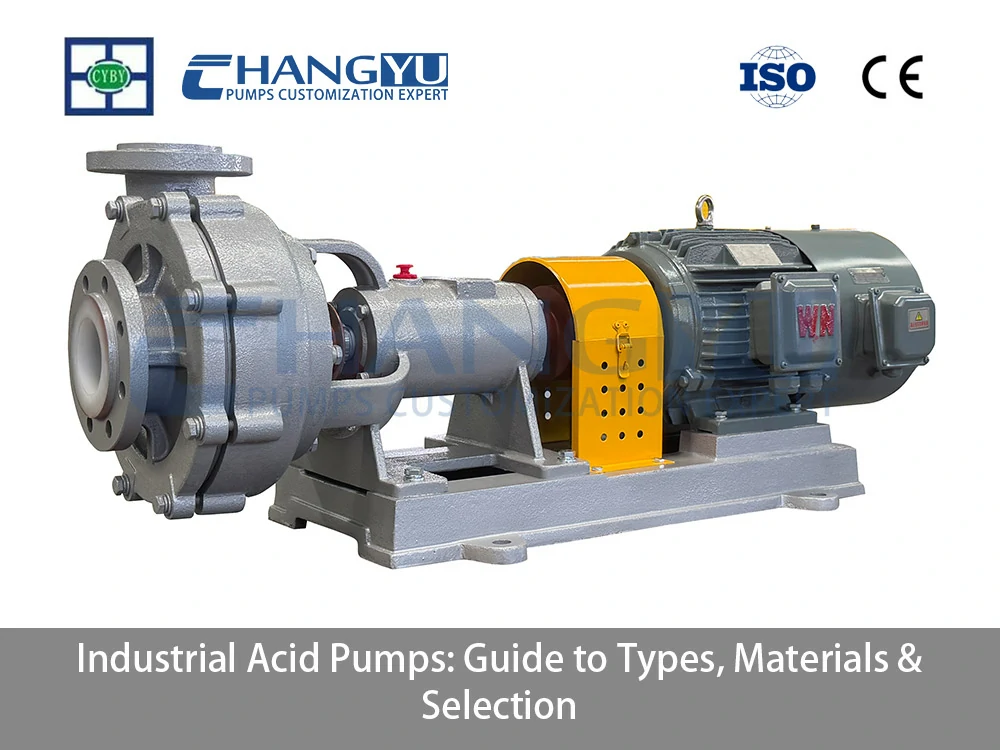
Le marché mondial des pompes de transfert d'acide continue de croître régulièrement, porté par l'expansion des capacités de traitement chimique, le durcissement des réglementations environnementales sur les émissions fugitives, et l'adoption croissante des technologies de pompes sans garniture qui éliminent le joint mécanique—la voie de fuite la plus courante dans les services acides.
Changyu Pump a passé plus de deux décennies à concevoir des équipements de manutention de fluides résistants à la corrosion pour les applications les plus agressives chimiquement au monde. Ce guide fournit une référence structurée couvrant les types de pompes pour service acide, une matrice de sélection des matériaux organisée par type d'acide, les technologies d'étanchéité et de sécurité, un cadre de sélection étape par étape, et les principales industries d'application. Contactez-nous avec vos paramètres d'acide pour une recommandation spécifique.
Qu'est-ce qu'une Pompe pour Acides Industriels ?
2.1 Définition de base
Un pompe pour acides industriels est une pompe spécialement conçue pour transférer des milieux acides—sulfurique, chlorhydrique, nitrique, phosphorique, fluorhydrique, et leurs mélanges—dans les installations industrielles. Ses composants en contact avec le fluide (corps, roue, arbre, joints, joints toriques et garnitures) doivent être vérifiés comme chimiquement compatibles avec l'acide spécifique à sa concentration et température de fonctionnement. Les parties mouillées d'une pompe à acide utilisent des matériaux résistants à la corrosion tels que le PP, le PVDF, le PTFE, les revêtements en fluoropolymère, ou les alliages spéciaux, et des conceptions anti-fuite—en particulier les options à entraînement magnétique sans garniture et à double joint—pour protéger le personnel et l'environnement.
La distinction technique entre une pompe pour acides industriels et une pompe chimique à usage général réside dans trois éléments de conception. Premièrement, la stratégie matérielle est spécifique à l'acide : chaque acide impose un mécanisme de corrosion distinct qui élimine entièrement certaines classes de matériaux—l'acide chlorhydrique élimine les métaux, l'acide nitrique élimine le polypropylène, et l'acide fluorhydrique nécessite des formulations spécialisées de fluoropolymère avec une épaisseur de revêtement suffisante. Deuxièmement, la technologie d'étanchéité est choisie en fonction de la classification de danger de l'acide : les pompes à entraînement magnétique offrent un confinement sans fuite pour les acides dangereux, tandis que les doubles joints mécaniques avec fluide barrière servent les applications de toxicité modérée. Troisièmement, la conception hydraulique tient compte de la densité de l'acide—l'acide sulfurique concentré à une densité de 1,84 nécessite une puissance moteur considérablement plus élevée que l'eau au même débit et à la même hauteur.
2 Ce qui Distingue une Pompe pour Acides Industriels d'une Pompe Chimique Standard
| Fonctionnalité | Pompe chimique standard | Pompe pour Acides Industriels |
|---|---|---|
| Stratégie relative au matériau mouillé | Résistance générale à la corrosion | Correspondance des matériaux spécifique à l'acide (PP, PVDF, PTFE, PFA, acier inoxydable duplex, Hastelloy) |
| Technologie d'étanchéité | Joint mécanique simple (par défaut) | Entraînement magnétique (zéro fuite), double joint mécanique avec fluide barrière, ou membrane sans garniture |
| Dimensionnement du Moteur | Dimensionné pour une densité similaire à l'eau (~1,0) | Dimensionné pour la densité de l'acide (jusqu'à 1,84 pour H₂SO₄ concentré) |
| Certification de Sécurité | Généralement non requise | ATEX/IECEx pour environnements acides inflammables ; API 685 pour conceptions sans garniture |
3 Applications Typiques
Les pompes pour acides industriels servent une large gamme de tâches de process dans de multiples industries. Une discussion détaillée des exigences spécifiques de chaque industrie se trouve dans la Section 7.
| L'industrie | Acides typiques | Besoins en pompes |
|---|---|---|
| Galvanisation et finition des métaux | Sulfurique, chlorhydrique, chromique, nitrique | Recirculation continue ; voie humide résistante à la corrosion |
| Traitement chimique | Sulfurique, chlorhydrique, nitrique, phosphorique | Transfert de produits en vrac entre les cuves de stockage et les cuves de traitement |
| Traitement de l'eau et des eaux usées | Acide sulfurique, acide chlorhydrique | Dosage et ajustement du pH ; dosage précis |
| Décapage de l'acier | Acide chlorhydrique, acide sulfurique (chauffé) | Circulation continue à haut débit ; matériaux résistants à la température |
| Fabrication de semi-conducteurs | Acide fluorhydrique, acides de haute pureté | Voie humide ultra-pure ; pas de contamination métallique |
| Produits pharmaceutiques et chimie fine | Acides divers, flux d'acides mixtes | Confinement sans ou avec double étanchéité |
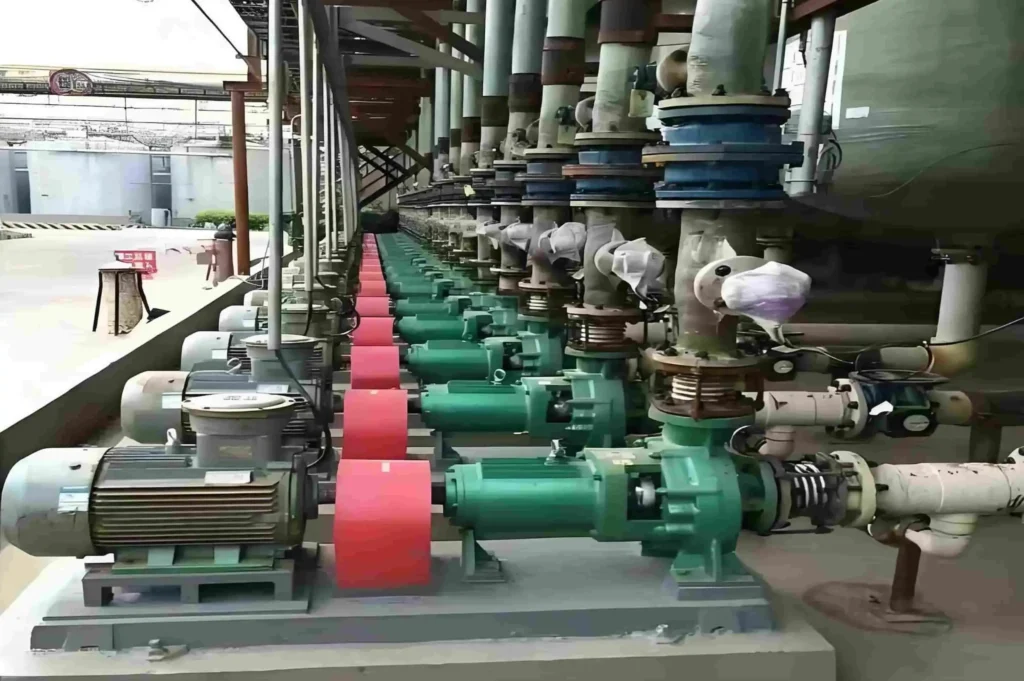
Quels sont les Principaux Types de Pompes pour Acides Industriels ?
Cinq types de pompes couvrent la majorité des applications de transfert d'acide industriel. Chacun a une architecture d'étanchéité distincte qui détermine son adéquation pour les services acides dangereux, de haute pureté ou à haut débit. Pour des conseils sur la sélection de la configuration d'étanchéité appropriée pour chaque type de pompe, reportez-vous à la Section 5.
1 Pompes Centrifuges pour Acides (Revêtues et Tout Plastique)
Centrifuge pompes à acide sont la configuration la plus largement déployée pour le transfert d'acide continu à haut débit—circulation des solutions de bain de décapage, transfert d'acides entre les réservoirs de stockage, et alimentation des réacteurs de process. Pour le service acide, les pompes centrifuges sont construites en deux configurations : revêtues de fluoroplastique (un corps métallique avec un revêtement interne en PTFE, PFA ou FEP) et tout plastique (corps et roue en PP ou PVDF). Le revêtement en fluoroplastique isole le corps métallique de l'acide, combinant la résistance chimique du fluoropolymère avec la résistance structurelle de l'enveloppe métallique. Ces pompes traitent des débits d'environ 1 à 2 600 m³/h avec des hauteurs de refoulement allant jusqu'à 130 m.
Les pompes centrifuges sont les mieux adaptées aux acides de viscosité faible à modérée (inférieure à environ 200 cP). Elles reposent sur un joint mécanique là où l'arbre sort du corps, rendant la compatibilité du matériau du joint avec l'acide aussi critique que celle du matériau du corps et de la roue. Pour une compréhension plus approfondie des fondamentaux des pompes centrifuges dans les applications chimiques, consultez notre guide des pompes de process chimique.
2 Pompes pour Acides à Entraînement Magnétique
Entraînement magnétique pompes à acide éliminent entièrement le joint mécanique d'arbre. Le couple est transmis du moteur à la roue à travers une enveloppe de confinement stationnaire à l'aide d'un couplage magnétique. Le fluide de process est entièrement confiné à l'intérieur du corps scellé—aucun arbre rotatif ne traverse la limite de pression. Cette conception sans garniture atteint une fuite nulle par conception, faisant des pompes à entraînement magnétique la spécification standard pour les acides dangereux, toxiques, inflammables ou de grande valeur où même une fuite mineure du joint est inacceptable.
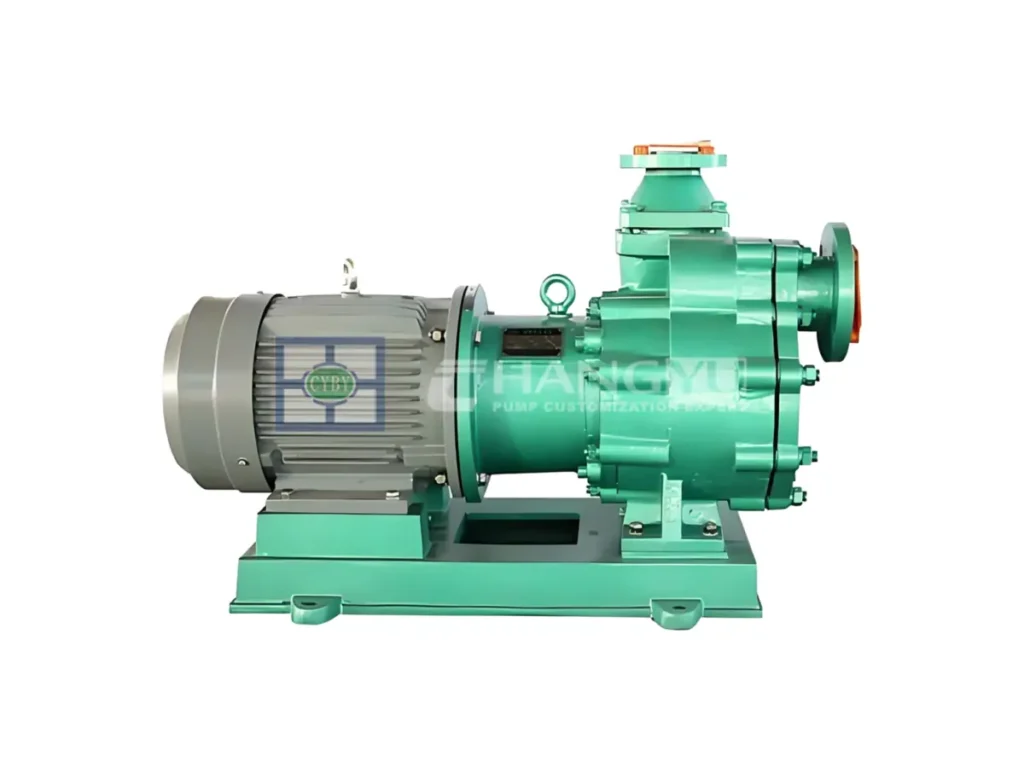
Une pompe à entraînement magnétique sans garniture n'utilise aucun joint mécanique d'arbre. Comparée aux pompes traditionnelles à joint mécanique d'arbre, la conception sans garniture n'a aucun problème de fuite et est couramment utilisée pour transférer des liquides chimiques dangereux, inflammables, explosifs, acides forts, bases fortes ou toxiques. Ces pompes sont régies par API 685 pour les services lourds dans les usines pétrochimiques et chimiques, et ils assurent un confinement sans fuite pour les applications où une fuite du joint mécanique créerait un risque d'exposition du personnel ou un rejet dans l'environnement.
Pour les services d'acides forts, les pompes à entraînement magnétique revêtues de fluoroplastique (PTFE, PFA ou FEP) offrent une compatibilité chimique vérifiée sur l'ensemble du spectre des acides — chlorhydrique, sulfurique, nitrique, phosphorique et fluorhydrique — lorsqu'elles sont construites avec les matériaux mouillés appropriés. Pour une discussion plus approfondie sur la technologie d'entraînement magnétique, consultez notre Pompe magnétique chimique : Le guide complet pour la manipulation des fluides corrosifs (2026).
3 Pompes à membrane pour acides (électriques et pneumatiques)
Diaphragme pompes à acide utilisent une membrane flexible à mouvement alternatif pour déplacer le fluide. La membrane forme une barrière sans joint entre le fluide de procédé et le mécanisme d'entraînement — aucun joint d'arbre rotatif n'est requis. Cela rend les pompes à membrane adaptées aux acides contenant des particules abrasives, des boues ou des solides cristallisants qui détruiraient un joint mécanique ou obstrueraient une roue centrifuge.
Les pompes à membrane électriques fournissent un débit stable et continu sans infrastructure d'air comprimé. Elles manipulent les acides à haute viscosité, les fluides volatils et les petits solides, avec des matériaux de corps allant du PP, du PVDF et de l'acier inoxydable. Pompes pneumatiques à double membrane (AODD) sont la spécification standard pour le transfert d'acides dangereux et inflammables. Alimentées entièrement par air comprimé, elles sont intrinsèquement sans joint, auto-amorçantes et peuvent fonctionner à sec sans dommage. Pour les zones classées ATEX Zone 1 ou Zone 2, les pompes AODD avec des matériaux de corps conducteurs et une mise à la terre vérifiée sont la spécification standard.

4 Pompes à acides verticales et submersibles
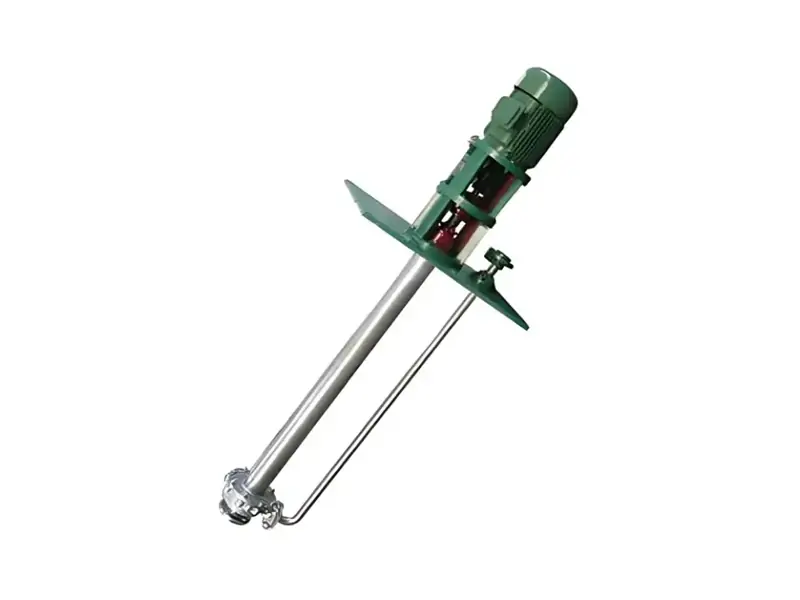
Porte-à-faux vertical pompes à acide placent le moteur et les roulements au-dessus du puisard ou du réservoir, avec un long arbre s'étendant vers le bas jusqu'à une roue submergée. Cette conception élimine les roulements et les joints submergés — les deux composants les plus vulnérables aux attaques corrosives — ce qui la rend intrinsèquement adaptée au drainage des puisards d'acide, aux fosses de décapage et au transfert depuis les réservoirs de stockage d'acide. L'extrémité mouillée est construite à partir de composants revêtus de fluoroplastique ou de matériaux entièrement plastiques selon la chimie spécifique.
5 Pompes doseuses pour acides
Doseuses pompes à acide fournissent des débits précis et réglables pour les applications de dosage dans le traitement de l'eau, l'ajustement du pH et l'injection de produits chimiques. Les pompes doseuses à membrane fournissent des volumes d'injection reproductibles pour les applications où la précision du débit est critique.
6 Comparaison des types de pompes à acides
| Type de pompe | Méthode de scellement | Zéro fuite | Meilleure application | Gamme de viscosité | Plage de débit |
|---|---|---|---|---|---|
| Centrifuge (avec revêtement/en plastique) | Garniture mécanique simple | Non (dépendant du sceau) | Transfert continu à haut débit, recirculation | < 200 cP | 1-2 600 m³/h |
| Entraînement magnétique | Sans soudure (enveloppe de confinement statique) | Oui (à dessein) | Acides dangereux, toxiques, inflammables, de grande valeur | < 200 cP | 3-800 m³/h |
| Membrane électrique | Sans joint (barrière à membrane) | Oui (à dessein) | Acides chargés de particules, à haute viscosité et cristallisants | > 200 cP | Jusqu'à 480 L/min |
| AODD | Sans joint (barrière à membrane) | Oui (à dessein) | Dangereux, inflammables, service intermittent | > 200 cP | Jusqu'à 1 041 L/min |
| Porte-à-faux vertical | Pas de joints immergés | Oui (pas de joint dynamique submergé) | Drainage de puisard d'acide, transfert depuis réservoir | < 200 cP | 5-400 m³/h |
Comment les différents acides déterminent le choix des matériaux et de la pompe
Chaque acide attaque les matériaux via un mécanisme de corrosion distinct. Le matériau de la pompe doit être adapté à l'acide spécifique, à sa concentration et à sa température — et non à une étiquette générique “ résistant aux acides ”.
1 Acide sulfurique (H₂SO₄)
L'acide sulfurique présente une courbe de corrosion dépendante de la concentration. L'acier inoxydable ordinaire tel que le 304 et le 316 a une utilisation limitée pour les milieux acide sulfurique. L'acier au carbone résiste à l'acide sulfurique concentré au-dessus de 80 % à basse température dans des conditions de stockage statique, où une couche protectrice de sulfate de fer se forme. Dans des conditions d'écoulement — comme à l'intérieur d'un corps de pompe — cette couche s'érode, et l'acier au carbone n'est pas adapté pour les composants mouillés de la pompe. Au-dessus d'une concentration de 80 % à des températures élevées, l'acide concentré attaque de nombreux polymères, et les pompes revêtues de fluoroplastique (PTFE ou PFA) deviennent la spécification standard.
La logique de sélection des matériaux pour l'acide sulfurique est :
- ≤40%, ≤25°C: Les pompes revêtues de PP, PVDF ou caoutchouc naturel sont économiques
- 40-80%: Pompes revêtues de PVDF ou UHMW-PE
- 80-98%, ≤80°C: Pompes revêtues de UHMW-PE, PFA ou PTFE
- Toutes concentrations, température élevée: Pompes revêtues de PFA (jusqu'à ~160°C dans les applications structurelles)
2 Acide chlorhydrique (HCl)
L'acide chlorhydrique attaque agressivement la plupart des métaux, y compris tous les aciers inoxydables, par piqûration induite par les chlorures et fissuration par corrosion sous contrainte. La plupart des matériaux non métalliques ont une bonne résistance à la corrosion vis-à-vis de l'acide chlorhydrique, donc les pompes revêtues de caoutchouc et les pompes en plastique (telles que le polypropylène, les fluoroplastiques, etc.) sont le meilleur choix pour transporter l'acide chlorhydrique. Le Hastelloy-C offre une résistance métallique à des concentrations et températures plus basses, mais les pompes non métalliques sont fortement préférées pour le service HCl.
Sélection des matériaux pour l'acide chlorhydrique :
- ≤37%, ≤25°C: Le PP est économique
- >37 % ou températures élevées: Pompes revêtues de PVDF ou PTFE/PFA
- Toutes concentrations, résistance chimique maximale: Pompes à entraînement magnétique revêtues de PTFE/PFA
3 Acide nitrique (HNO₃)
L'acide nitrique est un agent oxydant fort qui dégrade le PP à toute concentration. Le PVDF résiste à l'acide nitrique à des concentrations et températures modérées. L'acier inoxydable est le matériau résistant à l'acide nitrique le plus largement utilisé et présente une bonne résistance à la corrosion vis-à-vis de toutes les concentrations d'acide nitrique à température ambiante. Pour l'acide nitrique concentré au-dessus d'environ 50 % ou à des températures élevées, les pompes revêtues de PTFE et de PFA offrent la compatibilité chimique vérifiée requise.
4 Acide phosphorique (H₃PO₄)
L'acide phosphorique pur est compatible avec le PP, le PVDF et l'acier inoxydable 316 à des températures modérées. L'acide phosphorique de voie humide — le grade industriel le plus courant — contient des impuretés de fluorure et des particules abrasives de gypse qui créent un environnement combiné de corrosion et d'abrasion. Pour l'acide phosphorique de voie humide, les pompes revêtues de UHMW-PE offrent la résistance aux chocs et la résistance chimique requises.
5 Acide fluorhydrique (HF)
L'acide fluorhydrique est chimiquement compatible avec le PTFE et le PFA au niveau de la masse, mais en tant qu'acide à petites molécules, le HF imprègne les revêtements fluoropolymères à des températures élevées et attaque le corps métallique sous-jacent. Des revêtements PFA d'une épaisseur minimale de 15 à 20 mm sont spécifiés, et l'intégrité du revêtement doit être vérifiée périodiquement par des tests d'épaisseur par ultrasons. Le carbure de silicium et autres matériaux contenant du silicium doivent être strictement exclus — le HF réagit avec le silicium pour former du gaz tétrafluorure de silicium, ce qui détruit le matériau.
6 Acides mixtes et acides usés
Les flux d'acides mixtes présentent un environnement de corrosion imprévisible. La combinaison d'acides peut produire des effets synergiques qu'aucun acide ne produirait individuellement. Les pompes à revêtement fluoroplastique (PTFE ou PFA) offrent la plus large fenêtre de sécurité pour le service d'acides mixtes, car ces matériaux sont inertes à pratiquement toutes les combinaisons d'acides dans leurs limites de température.
7 Référence rapide de compatibilité acide-matériau
| Acide | Concentration/Température | PP | PVDF | PTFE | PFA | 316 SS | Hastelloy C-276 |
|---|---|---|---|---|---|---|---|
| Acide sulfurique | ≤40%, ≤25°C | ✅ | ✅ | ✅ | ✅ | ❌ | ✅ |
| Acide sulfurique | 40-80% | ❌ | ✅ | ✅ | ✅ | ❌ | ✅ |
| Acide sulfurique | 80-98%, ≤80°C | ❌ | ✅ | ✅ | ✅ | ❌ | ✅ |
| Acide chlorhydrique | ≤37%, ≤25°C | ✅ | ✅ | ✅ | ✅ | ❌ | ⚠️ |
| Acide chlorhydrique | >37% ou chaud | ❌ | ✅ | ✅ | ✅ | ❌ | ⚠️ |
| Acide nitrique | ≤50%, ≤50°C | ❌ | ✅ | ✅ | ✅ | ✅ | ✅ |
| Acide nitrique | >50% ou chaud | ❌ | ❌ | ✅ | ✅ | ❌ | ✅ |
| Acide fluorhydrique | Tous | ❌ | ❌ | ❌ | ✅* | ❌ | ❌ |
| Acide phosphorique (pur) | ≤85%, ≤80°C | ✅ | ✅ | ✅ | ✅ | ✅ | ✅ |
| Acide phosphorique (procédé humide) | Contient des solides F- + | ❌ | ⚠️ | ✅ | ✅ | ❌ | ✅ |
*PFA d'une épaisseur minimale de 15 à 20 mm ; inspection ultrasonique périodique requise. Matériaux contenant du silicium strictement exclus. PTFE évalué à ~120°C dans les applications structurelles ; PFA évalué à ~160°C dans les applications structurelles et jusqu'à ~260°C dans les fonctions non structurelles (étanchéité statique).
8 Arbre de décision matériau-type de pompe
Pour déterminer le système de matériaux et le type de pompe appropriés pour une application acide spécifique, suivez cette logique séquentielle :
- Caractérisez l'acide. Identifiez le type d'acide, la concentration et la température de fonctionnement maximale. Cela détermine la fenêtre de compatibilité des matériaux.
- Déterminez l'exigence matérielle dominante. L'acide attaque-t-il les métaux (HCl) → pompe non métallique requise. Est-ce un oxydant (HNO₃) → PP éliminé ; PVDF ou pompe métallique évaluée. Est-ce un perméateur (HF) → revêtement PFA d'une épaisseur minimale de 15 à 20 mm. Est-ce un service combiné corrosion-abrasion → UHMW-PE ou acier inoxydable duplex évalué.
- Évaluez la classification de danger. L'acide est-il toxique, inflammable ou de grande valeur ? Si oui → pompe à entraînement magnétique ou AODD pour un confinement sans fuite. Si non → pompe centrifuge avec garniture mécanique peut être économique.
- Évaluez le débit et la viscosité. Le débit est-il supérieur à 50 m³/h et la viscosité inférieure à 200 cP ? → pompe centrifuge. La viscosité est-elle supérieure à 200 cP ou l'acide contient-il des solides ? → pompe à membrane (électrique ou AODD).
- Vérifiez chaque composant en contact avec le fluide. Confirmez que non seulement le corps et la roue, mais aussi les joints, les joints toriques et les garnitures sont compatibles avec l'acide spécifique à sa température de fonctionnement maximale.
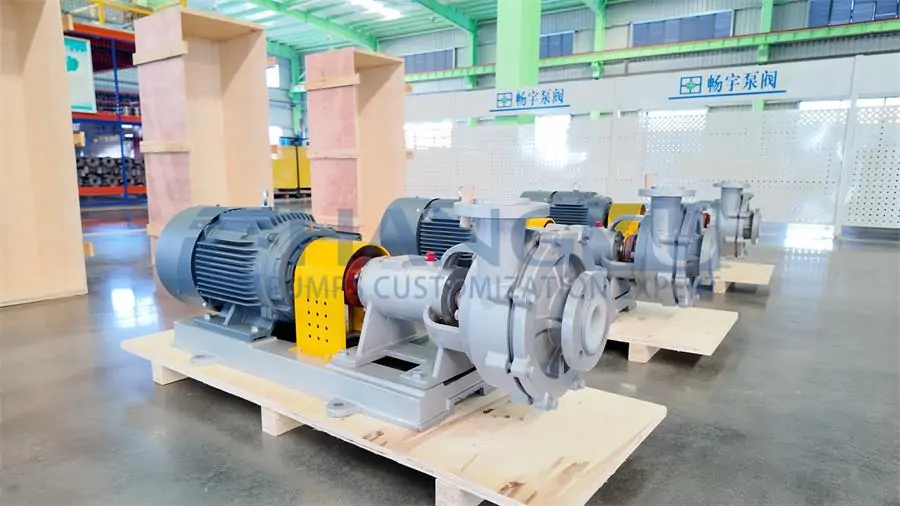
Technologies d'étanchéité et de sécurité pour la prévention des fuites d'acide
1 Entraînement magnétique : La solution de la chambre de confinement statique
Les pompes à entraînement magnétique transmettent le couple à travers une chambre de confinement stationnaire à l'aide d'un couplage magnétique. Aucun arbre rotatif ne traverse la limite de pression, réalisant une fuite nulle par conception. Pour les acides dangereux—chlorhydrique, fluorhydrique, sulfurique concentré, nitrique—où une fuite de garniture mécanique créerait un risque d'exposition du personnel ou un rejet environnemental, les pompes à entraînement magnétique sont la spécification standard. Elles éliminent également le coût d'entretien continu des remplacements de garnitures et de la consommation d'eau de rinçage des garnitures.
2 Double garniture mécanique avec fluide barrière (API Plan 53/54)
Lorsqu'une pompe centrifuge à garniture mécanique est le choix hydraulique préféré—pour le transfert d'acide à haut débit où les pompes à entraînement magnétique peuvent ne pas être disponibles dans la taille requise—une double garniture mécanique avec un fluide barrière sous pression (API Plan 53) ou une barrière gazeuse (API Plan 74) fournit le confinement requis. La pression du fluide barrière doit dépasser la pression du fluide de procédé au niveau des faces de garniture afin que toute fuite soit du fluide barrière dans le procédé, et non de l'acide dans l'atmosphère.
3 Exigences ATEX/IECEx pour les environnements d'acides inflammables
Lorsque l'acide lui-même n'est pas inflammable mais que ses vapeurs ou l'environnement du procédé peuvent être inflammables—par exemple, l'acide chlorhydrique dans des installations qui manipulent également des solvants—le moteur de la pompe doit porter une certification ATEX (UE) ou IECEx (internationale) appropriée à la classification de la zone dangereuse. Dans les installations avec un environnement de gaz ou de poussière explosif, la directive ATEX exige l'utilisation d'équipements certifiés Ex. Pour le marché intérieur chinois, les normes antidéflagrantes GB 3836 s'appliquent.
4 Mise à la terre statique et détection de fuites
L'électricité statique générée par l'écoulement du fluide dans les composants non conducteurs de la pompe constitue un risque d'inflammation indépendant de l'inflammabilité de l'acide. Les matériaux conducteurs de la pompe et une mise à la terre vérifiée sont obligatoires lorsque la pompe manipule ou se trouve à proximité de matières inflammables. Pour les pompes à entraînement magnétique utilisées dans les acides, la surveillance de la température de l'enveloppe de confinement permet de détecter le fonctionnement à sec et l'accumulation de solides avant qu'une défaillance du confinement ne se produise.
Comment sélectionner une pompe à acide industrielle : Un cadre en 6 étapes
Étape 1 : Caractériser l'acide
Documentez le type d'acide, la concentration, la densité, la viscosité, la température (y compris toute excursion de procédé au-dessus du point de consigne nominal) et la présence de tout solide, impureté ou particule abrasive. L'identité de l'acide—et non une étiquette générique “ acide ”—détermine la fenêtre de compatibilité des matériaux.
Étape 2 : Quantifiez les solides et la viscosité
Mesurez la concentration en solides (pourcentage en poids), la distribution granulométrique et la viscosité de la boue au taux de cisaillement de fonctionnement. Ces paramètres déterminent si une pompe centrifuge ou à déplacement positif est le choix approprié.
Étape 3 : Définissez le débit et la hauteur manométrique totale
Calculez le débit requis et la hauteur manométrique totale, en tenant compte de la hauteur d'aspiration statique, des pertes par frottement dans la canalisation et de toute exigence de pression à la destination. Pour l'acide sulfurique concentré à une densité de 1,84, vérifiez que le moteur est dimensionné pour la demande de puissance élevée.
Étape 4 : Vérifiez la marge de NPSH
Pour les pompes centrifuges manipulant des acides à des températures élevées, la hauteur de charge nette positive disponible (NPSHA) doit être calculée en utilisant la pression de vapeur du fluide à la température de fonctionnement maximale. Une augmentation de température de 10°C peut réduire la NPSHA de plusieurs mètres. Pour les acides semblables à l'eau, une marge NPSH minimale de 1 mètre (ou NPSHA > 1,3 × NPSHR) est requise. Pour les acides volatils ou ceux à moins de 20°C de leur point d'ébullition, une marge plus grande de 2 à 3 mètres est recommandée. La cavitation causée par un NPSH insuffisant peut détruire une roue en quelques semaines.
Étape 5 : Faites correspondre les matériaux, le type de pompe et la technologie d'étanchéité
Sélectionnez les matériaux de la pompe en fonction des données de compatibilité acide-matériau de la Section 4 pour l'acide spécifique à sa température de fonctionnement maximale. Confirmez chaque composant en contact avec le fluide par rapport aux données de compatibilité. Faites correspondre le type de pompe aux exigences de débit, de pression et de solides. Sélectionnez la technologie d'étanchéité en fonction de la classification de danger de l'acide : entraînement magnétique pour les acides dangereux, double garniture mécanique pour une toxicité modérée, ou AODD pour un service inflammable.
Étape 6 : Évaluer le coût total de possession
Prenez en compte le coût d'investissement, la consommation d'énergie (souvent 60 à 70 % du coût total de possession), la fréquence de remplacement des garnitures, la main-d'œuvre de maintenance et le coût des temps d'arrêt non planifiés. Une pompe à entraînement magnétique avec un prix initial plus élevé mais sans maintenance liée aux garnitures peut offrir un coût total de possession inférieur à celui d'une pompe à garniture mécanique nécessitant des remplacements trimestriels. Évaluez sur un horizon de trois à cinq ans pour une comparaison précise.
Industries d'application clés
Galvanisation et finition des métaux nécessite une recirculation continue des solutions de placage à base d'acide sulfurique, chlorhydrique et chromique à travers les cuves de traitement. L'interruption de cette recirculation peut entraîner la perte d'un lot de production entier, faisant de la fiabilité de la pompe un déterminant direct de la qualité du produit.
Traitement chimique implique le transfert en vrac d'acides entre les réservoirs de stockage et les réacteurs, l'alimentation des réacteurs et la gestion des acides usés. La combinaison de débits élevés, de concentrations d'acide variables et de la nécessité d'une intégrité de confinement documentée fait des pompes centrifuges à revêtement fluoroplastique et des pompes à entraînement magnétique conformes à la norme API 685 les spécifications standard.
Traitement de l'eau et des eaux usées nécessite un dosage précis d'acide sulfurique ou d'acide chlorhydrique pour l'ajustement du pH. Les pompes doseuses à membrane électrique offrent la précision et la résistance à la corrosion requises pour un dosage chimique fiable.
Décapage de l'acier implique une circulation continue à haut débit d'acide chlorhydrique ou sulfurique chauffé à travers les bains de décapage. Les pompes centrifuges en PFA ou PTFE conviennent à ce service, avec des matériaux résistants à la température spécifiés pour les températures de fonctionnement élevées.
Fabrication de semi-conducteurs exige une distribution d'acide ultra-pur sans contamination métallique. Les pompes à entraînement magnétique revêtues de PFA sont la spécification standard, offrant à la fois l'inertie chimique et le confinement zéro-fuite requis pour la distribution d'acide de haute pureté.
Fabrication de produits pharmaceutiques et de produits chimiques fins nécessite un confinement sans garniture ou à double garniture pour les composés cytotoxiques, les intermédiaires pharmaceutiques et les flux d'acides mixtes. Les pompes à entraînement magnétique revêtues de fluoropolymère servent ces applications en isolant les composants métalliques du fluide de procédé.
Gestion de la maintenance et du coût du cycle de vie
1 Modes de défaillance courants dans le service des pompes à acide
Les modes de défaillance les plus fréquents dans le service des pompes à acide industrielles sont : les fuites de garniture dues à l'attaque chimique des faces de garniture ou des élastomères ; la corrosion du corps de pompe due à un choix de matériaux incorrect ; les dommages par cavitation dus à une marge de NPSH insuffisante à des températures élevées ; et la défaillance des roulements due à la contamination du lubrifiant par les vapeurs d'acide.
8.2 Programme de maintenance préventive
| Intervalle | Tâche |
|---|---|
| Quotidiennement | Surveiller le courant du moteur, la pression de refoulement et vérifier l'absence de fuites visibles ou de vibrations inhabituelles |
| Hebdomadaire | Vérifier le débit et la pression de la purge de la garniture ; contrôler la température du roulement et l'état du lubrifiant |
| Mensuel | Mesurer le jeu de la roue ; inspecter les joints toriques et les joints pour détecter toute attaque chimique |
| Trimestrielle | Inspection complète de la partie hydraulique ; remplacer le lubrifiant du roulement ; vérifier l'intégrité de la garniture |
| Annuellement | Démontage complet de la pompe ; mesurer et remplacer tous les composants d'usure ; vérifier l'intégrité du matériau du corps de pompe et de la roue |
Dans des conditions normales, la pompe à acide doit être inspectée tous les six mois, l'intervalle de réparation étant déterminé par l'acide spécifique, le choix des matériaux et les conditions de fonctionnement. Chaque inspection doit être précédée d'un rinçage approfondi de la pompe pour éliminer l'acide résiduel. Le personnel doit porter des gants résistants aux acides, des écrans faciaux et des tabliers de protection.
3 Évaluation du coût du cycle de vie
Une évaluation du coût du cycle de vie doit prendre en compte le coût d'investissement, l'énergie, les pièces d'usure, la main-d'œuvre de maintenance et les coûts d'arrêt sur un horizon de 3 à 5 ans. Une pompe à revêtement fluoroplastique ou à entraînement magnétique avec un prix initial plus élevé mais une durée de vie sensiblement plus longue en service corrosif offre systématiquement un coût total de possession inférieur à celui d'une alternative économique nécessitant des reconstructions fréquentes.
Signes d'avertissement critiques dans le service des pompes à acide :
- Baisse progressive du débit ou de la pression → usure de la roue, corrosion du carter ou jeux internes excessifs
- Vibrations ou bruits soudains → cavitation (NPSH insuffisant), accumulation de solides sur la roue ou détérioration des roulements
- Fuite visible au niveau du joint → endommagement de la face du joint par attaque chimique, cristallisation ou contrainte thermique
- Augmentation du courant du moteur → augmentation de la viscosité au-delà des limites de conception, frottement interne ou défaillance des roulements
Solutions de pompes Changyu pour le transfert d'acide industriel
Changyu Pump propose cinq plates-formes de pompes conçues pour le transfert d'acide industriel, chacune adaptée à des exigences spécifiques de compatibilité avec les acides et de fonctionnement.
Série UHB Pompe résistante à la corrosion en UHMWPE

La série UHB est une pompe centrifuge mono-étagée en porte-à-faux, dotée d'une chemise en acier. UHMW-PE corps de pompe (épaisseur de 8 à 20 mm), spécialement conçu pour les boues corrosives contenant des particules fines. Sa construction avancée “ acier doublé de plastique ” exploite la résistance exceptionnelle à l'usure de l'UHMW-PE—dépassant largement celle des pompes métalliques traditionnelles—et une large compatibilité chimique avec les acides, les alcalis et les sels à des températures allant jusqu'à 90°C.
Principales spécifications : Débit 3-2,600 m³/h | Hauteur de chute 5-100 m | Puissance 0,75-300 kW | Vitesse 750-2,900 r/min | Température -20°C à 90°C
Pompe à acide à entraînement magnétique série CYQ
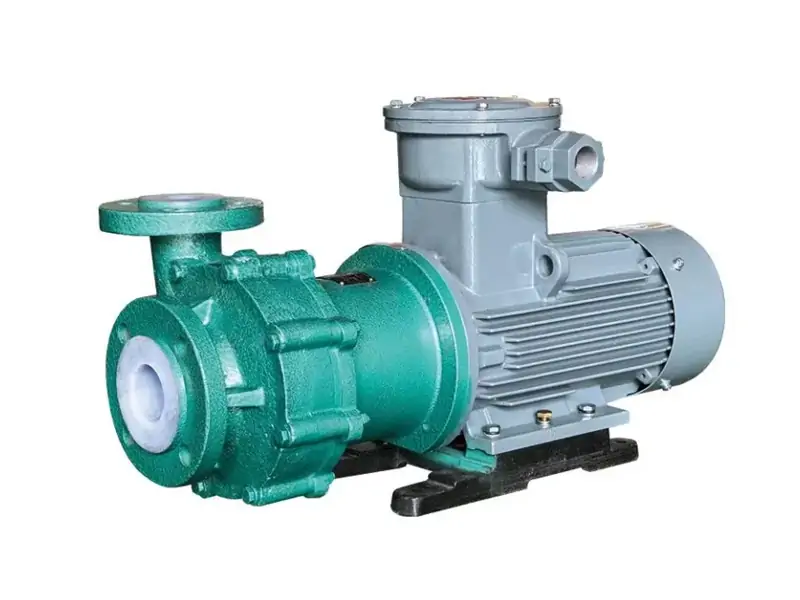
La série CYQ est une pompe à entraînement magnétique sans garniture, dont les composants en contact avec le liquide sont revêtus d'une couche d'aluminium. FEP, PFA ou PTFE. Le couple est transmis d'un moteur standard à travers un manchon d'isolation fixe via un rotor à aimant permanent, enfermant le fluide de procédé dans une chambre entièrement scellée et réalisant une étanchéité zéro-fuite par conception. Pour les acides dangereux—chlorhydrique, fluorhydrique, sulfurique concentré—la conception à entraînement magnétique élimine la garniture mécanique et sa voie de fuite associée. Le manchon d'isolation fixe est conçu pour 1,6 MPa.
Principales spécifications : Débit 3-800 m³/h | Hauteur de chute 15-125 m | Puissance 2.2-110 kW | Vitesse 2,950 r/min | Température -20°C à 180°C
Pompe centrifuge à revêtement fluoroplastique de la série IHF

La série IHF est une pompe centrifuge dont le corps et les composants d'écoulement sont revêtus d'une couche d'aluminium. FEP, PFA ou PTFE. Le revêtement fluoroplastique isole le corps de pompe métallique de l'acide, offrant une compatibilité chimique vérifiée pour les acides sulfurique, chlorhydrique, nitrique, phosphorique et fluorhydrique dans les limites de température du revêtement (PFA jusqu'à environ 180°C). Le revêtement fluoroplastique élimine le compromis entre la protection contre la corrosion et la durabilité mécanique—la couche de PTFE ou de PFA offre une résistance chimique quasi universelle, tandis que le corps de pompe en acier absorbe les charges des tuyauteries et les contraintes de pression.
Principales spécifications : Débit 1,6-2 600 m³/h | Hauteur de chute 5-130 m | Puissance 1,5-110 kW | Vitesse 1 450-2 900 r/min | Température -20°C à 180°C
Pompe électrique à membrane série BFD
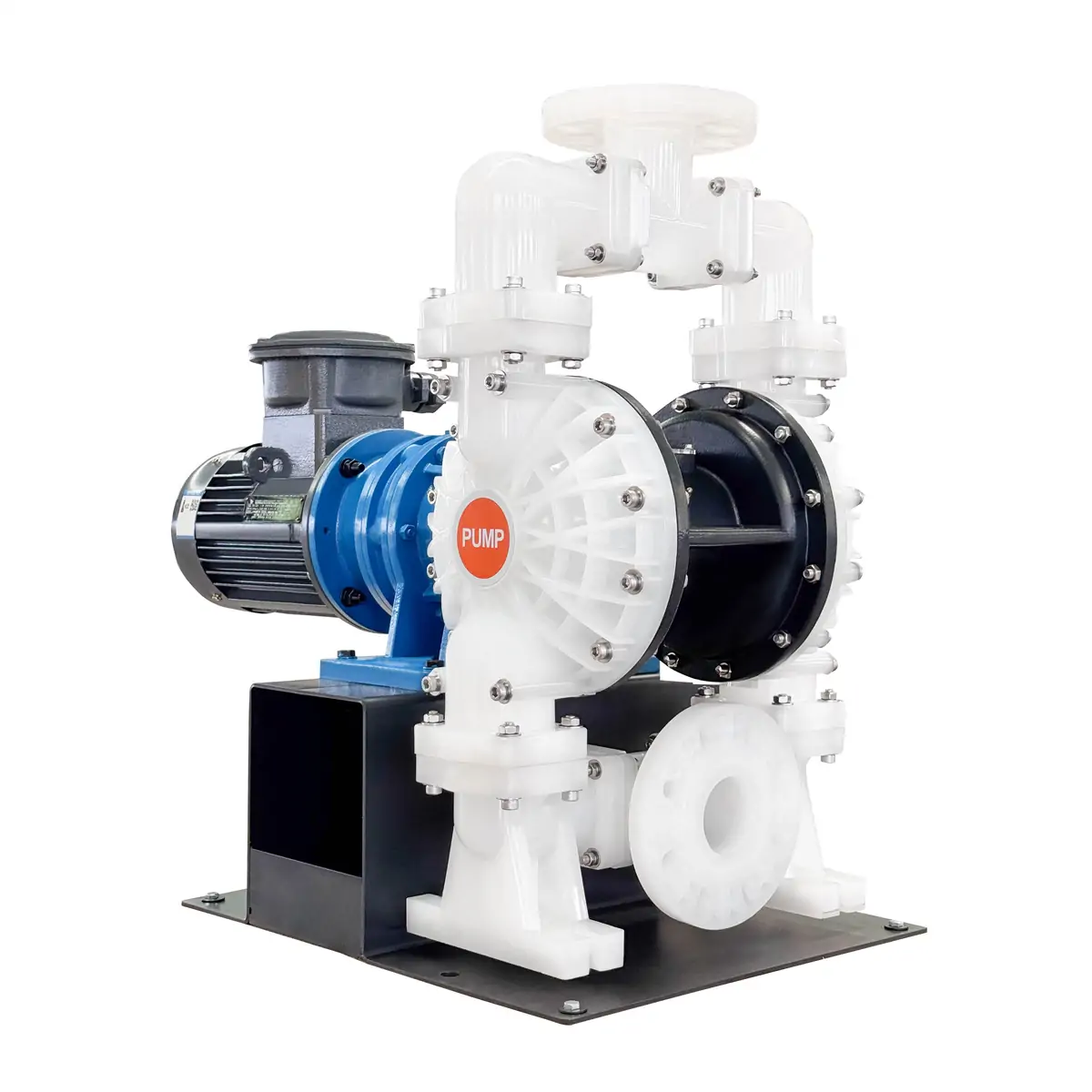
La série BFD est une pompe électrique à diaphragme entraînée par un moteur qui fournit un débit stable et continu sans infrastructure d'air comprimé. Le diaphragme forme une barrière étanche entre le fluide et le mécanisme d'entraînement, ce qui permet de l'utiliser avec des acides corrosifs, abrasifs, très visqueux et volatils. Matériaux du corps acier moulé, fonte ductile, alliage d'aluminium, PP, acier inoxydable et PVDF, permettant l'adaptation du matériau à la chimie spécifique de l'acide.
Principales spécifications : Débit jusqu'à 480 L/min | Hauteur de chute jusqu'à 84 m | Puissance 0,75-45 kW | Température -20°C à 120°C
Pompe pneumatique à double membrane de la série BFQ
La série BFQ est une pompe pneumatique à double membrane dont le corps est en acier inoxydable. acier moulé, fonte ductile, alliage d'aluminium, PP, acier inoxydable et PVDF. Pour le transfert d'acides dangereux et inflammables, l'option de corps en PVDF offre une compatibilité chimique vérifiée, et la conception sans garniture et auto-amorçante gère l'aspiration depuis les fûts et les conteneurs IBC sans amorçage manuel. La série BFQ est la pompe à choisir lorsque le lieu de transfert manque d'alimentation électrique fiable ou lorsque l'acide est inflammable et qu'une solution à air comprimé est le choix le plus sûr.
Principales spécifications : Débit maximum jusqu'à 1 041 L/min | Pression de travail 0,84 MPa | Hauteur d'aspiration 7,6 m | Passage des solides 9,4 mm
Référence rapide pour la sélection des pompes à acide industrielles
| Série de pompes | Type | Meilleure application | Plage de température | Matériaux clés |
|---|---|---|---|---|
| UHB | Centrifugeuse à revêtement UHMW-PE | Boues corrosives avec particules fines ; acide phosphorique, TiO₂ | De -20°C à 90°C | UHMW-PE |
| CYQ | Entraînement magnétique (sans garniture) | Confinement zéro-fuite des acides dangereux, toxiques et de grande valeur | De -20°C à 180°C | FEP, PFA, PTFE |
| IHF | Centrifugeuse à revêtement fluoroplastique | Transfert d'acide à haut débit, alimentation de réacteur, recirculation | De -20°C à 180°C | FEP, PFA, PTFE |
| BFD | Membrane électrique | Acides chargés en particules, à haute viscosité, volatils | De -20°C à 120°C | Acier moulé, SS, PP, PVDF |
| BFQ | Double diaphragme pneumatique | Transfert d'acide dangereux, inflammable, intermittent | De -20°C à 120°C | Acier moulé, SS, PP, PVDF |
Contrôle qualité : comment Changyu Pump assure la fiabilité des pompes à acide


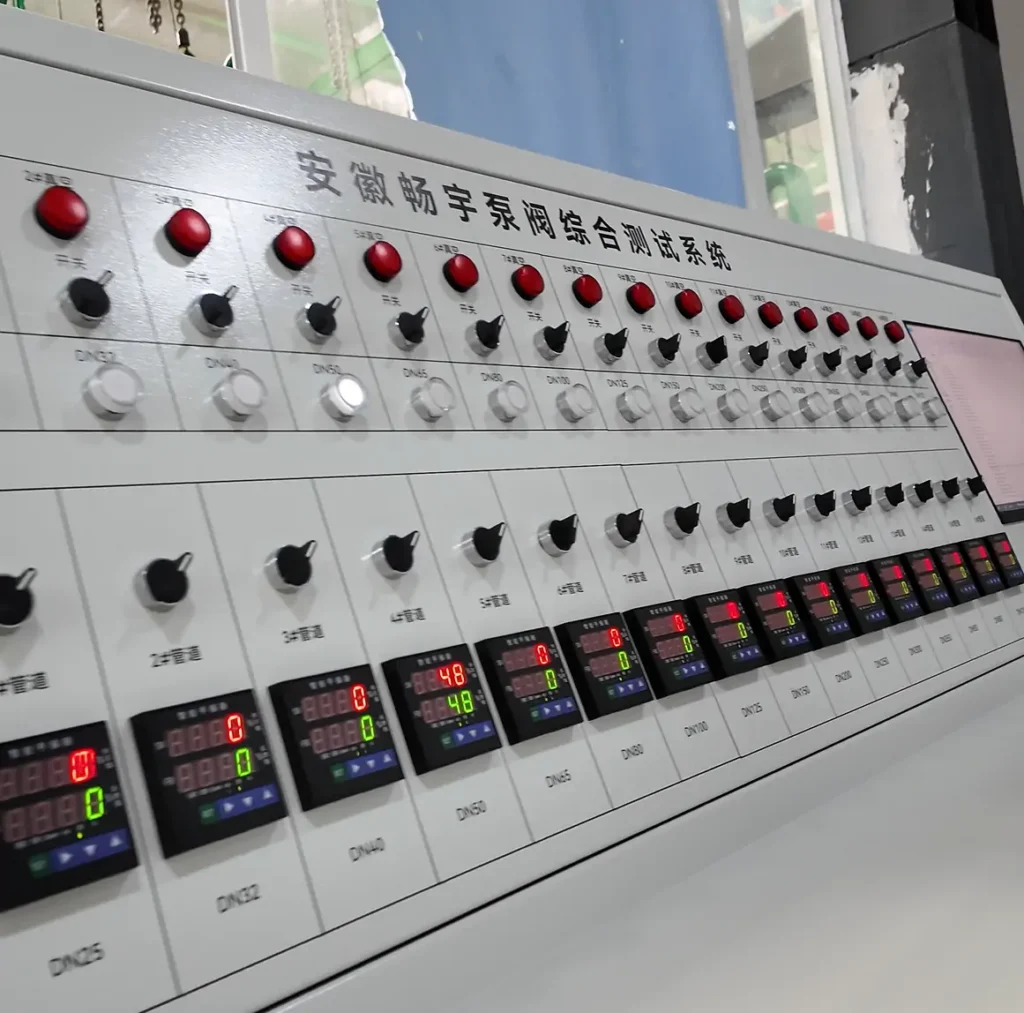
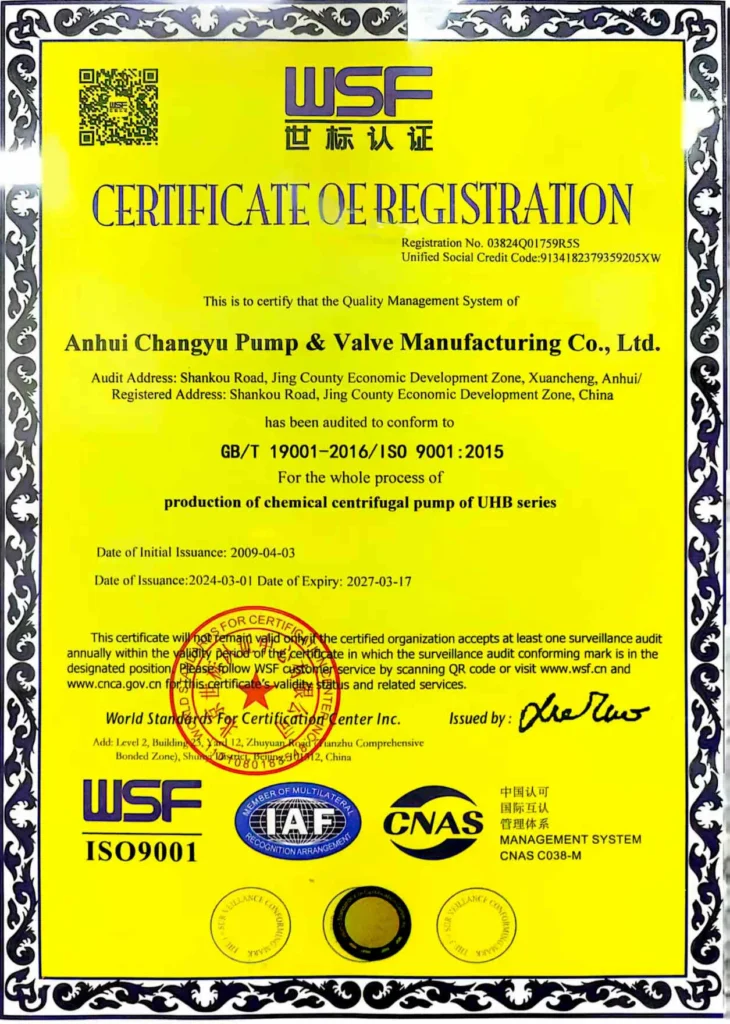
Tous les pompe pour acides industriels de Changyu Pump suit un programme d'assurance qualité structuré conçu pour prévenir les défauts avant que la pompe n'atteigne le terrain.
Vérification des matériaux : Toutes les matières premières entrantes—composés UHMW-PE, résines fluoroplastiques (FEP, PFA, PTFE), nuances d'acier inoxydable et élastomères de membrane—subissent une analyse spectrale pour vérifier la composition chimique par rapport aux spécifications. Chaque lot de matériaux est accompagné d'une certification documentée avant sa mise en production.
Inspection en cours de fabrication : Les dimensions de la roue, les tolérances du corps, l'épaisseur du revêtement et l'intégrité de la liaison, la rectitude de l'arbre et le degré d'équilibrage dynamique sont mesurés à chaque étape critique de la production. Pour les pompes revêtues de fluoroplastique, des tests par ultrasons confirment une couverture uniforme du revêtement—un seul vide peut devenir un point d'initiation de défaillance sous l'attaque acide.
Essais de performance hydraulique : Chaque pompe assemblée est testée sur plusieurs points de fonctionnement. Le débit, la hauteur de chute, la consommation d'énergie et l'efficacité sont mesurés et vérifiés par rapport aux courbes de performance publiées.
Audit de l'assemblée finale : Le couple de serrage des boulons, l'intégrité des joints, la précharge des roulements et la rotation libre sont confirmés avant l'emballage. Les joints mécaniques subissent des tests hydrostatiques statiques ; les pompes à entraînement magnétique sont vérifiées pour l'intégrité de l'accouplement.
Étude de cas : Élimination des défaillances de joints dans une application de transfert d'acide en usine chimique
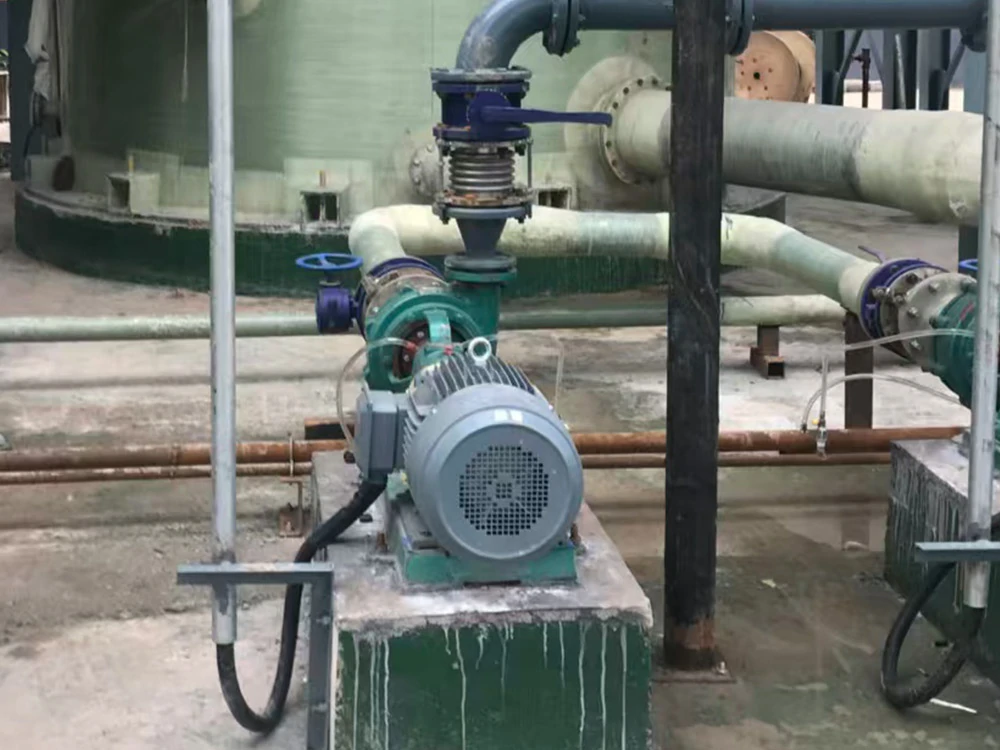
Le défi du client : Une usine de traitement chimique subissait des défaillances répétées de joints mécaniques sur les pompes manipulant un transfert intermédiaire à base d'acide chlorhydrique à 65°C. Les joints mécaniques à cartouche unique fuyaient en moyenne tous les 3 à 4 mois, libérant des vapeurs de HCl dans l'environnement de travail. Les coûts annuels de maintenance par pompe dépassaient 18 000 USD, et le dossier de conformité environnementale de l'usine était sous surveillance.
Analyse d'ingénierie : La cause racine a été identifiée comme une piqûration induite par le chlorure sur les faces des joints en acier inoxydable, combinée à une pression de rinçage du joint inadéquate. Le HCl attaquait le matériau de la face du joint, créant des micro-piqûres qui empêchaient la formation d'un film hydrodynamique stable entre les faces rotative et stationnaire.
Solution déployée : Changyu Pump a remplacé les pompes à garniture mécanique par des Pompes à entraînement magnétique revêtues de PTFE de la série CYQ. La solution a résolu la défaillance par trois changements coordonnés :
- Élimination du chemin de fuite : La conception à entraînement magnétique a éliminé complètement le joint mécanique d'arbre, supprimant l'interface dynamique où le HCl attaquait les faces des joints.
- Vérification de la compatibilité chimique : Le chemin mouillé revêtu de PTFE a fourni une compatibilité chimique documentée avec le flux d'acide chlorhydrique à la température de fonctionnement, éliminant le mécanisme de corrosion qui avait endommagé les pompes précédentes.
- Simplification de la maintenance : La conception sans joint a supprimé le coût continu des remplacements de joints, de l'eau de rinçage des joints et de la main-d'œuvre de maintenance associée.
Résultats quantifiés (évaluation à 24 mois) :
- Aucune intervention de maintenance liée au joint sur la période d'évaluation de 24 mois
- Coût annuel de fonctionnement par pompe réduit de environ 65%
- Émissions de vapeur de HCl sur le lieu de travail éliminées à l'emplacement de la pompe
- Temps d'arrêt non planifié lié à la pompe réduit à zéro heure
FAQ sur les pompes à acide industrielles
Q1 : Quels matériaux sont compatibles avec l'acide chlorhydrique ?
R : La plupart des matériaux non métalliques—PP, PVDF, PTFE, PFA, FEP—résistent efficacement à l'acide chlorhydrique. Le PP est compatible avec le HCl jusqu'à environ 37% à des températures inférieures à 25°C. Le PVDF résiste au HCl à toutes les concentrations jusqu'à environ 100°C. Les aciers inoxydables sont attaqués par le HCl par piqûration chlorure et ne doivent pas être spécifiés pour les composants mouillés. Le Hastelloy-C offre une résistance métallique à des concentrations et températures plus faibles, mais les pompes non métalliques sont fortement préférées pour le service HCl. Le titane offre une résistance très limitée et n'est pas recommandé pour les composants mouillés de pompe en service HCl.
Q2 : Une pompe centrifuge peut-elle traiter de l'acide sulfurique concentré ?
R : Oui, lorsqu'elles sont construites avec les matériaux corrects. Une pompe centrifuge revêtue de PFA ou de PTFE offre une compatibilité chimique vérifiée pour l'acide sulfurique concentré (80–98%) à des températures allant jusqu'à environ 160°C (revêtue de PFA). L'acier inoxydable 316 échoue dans l'acide sulfurique au-dessus d'environ 15% de concentration et ne doit pas être spécifié. L'acier au carbone résiste à l'acide sulfurique concentré à basse température en stockage statique mais n'est pas adapté aux composants de pompe dans des conditions d'écoulement.
Q3 : Quand dois-je choisir une pompe à entraînement magnétique plutôt qu'une pompe à joint mécanique pour le service acide ?
R : Choisissez une pompe à entraînement magnétique lorsque l'acide est dangereux, toxique, inflammable ou de grande valeur—des conditions où même une fuite mineure du joint est inacceptable. Les pompes à entraînement magnétique atteignent une fuite nulle par conception, sans arbre rotatif pénétrant la barrière de pression. Le coût d'investissement supplémentaire est récupéré grâce à l'élimination des remplacements de joints et des rapports d'émissions évités.
Q4 : Le PP ou le PVDF sont-ils meilleurs pour le transfert d'acide ?
R : Le PP est le choix le plus économique pour l'acide sulfurique dilué (≤40%) et l'acide chlorhydrique (≤37%) à température ambiante. Le PVDF offre une résistance chimique supérieure—il résiste à l'acide sulfurique concentré (jusqu'à 98%), à l'acide chlorhydrique à toutes les concentrations et à l'acide nitrique—et offre une résistance mécanique et une capacité de température plus élevées (jusqu'à environ 100°C). Pour les acides concentrés, les températures plus élevées ou les acides oxydants, le PVDF est la spécification standard.
Q5 : Comment sélectionner une pompe pour l'acide fluorhydrique ?
R : L'acide fluorhydrique nécessite des pompes revêtues de PFA avec une épaisseur de revêtement minimale de 15 à 20 mm. Le PFA est compatible avec le HF au niveau global, mais le HF imprègne les fluoropolymères en tant que petite molécule et attaque le corps métallique sous-jacent—un mode de défaillance invisible à l'inspection externe. Tous les matériaux contenant du silicium doivent être strictement exclus. Des tests d'épaisseur par ultrasons périodiques doivent vérifier l'intégrité du revêtement.
Q6 : Quelle est la meilleure pompe pour le transfert d'acide nitrique ?
R : Pour l'acide nitrique à des concentrations et températures modérées (≤50%, ≤50°C), les pompes centrifuges en PVDF ou en acier inoxydable 316 conviennent bien—le 316 SS est l'un des rares métaux compatibles avec l'acide nitrique. Pour l'acide nitrique concentré (>50%) ou à des températures élevées, spécifiez des pompes revêtues de PTFE ou de PFA. Le PP est attaqué par l'acide nitrique à toute concentration et ne doit pas être spécifié.
Q7 : Quelle maintenance une pompe à acide industrielle nécessite-t-elle ?
R : Quotidien : surveiller le courant du moteur, la pression de refoulement et vérifier les fuites visibles. Hebdomadaire : vérifier le débit de rinçage du joint et la température du roulement. Mensuel : mesurer le jeu de la roue et inspecter les joints toriques. Trimestriel : inspection complète de la partie hydraulique. Annuel : démontage complet et remplacement de toutes les pièces d'usure. La pompe doit être inspectée tous les six mois, l'intervalle de réparation étant déterminé par l'acide spécifique, le choix des matériaux et les conditions de fonctionnement. Un rinçage approfondi pour éliminer l'acide résiduel doit précéder chaque inspection.
Q8 : Comment évaluer le coût total de possession d'une pompe à acide ?
R : Tenir compte du coût d'investissement, de la consommation d'énergie (souvent 60–70 % du coût sur la durée de vie), de la fréquence de remplacement des joints, de la main-d'œuvre de maintenance et du coût de production des arrêts non planifiés sur un horizon de 3 à 5 ans. Une pompe à entraînement magnétique ou à revêtement fluoroplastique avec un prix initial plus élevé mais une durée de vie nettement plus longue en service acide offre systématiquement un TCO inférieur à celui d'une pompe économique remplacée à plusieurs reprises.
Recommandations de sélection d'experts des ingénieurs de Changyu Pump
- Faire correspondre les matériaux à l'acide spécifique, et non à une étiquette générique “résistant à l'acide”. L'acide chlorhydrique attaque les métaux par piqûration chlorure ; l'acide nitrique attaque le PP par oxydation ; l'acide fluorhydrique imprègne les fluoropolymères. Le matériau doit être vérifié par rapport à l'acide spécifique à sa concentration de service et à sa température maximale.
- Spécifier un confinement à fuite nulle pour les acides dangereux. Les pompes à entraînement magnétique éliminent le joint mécanique — la voie de fuite la plus courante. Pour les acides chlorhydrique, fluorhydrique, sulfurique concentré et nitrique, la conception sans joint à entraînement magnétique est la spécification standard pour un fonctionnement sûr et conforme.
- Vérifier le dimensionnement du moteur en fonction de la gravité spécifique de l'acide. L'acide sulfurique concentré à une densité de 1,84 nécessite une puissance moteur nettement supérieure à celle de l'eau pour le même débit et la même hauteur. Un moteur sous-dimensionné qui déclenche une surcharge crée un risque de sécurité lorsque la pompe s'arrête avec de l'acide dans le corps.
- Sélectionnez le type de pompe adapté aux propriétés physiques de l'acide. Les pompes centrifuges (revêtues ou tout plastique) conviennent au transfert d'acide à haut débit et faible viscosité. Les pompes à entraînement magnétique assurent un confinement sans fuite pour les acides dangereux. Les pompes à membrane électriques traitent les acides contenant des particules, des solides ou une viscosité élevée.
- Évaluez le coût total de possession sur plusieurs années, et pas seulement le prix d'achat. Tenir compte de l'énergie, des pièces d'usure, de la main-d'œuvre de maintenance et des temps d'arrêt. Une pompe qui coûte plus cher au départ mais dure nettement plus longtemps en service acide offre systématiquement un TCO inférieur.
Conclusion
Un pompe pour acides industriels doit être spécifié comme un système intégré : le matériau de la pompe, le type de pompe et la technologie d'étanchéité sont sélectionnés ensemble en fonction de la chimie, de la concentration et de la température de l'acide spécifique. L'acide détermine le matériau. Le matériau et les conditions de fonctionnement déterminent si une pompe centrifuge, une pompe à entraînement magnétique ou une pompe à membrane est le choix approprié. Et la classification de danger de l'acide détermine si un joint mécanique, un double joint avec fluide barrière ou une conception sans joint à entraînement magnétique assure le confinement requis.
La sélection de la pompe appropriée nécessite une vérification systématique de la chimie de l'acide à la température de fonctionnement maximale, une classification dans le type de pompe et le système de matériaux appropriés, la sélection de la technologie d'étanchéité correspondante et un programme de maintenance structuré qui détecte la dégradation avant qu'elle ne devienne une fuite.
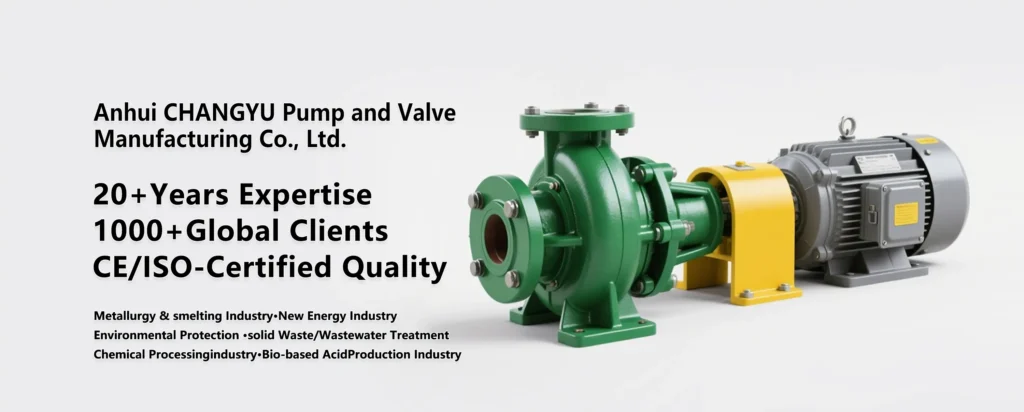
Contacter Changyu Pump avec vos paramètres d'acide et vos exigences de procédé. Notre équipe d'ingénierie fournira une recommandation de pompe détaillée et un devis adapté à votre application industrielle d'acide.