
Une pompe centrifuge à aspiration axiale est un choix pratique pour de nombreuses tâches de transfert et de circulation de liquides propres. Pour un service en acier inoxydable, le bon choix dépend de cinq éléments : le liquide, le débit requis, la hauteur totale, les conditions d'aspiration et la configuration d'étanchéité.
Commencez par ces détails avant de choisir un moteur ou de comparer les prix. Un moteur plus grand ne peut pas corriger une entrée restreinte. Un alliage plus coûteux ne peut pas rendre une roue pour liquides propres adaptée à une boue abrasive.
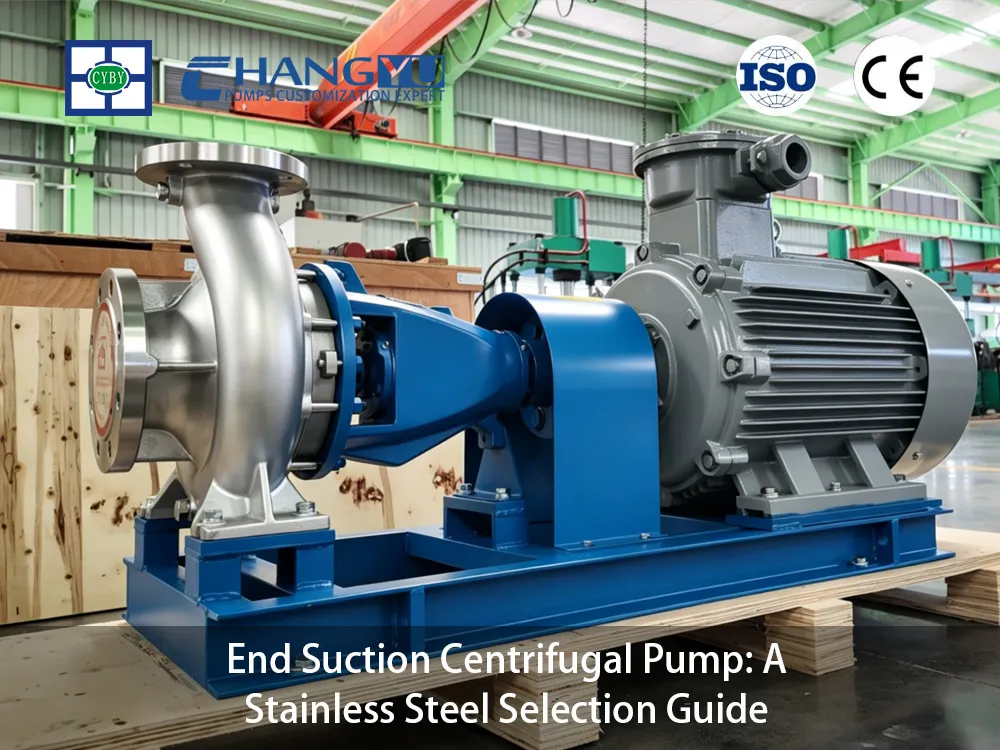
Ce guide explique les principales configurations et une méthode de sélection étape par étape. Il se concentre sur les pompes industrielles en acier inoxydable, avec des points de départ clairs issus de la gamme de produits Changyu.
Qu'est-ce qu'une pompe centrifuge à aspiration axiale ?
Une pompe centrifuge à aspiration axiale fait entrer le liquide dans la roue le long de l'axe de l'arbre. La roue ajoute de l'énergie, et le corps dirige le liquide vers le refoulement, généralement à angle droit par rapport à l'aspiration.
“ Aspiration axiale ” décrit la configuration de l'aspiration. “ Centrifuge ” décrit le principe de pompage. “ Acier inoxydable ” identifie un choix de matériau. Chaque terme répond à une partie différente de la question de sélection.
La configuration est utile lorsqu'une installation horizontale convient à l'usine et que le liquide est compatible avec la roue et l'étanchéité. La pompe centrifuge horizontale monocellulaire CYA de Changyu est une conception à aspiration axiale pour liquides propres, utilisant une roue fermée.
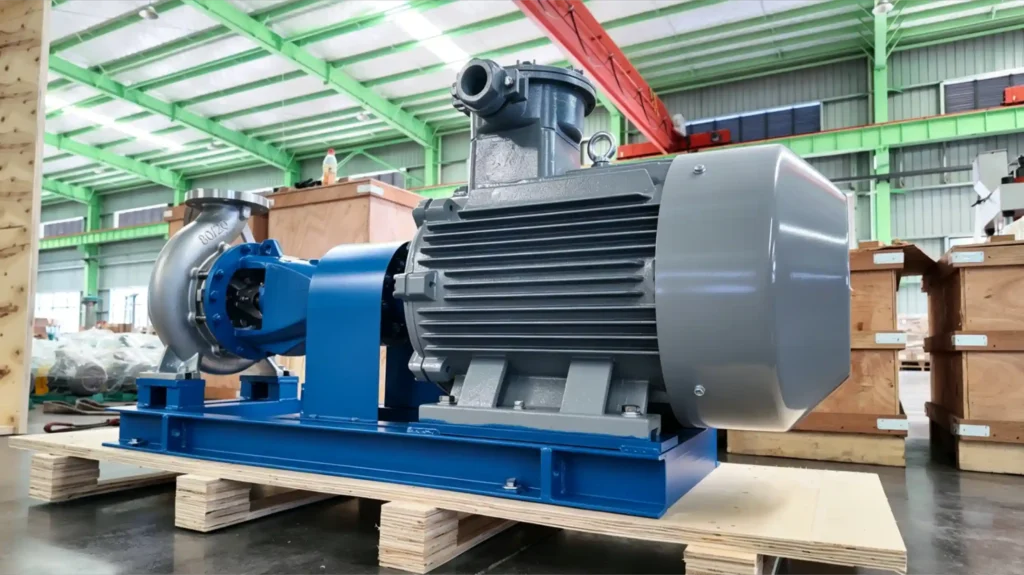
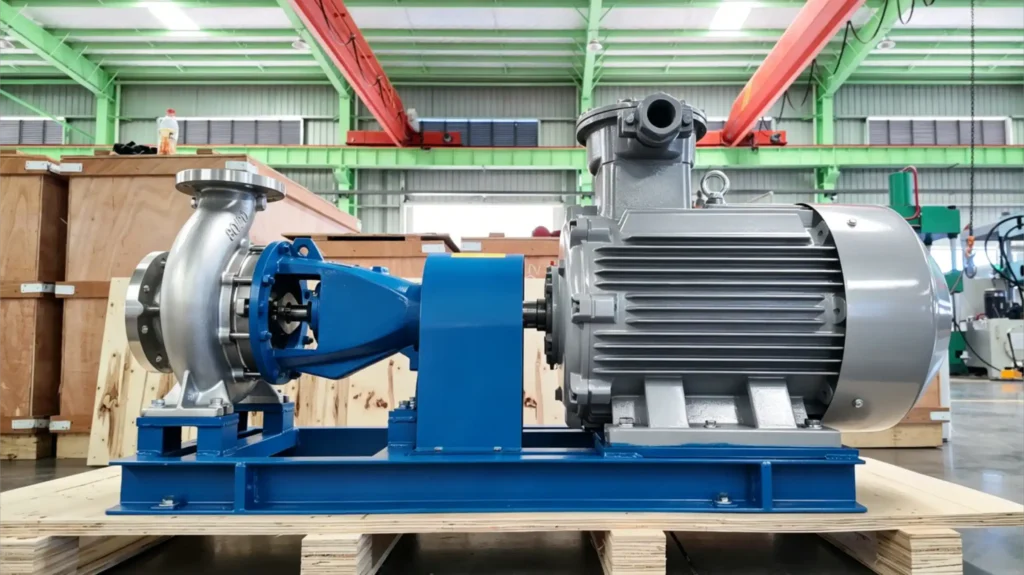
Propre ne signifie pas nécessairement eau potable. Cela signifie que le liquide respecte les limites de la pompe sélectionnée en matière de particules et d'autres contaminants. La compatibilité chimique nécessite une vérification séparée.
Comparez les principales configurations de pompes en acier inoxydable
Choisissez la configuration en fonction de votre liquide, de l'espace disponible et des besoins de maintenance. Les options suivantes ne sont pas interchangeables, même lorsque leurs plages de débit catalogue se chevauchent.
| Configuration | Quand l'envisager | Principale vérification avant sélection |
|---|---|---|
| Aspiration axiale à accouplement direct | Tâches pour liquides propres avec espace d'installation limité | Configuration du moteur et accès pour le remplacement de l'étanchéité |
| Aspiration axiale sur châssis | Tâches qui bénéficient de paliers de pompe séparés et d'un accouplement | Alignement, support de plaque de base et espace de démontage |
| Centrifuge pour procédés chimiques | Transfert chimique compatible nécessitant une étanchéité et un ensemble de matériaux spécifiques au service | Composition complète du liquide et besoins de support d'étanchéité |
| Pompe à boue en acier inoxydable | Liquides corrosifs contenant des particules abrasives | Taille des particules, concentration, passage de la roue et usure |
| Centrifuge en ligne ou à corps fendu | Projets où la configuration des tuyauteries ou des exigences de débit plus élevé favorisent un autre agencement | Courbe de service réelle, encombrement et accès pour la maintenance |
Une pompe centrifuge à aspiration axiale peut être à accouplement direct ou à accouplement séparé. Les pompes pour procédés chimiques peuvent également utiliser une configuration à aspiration axiale. Ces descriptions se chevauchent ; ce ne sont pas des niveaux de performance distincts.
Distinguez également accouplement direct de roue fermée. Accouplement direct décrit la liaison au moteur. Roue fermée décrit la roue elle-même.
Pour les demandes Changyu, commencez par CYA pour le transfert de liquides propres, CYH pour les services de procédés chimiques, et HB pour l'évaluation des boues abrasives. La sélection finale du modèle suit toujours les conditions d'exploitation.
Our guide to stainless steel industrial centrifugal pump types extends this comparison to magnetic-drive, self-priming, vertical immersed and slurry-service configurations.
Définissez le débit et la hauteur totale ensemble
Une pompe centrifuge à aspiration axiale nécessite un point de service : un débit spécifié à une hauteur spécifiée. Une demande pour “ une pompe de 30 mètres ” laisse la capacité requise non résolue.
Pour le transfert par lots, commencez par le volume et le temps. Déplacer 12 mètres cubes en 30 minutes nécessite un débit moyen de 24 mètres cubes par heure. Vérifiez ensuite si le procédé nécessite ce débit pendant tout le lot ou s'il permet qu'il varie.
La hauteur dynamique totale comprend la différence de niveaux de liquide, les différences de pression des récipients et les pertes dans le circuit d'écoulement. Les tuyaux, coudes, vannes, filtres et échangeurs de chaleur y contribuent tous.
Considérez cet exemple simplifié pour deux réservoirs ouverts :
- Différence entre les niveaux de liquide concernés : 10 mètres.
- Pertes de tuyauterie et de raccords au débit requis : 8 mètres.
- Perte de filtre à la condition sélectionnée : 4 mètres.
- Hauteur de service calculée : environ 22 mètres, avec une différence de hauteur de vitesse négligeable.
Ceci est une illustration, et non une recommandation de modèle. Si le réservoir de réception est sous pression, ajoutez cette différence de pression comme hauteur manométrique du liquide réel. Si le filtre se colmate, calculez également cette condition.
- Conseil pratique : indiquez au fournisseur les conditions de service normales, minimales et maximales. Évitez d'ajouter des marges de sécurité arbitraires à chaque donnée d'entrée ; plusieurs marges cachées peuvent produire une pompe gravement surdimensionnée.
Vérifier la courbe de la pompe centrifuge à aspiration axiale
La pompe fonctionne à l'intersection de sa courbe et de la courbe du système. Le débit maximal et la hauteur manométrique maximale d'un catalogue correspondent généralement à des points différents. Vous ne pouvez pas supposer que les deux se produisent simultanément.
Demandez une courbe indiquant votre point de service normal et la plage prévue. Vérifiez où ces points se situent par rapport au point de meilleur rendement et à la plage de fonctionnement autorisée par le fabricant.
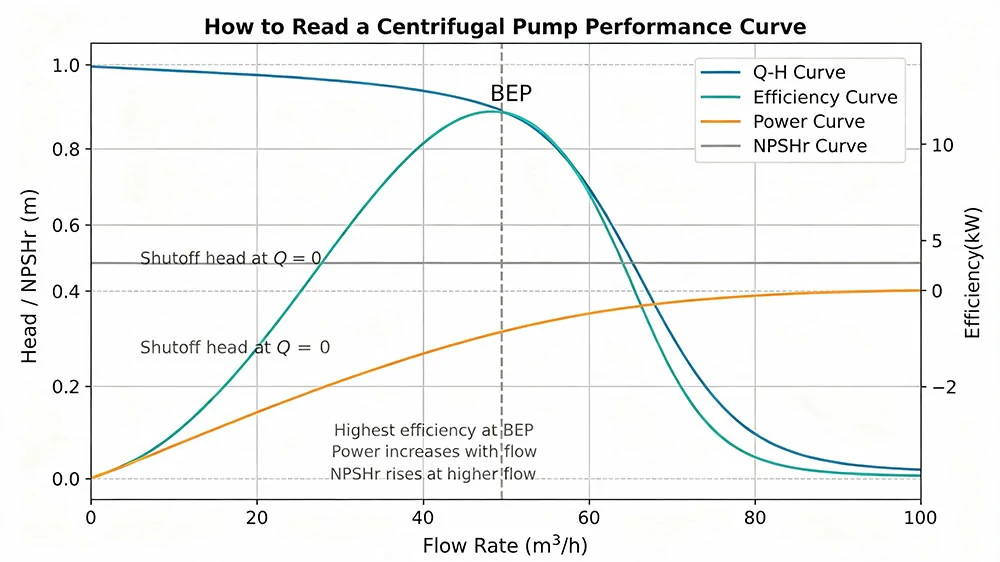
Le FAQ sur les pompes du Hydraulic Institute expliquez ces notions de courbe et de plage de fonctionnement. Elles aident à transformer une comparaison de catalogues en une vérification du fonctionnement réel de la pompe.
Si une pompe centrifuge à aspiration axiale doit fonctionner la majeure partie de la journée à faible débit, ne la sélectionnez pas uniquement en fonction d'un pic de demande de courte durée. Discutez d'un modèle plus petit, d'un diamètre de roue approprié ou d'une régulation de vitesse selon les besoins du service.
Pour un fonctionnement à vitesse variable, vérifiez toute la plage de vitesse. Le débit minimal, le refroidissement du moteur, les conditions de garniture et la hauteur statique du système restent importants.
Une offre utile comprend la courbe, le diamètre de roue, la vitesse, la puissance absorbée et l'exigence d'aspiration. Un numéro de modèle et une puissance moteur seuls ne suffisent pas pour comparer équitablement deux offres.
Confirmer les conditions d'aspiration avant d'augmenter la taille du moteur
Une pompe centrifuge à aspiration axiale en acier inoxydable doit recevoir suffisamment de liquide à son entrée. Une mauvaise aspiration peut provoquer du bruit, un débit instable, des vibrations et des dommages même lorsque le point de service au refoulement semble correct.
La vérification essentielle est la hauteur nette positive à l'aspiration, ou NPSH. L'installation fournit la NPSH disponible. La pompe a une exigence de NPSH au débit et à la vitesse sélectionnés. Une marge appropriée est nécessaire entre les deux.
Pour contexte, utilisez le Outil de données du Hydraulic Institute conjointement avec les données de la pompe sélectionnée. Le simple fait de correspondre à une valeur requise publiée n'établit pas une marge appropriée pour chaque application.
Examinez la condition crédible la plus exigeante :
- Le niveau le plus bas du réservoir d'alimentation.
- La température la plus élevée du liquide et sa pression de vapeur.
- Tout vide dans le récipient d'alimentation.
- Les pertes de charge dans la conduite d'aspiration, y compris un filtre encrassé.
- Les fuites d'air, l'entraînement de gaz et l'immersion de la sortie du réservoir.
Une pompe qui fonctionne avec un réservoir plein et froid peut avoir des difficultés vers la fin d'un lot chaud. Abaisser la pompe, réduire les pertes à l'aspiration ou réviser le point de service peut aider lorsque le calcul le justifie.
Une pompe centrifuge à aspiration axiale standard n'est pas automatiquement auto-amorçante. Si le niveau de liquide est inférieur à l'entrée, décrivez la hauteur d'aspiration et le dispositif d'amorçage avant de commander.
Sélectionner l'acier inoxydable et la garniture mécanique ensemble
“ Construction en acier inoxydable ” est trop vague pour une spécification d'achat. Énumérez les matériaux du corps, de la roue, du manchon d'arbre, des faces de garniture, des joints toriques et des joints exposés au liquide.
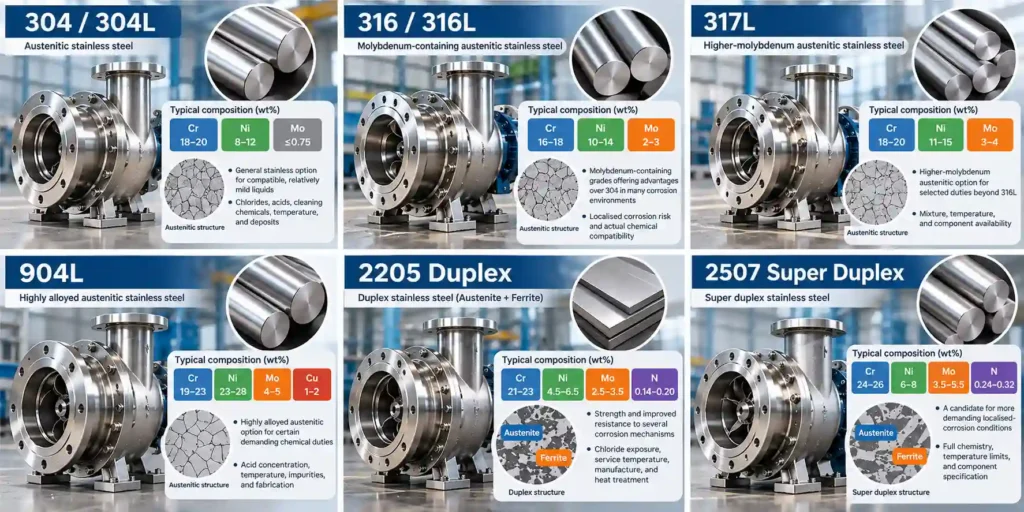
Les informations produit CYA de Changyu incluent les options 304, 316 et 316L. Le collection de pompes centrifuges en acier inoxydable offre une vue plus large des familles de pompes et des choix de matériaux. La disponibilité dépend du modèle et du composant.
Utilisez la composition complète du liquide, la concentration, la température et les conditions de nettoyage pour sélectionner l'alliage. Les chlorures, les dépôts et les contaminants peuvent modifier le résultat. Le passage du 304 au 316L n'est pas une solution universelle contre la corrosion.
Pour la garniture mécanique, spécifiez des matériaux de faces et d'élastomères compatibles. Confirmez si le service nécessite un rinçage, un refroidissement ou un autre dispositif de support.
Le document de maintenance de Changyu met en évidence le fonctionnement à sec, le mauvais refroidissement, les vibrations, les particules et le rinçage obstrué comme causes possibles de défaillance de la garniture. Si une garniture tombe en panne de façon répétée, examinez ces conditions avant de commander à nouveau le même remplacement.
Conseil pratique : demandez une nomenclature des matériaux des composants jointe à l'offre. Cela facilite la détection d'un corps approprié associé à un joint ou un composant de garniture inadapté.
Choisir le moteur et laisser de la place pour la maintenance
La puissance du moteur découle de la sélection hydraulique et des propriétés du liquide. La densité affecte la puissance nécessaire pour un débit et une hauteur manométrique donnés. La viscosité peut également modifier les performances et le rendement.
À titre d'illustration, un point de service de 40 mètres cubes par heure à 35 mètres de hauteur manométrique, avec une densité de 900 kilogrammes par mètre cube et un rendement de pompe de 60%, nécessite environ 5,7 kW de puissance à l'arbre.
Le calcul utilise densité × gravité × débit × hauteur manométrique ÷ rendement, avec le débit en mètres cubes par seconde. Le choix final du moteur doit couvrir la plage de fonctionnement approuvée, les pertes d'entraînement et les exigences de service applicables. Cet exemple n'est pas une recommandation de dimensionnement CYA.
Avant d'installer une pompe centrifuge à aspiration axiale, consultez le plan de maintenance. La construction à démontage par l'arrière peut simplifier l'entretien, mais seulement s'il y a l'espace nécessaire pour retirer l'ensemble rotatif. Confirmez si le moteur doit être déplacé et si un accouplement à entretoise est inclus.
Supportez la tuyauterie indépendamment. Vérifiez l'alignement, la rotation, la lubrification, l'amorçage et la préparation du support de garniture conformément aux instructions fournies.
Après la mise en service, enregistrez le débit normal, les pressions, le courant et l'état de la garniture. Cette référence aide votre équipe à reconnaître un filtre obstrué ou un changement de procédé avant de remplacer un équipement en bon état.
Préparer une demande de sélection utile
Pour une offre de pompe centrifuge à aspiration axiale, envoyez une fiche de service que les achats et les opérations peuvent tous deux approuver :
- Composition du liquide, concentration et fiche de données de sécurité disponible.
- Plage de température, densité, viscosité et informations sur les solides.
- Débit normal et maximal, avec hauteur manométrique totale calculée.
- Niveaux des réservoirs, pressions des récipients et détails de la conduite d'aspiration.
- Alliage proposé, besoins de garniture et exigences de documentation des matériaux.
- Alimentation électrique, classification du site le cas échéant et méthode de régulation.
- Dimensions des raccordements, plan d'installation, heures de fonctionnement et espace de maintenance.
Pour un remplacement, ajoutez le modèle de l'ancienne pompe et les mesures de fonctionnement réelles. Expliquez pourquoi elle est remplacée. Copier une plaque signalétique peut reproduire un problème de dimensionnement si le procédé a changé.
FAQ
Une pompe centrifuge à aspiration axiale est-elle adaptée à un service chimique en acier inoxydable ?
Oui, lorsque le liquide, l'alliage, la garniture et les conditions de fonctionnement correspondent au modèle sélectionné. L'aspiration axiale décrit la configuration de l'entrée ; elle n'établit pas la résistance chimique. Fournissez le mélange complet et la plage de température afin que l'ensemble mouillé complet puisse être évalué.
Qu'est-ce qui est mieux : à accouplement direct ou sur châssis ?
Choisissez la construction à accouplement direct lorsque un agencement compact et sa méthode de maintenance conviennent à l'installation. Envisagez la construction sur châssis lorsque des roulements séparés, des configurations de moteur ou un accès de maintenance sont utiles. Comparez les plans d'installation réels et les procédures de remplacement avant de décider.
Une pompe centrifuge à aspiration axiale peut-elle traiter de la boue ?
Un modèle pour liquide propre ne doit pas être présumé adapté. Les particules peuvent bloquer les passages de la roue, user les composants et endommager les garnitures. Précisez la taille des particules, la concentration, la dureté et le comportement de décantation. Une configuration dédiée pour boue en acier inoxydable peut être le meilleur point de départ.
Cette pompe est-elle auto-amorçante ?
Pas par défaut. Une pompe centrifuge à aspiration axiale conventionnelle nécessite un dispositif d'amorçage correct avant le démarrage. Si elle doit aspirer le liquide en dessous de son entrée, fournissez les détails du réservoir et de la tuyauterie afin que l'amorçage et les performances d'aspiration puissent être vérifiés ensemble.
Pourquoi la pompe perd-elle du débit lorsque le réservoir se vide ?
La pression d'entrée diminue avec le niveau de liquide. L'entrée d'air ou la vaporisation peut alors réduire les performances. Vérifiez le niveau minimum, l'immersion, la température, les restrictions d'aspiration et le point de fonctionnement. Un moteur plus grand n'élimine pas ces causes.
Qu'est-ce qui compte le plus lors de la comparaison des devis ?
Comparez le même point de service, la courbe, le programme des matériaux, la configuration de la garniture, la base du moteur et l'accès de maintenance. Vérifiez les hypothèses et les limites de fonctionnement dans chaque offre. Le prix d'achat le plus bas n'est utile que lorsque la configuration fournie convient au service.
Discutez de votre service de pompe en acier inoxydable
Besoin d'aide pour sélectionner une pompe centrifuge à aspiration axiale ? Partagez votre liquide, débit, hauteur, température et configuration du réservoir dans le formulaire ci-dessous. Commencez par les détails du produit CYA, ou contactez Changyu pour discuter d'une configuration différente en acier inoxydable.
Courriel : [email protected]
TÉL/WA : +86-13651913727
À propos de l'auteur et des sources
Préparé par Jade, Changyu Pump. Ce guide s'appuie sur les informations produit Changyu et le matériel de maintenance fourni, avec des références hydrauliques indépendantes liées dans les sections pertinentes. Les exemples numériques sont illustratifs. La sélection finale dépend du service du projet et de la spécification d'équipement confirmée.
- Informations produit Changyu CYA: construction et options de matériaux.
- Gamme de pompes en acier inoxydable Changyu: familles de produits et choix de matériaux.
- FAQ sur les pompes du Hydraulic Institute: courbes, régions de fonctionnement et conseils d'aspiration.
- Outil de données du Hydraulic Institute: bases d'ingénierie des pompes et des systèmes.