
Introduction
Pompes d'exhaure minière éliminer les eaux souterraines, les eaux de procédé et le ruissellement de surface des environnements miniers. Sans un exhaure fiable, les travaux souterrains sont inondés, les gradins des mines à ciel ouvert deviennent instables et la production s'arrête.
L'ampleur du défi est mesurable. Dans l'exploitation minière souterraine, les débits peuvent atteindre 900 m³/h avec des hauteurs de refoulement allant jusqu'à 1 050 m. Dans les exploitations à ciel ouvert, les pompes peuvent traiter jusqu'à 1 800 m³/h à des hauteurs de refoulement allant jusqu'à 400 m. La pompe la plus couramment sélectionnée pour ces tâches est la pompe centrifuge configurée en fonction des conditions spécifiques du site—chimie de l'eau, teneur en solides et puissance disponible.
Ce guide fournit une référence structurée couvrant les types de pompes, les matériaux résistants à l'usure, un cadre de sélection étape par étape et les pratiques de maintenance. S'appuyant sur plus de deux décennies d'expérience en ingénierie des pompes, Changyu Pump apporte une expertise pratique dans la spécification de solutions de pompes résistantes à la corrosion et à l'usure pour l'industrie minière.
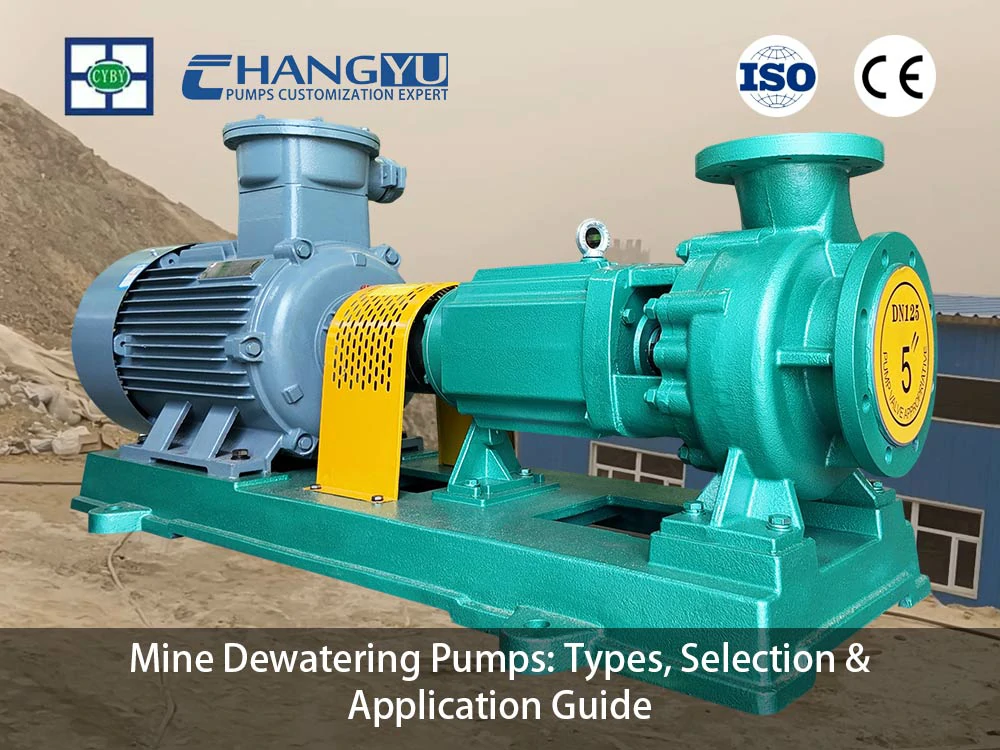
Qu'est-ce qu'une Pompe d'Exhaure Minière ?
1.1 Définition de la carotte
A pompe d'assèchement des mines est une pompe conçue pour évacuer l'eau des travaux souterrains, des mines à ciel ouvert ou des fonds de carrière. Le type de pompe le plus fréquemment sélectionné pour ces applications est la pompe centrifuge, qui utilise des roues à aubes rotatives pour convertir l'énergie mécanique en pression de fluide, forçant l'eau à remonter la conduite de refoulement.
Quatre exigences techniques distinguent une pompe d'exhaure minière d'une pompe à eau standard :
- Gestion des solides : L'eau de mine contient des particules abrasives—sable, déblais de forage et fragments de roche. Les pompes centrifuges standard se bouchent et s'usent rapidement lorsqu'elles sont exposées à ces solides. Les pompes d'exhaure utilisent des passages d'écoulement élargis et des roues à aubes spécialisées pour laisser passer les solides.
- Les matériaux les plus durs sont les plus fragiles. Les matériaux les plus tenaces sont les plus mous. Les composants en contact avec le fluide doivent résister à une exposition continue aux particules abrasives. La fonte blanche à haute teneur en chrome (25–30 % de chrome, 600+ BHN) est couramment spécifiée pour ces conditions. Parmi les matériaux moulés les plus durs disponibles pour la construction de pompes, elle résiste à l'usure mécanique en service sévère.
- Résistance à la corrosion : L'eau de mine est souvent chimiquement agressive. Le drainage minier acide avec des niveaux de pH aussi bas que 2–3 attaque la fonte standard et l'acier au carbone. Les pompes d'exhaure dans ces environnements nécessitent des matériaux résistants à la corrosion—acier inoxydable duplex, revêtements en fluoroplastique ou anodes sacrificielles.
- Capacité de haute hauteur de refoulement : Les mines souterraines profondes nécessitent des pompes capables de soulever l'eau sur des centaines de mètres. Les pompes centrifuges multicellulaires avec des roues à aubes disposées en série sont la solution standard pour les hauteurs de refoulement dépassant 100 m. Les hauteurs de refoulement supérieures à 1 000 m nécessitent des conceptions multicellulaires.
2 L'Environnement Opérationnel
L'exhaure minière soumet les pompes à des conditions qui interagissent d'une manière que les pompes standard ne sont pas conçues pour supporter :
- Abrasion : Des particules dures et anguleuses—charbon, schiste, silice—usent les pièces internes de la pompe. Dans les applications exigeantes, la robustesse est la priorité. Une pompe qui atteint un rendement élevé sur une courbe d'essai mais qui tombe en panne après des semaines sur le terrain n'apporte aucune valeur. Les pompes d'exhaure conçues pour ces conditions utilisent des composants plus épais et plus lourds avec des géométries de roues à aubes qui tolèrent l'usure.
- Corrosion : Les fluides dans les applications minières vont de l'eau surchauffée chargée de pyrite et de fer au fluide de forage émulsionné en saumure. Les matériaux doivent être sélectionnés en fonction de la chimie spécifique de l'eau de chaque site.
- Installation contrainte : Les mines souterraines imposent des limitations d'espace. Les dimensions et le poids de la pompe sont importants. L'équipement doit être suffisamment robuste pour résister aux conditions de manutention d'une mine en exploitation.
Comment Fonctionne une Pompe d'Exhaure Minière ?
1 Principe de la Pompe Centrifuge
La plupart des pompes d'exhaure minière sont des pompes centrifuges. Le principe de fonctionnement convertit l'énergie rotative en énergie cinétique, puis en énergie de pression. Le processus comporte trois étapes :
- Entrée du fluide : La roue à aubes rotative crée une zone de basse pression à l'œil de la roue, aspirant l'eau dans la pompe par l'orifice d'aspiration.
- Accélération : La roue à aubes accélère l'eau radialement vers l'extérieur en utilisant la force centrifuge. Le liquide se déplace du centre de la roue vers le bord extérieur.
- Génération de pression : Lorsque l'eau sort de la roue à aubes à grande vitesse, elle pénètre dans le corps de volute. Le passage d'écoulement qui s'élargit progressivement ralentit le fluide, convertissant l'énergie cinétique en énergie de pression qui pousse l'eau vers le haut de la colonne de refoulement.
2 Principe de la Pompe Multicellulaire
Pour les applications minières profondes nécessitant des hauteurs de refoulement supérieures à 100 m, des pompes centrifuges multicellulaires sont utilisées. Ces pompes abritent deux ou plusieurs roues à aubes dans un seul corps, disposées en série. Chaque roue ajoute de l'énergie au fluide—le refoulement de la première roue devient l'aspiration de la seconde. Une pompe à six étages développe environ six fois la hauteur de refoulement d'une pompe à un étage de diamètre de roue équivalent.
Caractéristiques clés des pompes multicellulaires pour l'exhaure minière :
- Capables de développer des hauteurs de refoulement supérieures à 1 000 m
- Rendement plus élevé aux hautes hauteurs que les alternatives monocellulaires
- Conception compacte par rapport à la hauteur de refoulement développée
- Sensibles aux solides—nécessitent généralement des crépines ou des bassins de décantation en amont
- Maintenance plus complexe en raison des multiples roues à aubes et diffuseurs
Les ingénieurs de Changyu Pump notent que la sélection d'une pompe multicellulaire doit tenir compte de toute la plage de fonctionnement, et non seulement du point de service nominal. Une pompe sélectionnée uniquement sur la base de sa hauteur de refoulement maximale peut fonctionner de manière inefficace pendant les périodes de plus faible afflux d'eau, gaspillant de l'énergie et accélérant l'usure.
3 Principe de la Pompe Volumétrique
Lorsque l'eau de mine contient des concentrations extrêmement élevées de solides, les pompes volumétriques offrent une alternative aux conceptions centrifuges. Au lieu de faire tourner une roue à aubes, les pompes volumétriques emprisonnent un volume fixe de fluide et le déplacent mécaniquement vers le refoulement.
Les pompes à membrane actionnées par piston utilisées dans l'exhaure minière fonctionnent à des pressions élevées et maintiennent un rendement à un débit constant quelle que soit la concentration en solides. Elles peuvent faire passer des boues aussi épaisses que 70 % de solides en poids—des conditions où les pompes centrifuges subissent des pertes de rendement significatives.
Quels Sont les Principaux Types de Pompes d'Exhaure Minière ?
La sélection des pompes pour l'exhaure minière dépend de la capacité de gestion des solides, de la teneur en acide, de la portabilité, de la capacité de fonctionnement automatique, de la facilité d'entretien et de la disponibilité des pièces de rechange.
1 Pompes d'Exhaure Submersibles
Les pompes submersibles sont la configuration la plus largement déployée pour le drainage des mines souterraines. Le moteur est hermétiquement scellé et directement accouplé au corps de la pompe, permettant à l'ensemble de l'unité de fonctionner complètement immergée. Comme la pompe est positionnée dans l'eau, elle pousse l'eau vers la surface plutôt que de la soulever, éliminant ainsi les limitations d'aspiration.
- Empreinte compacte adaptée aux espaces souterrains confinés
- Pas d'apprêt nécessaire
- Refroidi par le fluide pompé ; bruit réduit
- Options d'entraînement électrique et hydraulique disponibles
- Disponible en configurations multi-étagées pour des hauteurs de refoulement dépassant 600 m
L'intégrité des joints est la principale préoccupation de fiabilité. La plupart des défaillances de pompes submersibles dans le service minier proviennent de la dégradation des joints mécaniques. Lorsque les joints tombent en panne, l'eau pénètre dans le boîtier du moteur et cause des dommages électriques et mécaniques. Les doubles joints mécaniques avec faces en carbure de silicium et chambres de barrière remplies d'huile sont la spécification standard pour le service de drainage des mines. Changyu Pump recommande des systèmes de détection d'humidité qui arrêtent automatiquement la pompe lorsque l'eau pénètre dans le moteur.
2 Pompes centrifuges horizontales monocellulaires
Les pompes centrifuges horizontales à aspiration en bout sont positionnées en surface avec un tuyau d'aspiration descendu dans l'eau. Elles transfèrent de grands volumes de liquides à faible viscosité avec une conception simple et un minimum de pièces mobiles.
- Construction simple ; pas de vannes ni de pistons
- Empreinte compacte
- Efficace pour l'eau propre à légèrement contaminée sur des distances courtes à moyennes
Ces pompes nécessitent un amorçage avant le fonctionnement et doivent être situées près de la source d'eau en raison de la hauteur d'aspiration limitée. Une fois amorcées, un NPSH adéquat doit être maintenu sur toute la plage de fonctionnement.
3 Pompes de drainage auto-amorçantes
Les pompes centrifuges auto-amorçantes évacuent l'air de la conduite d'aspiration et aspirent l'eau vers le haut sans amorçage manuel. Elles sont installées au-dessus du niveau de l'eau et sont largement utilisées pour le drainage portable.
- Se réamorcent automatiquement après une ingestion d'air
- Convient aux endroits où l'amorçage traditionnel est impraticable
- Gèrent efficacement les niveaux d'eau fluctuants
- Disponibles en configurations entraînées par diesel pour les sites éloignés sans alimentation électrique
La hauteur d'aspiration est limitée, généralement jusqu'à 8,5 m. Le temps d'amorçage dépend du diamètre et de la longueur du tuyau d'aspiration. L'efficacité est inférieure à celle des conceptions non auto-amorçantes équivalentes en raison du mécanisme d'amorçage.
4 Pompes centrifuges multi-étagées
Les pompes centrifuges multi-étagées sont conçues pour les applications à haute pression dans les opérations minières profondes. Elles utilisent deux ou plusieurs roues agissant dans un seul corps pour développer la hauteur de refoulement totale. Les hauteurs de refoulement supérieures à 1 000 m nécessitent des conceptions multi-étagées avec des roues à simple entrée orientées dans le même sens ou en sens inverse, ou avec des roues à double entrée.
Ces pompes sont sensibles aux solides et nécessitent généralement des crépines ou des bassins de décantation en amont. La maintenance est plus complexe en raison des multiples roues et diffuseurs. Cependant, pour les mines souterraines profondes où les pompes monocellulaires ne peuvent pas fournir une hauteur de refoulement adéquate, les conceptions multi-étagées sont la solution standard.
Pour un drainage à haute hauteur avec des solides fins limités, consultez la Pompe multicellulaire haute pression MD. Les limites d'application publiées incluent une concentration en solides allant jusqu'à 1,5%, un diamètre de particule allant jusqu'à 0,5 mm et une température du liquide inférieure à 80°C. Confirmez la base de concentration et le modèle sélectionné avec le fabricant ; il ne s'agit pas d'une recommandation pour les boues à forte teneur en solides.
5 Pompes volumétriques pour applications à haute teneur en solides
Lorsque l'eau de mine contient des concentrations extrêmement élevées de solides, comme pour le curage des puisards ou le drainage des résidus, les pompes volumétriques offrent des avantages par rapport aux conceptions centrifuges.
- Pompes à cavité progressive manipulent les boues abrasives, à haute densité et corrosives. Elles maintiennent leurs performances avec des fluides à haute viscosité et des concentrations élevées de solides.
- Pompes à membrane actionnées par piston fonctionnent sans tolérances ni jeux serrés dans la chambre de pompage. Elles font passer des boues épaisses, fonctionnent à des vitesses de course lentes propices à de faibles vibrations et à l'usure des pièces, et sont simples à entretenir et à réparer.
6 Comparaison des types de pompes de drainage minier
| Type de pompe | Gamme de têtes | Manipulation des solides | Meilleure application | Limitation de la clé |
|---|---|---|---|---|
| Submersible | Jusqu'à 200 m (monocellulaire) ; jusqu'à 650 m (multi-étagée) | Solides jusqu'à 35 mm ; sable, petites pierres, argile | Puisards souterrains, puits profonds, chambres inondées | Risque de corrosion des joints ; accès moteur difficile |
| Horizontale monocellulaire | Jusqu'à 150 m | Minime (eau propre à légèrement contaminée) | Transfert de surface, périmètre de mine à ciel ouvert | Nécessite un amorçage ; hauteur d'aspiration limitée |
| Auto-amorçage | Jusqu'à 150 m | Solides jusqu'à 35 mm | Drainage portable, niveaux d'eau fluctuants | Hauteur d'aspiration limitée ; efficacité inférieure |
| Centrifuge multi-étagée | 150–1 000+ m | Minime (eau propre de préférence) | Mines souterraines profondes, applications à haute hauteur de refoulement | Sensible aux solides ; maintenance complexe |
| Cavité progressive | Jusqu'à 200 m | Jusqu'à 70% de solides | Boue à haute teneur en solides, curage de puisard | Maintenance plus élevée ; remplacement du stator |
| À membrane (piston/AODD) | Jusqu'à 100 m | Jusqu'à 70% de solides ; grosses particules | Drainage de front de taille, dérivation d'urgence | Débit pulsatoire ; coût énergétique plus élevé |
Quels matériaux et protections contre l'usure sont utilisés dans les pompes de drainage minier ?
1 Matériaux résistants à l'usure
Les pompes de drainage minier doivent survivre à une exposition continue aux particules abrasives. Le choix du matériau détermine si une pompe dure des mois ou des années.
Fonte blanche à haute teneur en chrome est la norme de l'industrie pour le service de drainage abrasif. Avec une teneur en chrome de 25 à 30% et une dureté Brinell dépassant 600 BHN, il offre une résistance à l'usure causée par des matériaux abrasifs, notamment le gravier, le sable et la boue. Dans des conditions de boue abrasive, les composants en fonte à haute teneur en chrome peuvent durer 3 à 5 fois plus longtemps que la fonte standard, bien que la durée de vie réelle dépende de la taille des particules, de la concentration et de la vitesse de fonctionnement.
Acier inoxydable duplex sert les environnements combinés corrosion-abrasion. Les roues et diffuseurs en acier inoxydable duplex manipulent les liquides corrosifs tout en maintenant une résistance raisonnable à l'usure. Les pompes à boue submersibles NZE de Goodwin, par exemple, utilisent de l'acier inoxydable duplex pour les boues abrasives, à haute densité et corrosives dans les environnements souterrains.
Revêtements en caoutchouc naturel offrent une résistance aux particules fines et tranchantes dans des conditions humides. Le caoutchouc absorbe l'énergie d'impact des particules et la libère élastiquement. Les pompes revêtues de caoutchouc servent dans des applications avec des solides fins, humides et non abrasifs. Le caoutchouc n'est pas compatible avec les solvants forts, les hydrocarbures ou les températures supérieures à environ 70°C.
Les ingénieurs de Changyu Pump recommandent que la sélection des matériaux soit basée sur une analyse d'échantillon d'eau du site minier spécifique, car la chimie de l'eau peut varier considérablement, même au sein d'une seule mine.
2 Matériaux résistants à la corrosion
Le drainage minier acide (DMA) est l'un des environnements les plus agressifs qu'une pompe puisse rencontrer. L'eau qui s'infiltre à travers les roches contenant des sulfures devient acide (pH 2–4) et attaque chimiquement les matériaux de pompe standard. L'usure et la corrosion agissent souvent ensemble : la corrosion affaiblit la surface métallique, puis les particules abrasives éliminent la couche affaiblie à un rythme accéléré.
- Pompes en acier inoxydable sont préférés dans les applications corrosives. Certaines séries de pompes submersibles d'exhaure sont fabriquées en SCS14, un équivalent moulé de l'acier inoxydable 316. Même avec une construction en acier inoxydable, des anodes sacrificielles en métaux à potentiel d'électrode inférieur — magnésium, zinc ou aluminium — prolongent la durée de vie de la protection cathodique.
- Aciers inoxydables duplex (CD4MCu, 2205, 2507) sont conçus pour un service combiné corrosion-abrasion. Ils sont utilisés dans les applications d'eau minière acide où l'attaque chimique et l'abrasion par les solides sont présentes.
- Pompes à revêtement UHMW-PE fournissent une barrière chimique qui isole le corps de pompe du milieu agressif tout en absorbant l'énergie d'impact des particules. Dans des conditions d'essai d'usure abrasive normalisées, la résistance à l'usure de l'UHMW-PE est environ 7 à 10 fois supérieure à celle de l'acier au carbone et de l'acier inoxydable. Pour les services combinés corrosion-abrasion les plus sévères, les pompes revêtues d'UHMW-PE offrent la meilleure protection combinée à des températures allant jusqu'à 90 °C.
3 Systèmes d'étanchéité
La plupart des défaillances de pompes submersibles en service minier proviennent de la dégradation des garnitures mécaniques. Lorsque les garnitures tombent en panne, l'eau pénètre dans le carter du moteur et cause des dommages électriques et mécaniques au stator et au rotor.
Garnitures mécaniques doubles sont la spécification standard pour le service d'exhaure minière. Un agencement à double garniture équilibrée enferme les deux ensembles de ressorts de garniture dans un réservoir d'huile. Les faces en carbure de silicium ne sont soumises qu'à la pression d'immersion — et non à la pression de refoulement de la pompe — ce qui prolonge la durée de vie de l'usure.
Systèmes de détection d'humidité offrent une couche de protection supplémentaire. Un détecteur d'humidité qui arrête automatiquement la pompe lorsque l'eau pénètre dans le moteur peut éviter une défaillance catastrophique. Changyu Pump spécifie la détection d'humidité comme caractéristique standard pour les pompes submersibles en service d'exhaure minière.
4.4 Sélection des matériaux Référence rapide
| Matériau | Meilleur pour | Dureté | Temp. max. | Application typique |
|---|---|---|---|---|
| Fonte blanche à haute teneur en chrome (27% Cr) | Abrasion sévère due au gravier et au sable | 600+ BHN | ~110°C | Roues, volutes, plaques d'usure dans l'eau abrasive |
| Acier inoxydable duplex (CD4MCu, 2205) | Corrosion-abrasion combinée (DMA) | 280-350 BHN | ~110°C | Drainage minier acide, eau corrosive-abrasive |
| Doublure en caoutchouc naturel | Particules fines et tranchantes dans des conditions humides | N/A (élastomère) | ~70°C | Boues à particules fines, eau de résidus de flottation |
| Doublure en UHMW-PE | Combinaison de corrosion sévère et d'abrasion | N/A (Polymère) | ~90°C | Eau minière acide avec solides abrasifs |
| Acier inoxydable 316L | Eau corrosive avec faible teneur en solides | ~150 BHN | ~120°C | Eau acide propre, zones de traitement chimique |
Comment choisir la bonne pompe d'exhaure minière
Le choix de la bonne pompe commence par trois paramètres techniques : le débit, la hauteur manométrique totale et la qualité de l'eau (teneur en solides, pH, température). Ces données permettent un dimensionnement précis et une fiabilité à long terme.
Étape 1 : Caractériser l'eau de la mine
Documentez le profil physique et chimique de l'eau : teneur en solides (pourcentage en poids, distribution granulométrique), pH, température, densité et présence d'éléments corrosifs ou abrasifs. Si l'eau contient plus d'environ 1% de solides en poids, une pompe à eau propre standard subira une usure accélérée. Les pressions environnementales élevées, les exigences de sécurité et les besoins de productivité influencent tous le choix de la pompe — des considérations souvent uniques aux opérations minières.
Chiffres clés : Teneur en solides (%), taille des particules (mm), pH, température, densité.
Étape 2 : Définir la charge hydraulique
Calculez le débit requis et la hauteur manométrique totale. Dans l'exploitation minière souterraine, les débits peuvent atteindre 900 m³/h et les hauteurs jusqu'à 1 050 m. Dans les opérations à ciel ouvert, les pompes peuvent gérer jusqu'à 1 800 m³/h à des hauteurs allant jusqu'à 400 m. Déterminez si les besoins d'exhaure sont continus ou intermittents, et spécifiez précisément les exigences de débit.
Chiffres clés : Débit (m³/h ou GPM), hauteur manométrique totale (m ou pi), hauteur d'aspiration statique, pertes par frottement.
Étape 3 : Faire correspondre le type de pompe à l'application
- Puisards souterrains et puits profonds → pompe centrifuge submersible. Pompe submersible multicellulaire pour hauteurs supérieures à 100 m.
- Exhaure périmétrique à ciel ouvert → pompe centrifuge monocellulaire horizontale ou pompe auto-amorçante. Entraînement diesel pour sites isolés sans électricité.
- Applications à haute hauteur (>200 m) → pompe centrifuge multicellulaire (horizontale ou submersible).
- Boue à haute teneur en solides (30–70% de solides) → pompe à cavité progressive ou pompe à membrane à actionnement par piston.
- Exhaure de front de taille (portable) → petite pompe submersible ou pompe AODD. Les pompes jusqu'à 6 kW avec un refoulement maximum de 4 pouces sont portables, résistantes à l'usure et capables de résister à la marche à sec.
- Atmosphères inflammables ou explosives → pompes avec moteurs antidéflagrants certifiés selon les normes ATEX/IECEx ou MSHA.
Si les solides abrasifs constituent la condition déterminante plutôt que la hauteur de refoulement élevée, comparez la Pompe à boues horizontale PGY. Fournissez la concentration en solides, la distribution granulométrique, la taille maximale des particules, le pH, le débit et la hauteur de refoulement afin que le matériau en contact avec le fluide et la conception hydraulique puissent être vérifiés. Une pompe à boues résistante à l'abrasion n'est pas automatiquement adaptée à toutes les eaux de mine acides.
Étape 4 : Faire correspondre les matériaux à la chimie de l'eau
Sélectionnez les matériaux des composants en contact avec le fluide en fonction du pH et de l'abrasivité de l'eau :
- Eau à pH neutre avec forte abrasion (sable, gravier) → fonte blanche à haute teneur en chrome (600+ BHN)
- Eau acide (pH 2–4) avec abrasion modérée → acier inoxydable duplex (CD4MCu, 2205) avec anodes sacrificielles
- Eau fortement acide avec forte abrasion → pompes revêtues d'UHMW-PE
- Eau propre, toutes plages de pH → acier inoxydable 316L avec matériaux d'étanchéité appropriés
Même les équipements construits avec des matériaux résistants à la corrosion nécessitent une inspection régulière pour identifier les problèmes de corrosion avant qu'ils ne provoquent une défaillance. Les ingénieurs de Changyu Pump recommandent d'effectuer une analyse de l'eau au moins deux fois par an, car la chimie de l'eau de la mine peut changer à mesure que les opérations progressent à travers différentes formations géologiques.
Étape 5 : Sélectionner le système d'entraînement
- Pompes submersibles électriques sont préférées lorsque l'alimentation du réseau est disponible. Elles gèrent des volumes élevés ou des hauteurs élevées, fonctionnent silencieusement et nécessitent moins d'attention quotidienne que les alternatives diesel.
- Pompes à entraînement diesel desservent les sites isolés sans accès à l'électricité. Les pompes de surface diesel sont limitées par les marges de NPSH ; les pompes submersibles contournent la hauteur d'aspiration en fonctionnant sous la ligne d'eau.
- Pompes submersibles hydrauliques offrent une puissance diesel avec une configuration submersible et une plus grande résistance à l'usure due aux particules.
Étape 6 : Évaluer le coût total de possession
Le prix d'achat ne représente qu'une petite fraction du coût sur la durée de vie. Une pompe qui atteint un rendement élevé sur une courbe d'essai mais qui tombe en panne après une courte période sur le terrain n'apporte aucune valeur. Tenez compte de :
- Consommation d'énergie (souvent 60 à 70 % du coût sur la durée de vie)
- La fréquence de remplacement des pièces d'usure (roues, plaques d'usure, joints)
- La main-d'œuvre de maintenance (accessibilité pour l'entretien)
- Le coût des temps d'arrêt de production (lorsqu'une fosse d'excavation se remplit et que la pompe tombe en panne, les coûts d'arrêt peuvent atteindre des milliers de dollars par heure)
Une pompe avec un prix initial plus élevé mais une durée de vie sensiblement plus longue dans les conditions spécifiques de l'eau de la mine offre un coût total de possession inférieur. Les ingénieurs d'application de Changyu Pump peuvent vous aider avec des calculs de TCO basés sur des données spécifiques au site.
Comment entretenir et dépanner une pompe d'exhaure minière ?
6.1 Modes de défaillance courants
La cause la plus fréquente de défaillance des pompes d'exhaure minière est le colmatage par des solides en suspension gritteux et de la boue. L'eau qui entre en contact direct avec les opérations minières est souvent sale, contenant des déblais de forage et des solides générés par la circulation souterraine.
Trois modes de défaillance dominent le service des pompes d'exhaure minière :
- Usure abrasive : Les particules dures interagissent avec les surfaces plus tendres, provoquant une perte de matière. Le choix approprié des matériaux et des revêtements constitue la principale défense.
- Colmatage de la pompe : Les solides bloquent la roue ou les passages. La conception de la roue et les grilles d'entrée sont les solutions.
- Surchauffe du moteur : Lorsque les niveaux d'eau baissent et que la pompe tourne à sec, ou lorsque des solides s'accumulent autour du cadre du moteur. Un dimensionnement approprié, des chemises de refroidissement et une protection contre les sous-charges empêchent cela.
La défaillance du joint est la cause racine la plus courante de défaillance des pompes submersibles. La plupart des défaillances submersibles dans le service minier sont attribuables à la dégradation du joint mécanique. La majorité des pompes en service souterrain sont des unités d'exhaure légères à moyennes—pas des pompes à boue. Une fois les niveaux d'eau abaissés, ces pompes se retrouvent immergées dans des solides déposés, qui obstruent les paniers filtrants et provoquent un fonctionnement à sec et des dommages aux joints.
6.2 Calendrier d'entretien préventif
| Intervalle | Tâche |
|---|---|
| Quotidiennement | Contrôler le courant du moteur et la pression de refoulement ; vérifier l'absence de vibrations ou de bruits inhabituels. |
| Hebdomadaire | Inspecter l'état de l'huile du joint (une huile laiteuse indique une entrée d'eau) ; vérifier la température des roulements ; contrôler les câbles pour détecter tout dommage |
| Mensuel | Mesurer le jeu de la roue ; inspecter les plaques d'usure pour déceler des rainures ou un amincissement ; nettoyer les entrées de la pompe et les filtres |
| Trimestrielle | Inspection complète de la partie hydraulique ; remplacer le lubrifiant des roulements ; inspecter et remplacer les joints et les garnitures si nécessaire |
| Annuellement | Démontage complet de la pompe ; mesurer et remplacer tous les composants d'usure ; vérifier l'intégrité du corps et de l'arbre ; inspecter les connexions électriques et les câbles |
6.3 Guide de dépannage rapide
| Symptôme | Cause probable | Mesures recommandées |
|---|---|---|
| La pompe ne démarre pas | Problème d'alimentation électrique ; dysfonctionnement du moteur ; blocage | Vérifier la source d'alimentation et les fusibles ; inspecter le moteur pour détecter une surchauffe ; dégager le blocage de la roue |
| Faible débit | Filtre ou tamis obstrué ; roue usée ; bouchon d'air | Nettoyer les tamis et les filtres ; inspecter la roue pour détecter des dommages ; purger l'air de la pompe |
| Vibrations excessives | Désalignement ; roue déséquilibrée ; cavitation | Vérifier l'alignement pompe-moteur ; inspecter la roue pour détecter des dommages ; vérifier la marge de NPSH |
| Surchauffe du moteur | Roue obstruée ; fonctionnement à sec ; solides dans la chambre de refroidissement | Désobstruer la roue ; installer une protection contre les sous-charges ; nettoyer les passages de refroidissement |
| Fuite du joint | Pénétration de particules abrasives ; attaque chimique de l'élastomère ; faces de joint usées | Inspecter les faces du joint pour déceler des rayures ; remplacer par des joints à boue robustes ; adapter l'élastomère à la chimie de l'eau |
4 Optimisation du coût du cycle de vie
Plusieurs stratégies réduisent le coût total de possession dans l'exhaure minière :
- Installer des grilles à débris ou des bassins de décantation en amont pour réduire la charge de solides sur la pompe. Une conception appropriée du puisard—séparant l'eau propre de l'eau chargée de solides abrasifs—est la solution la plus efficace à long terme.
- Utiliser des variateurs de fréquence (VFD) pour optimiser la vitesse de la pompe en fonction des conditions changeantes. Les pompes d'exhaure modernes avec VFD peuvent réduire la consommation d'énergie jusqu'à 30 %.
- Mettre en œuvre une surveillance de l'état avec des capteurs IoT pour la maintenance prédictive.
- Stocker les pièces de rechange critiques—roues, plaques d'usure, joints mécaniques et roulements—sur site pour minimiser les temps d'arrêt lorsqu'un remplacement est nécessaire.
- Former les opérateurs à la manipulation correcte de la pompe. Tirer sur le câble d'alimentation lors du déplacement de la pompe est une cause fréquente de dommages au câble entraînant une défaillance du moteur.
Où les pompes d'exhaure minière sont-elles utilisées ?
Exhaure des mines souterraines déploie les pompes dans une hiérarchie : les pompes de front maintiennent l'eau hors des chantiers en activité ; les pompes d'étage déplacent l'eau vers des points de collecte centraux ; les pompes d'alimentation transfèrent l'eau entre les niveaux ; et les pompes principales remontent l'eau accumulée à la surface. Les pompes submersibles de 20 à 90 kW servent généralement les stations de pompage d'alimentation et principales.
Exhaure des mines à ciel ouvert nécessite des pompes à grand débit gérant des niveaux d'eau fluctuants. Les applications d'exhaure dans les opérations à ciel ouvert exigent des pompes robustes manipulant des solides jusqu'à 35 mm de diamètre, offrant une polyvalence à la fois pour la boue et l'eau propre. Les pompes auto-amorçantes à moteur diesel sur remorques ou pontons offrent la mobilité nécessaire pour suivre le périmètre de la fosse en progression.
Exhaure de front et d'étage utilise de petites pompes portables déplacées dans toute la mine. Les pompes d'exhaure de front sont des unités compactes relocalisées au fur et à mesure de l'avancement des travaux. L'eau retirée pendant le forage est acheminée vers un puisard plus en arrière dans la galerie, où une installation fixe la transporte vers un autre étage ou directement vers la station de drainage principale.
Exhaure d'urgence et dérivation nécessite des pompes portables pouvant être déployées rapidement. Lorsqu'une mine est inondée, la priorité est d'évacuer l'eau le plus rapidement possible pour rétablir l'accès et éviter les dommages aux équipements. Les pompes auto-amorçantes à moteur diesel et les pompes submersibles portables servent à ces applications.
Récupération des résidus et de l'eau de procédé ferme le cycle de l'eau. Après décantation dans les bassins de résidus, l'eau est recyclée vers l'usine de traitement. Les pompes submersibles intégrées dans des circuits en boucle fermée récupèrent et réutilisent l'eau de procédé, réduisant l'impact environnemental et les coûts de l'eau.
Quelles séries de pompes Changyu sont les meilleures pour l'exhaure minière ?
Les séries de pompes suivantes répondent aux principaux défis d'exhaure dans l'exploitation minière. Chacune est adaptée à des caractéristiques d'eau et des exigences opérationnelles spécifiques.
Série UHB Pompe centrifuge à revêtement UHMW-PE
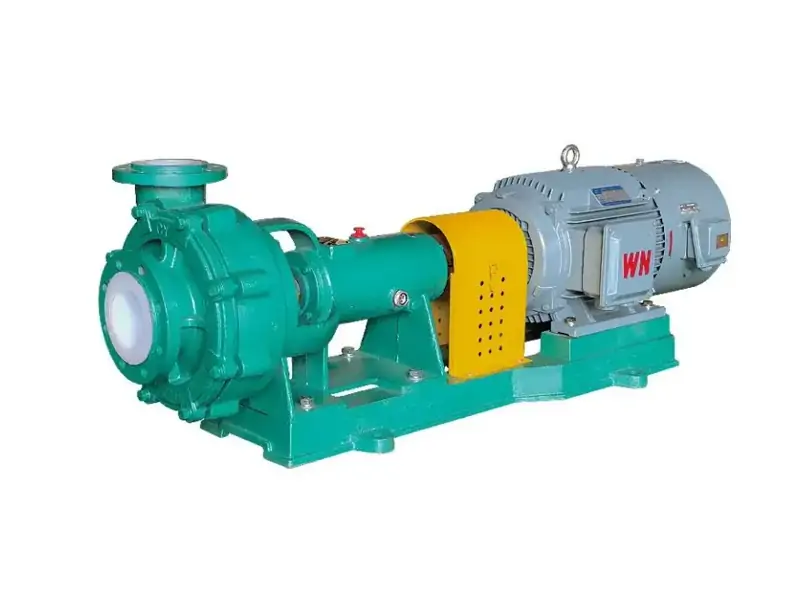
La série UHB est une pompe centrifuge monocellulaire en porte-à-faux avec un corps en acier doublé UHMW-PE corps, conçu pour les fluides chimiquement agressifs et abrasifs-corrosifs. Pour le drainage minier où l'eau est à la fois acide et abrasive — courant dans le drainage minier acide et les corps minéralisés contenant des sulfures — le revêtement en UHMW-PE offre une protection combinée contre la corrosion et l'usure. Les pièces en contact épaissies et les passages élargis assurent un fonctionnement stable et à long terme.
Principales spécifications : Débit 3-2,600 m³/h | Hauteur de chute 5-100 m | Puissance 0.75-300 kW | Température -20°C à 90°C
Pompe à entraînement magnétique pour procédés chimiques de la série CYQ
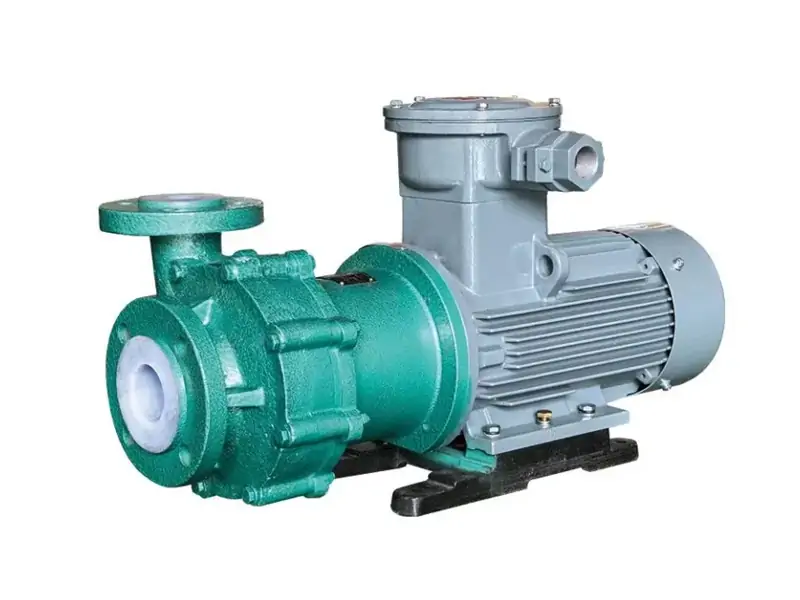
La série CYQ est une plateforme de pompe chimique à entraînement magnétique destinée à être évaluée dans un flux de traitement propre et chimiquement agressif distinct. Elle ne doit pas être considérée comme une pompe polyvalente pour les eaux de mine sableuses ou les boues abrasives. Les solides et les particules ferromagnétiques peuvent endommager les paliers lubrifiés par le produit ou perturber le fonctionnement. Confirmez la propreté du liquide, la chimie, la circulation interne et la protection contre la marche à sec avant d'envisager cette série.
Principales spécifications : Débit 3-800 m³/h | Hauteur de chute 15-125 m | Puissance 2.2-110 kW | Vitesse 2,950 r/min | Température -20°C à 180°C
Pompe électrique à membrane série BFD
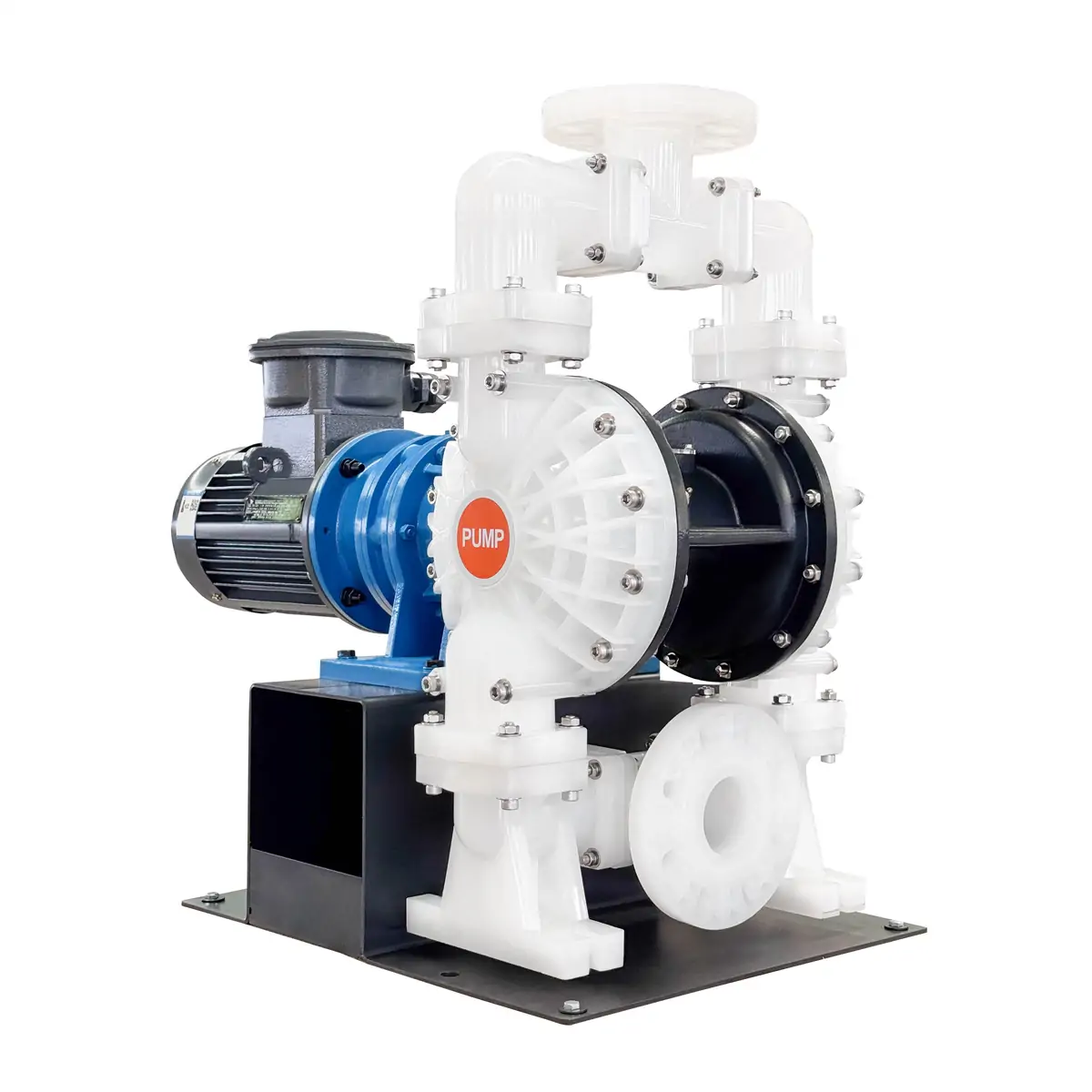
La série BFD est une pompe à membrane électrique motorisée fournissant un débit stable et continu sans infrastructure d'air comprimé. Pour les boues à haute teneur en solides, le nettoyage des puisards et le transfert de boues épaisses où les pompes centrifuges ne sont pas recommandées, la membrane forme une barrière sans joint entre le fluide de procédé et le mécanisme d'entraînement.
Principales spécifications : Débit jusqu'à 480 L/min | Hauteur de chute jusqu'à 84 m | Puissance 0,75-45 kW | Température -20°C à 120°C
Pompe pneumatique à double membrane de la série BFQ

La série BFQ est une plateforme de pompe à double membrane à commande pneumatique pour le drainage ou le transfert intermittent lorsque de l'air comprimé est disponible. Confirmez le passage des particules, l'abrasivité, la compatibilité des membranes, la demande en air et la capacité de pression du modèle sélectionné. Pour une atmosphère potentiellement explosive, vérifiez la certification et la mise à la terre de l'ensemble complet ; l'entraînement pneumatique n'est pas une protection automatique contre les explosions.
Principales spécifications : Débit maximum jusqu'à 1 041 L/min | Pression de travail 0,84 MPa | Hauteur d'aspiration 7,6 m | Passage des solides 9,4 mm
Deux services différents : Comparer Pompes de drainage multicellulaires MD pour une hauteur de refoulement élevée dans les limites spécifiées de faibles teneurs en solides, et Pompes à boues abrasives PGY pour l'usure liée aux solides. Utilisez la courbe réelle du système, l'analyse de l'eau et les données sur les particules pour choisir entre elles.
Référence rapide pour la sélection des pompes de drainage minier
| Série de pompes | Type | Meilleure application | Matériaux clés |
|---|---|---|---|
| UHB | Centrifugeuse à revêtement UHMW-PE | Eau minière combinant corrosion et abrasion ; drainage minier acide | UHMW-PE |
| CYQ | Entraînement magnétique sans joint | Flux de traitement propres et chimiquement compatibles uniquement ; pas pour les eaux de mine sableuses générales | FEP, PFA, PTFE |
| BFD | Membrane électrique | Boue à haute teneur en solides, nettoyage de puisard, boue épaisse | Acier moulé, SS, PP, PVDF |
| BFQ | Double diaphragme pneumatique | Drainage du front de taille, by-pass d'urgence, zones dangereuses | Acier moulé, SS, PP, PVDF |
Étude de cas : Prolongation de la durée de vie des pompes dans un système de drainage de mine à ciel ouvert
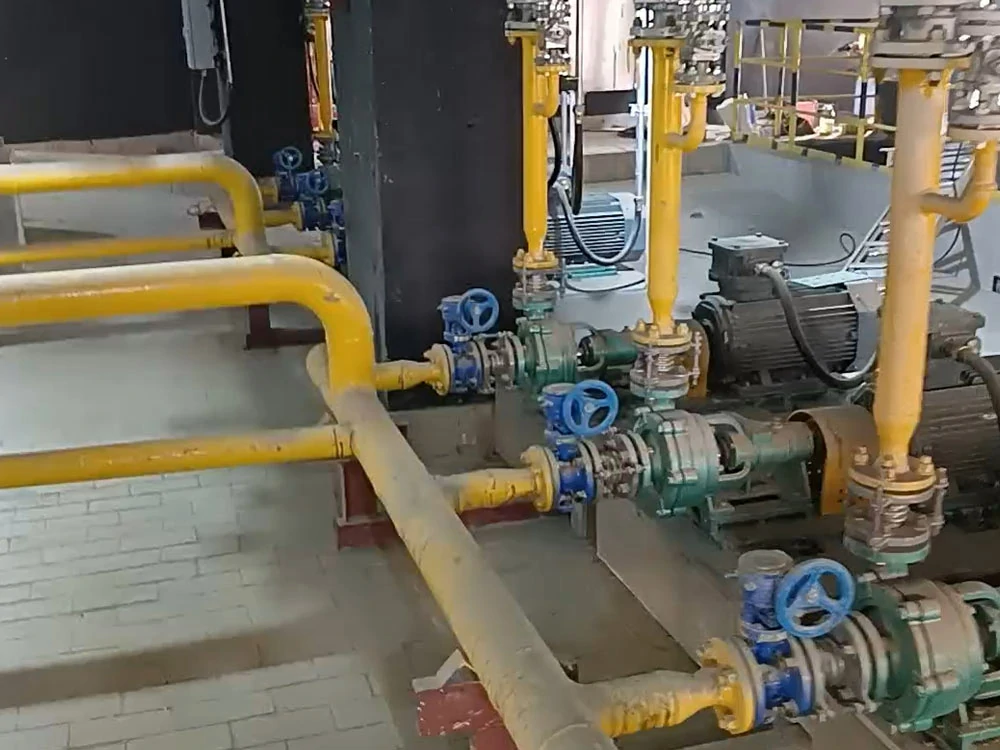
Le défi du client : Un producteur d'engrais phosphatés exploitant une grande mine à ciel ouvert a subi des défaillances d'usure chroniques sur les pompes de drainage de la fosse. L'eau de la mine contenait de l'eau de procédé acide (pH 3–5), des cristaux de gypse abrasifs (environ 33% de solides) et des contaminants corrosifs incluant HF, H₂SiF₆, H₂SO₄ et Cl⁻ à des températures allant jusqu'à 70°C. Les pompes existantes — en acier inoxydable duplex CD4MCuN fonctionnant à environ 1 800 tr/min — nécessitaient le remplacement des pièces très usées tous les 3 à 6 mois. Les coûts annuels de maintenance par pompe dépassaient 55 000 USD.
Analyse d'ingénierie : Les ingénieurs de Changyu Pump ont évalué les données opérationnelles et la chimie de l'eau de la mine. Le matériau CD4MCuN, adéquat pour l'eau de mine à pH neutre, était insuffisant face à l'attaque acide combinée et à l'abrasion des cristaux de gypse à la température de fonctionnement. La vitesse de fonctionnement élevée produisait des vitesses en bout d'aube qui accéléraient l'usure érosive — conformément à la relation en ingénierie des pompes à boue où le taux d'usure est proportionnel approximativement au cube de la vitesse en bout d'aube.
Solution déployée : Changyu Pump a remplacé les pompes existantes en CD4MCuN par Série UHB Pompes centrifuges à revêtement UHMW-PE:
- Un carter revêtu de PE-UHMW avec des parties mouillées épaissies : Le revêtement a éliminé le contact acide avec le corps de la pompe, supprimant la composante de corrosion de l'équation d'usure. L'absorption des chocs a réduit le taux d'usure abrasive due à l'impact des cristaux de gypse.
- Des passages d'écoulement élargis et une roue semi-ouverte : Les jeux internes élargis ont permis aux solides de gypse de passer sans colmatage.
- Vitesse de fonctionnement réduite : La pompe a été dimensionnée pour fonctionner à une vitesse de rotation plus faible, réduisant la vitesse en bout d'aube et le taux d'usure abrasive associé.
Résultats quantifiés (évaluation à 18 mois) :
| Métrique | Avant la mise à niveau (CD4MCuN, ~1 800 tr/min) | Après la mise à niveau (PE-UHMW, vitesse réduite) | Amélioration |
|---|---|---|---|
| Durée de vie des pièces d'usure | 3–6 mois | > 14 mois (toujours en service) | Extension de 3 à 5 fois |
| Temps d'arrêt non planifié par an | 3–4 événements | < 1 événement | Réduction d'environ 75 % |
| Coût de maintenance annuel par pompe | 55 000 USD | 18 700 USD | ~66% de réduction |
| Stock de pièces de rechange pour pompe | Haut | Faible | Stock réduit d'environ 60 % |
La mine a étendu la spécification de la pompe revêtue d'UHMW-PE à des positions de drainage supplémentaires dans toute la fosse.
Foire aux questions
Q1 : Quel type de pompe est le meilleur pour le drainage des mines souterraines ?
R : Les pompes centrifuges submersibles sont le choix le plus courant. Elles fonctionnent entièrement immergées, démarrent sans amorçage et sont refroidies par le fluide pompé. Pour les hauteurs de refoulement supérieures à 100 m, des pompes submersibles multicellulaires sont utilisées. La sélection dépend de la chimie de l'eau, de la teneur en solides et de l'infrastructure électrique disponible.
Q2 : Comment calculer la hauteur manométrique totale pour une pompe de drainage minier ?
R : La hauteur manométrique totale est égale à la hauteur statique (distance verticale du niveau d'eau au point de refoulement) plus les pertes par frottement dans la tuyauterie de refoulement plus la hauteur de vitesse au refoulement. Pour les mines souterraines, la hauteur statique est la composante dominante.
Q3 : Quels matériaux résistent à la fois à l'abrasion et au drainage minier acide ?
R : L'acier inoxydable duplex (CD4MCu, 2205) offre une résistance combinée à la corrosion et à l'abrasion pour l'eau de mine légèrement acide. Pour l'eau fortement acide (pH inférieur à 3) avec des solides abrasifs, les pompes revêtues d'UHMW-PE offrent la meilleure protection combinée. La fonte blanche à haute teneur en chrome (600+ BHN) est standard pour l'eau abrasive à pH neutre mais se corrode rapidement dans des conditions acides.
Q4 : Pourquoi les joints des pompes de drainage submersibles tombent-ils fréquemment en panne dans les mines ?
R : La plupart des défaillances des pompes submersibles sont attribuables à la dégradation des joints. Les causes principales incluent les solides abrasifs qui rayent les faces des joints, l'attaque chimique des élastomères des joints par l'eau acide et le fonctionnement à sec lorsque les niveaux d'eau descendent en dessous de l'entrée de la pompe. Les doubles joints mécaniques avec faces en carbure de silicium et chambres de barrière remplies d'huile offrent la redondance requise pour le service minier.
Q5 : Quelle est la différence entre une pompe de drainage et une pompe à boue ?
R : Les pompes de drainage sont conçues pour l'eau avec une teneur en solides faible à modérée — généralement inférieure à 5% de solides en poids. Les pompes à boue traitent des concentrations élevées de solides de 30 à 70%. Dans le drainage minier, la distinction est critique — utiliser une pompe de drainage pour un service de boue entraîne une usure rapide et une défaillance des joints.
Q6 : Comment empêcher ma pompe de drainage minier de se colmater ?
R : Installez des grilles de protection ou des bassins de décantation en amont pour réduire la charge de solides. Utilisez des pompes avec des roues à canaux larges ou vortex pour l'eau chargée de solides. Une conception appropriée du puisard — séparant l'eau propre de l'eau chargée de solides abrasifs — est la solution à long terme la plus efficace.
Q7 : Dois-je choisir une pompe de drainage électrique ou diesel ?
R : Les pompes submersibles électriques sont préférées là où l'énergie du réseau est disponible. Les pompes diesel servent les sites éloignés sans accès à l'électricité. Le choix est souvent déterminé par l'infrastructure du site plutôt que par les performances de la pompe.
Q8 : Quelles certifications de sécurité les pompes de drainage minier nécessitent-elles ?
R : Pour les mines de charbon souterraines et les environnements gazeux, les pompes doivent être certifiées MSHA pour un fonctionnement antidéflagrant. Sur les marchés internationaux, la certification ATEX ou IECEx est requise pour les atmosphères potentiellement explosives. Vérifiez toujours que la certification de la pompe correspond à la classification de la zone dangereuse de la mine.
11. Conclusion
A pompe d'assèchement des mines doit survivre aux conditions dans lesquelles elle fonctionne : solides abrasifs, eau corrosive et fonctionnement continu dans des environnements exigeants. Le type de pompe le plus fréquemment sélectionné pour ces tâches est la pompe centrifuge — configurée en conception submersible, horizontale, auto-amorçante ou multicellulaire en fonction des exigences spécifiques du site.
Le cadre de sélection est cohérent pour toutes les applications : caractériser la chimie de l'eau et le profil des solides ; définir le service hydraulique ; faire correspondre le type de pompe à l'application ; sélectionner les matériaux pour l'environnement spécifique de corrosion-abrasion ; choisir le système d'entraînement en fonction de l'infrastructure du site ; et évaluer le coût total de possession. La robustesse est la priorité — une pompe qui tombe en panne après une courte période n'apporte aucune valeur, quel que soit son rendement.
Contacter Changyu Pump avec vos paramètres de dénoyage de mine et vos exigences de processus. Notre équipe d'ingénierie fournira une recommandation de pompe détaillée et un devis adapté aux conditions spécifiques de votre mine.