
Memilih yang tepat pompa lumpur sentrifugal horizontal merupakan keputusan rekayasa yang kritis dalam industri pertambangan, pengolahan mineral, dan industri berat. Pilihan yang salah menyebabkan keausan dini, waktu henti yang tidak terencana, dan biaya kepemilikan total yang tinggi.
Jawaban Singkat
A pompa lumpur sentrifugal horizontal adalah pompa tugas berat yang dirancang dengan poros diposisikan horizontal dan casing dipasang pada baseplate di permukaan tanah. Konfigurasi ini merupakan standar industri untuk mengangkut slurry abrasif berkepadatan tinggi di pertambangan, pengolahan mineral, dan pengerukan. Tidak seperti pompa vertikal yang merendam impeller di sumber fluida, pompa horizontal mengandalkan hisapan terendam atau hisapan hisap yang dihitung secara cermat, dan seluruh rakitan berputarnya dapat diakses di permukaan tanah untuk perawatan. Faktor seleksi utama:
- Desain struktural mendorong keandalan: Konstruksi casing ganda dengan liner aus yang dapat diganti memungkinkan komponen yang aus diganti tanpa mengganti seluruh pompa. Rakitan bantalan tugas berat dengan pelumasan oli-bath atau oli paksa menyerap beban radial dan aksial ekstrem yang ditimbulkan oleh slurry dengan berat jenis melebihi 1,5. Mekanisme penyesuaian celah impeller yang dapat disetel secara eksternal memungkinkan celah depan kritis diatur ulang ke spesifikasi pabrik tanpa membuka casing pompa.
- Pemilihan material aus menentukan masa pakai: Besi cor putih krom tinggi (CrMo, 600–700 HB) tetap menjadi standar untuk partikel kasar bersudut di pertambangan batuan keras. Liner karet alam melindungi terhadap partikel halus bulat pada pH netral. Baja tahan karat dupleks (2205/2507, 250–300 HB / 25–30 HRC) melayani slurry korosif yang mengandung klorida atau asam di mana CrMo standar akan terkorosi. Material keramik menawarkan kekerasan maksimum tetapi biasanya terbatas pada perlindungan aus lokal di zona kecepatan tinggi.
- Metode penyegelan poros harus sesuai dengan karakteristik slurry: Expeller sentrifugal yang dikombinasikan dengan gland packing atau mechanical seal adalah konfigurasi standar untuk pompa slurry horizontal besar. Expeller mengurangi tekanan di stuffing box selama operasi, memperpanjang masa pakai seal secara signifikan dibandingkan dengan pompa tanpa fitur ini.
A pompa sentrifugal yang dikonfigurasikan secara horizontal merupakan salah satu jenis pompa lumpur yang dominan di pabrik pengolahan mineral di seluruh dunia. Amati sebagian besar pabrik konsentrator, dan pompa discharge pabrik, pompa umpan siklon, pompa underflow pengental, dan pompa tailing hampir pasti merupakan desain horizontal.
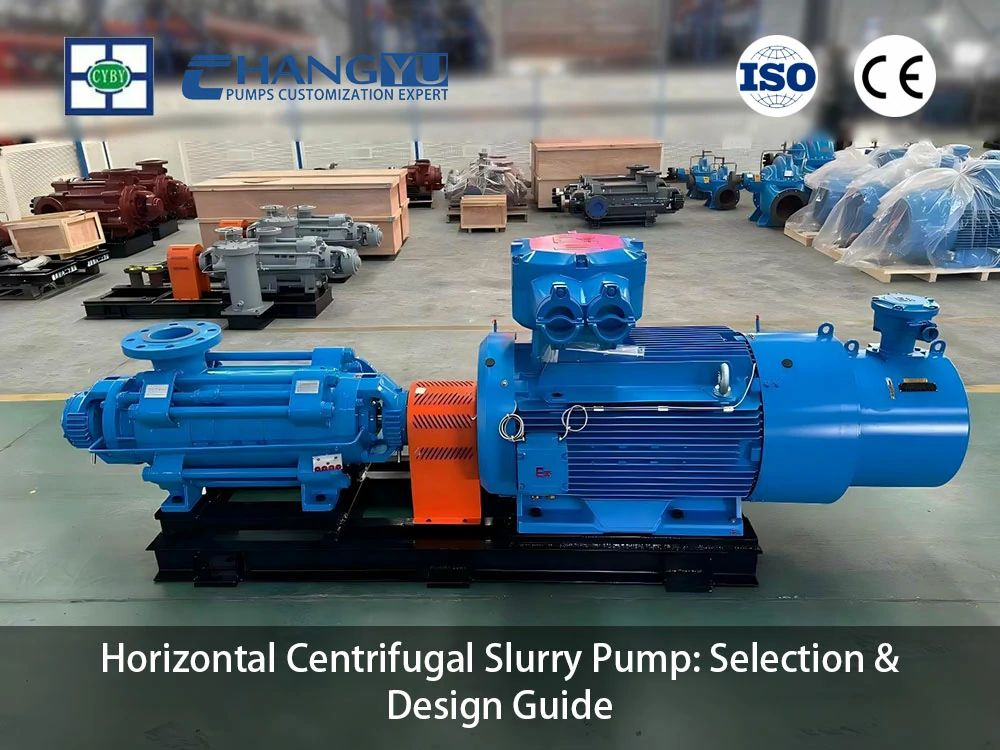
Konfigurasi horizontal juga menyederhanakan desain mekanis dari fitur-fitur yang membuat pompa slurry tahan lama. Casing ganda dengan liner yang dapat diganti lebih mudah direkayasa ketika pompa terbelah di sepanjang bidang horizontal. Mekanisme penyesuaian celah impeller lebih mudah diakses ketika dipasang pada poros horizontal di permukaan tanah. Fitur desain ini — bukan orientasi horizontal itu sendiri, tetapi rekayasa yang dimungkinkannya — yang membedakan pompa slurry horizontal yang dirancang khusus dari pompa sentrifugal standar yang dipaksa ke layanan abrasif.
Changyu Pump telah memproduksi pompa slurry horizontal untuk aplikasi pertambangan dan industri selama lebih dari dua dekade. Panduan ini mencakup keunggulan desain struktural pompa slurry horizontal, material aus yang tersedia, serta praktik seleksi dan perawatan yang menentukan masa pakai pompa.
Mengapa Memilih Pompa Slurry Horizontal? Keunggulan Desain Inti
Konfigurasi pompa slurry horizontal telah menjadi standar industri untuk layanan slurry abrasif bukan karena tradisi, tetapi karena orientasi ini memungkinkan fitur desain spesifik yang sulit atau tidak mungkin diterapkan secara efektif dalam desain pompa vertikal. Memahami fitur-fitur ini — dan bagaimana kontribusinya terhadap keandalan dan kemudahan perawatan pompa — adalah dasar dari pemilihan pompa yang tepat.
Konstruksi Double-Casing dengan Liner yang Dapat Diganti
Pompa slurry horizontal menggunakan desain casing dua lapis. Casing luar — biasanya besi ulet atau baja cor — memberikan integritas struktural dan penahan tekanan. Casing dalam terdiri dari komponen aus yang dapat diganti: liner volute, throatbush di sisi hisap, dan liner frame plate di sisi penggerak. Ketika slurry mengaus komponen dalam ini, hanya liner yang diganti — bukan seluruh casing pompa.
Rakitan Bantalan Tugas Berat
Pompa slurry horizontal menangani kepadatan fluida yang memberikan tuntutan ekstrem pada bantalan. Slurry dengan berat jenis 1,5 — khas tailings bijih besi — memberikan beban radial dan aksial 50% lebih tinggi daripada pompa yang sama menangani air. Rakitan bantalan harus menyerap beban ini secara terus menerus, 24 jam sehari, sambil mempertahankan keselarasan poros dalam seperseribu inci.
Pompa slurry horizontal besar menggunakan roller berpelumas oli-bath atau oli paksa yang berukuran besar bantalan dengan umur terukur L10 yang dihitung untuk kepadatan slurry spesifik dan kondisi operasi. Rumah bantalan terbelah secara horizontal — sesuai dengan belahan casing pompa — memungkinkan bagian atas dilepas untuk inspeksi bantalan tanpa mengganggu poros atau impeller. Pada pompa terbesar, sensor suhu bantalan dan probe getaran diintegrasikan ke dalam rumah, menyediakan pemantauan kondisi berkelanjutan yang memungkinkan perawatan prediktif daripada perbaikan reaktif.
Penyesuaian Celah Impeler
Celah antara shroud depan impeller dan throatbush sisi hisap adalah spesifikasi dimensi paling penting pada pompa slurry horizontal. Ketika pompa baru, celah ini diatur ke nilai minimum pabrikan — biasanya 0,4–0,8 mm, tergantung pada ukuran pompa. Seiring ausnya impeller dan throatbush, celah ini meningkat. Hasilnya adalah resirkulasi internal: fluida yang telah dipercepat oleh impeller bocor kembali ke sisi hisap melalui celah yang membesar, mengurangi aliran efektif dan efisiensi pompa.
A celah impeller pompa slurry horizontal mekanisme penyesuaian memungkinkan celah ini diatur ulang tanpa membuka rumah pompa. Baut eksternal atau sekrup pendorong menggerakkan seluruh rumah bantalan dan rakitan poros secara aksial, mendorong impeller lebih dekat ke throatbush dan mengembalikan celah awal. Pada pompa tailing besar, memulihkan celah impeller dari kondisi aus dapat memulihkan 3–5 poin persentase efisiensi yang hilang — mewakili puluhan ribu dolar dalam penghematan energi tahunan pada pompa yang mengonsumsi ratusan kilowatt.
Sistem Perapat Poros Berbasis Expeller
Perapat poros pada pompa slurry horizontal harus mencegah slurry abrasif keluar di sepanjang poros yang berputar saat beroperasi pada tekanan discharge yang dapat melebihi 100 meter head. Konfigurasi paling andal untuk pompa besar menggabungkan expeller sentrifugal (juga disebut repeller atau perapat dinamis) dengan gland packing konvensional atau mechanical seal. Ini perapat poros pompa slurry horizontal pengaturan ini adalah standar pada pompa mill discharge dan tailing besar.
Expeller adalah impeller terbuka kecil yang dipasang pada poros di belakang impeller utama. Saat pompa beroperasi, expeller berputar dan menghasilkan gaya sentrifugal yang mendorong slurry menjauh dari poros dan kembali menuju rumah pompa. Ini mengurangi tekanan pada stuffing box hingga mendekati atmosfer — kadang bahkan sub-atmosfer — selama operasi. Gland packing atau mechanical seal kemudian hanya perlu memberikan perapat statis selama shutdown, saat expeller tidak berputar. Kombinasi ini secara dramatis memperpanjang umur perapat dibandingkan pompa yang hanya mengandalkan packing atau mechanical seal terhadap tekanan discharge penuh.
Pompa Slurry Horizontal vs Vertikal: Konfigurasi Mana?
Pilihan antara konfigurasi pompa slurry horizontal dan vertikal sering ditentukan oleh lokasi pemasangan daripada karakteristik slurry itu sendiri. Setiap konfigurasi menawarkan keunggulan berbeda untuk aplikasi spesifik.
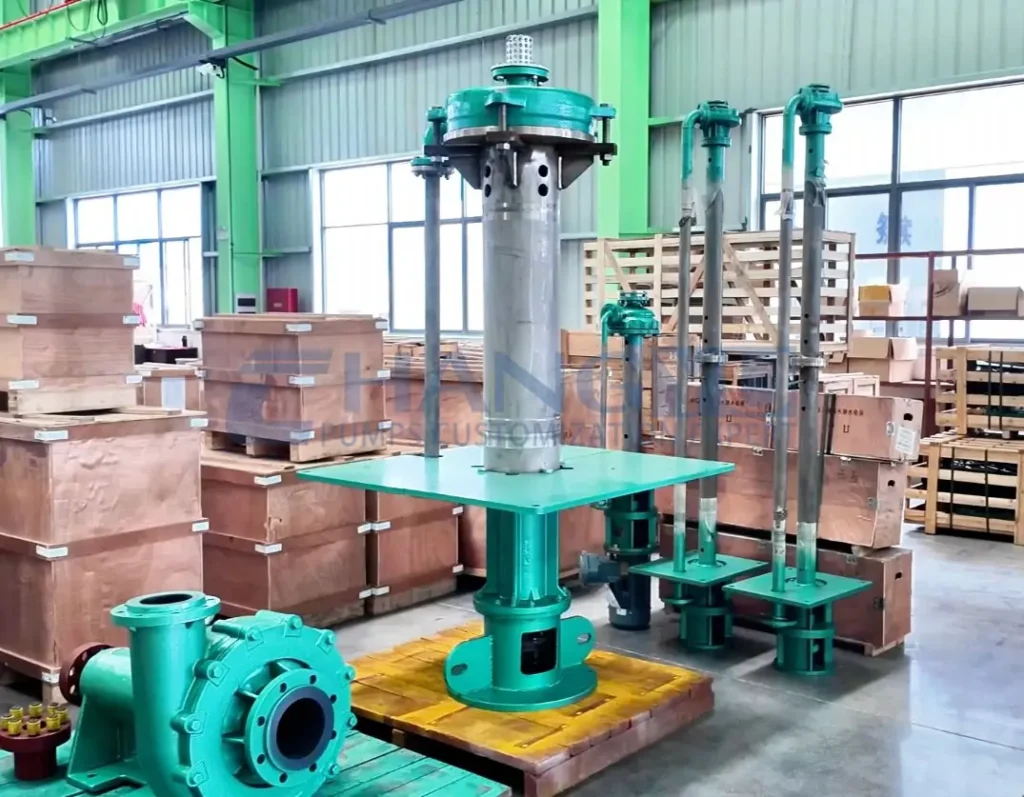
Perbandingan Konfigurasi
| Faktor | Pompa Lumpur Horisontal | Pompa Slurry Vertikal |
|---|---|---|
| Luas area pemasangan | Lebih besar — memerlukan baseplate dan rumah pompa di permukaan tanah | Kecil di permukaan tanah; motor ditinggikan di atas sump atau wet well |
| Manajemen NPSH | Memerlukan flooded suction atau perhitungan NPSH yang cermat | Keunggulan bawaan — impeller terendam dalam sumber fluida |
| Akses pemeliharaan | Seluruh pompa dapat diakses di permukaan tanah; penggantian impeller dan liner tanpa crane | Motor dapat diakses di permukaan tanah; ekstraksi elemen pompa dari sump memerlukan crane dan pembongkaran pipa |
| Lintasan padatan | Identik untuk desain impeller yang setara | Identik untuk desain impeller yang setara |
| Perapat poros | Expeller plus packing atau mechanical seal — standar, andal | Poros terendam memerlukan banyak line-shaft bearing dan perapat |
| Biaya modal (pompa saja) | Lebih rendah untuk kinerja hidraulik yang setara | Lebih tinggi — pipa kolom, discharge head, struktur sump |
| Terbaik untuk | Pompa proses: mill discharge, cyclone feed, tailing, thickener underflow | Pompa sump, dewatering sumur dalam, drainase lantai sump |
Prinsip pemilihan: Gunakan pompa horizontal untuk aplikasi proses di mana pompa berada di permukaan tanah dan sumber fluida berada pada atau di atas garis tengah pompa. Gunakan pompa vertikal hanya ketika sumber fluida berada di bawah permukaan tanah (sump, pit, atau galian dalam) atau ketika keterbatasan ruang di permukaan tanah membuat pemasangan horizontal tidak praktis.
Kapan Konfigurasi Horizontal Menjadi Pilihan Utama
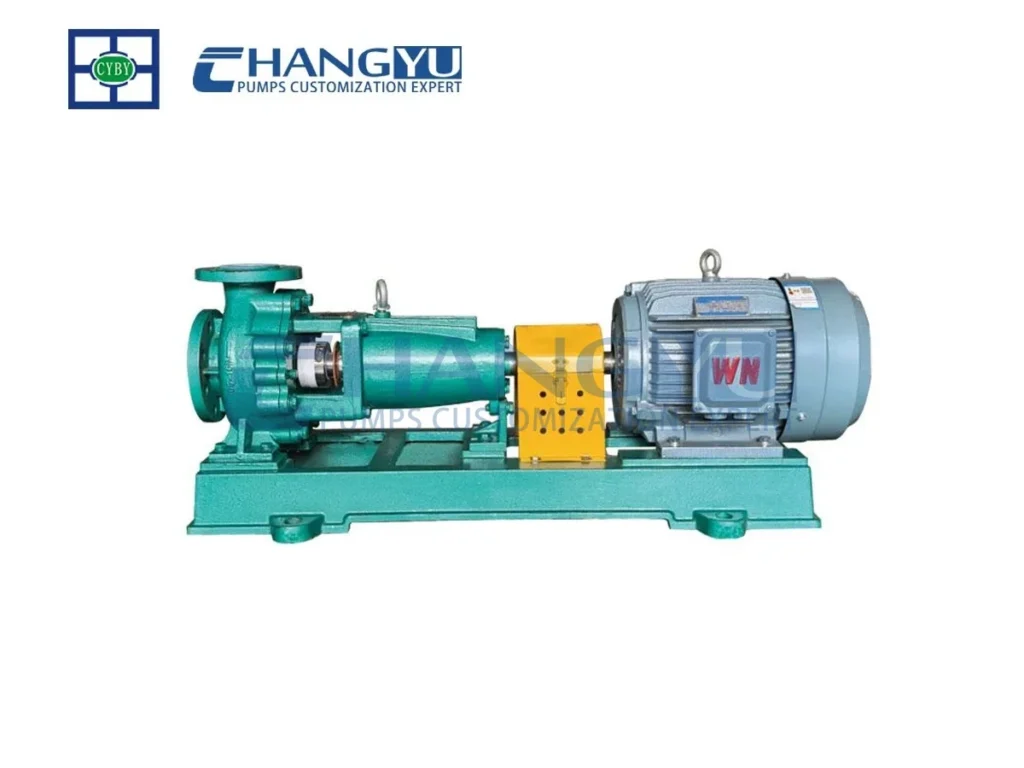
Pompa horizontal adalah spesifikasi standar untuk pompa proses utama di pabrik pengolahan mineral. Pompa mill discharge, pompa cyclone feed, pompa tailing flotasi, dan pompa transfer konsentrat hampir secara eksklusif menggunakan desain horizontal. Alasannya adalah perawatan: pompa ini menangani slurry dengan keausan tertinggi di pabrik, dan komponen wet-end-nya memerlukan penggantian pada interval terjadwal. Pompa horizontal memungkinkan pekerjaan ini dilakukan di permukaan tanah, dengan akses penuh ke casing, impeller, dan poros.
Pompa horizontal juga menyederhanakan implementasi fitur desain yang dijelaskan di Bagian 1. Konstruksi double-casing, penyesuaian celah impeller, dan perapat berbasis expeller semuanya lebih praktis untuk direkayasa pada poros horizontal. Pompa vertikal dengan impeller terendam di dasar poros panjang tidak dapat dengan mudah mengintegrasikan penyesuaian celah eksternal, dan pengaturan perapatnya harus menghadapi tingkat fluida yang bervariasi di sump.
Kapan Konfigurasi Vertikal Mungkin Lebih Tepat
Pompa vertikal dispesifikasikan ketika sumber fluida berada di bawah pompa — sump, wet well, atau galian dalam. Impeller terendam menghilangkan masalah suction lift dan kebutuhan self-priming. Pompa vertikal juga lebih disukai ketika ruang lantai yang tersedia di permukaan tanah terbatas, atau ketika pompa harus beroperasi dengan tingkat fluida yang berfluktuasi yang dapat menyebabkan pompa horizontal kehilangan prime.
Para insinyur di Changyu Pump mencatat: Untuk aplikasi slurry proses — mill discharge, cyclone feed, tailing — konfigurasi horizontal adalah pilihan yang tepat. Akses perawatan, integrasi fitur desain, dan praktik industri yang mapan semuanya mendukung pompa horizontal untuk tugas-tugas ini. Pompa vertikal melayani tujuan berbeda: drainase sump, pengumpulan washdown lantai, dan aplikasi di mana pompa harus menarik dari bawah permukaan tanah. Menspesifikasikan pompa vertikal untuk aplikasi proses untuk menghemat ruang lantai adalah ekonomi palsu — kesulitan perawatan akan jauh melebihi penghematan ruang selama umur operasional pompa.
Untuk pemeriksaan rinci tentang fitur desain pompa slurry besar dan persyaratan konstruksi tugas berat, lihat panduan kami tentang Pompa Lumpur Besar: Panduan Lengkap Pemilihan & Material.
Bahan Aus Apa yang Terbaik untuk Pompa Slurry Horizontal?
Pemilihan bahan aus untuk pompa slurry horizontal harus mempertimbangkan kekerasan partikel, bentuk, ukuran, dan lingkungan kimia dari slurry. Empat kategori bahan melayani mayoritas aplikasi, masing-masing dengan keunggulan dan keterbatasan yang berbeda.
Besi Cor Putih Kromium Tinggi (CrMo)
Besi cor putih krom tinggi (600–700 HB, KIC 25–35 MPa√m) adalah bahan aus standar untuk pompa slurry horizontal di pertambangan batuan keras. Struktur mikronya — karbida kromium keras dalam matriks martensitik — memberikan kekerasan untuk menahan pemotongan oleh partikel bersudut dan ketangguhan untuk bertahan dari benturan sesekali dari material oversize. Untuk pompa horizontal yang menangani bijih besi, bijih emas, dan tailing tembaga kasar, CrMo krom tinggi adalah spesifikasi standar. Grade Cr 28% memberikan volume karbida tambahan untuk sirkuit paling abrasif dengan biaya premium moderat dibandingkan grade Cr 26% standar.
Karet Alam
Liner karet melindungi terhadap keausan melalui ketahanan — material berdeformasi elastis di bawah benturan partikel dan pulih tanpa kehilangan material. Mekanisme ini bekerja dengan partikel membulat pada pH netral pada suhu di bawah 70°C. Pompa horizontal berlapis karet melayani aplikasi spesifik: tailing flotasi tembaga dengan partikel halus, slurry persiapan batubara, dan pasir mineral. Karet tidak cocok untuk partikel bersudut yang baru dihancurkan — partikel tersebut memotong permukaan karet saat kontak.
Baja Tahan Karat Dupleks (2205/2507)
Baja tahan karat dupleks mengatasi keterbatasan CrMo krom tinggi: ketahanan korosinya yang buruk di lingkungan asam atau klorida tinggi. Dalam pelindian tumpukan tembaga, di mana pH slurry dapat turun di bawah 3, CrMo standar terkorosi dengan cepat terlepas dari ketahanan ausnya. Dalam operasi pertambangan pesisir, air tanah dengan kandungan klorida tinggi menyerang komponen pompa CrMo. Dupleks 2205 (PREN 33–36, 250–300 HB / 25–30 HRC, KIC ~50–100 MPa√m) dan super dupleks 2507 (PREN 40–44) memberikan kombinasi ketahanan korosi dan aus yang dibutuhkan aplikasi ini. Pompa slurry horizontal Seri HB dari Changyu Pump tersedia dalam kedua grade.
Keramik (SiC / Al₂O₃)
Bahan keramik menawarkan kekerasan (HV 1500–2800) yang jauh melebihi partikel mineral apa pun, memberikan ketahanan aus potong maksimum. Namun, ketangguhan patahnya yang rendah (KIC 3–5 MPa√m) membuatnya rentan terhadap benturan dari partikel yang melebihi 1–2 mm. Dalam aplikasi pompa horizontal, keramik biasanya diterapkan sebagai perlindungan aus lokal — ubin atau sisipan di cutwater volute dan tepi depan sudu impeler — daripada sebagai liner monolitik penuh.
Perbandingan Bahan Aus untuk Pompa Slurry Horizontal
| Bahan | Kekerasan | Aplikasi Terbaik | Toleransi Benturan | Biaya Relatif |
|---|---|---|---|---|
| Besi cor putih krom tinggi CrMo (26–28% Cr) | 600–700 HB | Partikel bersudut dan keras (Mohs > 5); pH netral | Baik — KIC 25–35 | 1× (dasar) |
| Karet alam | < 50 HB (elastis) | Partikel membulat dan lunak (Mohs < 4); pH netral | Sangat baik (elastis) | 8–1.2× |
| Duplex 2205 / 2507 | 250–300 HB (25–30 HRC) | Slurry korosif (pH rendah, klorida tinggi); abrasi sedang | Baik — KIC ~50–100 | 2–3× |
| Keramik (SiC) | HV 2200–2800 | Partikel sangat halus, non-benturan | Buruk — KIC 3–5 | 5–8× |
Insinyur di Changyu Pump merekomendasikan: Untuk mayoritas pompa slurry horizontal di pertambangan batuan keras — bijih besi, bijih emas, dan tailing tembaga dengan kuarsa — besi cor putih krom tinggi (CrMo, 26–28% Cr) adalah spesifikasi material yang tepat. Ini memberikan keseimbangan terbaik antara ketahanan aus potong, toleransi benturan, dan biaya. Baja tahan karat dupleks harus ditentukan ketika kimia slurry menuntut ketahanan korosi yang tidak dapat diberikan CrMo — larutan pelindian asam, air tanah klorida tinggi, atau air proses campuran air laut. Karet alam dicadangkan untuk aplikasi partikel halus, membulat, pH netral di mana ia dapat memberikan masa pakai 18–24 bulan tanpa aus potong yang disebabkan partikel bersudut.
Untuk perbandingan komprehensif bahan aus di seluruh rentang aplikasi pompa slurry dan jenis bijih, lihat panduan kami tentang Pompa Lumpur Tahan Aus: Panduan Lengkap Material & Pemilihan.
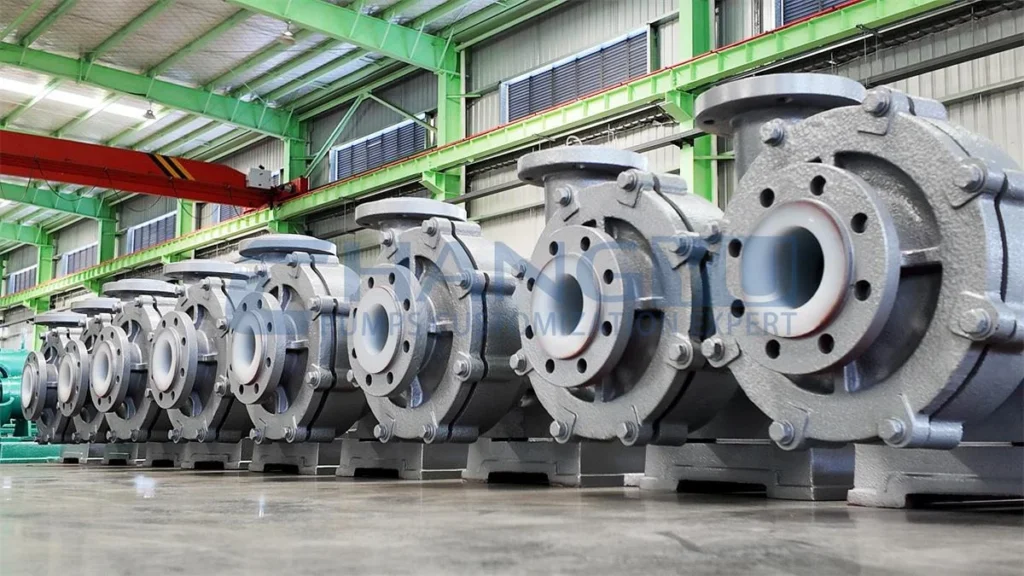
Bagaimana Cara Memilih Pompa Slurry Sentrifugal Horizontal?
Pemilihan pompa slurry horizontal mengikuti proses terstruktur. Setiap langkah membatasi opsi yang tersedia pada langkah berikutnya, dan kesalahan yang dibuat di awal proses — terutama dalam karakterisasi slurry — merambat melalui seluruh pemilihan.
Langkah 1: Mengkarakterisasi Bubur
Tentukan konsentrasi padatan (berdasarkan berat dan volume), distribusi ukuran partikel (d50 dan d100), bentuk partikel (bersudut vs membulat), kekerasan bijih (skala Mohs), pH slurry, konsentrasi klorida, dan suhu. D100 — partikel terbesar yang harus dilewati pompa — secara langsung menentukan ukuran minimum saluran impeler. Pompa discharge pabrik penggilingan dapat mengalami oversize melebihi 100 mm, sementara pompa tailing yang menangani overflow hidrosiklon melihat d100 di bawah 1 mm.
Langkah 2: Hitung Kebutuhan Hidrolik
Tentukan laju aliran yang dibutuhkan dan total head dinamis. Terapkan faktor derating slurry untuk memperhitungkan efek padatan pada kinerja pompa. Pompa yang dipilih berdasarkan kurva kinerja air tanpa derating akan berukuran terlalu kecil untuk tugas slurry. Untuk pompa horizontal, verifikasi bahwa NPSH yang tersedia melebihi NPSH yang dibutuhkan pompa dengan margin minimum 1 meter pada aliran operasi aktual.
Langkah 3: Pilih Material Aus
Cocokkan bahan aus dengan karakteristik bijih menggunakan kerangka kerja di Bagian 3. Keputusan mengalir dari kekerasan dan bentuk partikel: partikel bersudut dan keras → CrMo krom tinggi; partikel halus, membulat, pH netral → karet; slurry korosif → baja tahan karat dupleks; zona aus tinggi lokal → sisipan keramik.
Langkah 4: Tentukan Ukuran dan Kecepatan Pompa
Pilih ukuran pompa di mana aliran desain berada dalam 70–120% dari aliran Best Efficiency Point (BEP). Untuk pompa horizontal dalam layanan abrasif, pilih kecepatan operasi praktis terendah — biasanya 400–600 r/min untuk pompa besar, 800–1.200 r/min untuk pompa sedang. Kecepatan lebih rendah mengurangi laju keausan secara proporsional. Pompa yang berjalan pada 500 r/min akan mencapai sekitar dua kali masa pakai wet-end dibandingkan pompa identik yang berjalan pada 700 r/min.
Langkah 5: Tentukan Konfigurasi Seal dan Bantalan
Pilih metode penyegelan poros berdasarkan tekanan discharge dan karakteristik fluida. Untuk tekanan discharge di atas 30 meter, kombinasi expeller-plus-packing adalah standar. Untuk aplikasi tekanan tinggi, susunan expeller-plus-mechanical-seal memberikan keandalan penyegelan tambahan. Tentukan pelumasan oil-bath atau forced-oil untuk bantalan, dengan pemantauan suhu dan getaran untuk pompa yang melebihi 100 kW.
Insinyur di Changyu Pump merekomendasikan: Saat memilih pompa slurry horizontal, sertakan margin aliran 10–15% di atas kebutuhan desain untuk mengantisipasi variasi proses dan penurunan efisiensi bertahap yang terjadi seiring keausan komponen wet-end. Namun, hindari oversizing yang berlebihan — pompa yang beroperasi di bawah 60% dari aliran BEP mengalami peningkatan getaran, penurunan efisiensi, dan keausan yang dipercepat. Margin harus menempatkan titik operasi di dalam Wilayah Operasi yang Diizinkan, bukan mendorongnya keluar.
Bagaimana Cara Merawat Pompa Slurry Sentrifugal Horizontal?
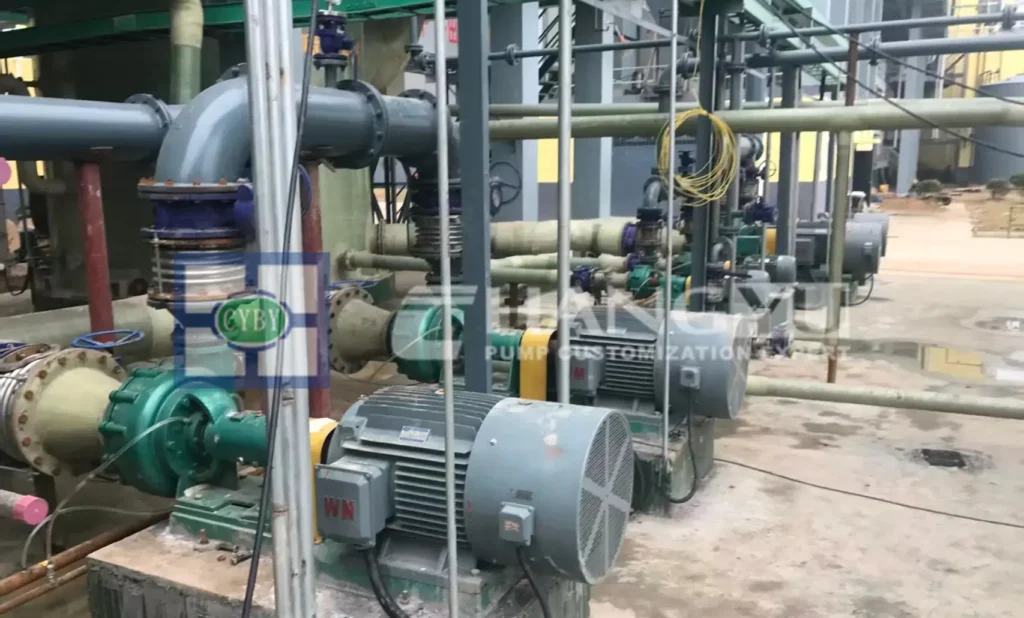
Perawatan pompa slurry horizontal berpusat pada pengelolaan keausan. Berbeda dengan pompa air sentrifugal, di mana impeler dan casing dapat bertahan puluhan tahun, komponen wet-end pompa slurry dirancang untuk aus dan diganti. Program perawatan harus melacak laju keausan, menjadwalkan penggantian, dan menjaga efisiensi di antara penggantian melalui penyesuaian celah impeler.
Penggantian Komponen Wet-End
Interval penggantian wet-end ditentukan oleh abrasivitas bijih, pemilihan material, dan kondisi operasi. Pompa CrMo high-chrome dalam layanan tailing bijih besi biasanya memerlukan penggantian pada 12–18 bulan. Pompa yang sama pada tailing tembaga yang kurang abrasif dapat beroperasi selama 24–36 bulan. Kunci perawatan terencana adalah melacak laju keausan melalui pengukuran aliran dan tekanan secara berkala. Ketika aliran pada kecepatan dan tekanan discharge tertentu turun 10% di bawah baseline yang ditetapkan dengan komponen aus baru, wet-end mendekati akhir masa pakainya.
Penyesuaian Celah Impeler
Celah impeler harus diperiksa dan disesuaikan pada interval terjadwal — bukan hanya ketika kinerja menurun. Pada pompa horizontal besar, mekanisme penyesuaian celah memungkinkan ini dilakukan dalam waktu kurang dari satu jam tanpa membuka casing. Penyesuaian rutin menjaga efisiensi dan mencegah keausan yang dipercepat yang terjadi ketika celah yang membesar memungkinkan resirkulasi internal meningkat.
Pelumasan dan Pemantauan Bantalan
Bantalan dengan pelumasan oil-bath memerlukan pemeriksaan level oli mingguan dan penggantian oli pada interval yang ditentukan pabrikan. Sistem forced-oil memerlukan penggantian filter dan analisis oli pada interval terjadwal. Untuk pompa melebihi 100 kW, sensor suhu bantalan dan probe getaran memberikan peringatan dini terhadap masalah yang berkembang. Peningkatan suhu bantalan secara bertahap selama beberapa minggu dapat mengindikasikan degradasi oli atau kerusakan bantalan tahap awal. Peningkatan getaran secara tiba-tiba dapat menandakan keausan impeler, akumulasi padatan, atau kegagalan bantalan yang akan segera terjadi.
Para insinyur di Changyu Pump mencatat: Praktik perawatan paling efektif untuk pompa slurry horizontal adalah penyesuaian celah impeler secara rutin. Pada pompa yang beroperasi pada 500 kW, menjaga celah yang benar dapat memulihkan 3–5 poin persentase efisiensi dibandingkan dengan pompa dengan celah aus — mewakili penghematan energi tahunan sebesar $5.000–$10.000 per pompa. Mekanisme penyesuaian disediakan untuk suatu alasan; menggunakannya pada interval terjadwal adalah salah satu aktivitas perawatan dengan pengembalian tertinggi di pabrik pengolahan mineral.
Untuk panduan perawatan yang berlaku untuk semua jenis dan ukuran pompa slurry tambang, lihat panduan kami tentang Pompa Slurry di Pertambangan: Cara Memilih Pompa Kelas Tambang yang Tepat.
Studi Kasus Pompa Slurry Sentrifugal Horizontal: Mengoptimalkan Masa Pakai Keausan pada Pompa Slurry Horizontal Bijih Besi Skala Besar
Sebuah konsentrator bijih besi di Australia Barat mengoperasikan pompa slurry horizontal Seri PGY pada layanan tailing — dengan rating 800 m³/jam pada head 65 m, digerakkan oleh motor 560 kW — dengan komponen wet-end besi cor putih high-chrome 26% Cr standar. Tailing slurry mengandung partikel magnetit dan kuarsa angular (Mohs 5,5–7,0) pada konsentrasi padatan 35%. Penggantian wet-end diperlukan kira-kira setiap 6 bulan.
Inspeksi komponen yang aus menunjukkan paduan 26% Cr terpotong oleh partikel kuarsa yang lebih keras (Mohs 7) yang merupakan sekitar 20% dari padatan tailing. Kehilangan material terkonsentrasi di cutwater volute dan tepi depan sudu impeler — zona kecepatan tertinggi.
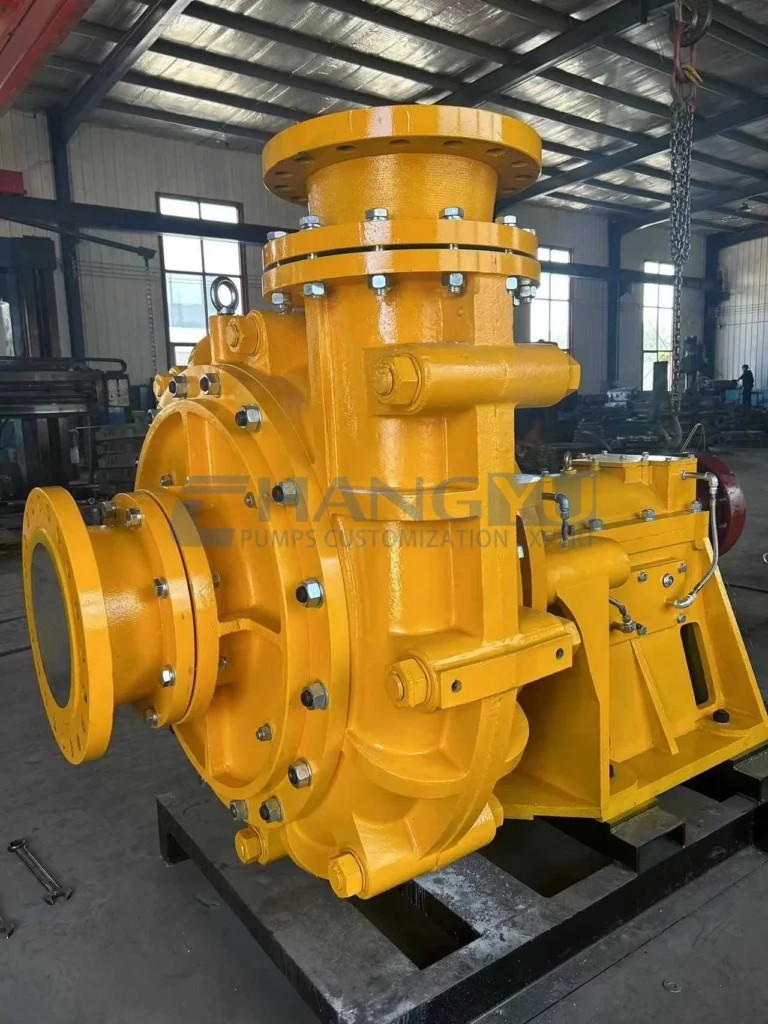
Changyu Pump meningkatkan wet-end ke paduan 28% Cr dengan pelapisan krom keras (HV 850–1050) pada tepi depan sudu impeler dan cutwater volute. Celah impeler disesuaikan ke spesifikasi minimum. Interval penggantian wet-end diperpanjang dari 6 bulan menjadi 18 bulan — peningkatan tiga kali lipat. Premi biaya material sekitar 15% dipulihkan dalam peristiwa penggantian yang dihindari pertama. Tiga pompa tailing tambahan ditingkatkan ke spesifikasi yang sama selama tahun berikutnya.
Poin penting: Perbedaan kecil dalam grade material menghasilkan perbedaan besar dalam biaya operasional pada pompa slurry horizontal. Ekonomi material premium meningkat seiring ukuran pompa — biaya setiap peristiwa penggantian tumbuh dengan daya pompa, laju aliran, dan kekritisan terhadap produksi.
Solusi Pompa Slurry Sentrifugal Horizontal dari Changyu Pump
Changyu Pump memproduksi seri pompa slurry horizontal yang dikonfigurasi untuk seluruh spektrum aplikasi abrasif dan korosif. Sebagai spesialis produsen pompa slurry horizontal, setiap seri menangani kombinasi spesifik dari kebutuhan keausan, korosi, dan suhu.
| Aplikasi | Tantangan Utama | Seri yang Direkomendasikan | Material Utama | Masa Pakai Bagian Basah Tipikal |
|---|---|---|---|---|
| Slurry korosif, tailing asam | Korosi + abrasi sedang | Seri UHB | Lapisan UHMW-PE | 2–3 tahun |
| Flotasi tembaga, proses kimia | Keausan + korosi terpadu | Seri HB | Baja tahan karat 304/316L/2205/2507 | 12–24 bulan |
| Suhu tinggi, korosi kuat (kondisi ekstrem, partikel halus) | Korosi + suhu + padatan | Seri CYG | Lapisan PFA (8–20 mm) | 3–5 tahun |
Seri UHB — Pompa Sentrifugal Lumpur Horizontal Tahan Korosi Berlapis UHMW-PE
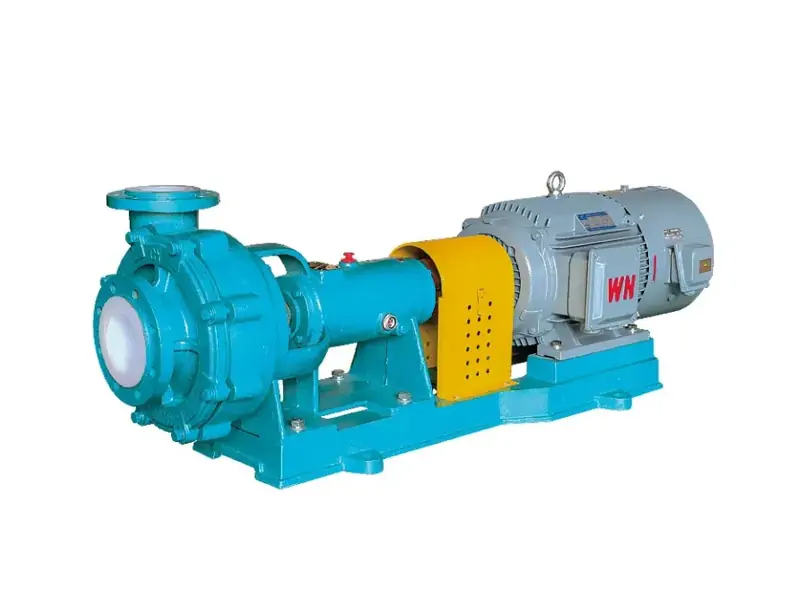
Pompa sentrifugal horizontal kantilever, satu tahap, satu isapan dengan konstruksi baja berlapis UHMW-PE. Dirancang untuk cairan dan lumpur yang agresif secara kimia serta korosif dengan padatan sedang. Lapisan UHMW-PE memberikan ketahanan aus dan korosi secara kombinasi, dengan bagian basah yang dipertebal dan saluran aliran yang diperlebar. Kapasitas aliran hingga 2.600 m³/jam, suhu dari -20°C hingga 90°C.
| Parameter | Spesifikasi |
|---|---|
| Laju aliran | 3-2.600 m³/jam |
| Kepala | 5-100 m |
| Daya motor | 0,75-300 kW |
| Kecepatan | 750-2.900 r/menit |
| Suhu | -20°C hingga 90°C |
| Bahan pelapis | UHMW-PE |
Seri HB — Pompa Sentrifugal Lumpur Horizontal Baja Tahan Karat
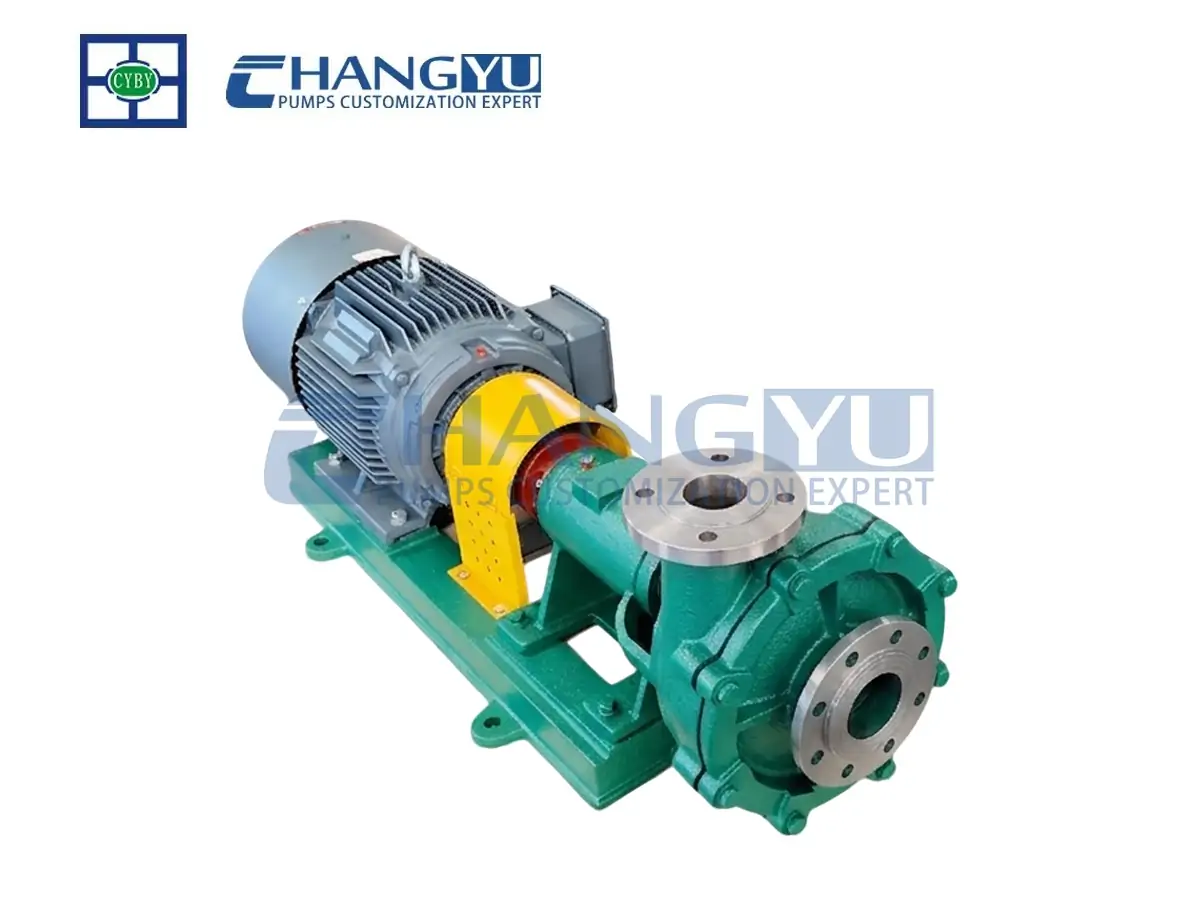
Pompa sentrifugal horizontal sesuai ISO 2858 dengan konstruksi basah seluruhnya baja tahan karat. Dirancang untuk lumpur abrasif dan cairan korosif sedang yang membutuhkan ketahanan aus dan korosi. Tersedia dalam grade 304, 316L, 2205, dan 2507 untuk menyesuaikan profil korosi spesifik aplikasi. Kapasitas aliran dari 10 hingga 60 m³/jam, head hingga 120 m.
| Parameter | Spesifikasi |
|---|---|
| Laju aliran | 10-60 m³/jam |
| Kepala | 20-120 m |
| Daya motor | 3-45 kW |
| Kecepatan | 2.900 r/menit |
| Suhu | -20°C hingga 120°C |
| Bahan | 304 / 316L / 2205 / 2507 |
Seri CYG — Pompa Sentrifugal Lumpur Horizontal Baja Tahan Karat Suhu Tinggi
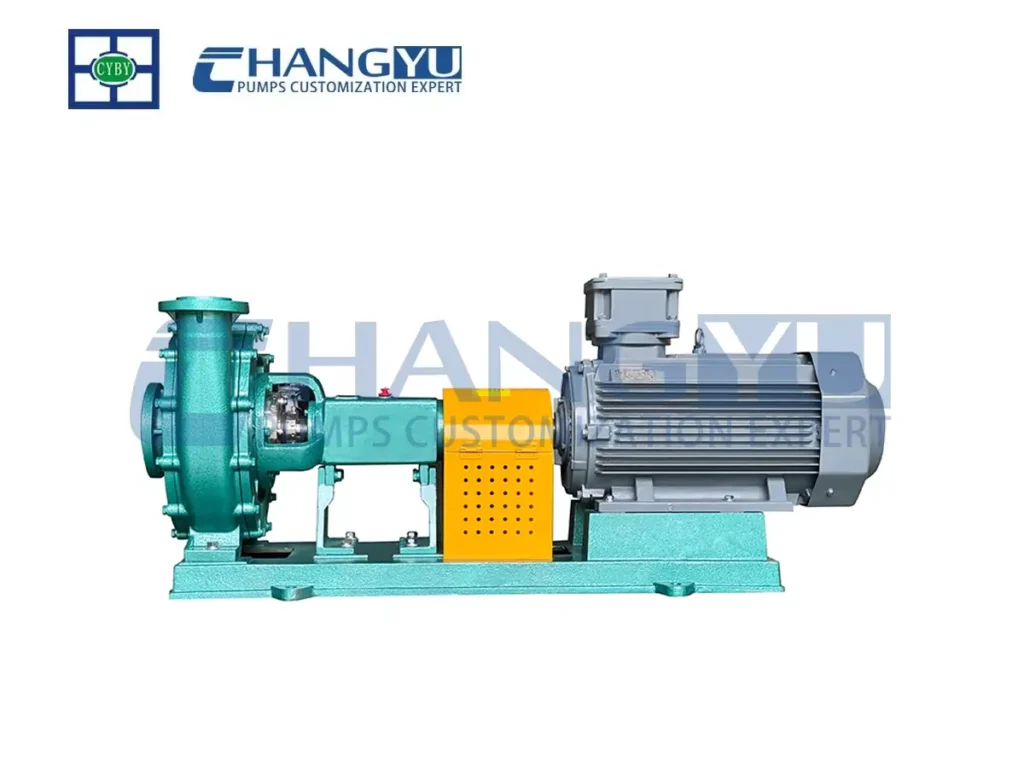
Pompa sentrifugal horizontal berlapis PFA untuk kondisi ekstrem: zat yang sangat korosif, suhu tinggi, dan kandungan padatan tinggi. Lapisan PFA 8–20 mm terintegrasi dengan bodi baja melalui proses sintering cetakan, menghilangkan risiko retak fluoroplastik. Cocok untuk hidrometalurgi, desulfurisasi, dan transportasi lumpur korosif suhu tinggi. Tidak ditujukan untuk aplikasi dengan partikel besar berdampak tinggi.
| Parameter | Spesifikasi |
|---|---|
| Laju aliran | 3-2.600 m³/jam |
| Kepala | 5-100 m |
| Daya motor | 0,75-300 kW |
| Kecepatan | 968-3.450 r/menit |
| Suhu | -80°C hingga 160°C |
| Bahan pelapis | PFA (ketebalan 8–20 mm) |
FAQ tentang Pompa Sentrifugal Lumpur Horizontal
T: Apa keunggulan utama pompa lumpur horizontal dibandingkan desain vertikal?
J: Pompa horizontal memberikan akses perawatan penuh di permukaan tanah — impeler, liner, bantalan, dan seal semuanya dapat diservis tanpa derek atau masuk ke bak. Pompa ini juga memungkinkan konstruksi double-casing dengan liner yang dapat diganti, celah impeler yang dapat disetel, dan penyegelan poros berbasis ekspeler — fitur yang lebih praktis diterapkan pada poros horizontal daripada poros vertikal terendam.
T: Material apa yang harus saya tentukan untuk impeler pompa lumpur horizontal?
J: Besi cor putih krom tinggi (CrMo, 26–28% Cr, 600–700 HB) adalah standar untuk partikel keras bersudut di pertambangan batuan keras. Untuk lumpur korosif dengan pH rendah atau klorida tinggi, baja tahan karat dupleks (2205 atau 2507) ditentukan. Impeler karet alam terbatas pada partikel halus dan membulat dalam pH netral.
T: Seberapa sering saya harus menyetel celah impeler pada pompa lumpur horizontal?
J: Periksa celah setidaknya setiap tiga bulan pada pompa yang beroperasi di layanan abrasif. Setel ke spesifikasi minimum pabrikan setiap kali celah meningkat secara terukur. Penyetelan rutin mempertahankan efisiensi pompa dan mencegah keausan yang dipercepat yang terjadi akibat resirkulasi internal yang membesar.
T: Metode penyegelan poros apa yang terbaik untuk pompa lumpur horizontal?
J: Ekspeler sentrifugal yang dikombinasikan dengan gland packing atau mechanical seal adalah konfigurasi standar untuk pompa besar. Ekspeler mengurangi tekanan stuffing box selama operasi, memperpanjang umur seal. Double mechanical seal dengan barrier fluid ditentukan untuk aplikasi lumpur bertekanan tinggi atau berbahaya.
T: Dapatkah pompa lumpur horizontal menangani padatan besar?
J: Ya. Pompa lumpur horizontal dengan saluran impeler lebar melewatkan padatan hingga diameter 100–150 mm, tergantung ukuran pompa. Konfigurasi horizontal tidak membatasi lewatnya padatan — geometri impeler dan volute menentukan ukuran partikel maksimum.
T: Bagaimana perbandingan baja tahan karat dupleks dengan CrMo krom tinggi untuk umur pakai pompa lumpur?
J: Baja tahan karat dupleks (250–300 HB) memiliki ketahanan abrasi lebih rendah daripada CrMo krom tinggi (600–700 HB) tetapi memberikan ketahanan korosi yang penting dalam lumpur asam atau klorida tinggi di mana CrMo akan terkorosi. Tentukan baja tahan karat dupleks ketika kimia lumpur membutuhkannya, bukan sebagai pengganti umum CrMo dalam aplikasi abrasif pH netral.
Daftar Periksa Pencegahan untuk Insinyur Pompa Changyu
- Tentukan konfigurasi horizontal untuk semua pompa lumpur proses — discharge pabrik, umpan siklon, tailing, underflow thickener. Akses perawatan dan integrasi fitur desain membenarkan tapak yang lebih besar.
- Verifikasi bahwa pompa memiliki mekanisme celah impeler yang dapat disetel. Fitur ini saja dapat memulihkan 3–5 poin persentase efisiensi pada pompa yang aus dan memperpanjang umur wet-end di antara penggantian.
- Tentukan pengaturan penyegelan poros ekspeler-plus-packing atau ekspeler-plus-seal. Ekspeler mengurangi tekanan stuffing box selama operasi, memperpanjang umur seal dengan faktor dua hingga tiga dibandingkan pompa tanpa ekspeler.
- Pilih kecepatan operasi terendah yang praktis. Pompa yang beroperasi pada 500 r/mnt mencapai sekitar dua kali umur wet-end dibandingkan pompa identik pada 700 r/mnt. Pompa yang lebih besar dan lebih lambat memiliki biaya awal lebih tinggi tetapi biaya siklus hidup lebih rendah.
- Sesuaikan material aus dengan partikel terkeras dalam slurry — bukan mineral target. Batuan induk kuarsa memerlukan material yang dipilih untuk kuarsa, terlepas dari apakah targetnya adalah besi, tembaga, atau emas.
- Untuk lumpur korosif, verifikasi bahwa material yang ditentukan memberikan ketahanan korosi dan ketahanan aus. CrMo standar terkorosi dengan cepat di bawah pH 4. Baja tahan karat dupleks atau pompa berlapis diperlukan untuk layanan asam atau klorida tinggi.
- Sertakan pemantauan suhu bantalan dan getaran pada pompa yang melebihi 100 kW. Biaya sensor akan kembali pada saat pertama kali mencegah kegagalan bantalan yang tidak terjadwal.
- Simpan satu set lengkap rakitan bagian basah cadangan di inventaris untuk setiap posisi pompa kritis. Waktu tunggu untuk coran krom tinggi besar dapat berlangsung hingga berbulan-bulan. Rakitan cadangan mengubah potensi penghentian berkepanjangan menjadi penggantian terjadwal.
Kesimpulan
Pompa sentrifugal lumpur horizontal telah menjadi standar industri untuk layanan lumpur abrasif karena konfigurasinya memungkinkan fitur desain yang secara langsung meningkatkan keandalan dan kemudahan perawatan. Konstruksi double-casing dengan liner yang dapat diganti mengubah keausan casing dari penggantian besar menjadi tugas perawatan terjadwal. Celah impeller yang dapat disetel mempertahankan efisiensi pompa saat komponen aus. Sistem penyegelan poros berbasis expeller memperpanjang umur seal dengan mengurangi tekanan yang harus ditahan oleh seal. Fitur-fitur ini — serta akses perawatan yang diberikan oleh orientasi horizontal — menjadikan konfigurasi horizontal sebagai pilihan yang tepat untuk pompa lumpur proses di seluruh pabrik pengolahan mineral. Pemilihan material — high-chrome CrMo untuk lumpur abrasif dengan pH netral; stainless steel dupleks untuk lumpur korosif; karet untuk partikel halus dan bulat — menentukan berapa lama fitur desain tersebut dapat mempertahankan kinerja pompa sebelum penggantian wet-end terjadwal berikutnya.
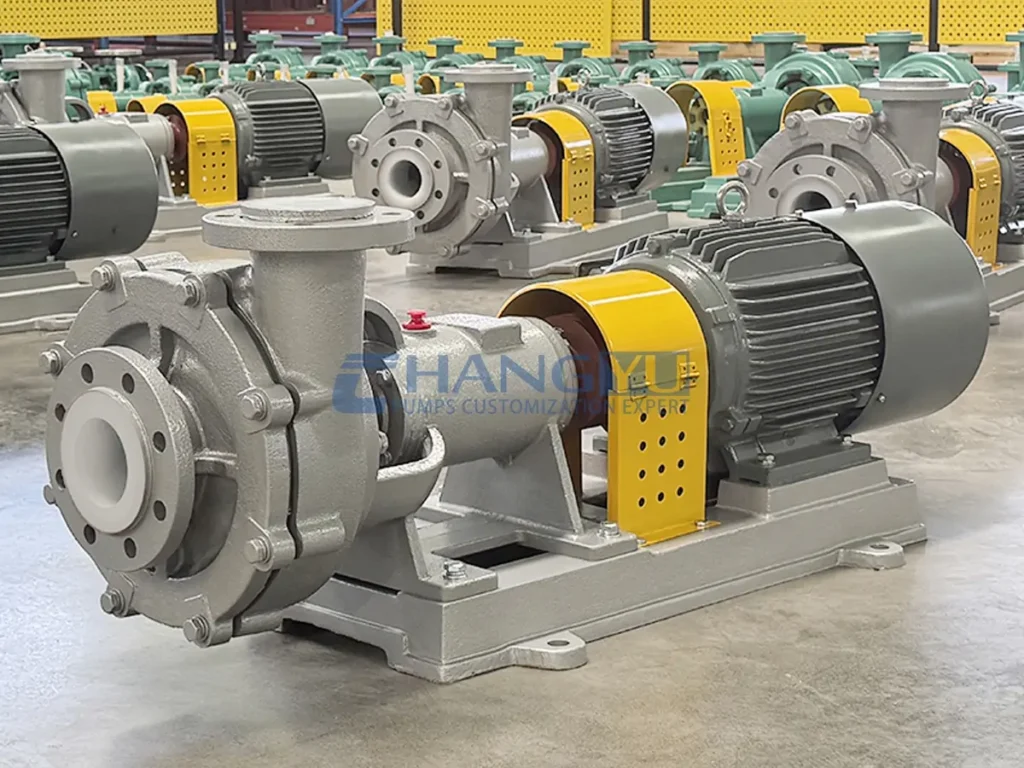
Tim teknik Changyu Pump memberikan rekomendasi pompa lumpur horizontal spesifik-aplikasi yang didukung oleh lebih dari 20 tahun pengalaman manufaktur pompa di seluruh spektrum aplikasi pertambangan, pengolahan mineral, dan lumpur industri.