
A pump for titanium dioxide slurry is not one product category, and treating it as one is how a project ends up with a machine that runs six months and then eats itself. TiO₂ moves through a plant in two forms that behave nothing alike: an acidic, warm, salt-bearing process stream, and a near-neutral, high-solids dispersion in a coatings or plastics plant. The first attacks a pump chemically and mechanically at once. The second defeats it through settling, viscosity, and contamination.
So “which pump should I buy?” becomes “which slurry are you moving, and what does the duty look like?” Below is how we compare four pump types for titanium dioxide slurry transfer; if you already have a duty point, our titanium dioxide industry page is a good place to start.

How Is Acidic Process Slurry Different from a Pigment Slurry?
In the process plant it is a chemical duty; on the finishing side, a product-handling duty. Most selection decisions follow from that split.
In the sulfate route, hydrolysis leaves fine hydrous TiO₂ suspended in dilute sulfuric acid, carrying dissolved iron and sulfate salts, usually warm. The chloride route oxidizes titanium tetrachloride at high temperature and brings its own chloride-bearing streams. Either way the pump meets acid, dissolved salts, fine solids, and heat in one stream, and that combination is what attacks it. Austenitic stainless is often not enough in hot chloride service, and erosion keeps stripping the passive film that would protect it.
Pigment slurry is a different problem. By the time TiO₂ reaches a dispersion tank it has been milled and surface-treated and is held in water with dispersants at controlled pH, often at high solids. Acid is less likely to destroy the pump; it is judged instead on keeping product moving without settling, excess shear, or iron pickup that later shows as a tint problem.
Why Do Abrasion, Corrosion, Settling, and Viscosity Matter So Much?
Because each eliminates a different group of pumps, usually before efficiency or price gets a vote.
Abrasi: TiO₂ is hard, roughly 5.5 to 6.5 on the Mohs scale depending on crystal form, and dense, about 3.9 g/cm³ for anatase and 4.2 g/cm³ for rutile (PubChem compound data). Wear shows on impellers, casings, seal faces, valves, stators, and hoses. Erosive wear is not linear with speed, so line size, speed, and impeller diameter come before exotic materials.
Korosi: Acid concentration, temperature, chloride level, and dissolved species all shift the answer, and a material that survives one stage may be wrong two stages later. Corrosion and erosion together are worse than either: wear removes the protective layer, fresh metal corrodes, the cycle repeats.
Settling: At a specific gravity around four times water, TiO₂ settles wherever flow slows — horizontal runs, dead legs, the suction line, the casing during shutdown. A settled layer compacts, so restarts become a production problem. Keep velocity up, avoid dead ends, slope lines to drains, add flush connections, agitate the tank.
Viscosity: High-solids dispersions are often shear-thinning and sometimes thixotropic, so one viscometer reading rarely describes what happens inside a pump; what matters is apparent viscosity at the shear rate the pump imposes. Viscosity cuts the head and flow a centrifugal produces and raises torque on any positive displacement pump.
Which Pump Types Are Worth Comparing?
Four types cover most duties we see. None is a general answer, and this table starts a conversation rather than ending it.
| Jenis pompa | Where it usually fits | What to check before you commit |
| Corrosion-resistant centrifugal slurry pump | Continuous duty, higher flow, moderate head, flooded suction, solids kept in suspension | NPSH margin, seal flush, wear at impeller and casing, viscosity derating |
| Pompa diafragma ganda yang dioperasikan dengan udara | Intermittent or batch transfer, sump and drum unloading, variable flow, dry-run tolerance | Air supply and cost, pulsation, diaphragm and valve materials, suction lift |
| Pompa ulir rongga progresif | Viscous or high-solids slurry, steady low-shear flow, dosing | Stator elastomer against chemistry and temperature, abrasive wear, no dry running |
| 6–12 bar (hingga 120 bar dengan multi-tahap) | Abrasive or high-solids duty, dosing, slurries that damage valves and seals | Hose material and life, pressure limit, pulsation, temperature |
When Does a Corrosion-Resistant Centrifugal Slurry Pump Make Sense?
When duty is continuous, flow high, head moderate, suction flooded, viscosity low enough for a centrifugal, and solids stay in suspension. At high flow it is usually the most efficient option, with a wide material range.
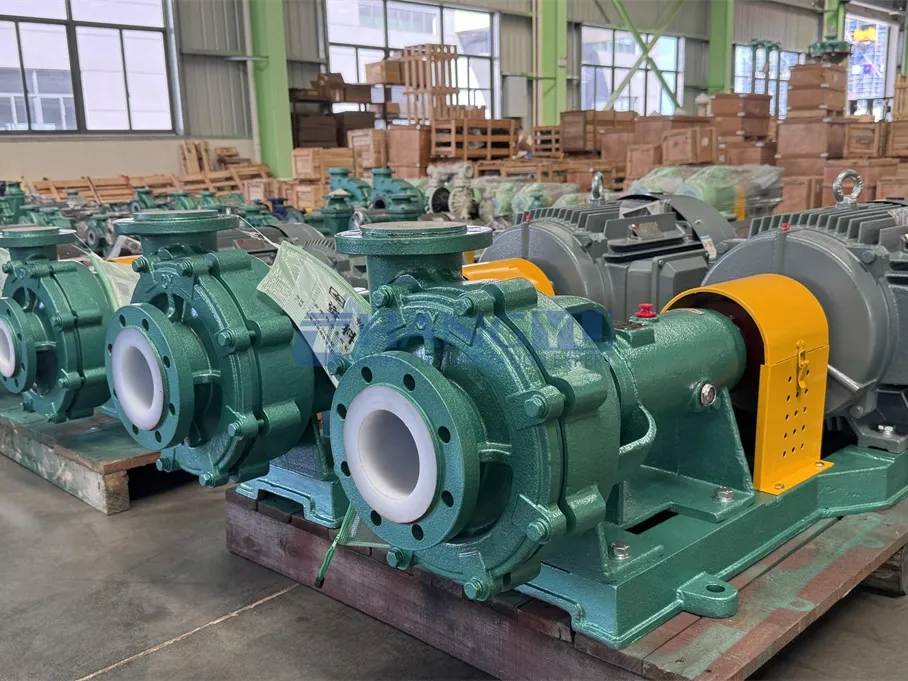
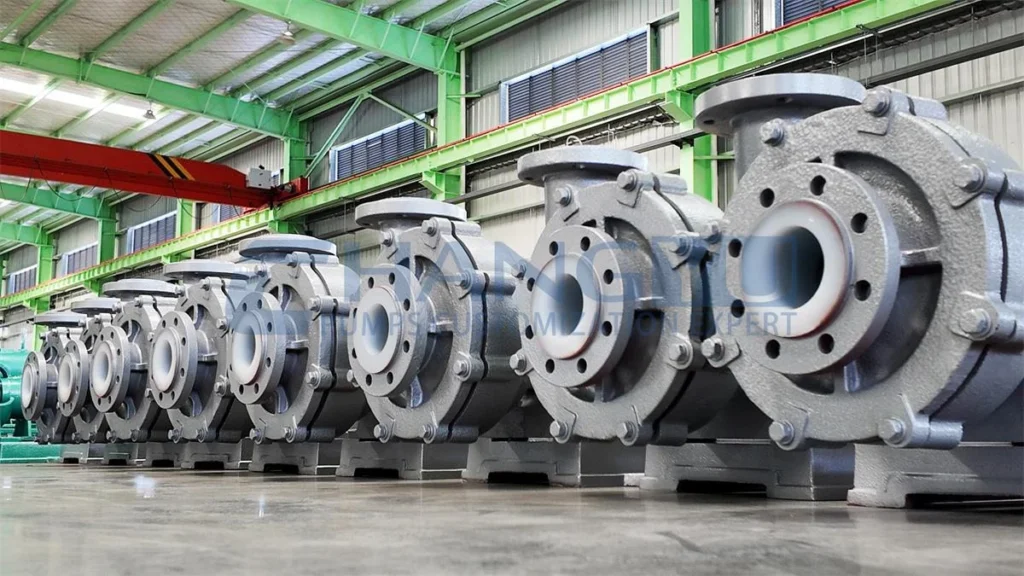
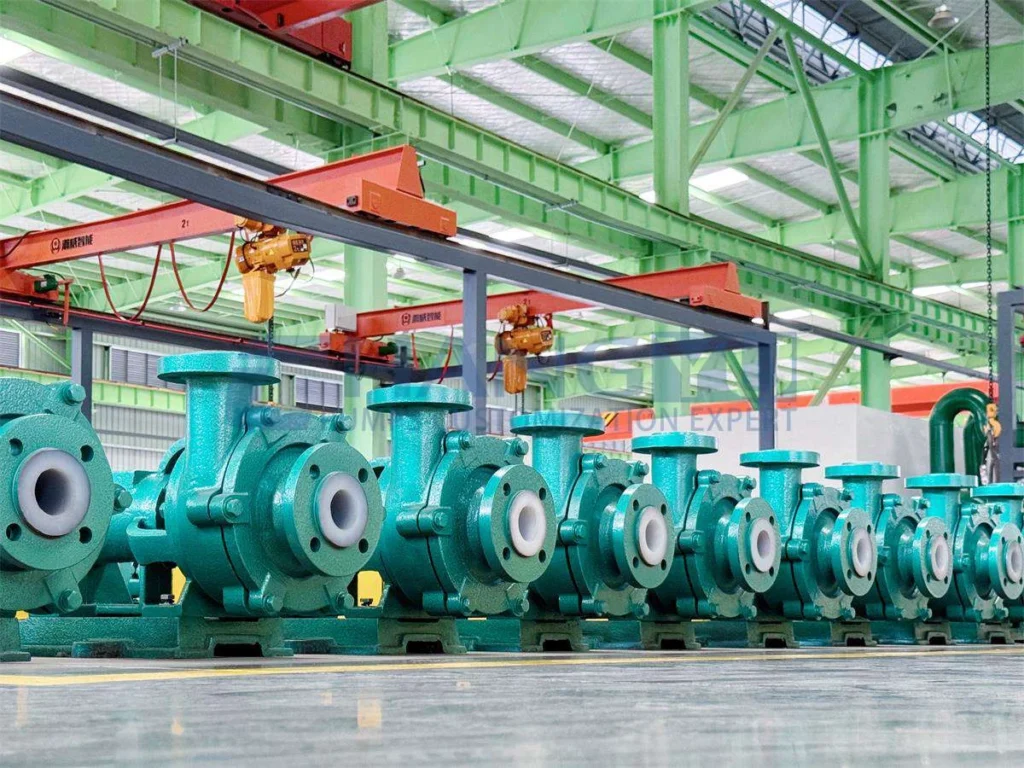
Its limits are equally clear. It needs NPSH margin the suction system may not provide, and throttling to control flow pushes slurry into recirculation and accelerates wear. Viscosity takes head off the curve, a mechanical seal needs clean flush, and dry running damages the wet end. Where corrosion and fine abrasives arrive together, a non-metallic wetted surface such as UHMWPE can address both, subject to its temperature and pressure limits.
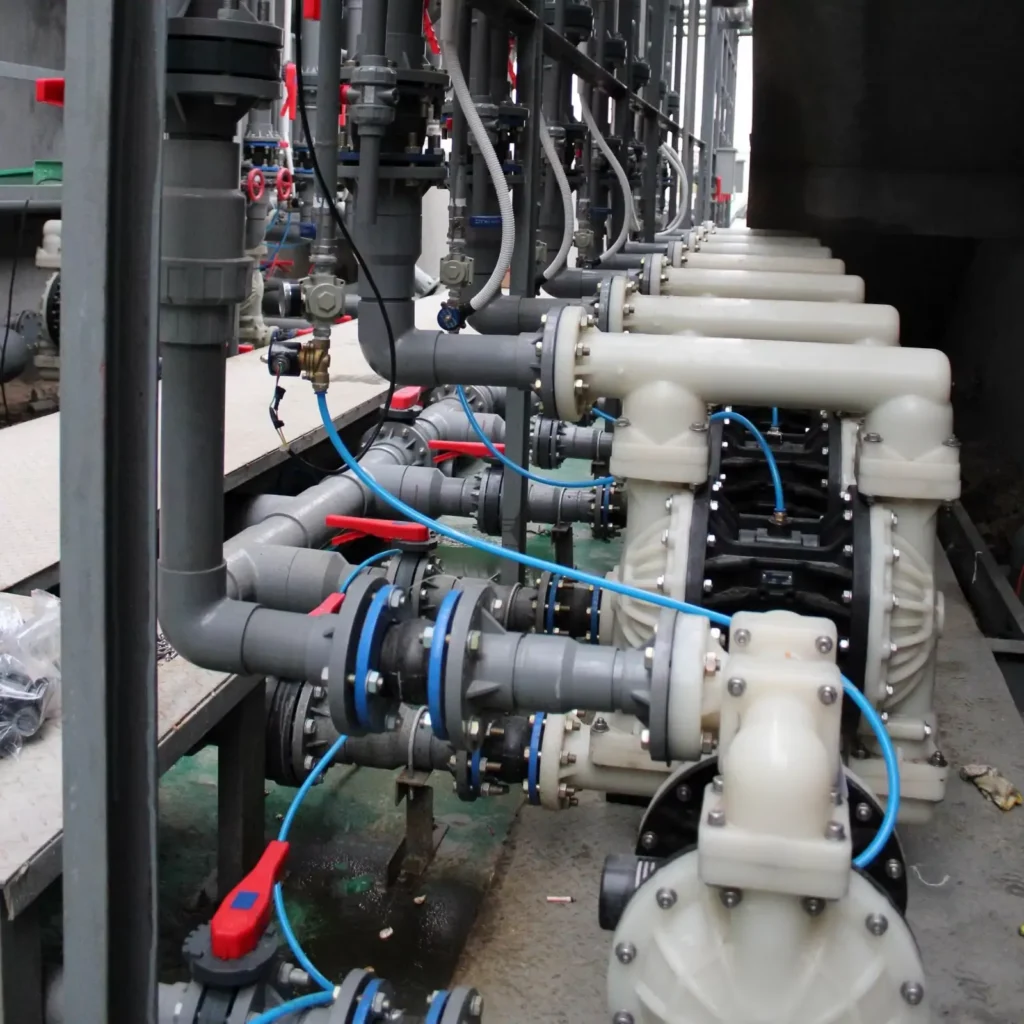
When Does an Air-Operated Double Diaphragm Pump Fit?
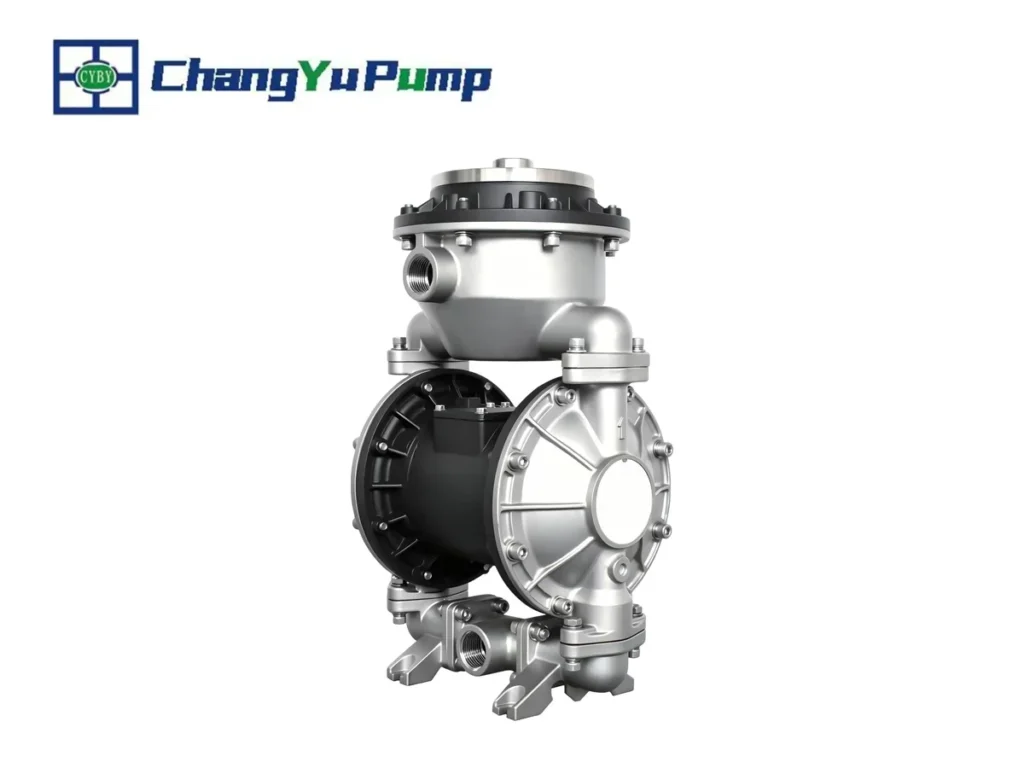
When the job is intermittent: unloading a sump or drum, batch transfer, variable flow, or a line left full and started dry. An AODD self-primes, tolerates dry running, stalls safely against a closed valve, has no rotating seal, and handles more solids than most centrifugals.
The trade-offs are air and pulsation. Compressed air is an expensive way to move volume, and flow depends on air pressure, viscosity, and lift, so one pump can behave differently on two duties. Pulsation may need a dampener; diaphragms, balls, and seats must match the chemistry.

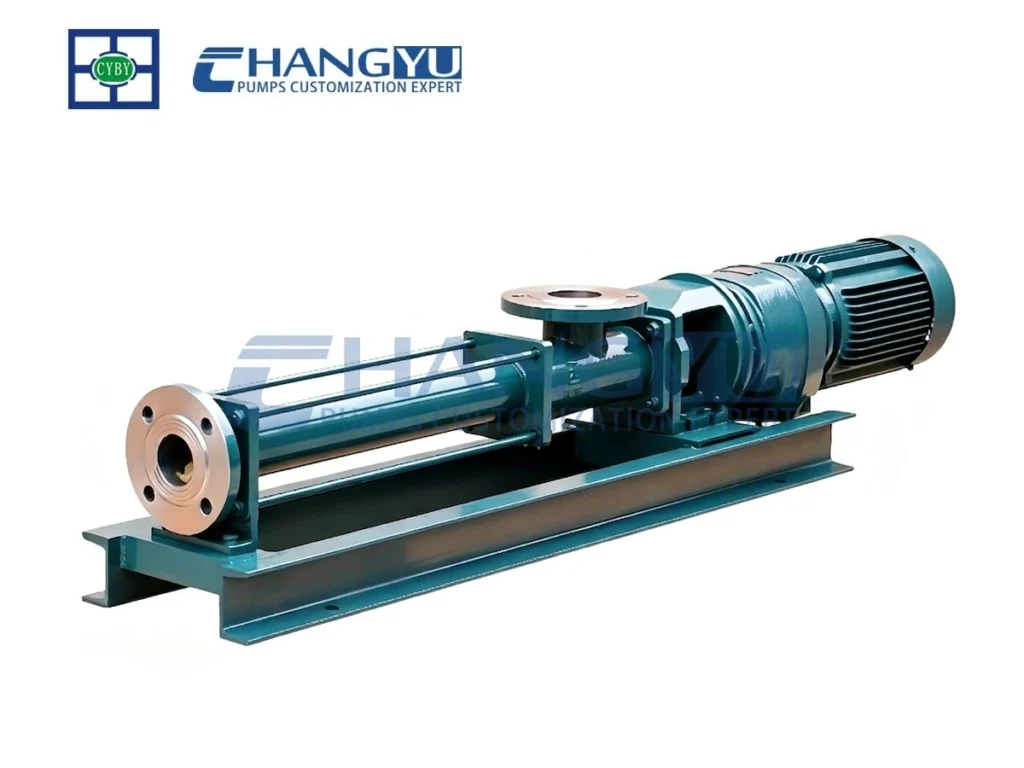
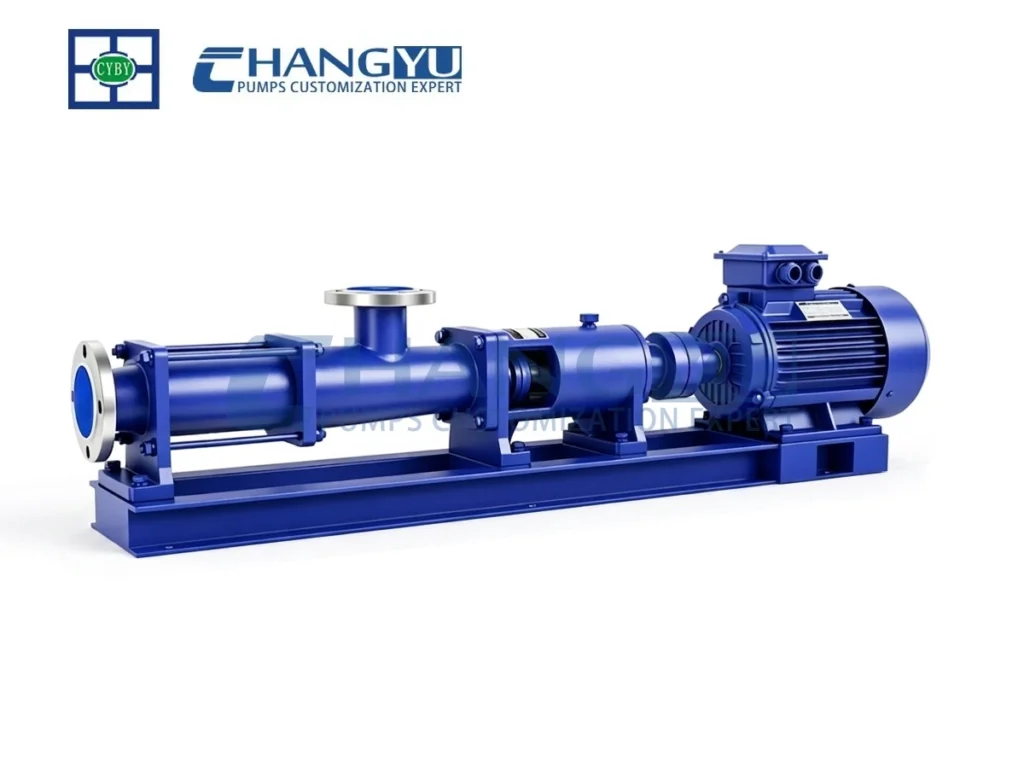
When Does a Progressive Cavity Screw Pump Fit?
When viscosity or solids rule out a centrifugal and you want steady, low-shear, low-pulsation flow, often with some metering accuracy. It pulls well and holds flow against changing pressure.
Its weak point is usually the stator. The elastomer must survive the acid, the temperature, and any solvent, and abrasives slowly open the rotor–stator clearance, which shows up as slip and lost capacity. It should never run dry, pressure per stage is limited, and the footprint is long.

When Does a Hose Pump Fit?
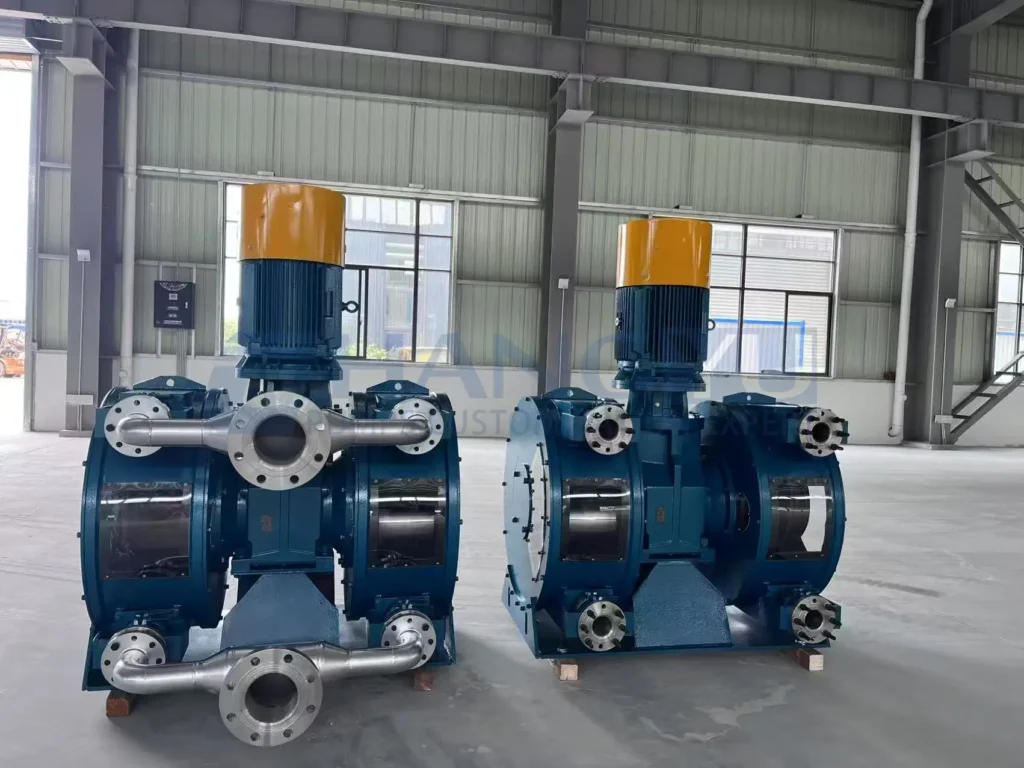
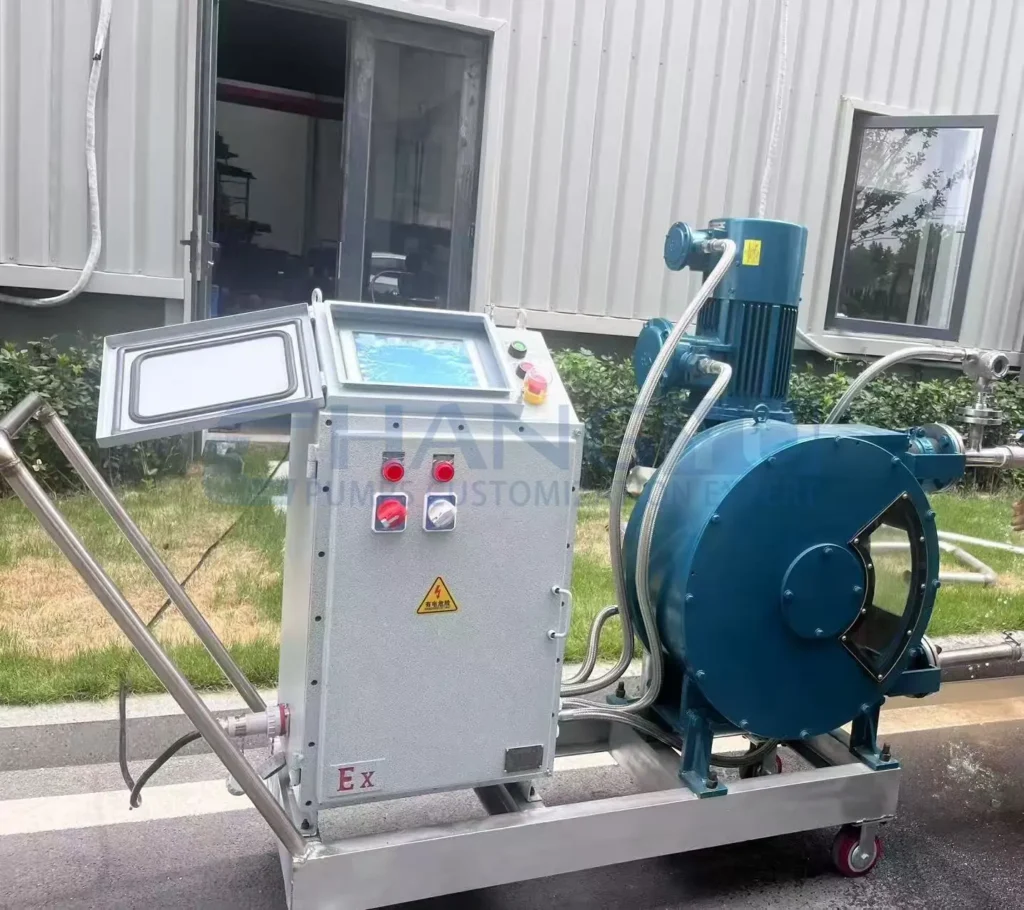
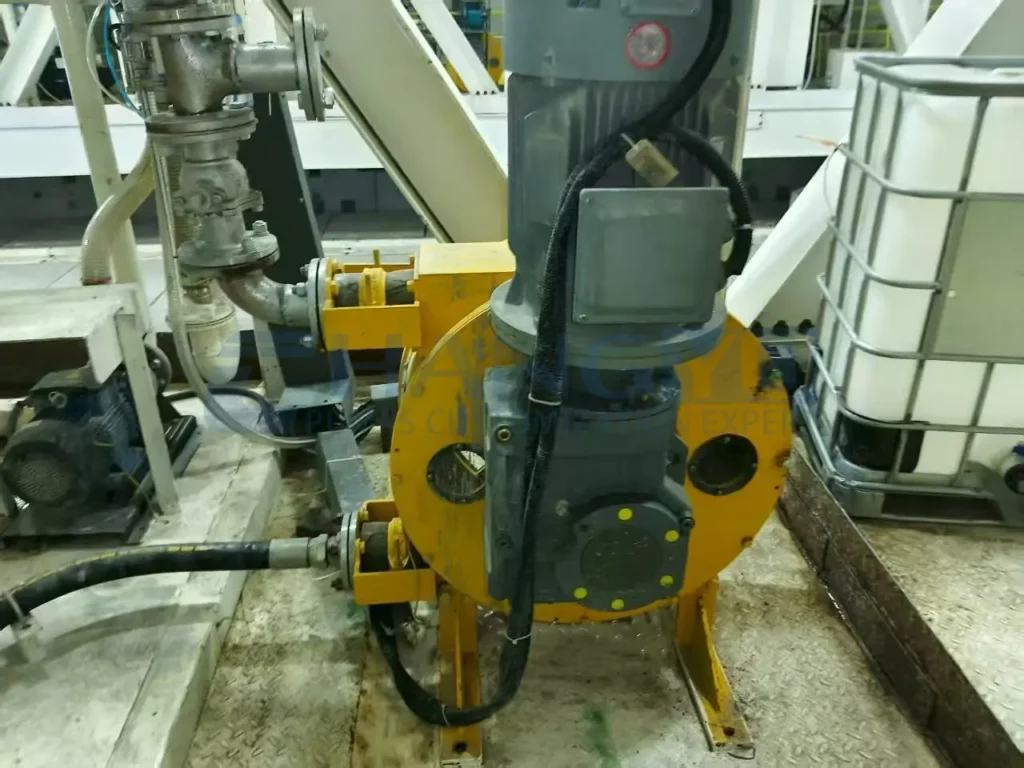
When the slurry is abrasive or heavily loaded and you would rather have no valves, seals, or impeller in the flow path. The medium touches only the hose, so nothing corrodes and nothing clogs. It handles viscous material, doses accurately because flow follows speed, and copes with solids that would ruin a check valve.
The hose is the consumable, and its life drives operating cost, depending on elastomer, particles, speed, and temperature, which is why we will not specify one without the chemistry. Discharge pressure is limited by the hose, and flow pulses.
What Do Suction, Materials, Seals, and Maintenance Change?
Often more than the pump type does. Two plants with identical flow and head can need different pumps because one draws from a flooded tank and the other from a pit.
Suction is where marginal designs fail. Hot acid has a higher vapor pressure, so available NPSH shrinks exactly when the duty gets harder; the Hydraulic Institute’s pump standards are the usual reference for margin. A suction line that settles between batches can starve a pump on restart.
Materials fall into three families — corrosion-resistant alloys, hard alloys, and non-metallics — and none solves a combined corrosion-and-erosion duty alone. A hard alloy may resist wear and still corrode; a corrosion-resistant alloy may hold up chemically and wear thin. Elastomers matter as much: in a diaphragm or screw pump they often set the maintenance interval.
Seals are a design decision, not an accessory: single mechanical seal with flush, double seal, expeller, packed gland, or no seal at all. In abrasive service a single seal without flush fails early, and a double seal puts a small flush flow into the process. Magnetic drive pumps generally do not belong in solids service.
Maintenance belongs in the comparison too: ask what wears, how long it takes to change, and whether parts are stocked.
If you’re not sure how to choose, contact our team now. Our engineers have over 20 years of experience and can help you make the right choice.
Email: [email protected]
TEL/WA: +86-13651913727
Pump Options We Build for Titanium Dioxide Slurry
We build four lines that come up in these conversations. Each is a candidate for a defined duty, not a default, and when one is the wrong tool for your slurry, we will say so.
The Pompa Tahan Korosi UHMWPE Seri UHB suits duties where chemical compatibility and fine abrasive solids arrive together, including streams where metal contamination matters. The wetted surfaces are UHMWPE, which resists a broad range of chemicals and gives the slurry a low-friction path. Liner temperature and pressure limits, and the specific chemistry, still have to be confirmed against your conditions.
The Pompa Diafragma Ganda yang Dioperasikan dengan Udara Seri BFQ covers air-driven, self-priming, intermittent transfer: sump unloading, batch movement, and lines started dry. Diaphragm and valve materials are matched to the medium.
The Progressive Cavity Screw Pump is for higher-viscosity, steady, low-shear transfer where a centrifugal would lose head or work the product too hard. Stator elastomer selection matters most.

The Pompa Selang Industri Seri ZJP-Z is for abrasive or high-viscosity media where the slurry should touch nothing but the hose. Hose material and the real duty set service life, and we specify both together.

What Should You Send Us Before We Size a Pump?
A duty sheet, not a wish list. The more you supply, the fewer assumptions sit behind our recommendation.
- Medium and chemistry: process stage, TiO₂ form, carrier liquid, pH, acid type and concentration, chloride and other aggressive species.
- Suhu: minimum, normal, and maximum, including cleaning and shutdown.
- Solids and rheology: concentration by weight, particle size range, hardness, apparent viscosity at a stated shear rate, whether the slurry gels at rest.
- Density and settling: slurry specific gravity, whether it settles overnight, whether the tank is agitated.
- Flow and head: minimum, normal, and maximum flow; discharge pressure or head; line size, length, and static lift.
- Suction and site: flooded or lifted, NPSH available, suction layout; air pressure if an AODD is a candidate; hazardous area classification; metal contamination limits.
- Service history: what the previous pump was, and how it failed.
With those we can narrow the type and propose materials. Without them, any recommendation is a guess with a price attached.
Tentang Changyu Pump
Changyu Pump designs and manufactures pumps for abrasive, corrosive, and viscous duties. Our range covers corrosion-resistant centrifugal pumps, air-operated double diaphragm pumps, progressive cavity screw pumps, and industrial hose pumps, which lets us look at a titanium dioxide duty without pushing it toward one technology. Most projects start with a duty sheet and a conversation: what the medium is, how it behaves at rest, what the suction looks like, and what failed last time. Our engineers then propose a pump type, wetted materials, and a wear-part list, and stay available through start-up. If you are replacing a pump that did not last, tell us how it failed; that is often the fastest route to a better choice.
PERTANYAAN YANG SERING DIAJUKAN
Q: Can one pump handle both acidic process slurry and finished pigment slurry?
A: Rarely. They differ in corrosion, viscosity, and contamination risk, and a pump built for the acid stage is usually wrongly proportioned for a high-solids dispersion.
Q: Is a stainless steel pump good enough?
A: It depends on the stage. Austenitic stainless is common in neutral pigment slurries. In hot, acidic, chloride-bearing liquor, pitting and stress corrosion cracking become real risks, so the grade has to be checked against the actual chemistry and temperature.
Q: Can I use a magnetic drive pump?
A: Usually not in solids service. They depend on narrow clearances and product-lubricated bearings, and solids in that gap cause wear and seizure. Exceptions exist for clean, fine, low-concentration streams, confirmed case by case.
Q: My slurry settles overnight. What should change first?
A: The piping and the tank, before the pump. Remove dead legs, keep velocity up, slope lines to drains, add flush connections, and agitate the tank.
Q: What usually wears out first?
A: On a centrifugal slurry pump, the casing liner and impeller, then the seal. On an AODD, diaphragms, balls, and seats. On a screw pump, rotor and stator. On a hose pump, the hose.
Q: Can the pump run dry?
A: An AODD can, in most configurations. A hose pump tolerates short dry periods, but the hose heats up. Centrifugal and screw pumps should not run dry.
Q: How much data do I need before asking for a quotation?
A: Enough to define the duty: medium and chemistry, temperature, solids and viscosity, flow range, head, and suction condition. If particle size or rheology is unknown, say so; we can quote with margin and flag what still needs confirming.
Hubungi Changyu Pump
Tell us the medium, temperature, viscosity, solids content, particle size, flow, head, and suction condition, and we will come back with a pump type and a material proposal rather than a catalogue number. If some of that is unknown, say so, and we will tell you what has to be confirmed before the order. Choosing a pump for titanium dioxide slurry is easier when the slurry is described properly.
Email: [email protected]
TEL/WA: +86-13651913727