
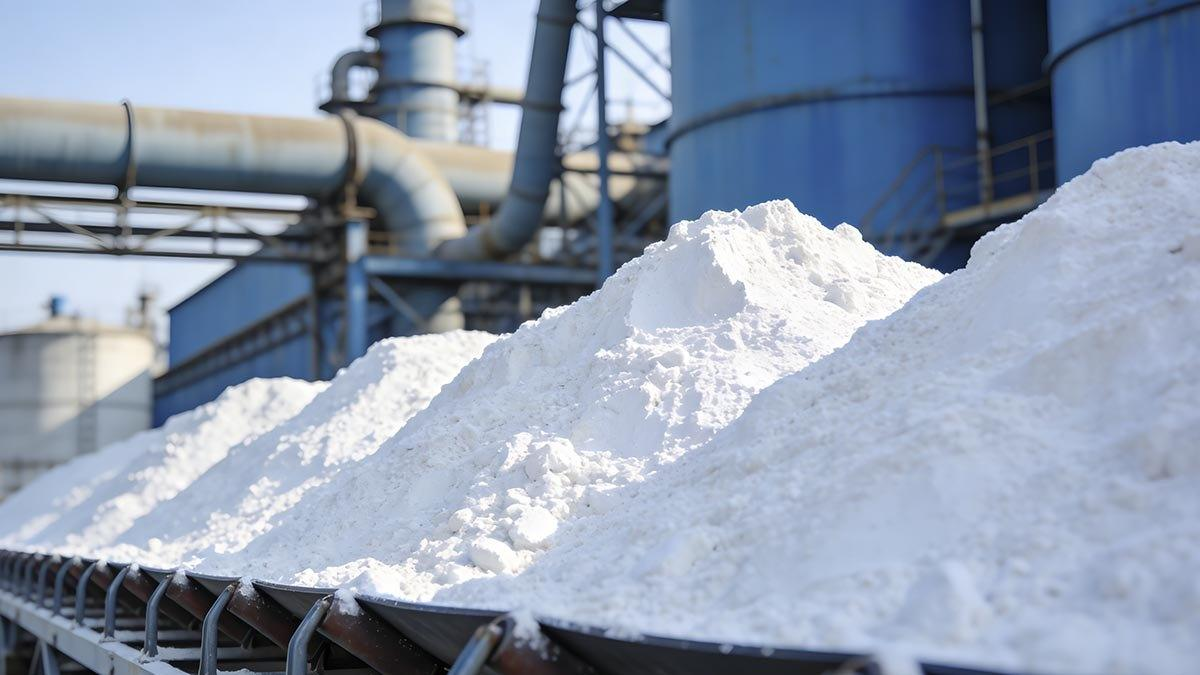
Titanium Dioxide Industry Slurry Pump Solutions
Sulfate-process titanium dioxide production combines sulfuric-acid corrosion with fine, abrasive solids. Post-digestion slurry, hydrolyzed metatitanic acid, washing slurry, filter-press feed, and acidic wastewater each place different demands on the pump.
For compatible acidic media containing fine particles, Changyu’s UHB Series steel-lined UHMW-PE pump is the primary selection direction. Stainless-steel and water-pump series are limited to neutralized, alloy-compatible, or clean utility duties. Final selection is based on actual chemistry, temperature, solids, particle size, density, viscosity, flow, head, and suction conditions.
Standard UHB operating boundary: −20°C to 90°C. Up to 40% solids is the normal reference range; 40–45% requires application-engineering review. Hotter, coarser, or more concentrated duties require a new material and hydraulic assessment.
Titanium Dioxide Pumping Applications
In the sulfuric acid process, ilmenite or titanium slag is digested with sulfuric acid; the titanium-containing solution undergoes clarification, concentration, and hydrolysis; and the resulting hydrated titanium dioxide is filtered, washed, re-slurried, and dewatered before being calcined.
The following are typical operating conditions for our slurry pumps. If your specific operating conditions are not listed below, please contact our engineering team for a customized solution.
Post-digestion slurry / Metatitanic acid slurry / Washing and repulping / Filter-press feed / Wastewater and utilities
Post-Digestion Slurry Transfer
Meio de Manuseio:
Sulfuric acid / Titanyl sulfate liquor / Undissolved ore and mineral fines
Aplicação:
After digestion and leaching, the slurry may contain sulfuric acid, dissolved titanium and iron sulfates, unreacted ore, and insoluble fine particles. Chemical erosion and particle abrasion occur simultaneously, while temperature, density, and solids content may vary from batch to batch.
Our UHB series chemical pumps are made of ultra-high-molecular-weight polyethylene (UHMW-PE), which is perfectly suited for abrasive and corrosive fluids.
If there are other requirements regarding temperature and solids content, we will need to conduct a new material and hydraulic evaluation.
Bombas Recomendadas:
- Bomba de polpa química horizontal da série UHB — primary direction for compatible acidic slurry with fine solids
- HB stainless-steel slurry pump — only after neutralization or when alloy corrosion data confirm compatibility
Considerações de Seleção:
- Complete chemical composition and acid concentration
- Normal, start-up and maximum temperature
- Solids percentage and whether it is by weight or volume
- Maximum particle size, hardness and settling tendency
- Density, viscosity, required flow and total dynamic head
- Tank level, suction piping and available NPSH
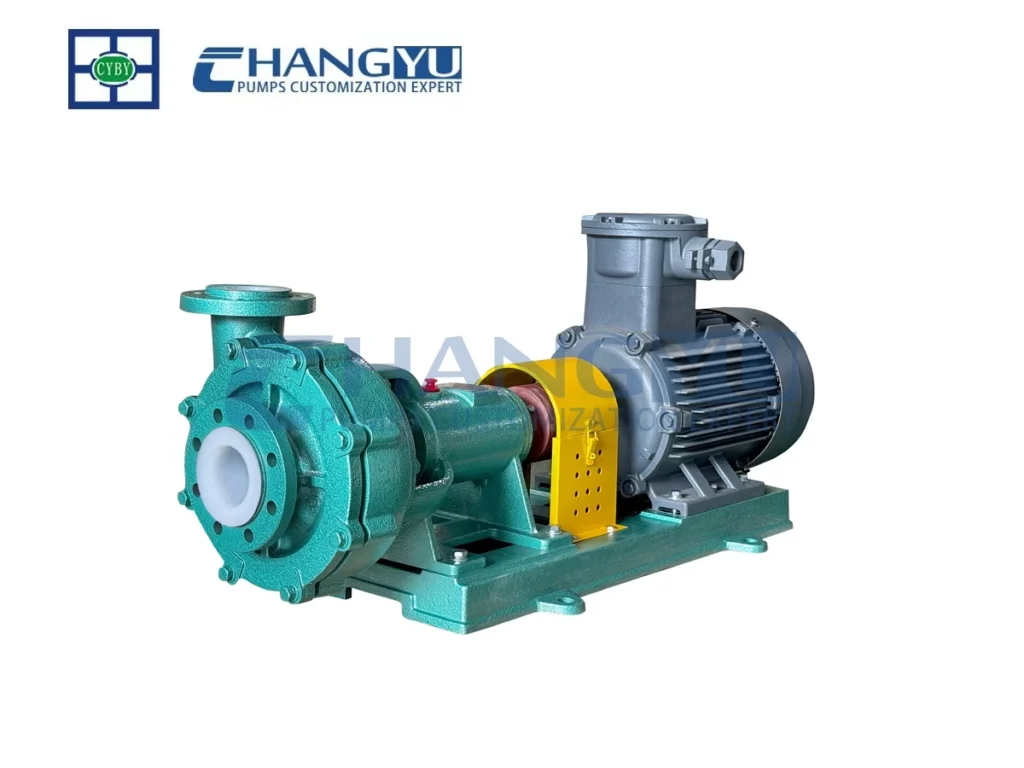
Bomba de polpa química horizontal da série UHB
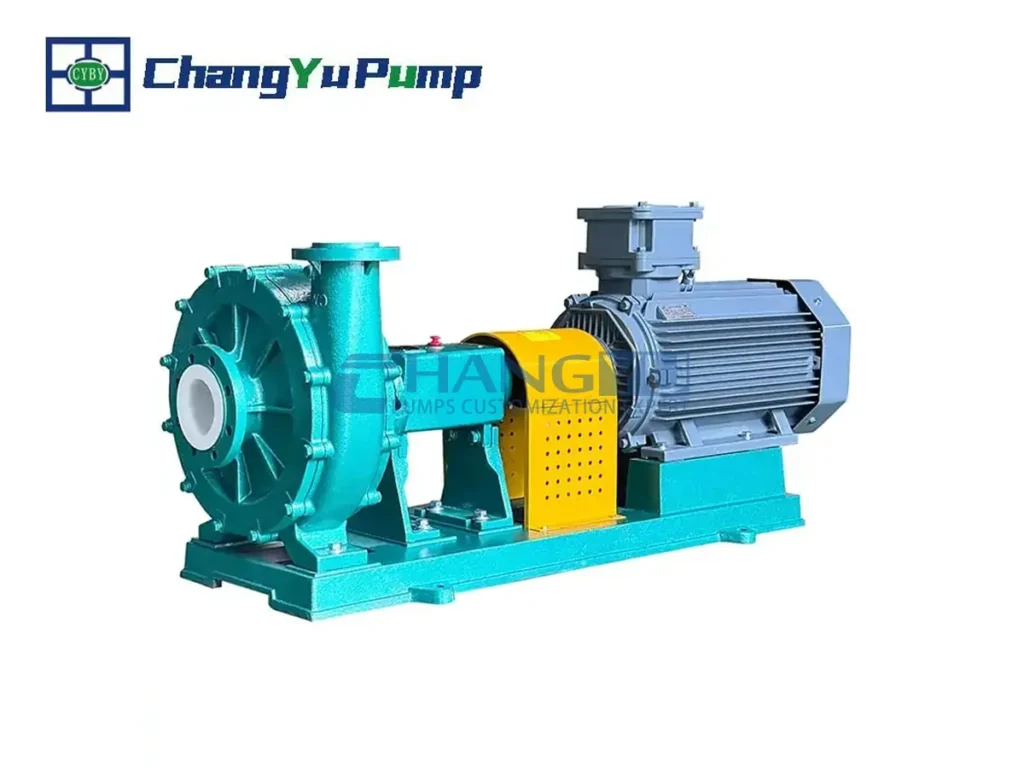
Bomba resistente à corrosão UHMWPE da série UHB
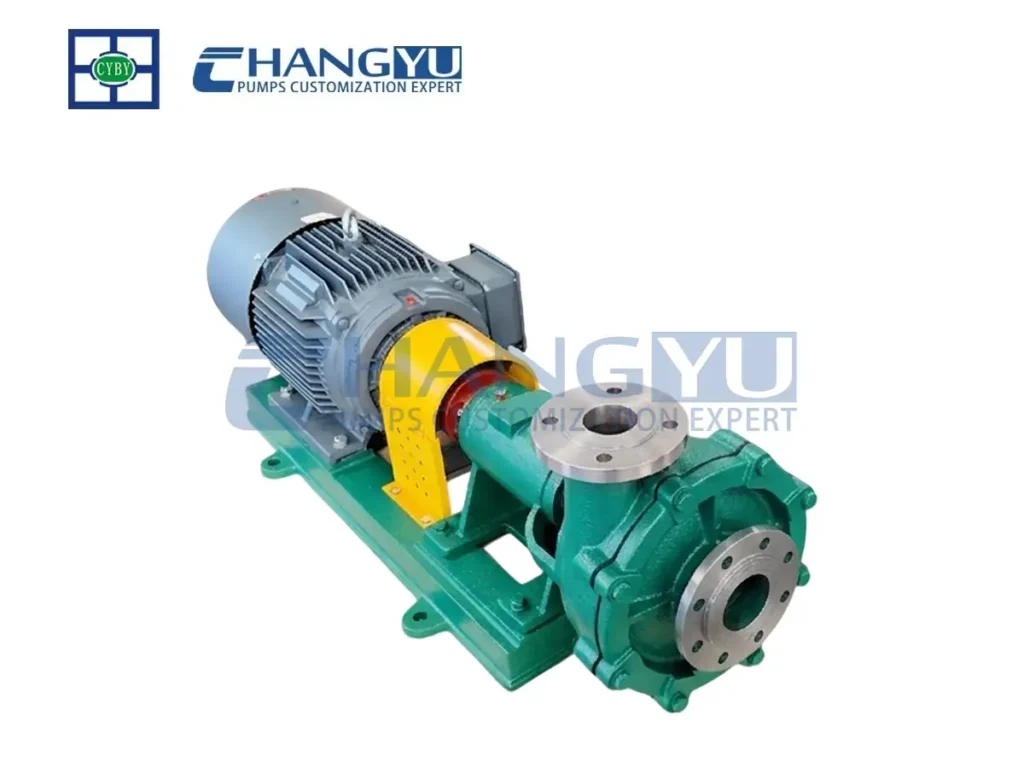
Bomba de Polpa Abrasiva | Bomba de Polpa de Aço Inoxidável Série HB Fabricante
Hydrolyzed Metatitanic Acid Slurry
Meio de Manuseio:
Hydrous titanium dioxide slurry / Acidic mother liquor / Fine TiO₂ particles
Aplicação:
Hydrolysis creates very fine hydrous titanium dioxide particles in an acidic liquid phase. The slurry can be abrasive, becomes more viscous as concentration rises, and may settle in low-velocity sections. Unstable suction, excessive recirculation and operation far from the preferred range can accelerate wear.
The UHB Series is the primary product direction for compatible acidic metatitanic acid slurry containing fine particles. Changyu engineers confirm passage size, impeller configuration, operating speed, and shaft seal after reviewing concentration, viscosity, particle characteristics, and the actual duty point.
Bombas Recomendadas:
- UHB Series UHMW-PE Corrosion-Resistant Pump — for chemically compatible acidic slurry containing fine particles
- Bomba de polpa química horizontal da série UHB — for duties requiring slurry passage and abrasion resistance
Considerações de Seleção:
- Slurry concentration and batch variation
- Fine-particle distribution and any agglomerates
- Density and viscosity at operating temperature
- Required flow and system head
- Suction level and settling risk
- Seal materials and available flushing water
Bomba resistente à corrosão UHMWPE da série UHB
Bomba de polpa química horizontal da série UHB
Washing and Repulping Slurry Transfer
Meio de Manuseio:
Metatitanic acid cake slurry / Acidic wash liquor / Repulped fine-solids suspension
Aplicação:
During washing and repulping, filter cake is diluted, resuspended, and filtered to remove soluble impurities. One campaign may expose the pump to changing concentration, viscosity, and circulation flow. The selected duty must therefore cover the complete operating window, not only a normal point.
For chemically compatible acidic slurry containing fine solids at 90°C or below, UHB combines the corrosion resistance of UHMW-PE with a semi-open impeller suitable for particle-containing liquid. Select for the highest credible concentration and viscosity, and avoid long periods at very low flow.
Provide a low-point drain or flushing connection where solids could settle after shutdown. The pump must be filled and vented before starting; dry running is not acceptable.
Bombas Recomendadas:
- Série UHB — primary choice for compatible acidic washing and repulping slurry
- CYW water pump — clean wash-water supply only; never for metatitanic acid slurry
Considerações de Seleção:
- Minimum and maximum slurry concentration
- Viscosity through the washing cycle
- Circulation and transfer flow range
- Static head and pipe losses
- Shutdown frequency and flushing sequence
- Any entrained air from repulping
Bomba resistente à corrosão UHMWPE da série UHB
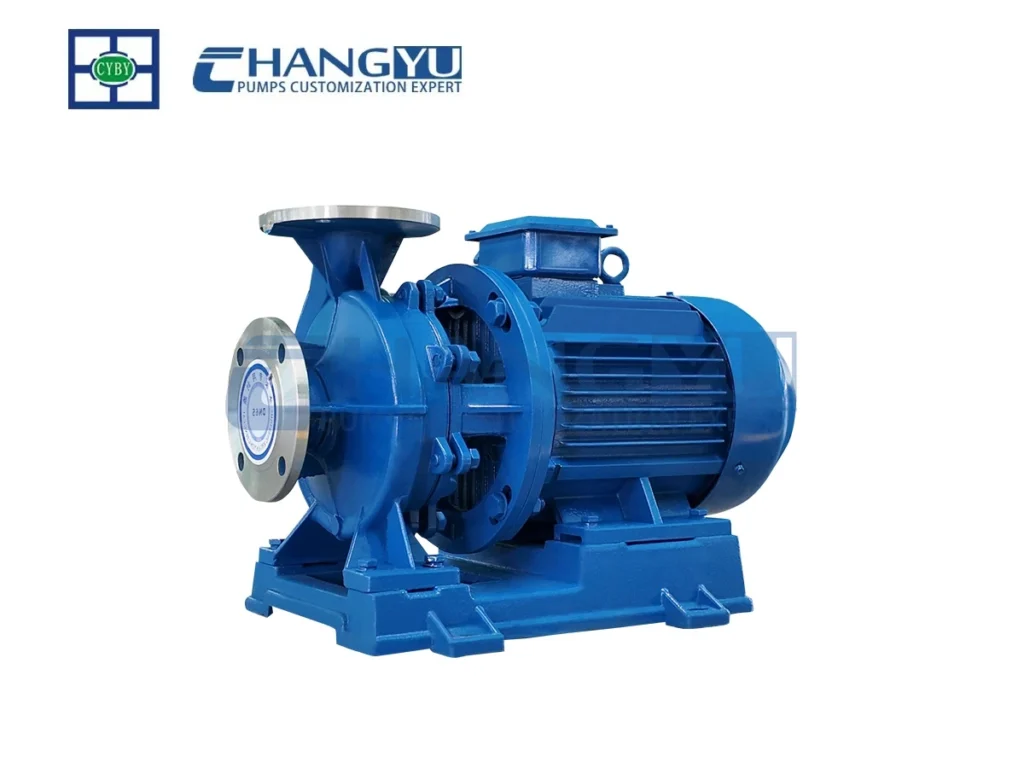
Bomba de água centrífuga horizontal | Série CYW
Filter Press Feed for Titanium Dioxide Slurry
Meio de Manuseio:
Metatitanic acid slurry / Washing slurry / Fine-solids filter feed
Aplicação:
Filter feeding is a changing duty. At the beginning, the system normally needs higher flow at lower resistance; as cake forms, flow falls and discharge pressure rises. Pump selection must cover the complete filtration cycle and the maximum credible system pressure.
A centrifugal UHB pump is a conditional recommendation only when its complete curve, shut-off head, motor load, seal arrangement and allowable casing pressure match the filter system. If the required final pressure or control behavior is outside the safe centrifugal-pump range, another pump type or a revised system arrangement is required rather than oversizing a standard UHB.
Required pressure and pump head are not interchangeable unless slurry density is included. The pump casing, flanges, seal, valves and piping all need a pressure rating above the maximum possible condition.
Bombas Recomendadas:
- Série UHB — only when the full feed cycle remains within the selected pump curve and pressure rating
Considerações de Seleção:
- Filter type, plate size, chamber volume and chamber quantity
- Initial feed flow and minimum end-of-cycle flow
- Normal and maximum feed pressure
- Solids, particle size, density and viscosity
- Cycle duration and cycles per day
- VFD, valve, bypass or pressure-feedback control
- Suction level, pipe sizes and cleaning sequence
Bomba de polpa química horizontal da série UHB
Bomba resistente à corrosão UHMWPE da série UHB
Bomba de Polpa Abrasiva | Bomba de Polpa de Aço Inoxidável Série HB Fabricante
Acidic Wastewater, Neutralization and Utility Water
Meio de Manuseio:
Acidic filtrate / Titanium-bearing fines / Neutralized slurry / Cooling and clean wash water
Aplicação:
Titanium dioxide waste streams can include acidic filtrate, scrubber water, wash water and suspended titanium-bearing fines. Composition varies with the source and neutralization stage. Wetted materials must not be selected from pH alone because acid type, concentration, temperature, chlorides, oxidizers and contaminants can change corrosion behavior.
For compatible acidic wastewater with fine suspended solids, UHB remains the primary direction. For neutralized treatment slurry, an HB stainless-steel slurry pump may be considered after pH, chloride, sulfate, temperature and alloy grade are confirmed. FY is suitable for chemically compatible sump or tank duty, while stainless-steel CYE can be evaluated for near-neutral wastewater requiring self-priming.
CYW and CDL belong only in clean water service. CYW suits cooling or clean wash-water transfer; CDL provides higher pressure for solids-free wash-water boosting. Neither series should be exposed to metatitanic acid, abrasive solids or unconfirmed acid carryover.
Considerações de Seleção:
- Waste-stream source and full analysis
- Maximum temperature and contamination upset cases
- Solids content, size and settling tendency
- Sump level and required suction lift
- Neutralization chemistry and scaling risk
- Required flow, head and pressure
- Selected stainless grade compatibility
Bomba resistente à corrosão UHMWPE da série UHB
Bomba de Polpa Abrasiva | Bomba de Polpa de Aço Inoxidável Série HB Fabricante
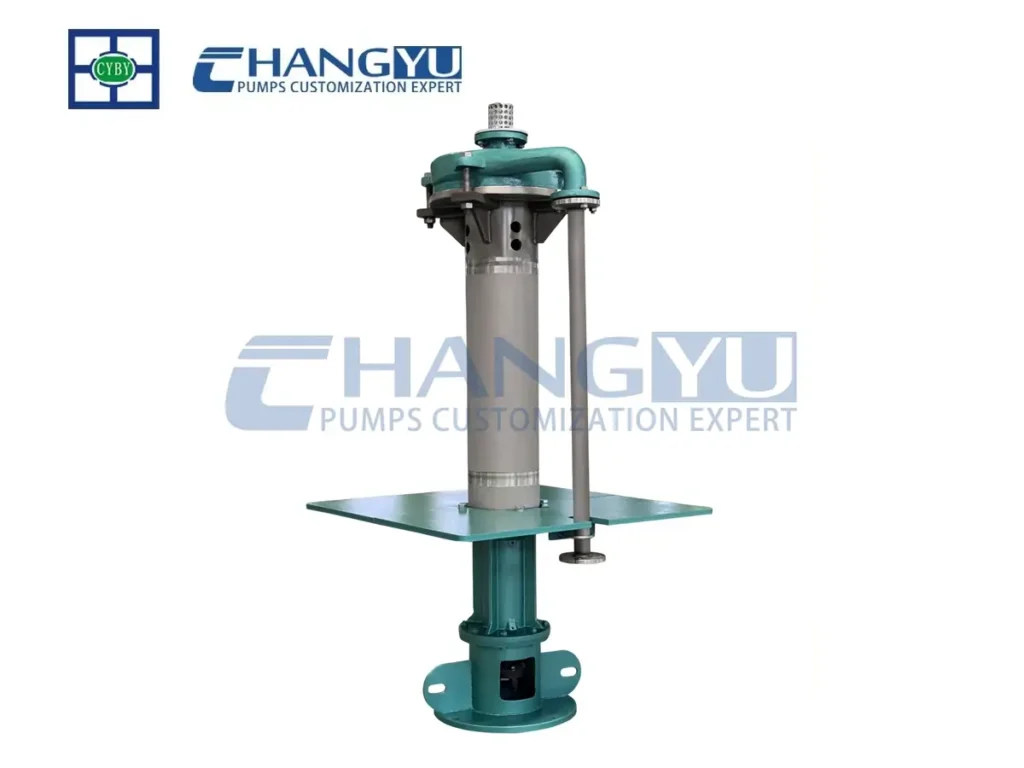
Bomba Submersível Vertical - Série FY Aço Inoxidável
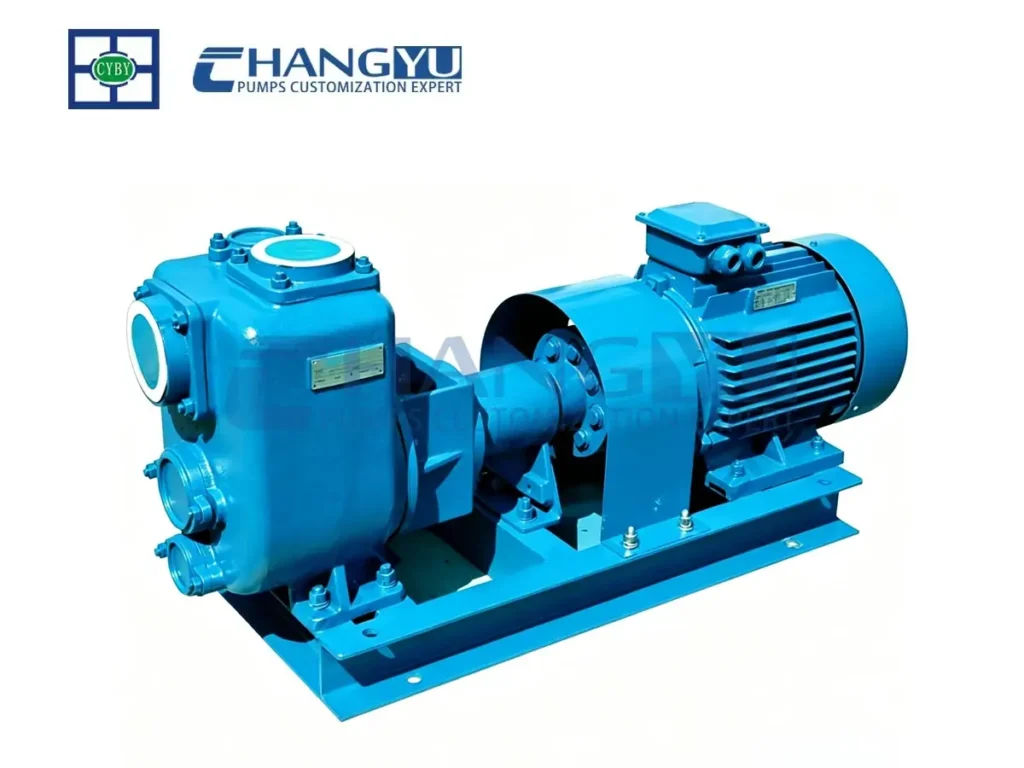
Bomba de transferência auto-ferrante para águas residuais e lamas | Série CYE
Bomba de água centrífuga horizontal | Série CYW
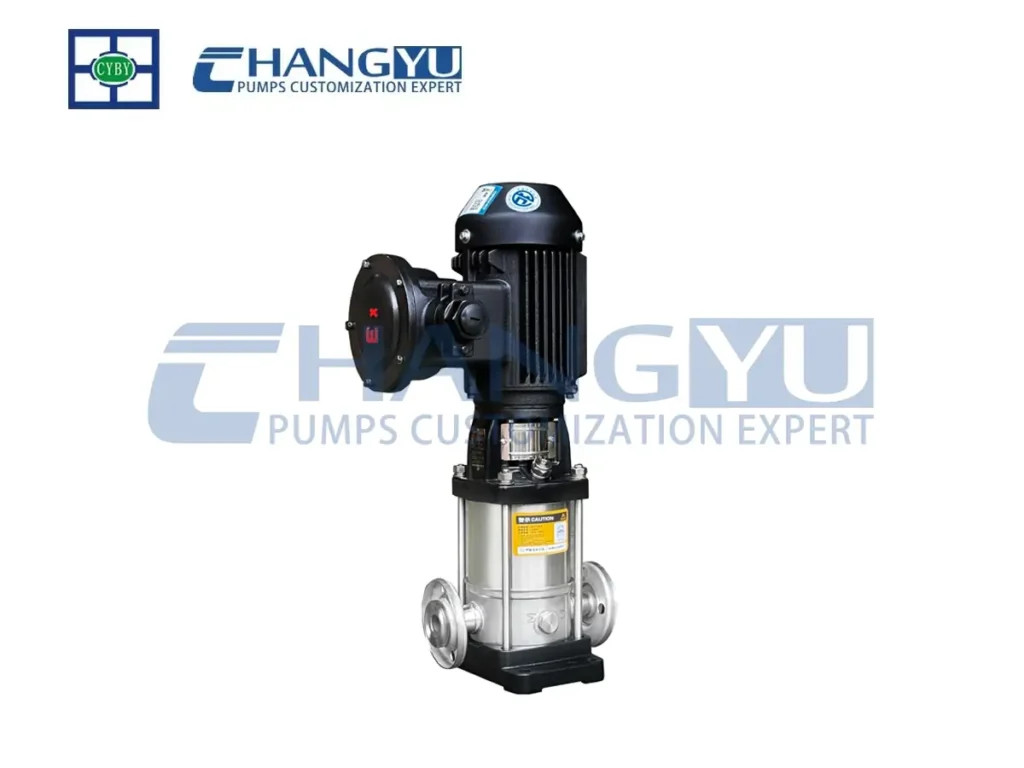
Bomba Centrífuga Vertical Multiestágio Série CDL
Seleção de Bomba por Condição de Processo
| Aplicação do Processo | Typical Medium and Risk | Bomba Changyu recomendada |
|---|---|---|
| Post-digestion slurry | Acidic salts, fine residue, possible high temperature | UHB within confirmed UHMW-PE limits; above 90°C requires reassessment |
| Metatitanic acid slurry | Fine hydrated TiO₂, abrasion, settling, viscosity change | UHB selected from complete slurry data |
| Washing and repulping | Changing concentration and off-design circulation | UHB with operating-window and flushing review |
| Filter-press feed | Falling flow and rising pressure | UHB only when the full cycle is within curve and pressure limits |
| Acidic wastewater with fines | Variable chemistry, corrosion and solids deposition | UHB after full chemical review |
| Neutralized abrasive slurry | Treatment solids, scaling and alloy-corrosion risk | HB after chemistry and stainless-grade review |
| Sump or near-neutral wastewater | Variable liquid level and limited suspended solids | FY or stainless-steel CYE when compatible |
| Clean cooling or wash water | Solids-free water service | CYW; CDL when higher clean-water pressure is needed |
If you are unsure which pump fits your duty, send the process data to our engineering team. Model and material are confirmed only after the operating envelope is reviewed.
PRODUCT
Recommended Titanium Dioxide Industry Pumps
UHB is the main series for compatible corrosive slurry containing fine solids. The other series below are conditional downstream or clean-utility choices—not substitutes for UHB in unneutralized sulfuric acid slurry.
Série UHB
Primary option for compatible post-digestion slurry, metatitanic acid, washing slurry, conditional filter feed and acidic wastewater with fine solids.
HB Stainless-Steel Slurry Pump
Conditional option for neutralized abrasive residue after alloy compatibility is confirmed.
CYW Horizontal Water Pump
For clean cooling water and clean wash-water transfer only; not for TiO₂ slurry.
CYE Self-Priming Pump
For near-neutral wastewater or dirty utility water requiring self-priming, with stainless steel specified where appropriate.
Why Choose Changyu for Titanium Dioxide Pumping?
Anhui Changyu Pump and Valve Manufacturing Co., Ltd. was established in 2006 and focuses on industrial pumps for corrosive, abrasive and other demanding media. Changyu operates a 20,000 m² manufacturing facility and provides application-based selection for chemical processing and industrial water systems.
For a titanium dioxide plant, Changyu engineers review medium chemistry, slurry properties, hydraulic duty, suction conditions and the complete operating cycle before confirming the model, wetted material, impeller, shaft seal, motor, and accessories. Confirm certification and project documents for the selected configuration and destination market.
Engineering Review Before Quotation
- Complete medium composition at normal and upset conditions
- Maximum concentration and temperature
- Solids percentage, particle size, hardness, density and viscosity
- Required flow, static lift, pipe losses and total dynamic head
- Suction-tank level, line arrangement and available NPSH
- Continuous or intermittent operation and starts per hour
- Seal materials, flushing or cooling plan
- Voltage, frequency, hazardous-area requirements and connection standards
FAQ
What pump is suitable for titanium dioxide slurry?
For sulfate-process acidic slurry containing fine particles, Changyu’s UHB Series is the primary starting point within confirmed chemical, temperature and hydraulic limits. Final selection requires acid composition, solids, particle size, density, viscosity, flow, head and suction data.
Can a UHB pump handle metatitanic acid slurry?
Yes, when temperature, chemical composition, solids, viscosity, particle size and duty remain inside the selected model’s confirmed range. The medium name alone is not enough for final selection.
What is the standard UHB temperature range?
The standard UHMW-PE-lined UHB range is −20°C to 90°C. Above 90°C, a new material and pump assessment is required.
Can UHB handle more than 40% solids?
Up to 40% is the normal reference. Applications from 40% to 45% need a separate review of particle size, density, viscosity, speed, suction conditions and duty point. Above 45%, do not specify a standard UHB without a new technical evaluation.
Is UHB always suitable for filter-press feed?
No. Suitability depends on the complete filtration cycle, maximum pressure and end-of-curve behavior. Another pump type or system arrangement is required when the final duty is outside the safe centrifugal UHB operating range.
When can stainless-steel pumps be used in a titanium dioxide plant?
HB, FY or stainless-steel CYE pumps may be evaluated for neutralized or otherwise alloy-compatible streams. They are not default recommendations for unneutralized sulfuric-acid slurry.
Pronto para otimizar a sua indústria?